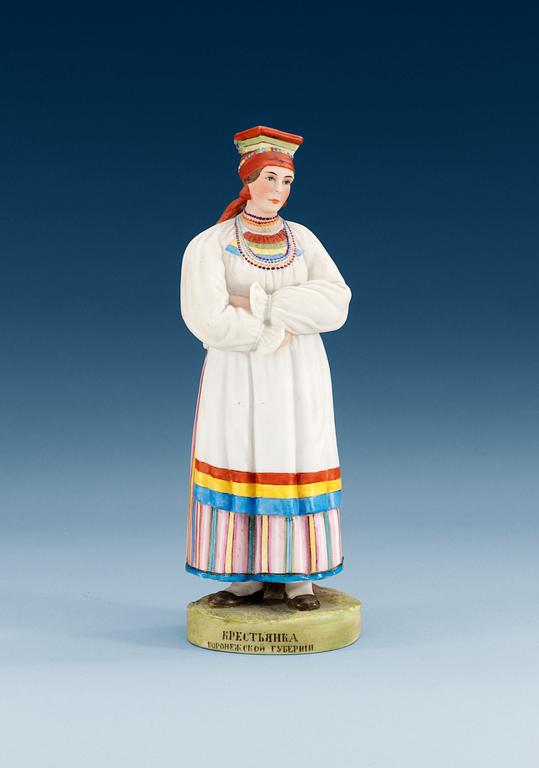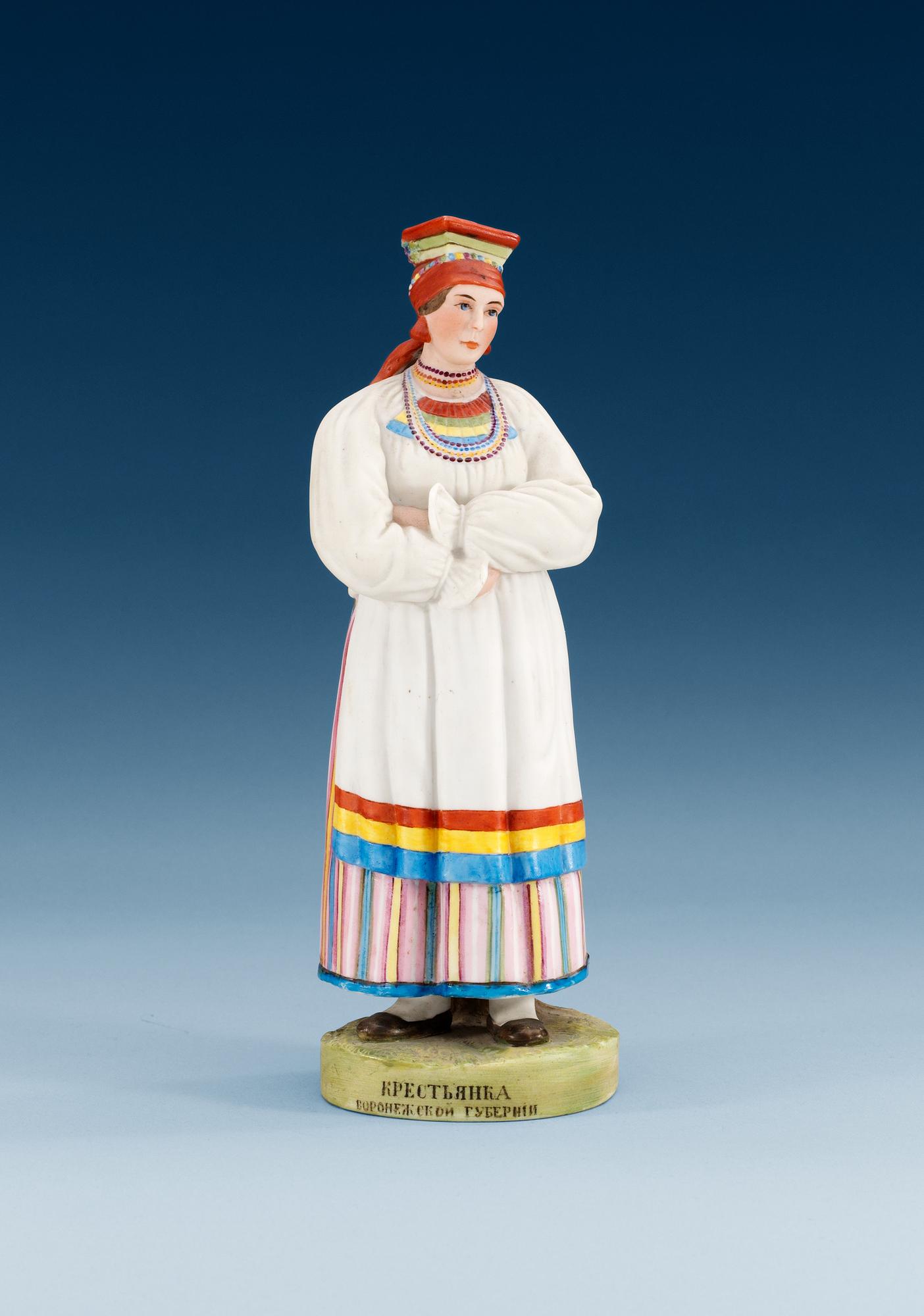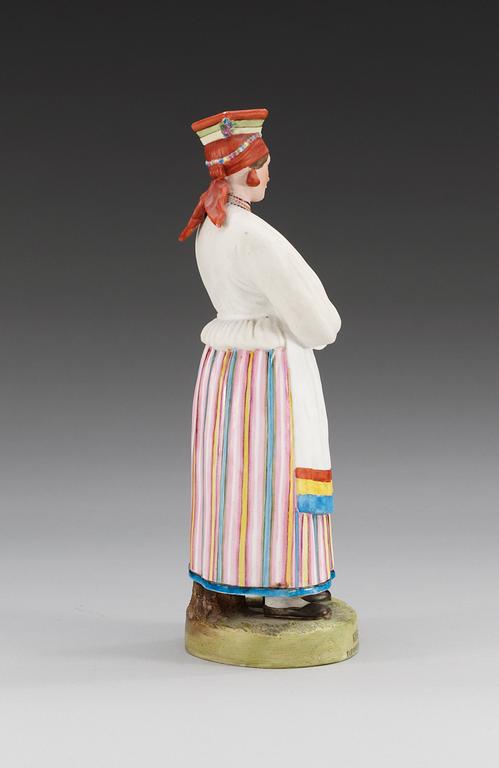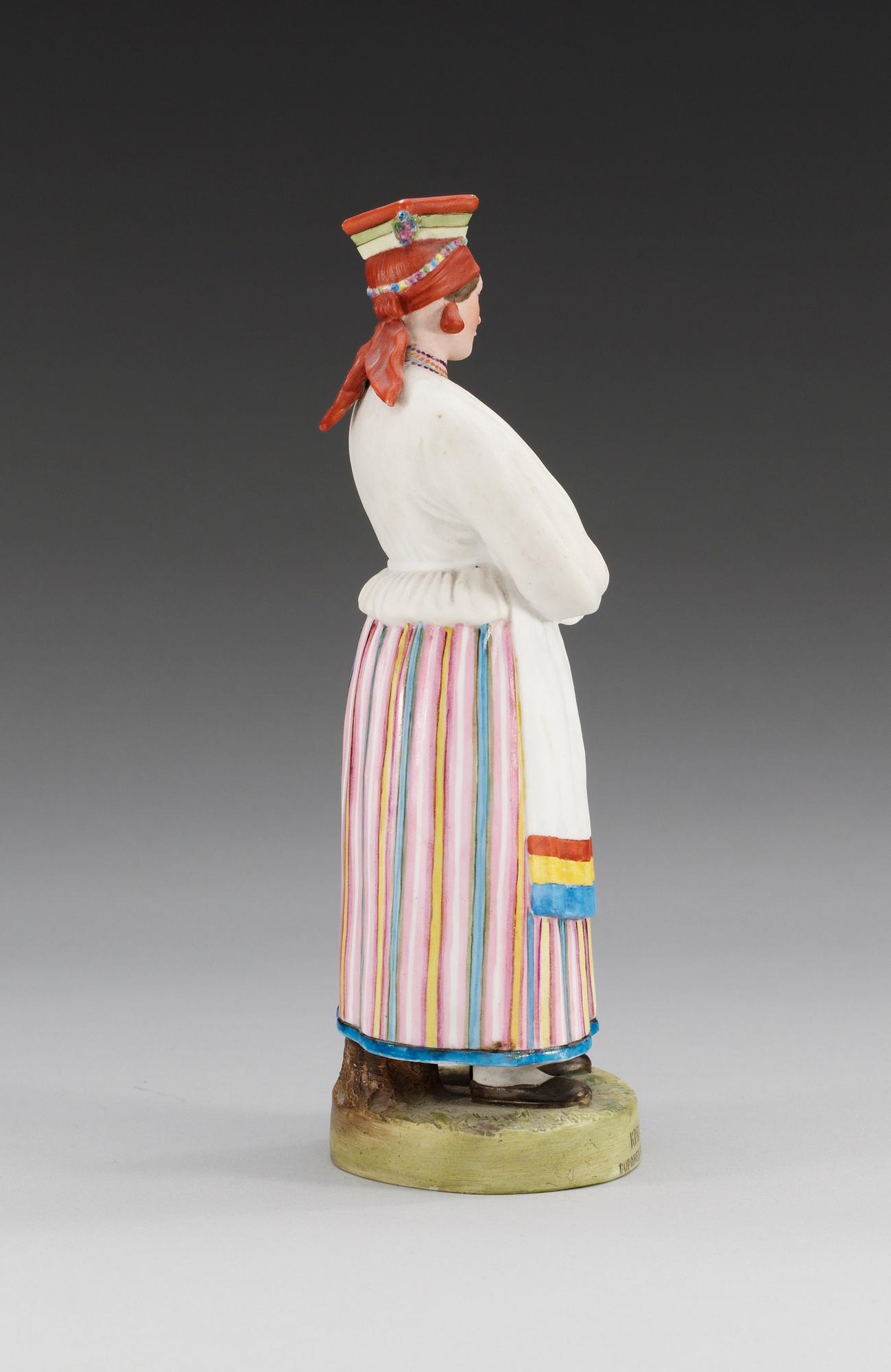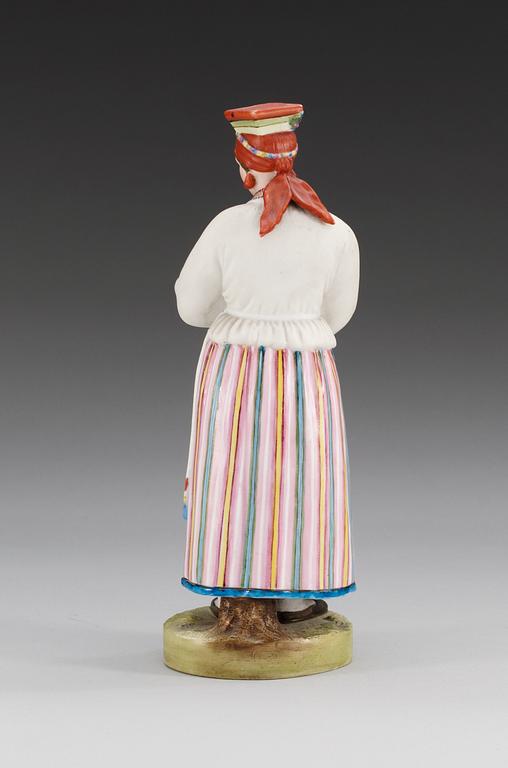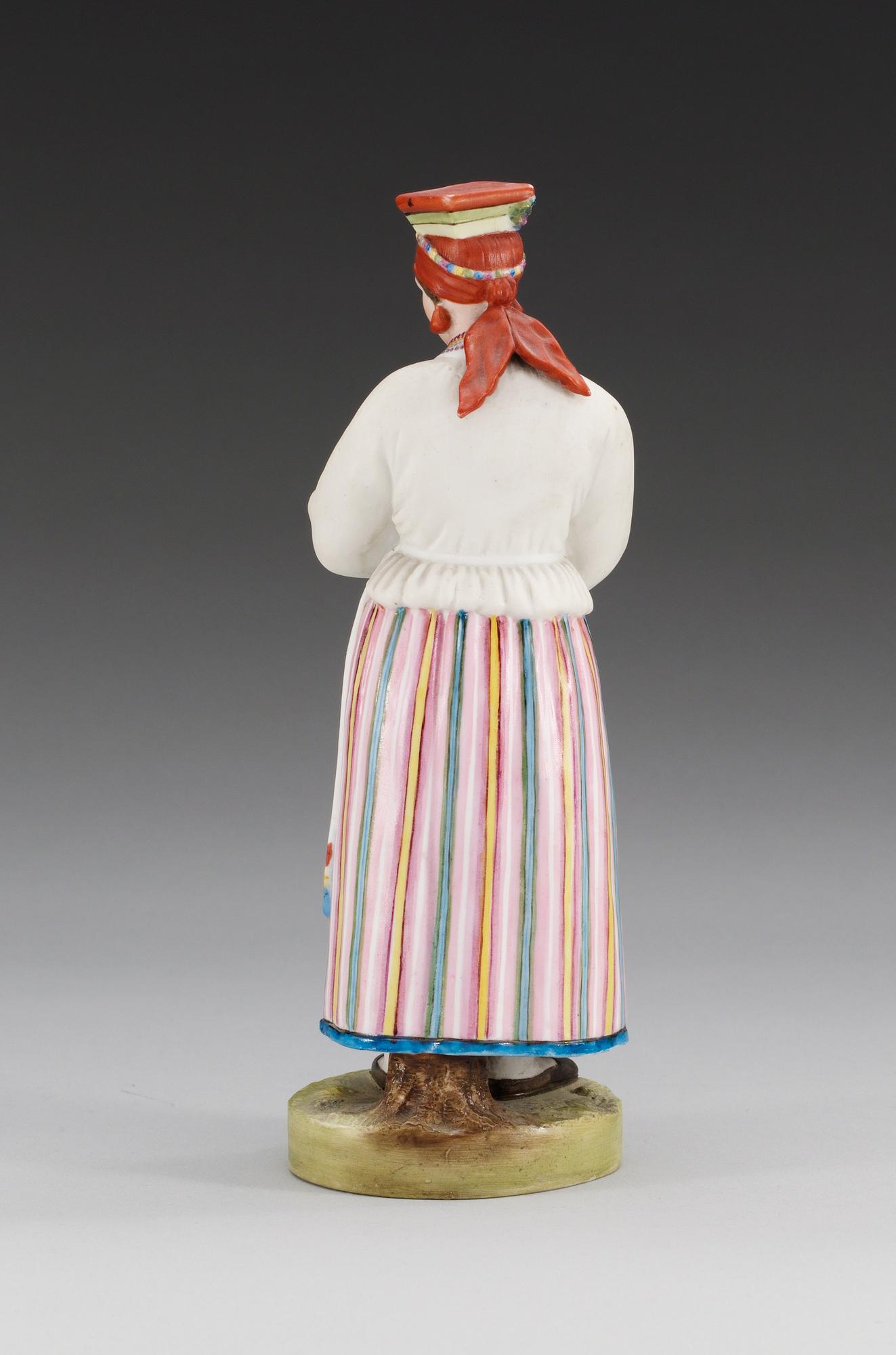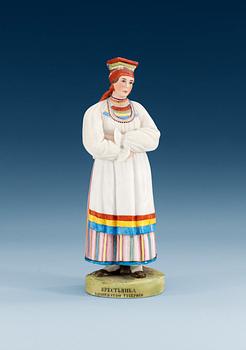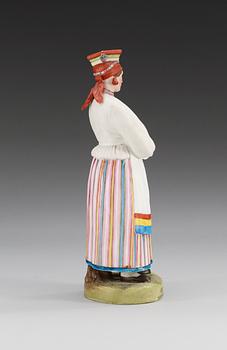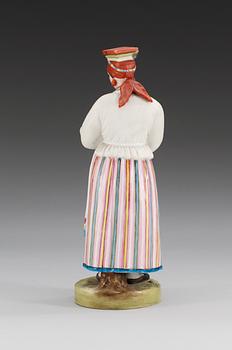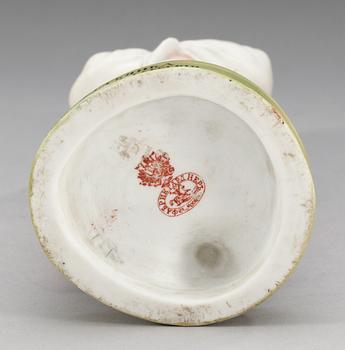
Målad polykrom dekor, föreställande enligt inskription på sockel en bondkvinna från Voronezh provinsen. Höjd 24 cm.
Proveniens
From the People of Russia series.
Litteratur
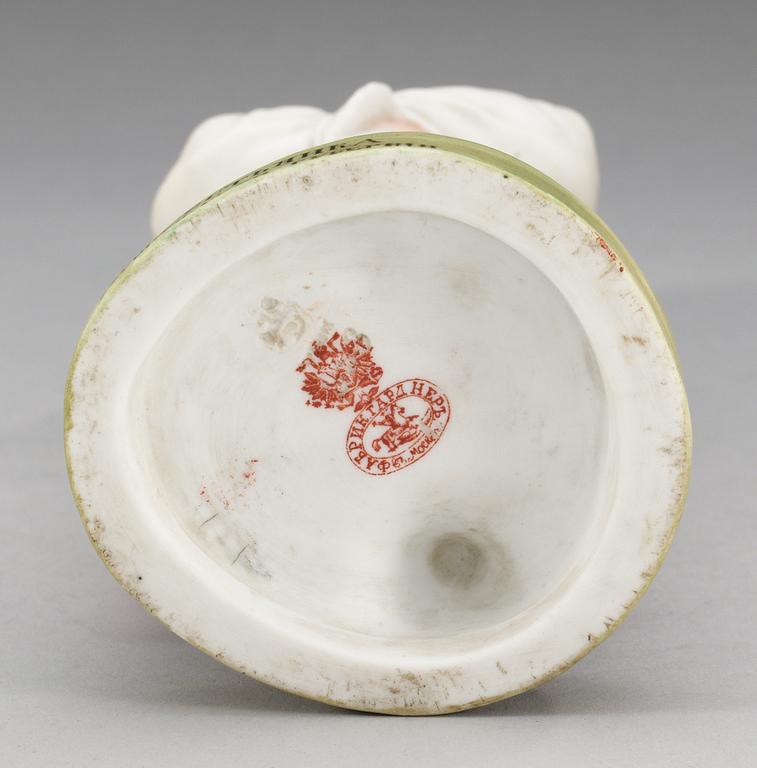
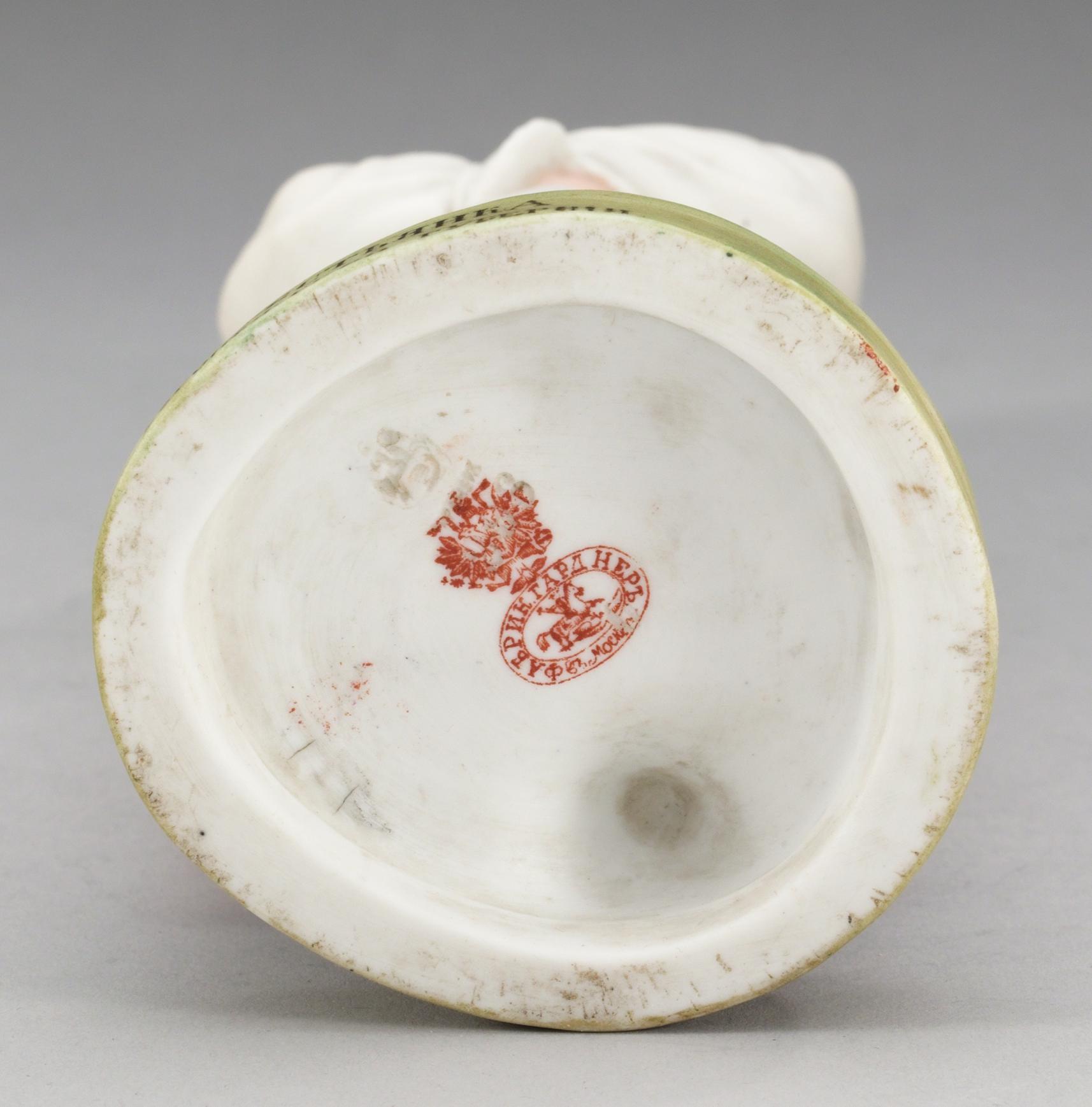
Porcelain in Russia. 18th - 19th centuries. The Gardner Factory. SPb: Palace Editions, 2003. Chapter V. Pl. 3.
Övrig information
The Gardner factory in Moscow started to produce the ‘People of Russia’ series in the 1870’s, the complete series consists of approximately 50 figures. The series were based on colour lithographies from a book published 1861 by T de Pauli. The book was called ‘Description Ethnografique des peoples de la Russie’, and was presented at the celebration of the Russian Empire millennium. It gives us a broad coverage of the people under the Russian Emperors reign, showing subjects ranging from Hindus, Balkans, Greeks all the way to the Siberians and the Russian Americans. This series follows the tradition of the J.D. Rachette series of the Imperial porcelain manufactory (1780’s). The figures truly are like small sculptures, all very individual.
För konditionsrapport kontakta specialist