

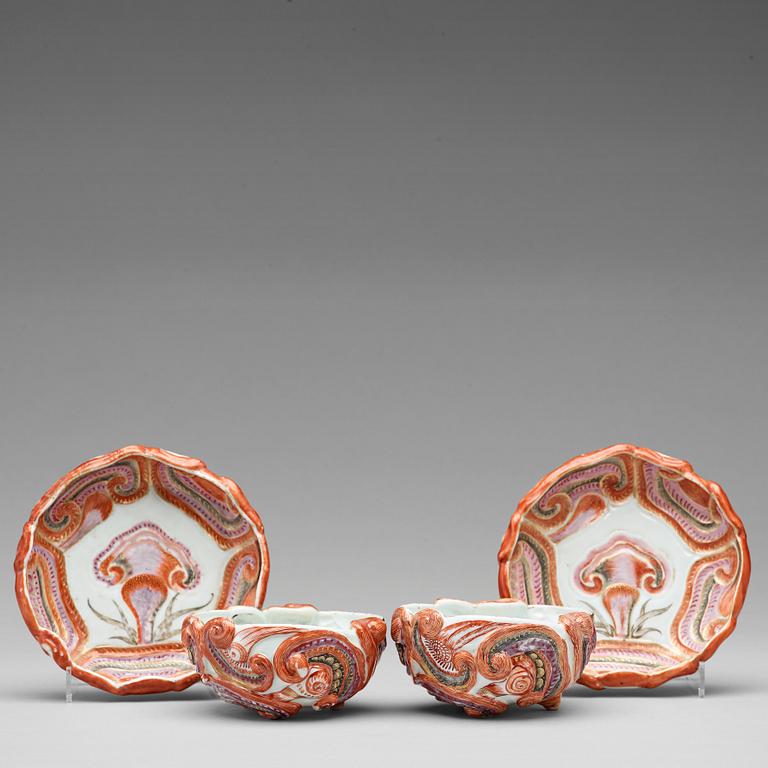
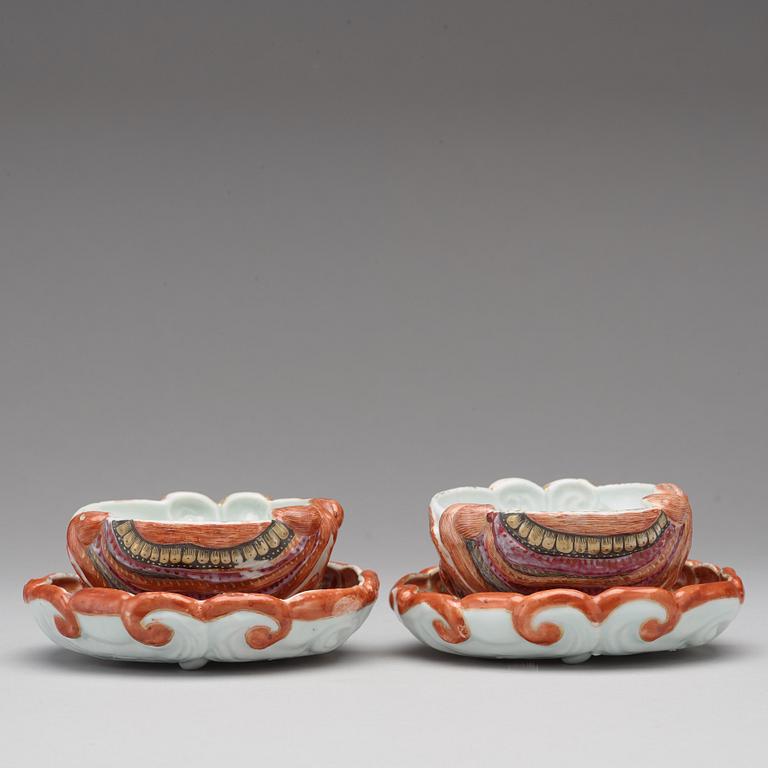
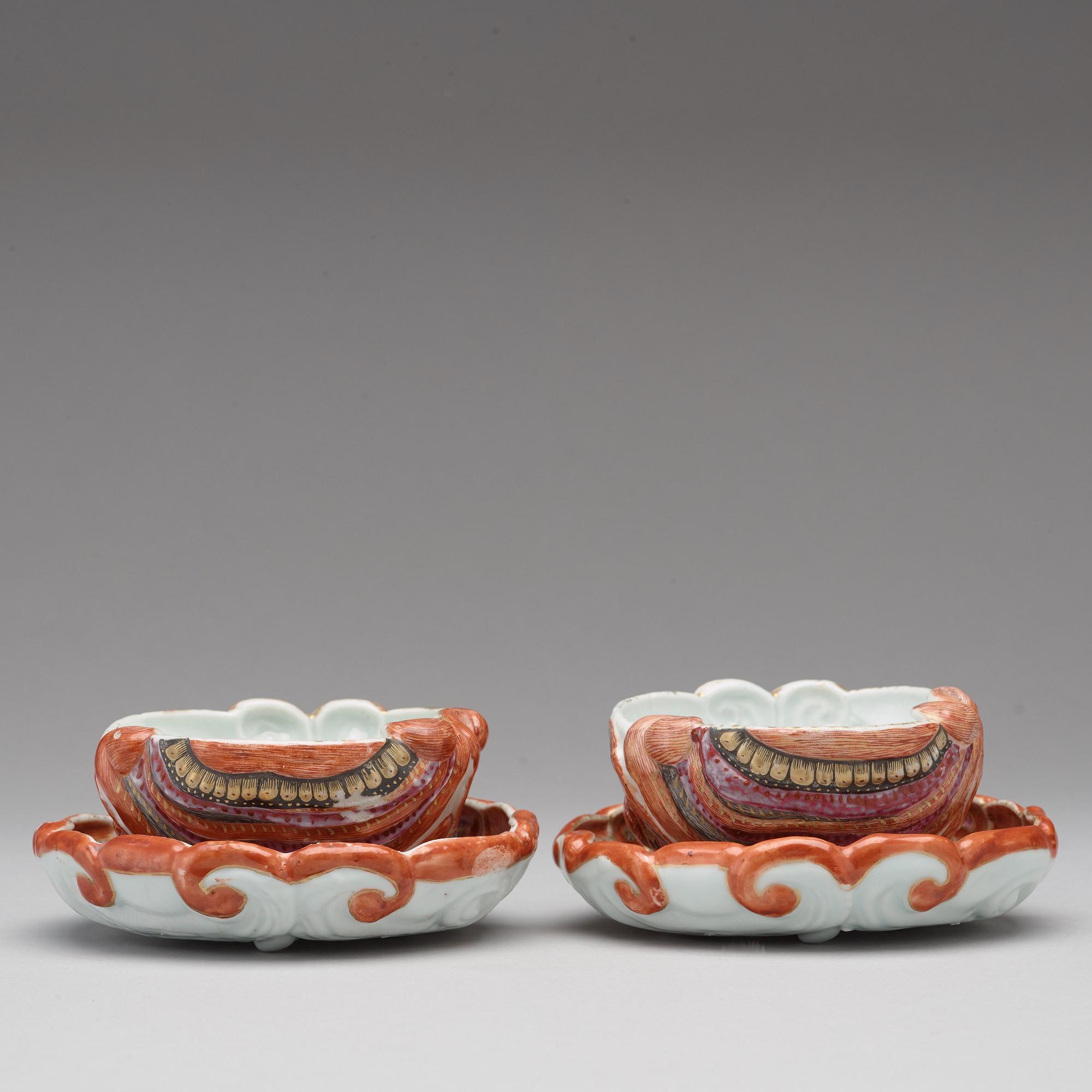
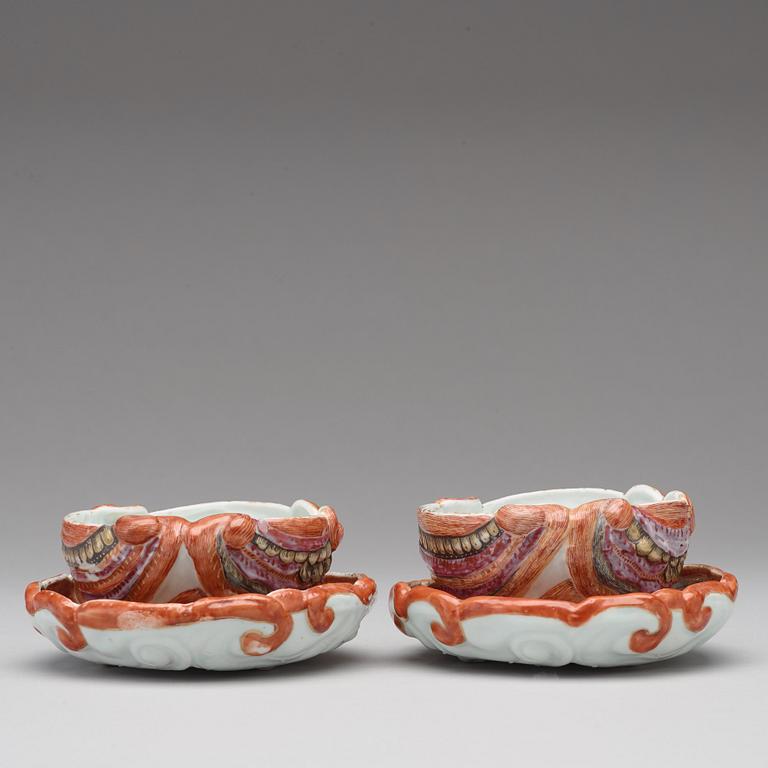
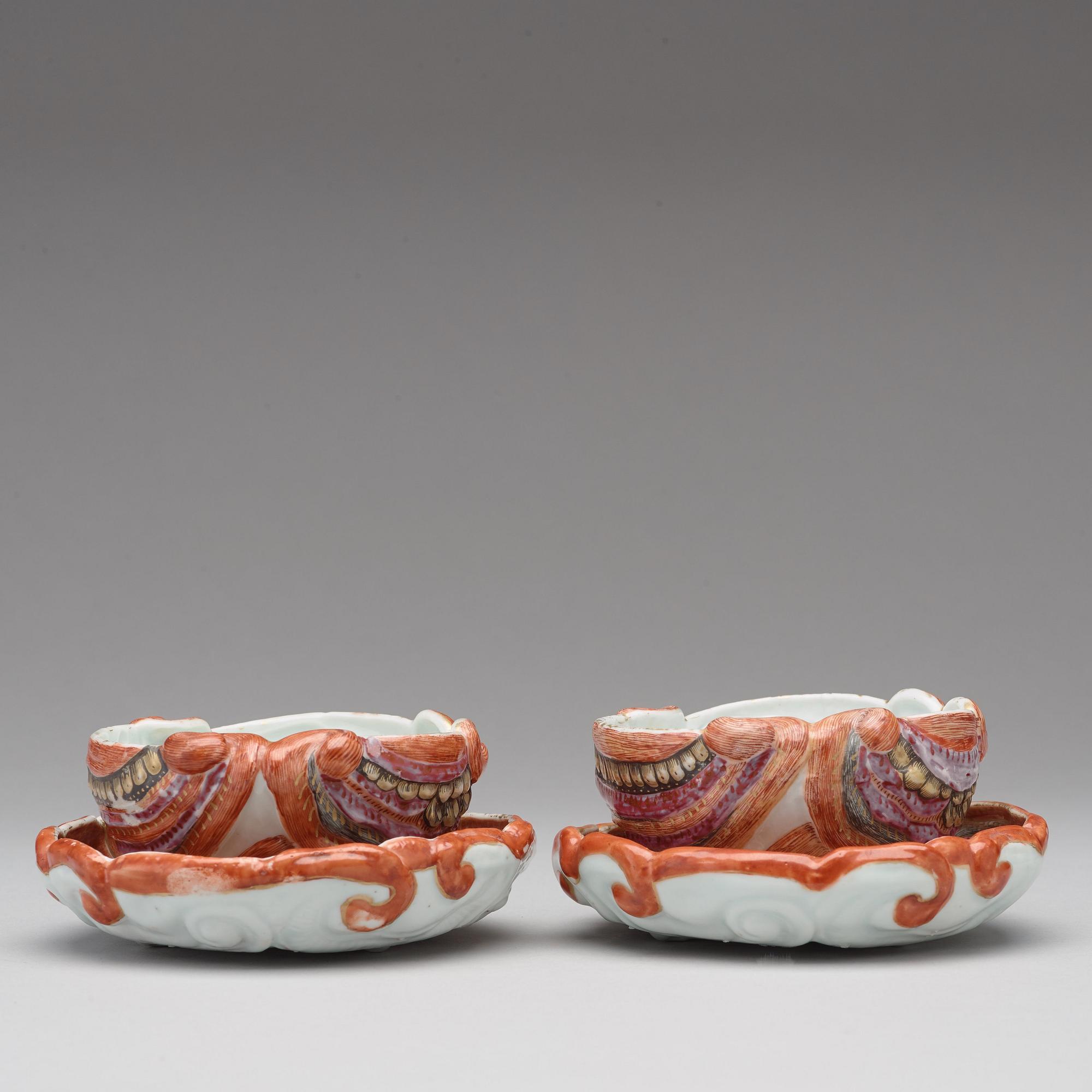
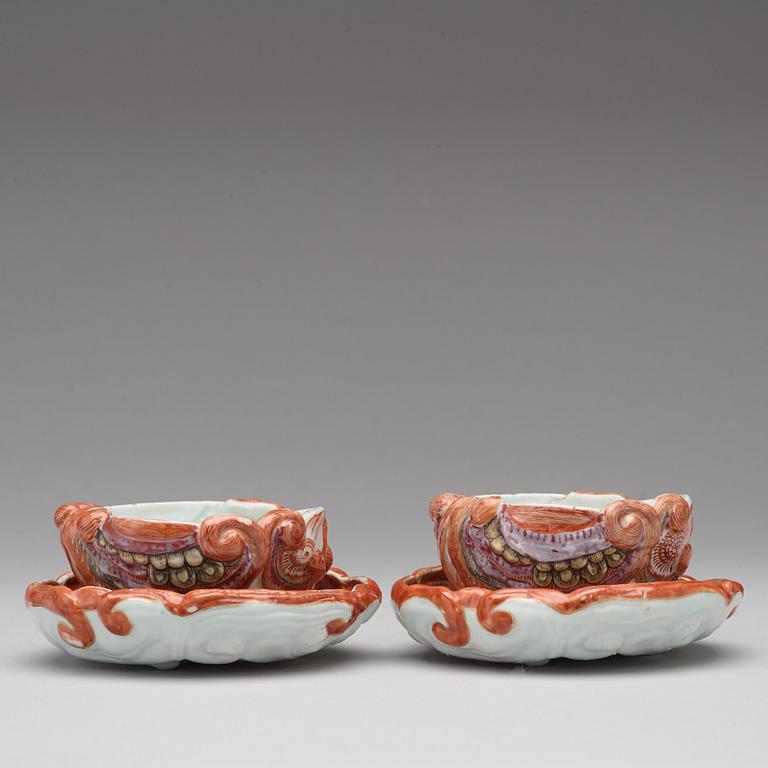
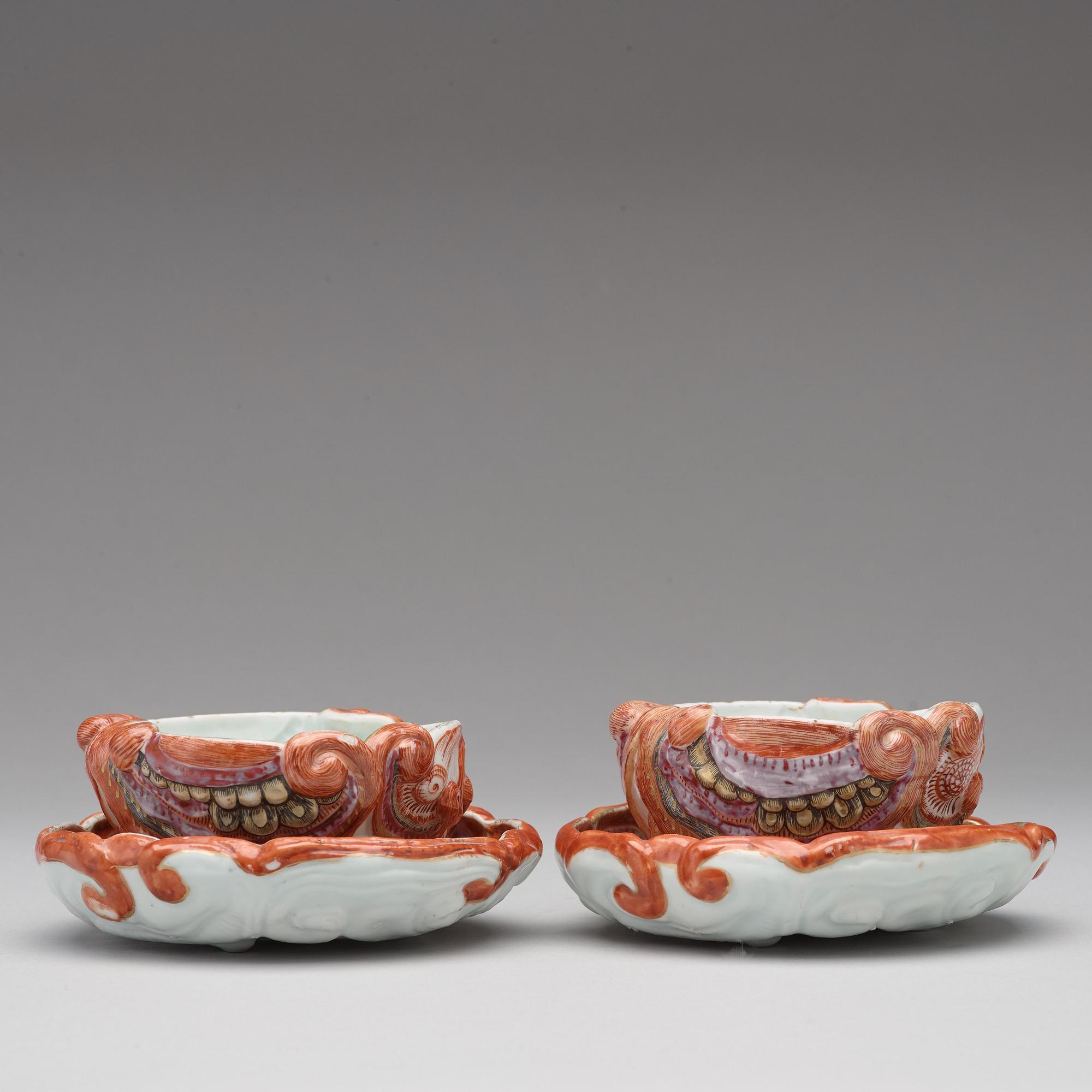
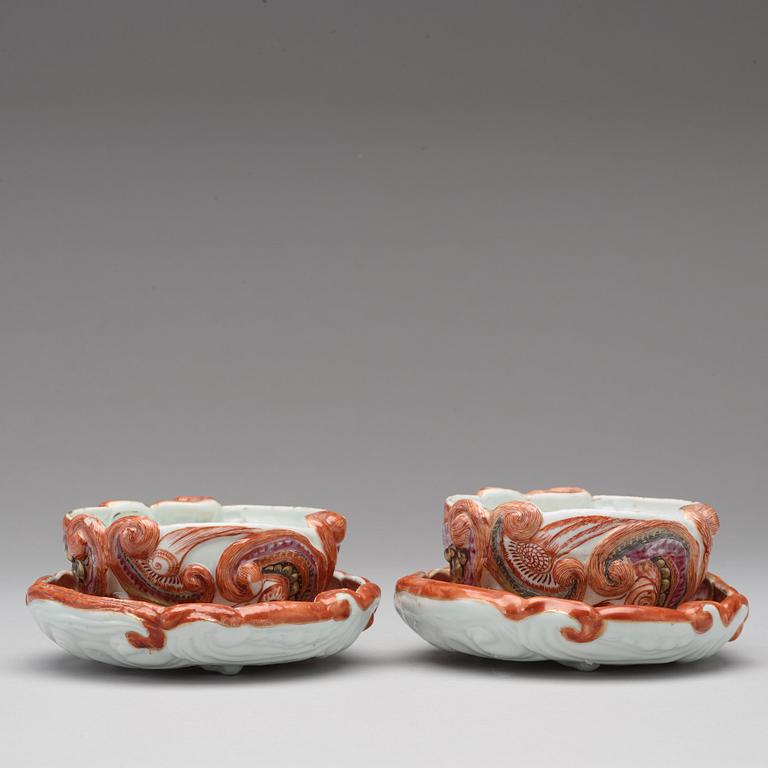
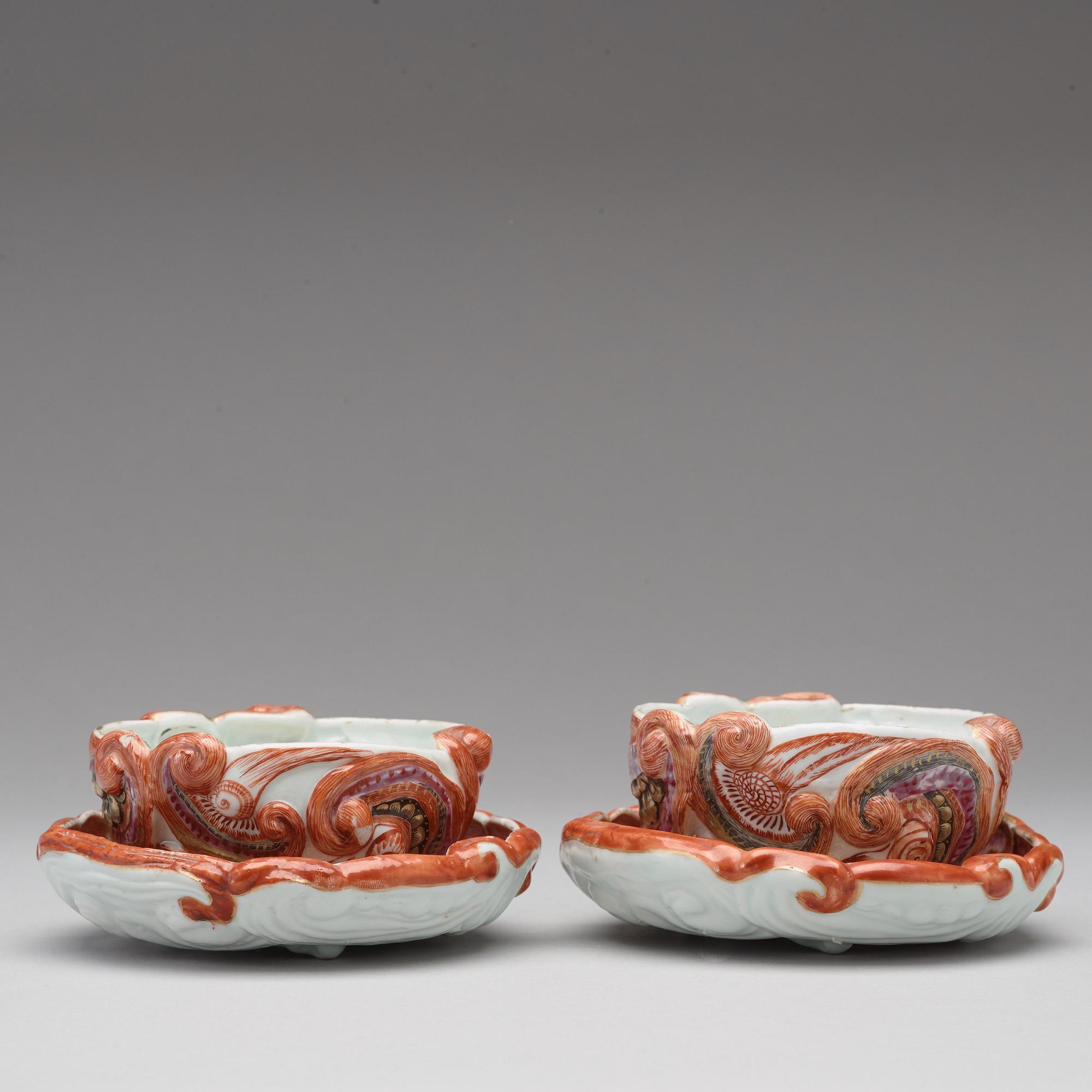
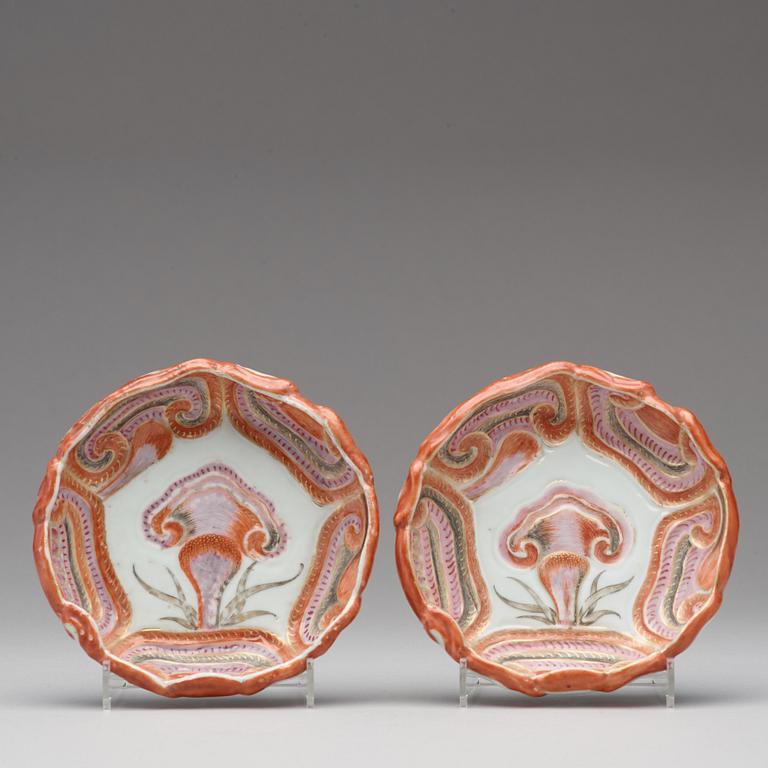
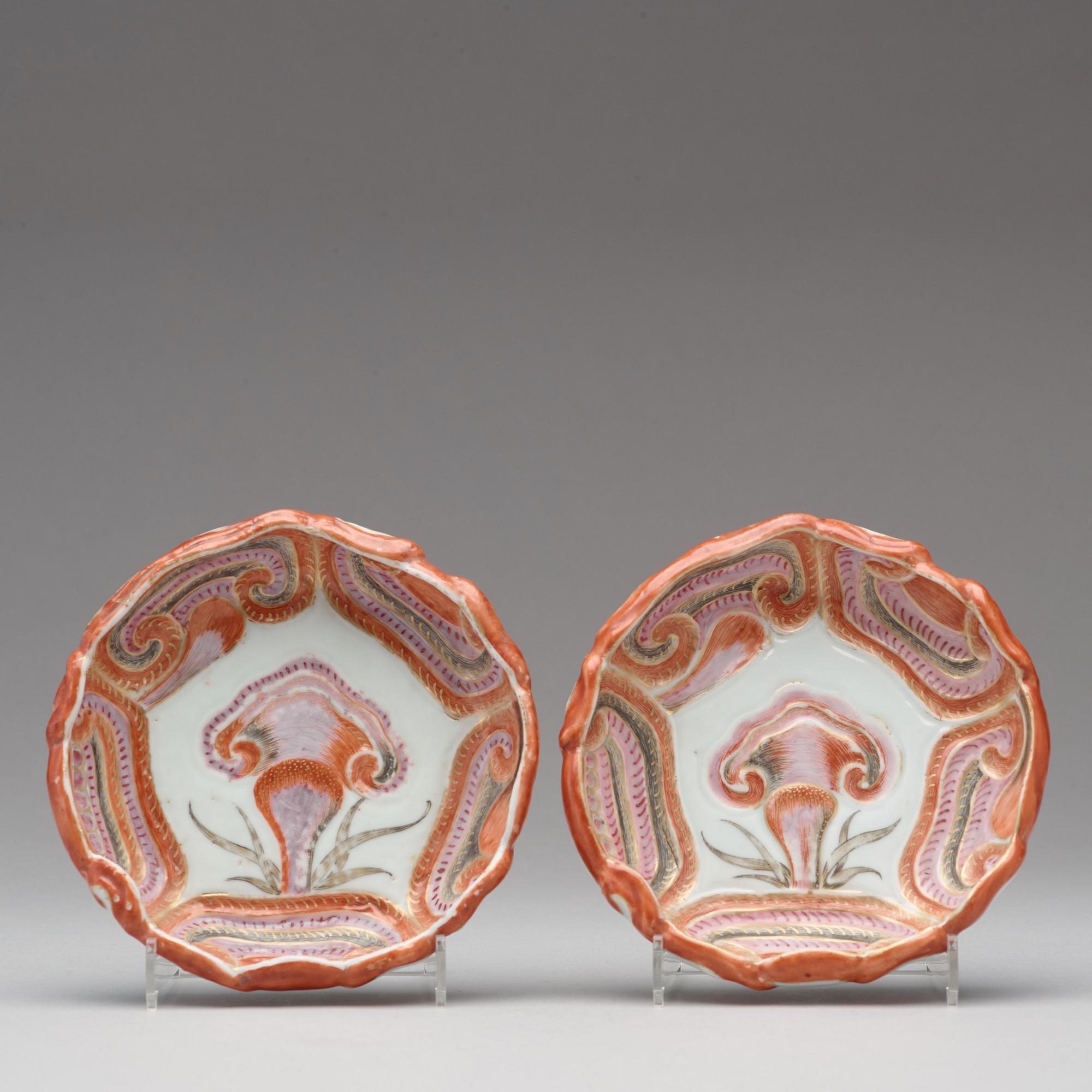
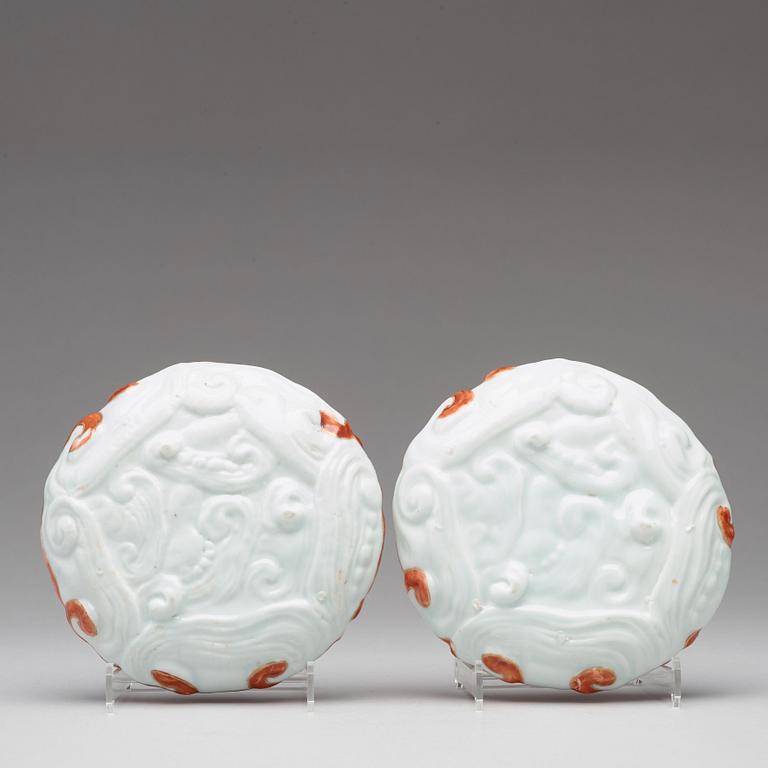
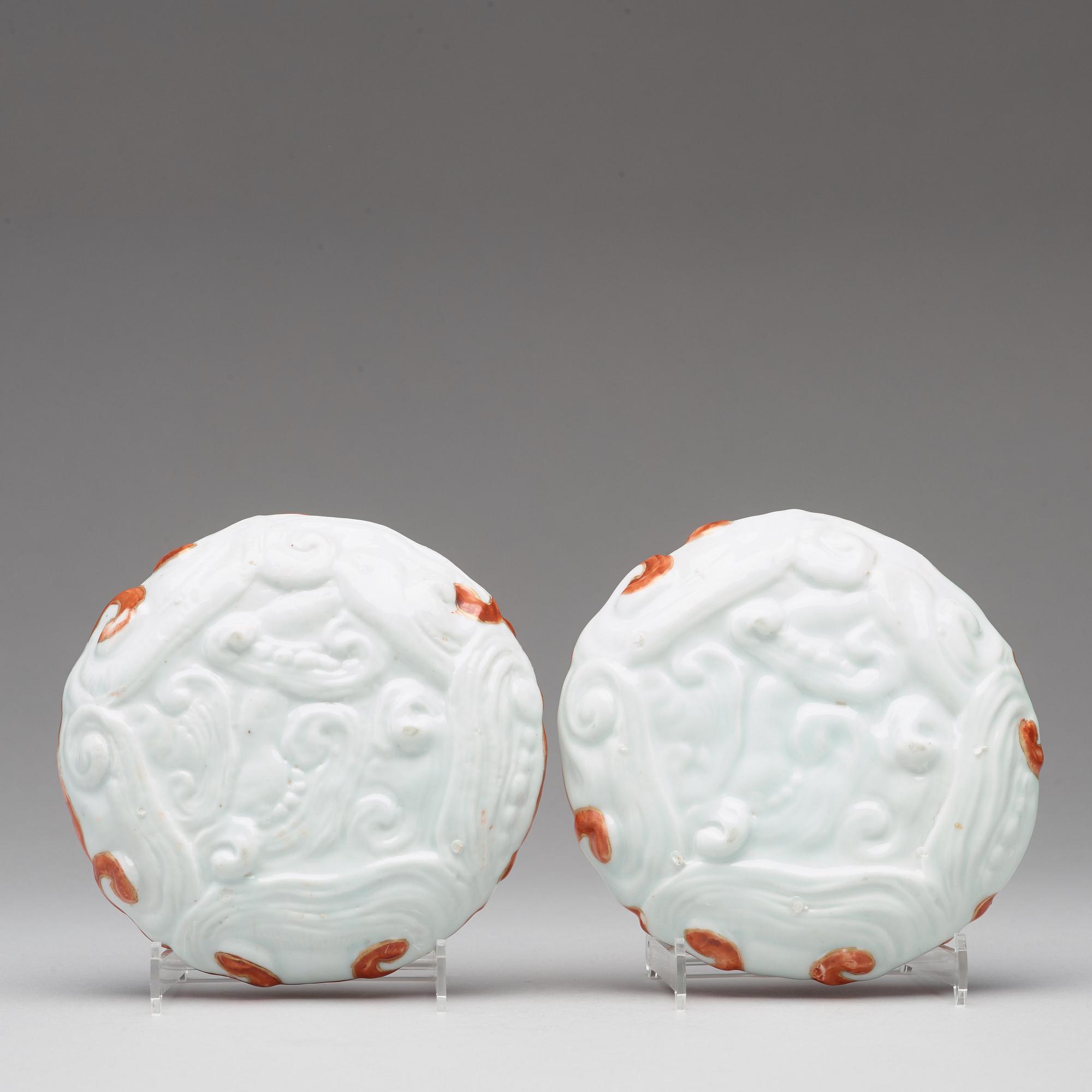
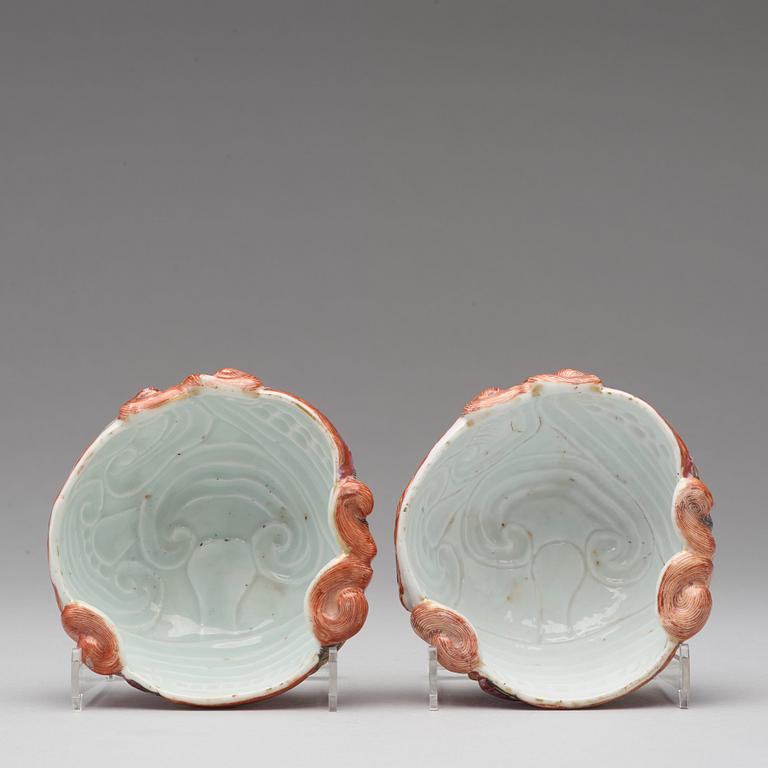
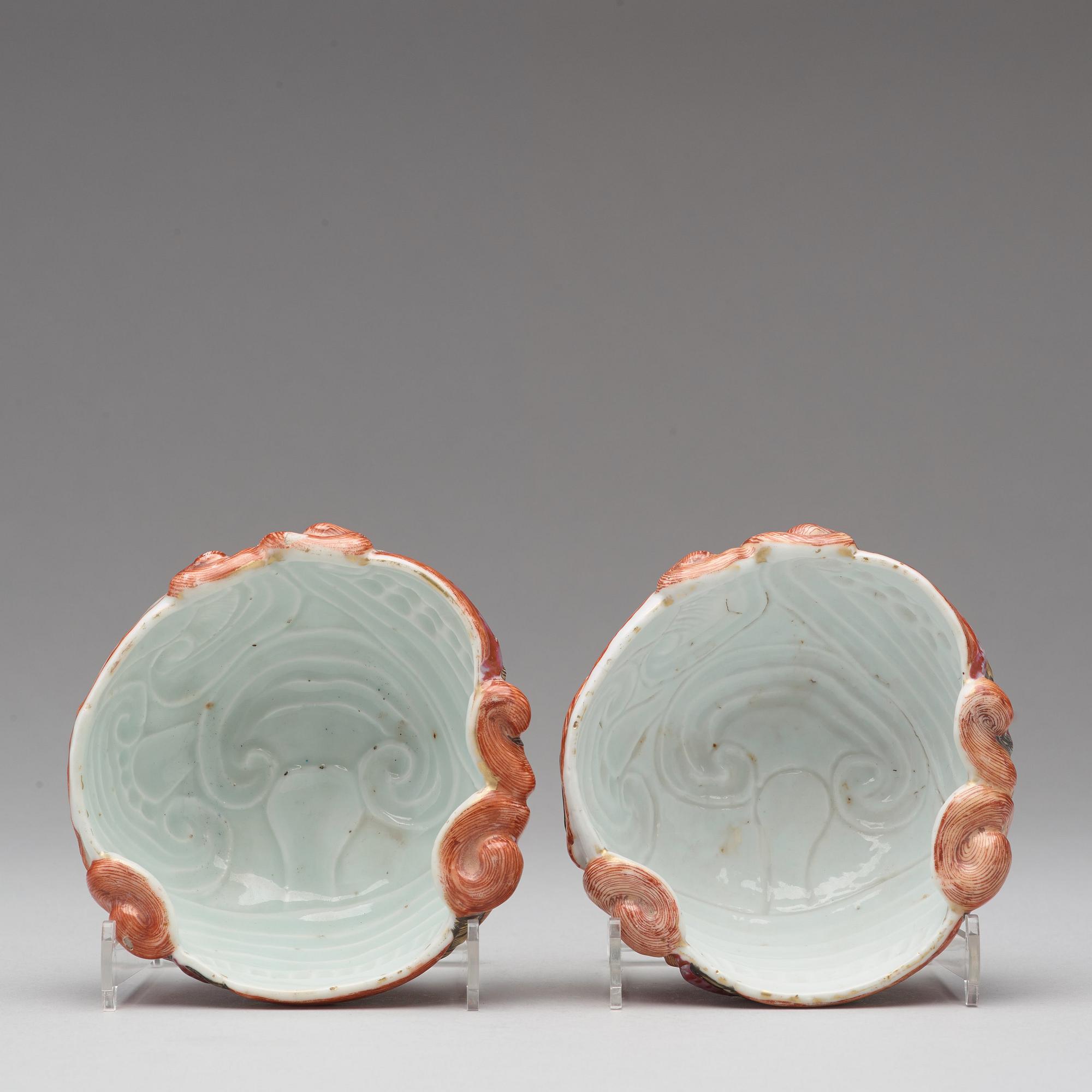
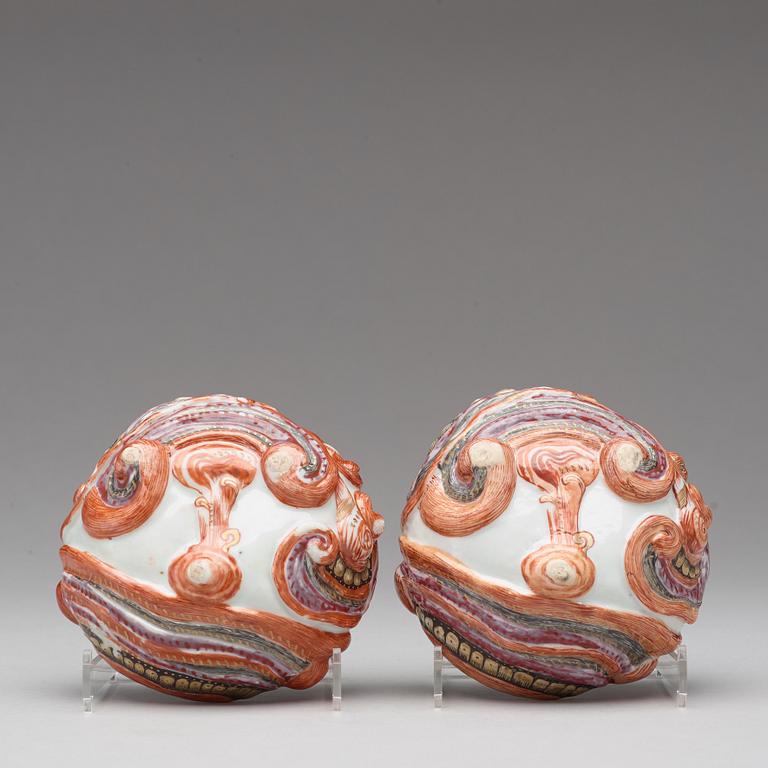
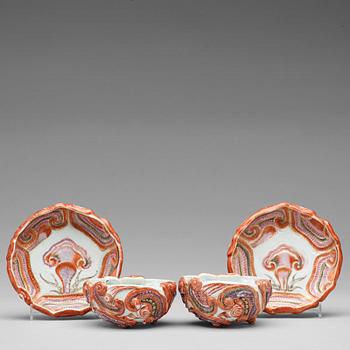
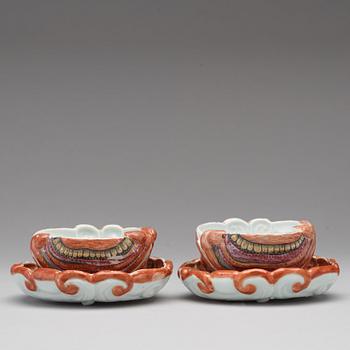
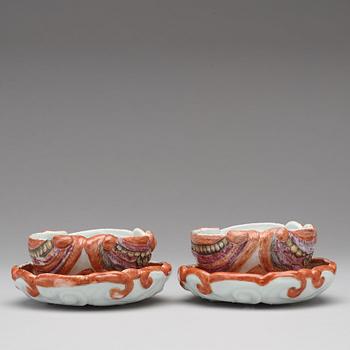
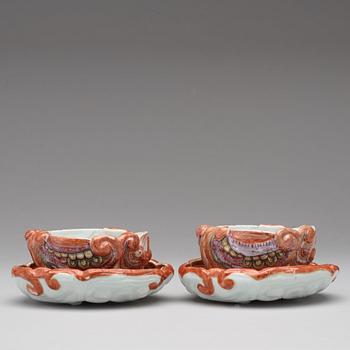
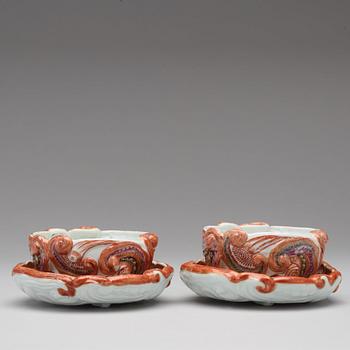
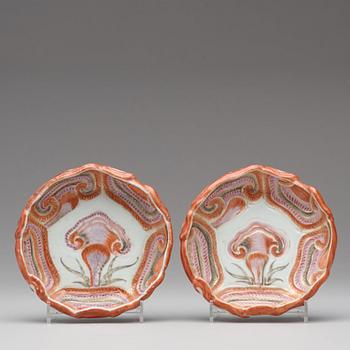
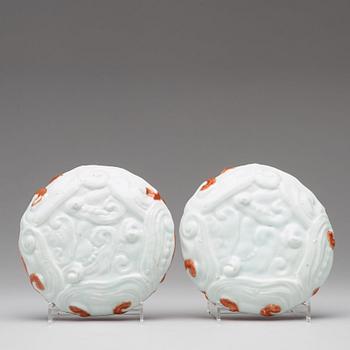
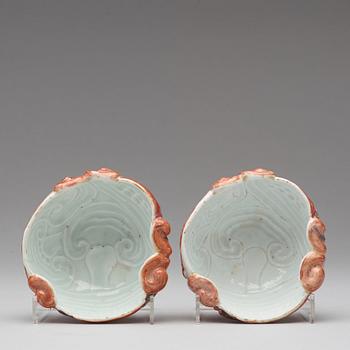
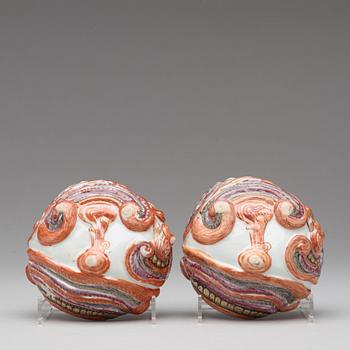
Formad med inspiration av lingzhisvampar, dekor i famille rosefärger. Diameter skål 11 cm, diameter fat 14 cm.
Nagg. En skål med små sprickor.
Proveniens
From the Estate of a Swedish Noble Family.
Lingzhi or ‘divine fungus’ is amongst the most revered and interesting plants in China. Also called ‘Auspicious Plant’ or ‘Immorality Plant’, lingzhi is believed to be a magical substance and Daoist alchemists claimed that by taking lingzhi man could attain immortality and even a dead person could come to life again. Lingzhi has been a popular motif in Chinese art for two thousand years. Many imperial porcelains of the Ming (1368-1644) and Qing (1644-1911) dynasties are painted with the lingzhi design, often in a stylised or simplified form. It is extremely rare, however, to find porcelain lingzhi modelled in its naturalistic form like the present pieces. The Qianlong Emperor (r. 1736-95), was famous for his love of outstanding objects that give a brilliant, imposing and opulent look.
Utställningar
Compare identical at the Hallwylska Museum, Stockholm, Inventory number XLVIII:X:A.e.h.18.
Litteratur
The appreciation of lingzhi by the Qianlong Emperor may also be demonstrated in a small waterpot of Qianlong mark and period, modelled in the shape of a celadon-glazed lingzhi, with three smaller lingzhi and stems in enamels attached to the side, included in Edward T. Chow and Helen D. Ling, Collection of Chinese Ceramics from the Pavilion of Ephemeral Attainment, Hong Kong, 1950, vol. IV, pl. 186, and the exhibition catalogue Qing Imperial Monochromes. The Zande Lou Collection, Shanghai Museum, Shanghai, 2005, cat. no. 46 (fig. 4). A Qianlong-marked vase of lingzhi form covered with a Ru-type glaze, the foot dressed in brown, was included in the exhibition Qing Mark and Period Monochrome and Two-Coloured Wares, S. Marchant & Son, London, 1992, cat. no. 34, and cover.
Compare also an imperial porcelain model of gnarled branches of lingzhi covered with a guan-type glaze, with a four-character seal-script mark of the Yongzheng period (1723-35), sold at Sothebys London rooms, 12th December 1972, lot 169, and 29th November 1990, lot 211. For a Qing period vase of lingzhi form made in Guangdong, see Christie's New York, 23rd March 2012, lot 2059. Sothebys, october 7th 2015, lot no 3609.
För konditionsrapport kontakta specialist



Andra har även tittat på


