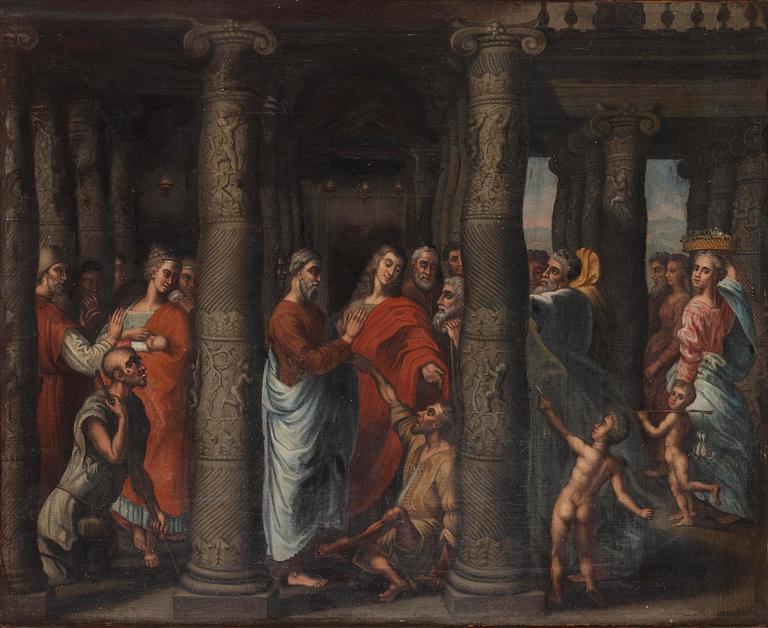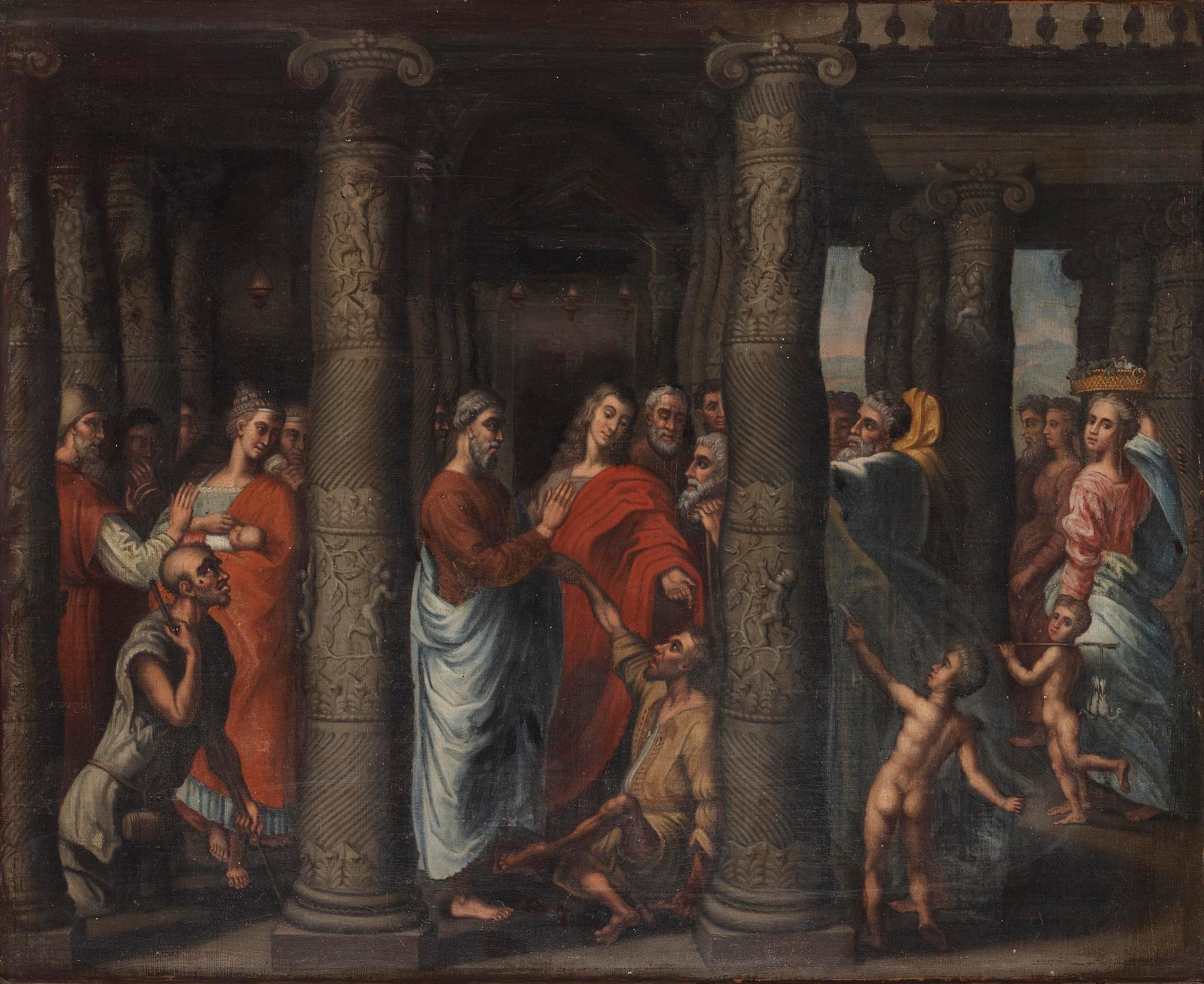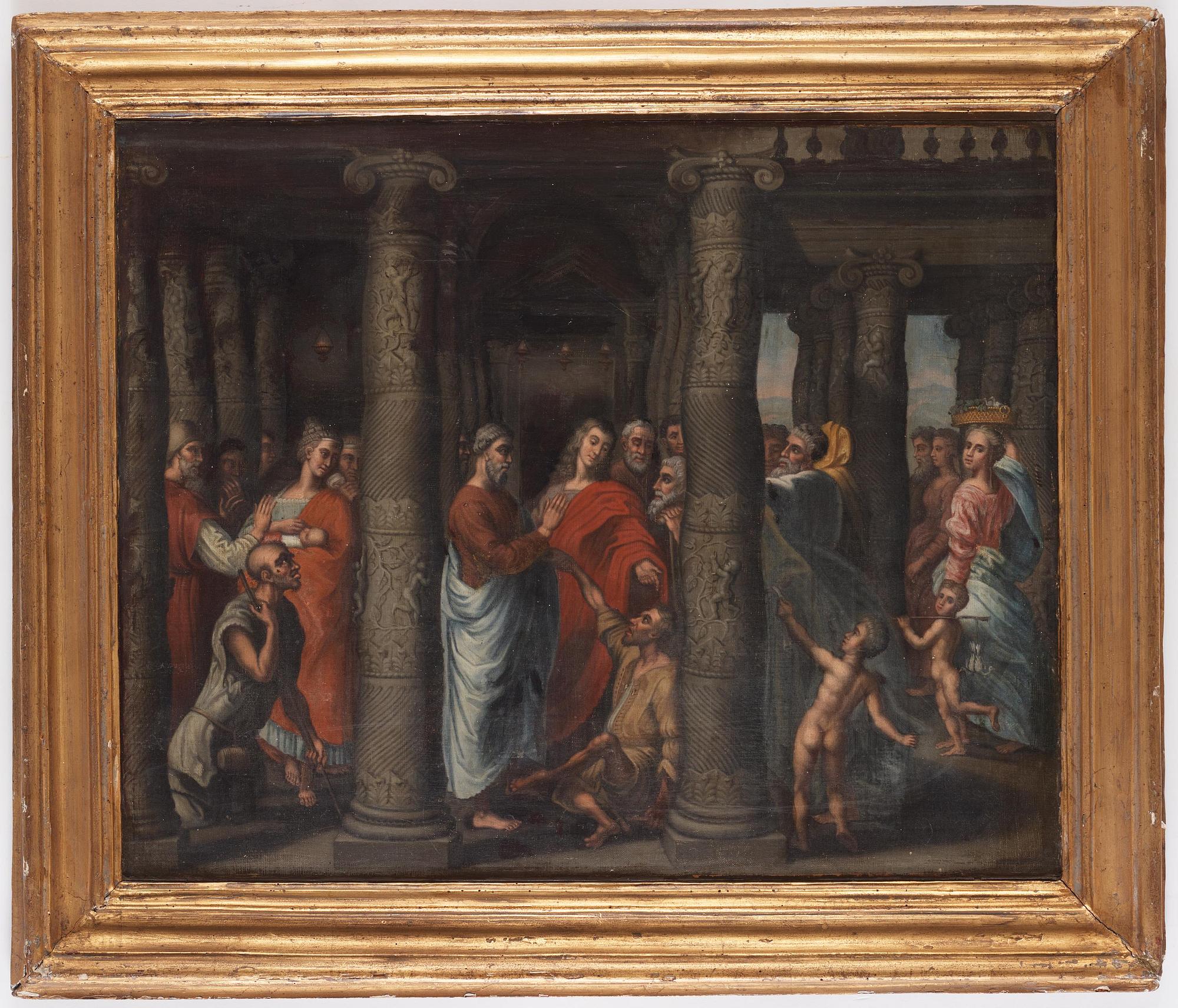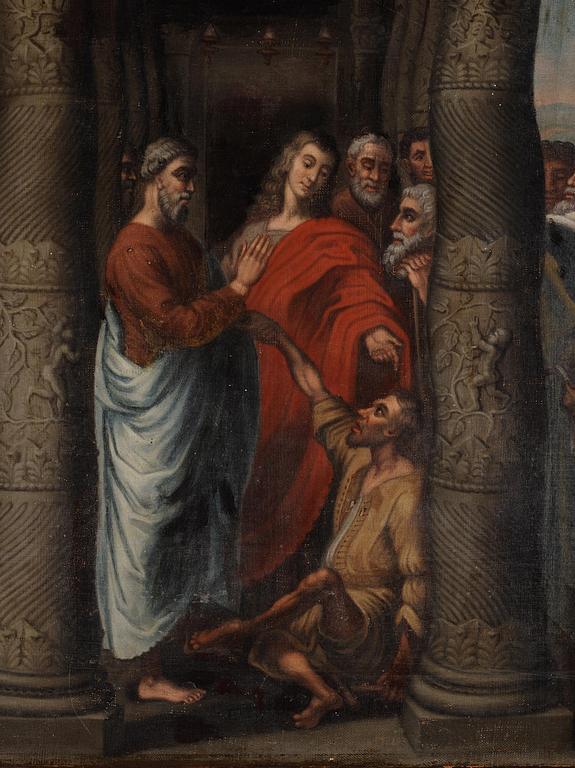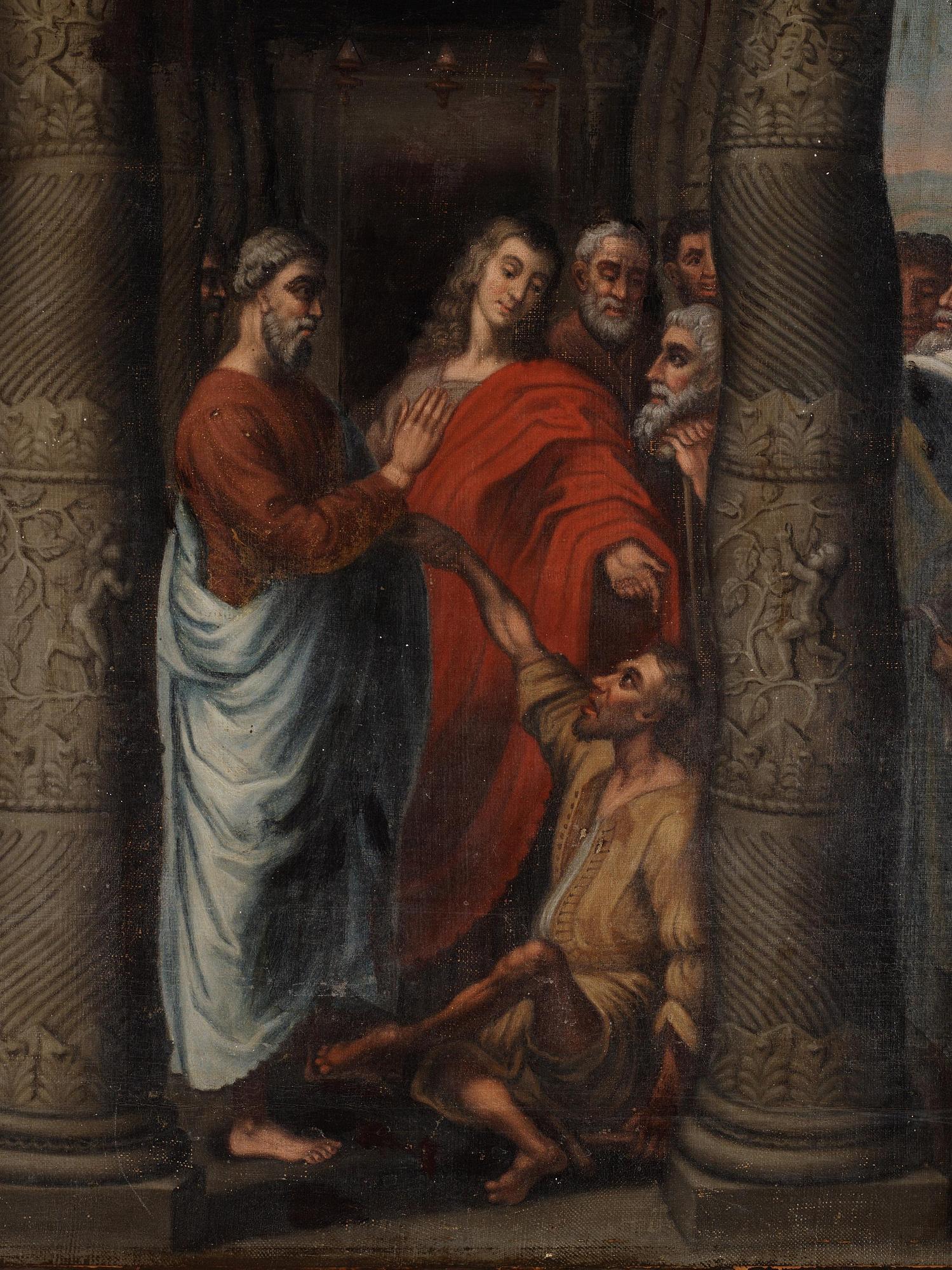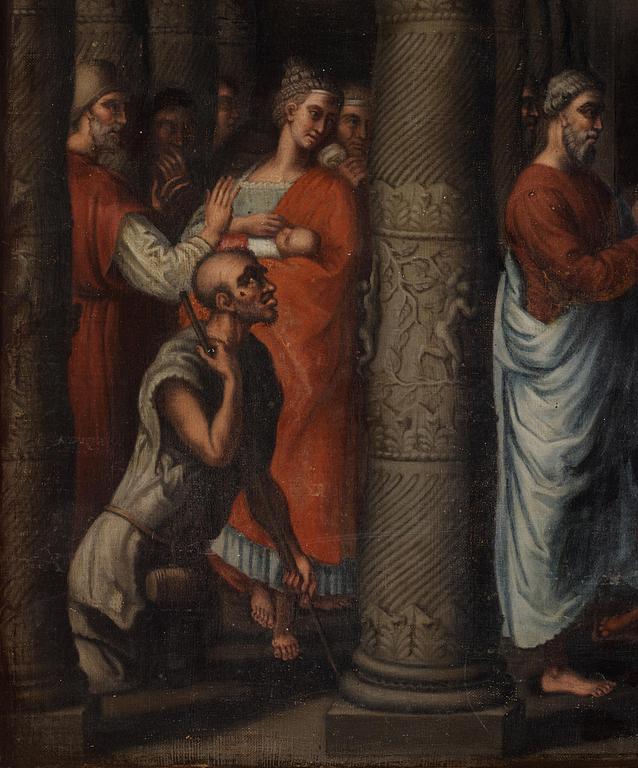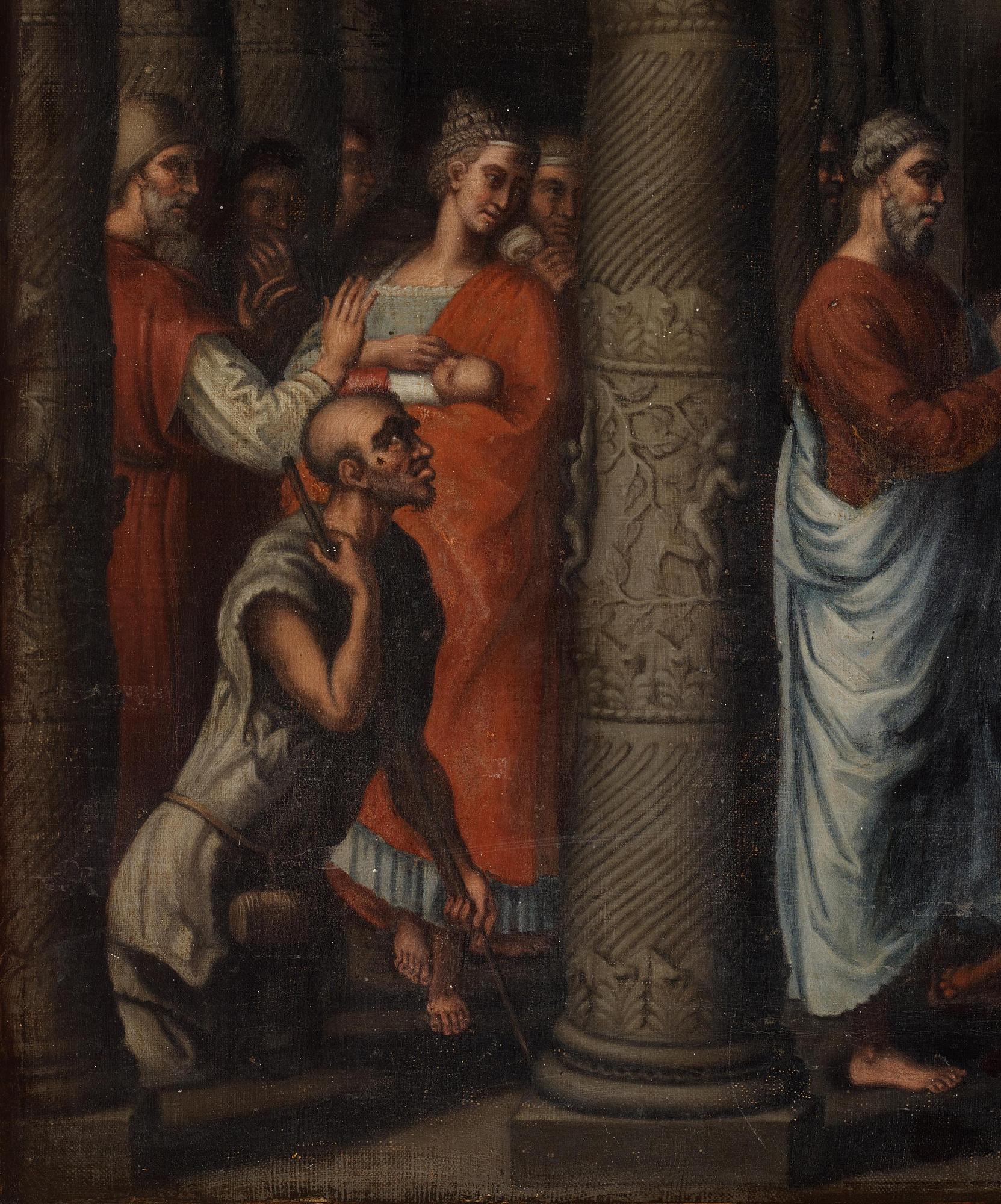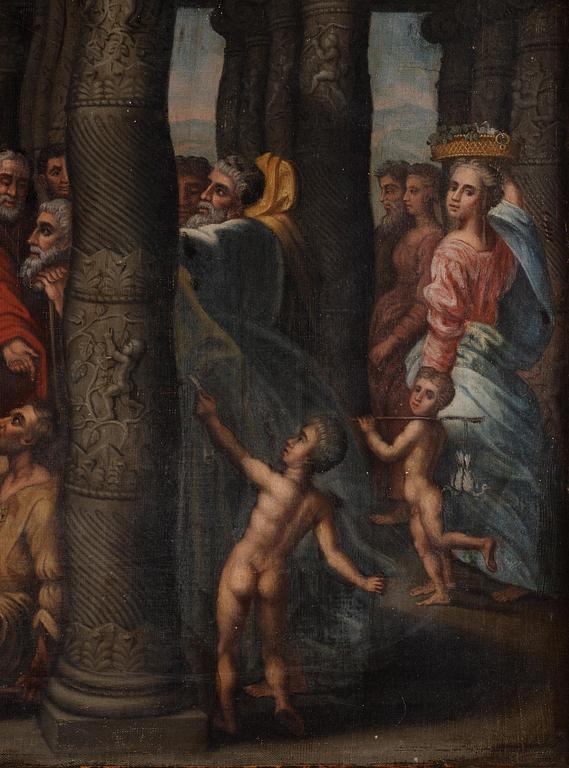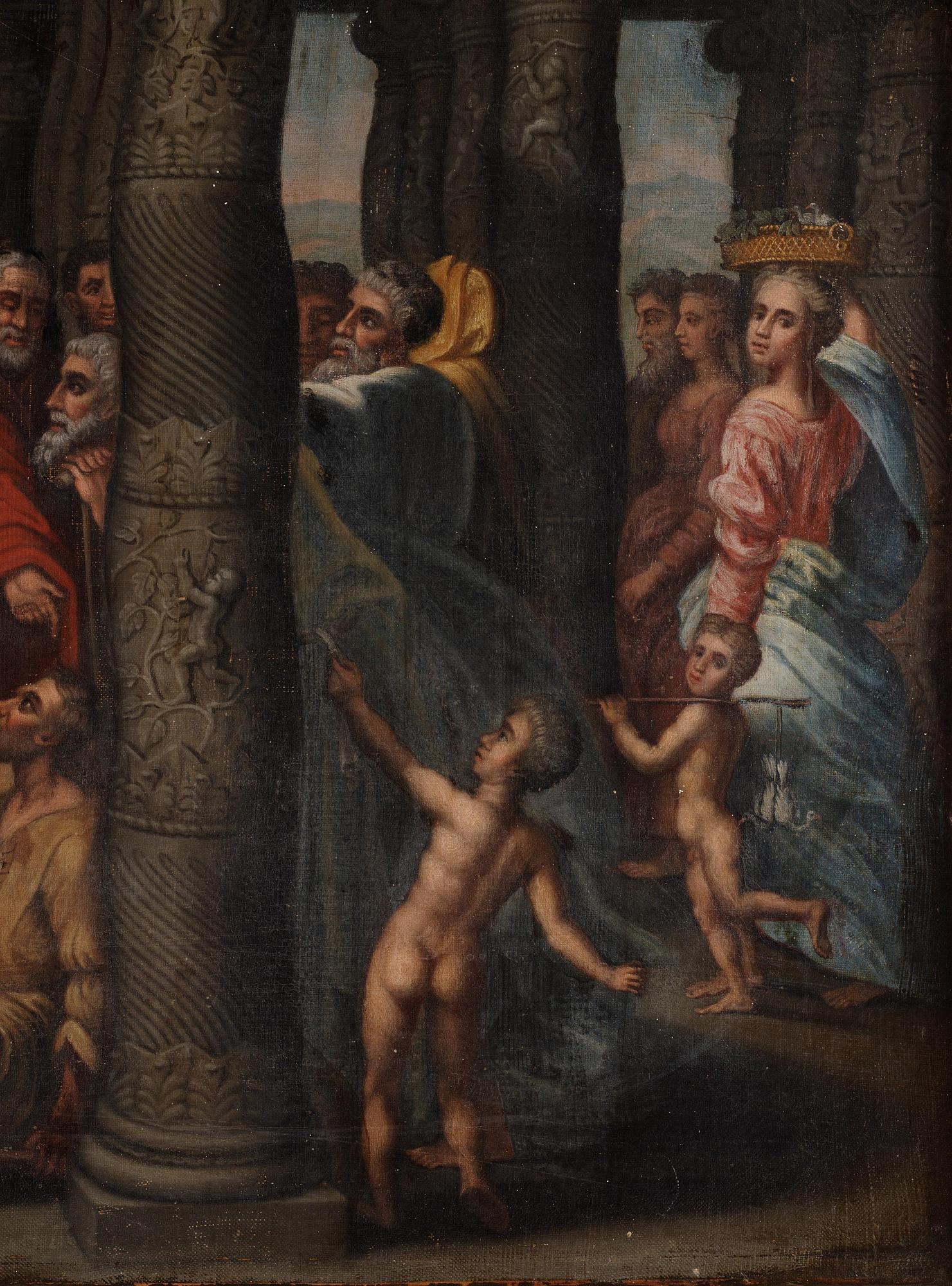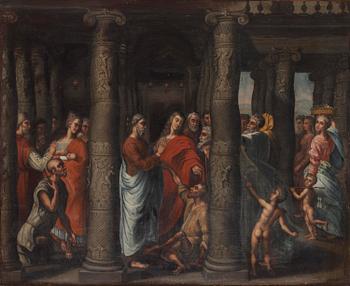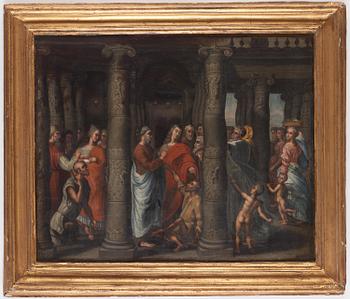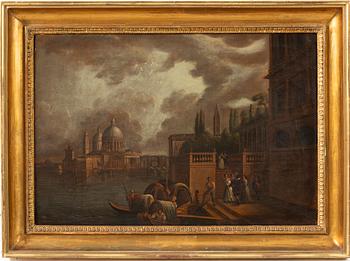
Den lame mannen, efter Rafaels fresker i Vatikanen
Uppfodrad duk 58 x 74 cm. Äldre förgylld ram.
Proveniens
Svensk privatsamling.
Övrig information
The Raphael Cartoons are designs for tapestries and were commissioned from Raphael by Pope Leo X (reg. 1513-21) shortly after his election in 1513. The tapestries were intended to hang in the Sistine Chapel in Rome, built by one of Leo's predecessors Pope Sixtus IV (reg. 1471-84). The Chapel was primarily intended for the use of the Pope and the body of clergy and Laity immediately surrounding him. The decoration of the chapel under Sixtus addressed the lives of Moses and Christ. The tapestries continued this theme, illustrating scenes from the lives of St. Peter and St. Paul who were seen as the founders of the Christian Church, and reinforcing the legitimity of the Pope's authority and power. The resulting tapestries had in addition woven borders showing scenes from Leo's life and from the lives of Saint Paul, also designed by Raphael: the cartoons for these have not survived.
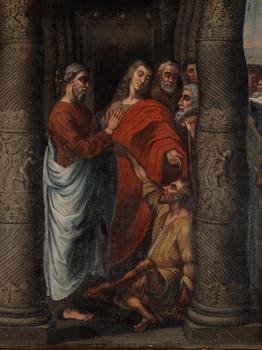
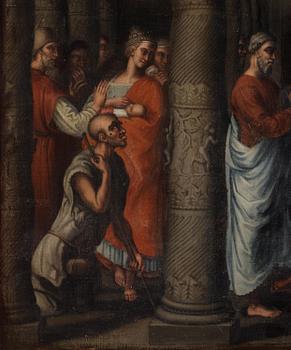
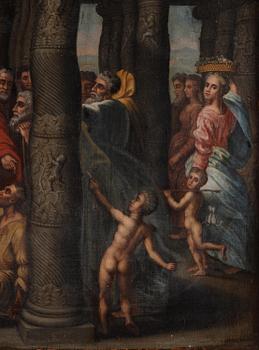
In this cartoon Peter heals a lame man at the Beautiful Gate of the Temple in Jerusalem, a miracle which symbolises Peter's conversion, or spiritual healing, of the Jews. The twisted columns are based on antique examples in the old basilica of St. Peter's, then thought to have come from Solomon's Temple in Jerusalem.
För konditionsrapport kontakta specialist