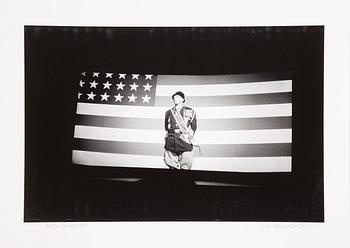
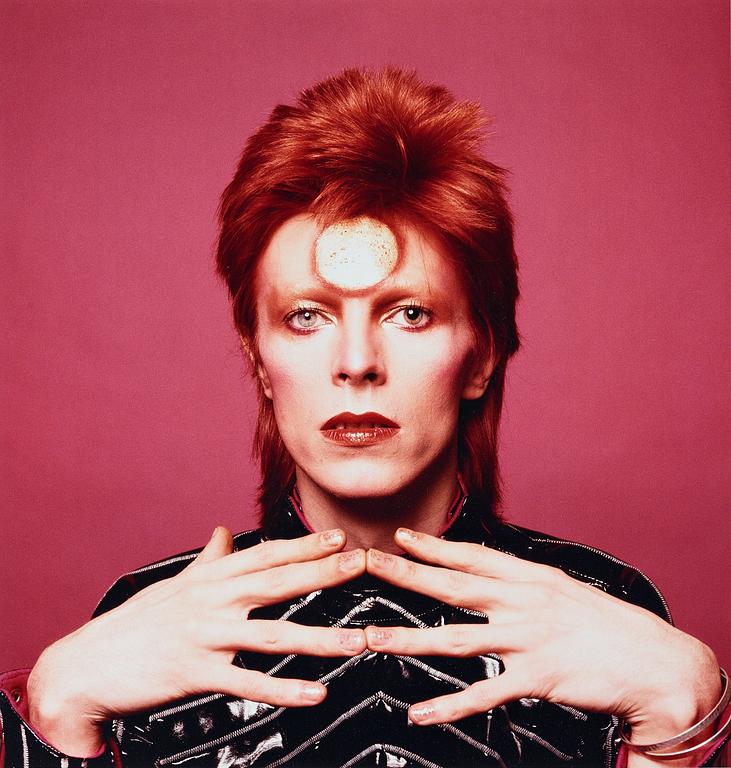
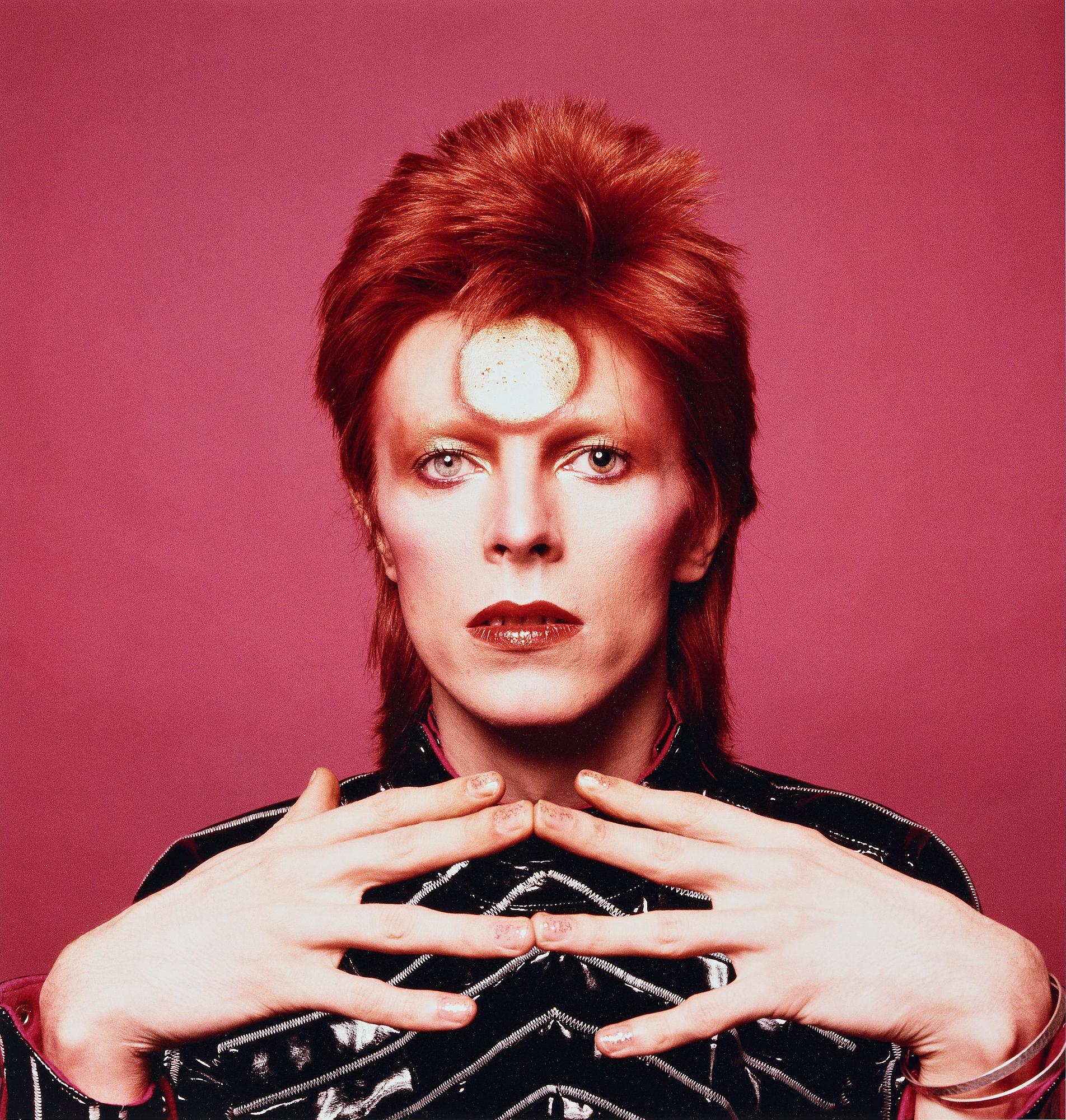
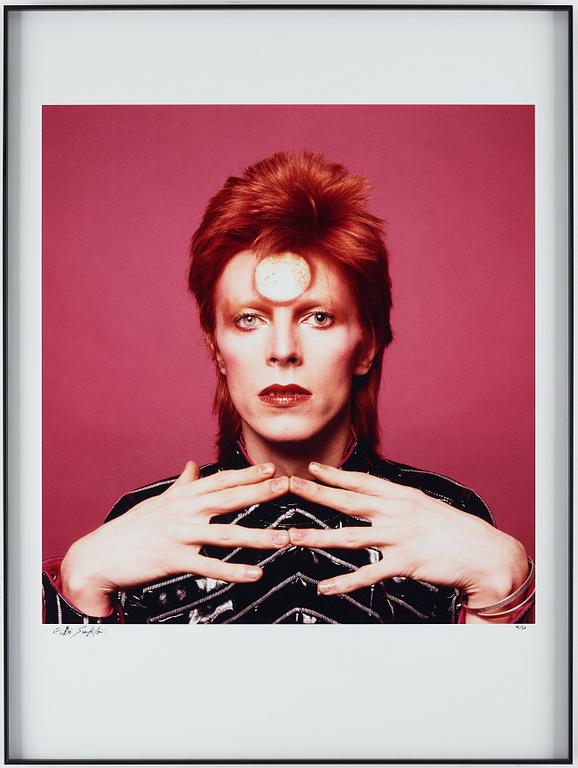
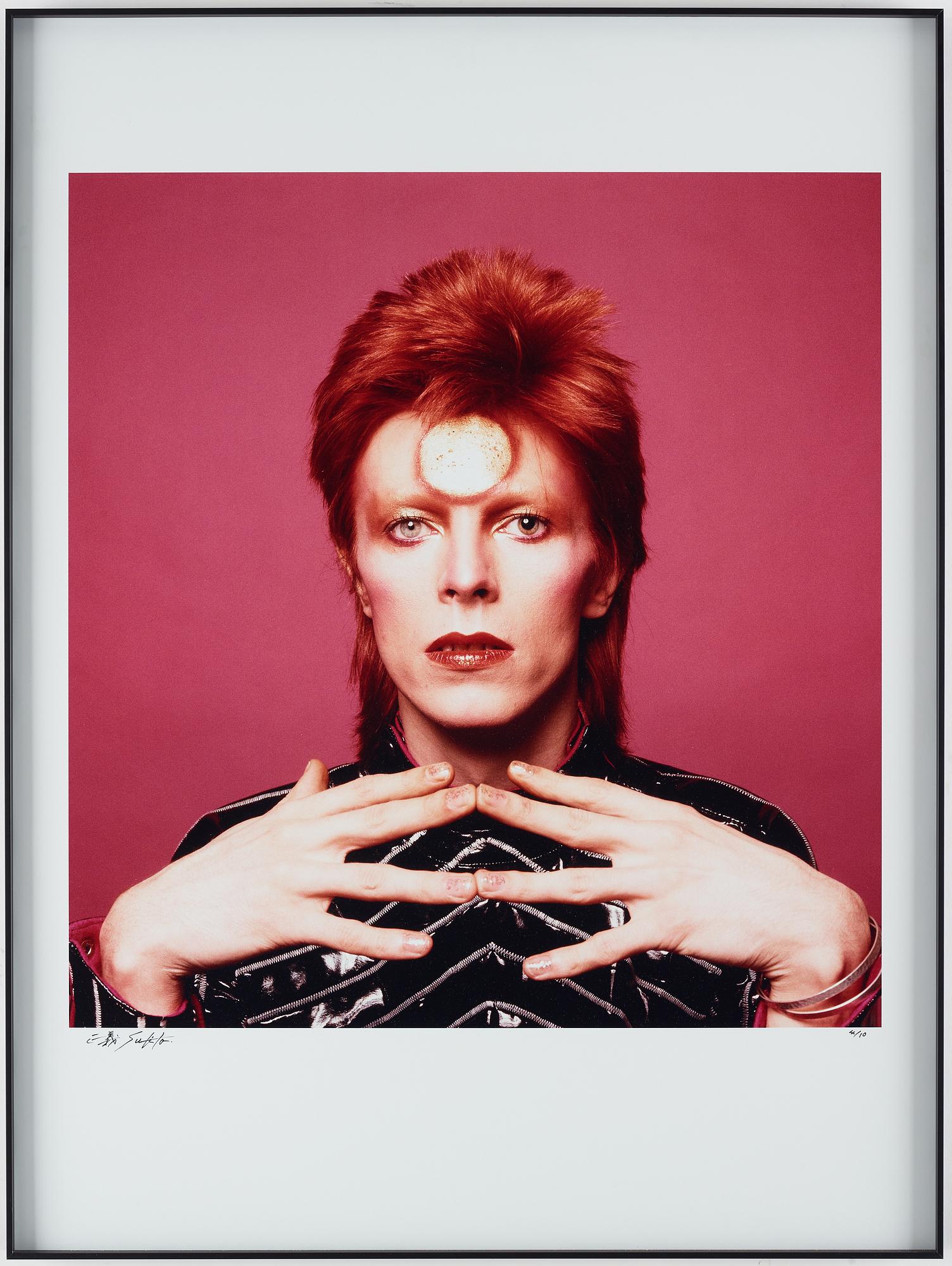
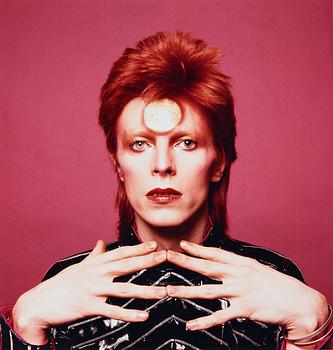
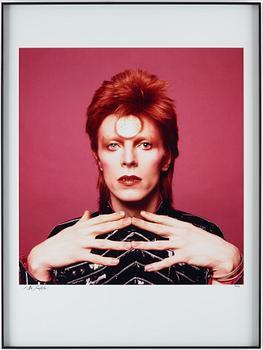
"Keep Your 'Lectric Eye," 1973.
Signerad Sukita och numrerad 4/10. C-print, bildyta 70 x 66 cm. Bladstorlek 101 x 75,5 cm.
Övrig information
This photograph of David is taken by Masayoshi Sukita in February 1973, and are referred to as the Watch That Man series. These show David Bowie transformed into a space Samurai with a black, red and blue outfit adapting the aesthetics of the Hakama – a type of baggy and unstructured trouser worn by Samurai.
Bowie is wearing an incredible costume by Japanese designer Kansai Yamamoto and the session took place in New York.
Yasuko ‘Yacco’ Takahashi was the first professional stylist to work in Japan, operating from Tokyo’s Central Apartments complex—housing many of the major names in 1970s Japanese creative industries—fashion, design, music, photography and advertising. Masayoshi Sukita had an office in Central Apartments and worked with Yacco.
För konditionsrapport kontakta specialist

Bildrättigheter
Konstverken i denna databas är skyddade av upphovsrätt och får inte återges utan rättighetshavarnas tillstånd. Konstverken återges i denna databas med licens av Bildupphovsrätt.
Andra har även tittat på