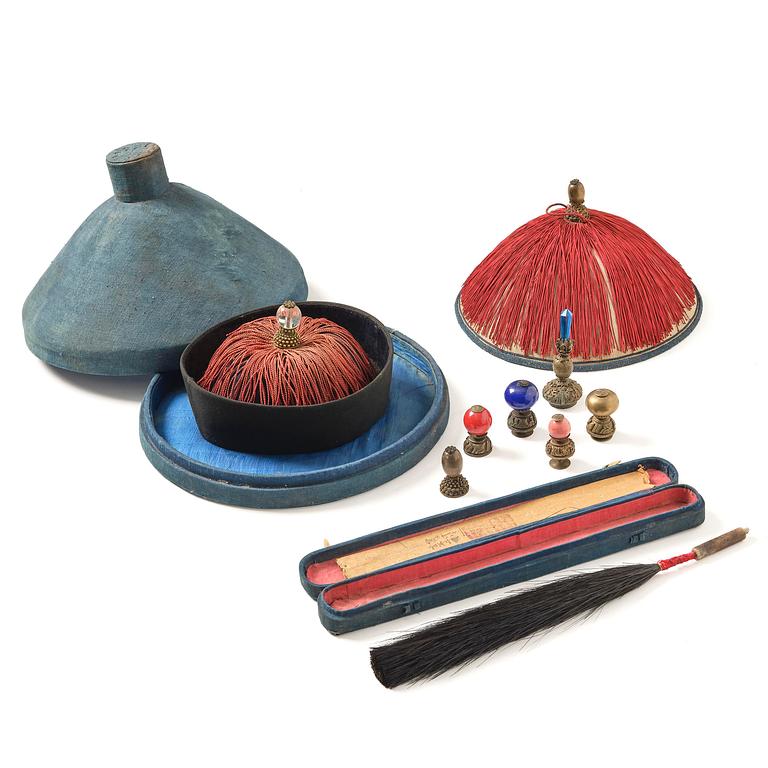
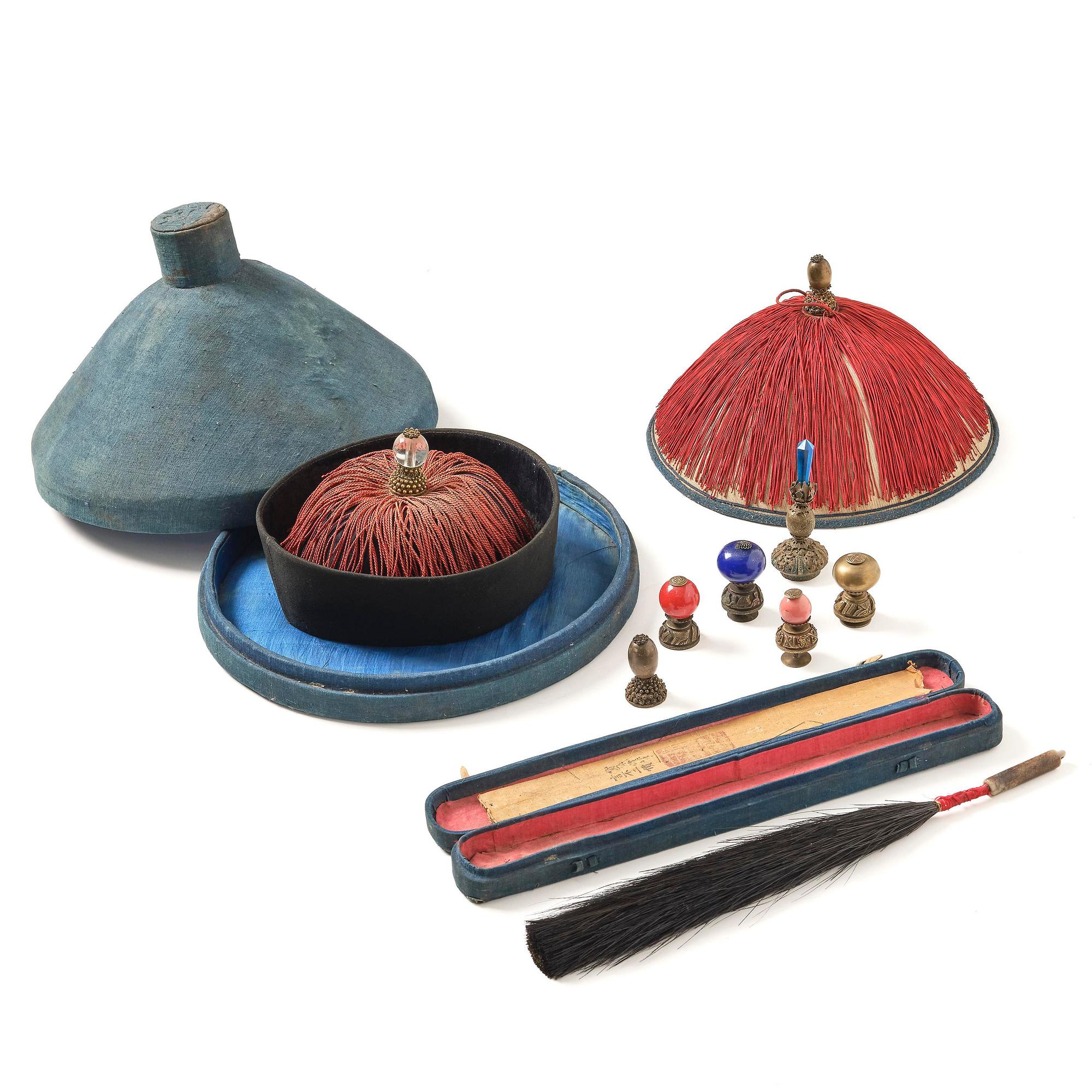
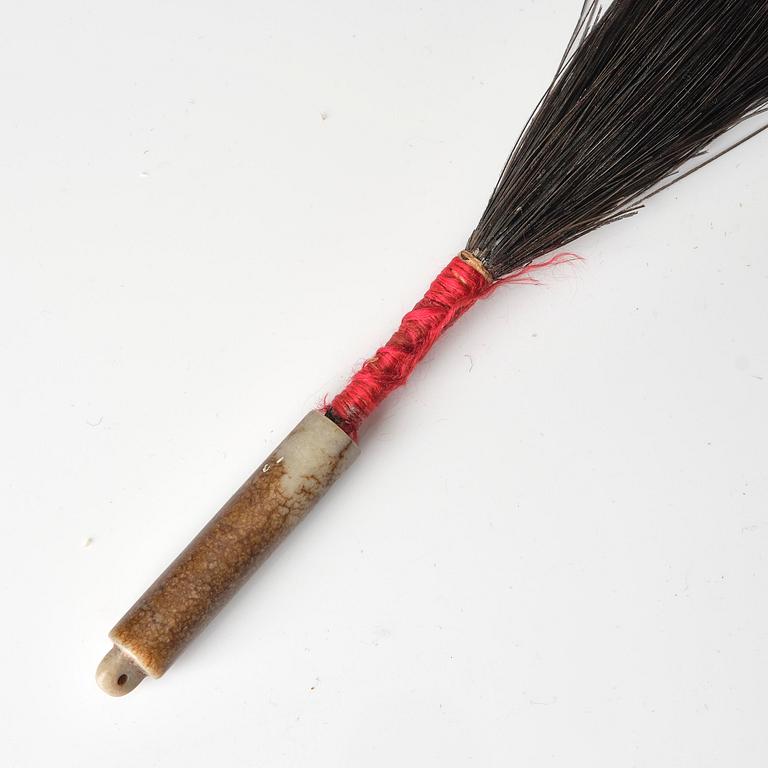
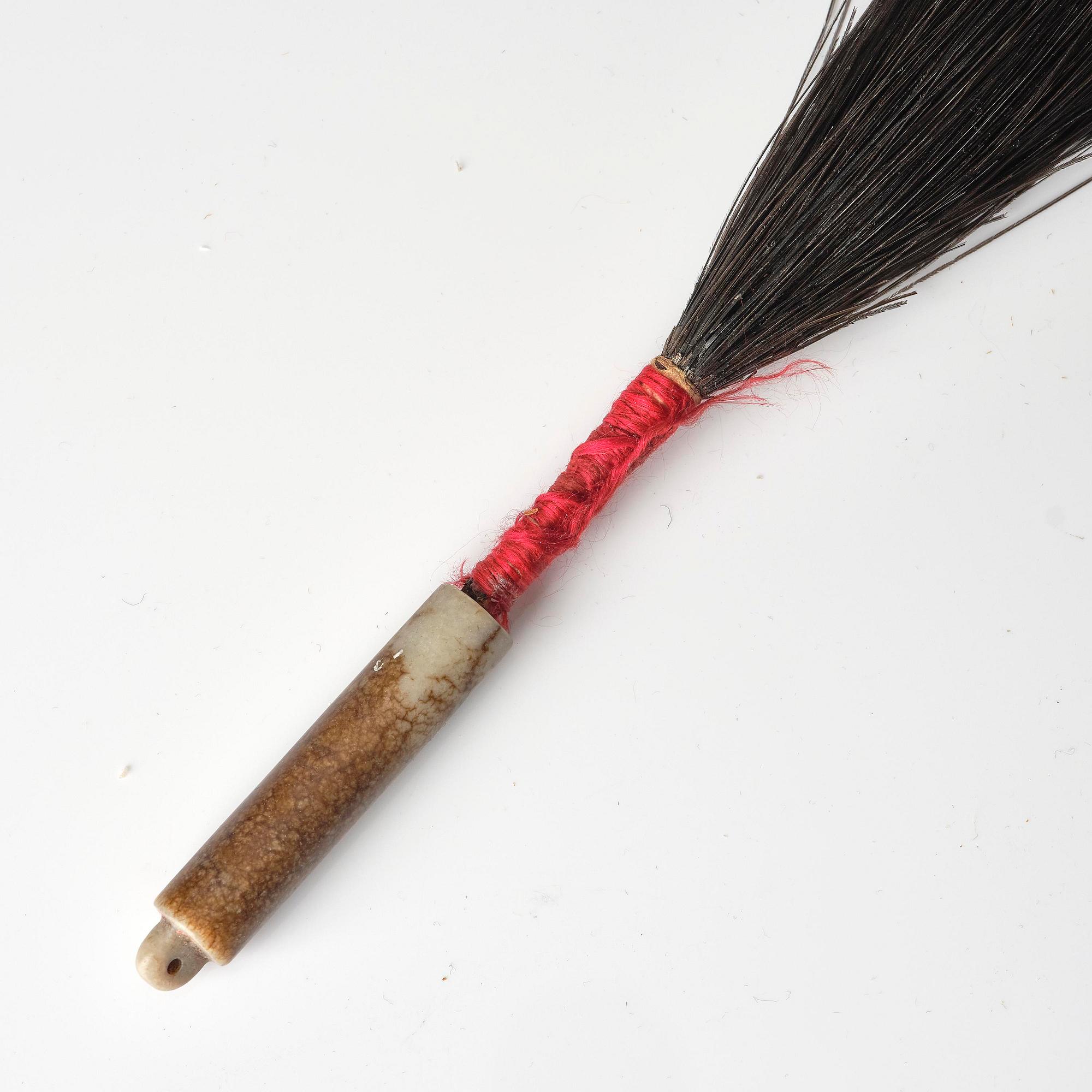
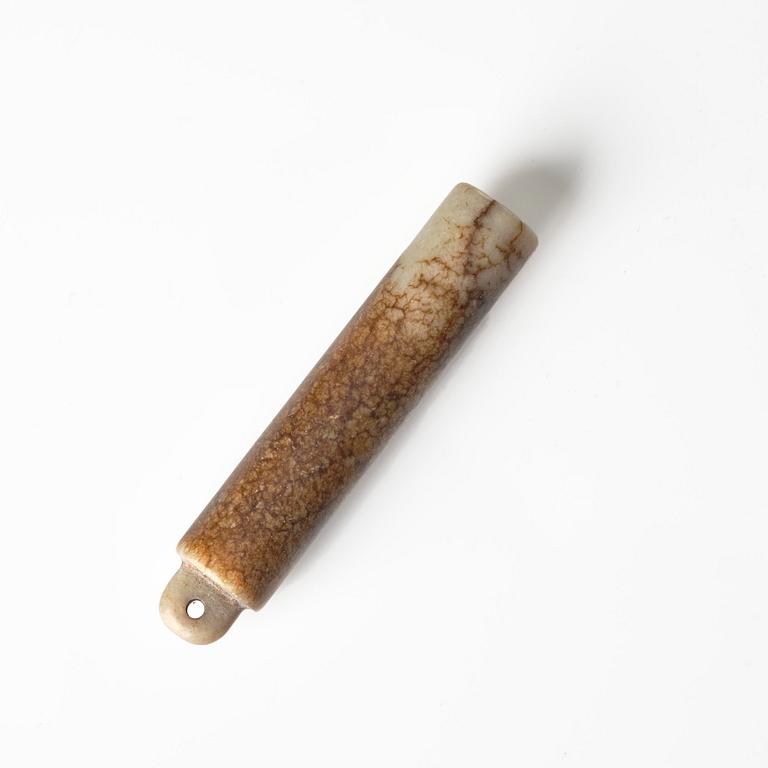
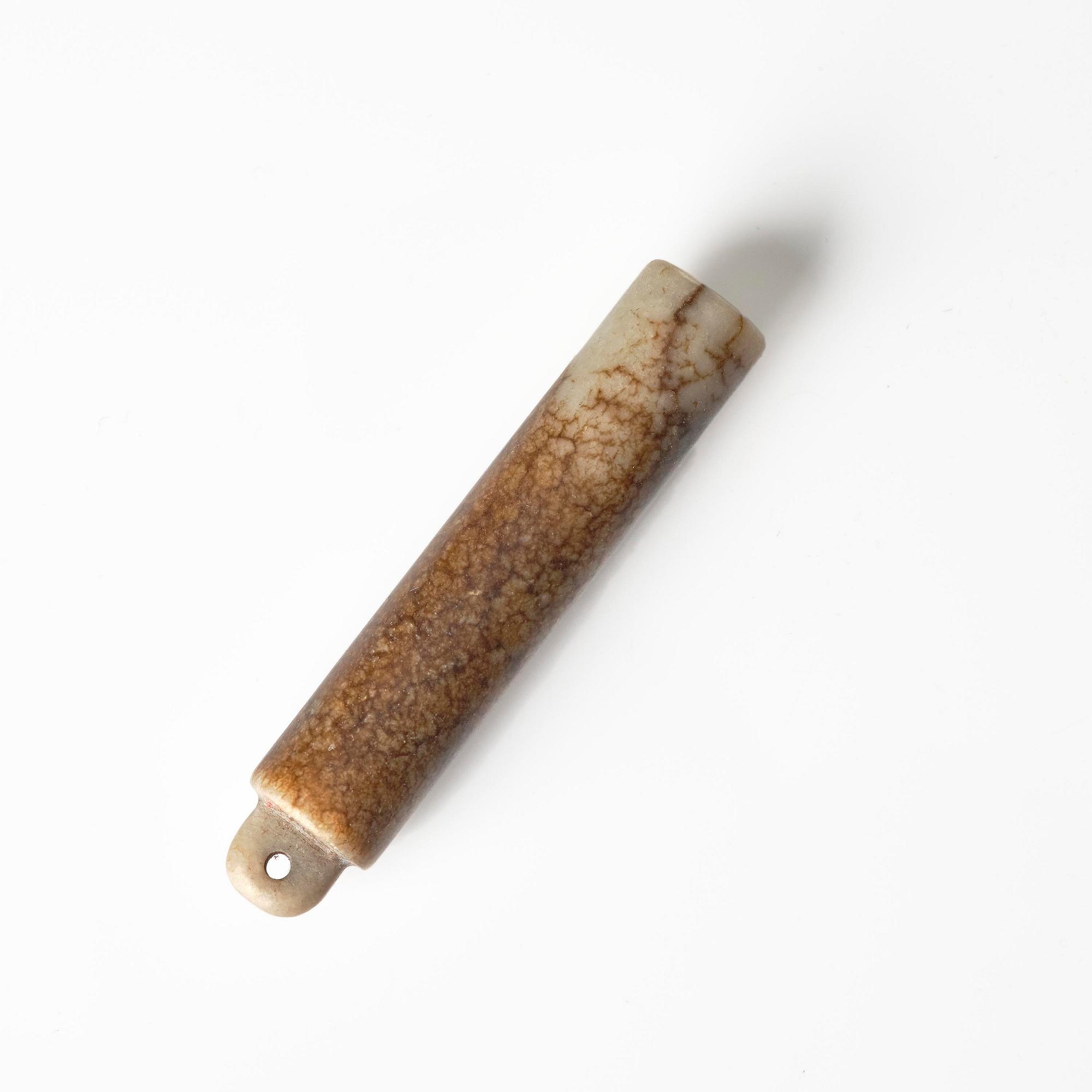
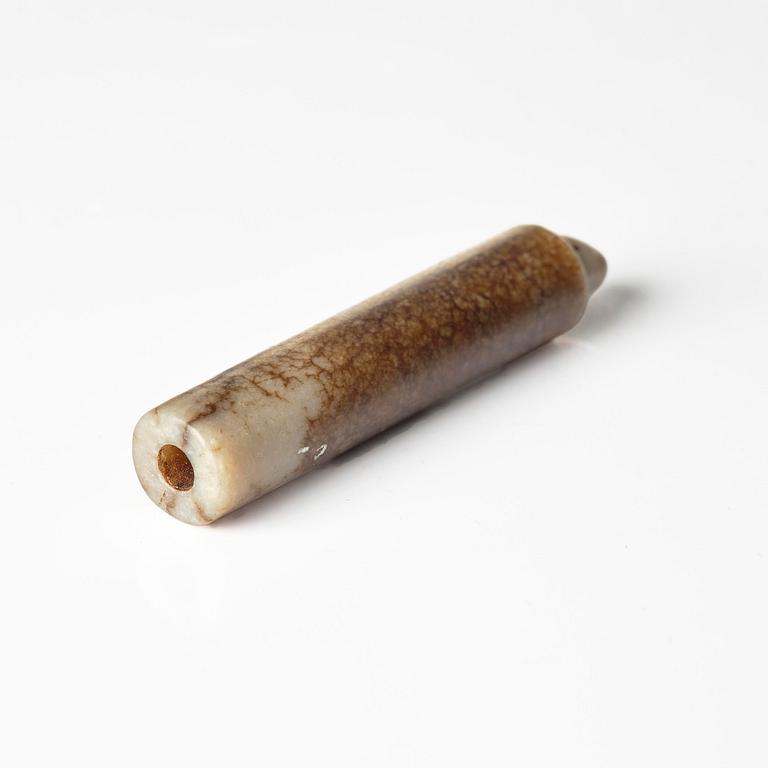
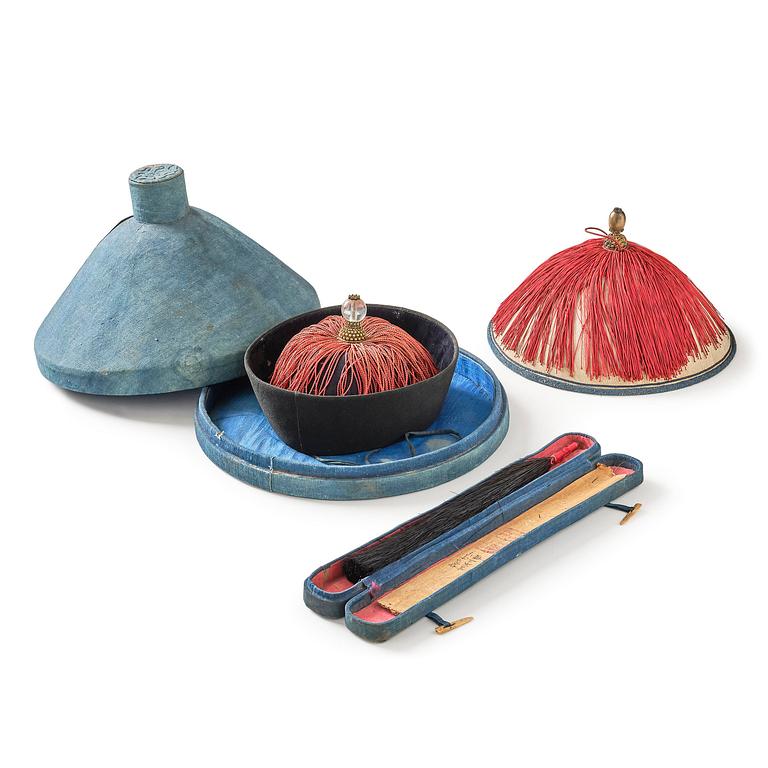
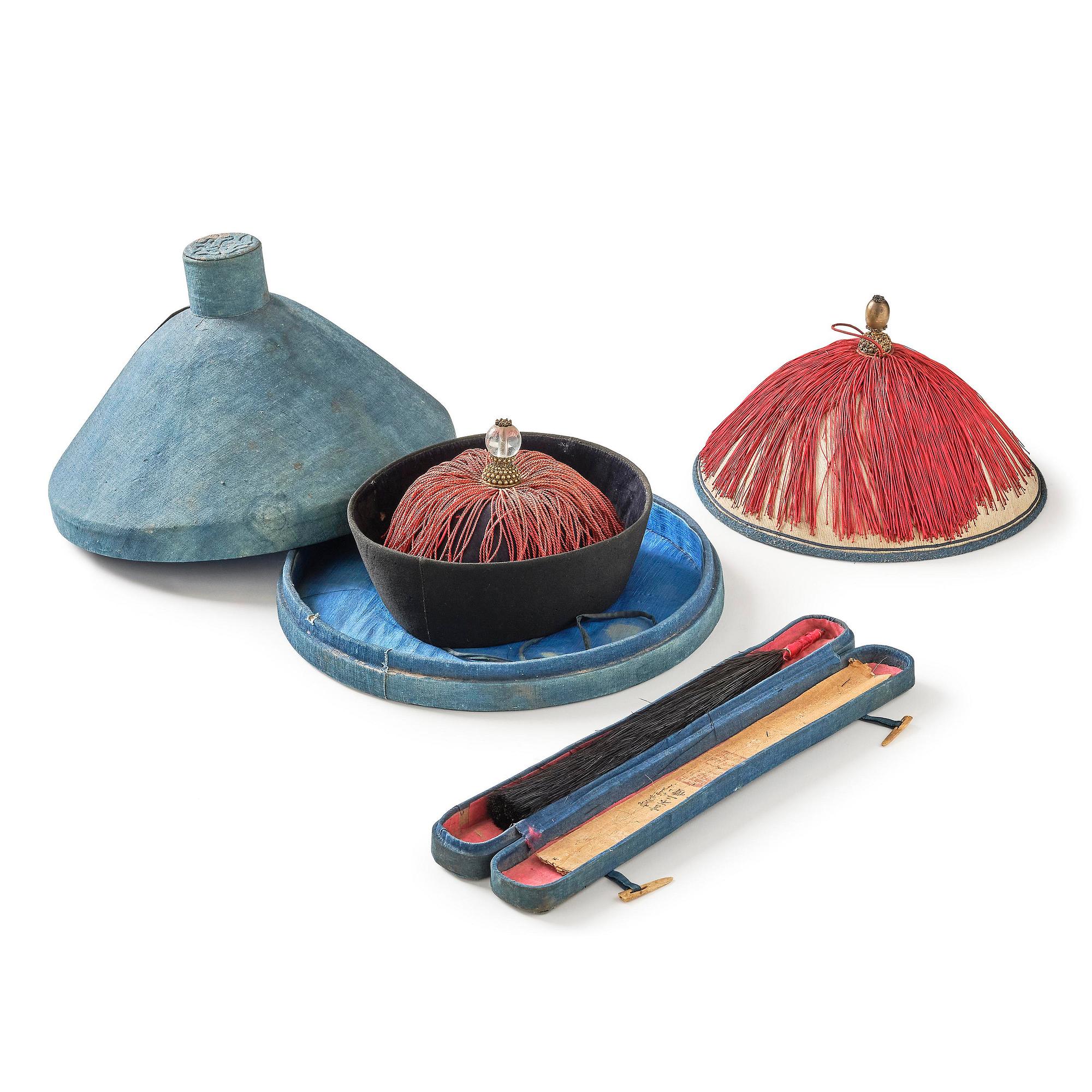
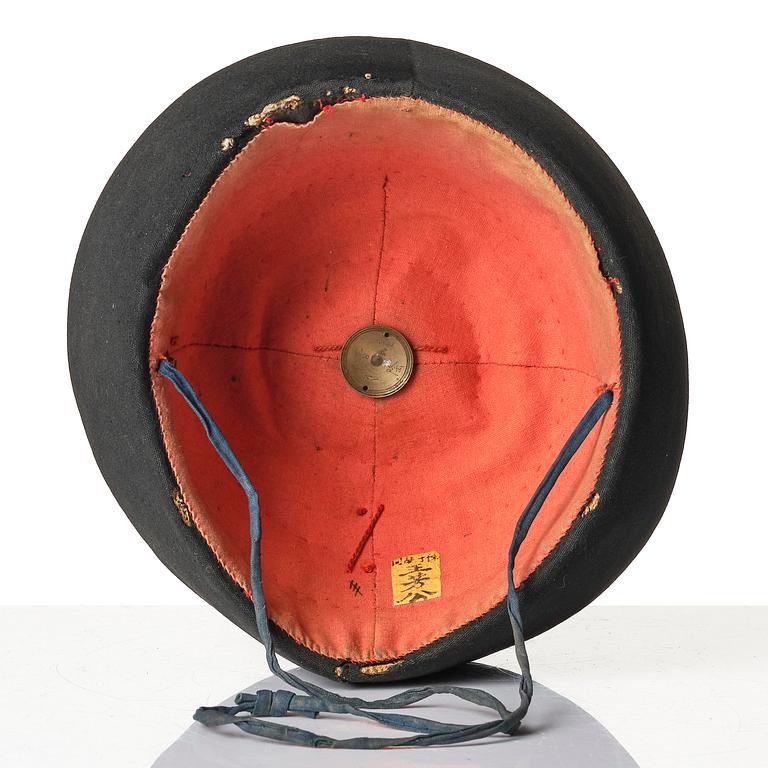
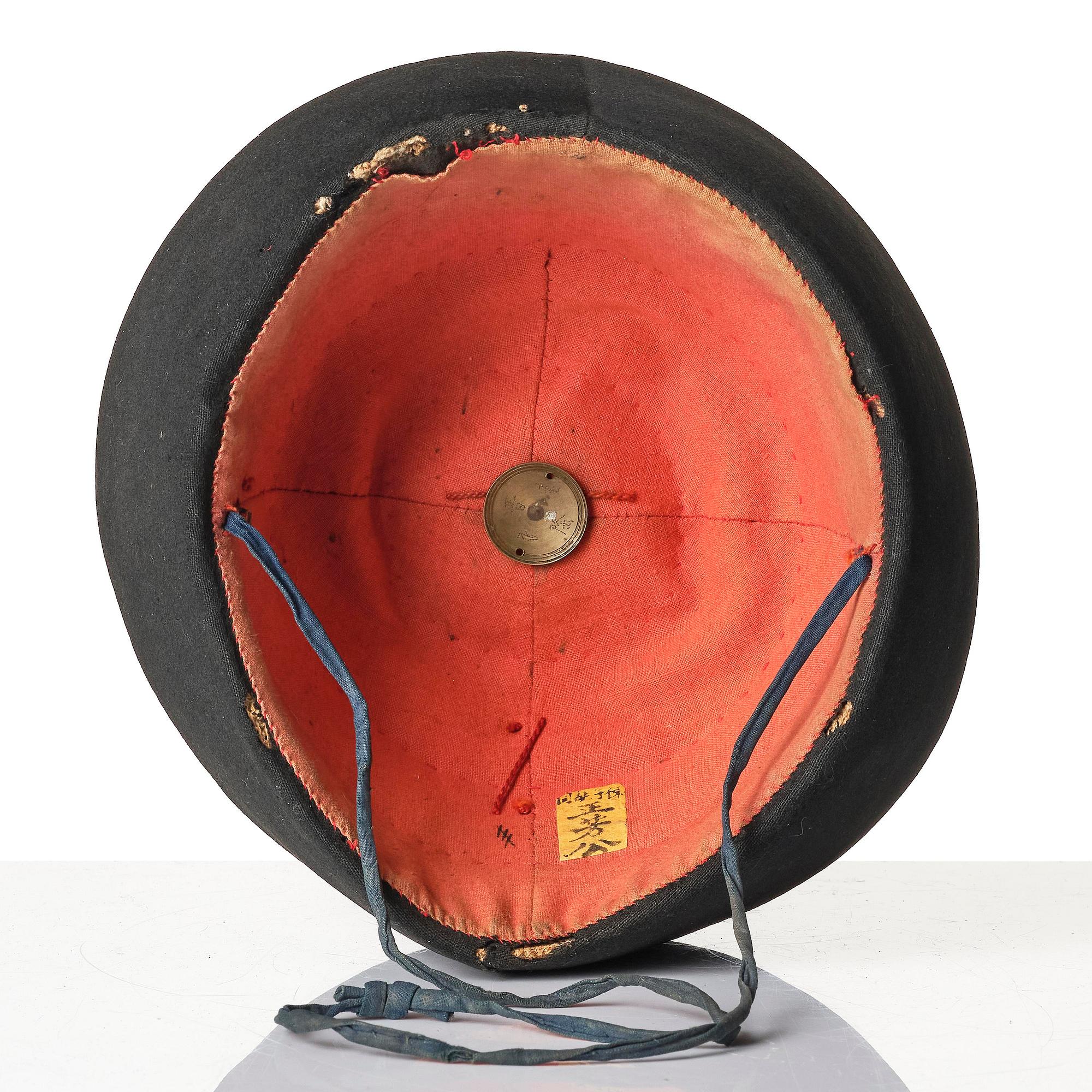
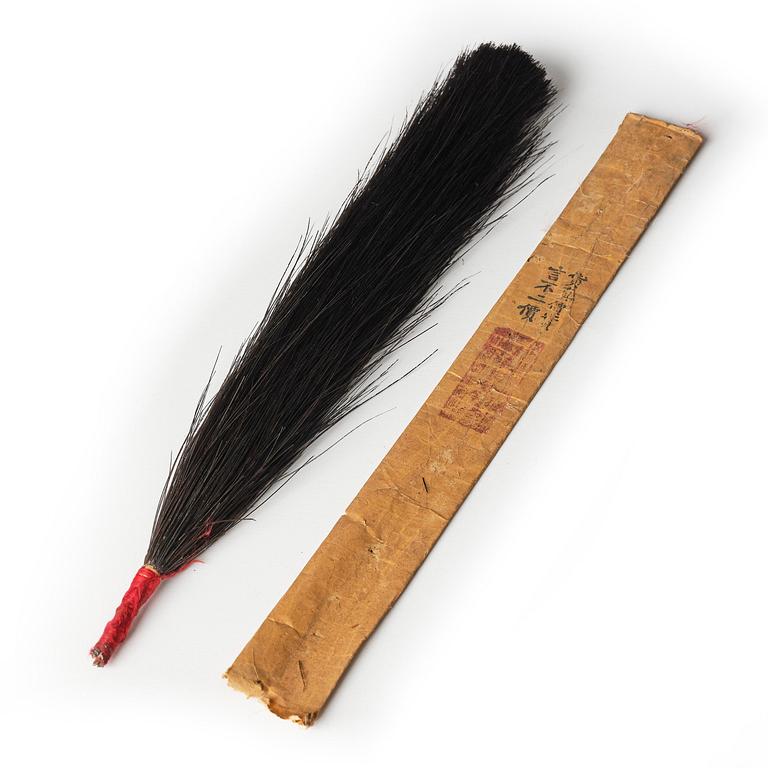
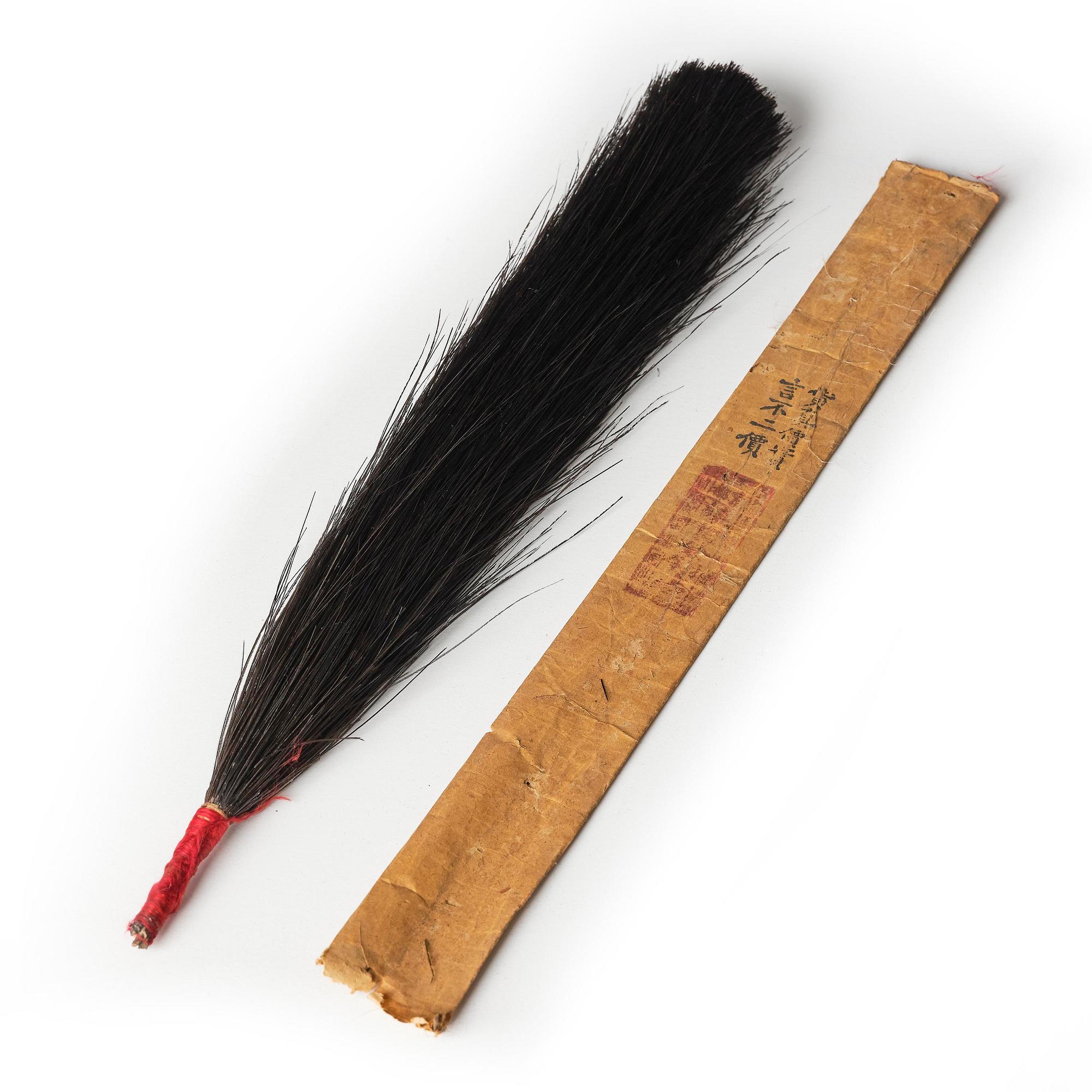
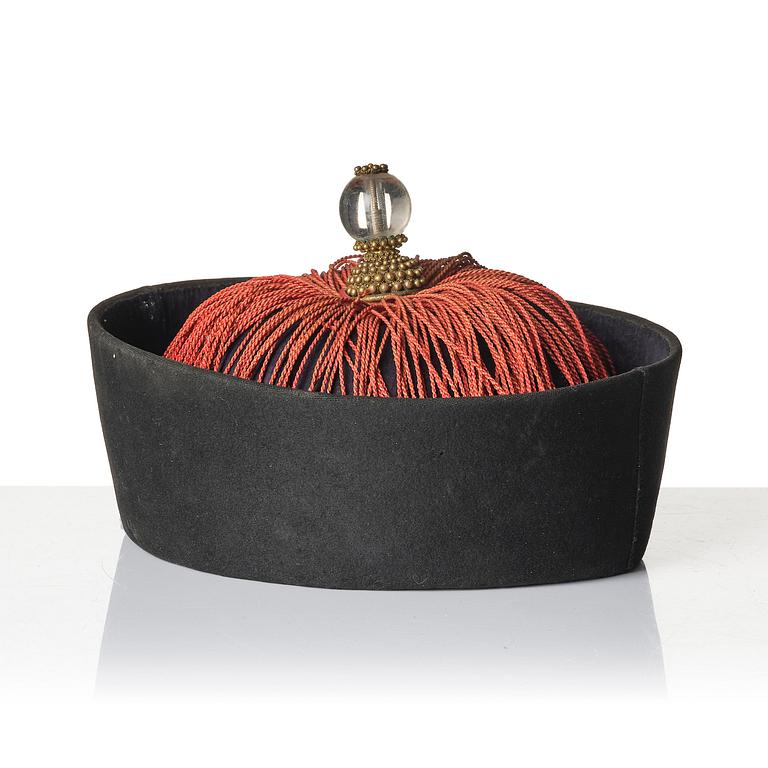
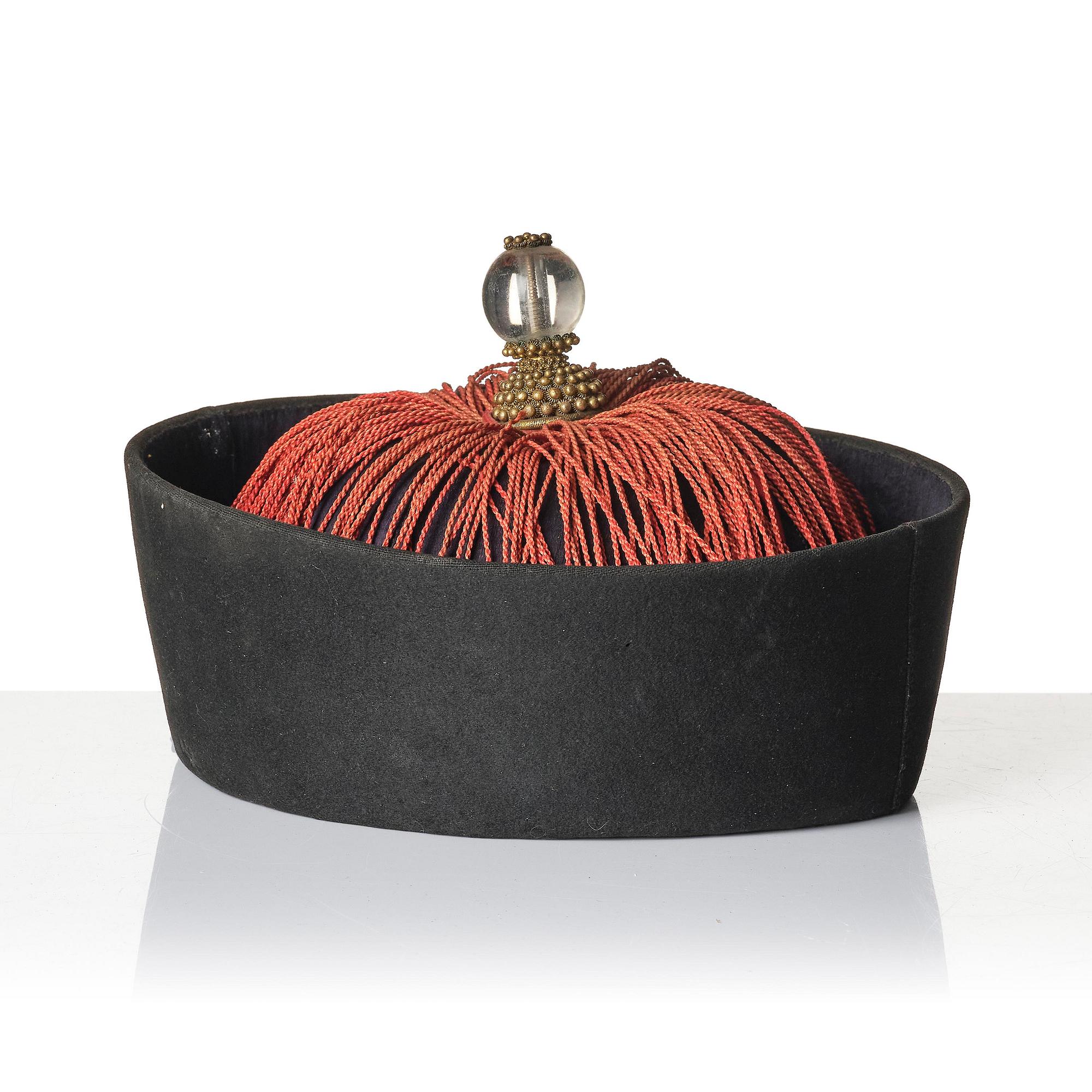
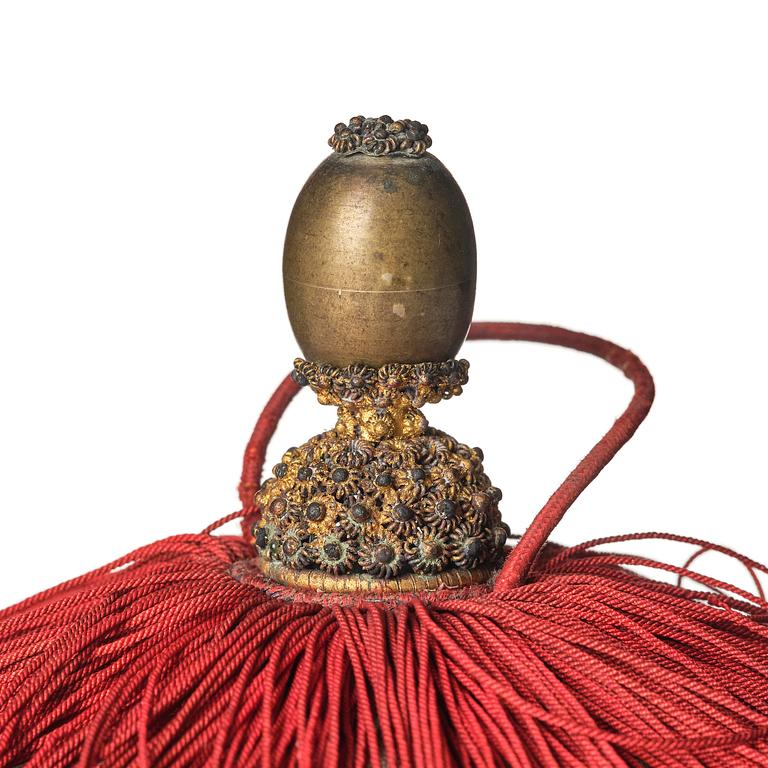
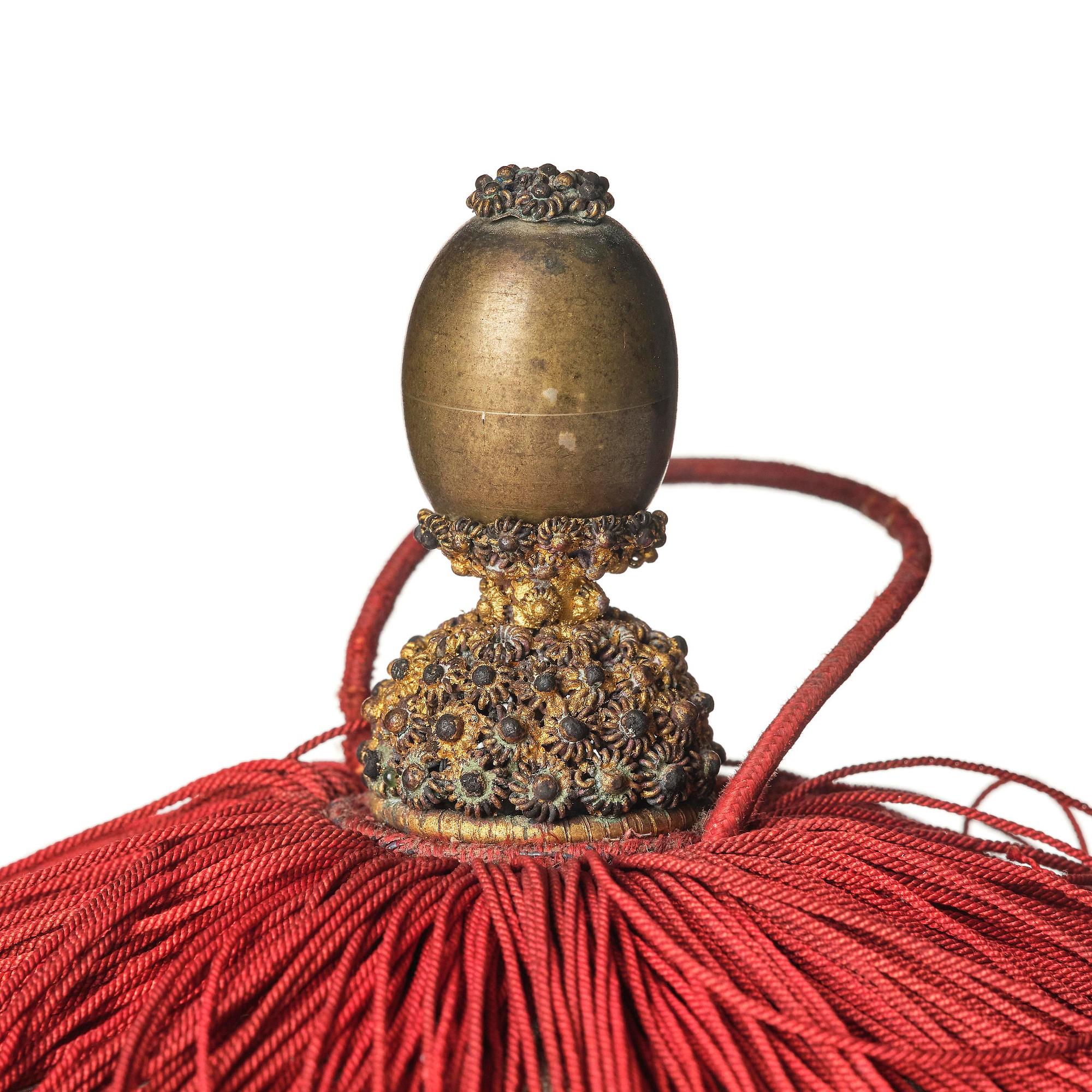
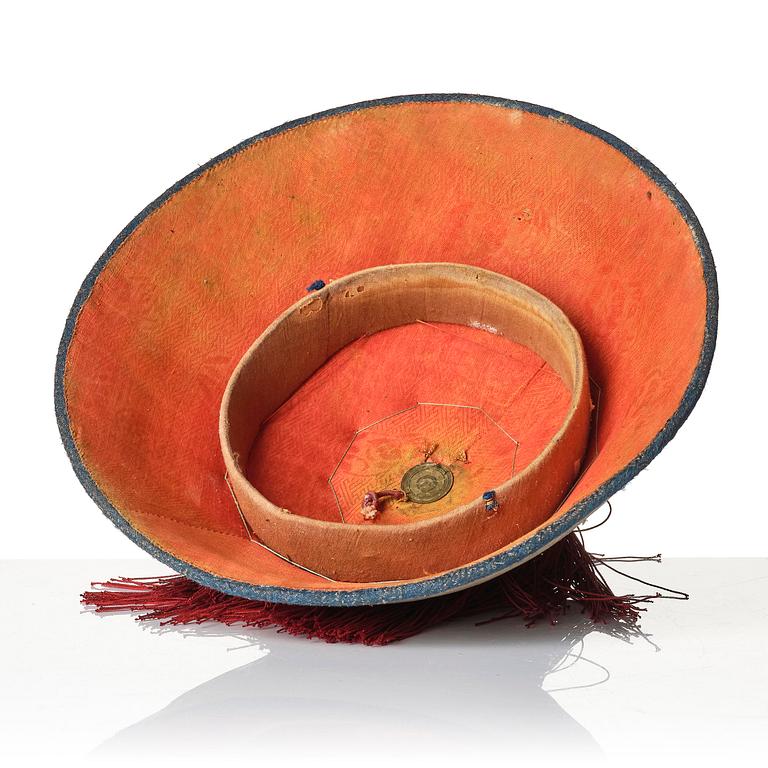
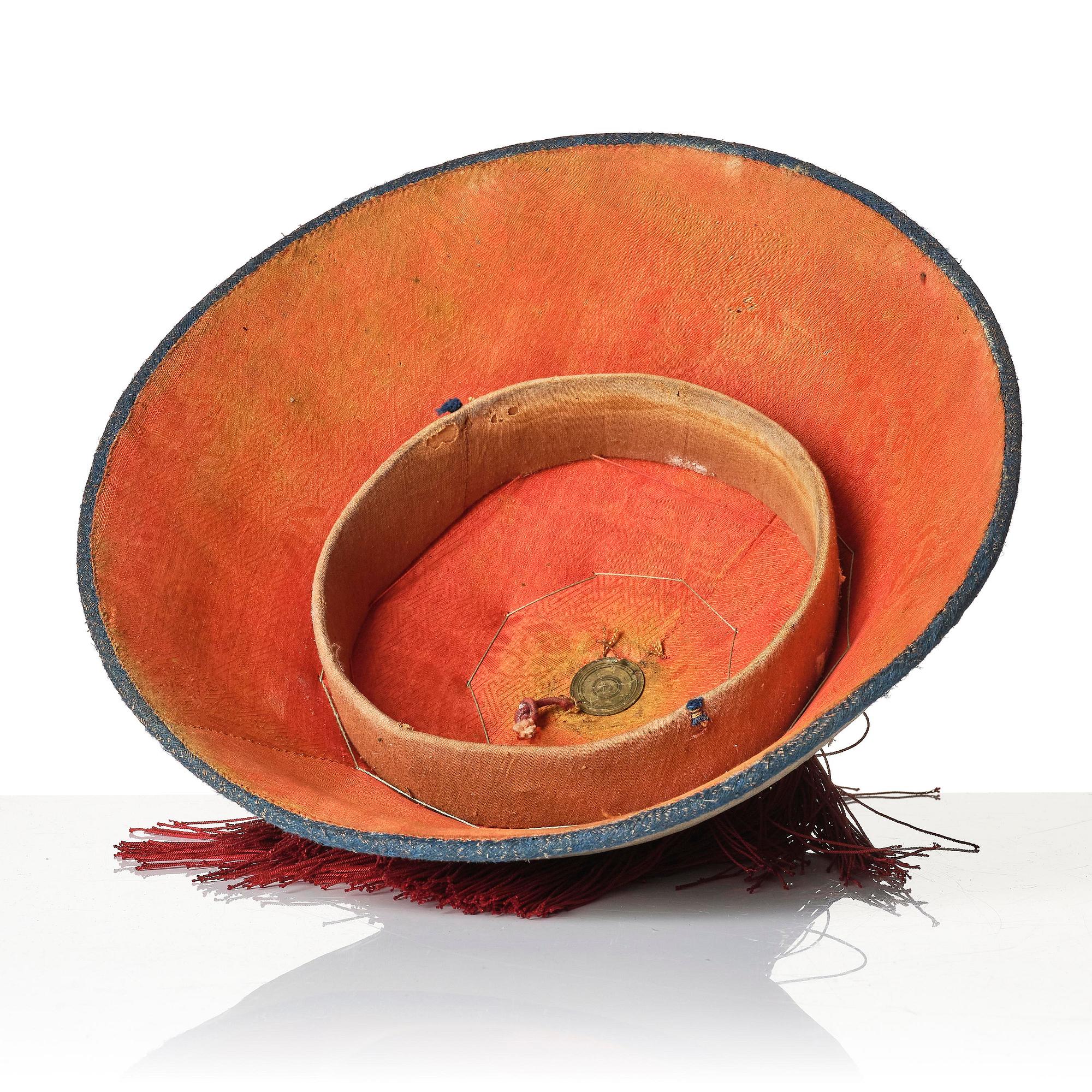
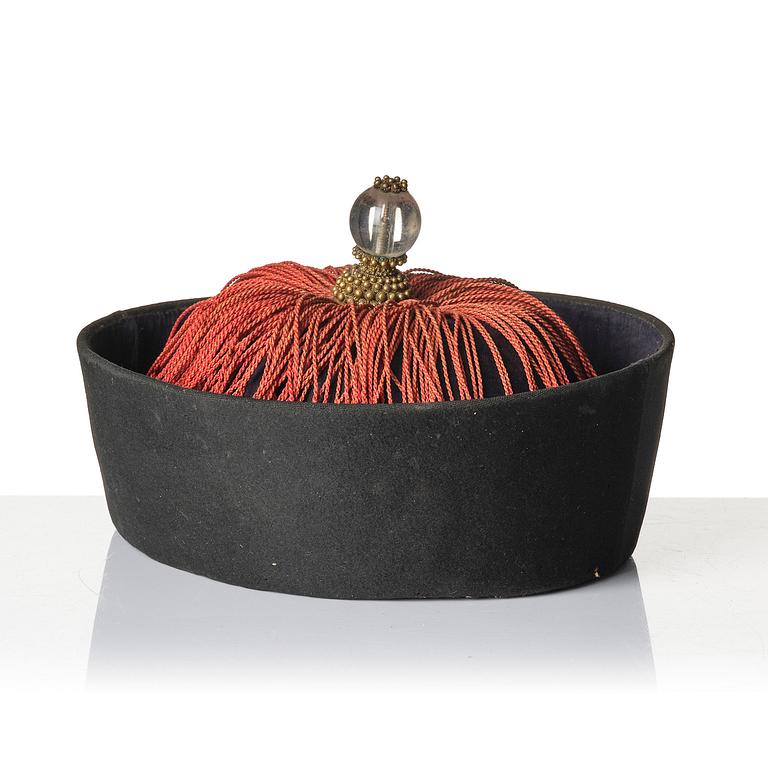
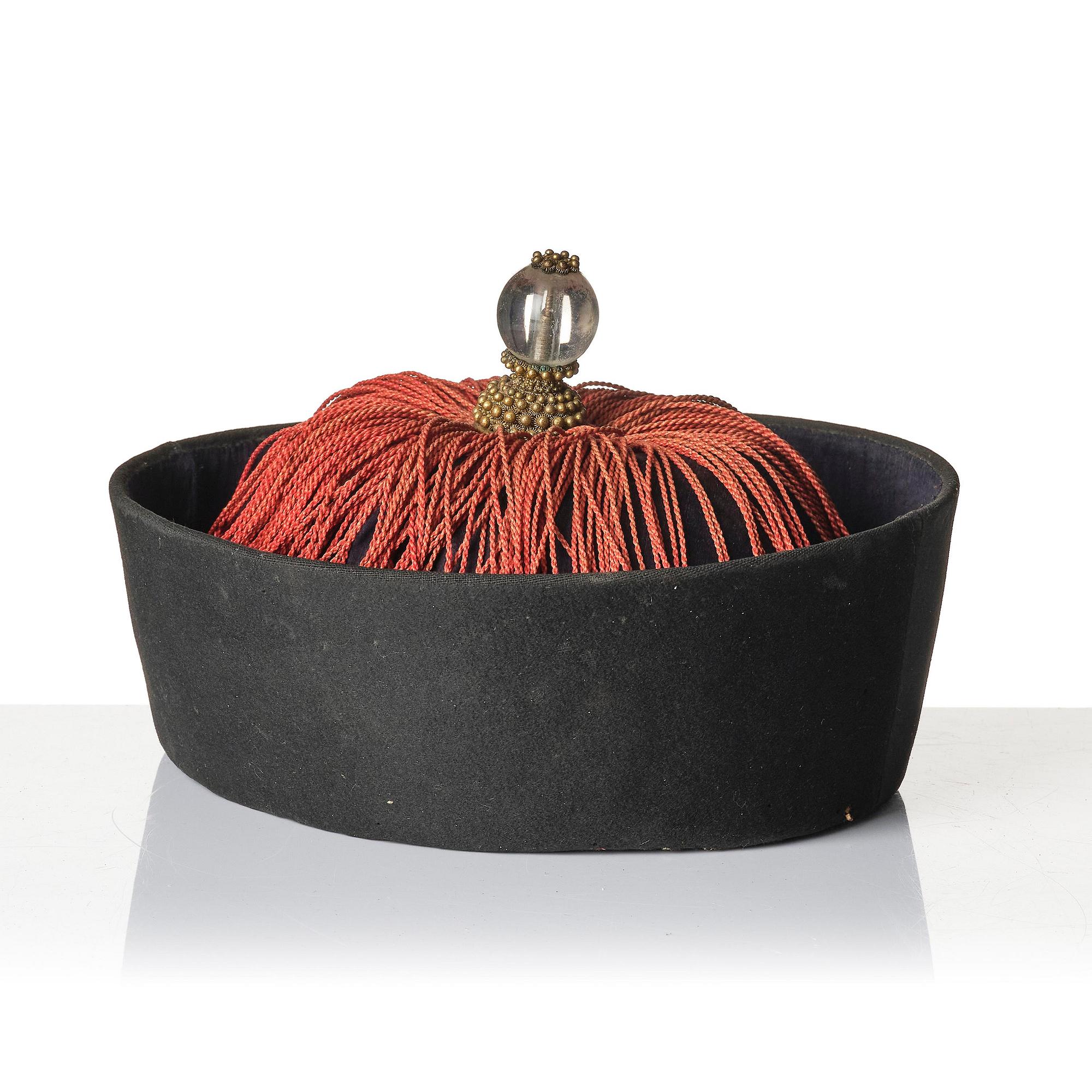
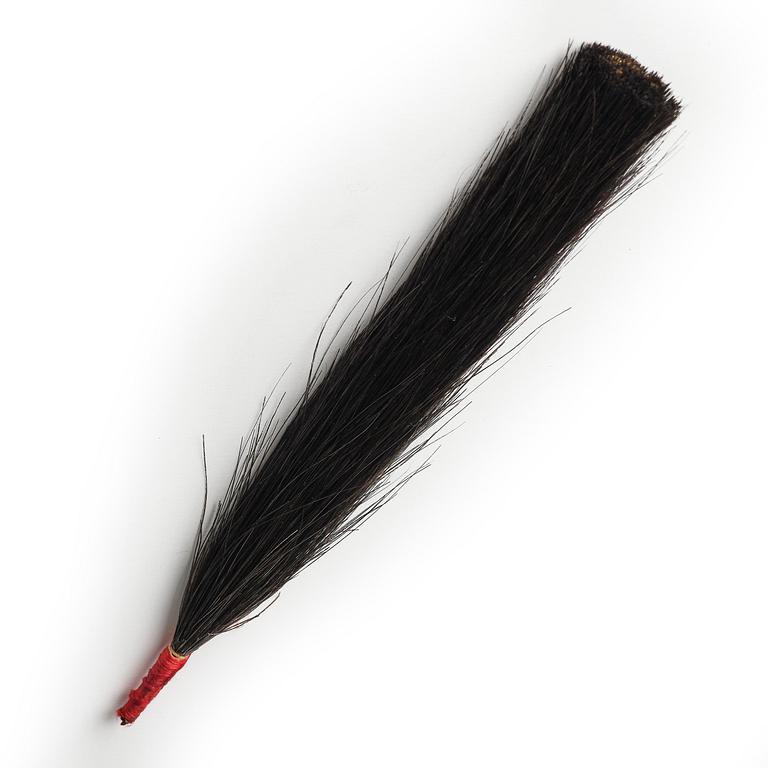
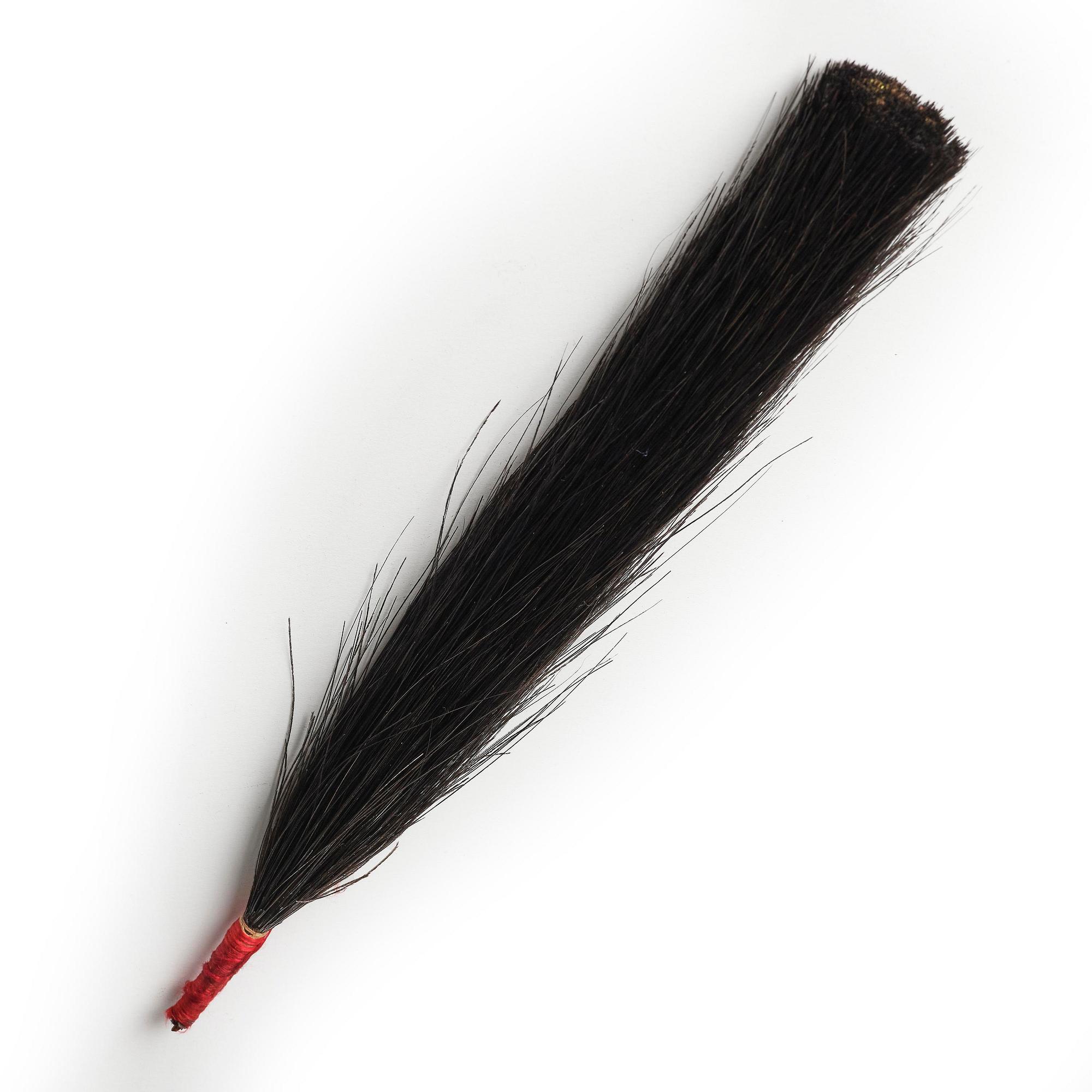
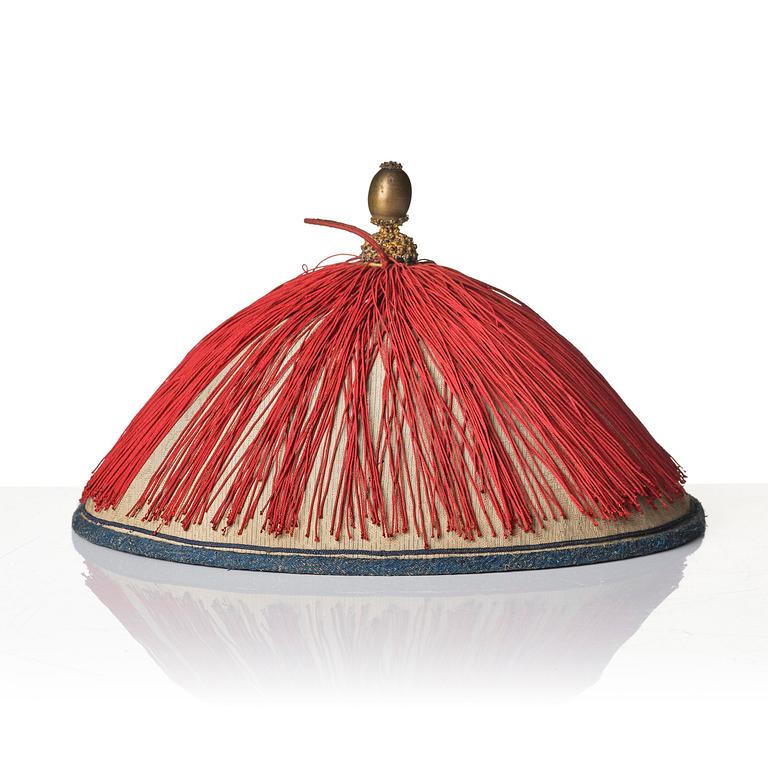
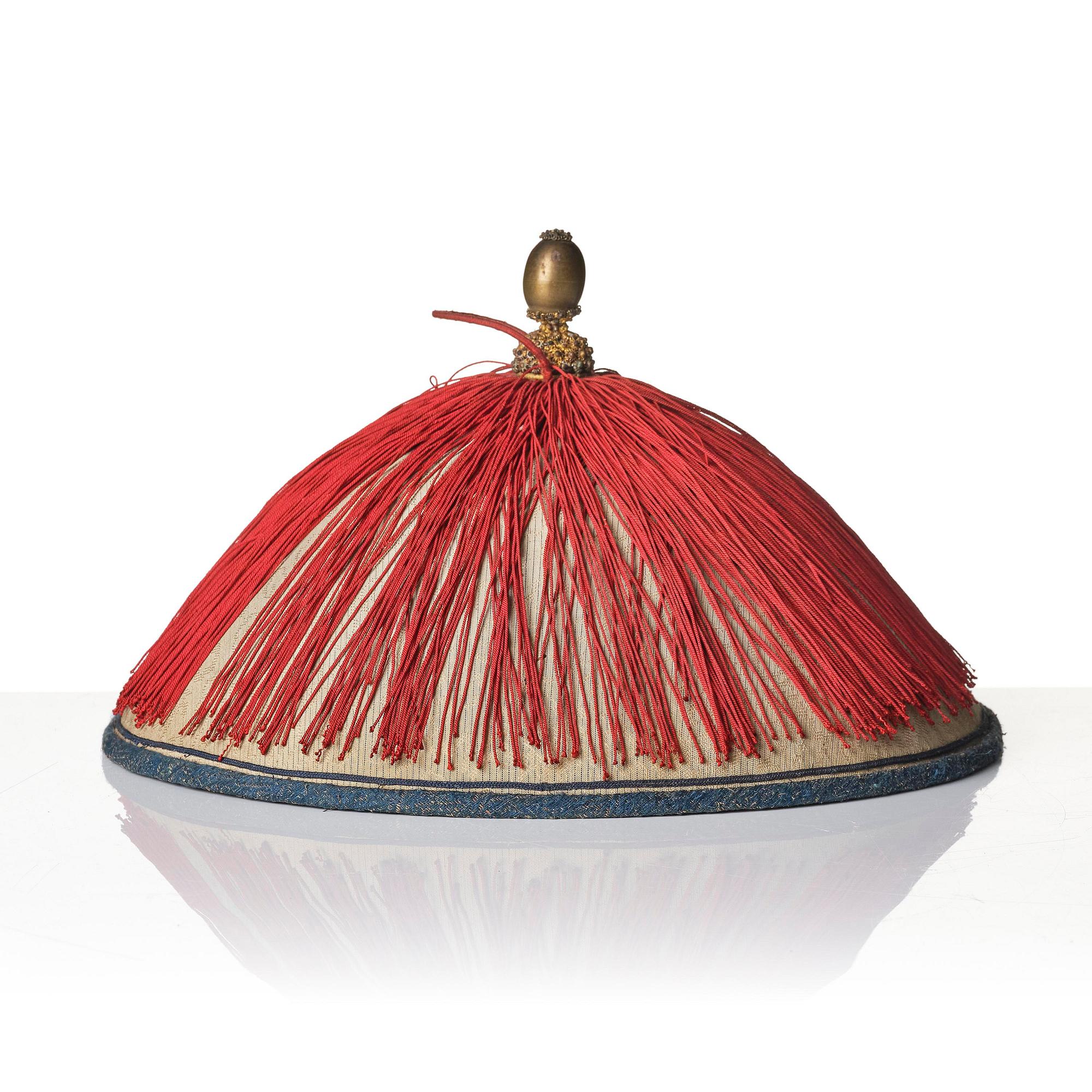
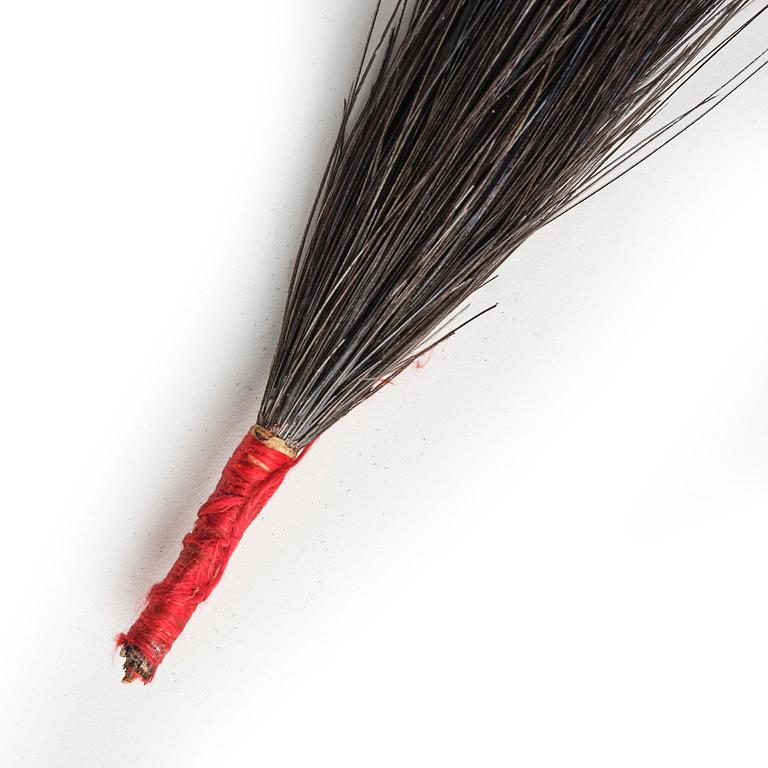
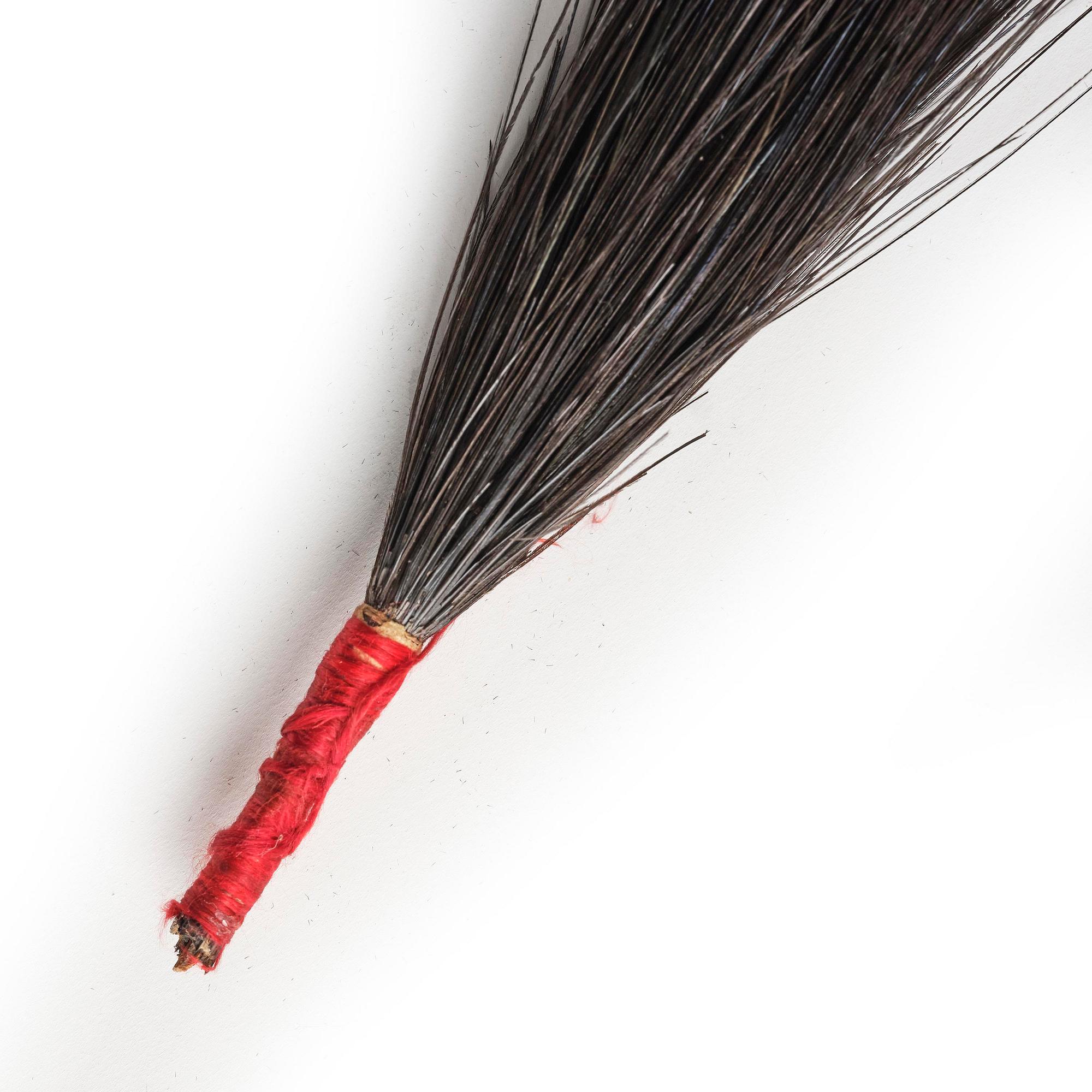
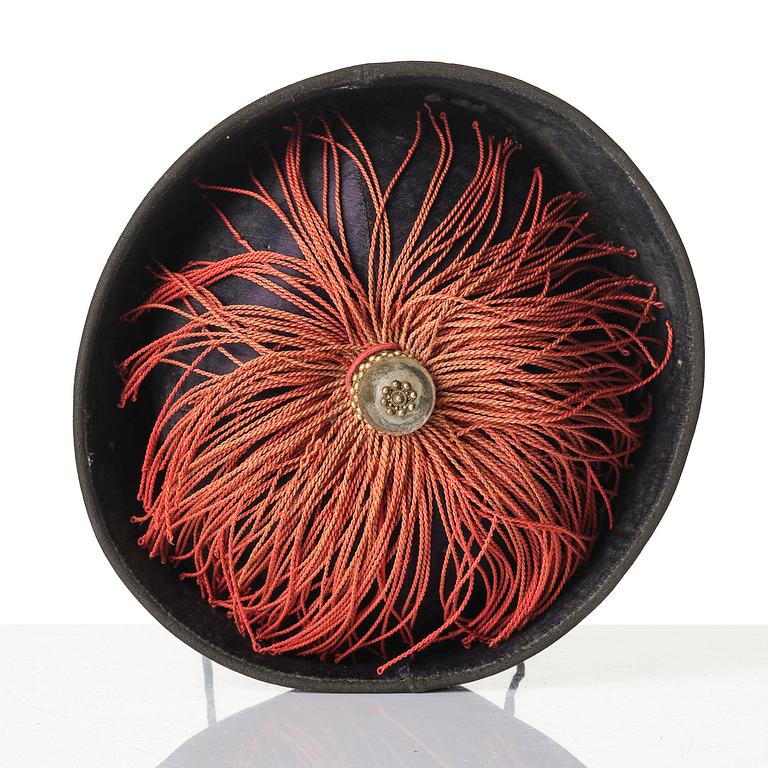
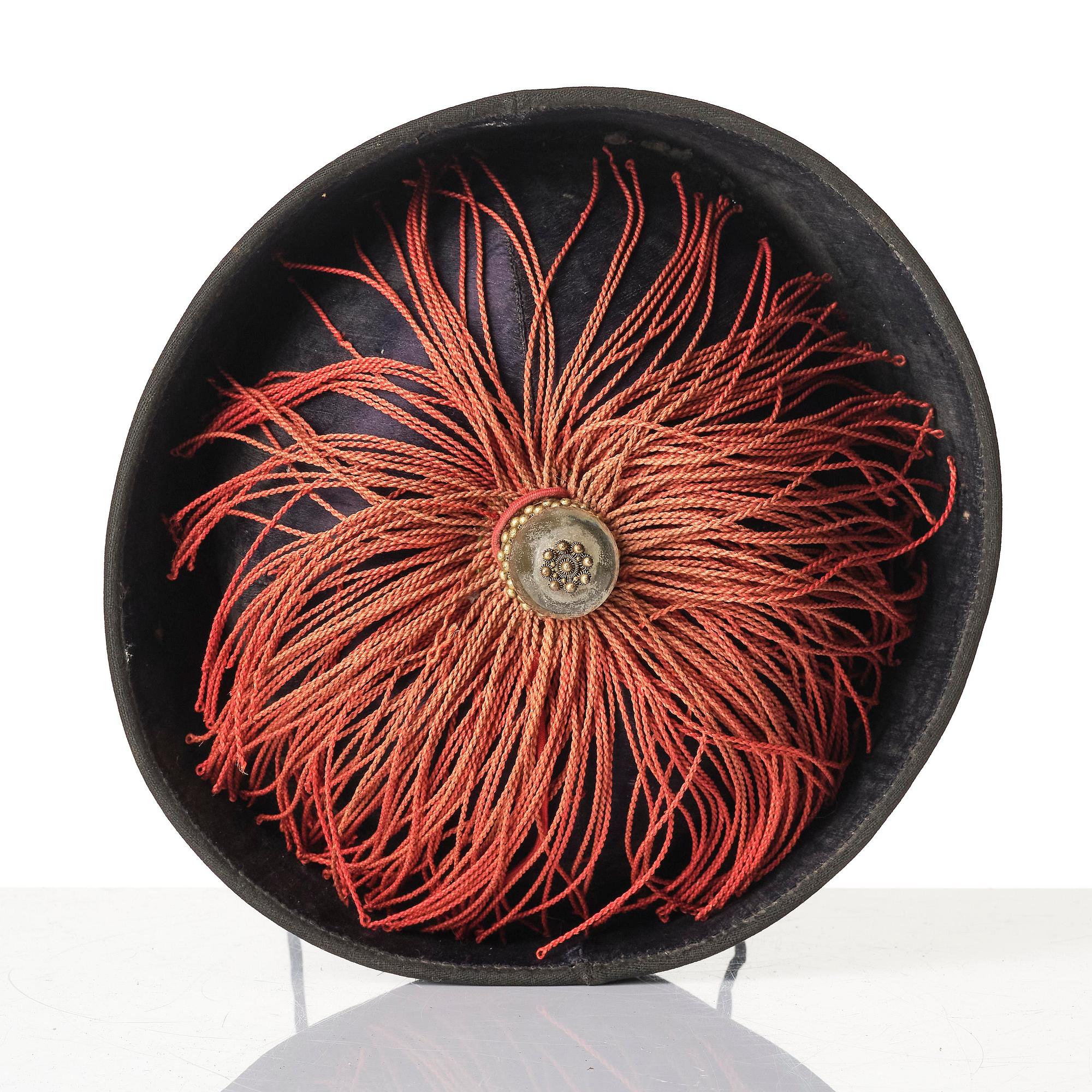
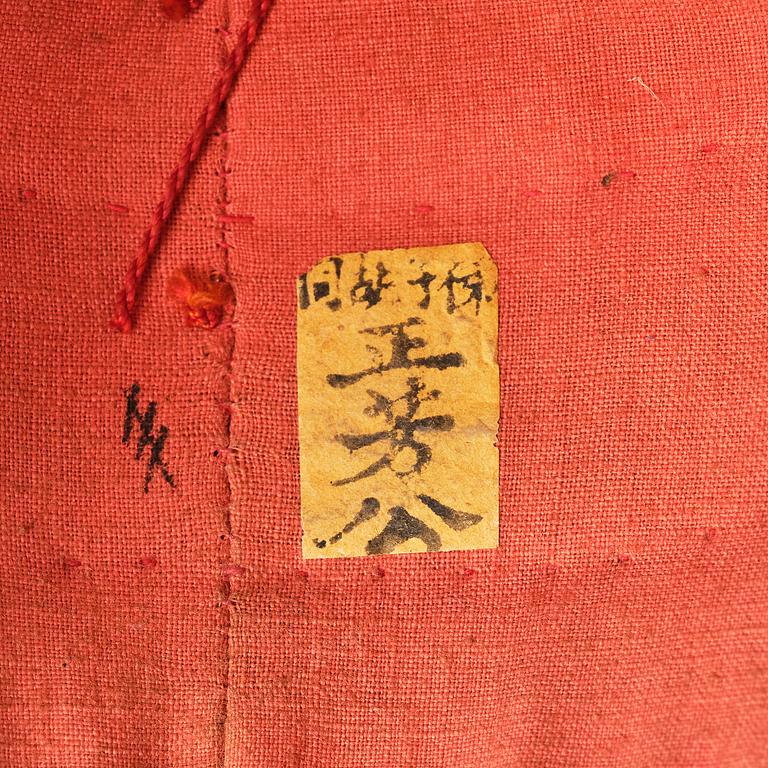
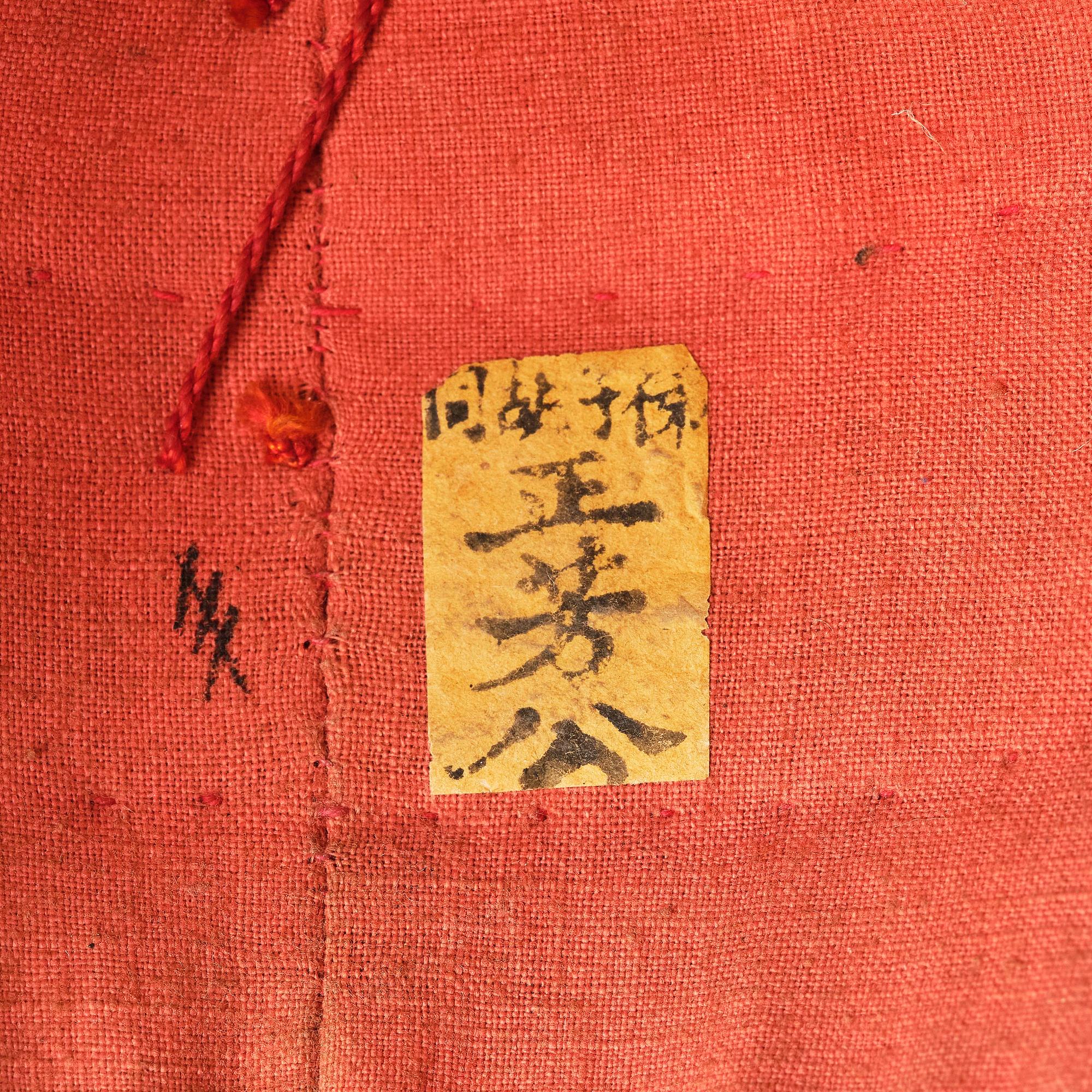
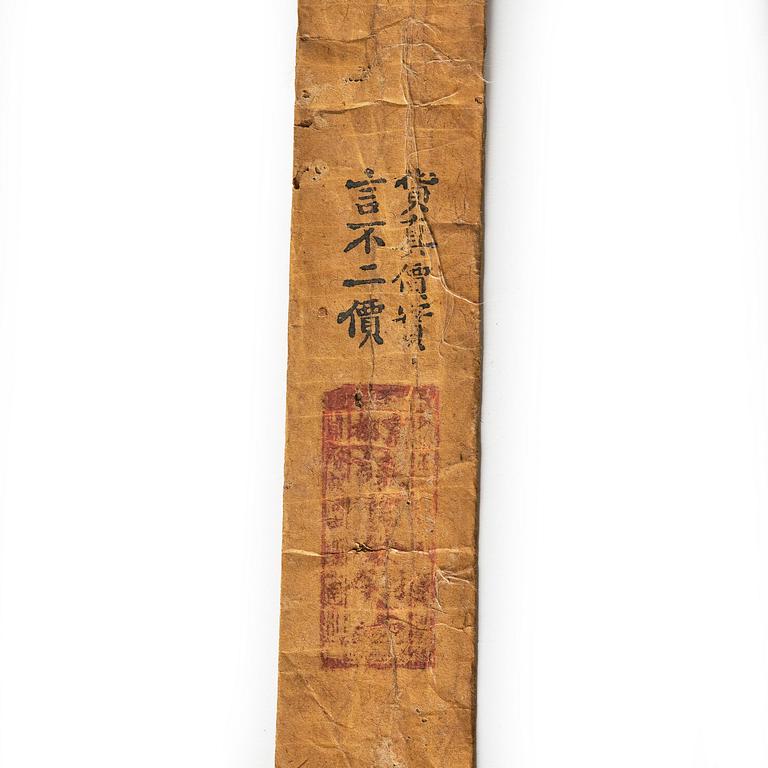
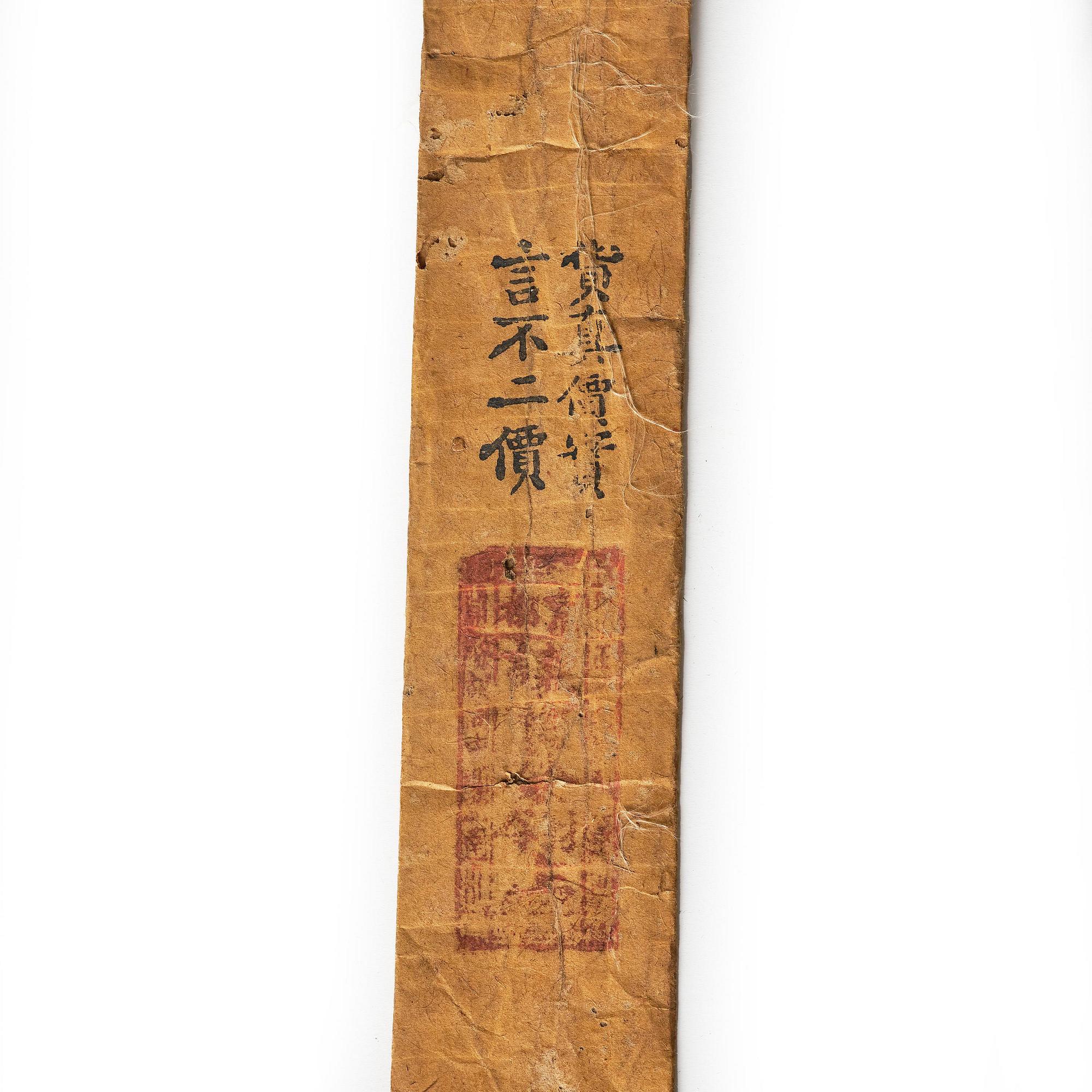
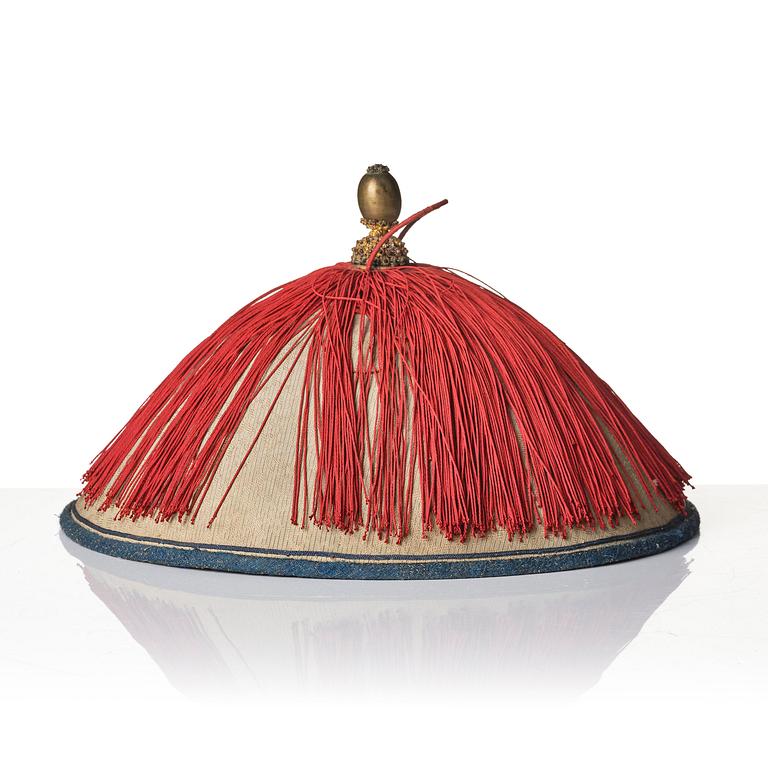
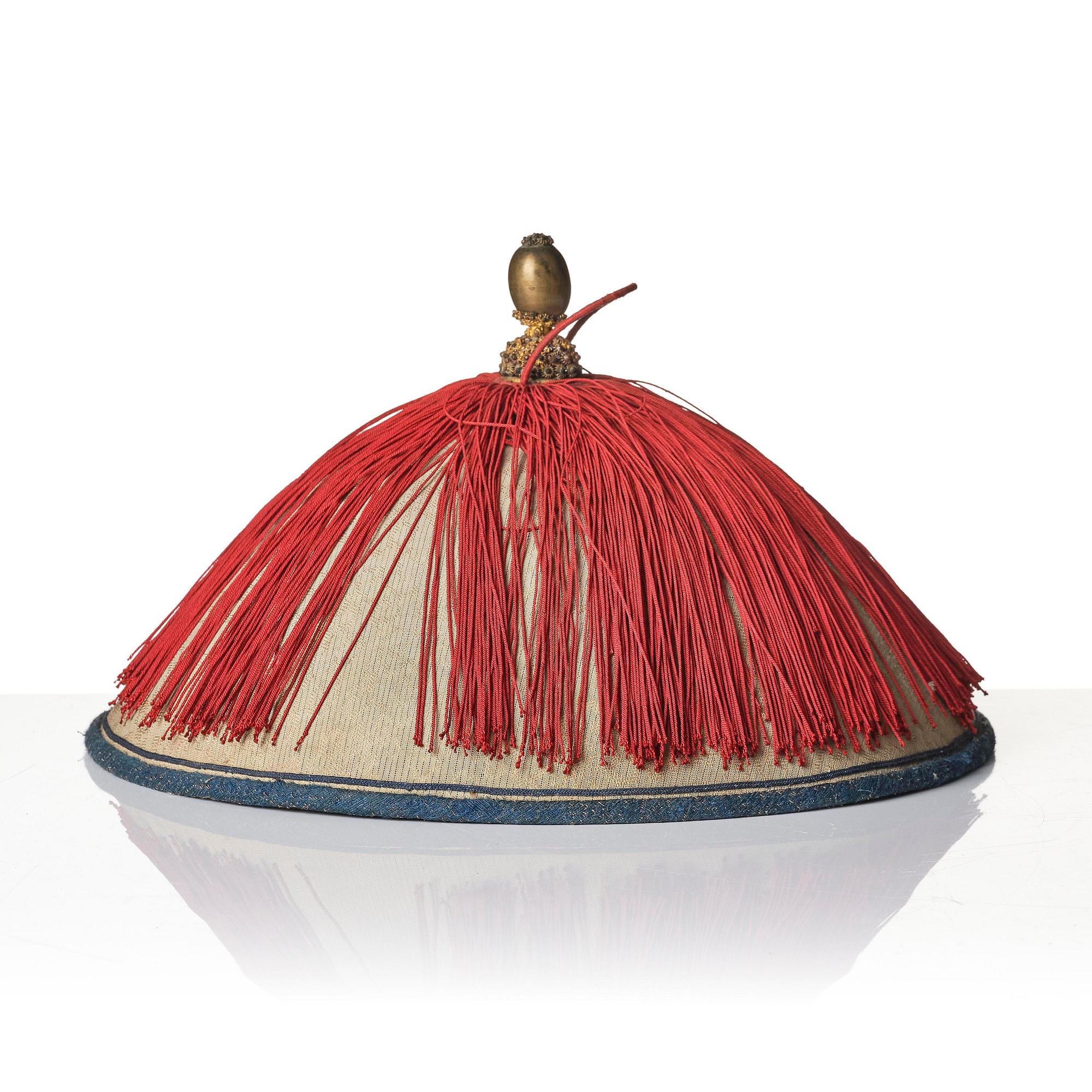
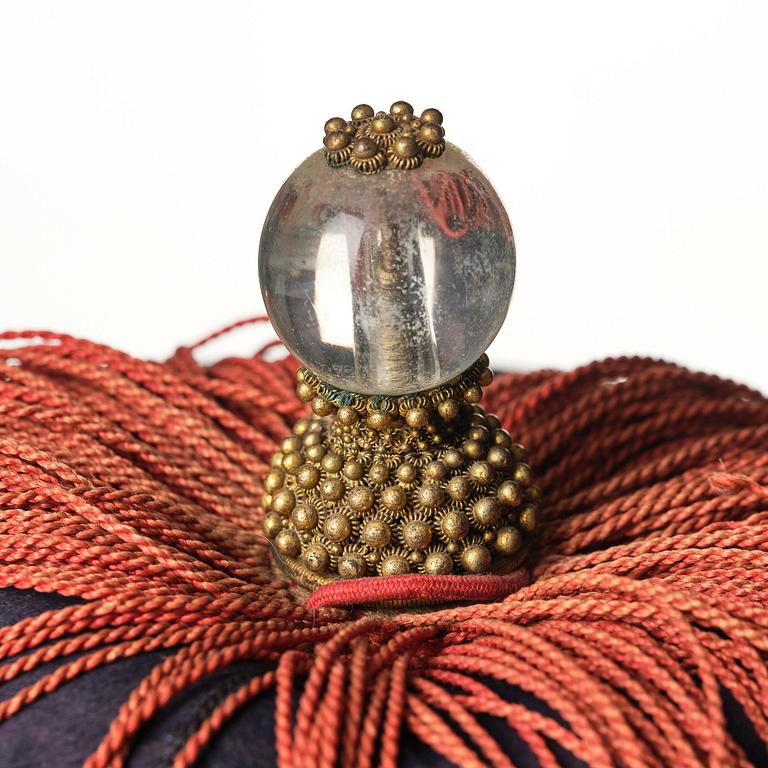
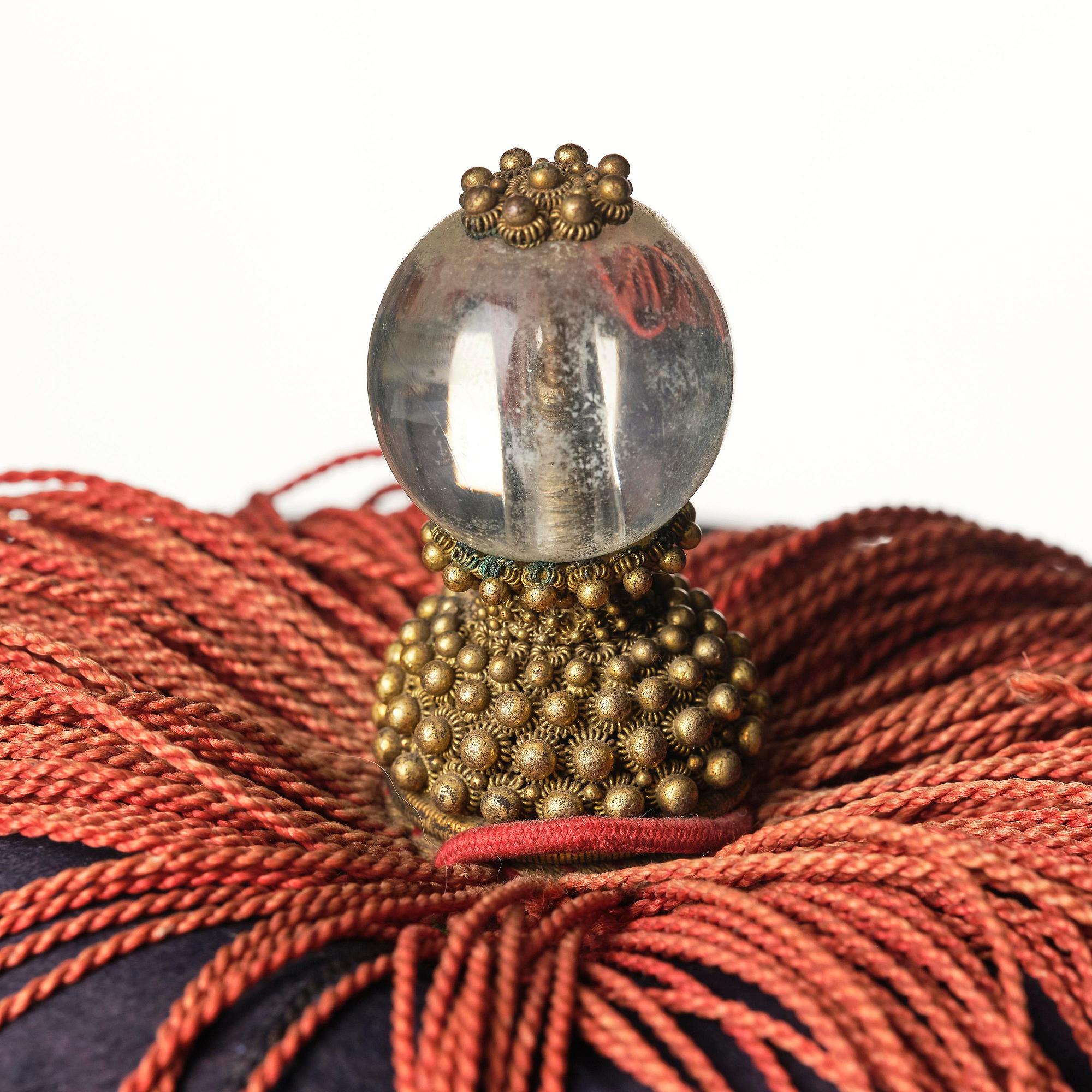
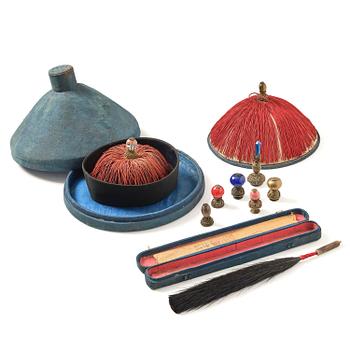
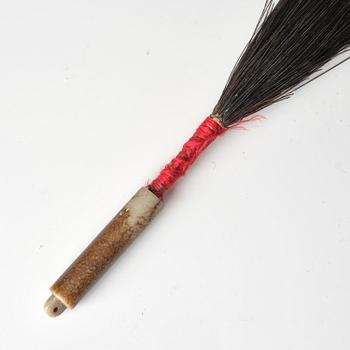
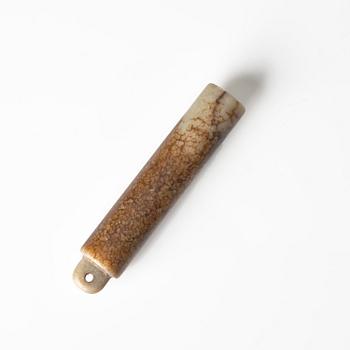
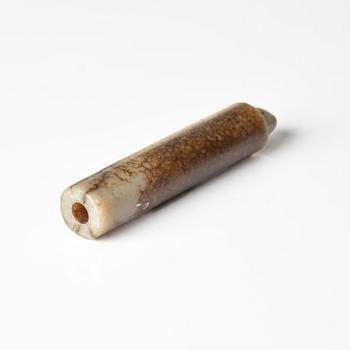
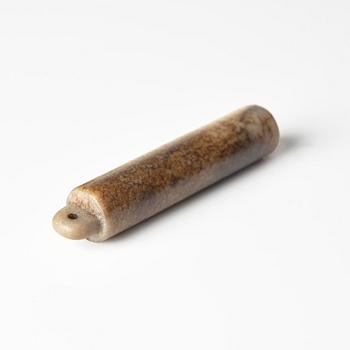
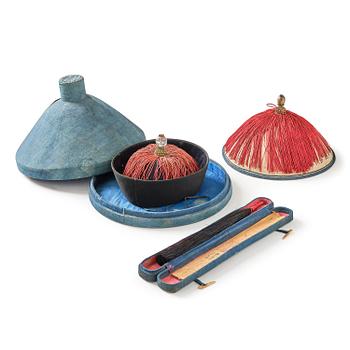
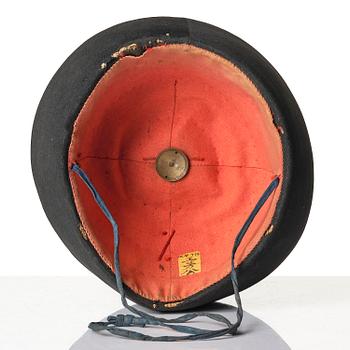
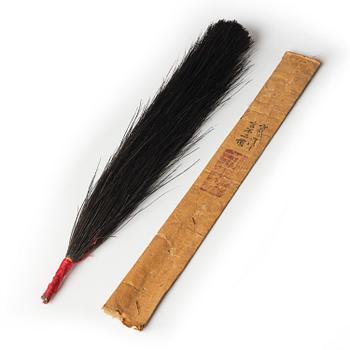
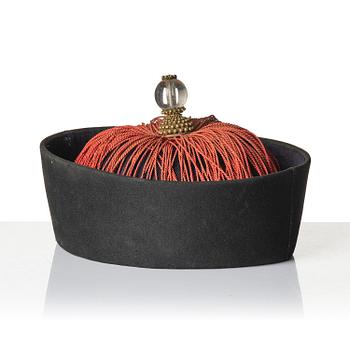
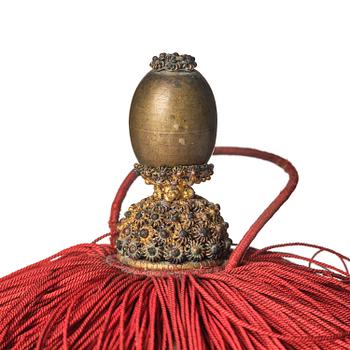
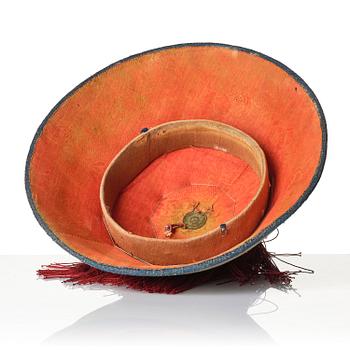
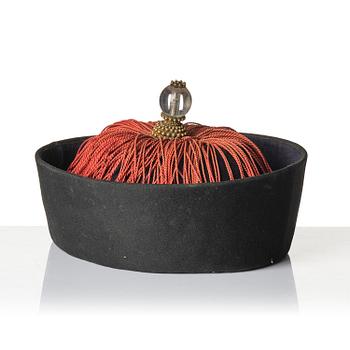
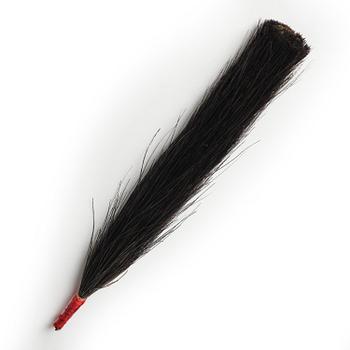
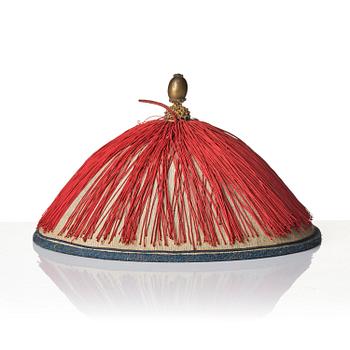
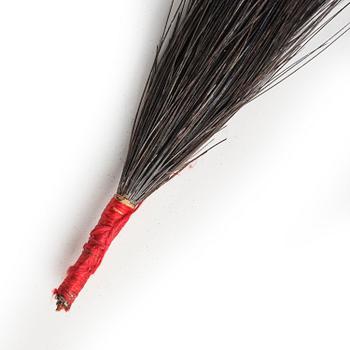
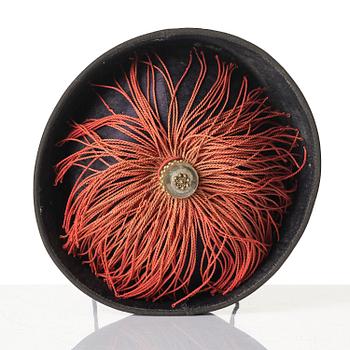
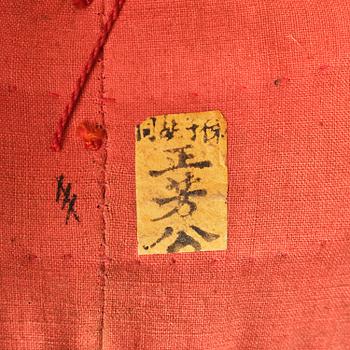
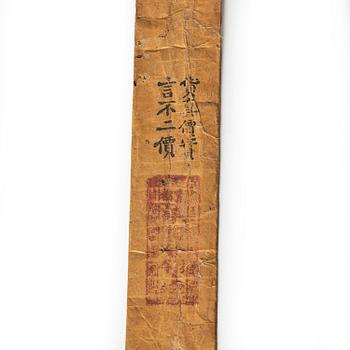
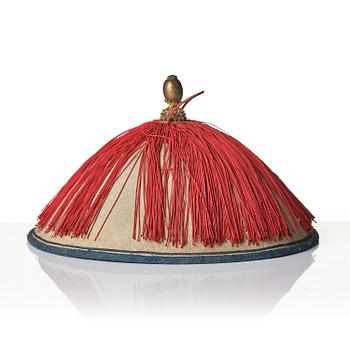
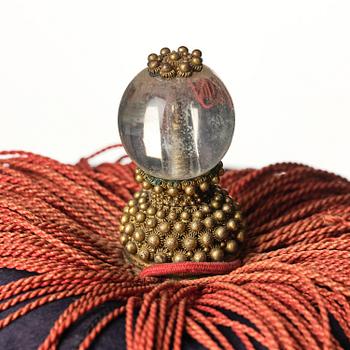
En blå tygklädd ask som innehåller en sommarhatt med konisk bamburam som är klädd i sidenväv, dekorerad med fransar av vridet siden, blå kant. Krönt av en ämbetsmannaknapp i mässing som indikerar 7-8 åttonde rang. Ytterligare en svart siden hösthatt med stel kant, vridna sidenband i rött, krönt av glasknopp som indikerar 5 rang. Insidan med etikett som berättar för oss om ägarens namn och efternamn. Askens höjd 25 cm. Diameter hattask 35 cm. Den mindre boxen med en fjäder. Längd 35 cm. Mått ask 41x3,6x5 cm.
Proveniens
Property of a private Finnish Collection.
The collection was formed between 1980-2020, the collector has had an interest in China and Chinese Works of Art since childhood, growing up in Beijing. He returned to China in grownup years for work, he came to live in China altogether more than 40 years. His love of China, and Chinese works of art is mirrored in the collection and being an academic collector, he never got tired of learning more about the subject by studying literature, attending lectures, visiting museums, auction houses and befriending curators from Beijing, Hong Kong, London, Paris, and Stockholm. The collection consists of both Chinese ceramics and textiles, This being a part of the textile collection.
Utställningar
Compare with a set sold at Christies, Lot 114, the Imperial Wardrobe, 19 Mars 2008.
Compare also with a hat in the collection of the British Museum, donated by: James Edge-Partington. Acquisition date
1909. Registration number
1909,0609.1.a-c
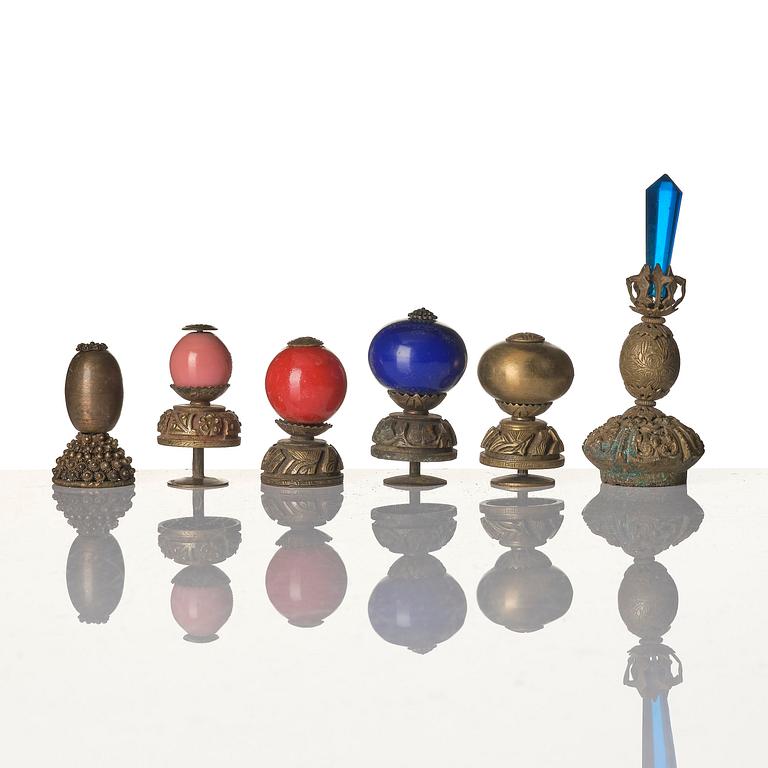
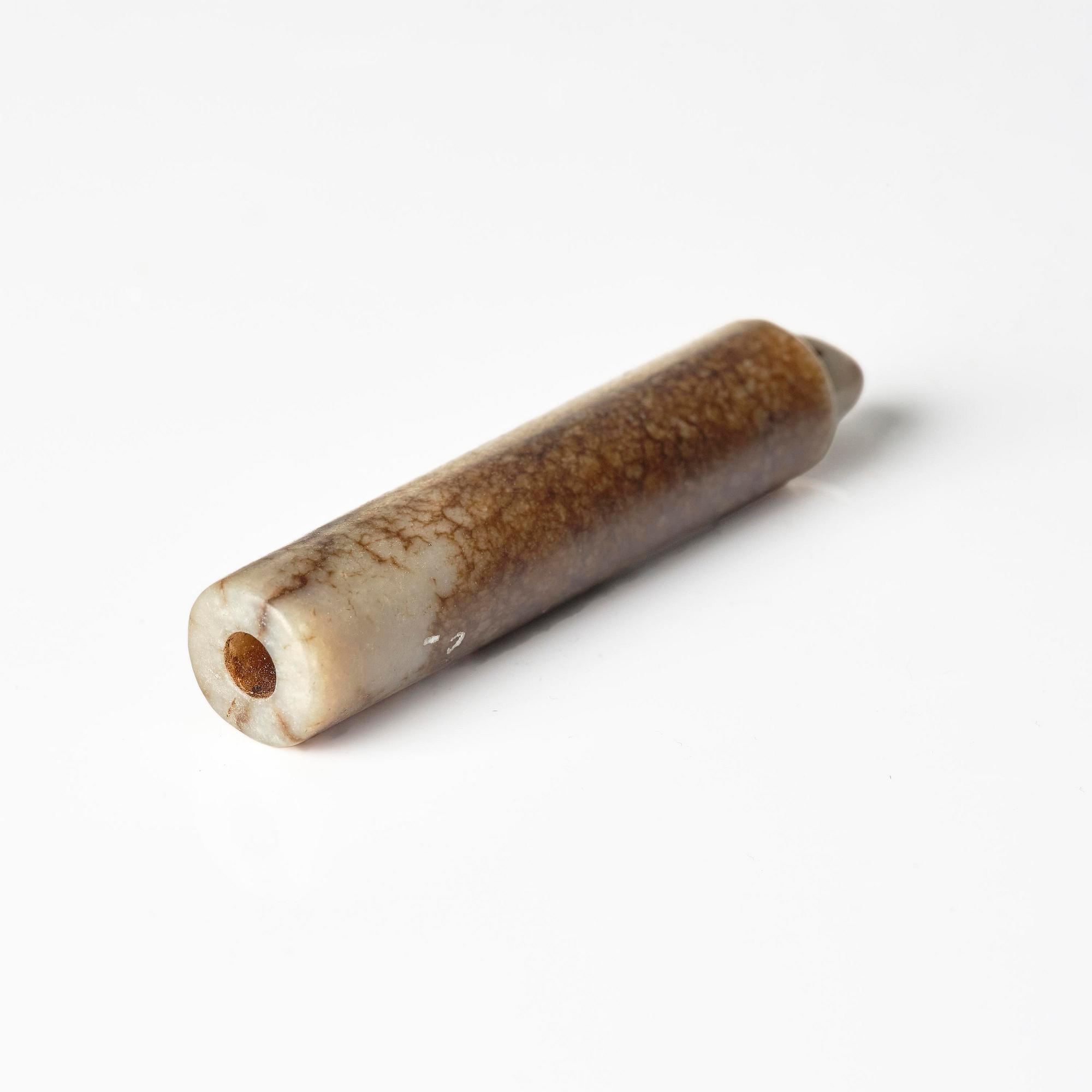
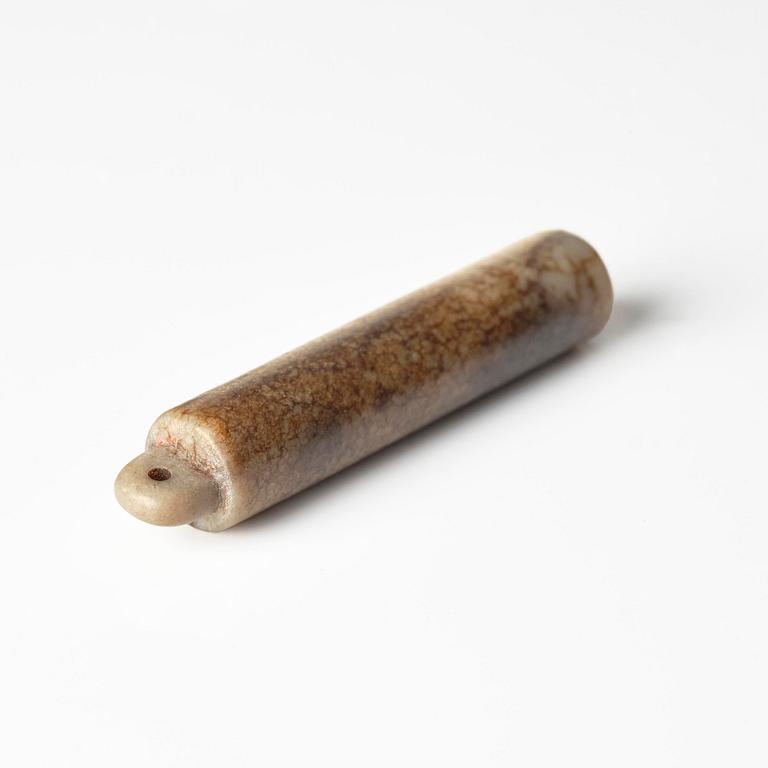
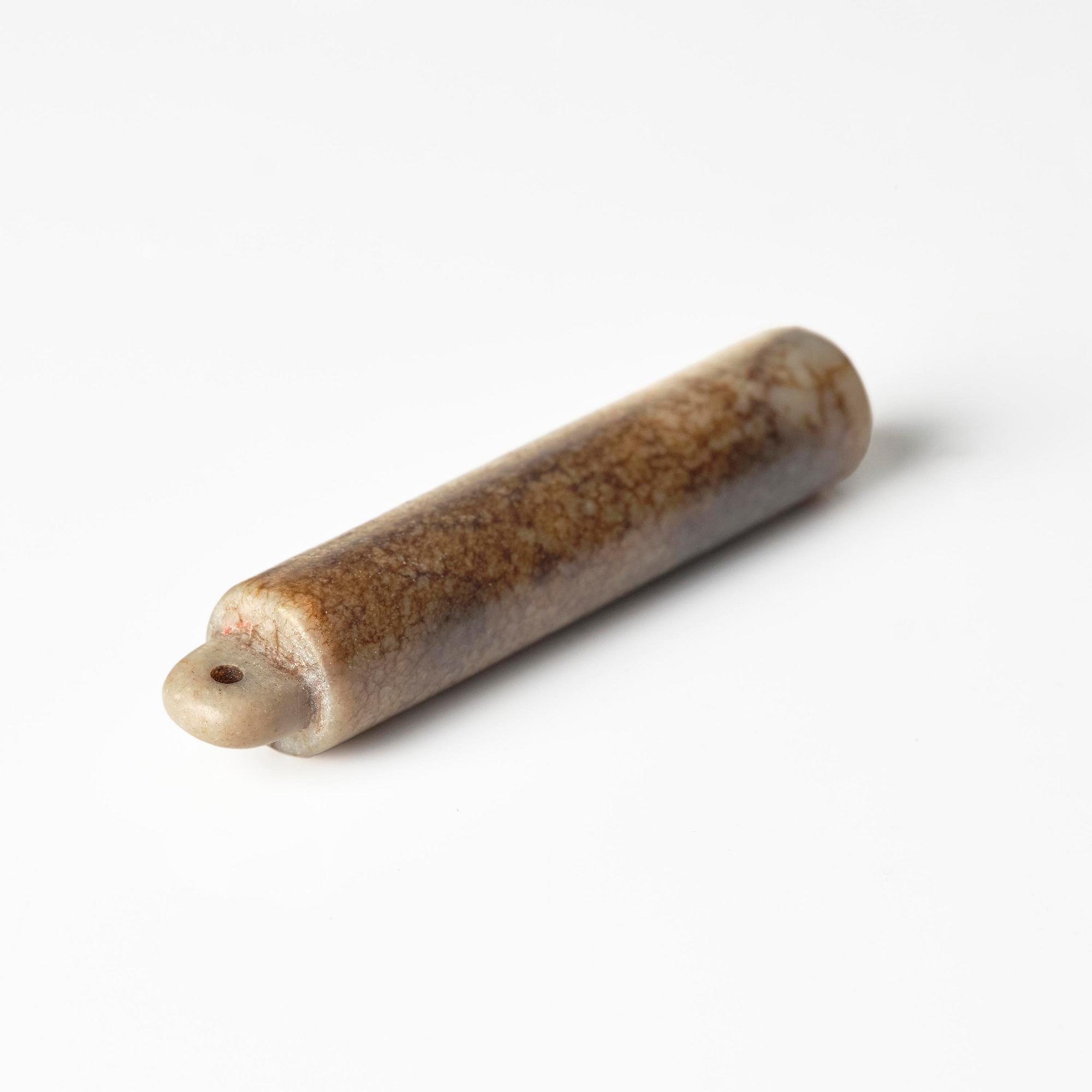
For the tall mandarin hat insignia, compare a similar one in the collection of the British Museum, Museum number
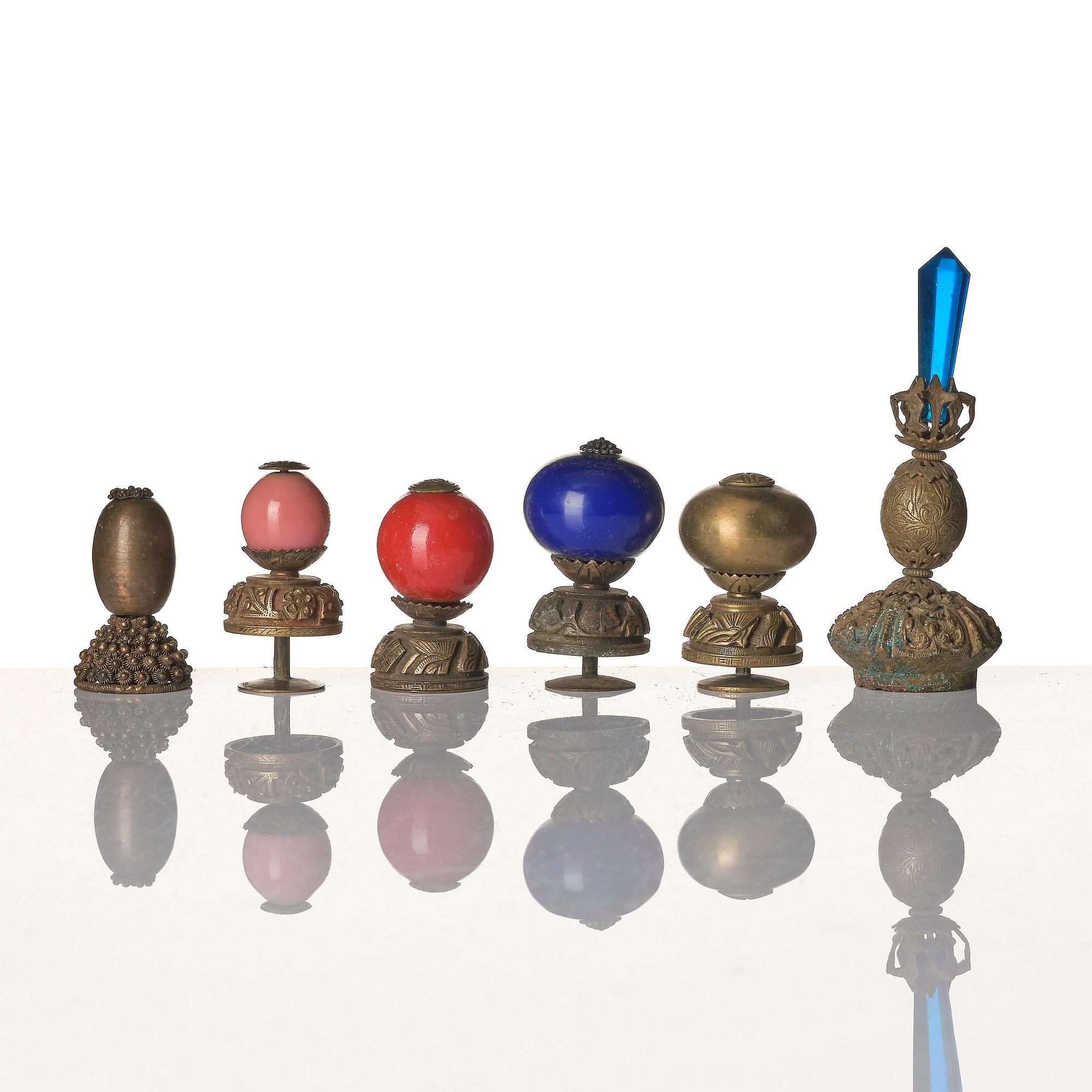
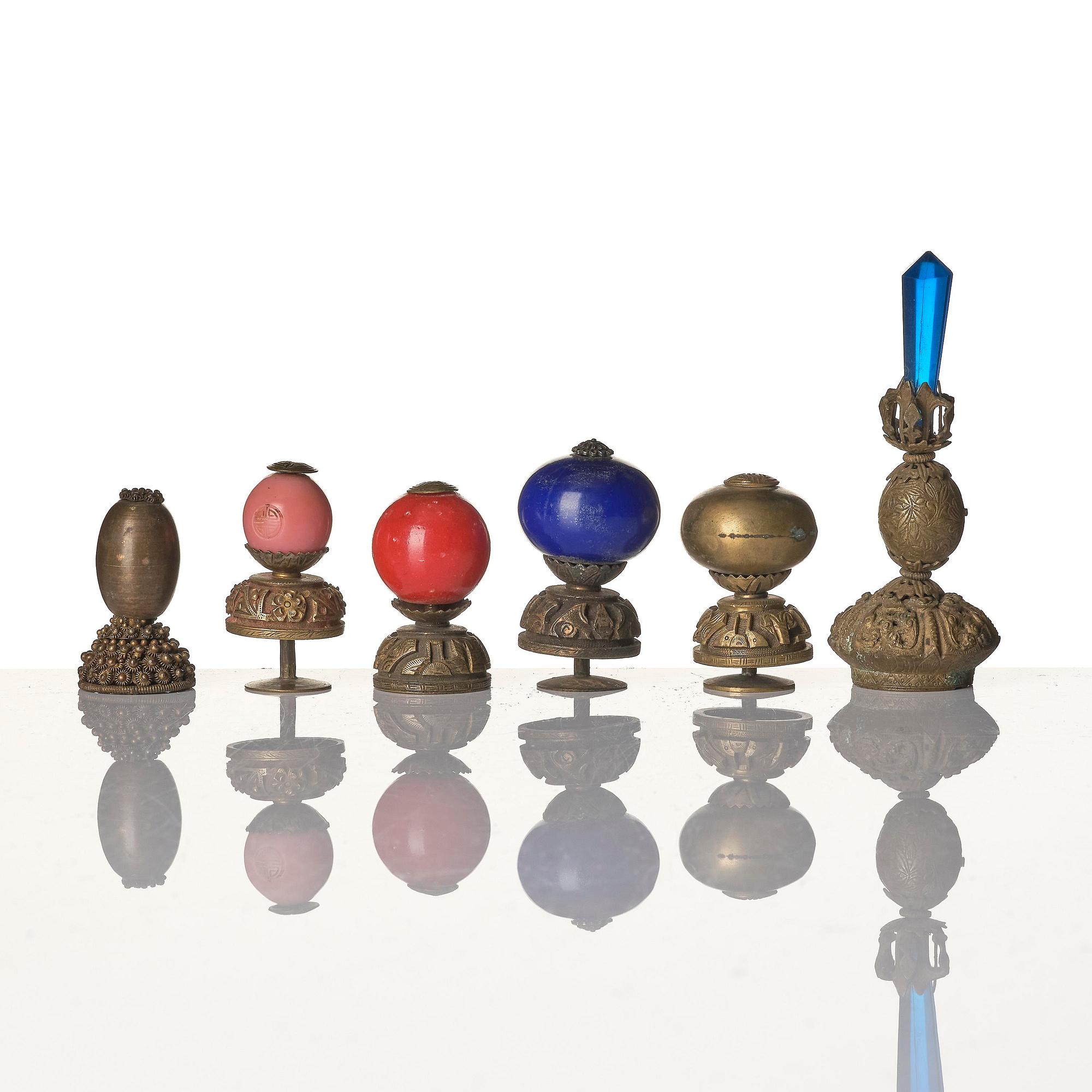
M.6997. This is a Chinese Mandarin hat button (Chinese: 顶戴), for third class Mandarins, for ceremonial and full dress occasions.
Litteratur
G. Dickinson and L. Wrigglesworth, Imperial Wardrobe, Berkeley and Toronto, rev. ed., 2000, p. 113, pl. 95. Compare the feather plume.
Övrig information
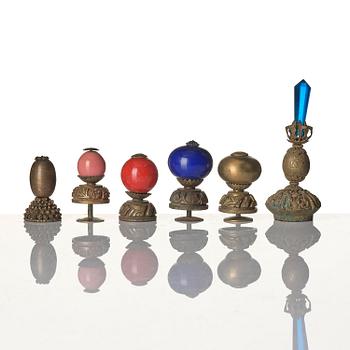
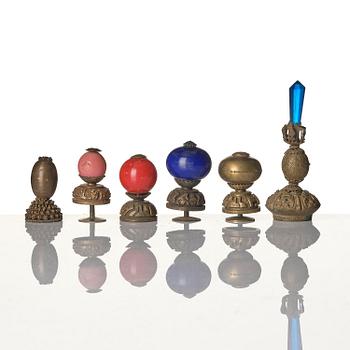
Under Manchu formal dress regulations, the colors of hat finials were used to distinguish official ranks: the four army divisions known as Banners were originally represented by ruby finials for the Red Banner, sapphires for the Blue Banner, rock crystals for the White Banner and gold for the Yellow Banner.
The summer hat was intended for summer use, as indicated by the silk material over a light-weight bamboo frame, and the additional ceremonial hat spike suggests that it was made for formal court ceremonials. Compare a similar hat dated to 1875 and exhibited at the Art Gallery of New South Wales, illustrated in the catalog Celestial Silks: Chinese Religious & Court Textiles, Sydney, 2004, p. 90, where the author notes that the pearl on the front brim was a feature adopted by the Kangxi Emperor.
För konditionsrapport kontakta specialist

Andra har även tittat på