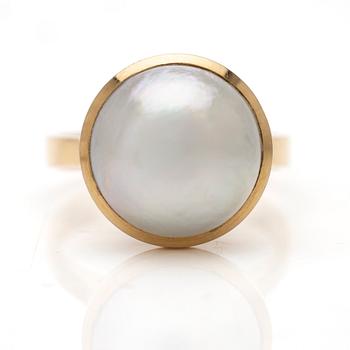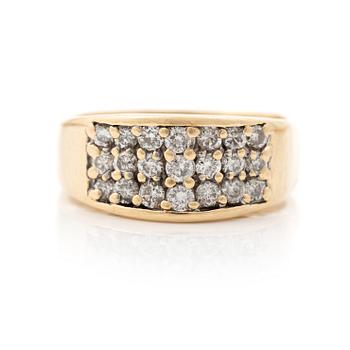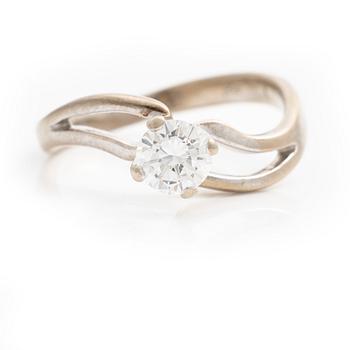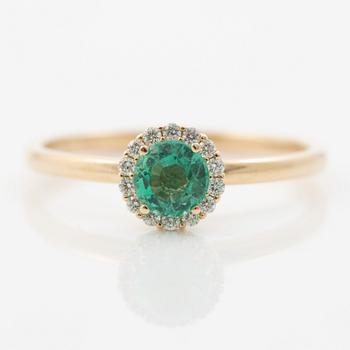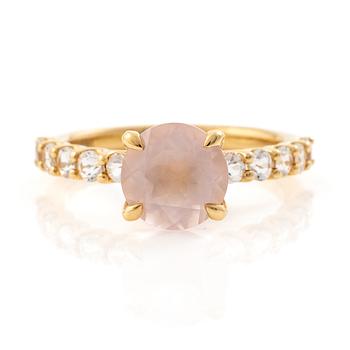
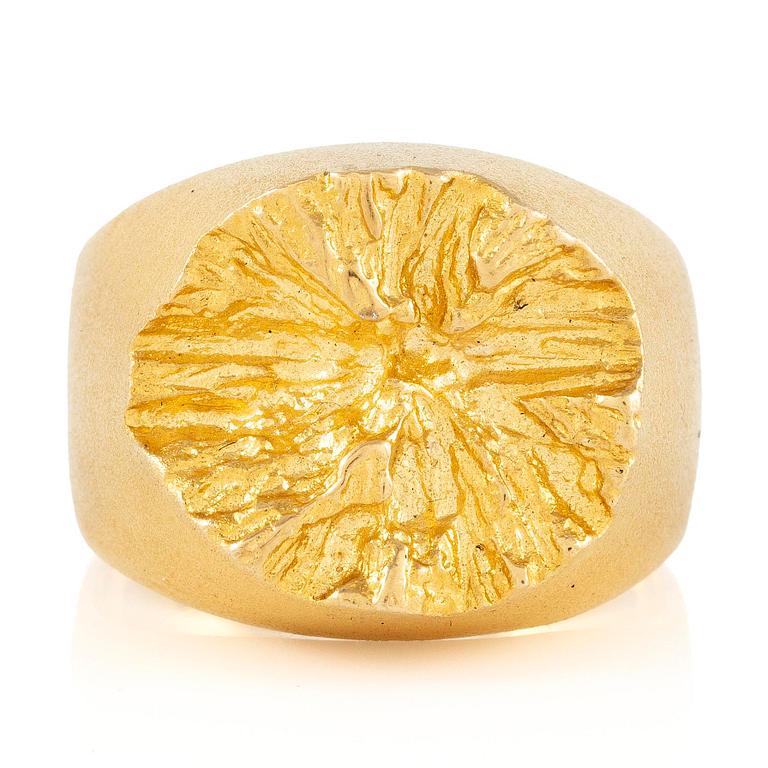
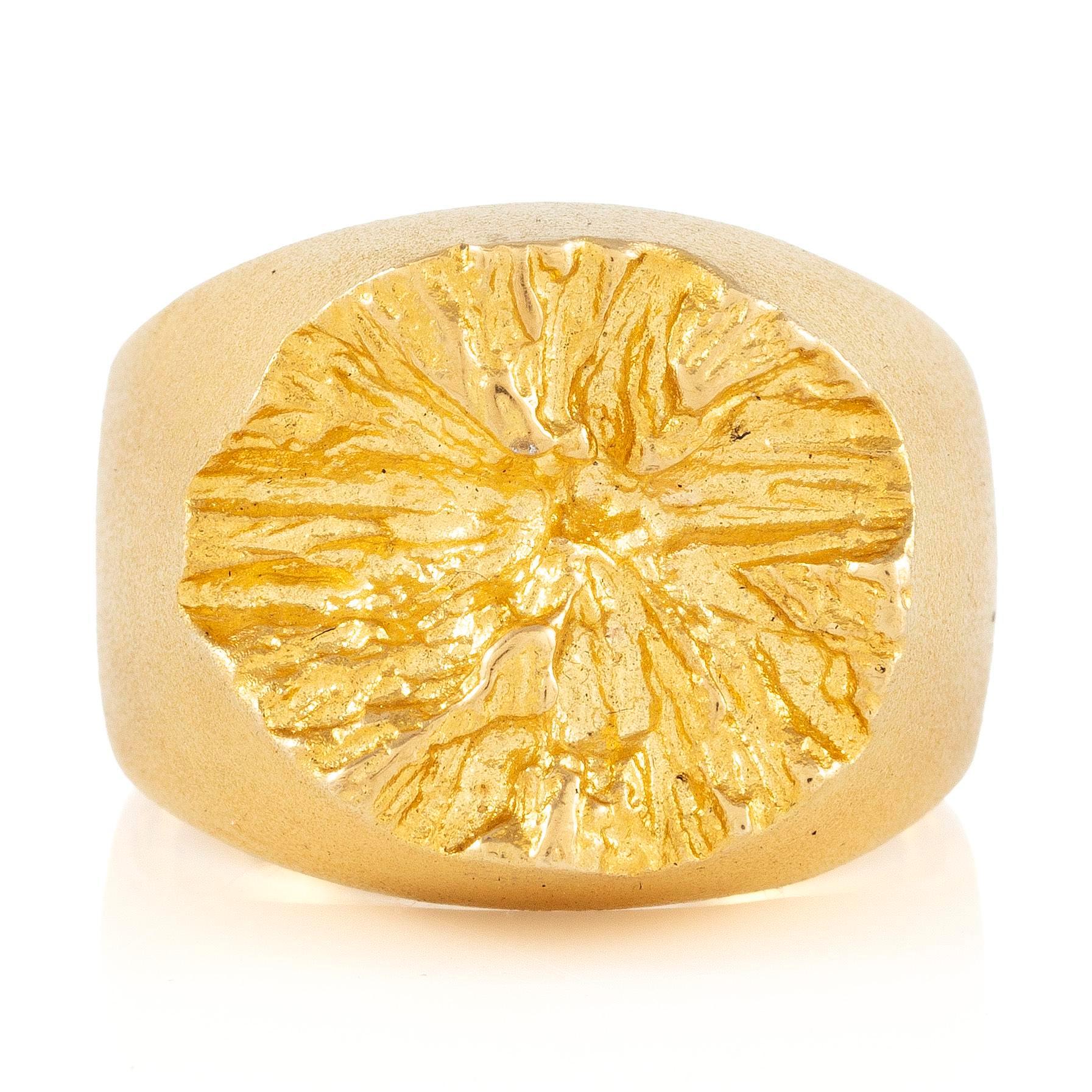
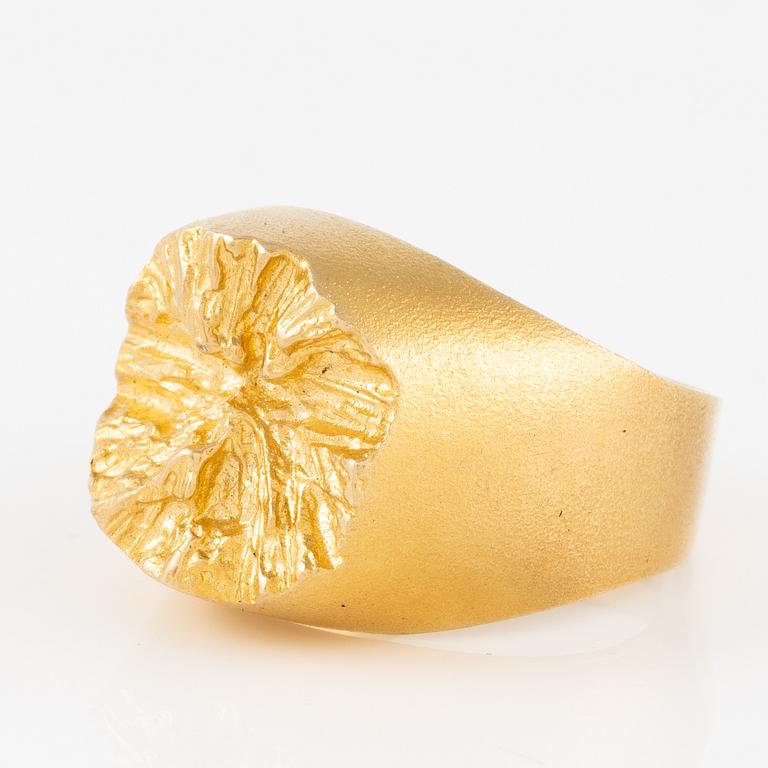
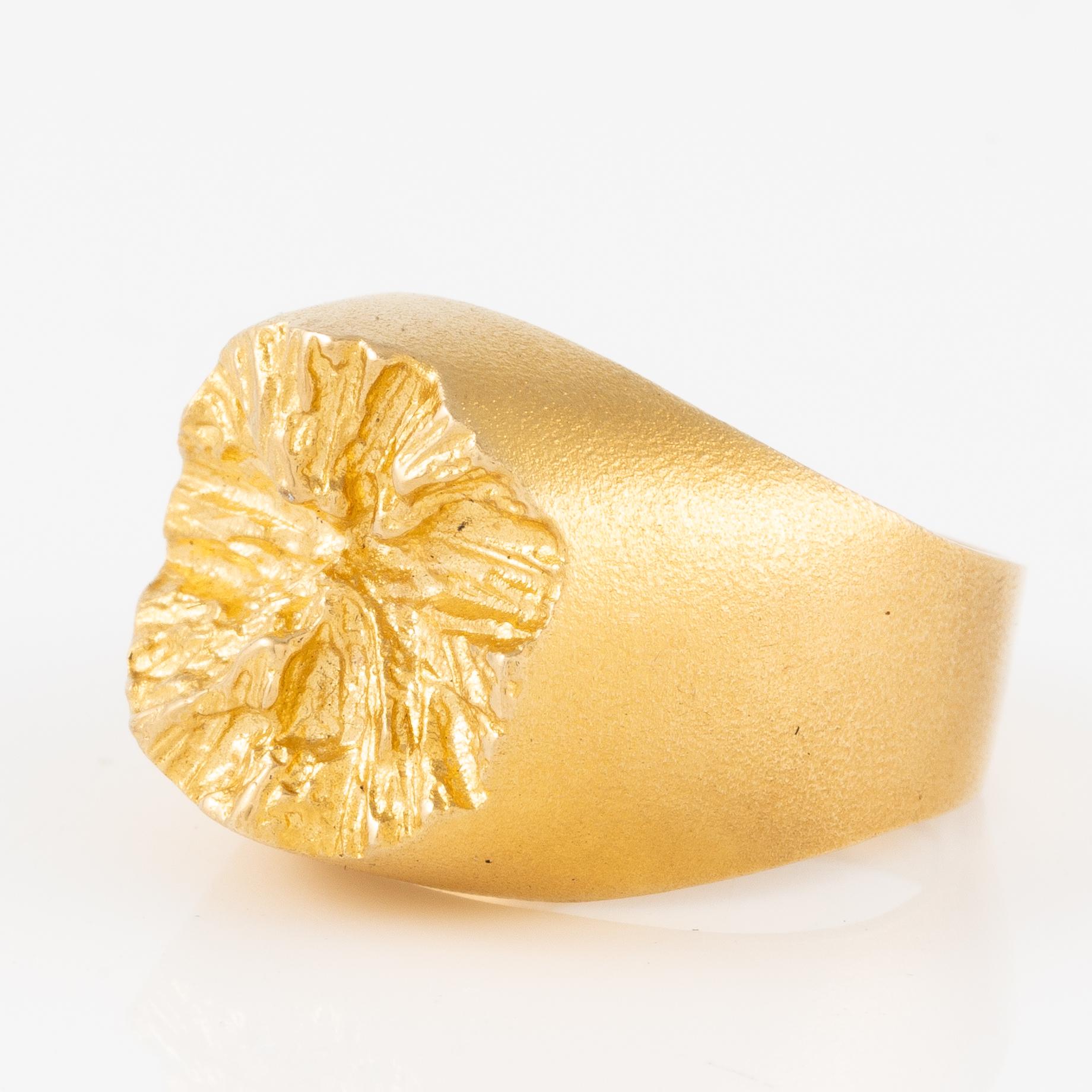
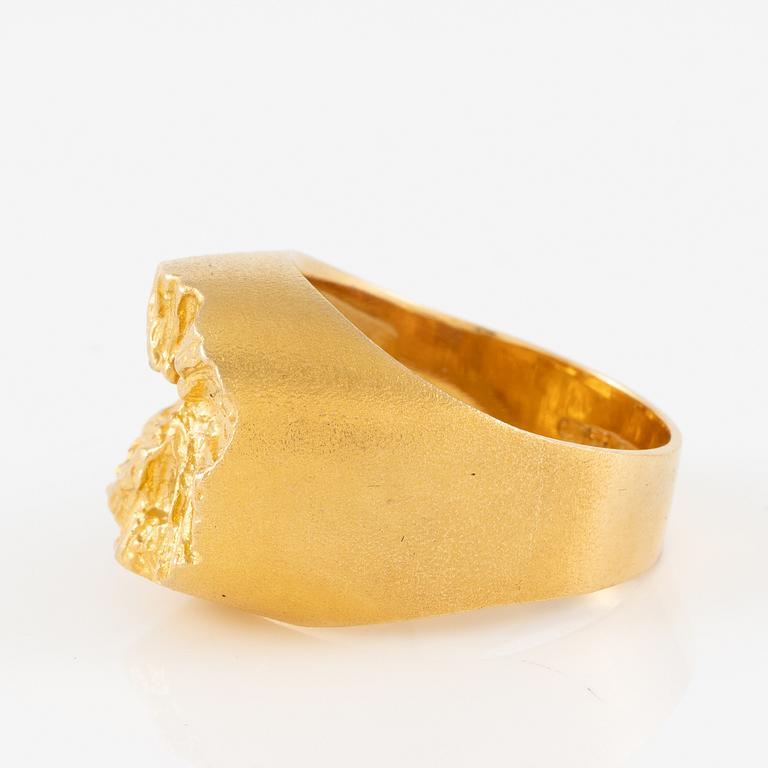
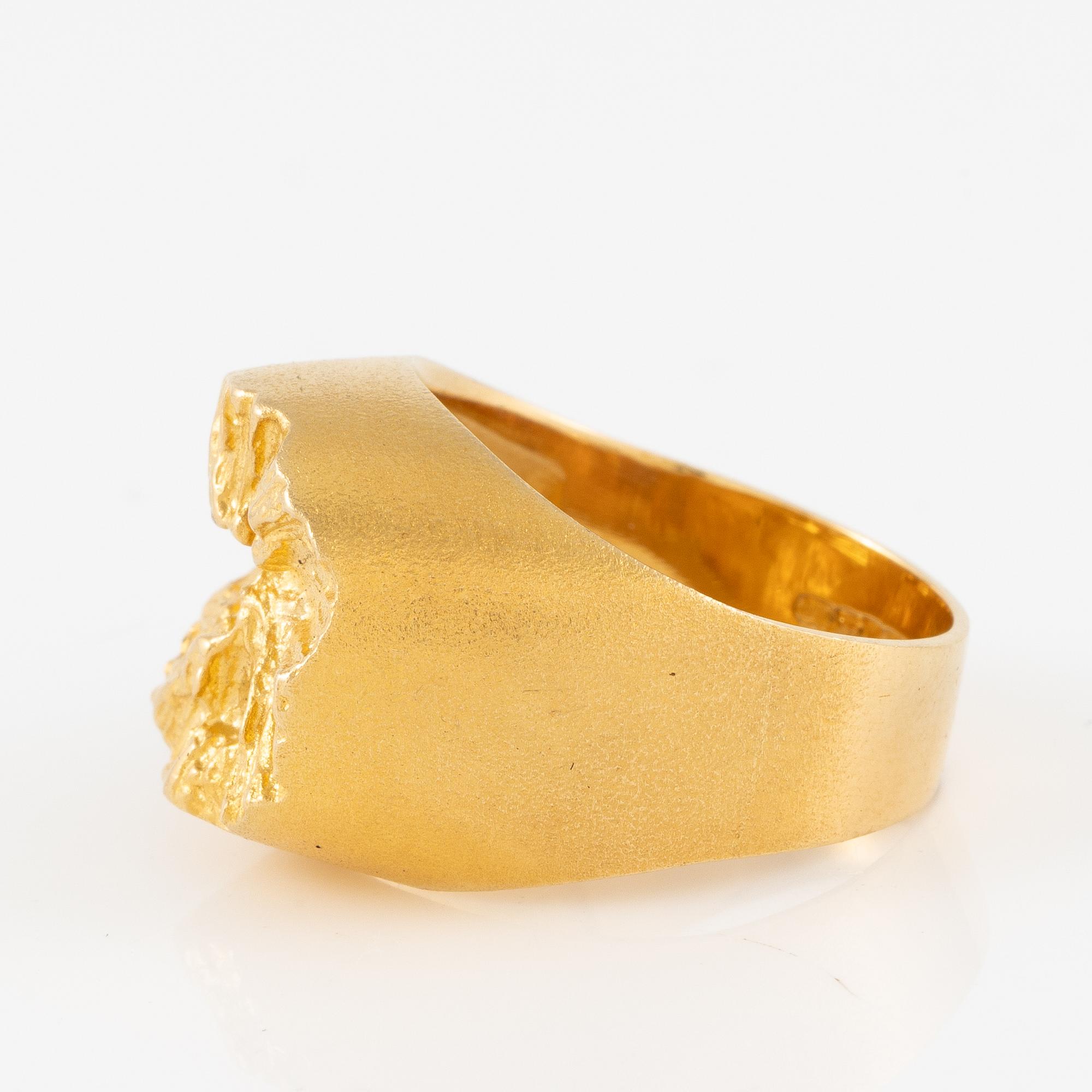
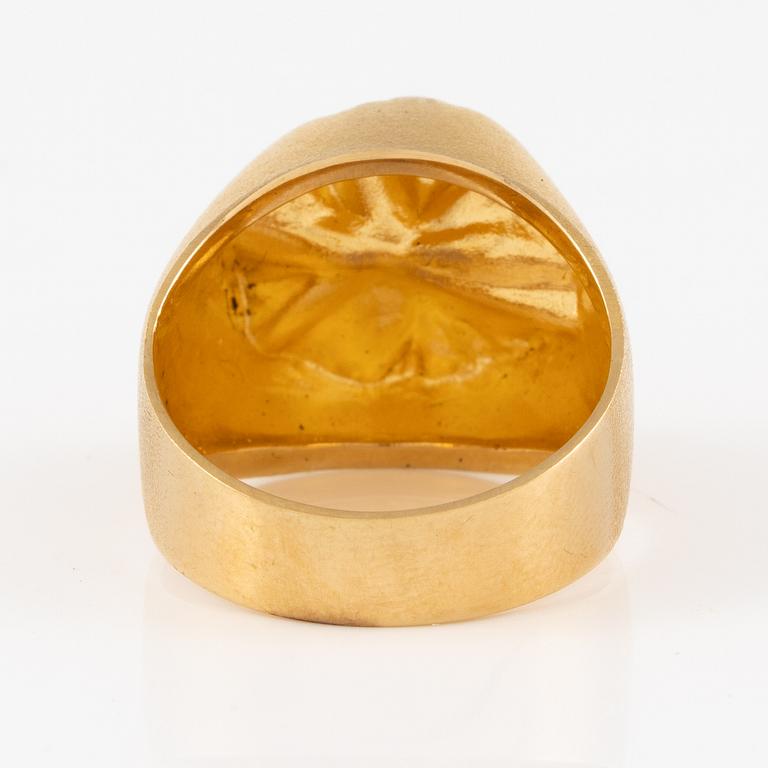
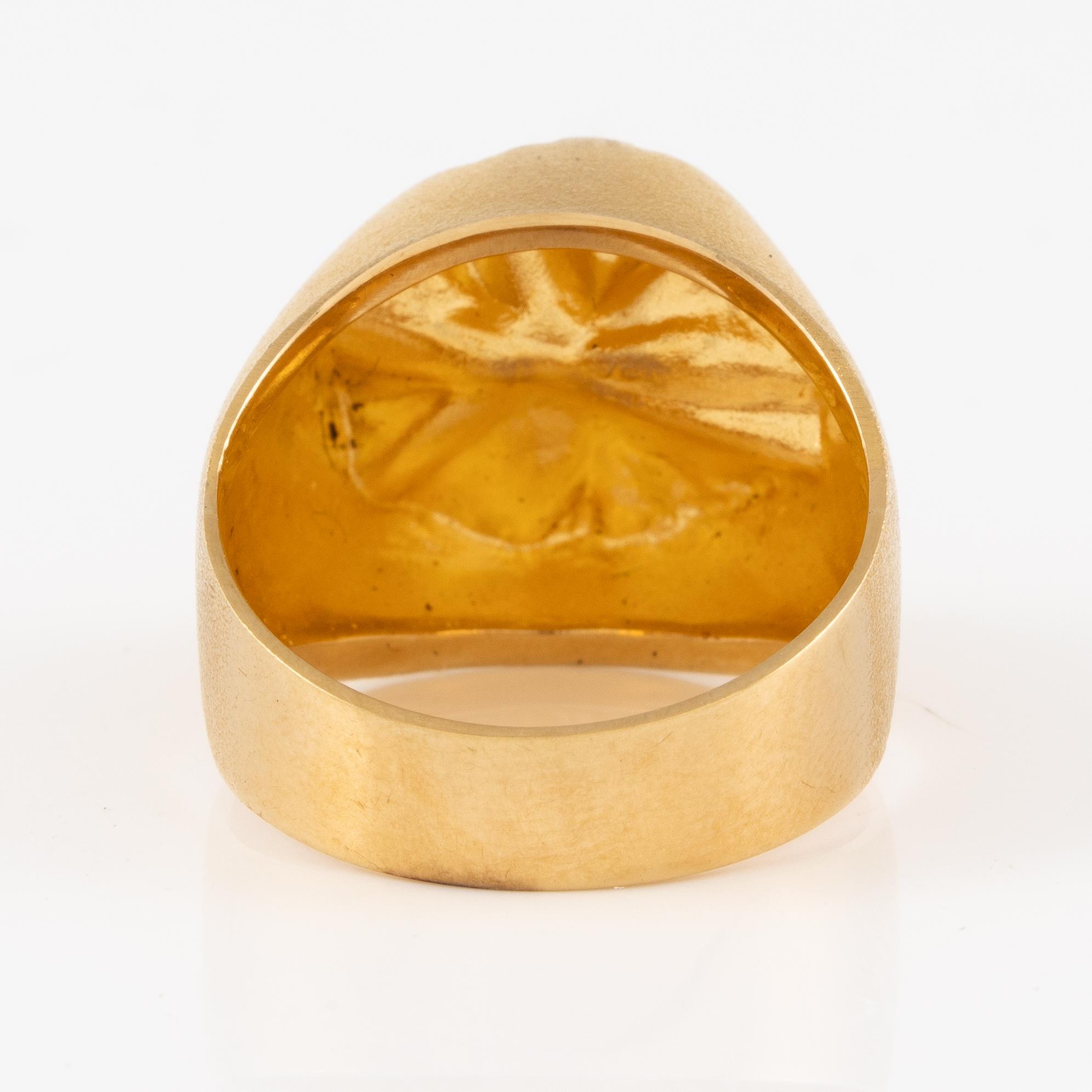
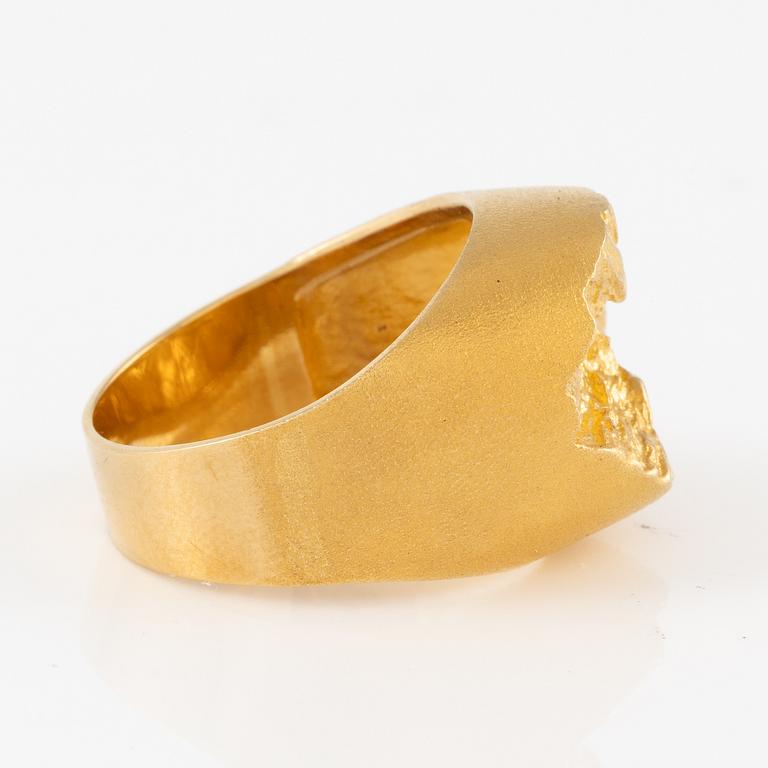
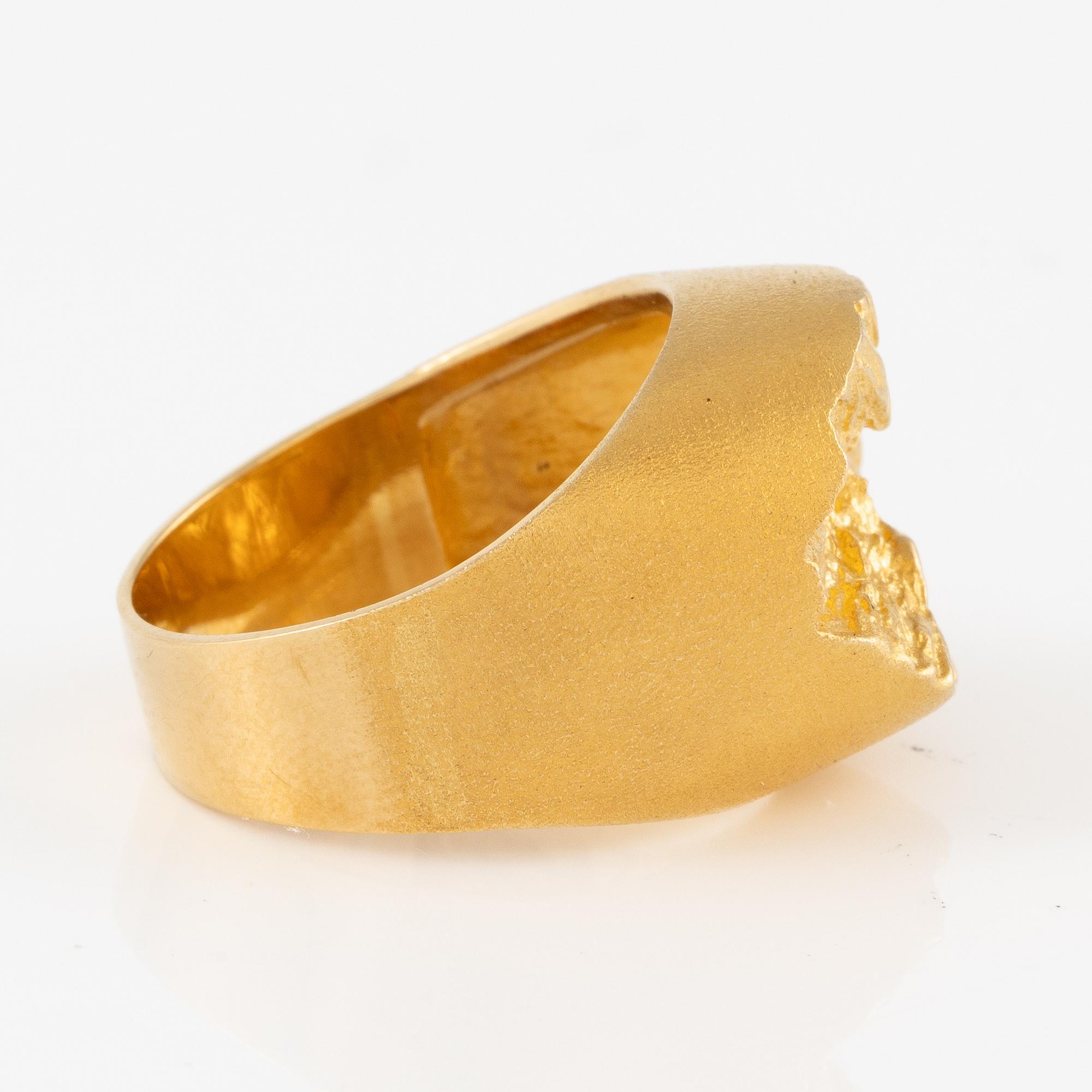
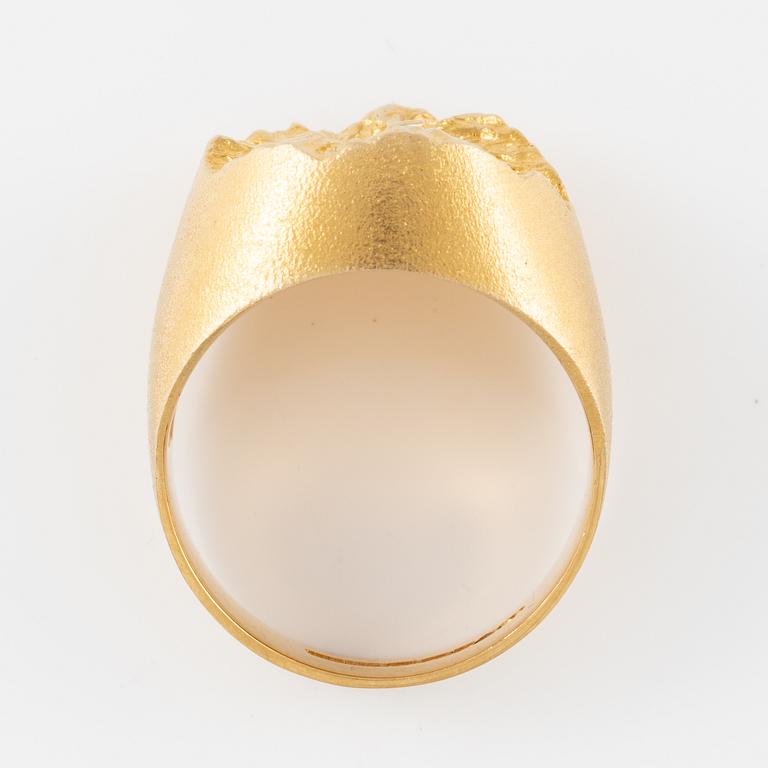
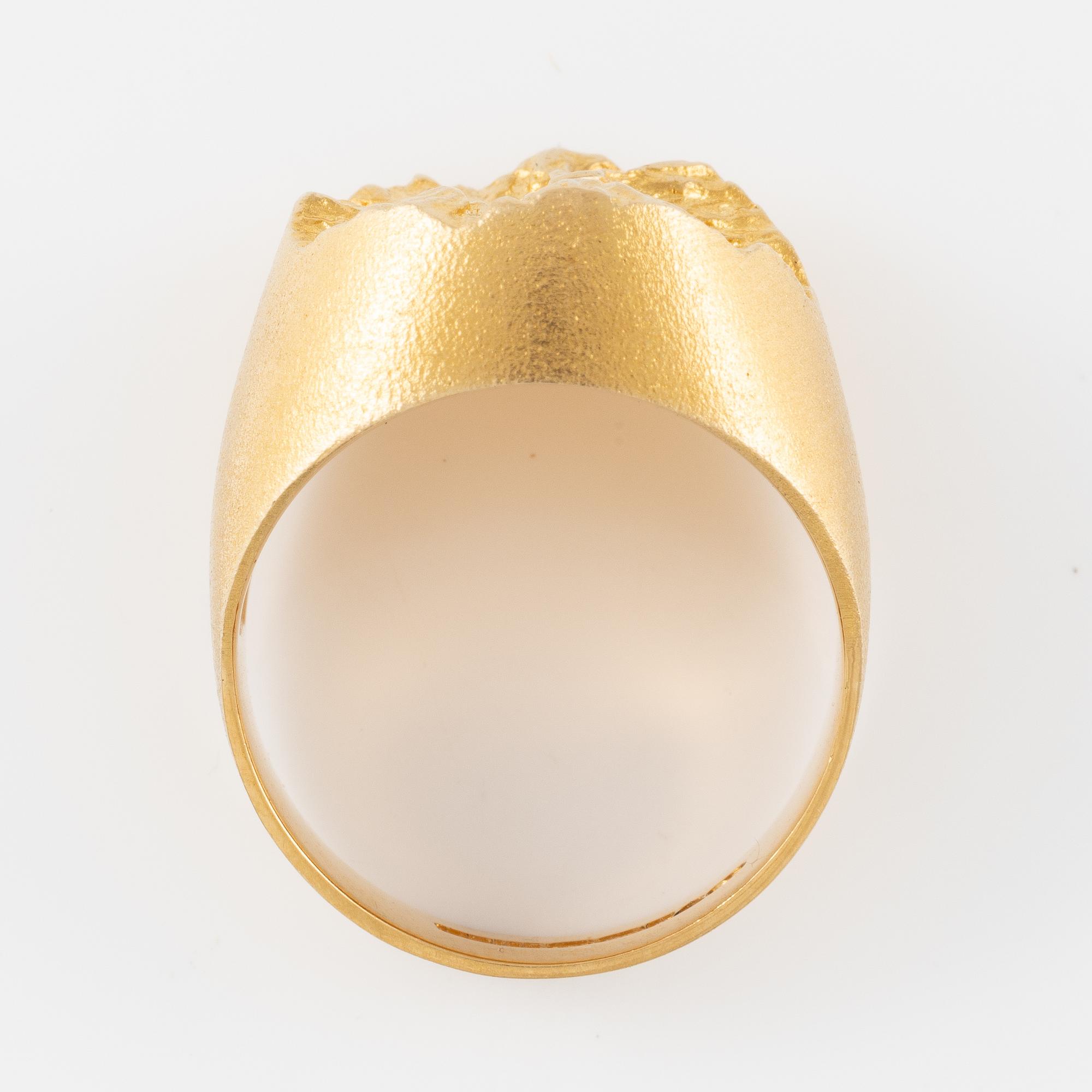
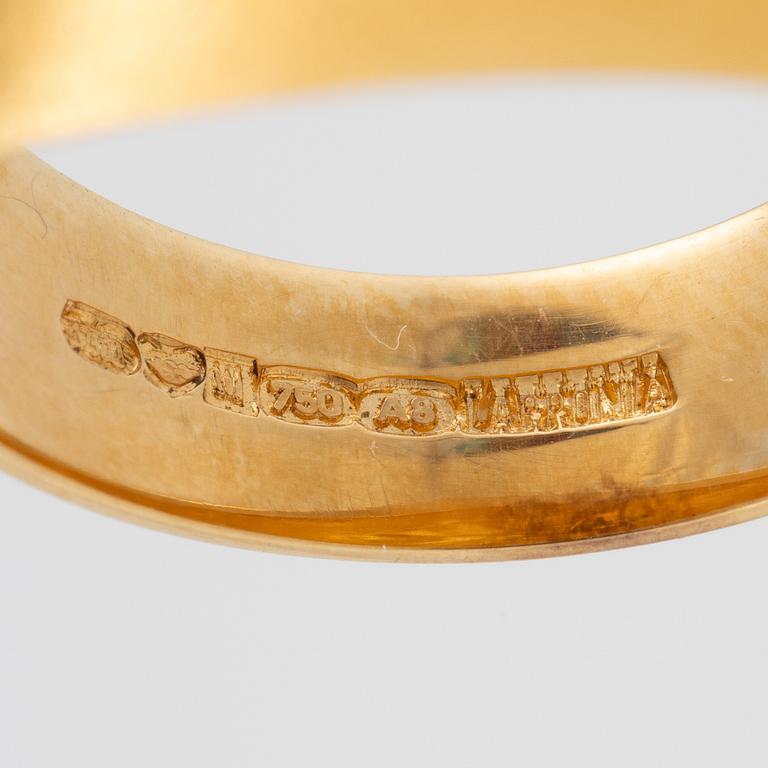
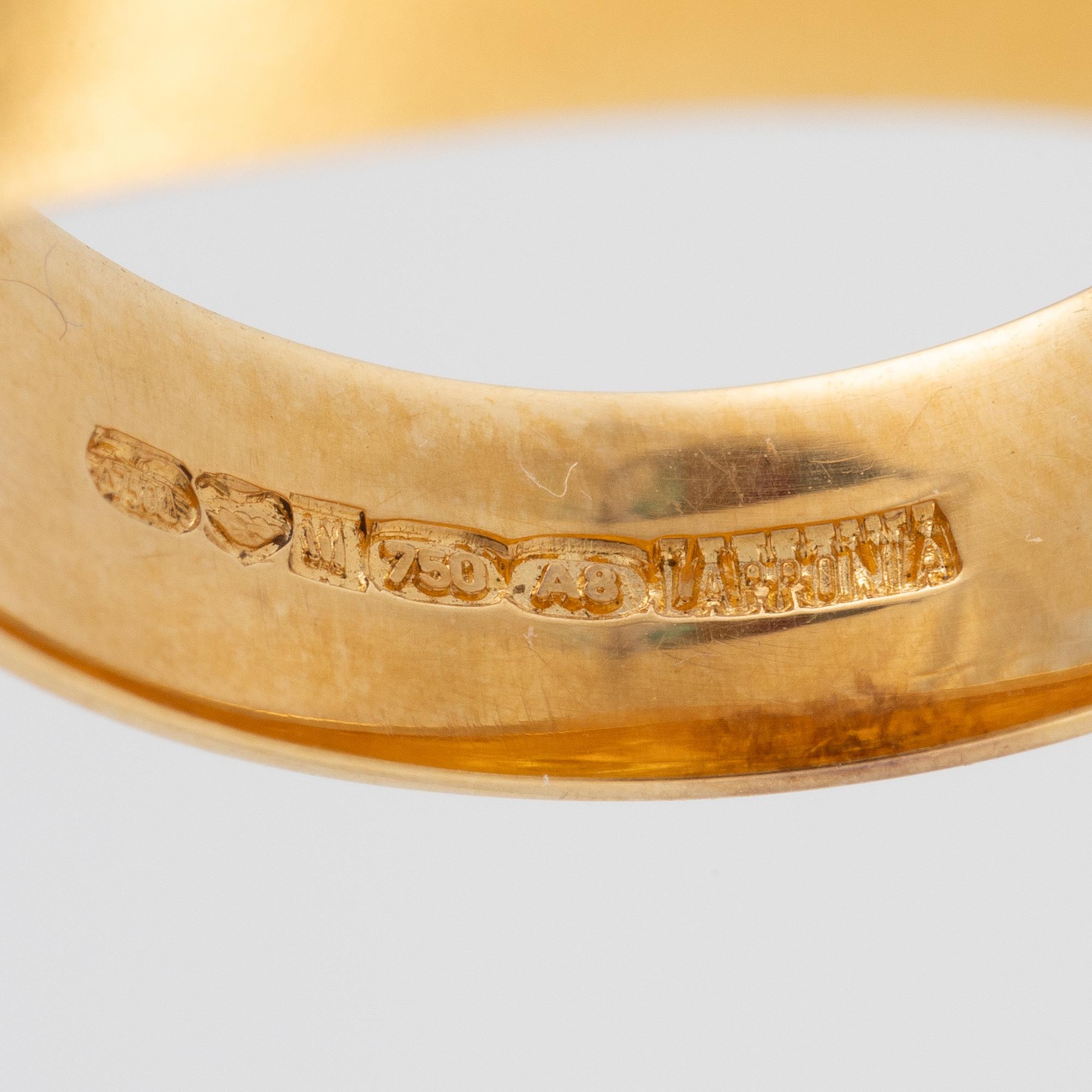
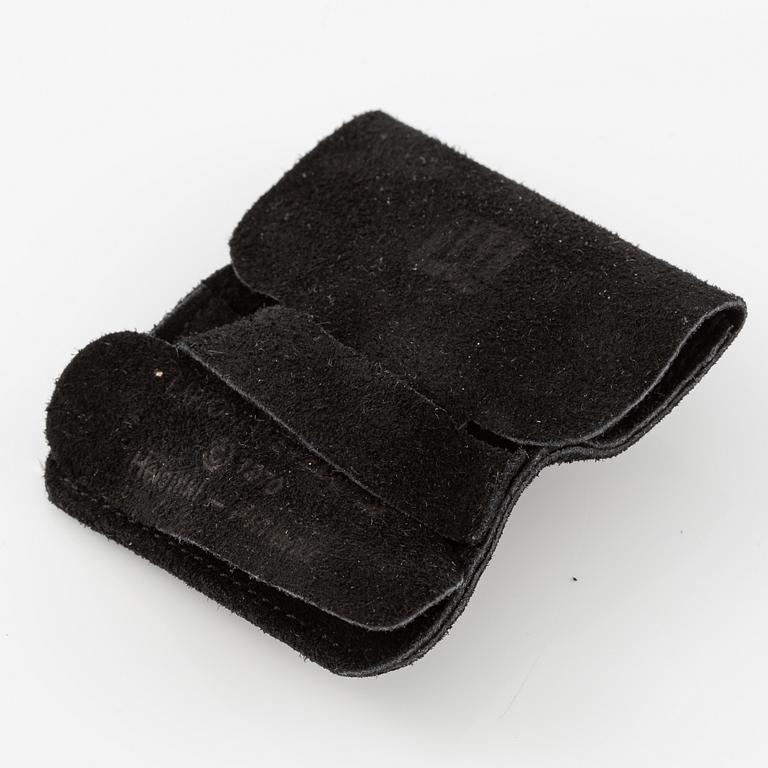
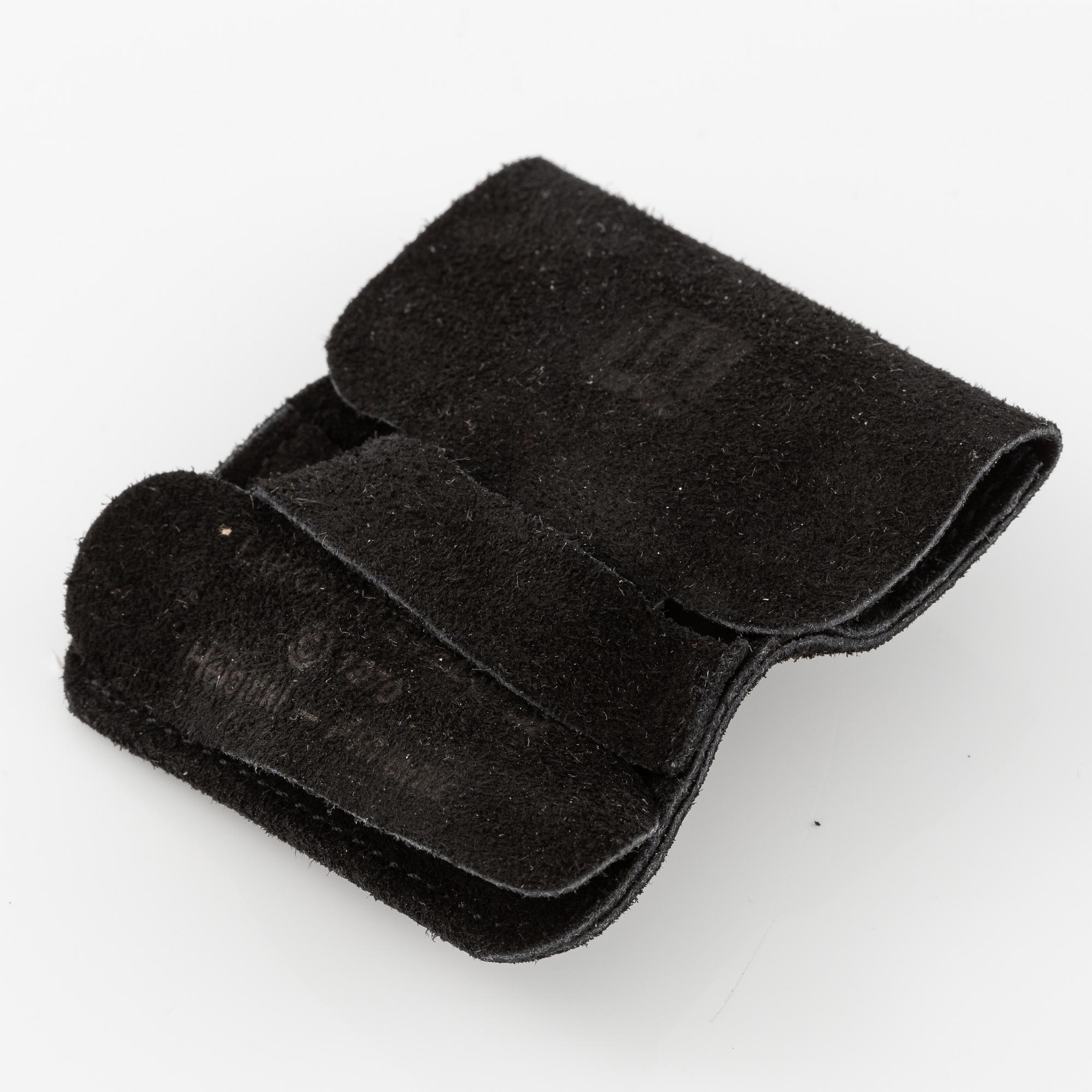
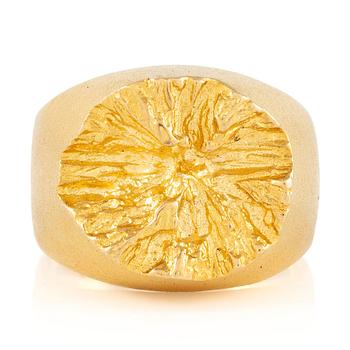
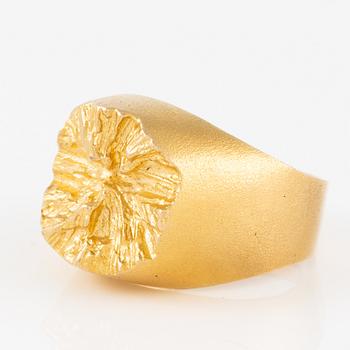
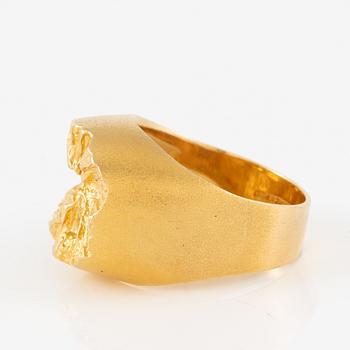
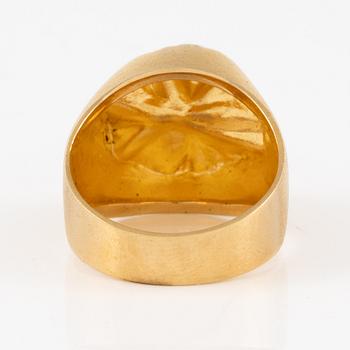
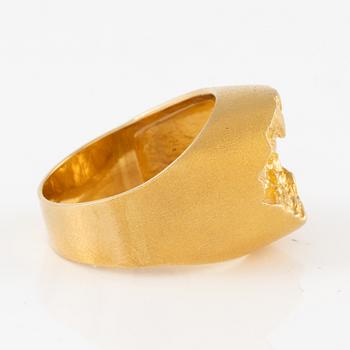
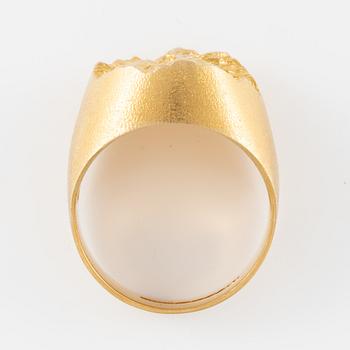
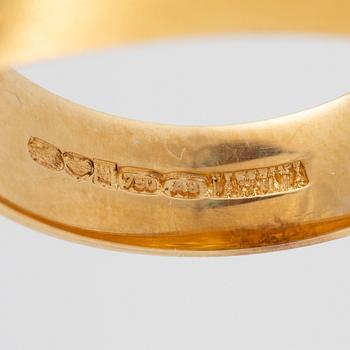
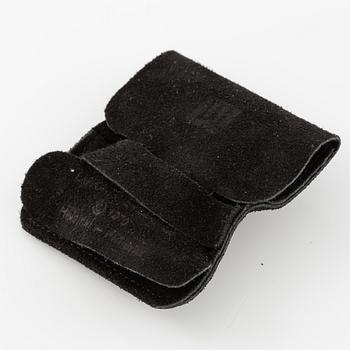
Mått ca 14 x 16 mm. Storlek 19/60, vikt 11.9 g. Medföljande pouch Lapponia.
Övrig information
Bukowskis is honored to present an extensive collection of gold jewelry by the Finnish designer Björn Weckström (b. 1935), one of the Nordic region’s most influential jewelry and sculpture designers. Renowned for his sculptural and nature-inspired jewelry for Lapponia, he has, since the 1960s, redefined the perception of jewelry by combining artistic expression with innovative material techniques. Weckström’s works are represented in museum collections worldwide, and he is regarded as a leading figure in modern Nordic design. The collection belonged to a Swedish silversmith active during the 1960s and 1970s, a period when Swedish jewelry art was rapidly evolving. He was part of a generation of designers who dared to break with established norms and sought new ways of expression within jewelry art. Through his works, he explored more artistic and experimental forms, and his work helped expand the boundaries of how jewelry could be perceived—not merely as decorative objects, but as art in its own right. Like Björn Weckström, he believed that jewelry is an art form on the same level as sculpture and visual art.
För konditionsrapport kontakta specialist

Andra har även tittat på