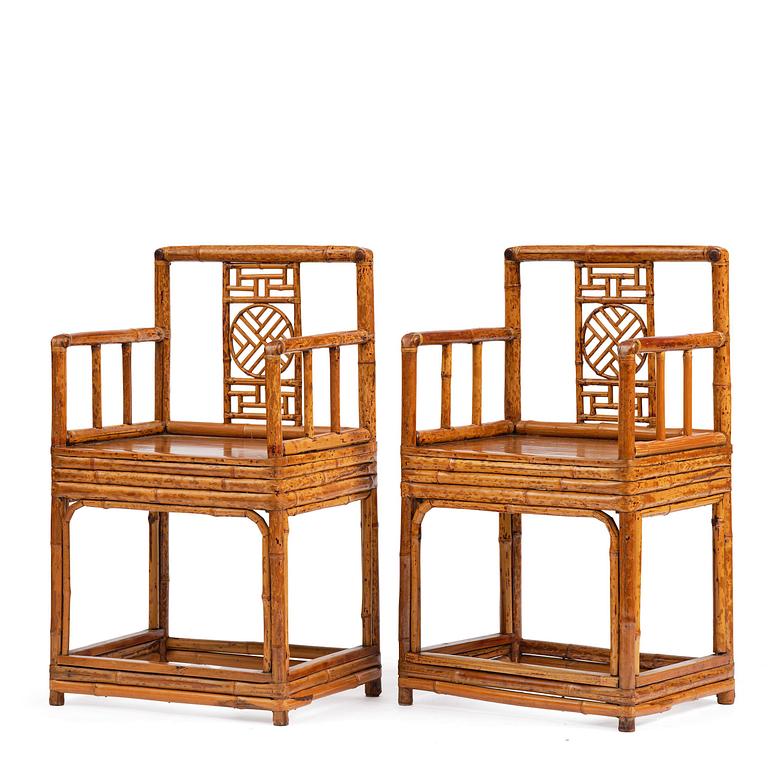
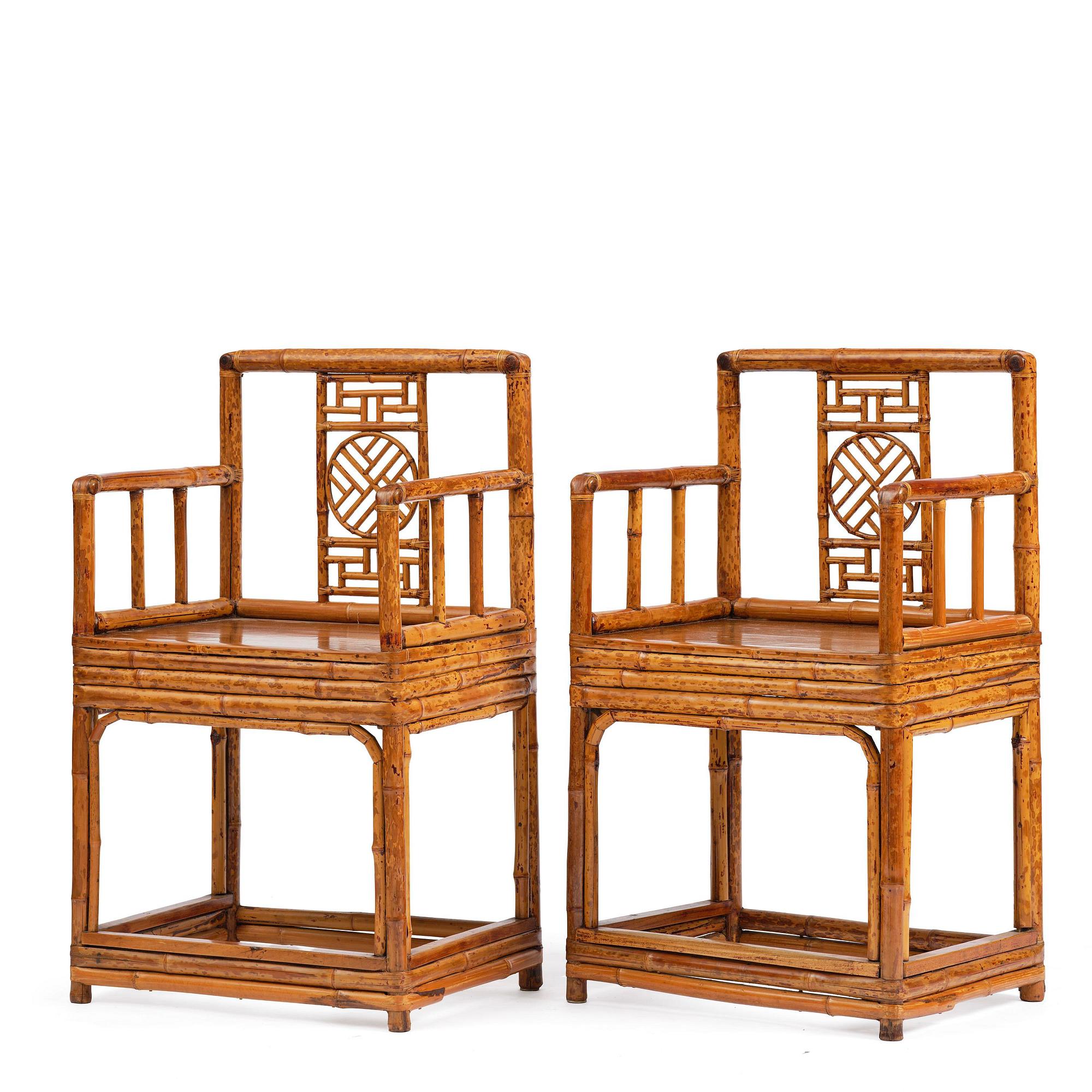
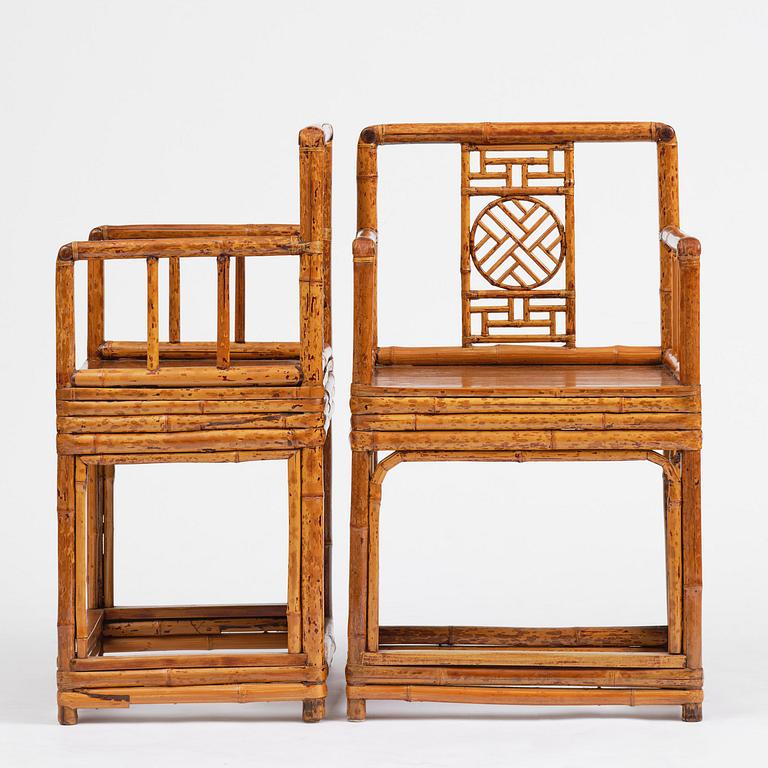
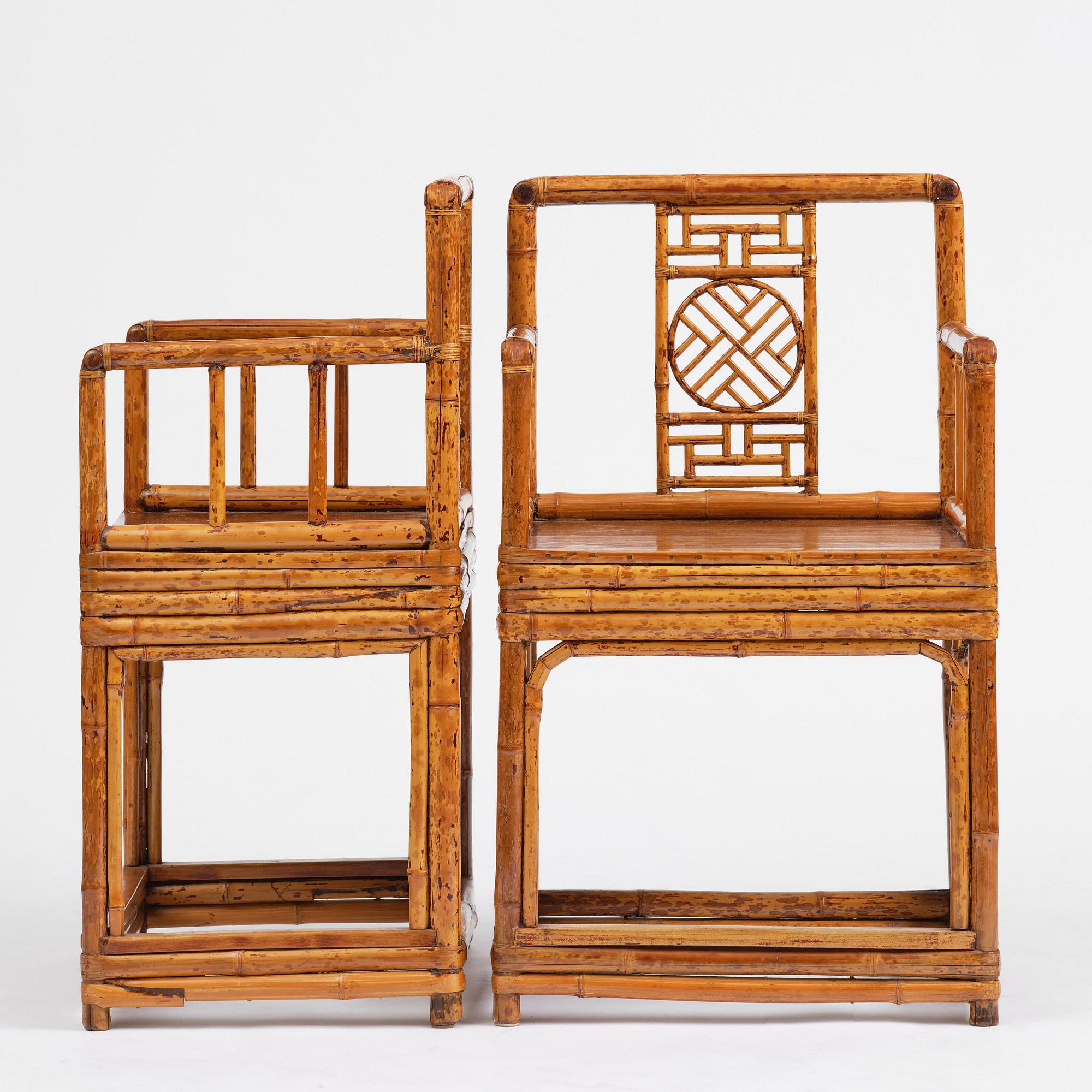
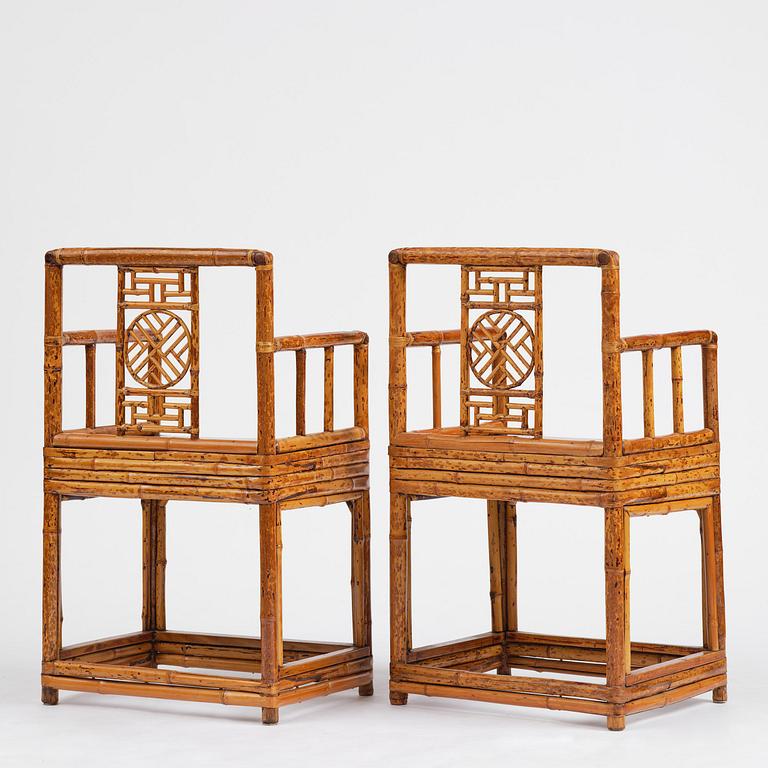
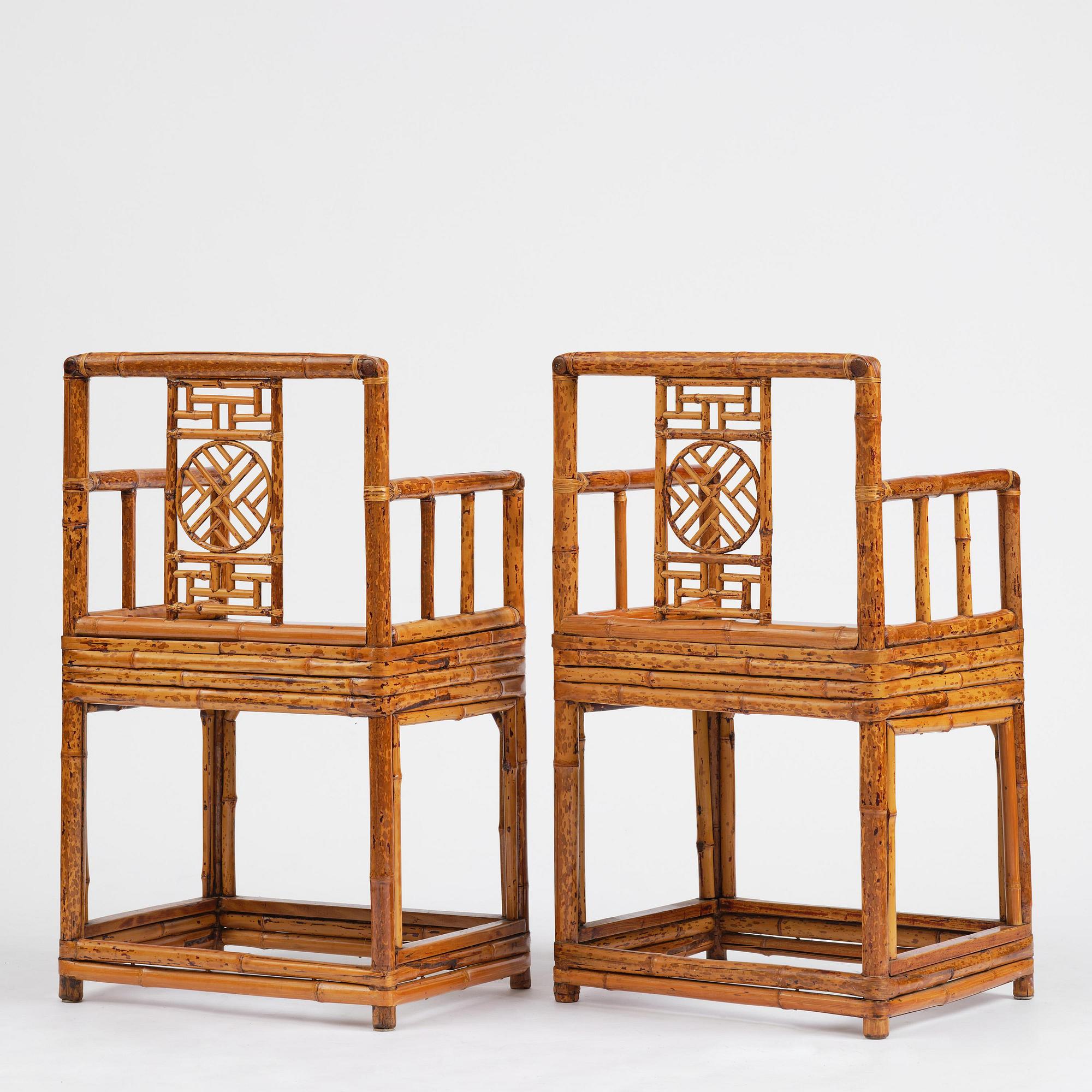
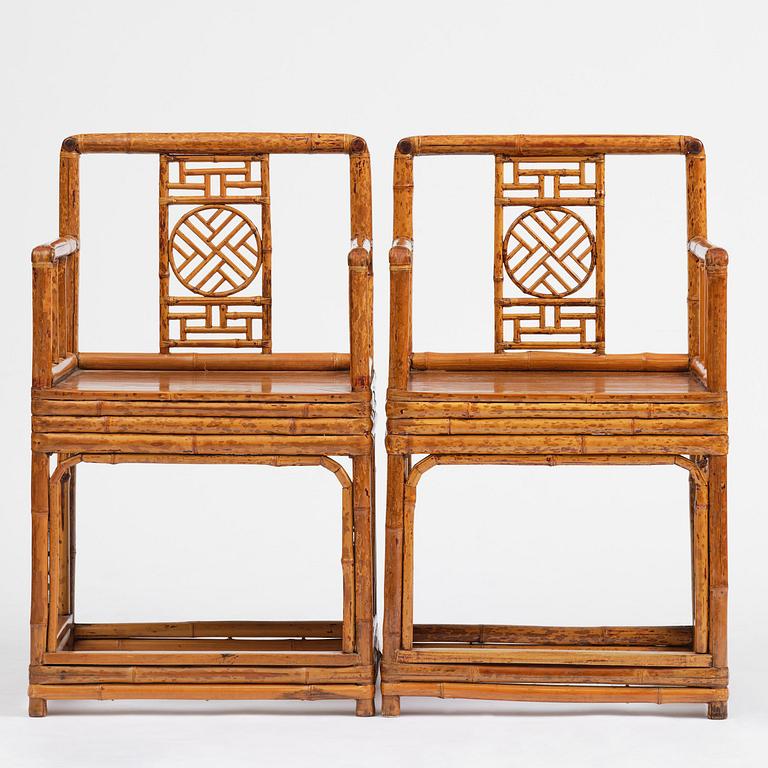
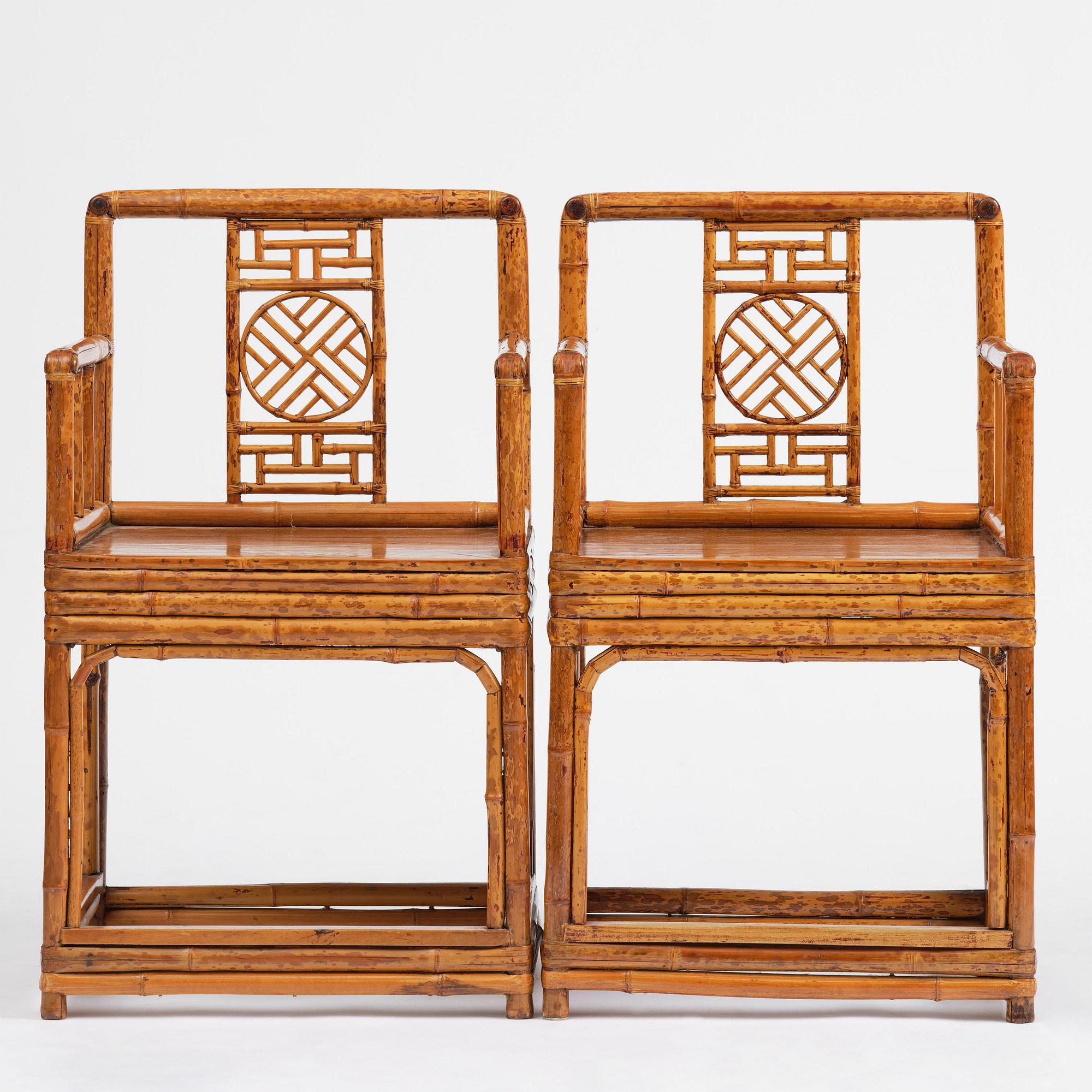
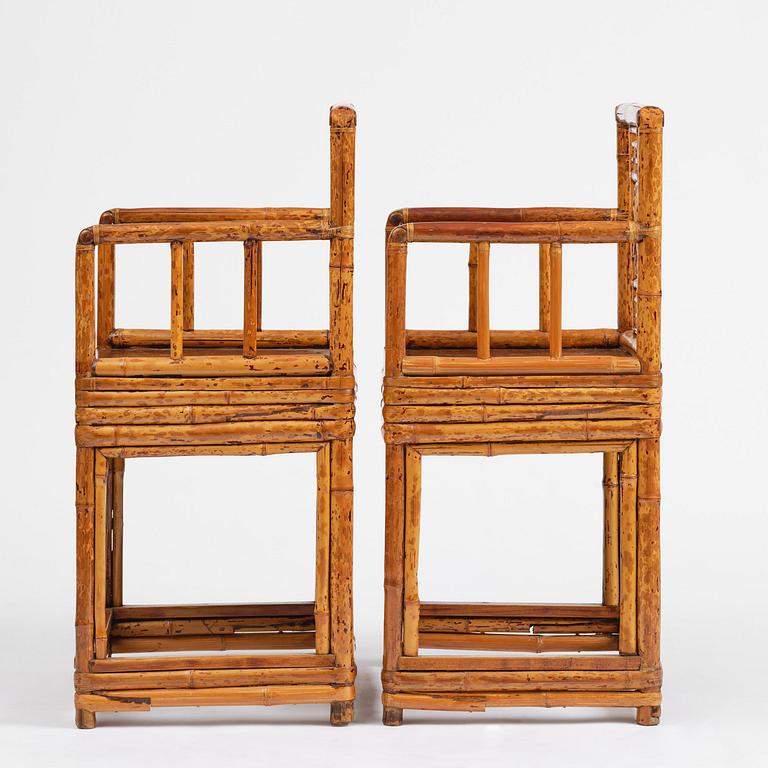
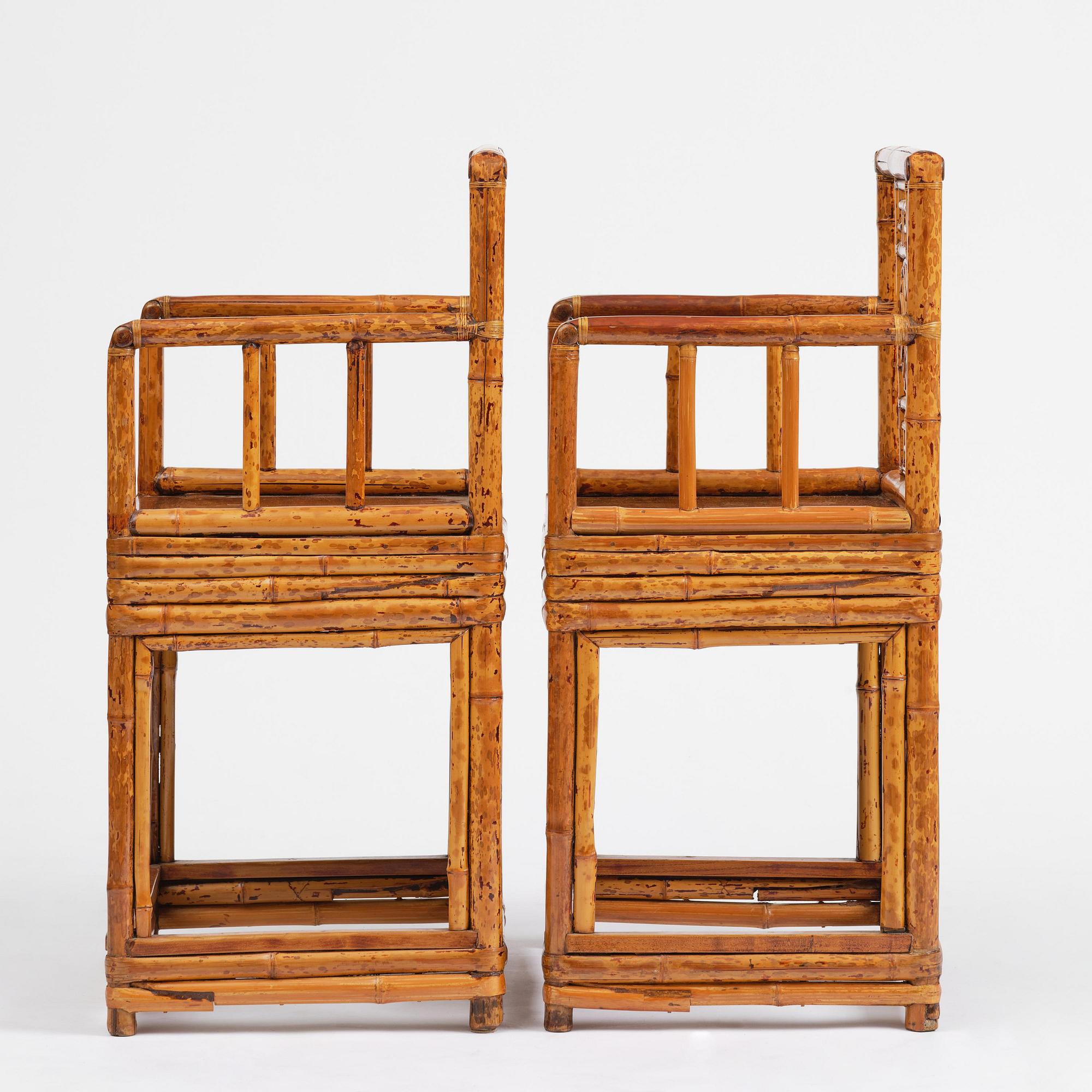
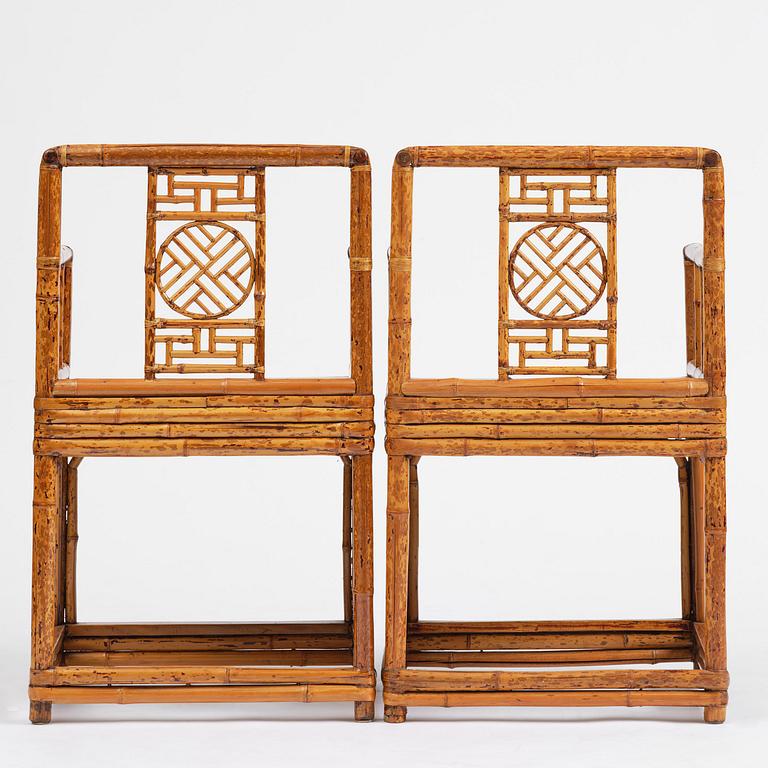
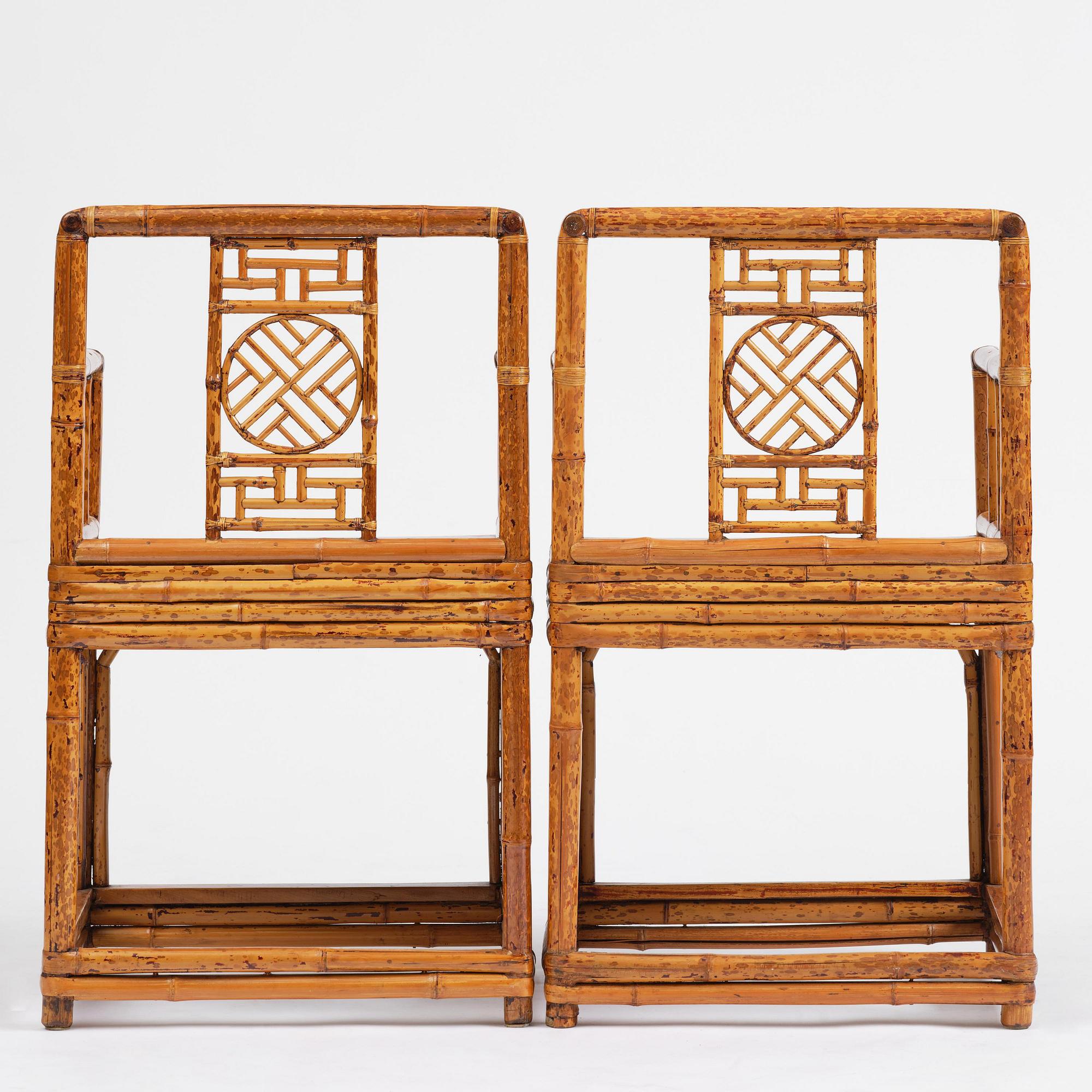
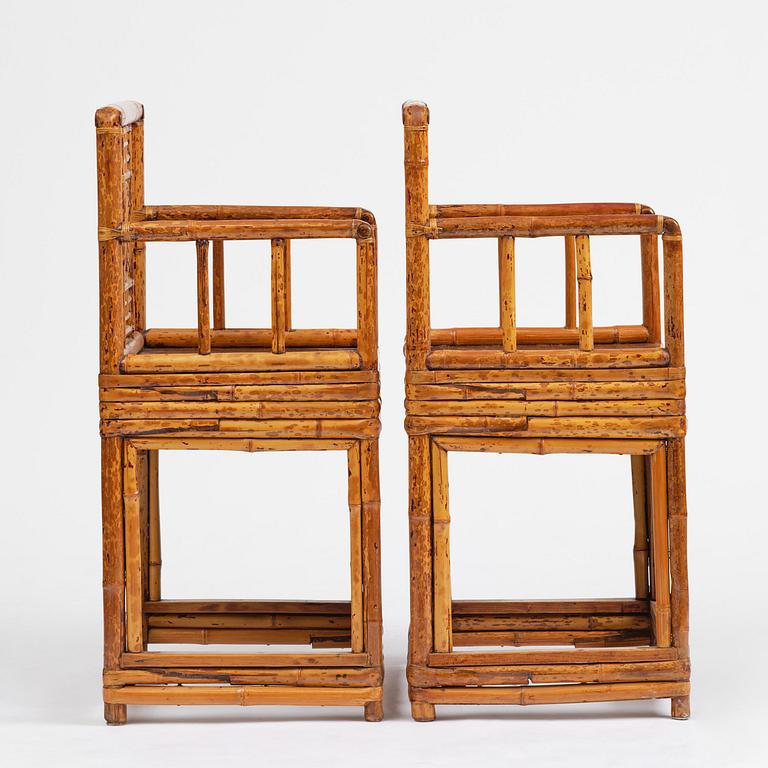
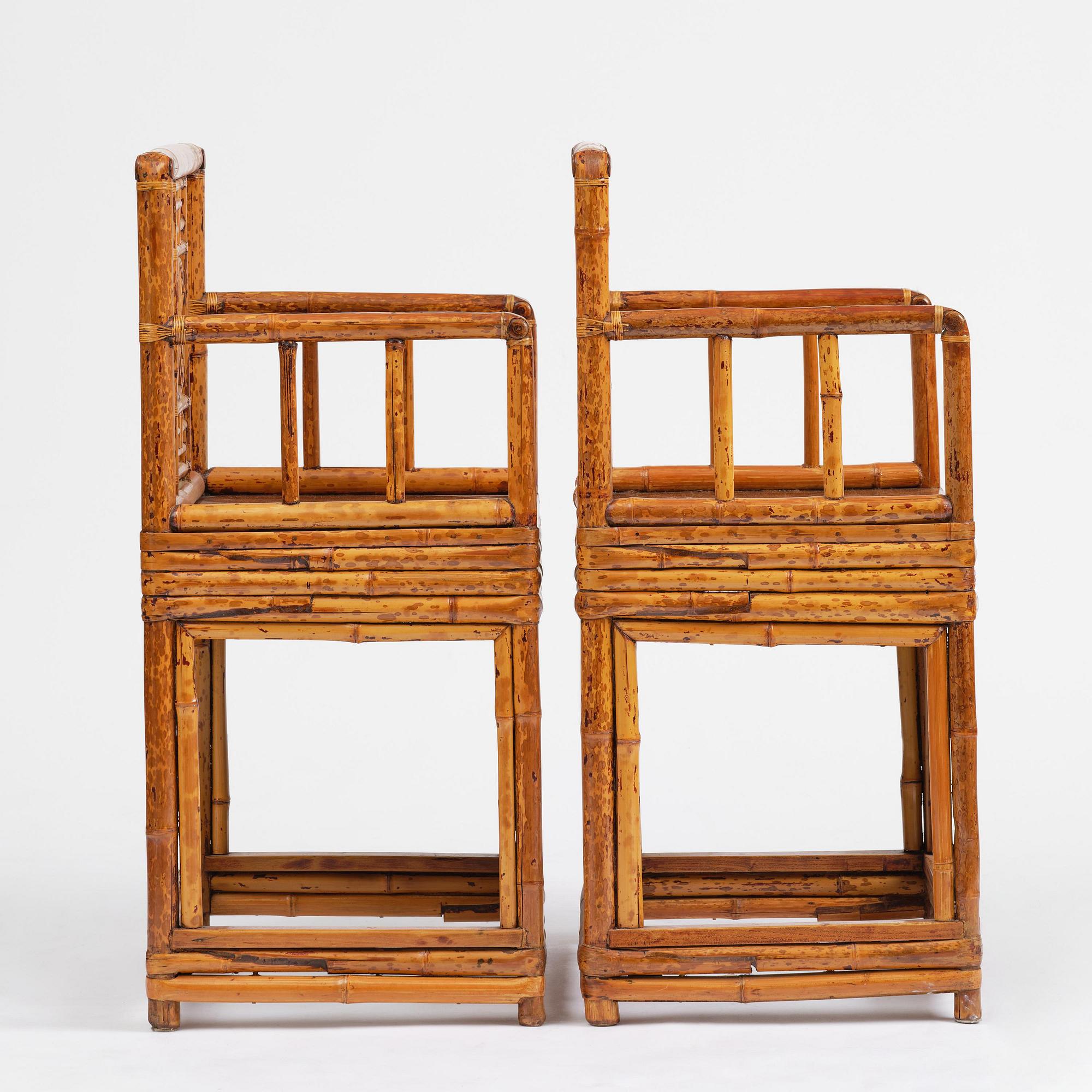
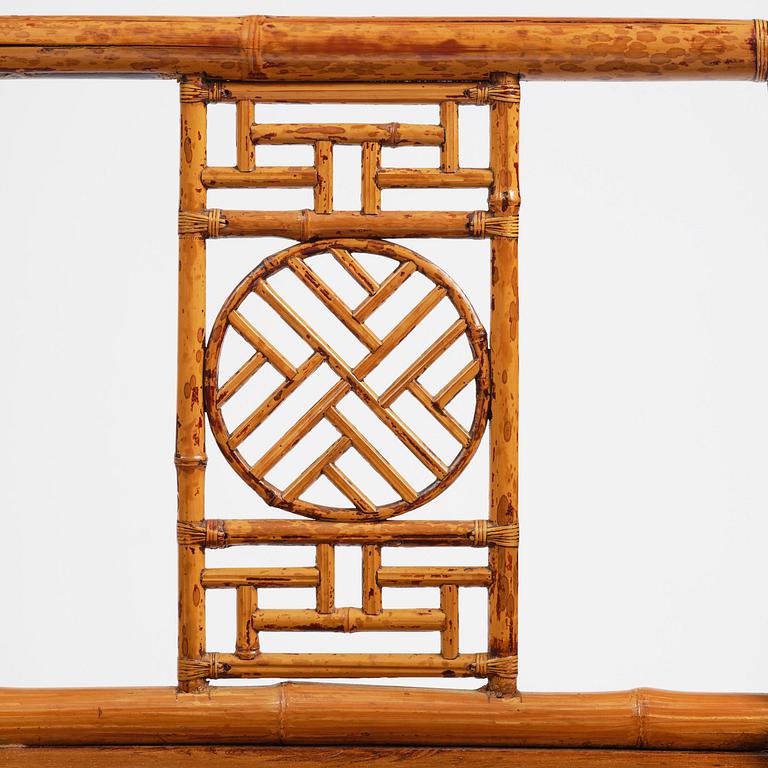
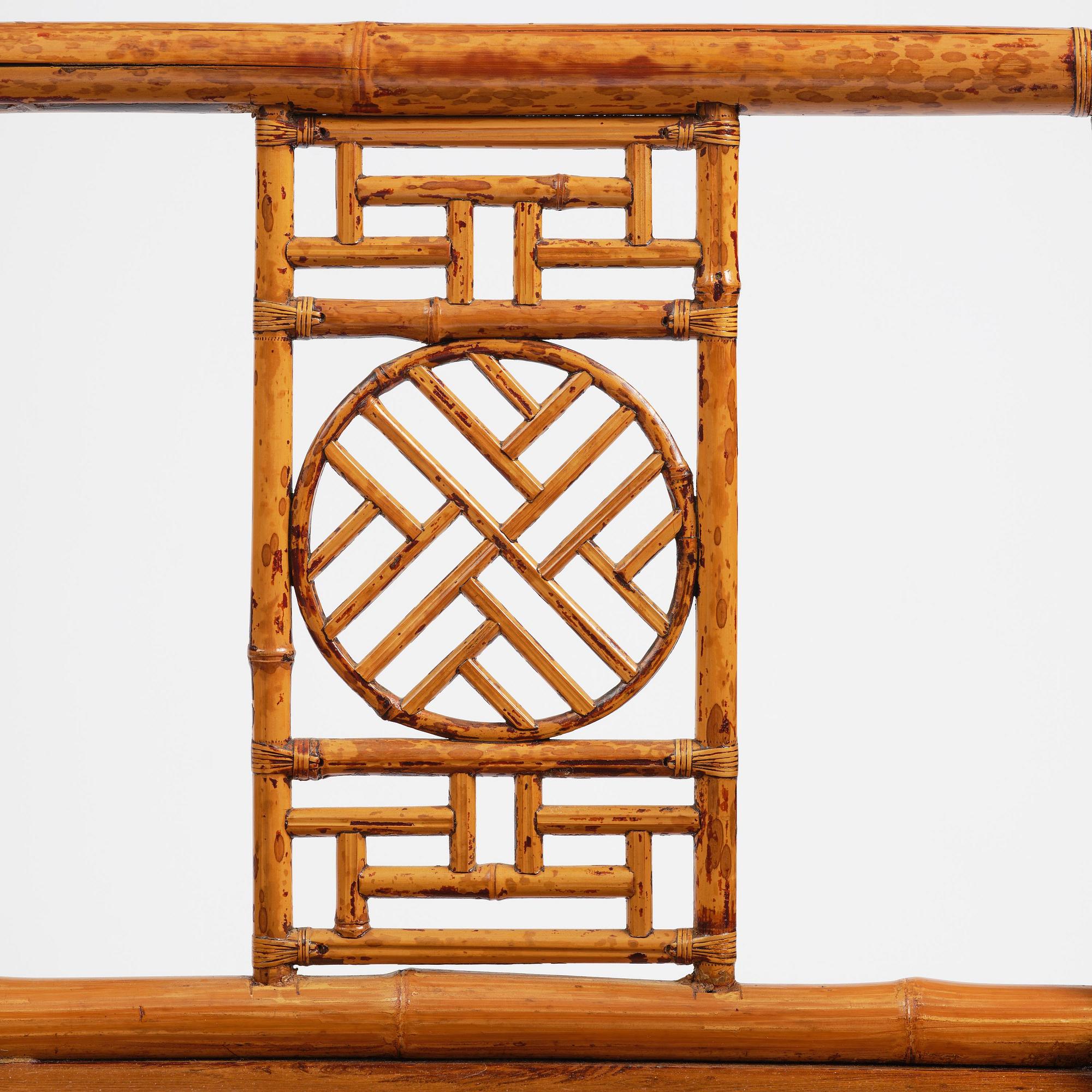
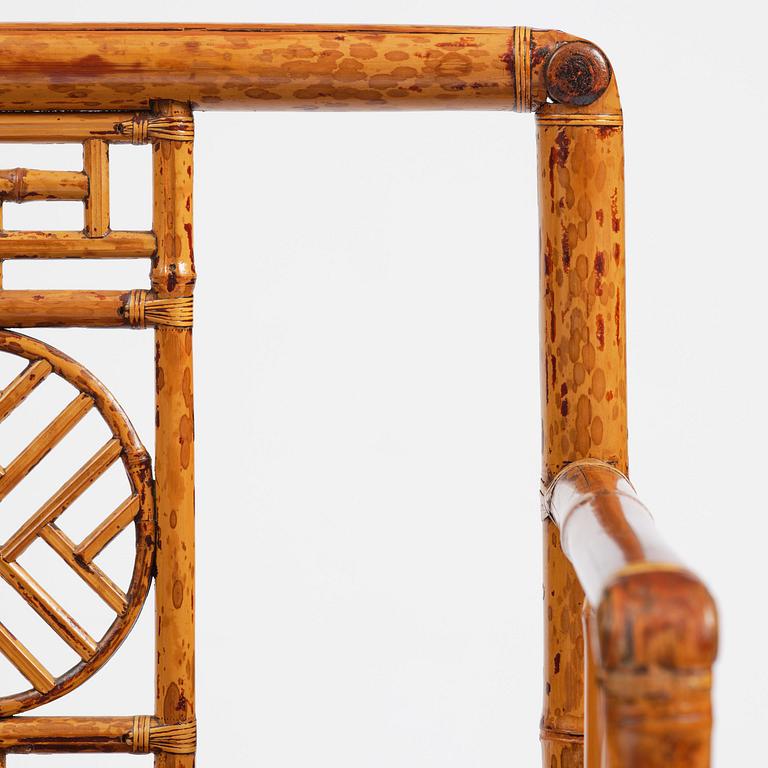
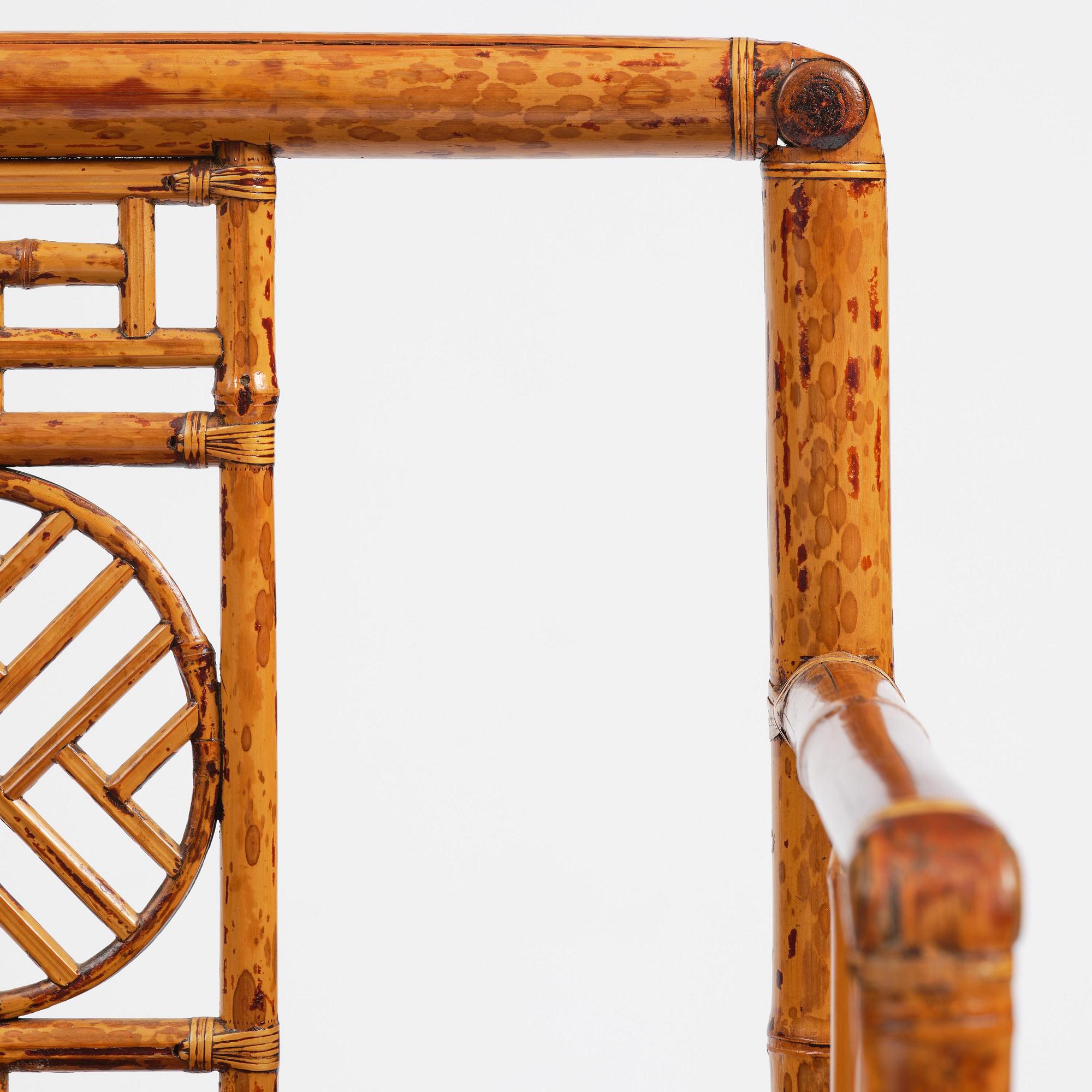
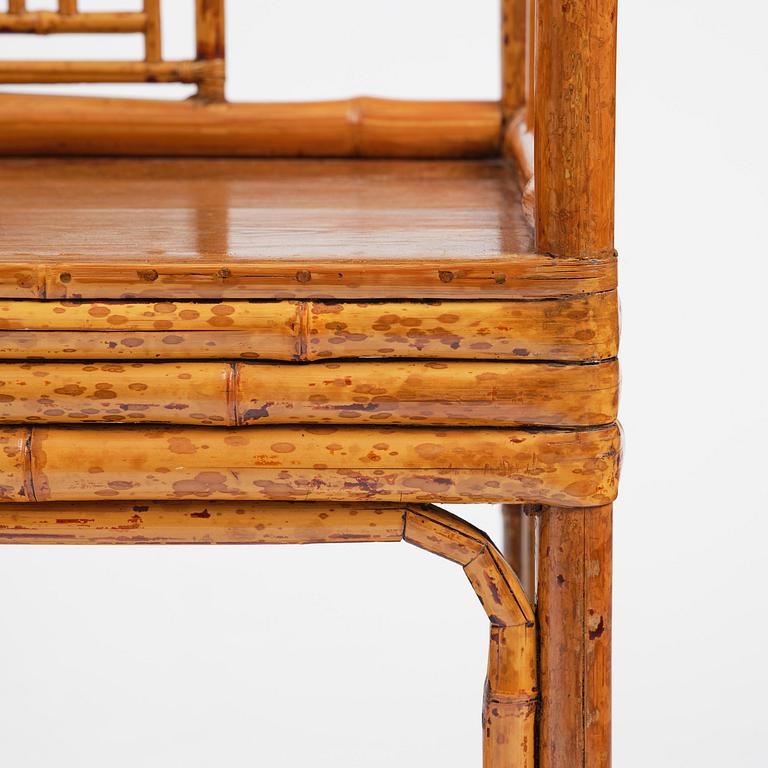
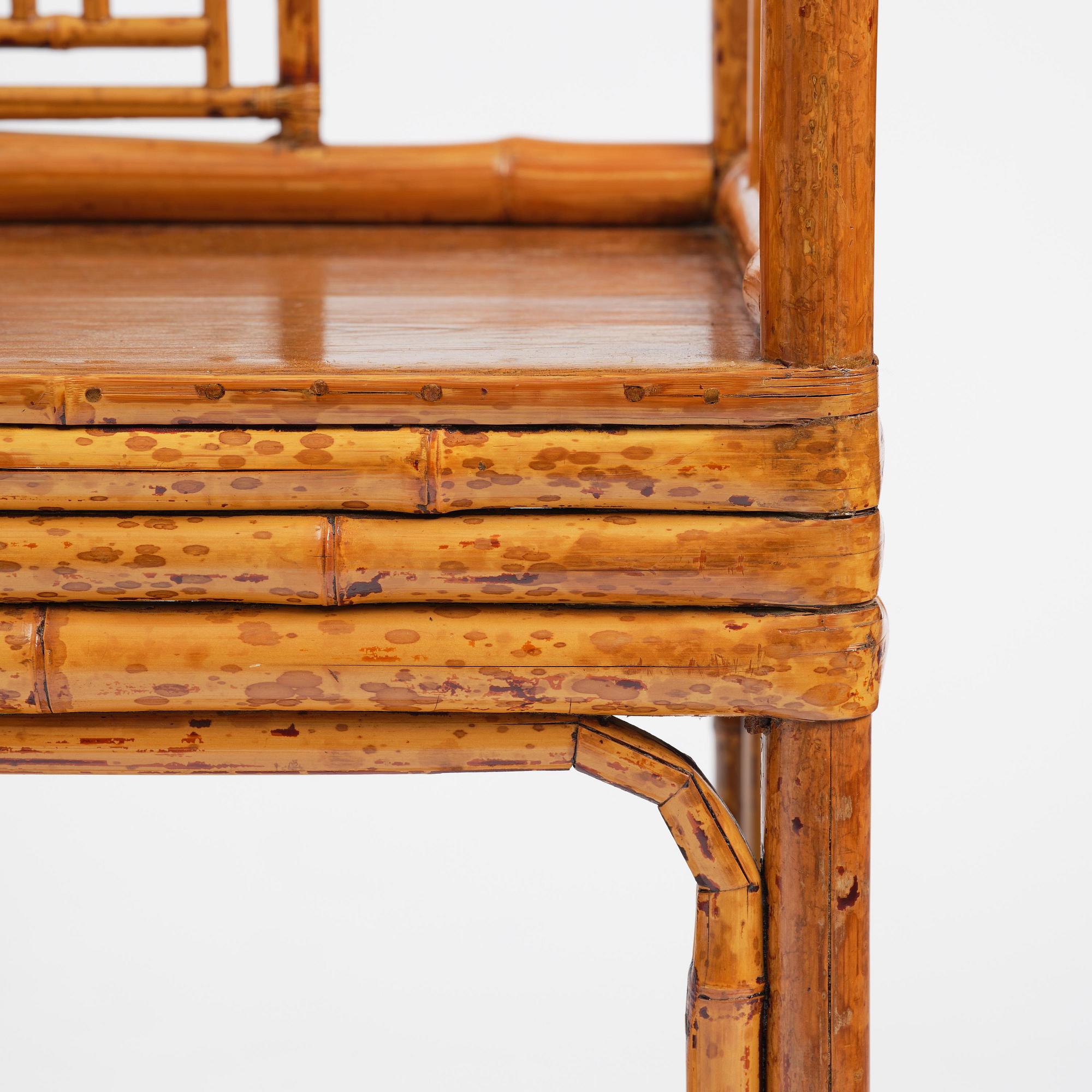
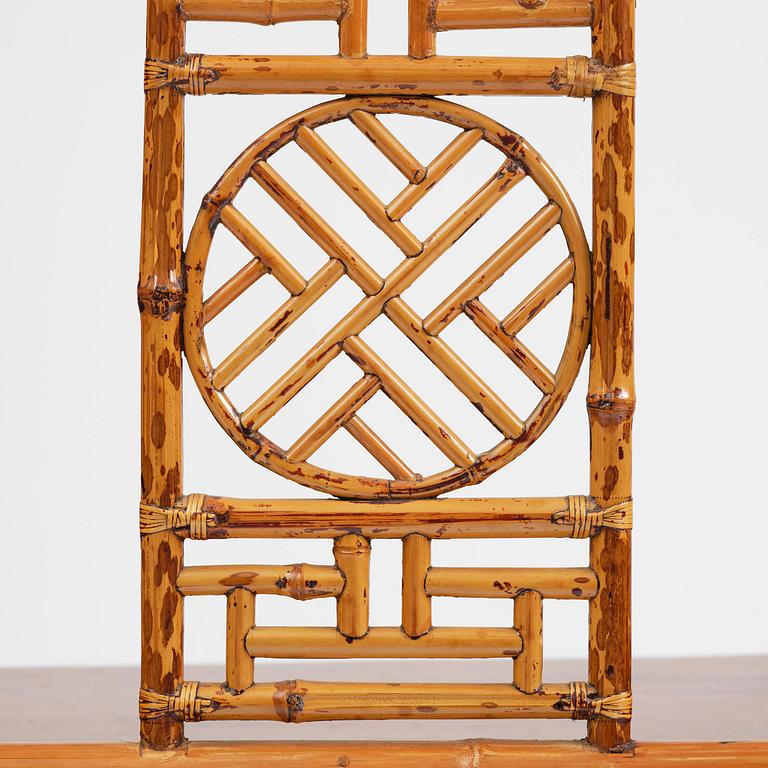
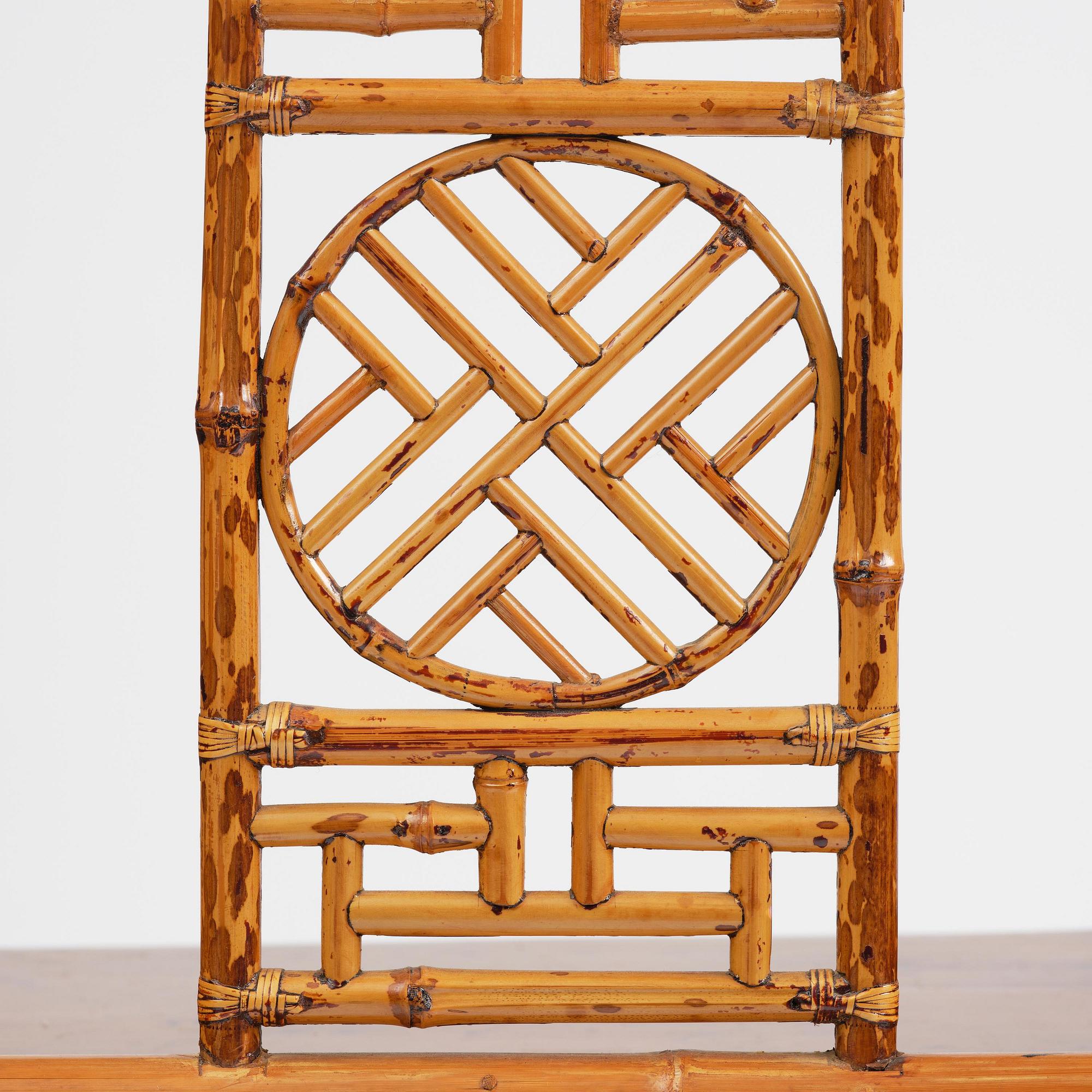
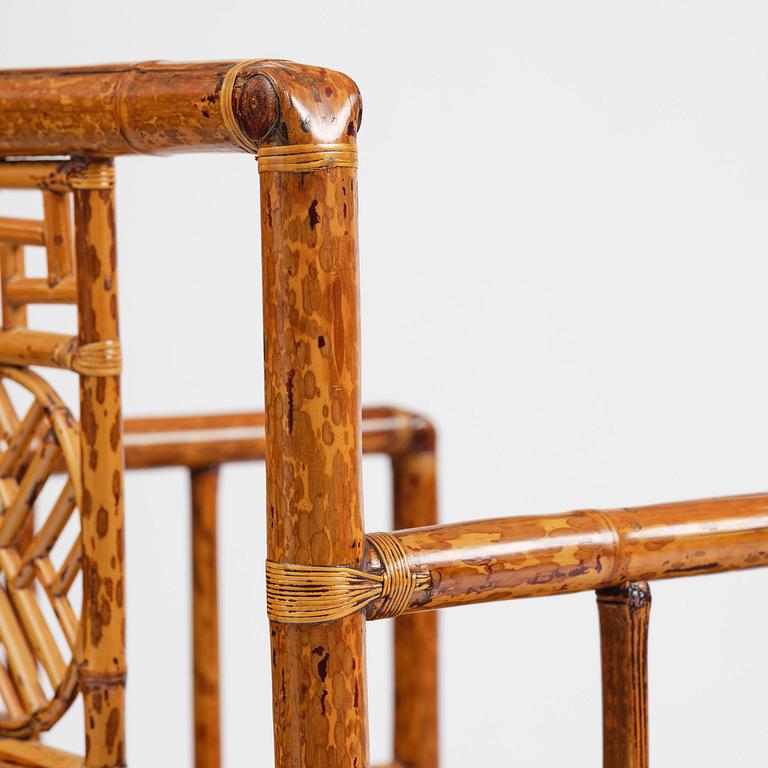
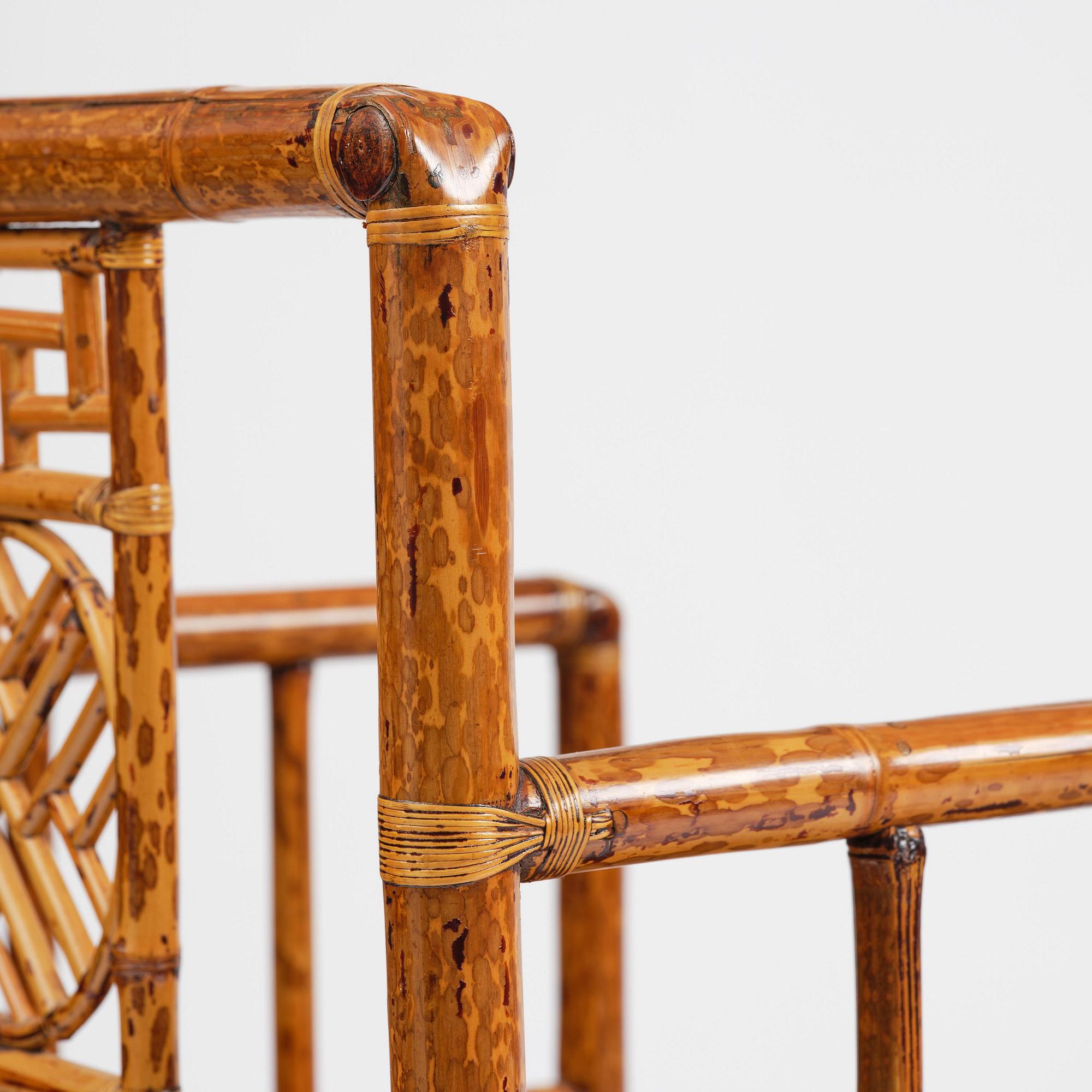
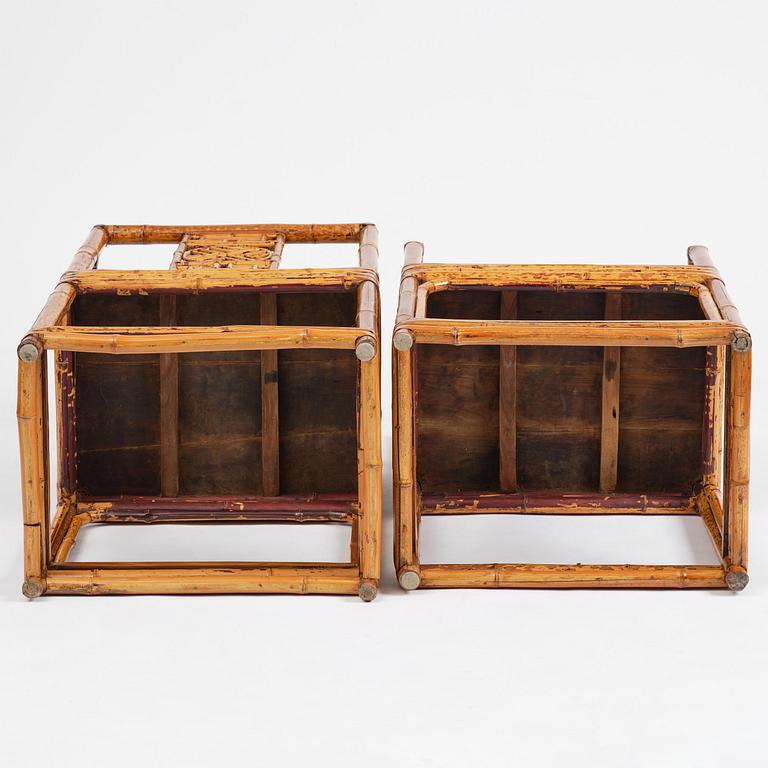
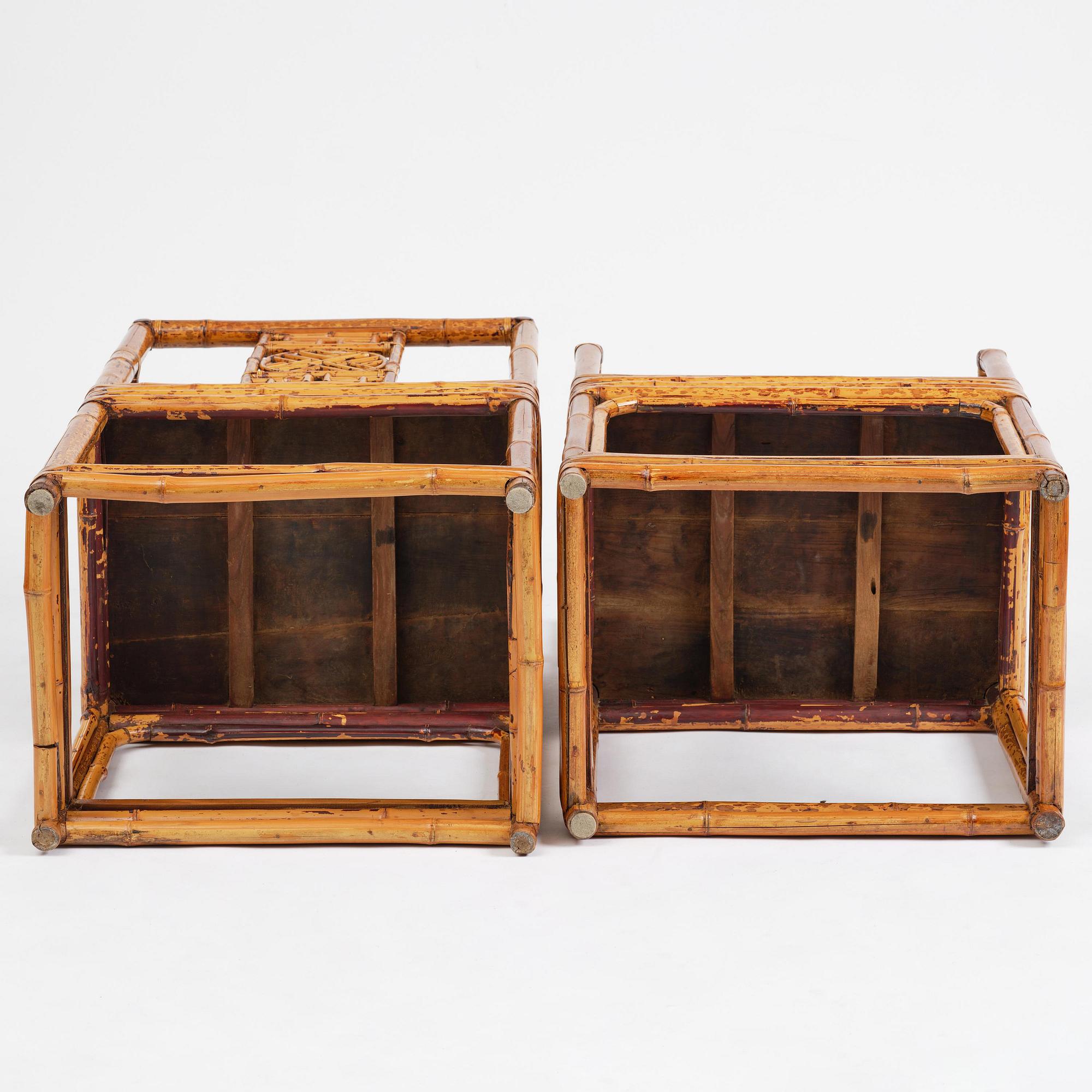
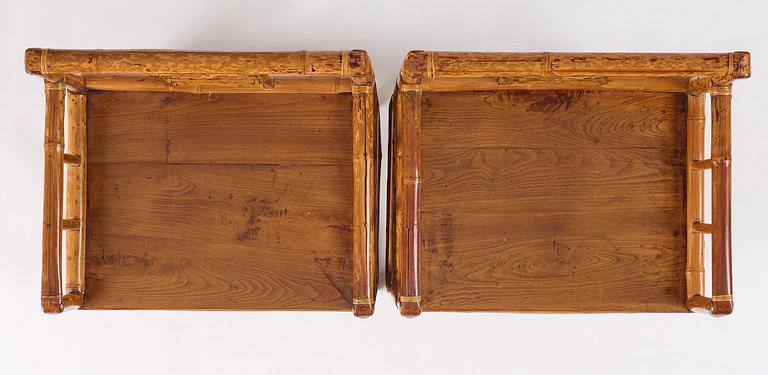
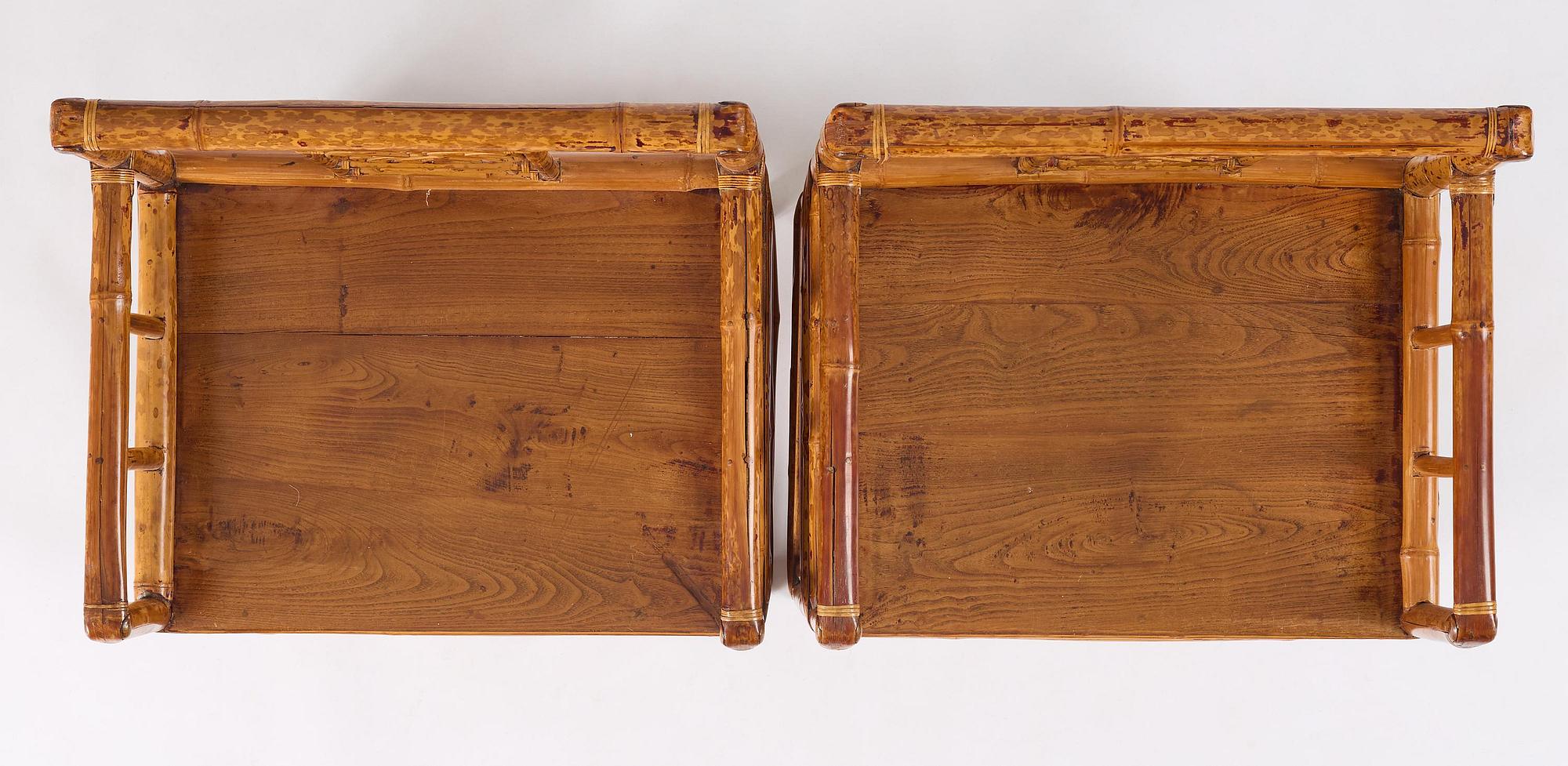
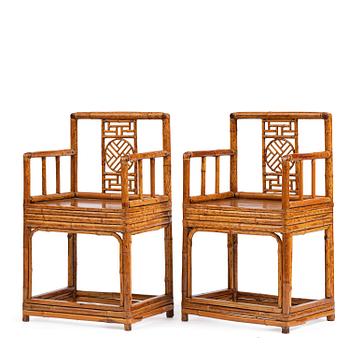
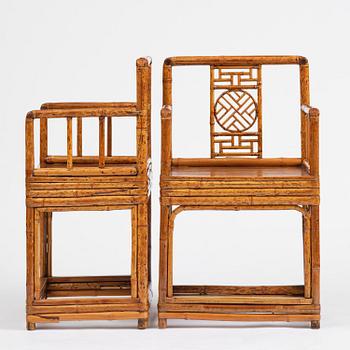
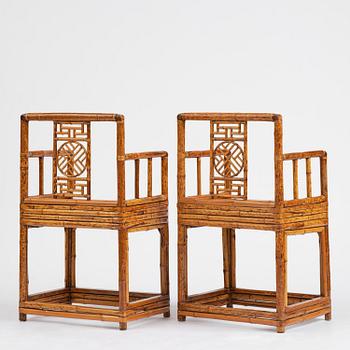
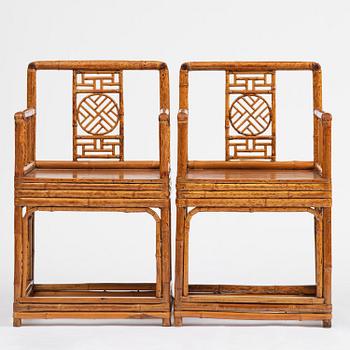
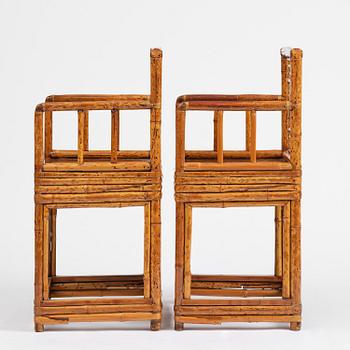
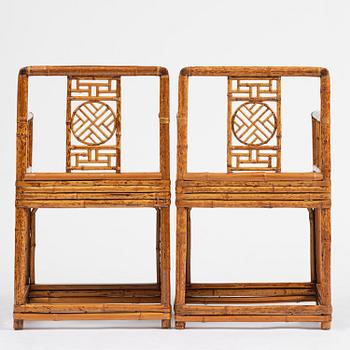
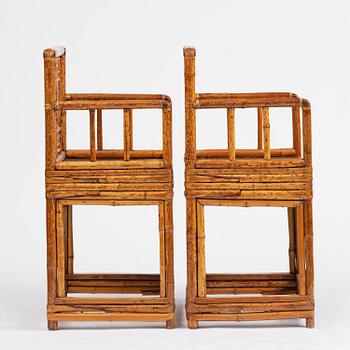
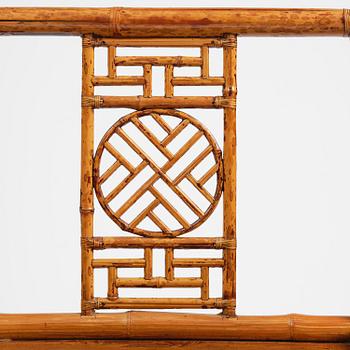
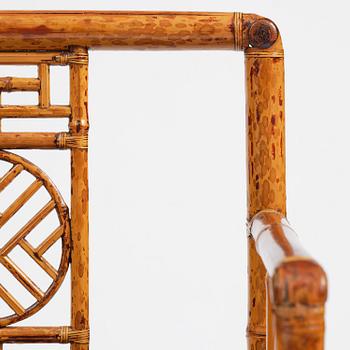
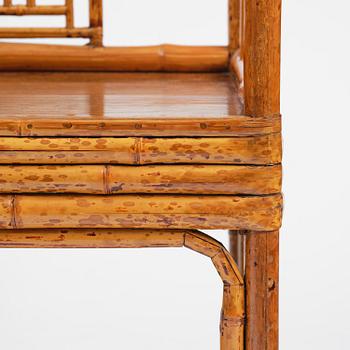
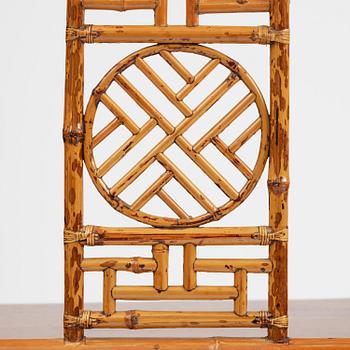
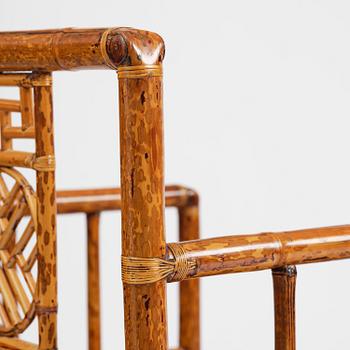
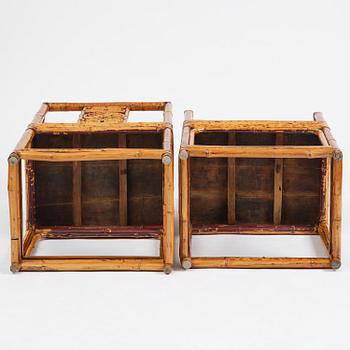
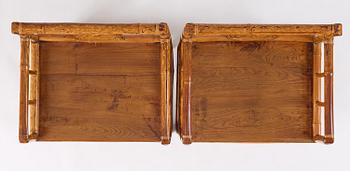
Genomruten ryggbricka med geometriskt mönster. Kopplade ben. Höjd rygg 93 cm. Sitthöjd 52 cm. Bredd 54 cm, djup 42 cm.
Slitage.
Proveniens
Purchased at Bukowskis Spring Sale 574, lot 1419, 28 May 2013. Then with the provenance Kaptensgården, Landskrona, Sweden.
Utställningar
Compare also with Sotheby's New York, In the Studio: Asian Art, featuring Works from the Collection of Bruce Dayton and Ruth Stricker Dayton, lot 752, 28 September 2021.
Litteratur
For an interesting discussion on bamboo and hardwood furniture, refer to R. W. Longsdorf, 'Chinese Bamboo Furniture, Its Influence on Hardwood Furniture Design', Orientations, January 1994, pp. 76-83, where the author discusses the features of bamboo furniture carried over to hardwood forms, such as rounded members, wrap-around stretchers, stacked stretchers and the use of closely-placed vertical struts.
Övrig information
In China, bamboo has traditionally held a place of significance within literati culture. Together with the flowering plum and pine, they form the ‘Three Friends of Winter’ for their ability to withstand the cold and remain green. Upright and sturdy, yet easily bending with the wind, bamboo came to signify moral integrity among the literati elite, and has served as a constant source of inspiration for poets and painters, alike.
When compared to their hardwood counterparts in huanghuali and zitan, relatively few examples of bamboo furniture have survived. The material is less durable than hardwoods, and abundant enough that replacements could be easily made. To make a piece of furniture in bamboo, lengths of bamboo were steamed and softened until pliable and bent around a frame. This construction technique inspired examples in huanghuali seen in wraparound stretchers, round legs, circular struts, members carved to imitate nodes of bamboo, and continuous arms.
För konditionsrapport kontakta specialist

Andra har även tittat på