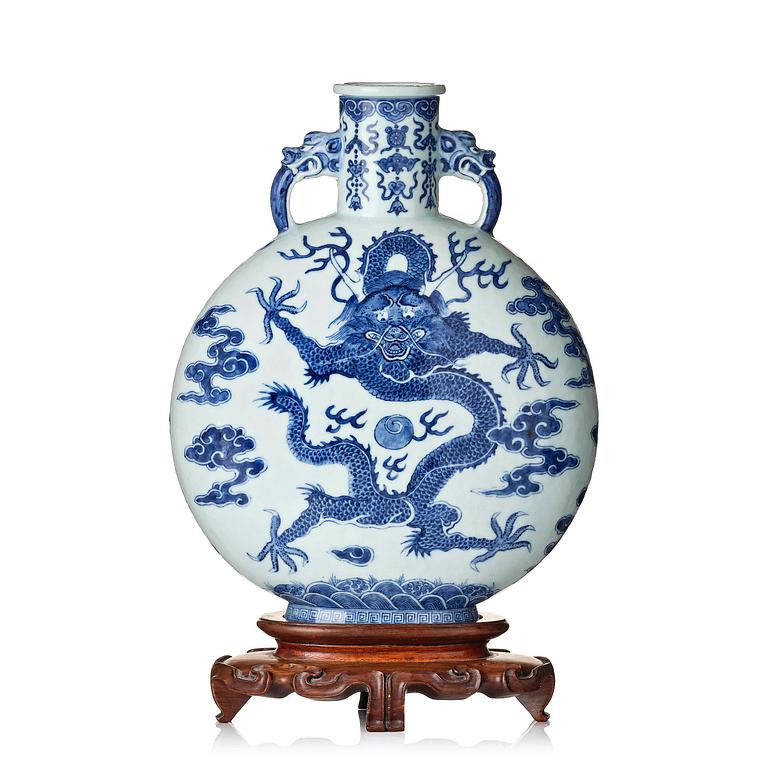
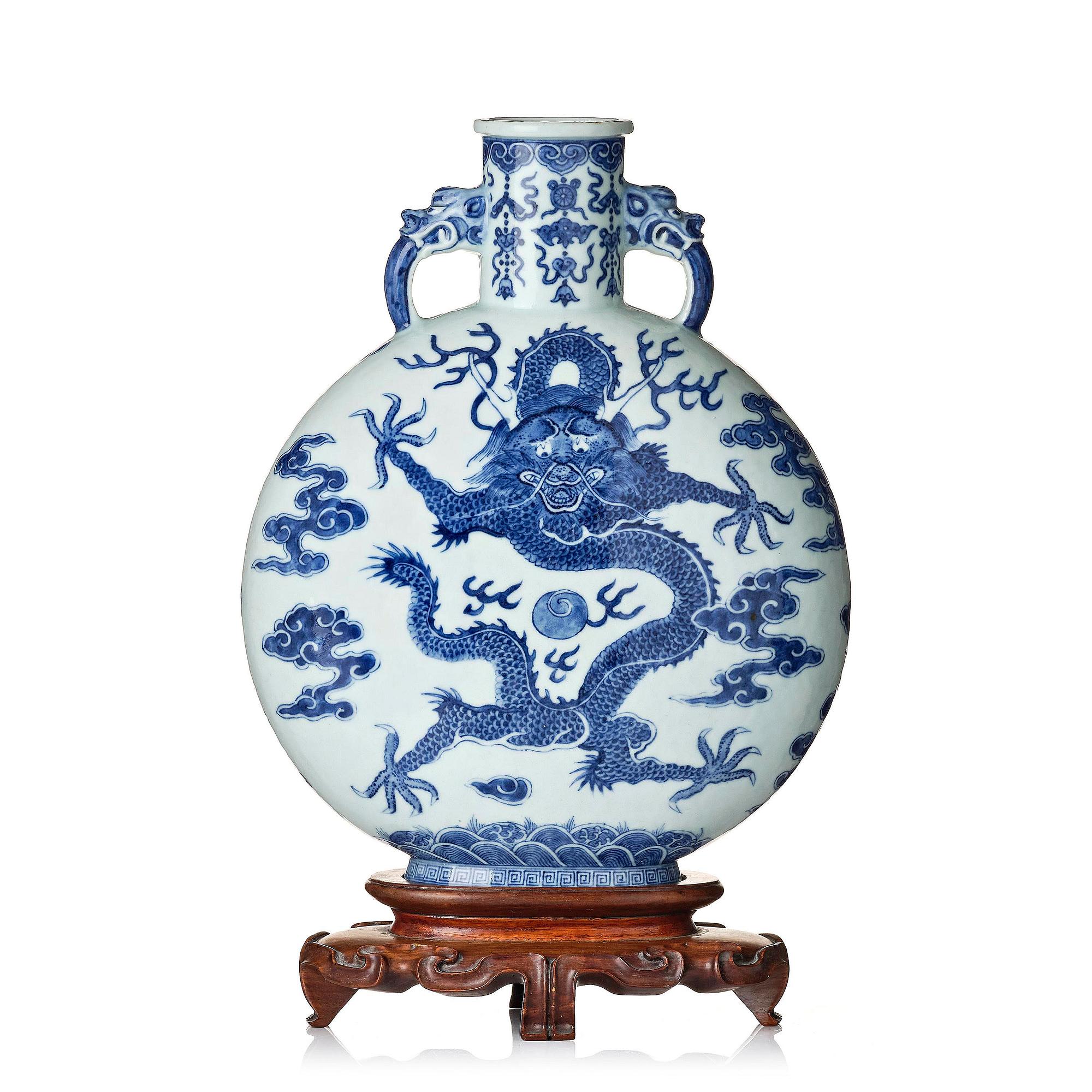
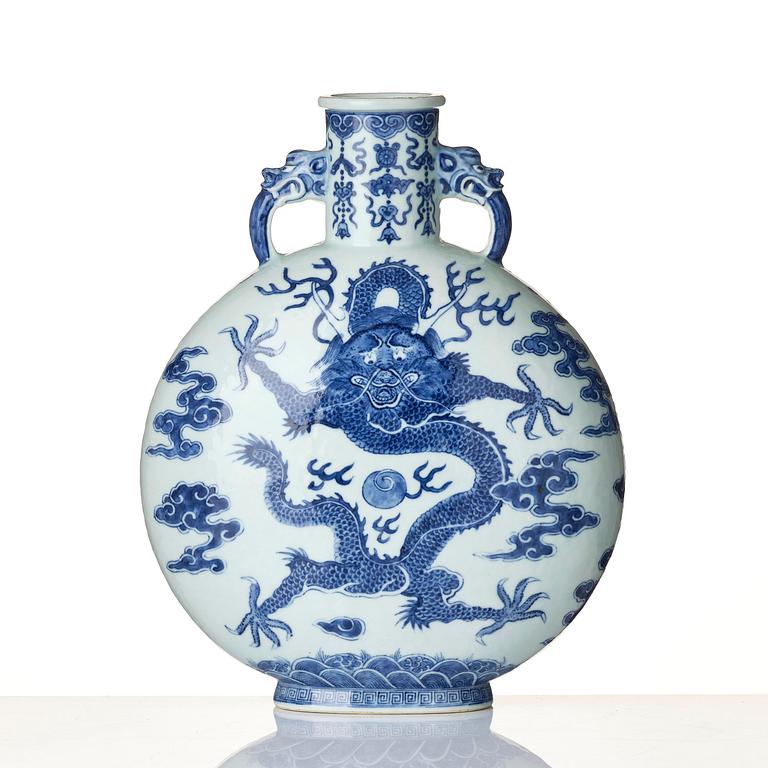
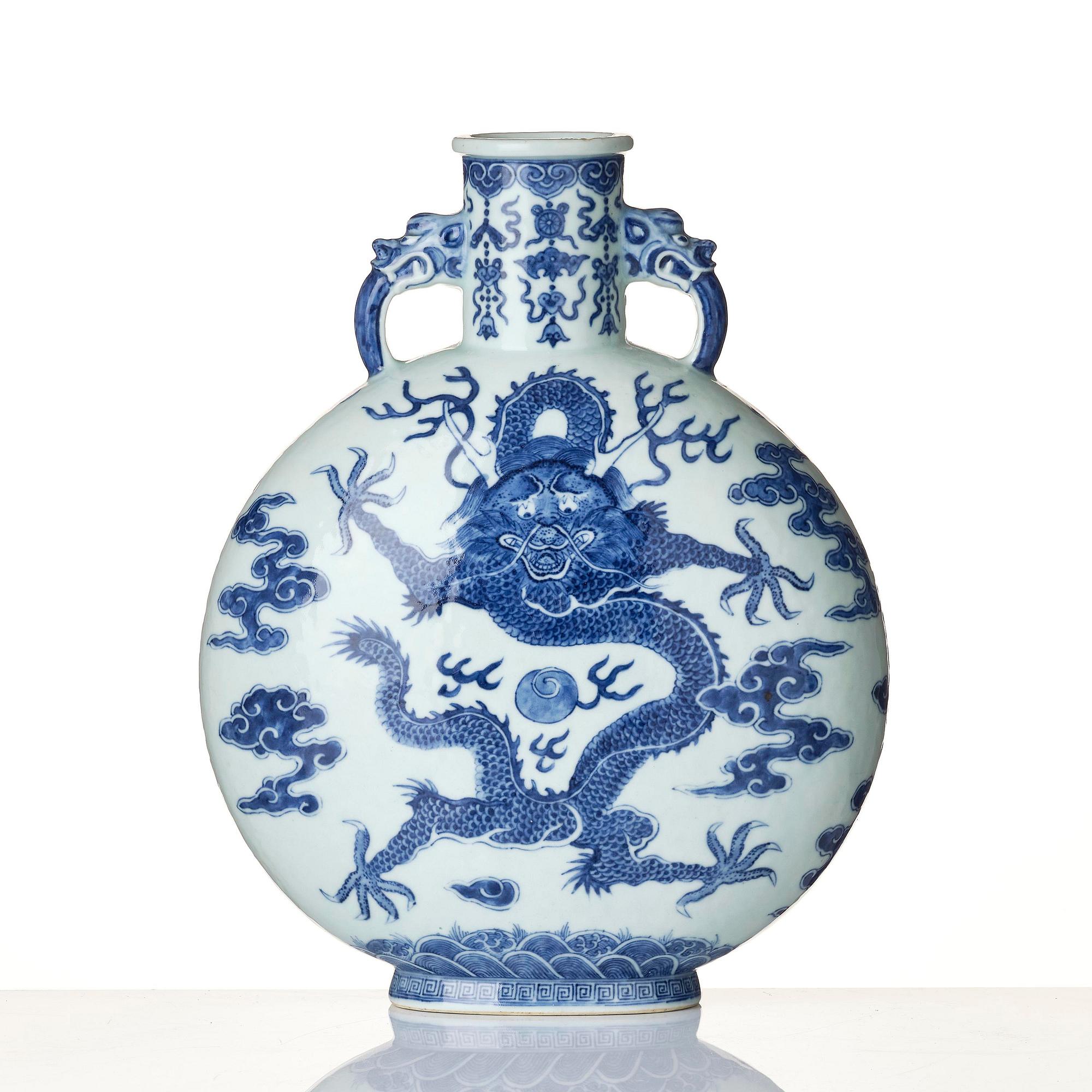
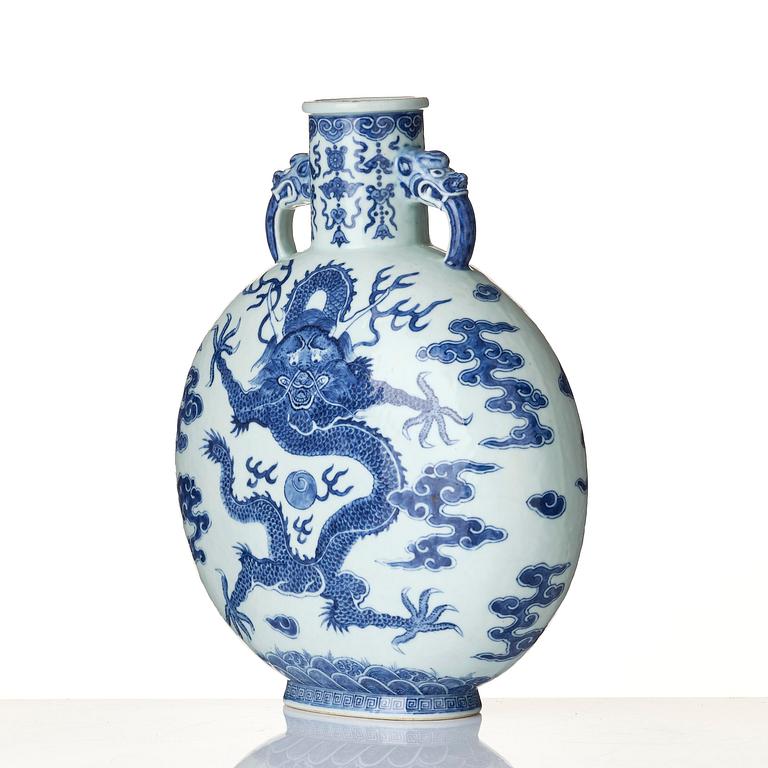
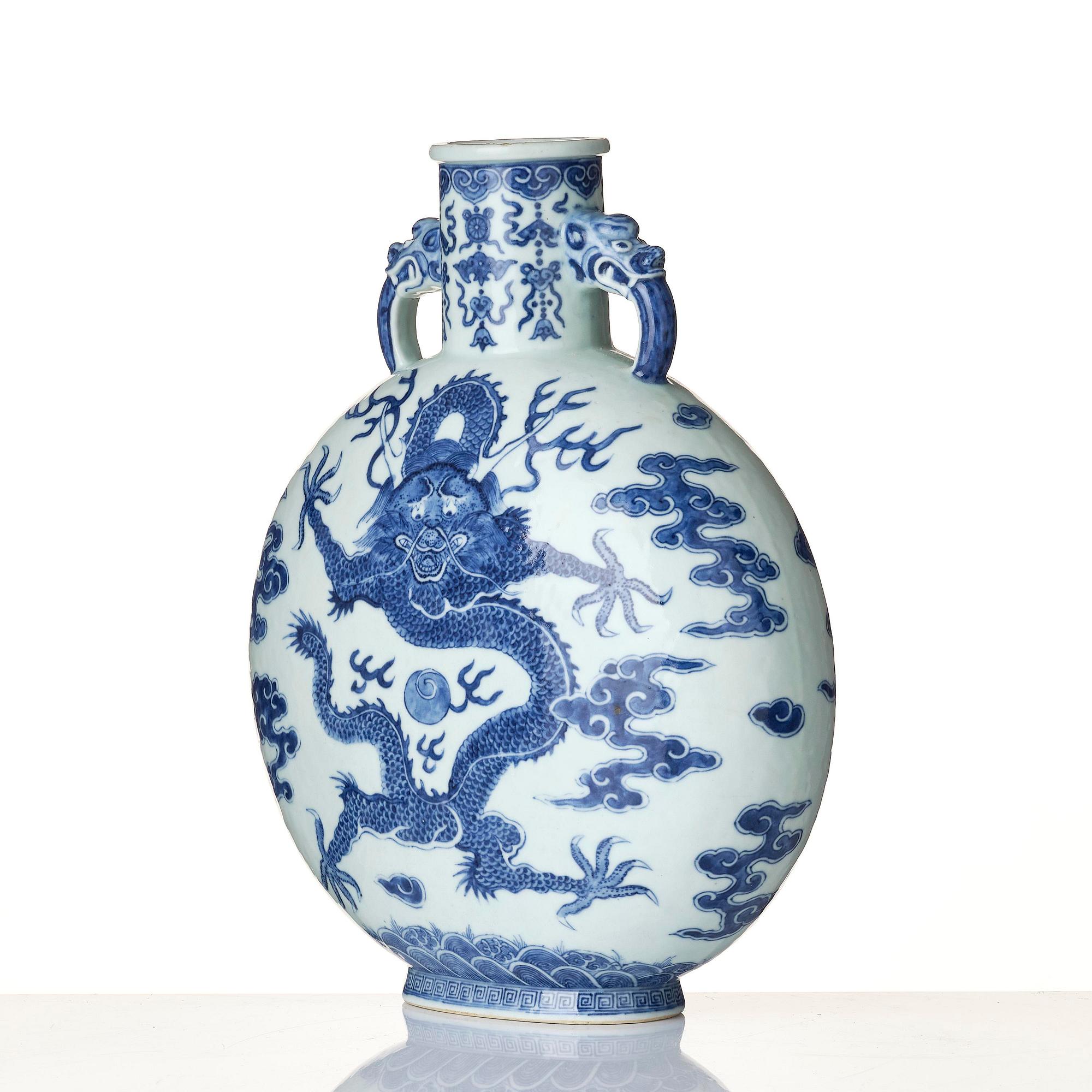
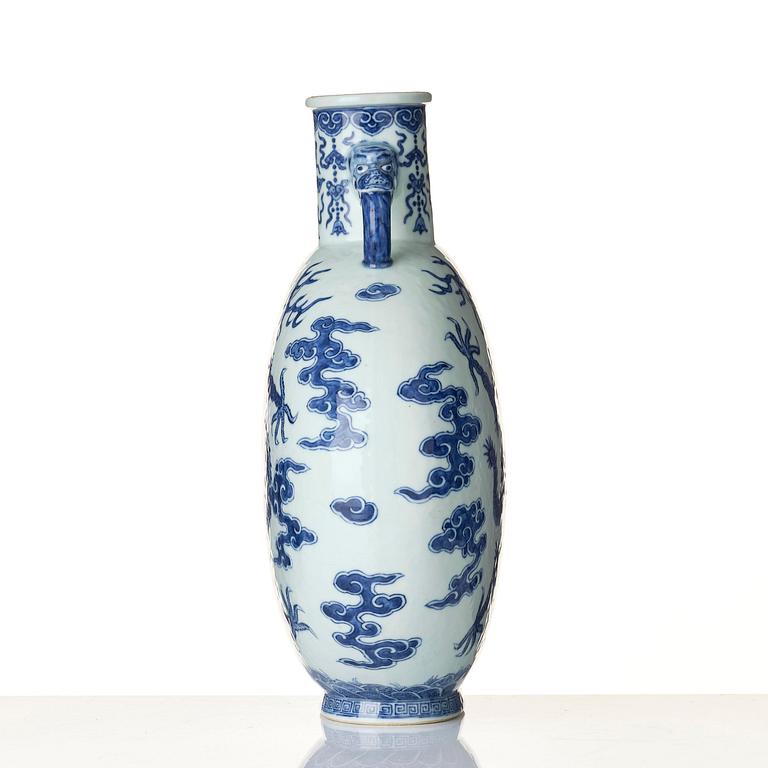
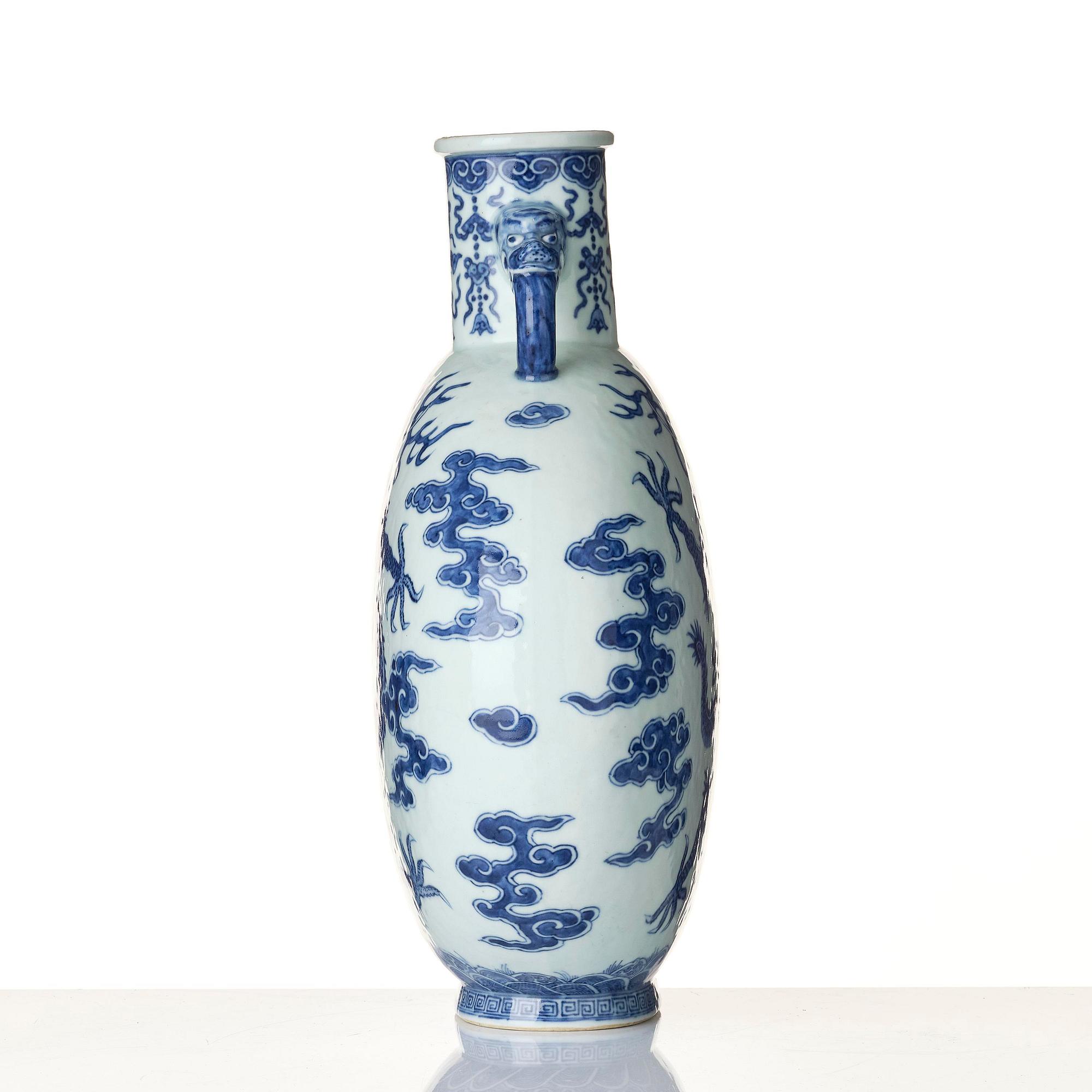
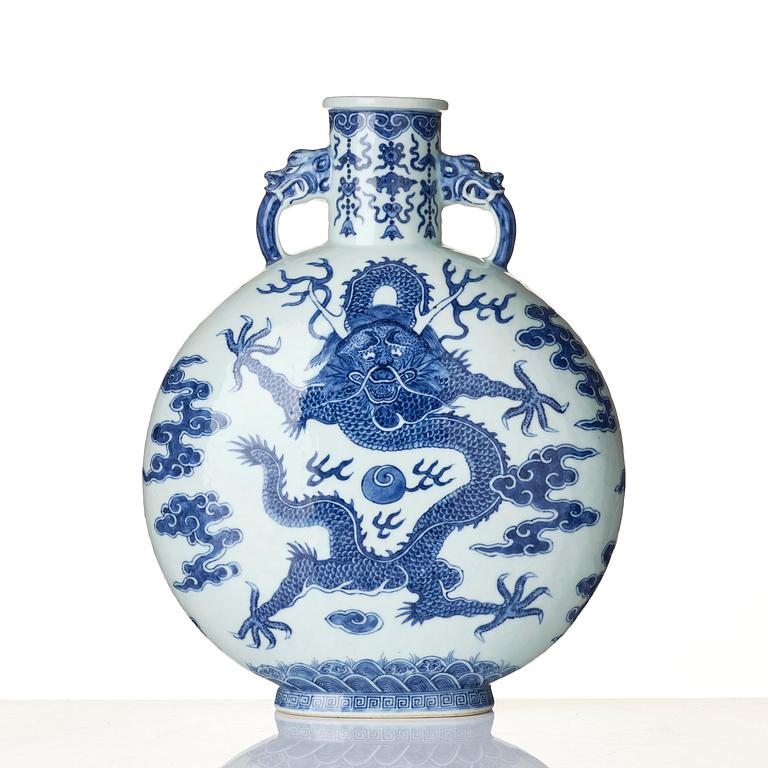
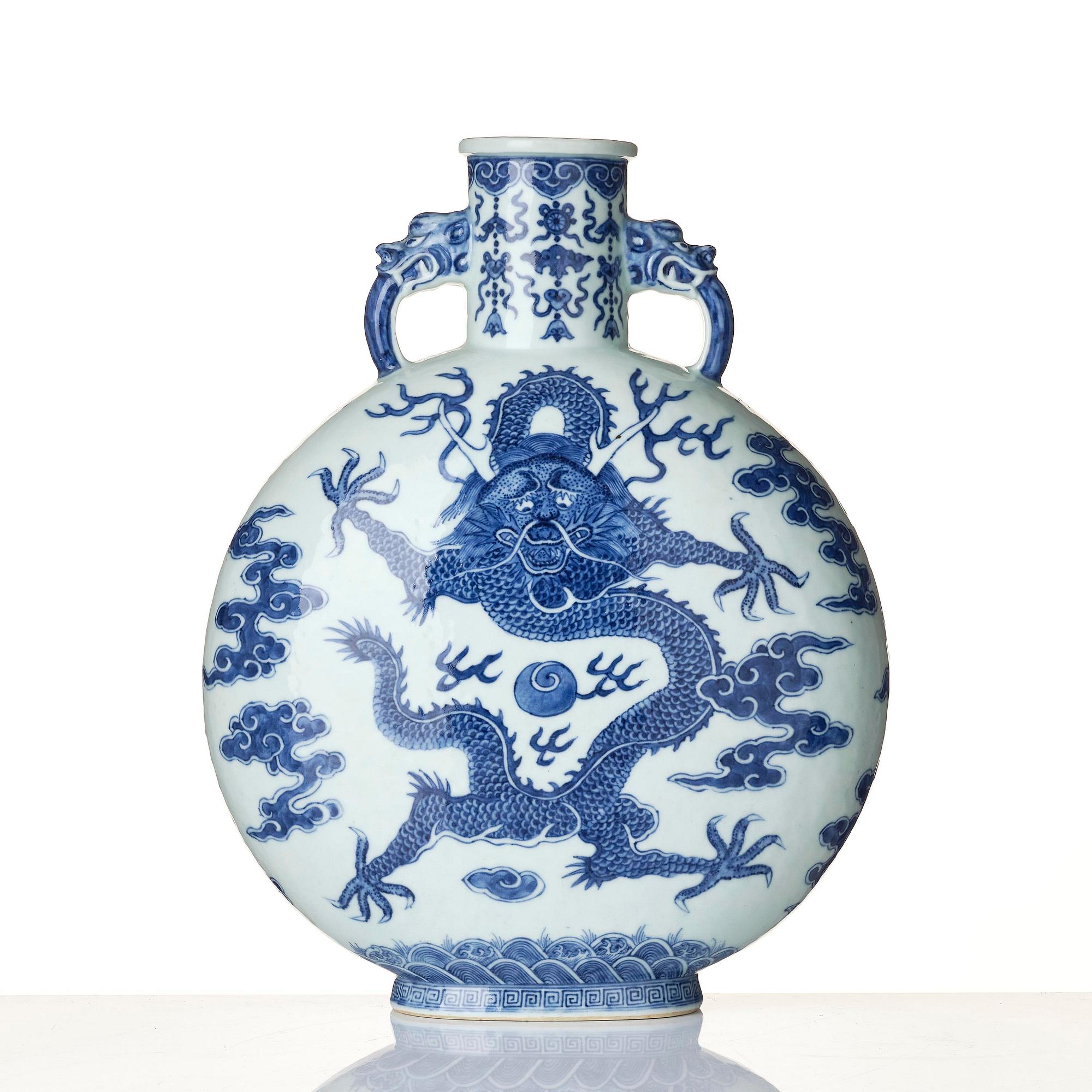
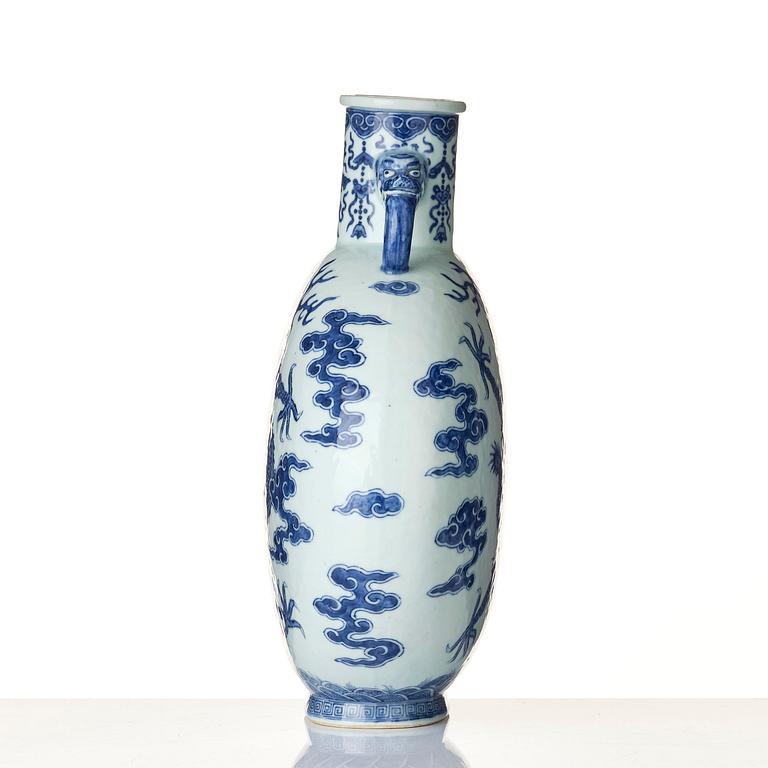
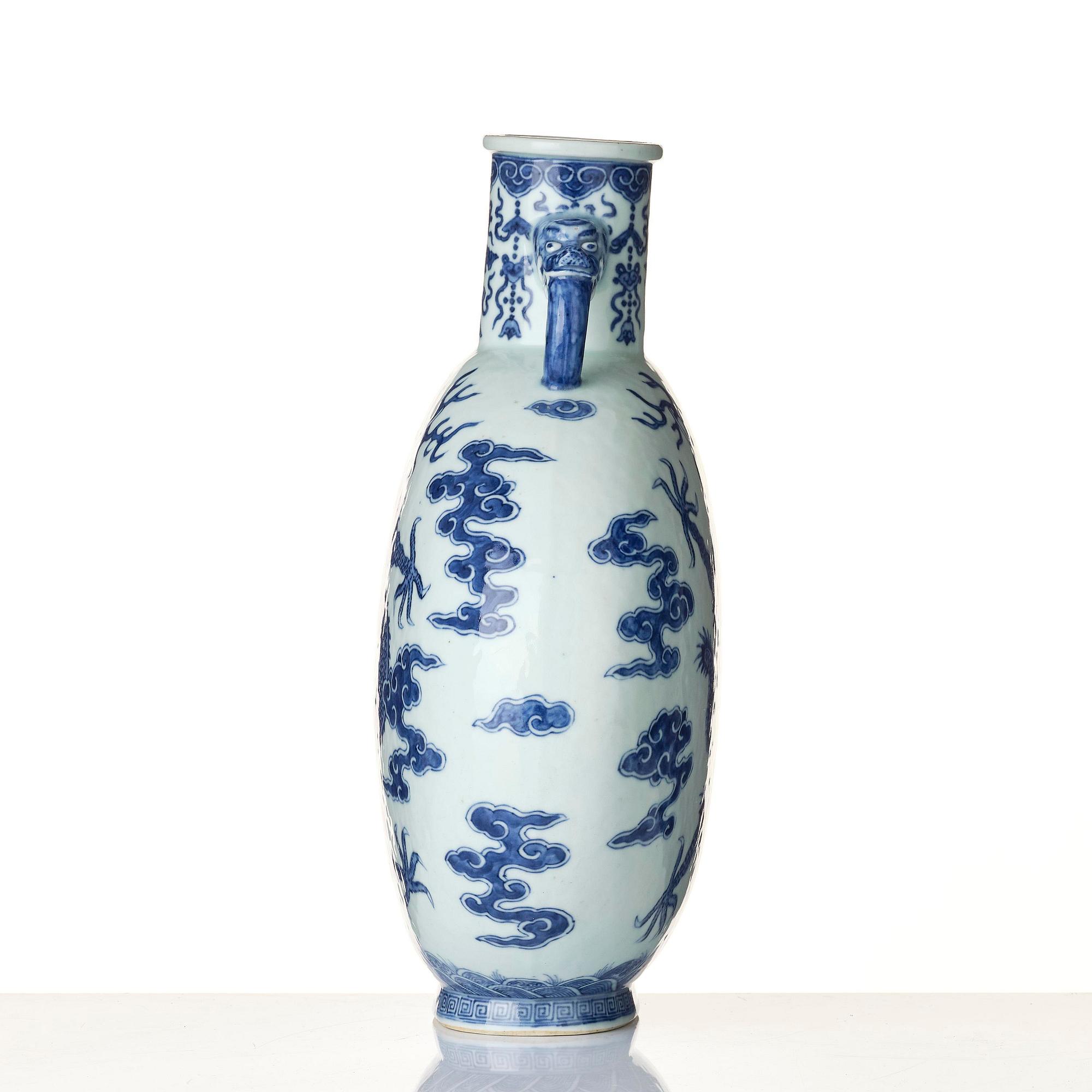
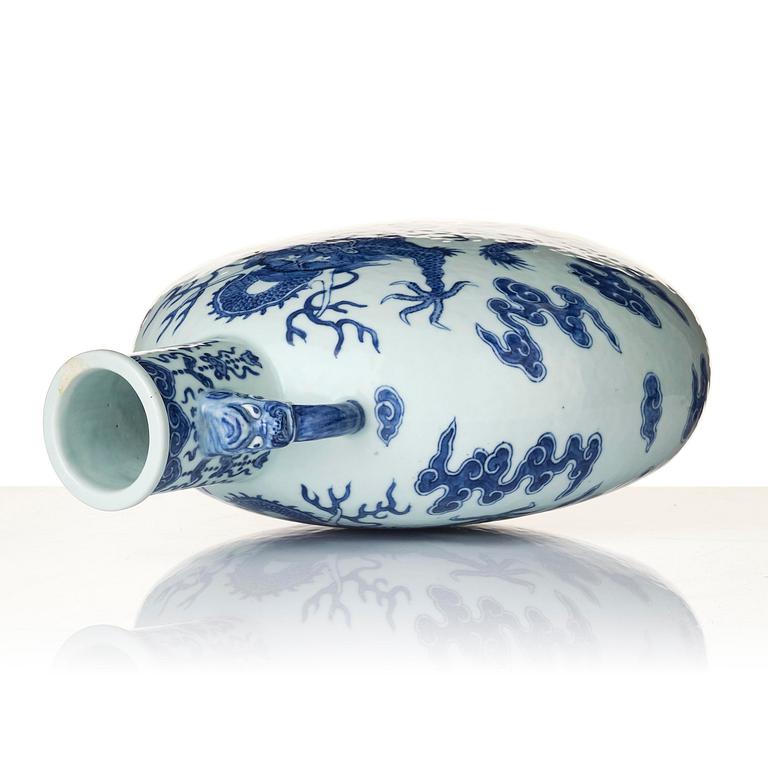
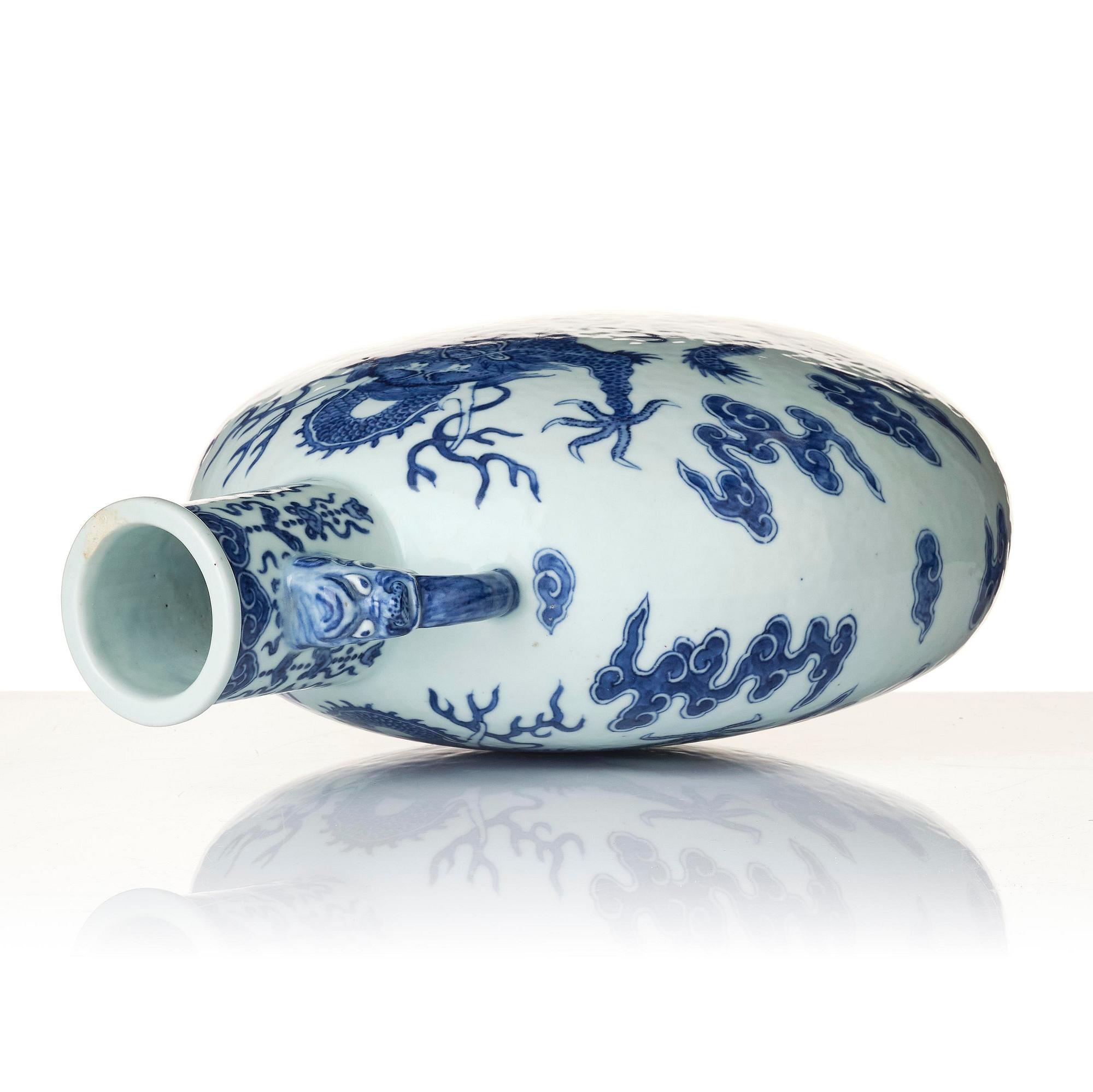
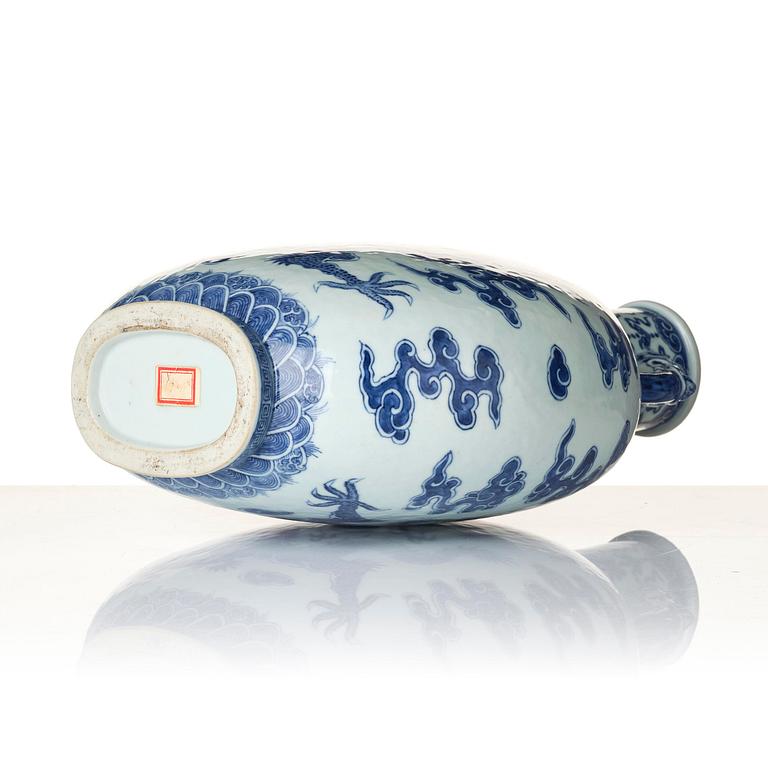
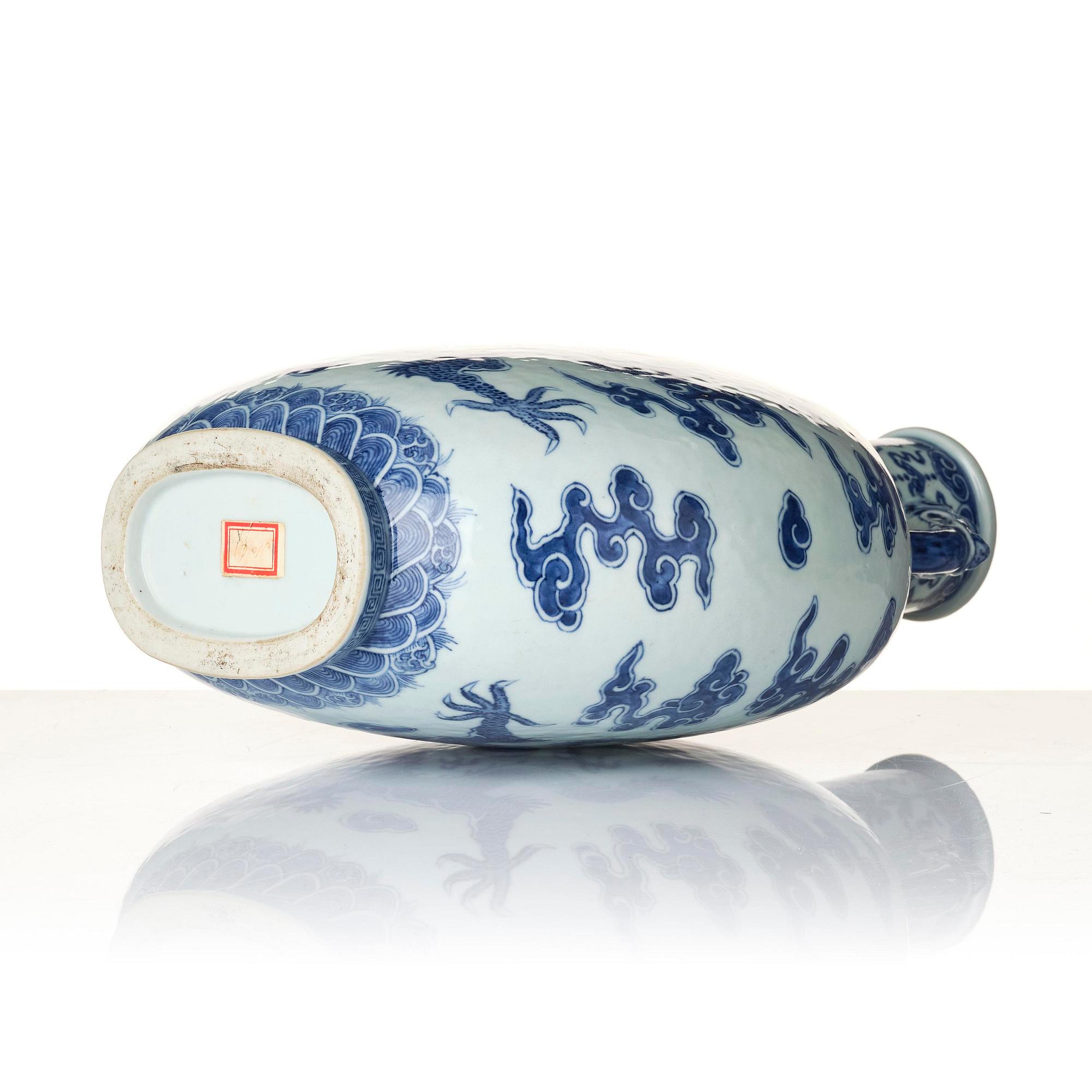
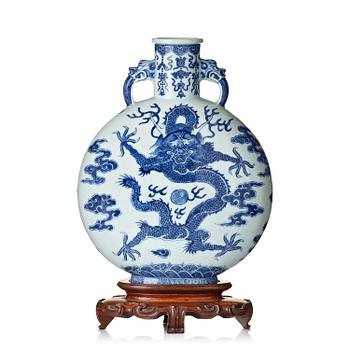
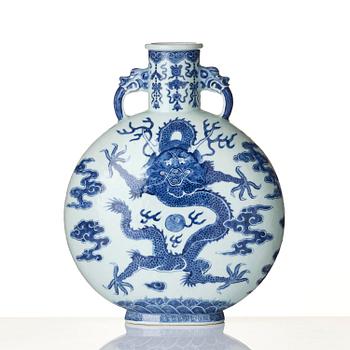
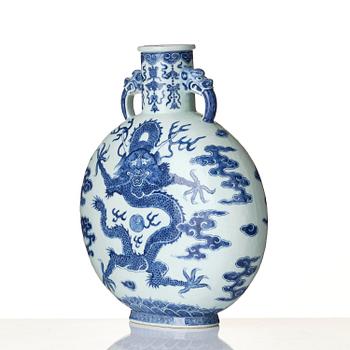
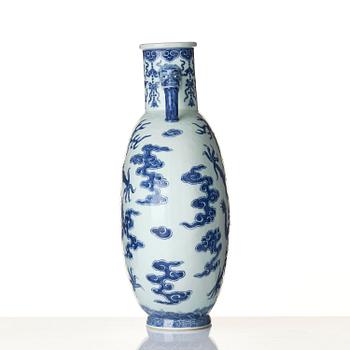
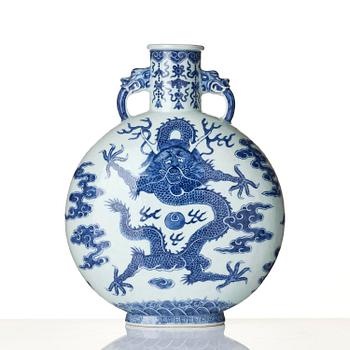
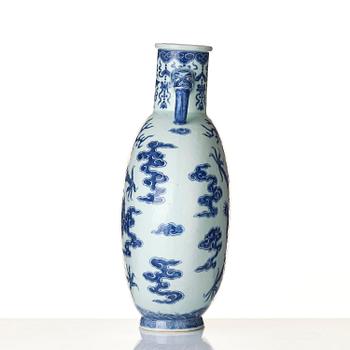
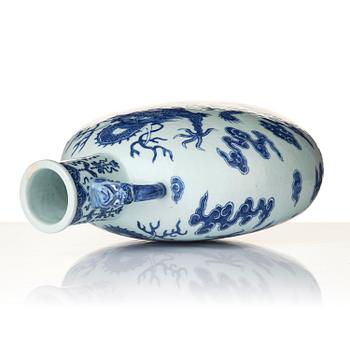
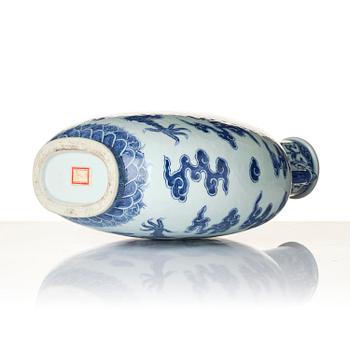
Bianhu. Rund kropp med cylindrisk hals och två handtag i form av drakar. Dekorerad i underglasyrblått med femkloade drakar bland molnformationer över vilda vågor. Höjd 32 cm. Höjd med medföljande träställ 37,8 cm.
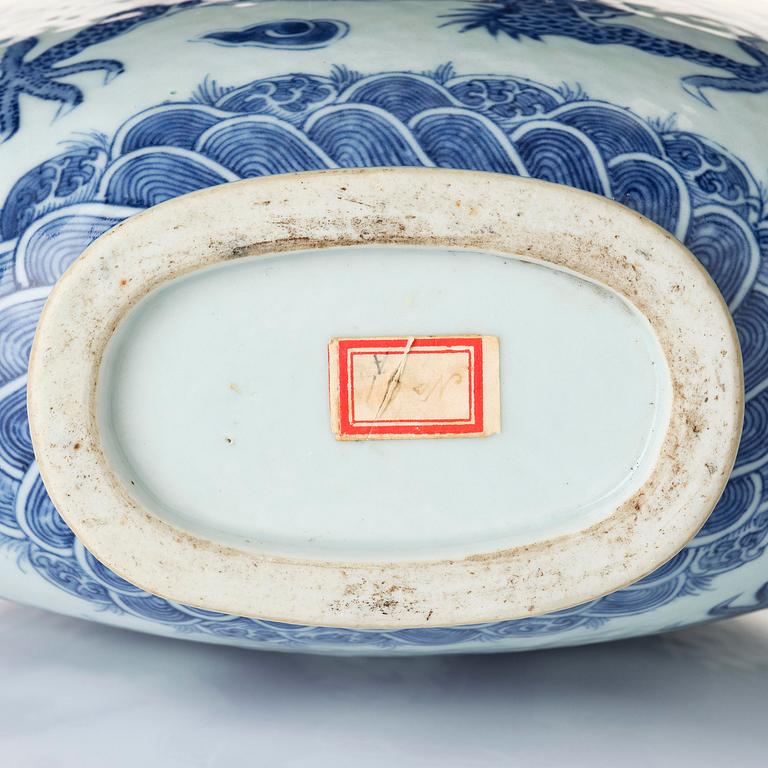
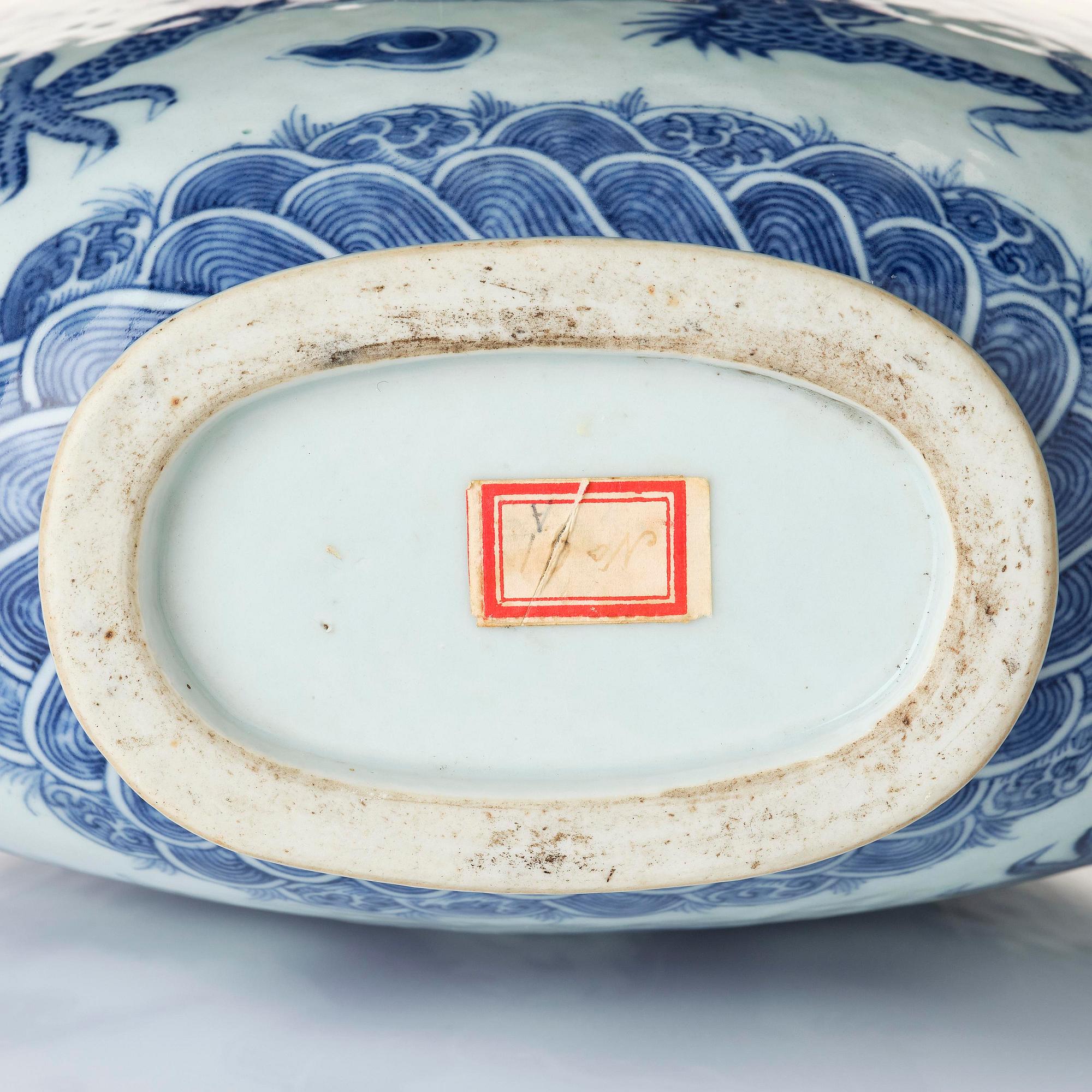
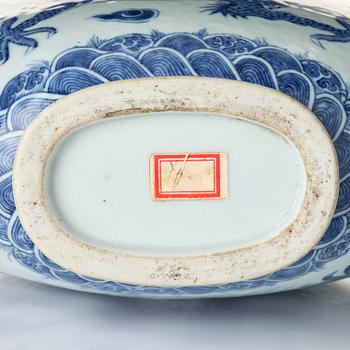
Glasyrnagg vid mynningen.
Proveniens
From the collection of John Engellau (1911-89), director at Volvo in the 1970s. Thence by descent.
Övrig information
This flattened flask form, originating in metal or glass prototypes from West Asia, was adapted in China in the Yongle (1403-1424) and Xuande (1426-1435) periods, when exquisite blue and white porcelain examples were made. By the time the Ming imperial potters at Jingdezhen adapted this shape, it retained only a basic relationship to the original form. They rejuvenated the vessel, creating a sophisticated, faintly elliptical, circular outline with swelling sides, all counterbalanced by a slender cylindrical neck and fanciful curled handles. Following a lull in production after the 15th century, Qing potters again revived the form.
Dragons had rarely appeared on moonflasks before the Qianlong period, although a few examples from the early 15th century exist, such as a Xuande flask painted with a three-clawed dragon, illustrated in Gugong Bowuyuan cang Ming chu qinghua ci [Early Ming blue-and-white porcelain in the Palace Museum], vol. 1, Beijing, 2002, pl. 89. The motif of a front-facing dragon first emerged in the mid-16th century after which it became its most commonly depicted form in the decorative arts of the late Ming period, appearing on ceremonial robes, porcelain and carved objects.
The shape of this handled moon flask and the design of the dragon and the decoration on the neck are very much inspired by the Ming dynasty prototypes.
För konditionsrapport kontakta specialist

Andra har även tittat på