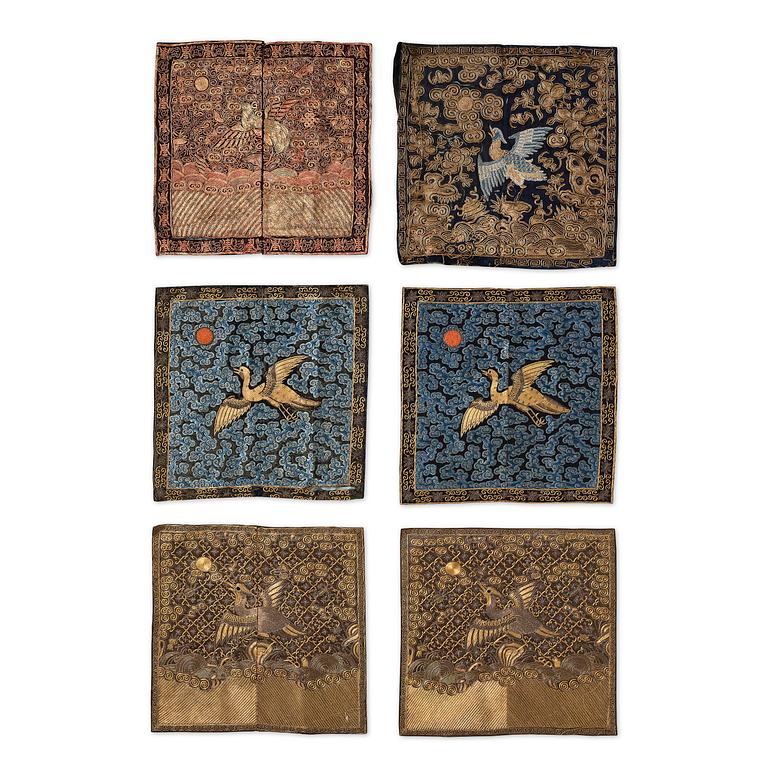
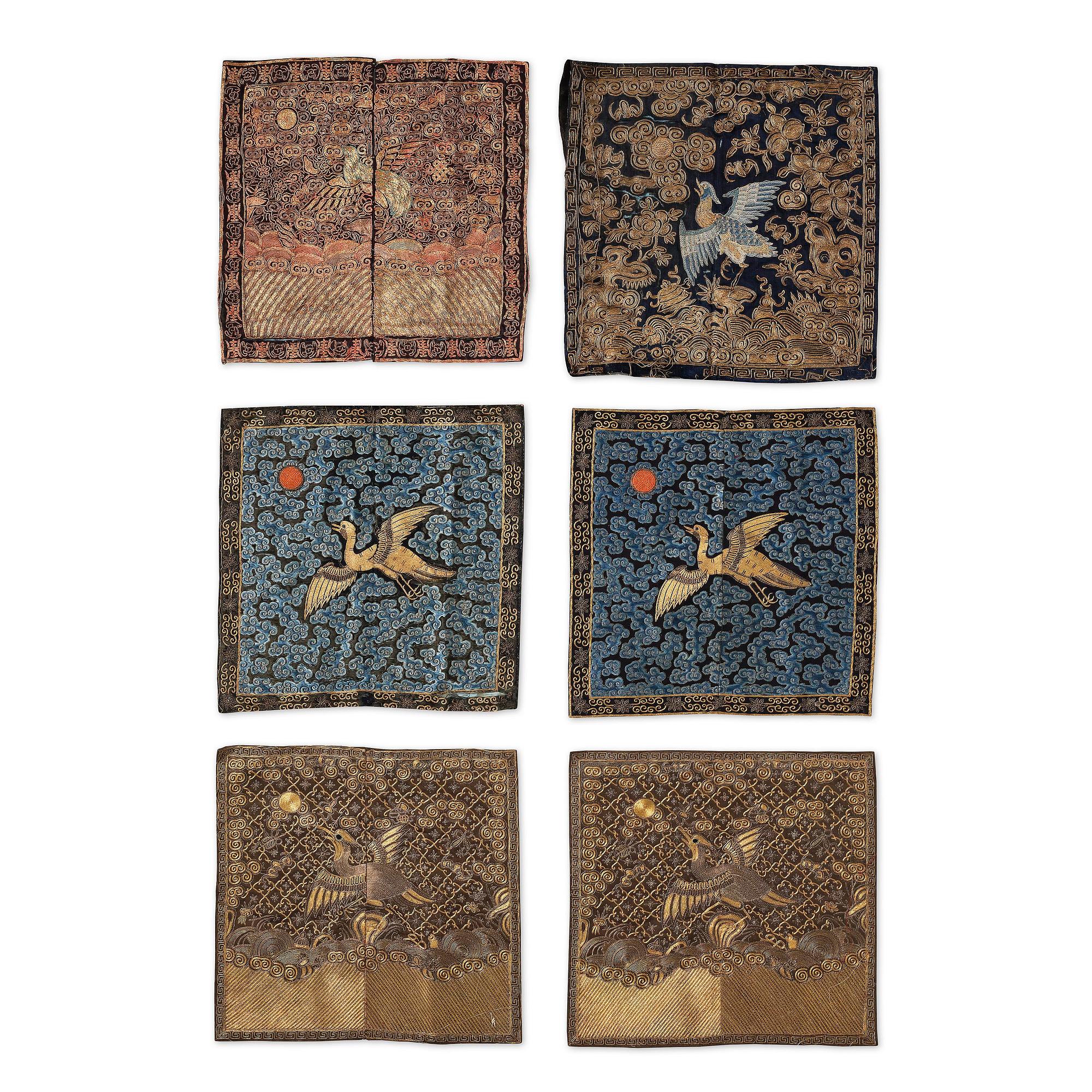
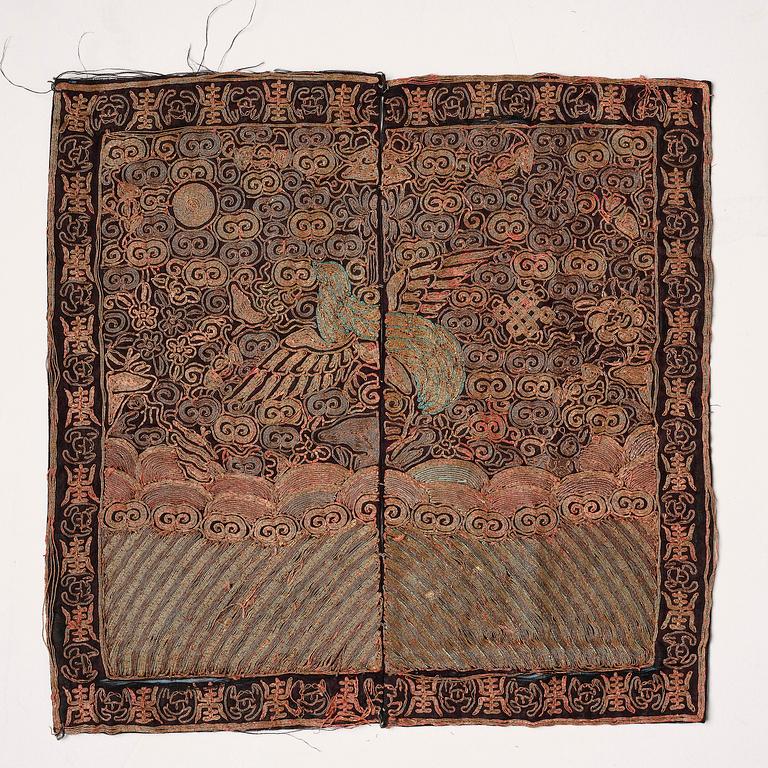
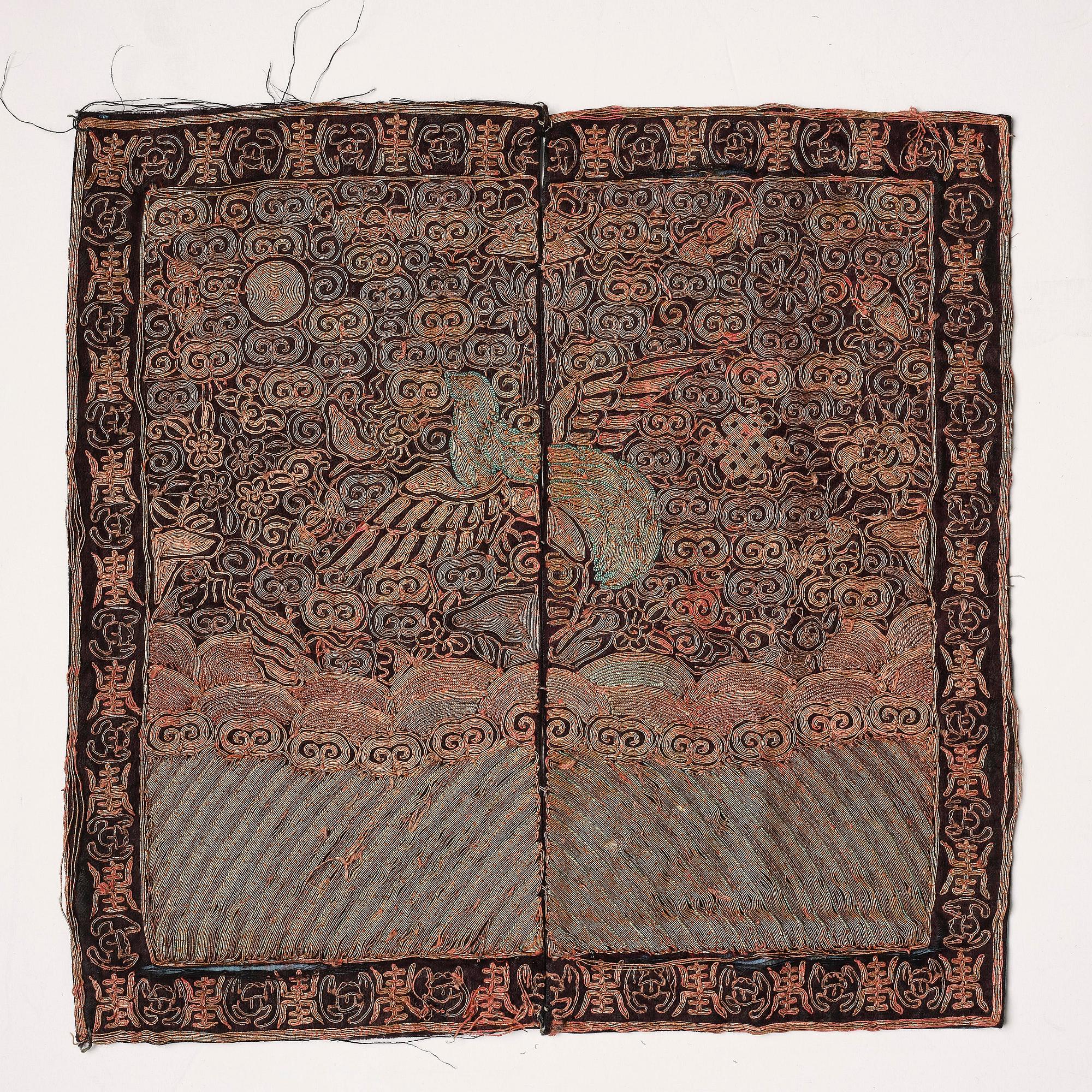
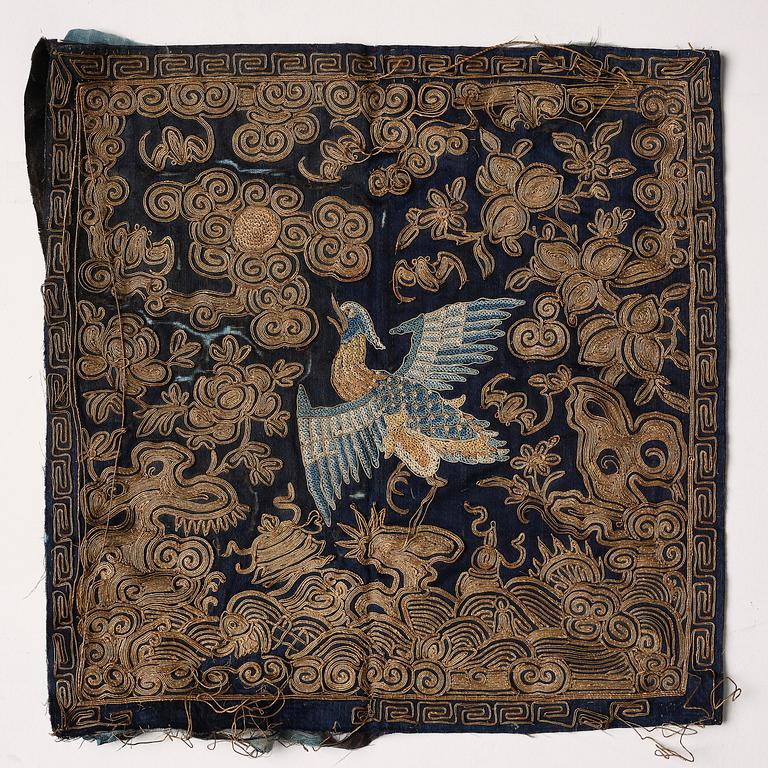
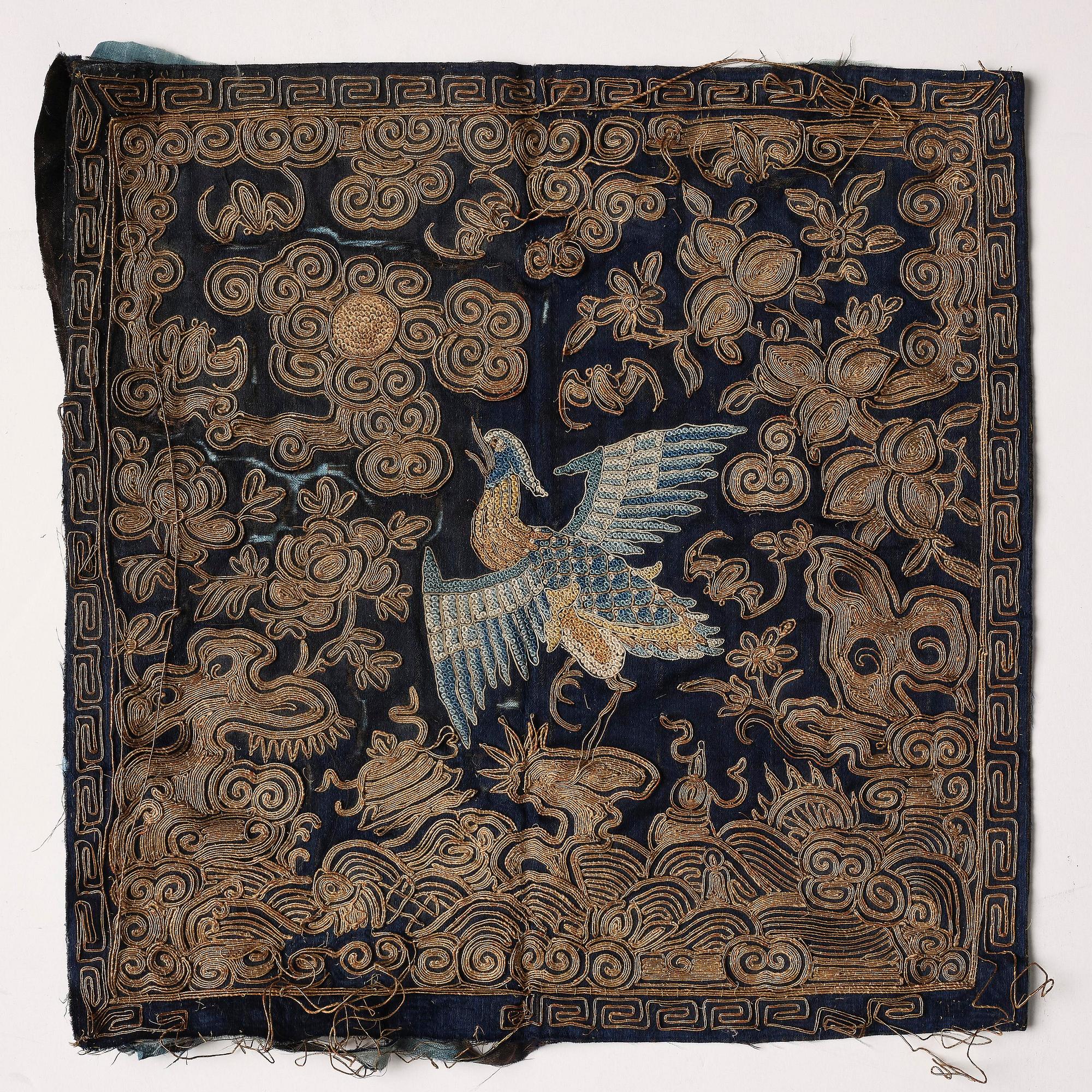
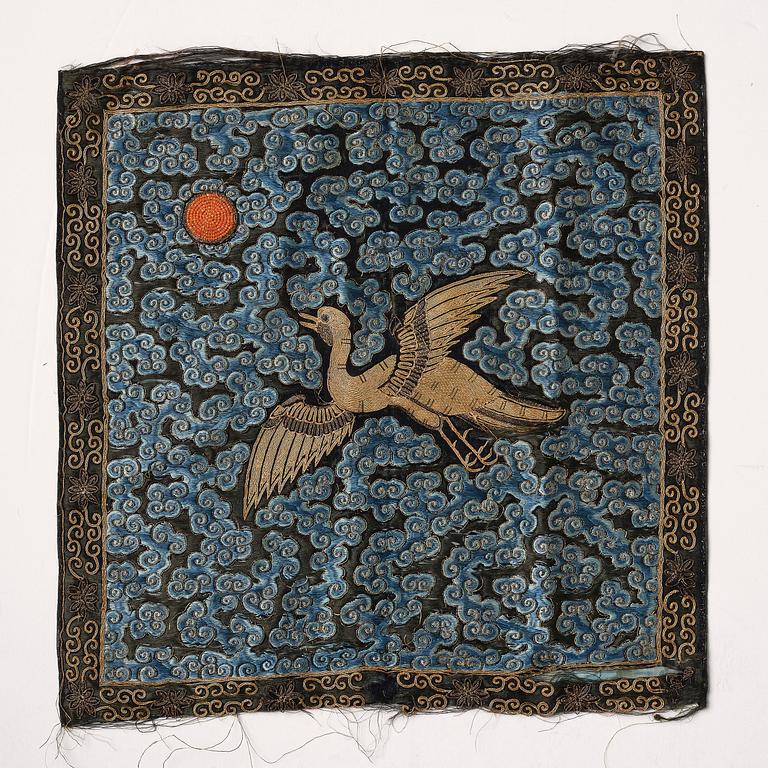
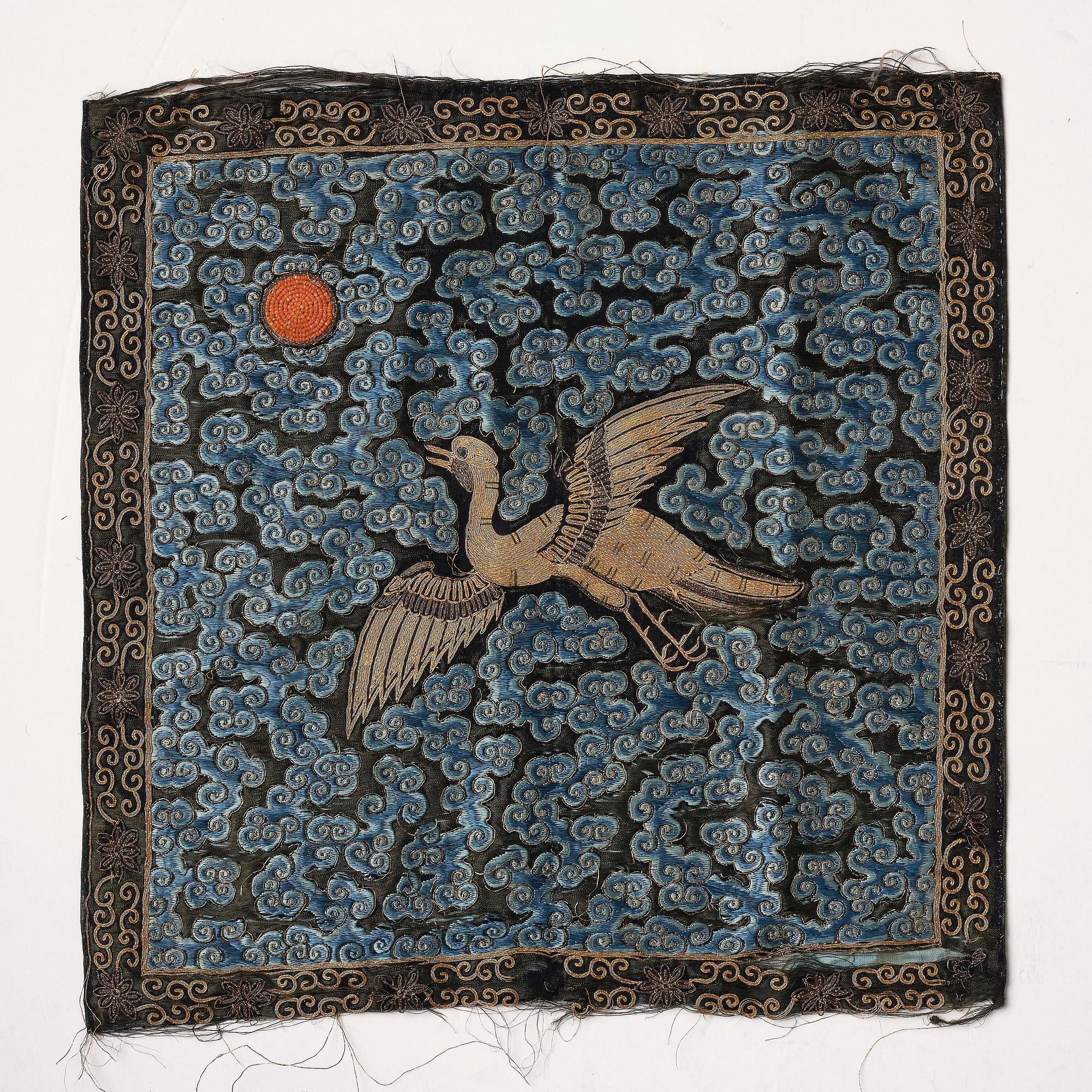
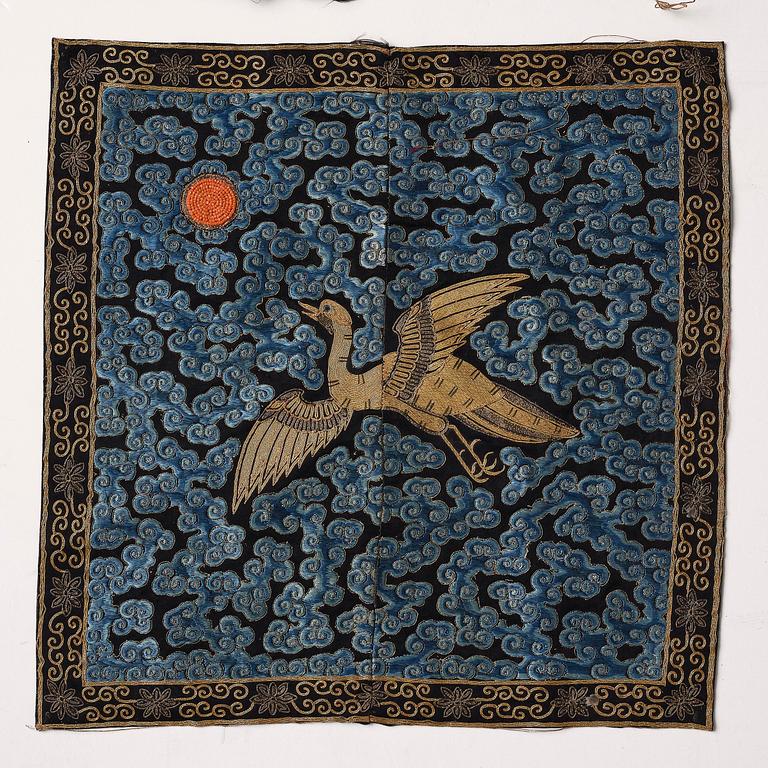
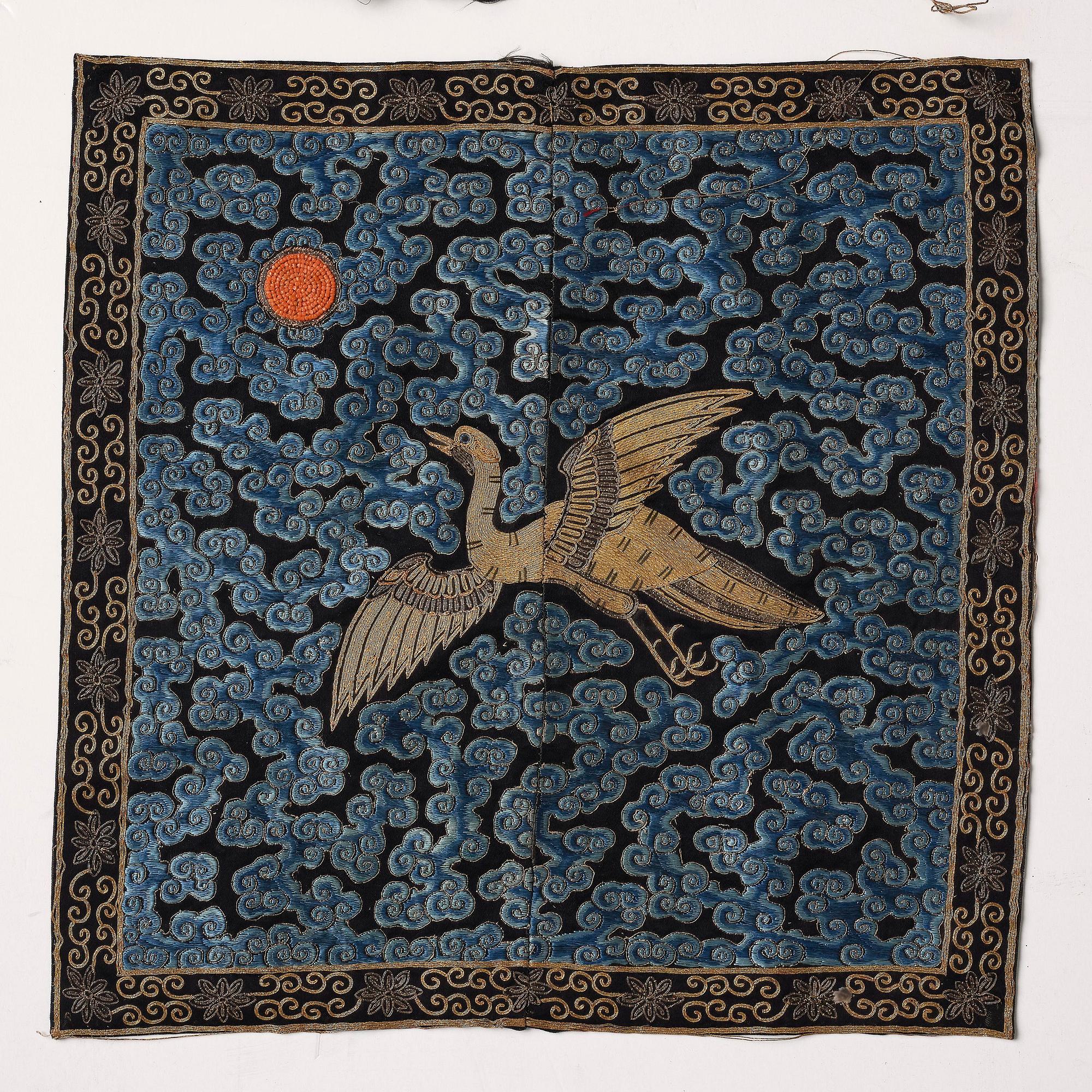
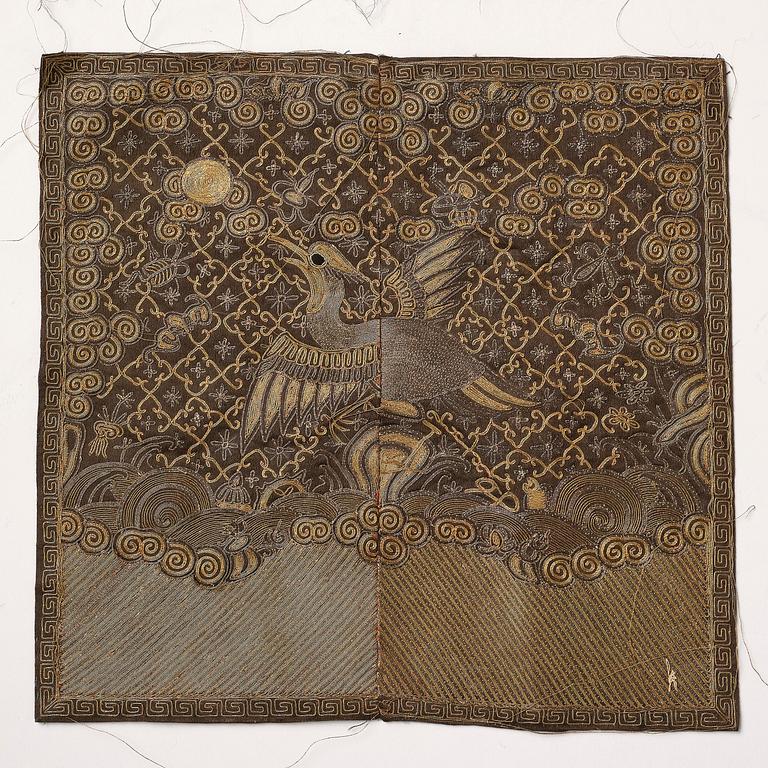
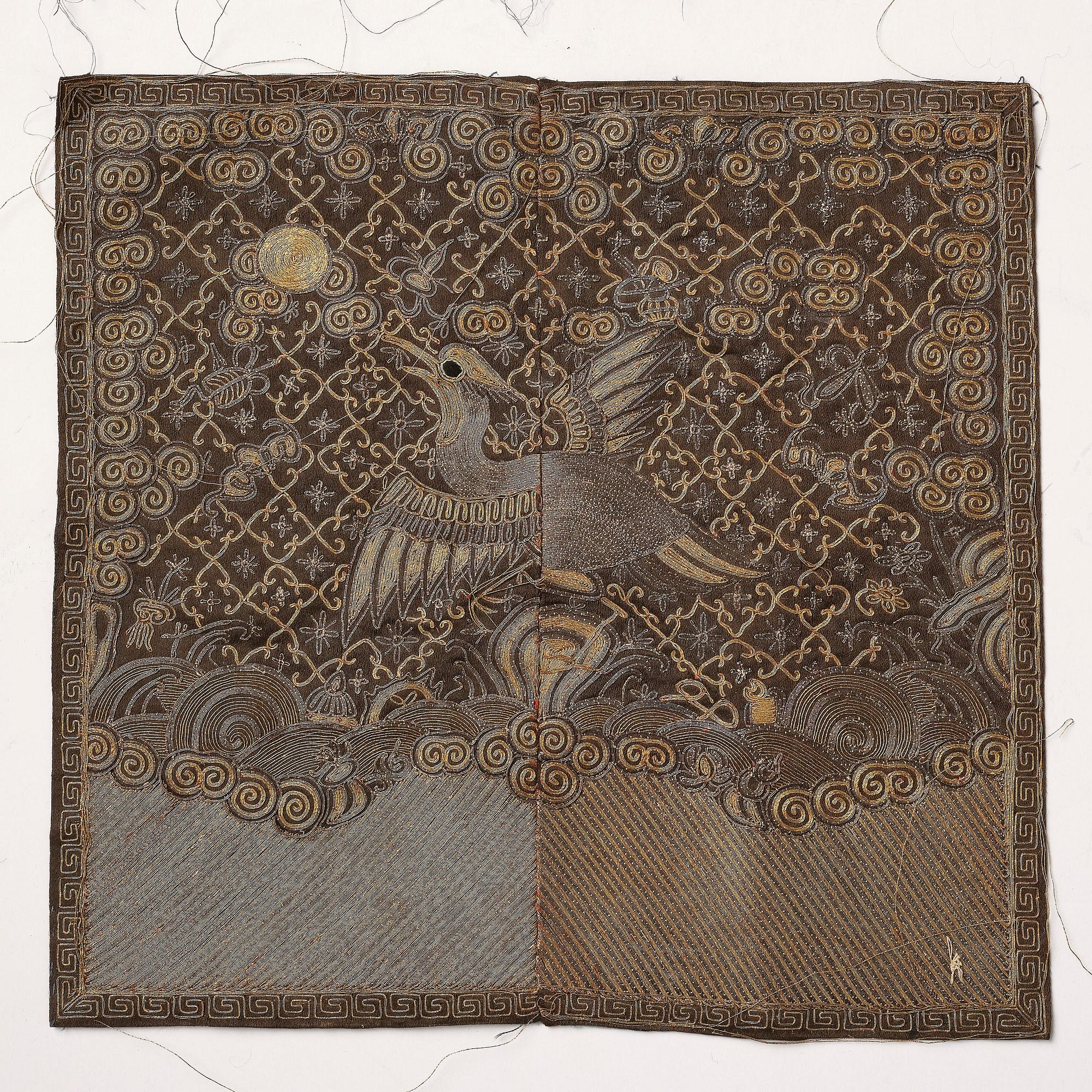
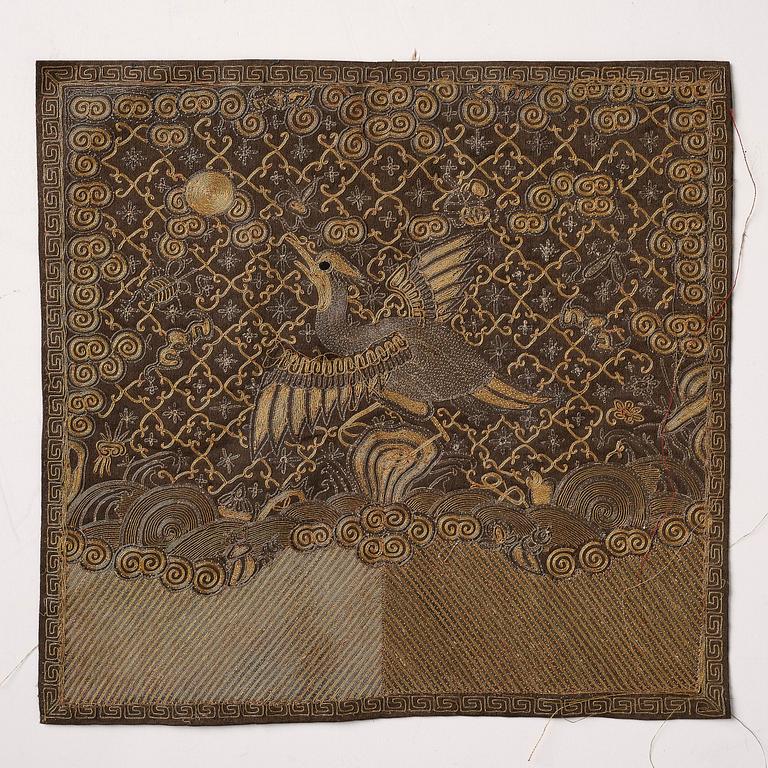
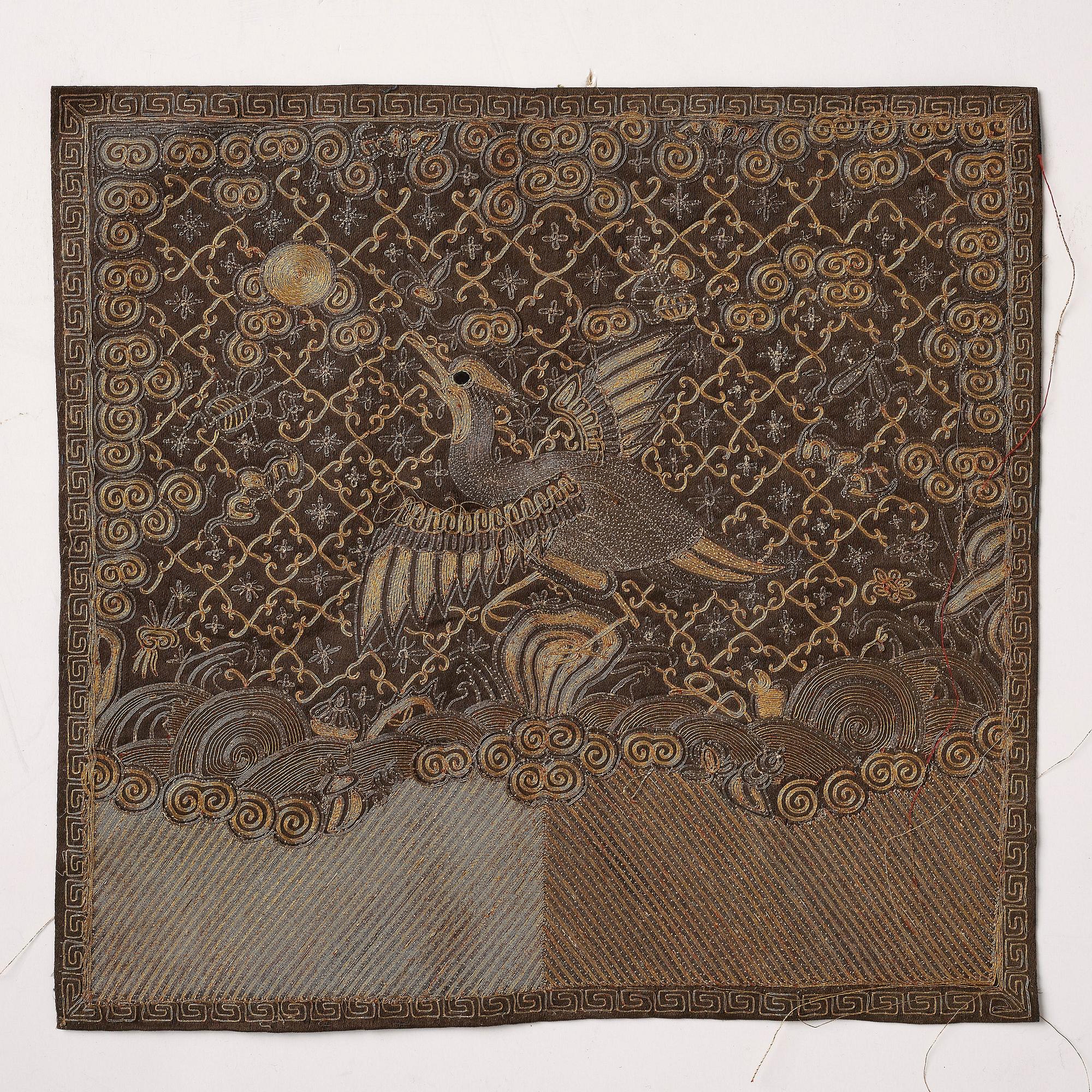
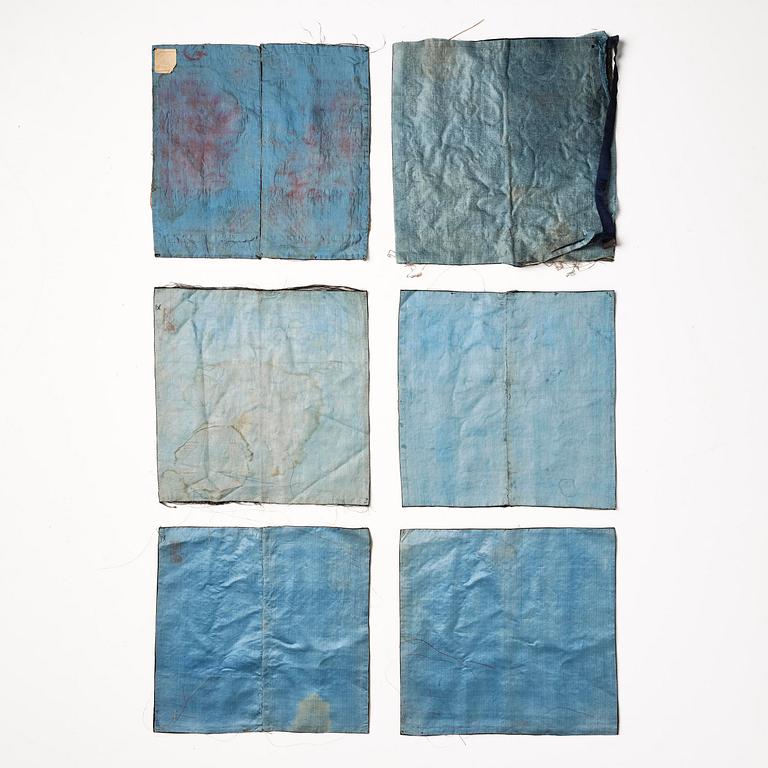
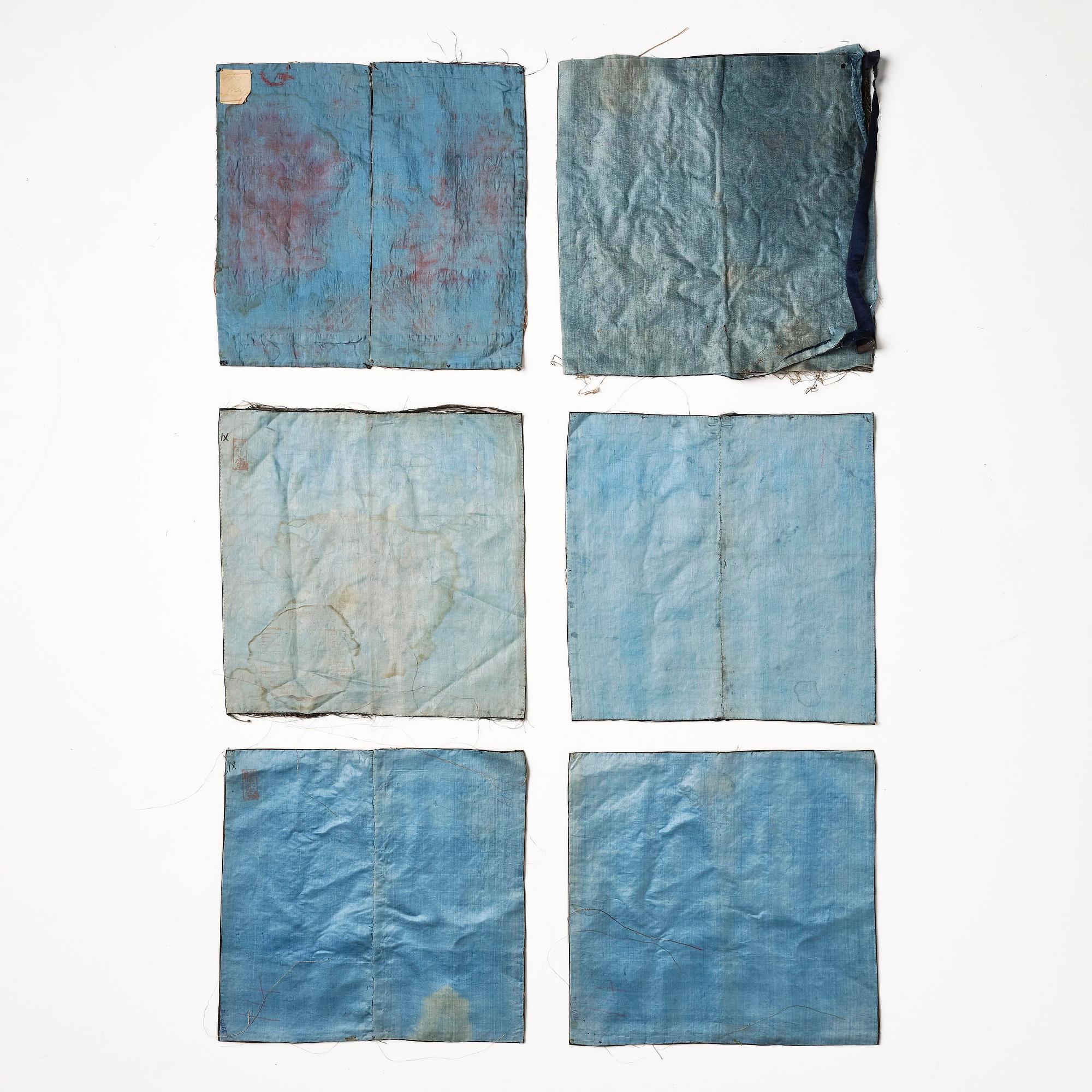
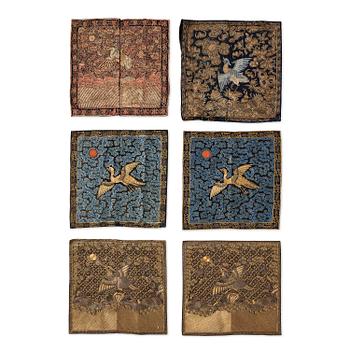
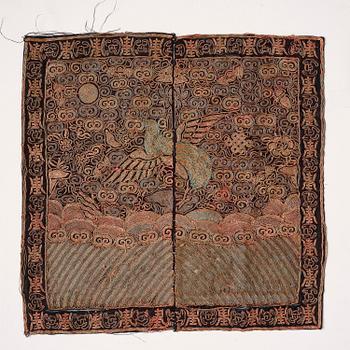
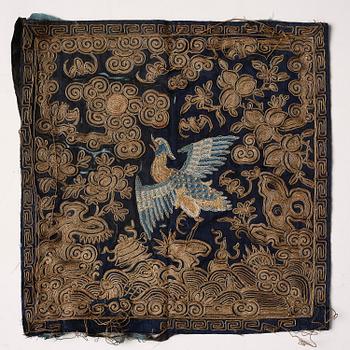
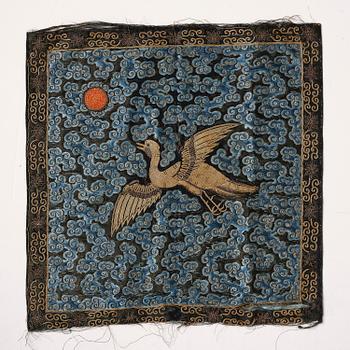
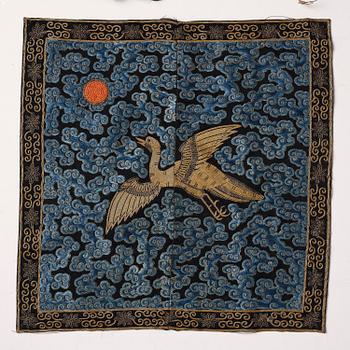
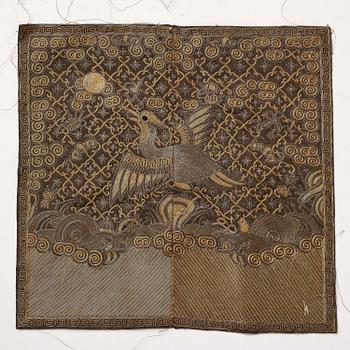
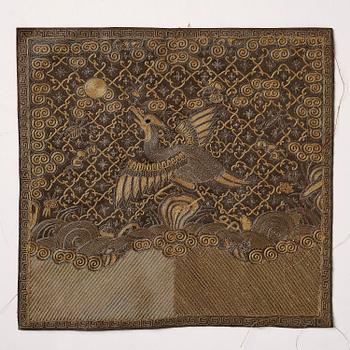
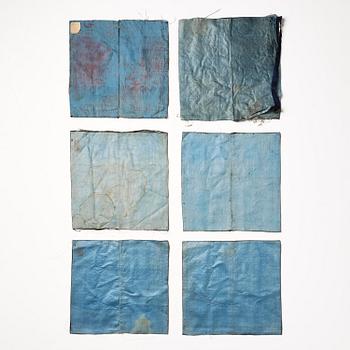
Bestående av; en broderad med guldtråd av en fågel mot svart grund. Runt brämet fladdermöss och lyckosymboler. Fodrad i blått siden. Mått 29,5x29 cm. En med en fågel i blått omgivet av förgyllda molnformationer, persikoträd, fladdermöss ovan vilda vågor. Fodrad i blått siden. Mått 29x29,5 cm. Ett par med gyllene fåglar mot blåa moln och korallsol. Fodrade i blått siden. Mått 28x29 cm. Ett par med fåglar broderade i guld och silver mot brun grund, fodrade i blått siden. Mått 28x29 cm.
Slitage, lösa trådar.
Proveniens
Property of a private Swedish Estate.
Övrig information
A badge featuring a bird identified the wearer as a civil official. To attain such a position required years of intense study, so birds may have been selected because of their literary associations. Each rank was represented by a different species, and while there were slight variations over time, by the Qing dynasty the order from highest to lowest was: crane, golden pheasant, peacock, wild goose, silver pheasant, egret, mandarin duck, quail and paradise flycatcher. Civil officials sat on the emperor’s left at court functions, so their rank birds faced right towards him.
While it may be easy to tell a duck from a goose in real life, identifying different species on rank badges can be difficult. Birds are shown in similar poses, are of similar size and are placed on grounds of similar decoration, which had slight variations from period to period.
Certain species, such as peacocks, can be identified easily because of the distinctive eye design on their feathers. For the more difficult varieties, look at the form of the head and neck and the shape of the tail feathers. For example, the first-rank crane typically has a rounded head topped by a red cap, while the silver pheasant worn by fifth-rank civil officials has distinctive long, scalloped or serrated tail feathers.
För konditionsrapport kontakta specialist

Andra har även tittat på