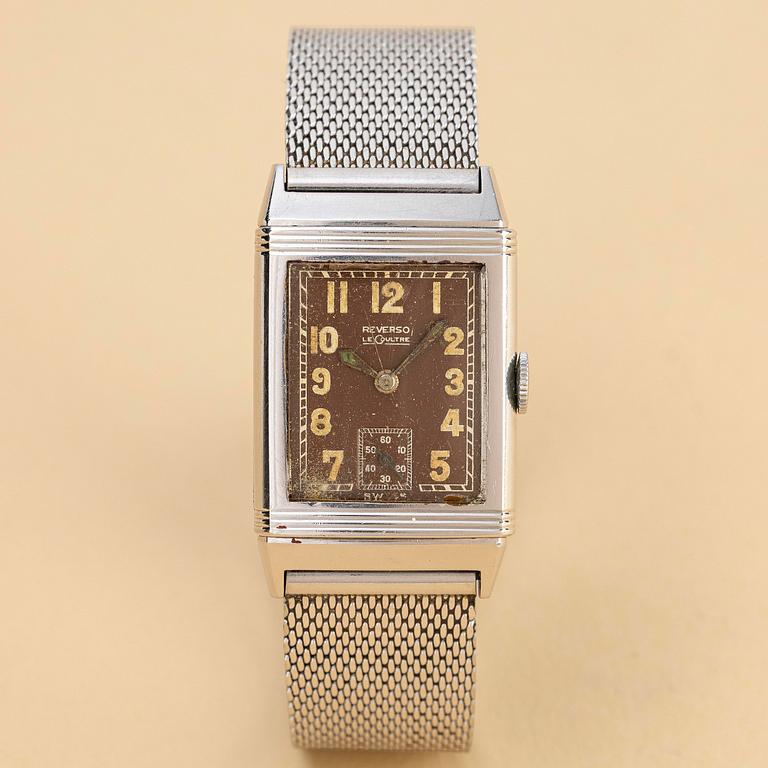
Storlek: 23 x 33 (38) mm
Material: stål
Urverk: manuell, caliber 410
År: cirka 1933
Glas: plexiglas
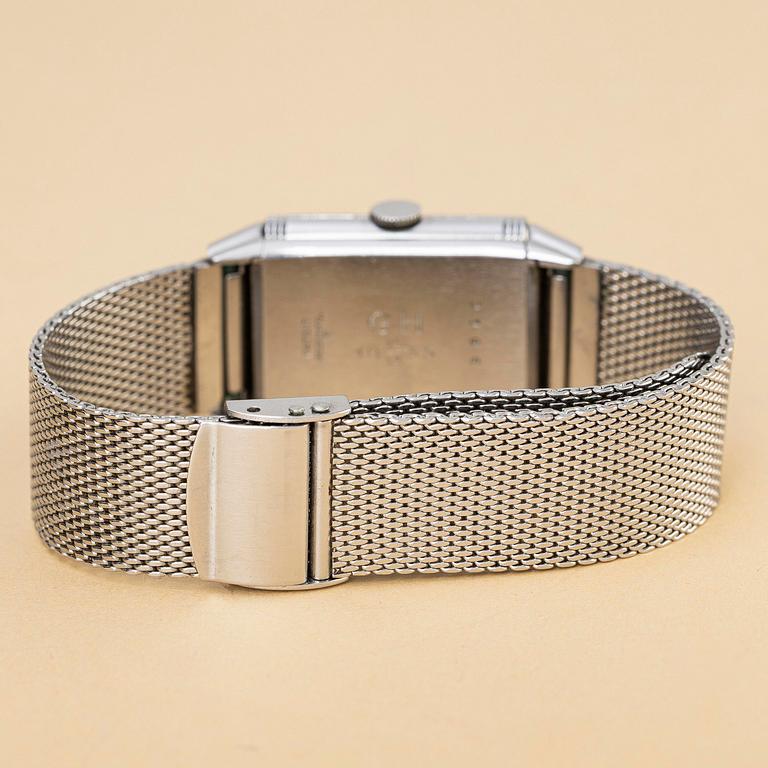
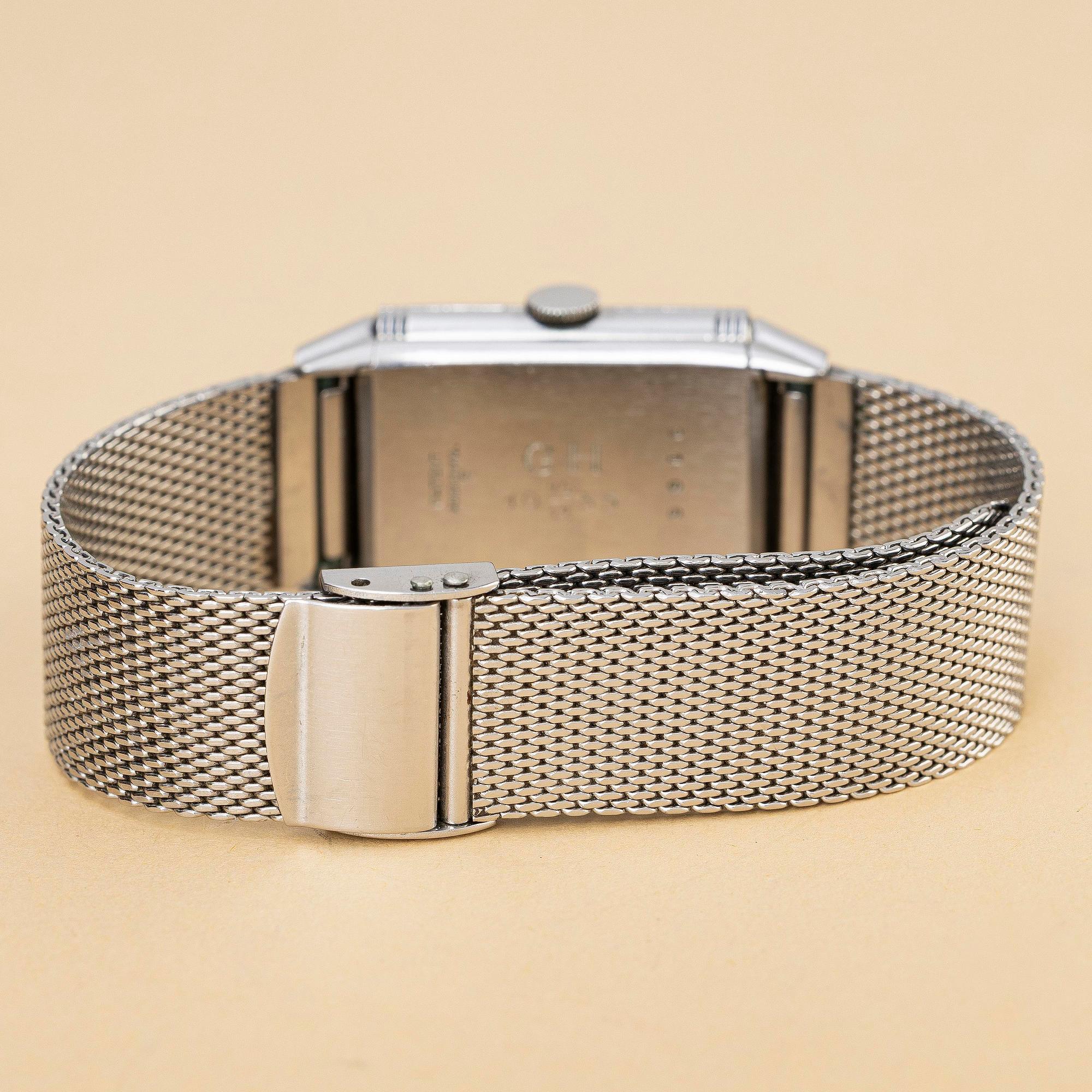
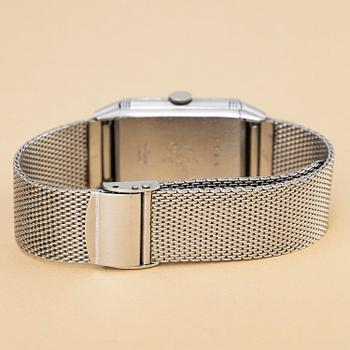
Armband: metallänk
Referensnummer: 201
Verknummer: 15'643
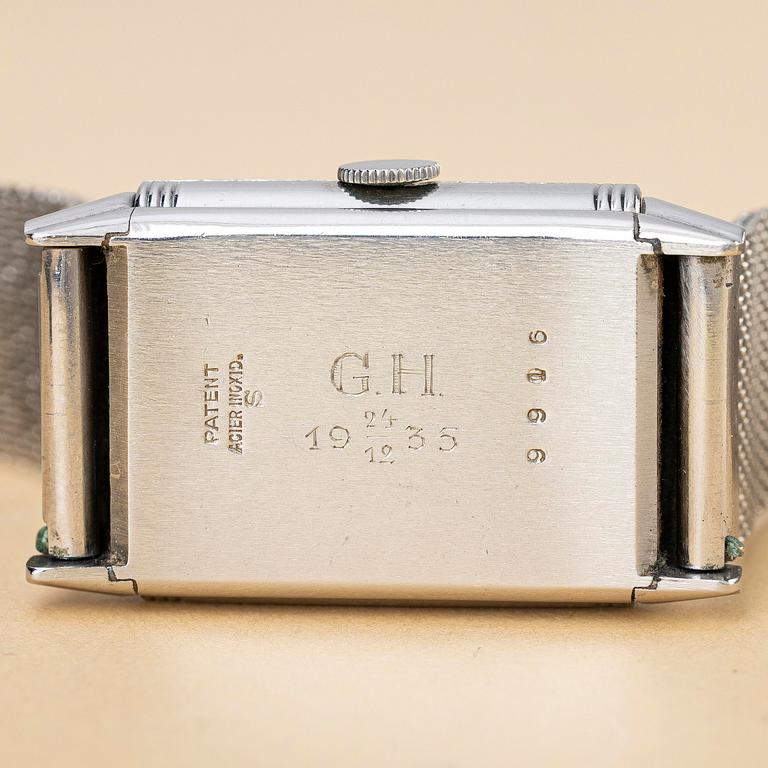
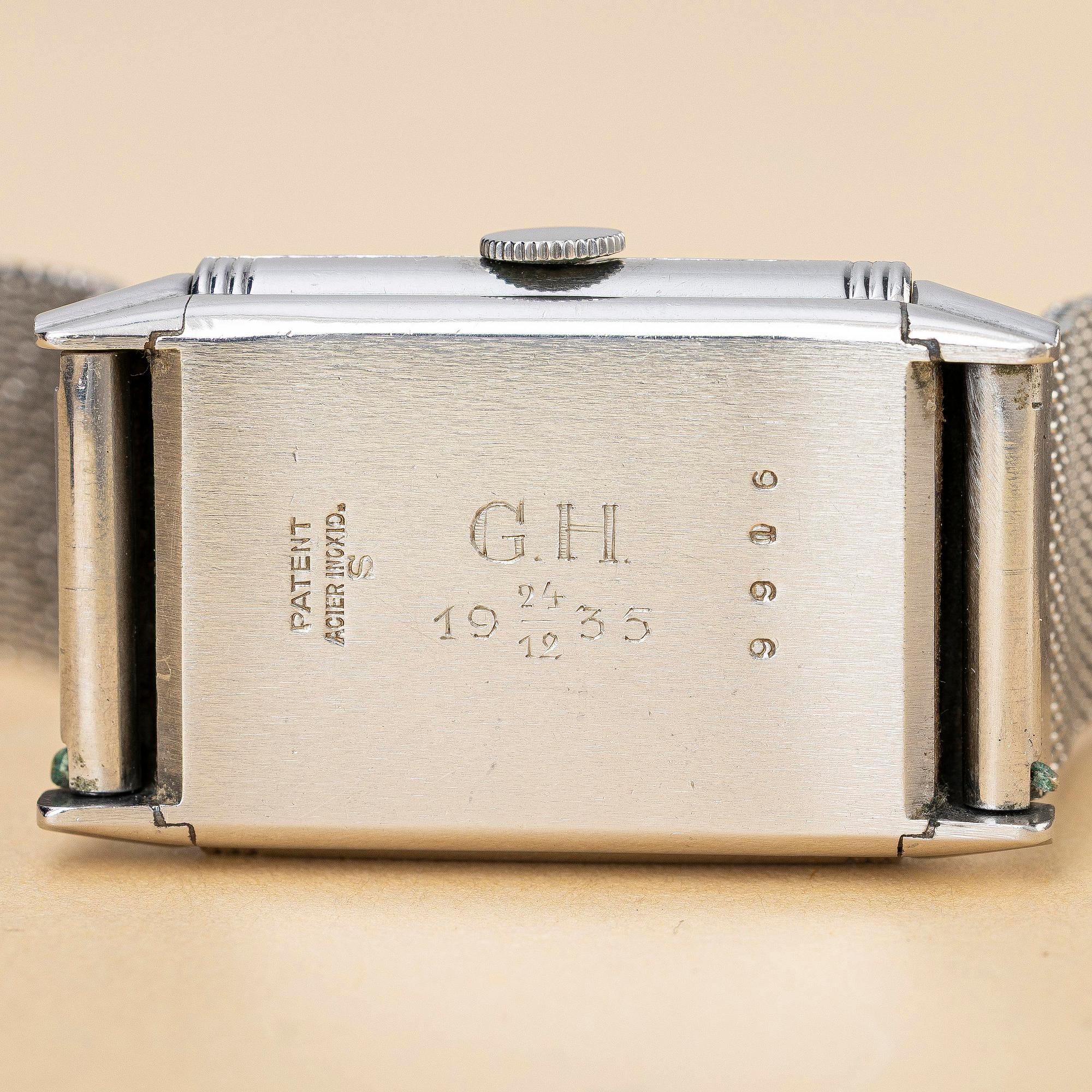
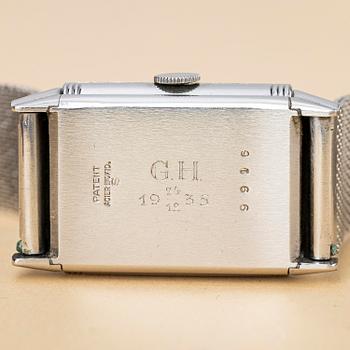
Boettnummer: 9'916
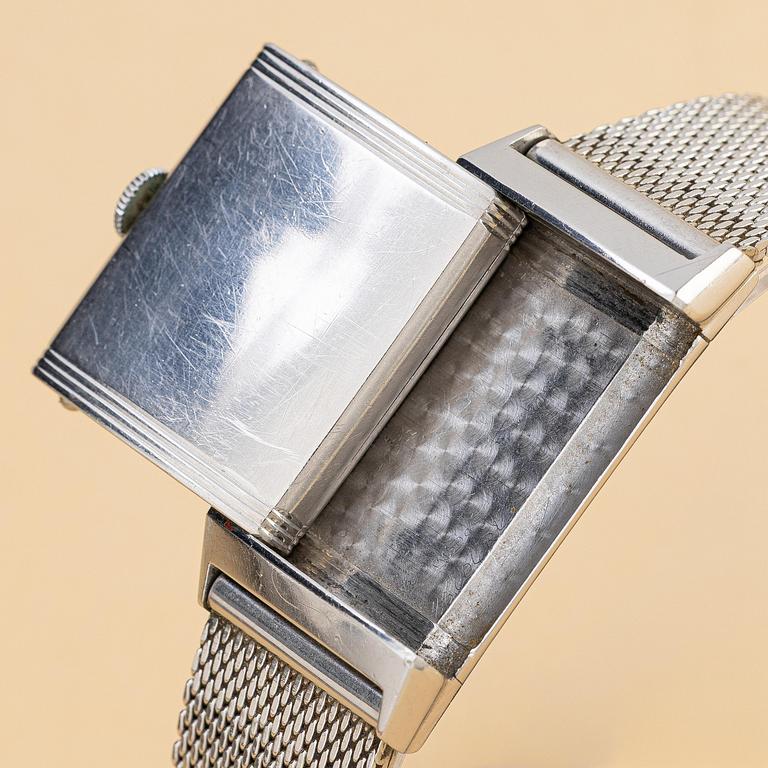
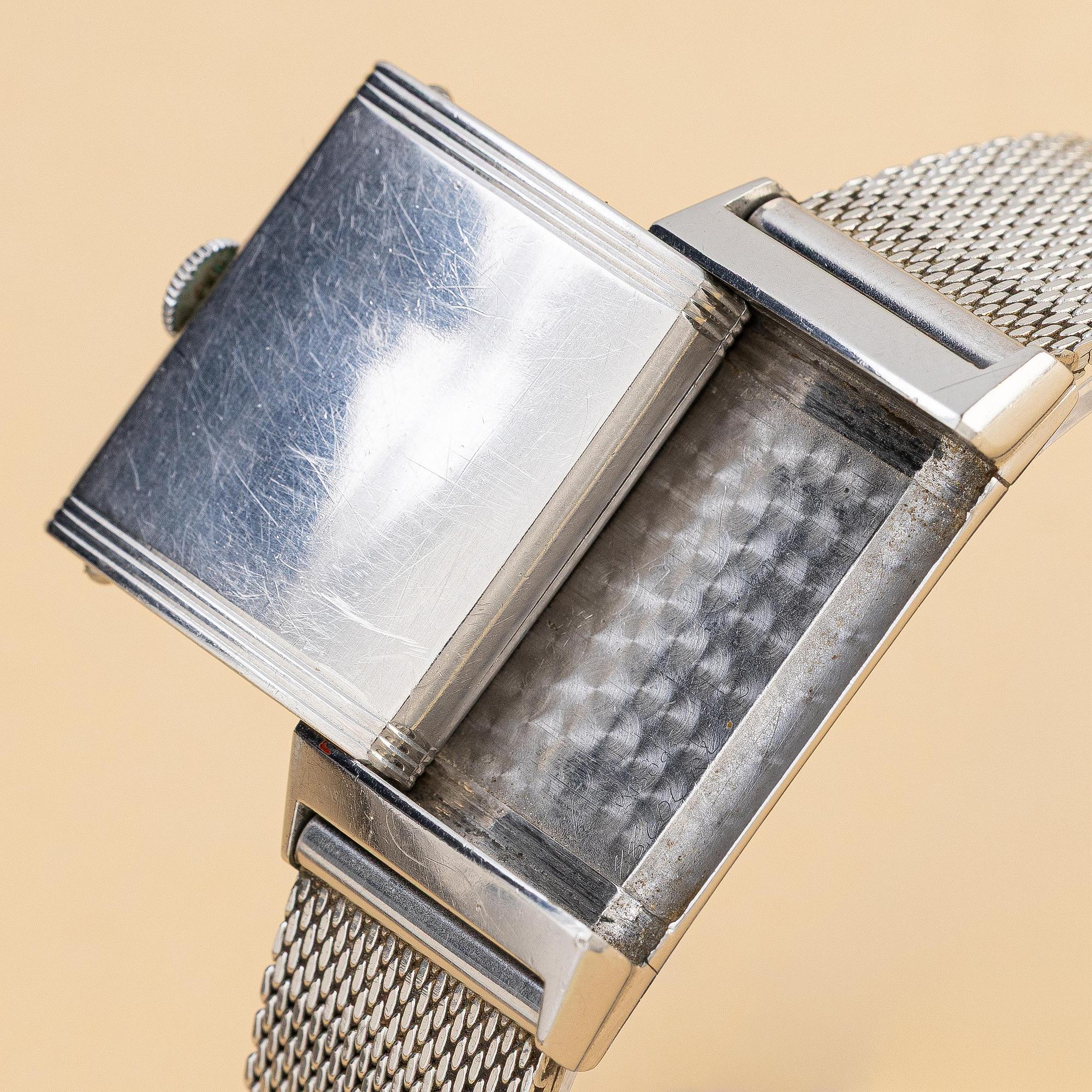
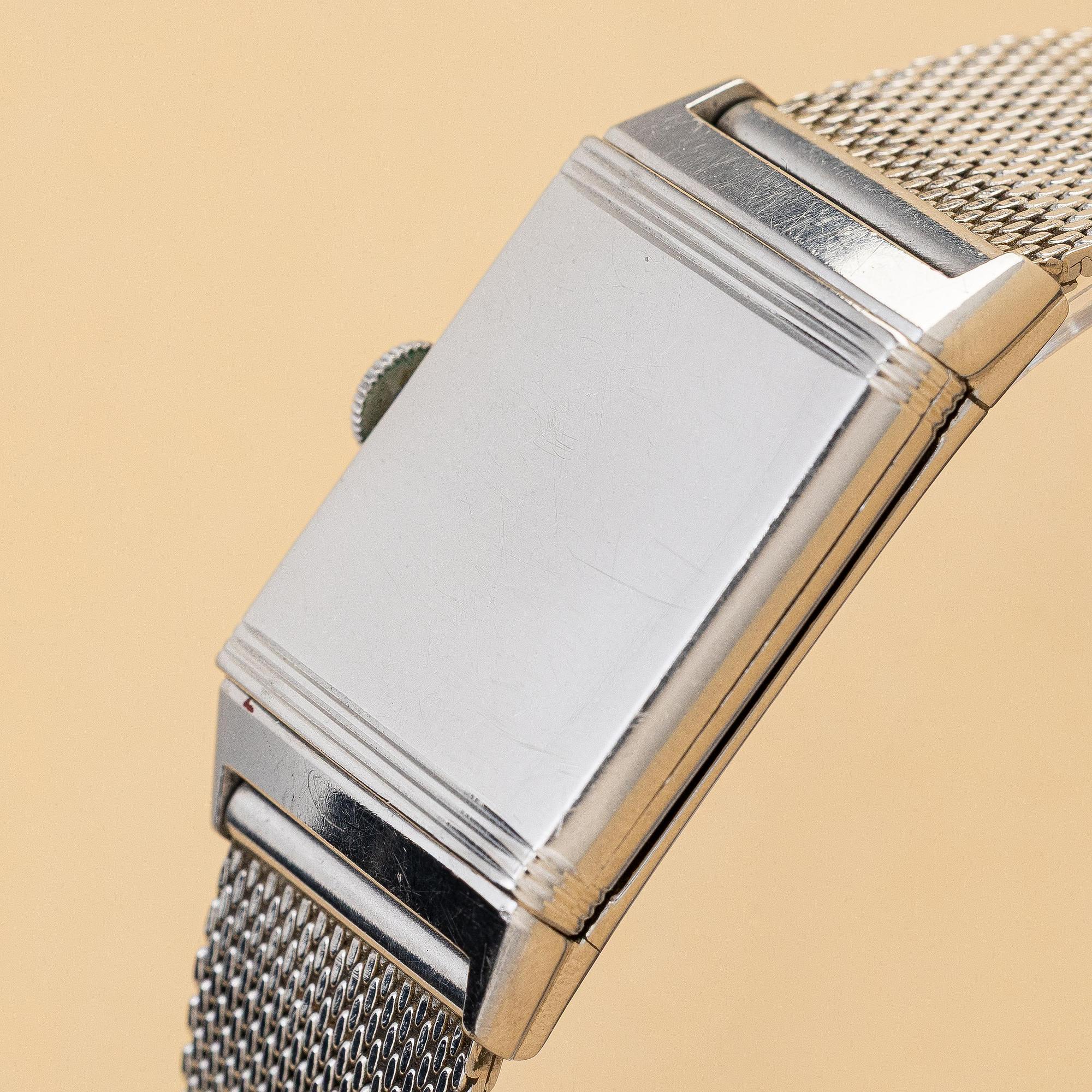
Behov av service. Gravyr.
Urverksbilder finns på begäran. Potentiella köpare bör inspektera varje klocka för att försäkra sig om dess skick. För mer information, vänligen läs våra Köpvillkor.
Övrig information
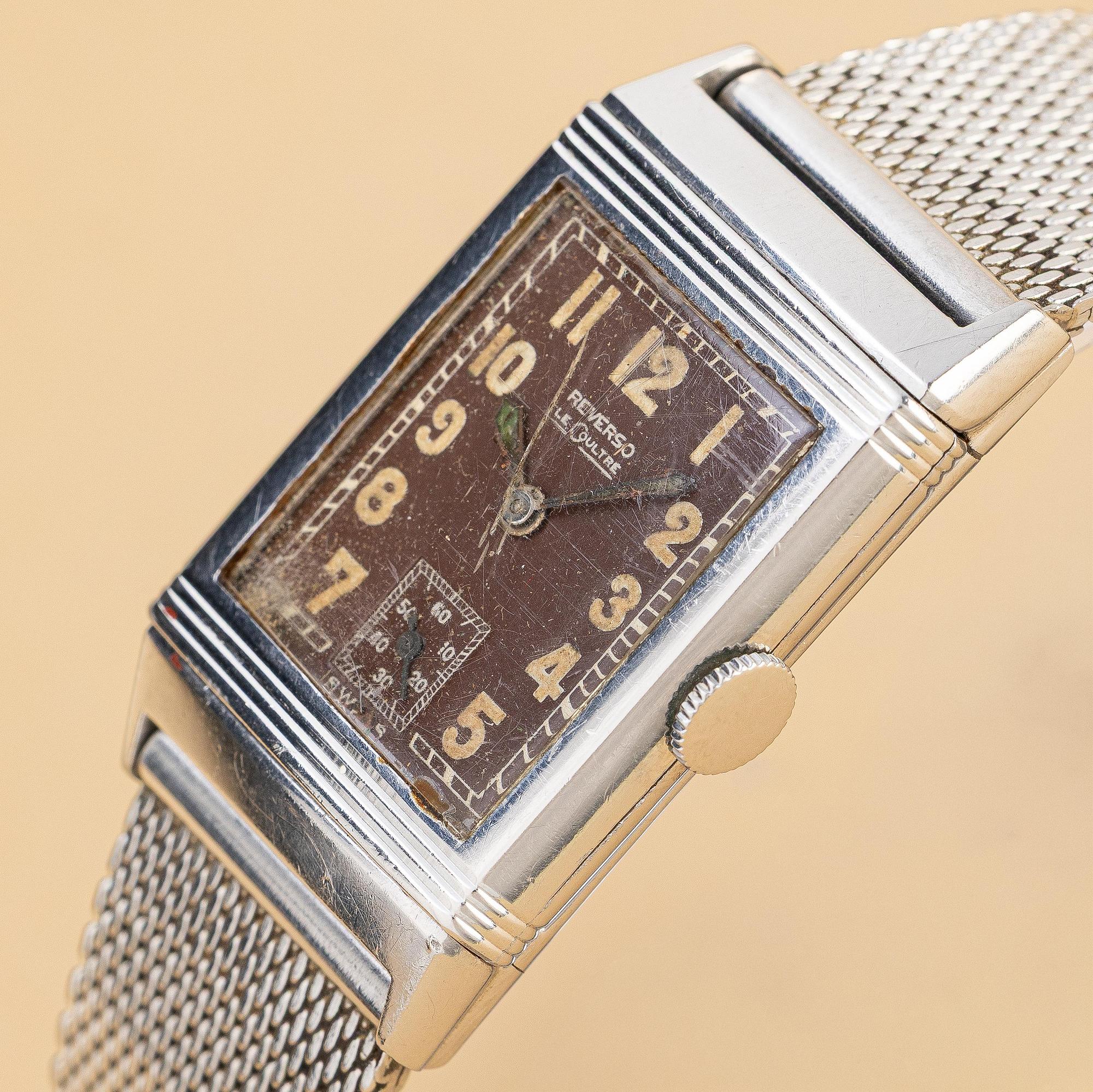
Introduced in 1931, the Reverso has become one of the most recognisable watch designs of the 20th century. The model originated from the need for a wristwatch whose crystal could be protected during polo matches, leading French engineer René-Alfred Chauvot to develop the reversible case. The patent application was filed on 4 March 1931, and the Reverso name was registered later that year.
The earliest Reverso watches were fitted with movements supplied by Tavannes, while LeCoultre was simultaneously developing its own shaped movements for the model. In 1933, calibre 410 was introduced with subsidiary seconds at six o’clock, becoming LeCoultre’s first in-house movement developed specifically for the Reverso. According to information from the Jaeger-LeCoultre archives, the first Reverso watches fitted with LeCoultre movements reached the market at the beginning of July 1933. Reverso watches fitted with calibre 411 and centre seconds are also documented from the same year.
The present watch belongs to this early generation and is fitted with the manually wound calibre 410 with 15 jewels, movement number 15'643. Its dating to circa 1933 is supported by closely numbered archive-confirmed examples, including a Reverso ref. 201 with movement number 15'574 and case number 10'745, and another example with movement number 15'930 and case number 9'825. Both are dated 1933 and were accompanied by Extracts from the Archives.
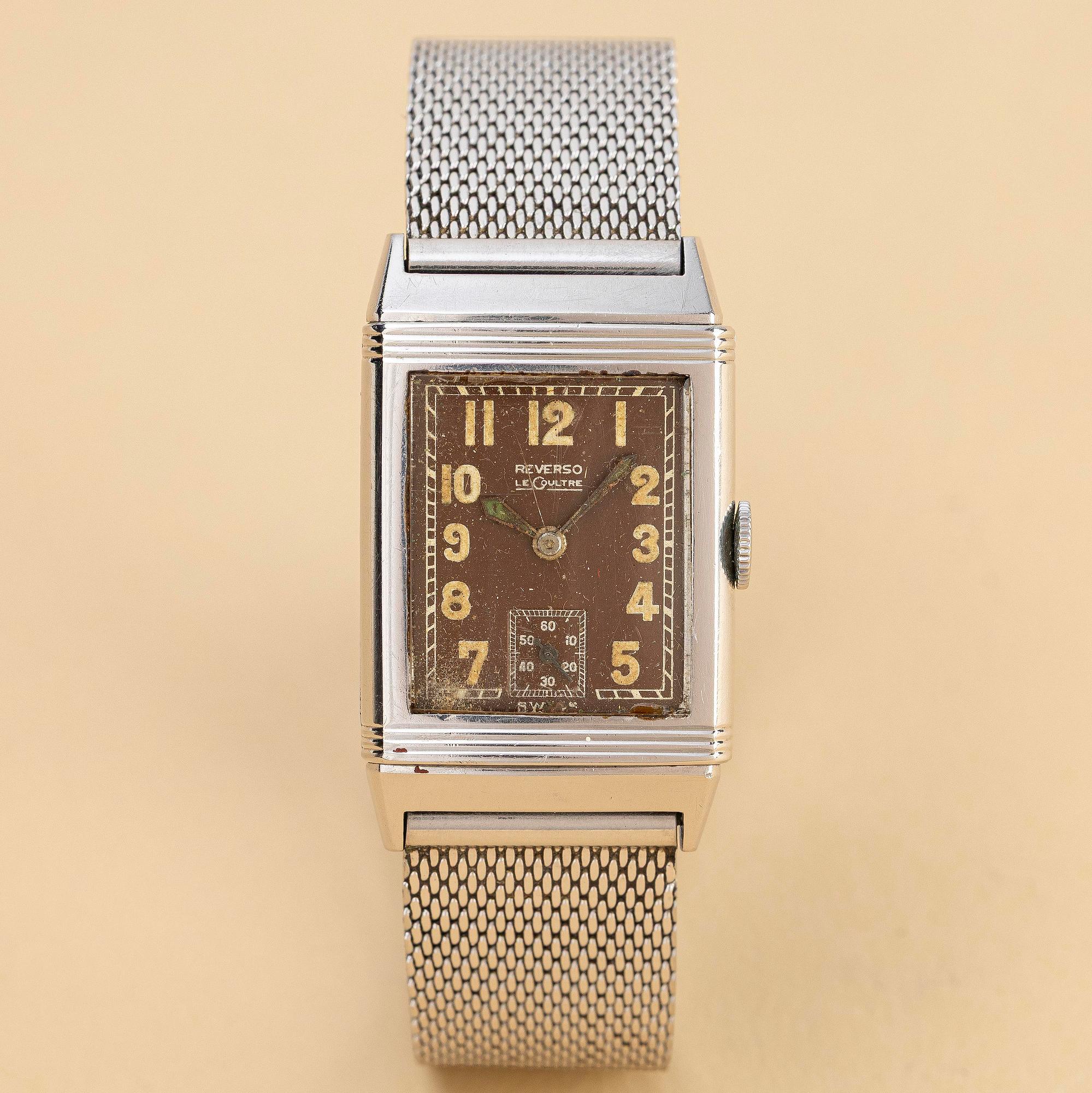
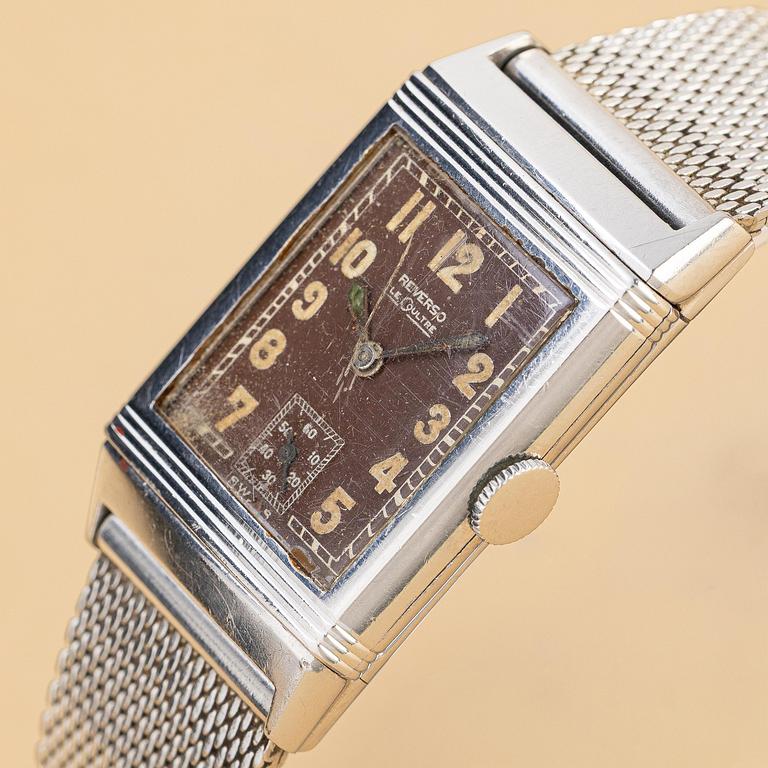
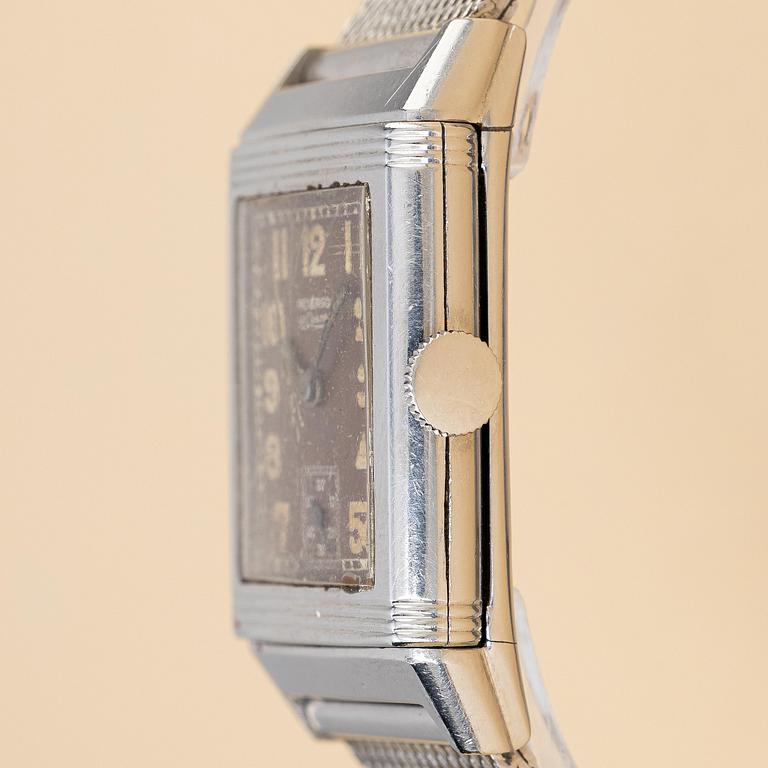
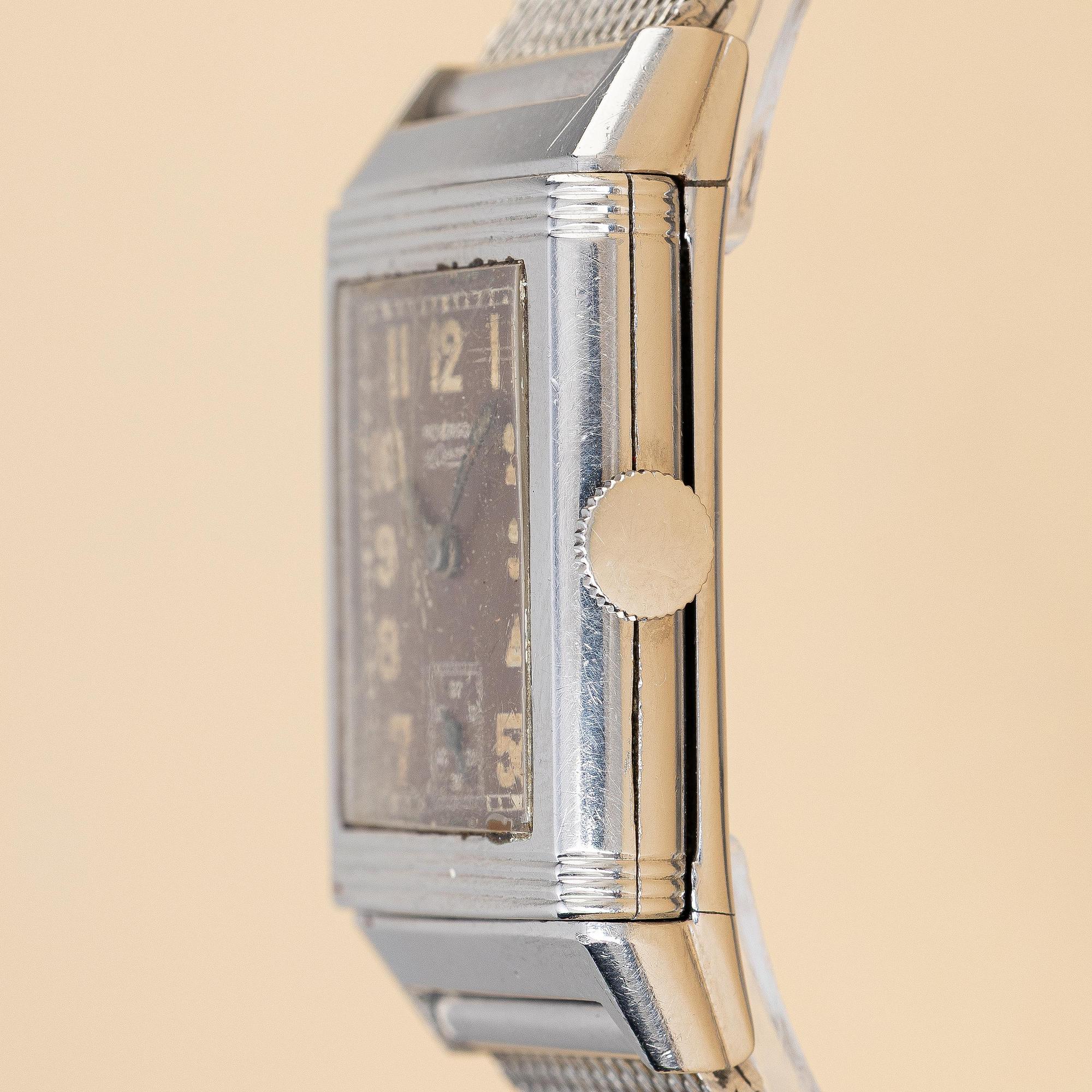
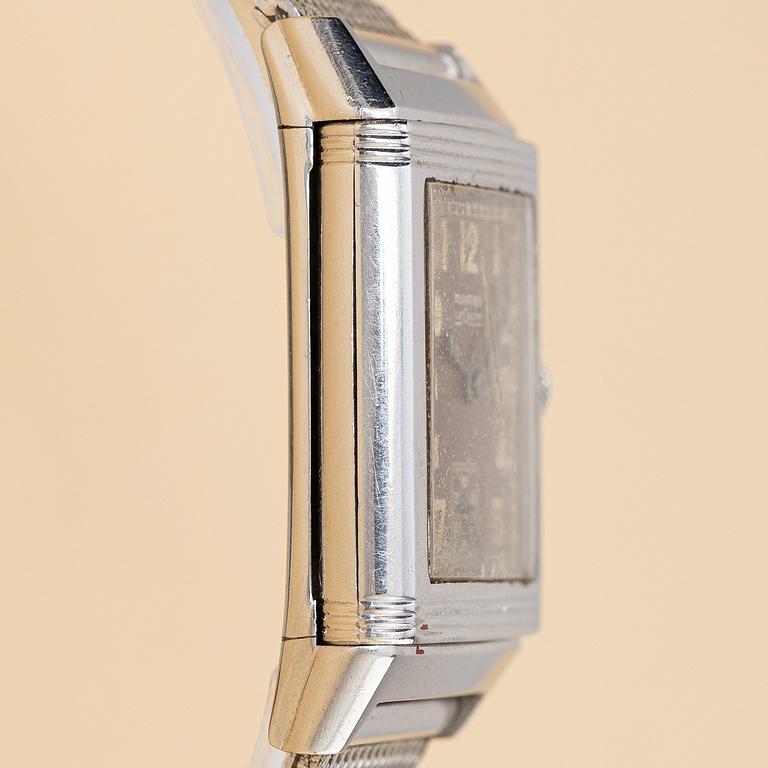
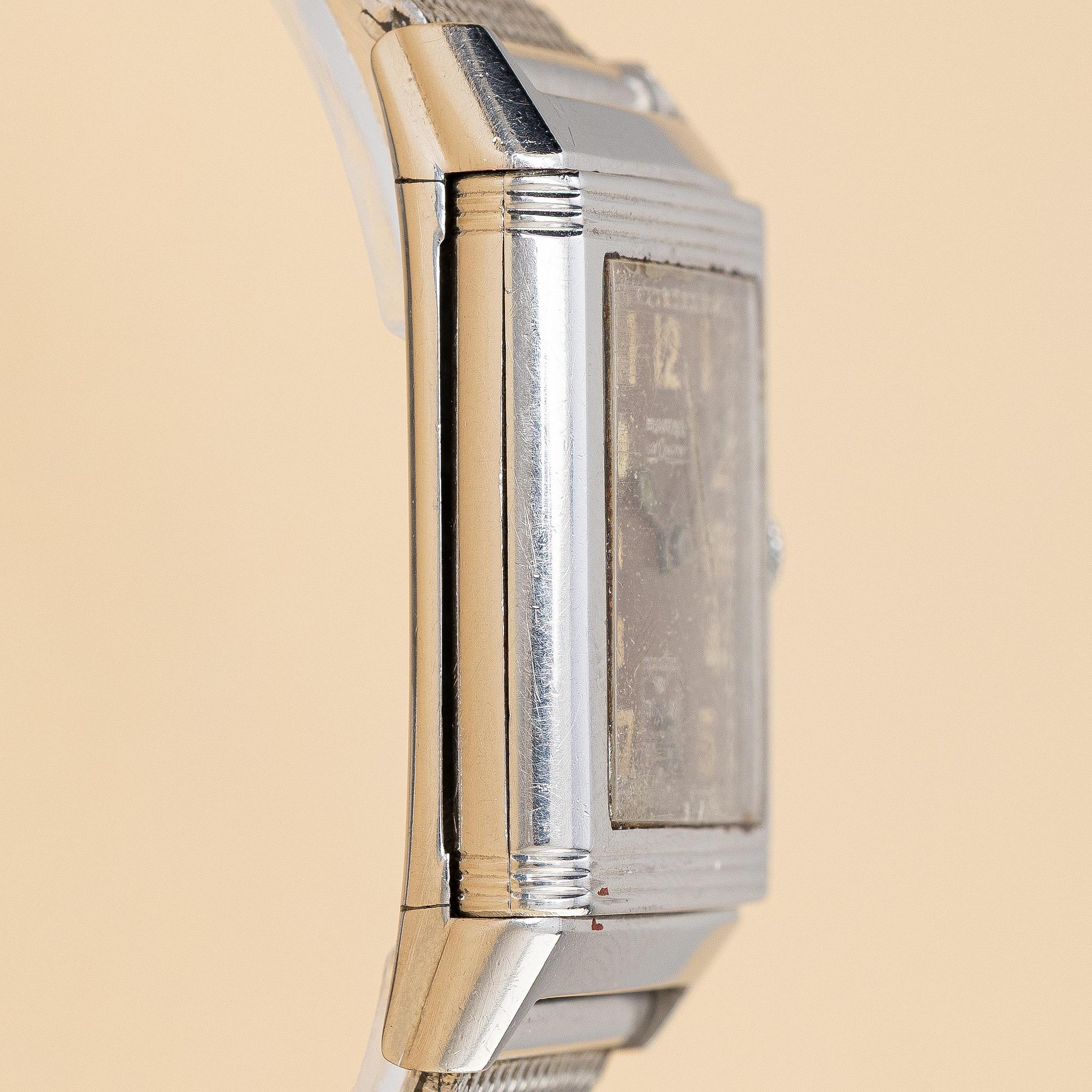
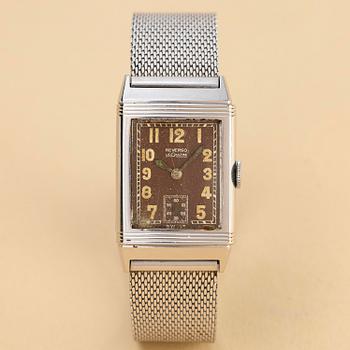
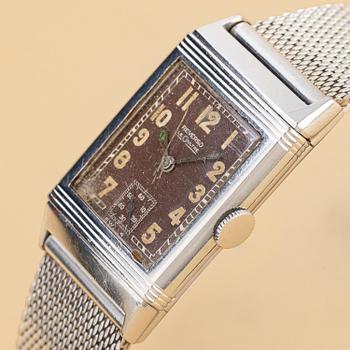
The dark patinated dial is signed “REVERSO / LECOULTRE” and features large Arabic hour numerals, an outer minute track and subsidiary seconds. The early LeCoultre signature is entirely consistent with the period before the Jaeger-LeCoultre name became established later in the 1930s.
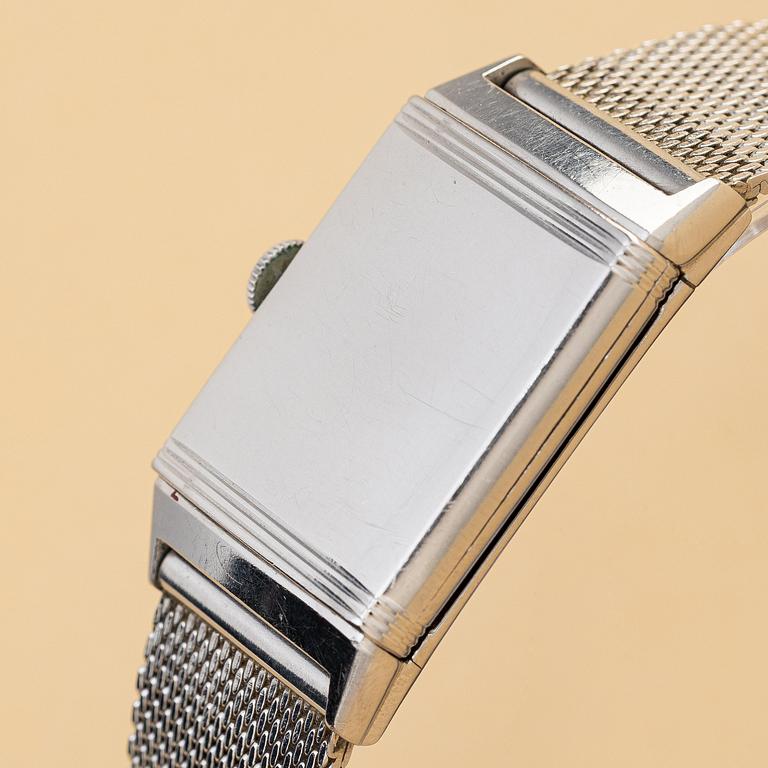
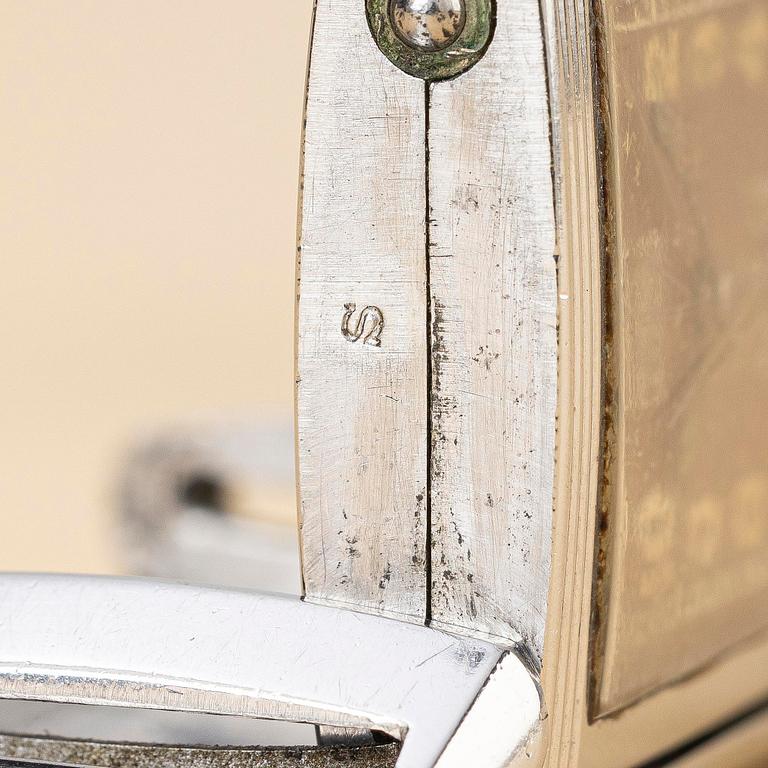
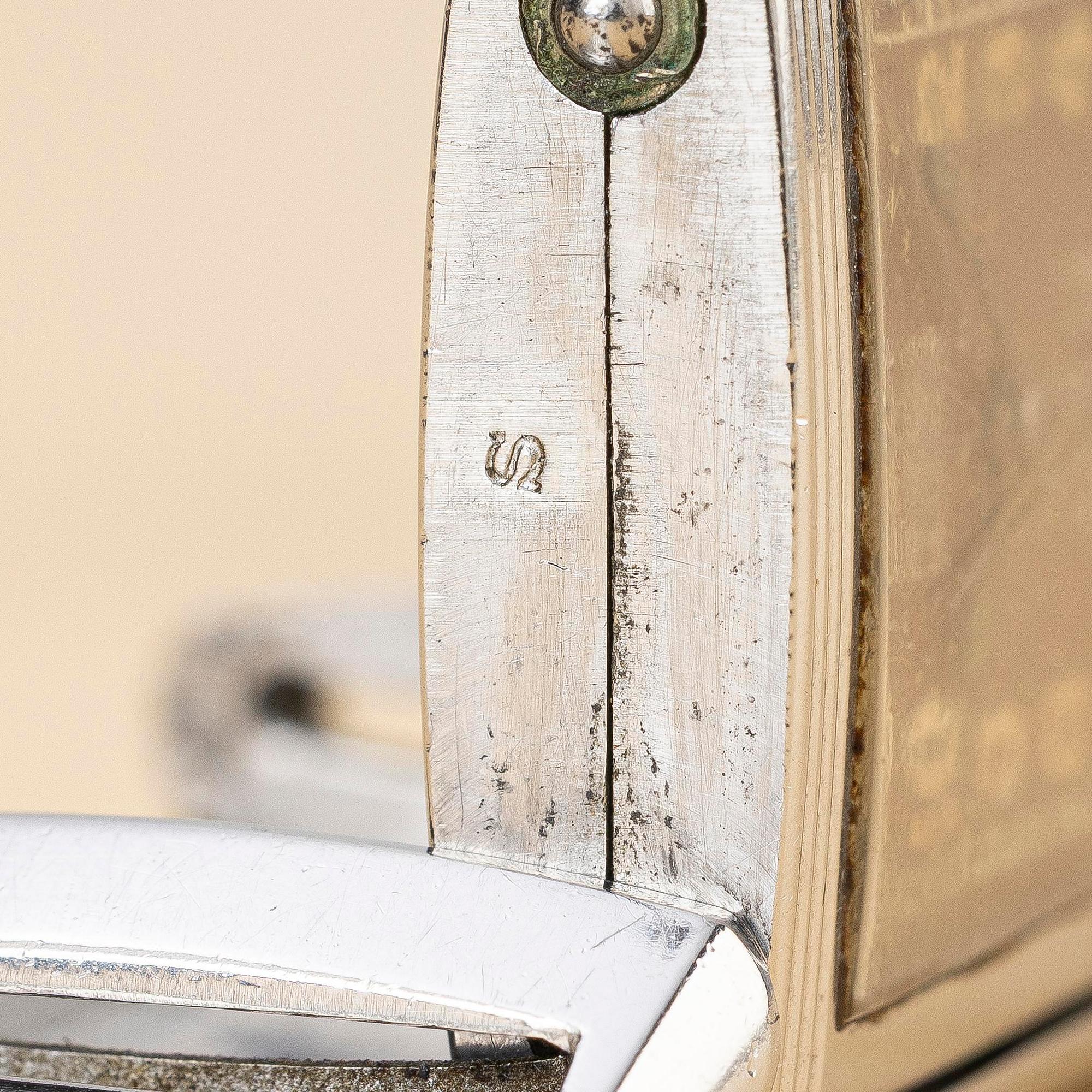
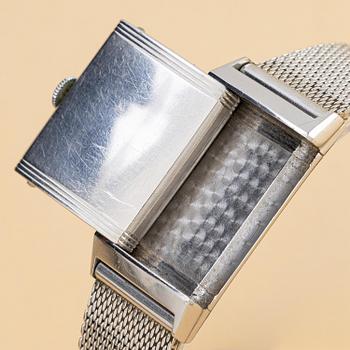
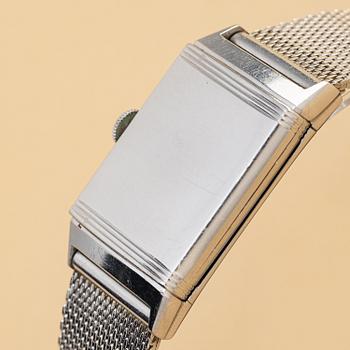
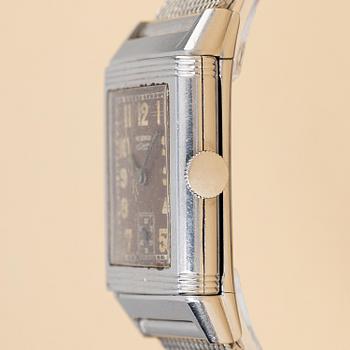
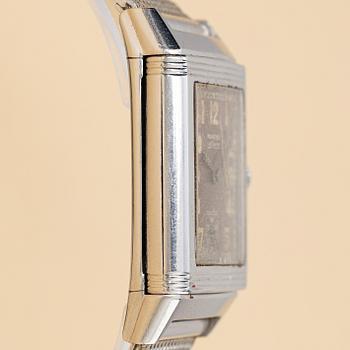
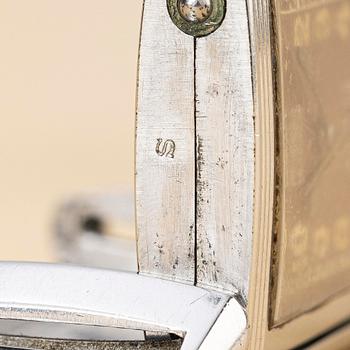
The stainless-steel case displays the characteristic Art Deco architecture of the early Reverso, with three horizontal gadroons above and below the dial and the patented reversible construction. Case number 9'916 appears on several components, together with early patent and LeCoultre markings.
With its early signature, calibre 410 and dating to circa 1933, the watch represents an important stage in the development of the Reverso, marking the transition from the earliest Tavannes-powered examples to LeCoultre’s own manufacture movements.
För konditionsrapport kontakta specialist

Vad kostar transporten?
Andra har även tittat på