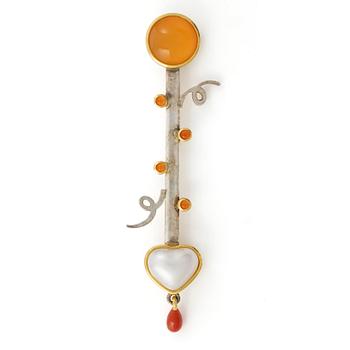
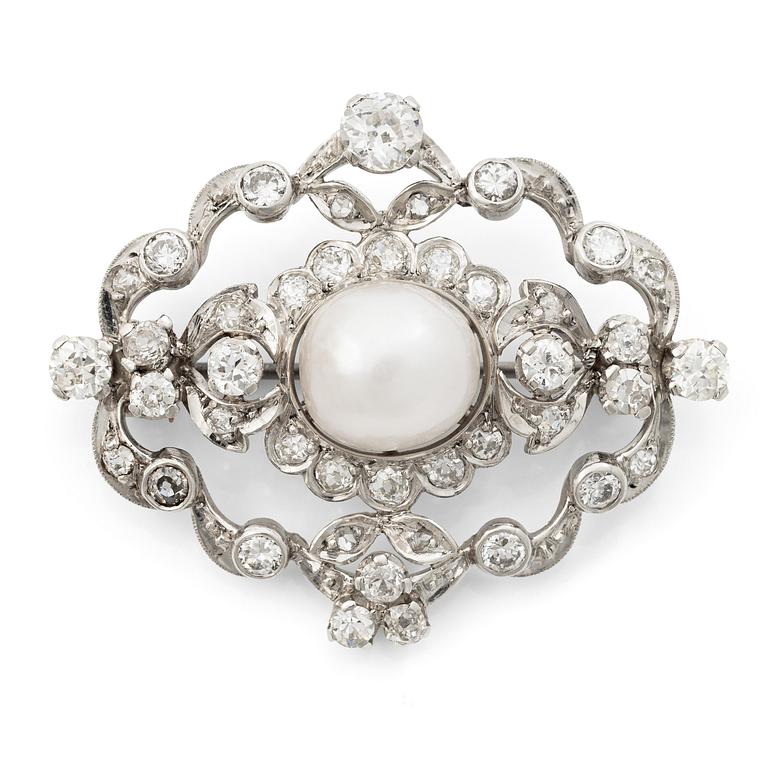
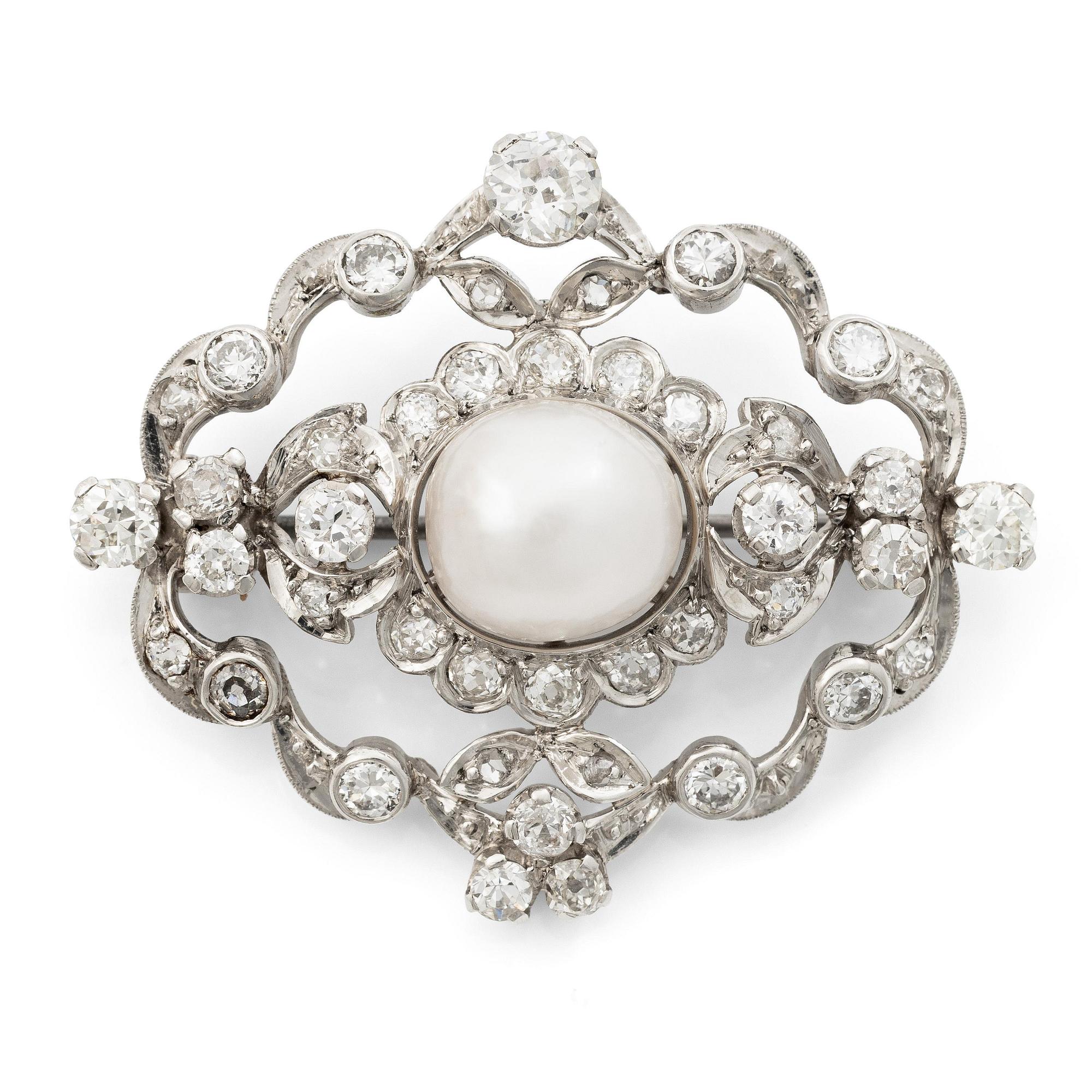
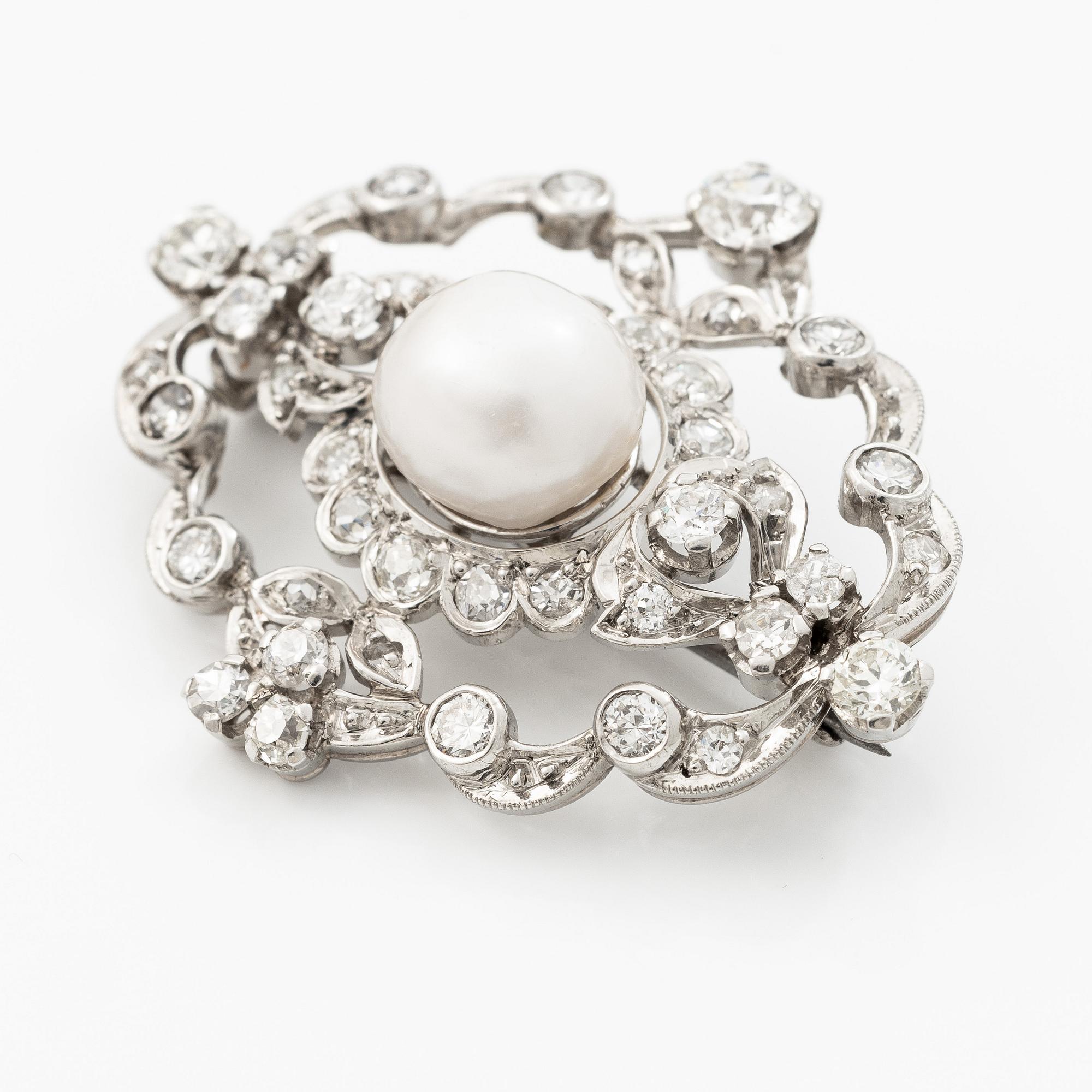
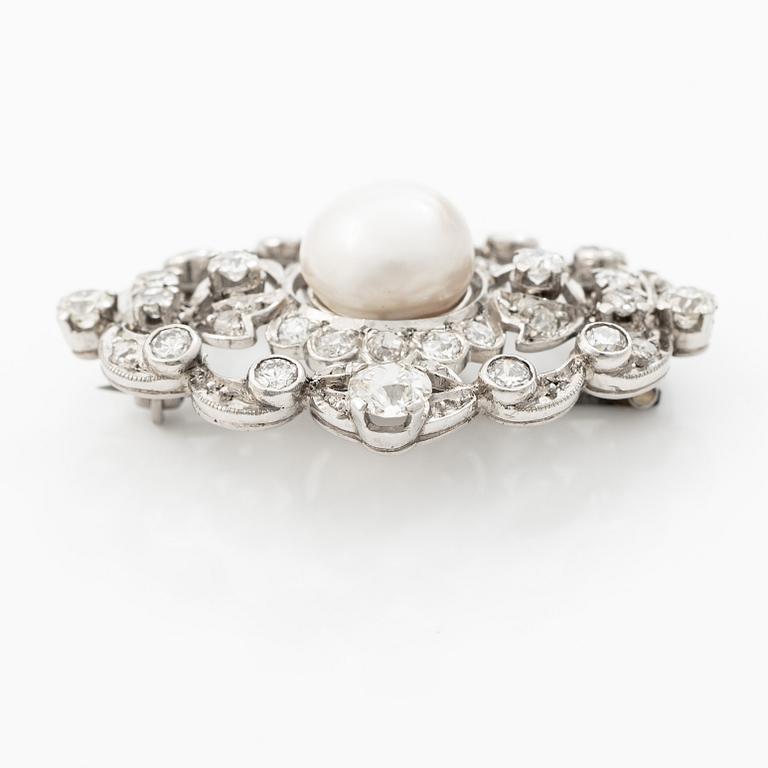
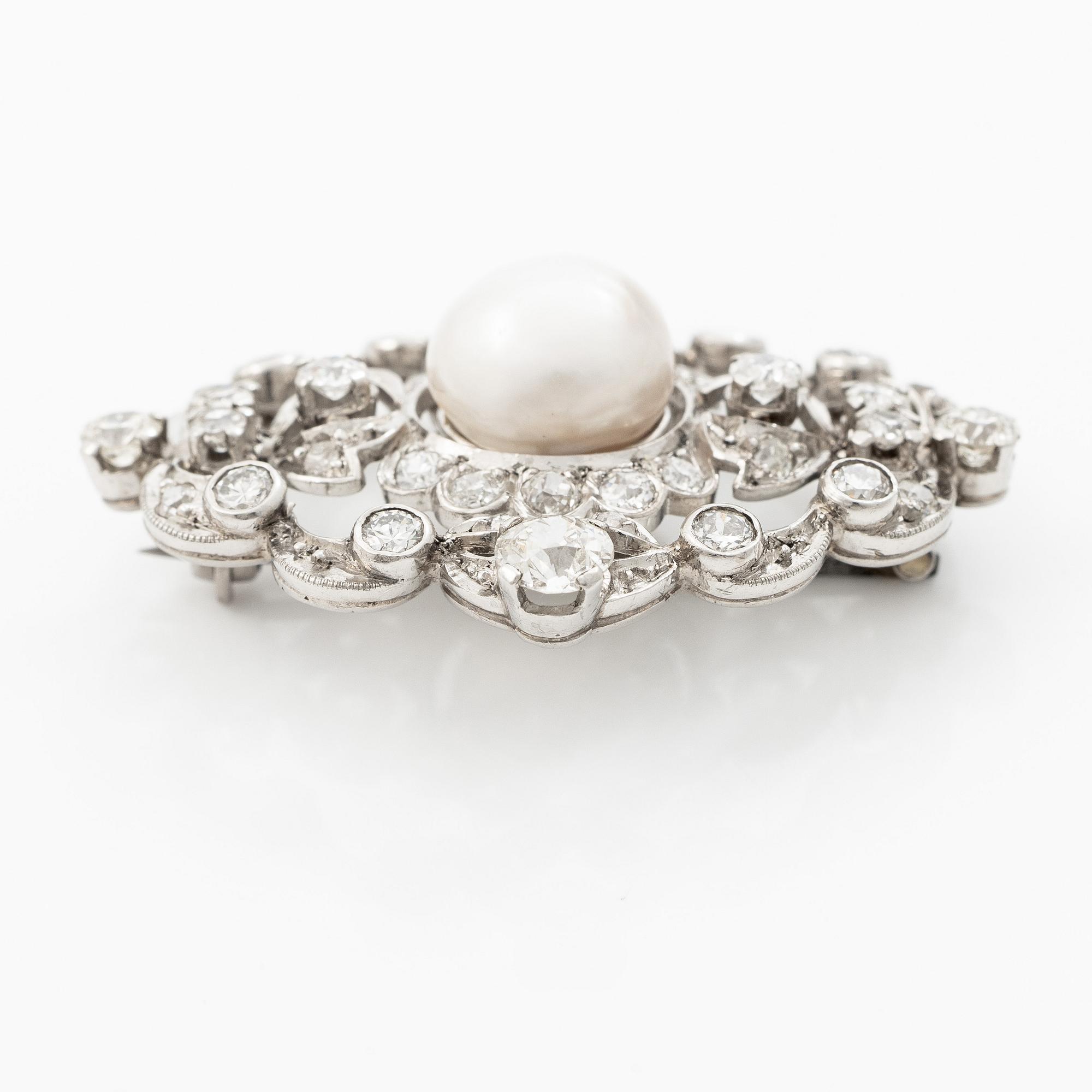
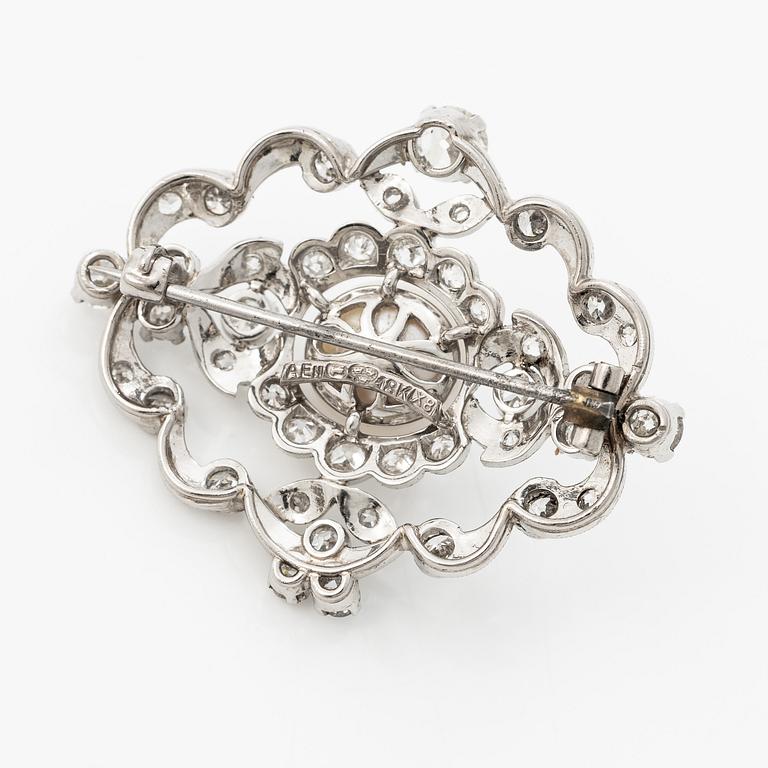
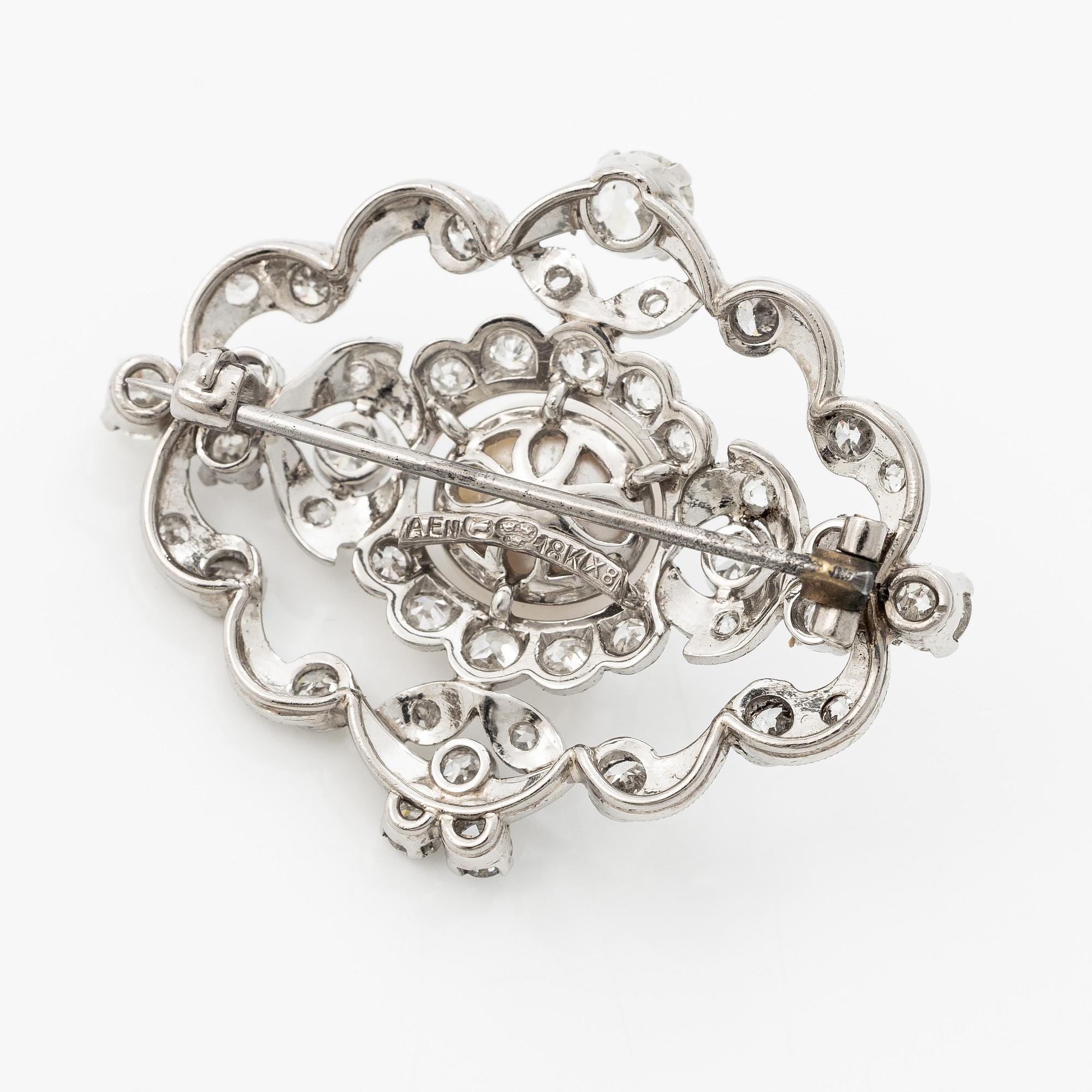
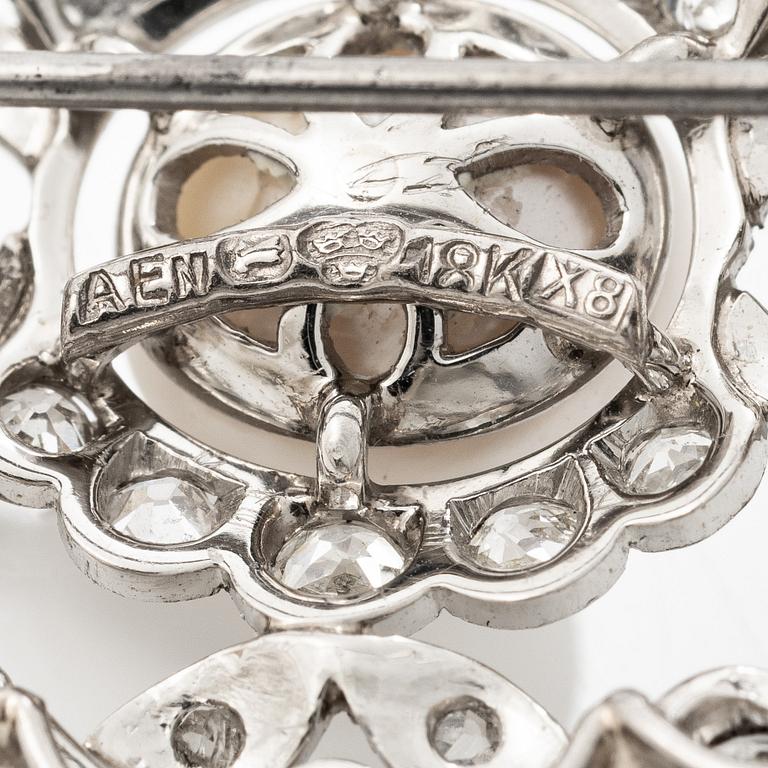
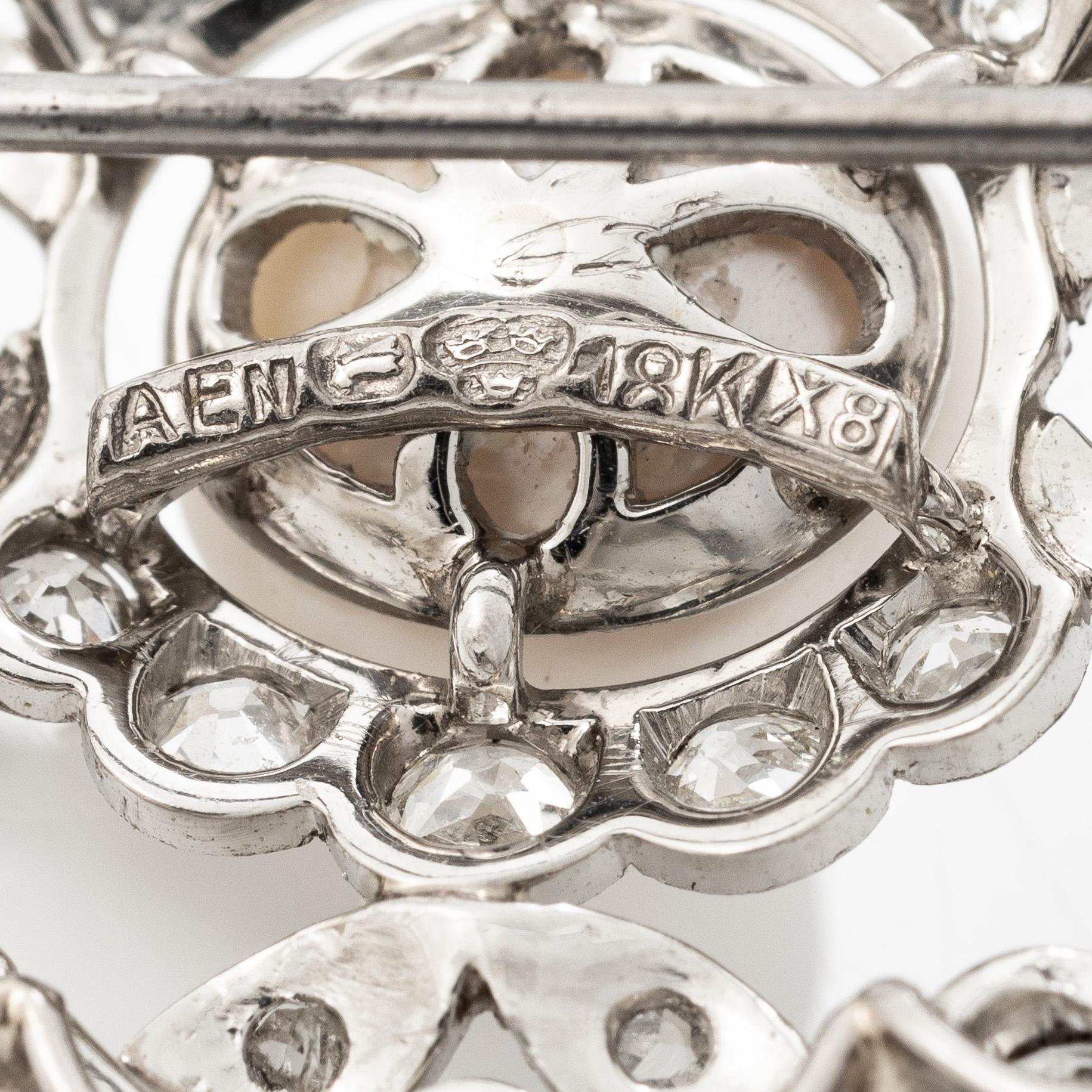
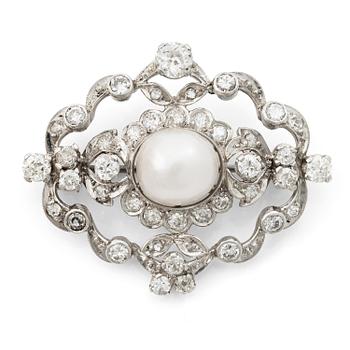
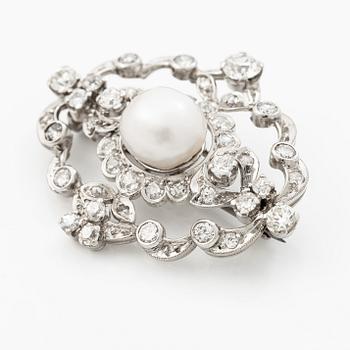
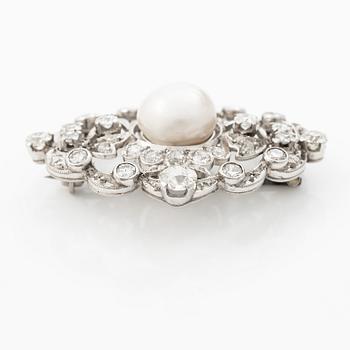
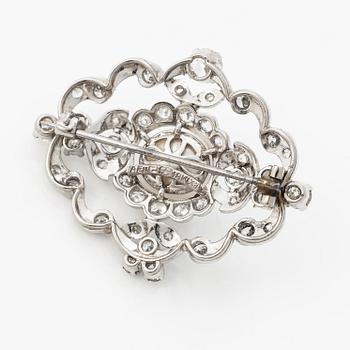
Brosch 18K vitguld med en pärla och gammal- och rosenslipade diamanter.
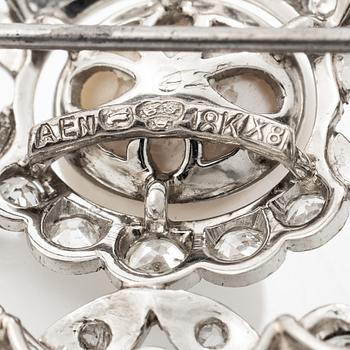
Pärla ca 9.2 X 8.8 mm, brosch 38 X 30 mm, totalvikt 10.4 g. Atelier Ajour, Stockholm 1948.
Övrig information
The history of the brooch dates back to antiquity, when early forms such as the Greek and Roman fibula were used to fasten garments. During the Middle Ages, brooches became increasingly decorative and were often associated with wealth, rank and religious devotion. Their importance as jewellery grew during the Renaissance and Baroque periods, when precious metals, enamel and gemstones were incorporated into increasingly elaborate designs.
In the 18th and 19th centuries, the brooch became an important element of European dress and jewellery, reflecting the prevailing styles of the Georgian, Victorian and later Belle Époque periods. Brooches were worn not only as ornaments but also as sentimental and commemorative jewels, frequently incorporating portraits, gemstones or motifs with personal significance. Throughout the 20th century, the form continued to evolve, from Art Nouveau and Art Deco to modernist designs, while retaining its enduring role as one of jewellery's most versatile and expressive forms.
För konditionsrapport kontakta specialist

Vad kostar transporten?
Andra har även tittat på