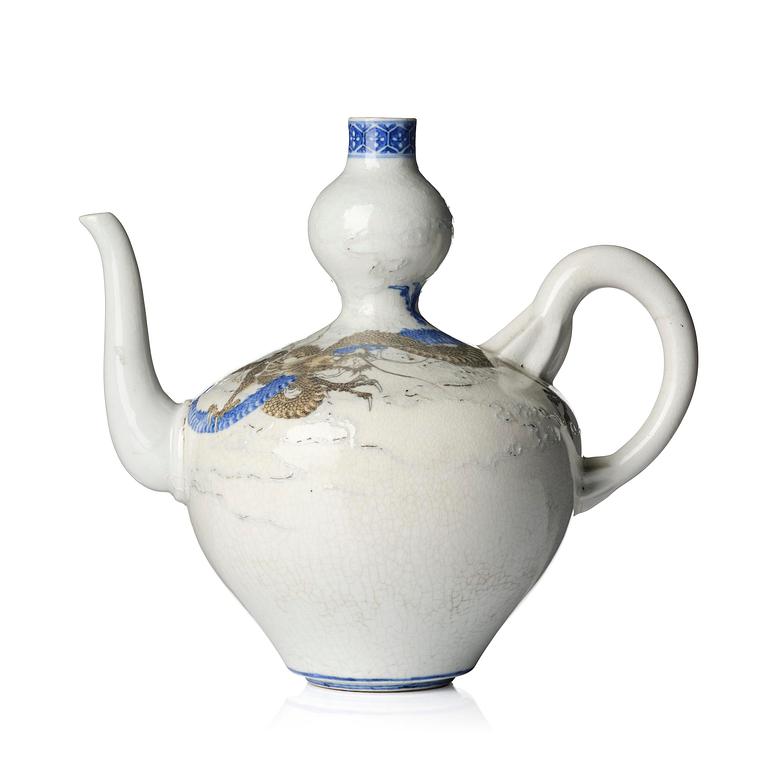
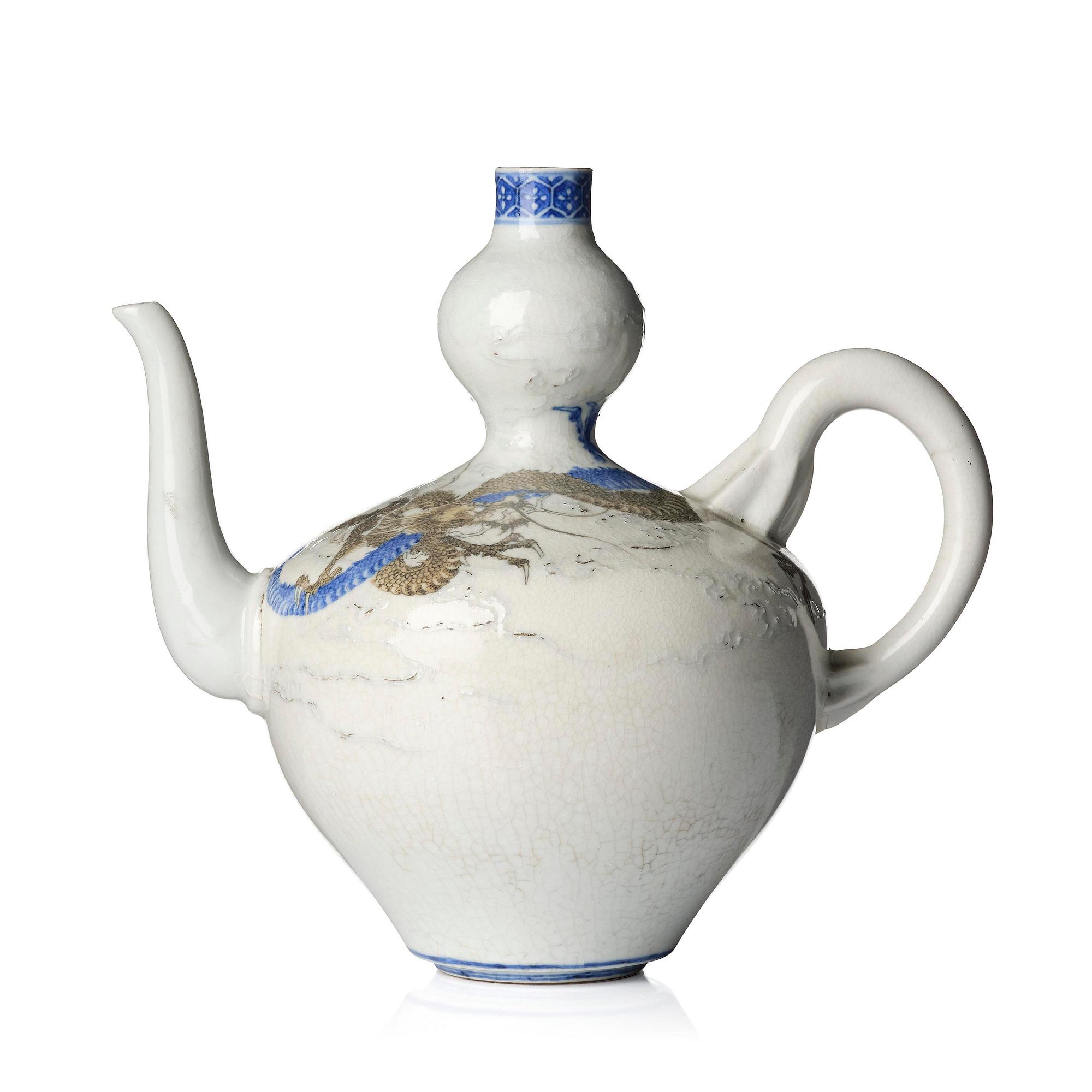
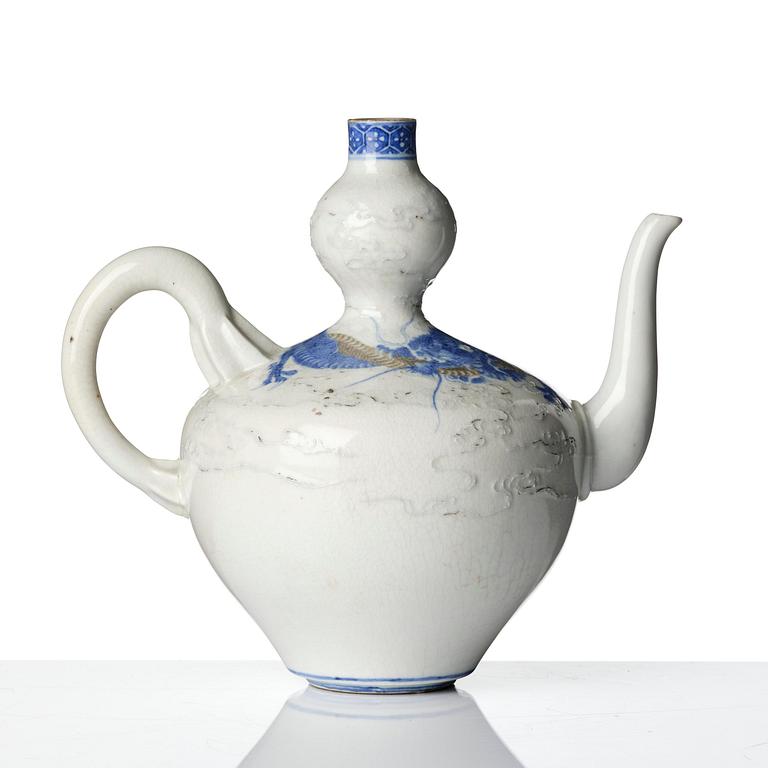
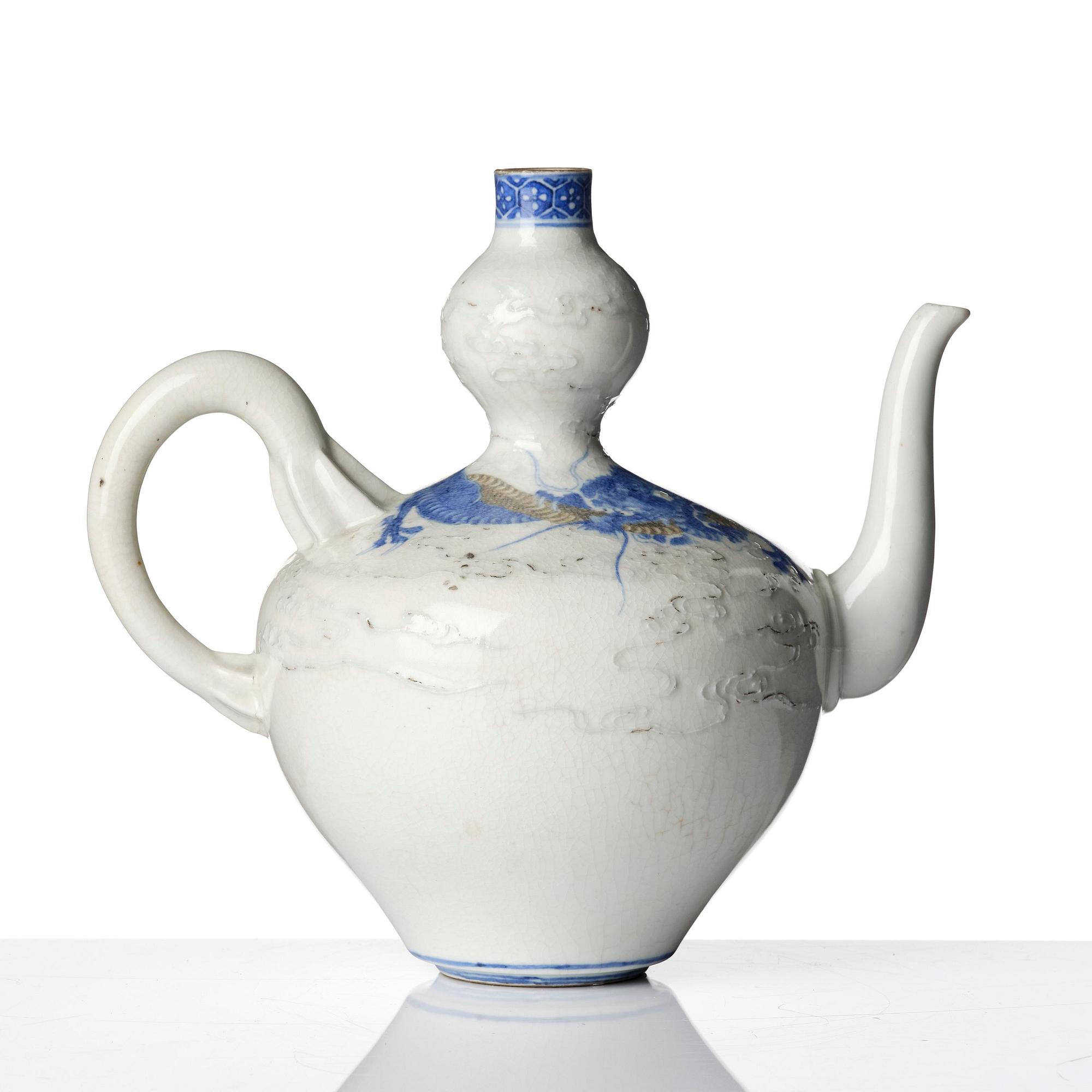
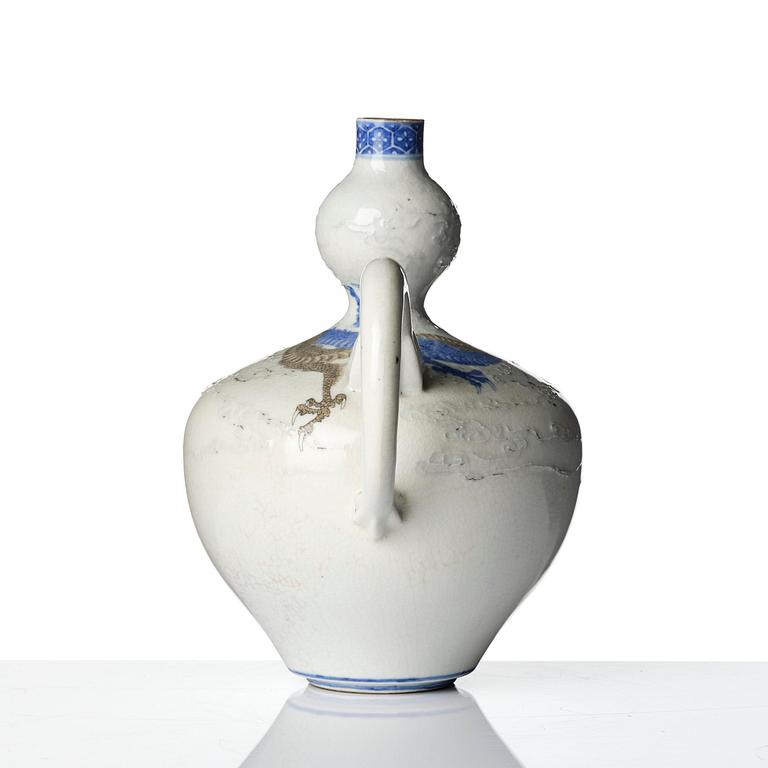
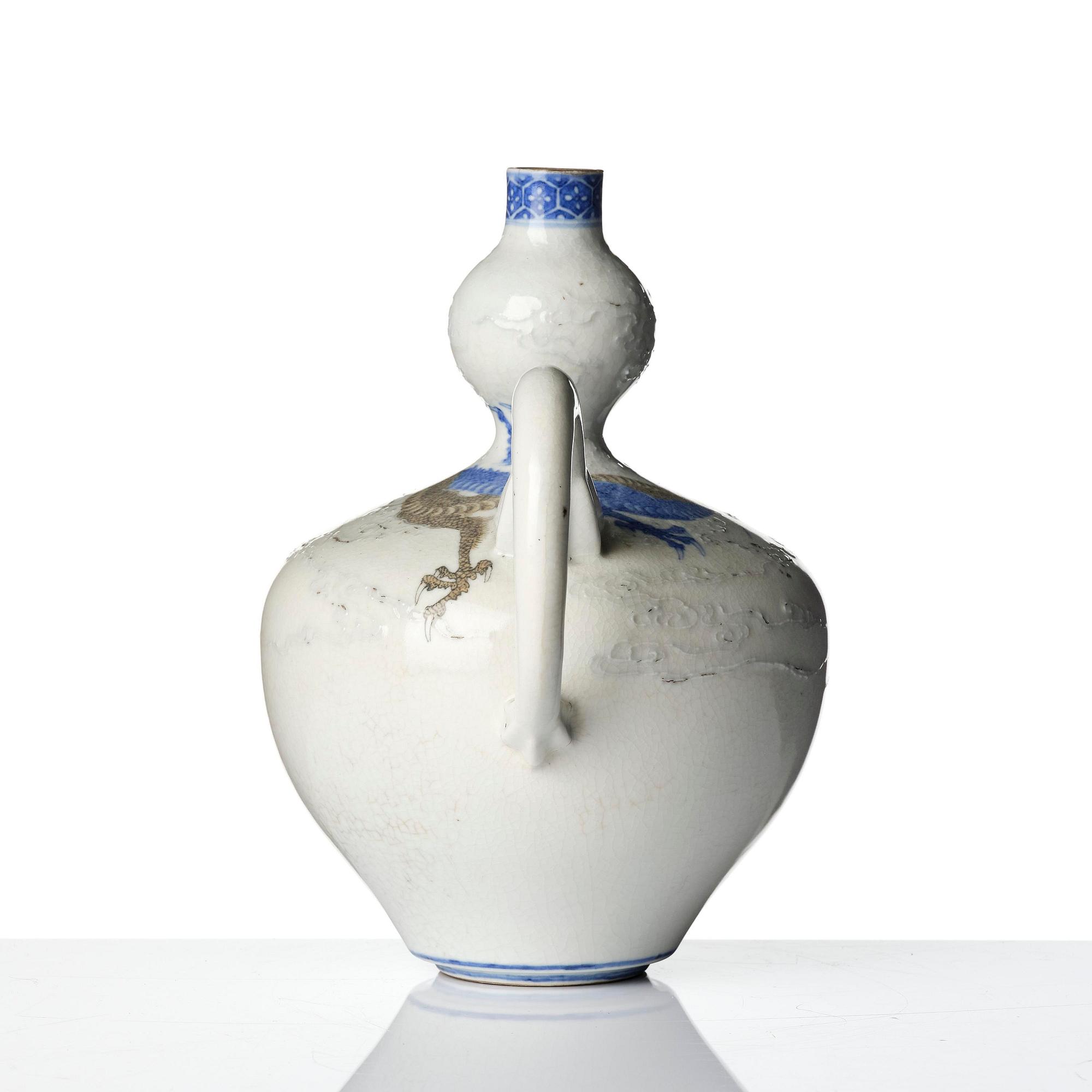
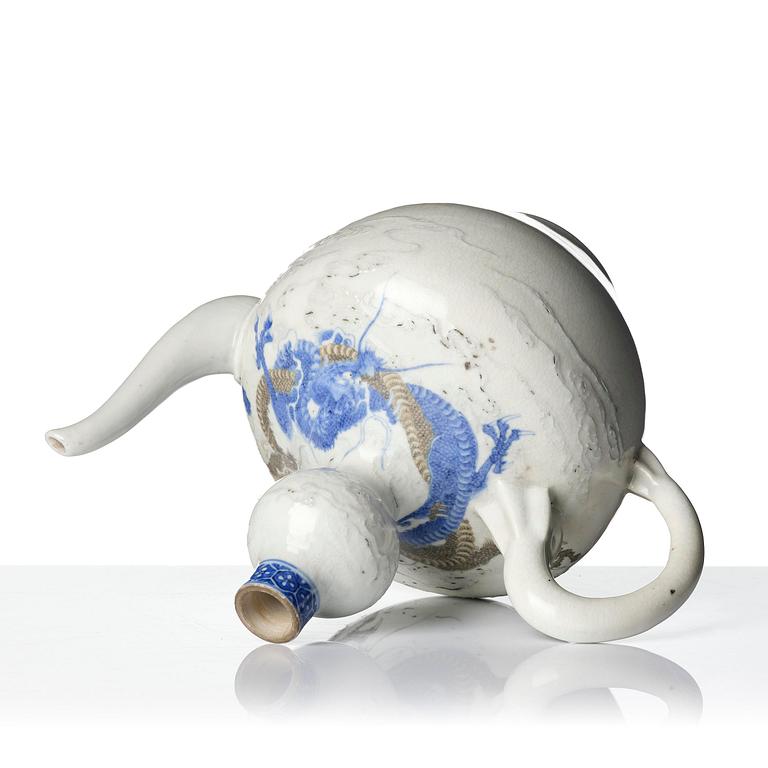
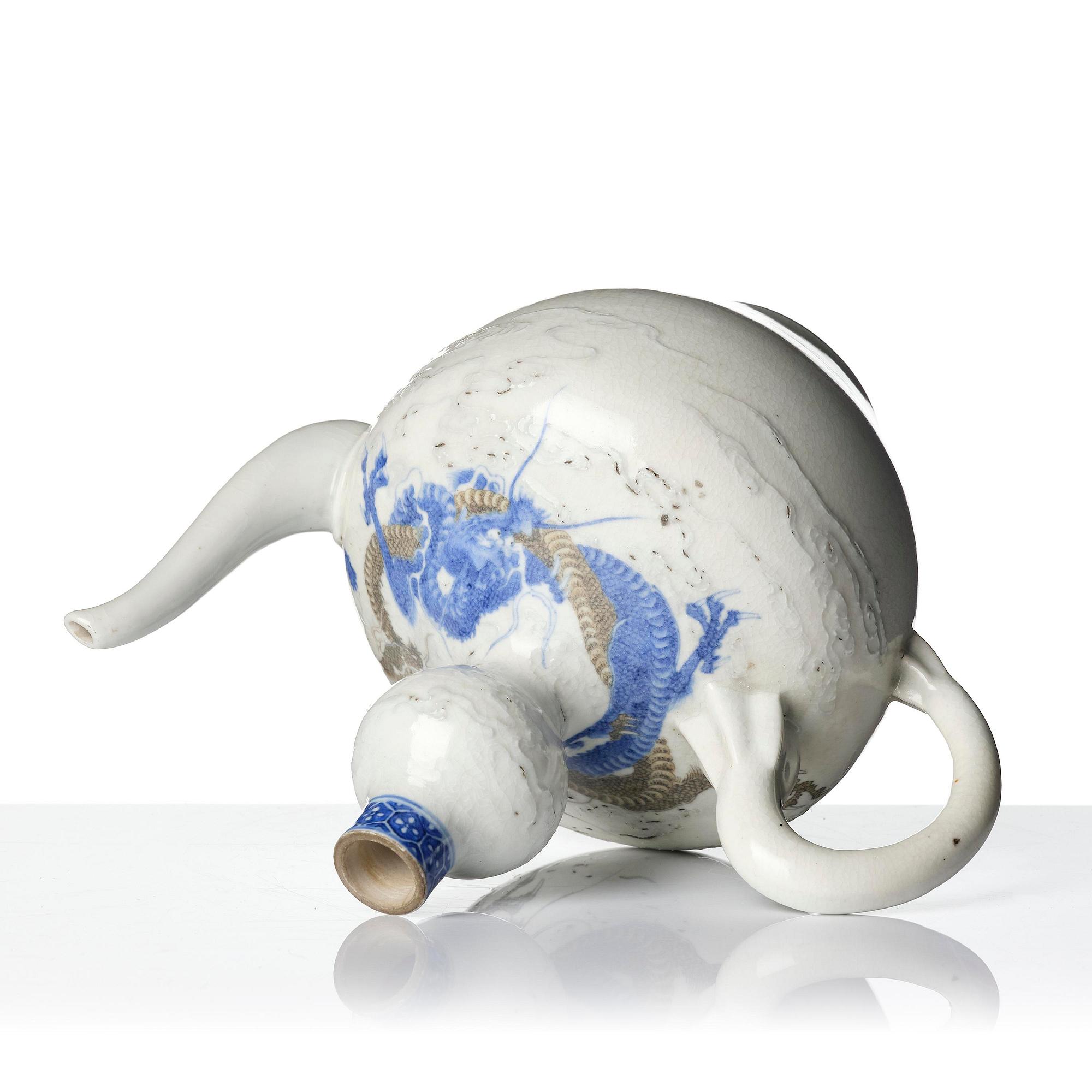
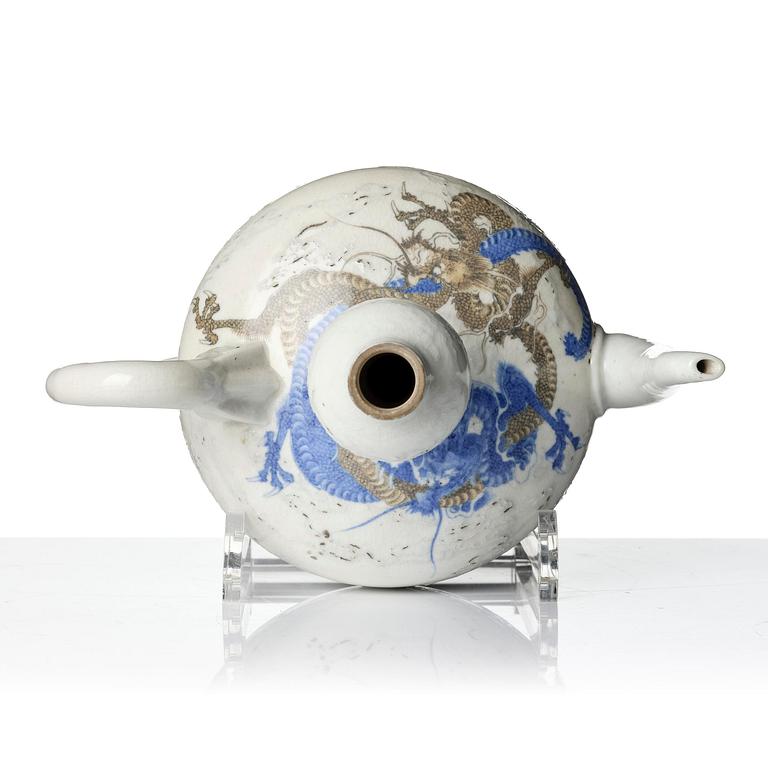
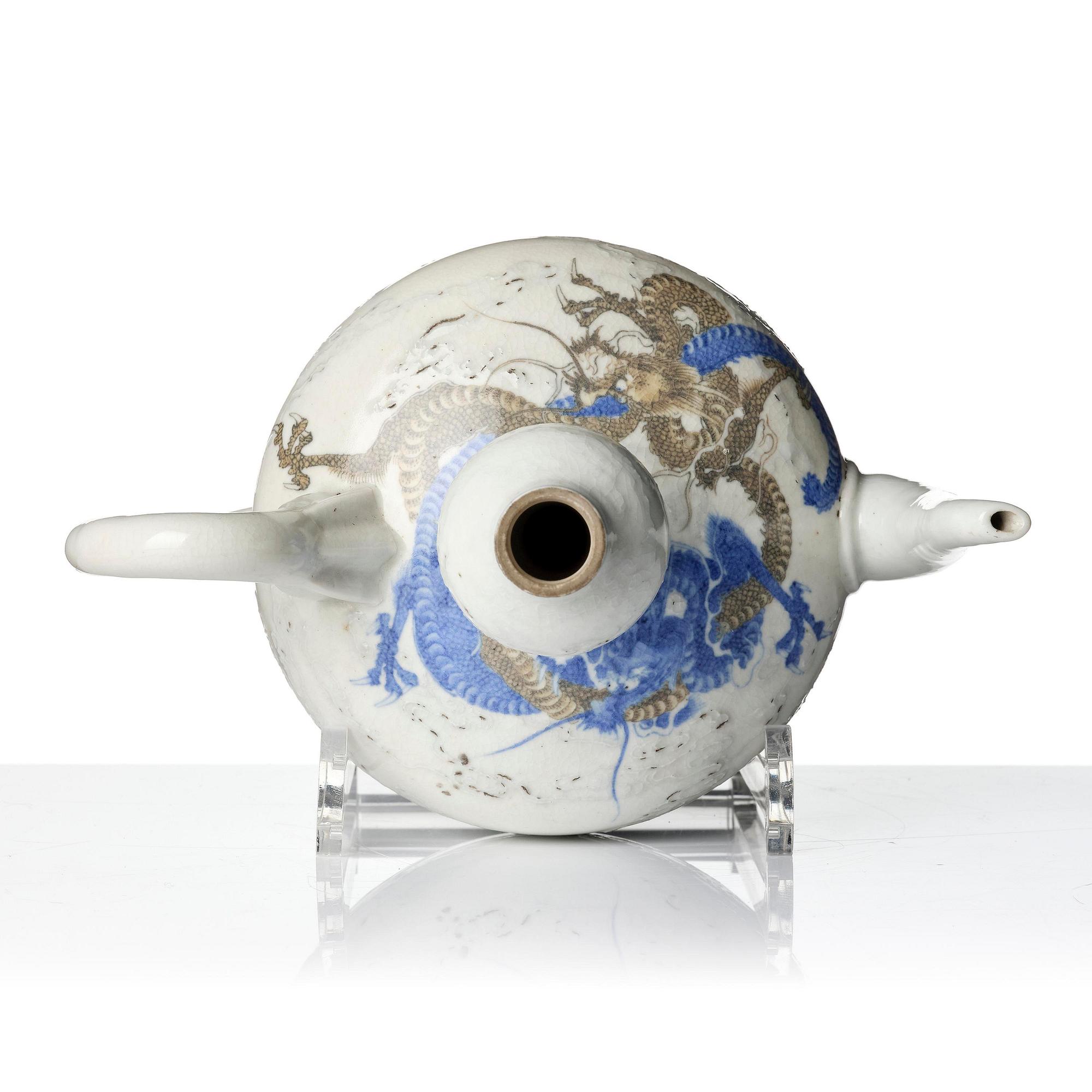
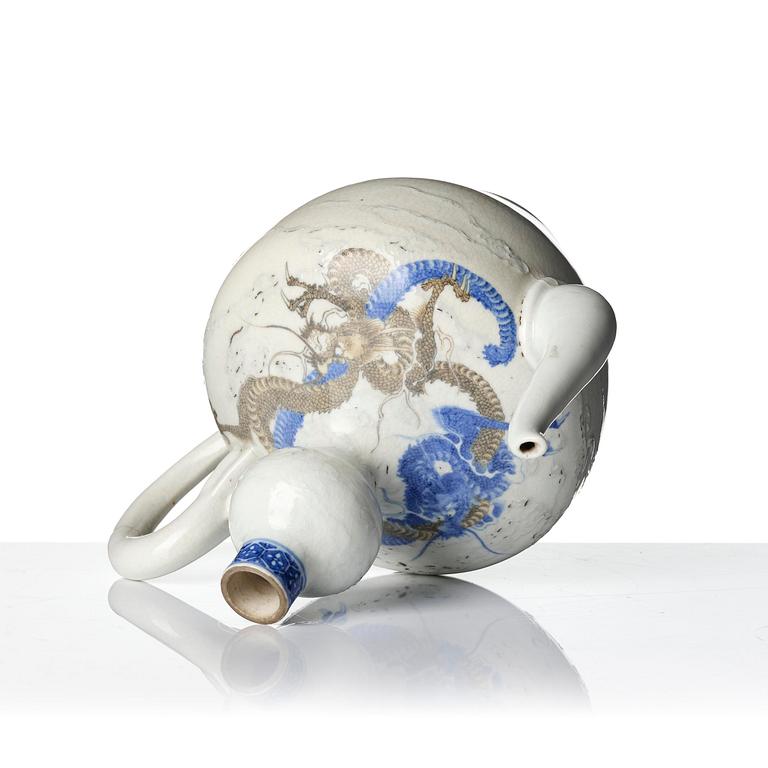
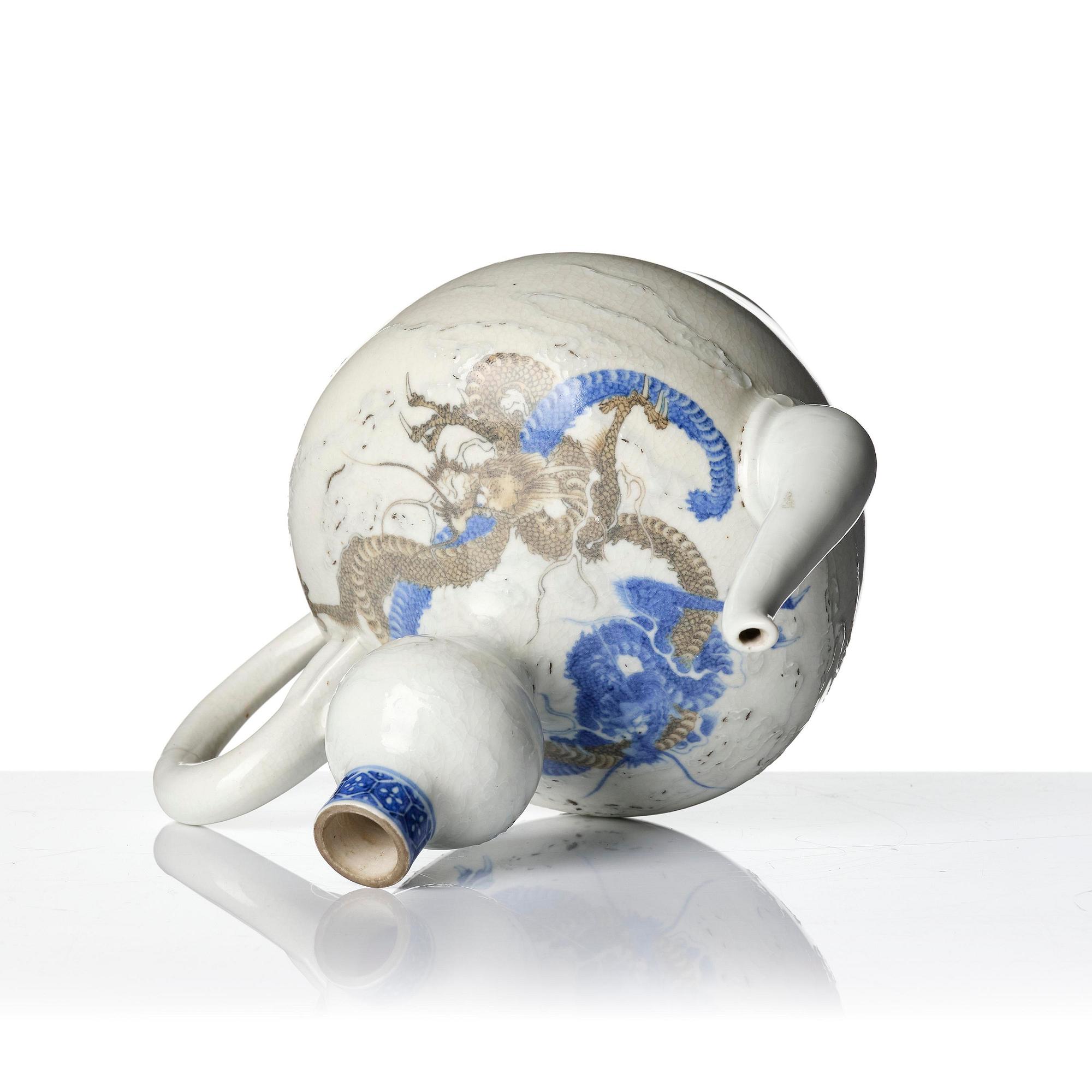
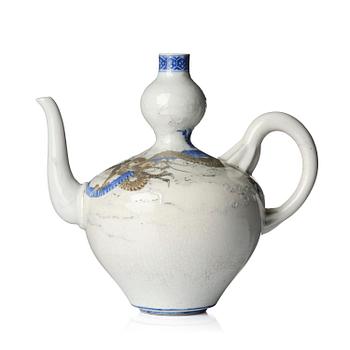
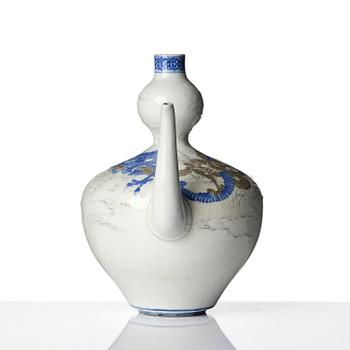
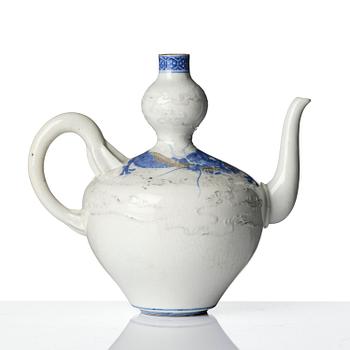
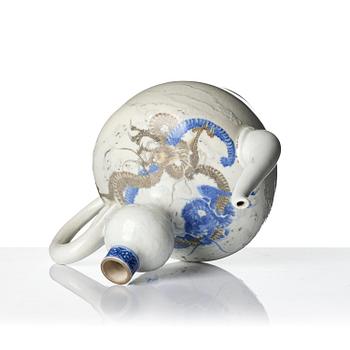
Tekanna, porslin. Japan, Meiji (1868-1912).
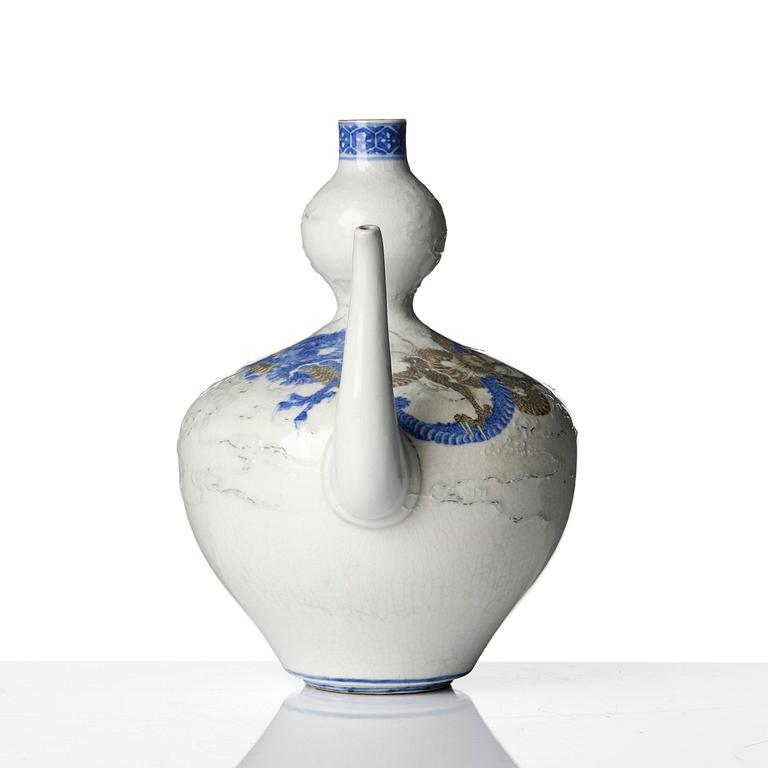
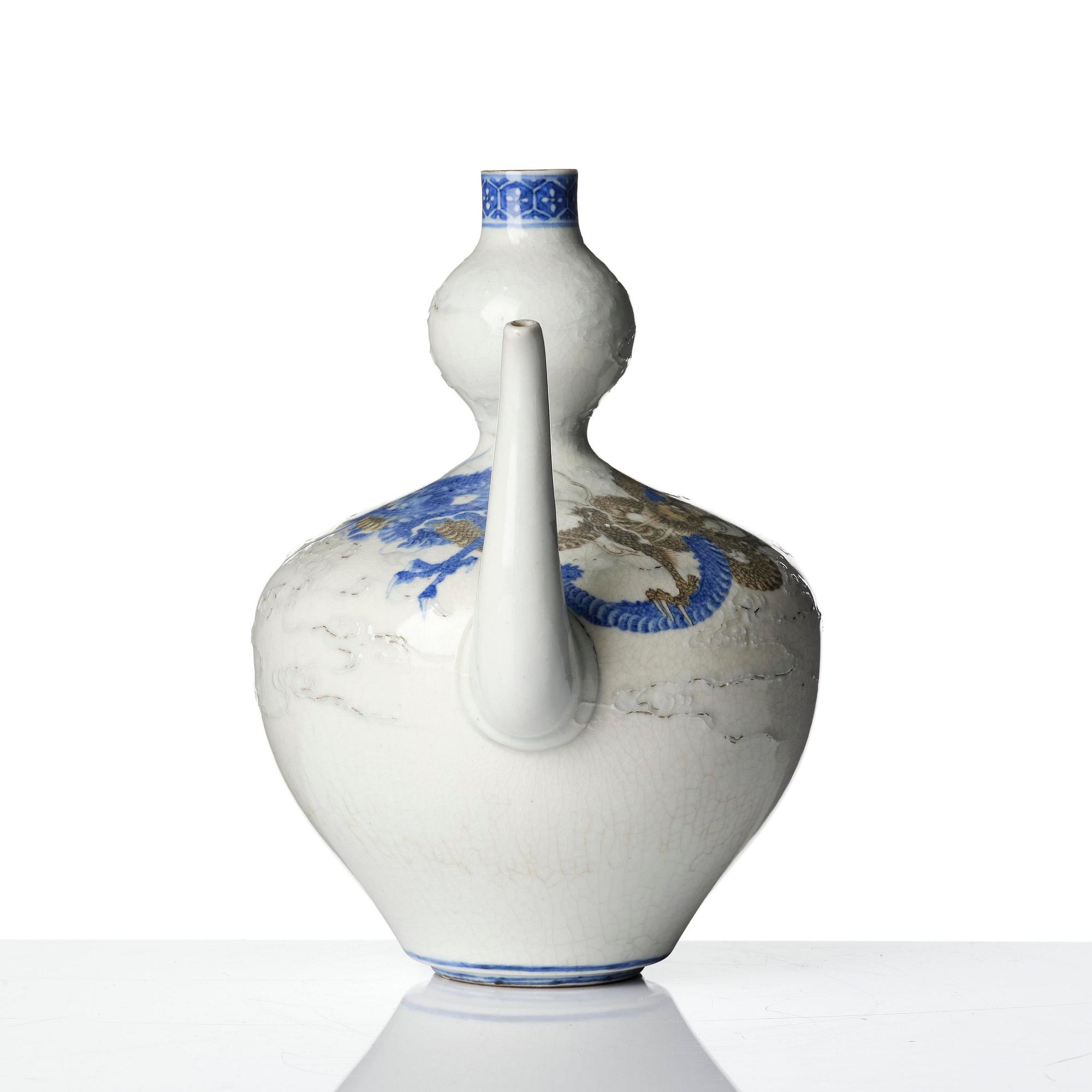
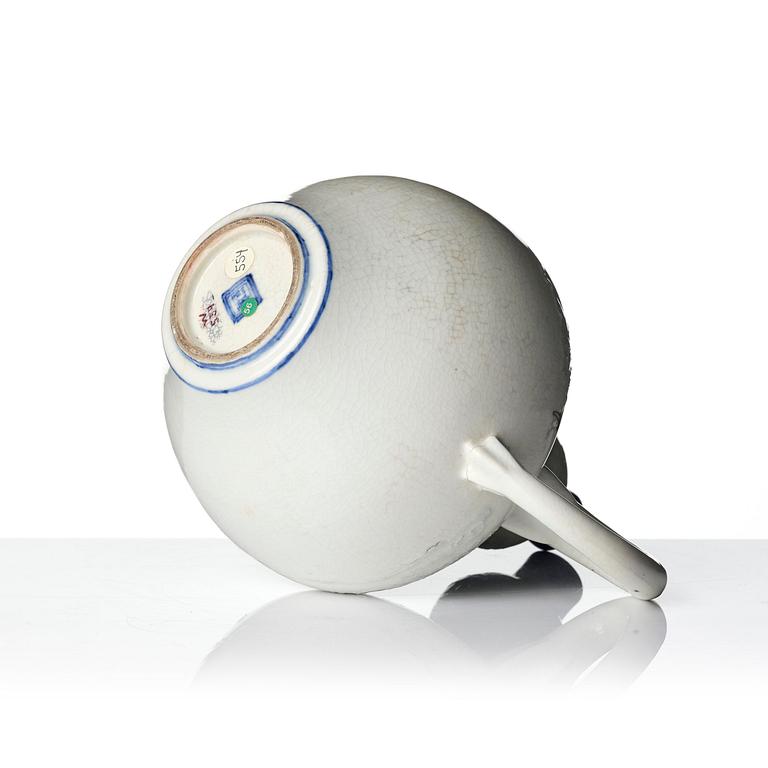
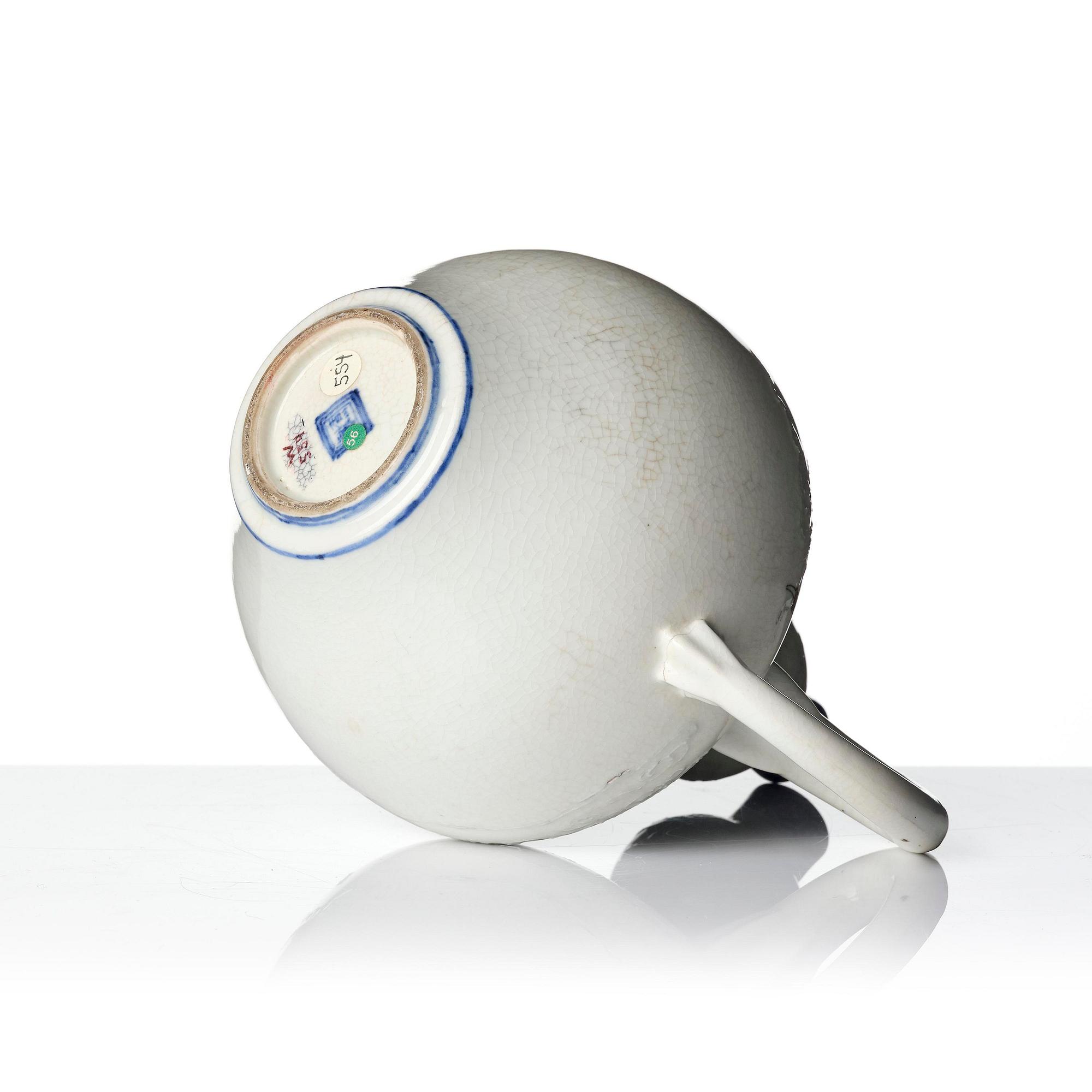
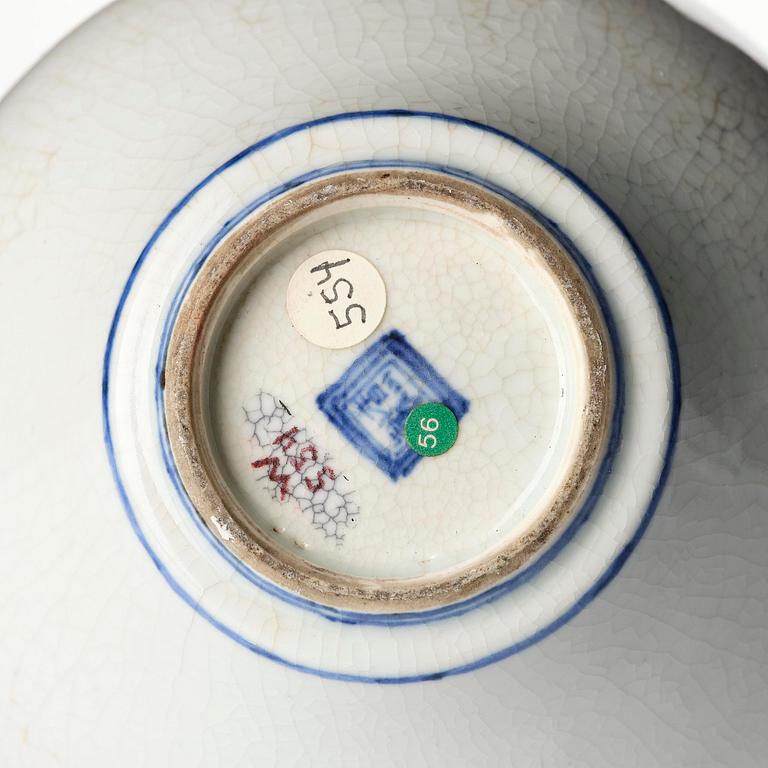
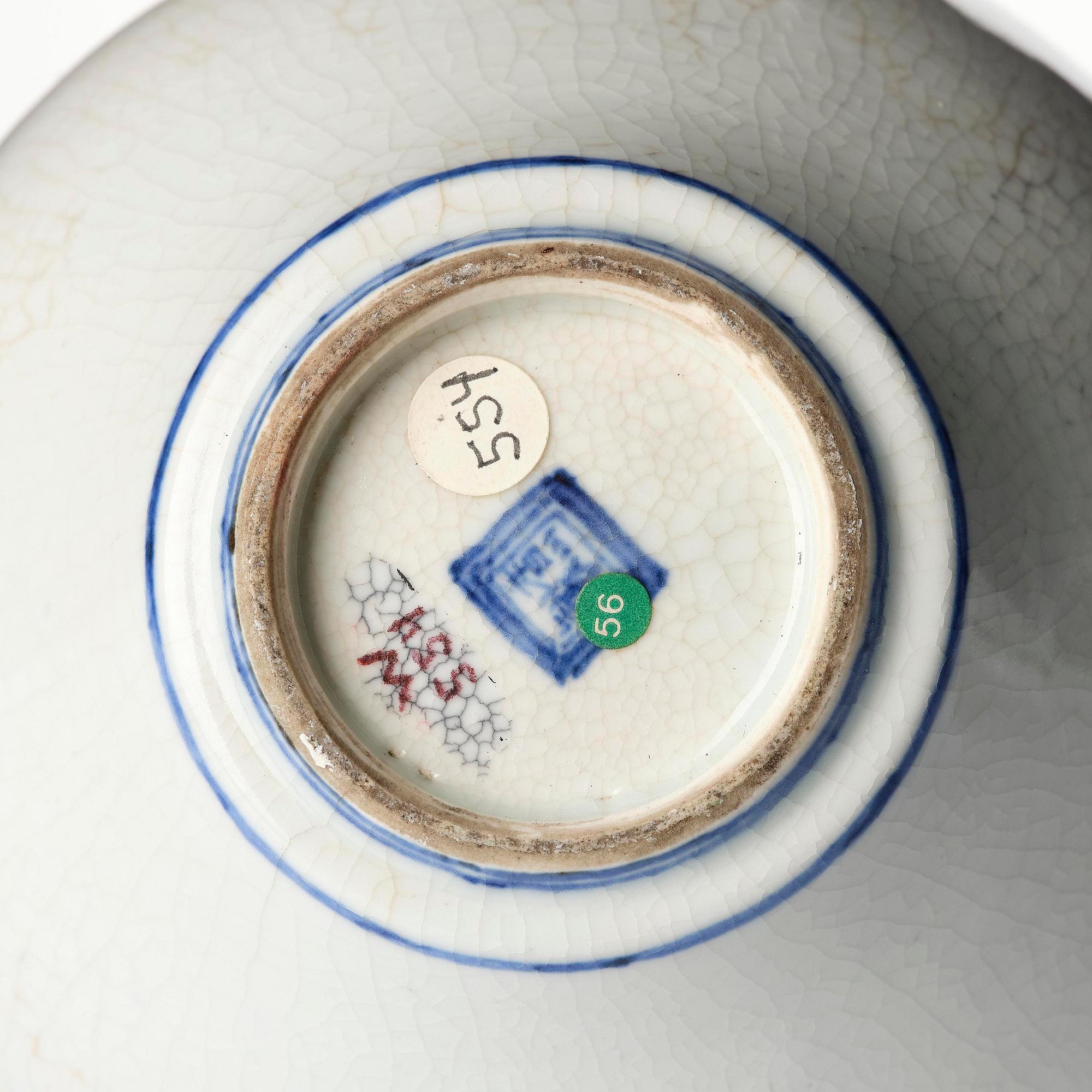
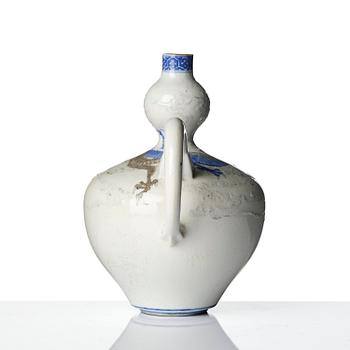
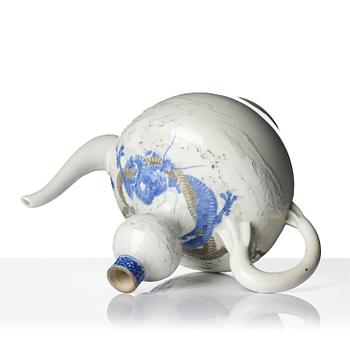
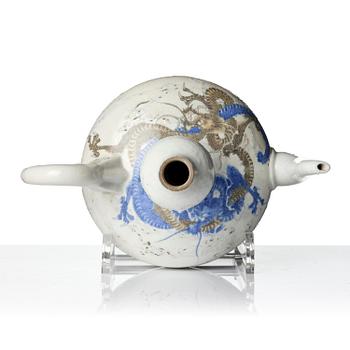
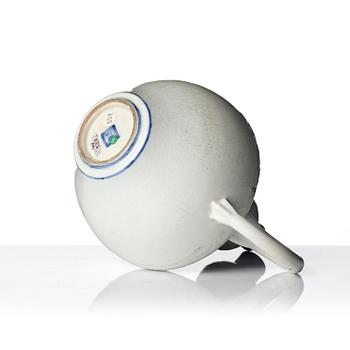
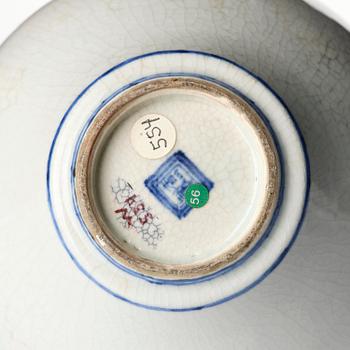
Makuzo Kozan I (Miyagawa Toransuke 1842-1916). Sigillmärke i underglasyrblått i botten. Uppsvängd pip, kalebassformad, med kraftig hänkel. Dekor i relief samt i underglasyrblått och rött. Höjd 20,5 cm.
Lock saknas. Krackelyr.
Proveniens
The collection of professor Gunnar Wallquist (1894‑1971). Collectors inventory no W554. 56.
Gunnar Wallquist graduated in 1917 at the Royal Institute of Technology in Stockholm, he became a professor at this institution and was the Principal of the School of Mining and Metallurgy, he had a great interest in Art and formed a fine collection in his villa near the Institute. It was perhaps his connection to mining and relation to Johan Gunnar Andersson who also got him in to collecting Chinese Works of Art. His home at Villagatan 19, Stockholm, was donated to the Royal Institute of Technology where it still is used for representational purposes.
Utställningar
Compare with a tea pot in the collection of the Metropolitan Museum of Art, New York, Object no 93.3.364 a och b. Gift from Charles Stewart Smith 1896.
Litteratur
This is the starting period when the artists departed from his high-relief and gold gilt period and started focusing on making porcelain pieces with underglaze paint and experimented new colours. The ewer form is also relatively rare in the artist's survived repertoire compared to other forms.
The piece takes its shape from the prototype Chinese ewer form with a long neck extending out of a bulbous body, a slender spout with a pointy mouth and an elegant handle. The white surface was finely decorated with two copper red dragons, one slithering upward, the other downward, amidst iron-brown ribbons of clouds and above the waves. The clouds extend and wraps both the sprout and handle. The mouth is circumvented with a blue band of lotus leaf motif. The base is signed in underglaze blue seal "Great Nippon, Made by Kozan"
Övrig information
Miyagawa Kōzan I (宮川香山) (1842–1916) was a Japanese ceramist. He was appointed artist to the Japanese Imperial household and was one of the major potters of the Meiji Era. From 1876 to 1913, Kōzan won prizes at 51 exhibitions, including the World's Fair and the National Industrial Exhibition. His name was originally Miyagawa Toranosuke. Outside Japan he is also known as Makuzu Kōzan.
För konditionsrapport kontakta specialist

Vad kostar transporten?
Andra har även tittat på