


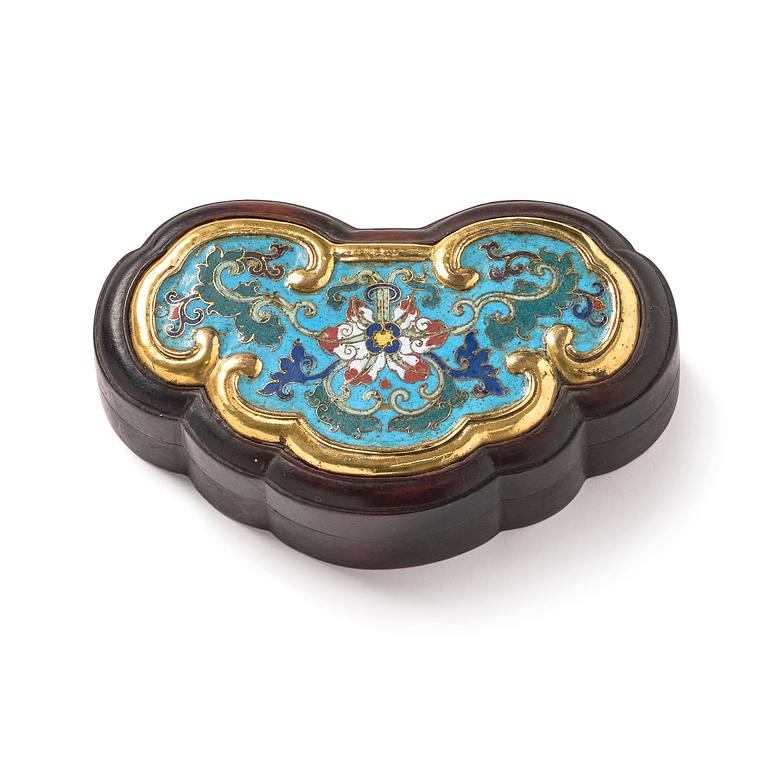
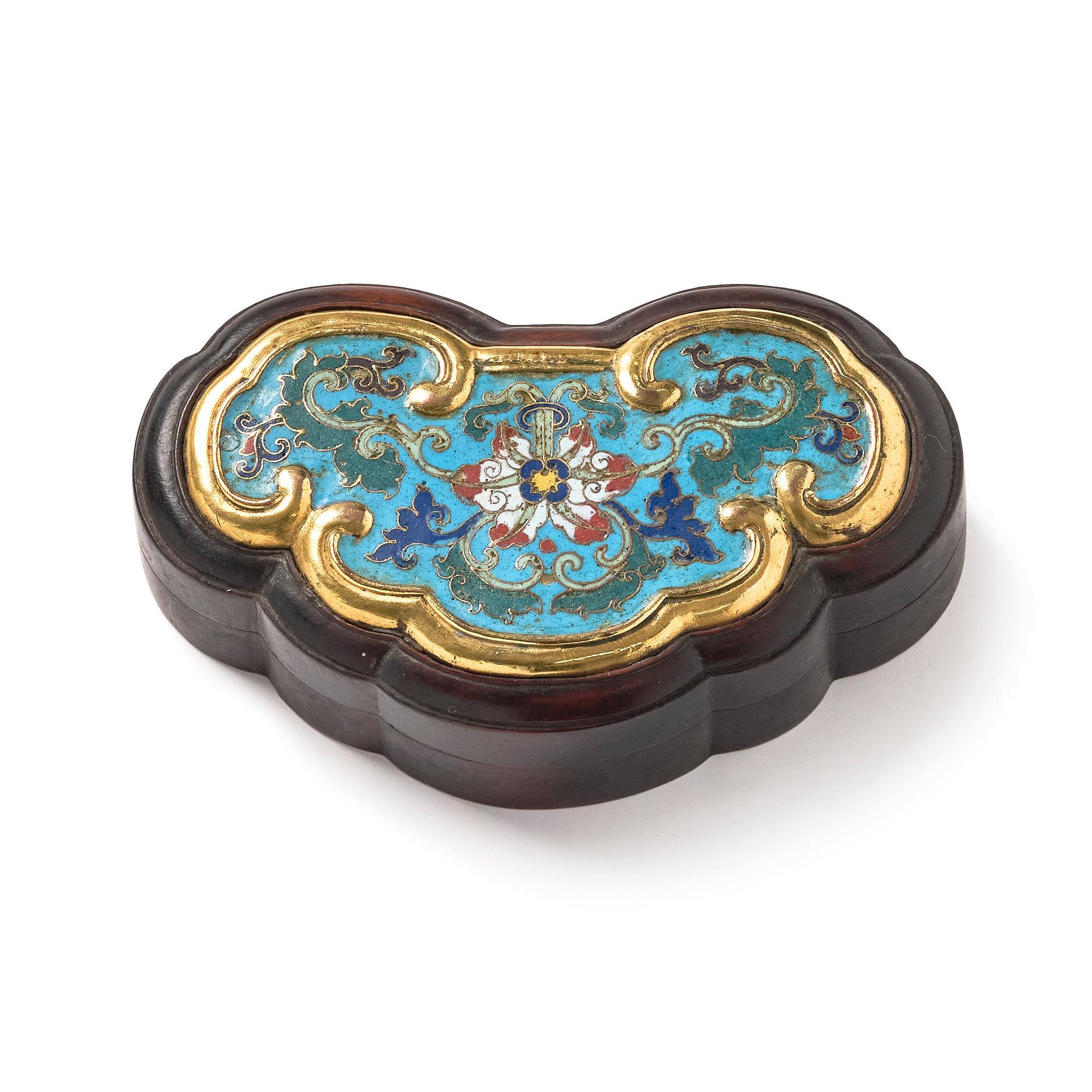
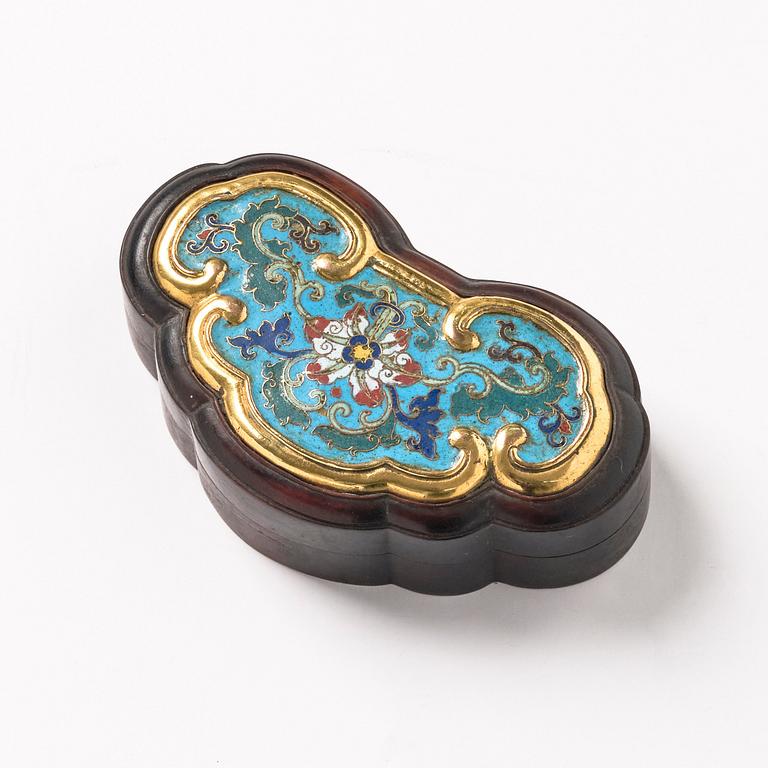
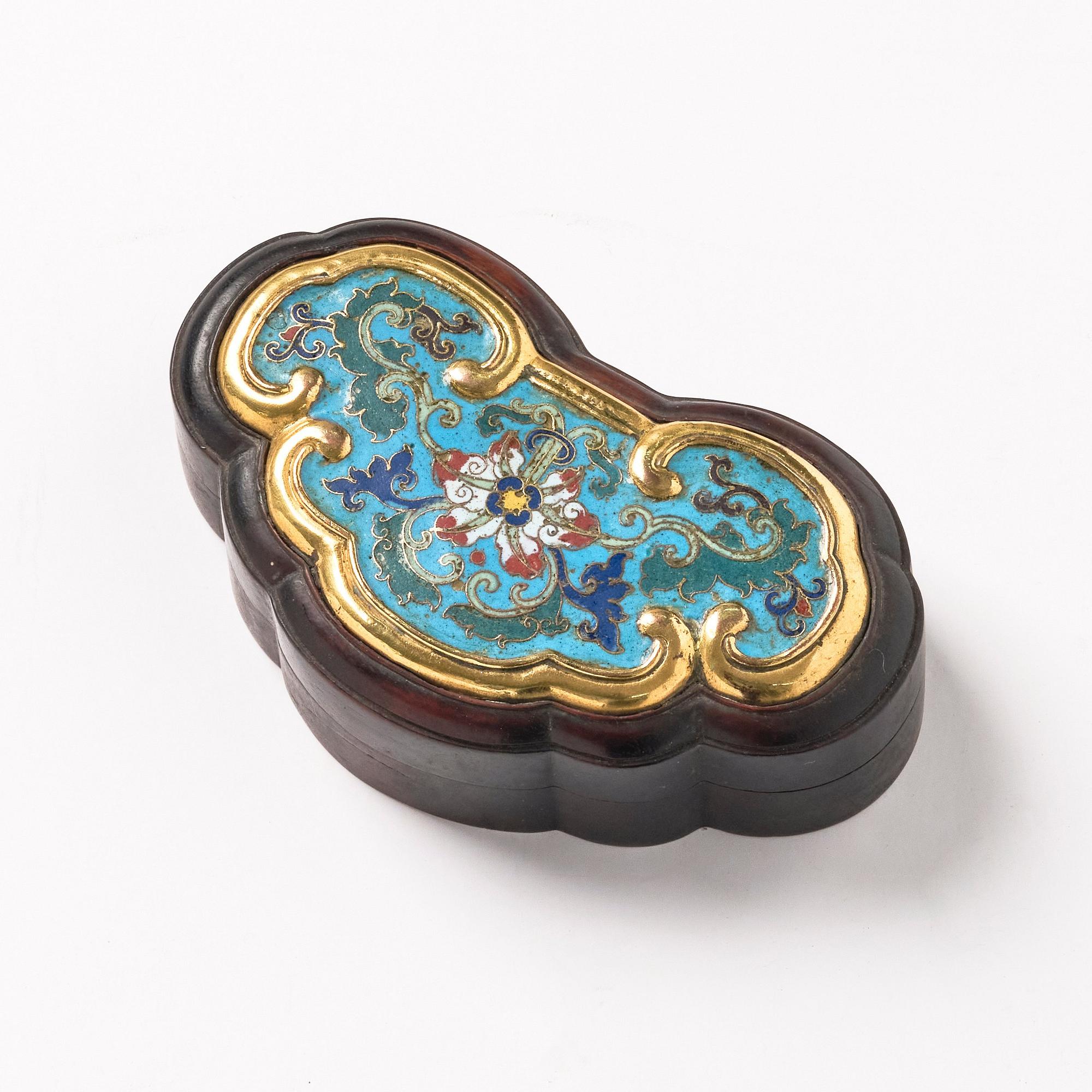
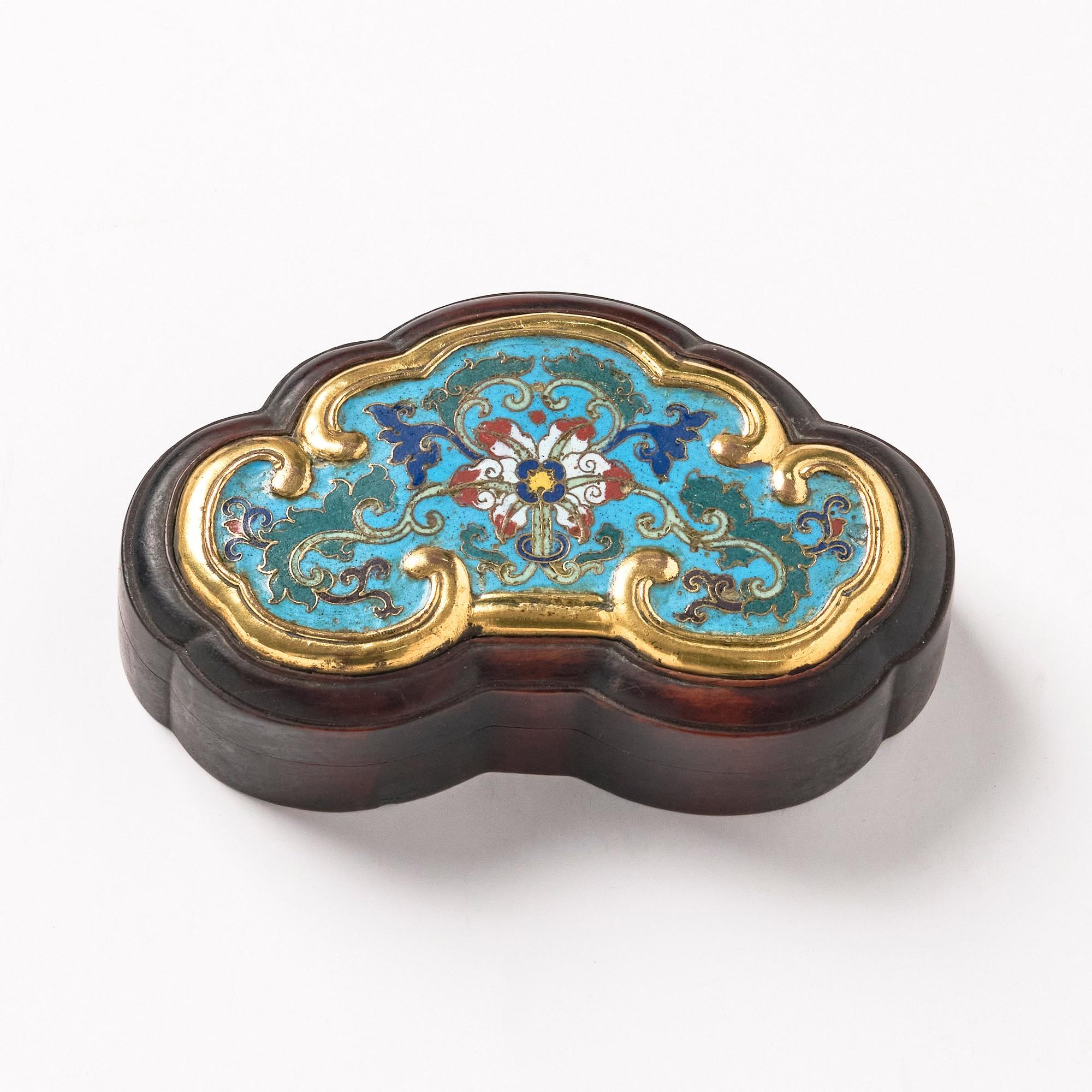
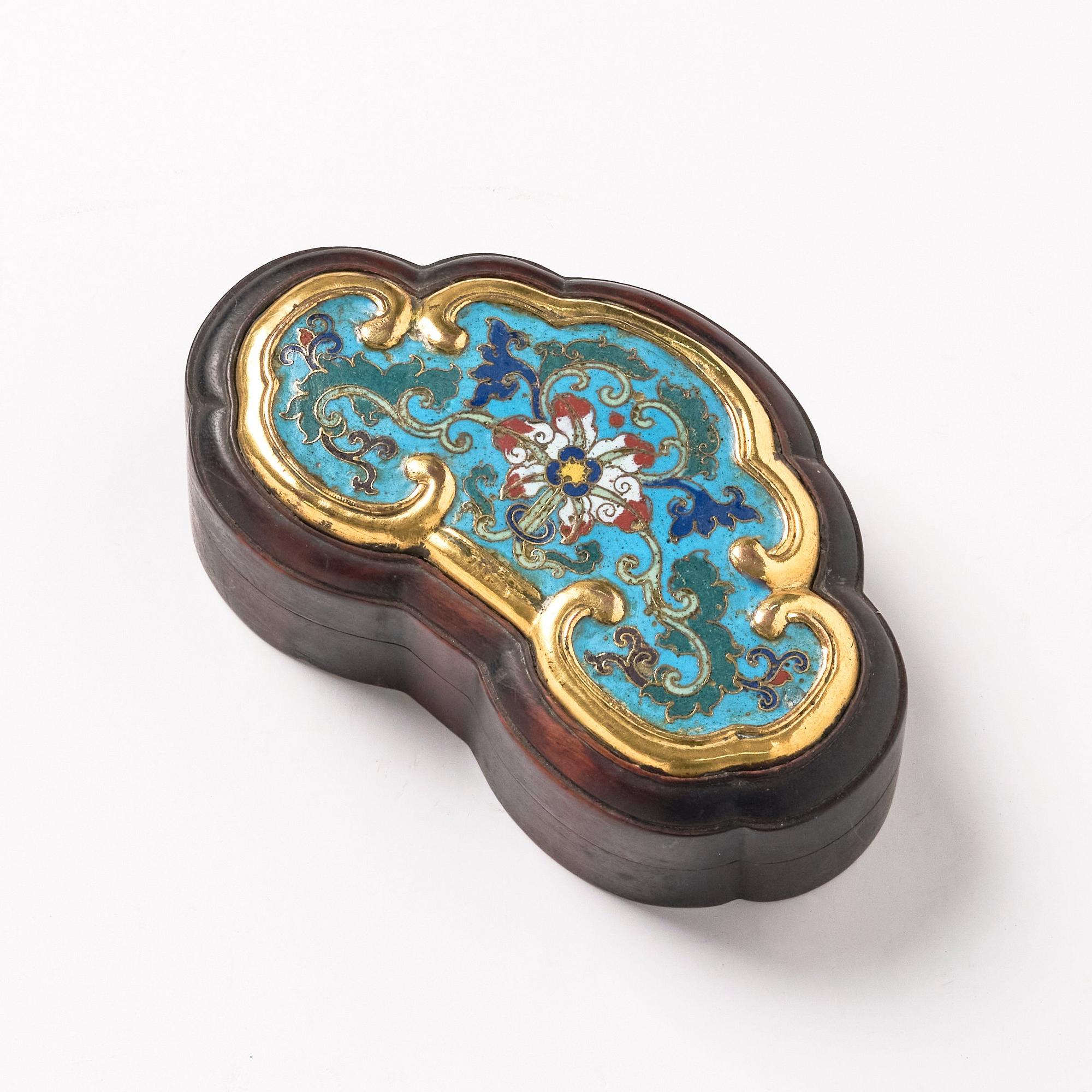
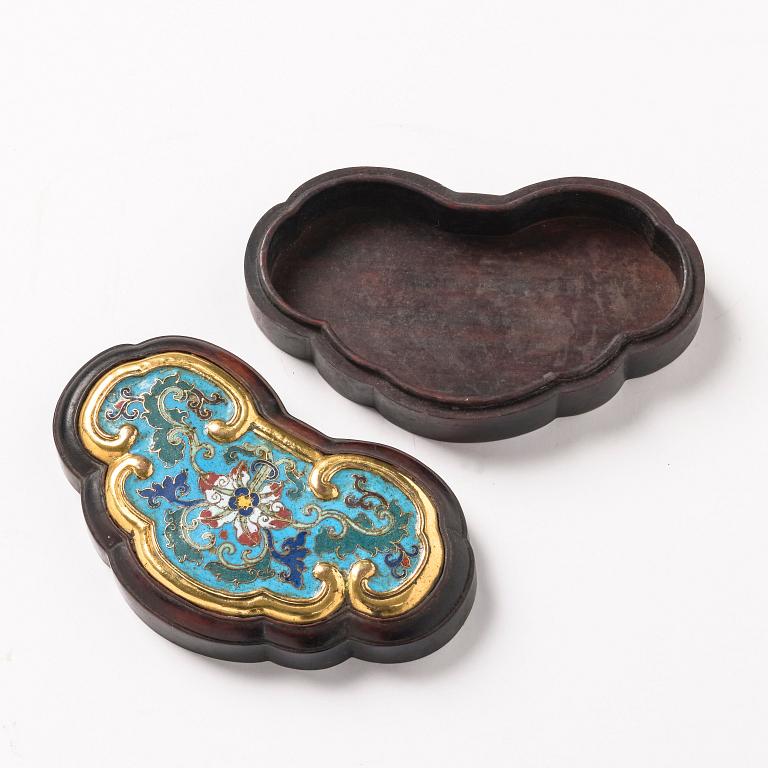
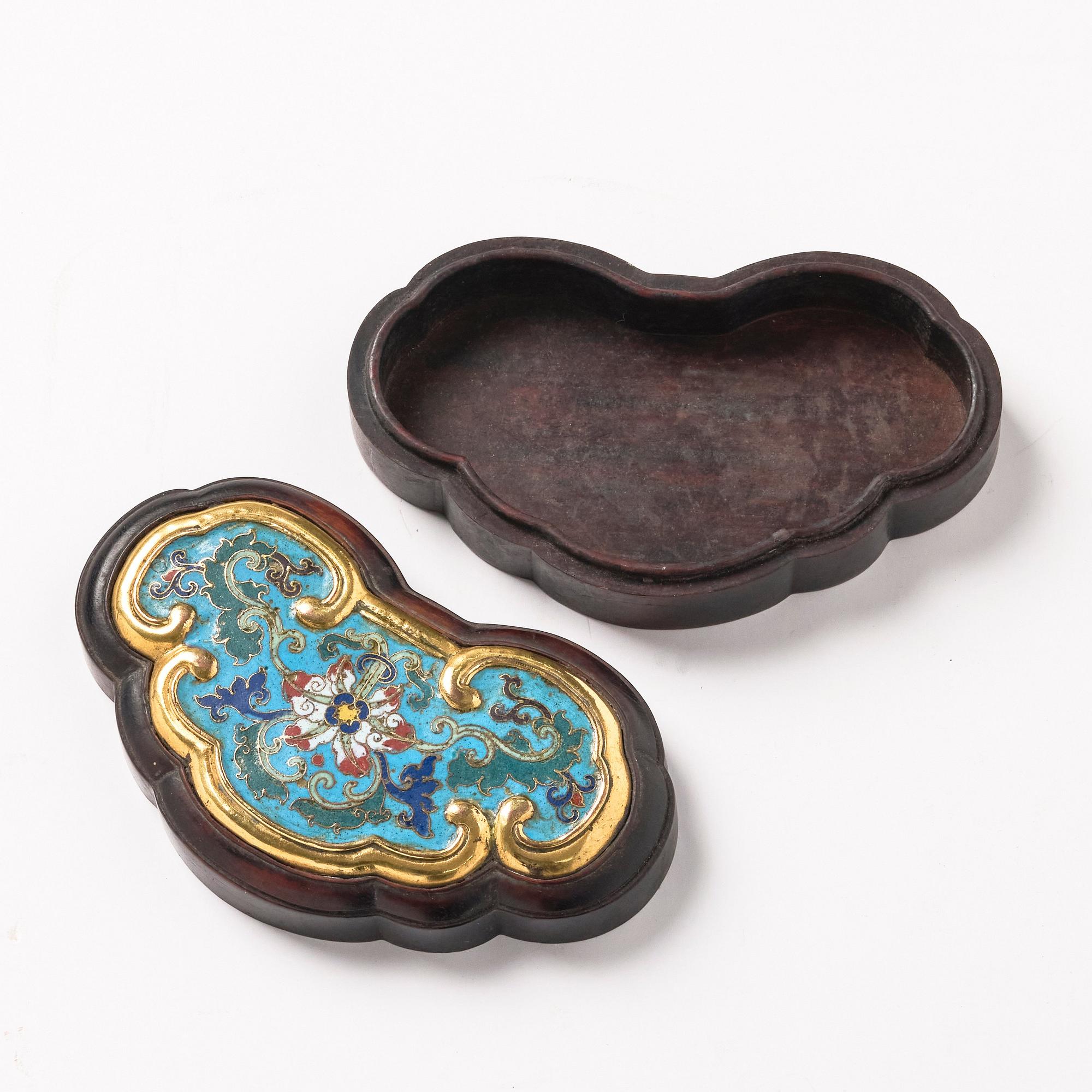
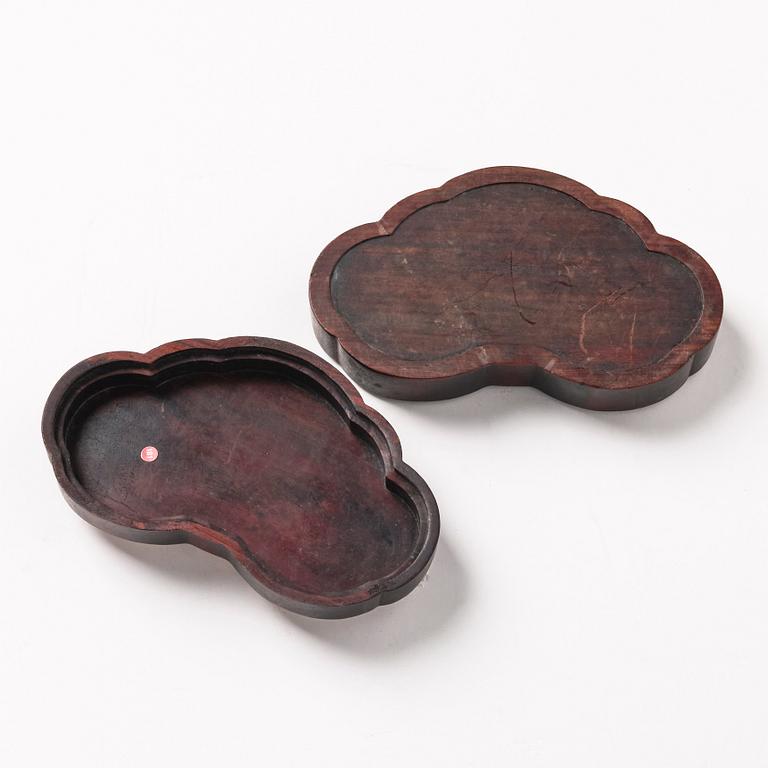
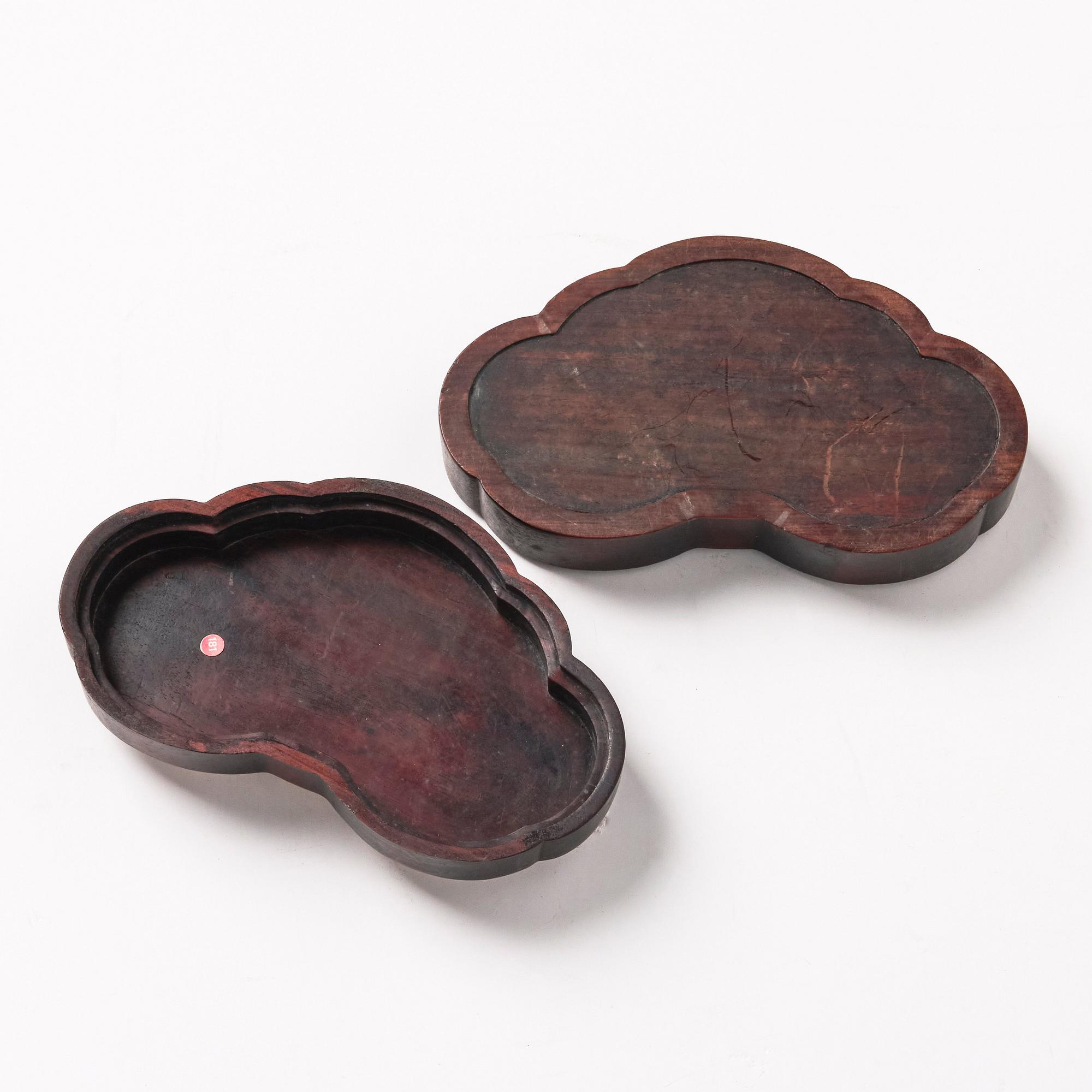
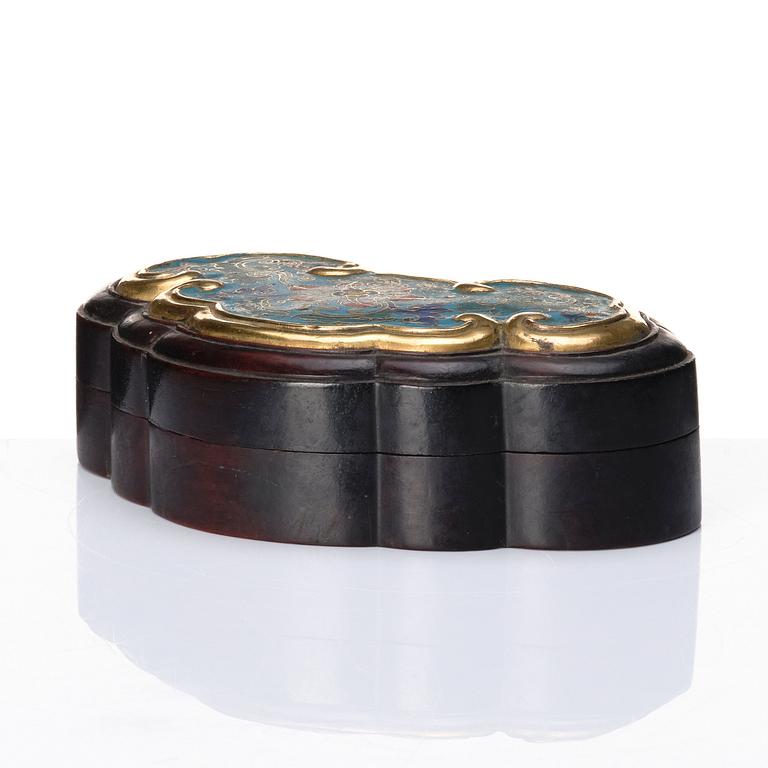
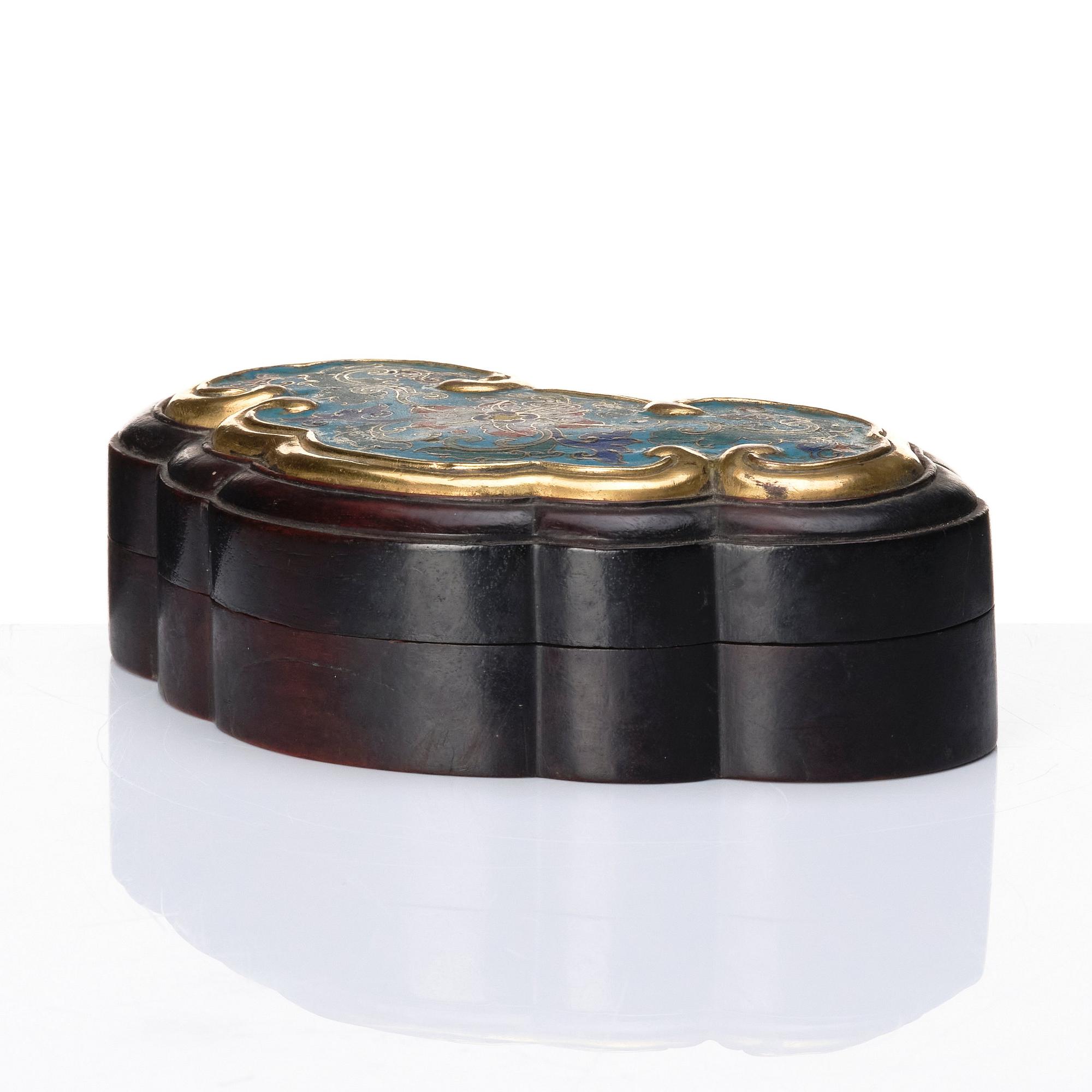
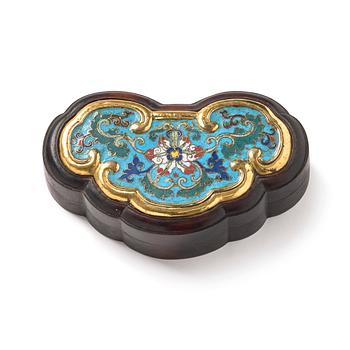
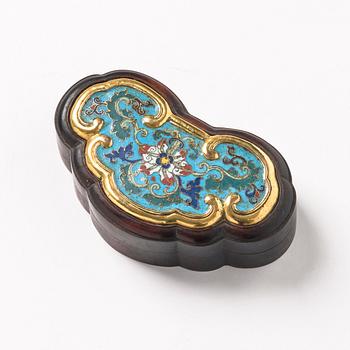
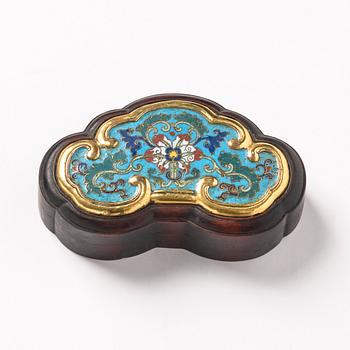
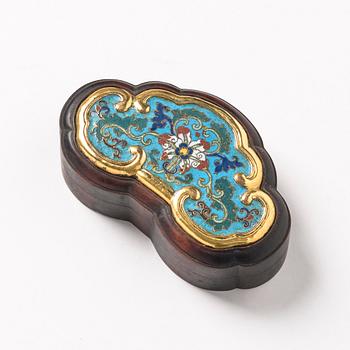
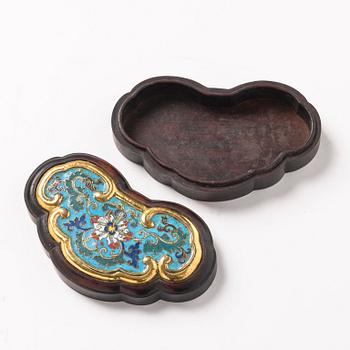
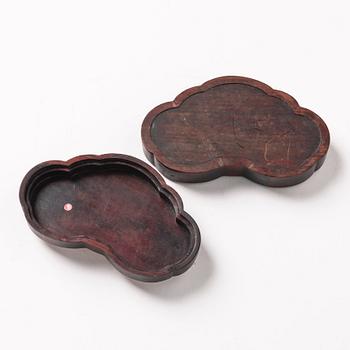
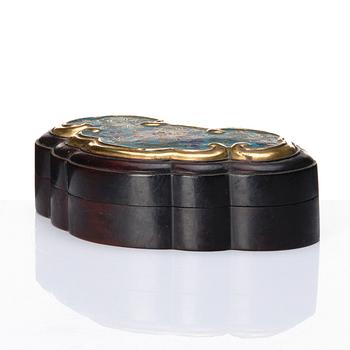
A cloisonné and hardwood box with cover, Qing dynasty, 18th century.
A ruyishaped box with cloisonné, partly gilded. Length 16 cm.
Wear.
Kirjallisuus
Ruyi (Chinese: 如意; lit. 'as desired; as [you] wish') is a Chinese curved decorative object that serves as either a ceremonial scepter in Chinese Buddhism or a talisman symbolizing power and good fortune in Chinese folklore. The "ruyi" image frequently appears as a motif in Asian art.
A traditional ruyi has a long S-shaped handle and a head fashioned like a fist, cloud, or lingzhi mushroom. Ruyi are constructed from diverse materials. For example, the Palace Museum in Beijing has nearly 3,000 ruyi variously made of gold, silver, iron, bamboo, wood, ivory, coral, rhinoceros horn, lacquer, crystal, jade, and precious gems.
Lisätietoja ja kuntoraportit

Tietoa ostamisesta
Muiden katsomia kohteita

1736635
Two Chinese porcelain dishes,
Qing dynasty, 17/18th century.
Ei tarjouksia
1p 4 h
Lähtöhinta
2 500 SEK

1711694
Two blue and white Chinese Export hot water dishesQing dynasty,
one from the 18th century and one from the 19th century.
Ei tarjouksia
1p 4 h
Lähtöhinta
4 000 SEK

1736603
A Chinese blue and white porcelain vase,
Qing dynasty, Kangxi (1662-1722).
Ei tarjouksia
1p 3 h
Lähtöhinta
2 500 SEK

1718350
Three Chinese famille rose porcelain dishes,
Qing dynasty, 18th century.
Ei tarjouksia
1p 2 h
Lähtöhinta
2 500 SEK

1711696
A blue and white hot water dish porcelain. Qing dynasty,
Jiaqing (1796-1820).
Ei tarjouksia
1p 2 h
Lähtöhinta
2 500 SEK


1726613
A set of two blue and white vases and a ginger jar with cover,
late Qing dynasty, 19th century.
Ei tarjouksia
5 h 1m
Lähtöhinta
1 500 SEK

1736598
Two Chinese blue and white export porcelain sauceboats and a teapot,
Qing dynasty, Qianlong (1736-95).
Ei tarjouksia
4 h 21m
Lähtöhinta
2 500 SEK