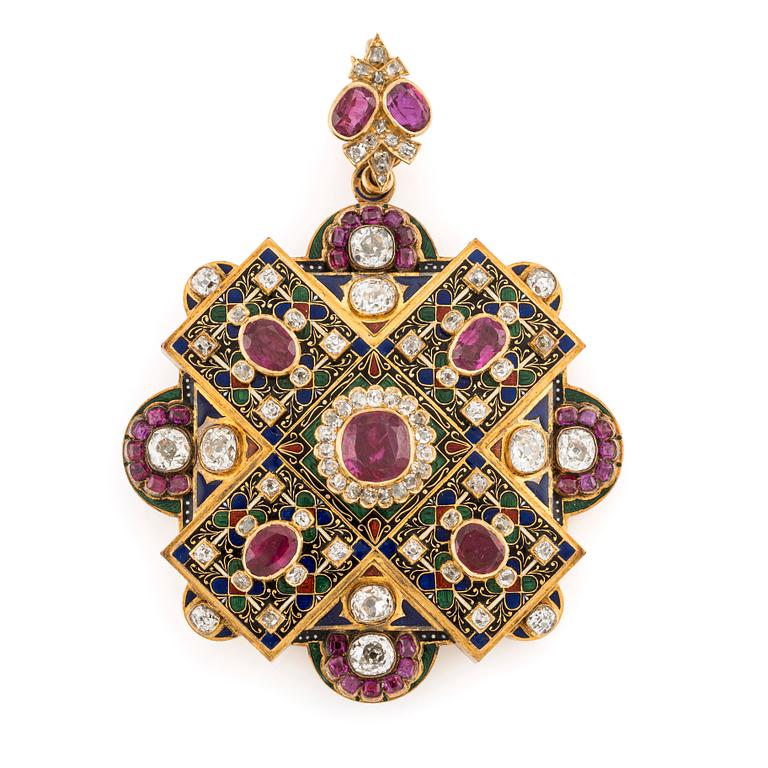
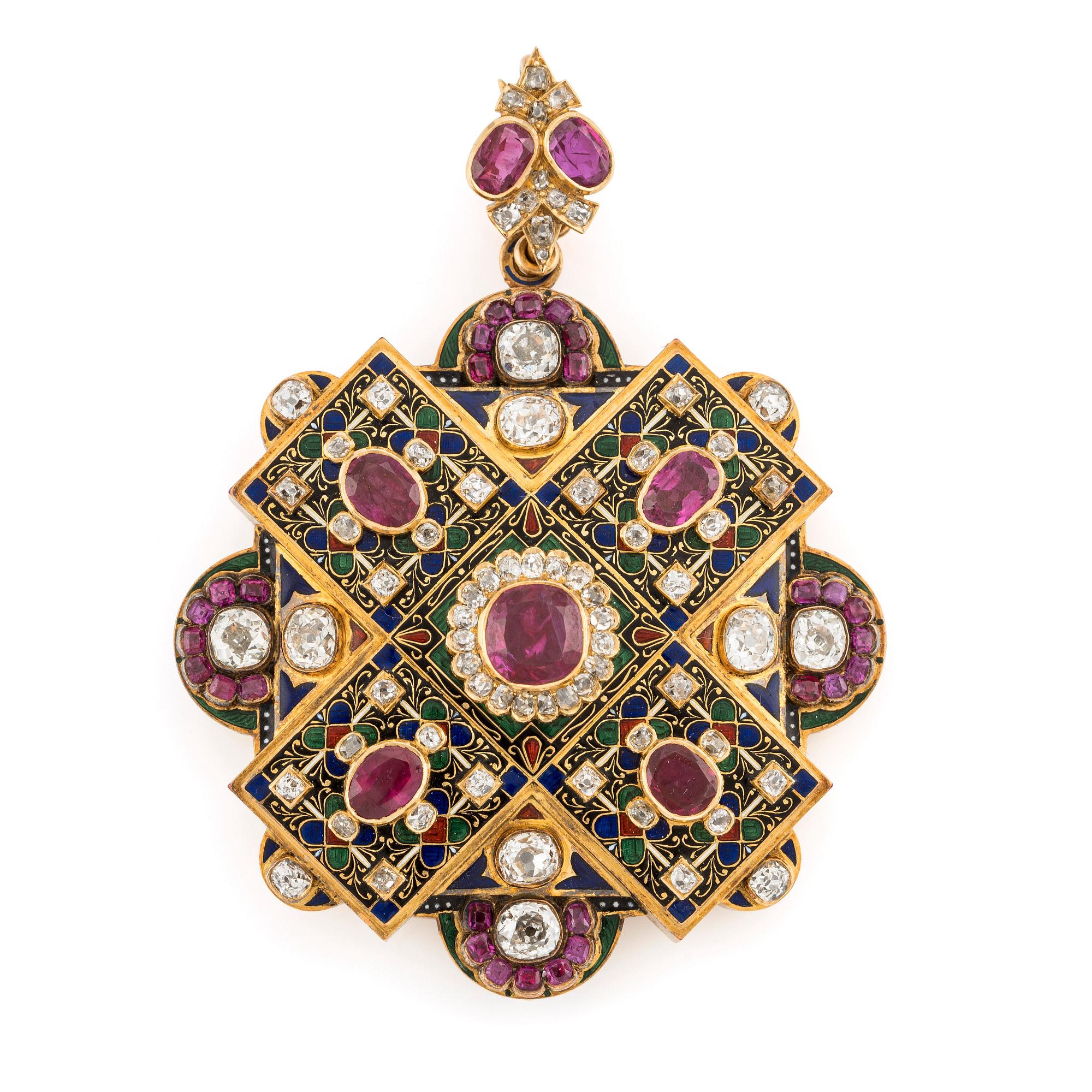
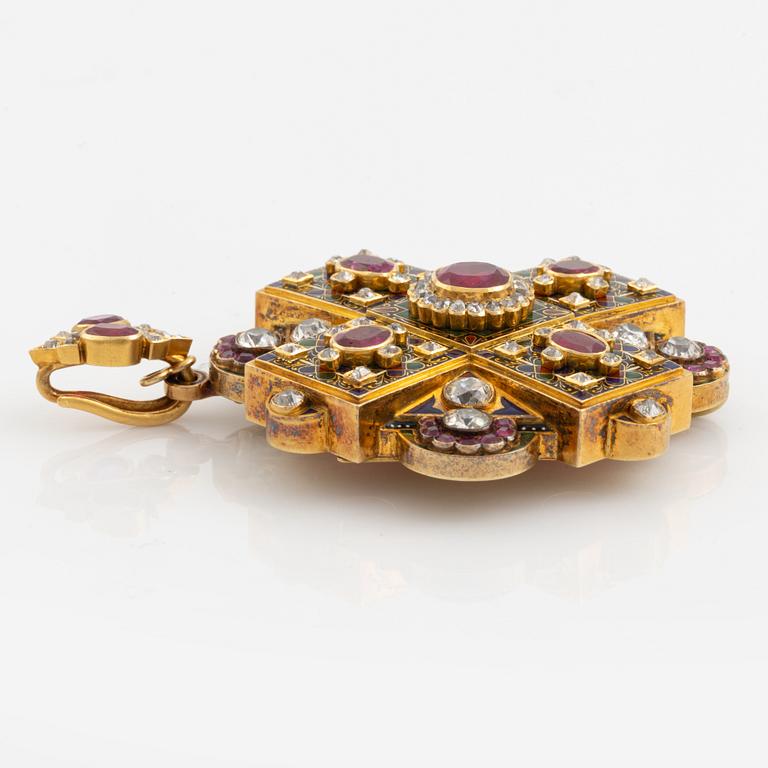
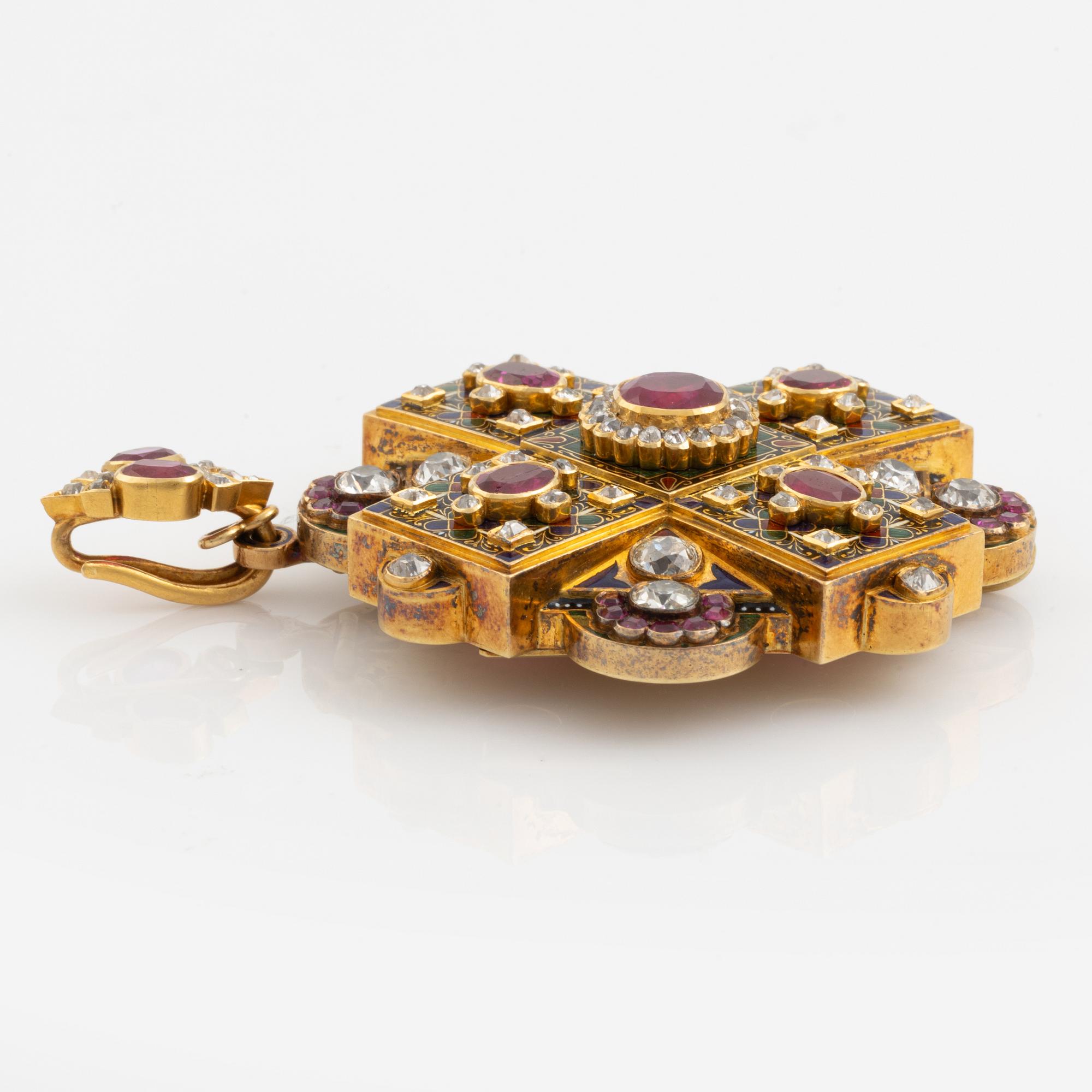
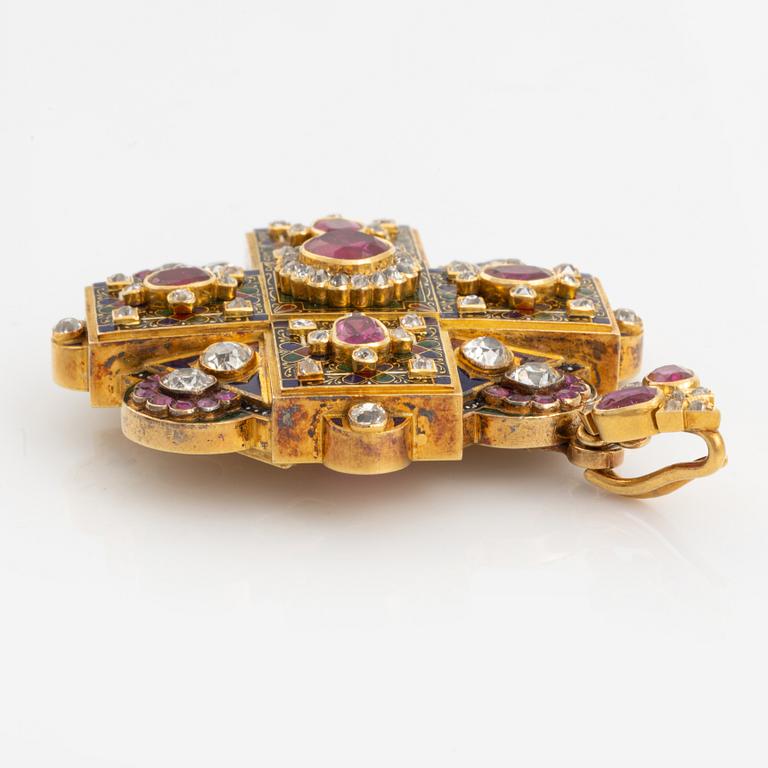
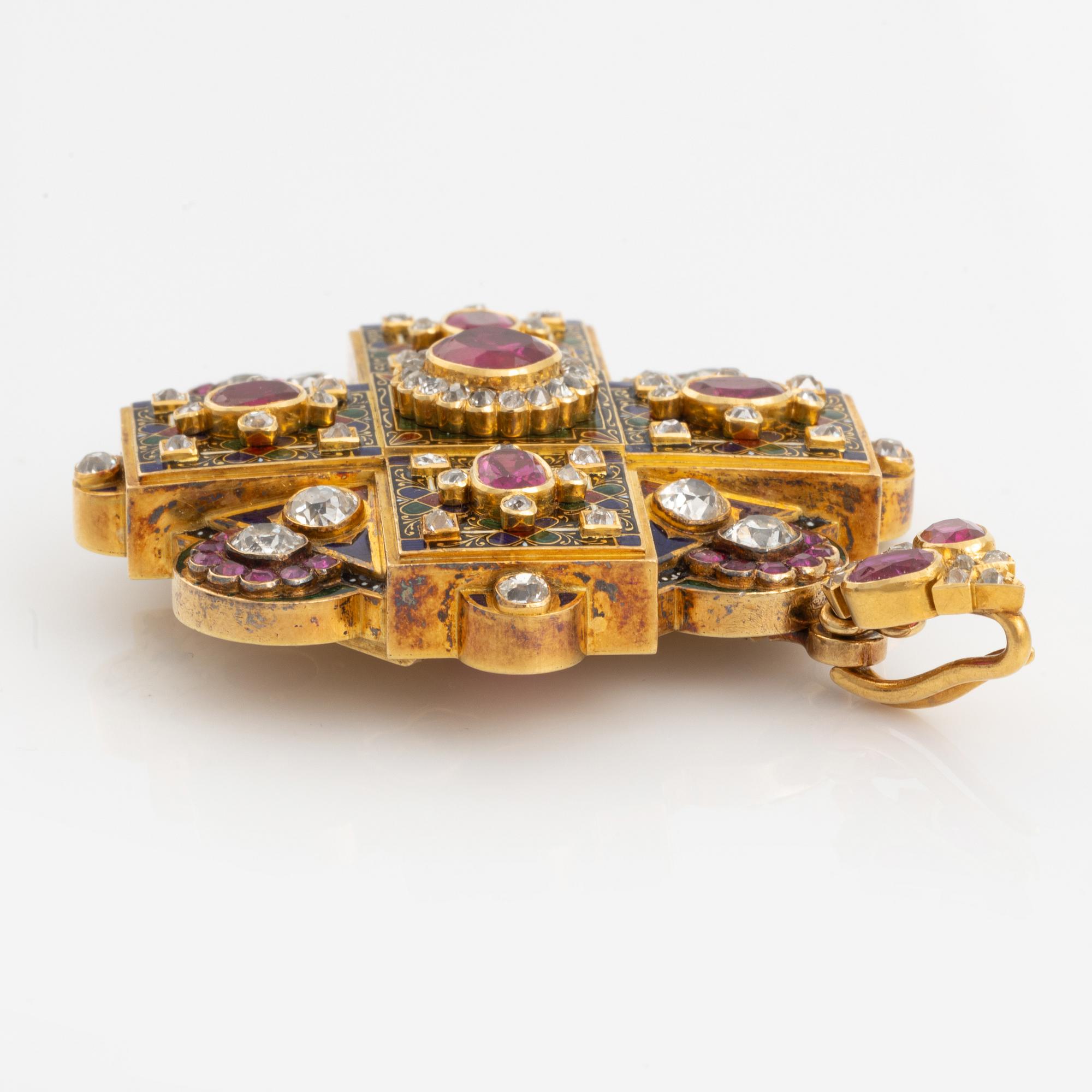
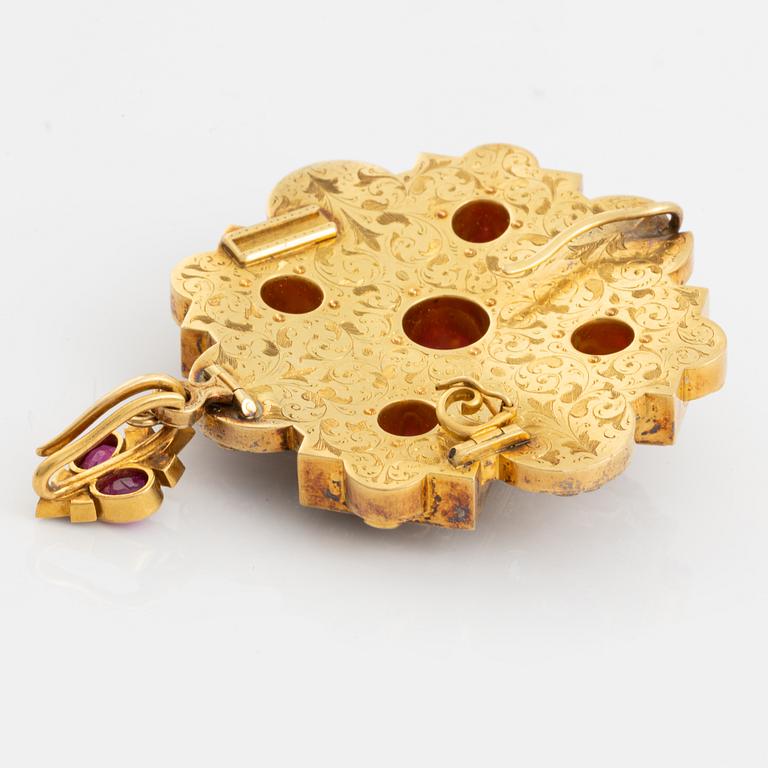
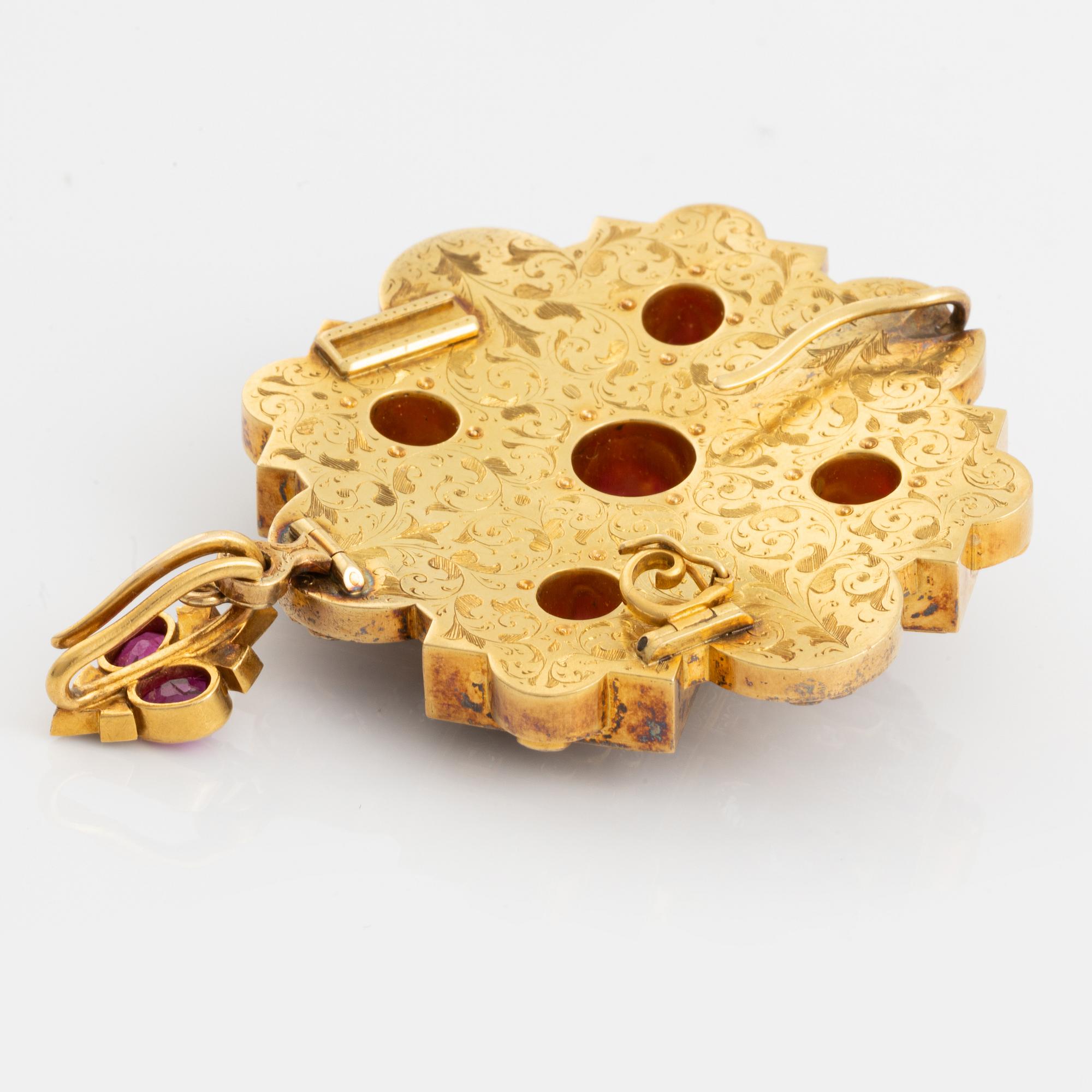
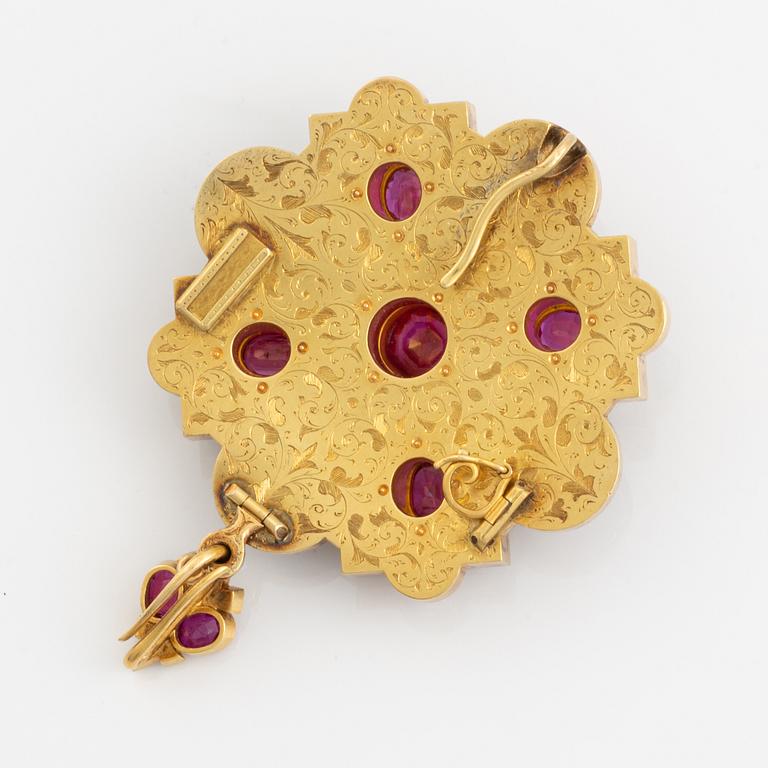
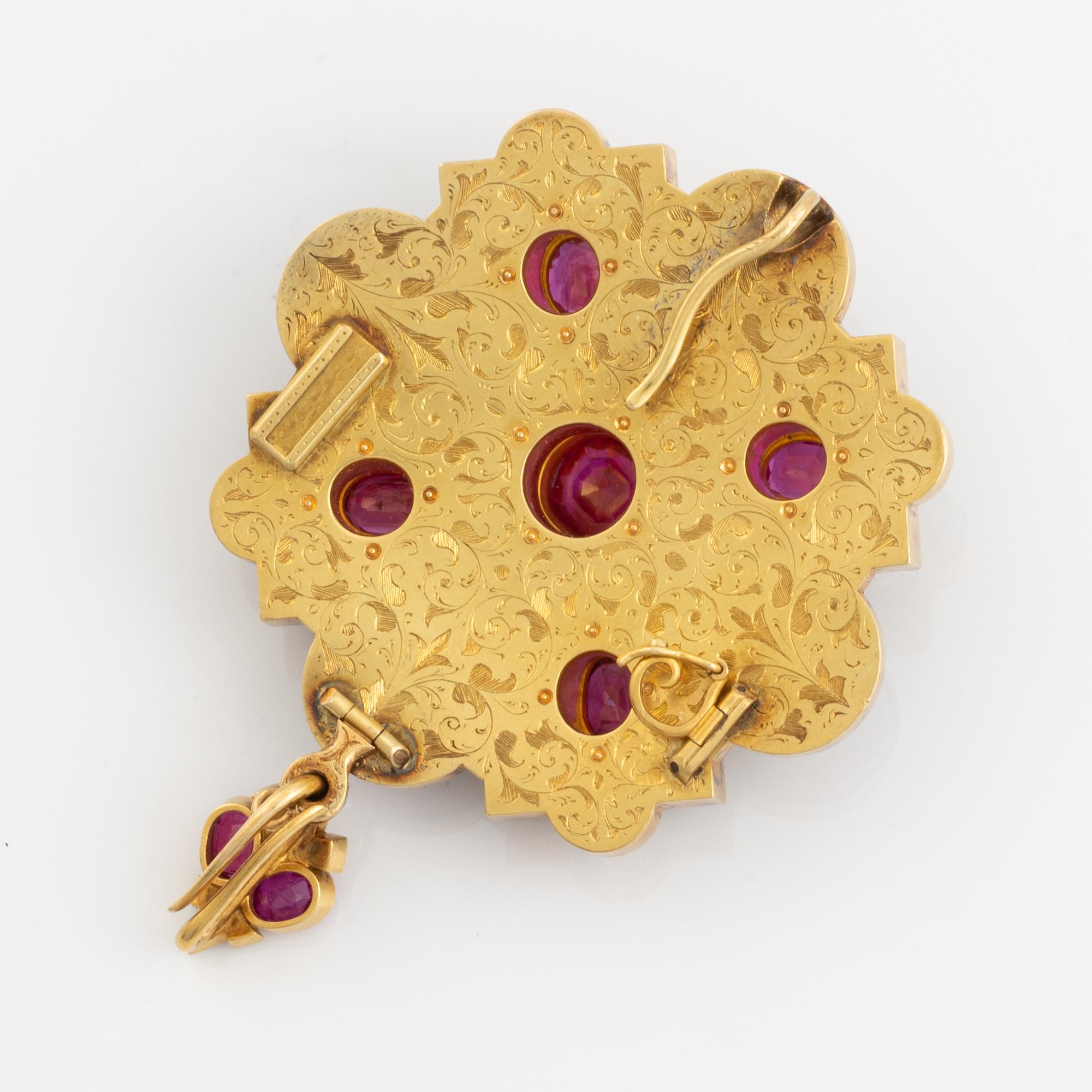
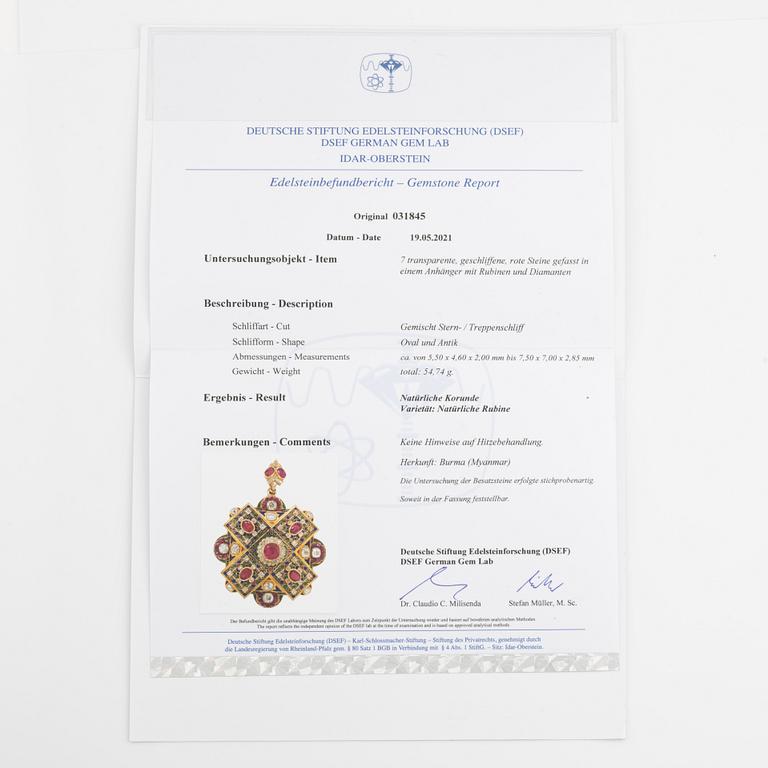
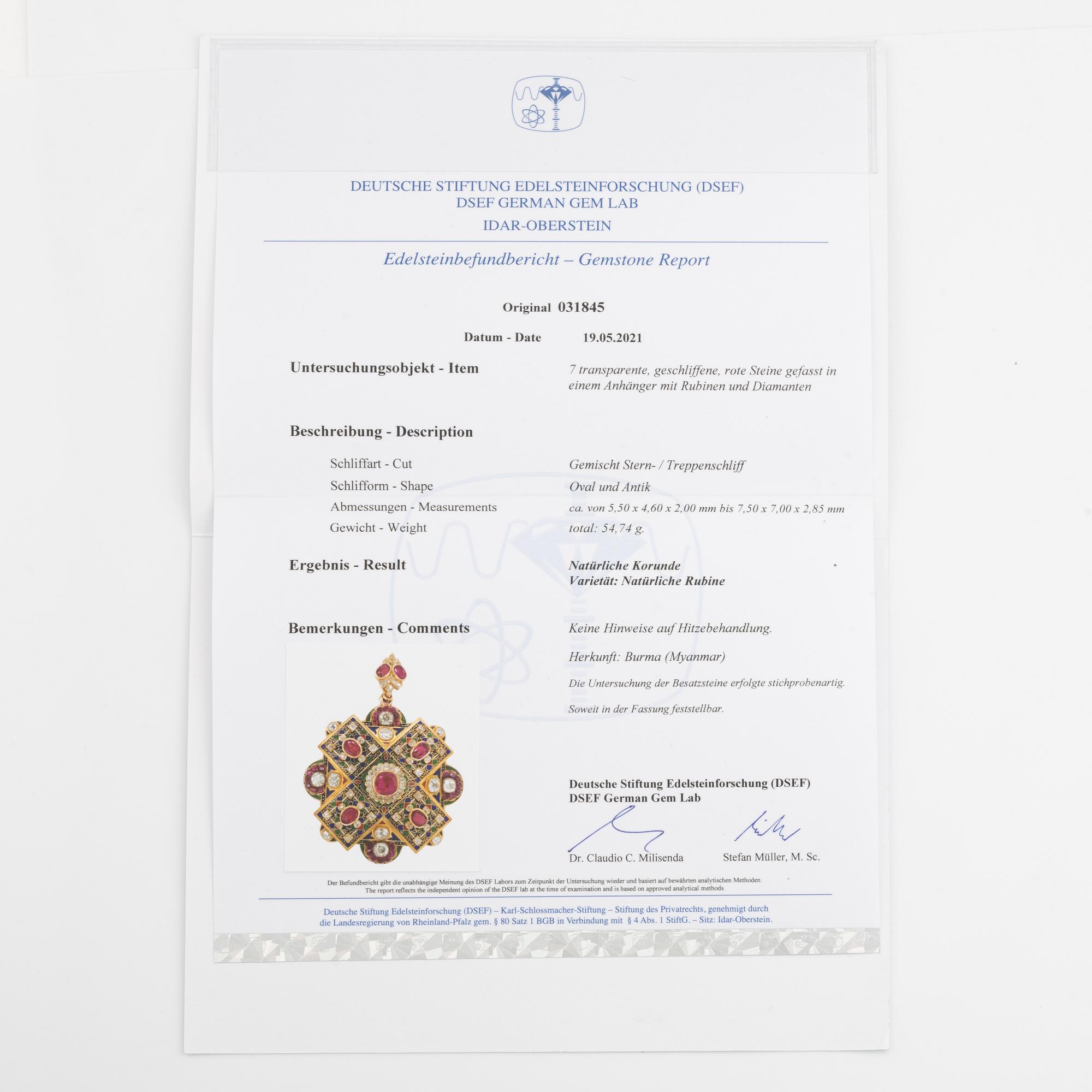
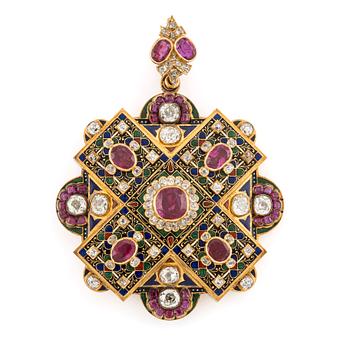
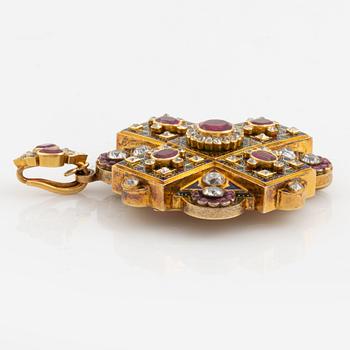
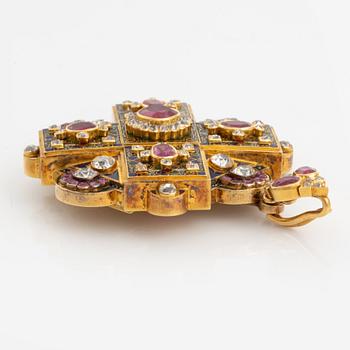
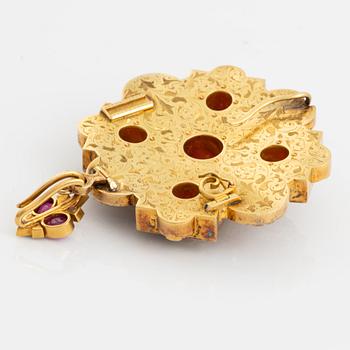
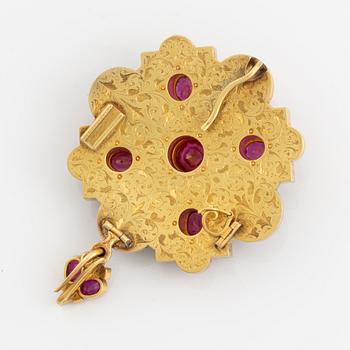
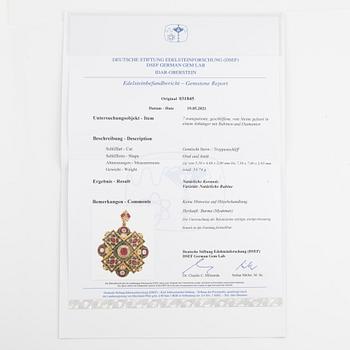
Enamelled gold set with seven rubies and old-cut diamonds with a total weight of ca 4.00 cts, measuring 55 X 74 mm, total weight 55 g. Accompanied by a Gemstone Report from DSEF German Gem Lab Idar Oberstein.
Alkuperä - Provenienssi
Ivar Kamke (1882-1936) was a Swedish painter who achieved great success in the early 20th century with his fresh outdoor and portrait painting. Kamke was a collector of the highest caliber, and his beautiful apartment on Engelbrektsplan in Stockholm was filled with exquisite furniture, silverware, and fine art. In the publication "Svenska hem" from 1929, his home is described as "filled with charm - a home where the quiet whispers of legends that have never been told can be heard." Particularly fascinating is the beautiful cross that was part of his collection. The apostle Andrew is considered to be Christ's first disciple and preached in what is now Russia and Romania. In 38 AD, he became the bishop of Byzantium. According to legend, he was crucified in Patras, a Greek city that was part of the Roman Empire, on a cross in the shape of an X - a cross type that is still called an Andrew's cross today. This magnificent pendant from the 19th century, in a historicizing Renaissance style, is believed to have been made in Germany or Austria, and how it ended up in Kamke's collection is truly a story one would like to hear. After Kamke's passing, the cross has been passed down in the family.
Lisätietoja ja kuntoraportit

Tietoa ostamisesta
Muiden katsomia kohteita