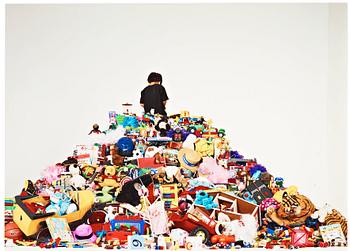
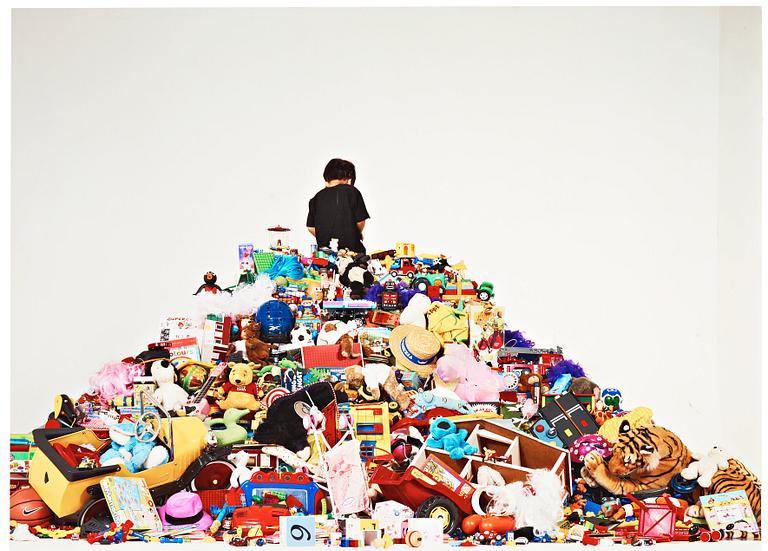
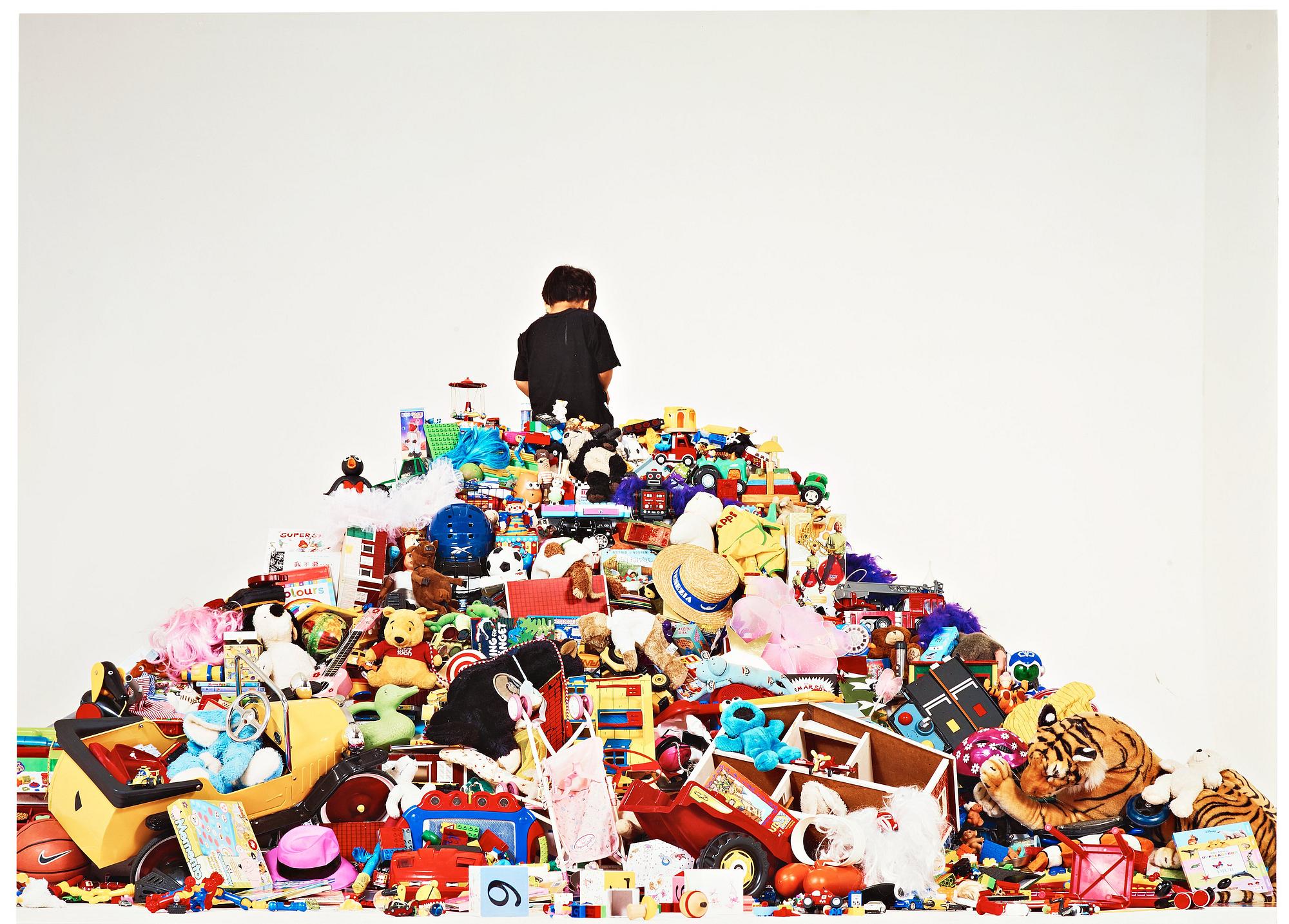
"Belonging II", 2010
Signed Maria Friberg and dated 15 April 2011 and numbered 2/25 on label verso. C-print mounted to aluminum 69 x 95 cm.
Alkuperä - Provenienssi
Fotografiska Galleriet, Stockholm.
Muut tiedot
Friberg tillhör den generation av konstnärer som slog igenom under 90-talet och som tidigare benämnts ”det nordiska miraklet”. De uppmärksammades internationellt för sin höga konstnärliga klass. I dag räknas Friberg till en av landets mest betydande fotografer och videokonstnärer. I verket "Belonging II" lyfter Friberg diskussionen kring masskonsumtion och västvärldens sätt att utarma jordens resurser. Så här skriver Maria Friberg själv om sitt verk:
"In a world defined by consumption, we are what we own. In “Belonging”, we see a small boy sitting on a heap of toys. It is a documentary portrait, in the sense that all the objects are the child’s own, but above all, it is a metaphorical image about consumption and excess.
In the Western world, children are constantly exposed to commercials for toys. Cheap plastic toys are imported from China and distributed for free at fast food restaurants. Generally, they will break in a few days and be replaced by new things. Sometimes, presents are given as a compensation for lack of time and affection.
At such a young age, children are already introduced to the rules of the consumer society. They learn that things are easy to come by and expendable. This is in stark contrast to the conditions in less fortunate societies.
The scale was the starting point for the photograph. The amassed toys are several times larger than the boy himself. The title raises questions about consumption as an expression of personal identity."
Lisätietoja ja kuntoraportit
Kuuluu jälleenmyyntikorvauksen piiriin
Tietoa ostamisesta
Kuvan käyttöoikeudet
Tämän tietokannan taideteokset ovat tekijänoikeudella suojattuja, eikä niitä saa kopioida ilman oikeudenhaltijoiden lupaa. Teokset kopioidaan tässä tietokannassa Bildupphovsrättin lisenssillä.
Muiden katsomia kohteita