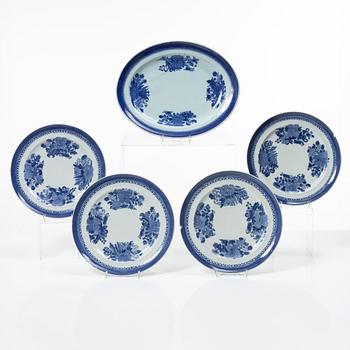
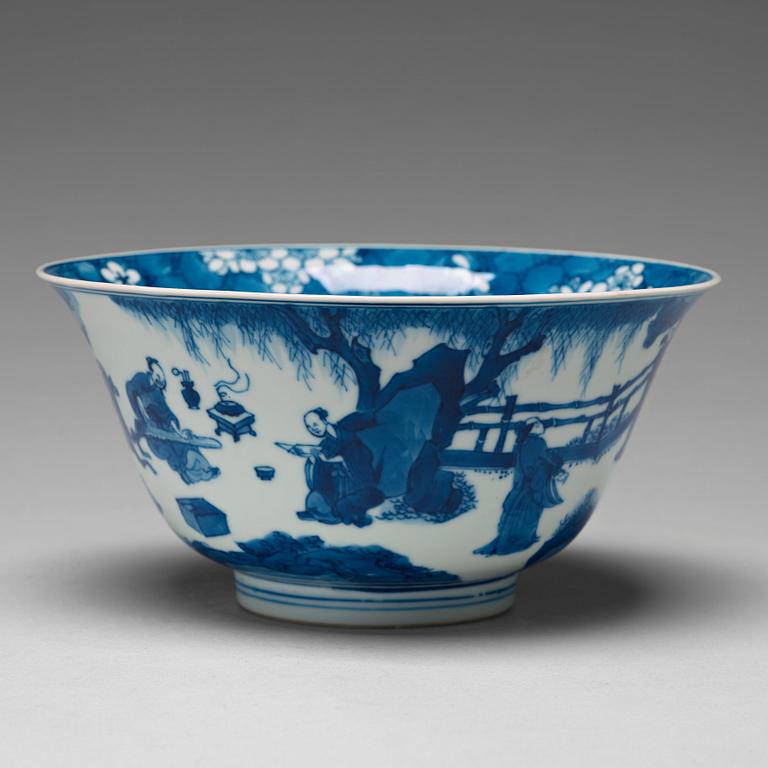
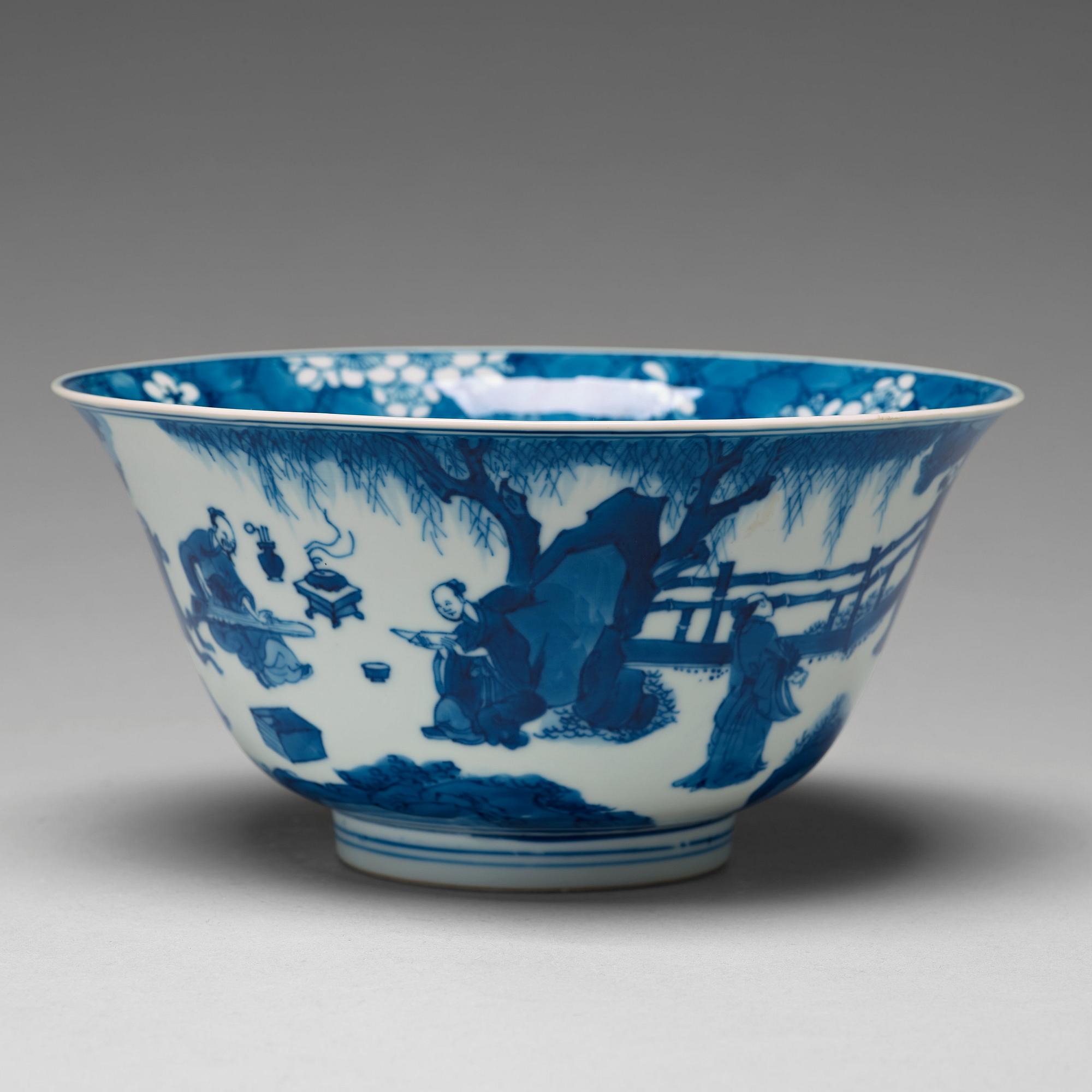
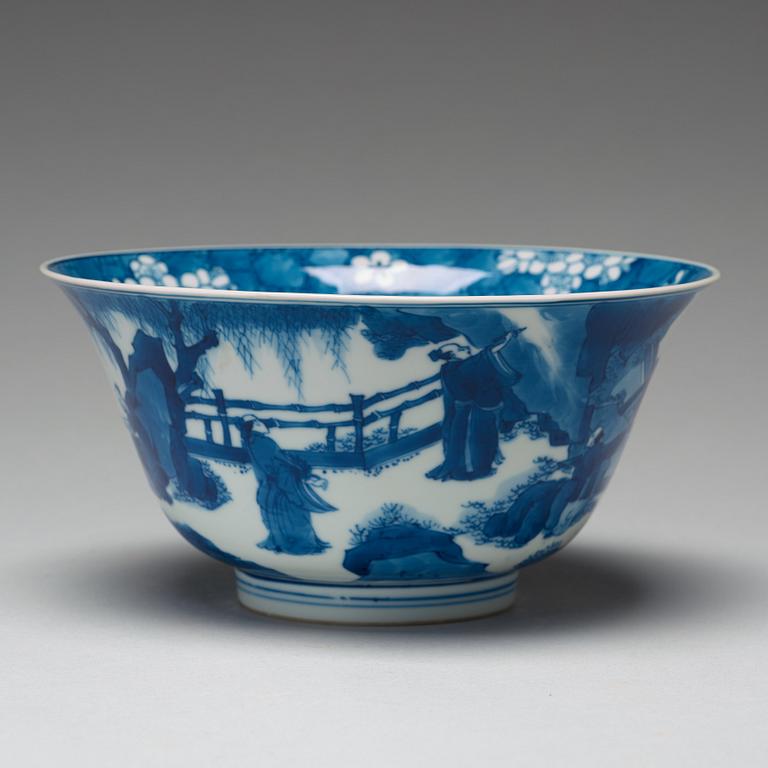
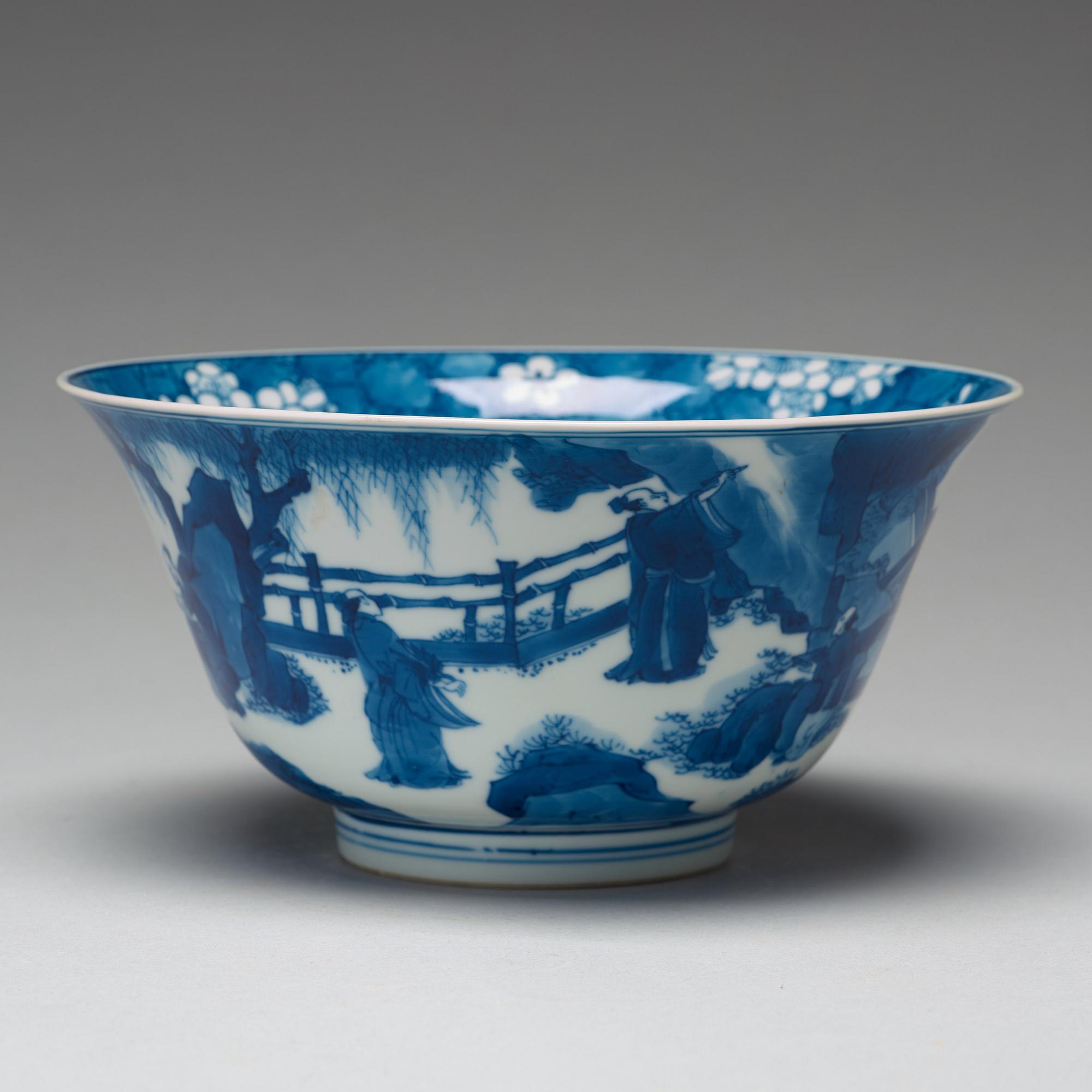
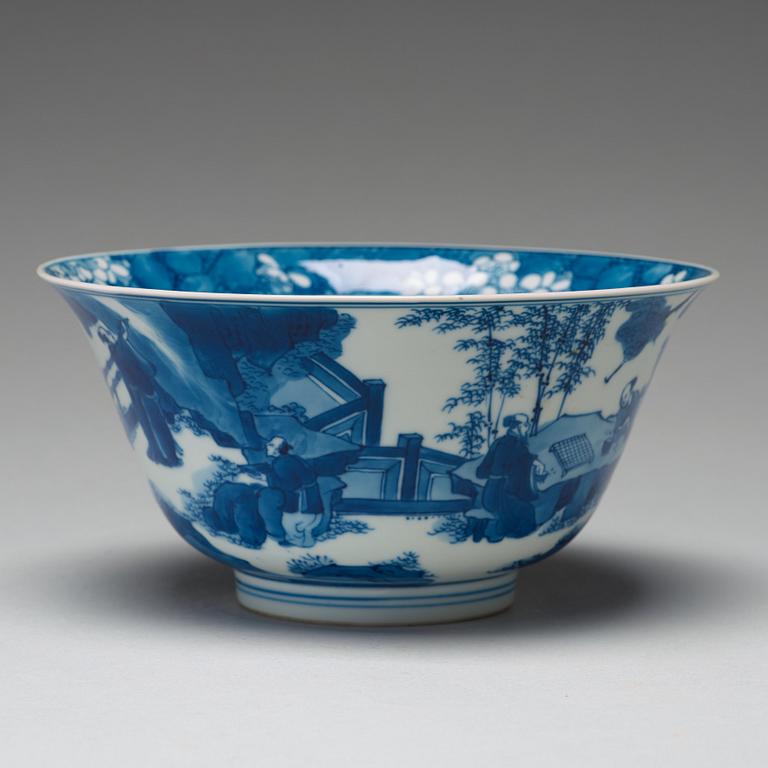
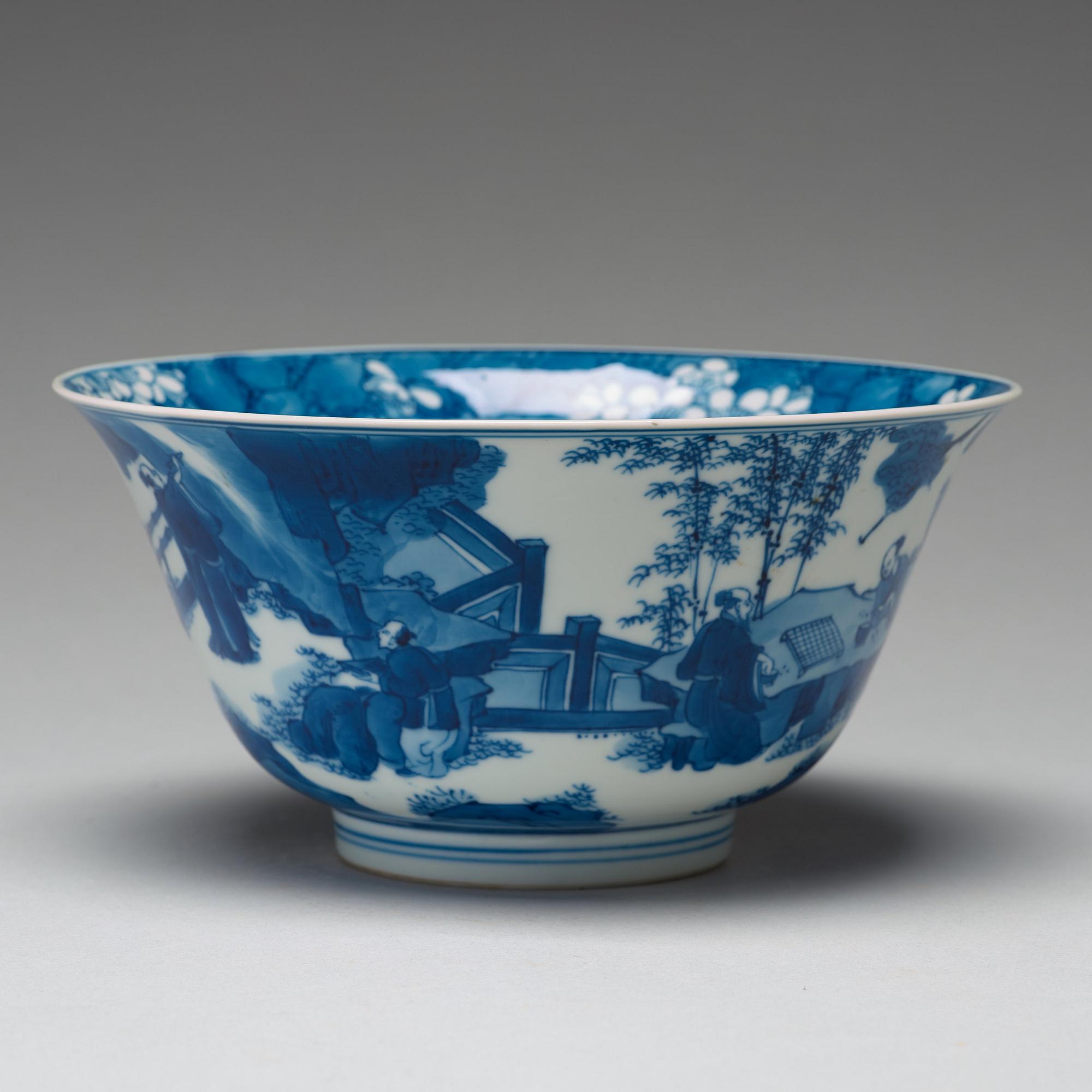
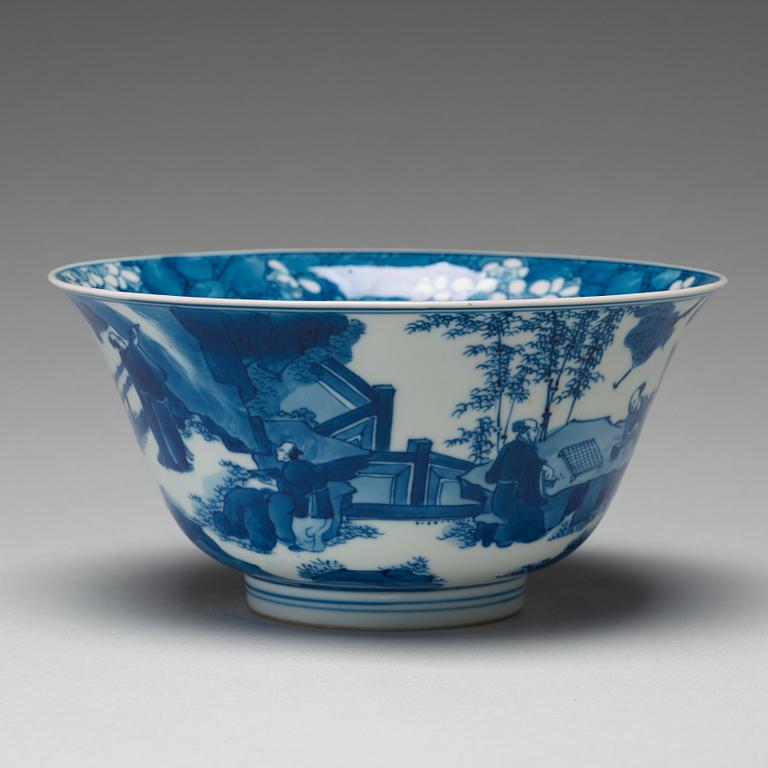
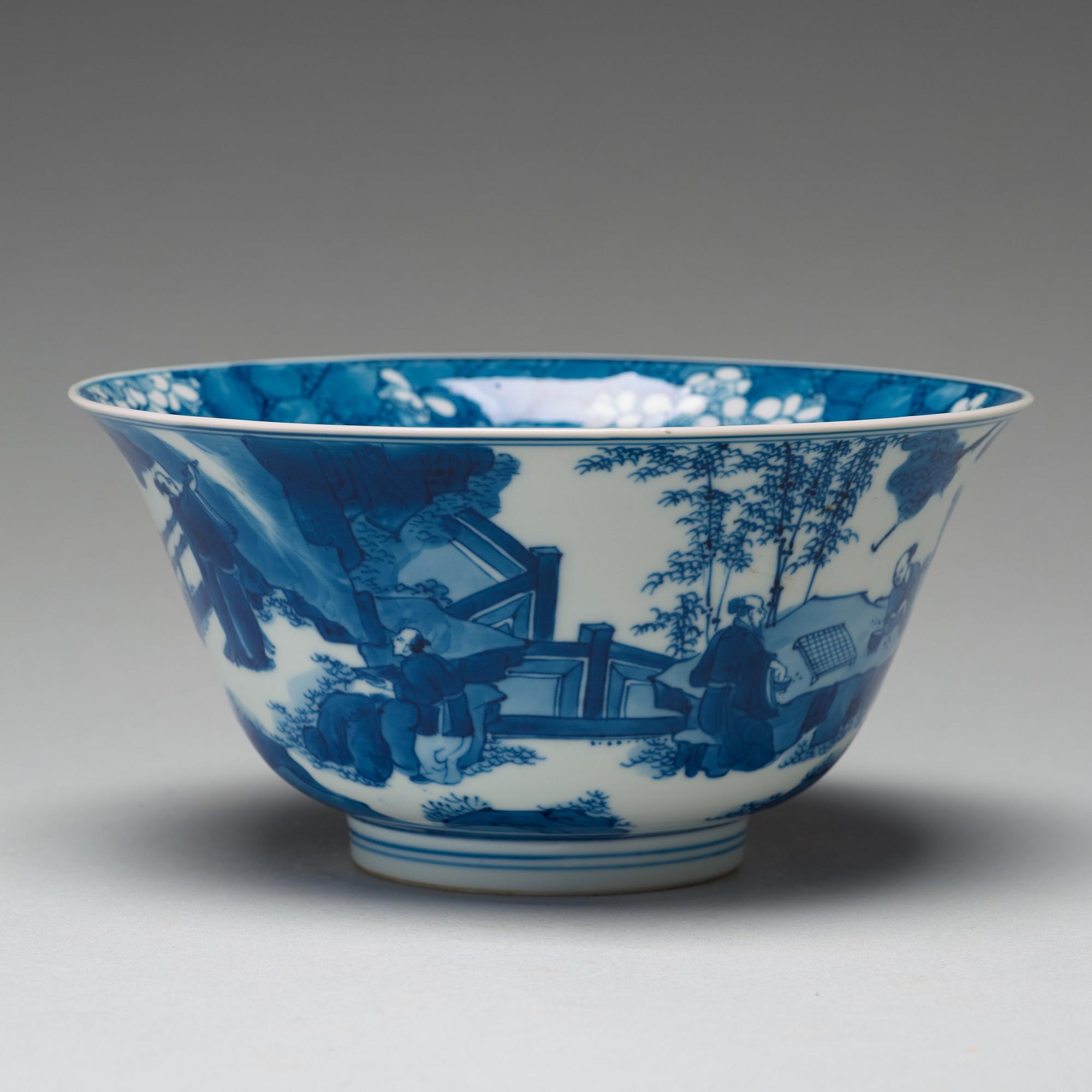
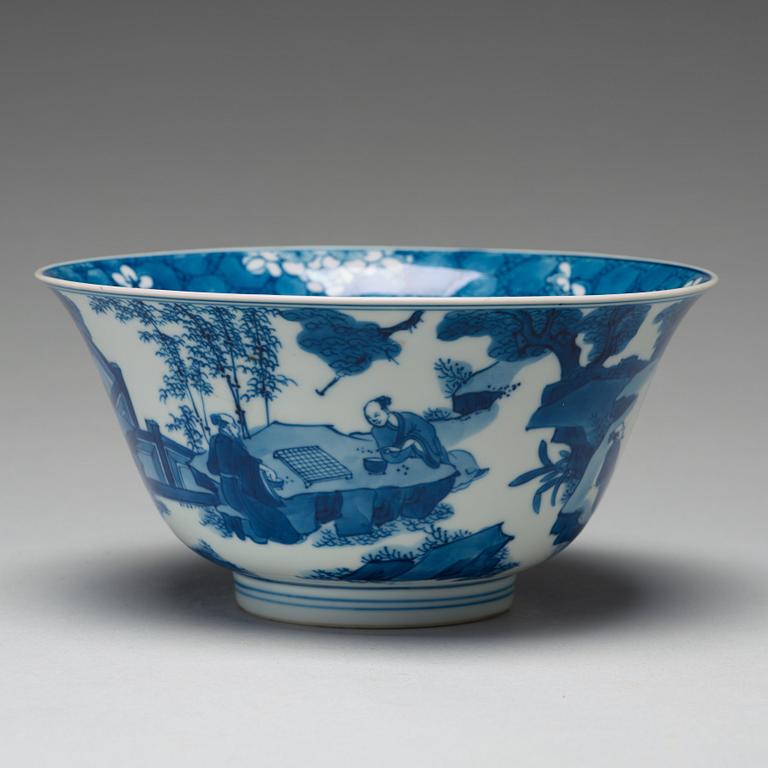
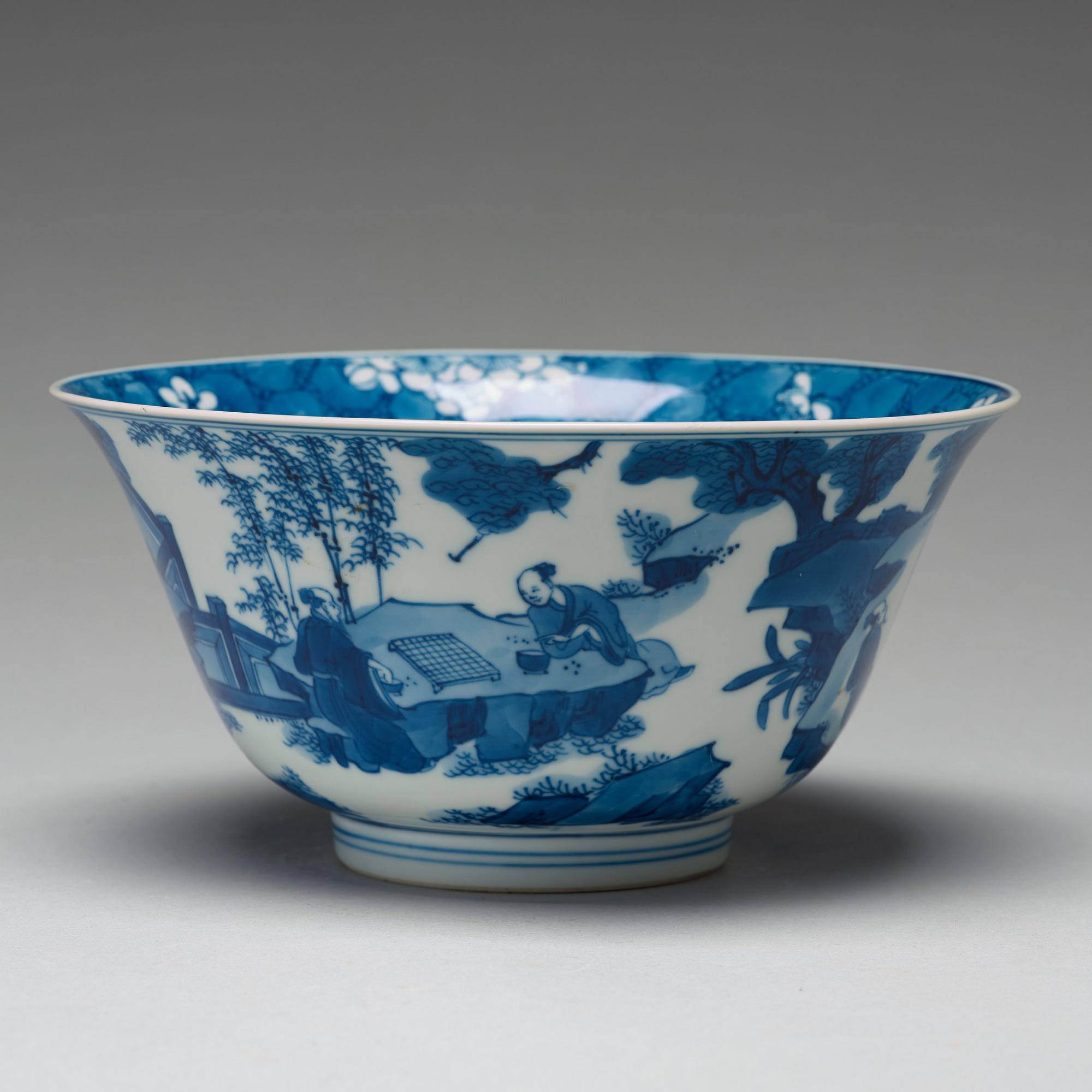
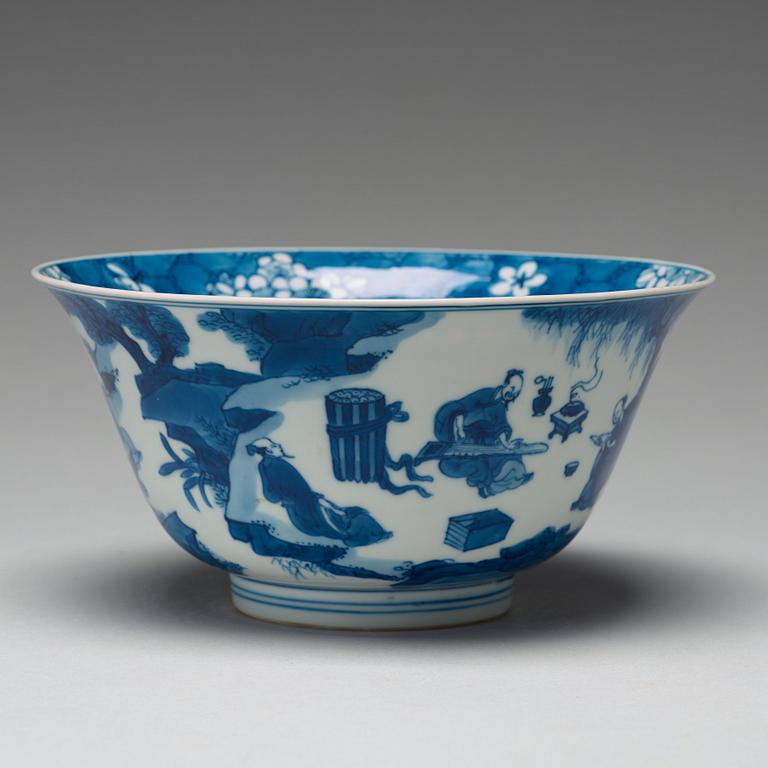
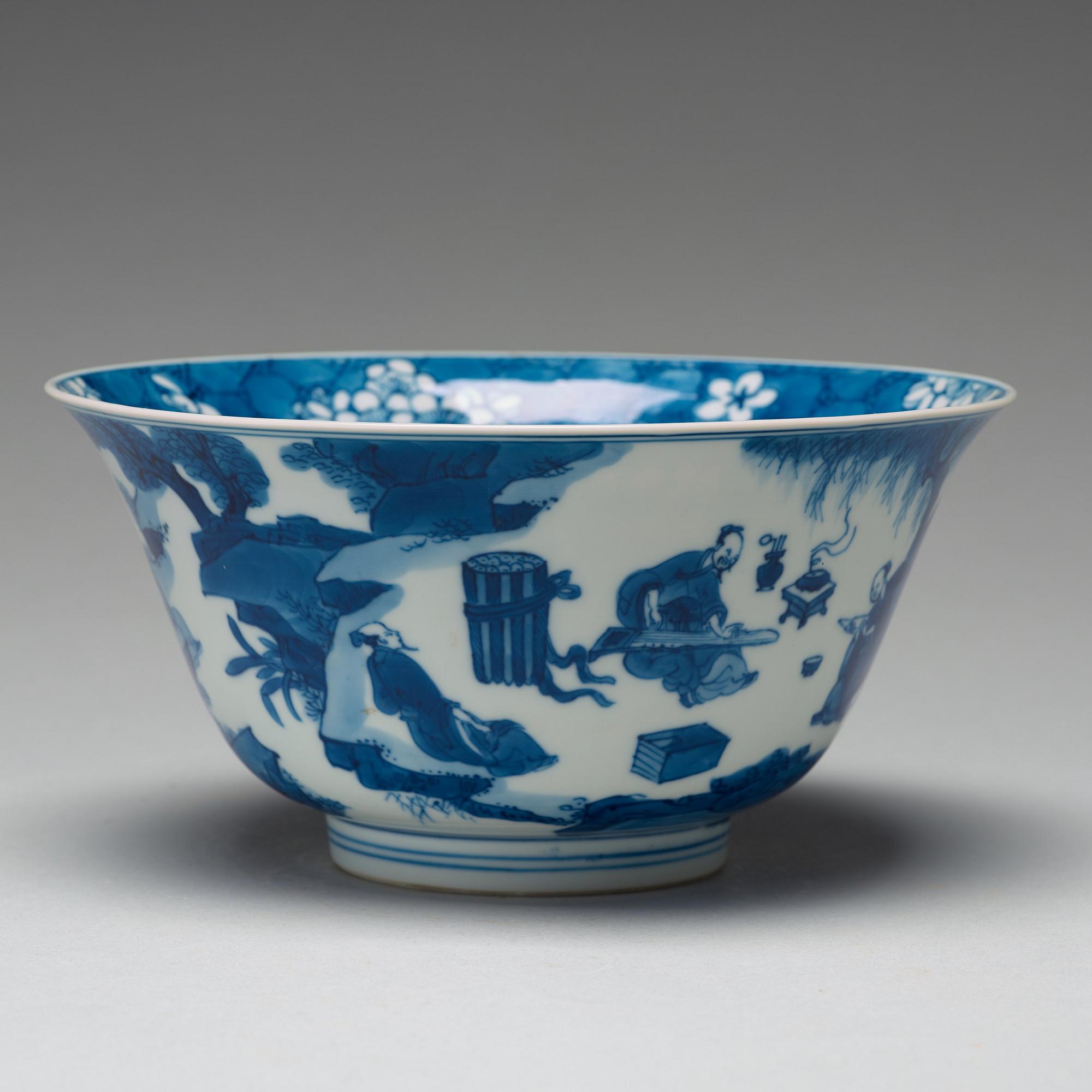
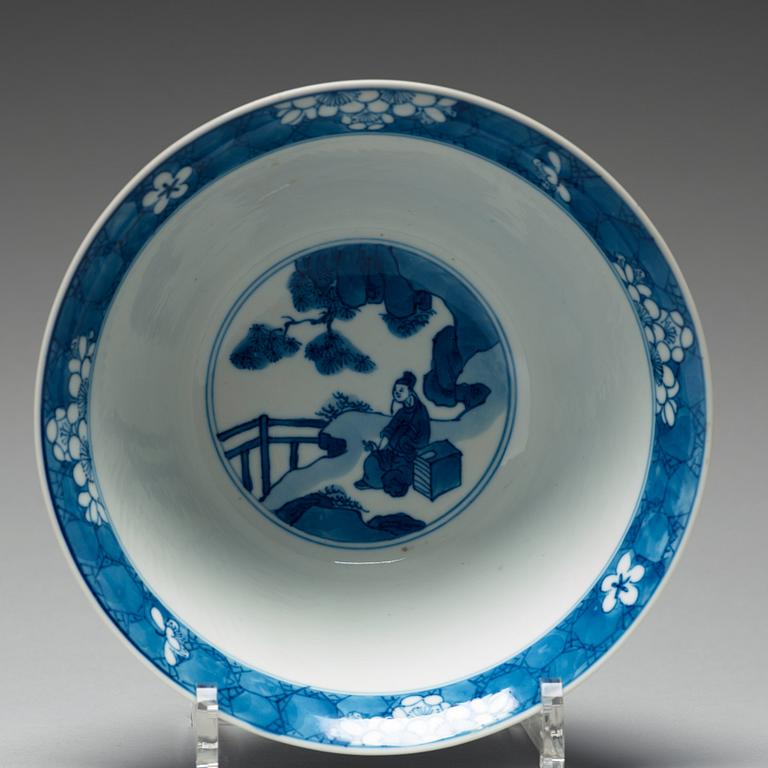
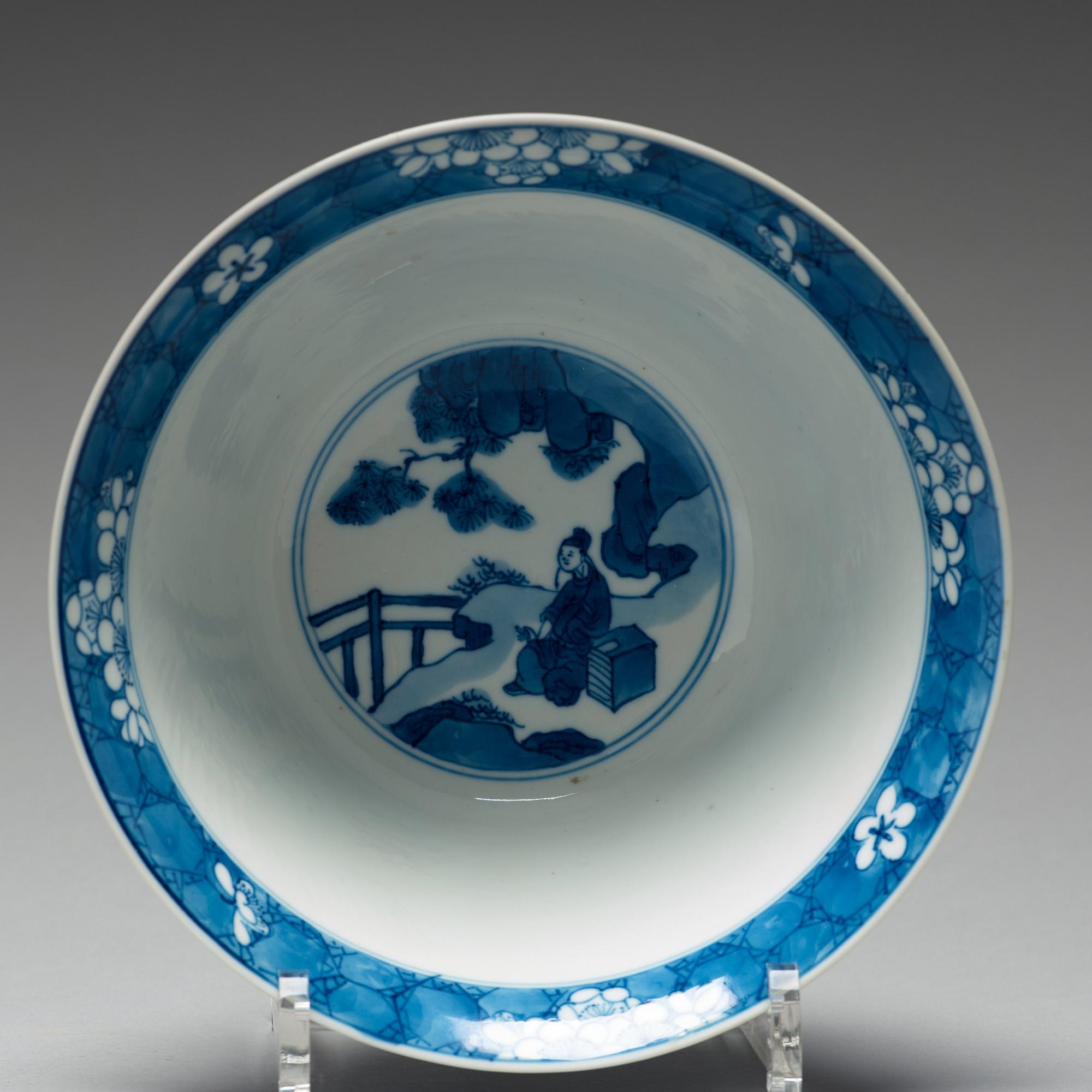
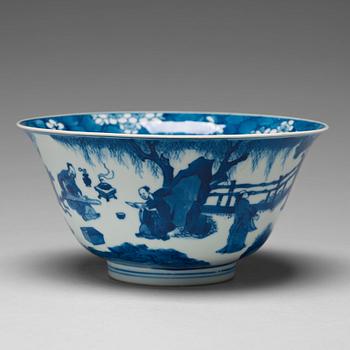
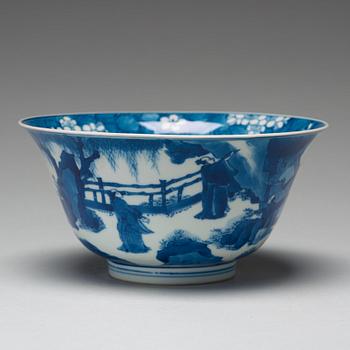
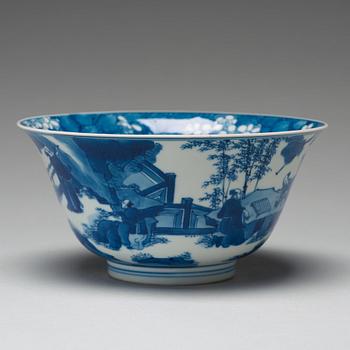
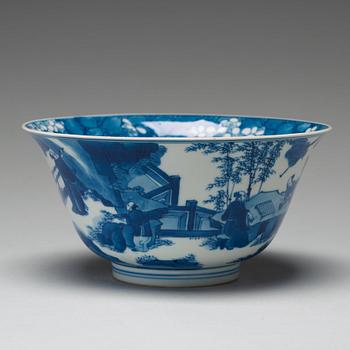
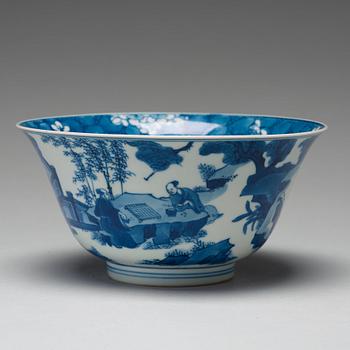
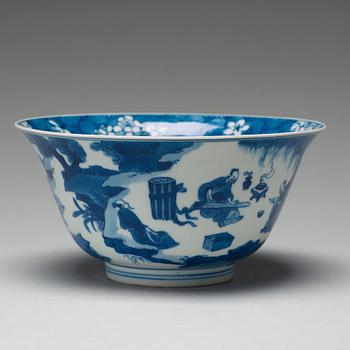
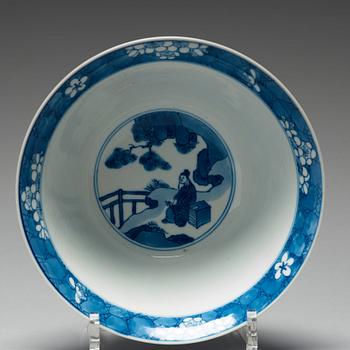
The rim on the inside of the bowl is decorated with blossoming prunus reserved on a blue cracked-ice background. The design evokes the beautiful blossom of the plum whilst it is still winter - the cracking ice being the first signs of spring. The inside medallion depicts a sage within a landscape. Diameter 16 cm.
Crack.
Alkuperä - Provenienssi
The Avalon Collection.
This collection, which in the main focuses on the Interregnum and Kangxi periods has been both carefully and sensitively formed over the last twenty-five years. The collector, a member of the English Oriental Ceramic Society, has assembled the collection with an eye for provenance whilst purchasing from old European collections, well-established antique dealers and at auction.
Academically, the pieces have been well researched both in terms of their symbolism and narrative themes. In many instances the imagery on the pieces has been referenced to episodes in the romantic and historic novels of Chinese mythology, which were used extensively in the decoration of seventeenth century Chinese porcelain.
Näyttelyt
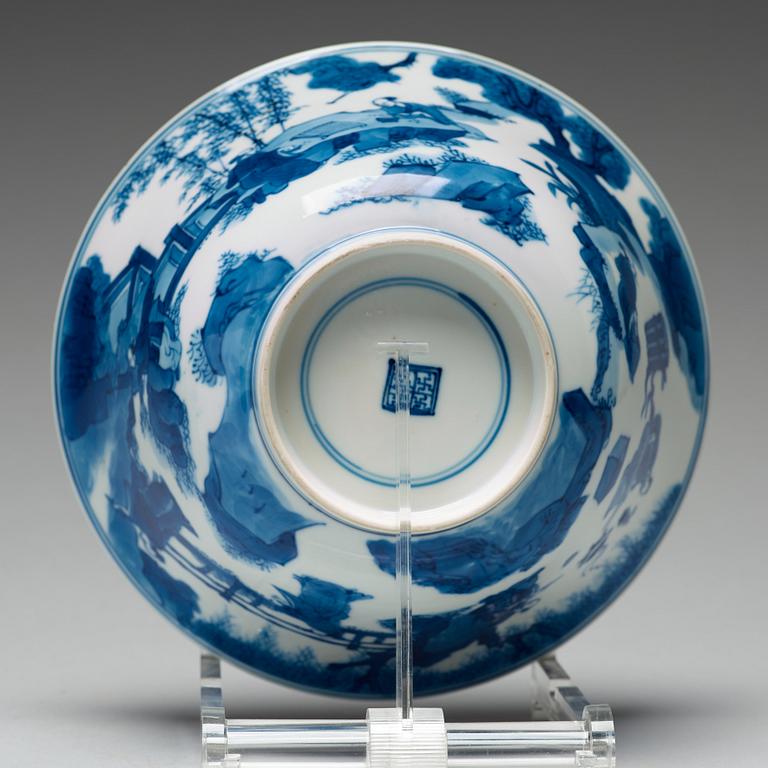
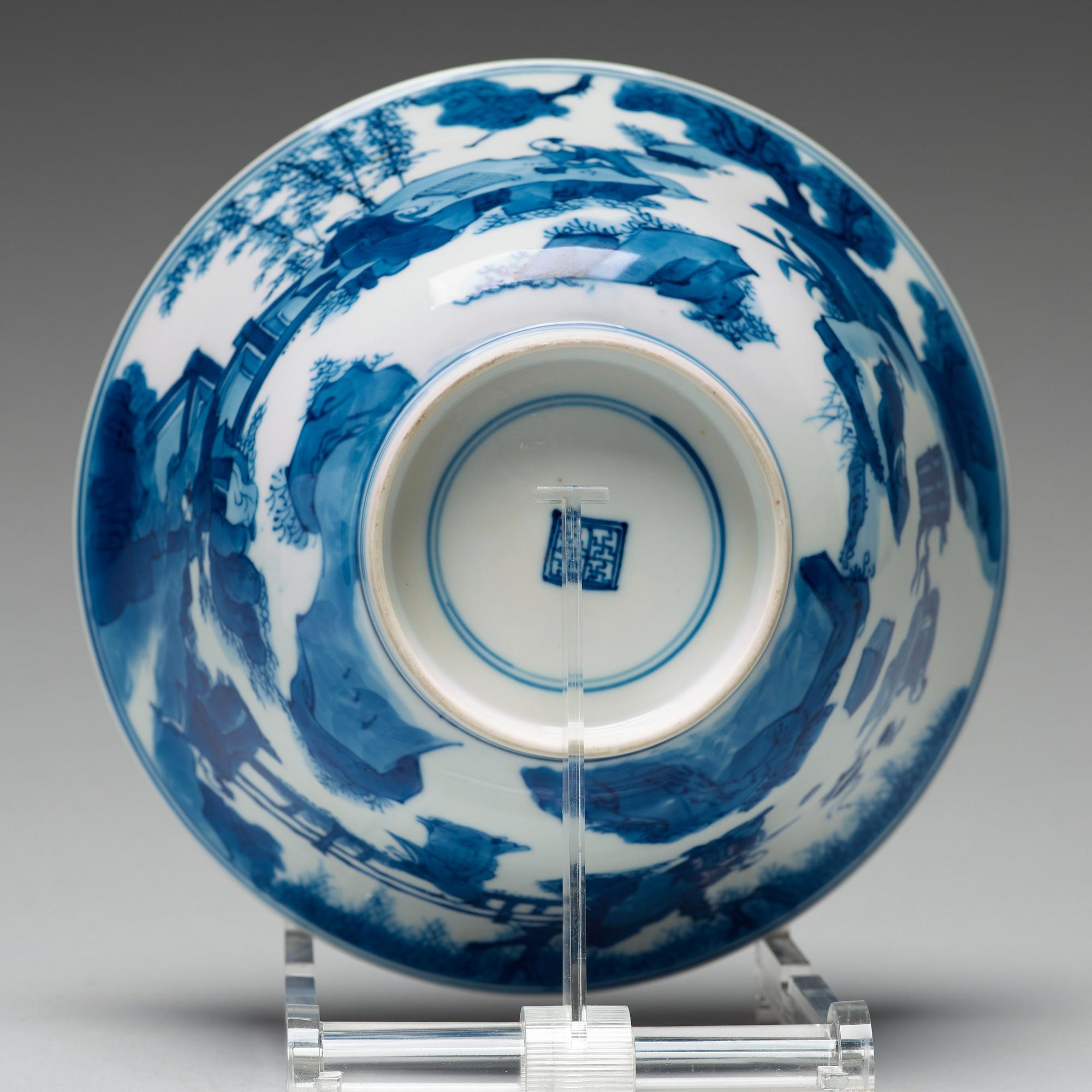
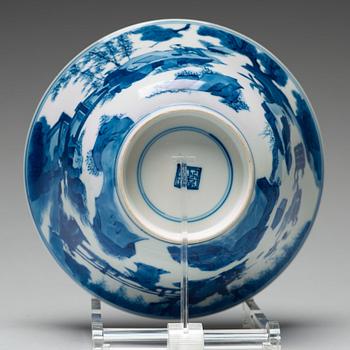
Whilst the scene on this bowl may initially be thought to be that of the “Gathering in the Western Garden”, it is considered more likely to be that of the “Nine Elders of Xiangshan” – being similar in subject to an anonymous silk painting in the National Palace Museum Collection.
Kirjallisuus
The painter’s own artistic adaptions have been applied to the bowl, ensuring that each scene leads the viewer to the next – forming a seamlessly coherent whole.
In one scene a sage is wielding his brush as he writes on a cliff wall, whilst another, holding a plantain leaf looks at him in appreciation. A boy attendant stands close by holding what is thought to be an ink-stone. In another of the three scenes two sages play “Go” – a game in which the object is to use one’s own stones to surround a larger area of the board than your opponent. It is thought that the game originated in ancient China, more than two thousand years ago. The rules of “Go” are elegant and rigorously logical. In the third scene a sage plays a zither whilst two others are sitting and listening to him.
Muut tiedot
For a similar scene - on a brush pot - of scholars in leisurely pursuits amongst rocks and pine trees see “ Seventeenth Century Jingdezhen Porcelain from the Shanghai Museum and the Butler Collections: Beauty’s Enchantment” by Sir Michael Butler and Professor Wang Qingzheng, Page 282-283, No 103.
Lisätietoja ja kuntoraportit

Tietoa ostamisesta
Muiden katsomia kohteita