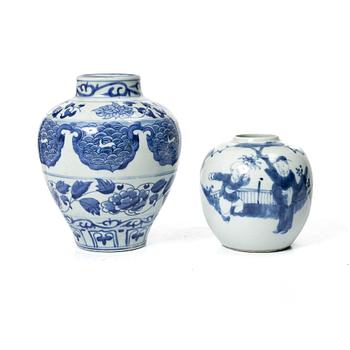
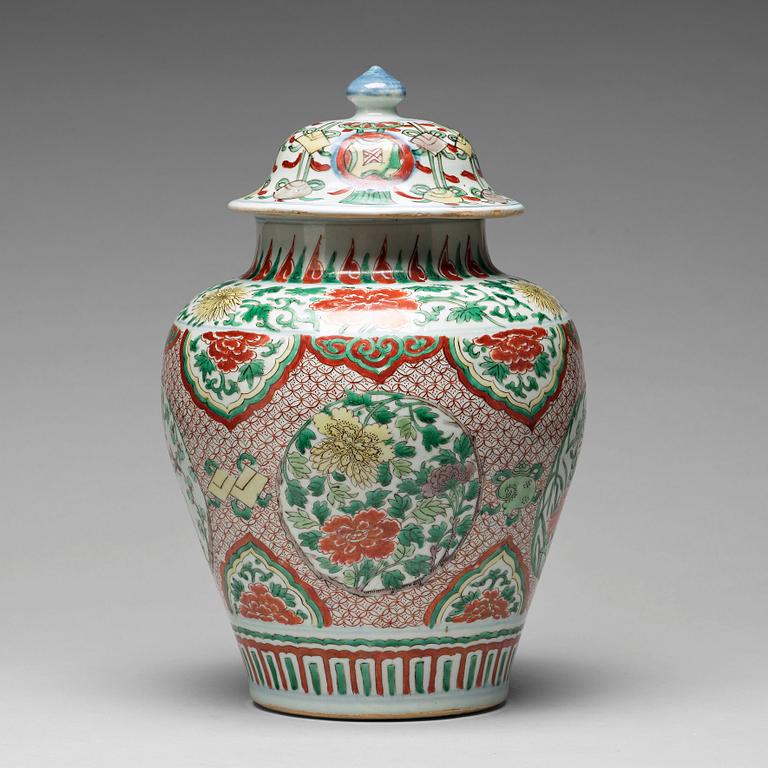
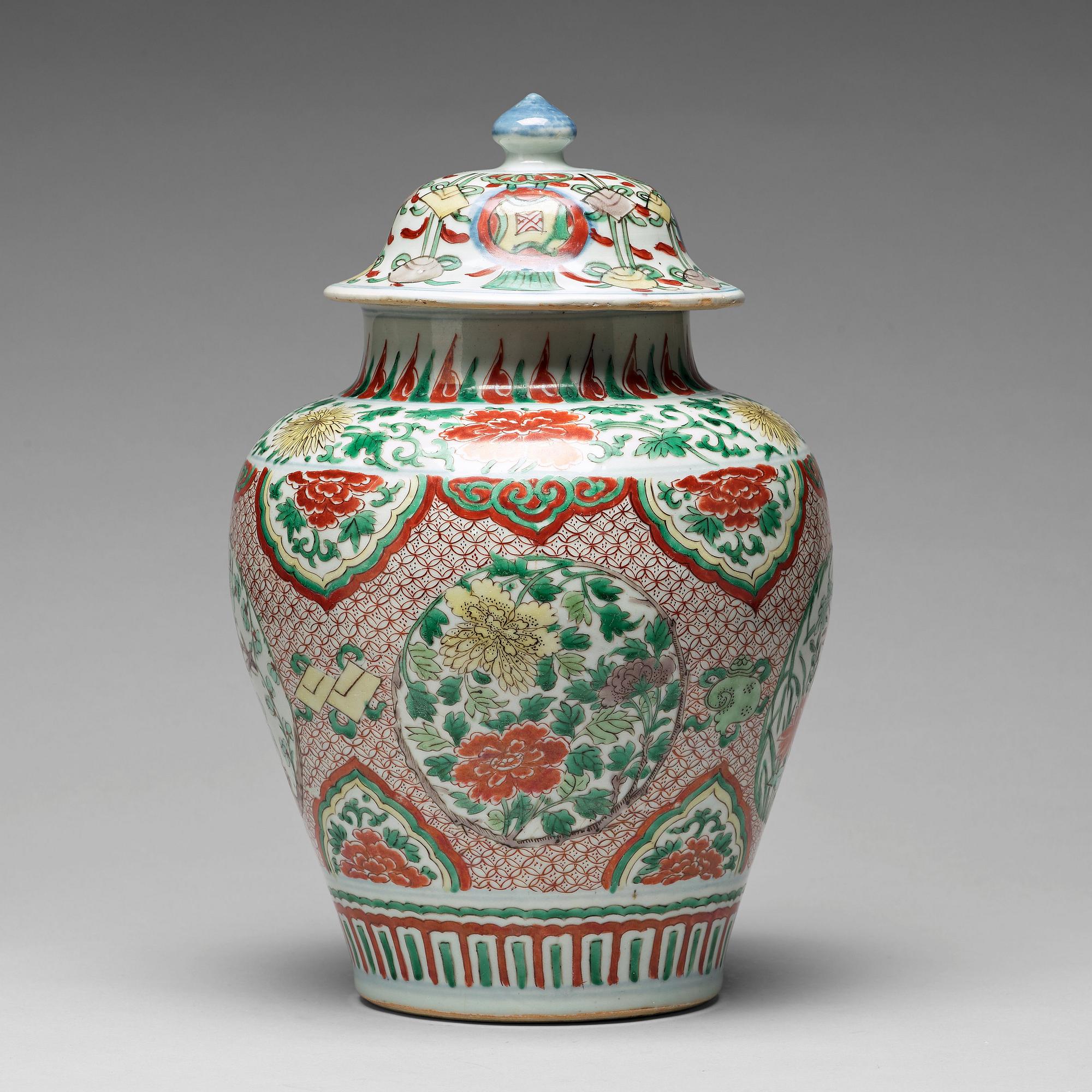
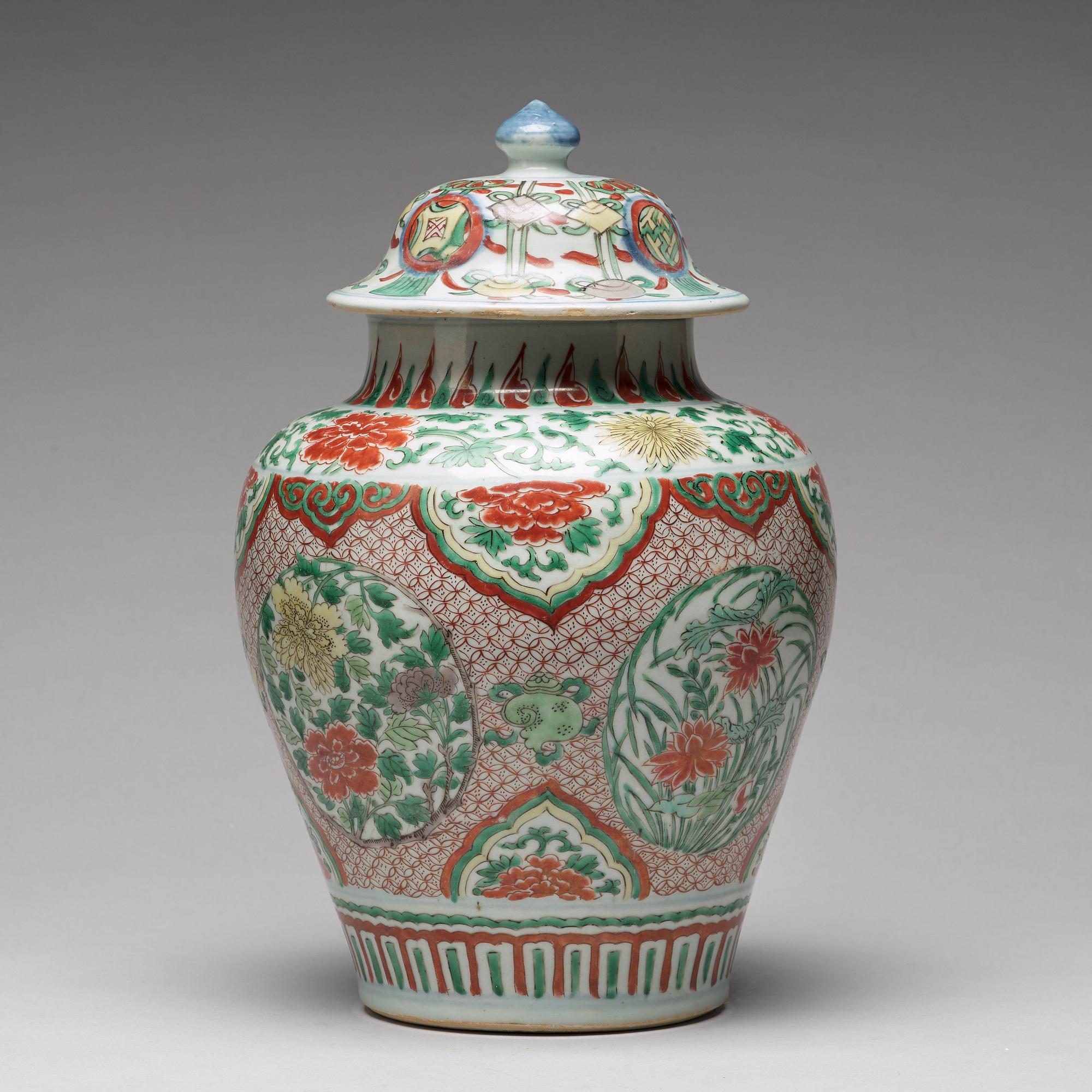
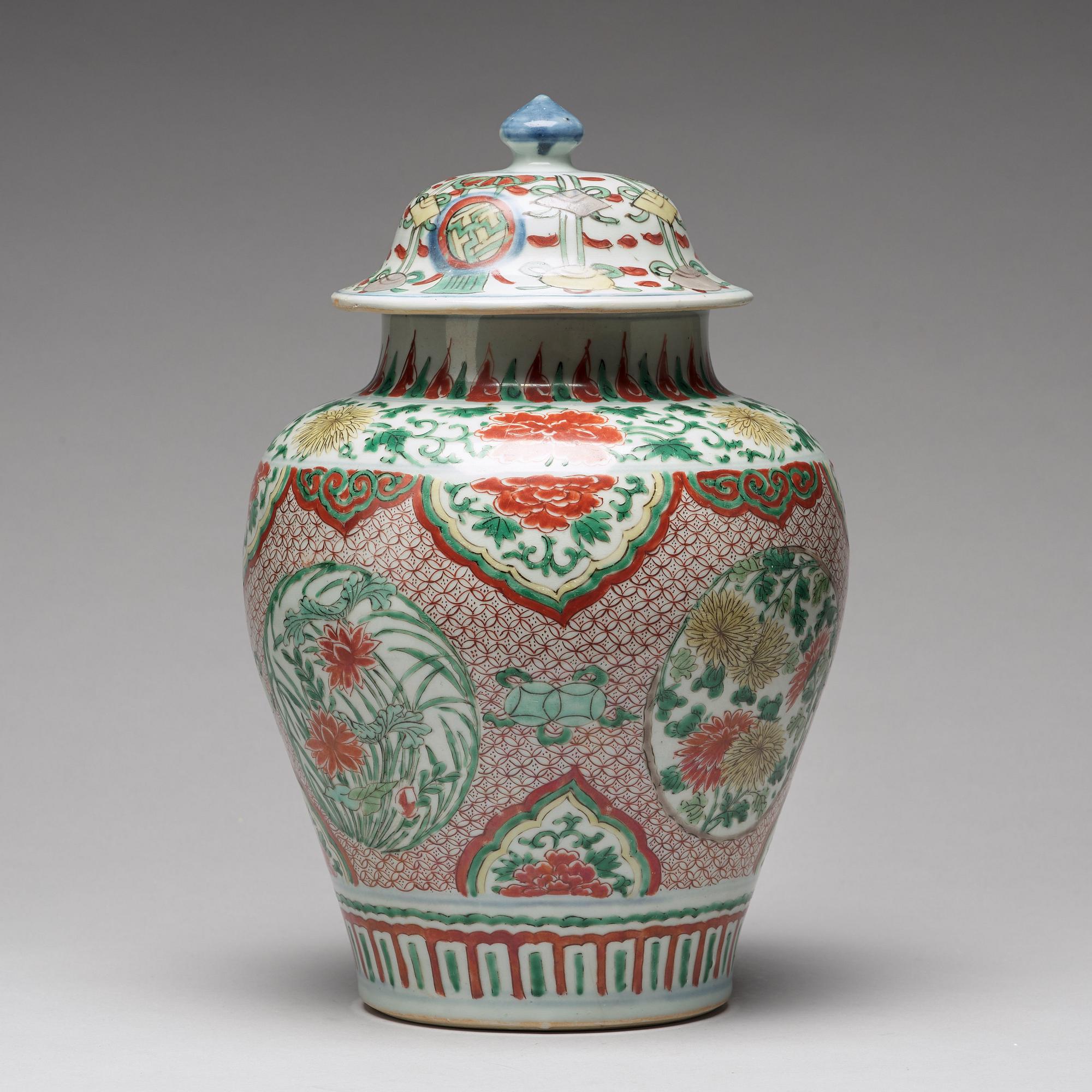
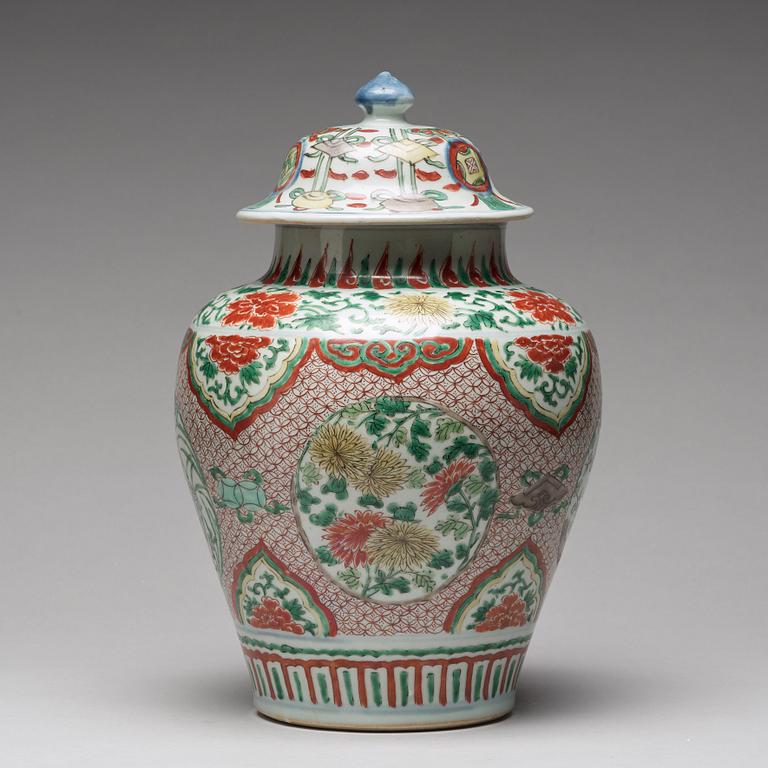
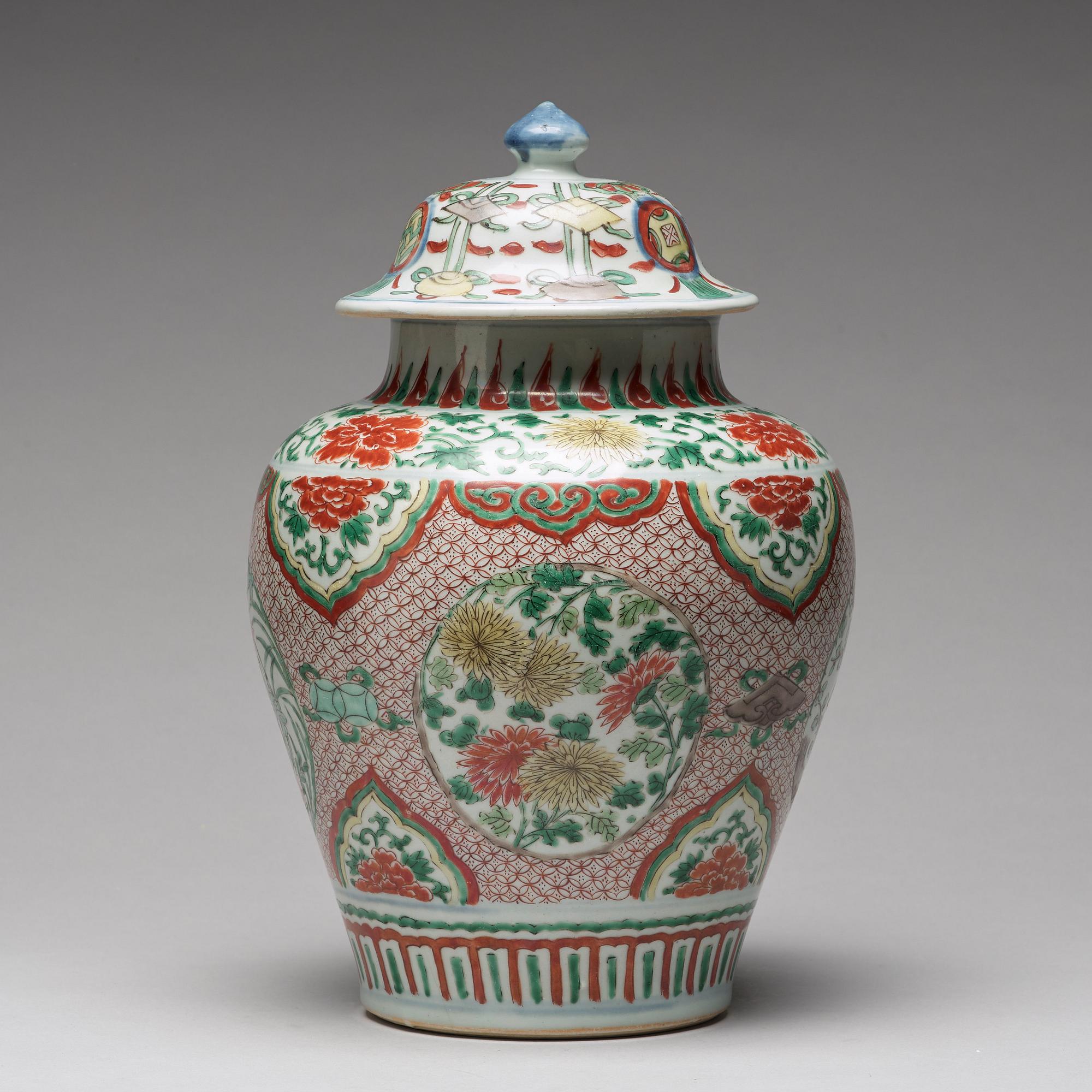
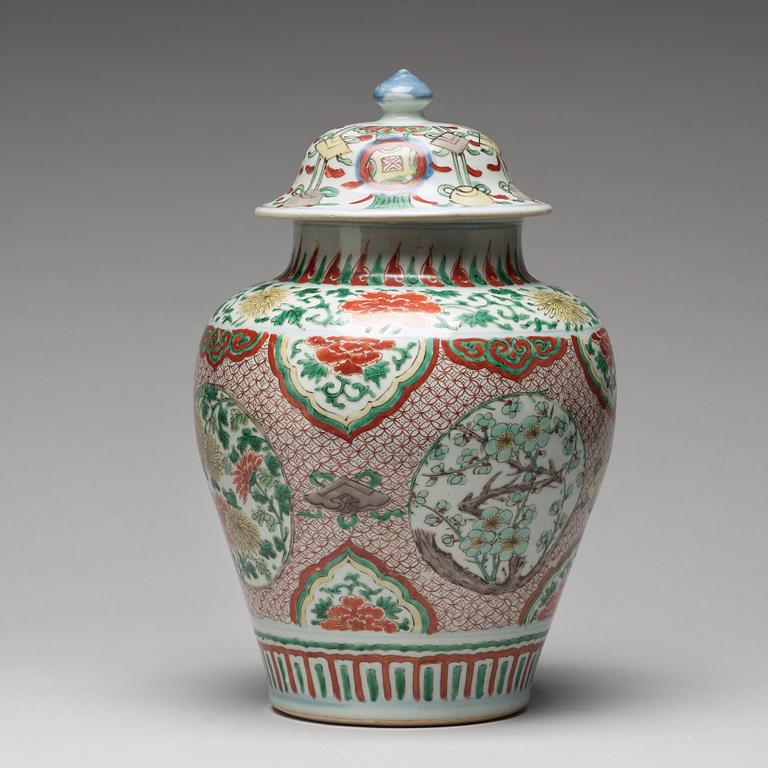
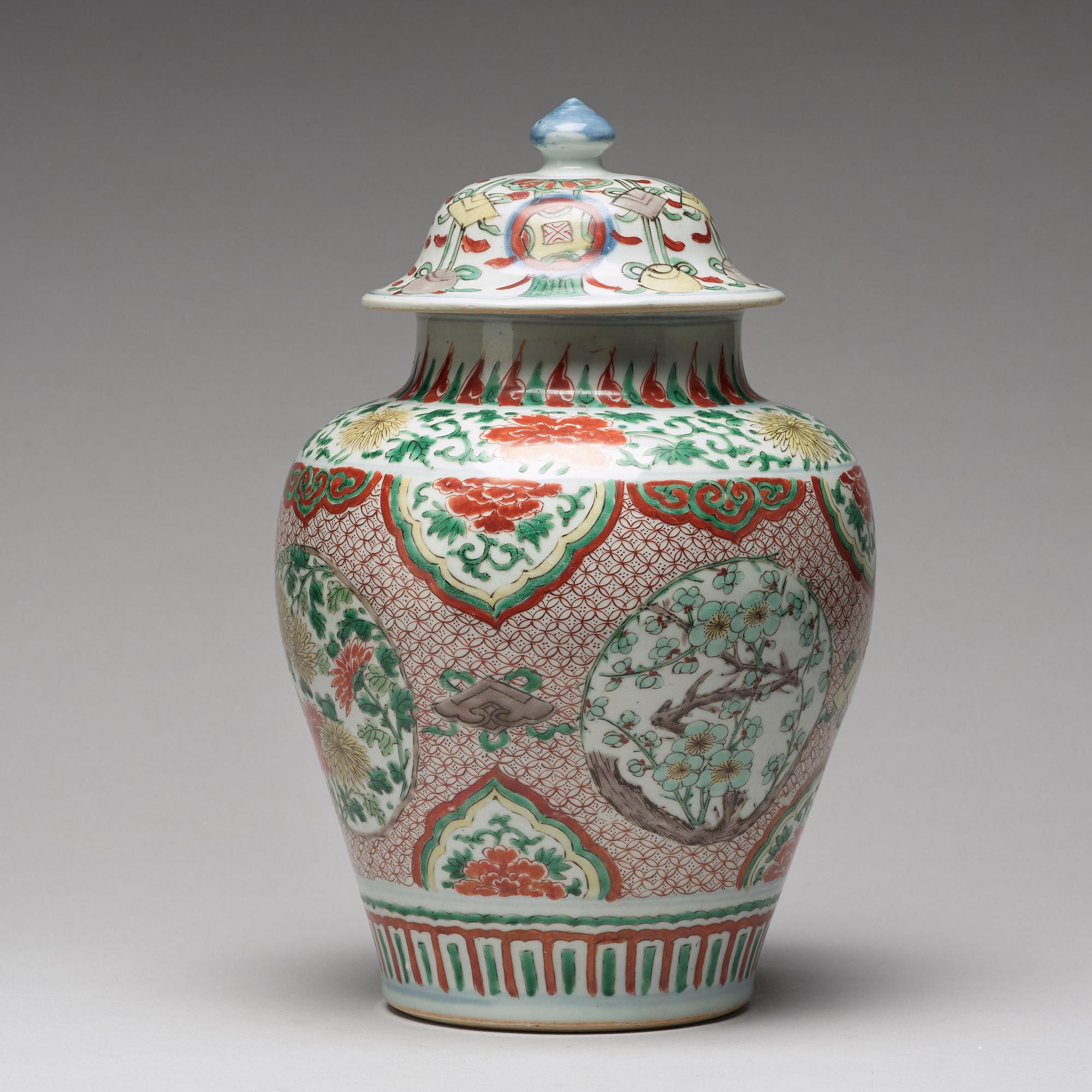
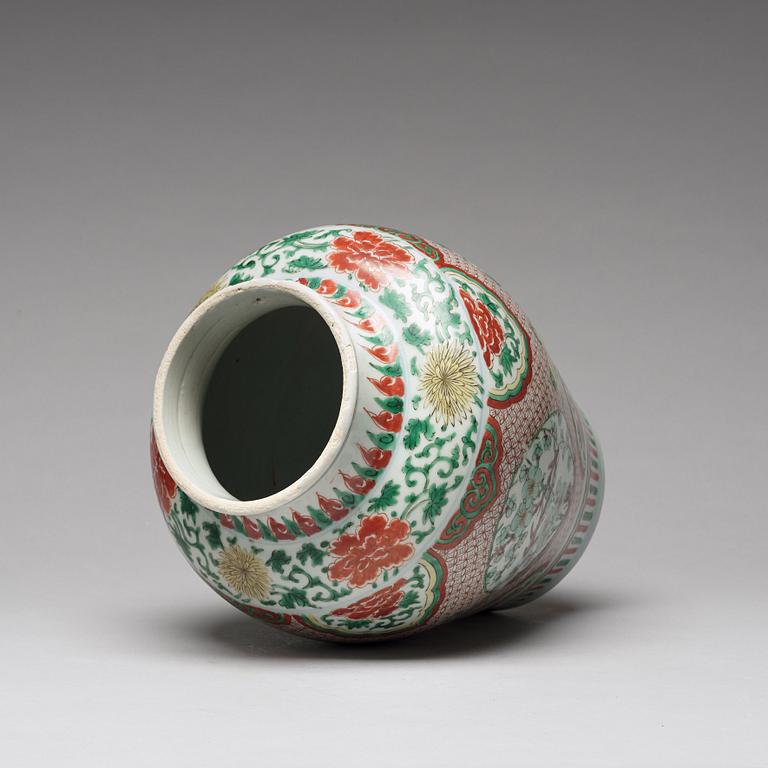
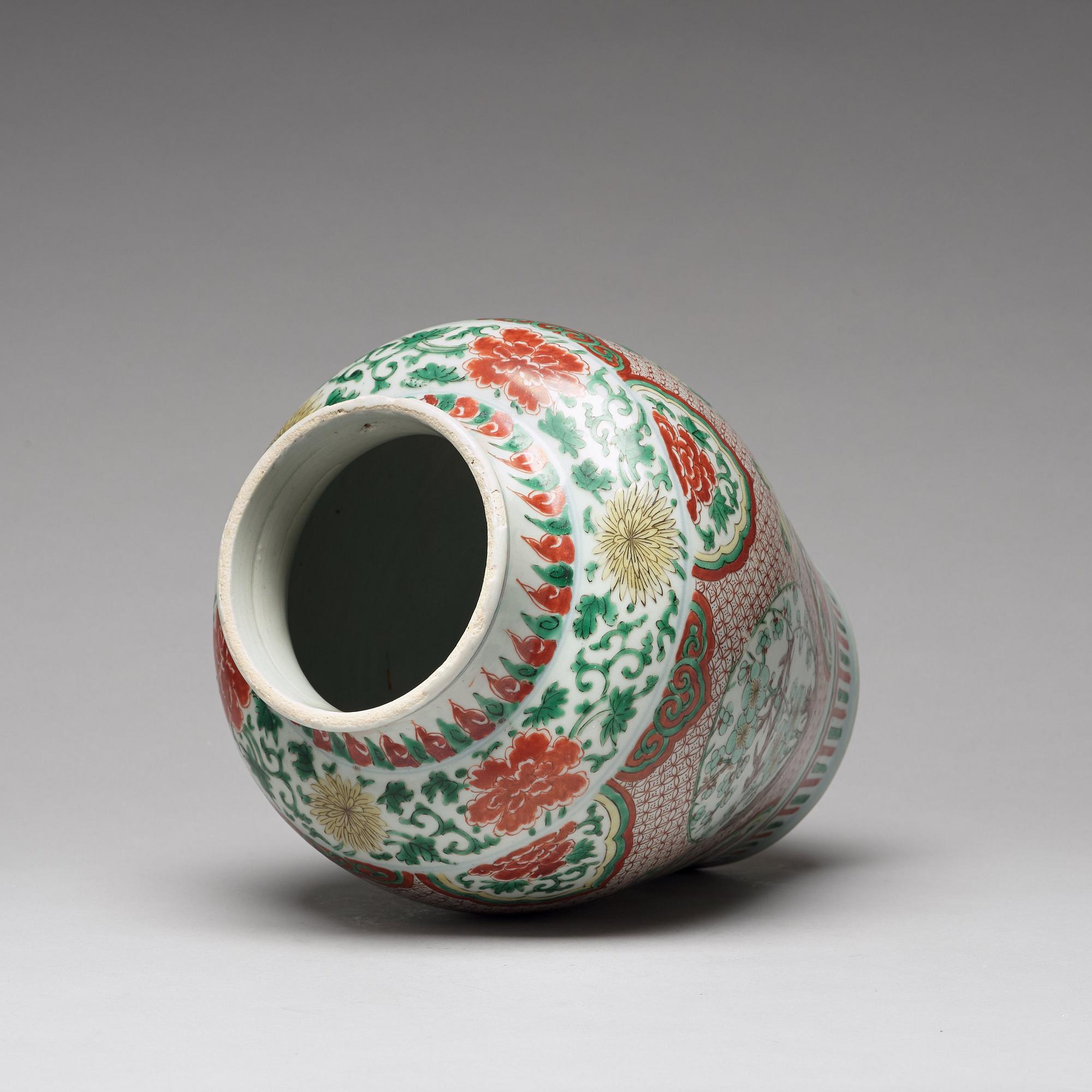
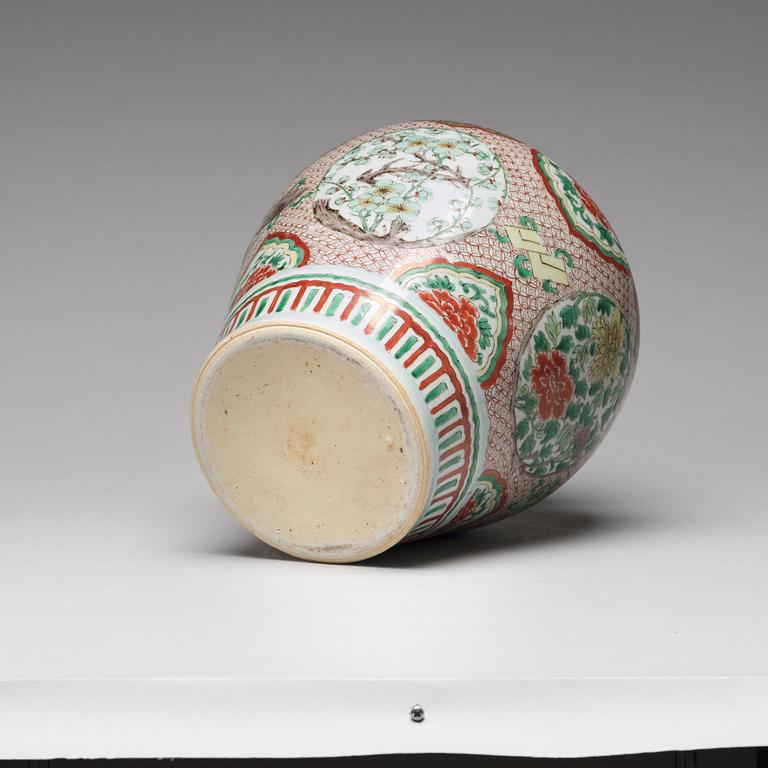
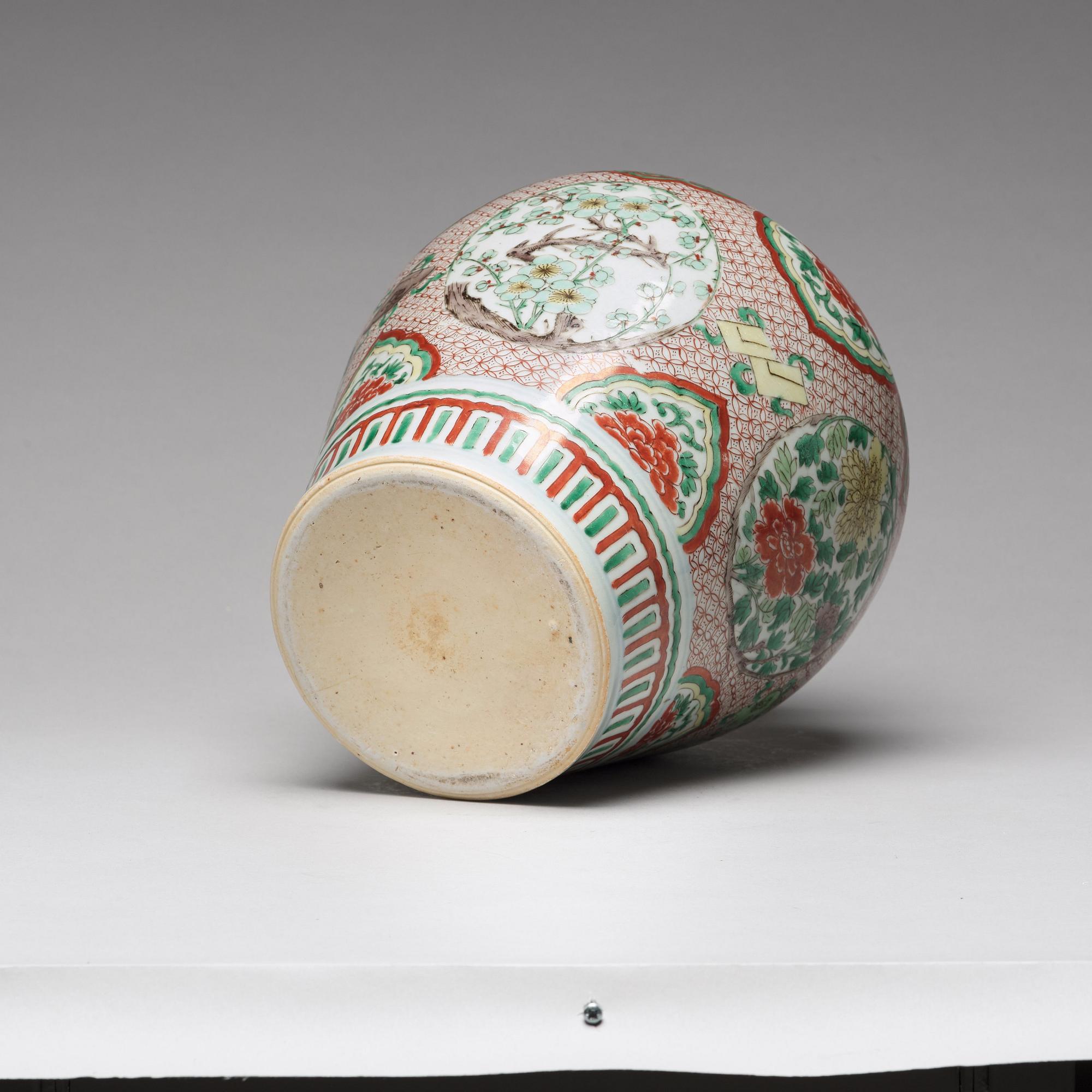
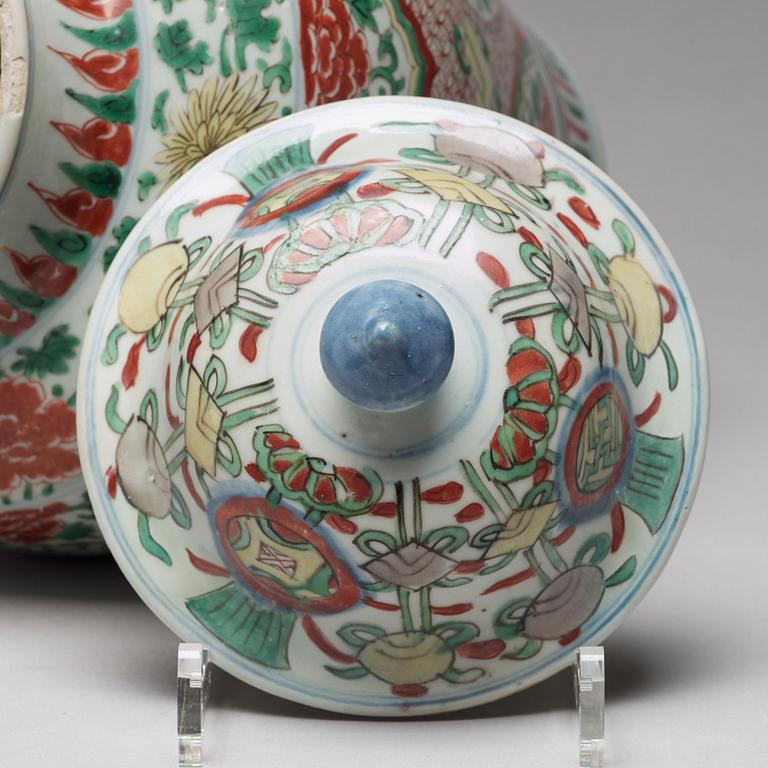
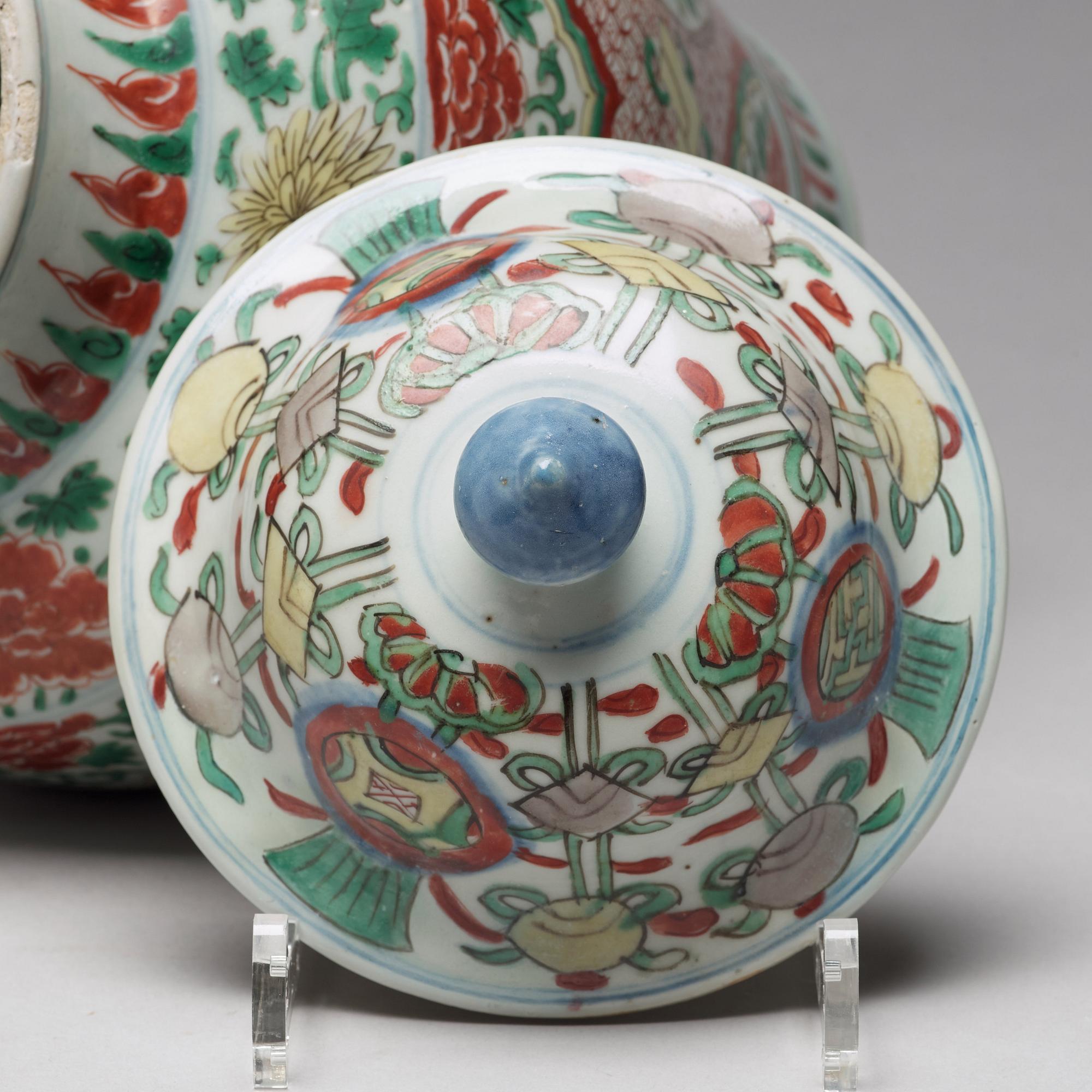
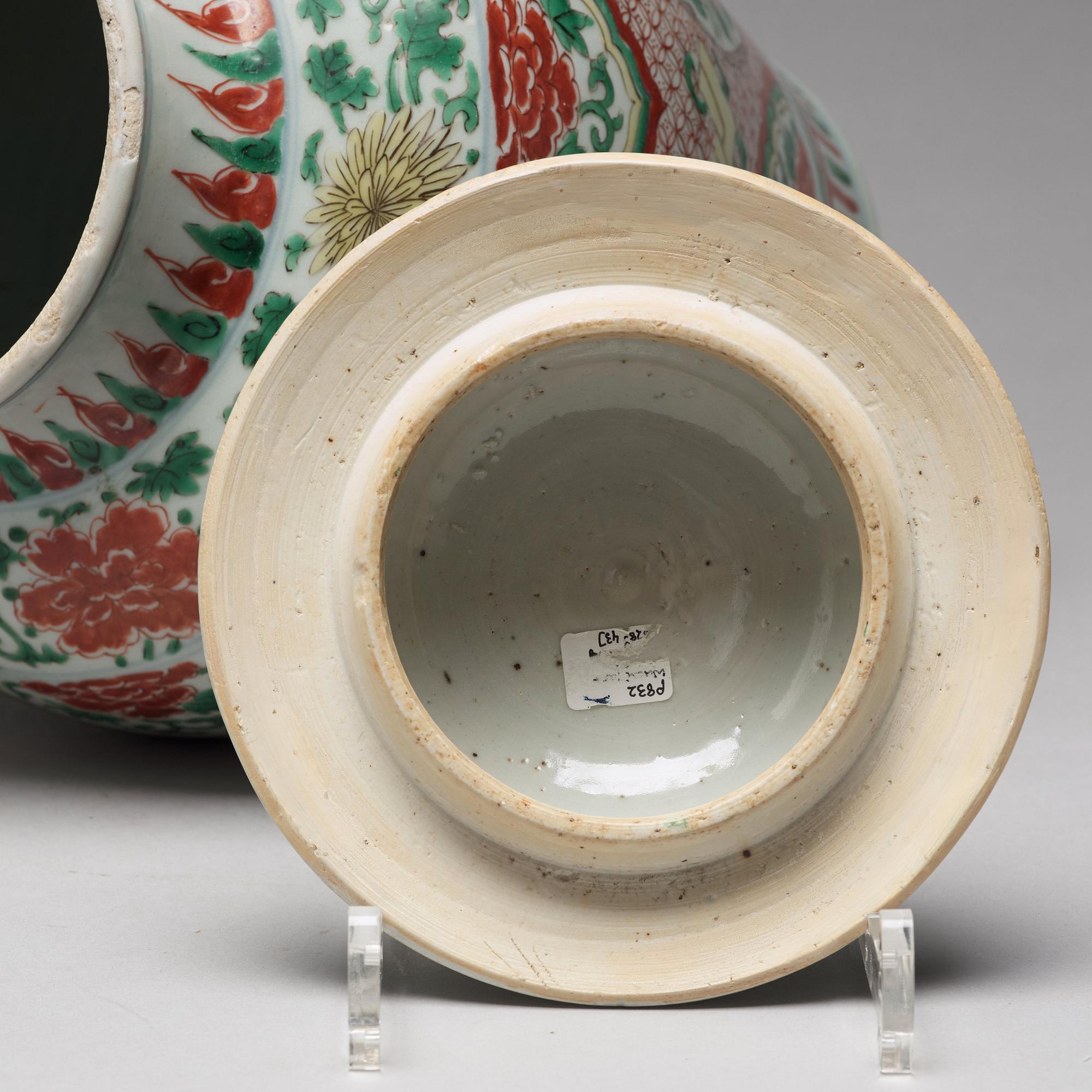
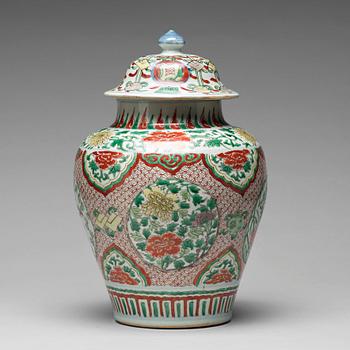
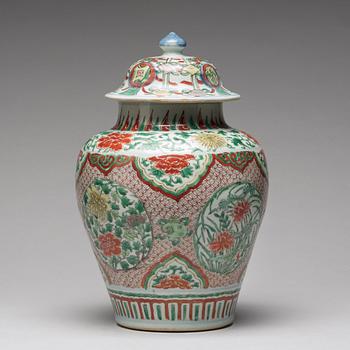
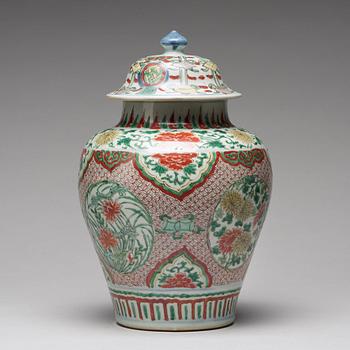
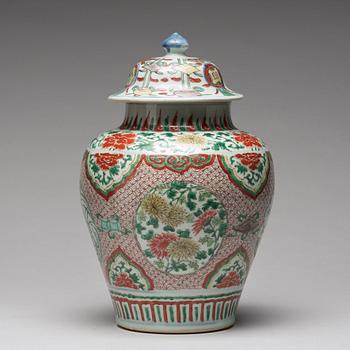
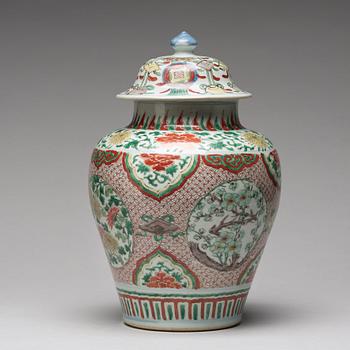
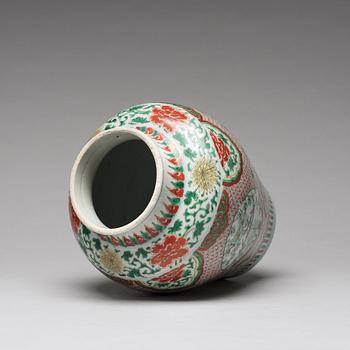
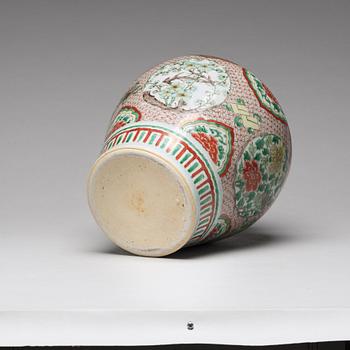
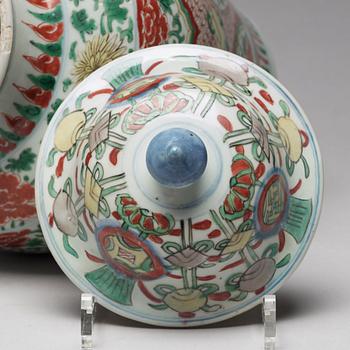
This vase is of ovoid form and brightly decorated in red, green, yellow and turquoise enamels. Upright lappets rise from above the foot and below the shoulder – each bordered in green, red and yellow enamels. The body of the vase is decorated with four roundels – each reserved against a brocade background – which alternate with Buddhist Emblems.
Each roundel is outlined in green and aubergine and contains a single flower - representing each of the four seasons.
Height 37 cm.
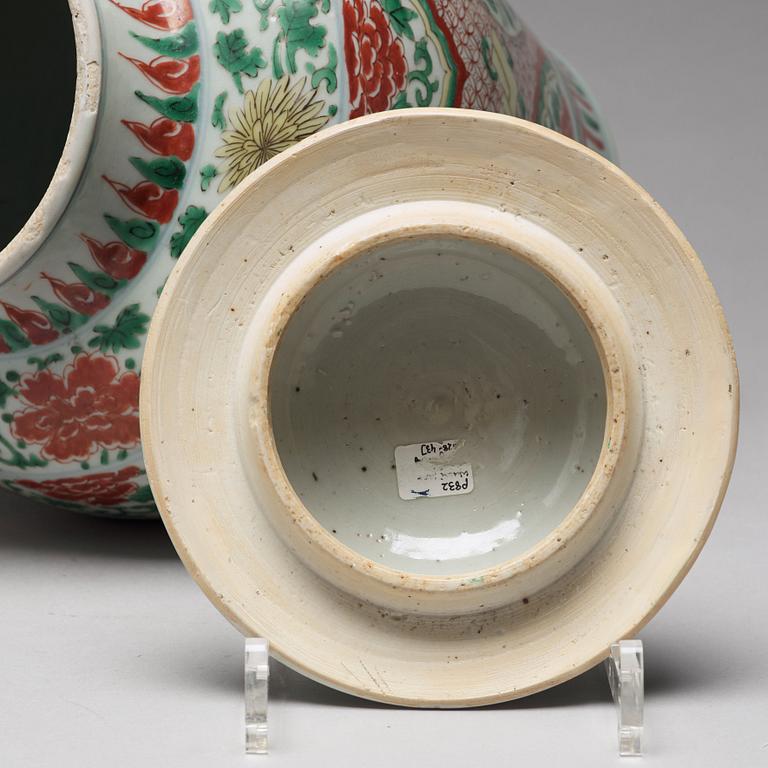
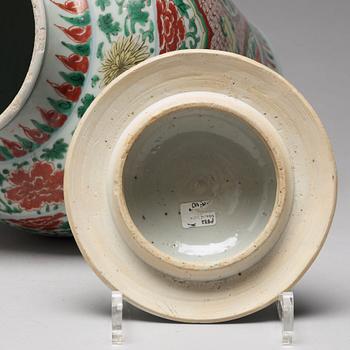
Cracks, chips. Restored crack. Cover from the same period, but might not be original.
Alkuperä - Provenienssi
Purchased from Guest & Gray, London, 3 April 2007.
The Avalon Collection.
This collection, which in the main focuses on the Interregnum and Kangxi periods has been both carefully and sensitively formed over the last twenty-five years. The collector, a member of the English Oriental Ceramic Society, has assembled the collection with an eye for provenance whilst purchasing from old European collections, well-established antique dealers and at auction.
Academically, the pieces have been well researched both in terms of their symbolism and narrative themes. In many instances the imagery on the pieces has been referenced to episodes in the romantic and historic novels of Chinese mythology, which were used extensively in the decoration of seventeenth century Chinese porcelain.
Näyttelyt
For a sleeve vase decorated in a similar manner but with four oblong cartouches each containing a spray of a single flower see “ An Era of Inspiration: 17th Century Chinese Porcelains from the Collection of Julia and John Curtis”, Christie’s New York, 16 March 2015, Lot 3545.
Muut tiedot
The peony – considered to be the queen of flowers symbolises spring; lotus – sacred flower of Buddhists represents summer; chrysanthemum – emblem of autumn and prunus – symbol of winter, with each of its five petals representing the five races: Chinese, Manchu, Mongol, Mohammadan and Tibetan. When the four flowers are shown together they form a homophone meaning “year round peace”.
Lisätietoja ja kuntoraportit

Tietoa ostamisesta
Muiden katsomia kohteita