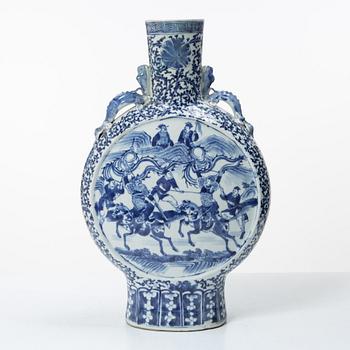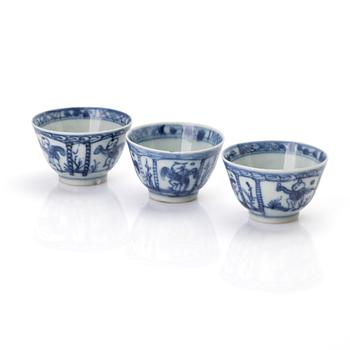
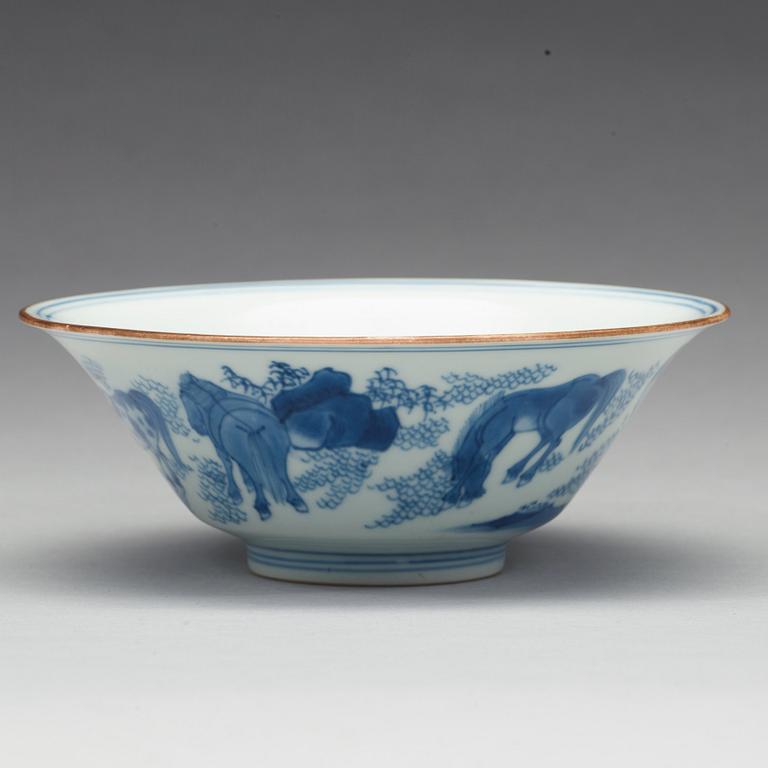
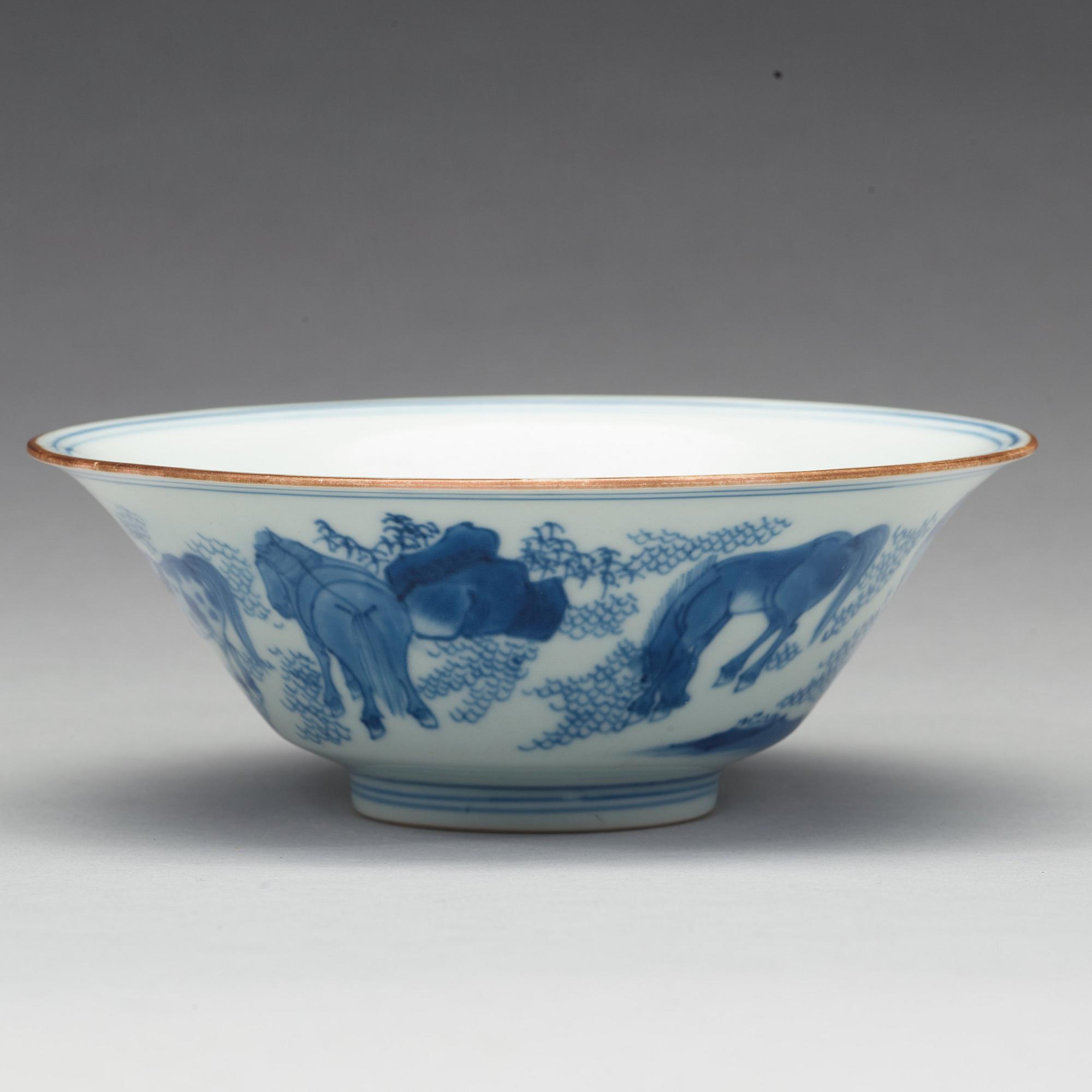
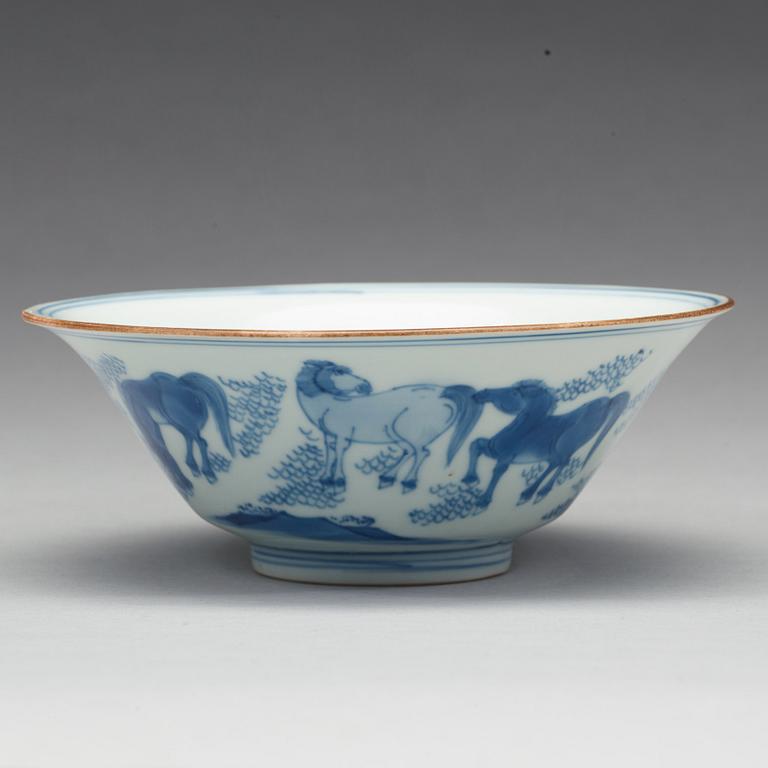
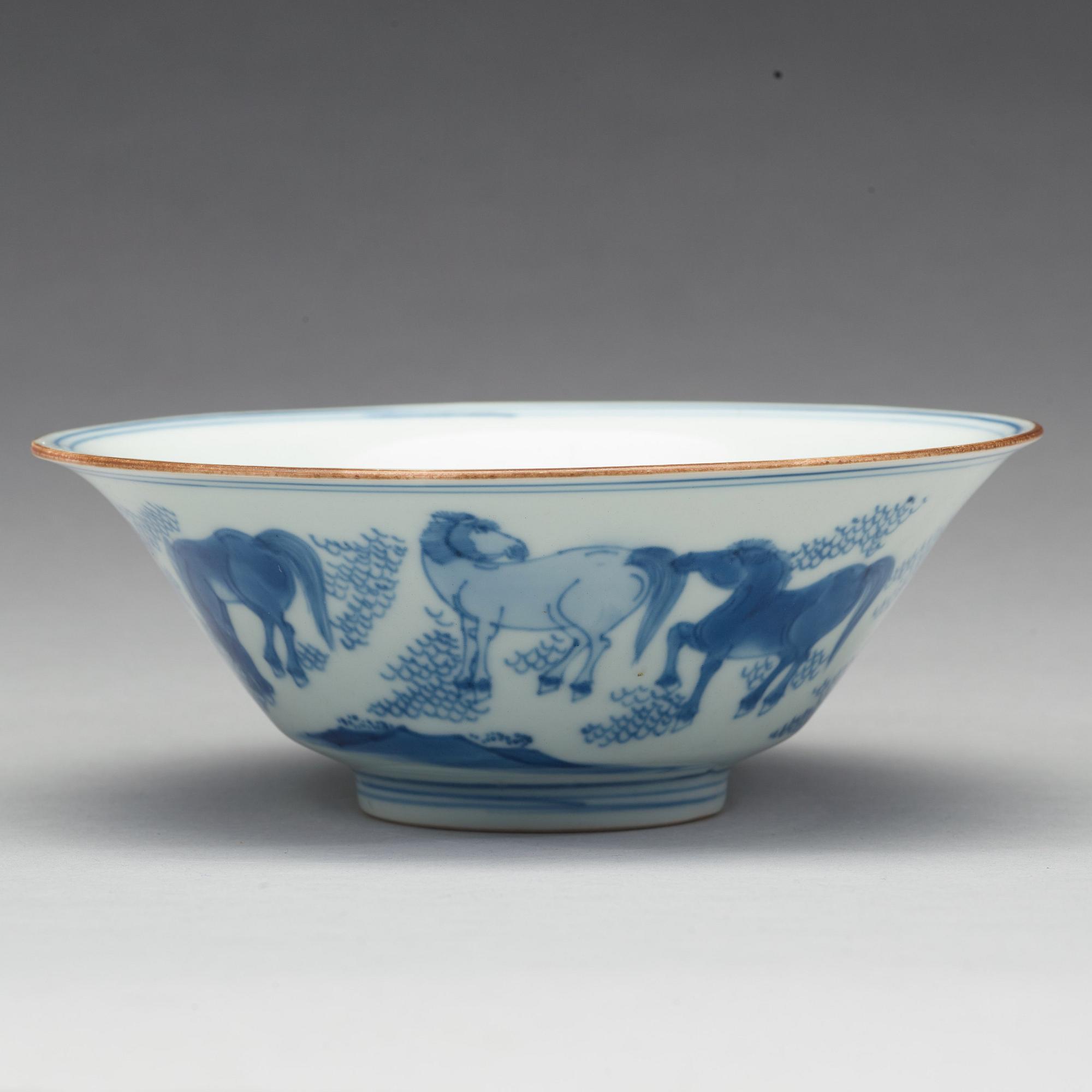
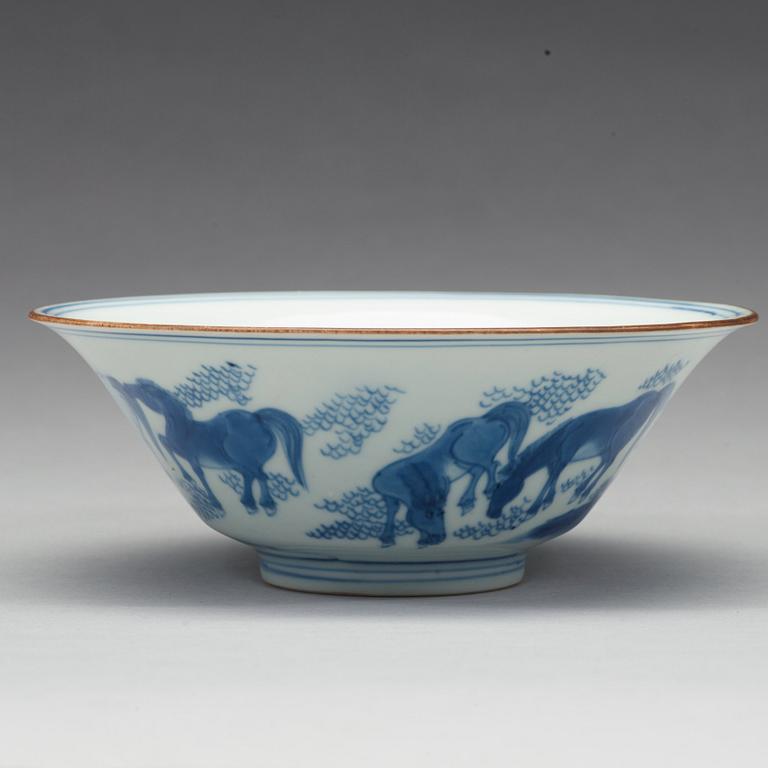
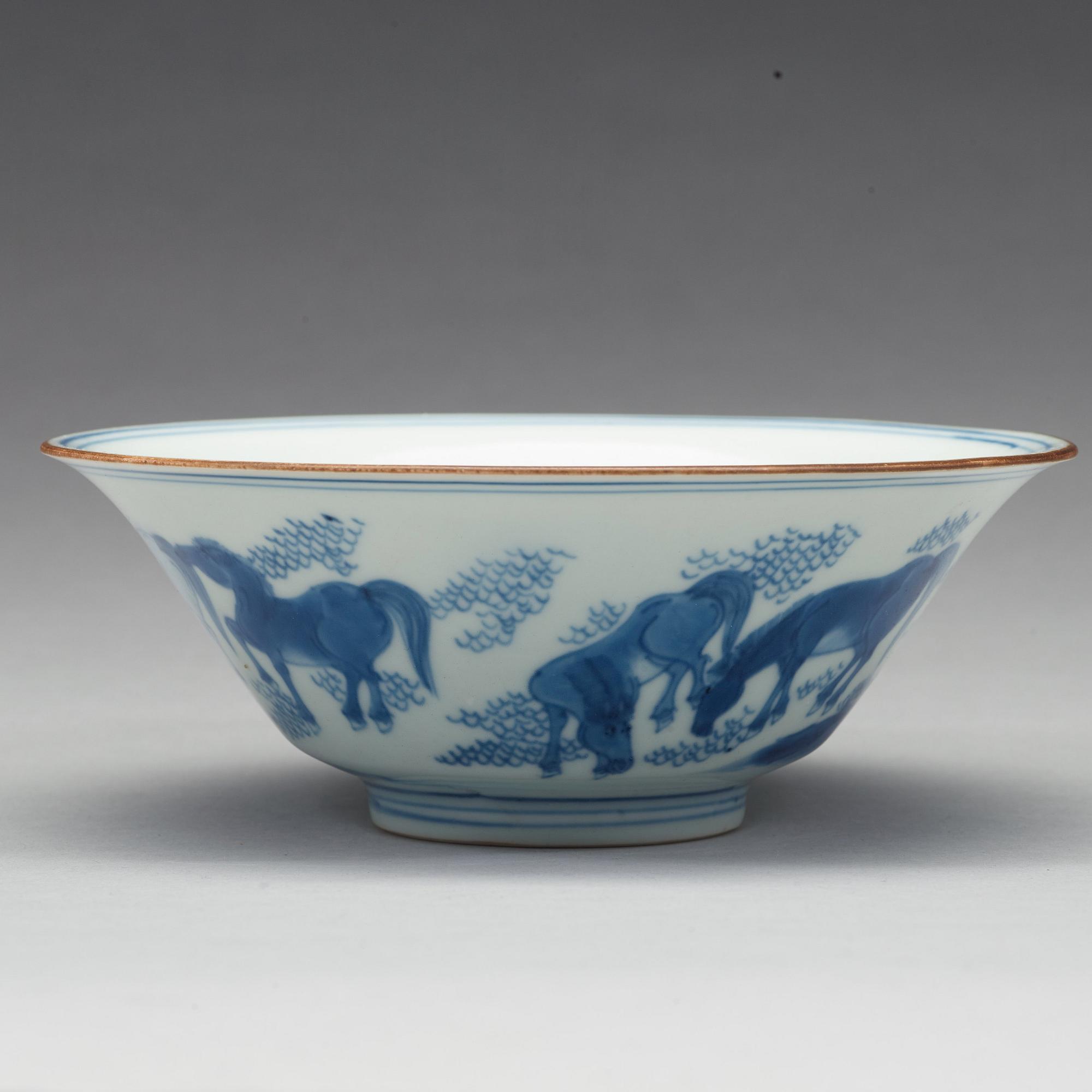
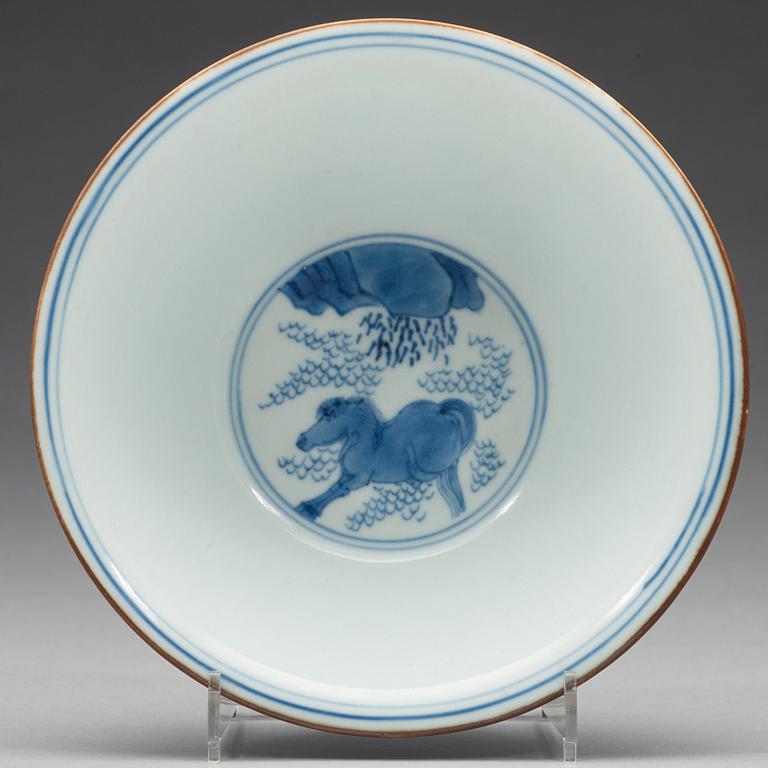
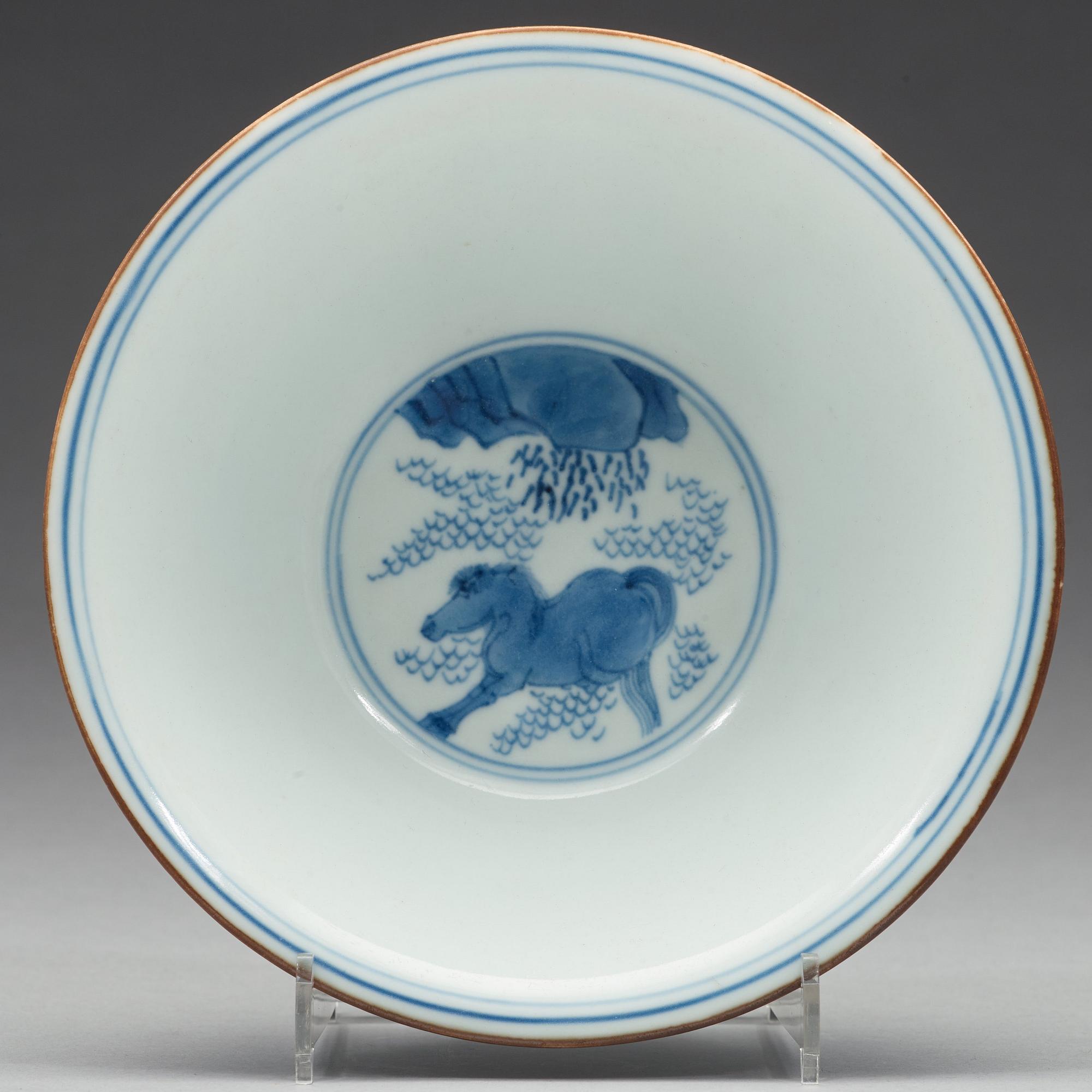
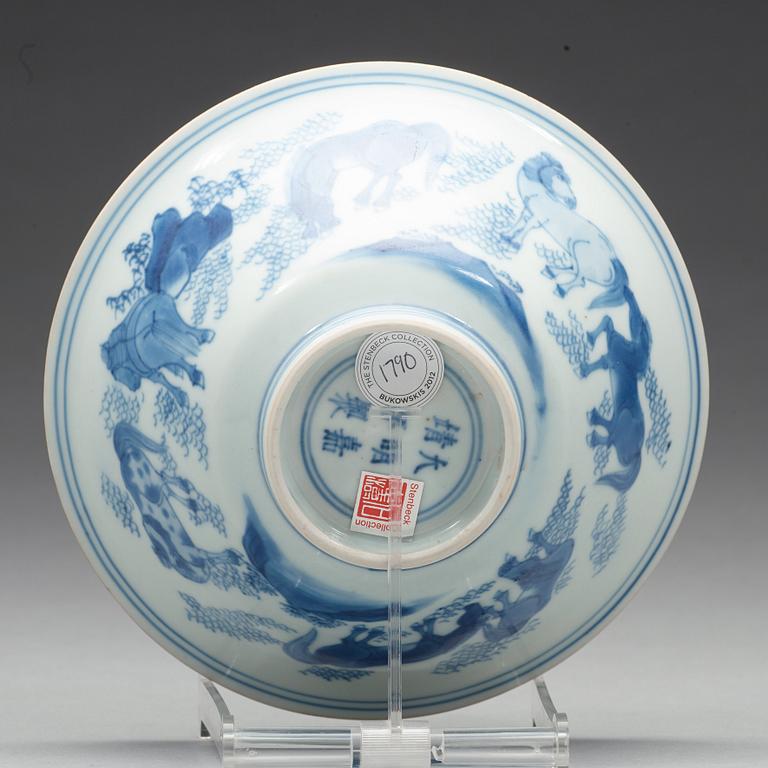
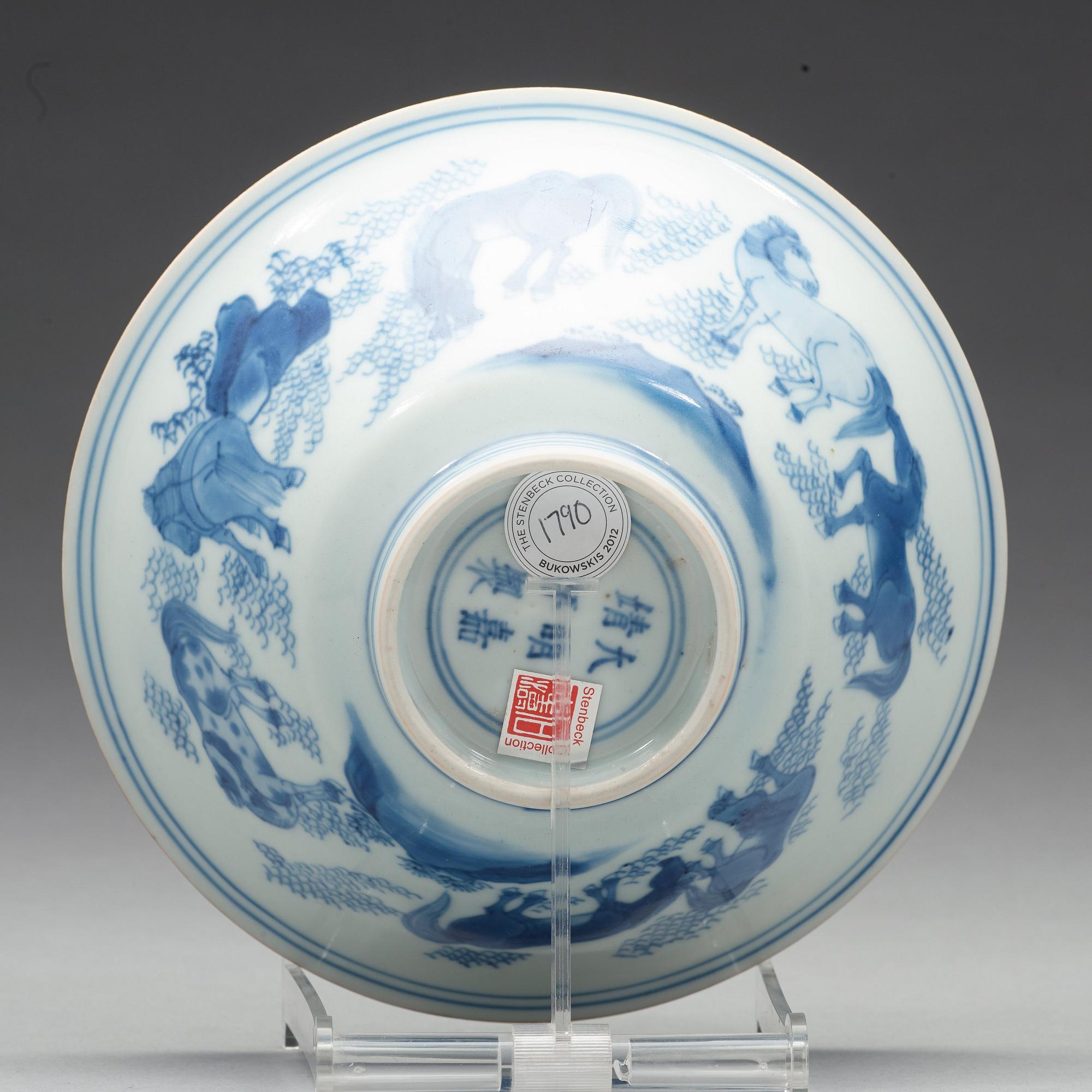
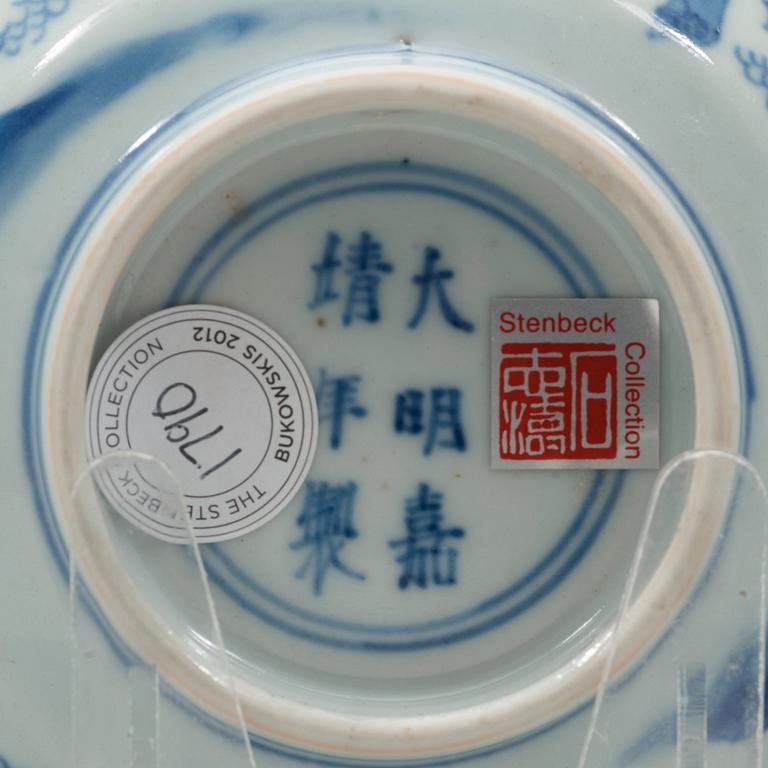
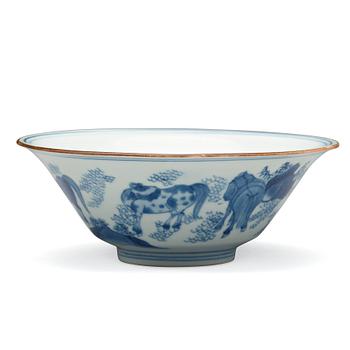
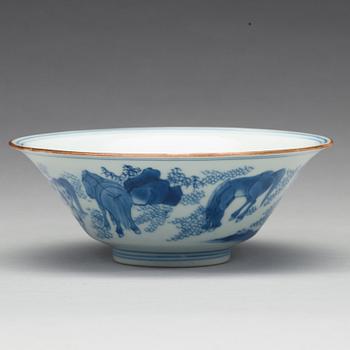
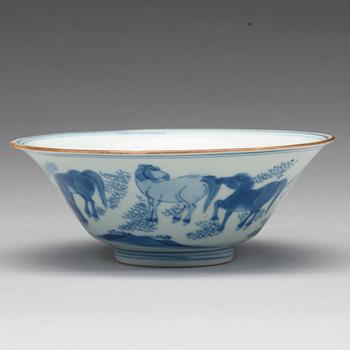
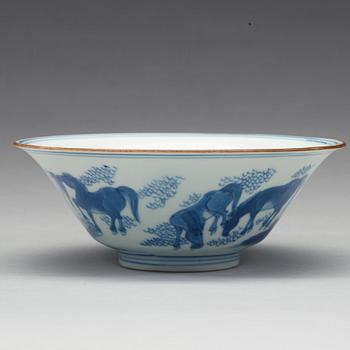
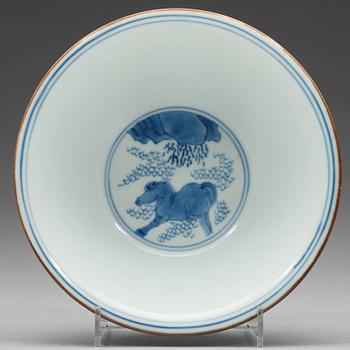
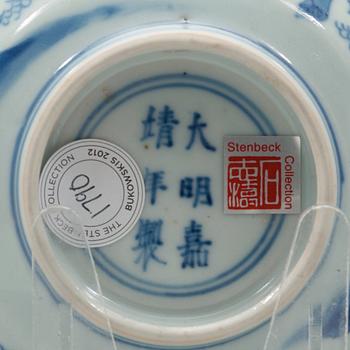
Decorated with General Mu’s eight horses. Diameter 16,5 cm.
Minor wear.
Alkuperä - Provenienssi
The Stenbeck Collection.
Stenbeck was for many years the presiedent of the Swedish Oriental Ceramics Society. His collection has been vast and unusual in comprising a wide range of Chinese porcelains produced primarily between 1620 and 1683, for the domestic, Japanese and Dutch markets. But he has also had a passion for Chinese furniture and Wanli porcelain.
Having studied, collected and exhibited these splendid wares for almost forty years, Stenbeck now feels that it is time to offer part of his collection at auction. Bukowskis is pleased to have been able to sell items from this impressive collection during several auctiona, see for example sale 568 an onwards.
Näyttelyt
The collection was exhibited at the Heinola Museum in Finland in 2000, under the exhibition name “The Liberated Brush”.
Kirjallisuus
The eight horses of King Mu of the Zhou Dynasty was a popular theme for porcelain decorations from the Transitional into the Yongzheng period (1723-35). The story originates from a historical romance, the Mu tianzhi zhuan (An Account of Emperor Mu), which describes the journeys of the fifth emperor of the Zhou dynasty (1023-983 BC) during which he met Xi Wangmu - the Queen Mother of the West - at Yaozhi (the Jade Pond).
The story is about King (Wang) Mu, who dreamed of being an immortal God. He was determined to visit the heavenly paradise and taste the peaches of immortality. A brave charioteer named Zaofu used his chariot to carry the king to his destination.
During these travels the emperor's chariot was pulled by eight horses named after the color of their hair. Another account, the forth century book, the Shiyiji (Researches into Lost Records) has it that the horses' names reflected their unusual talents; Number 1 gallops without touching the ground; Number 2 runs faster than birds; Number 3 goes especially fast at night; Number 4 goes as fast as the shadow of the sun; Number 5 is especially well-groomed with a splendid mane; Number 6 runs so fast that one can see a row of ten images of him; Number 7 rides on a cloud; Number 8 has wings."
The The Eight Horses of Wang Mu became a popular subject among later poets and artists and a symbol for the vehicle or journeys of any emperor.
Tietoa ostamisesta




Muiden katsomia kohteita