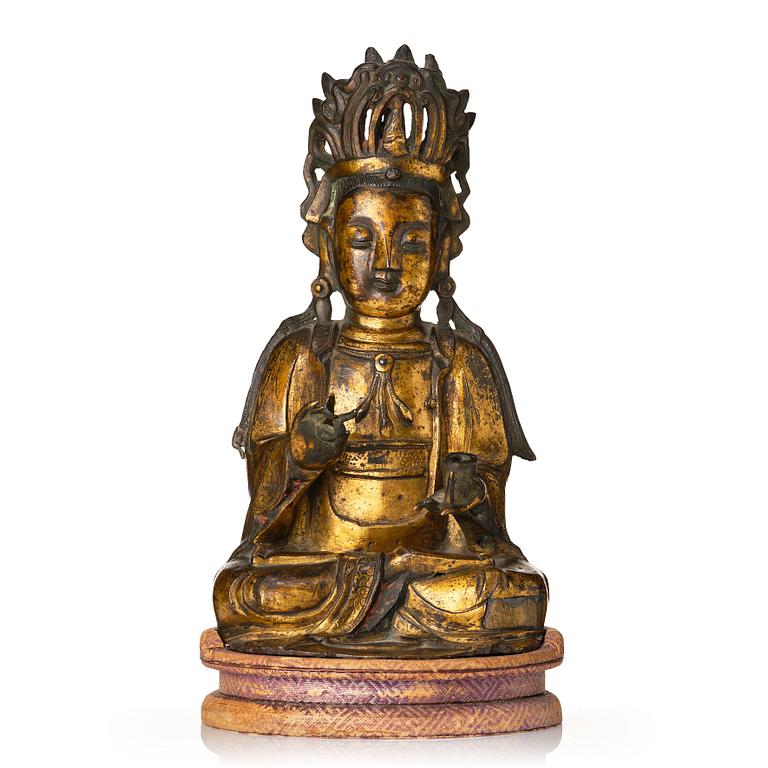
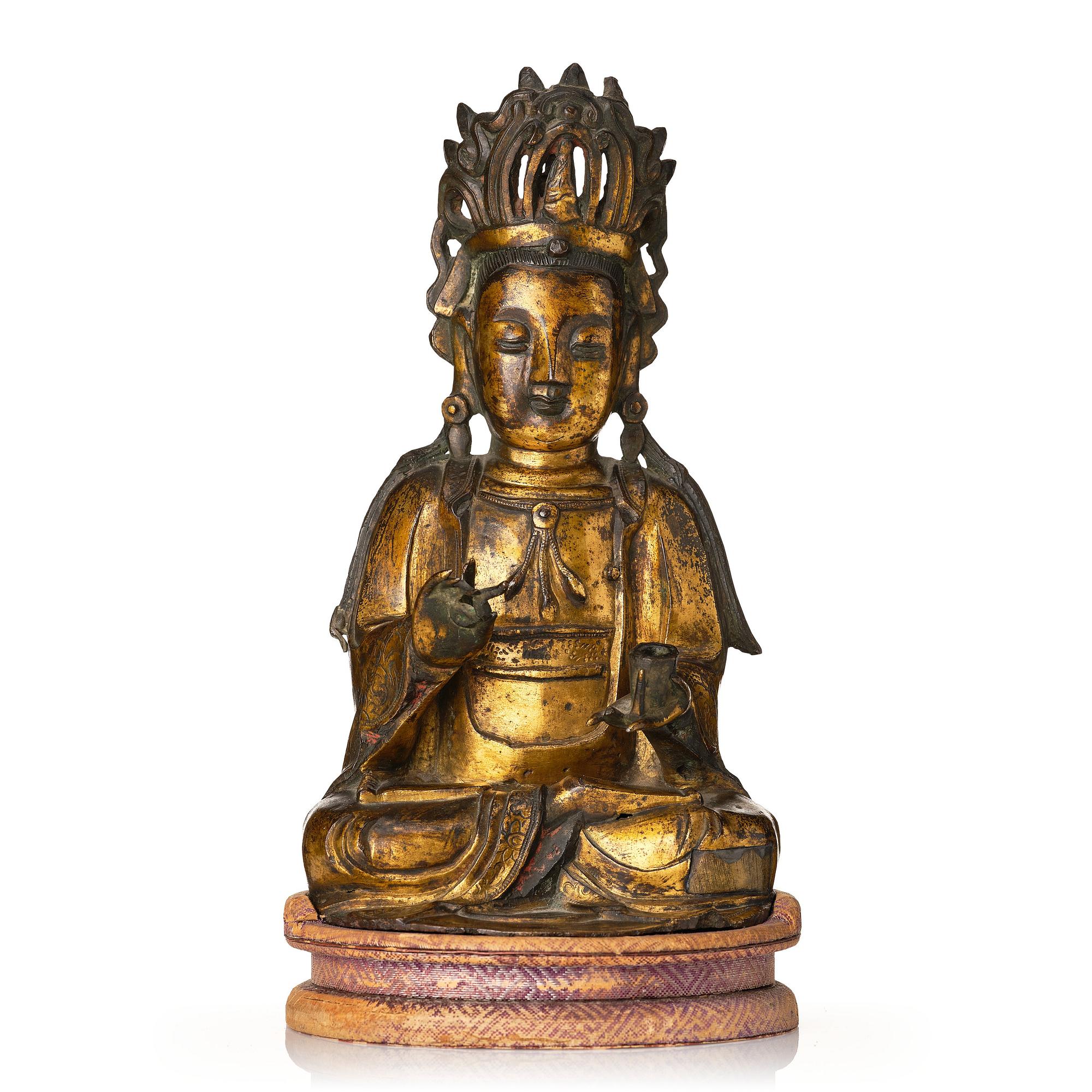
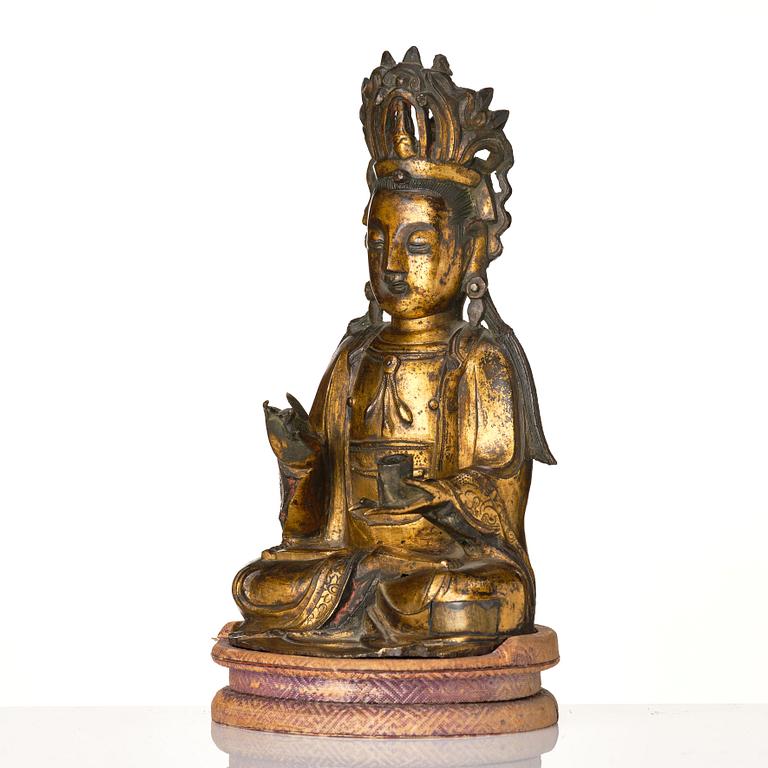
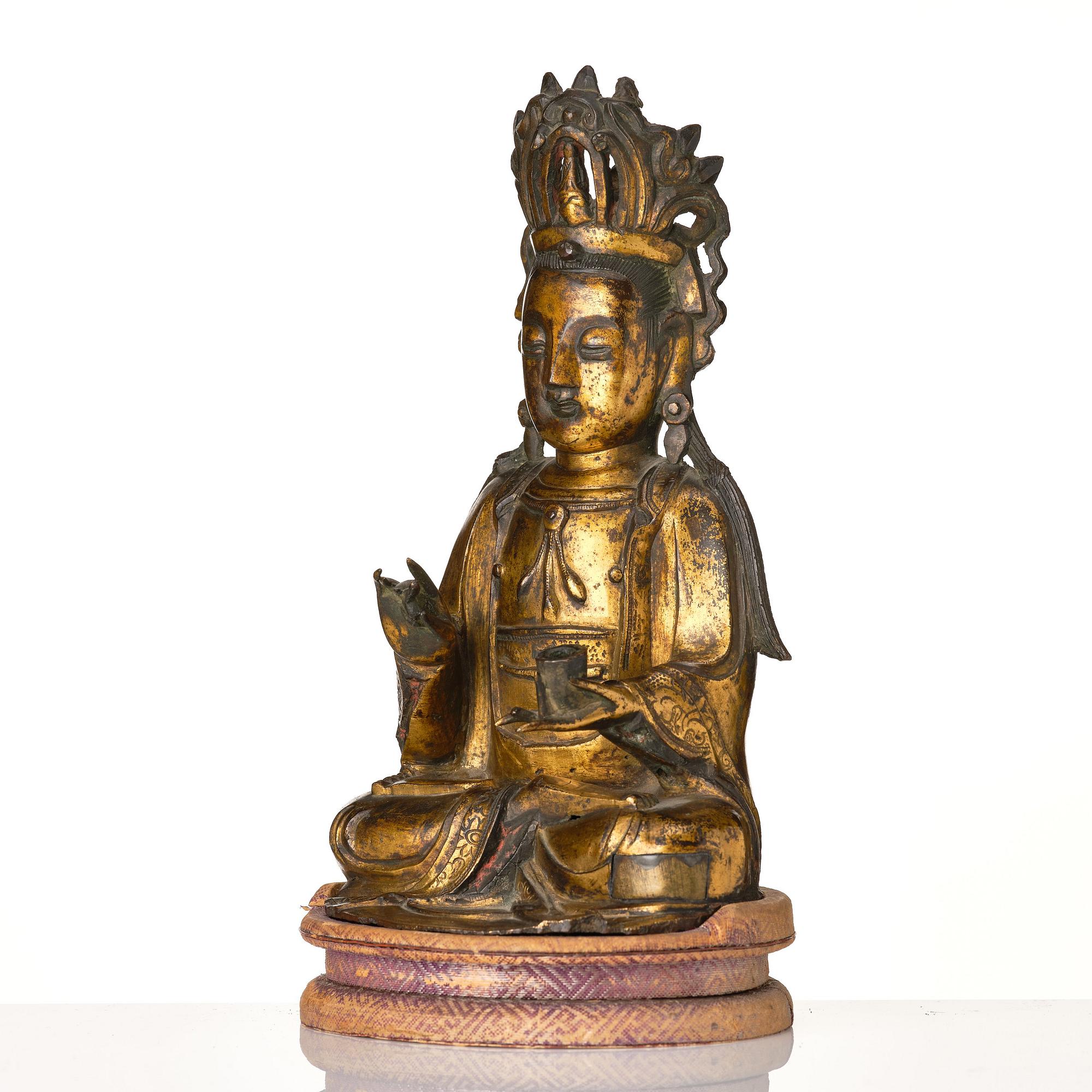
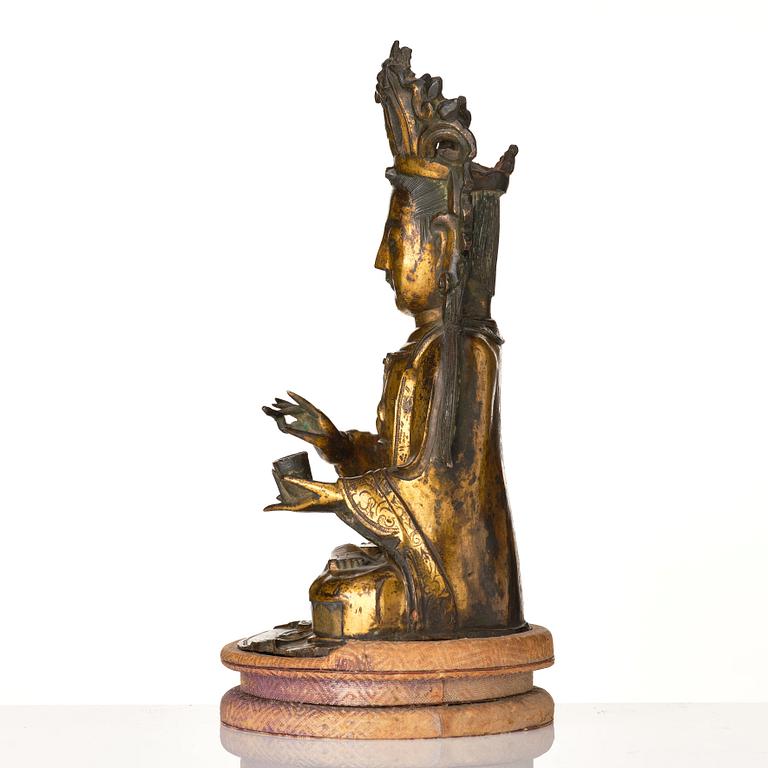
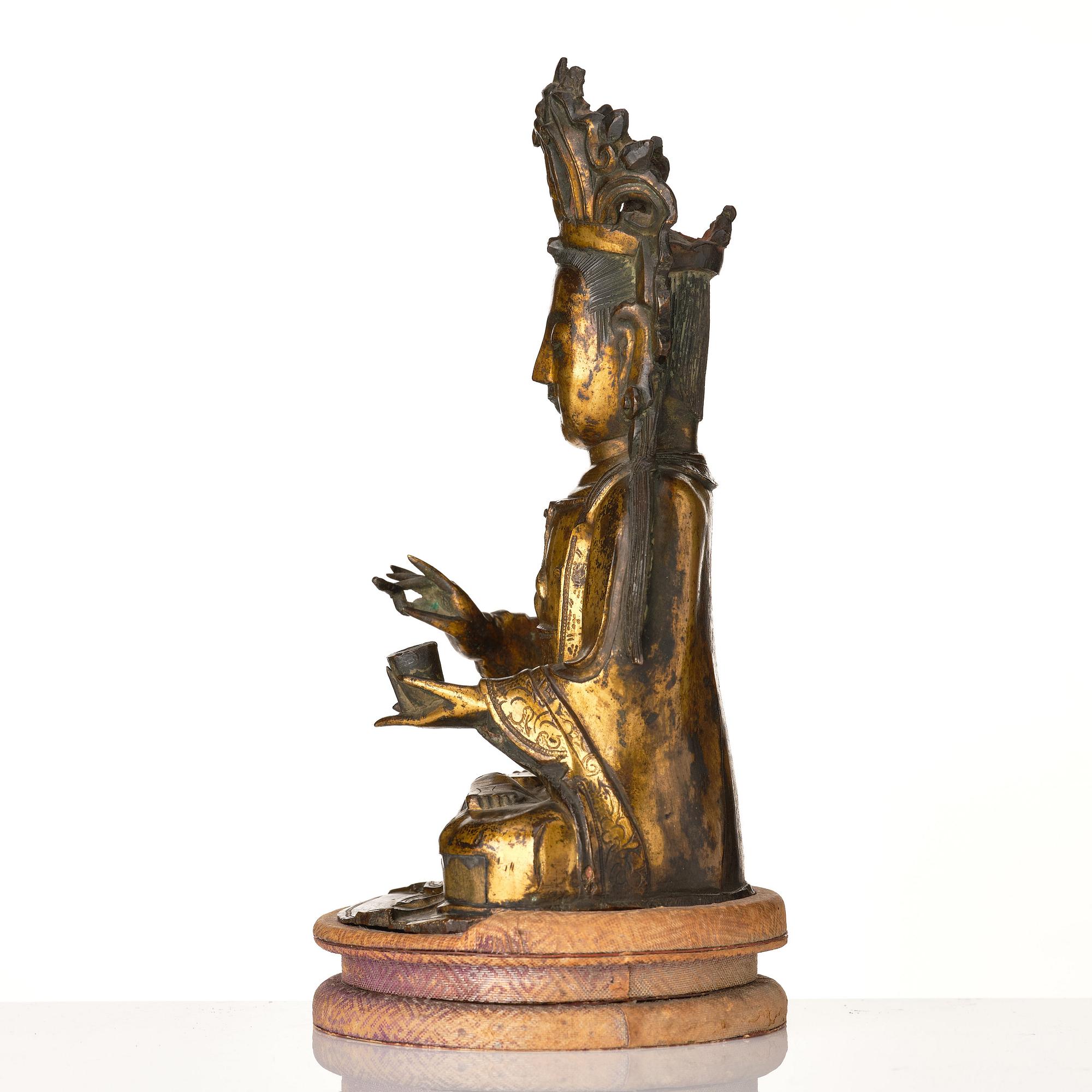
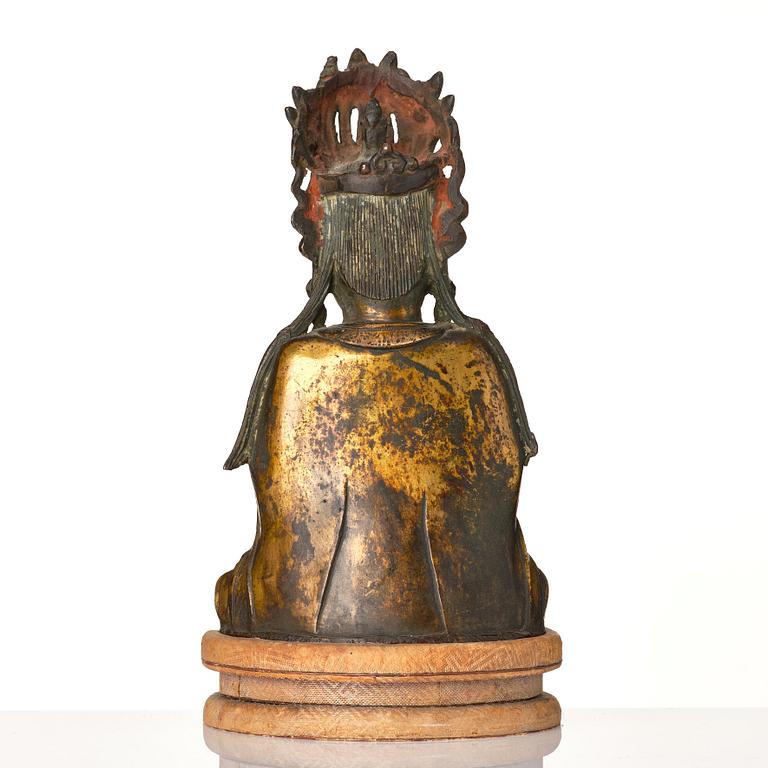
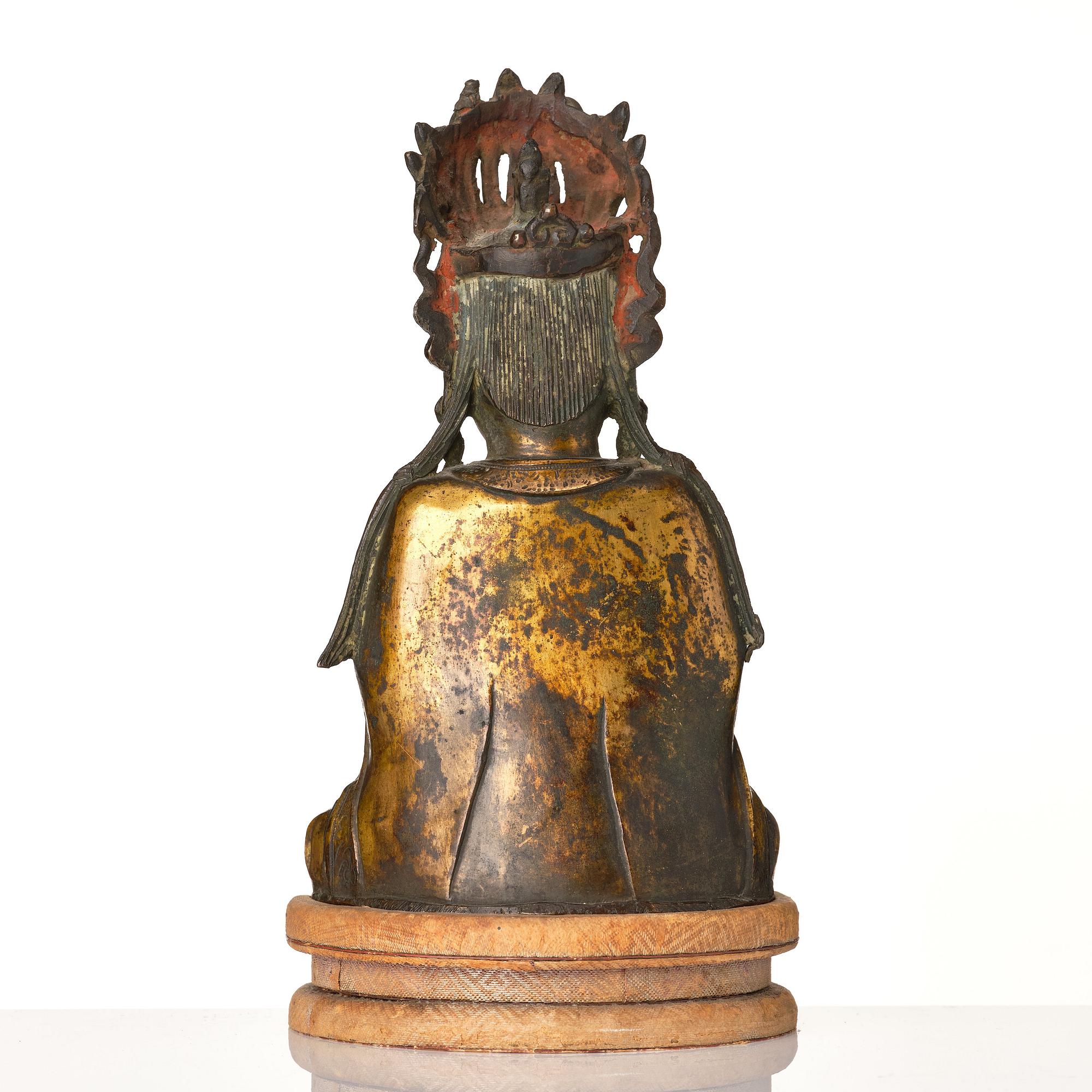
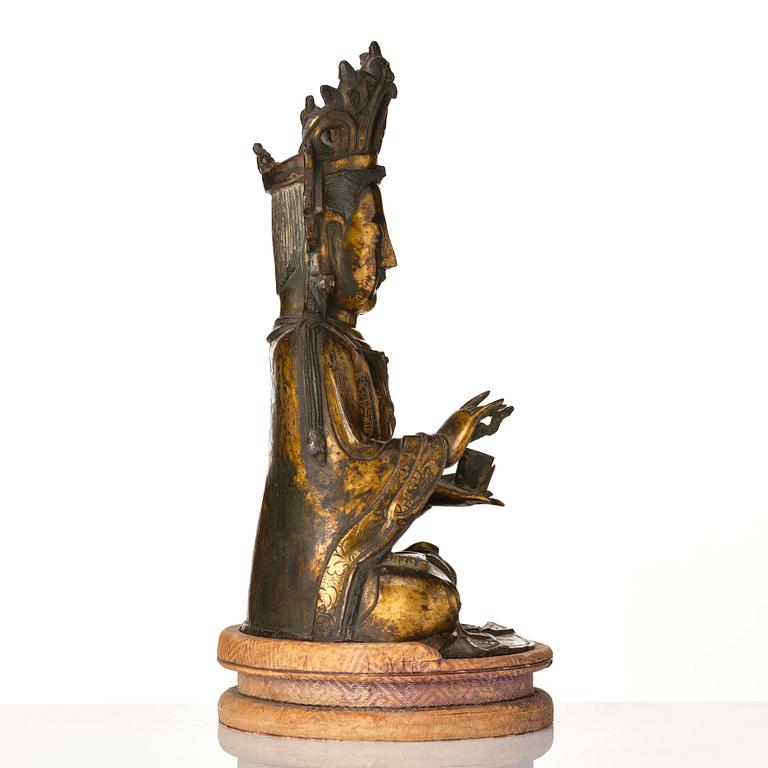
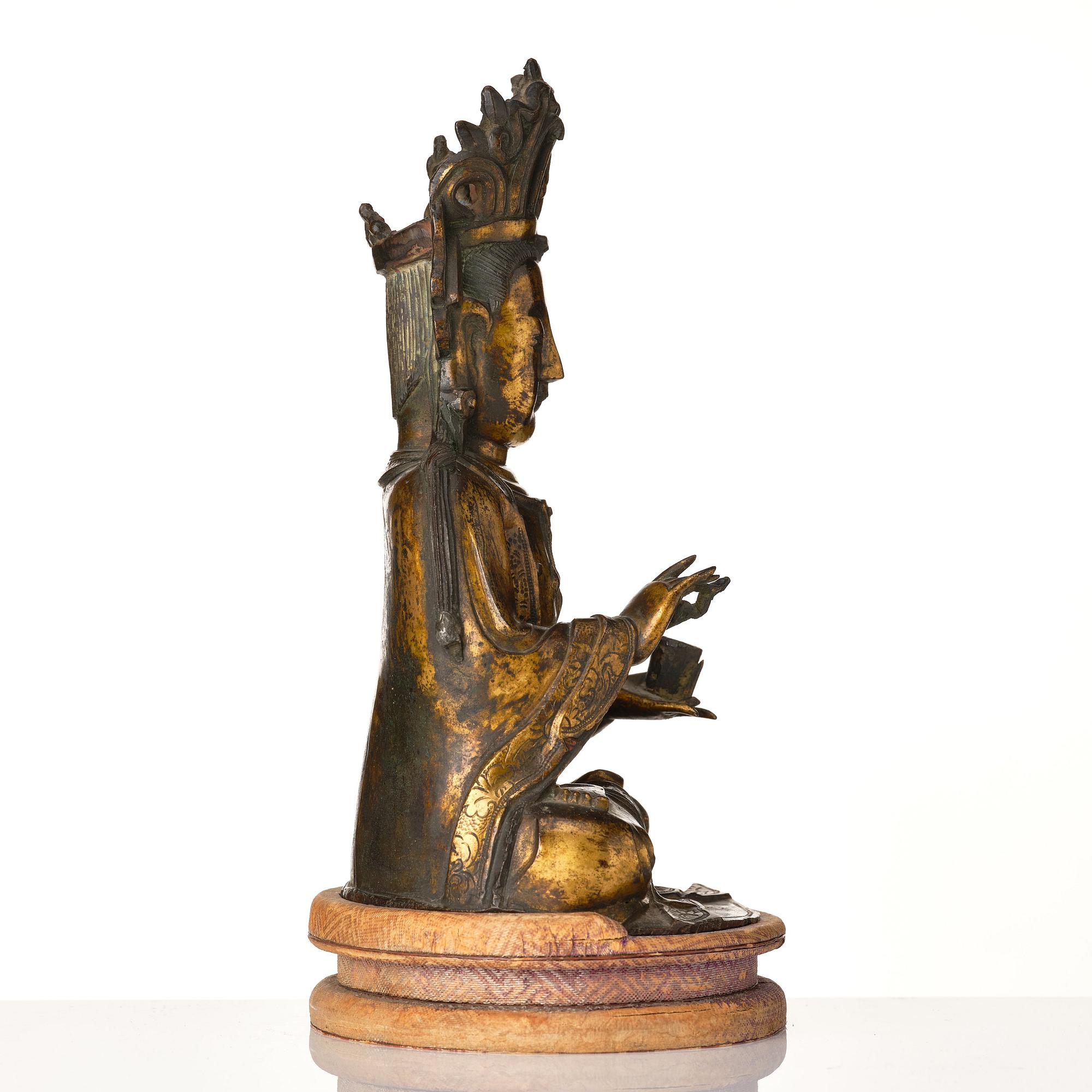
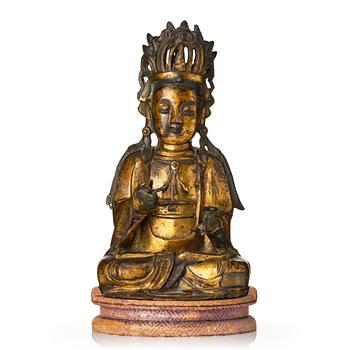
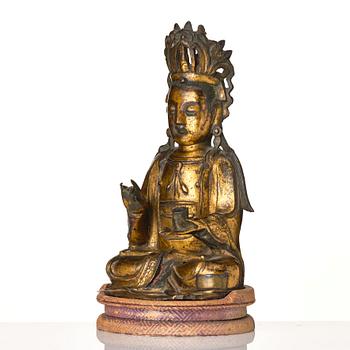
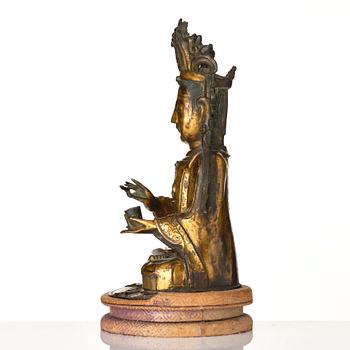
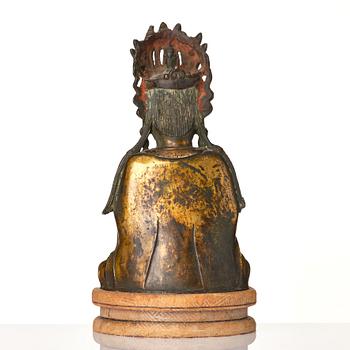
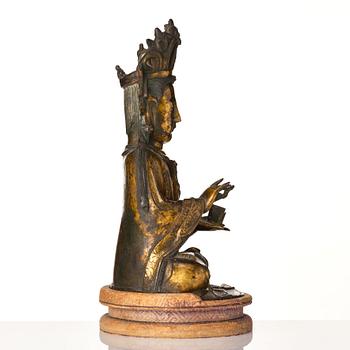
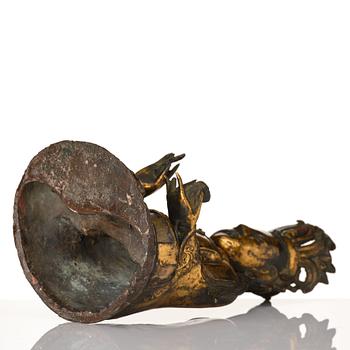
The deity cast seated in vajraparyankasana with the proper left hand supporting a small vessel, the other holding a willow stem, a pierced diadem centered with a seated Amitabha Buddha, the long remaining tresses plaited over each shoulder, the face serene and content, earrings and necklace, the necklace resting on the bare chest, framed by the open robe draped over the shoulders, the dhoti and robe all decorated incised patterns. Height 23 cm. Lotus throne missing.
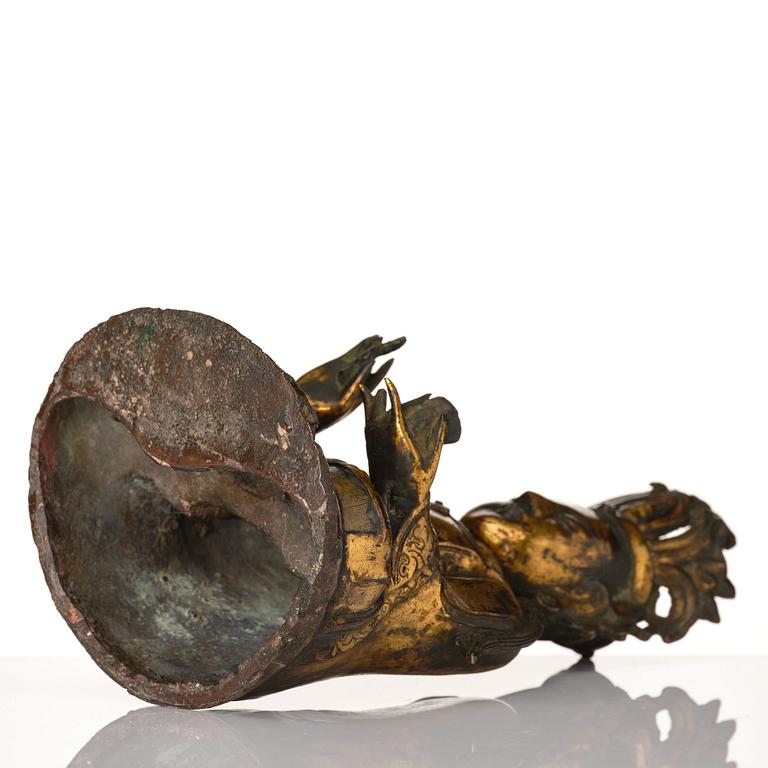
Wear, holes, filled holes. Repair by knee.
Alkuperä - Provenienssi
From the Collection of Henrik Eugene Reuterswärd (1881-1964), thence by descent to Marina Reuterswärd.
The buddhas, the painting and the bronses are listed in Henrik E Reuterswärds 1921 pre-nup upon his marriage to Ebba Ingeborg (Inge) Sjögren, at the time he lived in a 7 room flat at Storgatan 55, Östermalm, Stockholm. Henrik E Reuterswärd were employed by Mo and Domsjö Aktiebolag, from 1901, later MoDo, the company was later lead by the famous collector of Asian art Carl Kempe (1884-1967). Reuterswärd built his collection during the golden age of collecting in Europe. The interest for works of art from Asia were great at the time, this was enhanced by many factors such as; that the world renowned Swedish geographer, topographer, explorer, photographer, travel writer Sven Hedin 1865-1952 hade made several excursions to Asia 1898-1907. The famous China Club were founded in 1929. The Karlbeck syndicate were formed and Orvar Karlbeck (1879-1967) made several trips to acquire objects for collectors and Museums around the world. Henriks relative C.R. Patrik Reuterswärd (1885-1963) was posted as charge d’affaires in Tokyo, Peking and Shanghai 1911-1914.
Muut tiedot
The present figure of China’s most beloved bodhisattva holds in the lowered hand a vessel symbolically filled with a healing elixir. A willow stalk is held in the opposite, raised hand. The willow has apotropaic properties and is used to sprinkle the elixir over devotees. In practice, prior to some Buddhist ceremonies, water is prepared in a designated vessel, and during the ceremony the invoked deity is thought to bless the water. The water is then sprinkled upon those praying, and the ‘elixir’ is thought to cleanse negative karma and heal the unwell. As the present figure’s attributes are evocative of this practice, this iconographic form was particularly popular among devotees wishing for good health. The willow branch itself has unique significance to the Chinese worship of Avalokiteshvara, known as Guanyin in Mandarin.
Lisätietoja ja kuntoraportit

Tietoa ostamisesta

Muiden katsomia kohteita