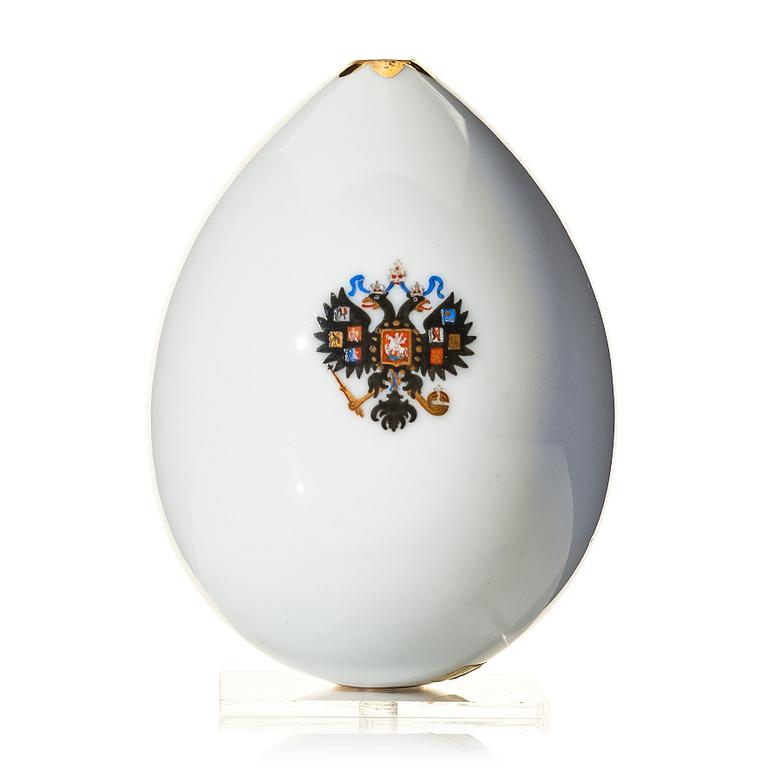
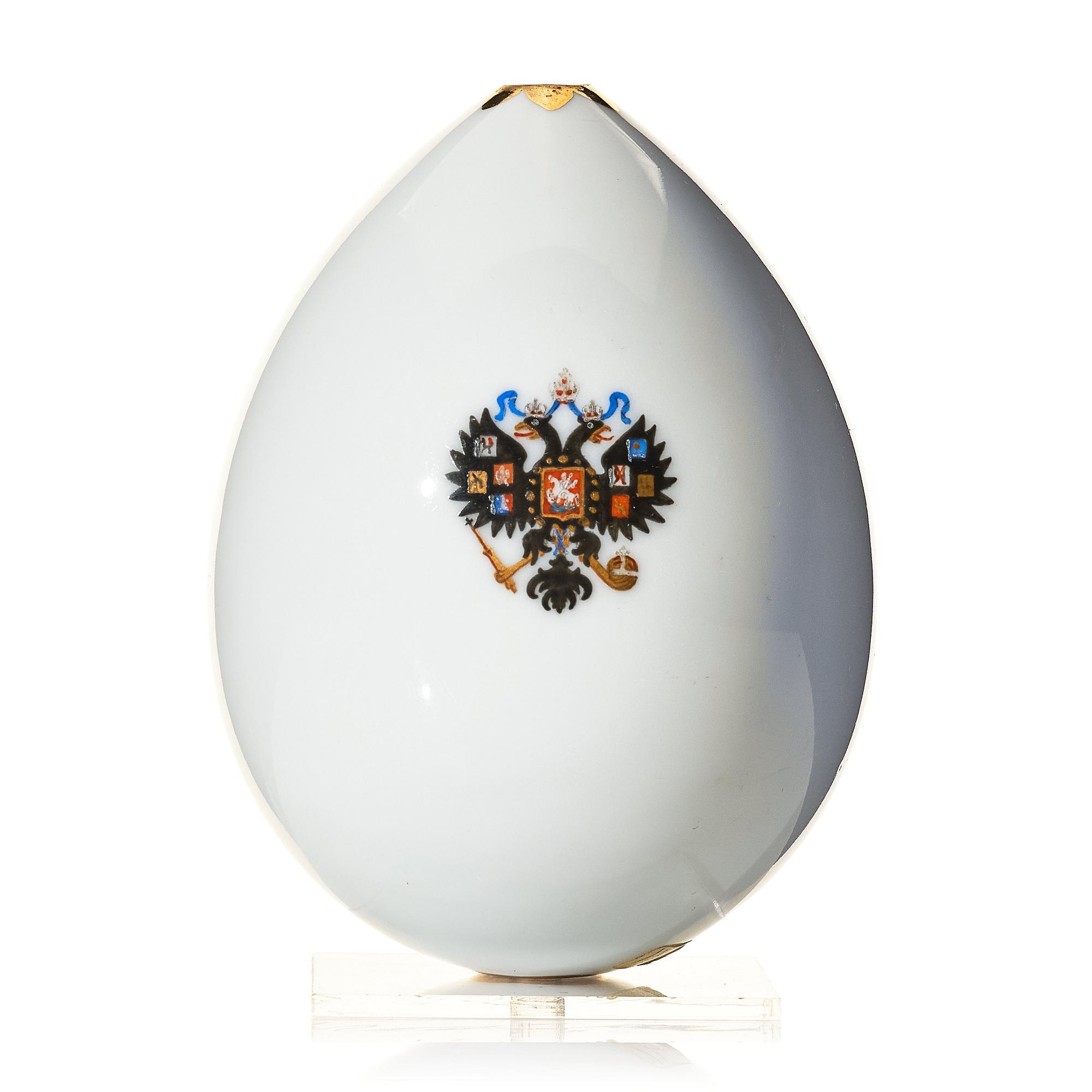
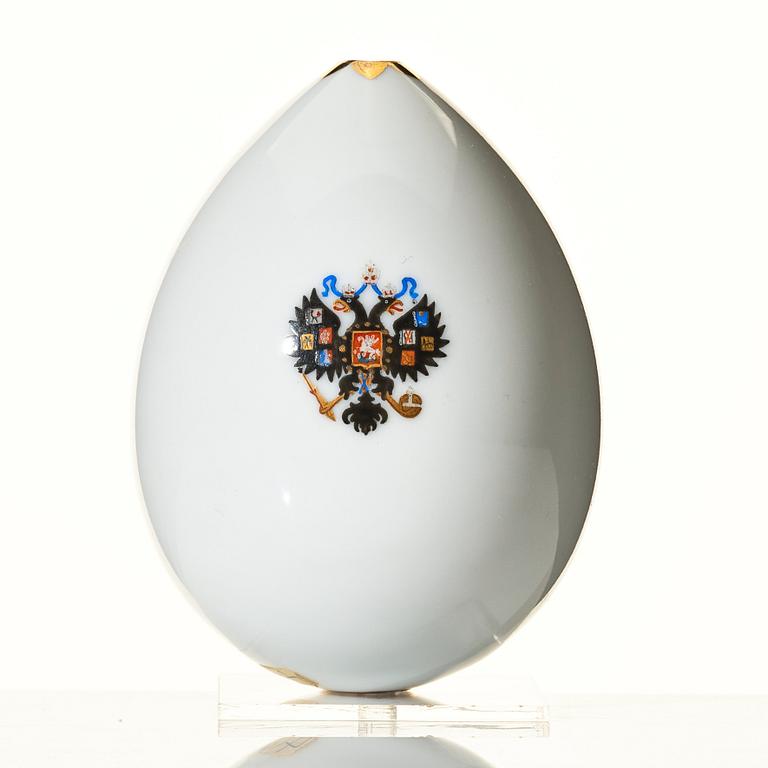
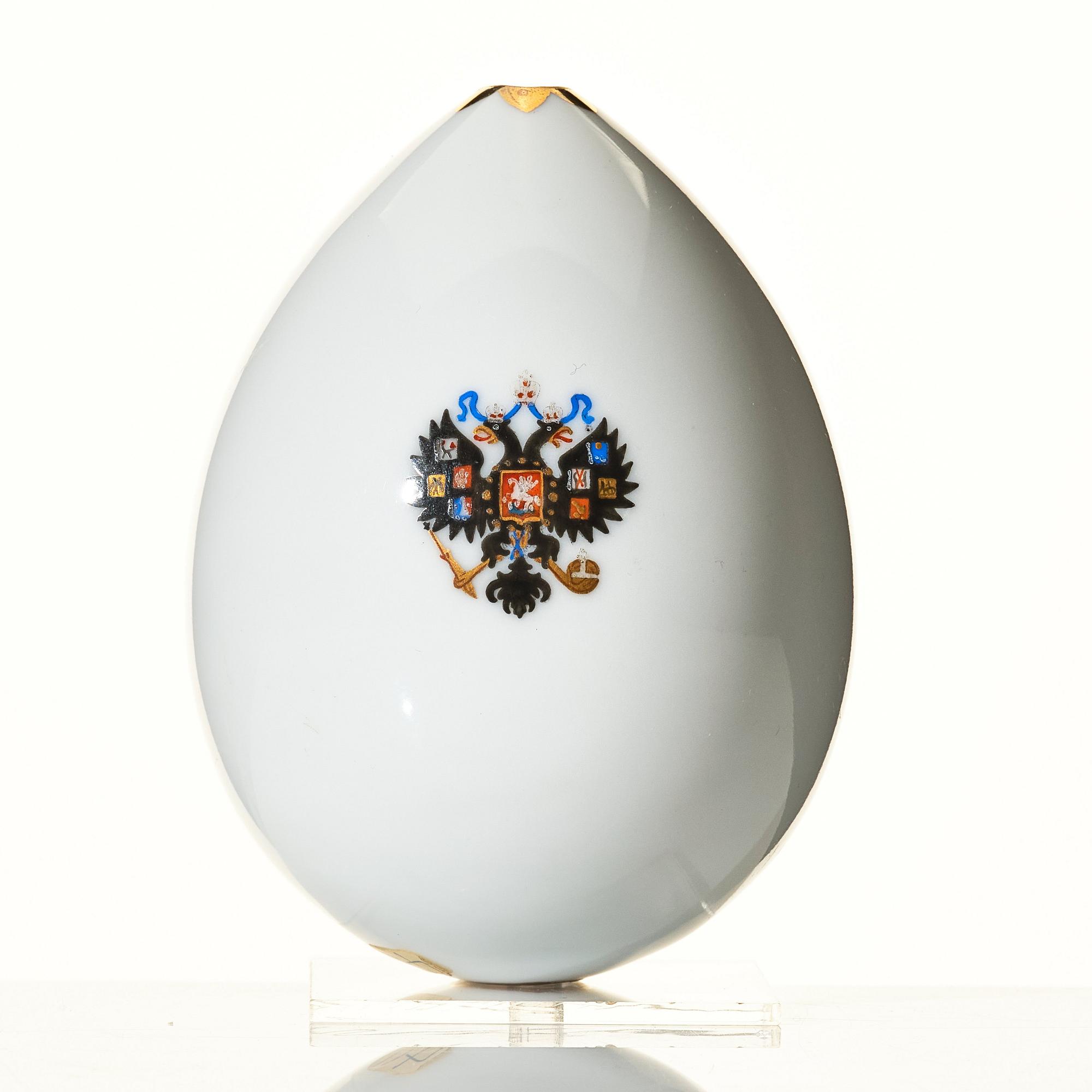
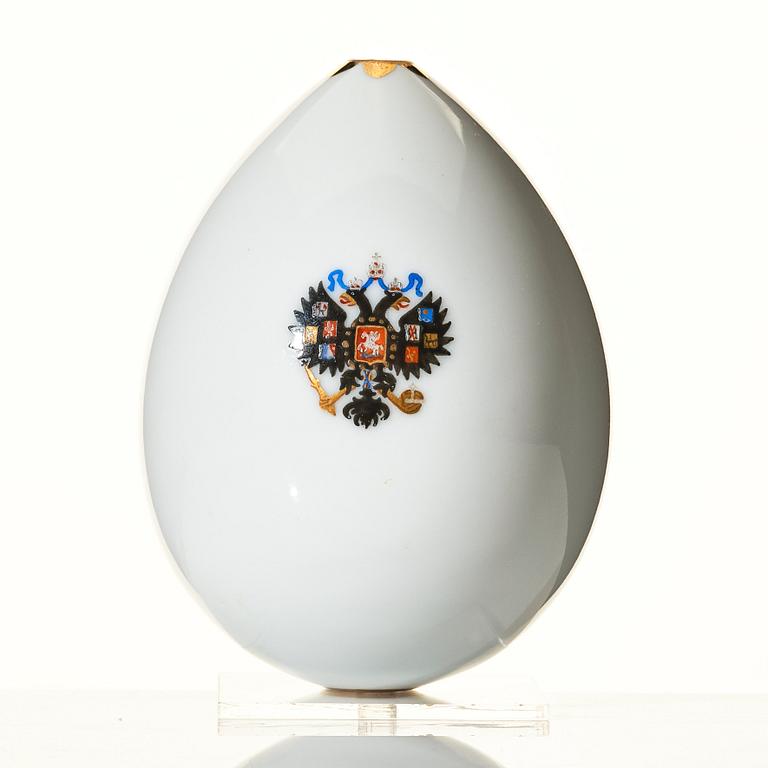
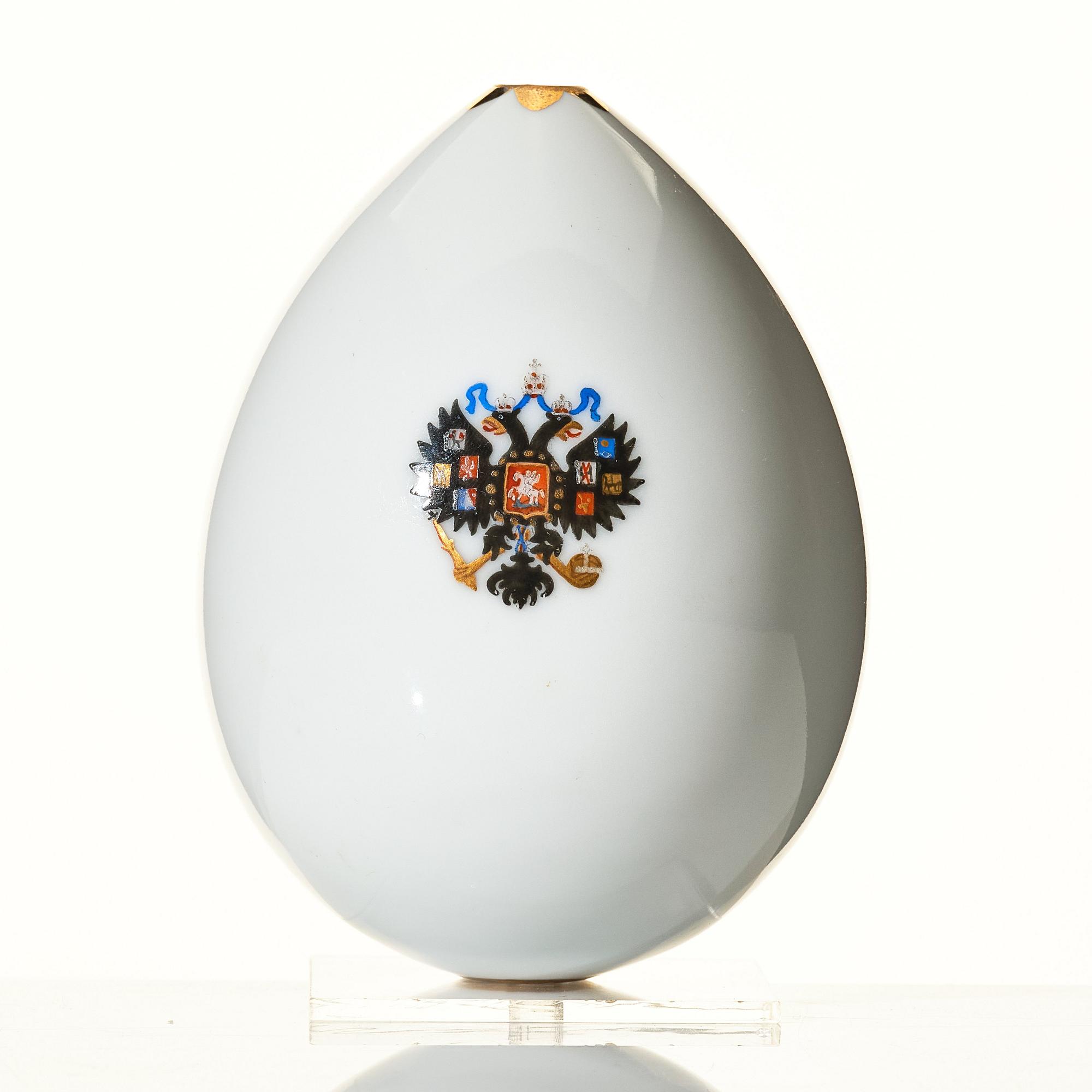
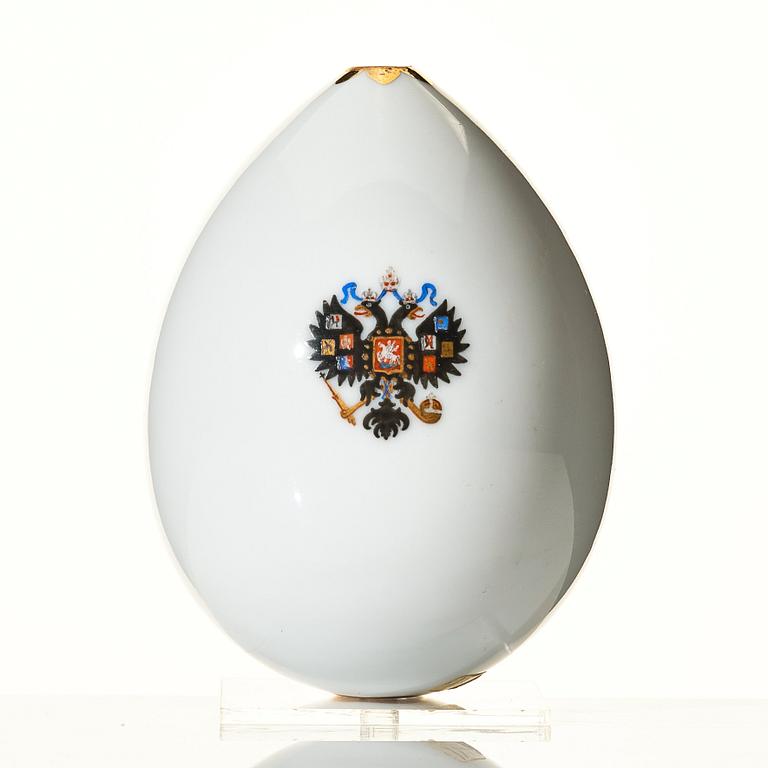
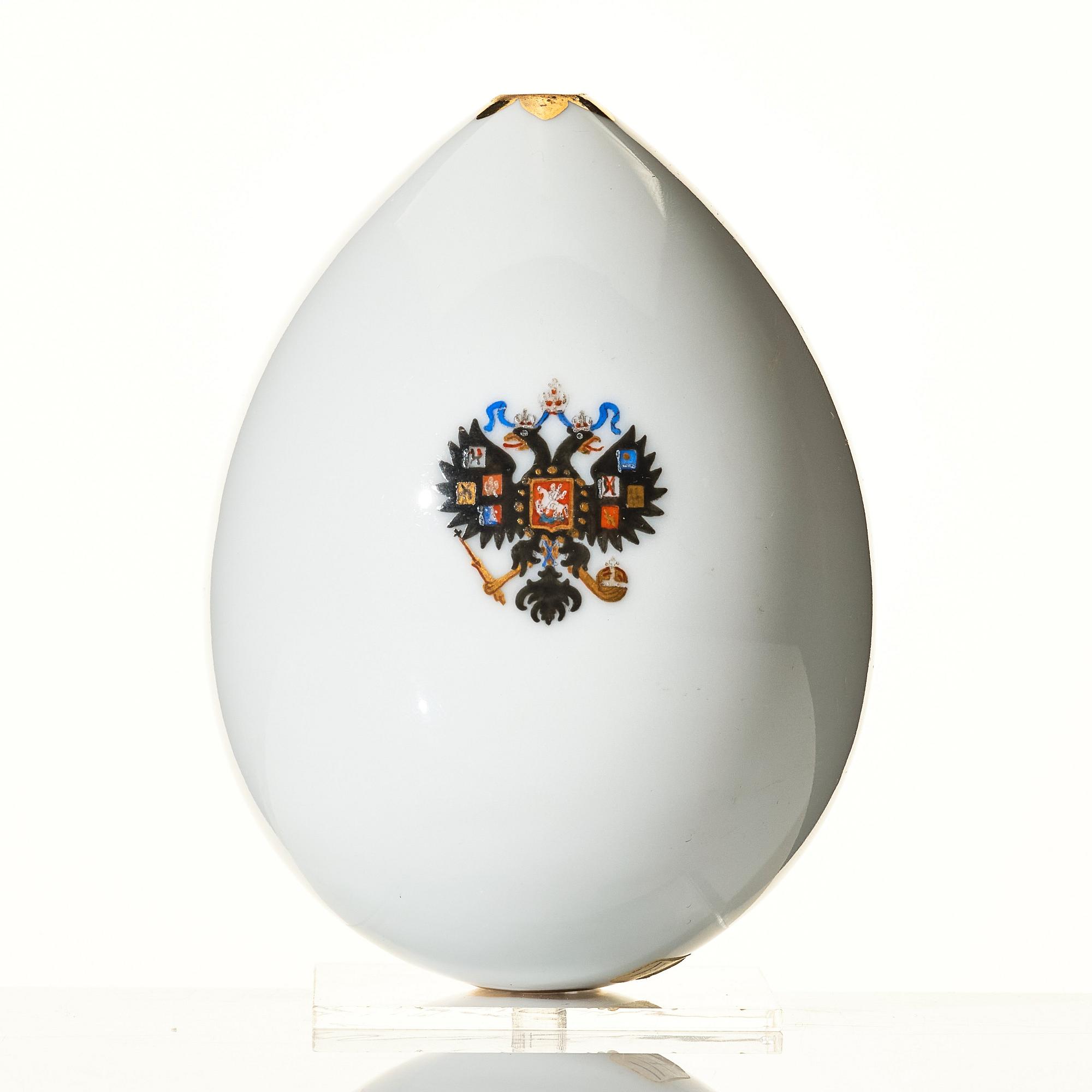
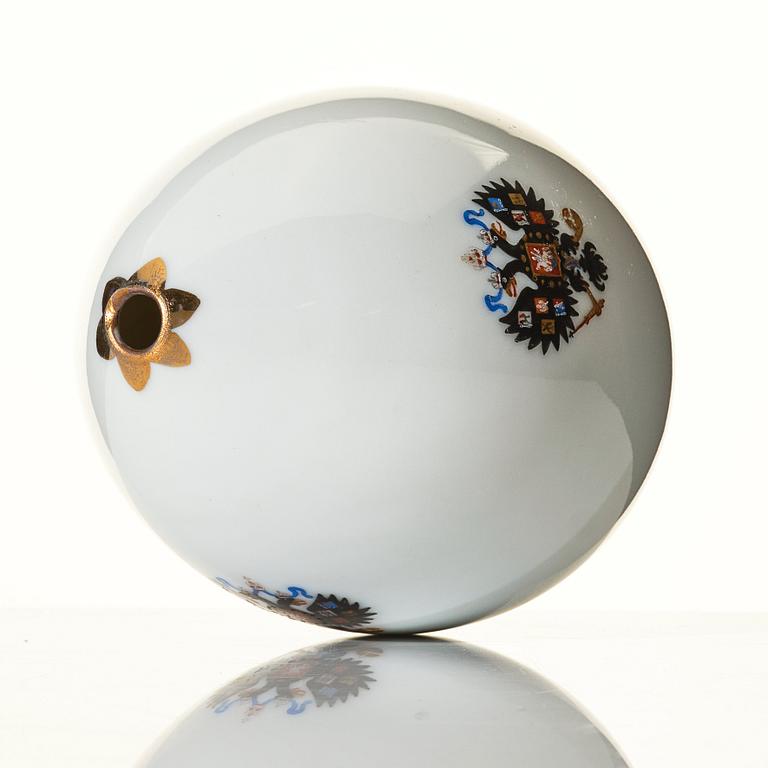
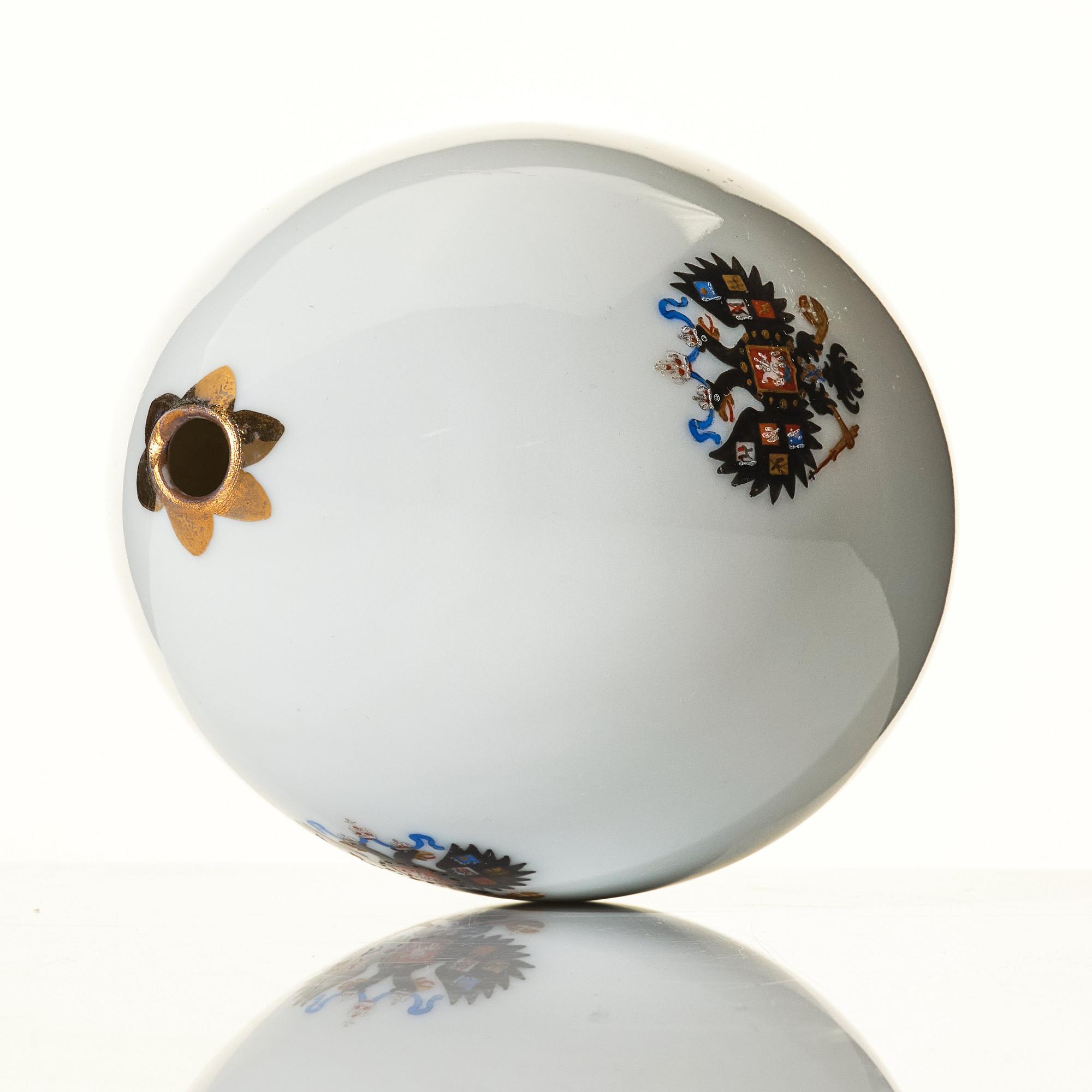
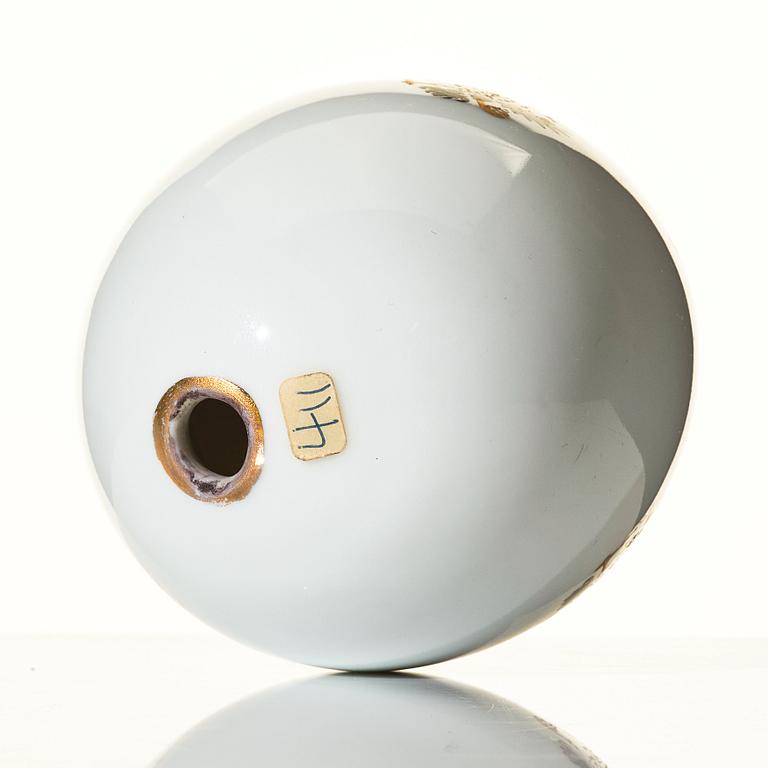
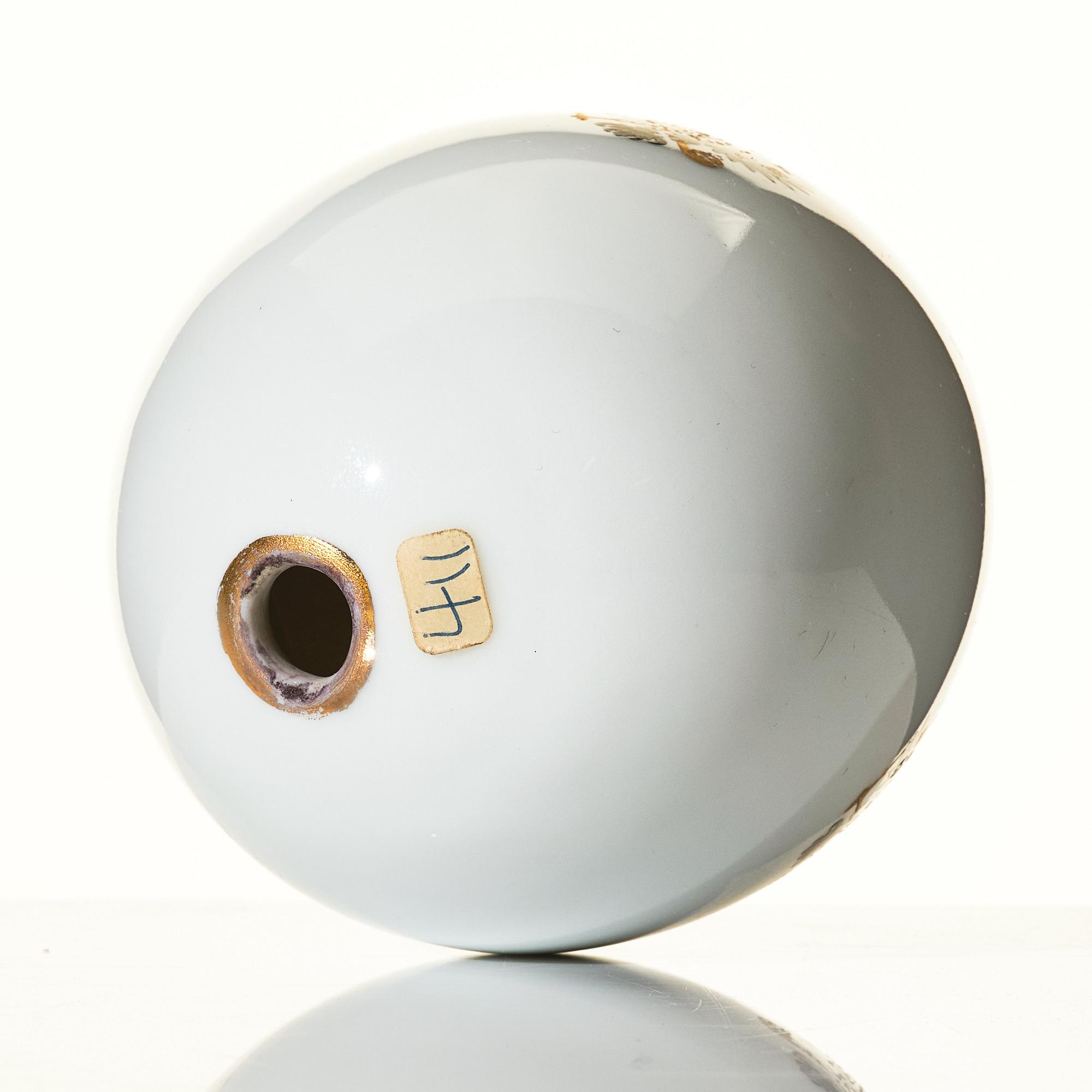
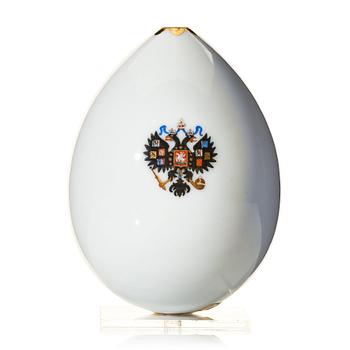
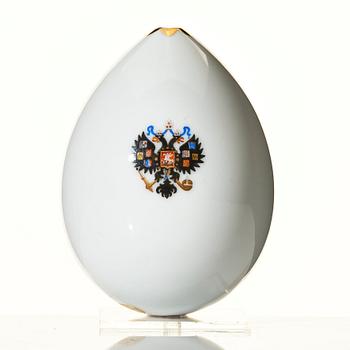
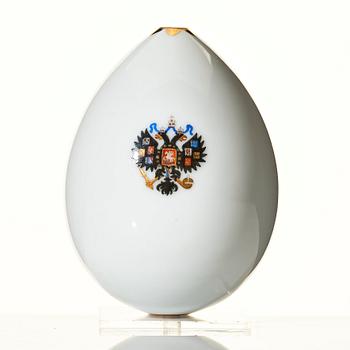
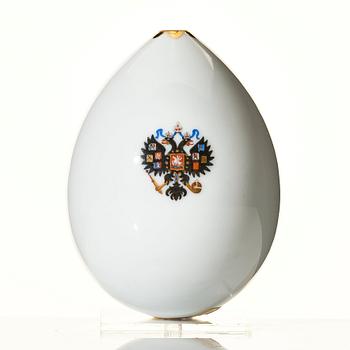
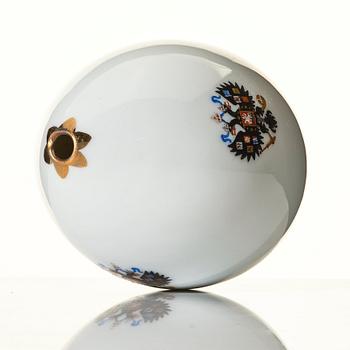
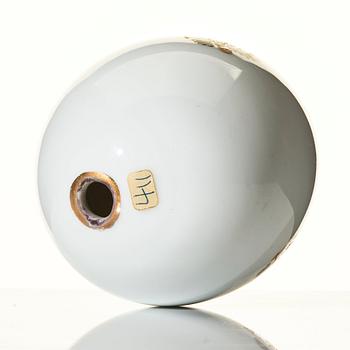
Painted on a white ground with a black Imperial double-headed eagle, an official emblem of the Russian Imperial state, on three sides. Height 11 cm.
Wear.
Alkuperä - Provenienssi
The private Collection of Nils Nessim (1916-1974), thence by descent.
Nils Nessim (1917-1974), was a Swedish businessman and carpet dealer, son of the Director and Carpet specialist Jean B Nessim (1887-1946). In 1942 he founded AB Nils Nessim in 1942, he expanded and in the 1960’s he founded Nils Nessim International and Nils Nessims Antiques. Nils were early schooled in the carpet business by his father, and went on many business trips to aquire carpets and goods for the stores. He travelled the world and built up an impressive collection of Antiques and Asian Works of Art alongside the carpet business. In 1959 he became the first westener to be allowed to export antiques from China. He is well known for his collection of Russian Easter Eggs, and at one point he is said to have had over 1000 of them.
Näyttelyt
In the first half of the nineteenth century, the Imperial Porcelain Factory started to produce Easter eggs bearing the coat of arms. Examples of such eggs are in the collection of the State Hermitage Museum in St Petersburg (ЭРФ-5506 & ЭРФ-5504).
Lisätietoja ja kuntoraportit

Tietoa ostamisesta