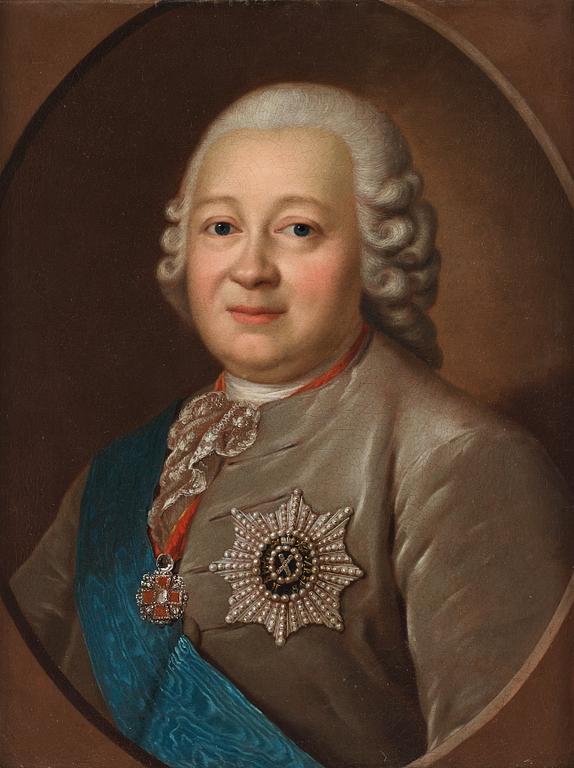
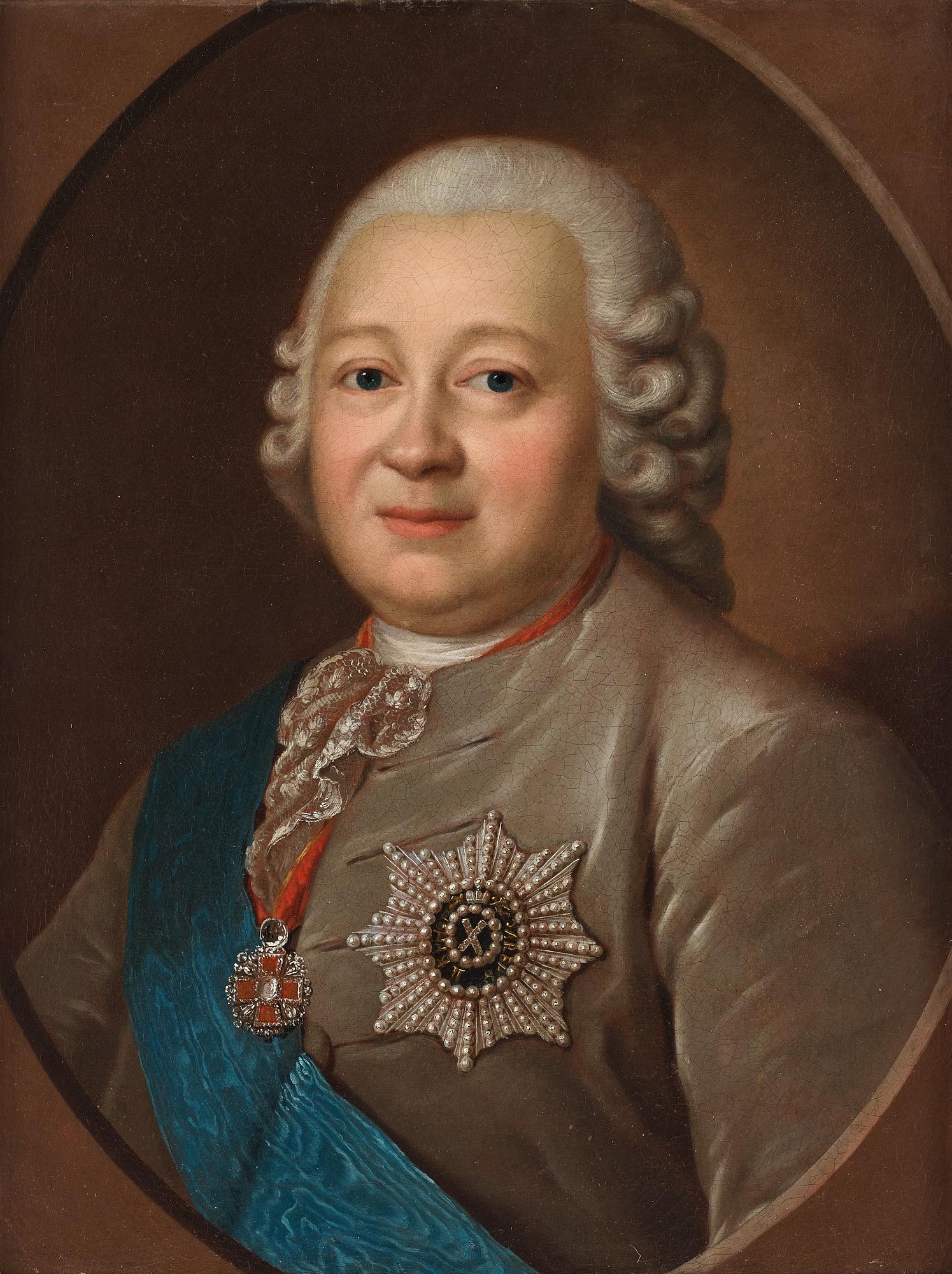
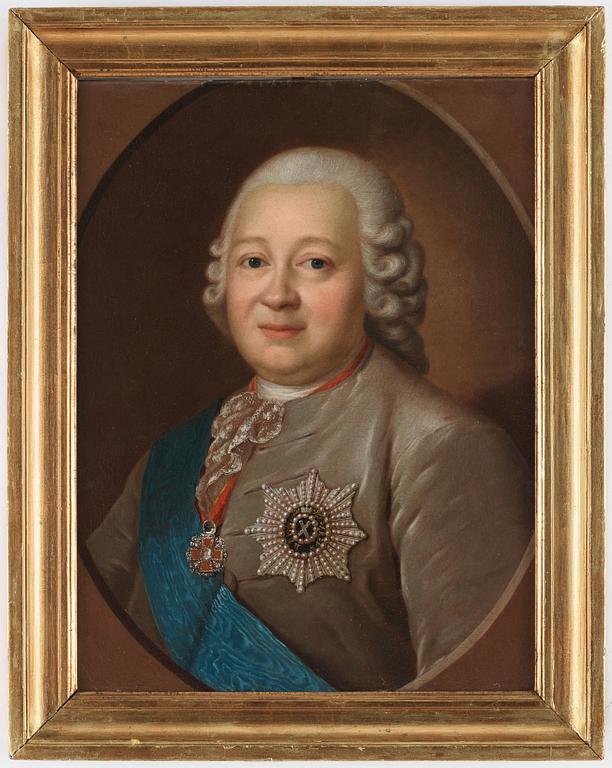
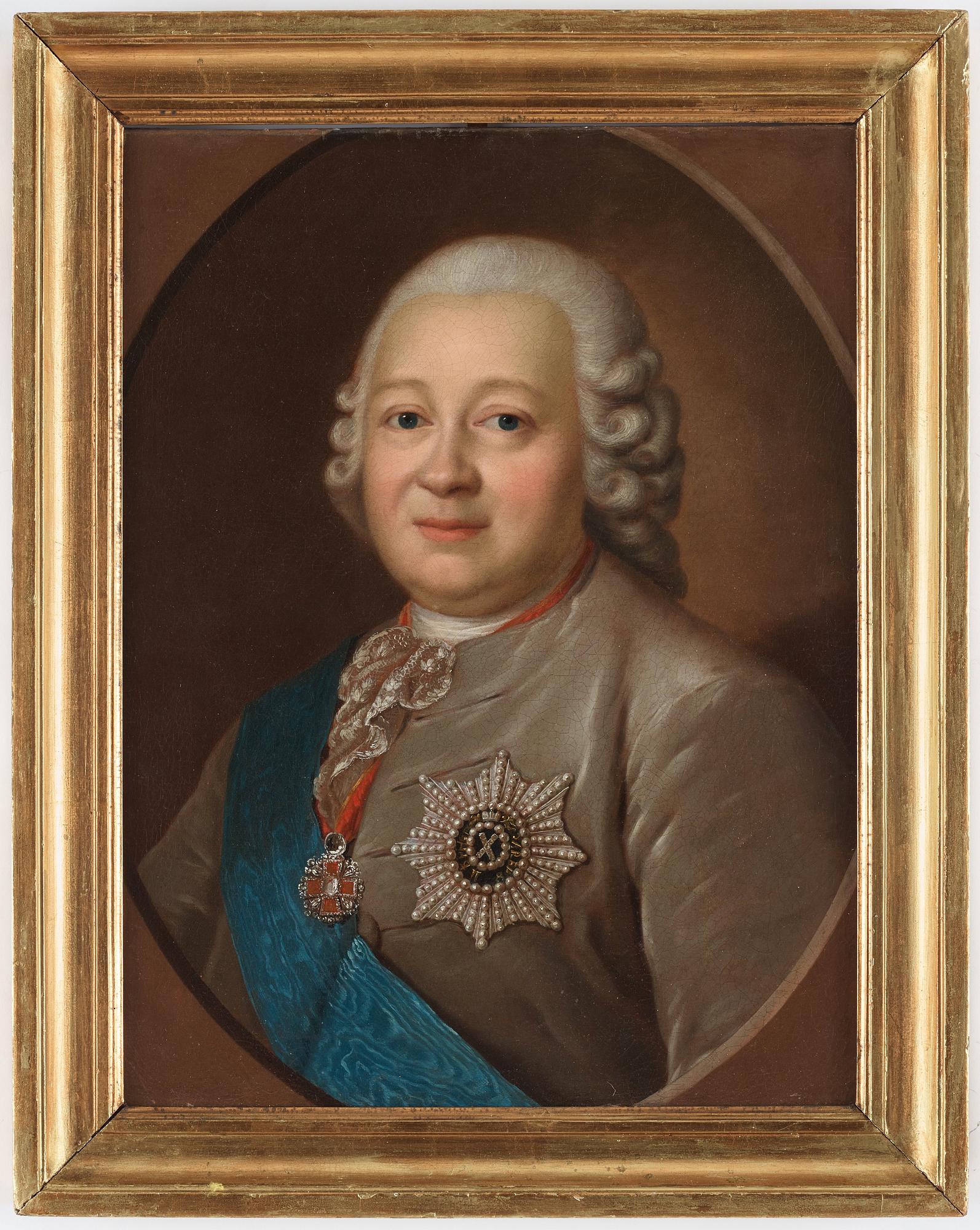
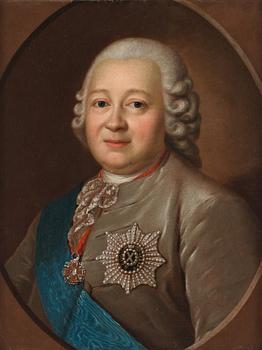
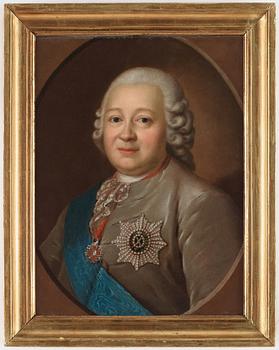
“Portrait of Count Nikita Ivanovich Panin".
Canvas 61,5 x 47,5 cm.
Alkuperä - Provenienssi
Collection of Otto Andrup, Director of the Museum of National History at Frederiksborg Castle, Denmark, Art Historian, and Portrait Collector, from c.1912.;
Estate of Otto Andrup, Sale Bruun Rasmussen, Denmark, Sale no. 68, 1955, lot 28.;
Collection of Sigvard Skov, Director of Koldinghus Castle Museum, Denmark, until 1987.;
Private collection, UK.
Näyttelyt
Moscow, Tsaritsyno Museum-Reserve, ‘Catherine the Great. To the 290th anniversary of Her Birth', 18 August 2019- 12 Jan. 2020.
Kirjallisuus
E. Ivanova, E. Rolfe-Smith, A. Berezin, ‘Portret N.I. Panina v rannem nasledii F.S. Rokotova’, Antikvarnyi mir, No. 11, April 2017, pp. 137–151.
Muut tiedot
The portrait of Count Nikita Ivanovich Panin is one of Rokotov’s most exceptional and compelling works. Panin was an influential Russian statesman and chief diplomatic advisor to Catherine the Great. In his role as head of Foreign Affairs, he advocated the Northern Alliance, closer ties with Frederick the Great of Prussia, was minister to Denmark and Sweden, and Ambassador to England, where he frequently travelled. Panin was one of the most learned, accomplished, and courteous Russians of his day. Catherine called him her encyclopaedia. By nature a sybarite, he was an avid gourmand, enjoyed the pleasures of women, and had an unhurried disposition, ‘Count Panin [would die] if he ever hurries’, Catherine II would quip. He was also for many years tutor, mentor, and close friend to the young Tsarevich Pavel Petrovich, the future emperor Paul I, and son of Catherine the Great and Peter III.
The present work was painted by Rokotov in the 1760s or early 1770s, during his short lived ‘Petersburg period’, after which he moved to Moscow. At the time, the artist was working on the coronation portraits of Catherine II for the Russian embassies abroad, commissioned by the Collegium of Foreign Affairs. In these years, too, Rokotov completed a portrait of Pavel Petrovich, of similar dimensions, format, and composition to the present work, both with the feigned oval, and today housed in the State Russian Museum, Saint Petersburg [no.F-29].
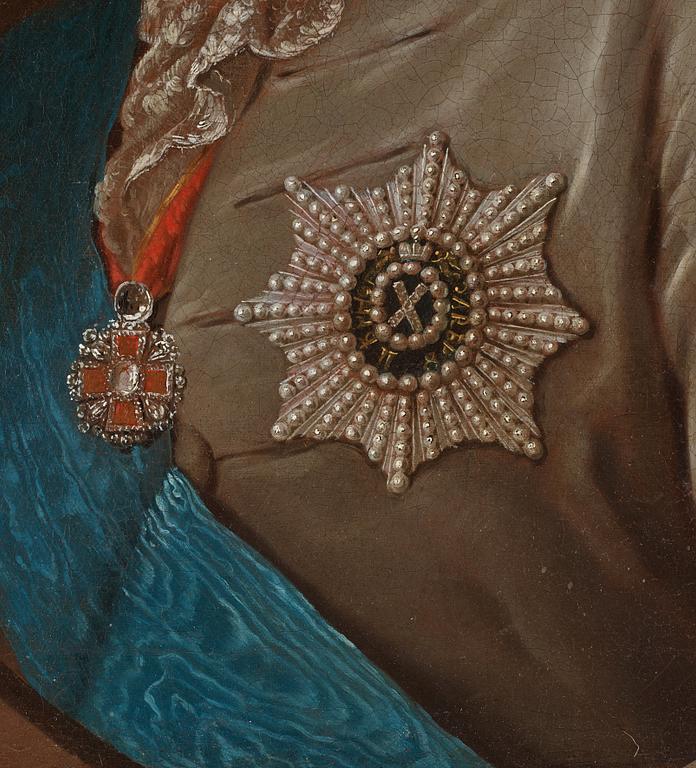
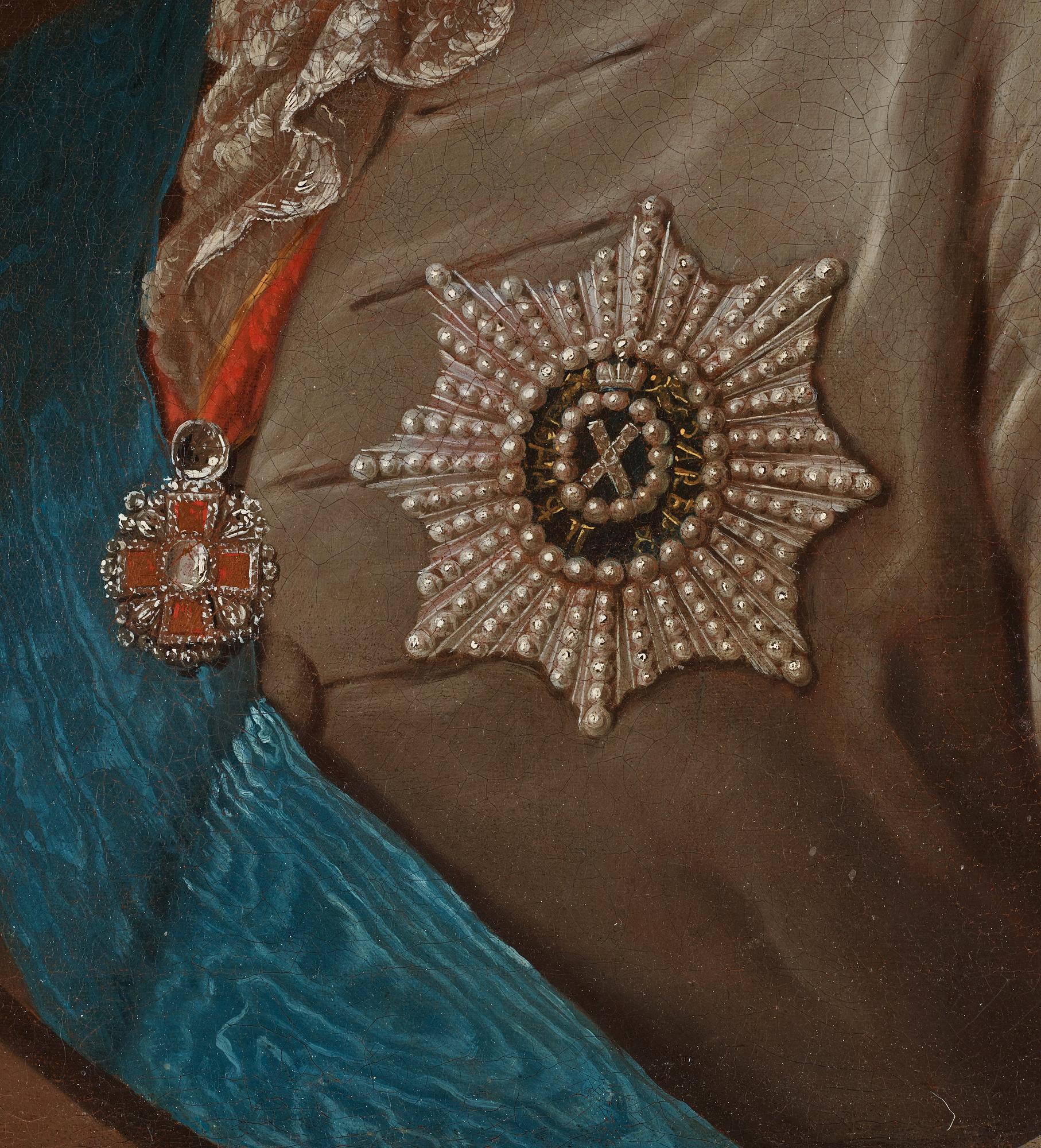
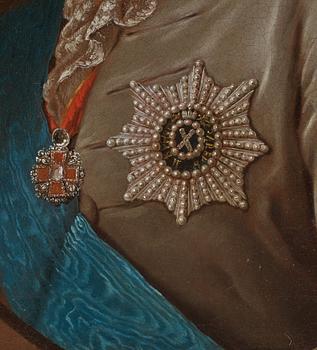
Panin is here depicted with the Order of St Anne (received in 1748) and the star-shaped, pearl-spangled Order of St Andrew, the highest order of the Russian Empire, awarded to him on 22 May 1762 by Peter III for preventing war with Sweden and for his twelve years of diplomatic service. The latter award was a crucial milestone in his career, and very likely occasioned the commissioning of the present work for commemoration purposes. The order is today housed in the Diamond Fund, Russia [no.AF-62].
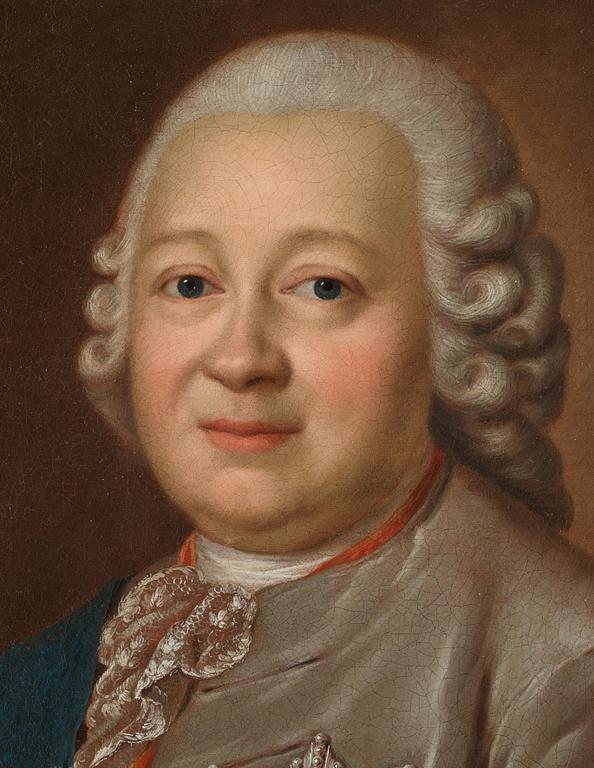
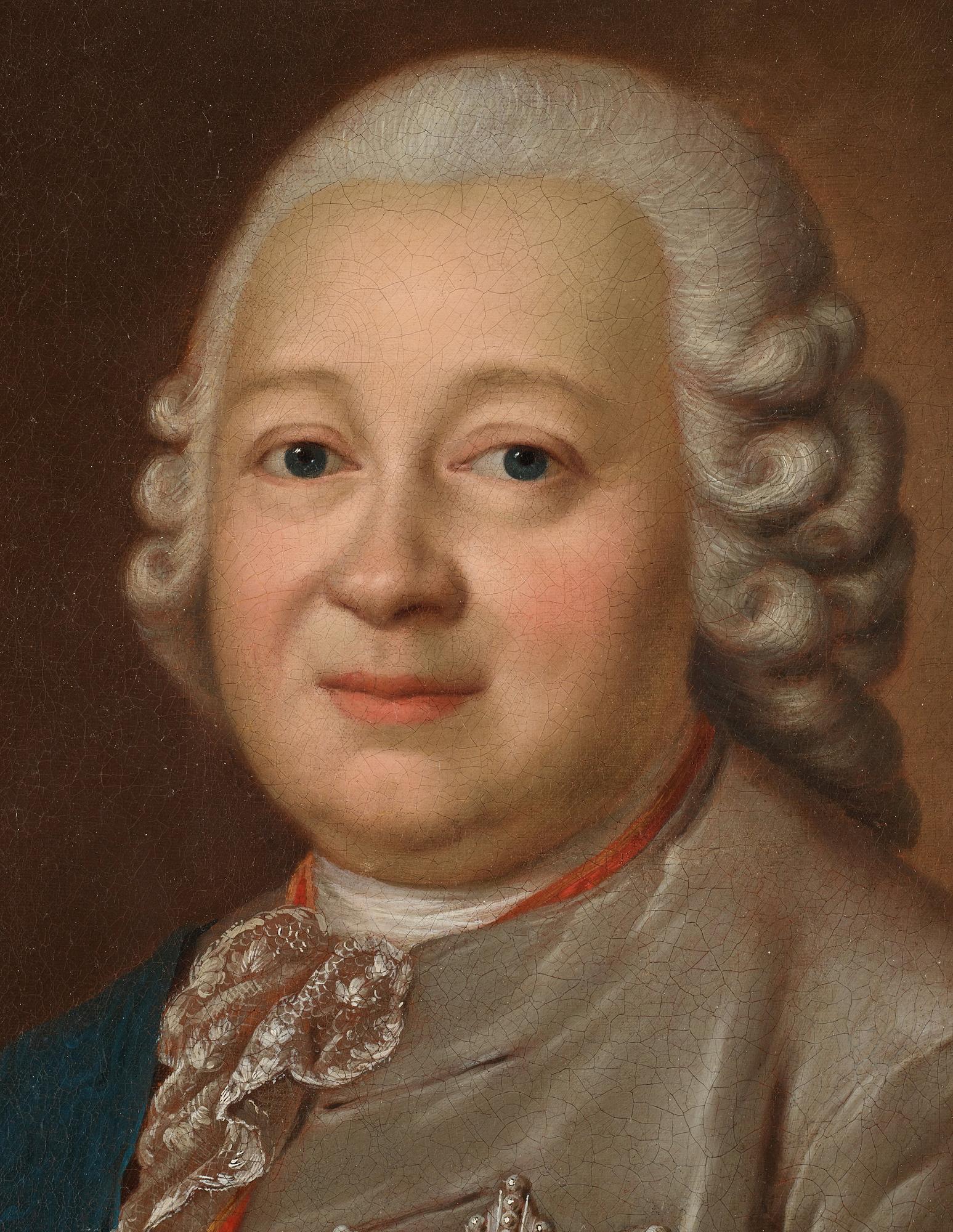
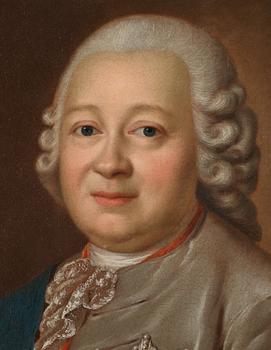
Rokotov’s palette in the present work is restrained, reflecting the intimacy with which the subject is treated, and in keeping with the austere and economical range of colours generally adopted in his intimate portraits. By contrast, see, for example, the more vibrant portrait of Panin by Alexander Roslin, 1777, in the Pushkin State Museum of Fine Arts [no.1083]. Rokotov is often celebrated as the ‘Russian Da Vinci’, due to the curious ‘half-smiles’ he bestows his subjects. Indeed, his portraits were widely admired at the time for their psychological realism, and the sympathetic, soft rendering of his sitters’ features. Interestingly, Panin and Rokotov were both members of the same Masonic organisation, the Moscow Masons Lodge.
How the portrait ended up in Denmark is not definitively known. It may have been sent to the Russian embassy there, or was possibly sent to the Danish court in honour of reconciliation with the country following Paul I’s accession to the Dukedom of Schleswig-Holstein upon his father’s death, and his subsequent abandoning of the war in the area.
The State Russian Museum in Saint Petersburg houses a copy of this portrait [no.F-60], painted by Vasily Yaroslavsky in the later 18th Century.
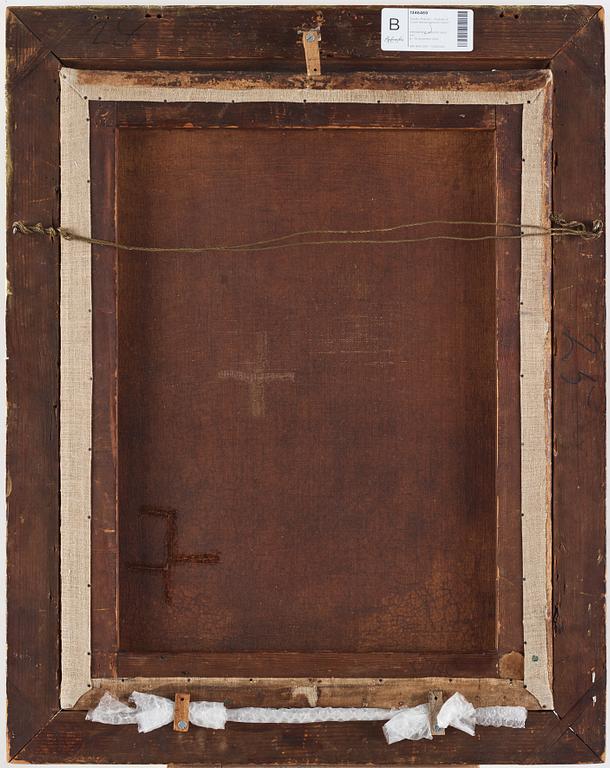
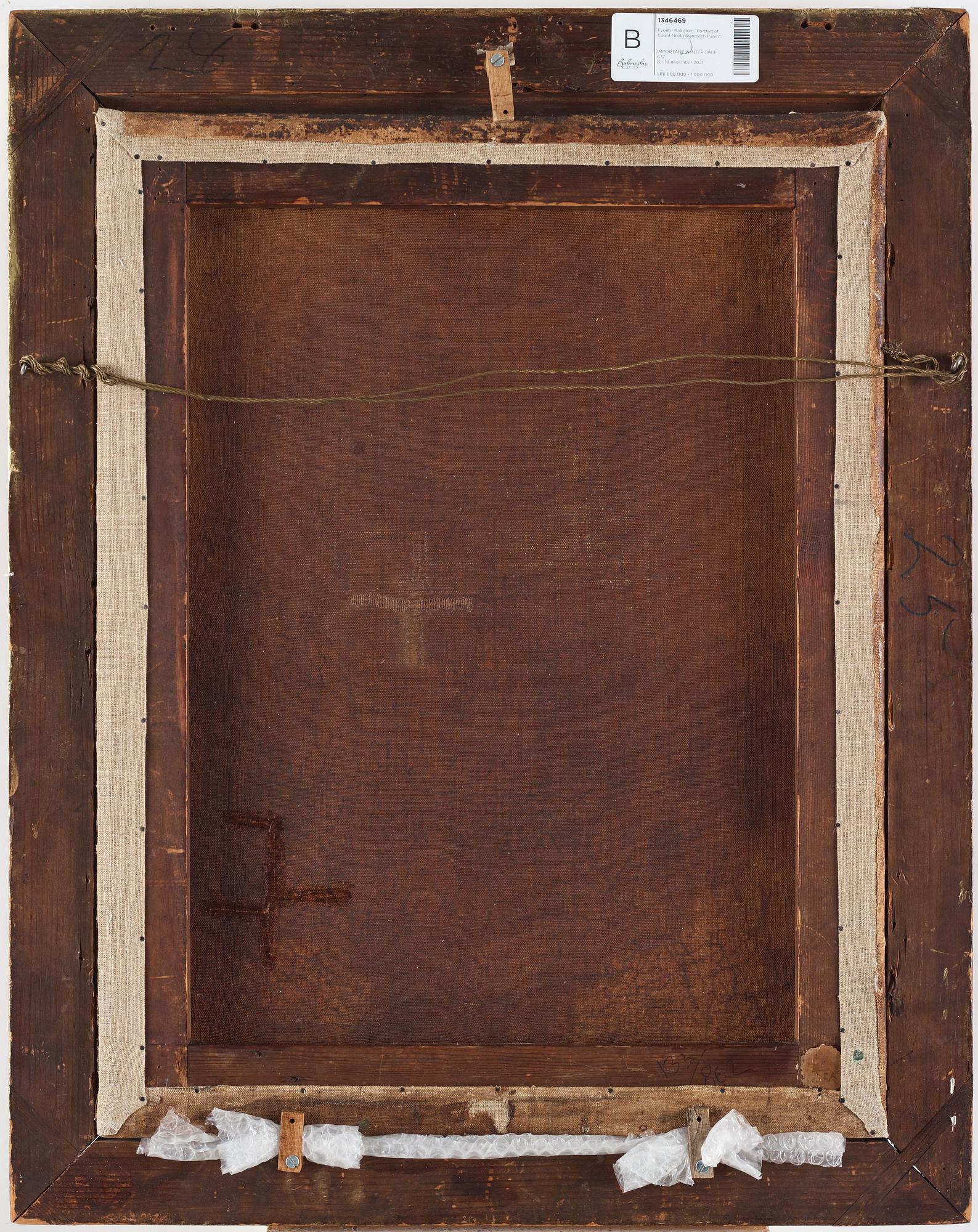
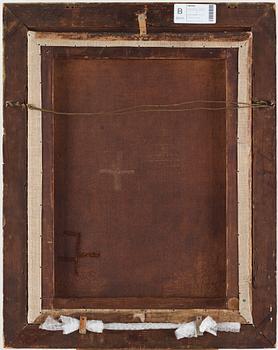
The authenticity of the present work has been confirmed by L. A. Markina (Tretyakov Gallery, Moscow), E. U. Ivanova (State Historical Museum, Moscow), and by technical analysis conducted at the Grabar Centre, MMOMA laboratory, GOSNIIR (Moscow) in 2016.
Lisätietoja ja kuntoraportit
Tietoa ostamisesta
Muiden katsomia kohteita