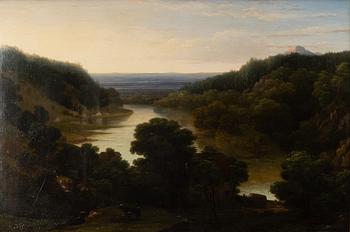
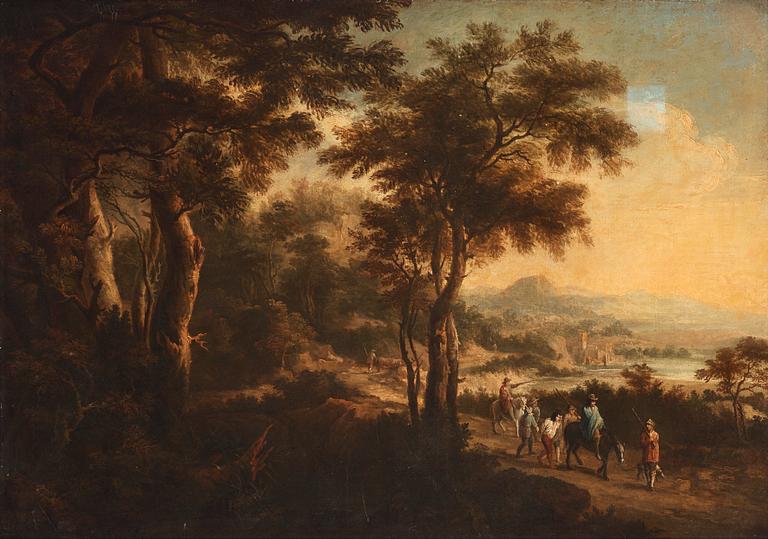
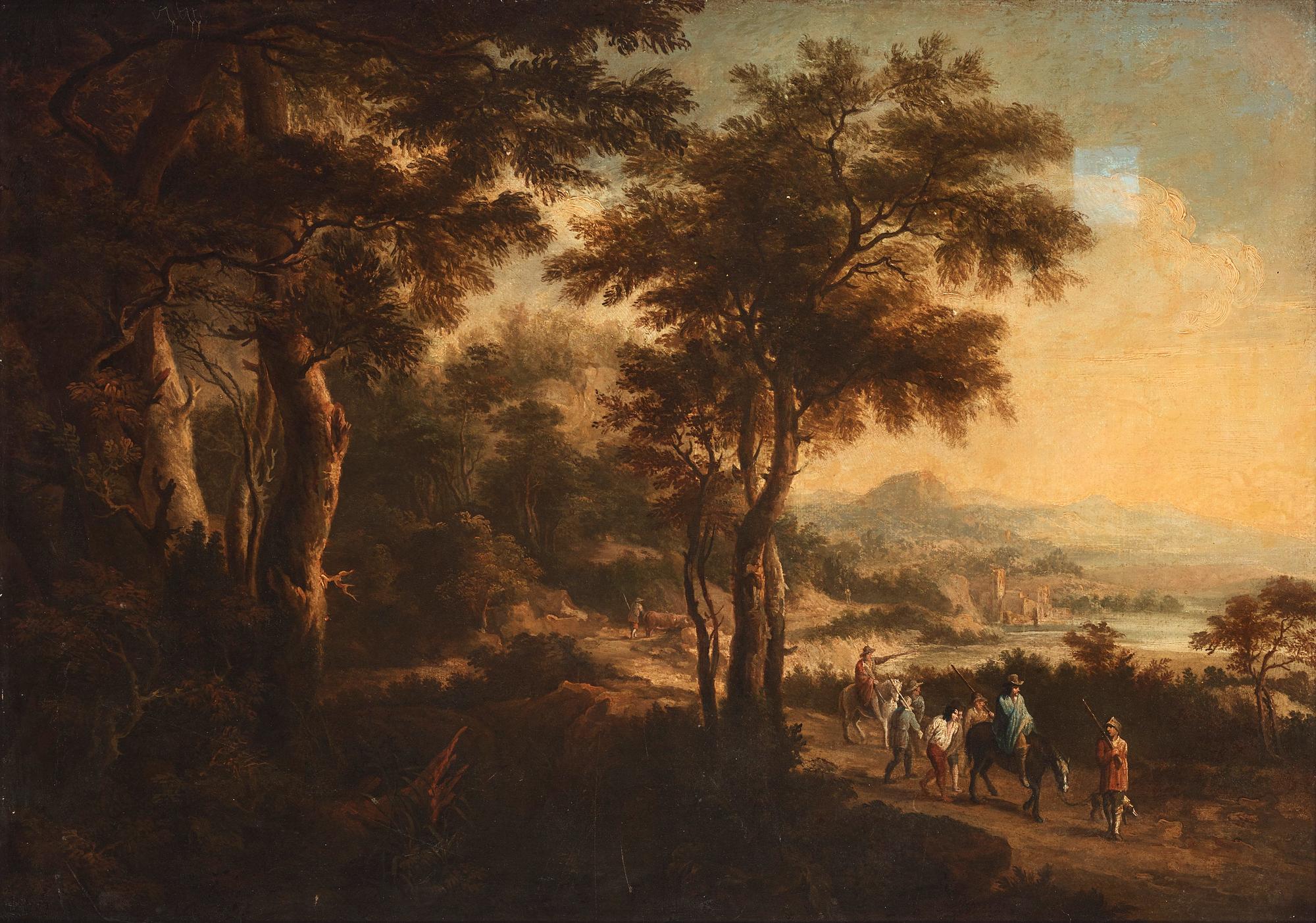
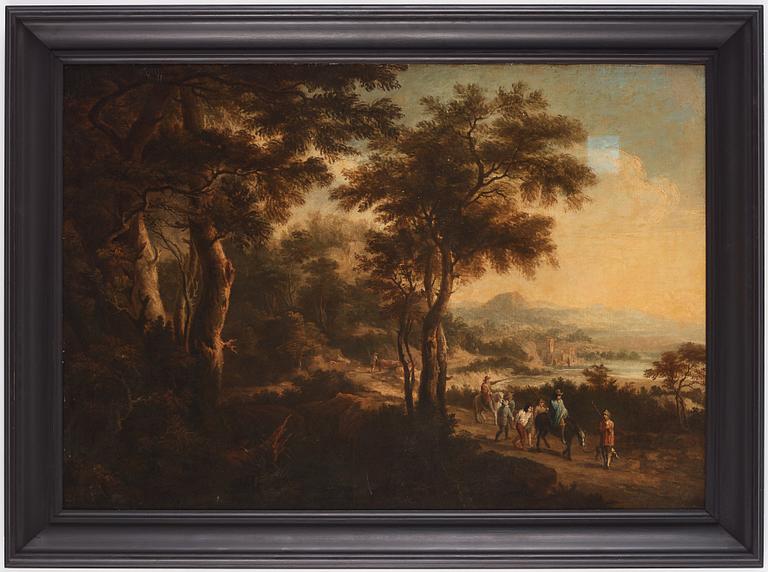
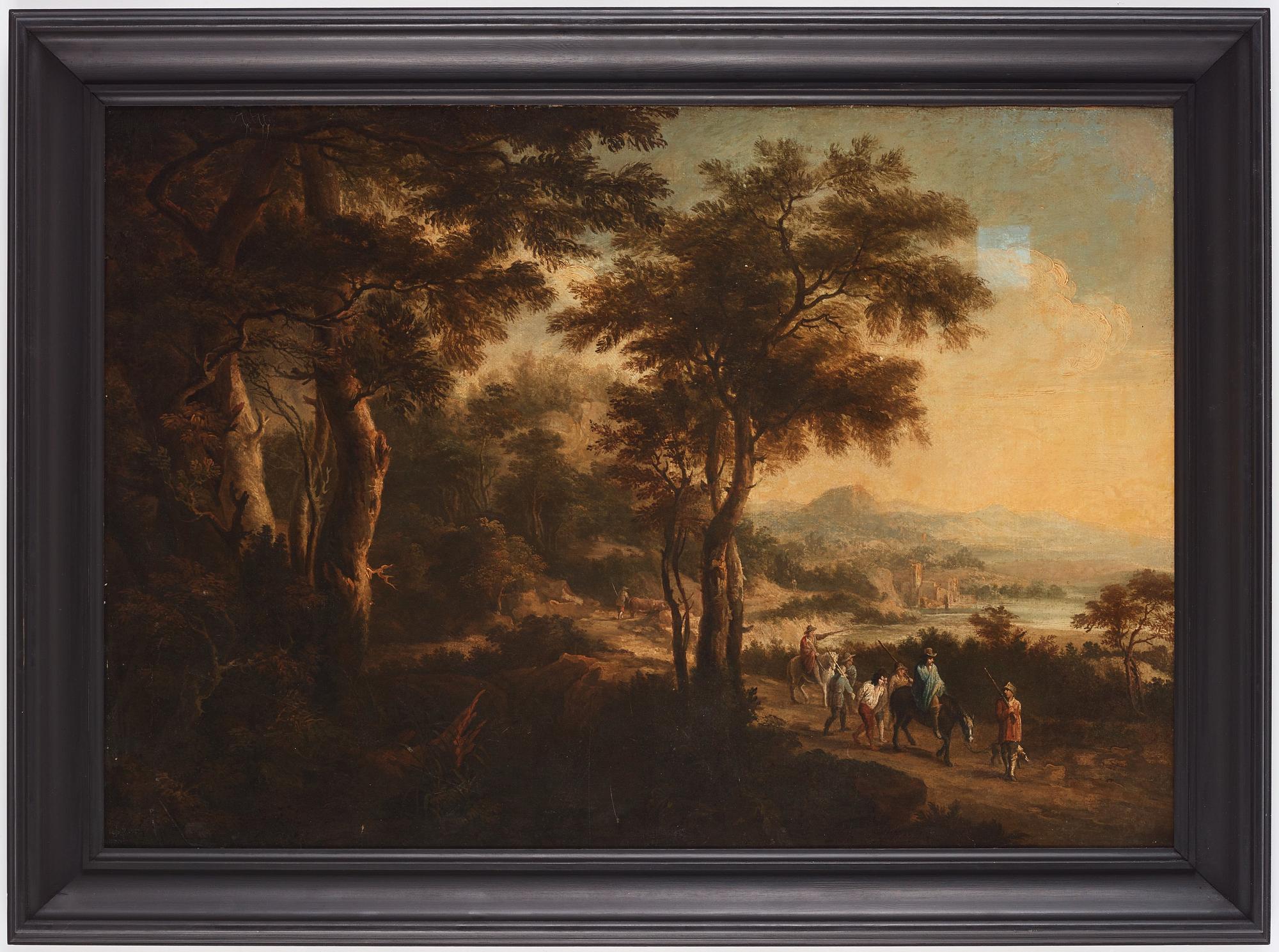
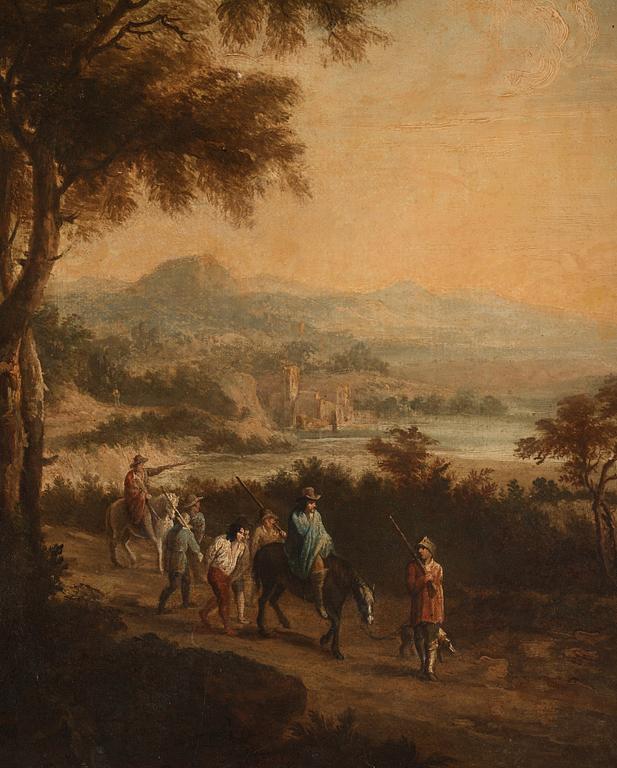
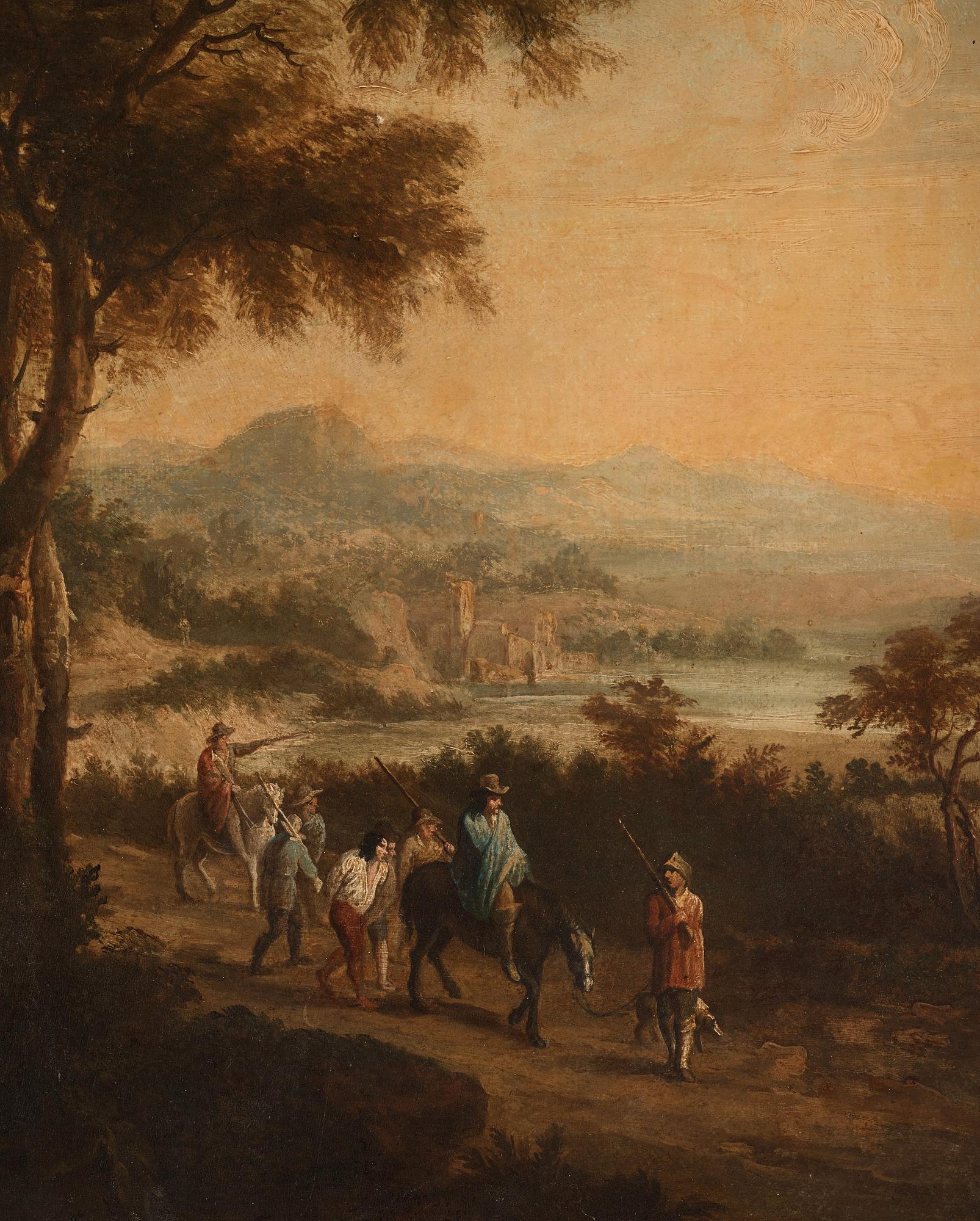
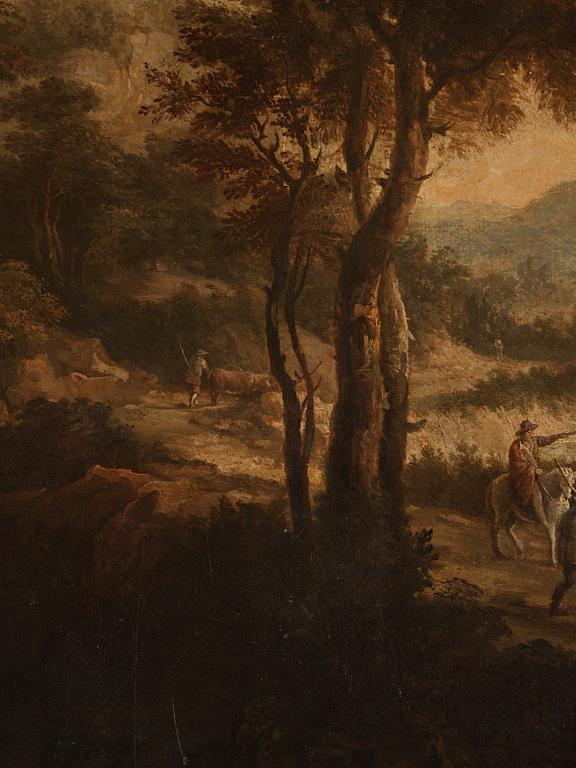
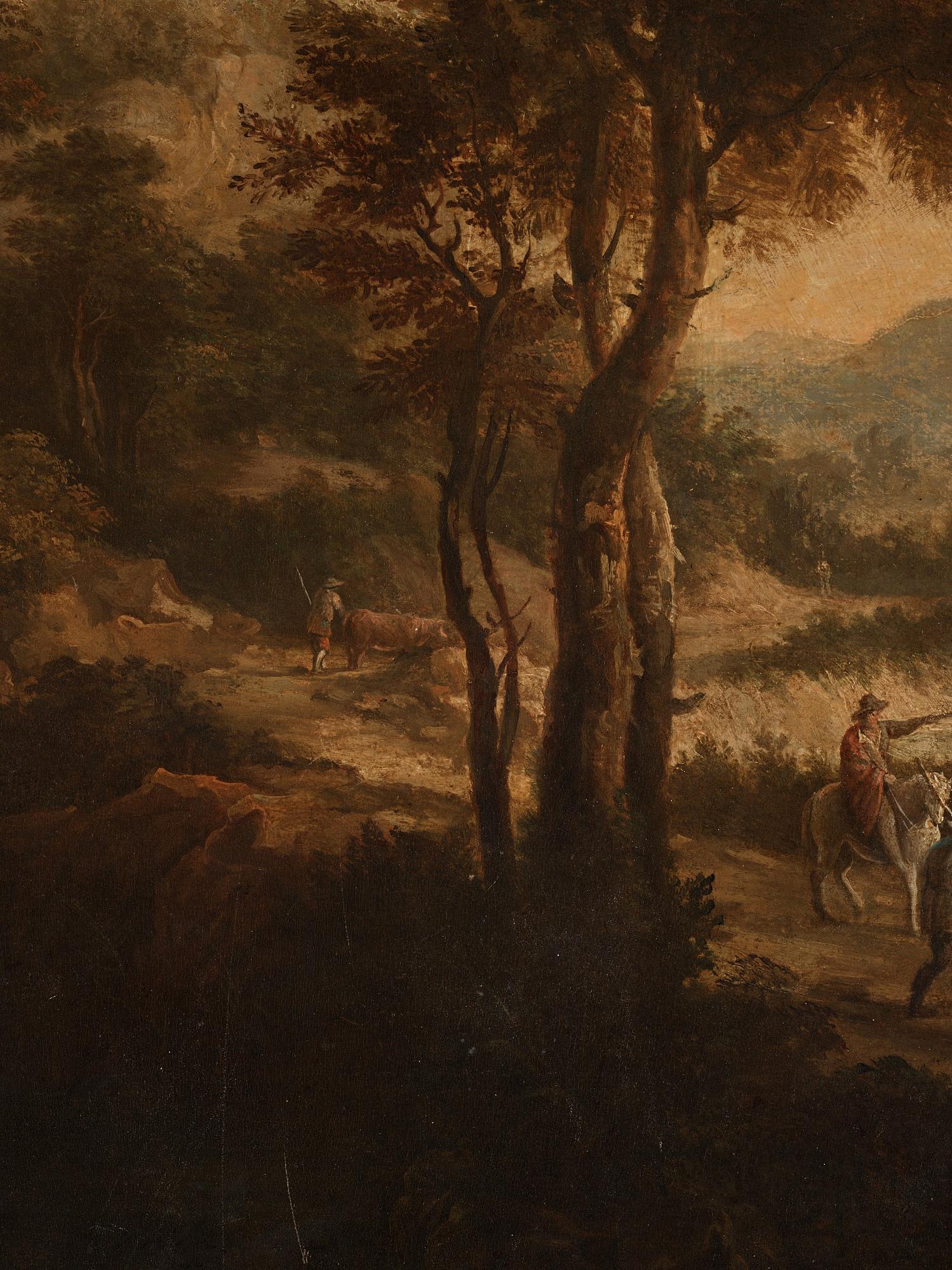
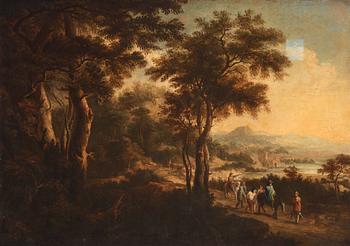
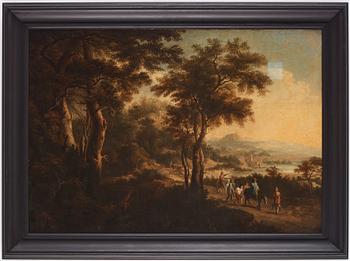
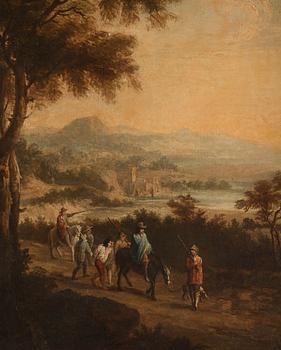
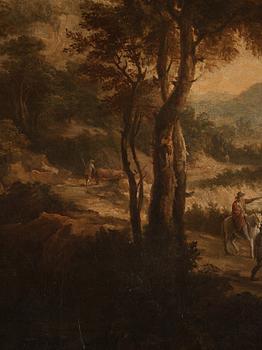
An extensive Italian landscape with a prison guard transport
Canvas 62.5 x 89.5 cm.
Alkuperä - Provenienssi
Mr. S. Herbert James, England;
his sale, Christie’s, London, 16 February 1925, lot 85 as ’Unidentified Master” (sold for 7.5 gns to Mr. Hill)
Private Swedish Collection
Muut tiedot
Jacques d'Arthois was a Flemish landscape painter who specialized in wooded landscapes with figures. He is a key member of the landscape painters active in Brussels in the 17th century who are collectively referred to as the "Sonian Forest painters" because of their interest in depicting the Sonian Forest in the environs of Brussels. This school of landscape painters included landscape painters such as Denis van Alsloot, Lodewijk de Vadder and Cornelis Huysmans. Around 1650, the governor of the Spanish Netherlands awarded Jacques d'Arthois a distinction for reasons that are now unknown. In 1655 he was officially recognized as a tapestry cartoon designer of the city of Brussels by the magistrate of the city, as a replacement of Lodewijk de Vadder who had died. He was already at that time deemed to be a skillful artist in that specialty.
The figures in D’Arthois’s work were usually added by other artists, including David Teniers the Younger and Gonzales Coques. The figures in the present work, however, may well be by d’Arthois himself. As typical of d’Arthois, the staffage in the present work is inspired by the staffage in paintings by Jan Breughel the Elder (Brussels 1568-1625 Antwerpen).
Lisätietoja ja kuntoraportit

Tietoa ostamisesta
Muiden katsomia kohteita