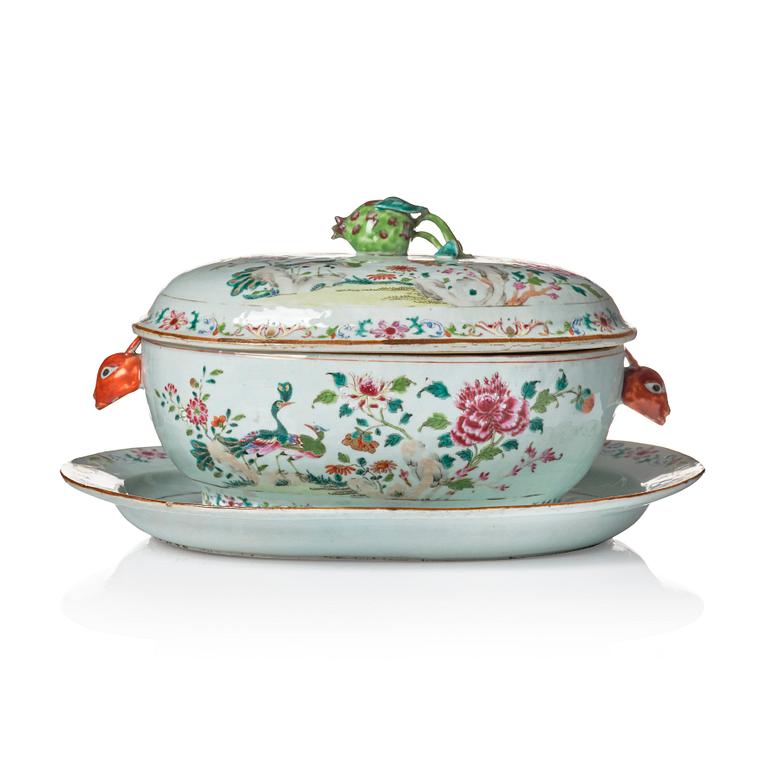
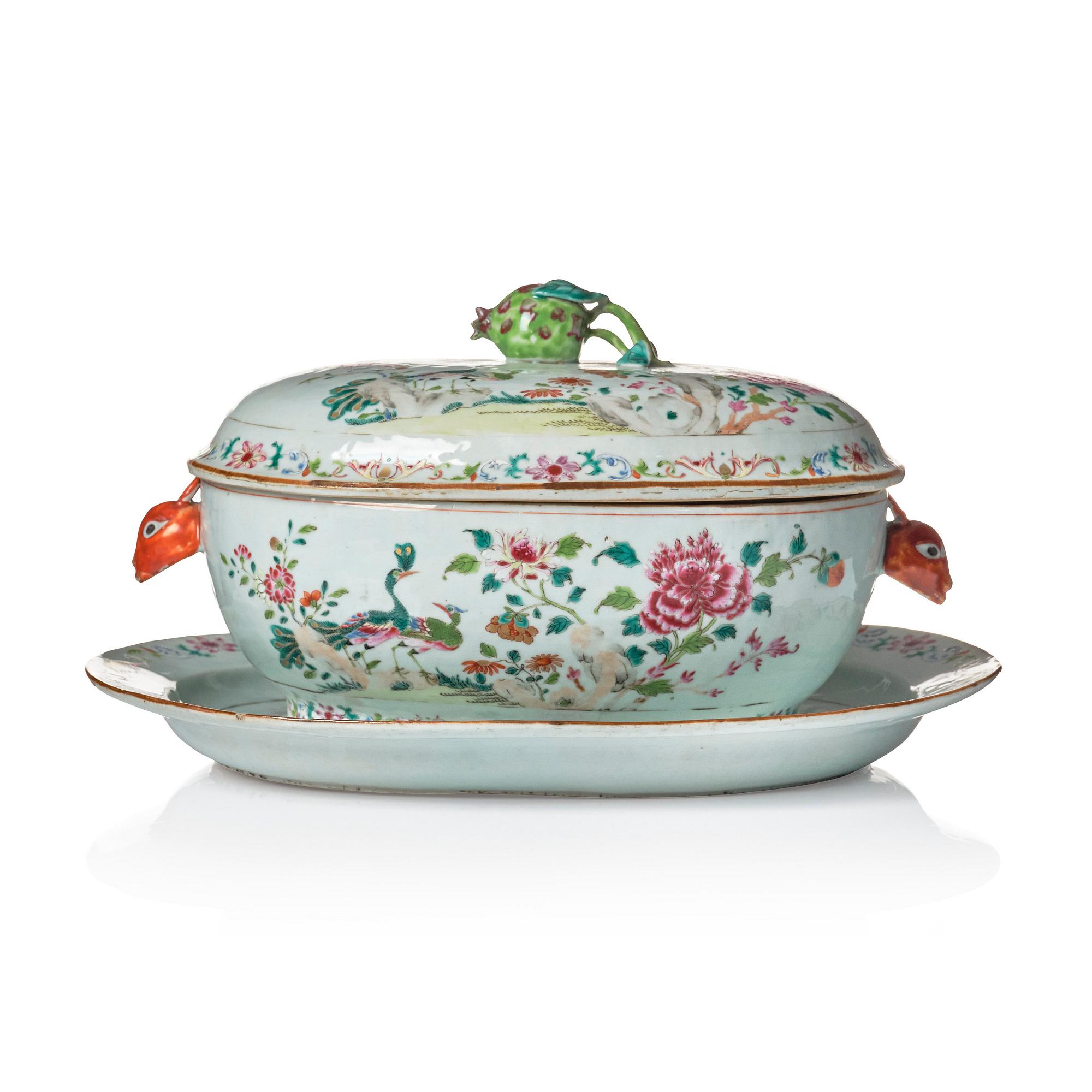
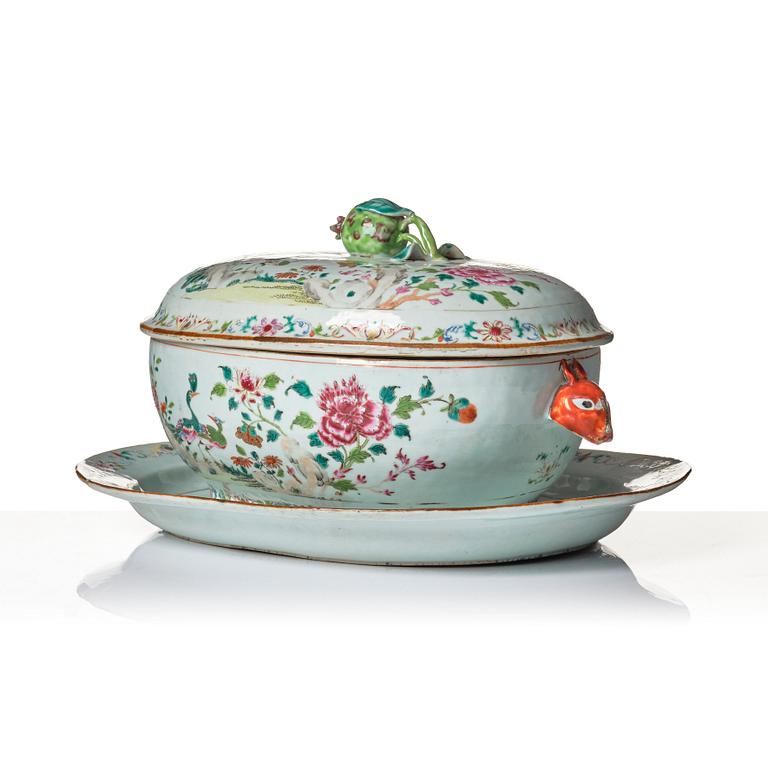
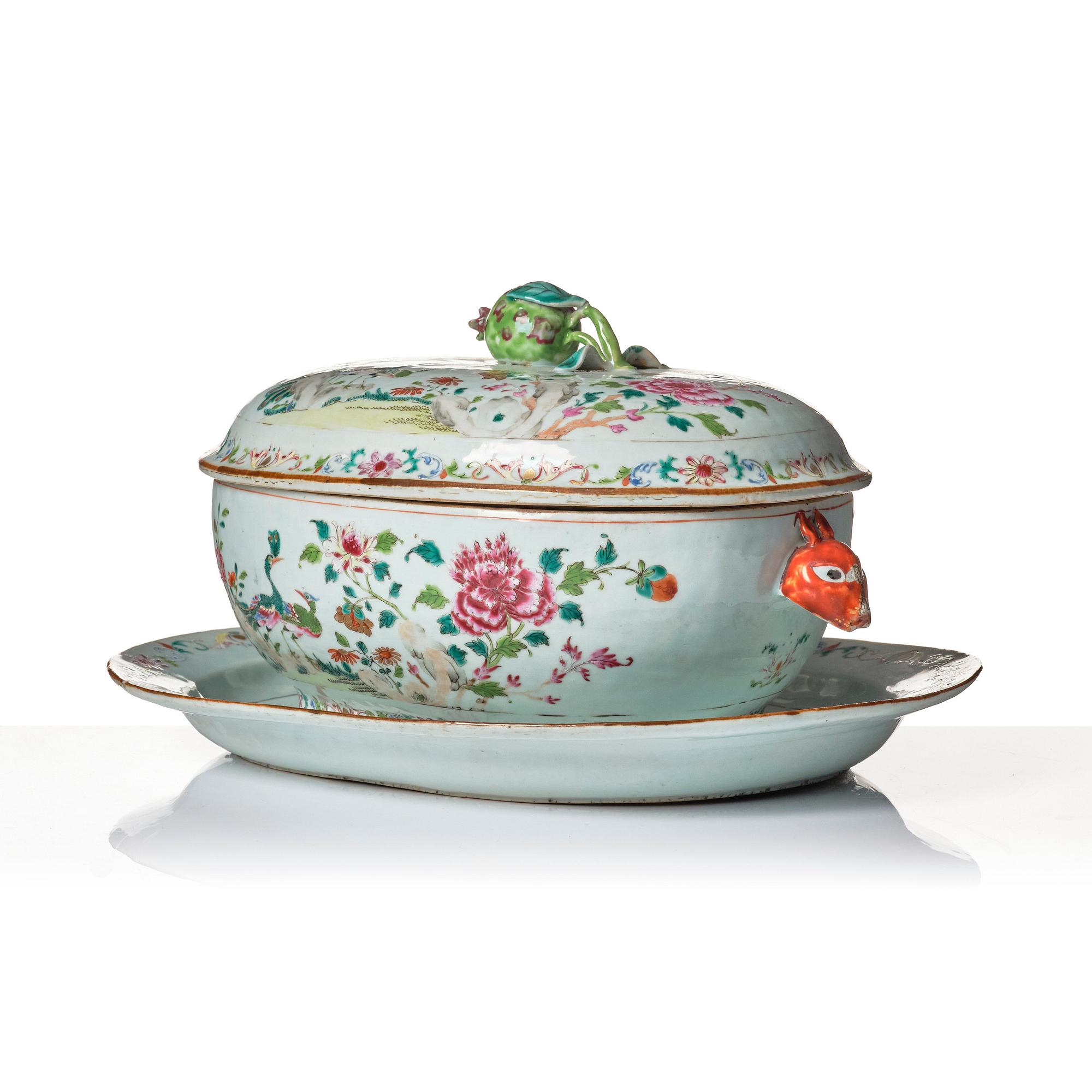
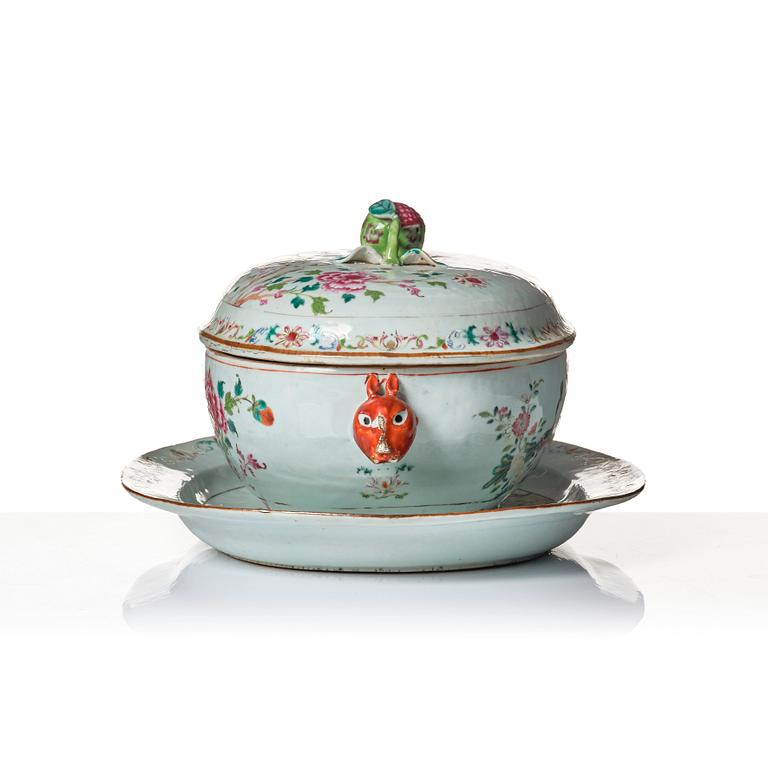
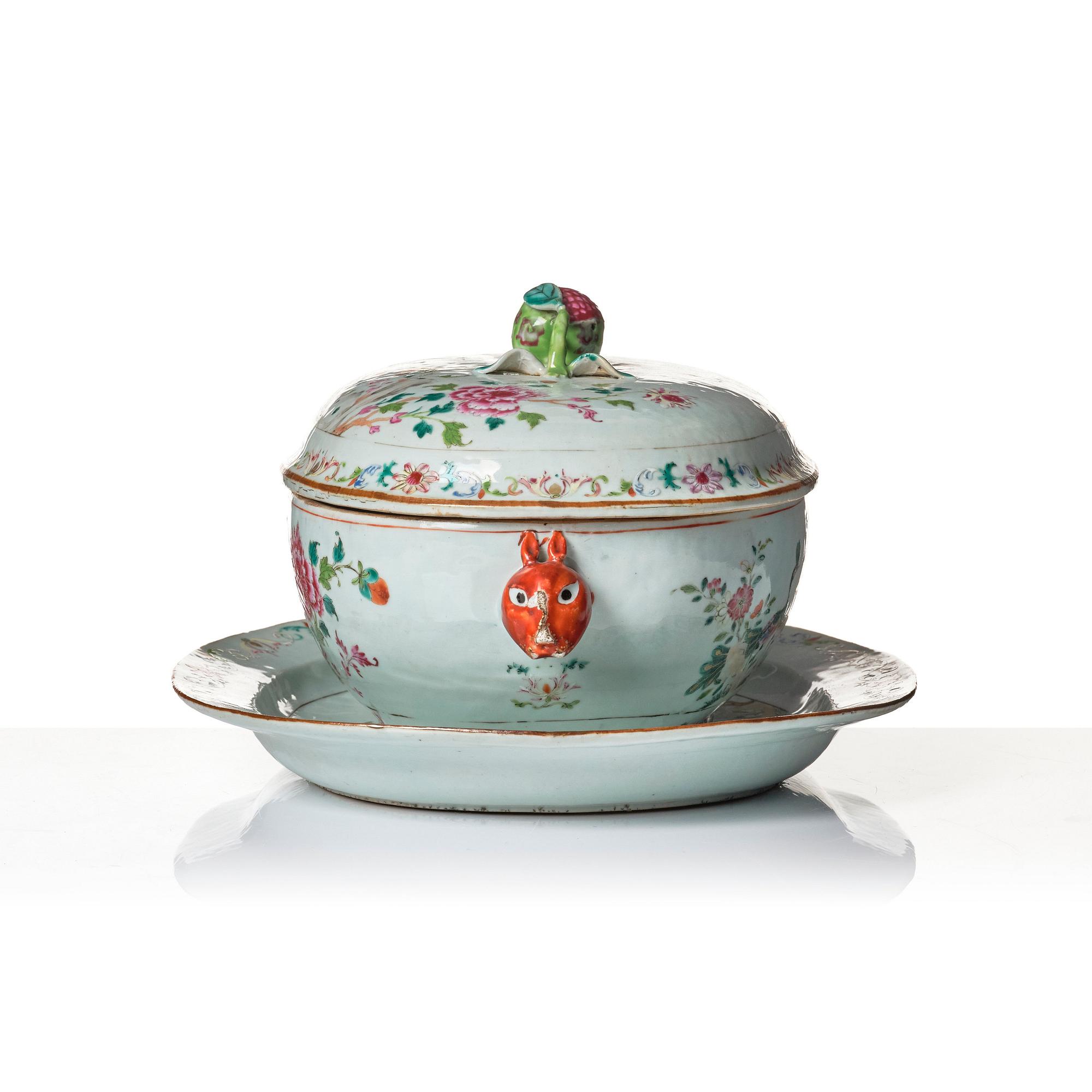
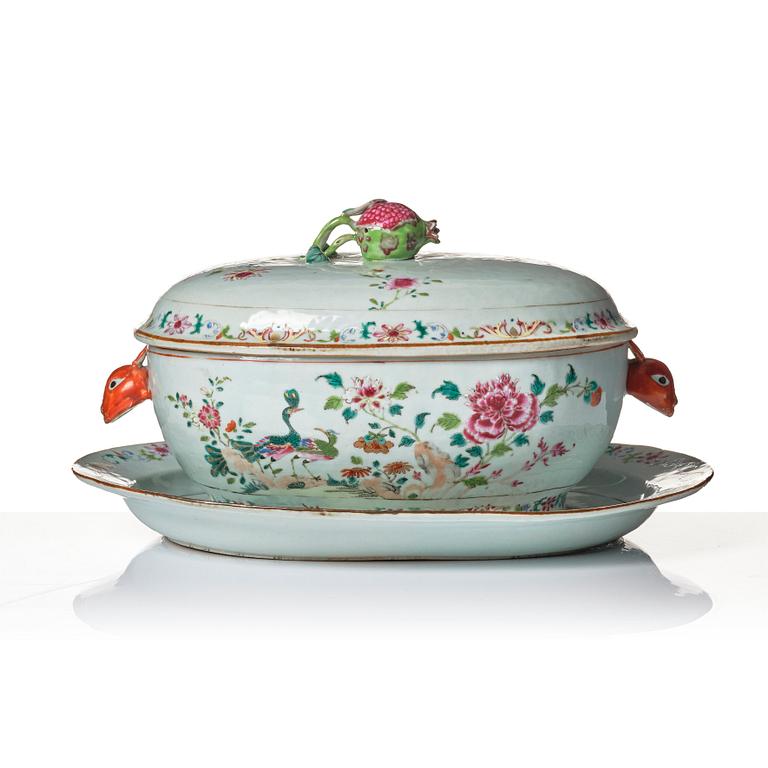
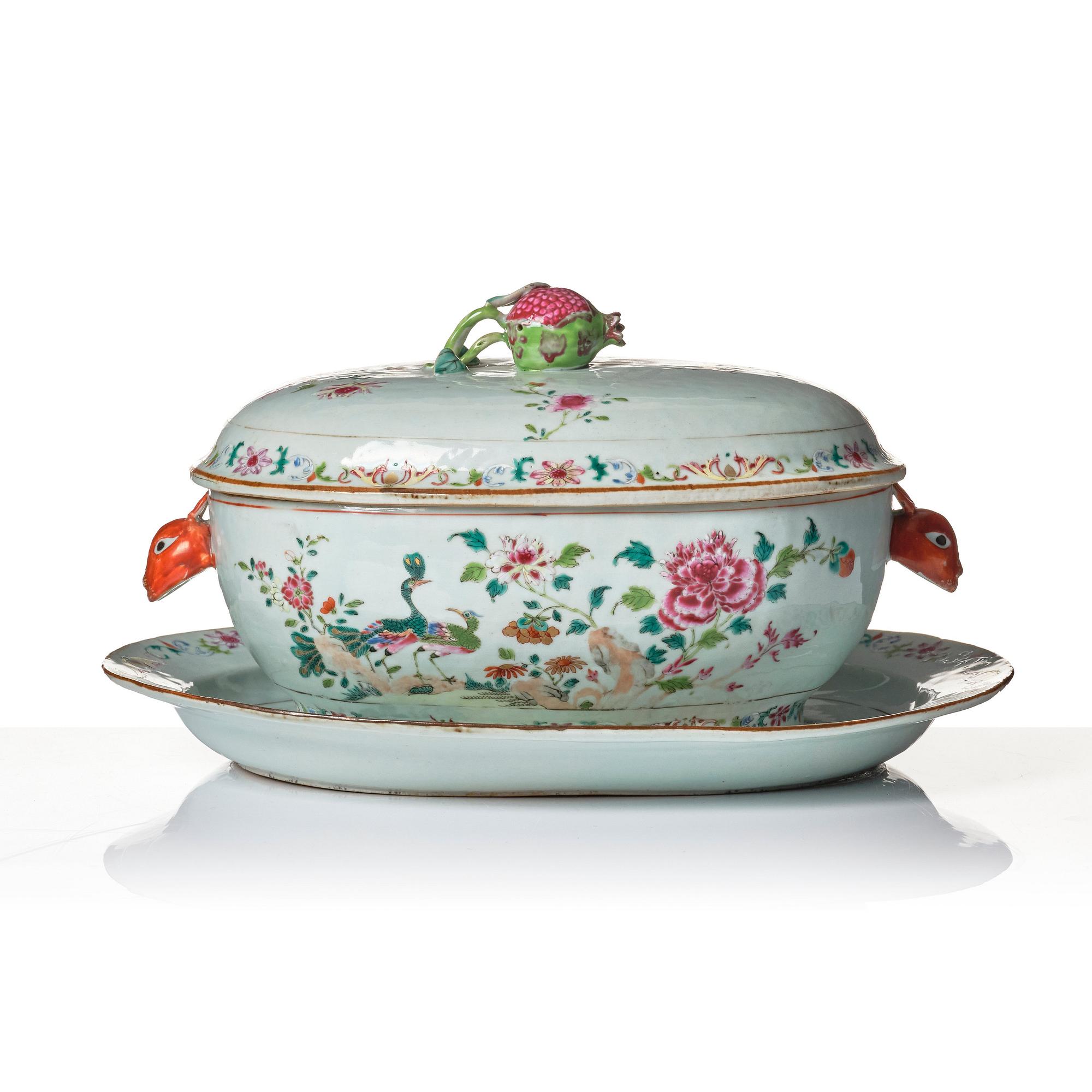
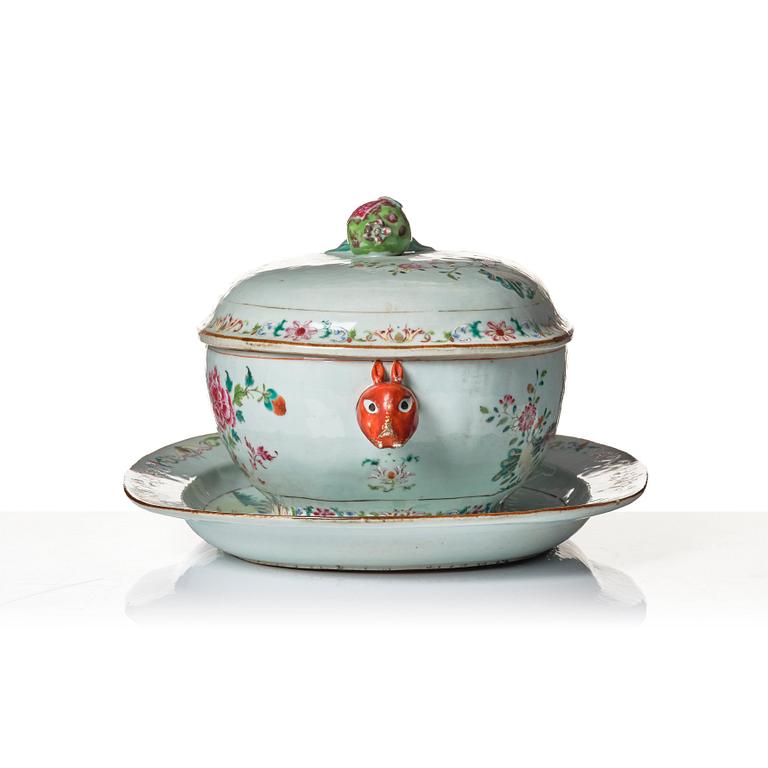
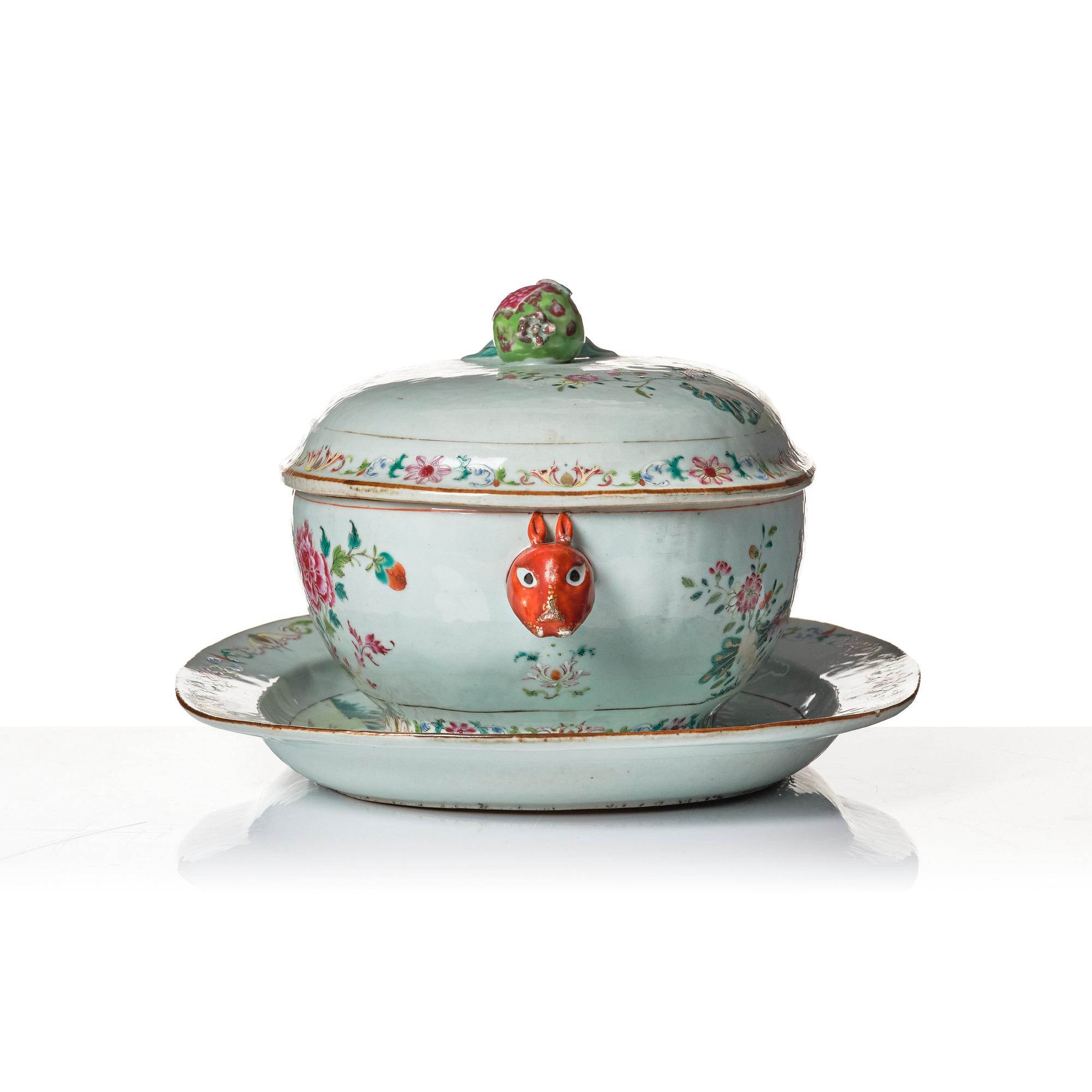
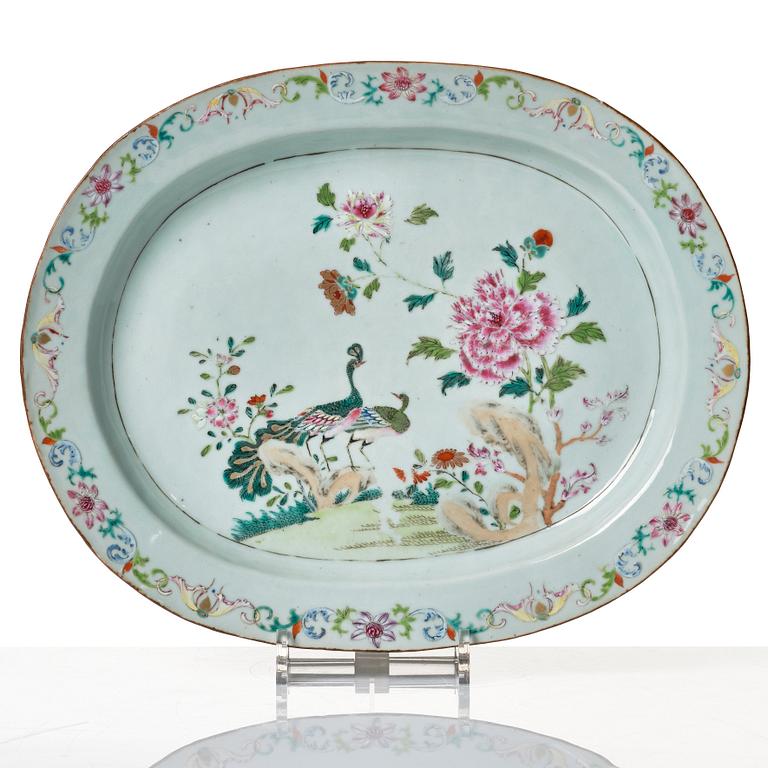
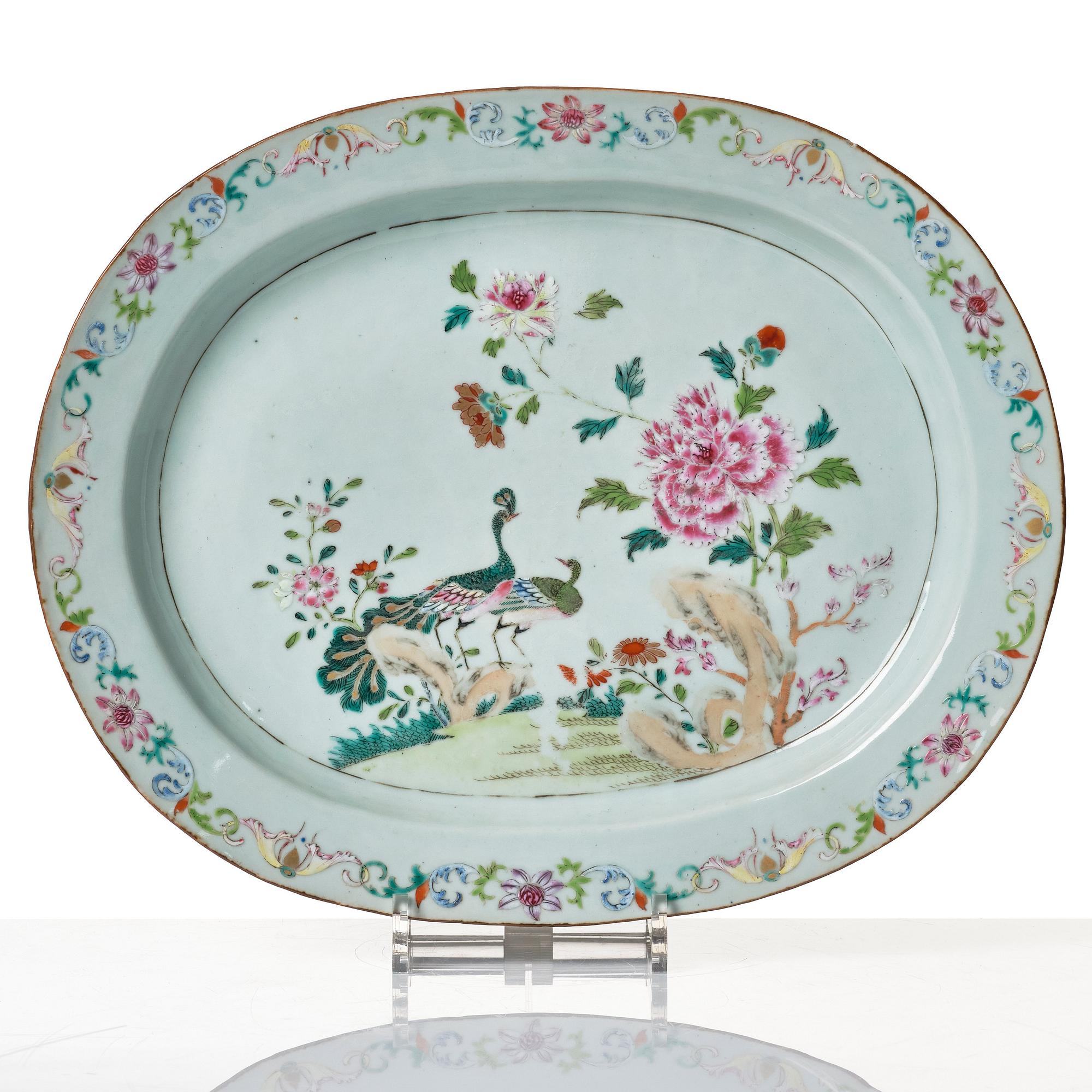
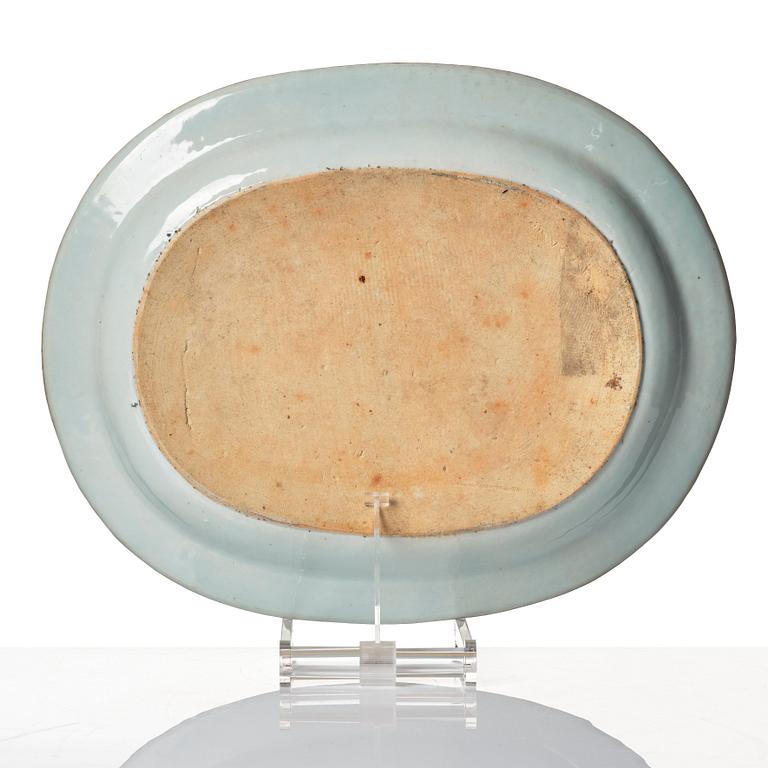
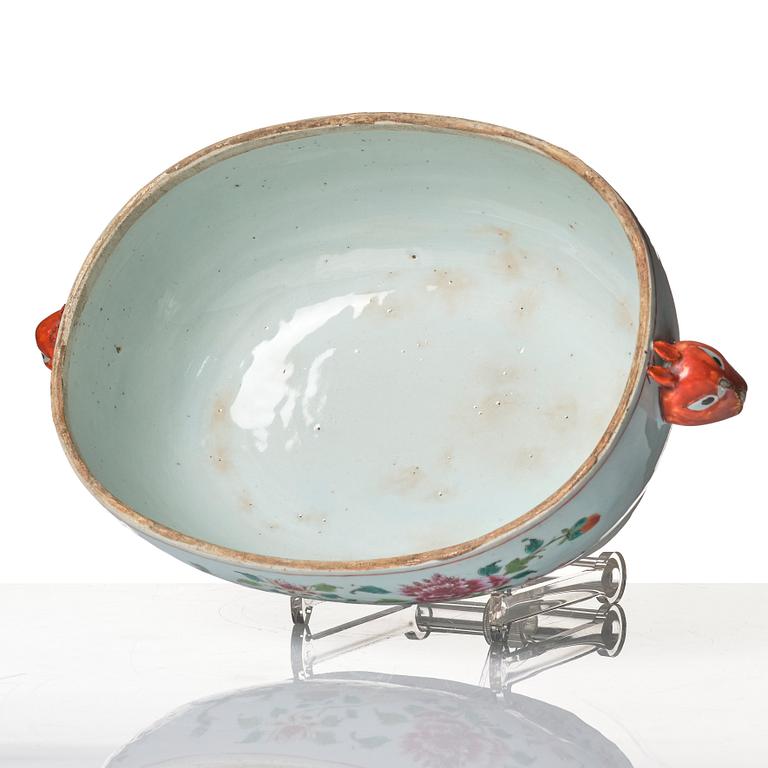
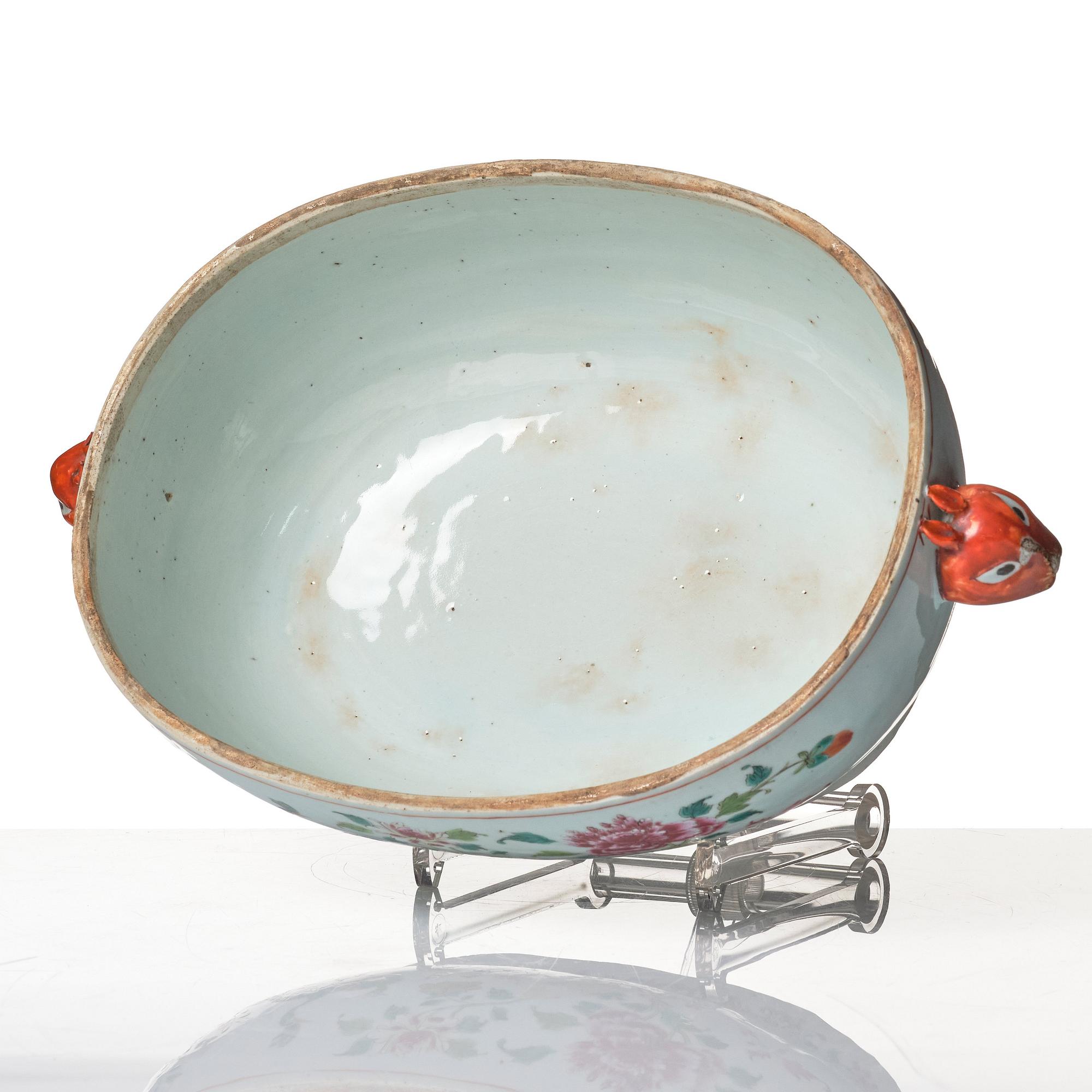
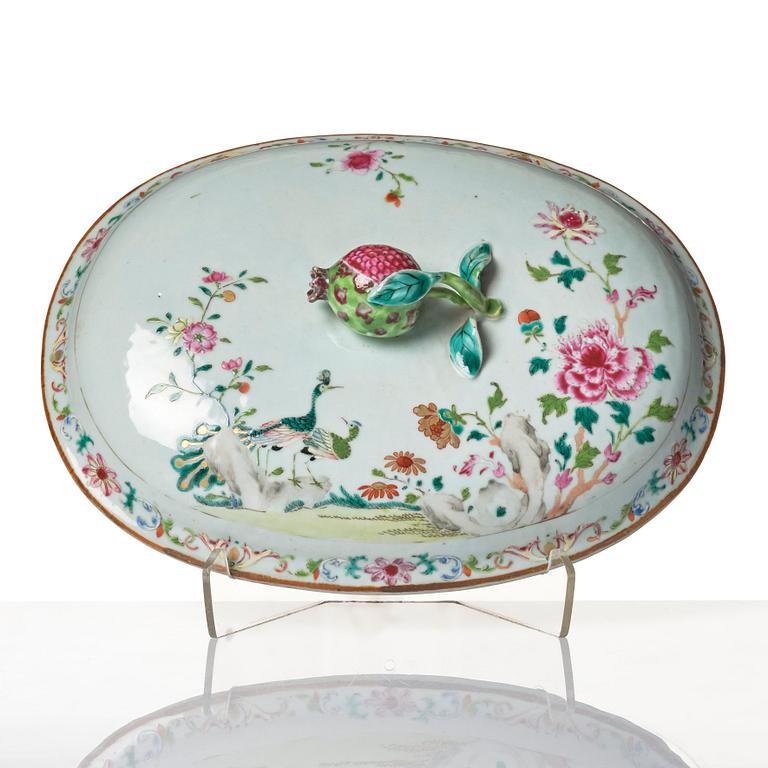
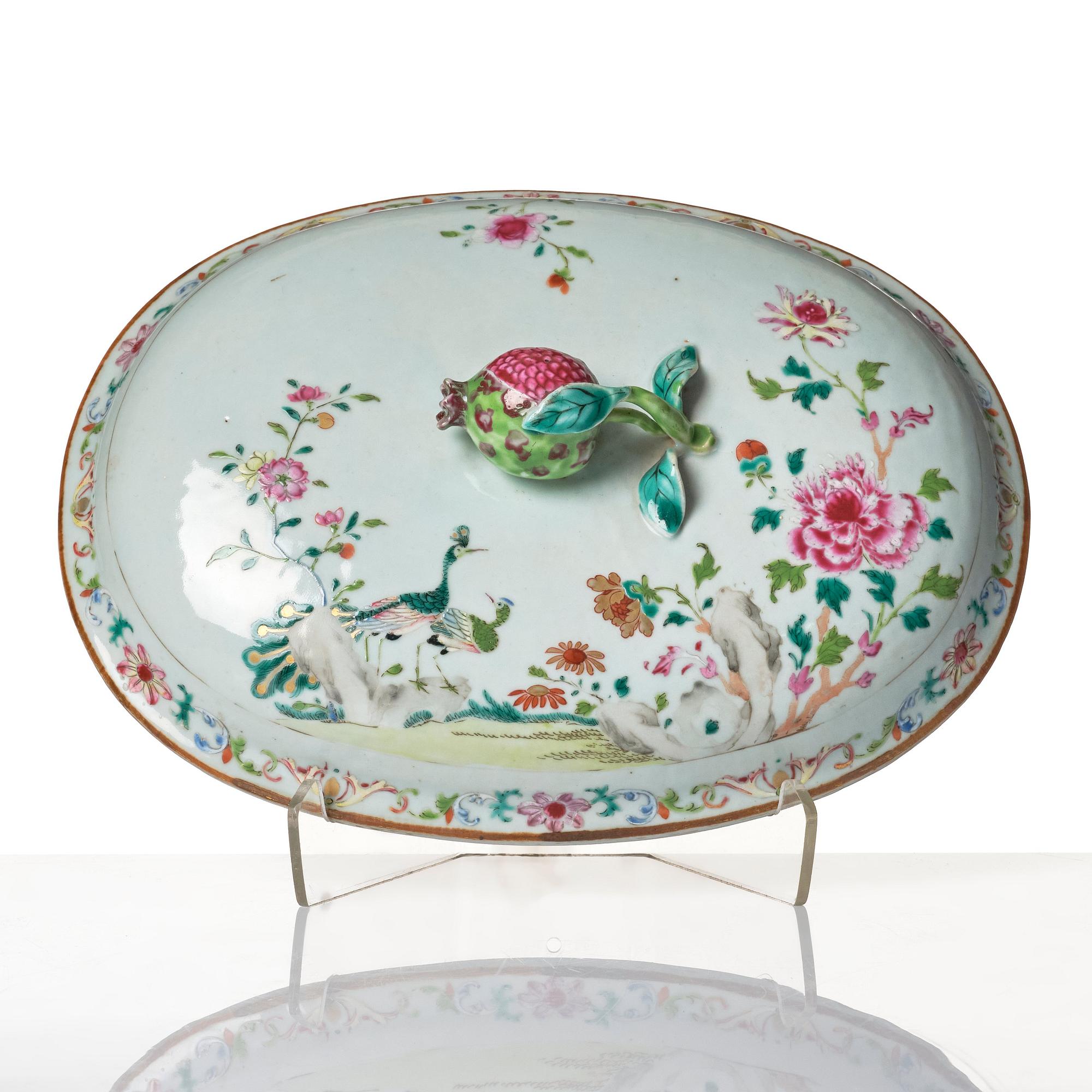
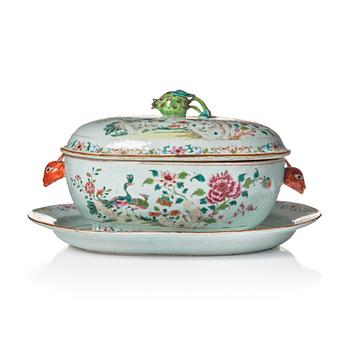
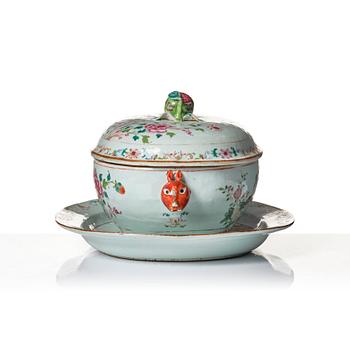
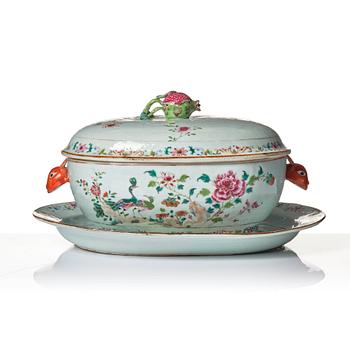
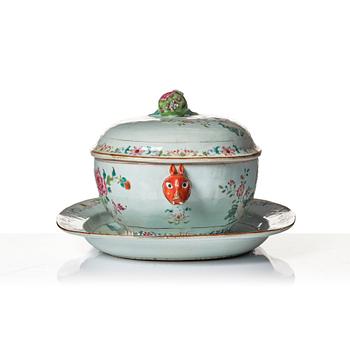
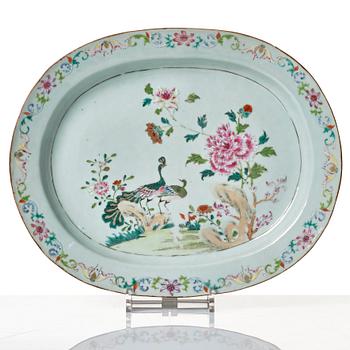
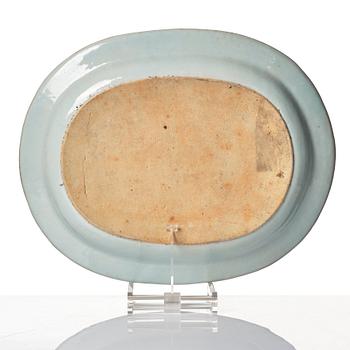
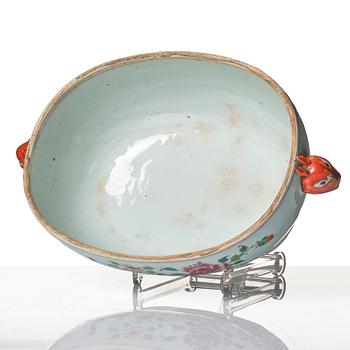
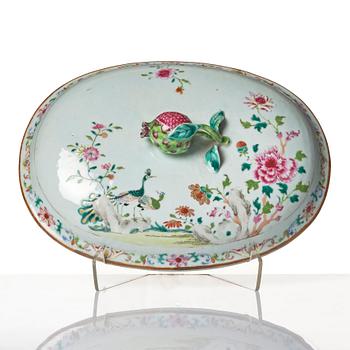
Oval shape, handles in the shape of rabbits heads, finial in the shape of a pomme granate. Decorated with peacocks in a garden with peonies and scholars rock. Tureen length 36 cm, height 21 cm. The stand 40x32.5 cm.
Wear. Minor chips.
Muut tiedot
This pattern, known as « Serviço dos Pavões » or « double peacocks Service », is one of the most famous design in Chinese Export Porcelain, specially in Portugal and Brazil.
The royal family of Portugal owned one service with it. When Napoleon invaded Portugal, The King Joao VI, soon Emperor of Brazil, fled in exile to Brazil and brought his six Chinese porcelain services with him, including this one. The royal and imperial family used it then at the Paço de São Cristóvão and at Fazenda Imperial de Santa Cruz.
It is known as the “viajante” service because, it first travelled from China to Portugal, and then from Portugal to Rio de Janeiro. When the Empire turned into the Republic of Brazil, the six Chinese porcelain services of the Joao VI were scattered through auctions held in 1890 by the auctioneer Joaquin Dias dos Santos in Rio de Janeiro.
Lisätietoja ja kuntoraportit

Tietoa ostamisesta
Muiden katsomia kohteita