Ei yhteyttä palvelimeen
Online-teemahuutokaupat
Finnish Prints F770
Huutokauppa:
Lotte Laserstein – A private collection F753
Huutokauppa:
Madeleine Pyk – A Collection F769
Huutokauppa:
Linn Fernström – Drypoint Engravings and Works on Paper F773
Huutokauppa:
Sculpture Now F749
Huutokauppa:
European Gold Coins: 19th & 20th Century E1295
Huutokauppa:
Colour Code – White E1293
Huutokauppa:
The Grand Manor E1298
Huutokauppa:
Live-huutokaupat
Contemporary Art & Design 670
Huutokauppa: 21.−22. huhtikuuta 2026
Important Timepieces 671
Huutokauppa: 21. huhtikuuta 2026
Modern Art & Design 672
Huutokauppa: 20.−21. toukokuuta 2026
Important Spring Sale 673
Huutokauppa: 10.−12. kesäkuuta 2026
1065
1191669

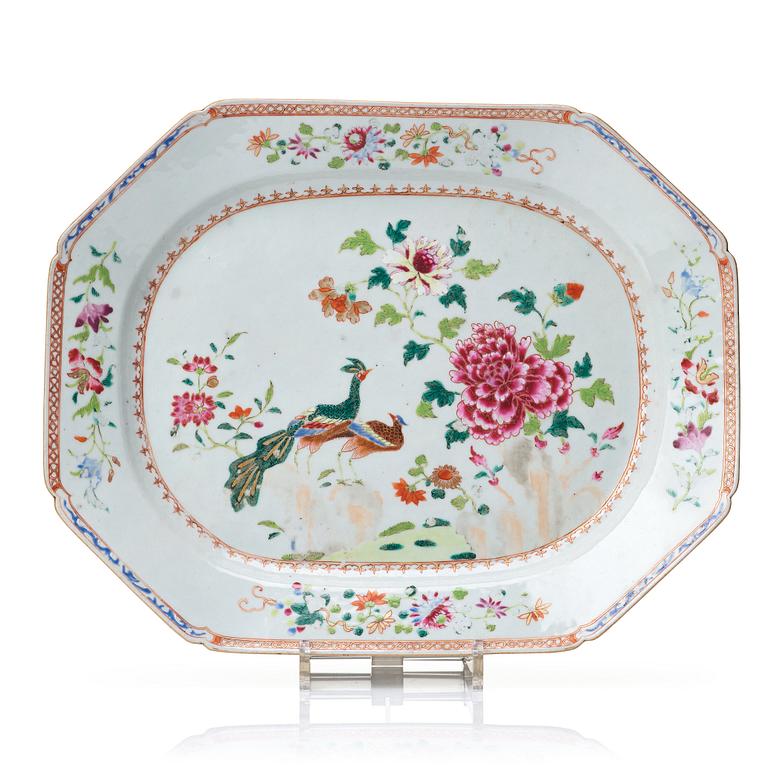
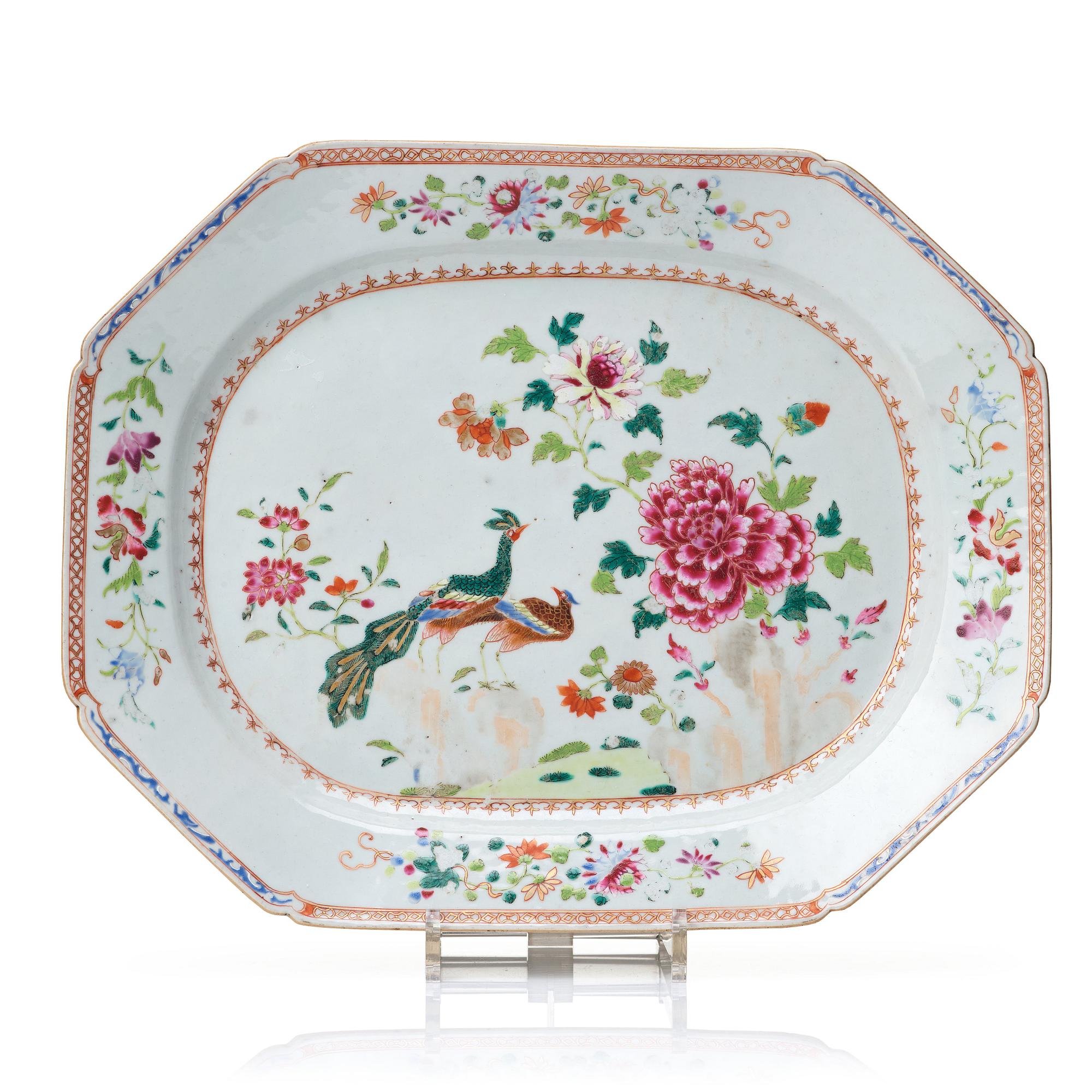
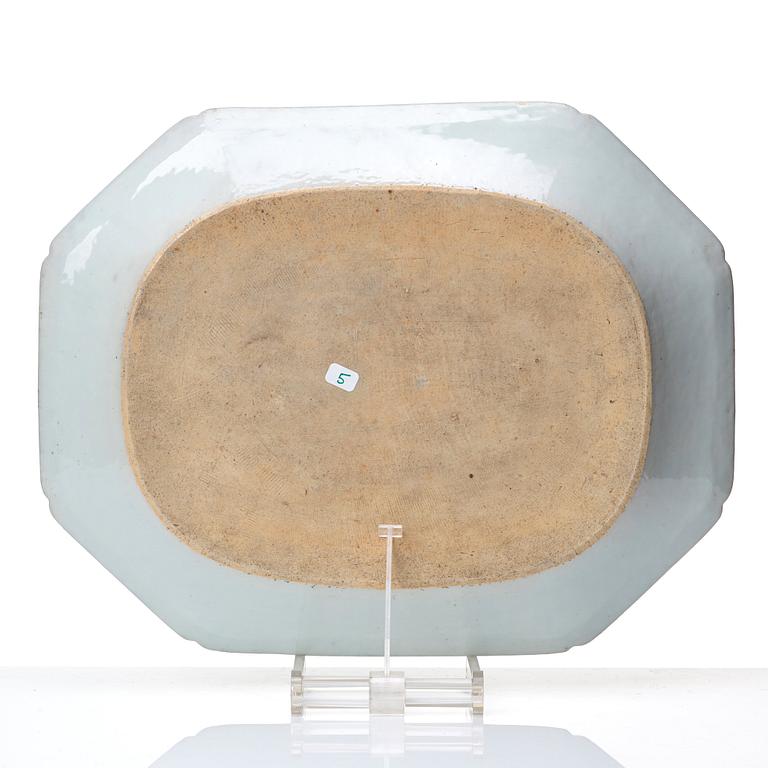
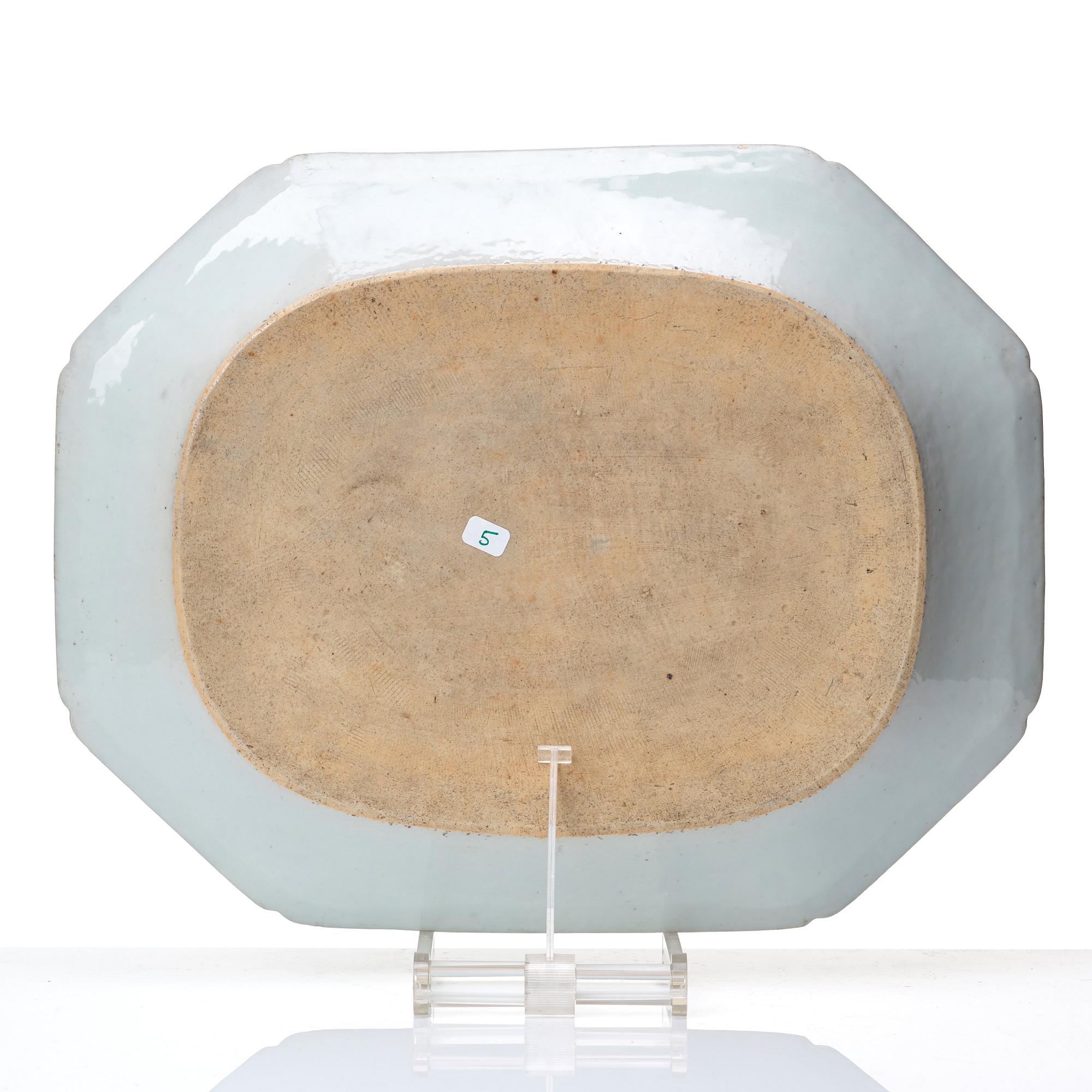
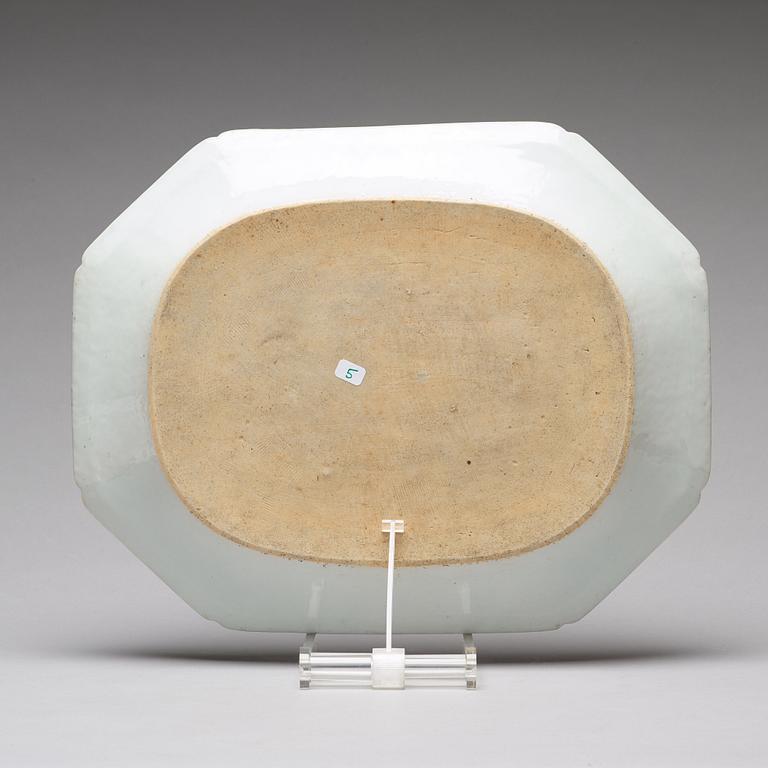
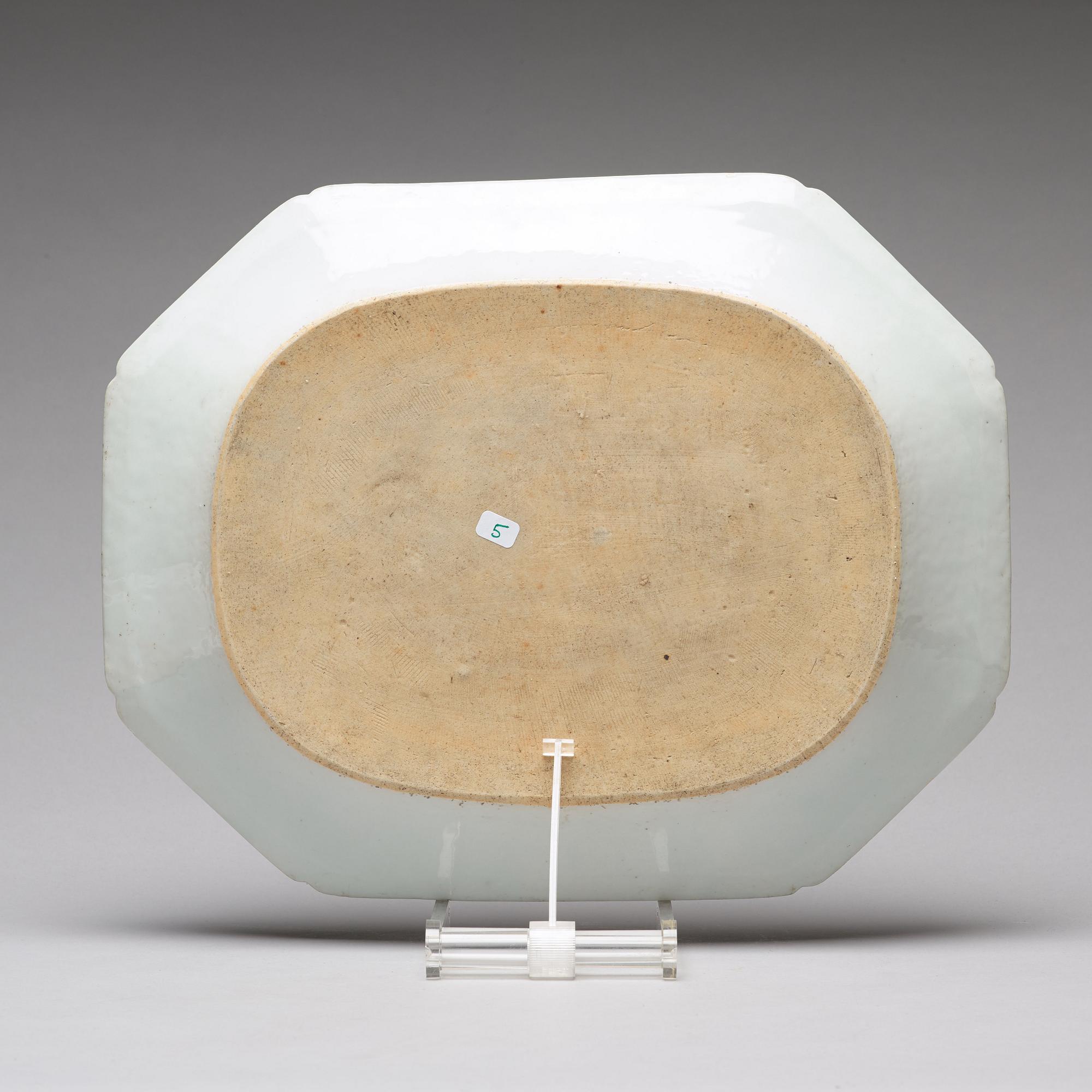
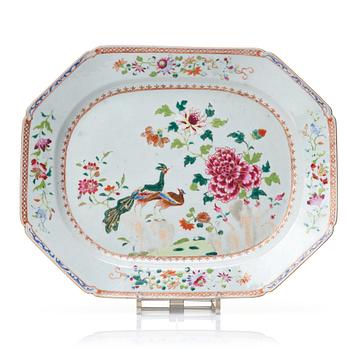
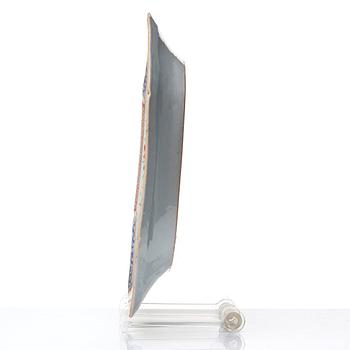
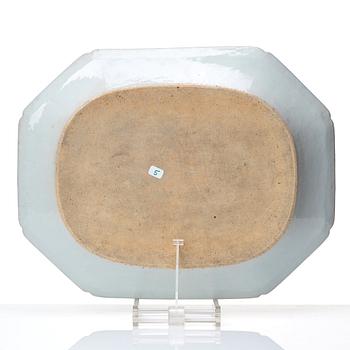
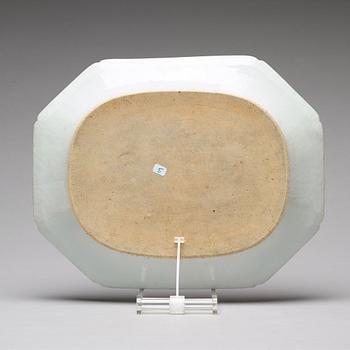
A famille rose 'double peacock' serving dish, Qingdynastin, Qianlong (1736-95).

Lähtöhinta
12 000 - 15 000 SEK
1 130 - 1 410 EUR
1 290 - 1 610 USD
Vasarahinta
Ei myyty
Tarjouksen tekeminen vaatii erillisen hyväksynnän
Tietoa ostamisesta
Lisätietoja ja kuntoraportit
Cecilia Nordström
Tukholma
Cecilia Nordström
Johtava asiantuntija – itämainen keramiikka & taidekäsityö, eurooppalainen keramiikka ja lasi
+46 (0)739 40 08 02
A famille rose 'double peacock' serving dish, Qingdynastin, Qianlong (1736-95).

Octagonal, decorated with peacocks in a garden setting. Lenght 41.5 cm.

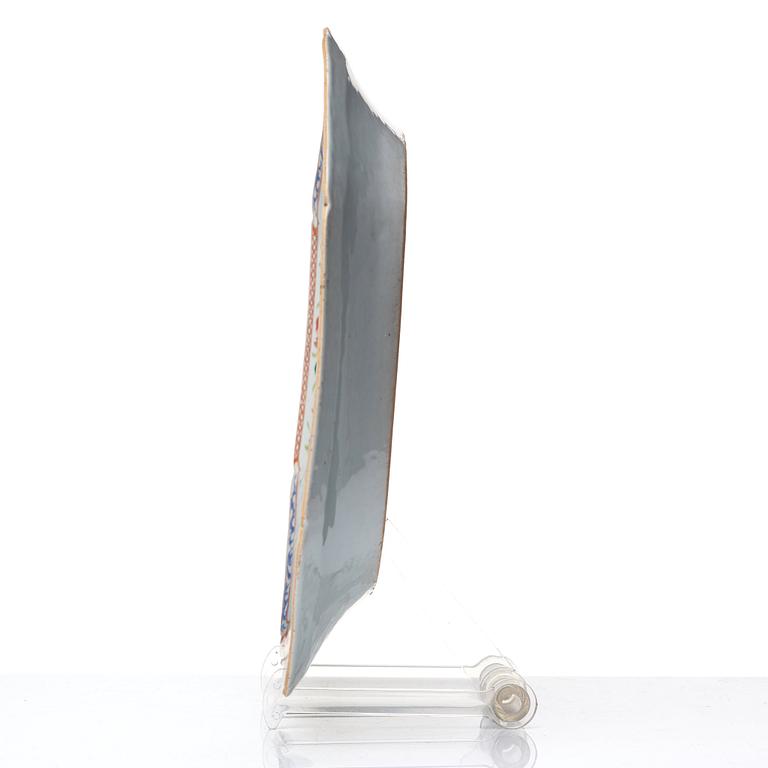
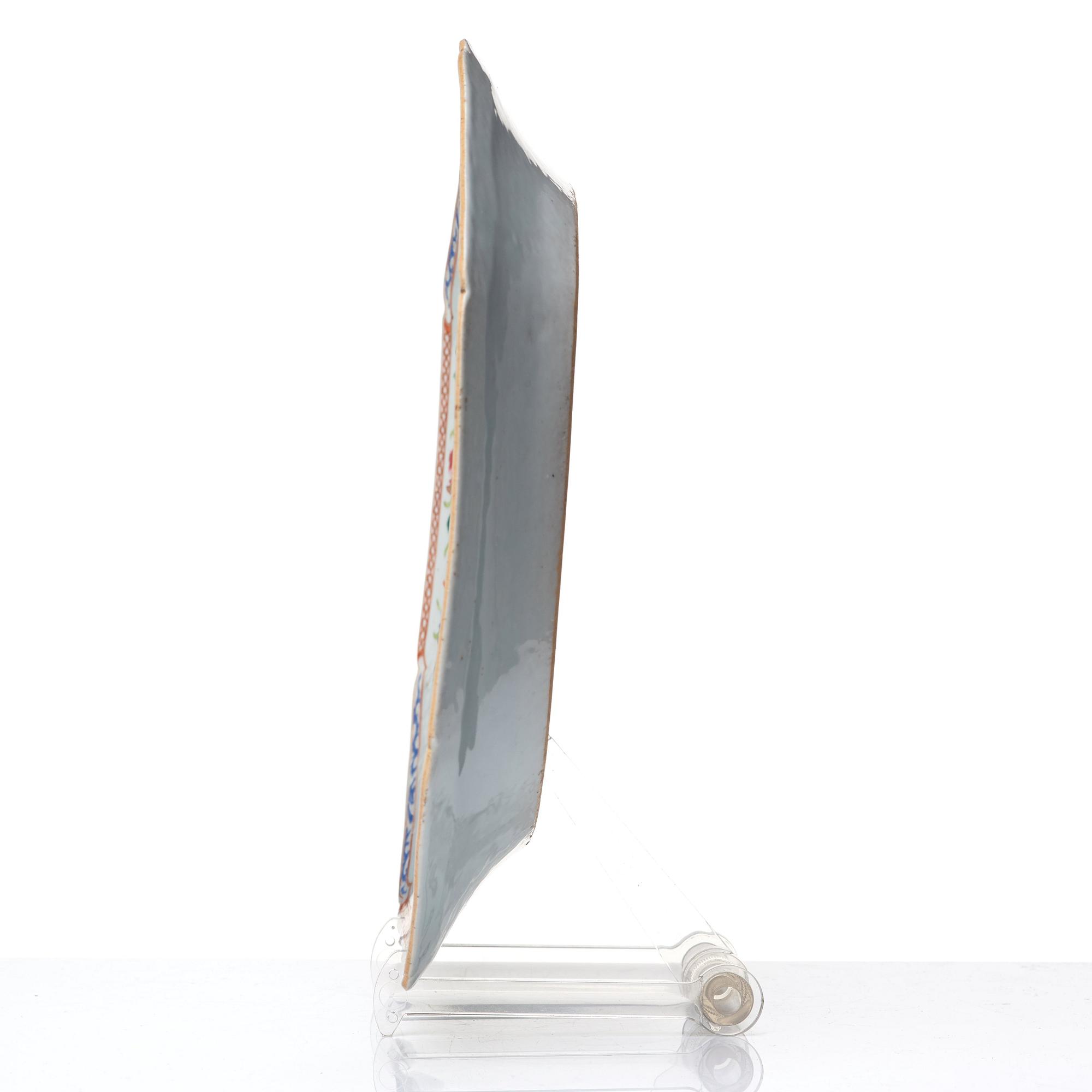
Fritting to rim.

Muut tiedot

This pattern, known as « Serviço dos Pavões » or « double peacocks Service », is one of the most famous design in Chinese Export Porcelain, specially in Portugal and Brazil.
The royal family of Portugal owned one service with it. When Napoleon invaded Portugal, The King Joao VI, soon Emperor of Brazil, fled in exile to Brazil and brought his six Chinese porcelain services with him, including this one. The royal and imperial family used it then at the Paço de São Cristóvão and at Fazenda Imperial de Santa Cruz.
It is known as the “viajante” service because, it first travelled from China to Portugal, and then from Portugal to Rio de Janeiro. When the Empire turned into the Republic of Brazil, the six Chinese porcelain services of the Joao VI were scattered through auctions held in 1890 by the auctioneer Joaquin Dias dos Santos in Rio de Janeiro.