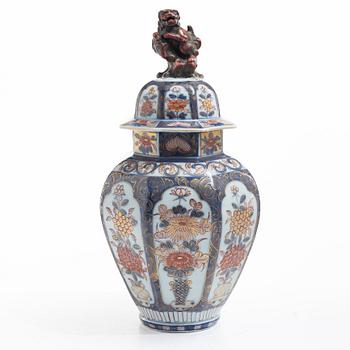
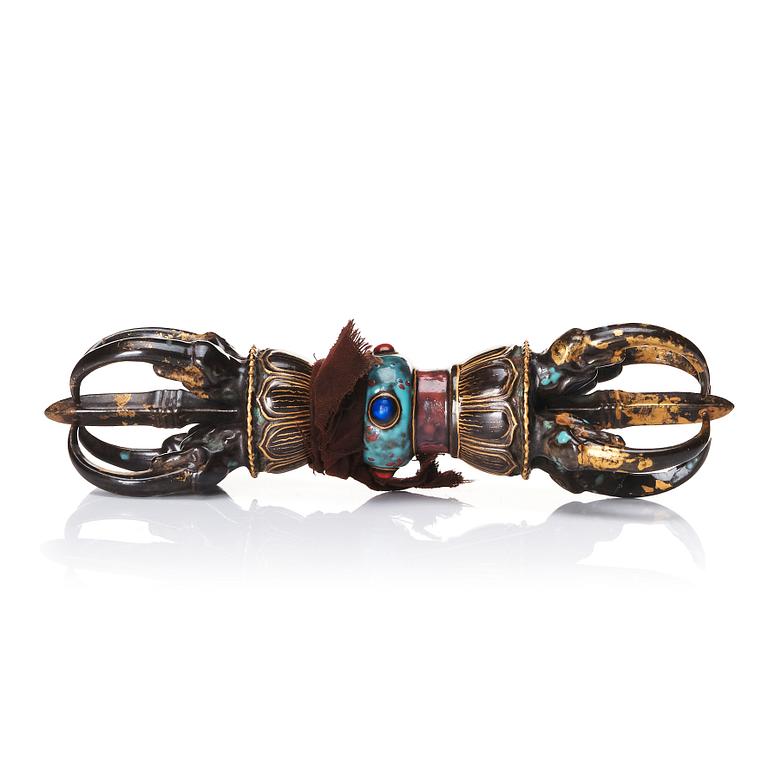
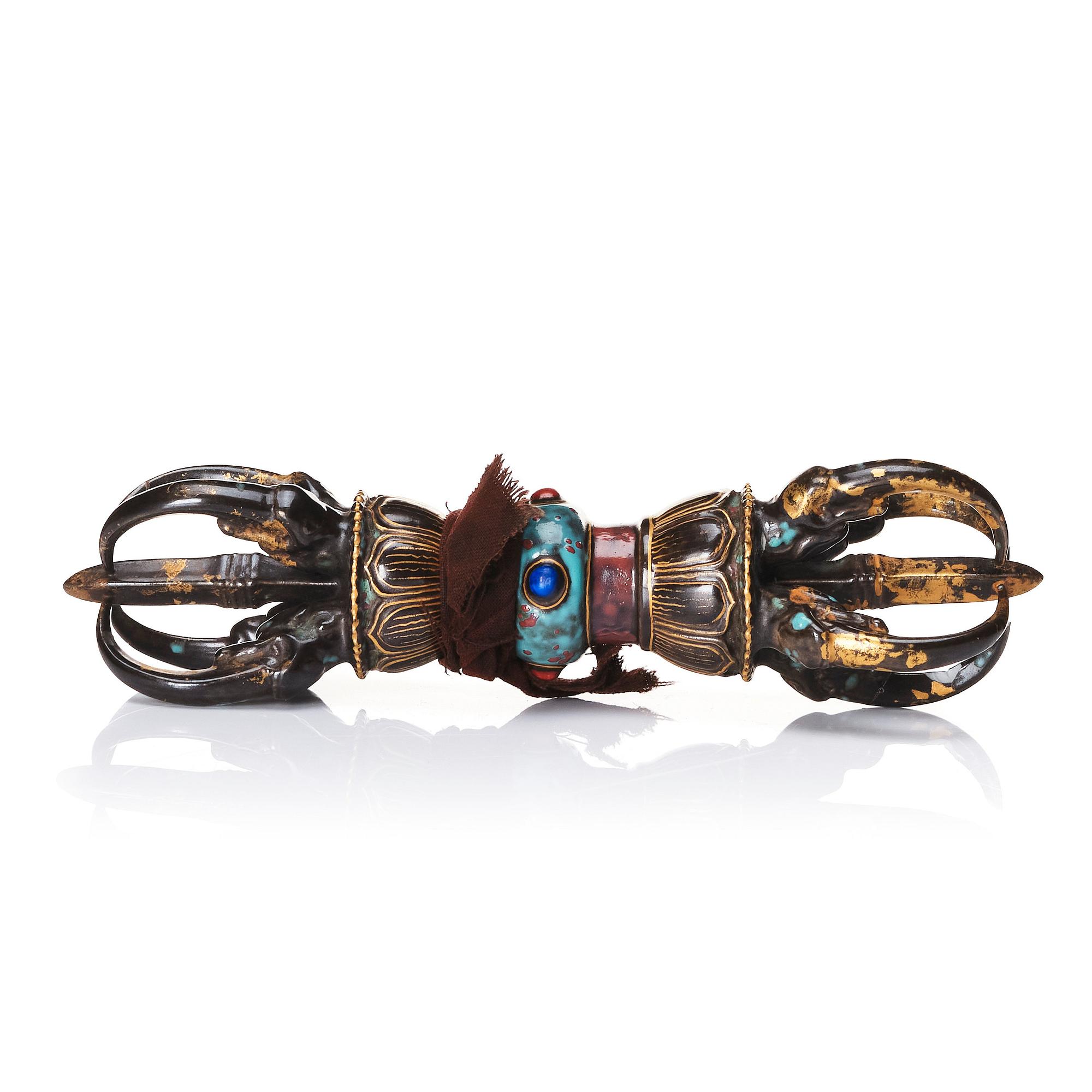
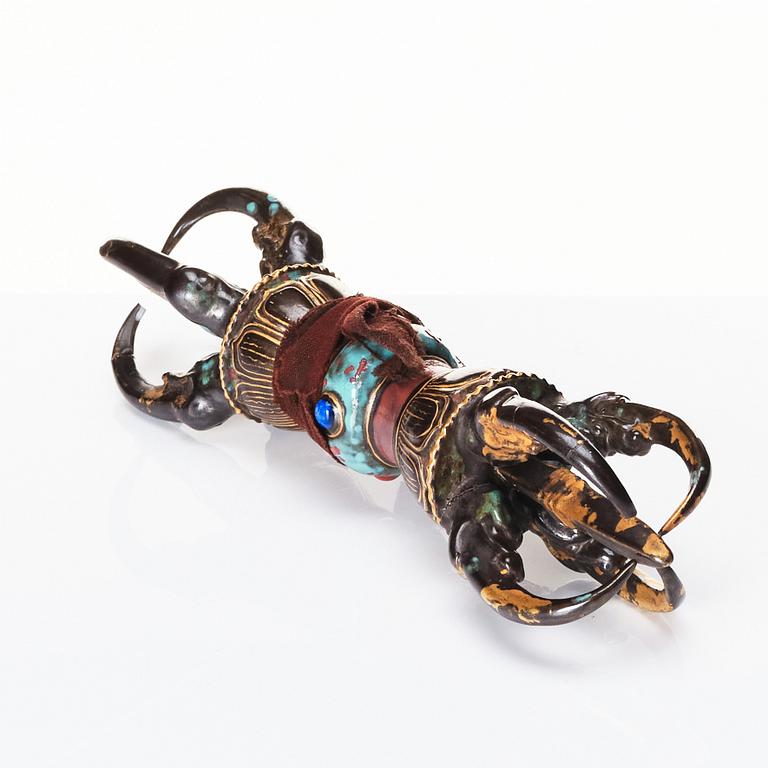
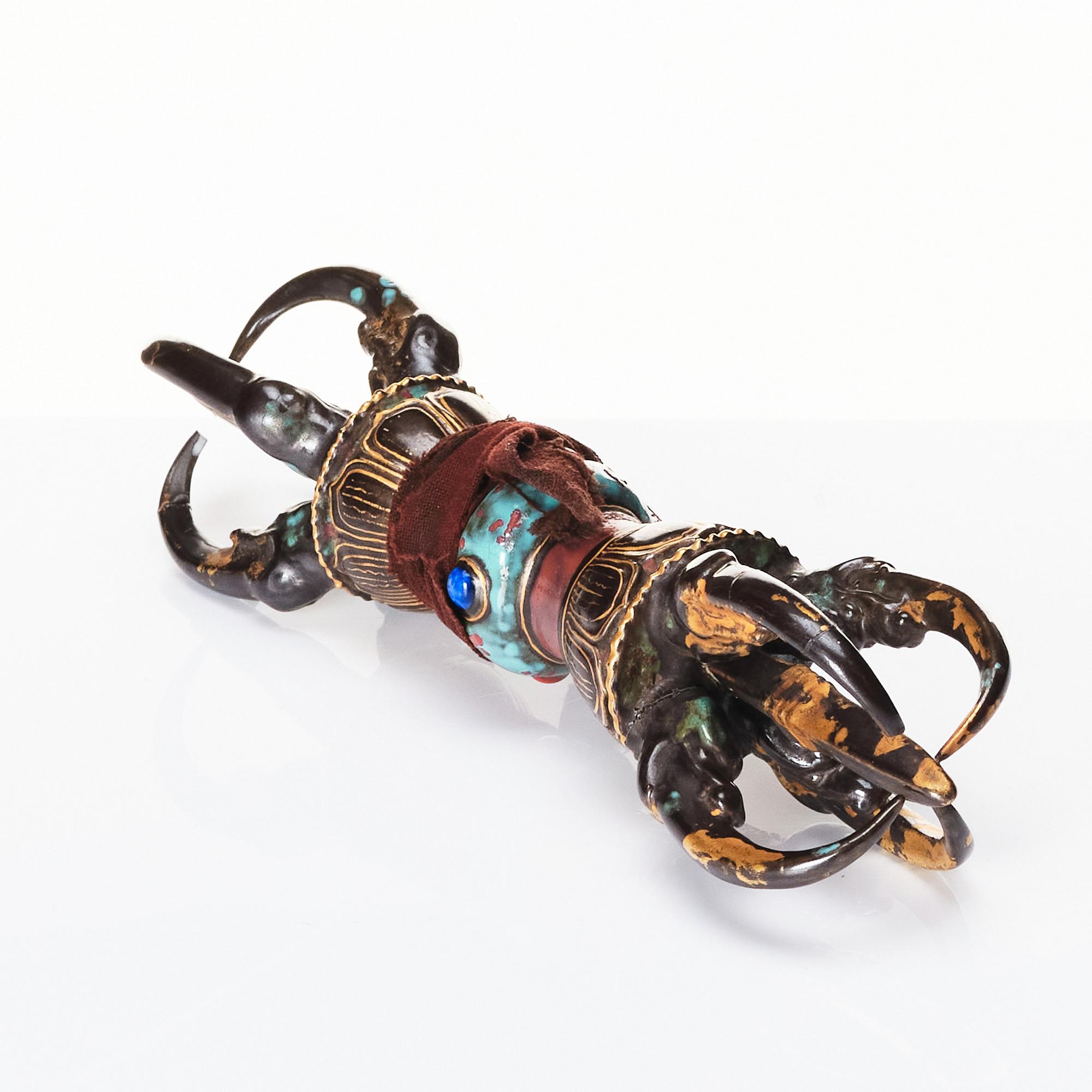
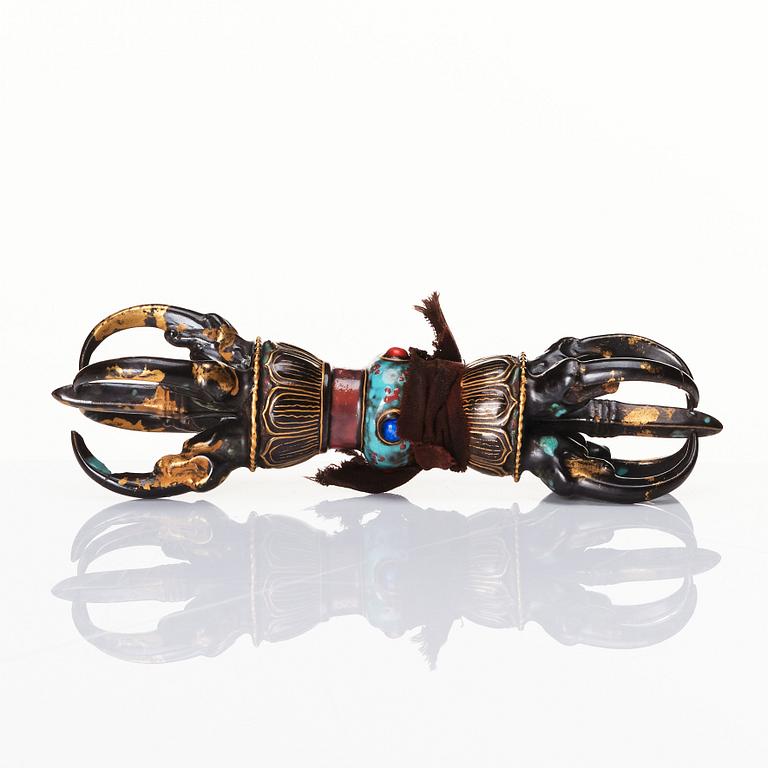
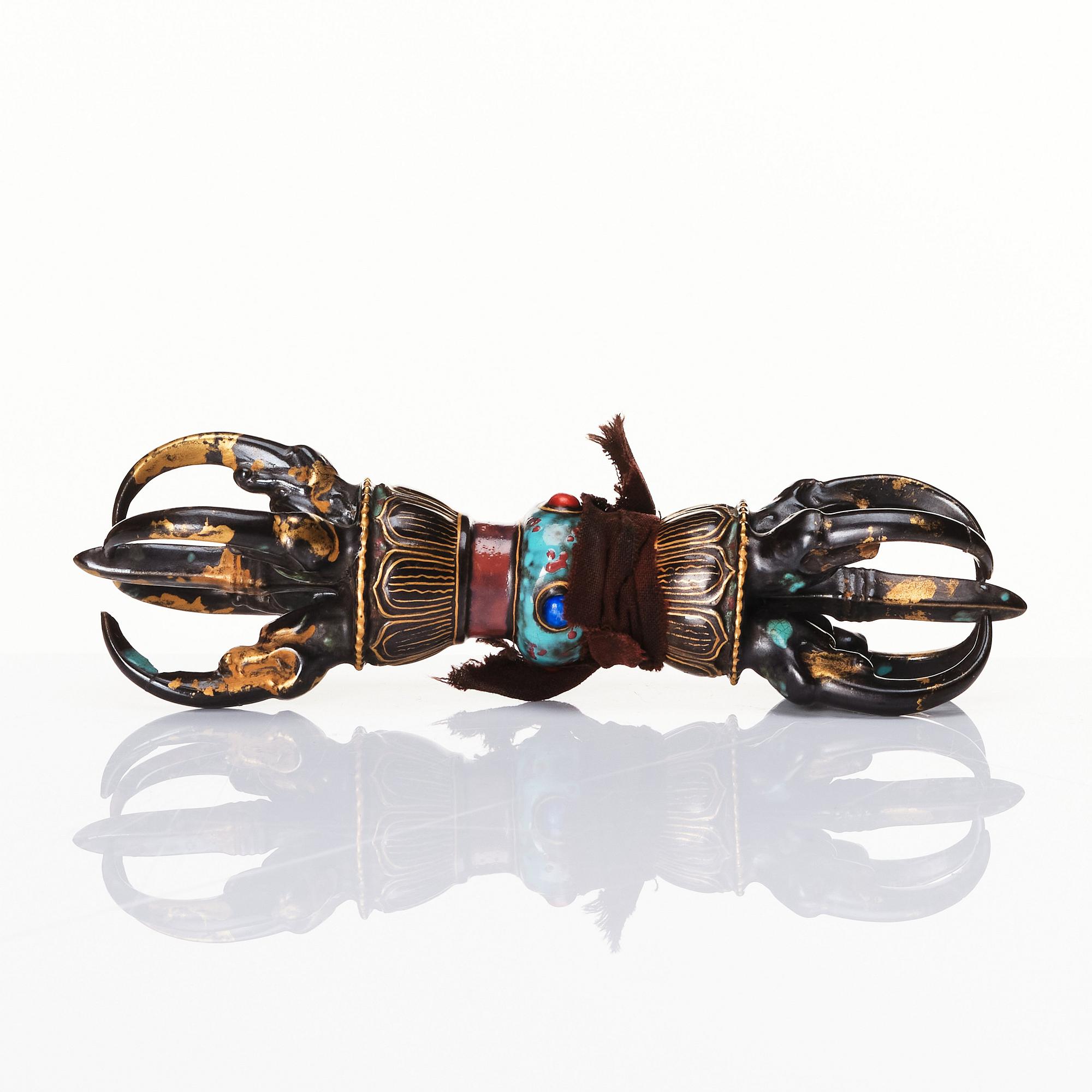
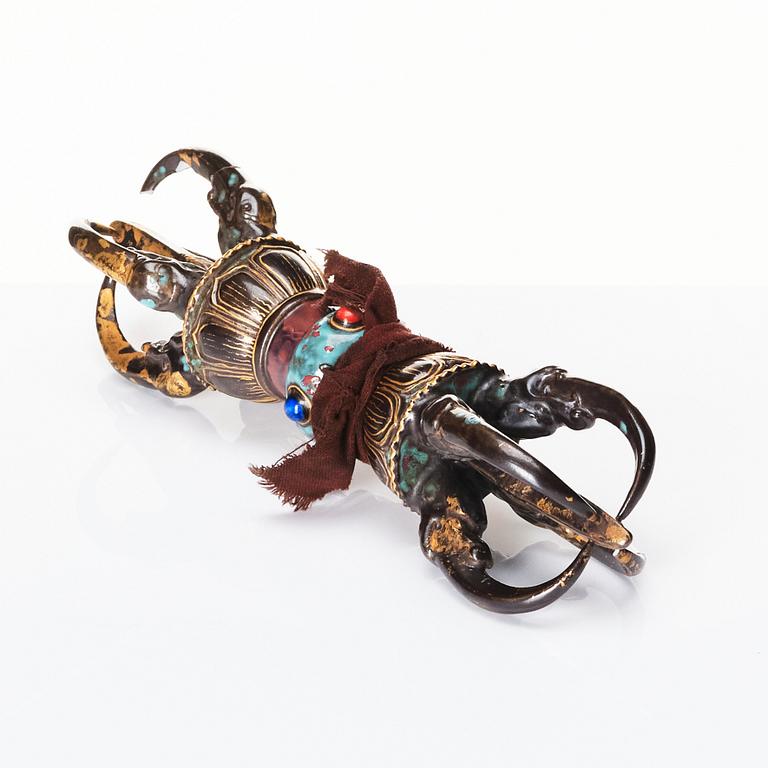
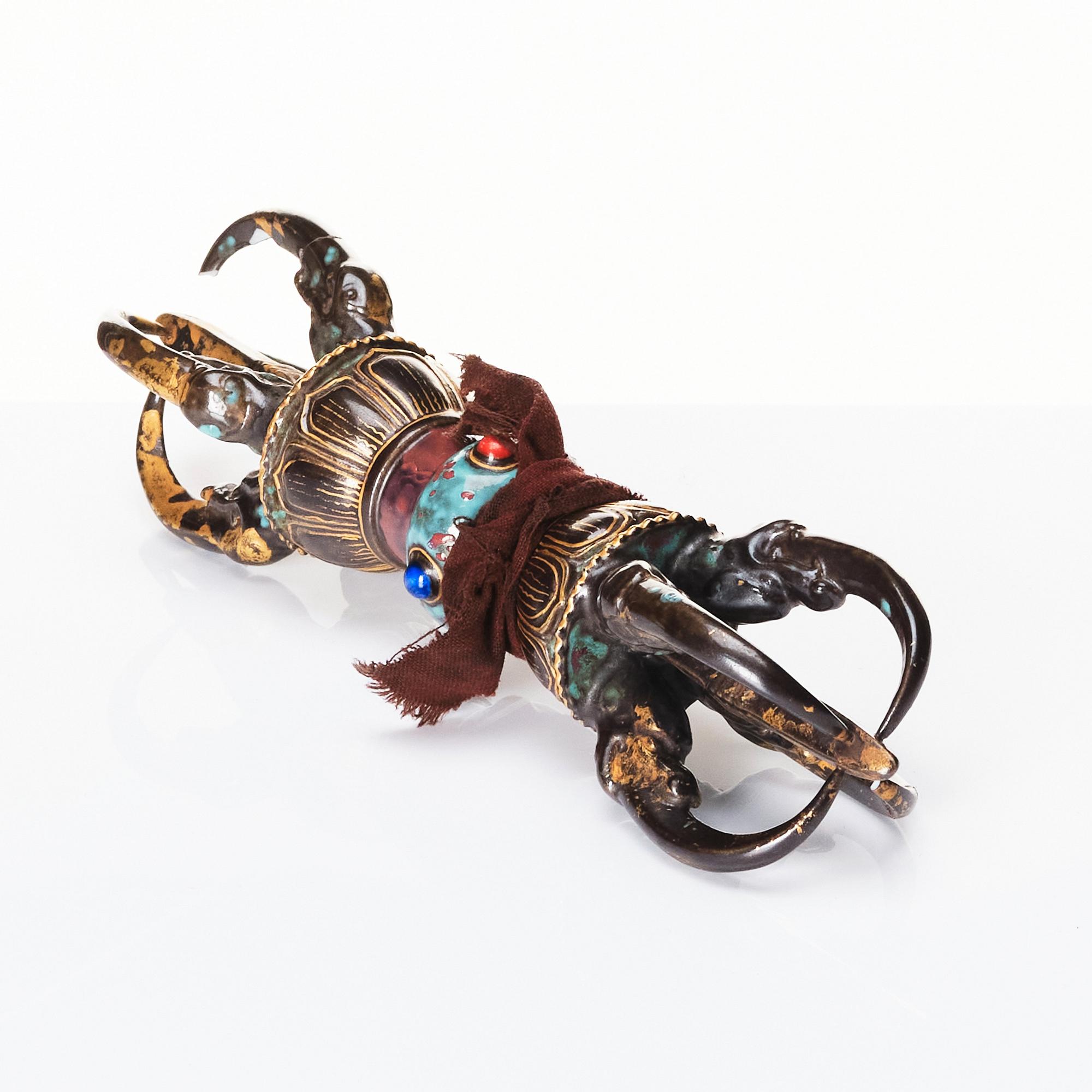
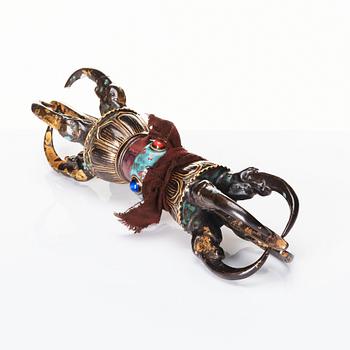
After the bronze modell, gilded and enamelled. Length 16.5 cm.
Chips. Two claws with repairs.
Alkuperä - Provenienssi
From a private Swedish Collection.
Näyttelyt
Compare with deities made in porcelain from the Qianlong period. For example see Sothebys, sale PF1027, Lot 196. Also see Christies, Auction 2339, Fine Chinese Ceramics and Works of Art lot 1494. 17 Sep 2010.
Also see Registration number Franks.582.+ In the collection of the British Museum.
Kirjallisuus
The Vajra 'Thunderbolt' is a legendary and ritual weapon, symbolising the properties of a diamond (indestructibility) and a thunderbolt (irresistible force).
The vajra is a type of club with a ribbed spherical head. The ribs may meet in a ball-shaped top, or they may be separate and end in sharp points with which to stab. The vajra is the weapon of Indra, the Vedic king of the devas and heaven. It is used symbolically by the dharmic traditions of Hinduism, Buddhism, and Jainism, often to represent firmness of spirit and spiritual power.
Lisätietoja ja kuntoraportit

Tietoa ostamisesta
Muiden katsomia kohteita