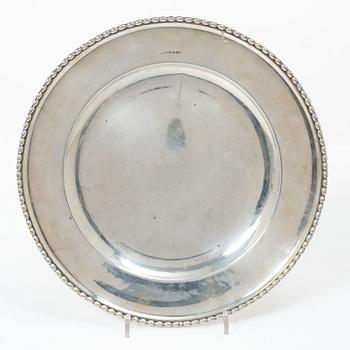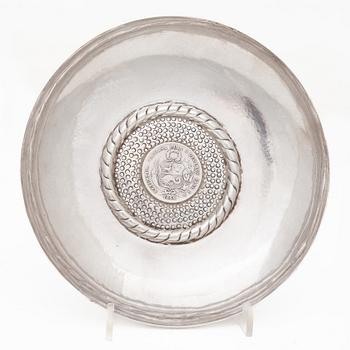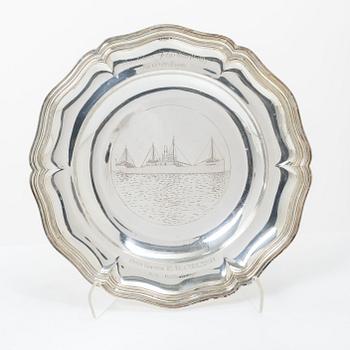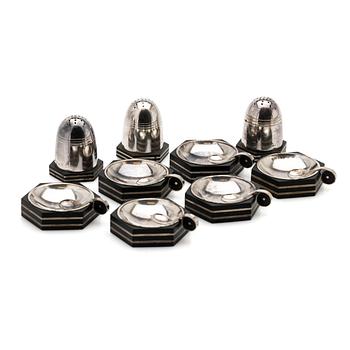
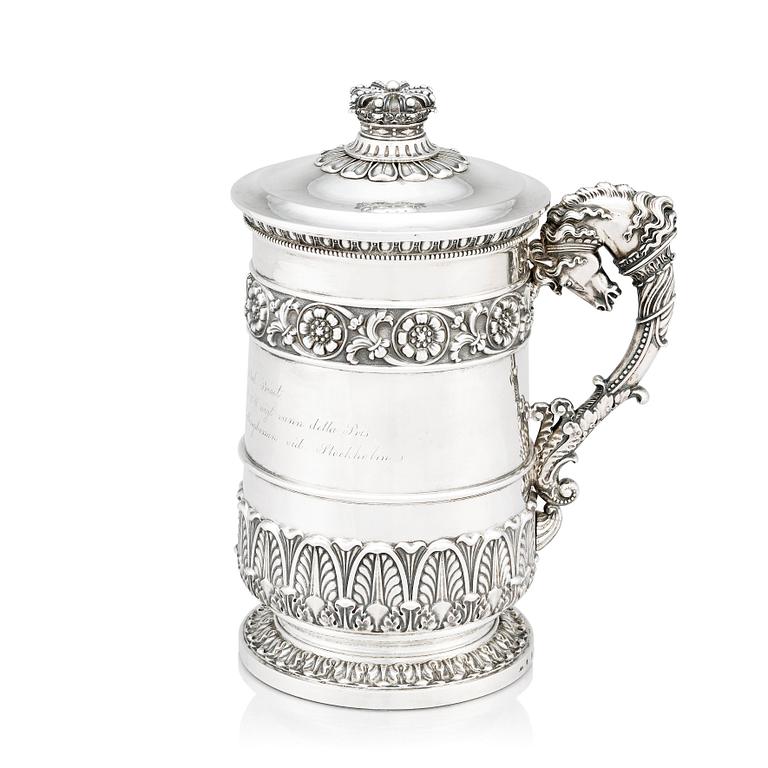
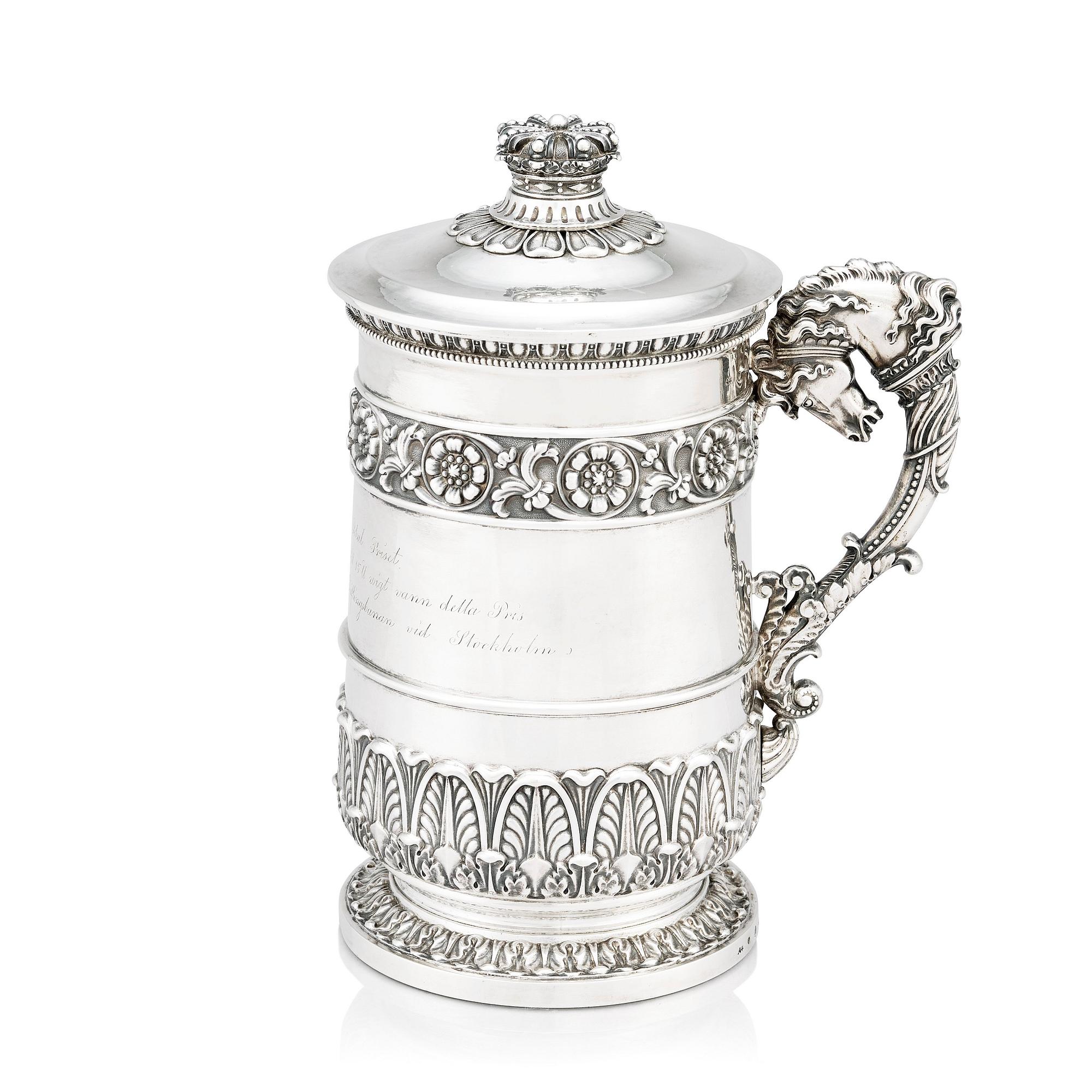
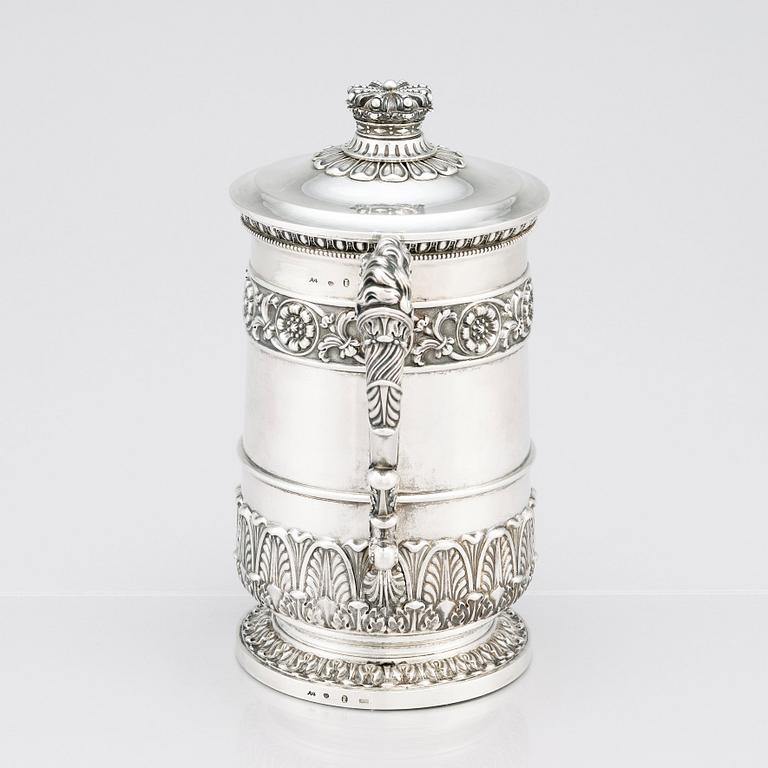
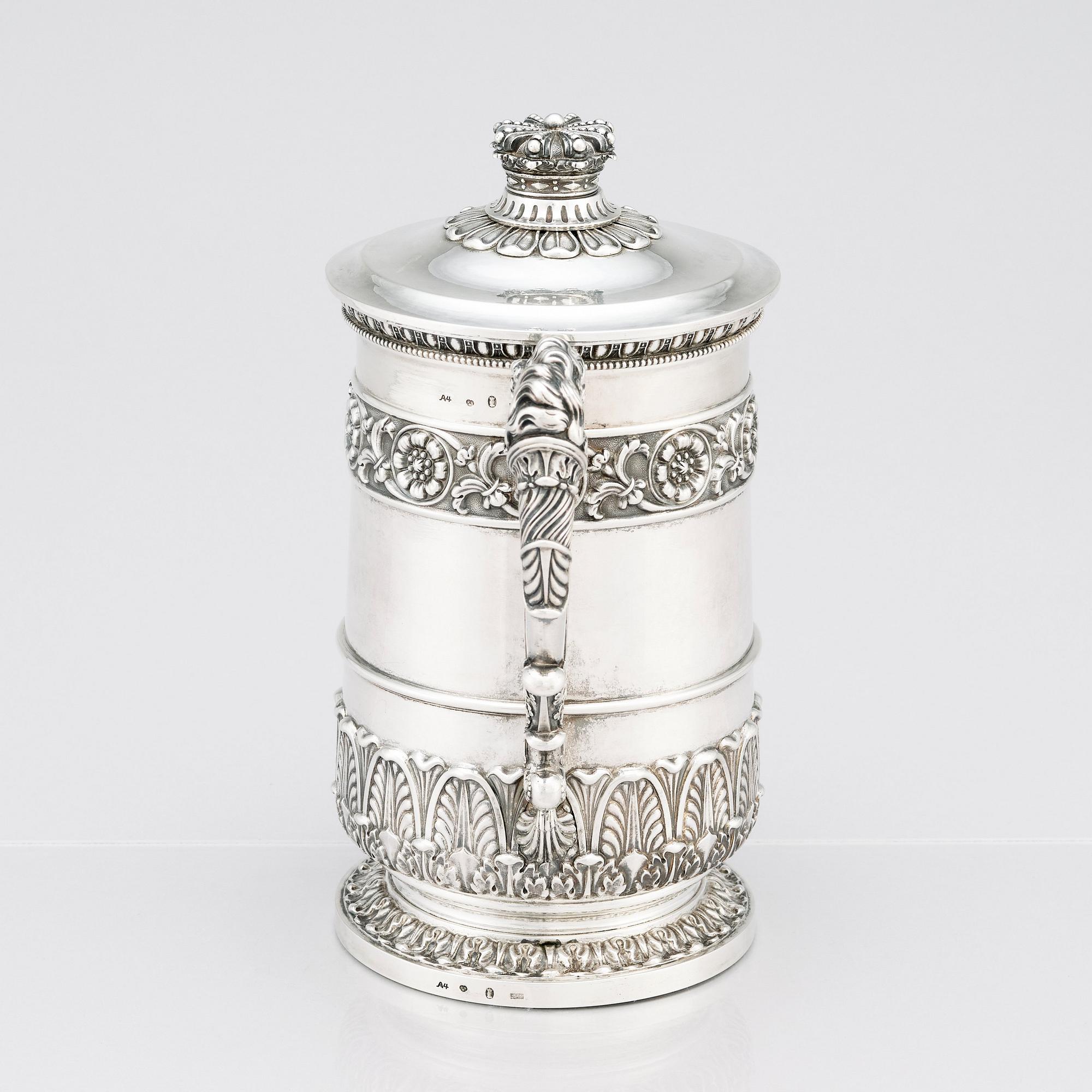
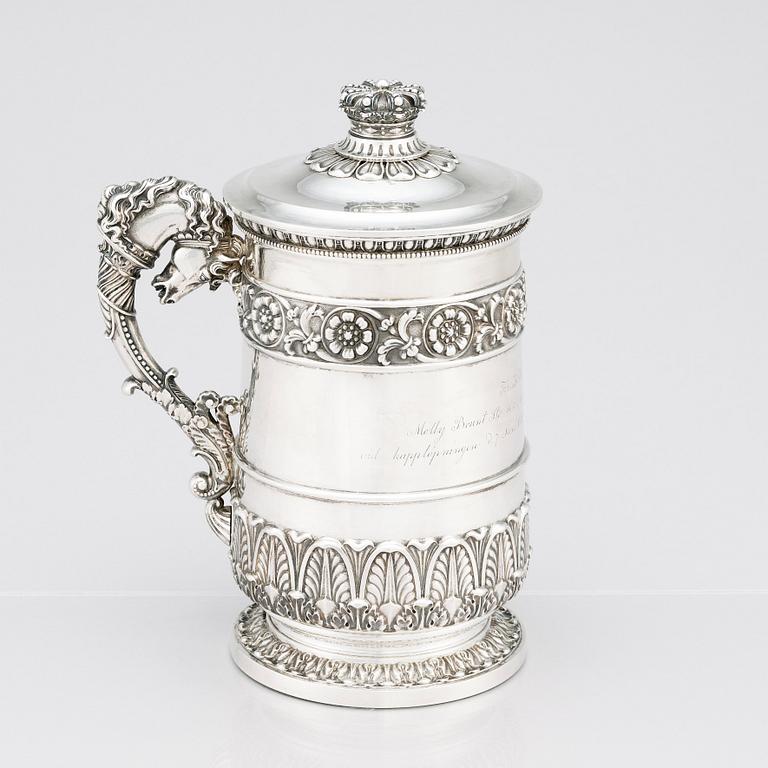
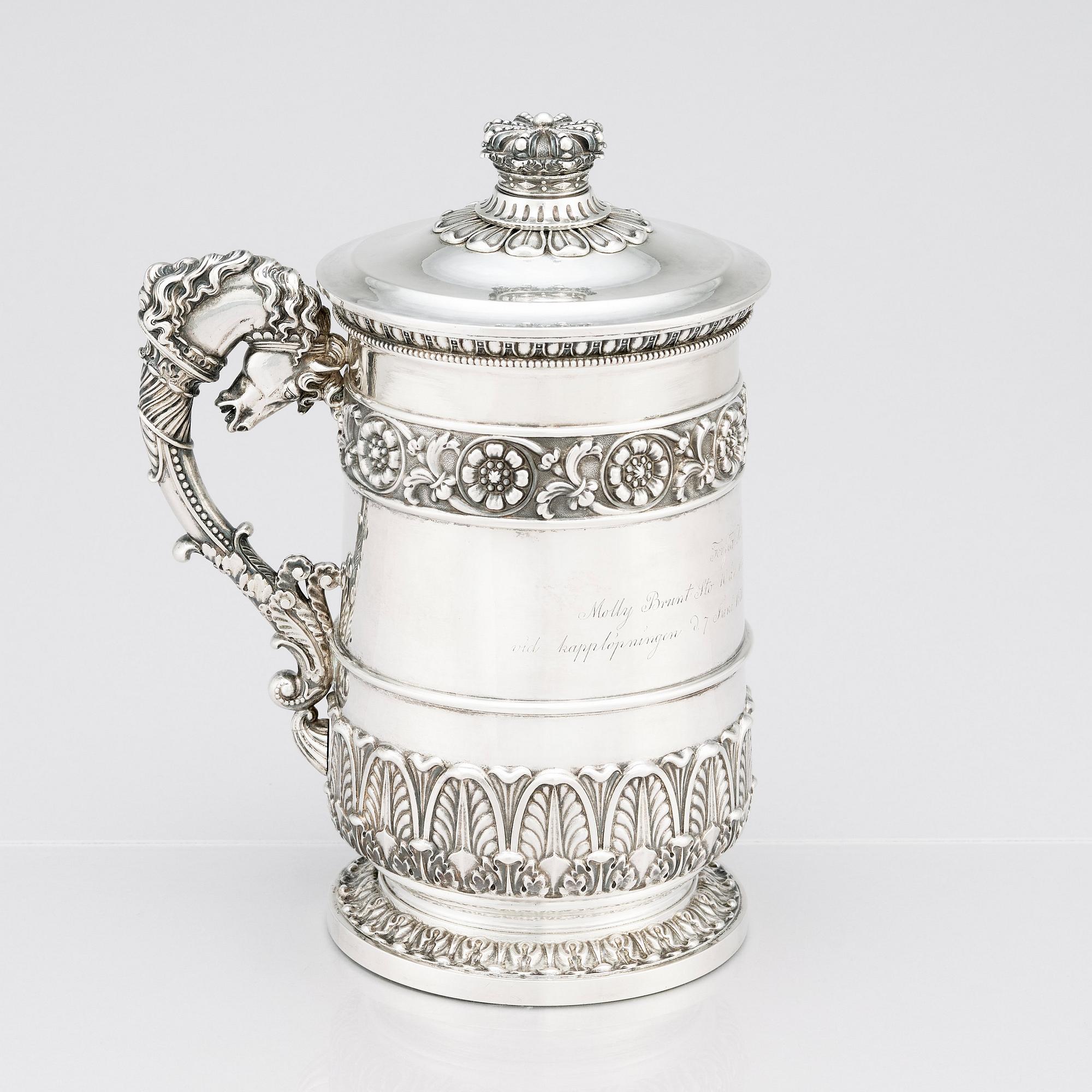
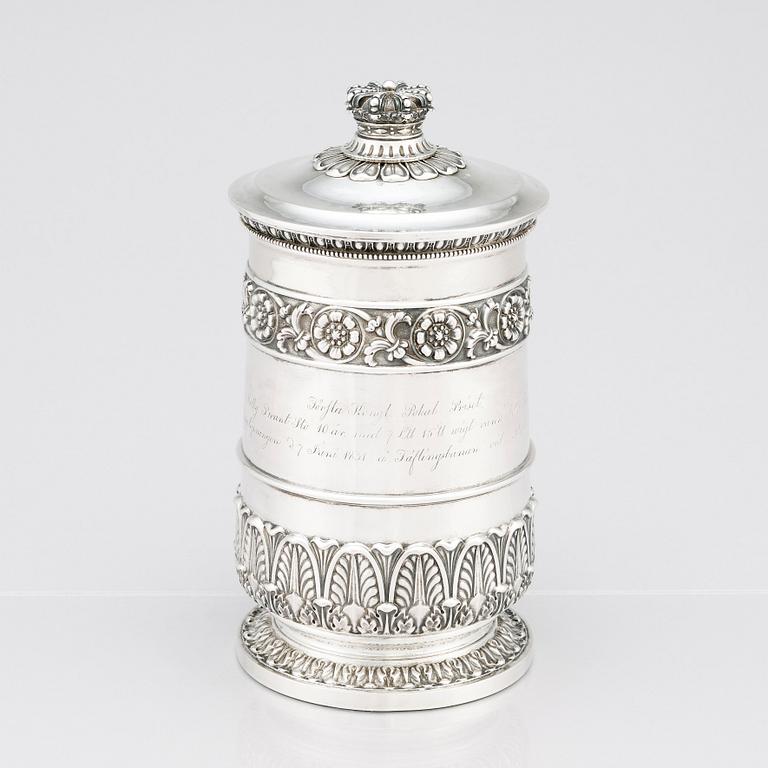
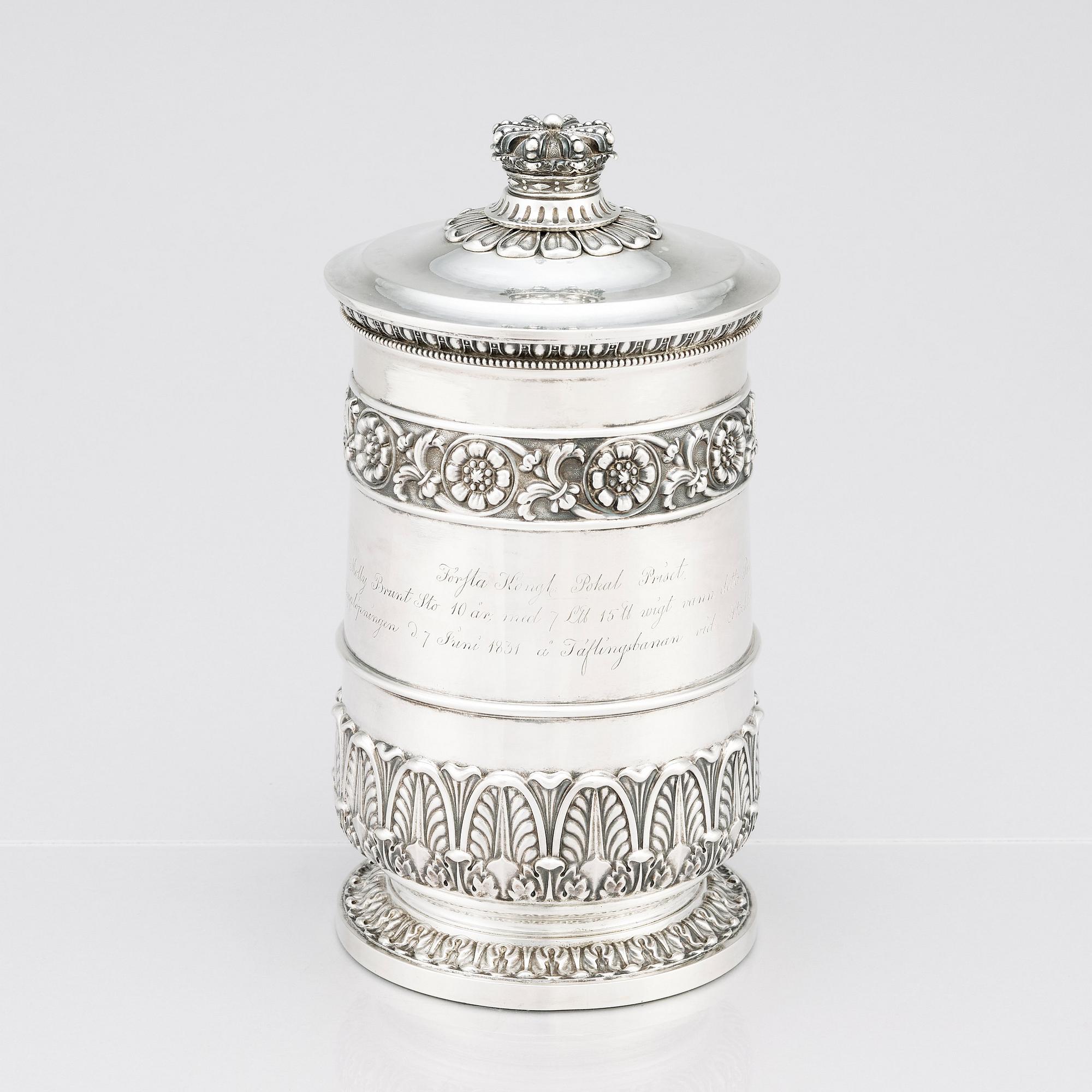
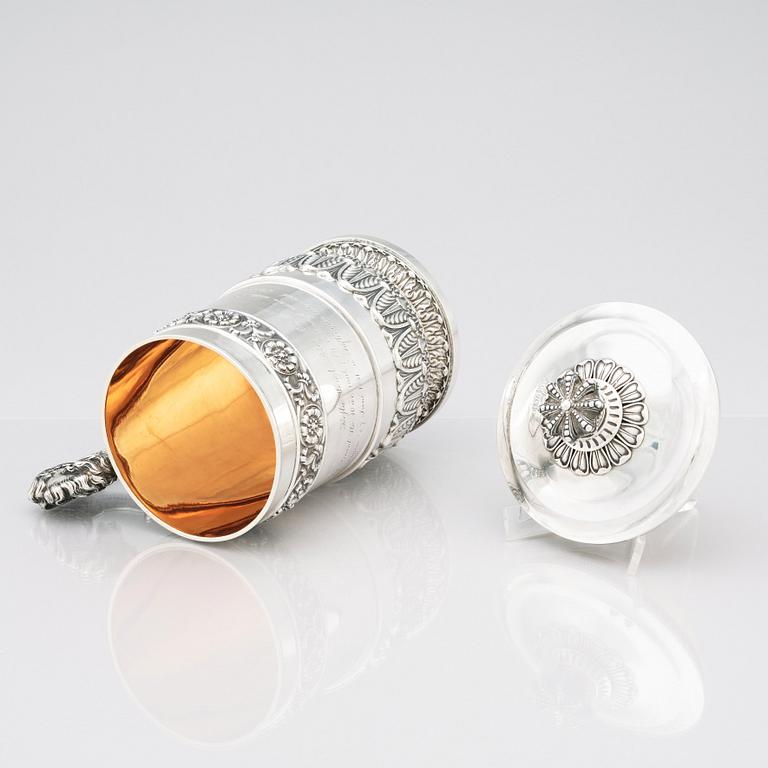
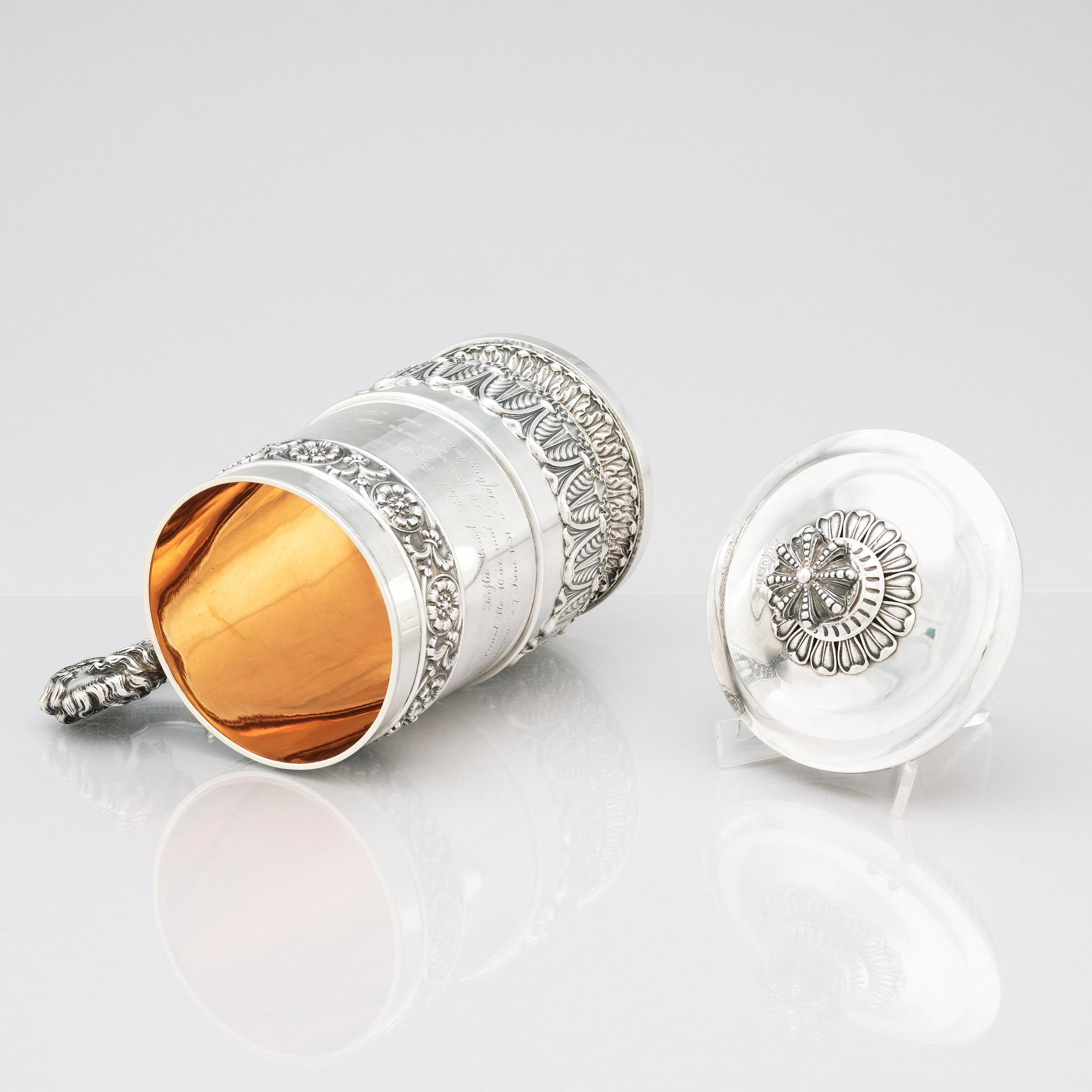
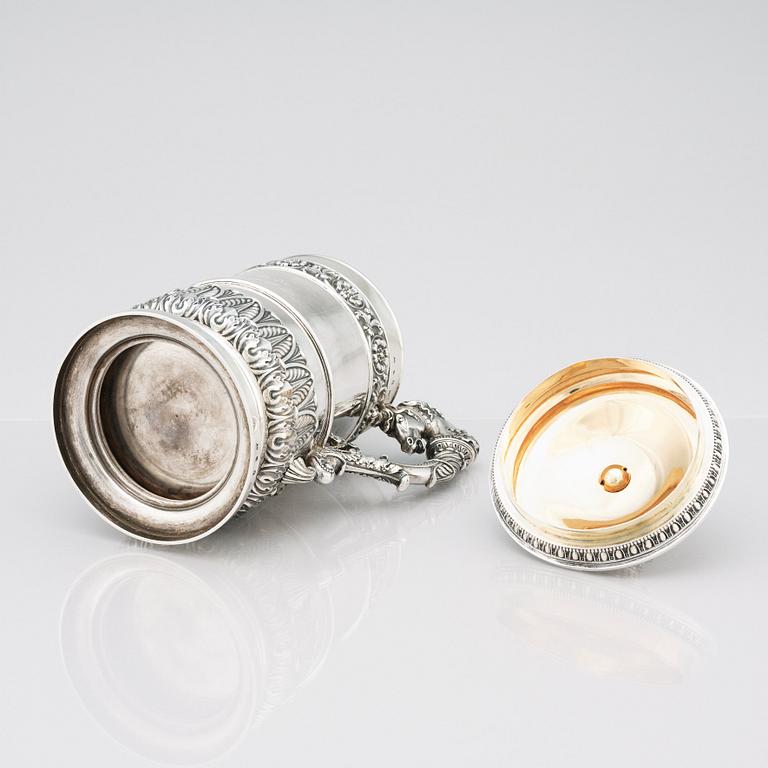
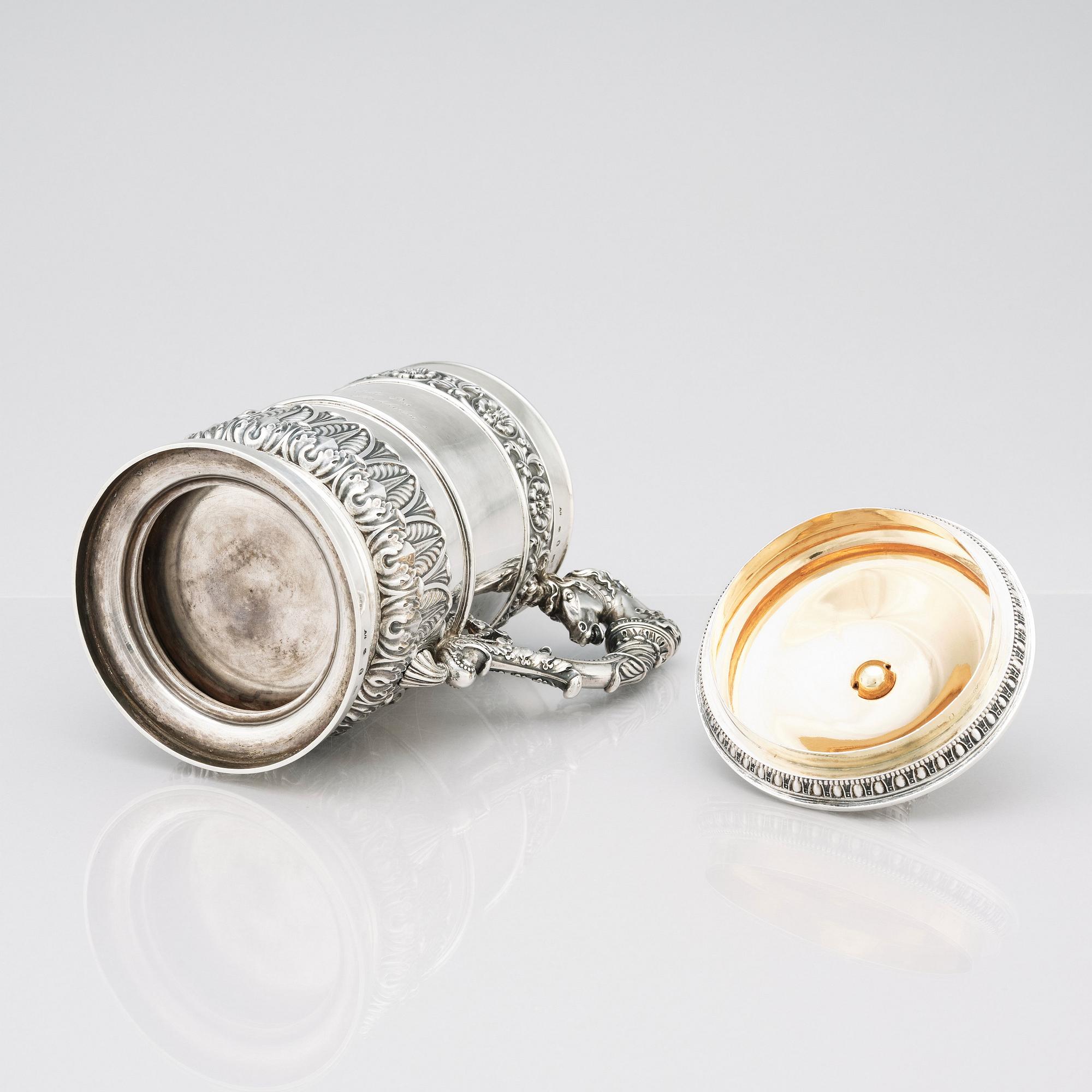
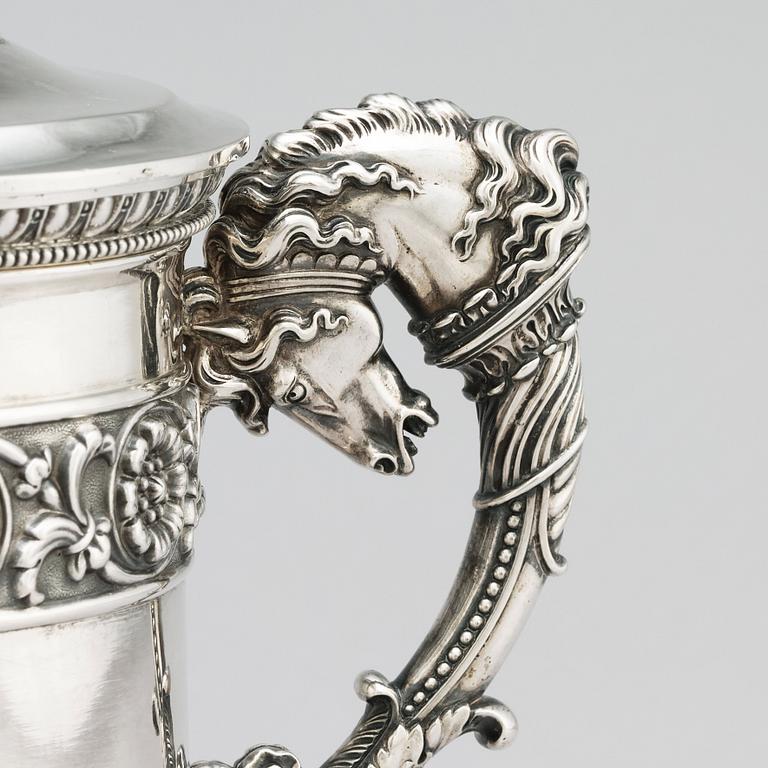
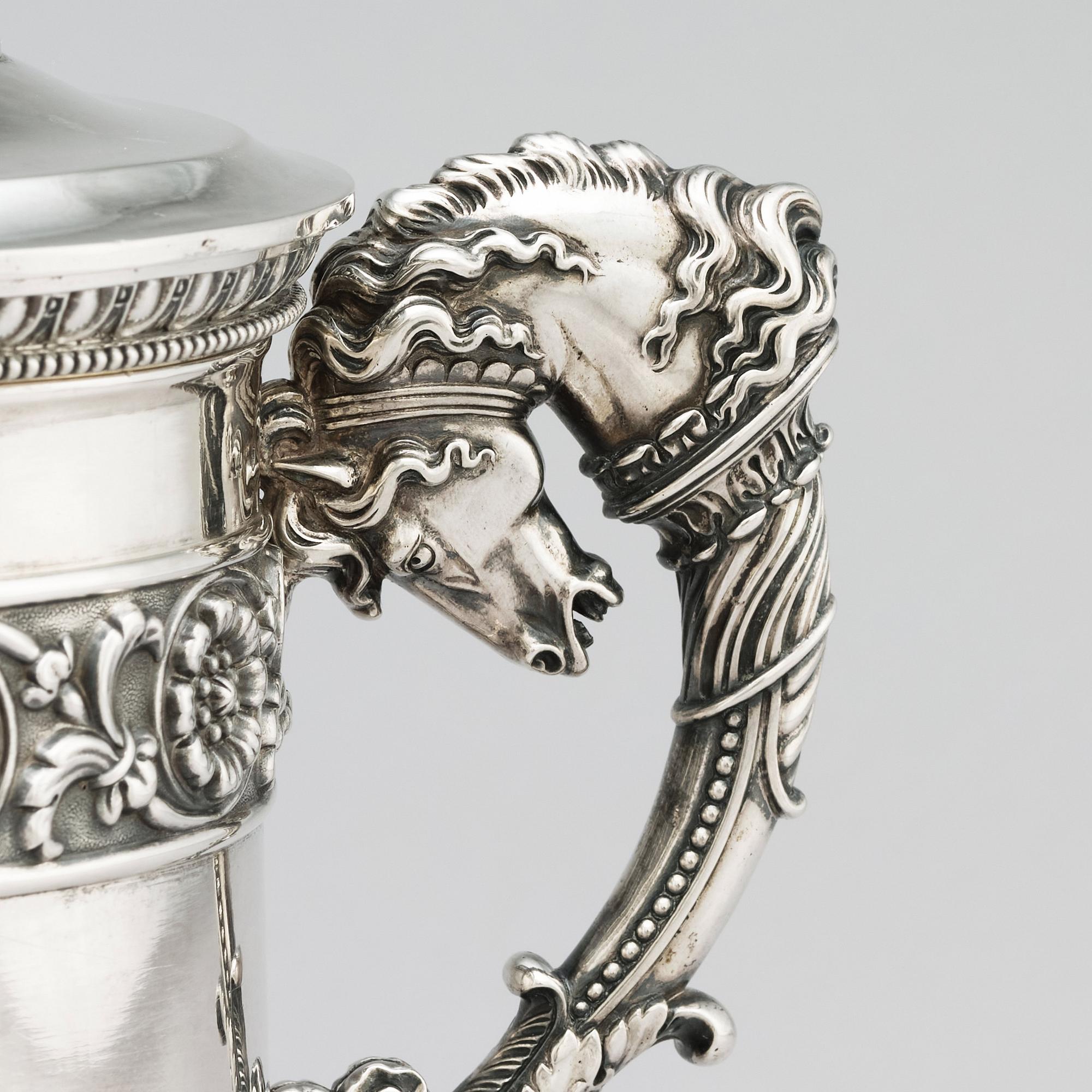
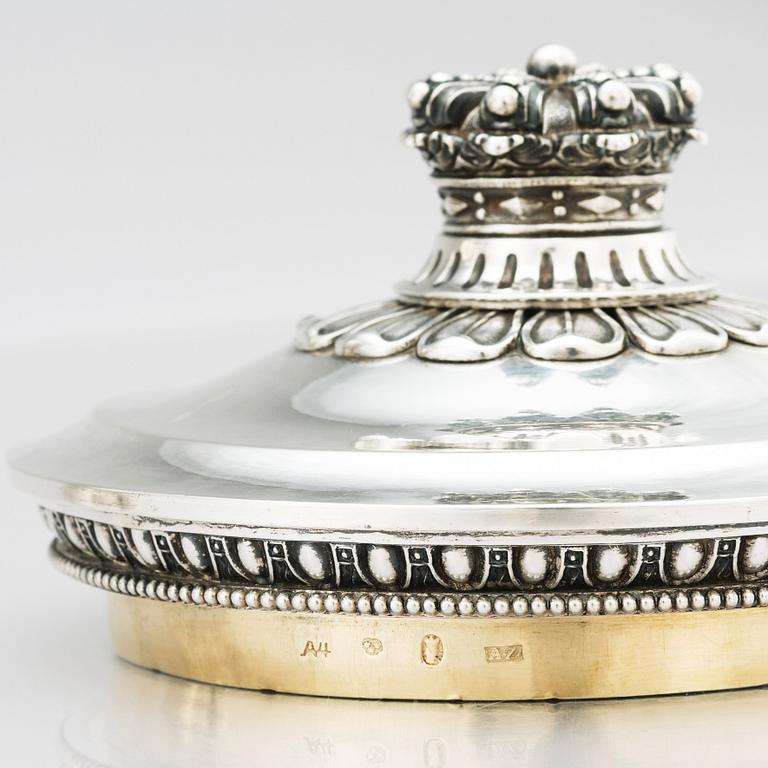
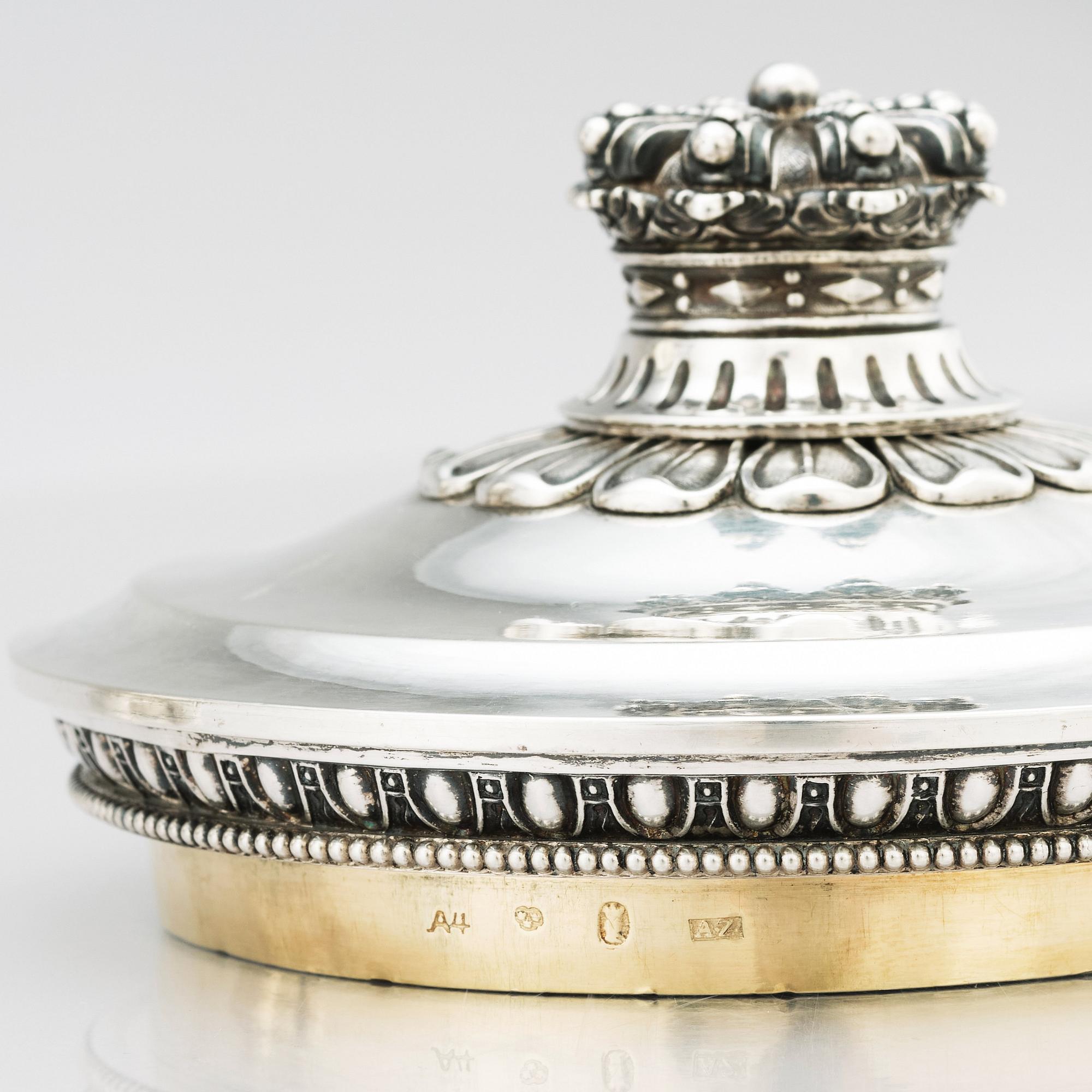
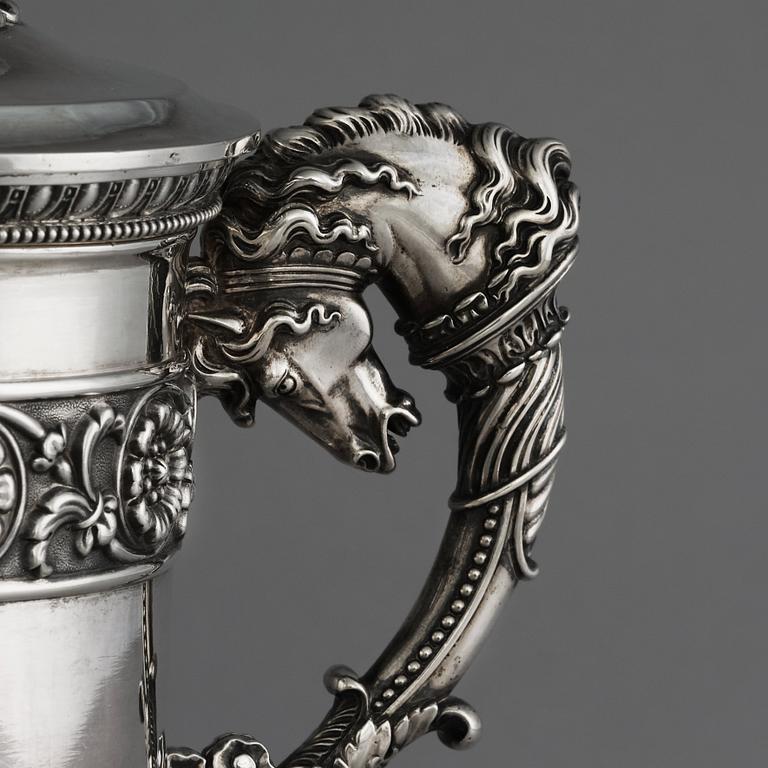
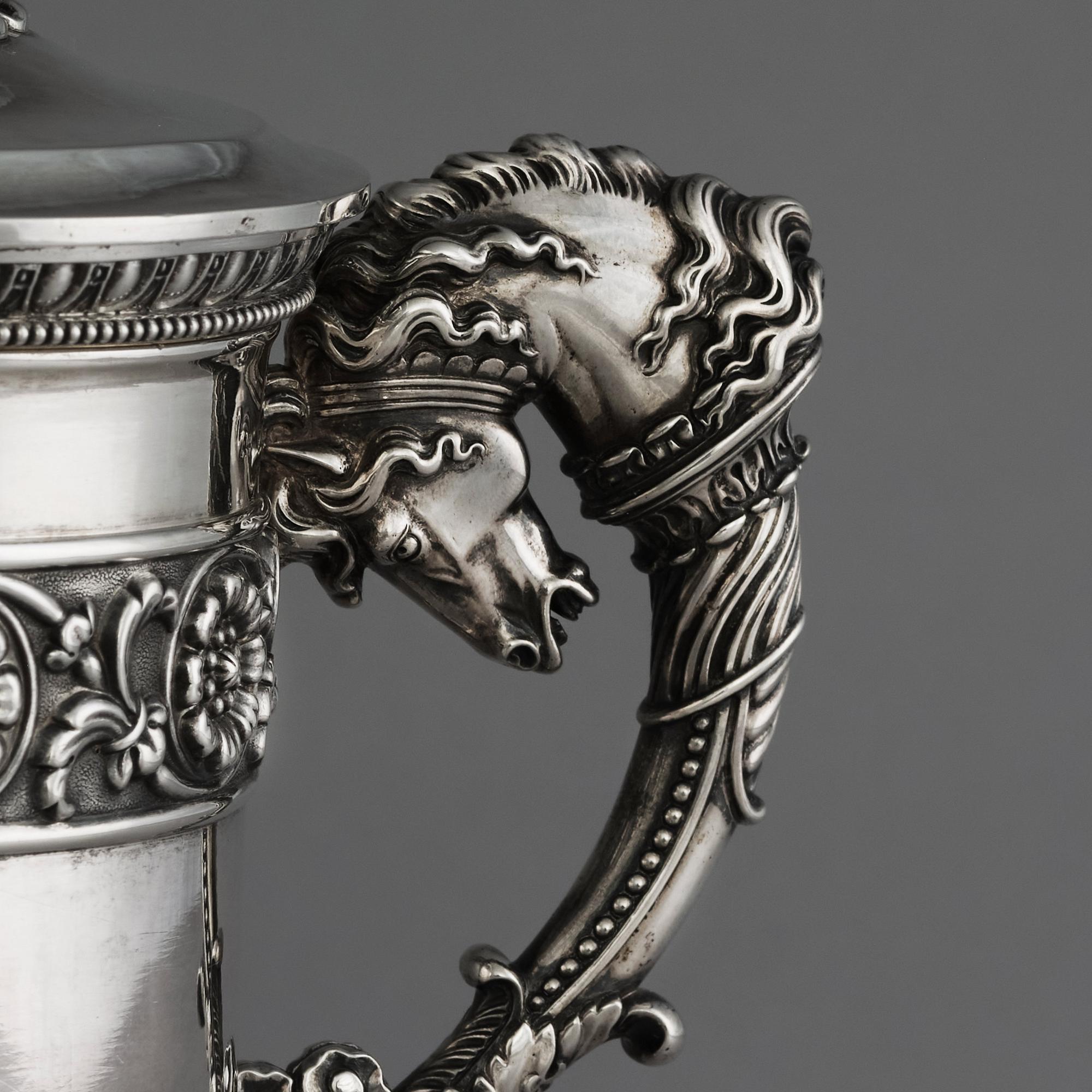
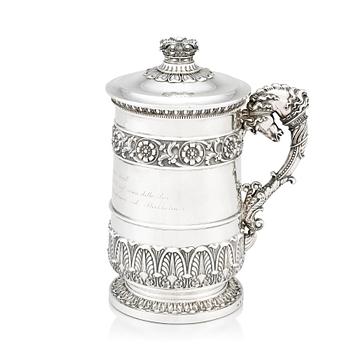
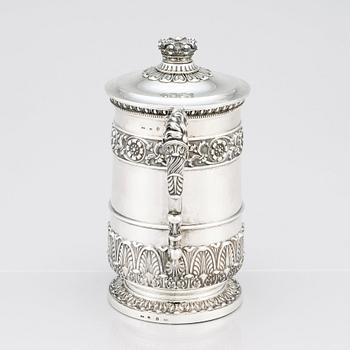
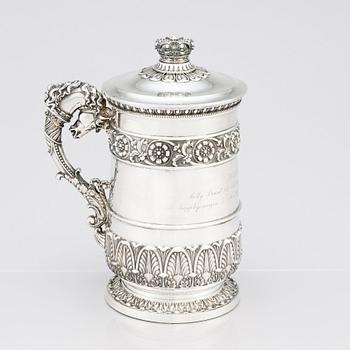
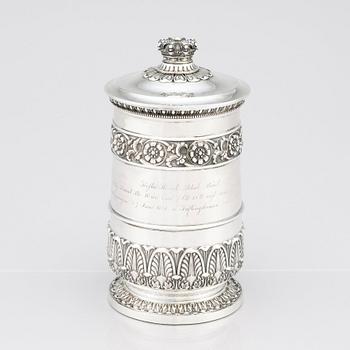
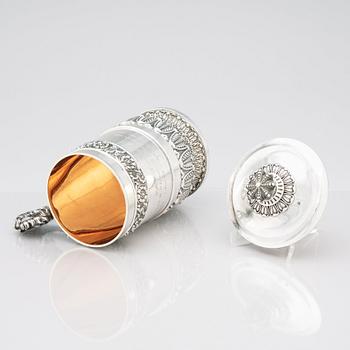
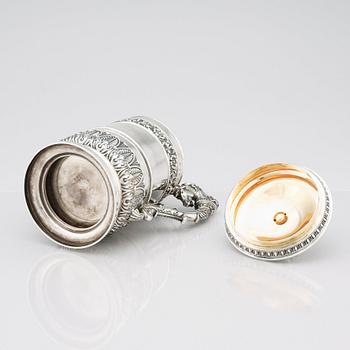
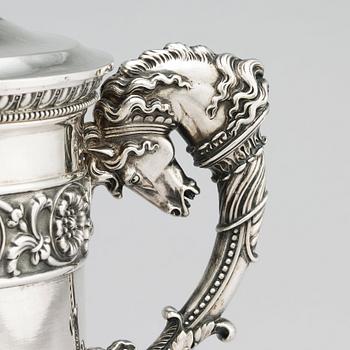
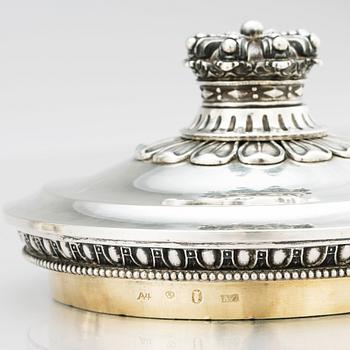
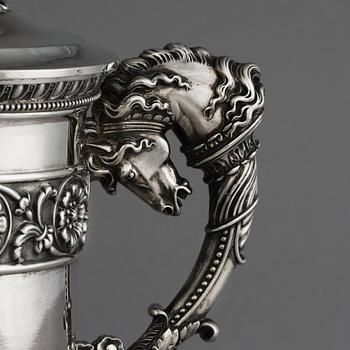
Engraved inscription. Height 23 cm. Weight 1329 grams.
Muut tiedot
The first organized horse race in Sweden was held at Ladugårdsgärde in Stockholm on June 7, 1831. It was the Patriotic Association for Sweden's horse culture that arranged tracks, drew up rules based on foreign patterns, etc. and held this first modern race. Count von Düben's mare Molly with the royal secretary Alexis Noring in the saddle won the prestigious Royal Pokal Prize which is the current catalog number.
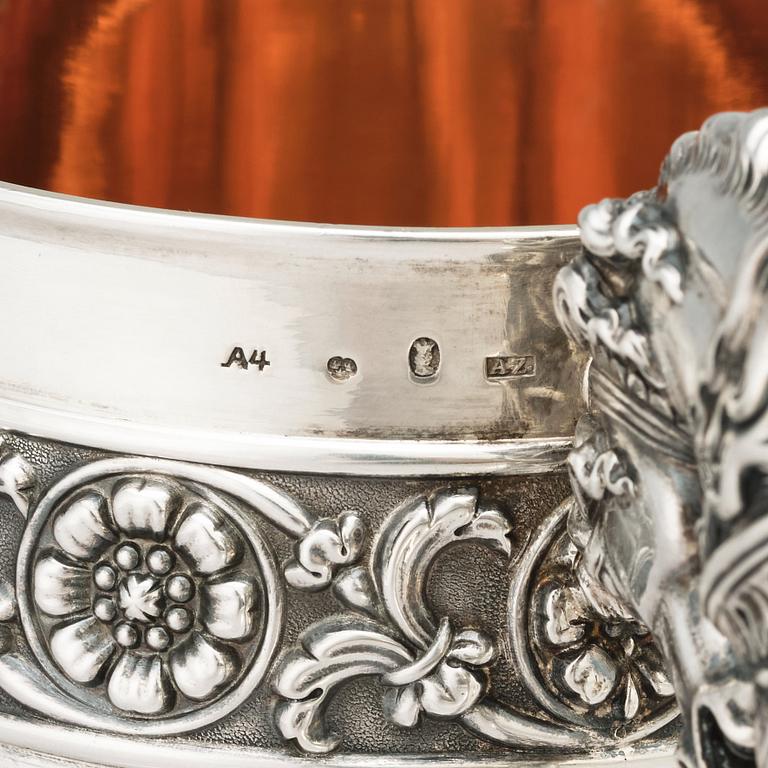
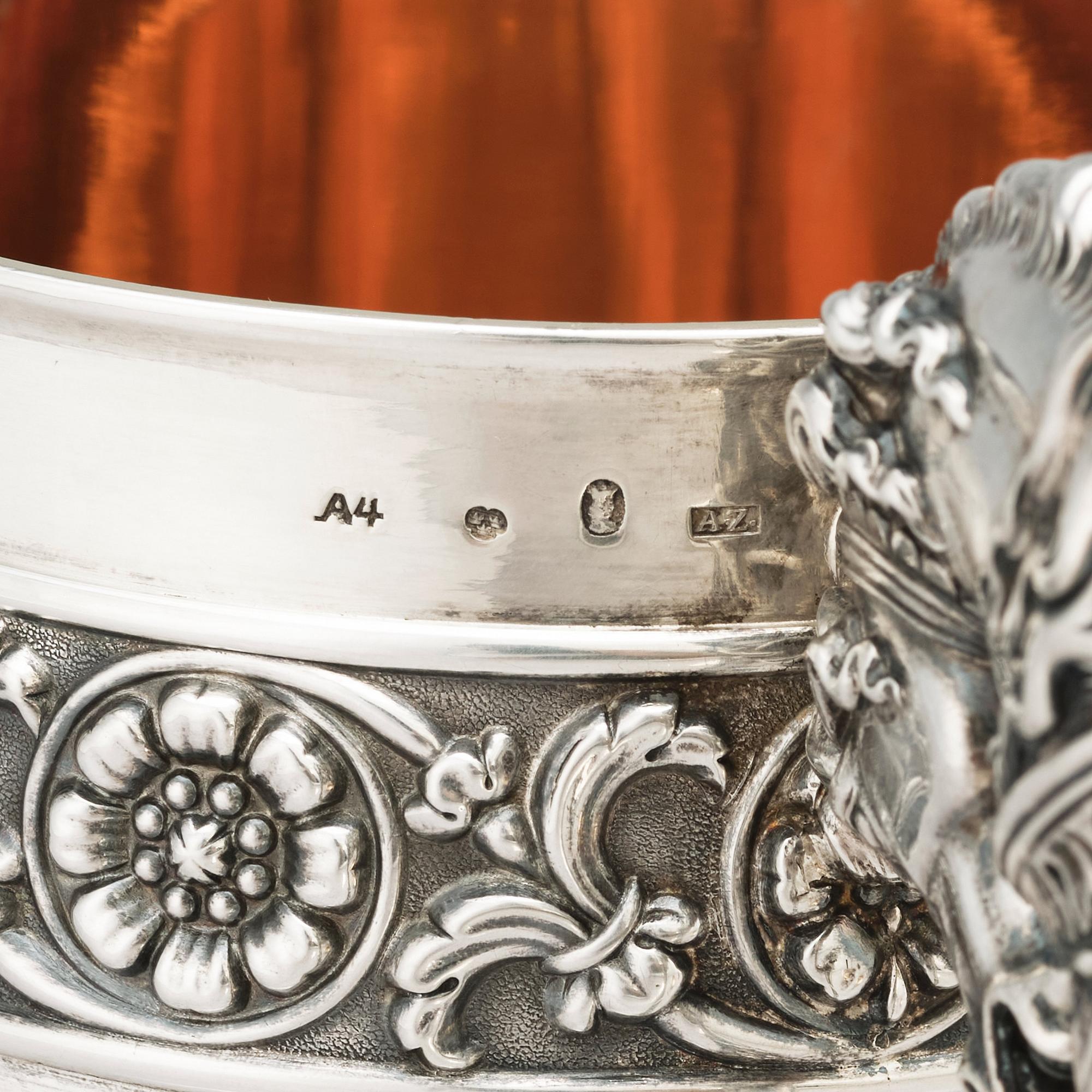
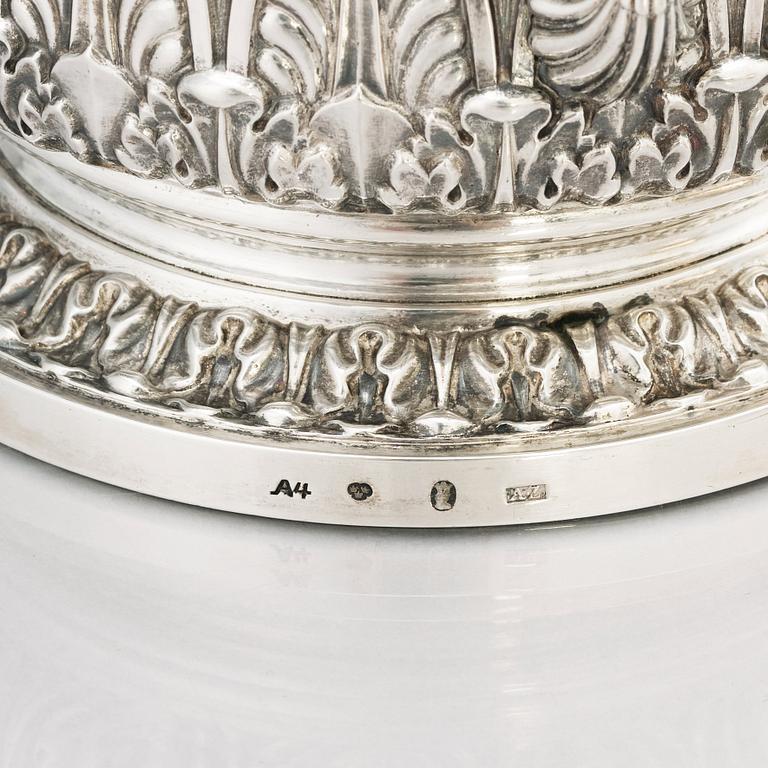
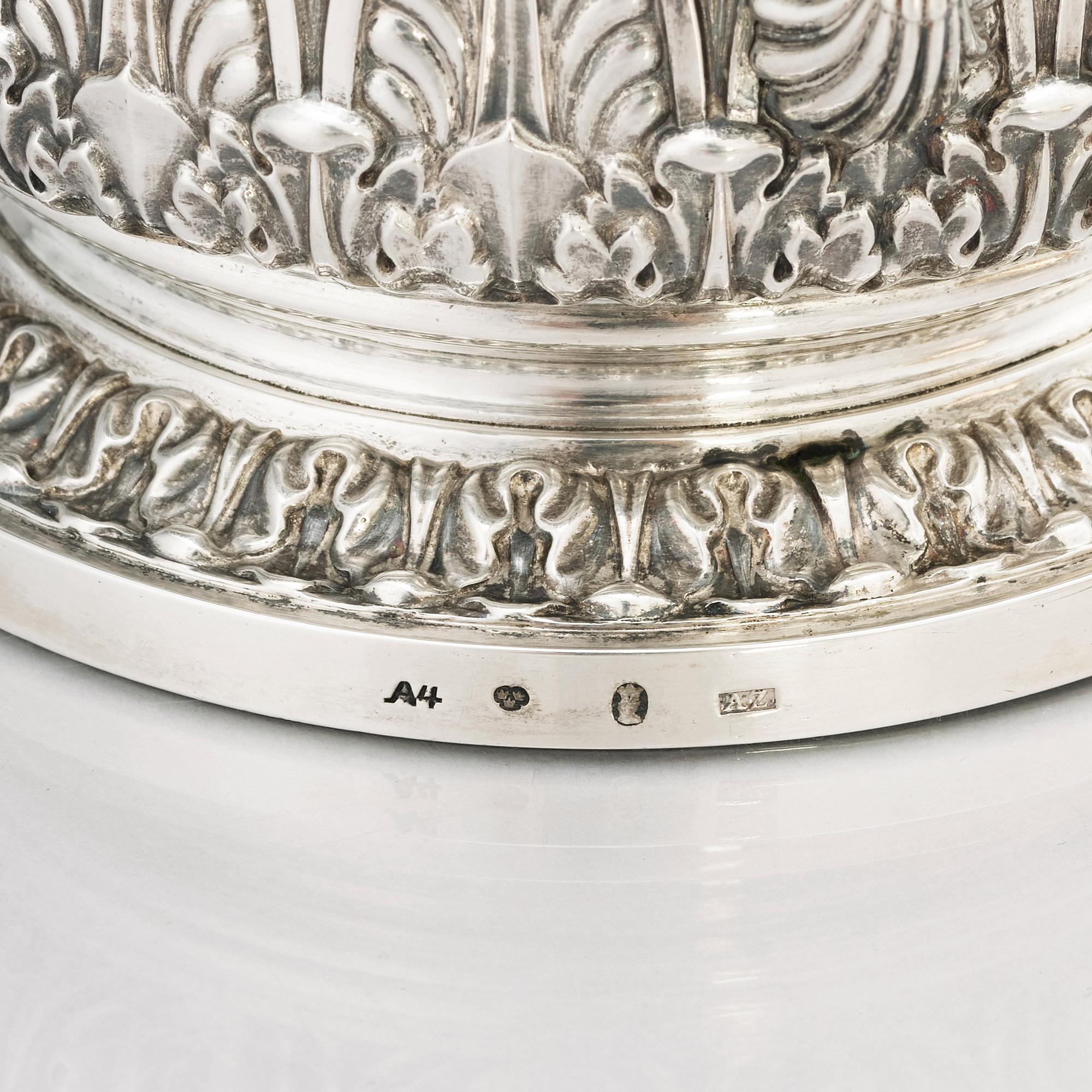
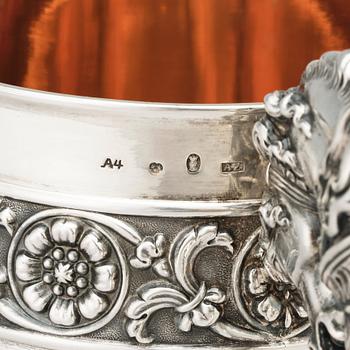
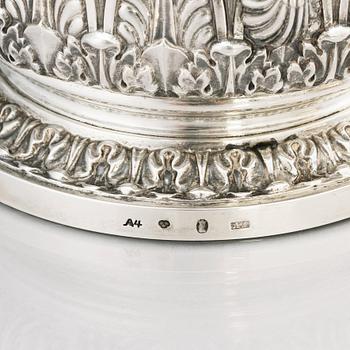
Adolf Zethelius was one of the leading silver- and goldsmiths in Sweden of his time. He started as an apprentice in 1796 with his father Pehr and became a master himself in 1803, a few years later he took over his father's workshop. Both of Adolf's sons, as well as his brother Carl, also worked as silversmiths and the Zethelius family created many of the best silver objects made in our country. He worked above all in a classic Empire style. Among his most famous works is the so-called The Neo-Gothic silverware at The Royal Palace of Stockholm, and his also received the prestigious commission to make the crown and scepter in Norway's national regalia.
Adolf Zethelius was active in Stockholm until 1839. He is represented in many museum collections such as the National Museum, Skokloster Castle, the Hallwyl Museum and the Nordicmuseum.
Lisätietoja ja kuntoraportit
Tietoa ostamisesta
Muiden katsomia kohteita