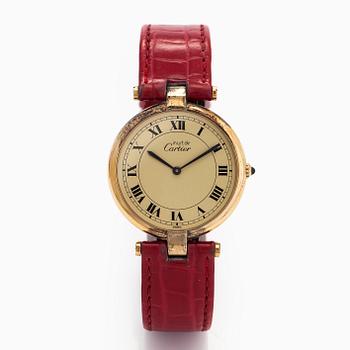
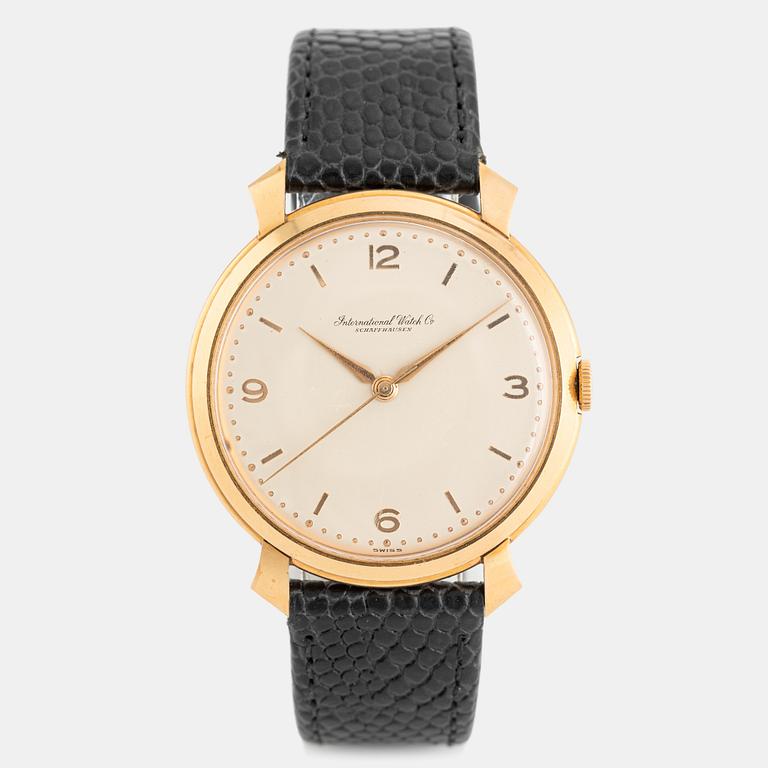
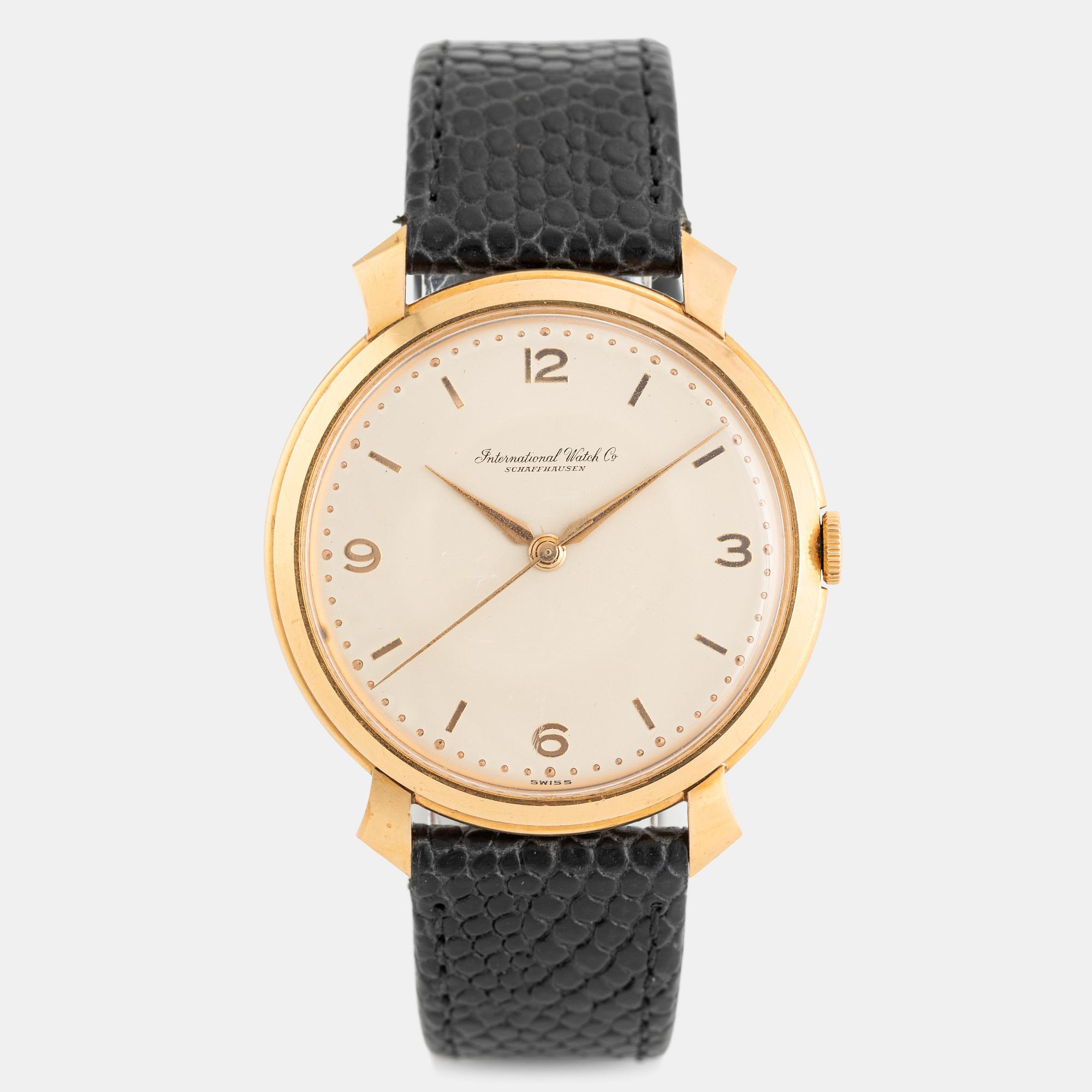
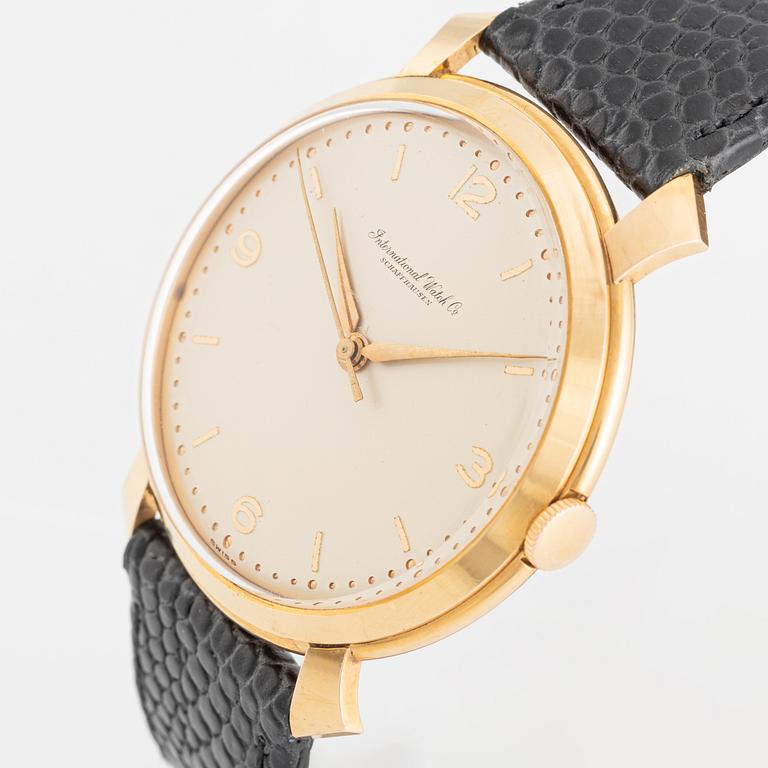
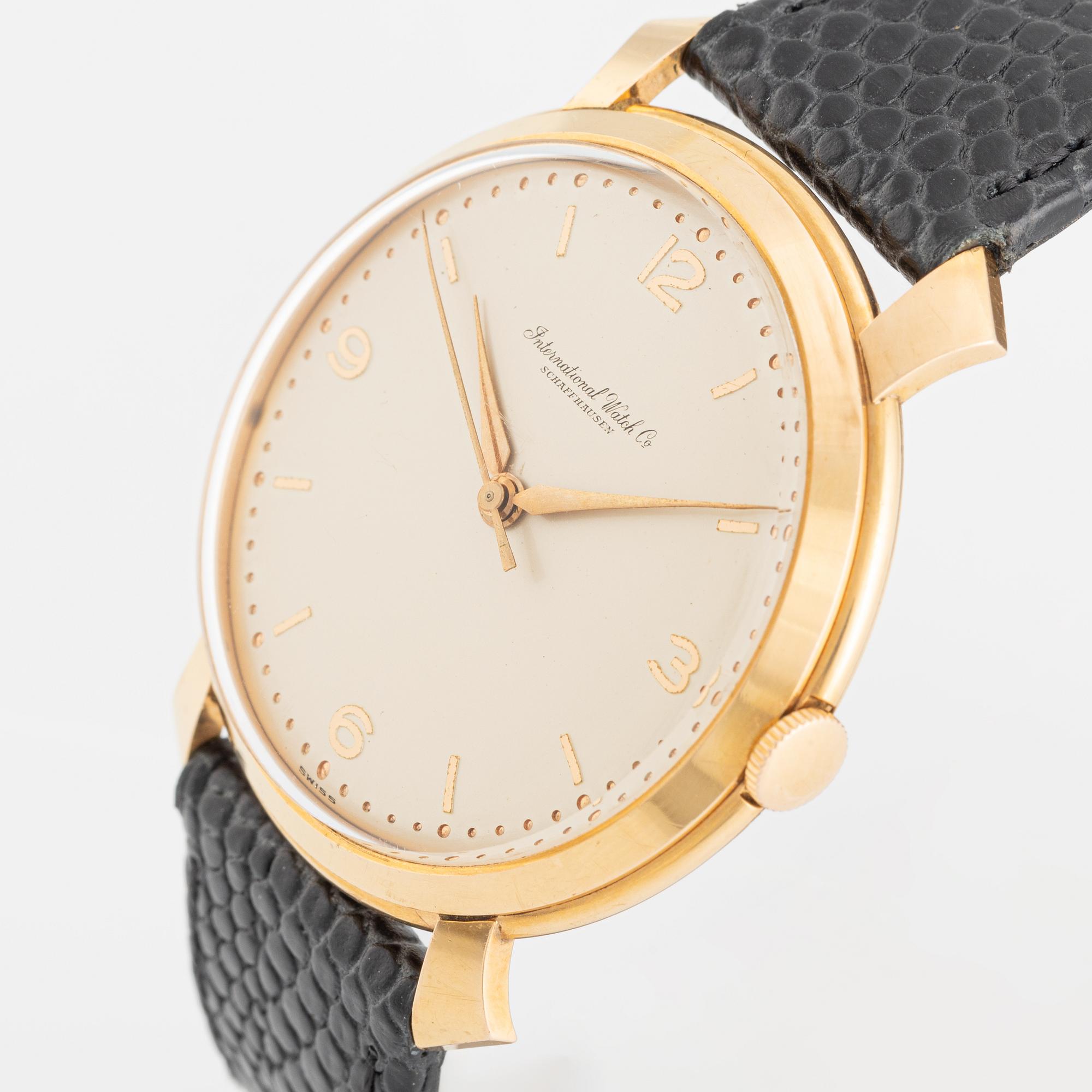
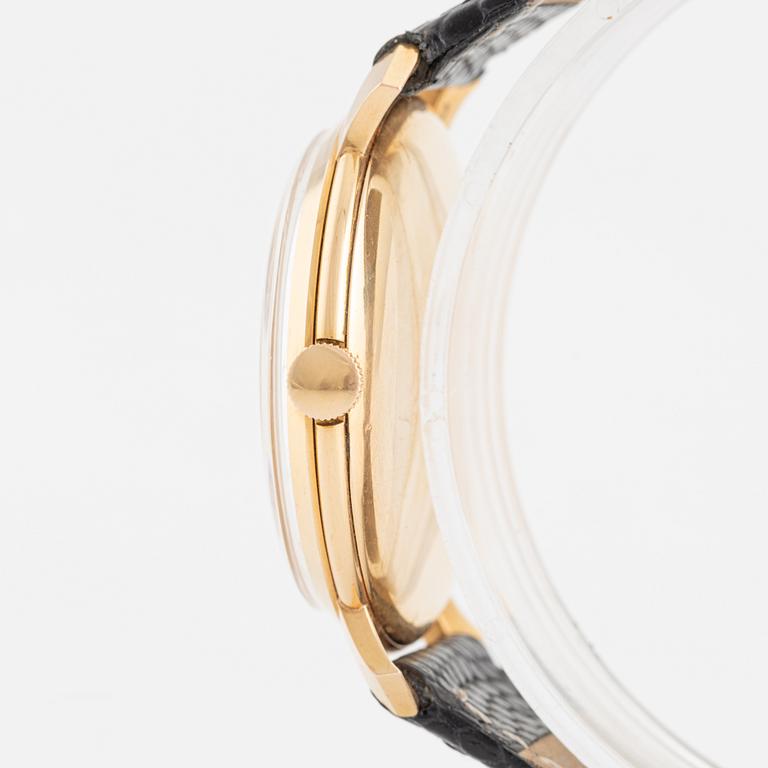
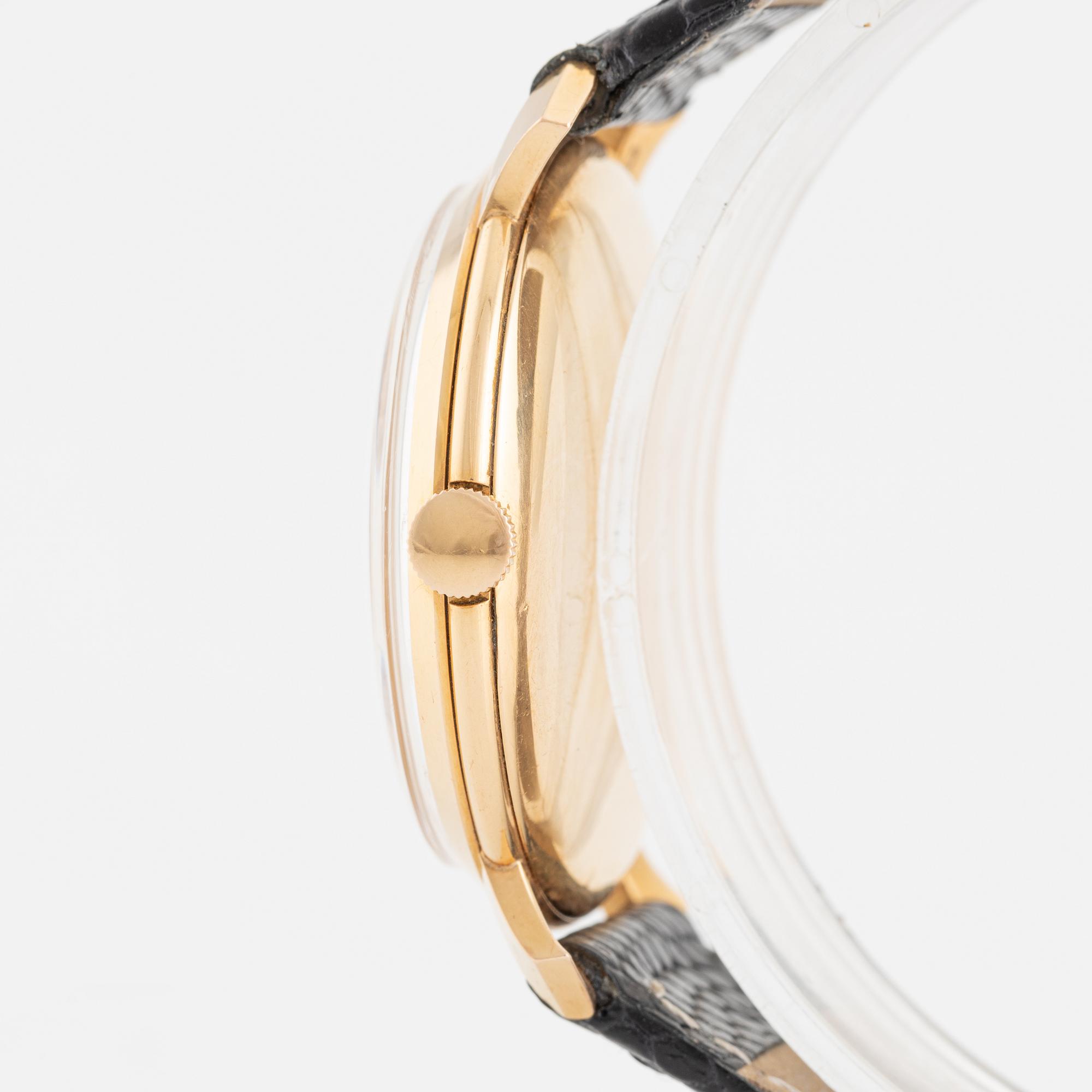
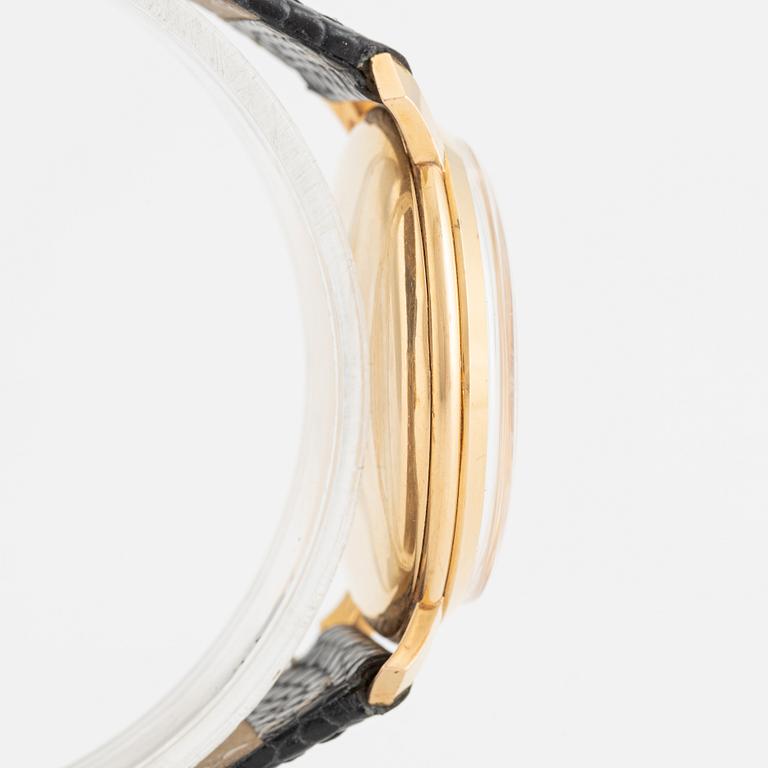
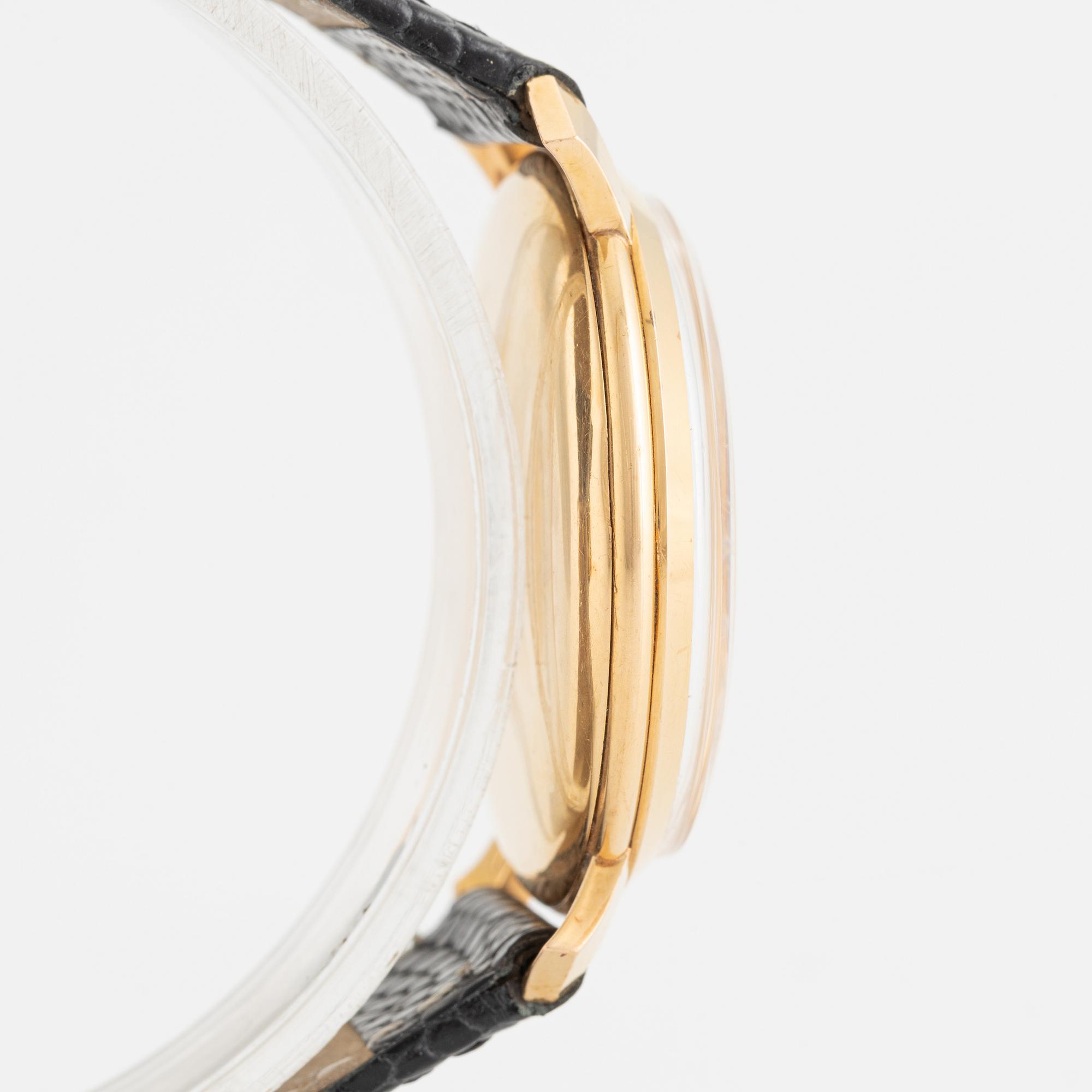
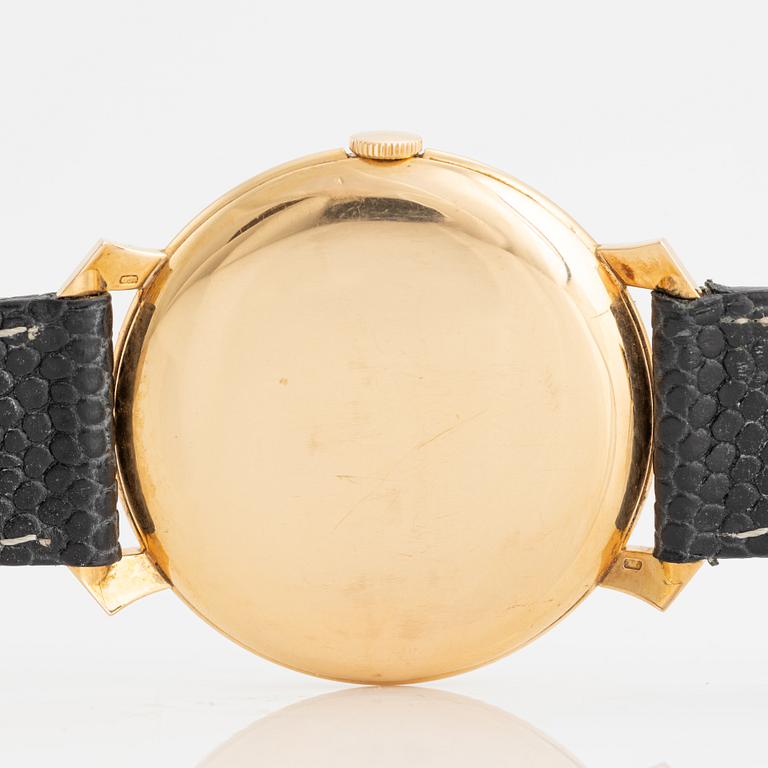
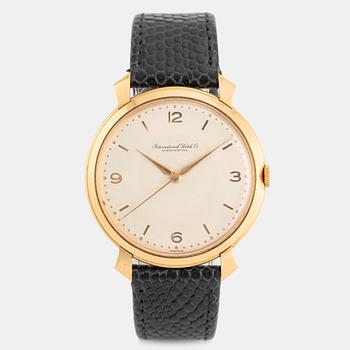
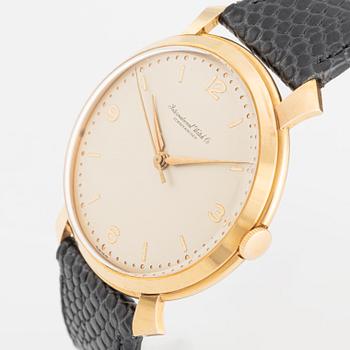
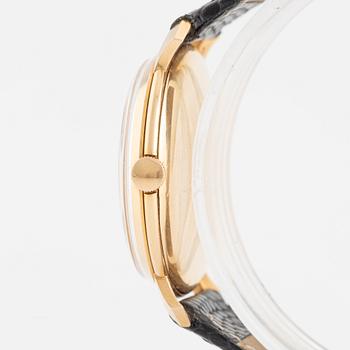
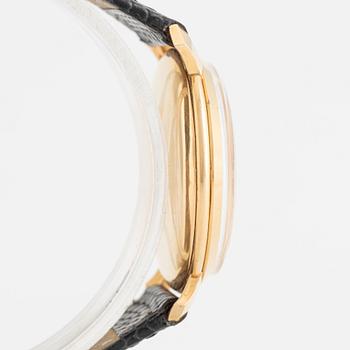
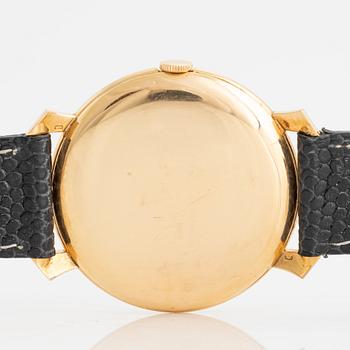
Case size: 37 mm
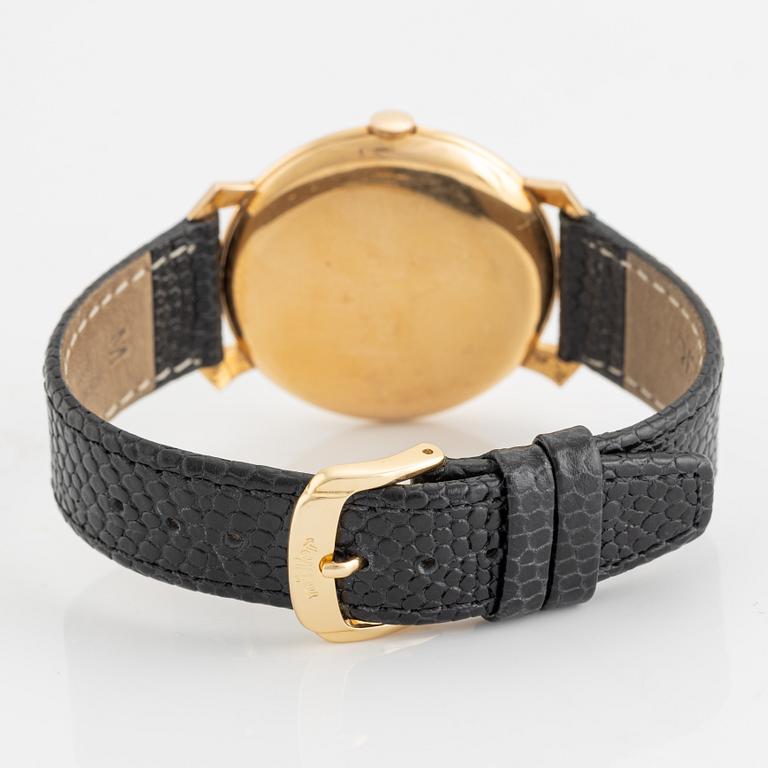
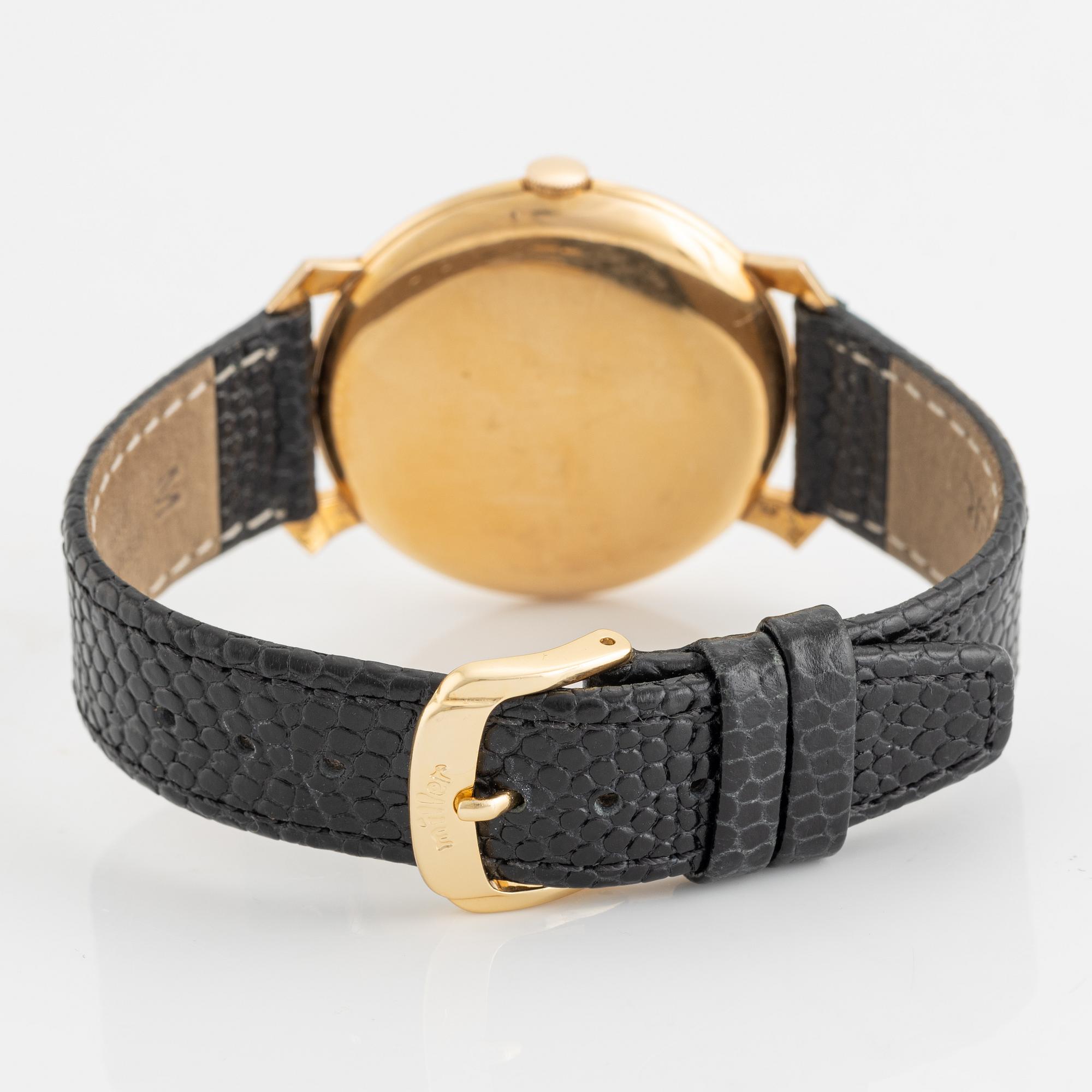
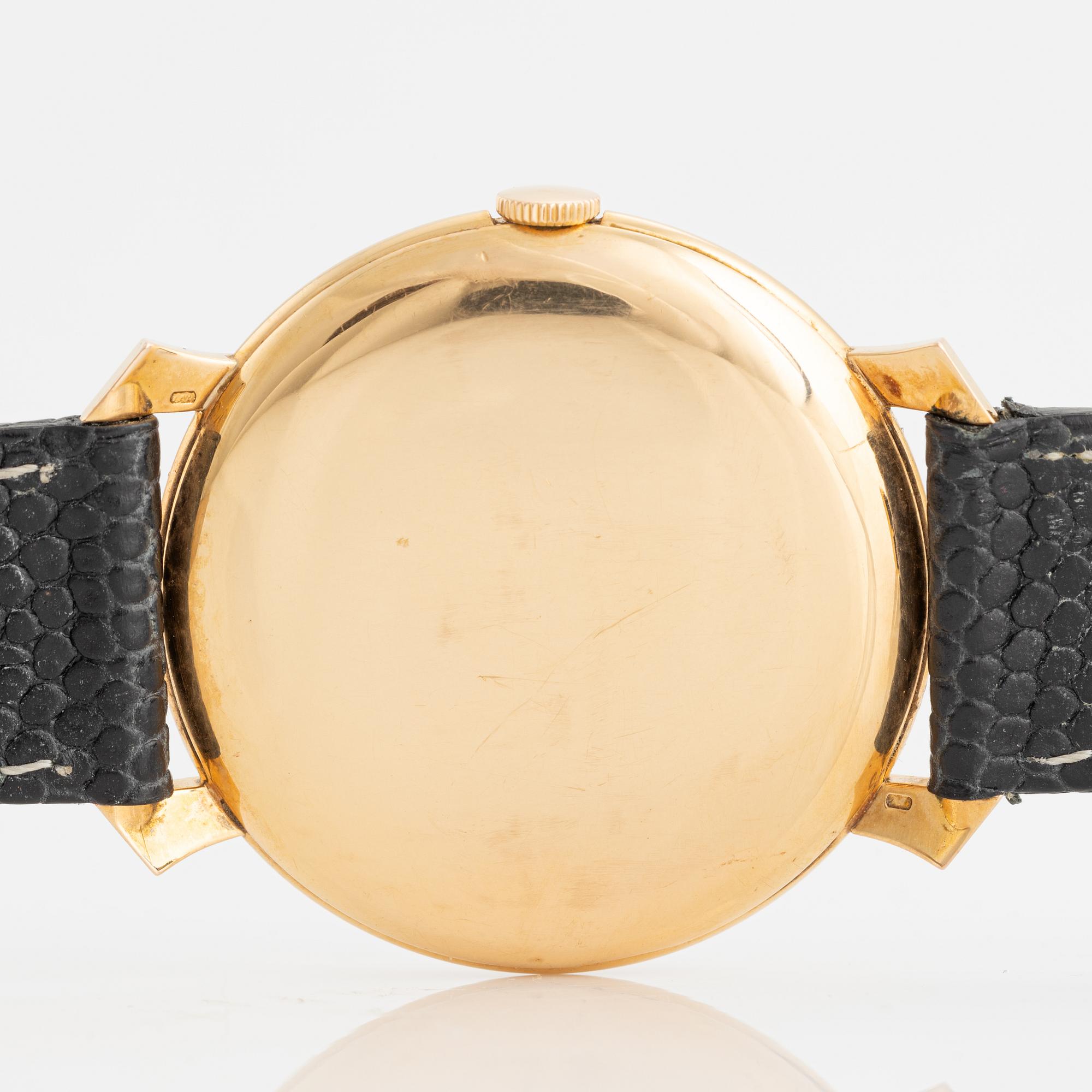
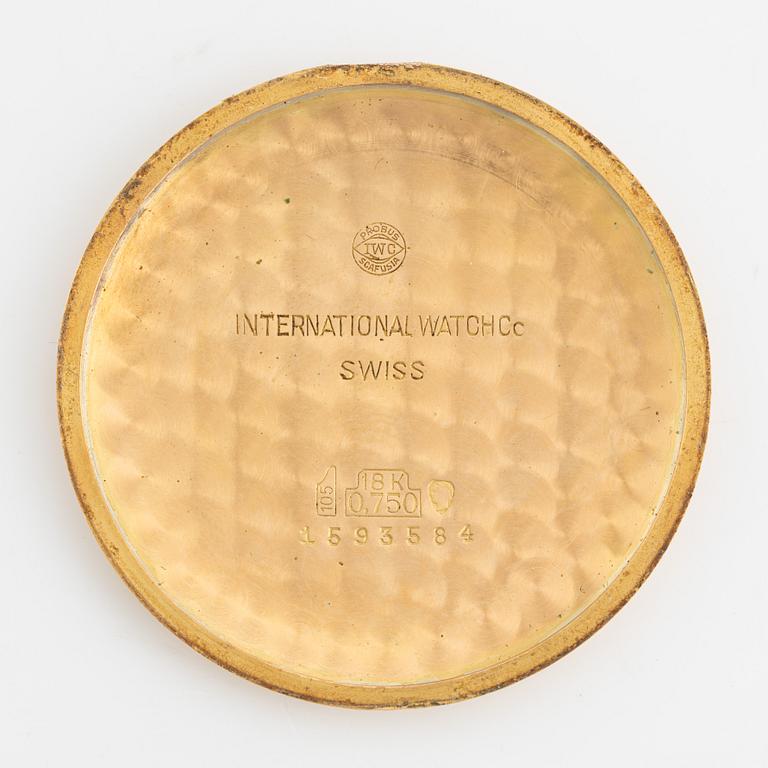
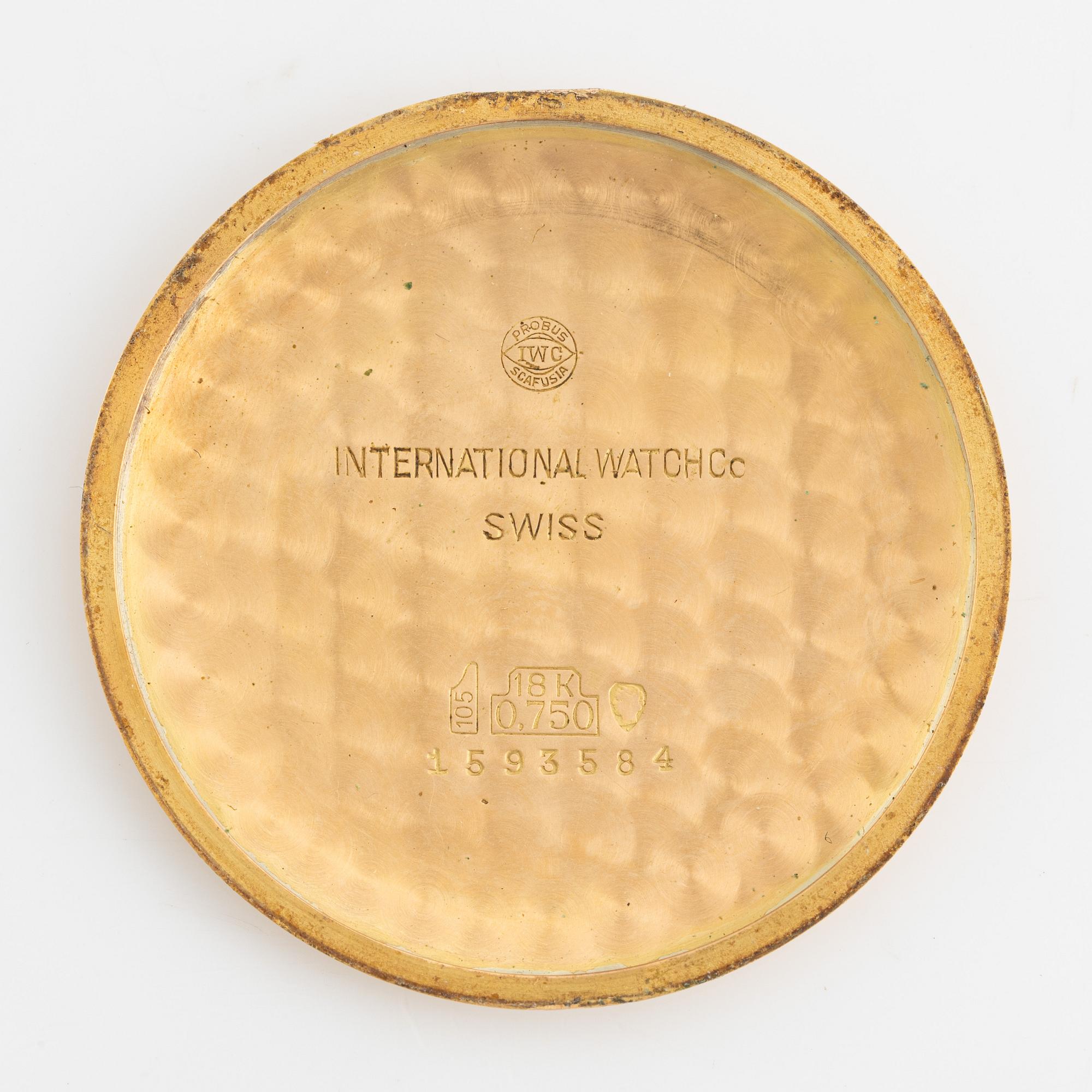
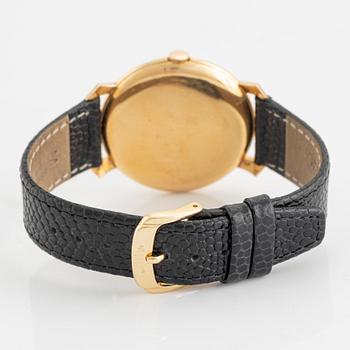
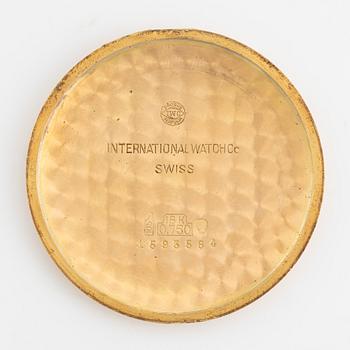
Material: 18K gold
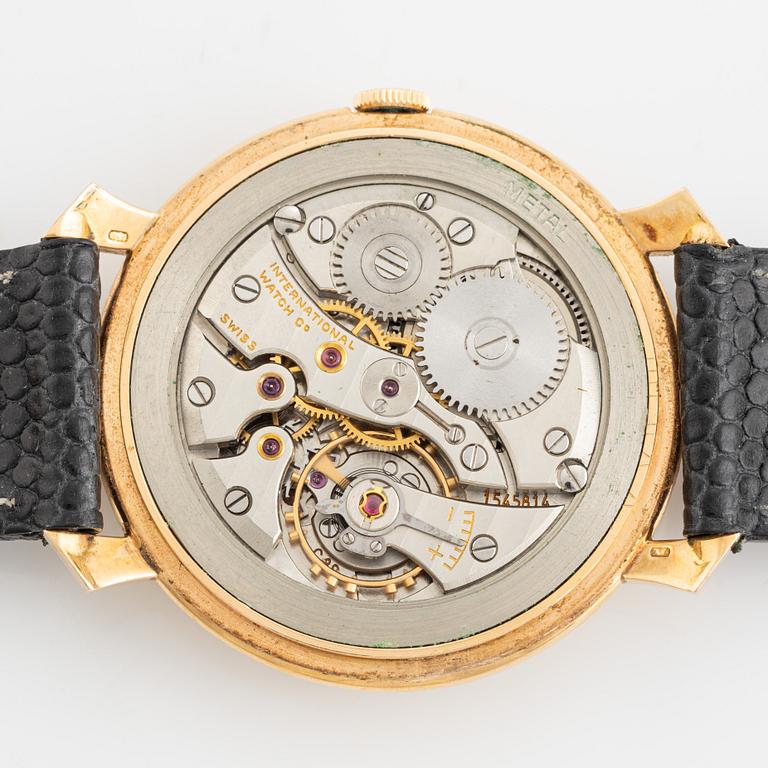
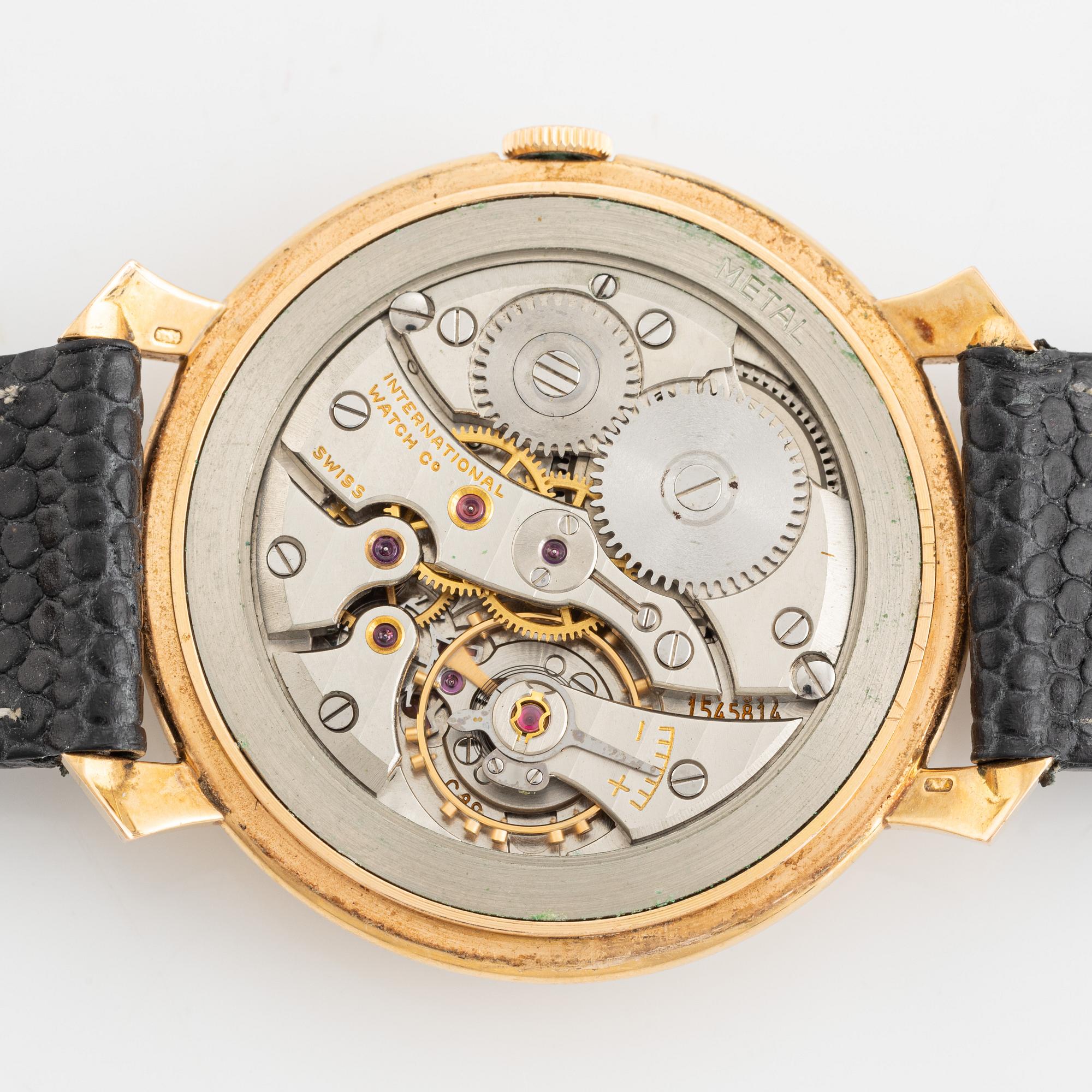
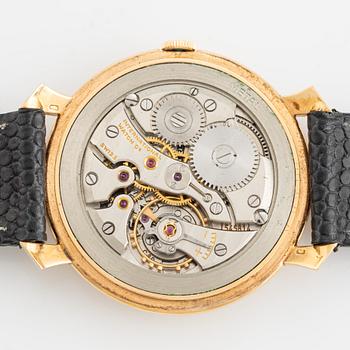
Movement: manual, caliber C.89
Year: circa 1962
Crystal: plastic crystal
Bracelet: leather strap
Serial number: 1'545'814
Case number: 1'593'584
Wear due to age and use.
The movement is running at the time of cataloguing, Bukowskis does not guarantee the future function of the movement. Please note that the movement has not been tested for timekeeping accuracy and may need a service at the buyer's expense. Watches have been opened to examine movements therefore no warranties are made that the watches are water-resistant. Potential buyers should inspect each watch to satisfy themselves as to condition. For more information, please read our Conditions of Purchase.
Muut tiedot
The Calibre 89 movement represents a significant achievement that emerged in the post-war era. It serves as a testament to IWC's prowess in in-house watchmaking, combining precision, reliability, and aesthetic beauty.
This exceptional movement had its origins in the brilliant mind of Albert Pellaton (who for example designed the Ingenieur), a renowned movement designer with a notable history at Vacheron Constantin. In 1944, he assumed the role of Technical Director at IWC, bringing his expertise to Schaffhausen. Pellaton's inaugural project at IWC resulted in the creation of the Calibre 89, which evolved from the foundation of the Calibre 83, a trusted workhorse movement for IWC since the early 1930s. This transition marked a pivotal moment in the brand's horological journey, culminating in the birth of the Calibre 89—a masterpiece celebrated for its precision, craftsmanship, and enduring appeal.
Lisätietoja ja kuntoraportit

Tietoa ostamisesta
Muiden katsomia kohteita