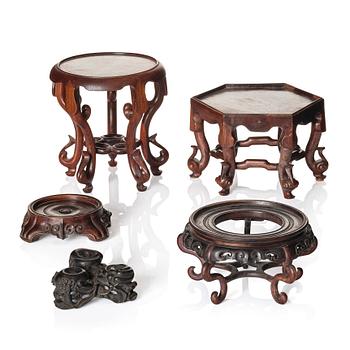
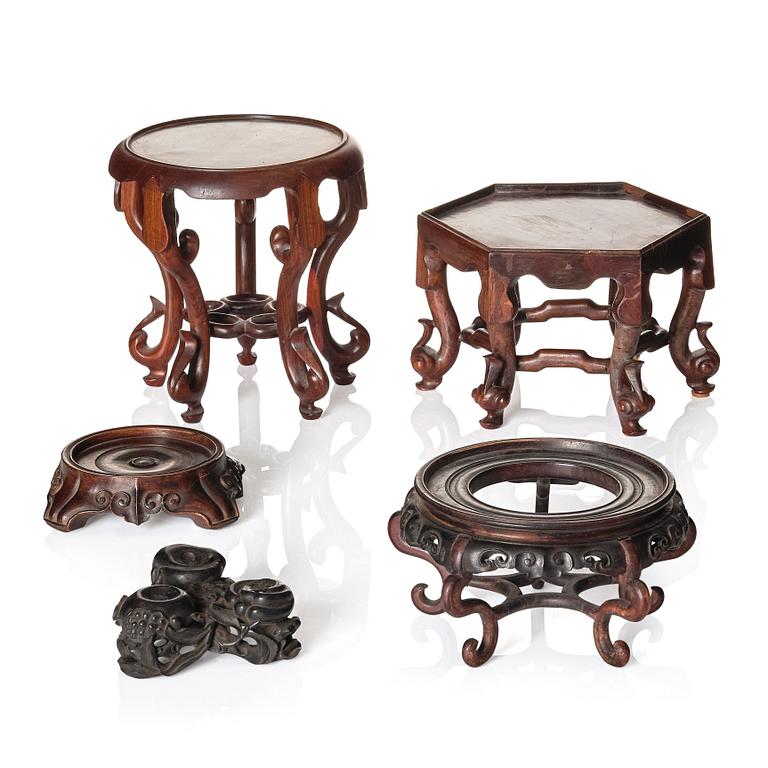
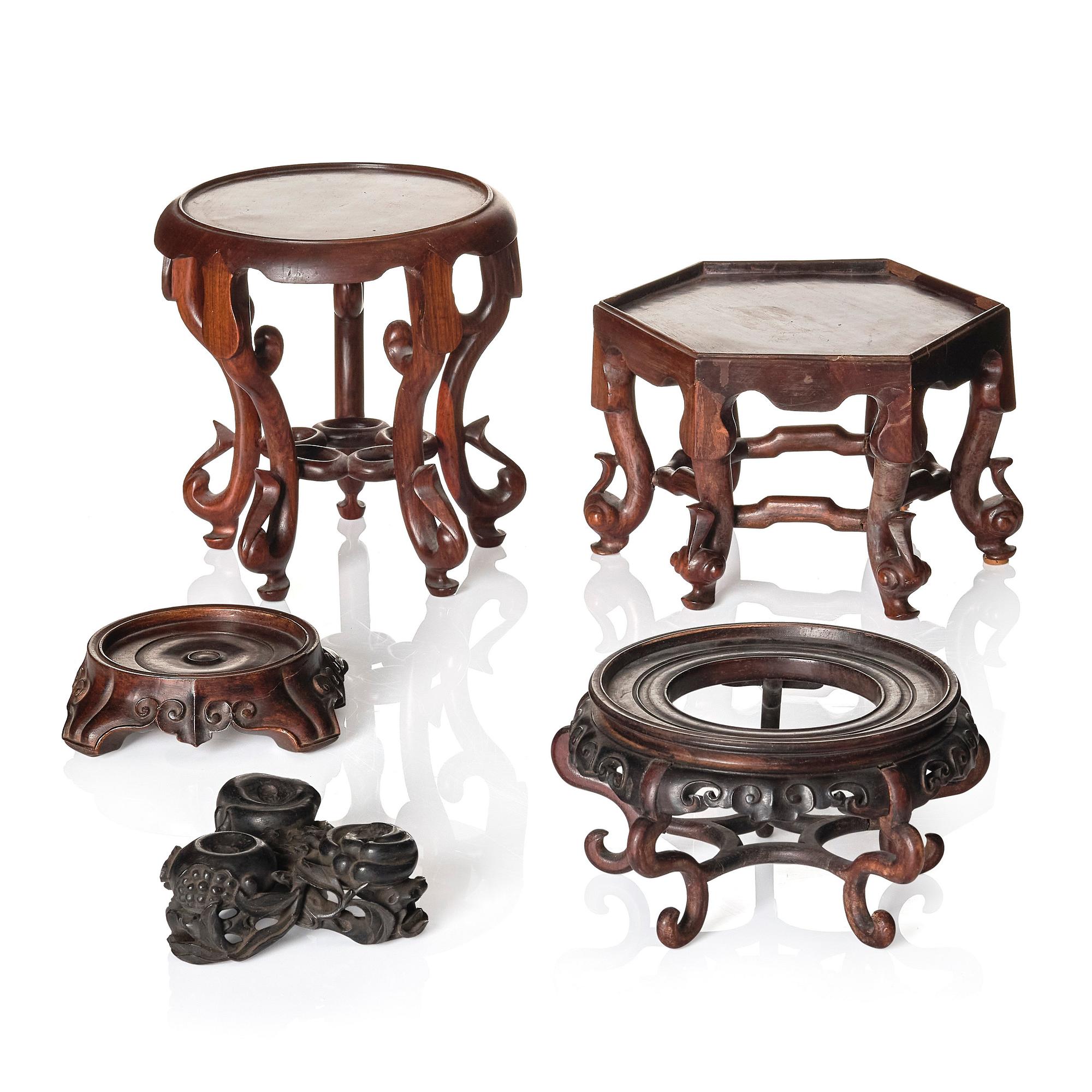
A tall stand on five feet. Height 21 cm. Inner diameter at top 16.2 cm. Lower stand on four feet, height 10 cm. Inner diameter 14 cm. The smallest stand, height 4 cm. Inner measurement 9 cm. A stand for a tripod sculptured as three fruit (finger lemon, peach, and pomme granate). Height 4.5 cm. Measure 11x11 cm. Hexagonal stand on tall feet. Height 14 cm. Inner dimensions approx 17-18 cm.
Wear.
Alkuperä - Provenienssi
Property of a Swedish private collection.
Muut tiedot
The display of beautiful, precious or exotic objects was a major part of the decoration in the imperial palaces during the Qing dynasty. These objects were usually displayed on stands, sometimes simply placed on top of a table or chest, but in other instances a selected group of objects was displayed in an arrangement of display niches. These arrangements of cabinets ranged in size from huge banks of display areas, like the special display shelves which cover most of the wall in the Study of Fresh Fragrance in the Forbidden City, Beijing, to the tiny treasure cabinets made for the emperors' miniature pieces.
Lisätietoja ja kuntoraportit

Tietoa ostamisesta
Muiden katsomia kohteita