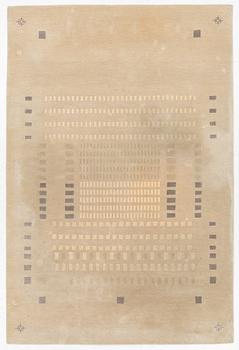
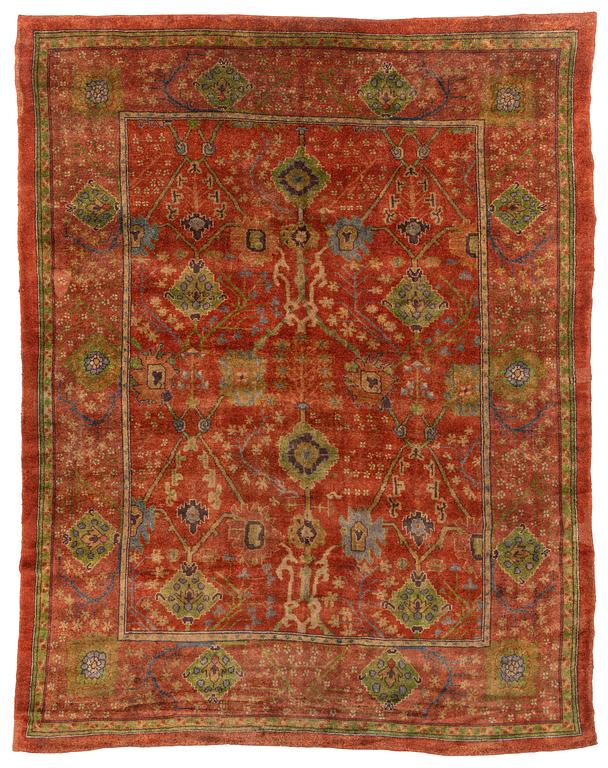
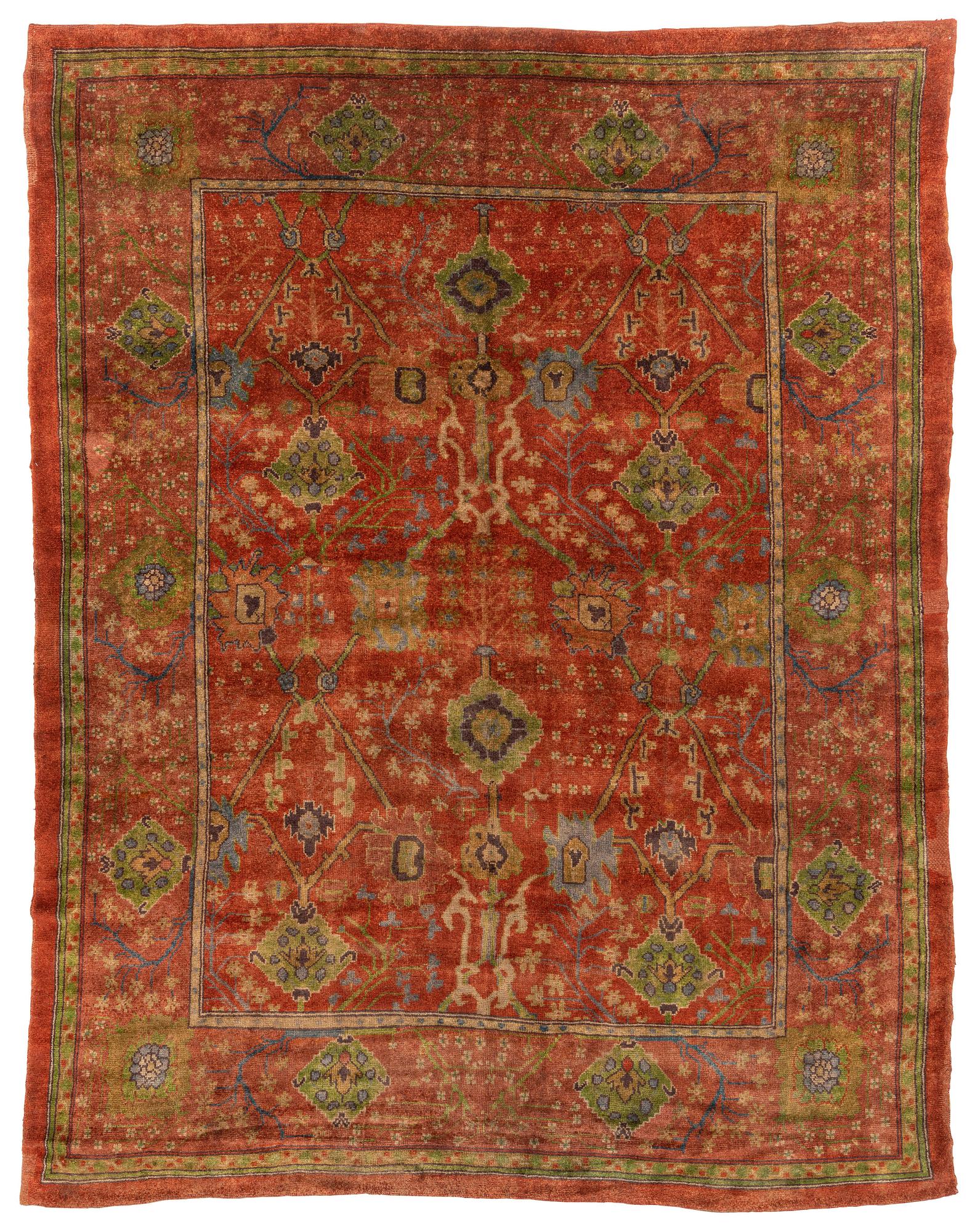
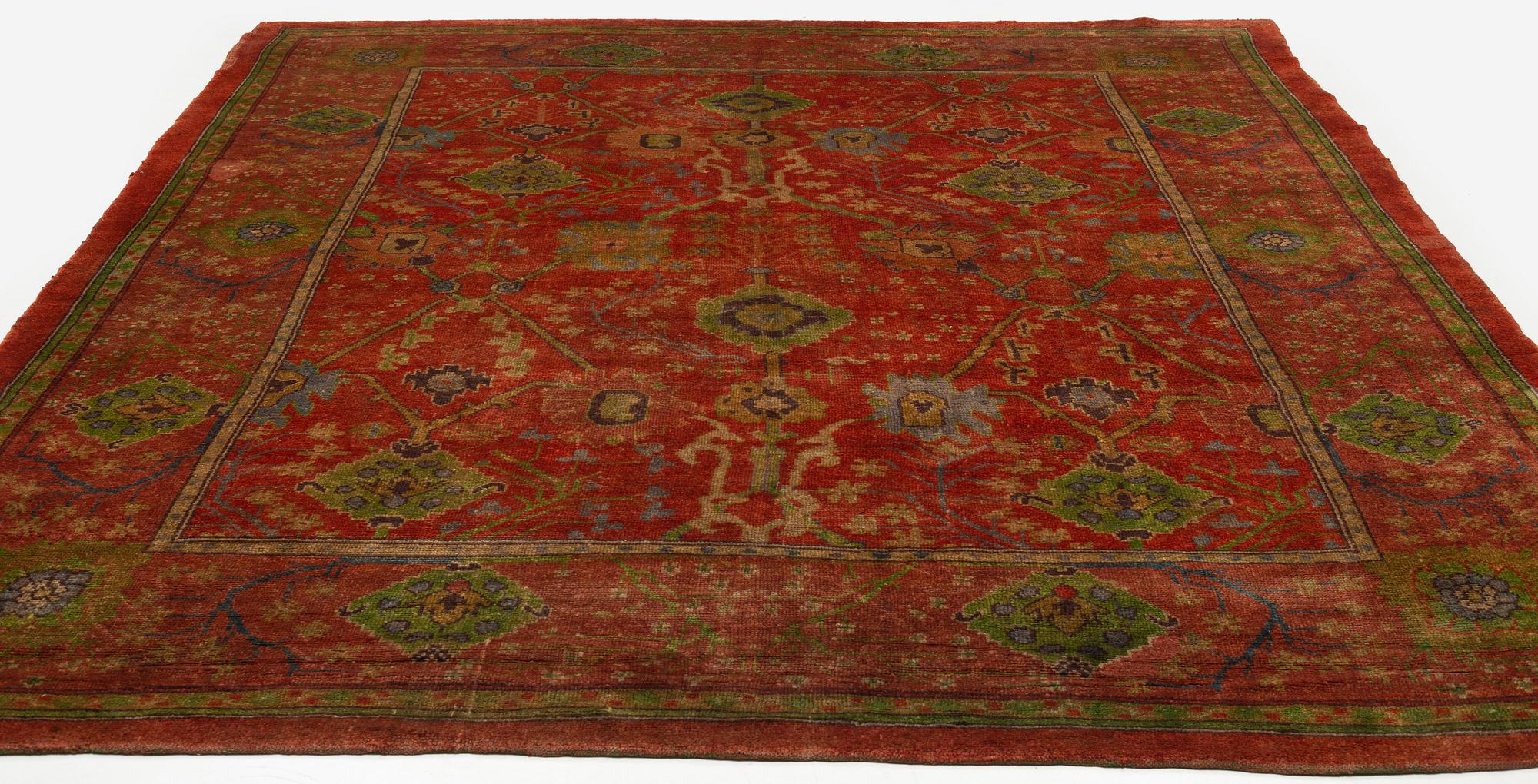
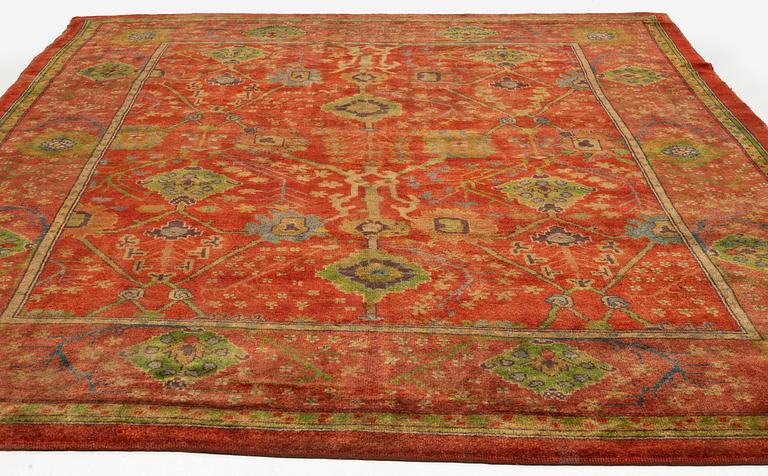
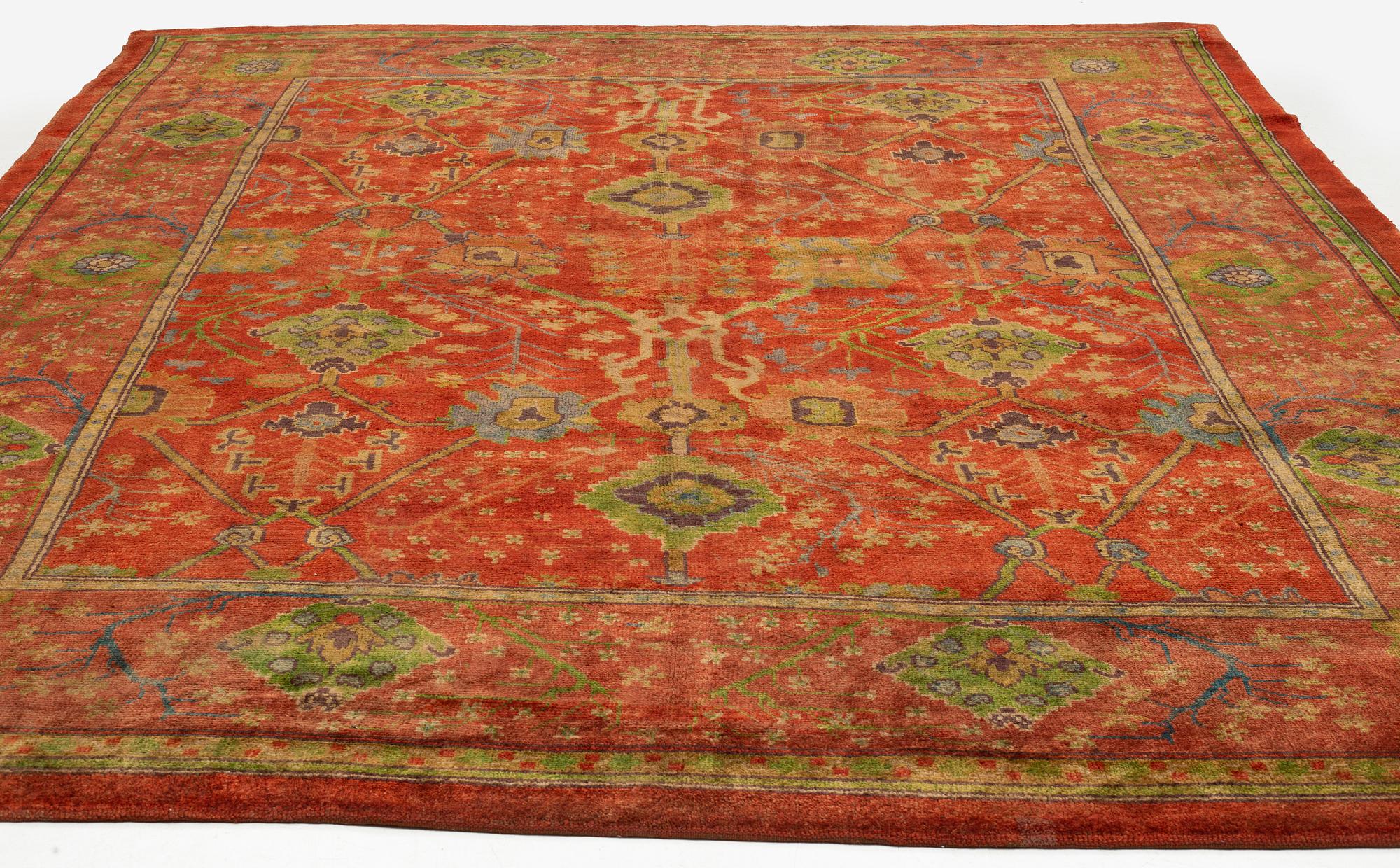
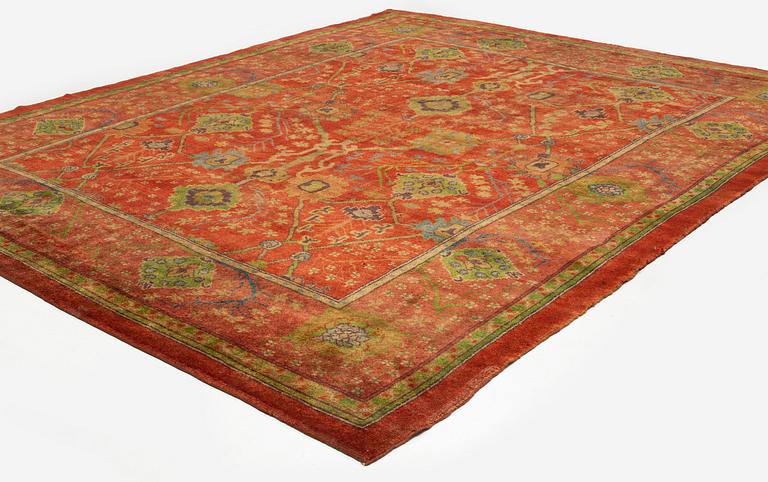
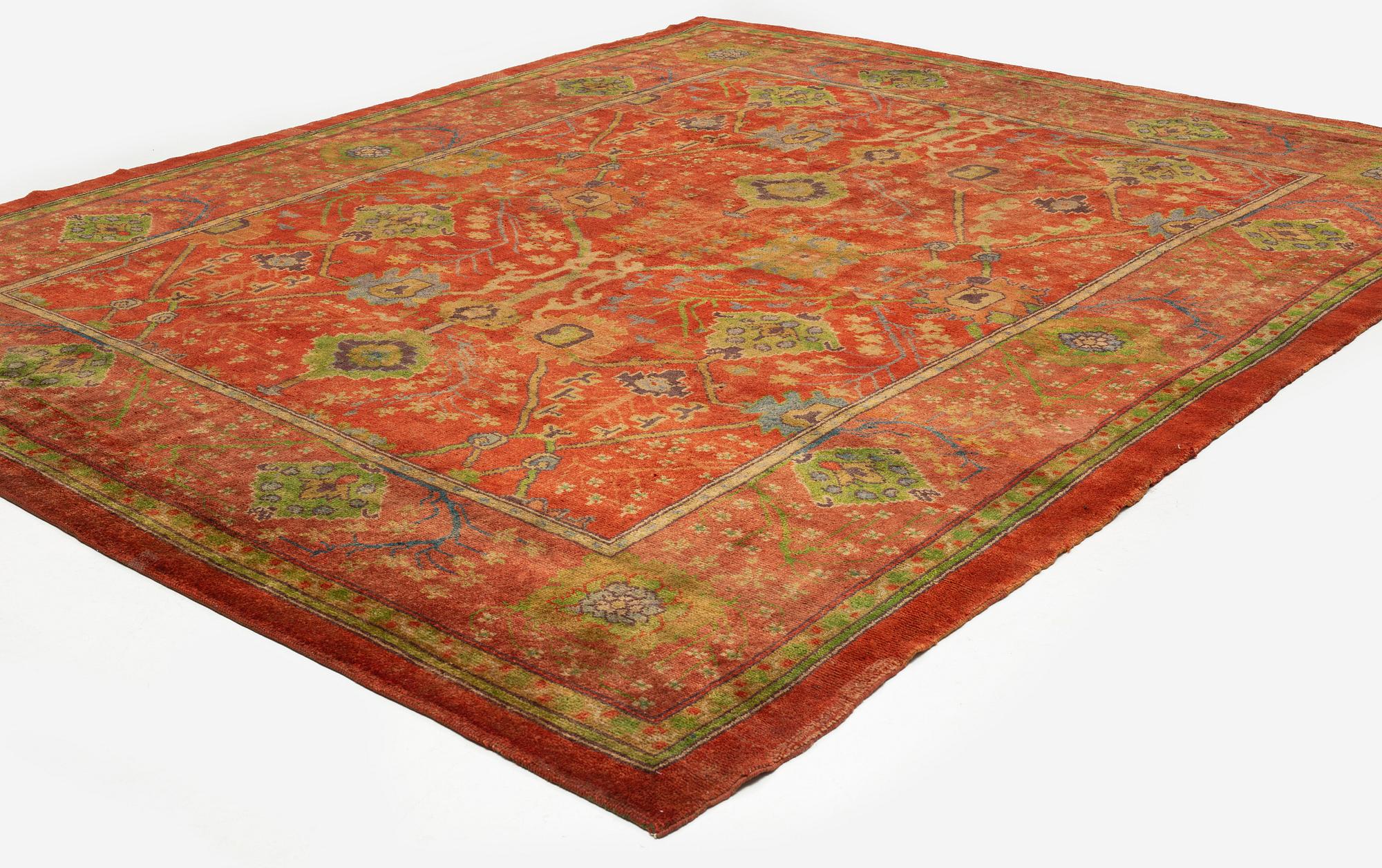
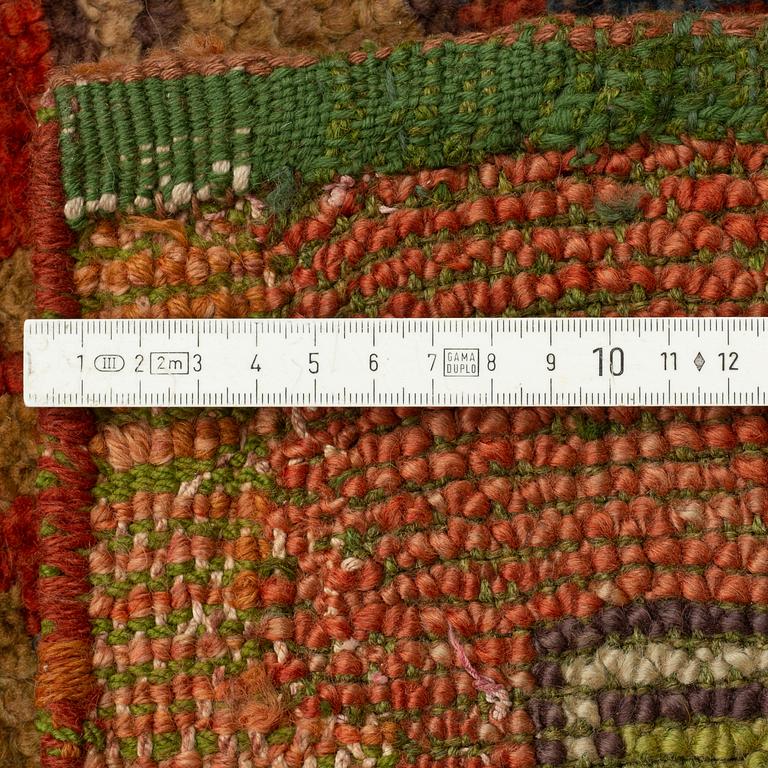
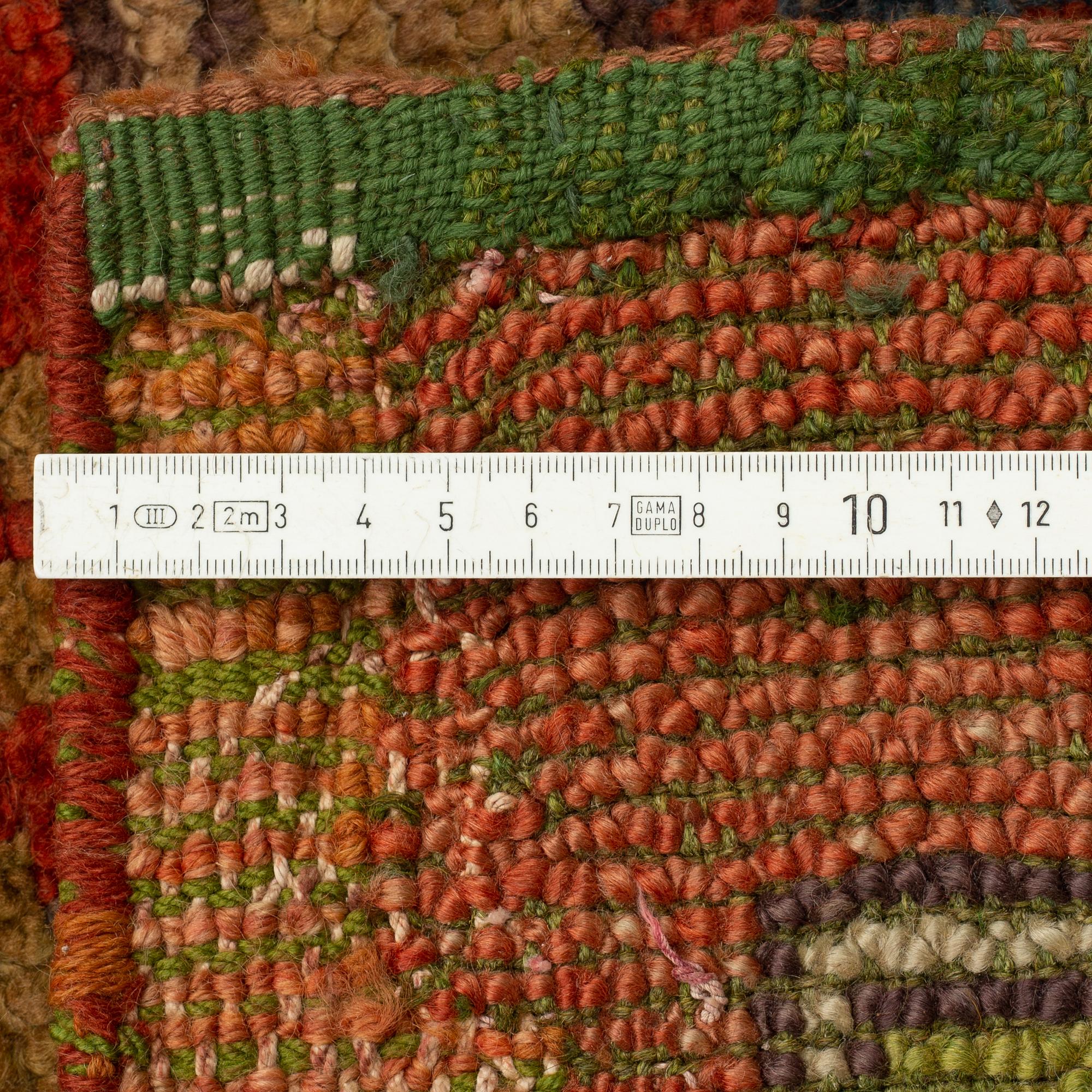
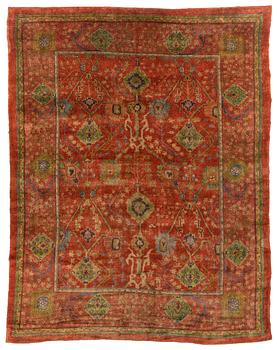
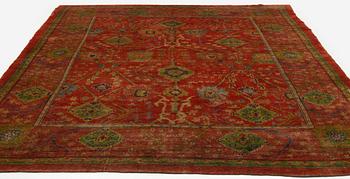
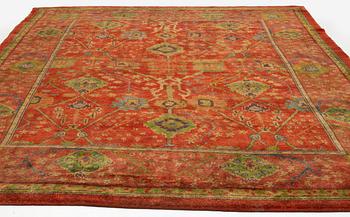
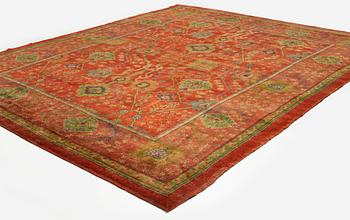
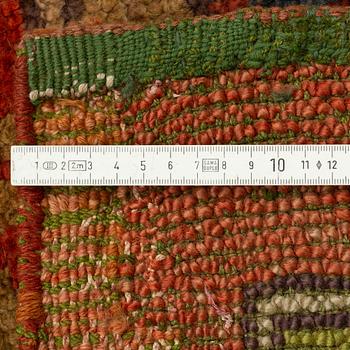
& G.K Robertson attributed, a carpet, Donegal, Killybegs Ireland, ca 435 x 341 cm
Around the year 1900. With a large polychrome arts and crafts pattern.
Alkuperä - Provenienssi
Christie's New York, Park Avenue, auction 9018 'Fine European and Oriental Carpets', December 17, 1998, lot 45.
Kirjallisuus
Compare Malcolm Haslam, Arts and Crafts Carpets, 1991, p. 97, plate 61.
Muut tiedot
The Donegal company was founded in 1898 by Scottish textile manufacturer Alexander Morton. The Arts & Crafts Movement advocated the use of vernacular traditions and local materials and before establishing Donegal Carpets, Morton had first established a carpet crafting house on the west coast of Ireland and put to practice the techniques of the Donegal people who had been working with wool for generations. The company had a wide and important clientele for whom they wove private commissions, of which many remain in Britain's grandest houses including, Dublin Castle, the Royal Pavilion of Brighton and Eltham Palace.
Lisätietoja ja kuntoraportit

Tietoa ostamisesta
Muiden katsomia kohteita