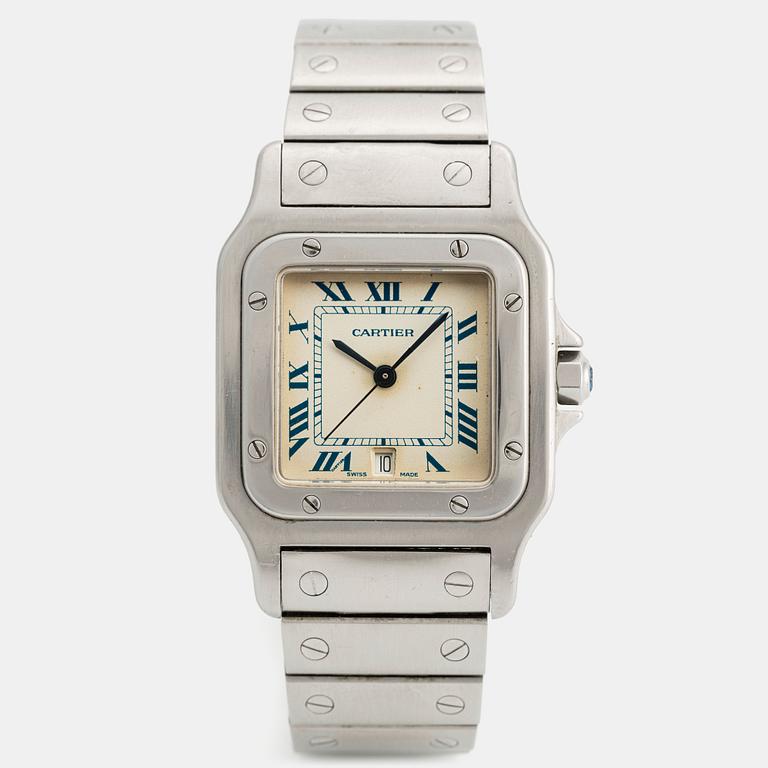
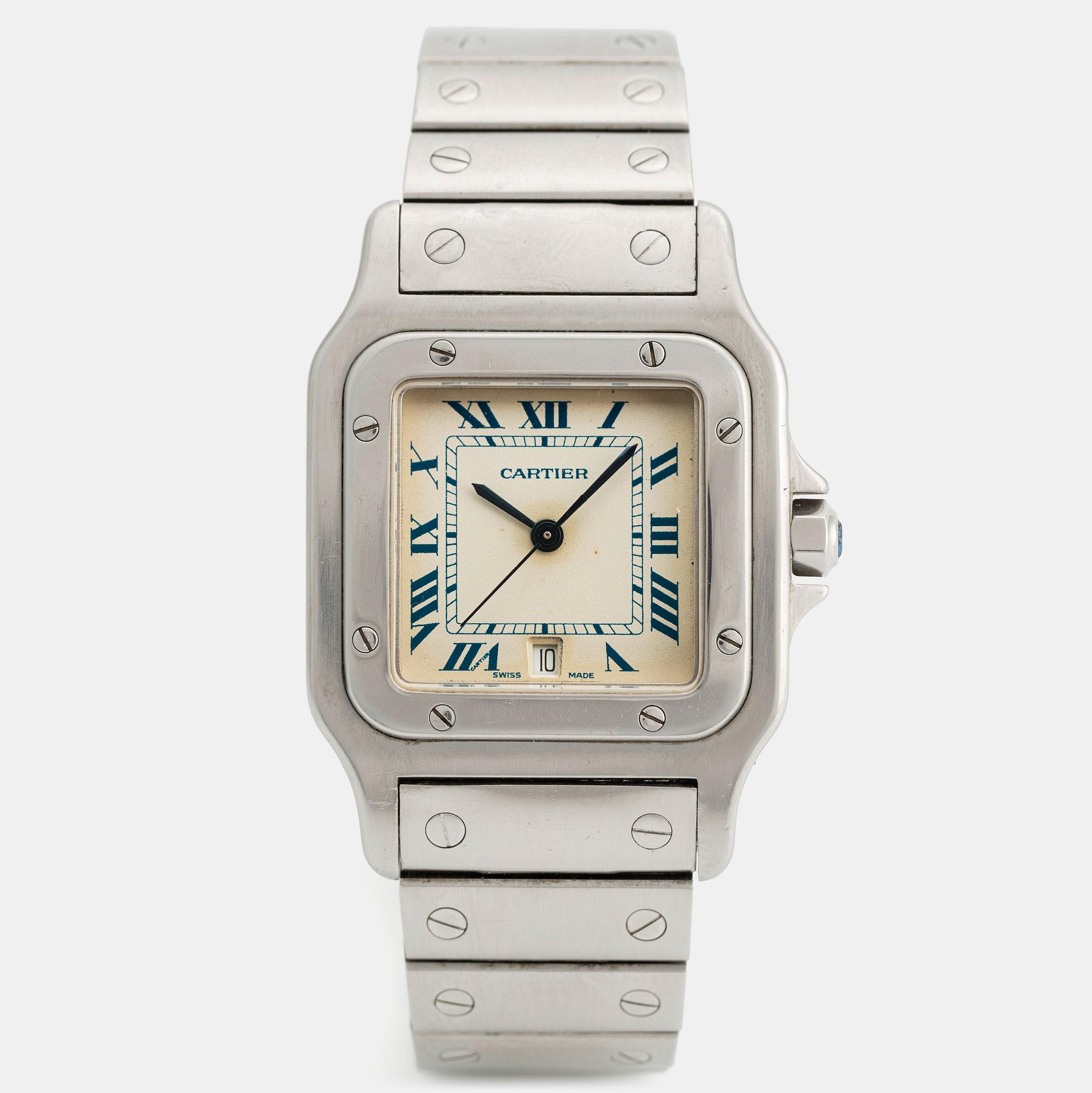
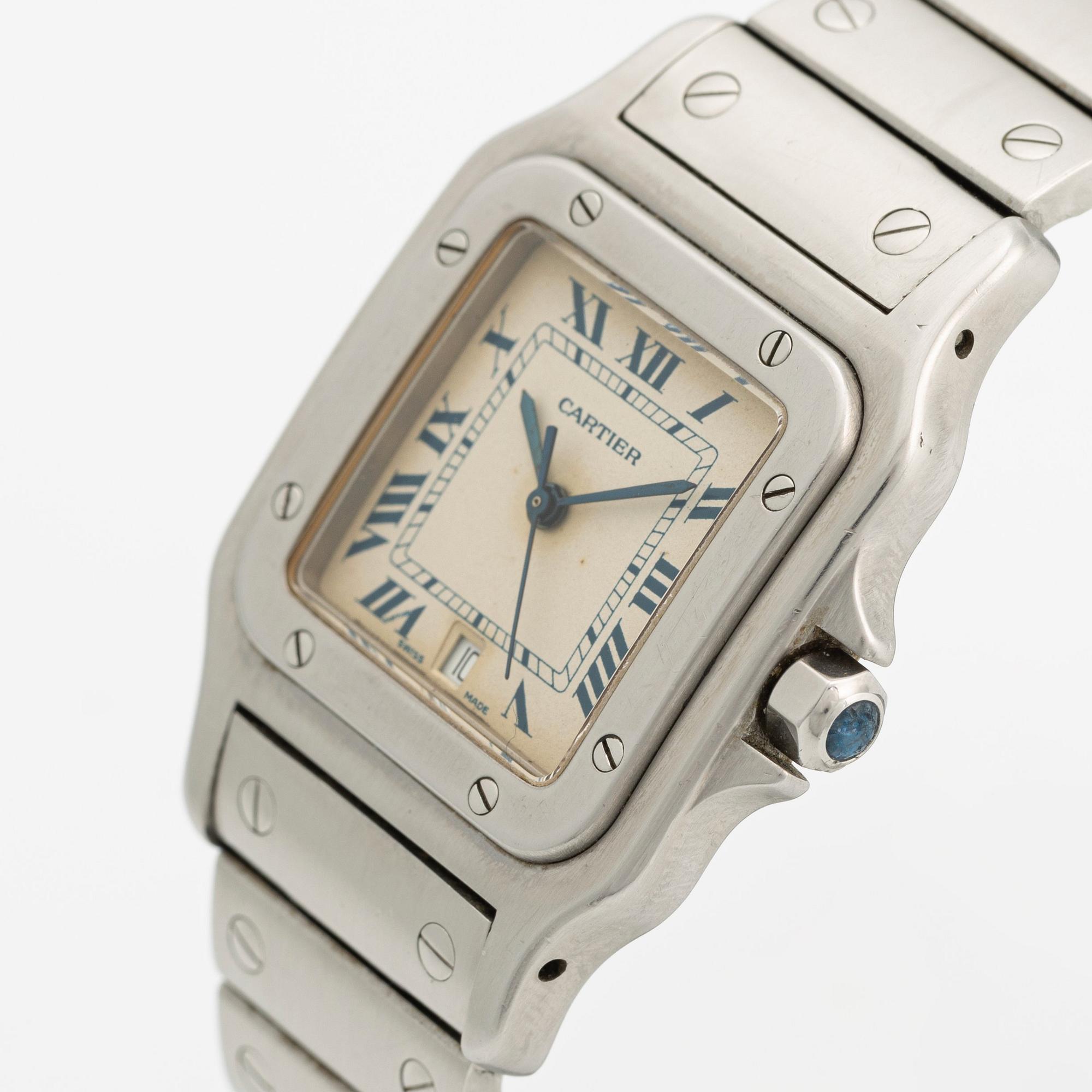
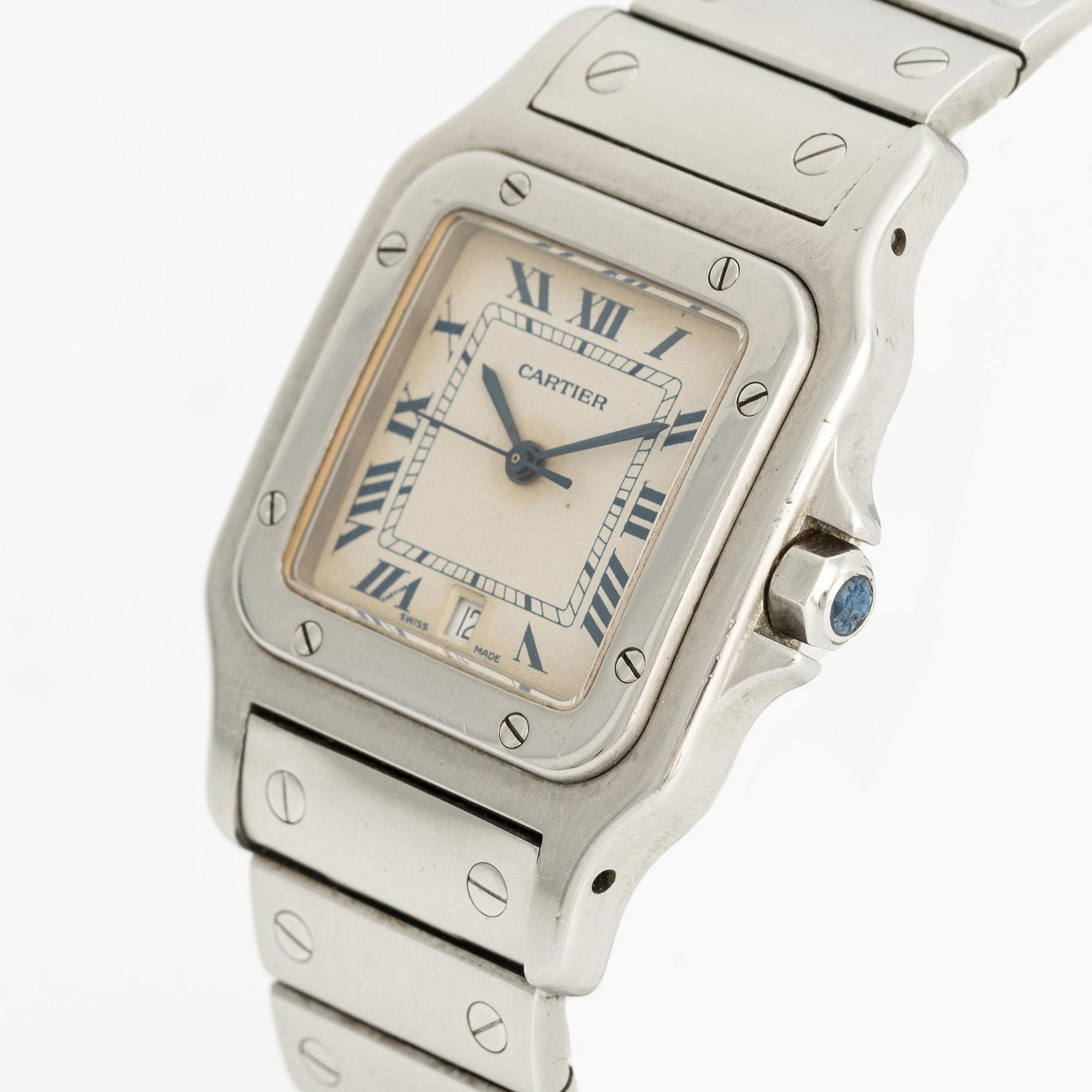
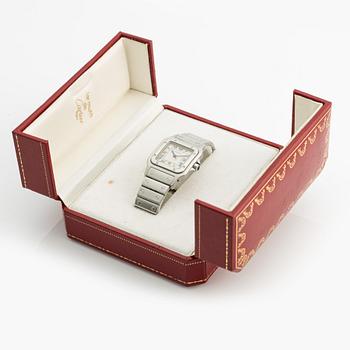
Case size: 29 x 29 mm
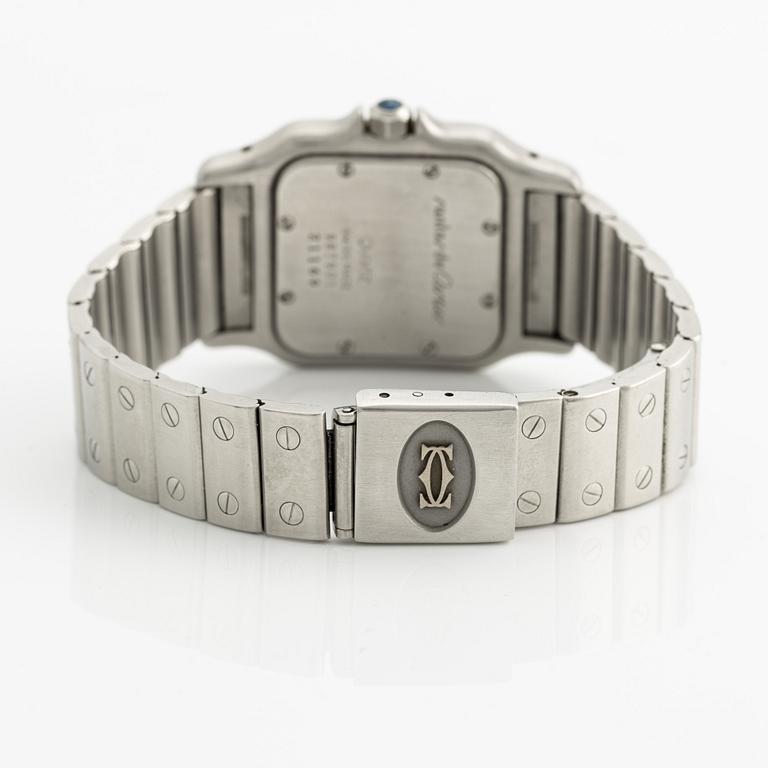
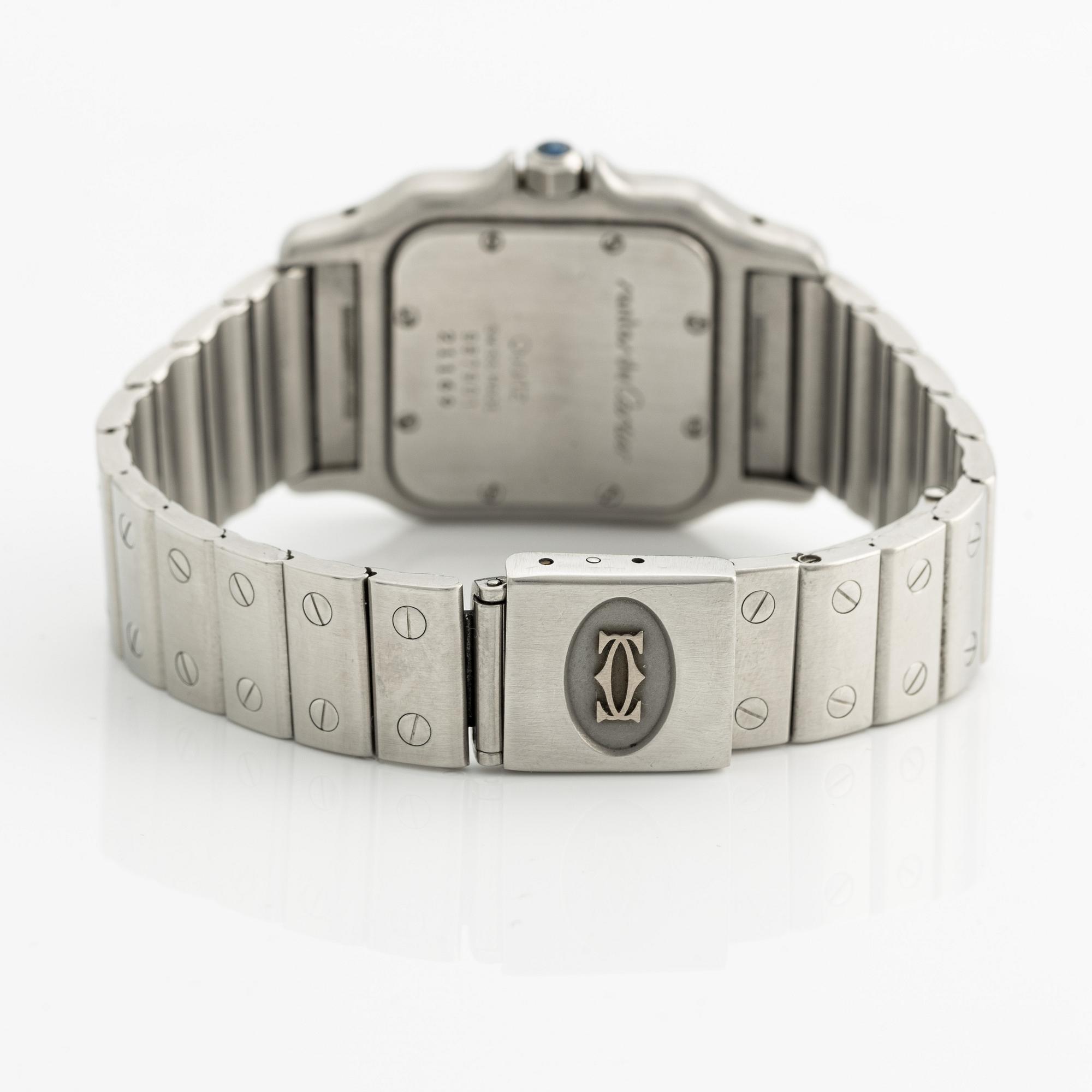
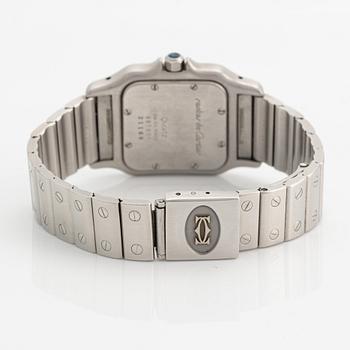
Material: steel
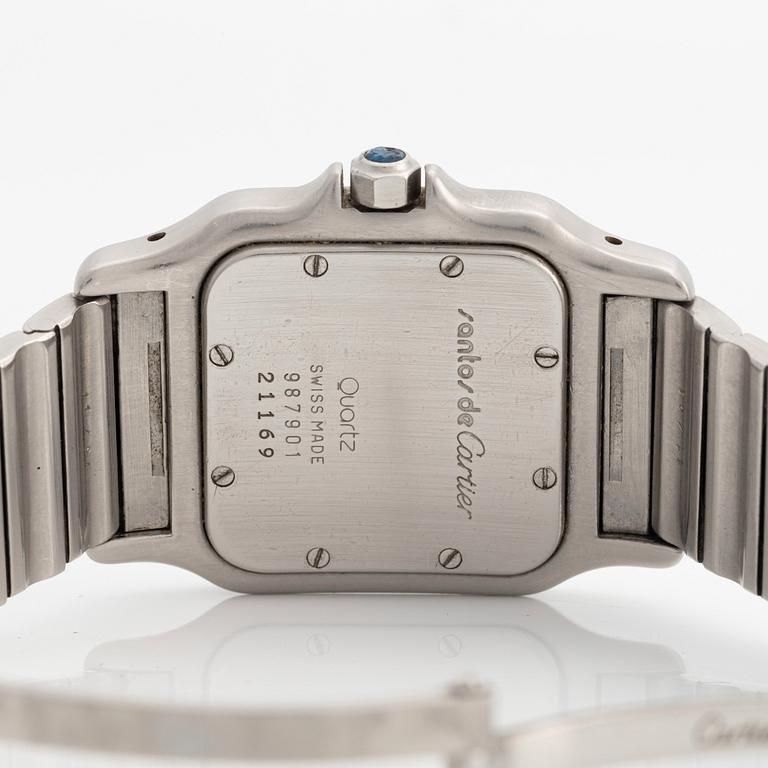
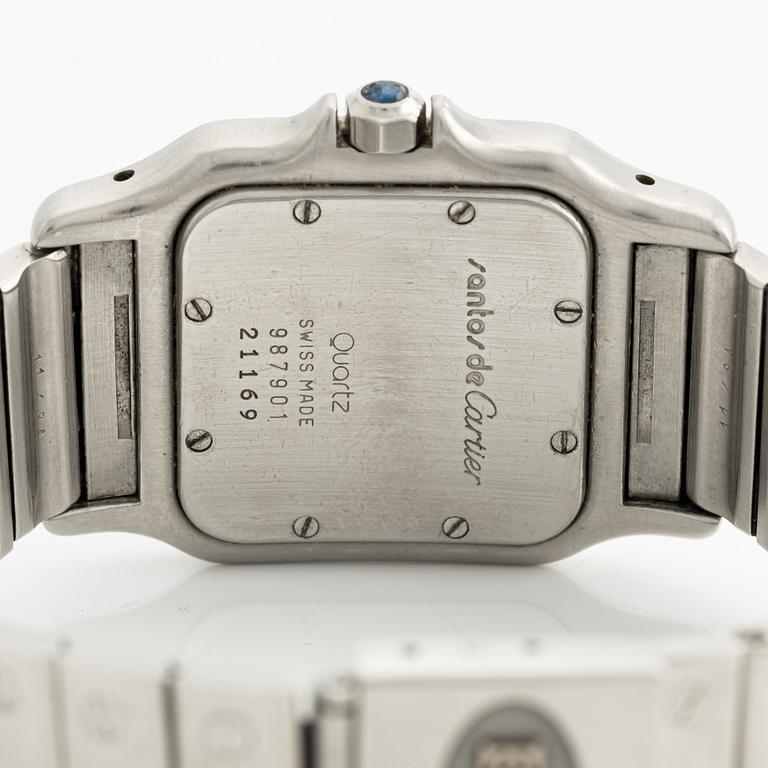
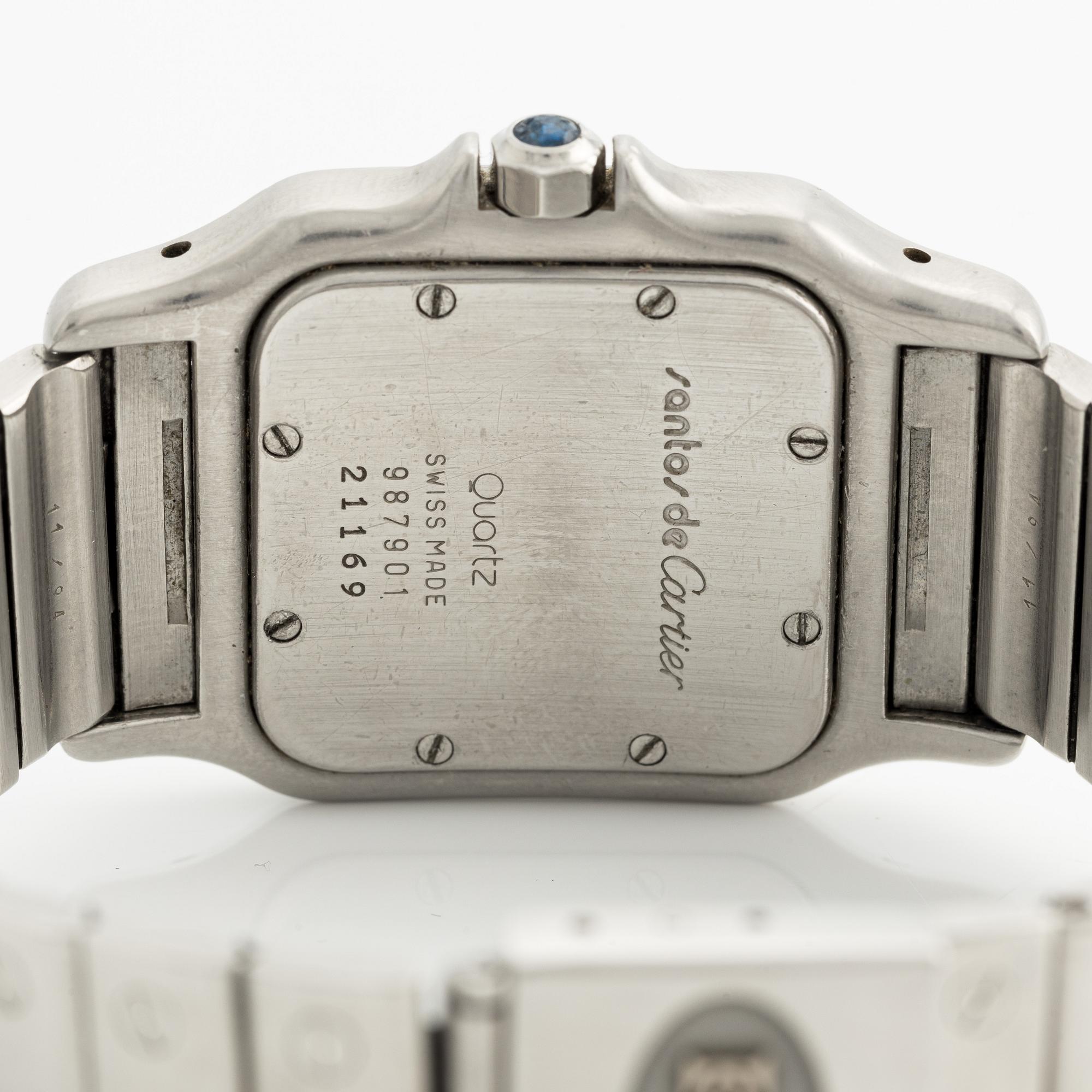
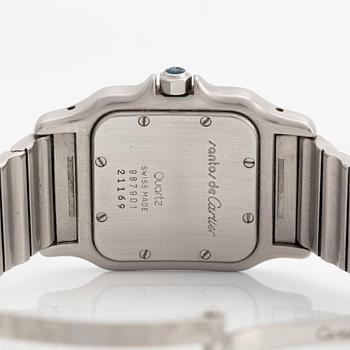
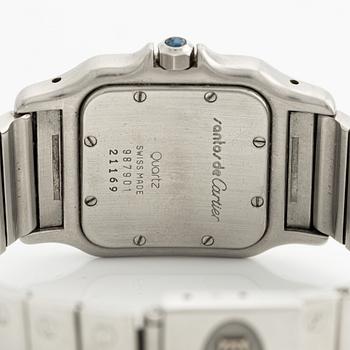
Movement: quartz, caliber 87
Year: circa 1994
Crystal: sapphire crystal
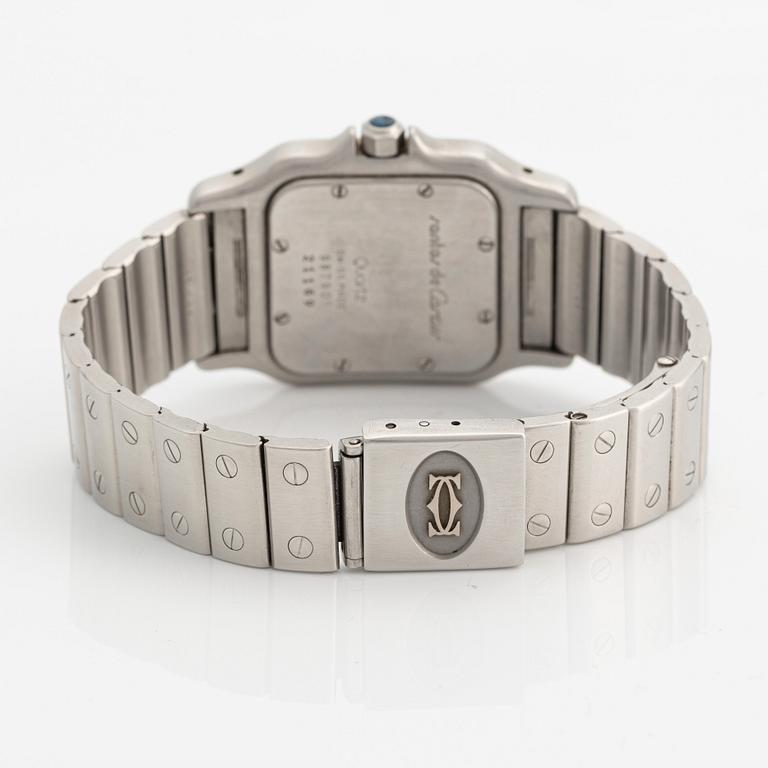
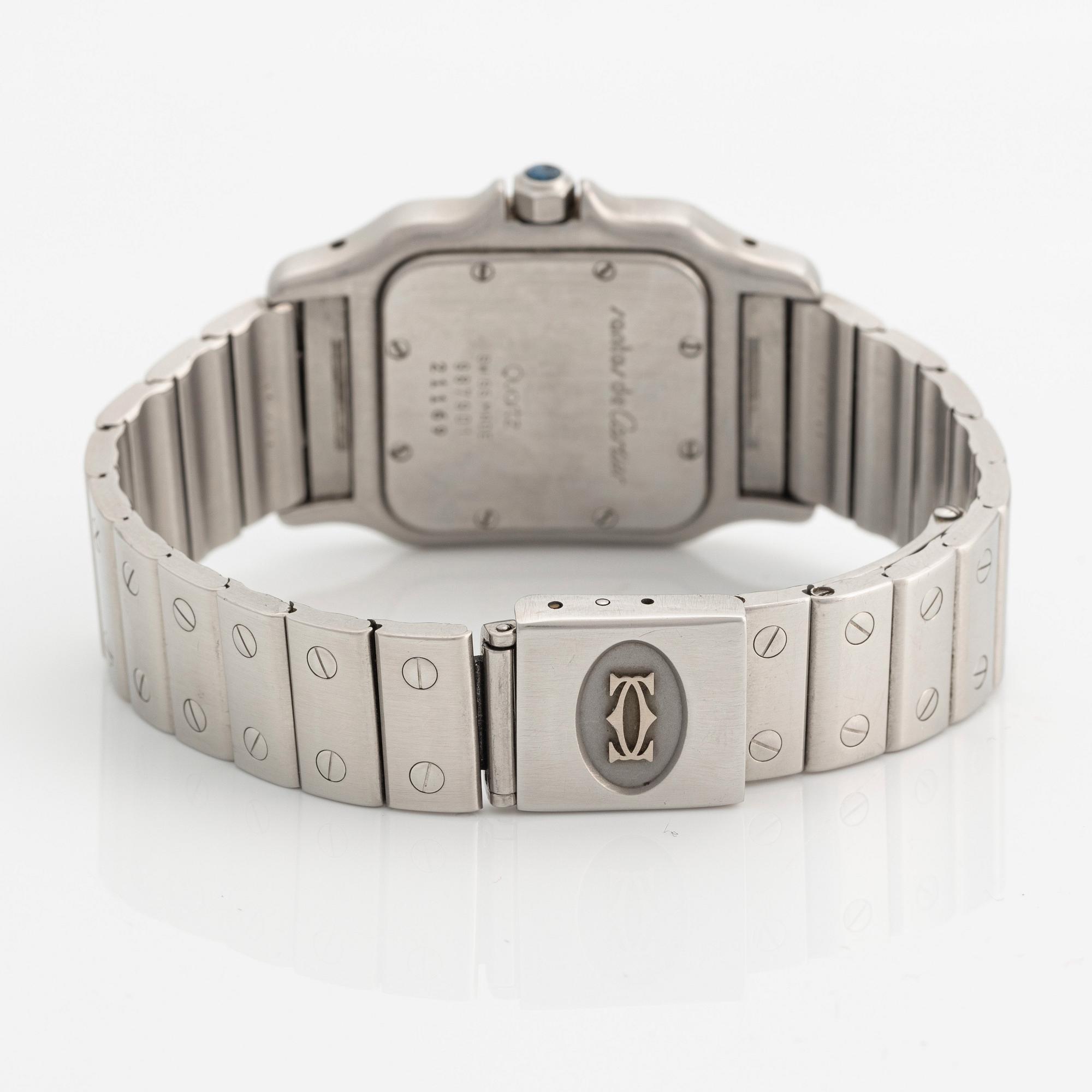
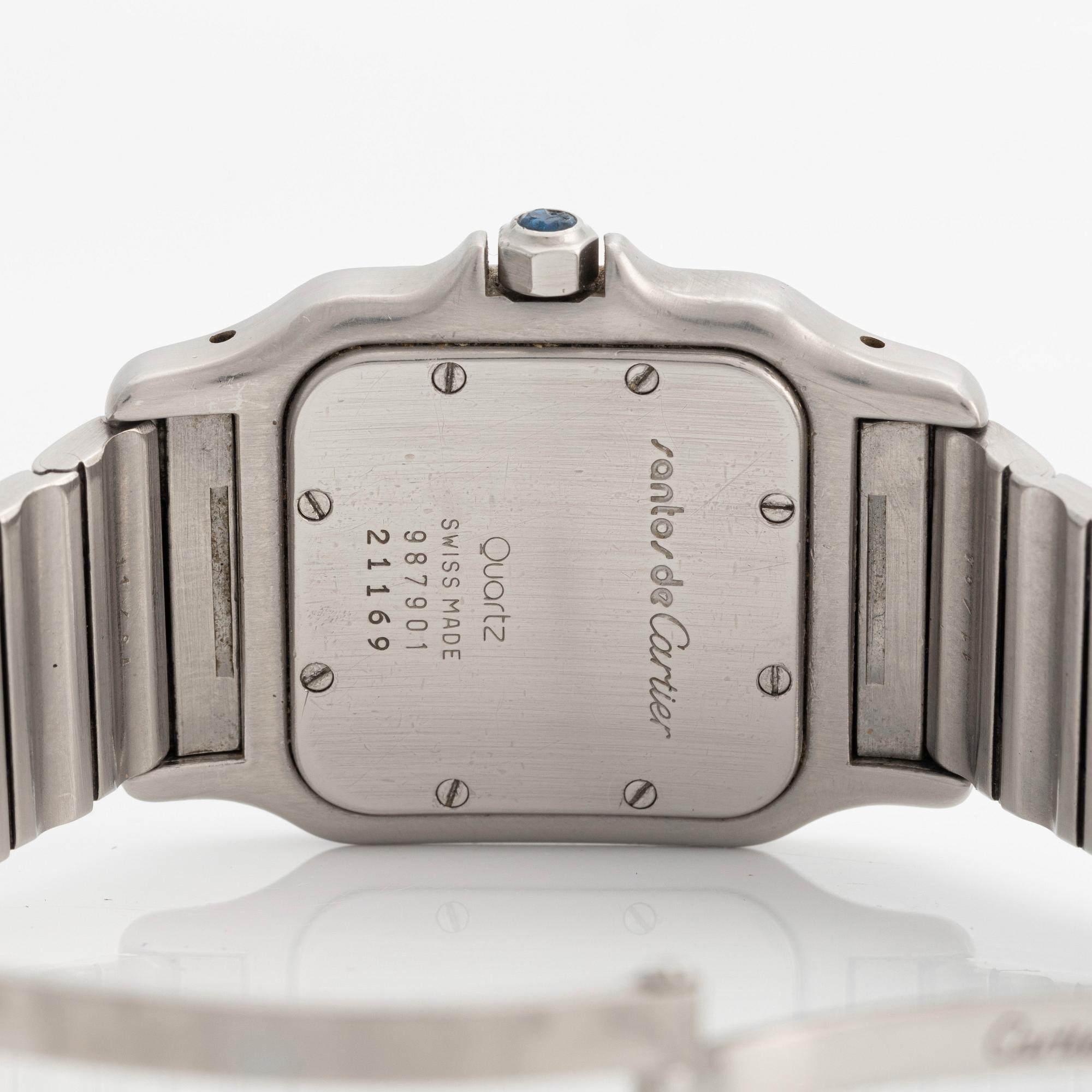
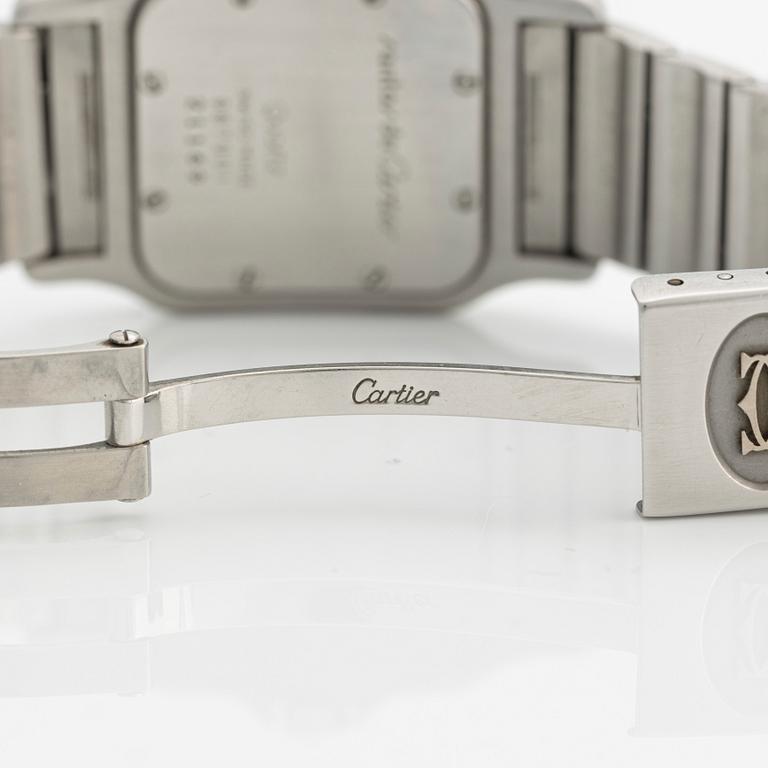
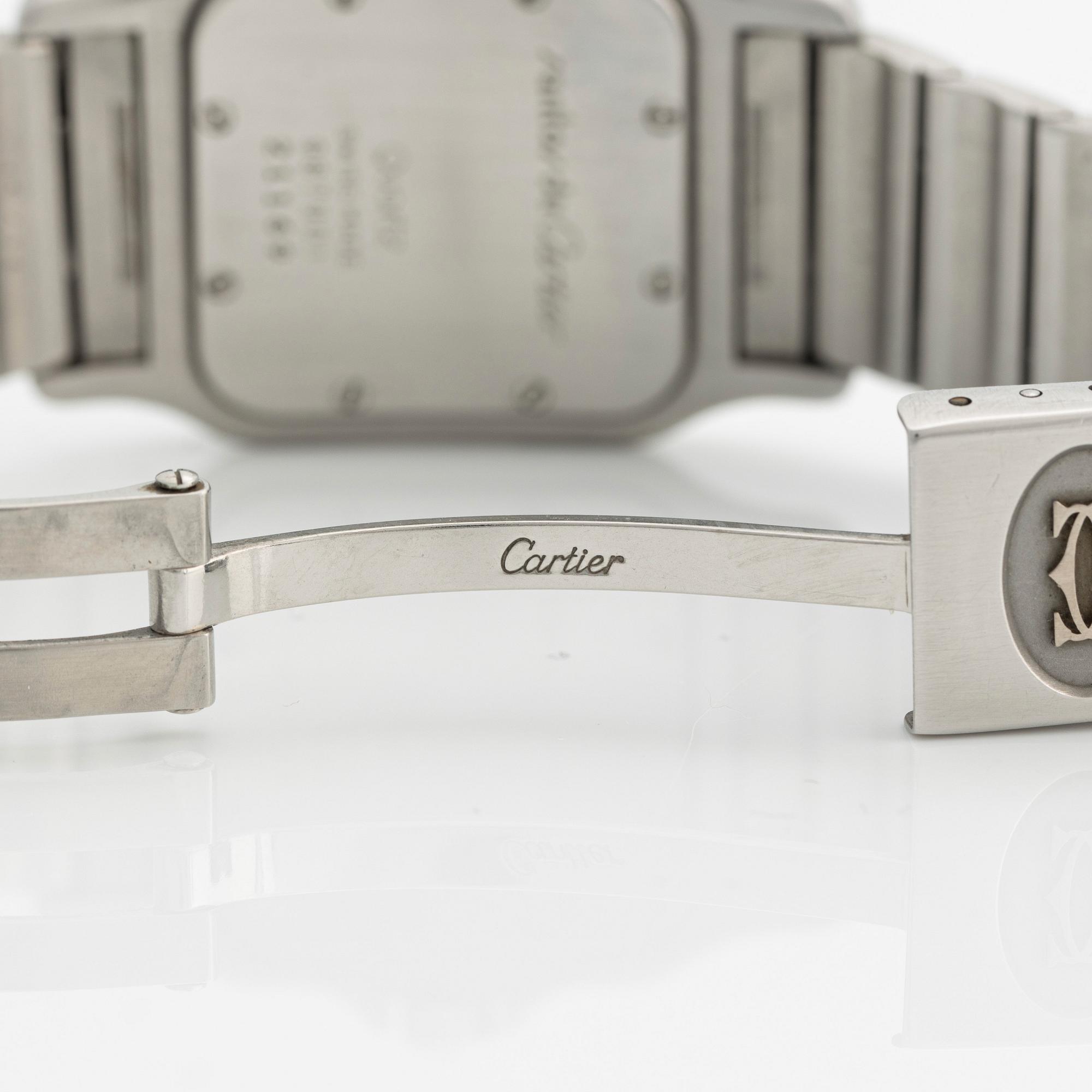
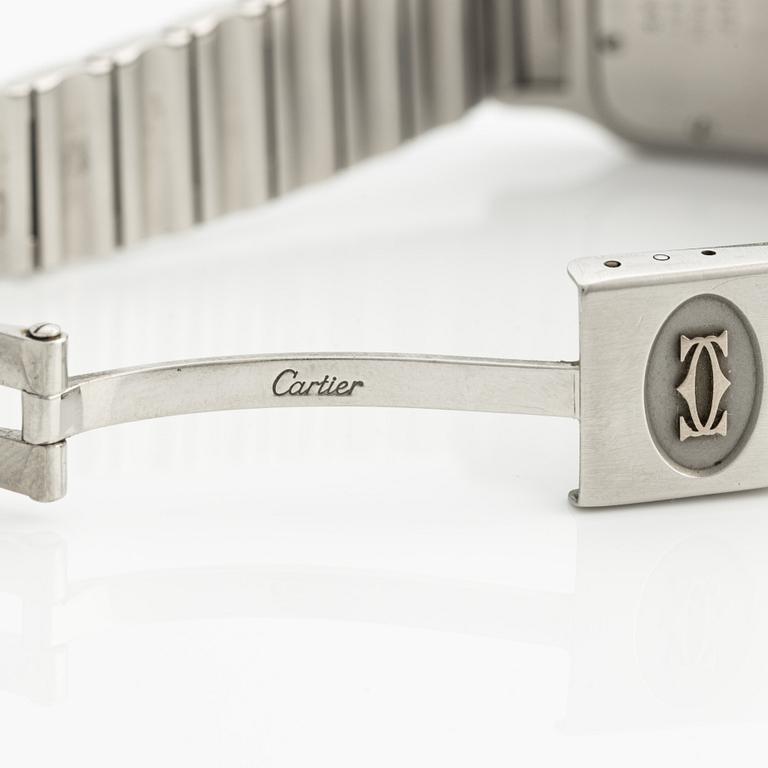
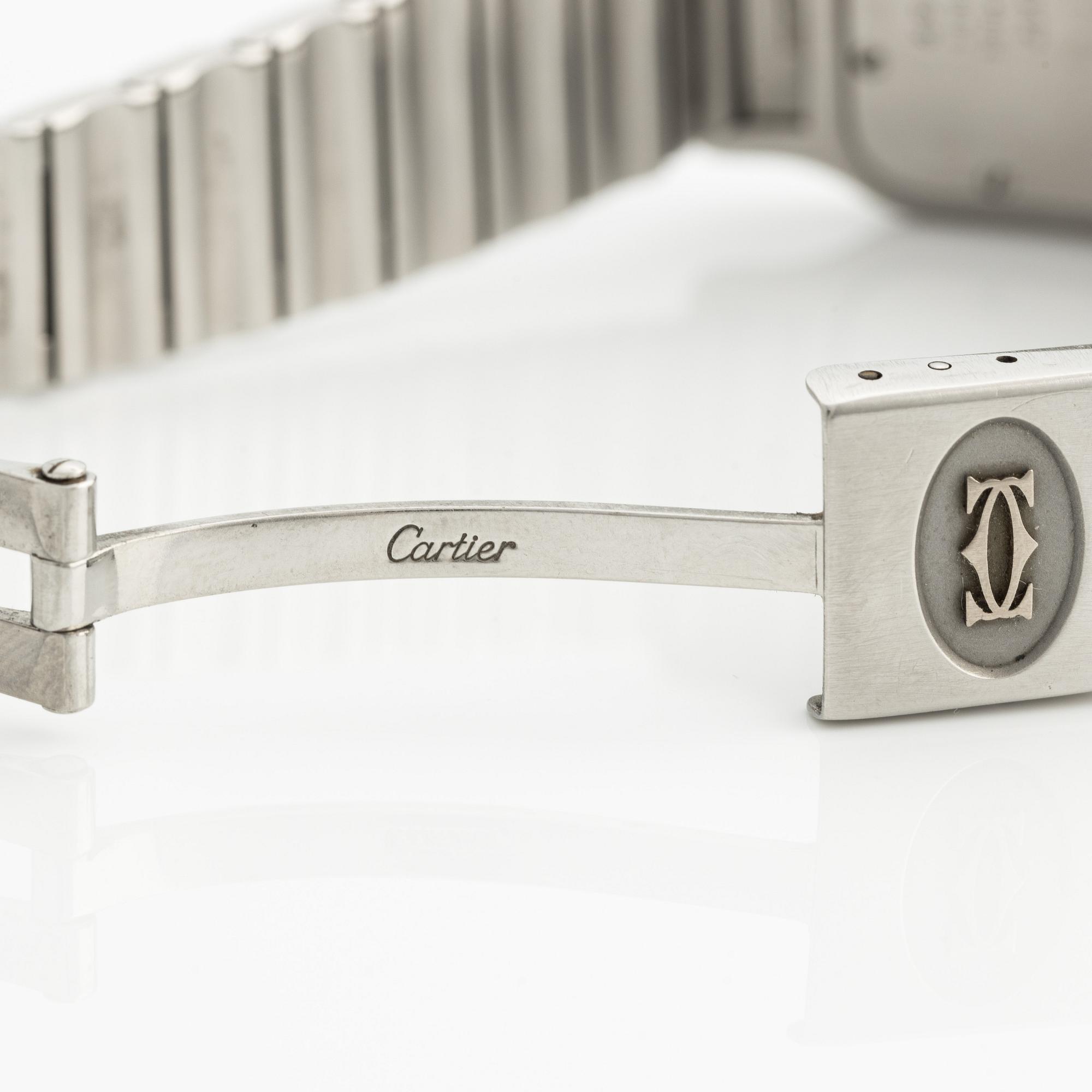
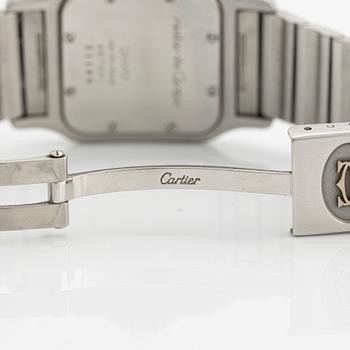
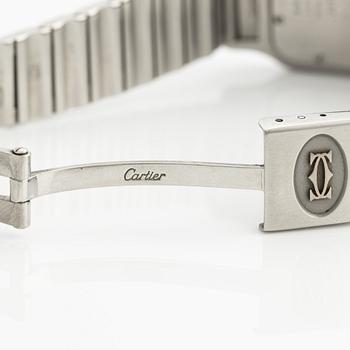
Bracelet: integrated original bracelet, folding clasp, ref. 11/94
Reference number: W20018D6
Serial number: 98'790'121'169
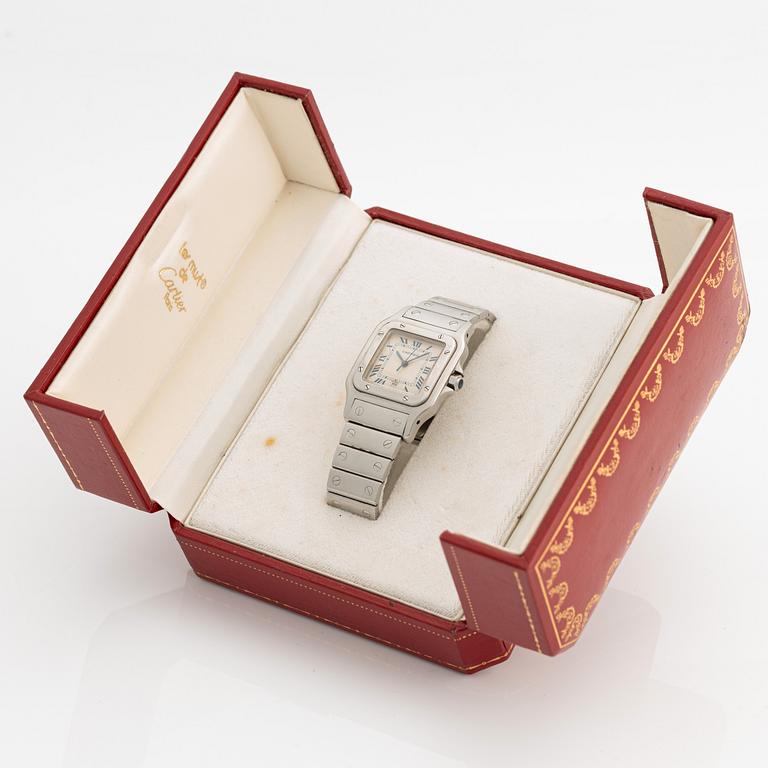
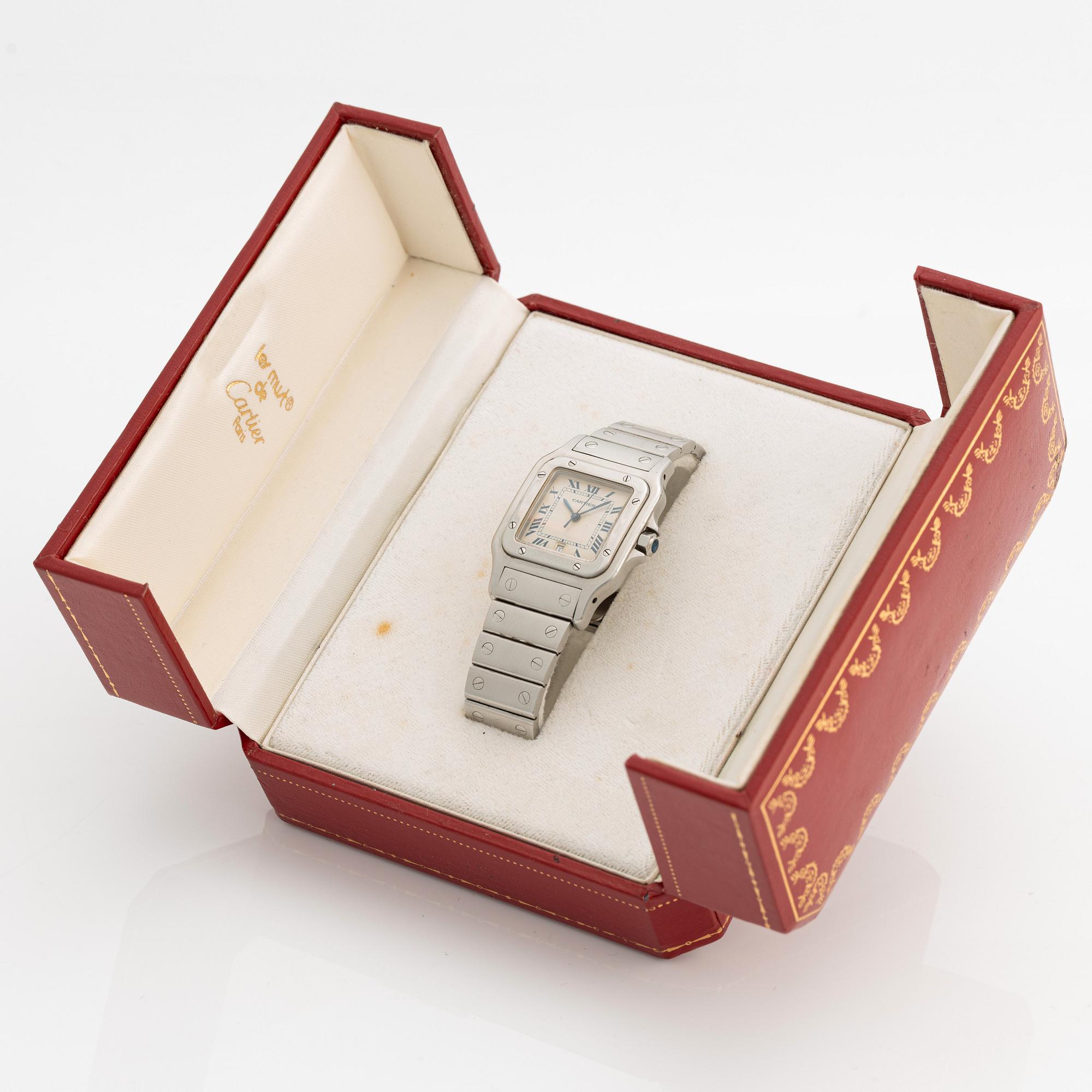
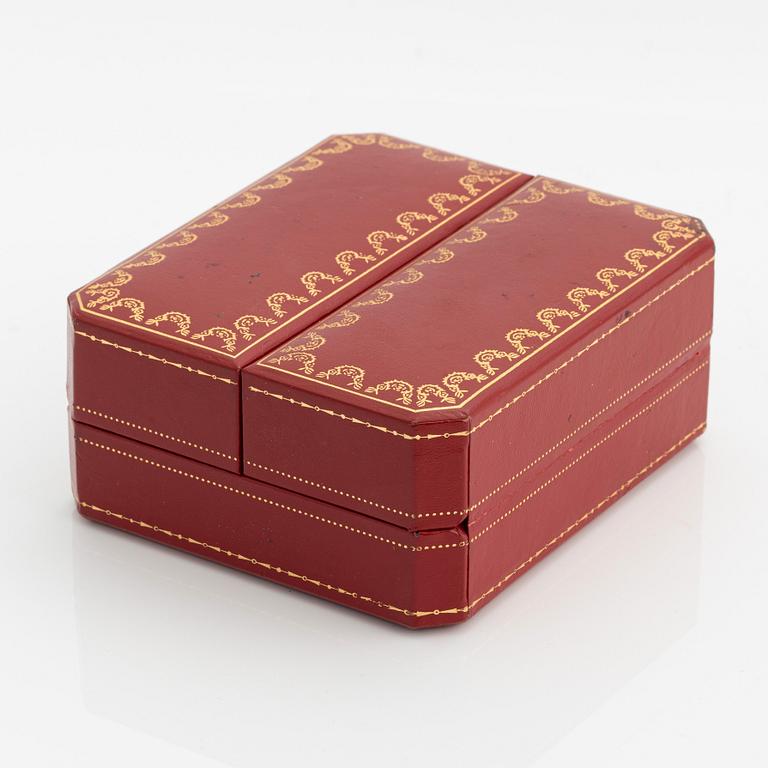
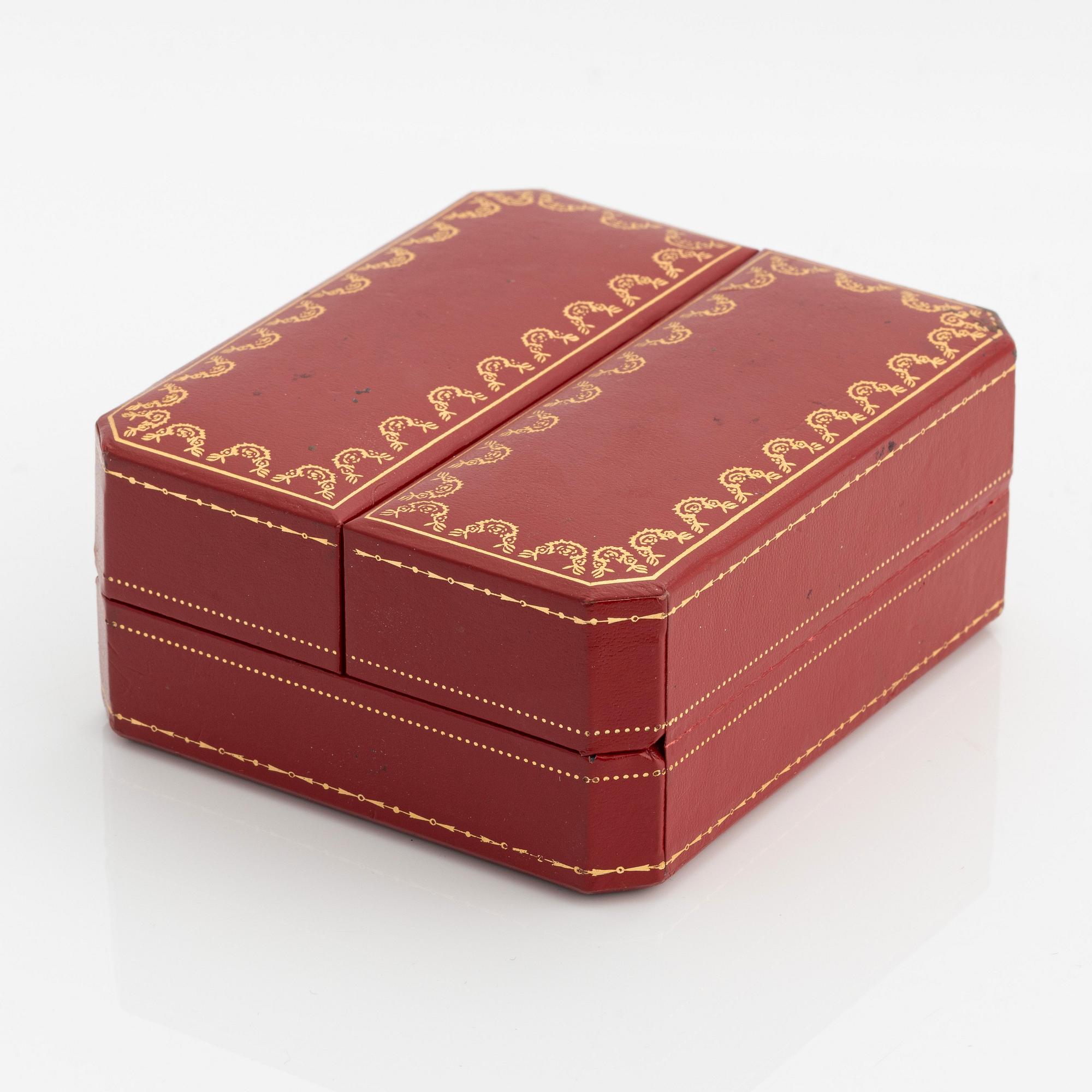
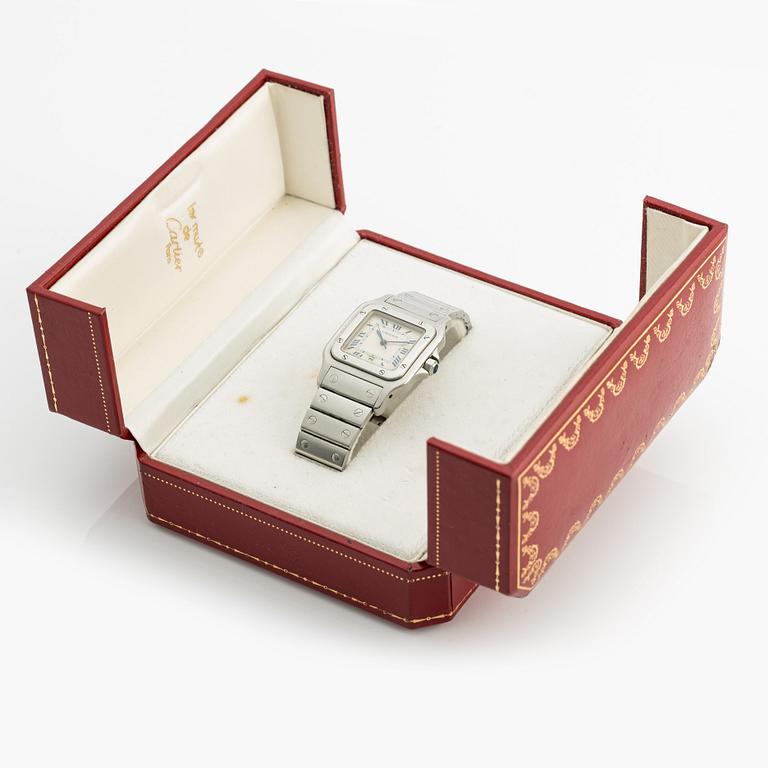
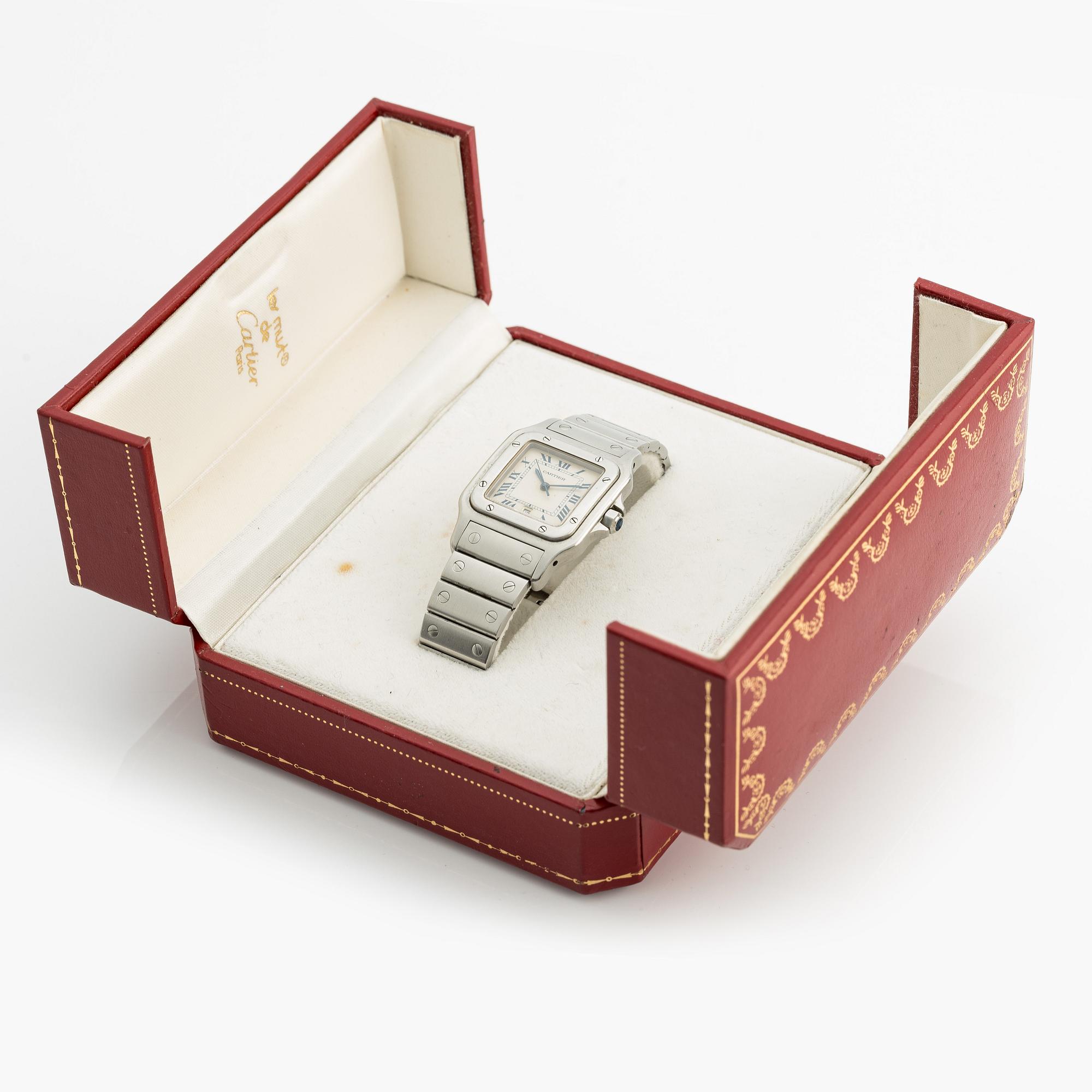
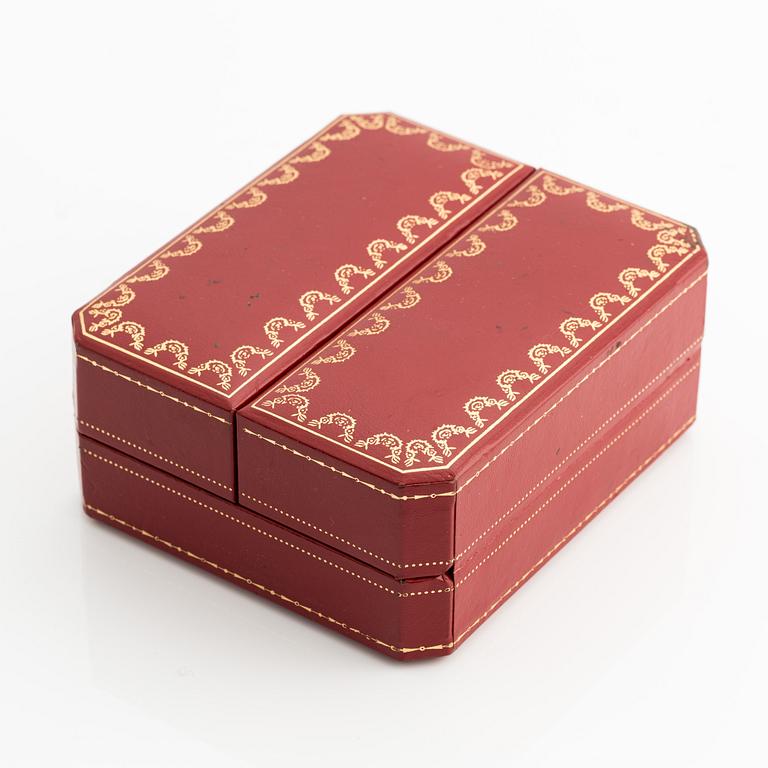
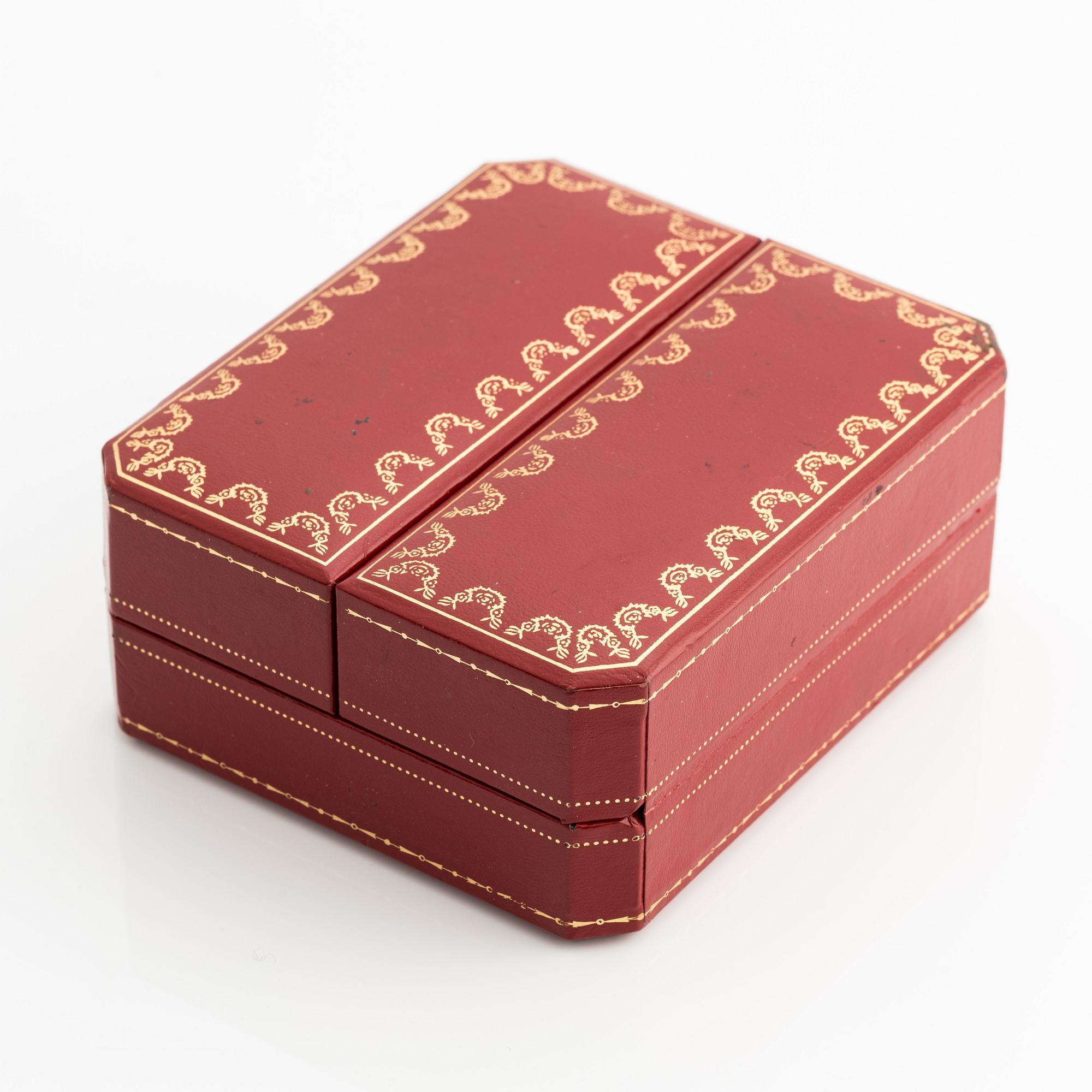
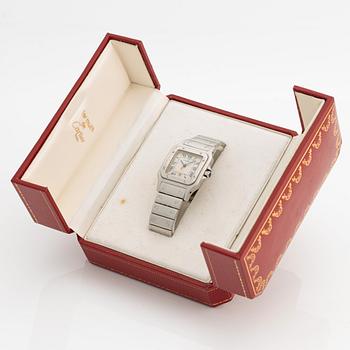
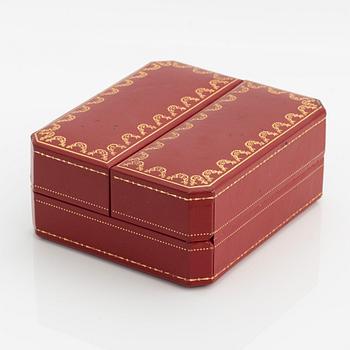
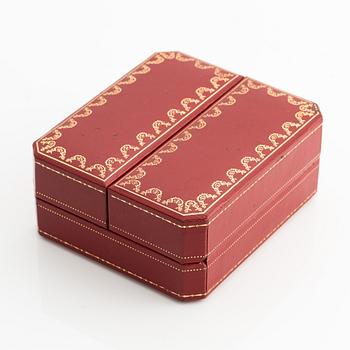
Accompanied by: box
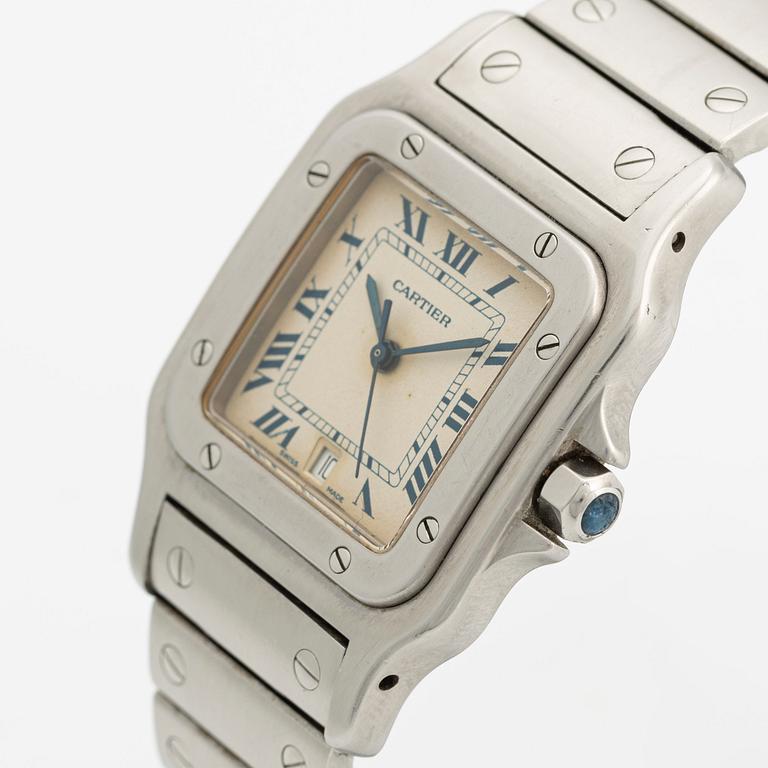
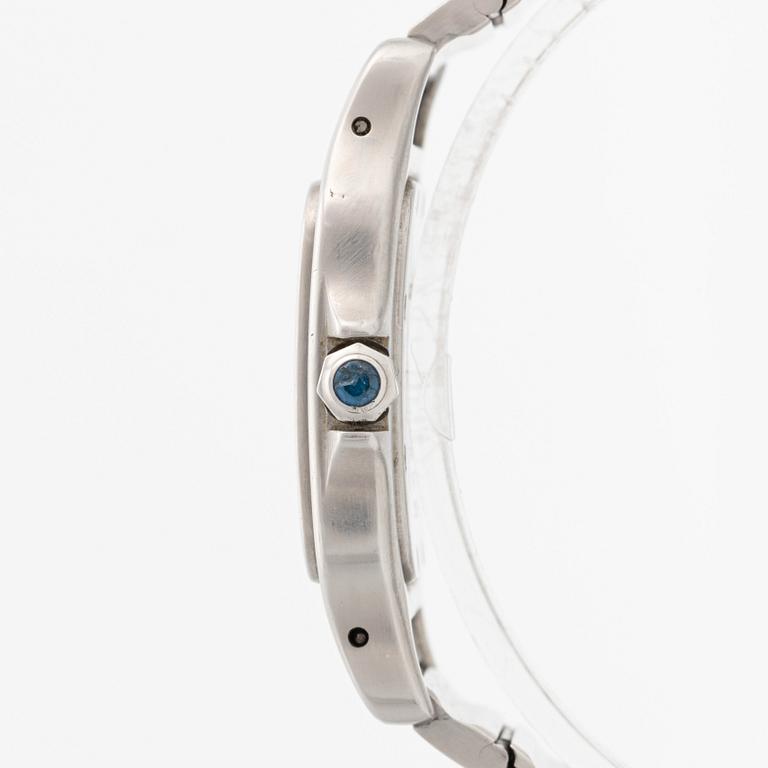
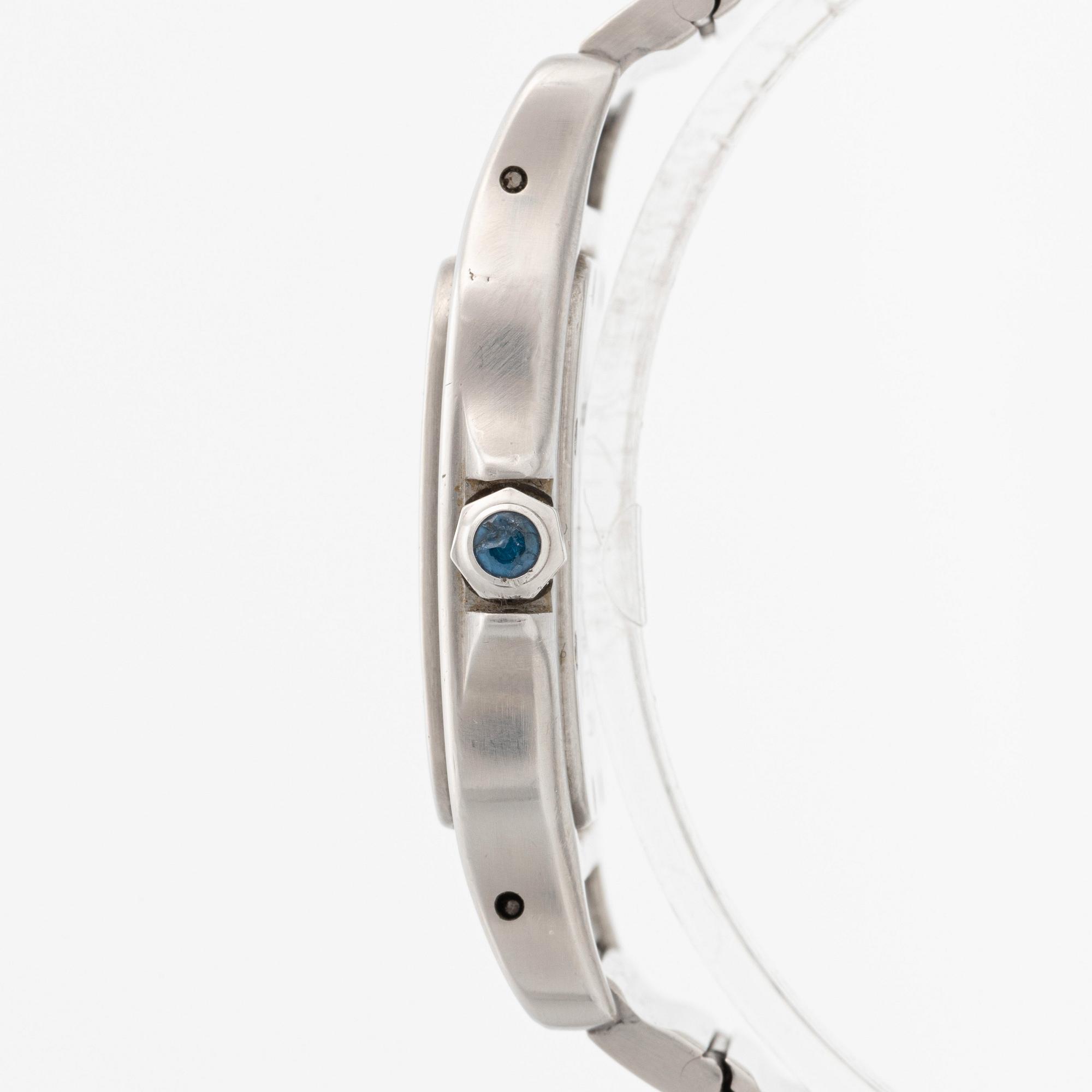
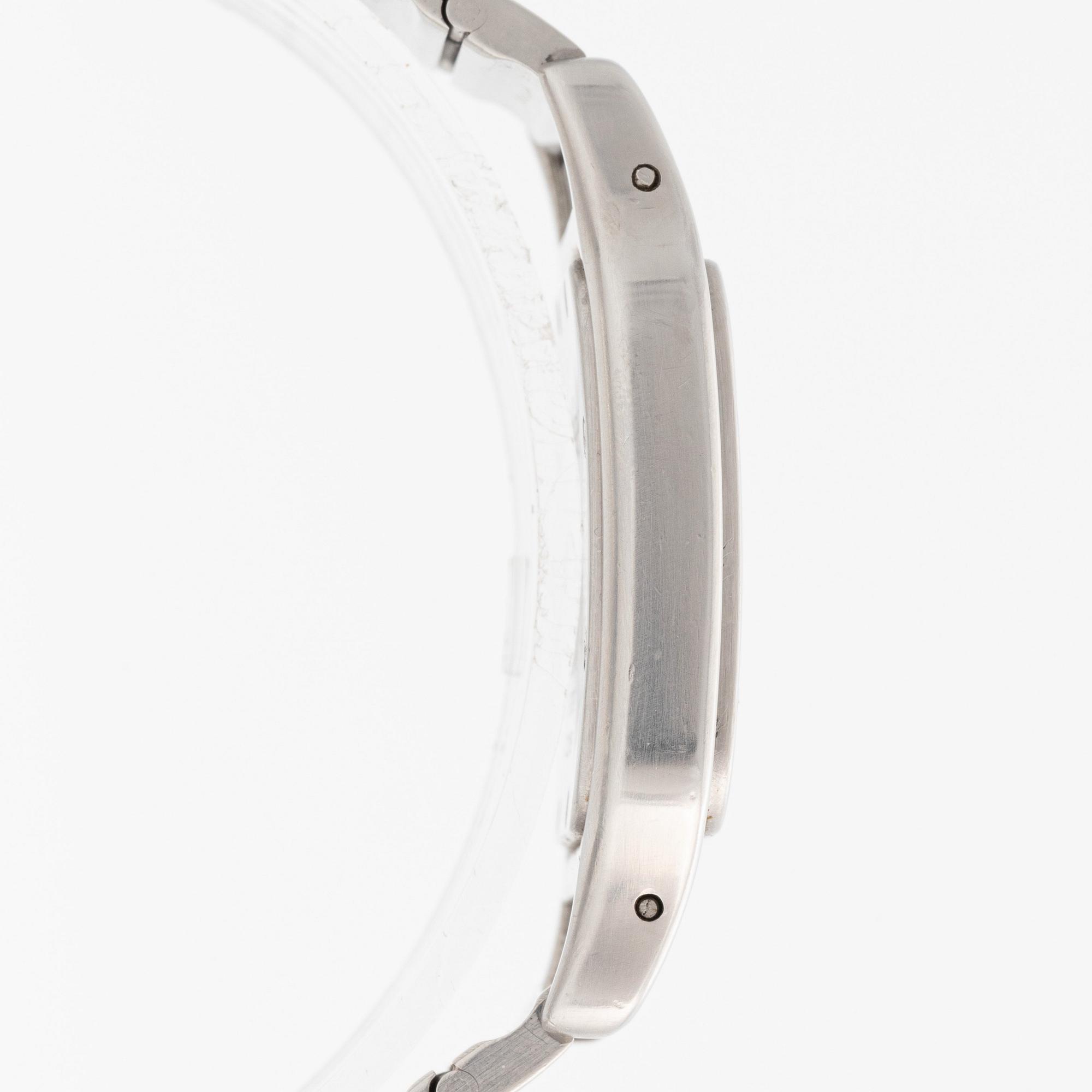
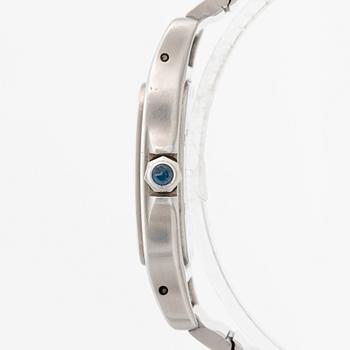
Wear due to age and use. Minor damaged synthetic sapphire in the crown. Dial with patina.
The movement is running at the time of cataloguing, Bukowskis does not guarantee the future function of the movement. Please note that the movement has not been tested for timekeeping accuracy and may need a service at the buyer's expense. Watches have been opened to examine movements therefore no warranties are made that the watches are water-resistant. Potential buyers should inspect each watch to satisfy themselves as to condition. For more information, please read our Conditions of Purchase.
Muut tiedot
The Cartier Santos, initially crafted for Brazilian aviator Alberto Santos-Dumont, was introduced in 1911 by Louis Cartier himself. The innovative design allowed Santos-Dumont to check the time while in the air without the need to operate a pocket watch manually. It is widely considered to be the first men's wristwatch and the first pilot's wristwatch, predating World War I and the subsequent shift from pocket watches to wristwatches.
Lisätietoja ja kuntoraportit

Tietoa ostamisesta





Muiden katsomia kohteita