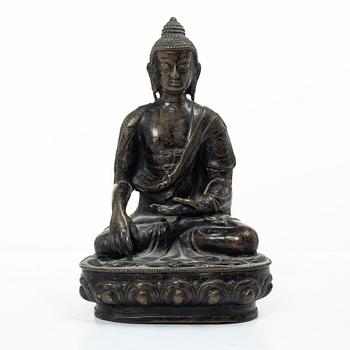
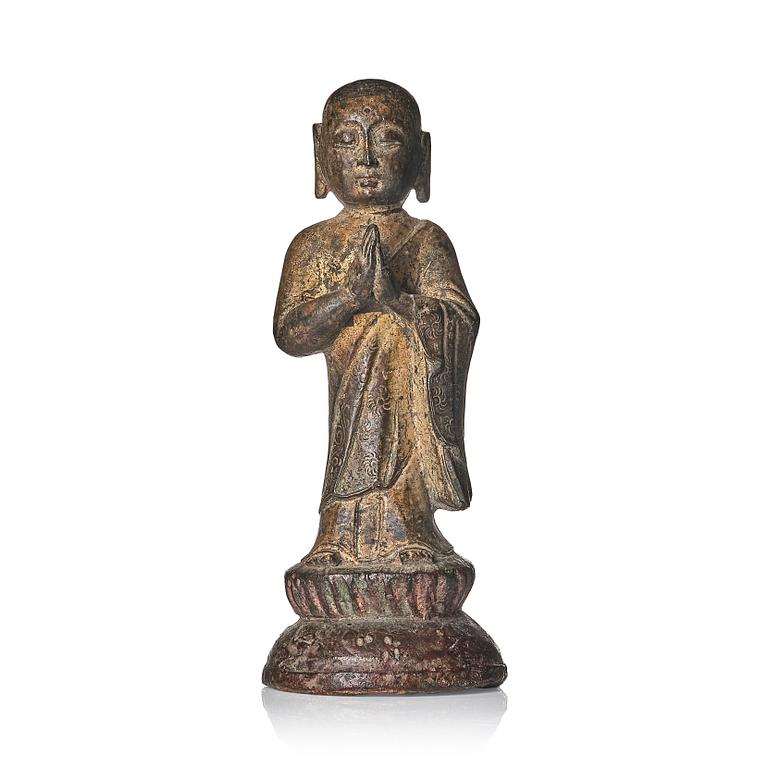
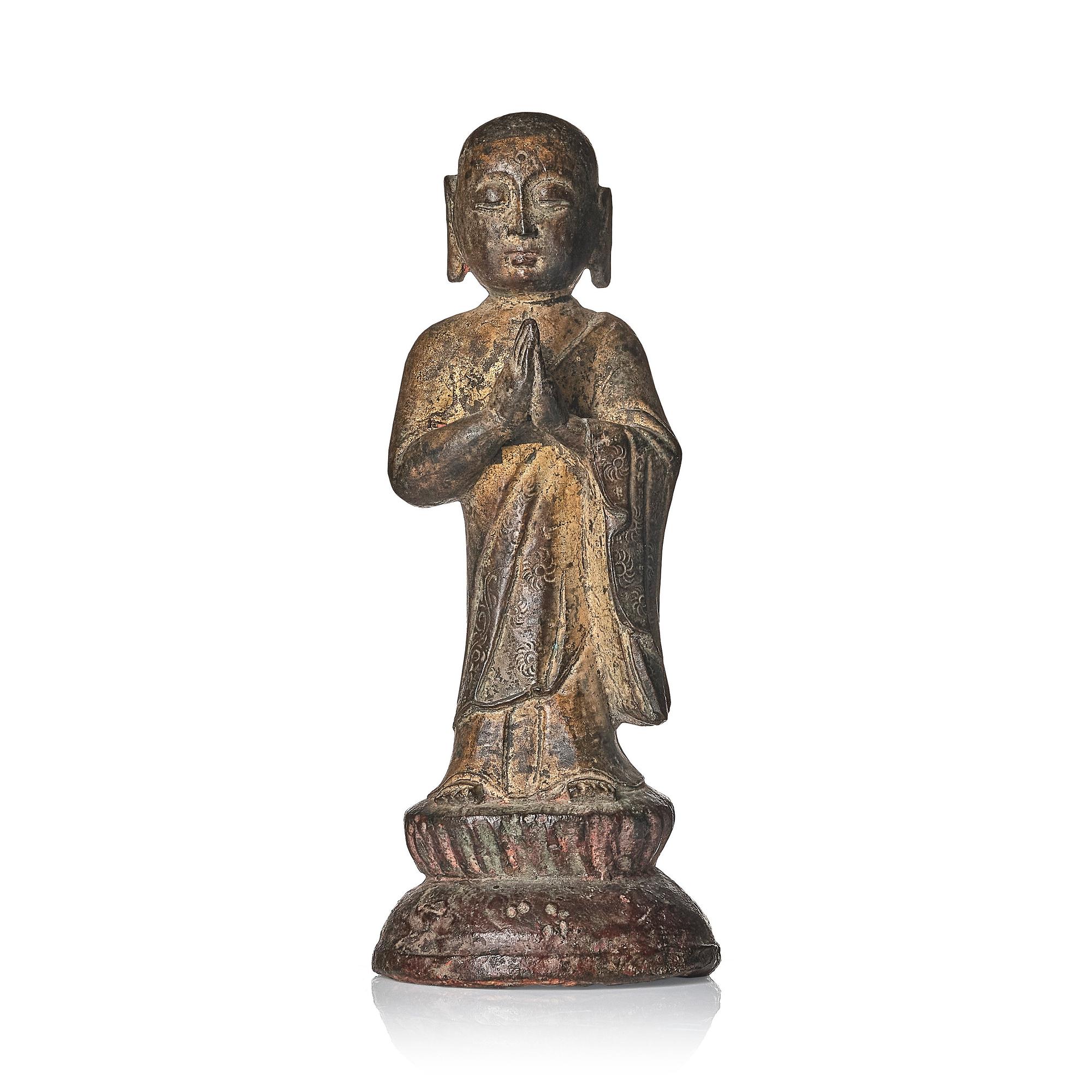
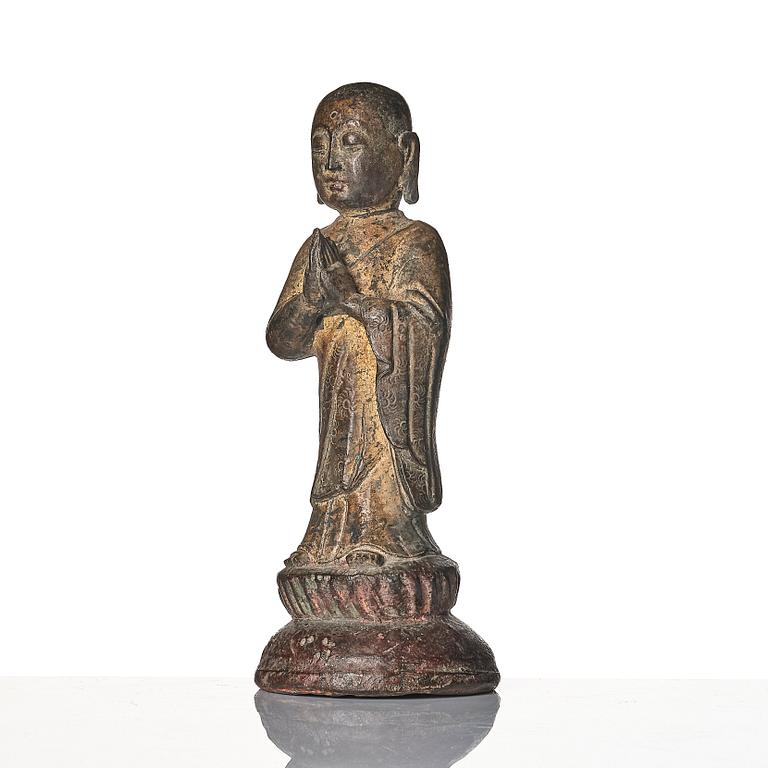
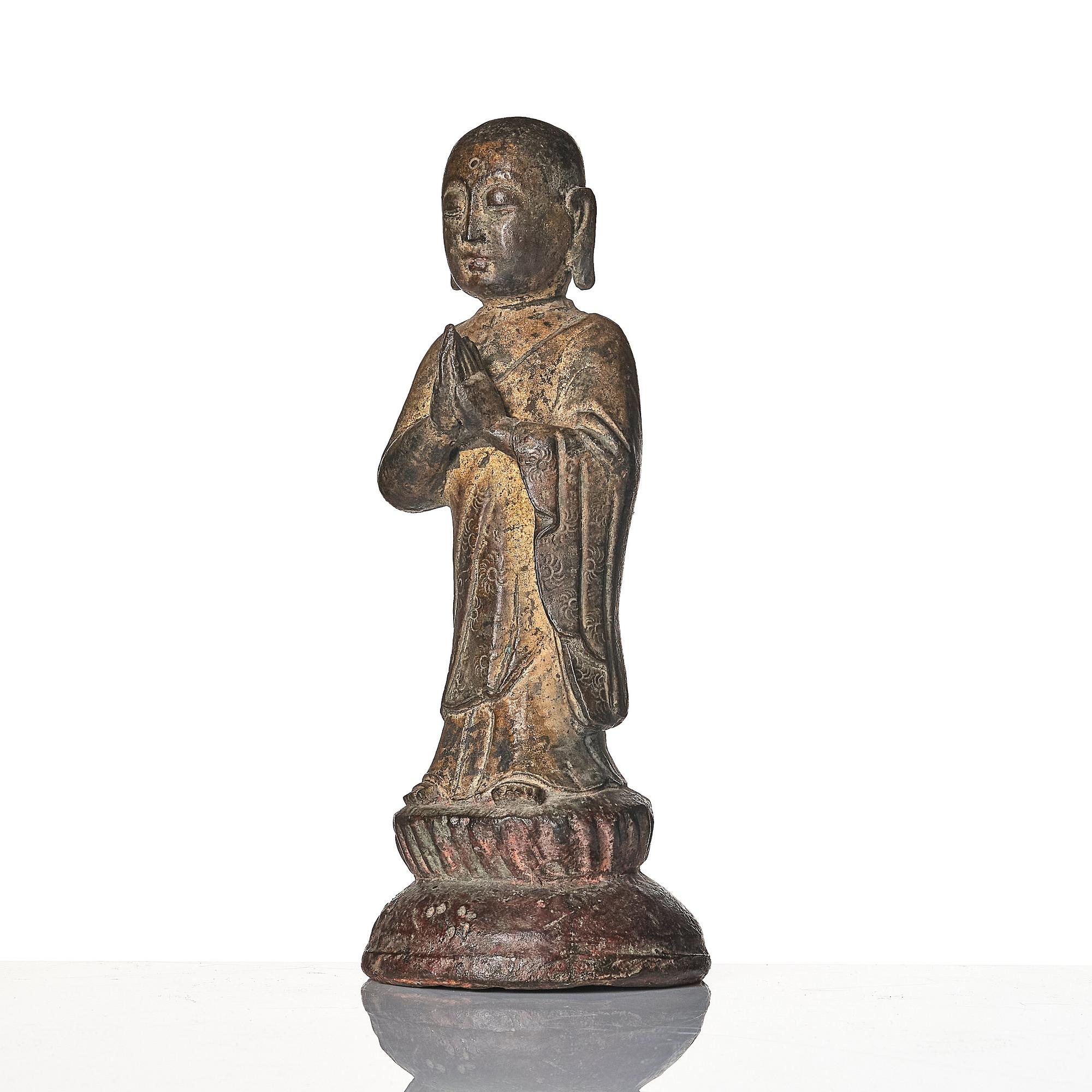
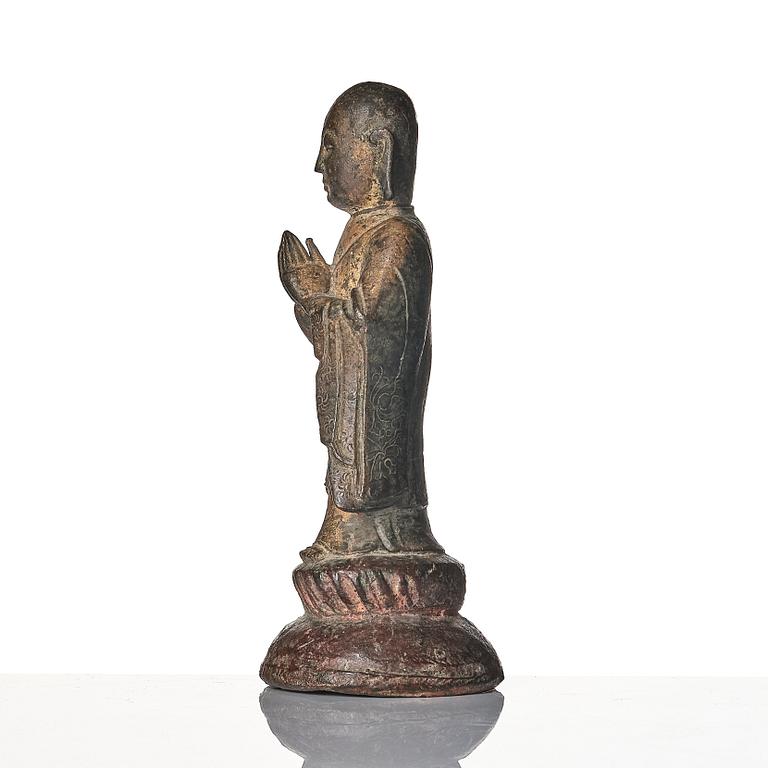
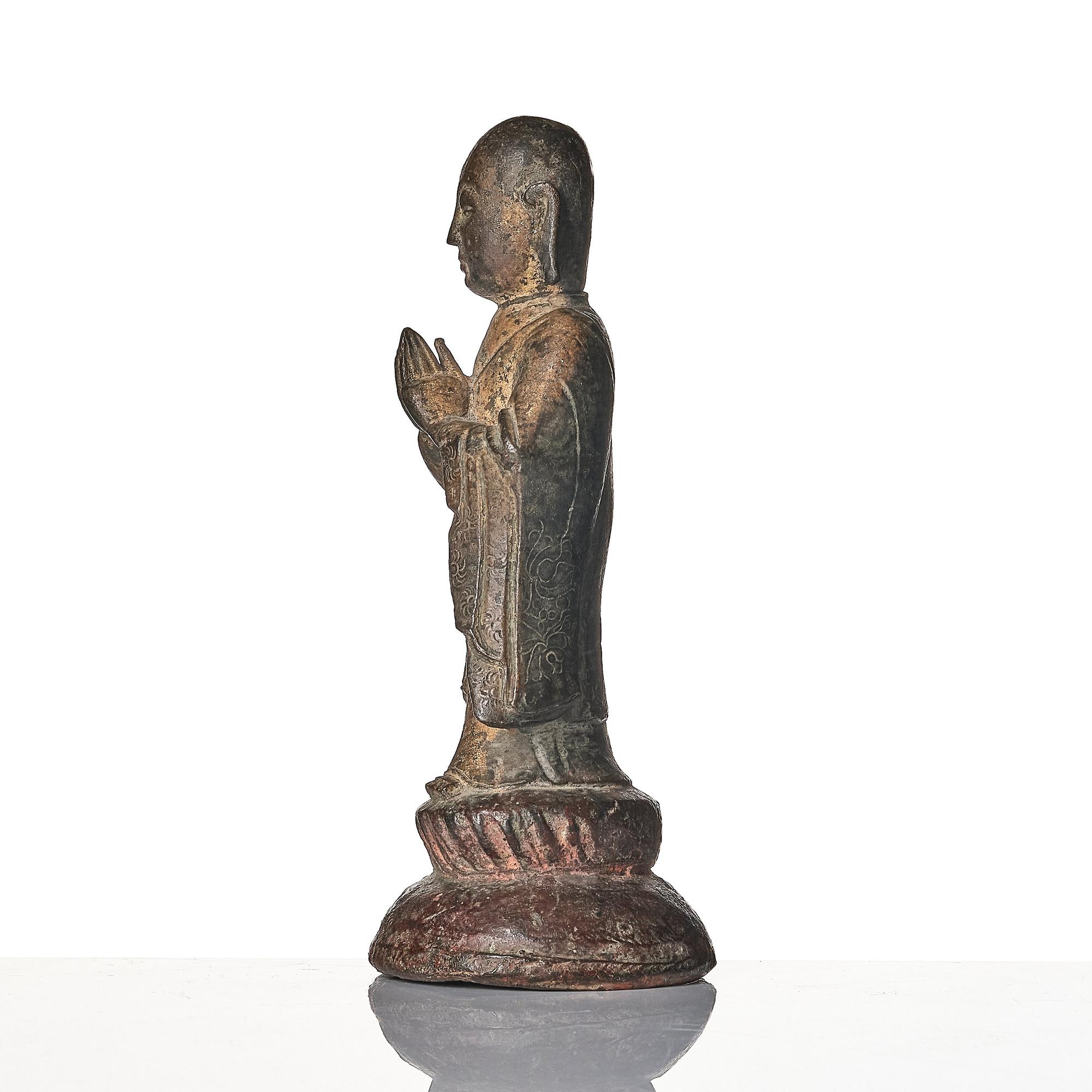
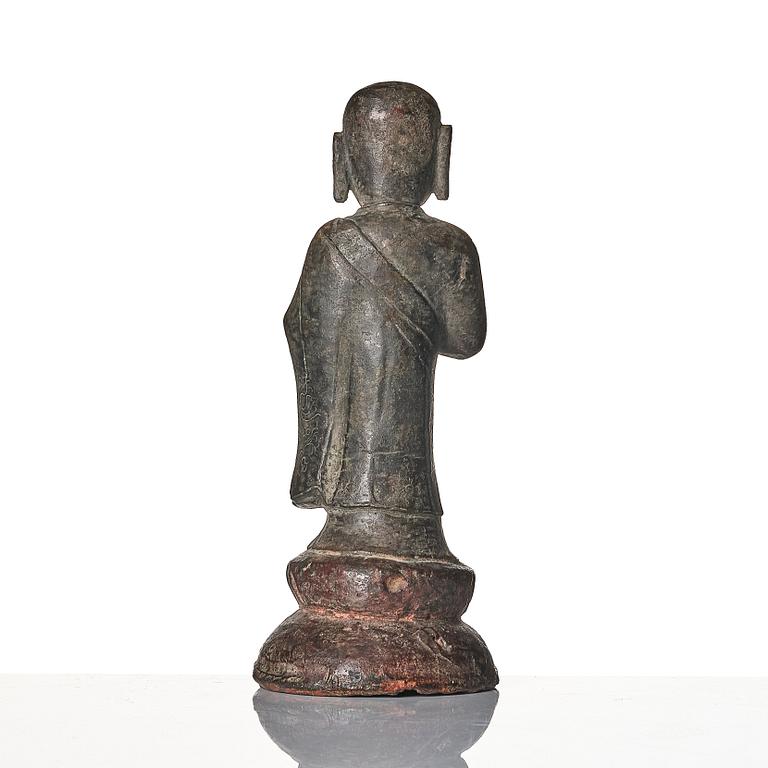
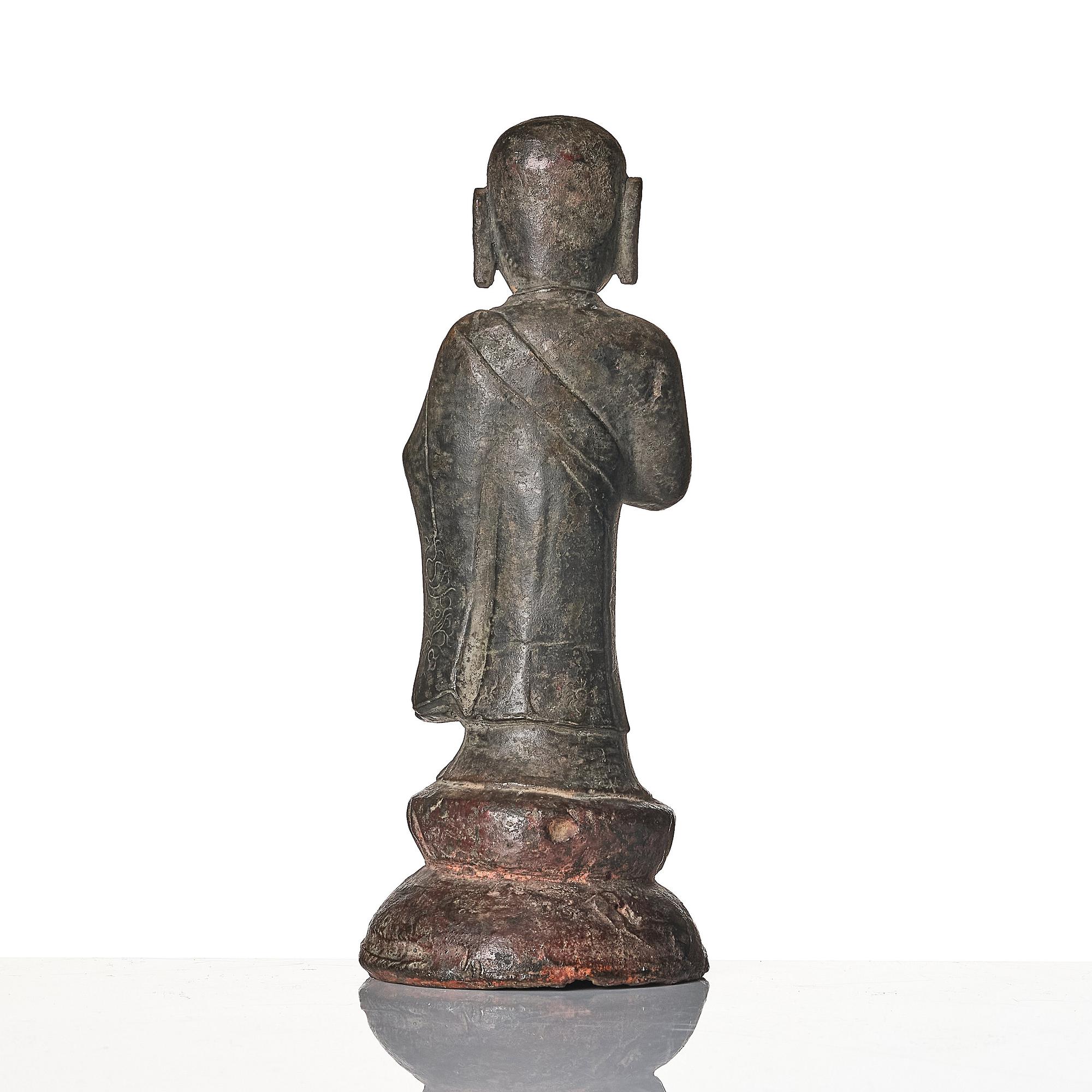
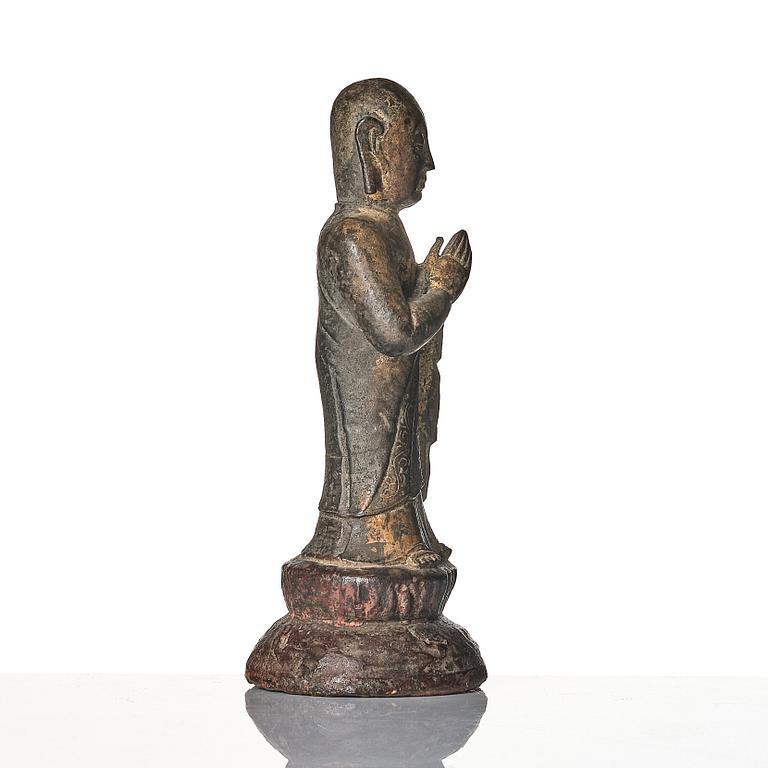
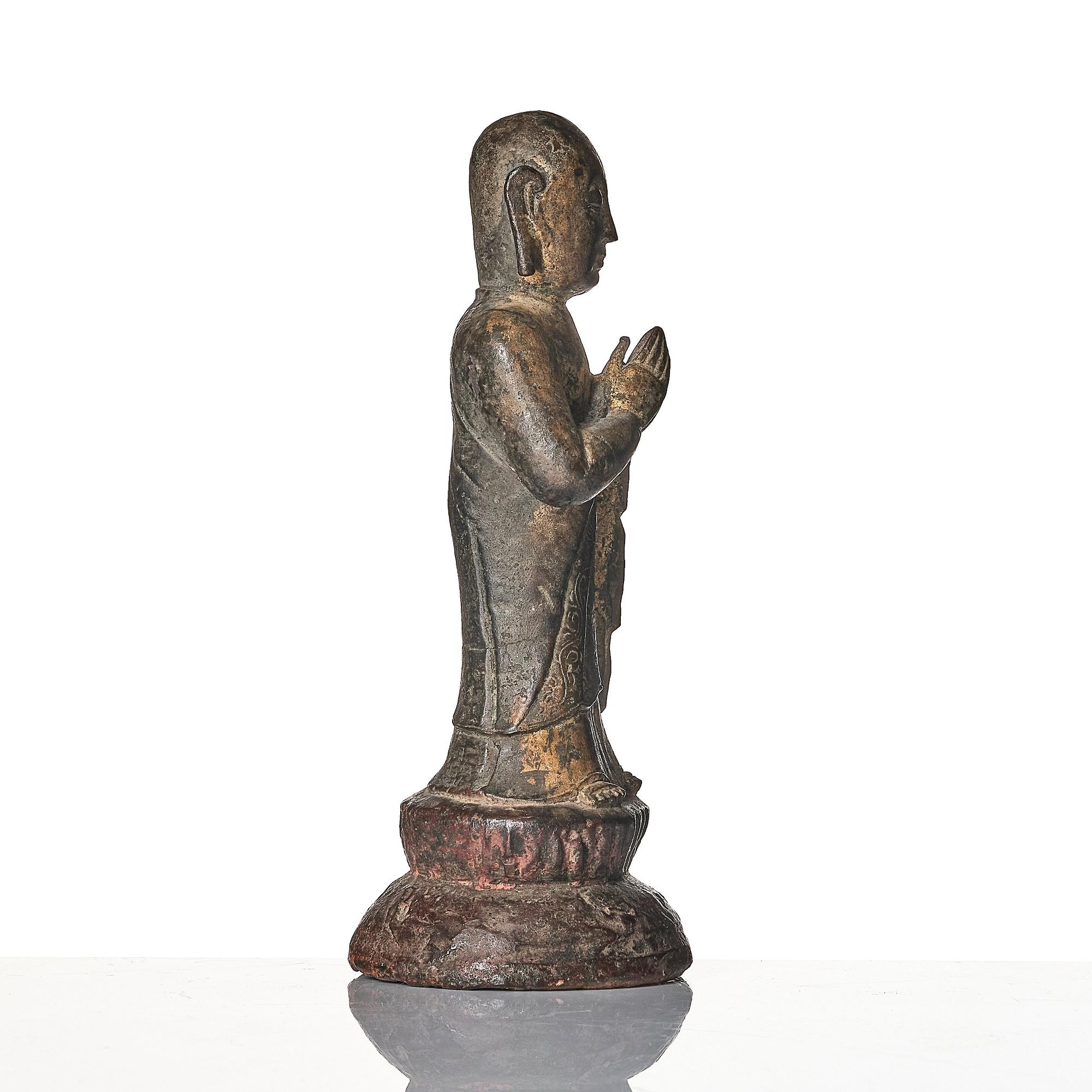
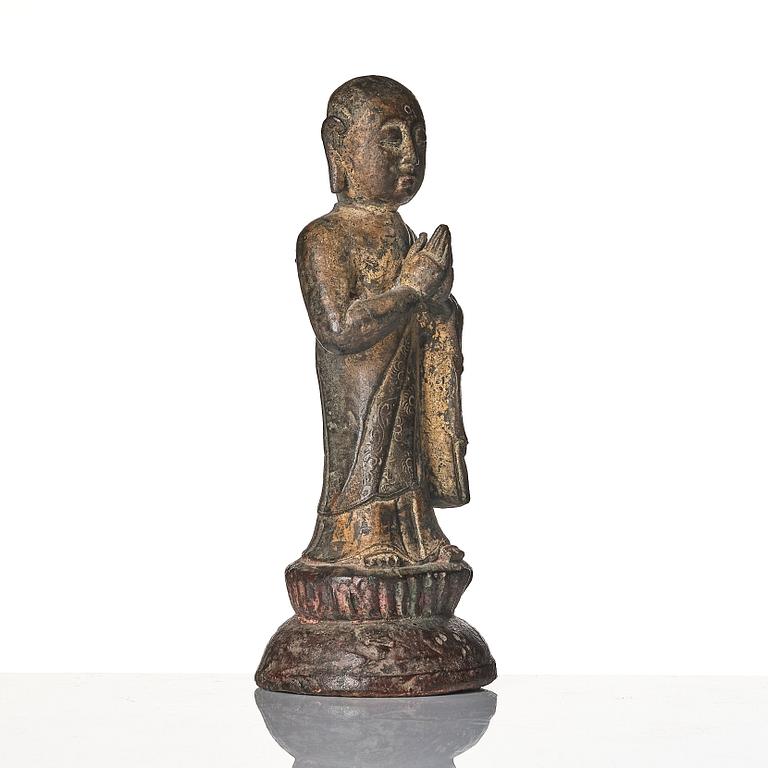
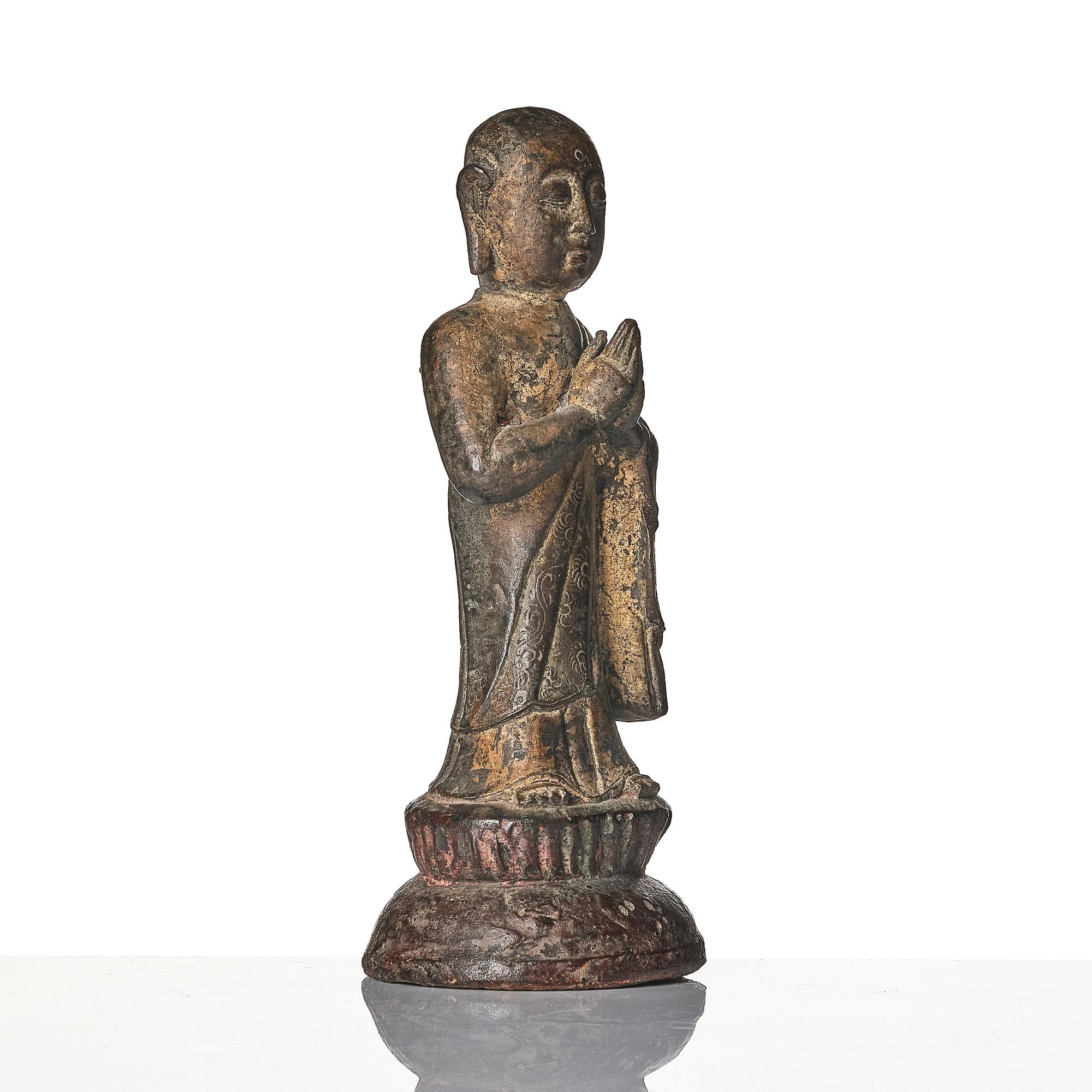
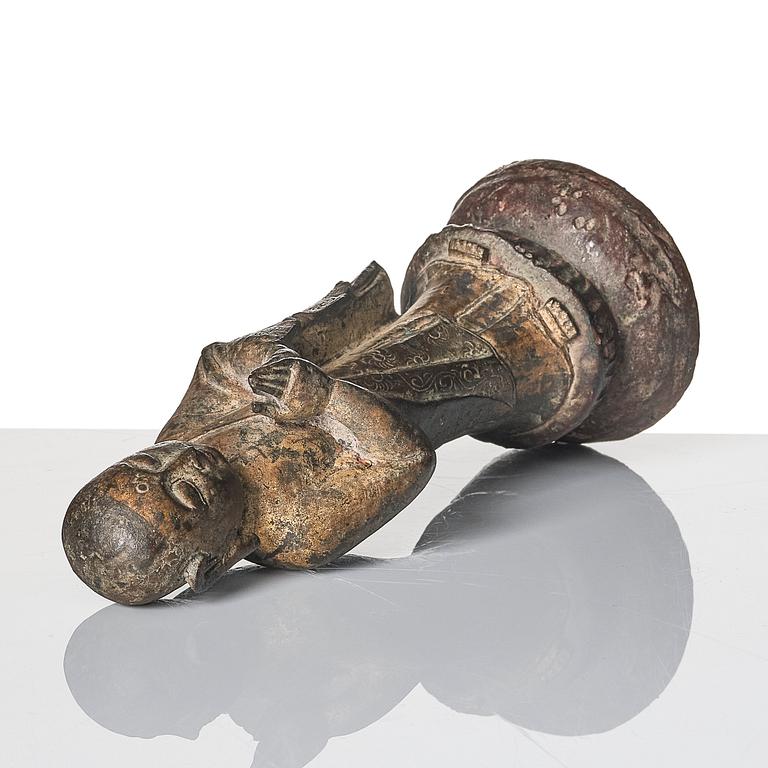
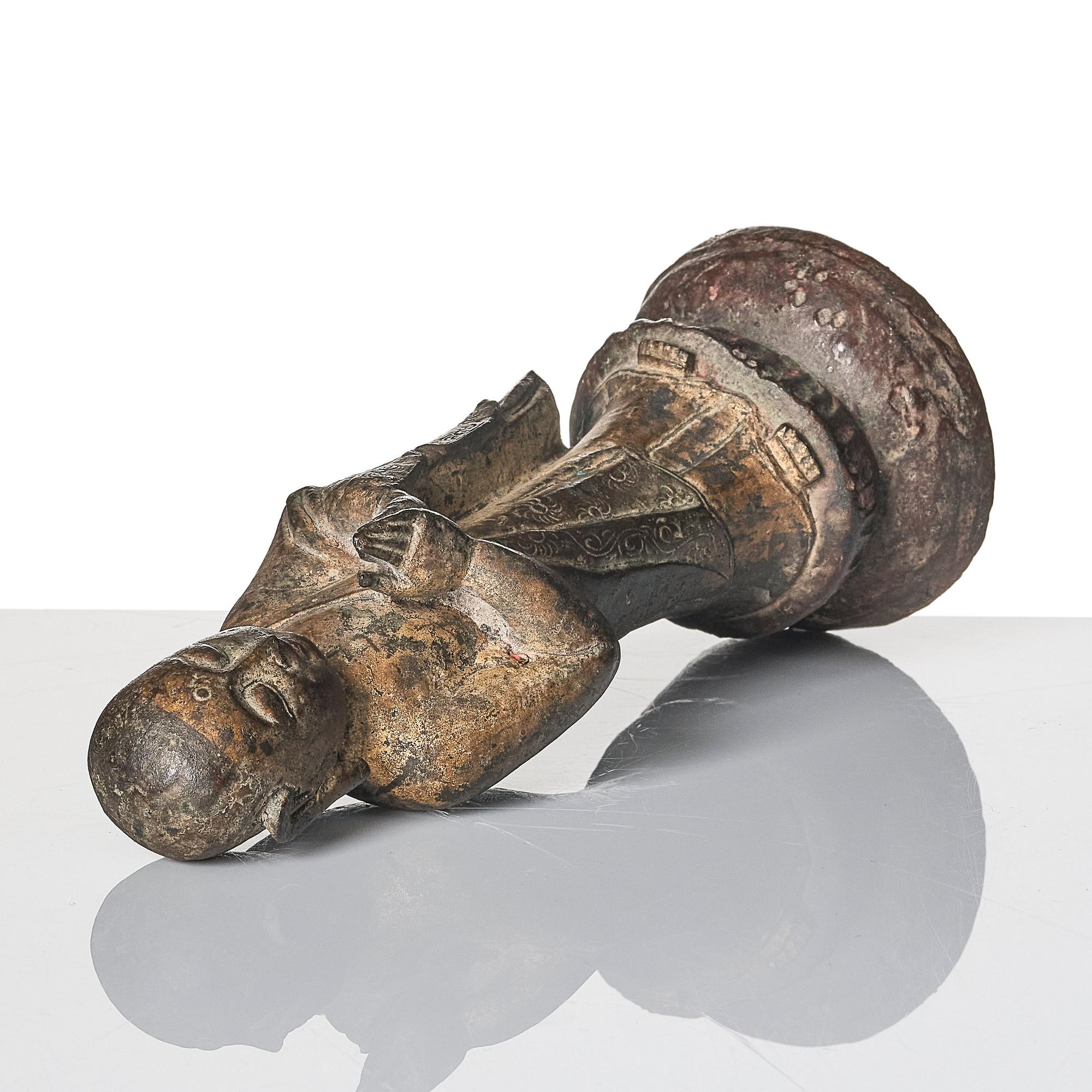
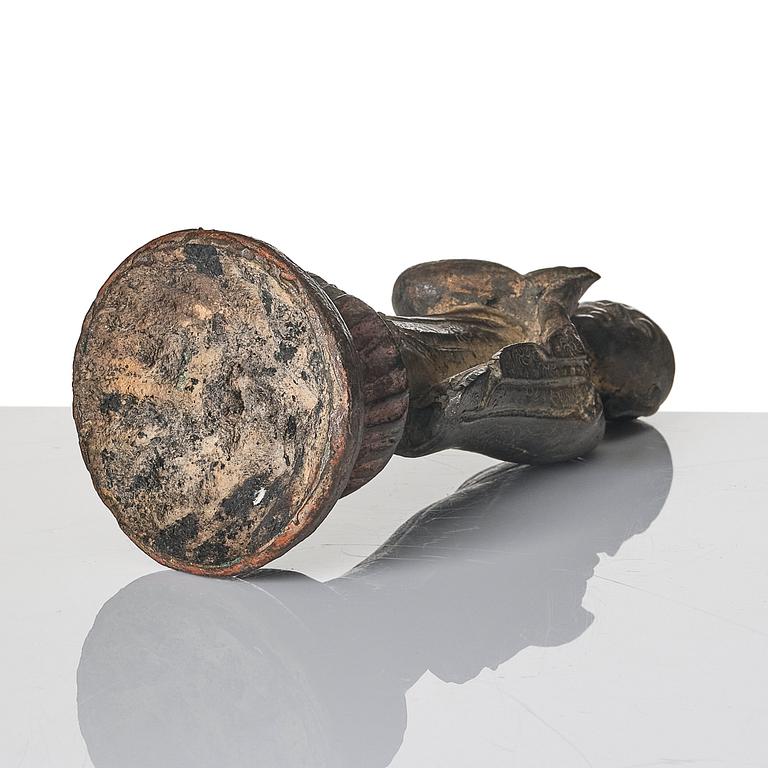
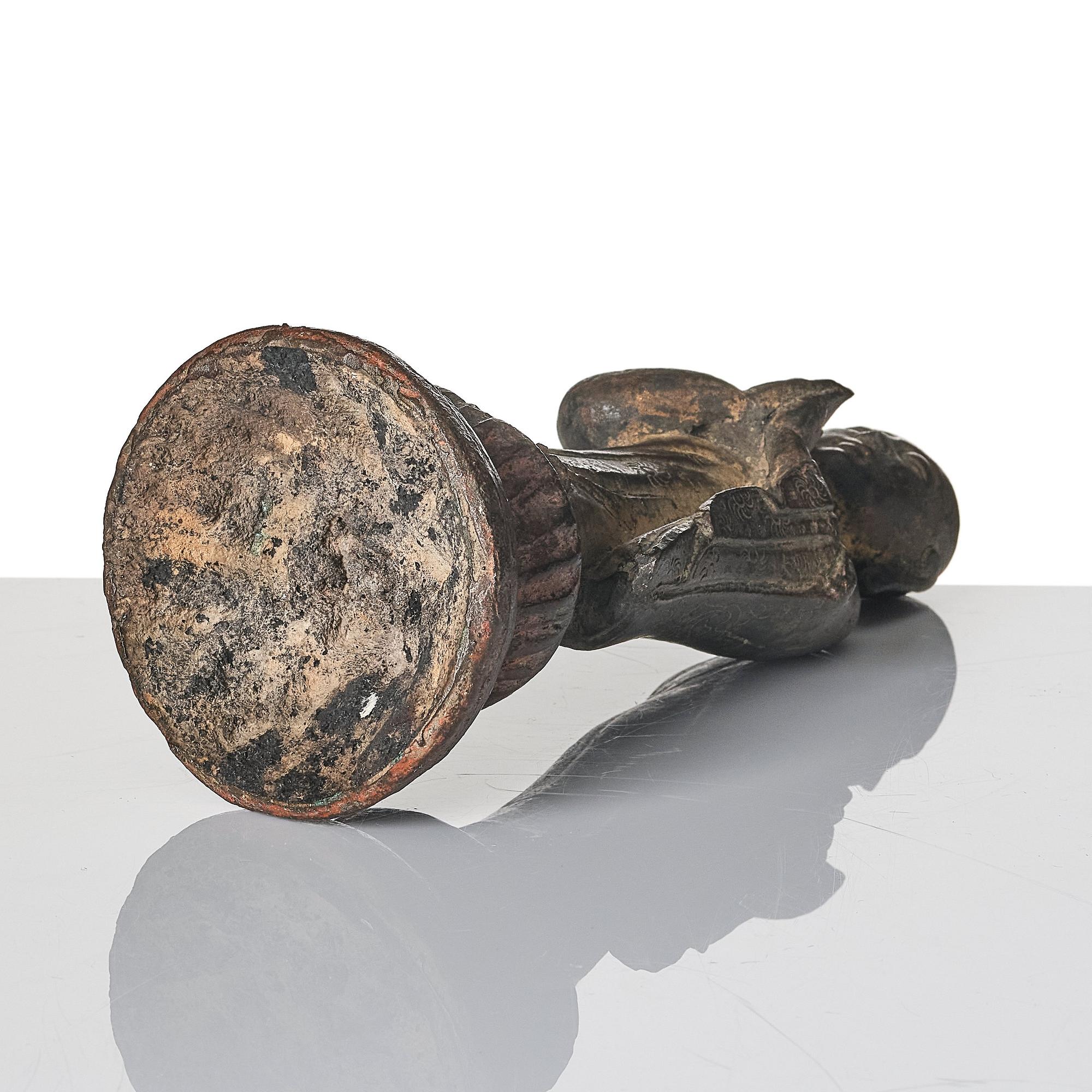
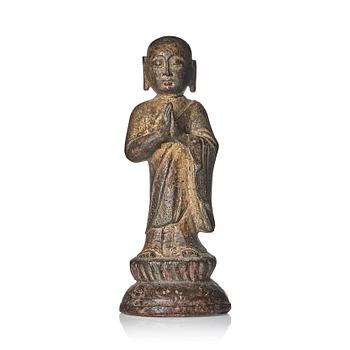
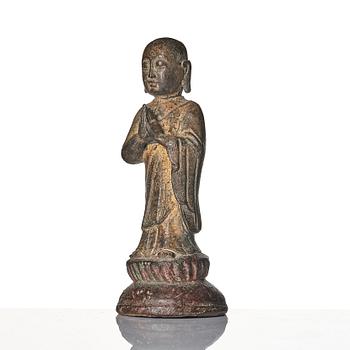
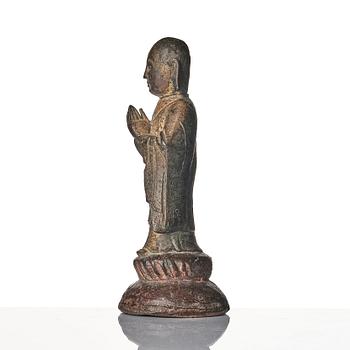
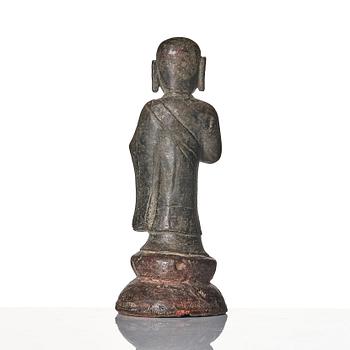
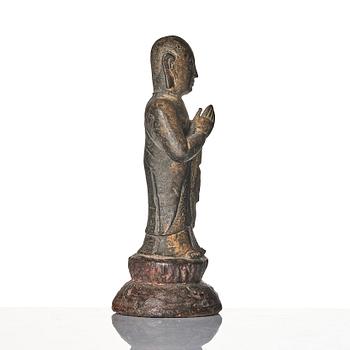
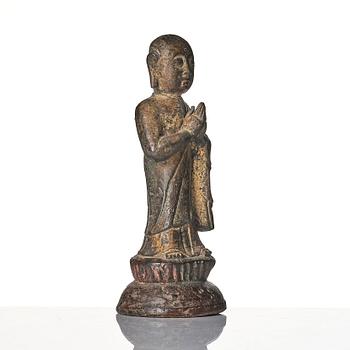
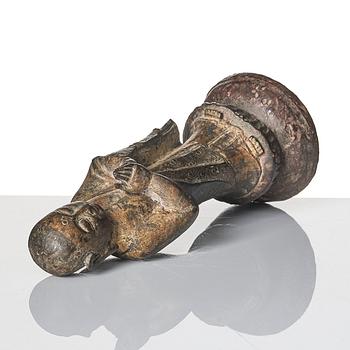
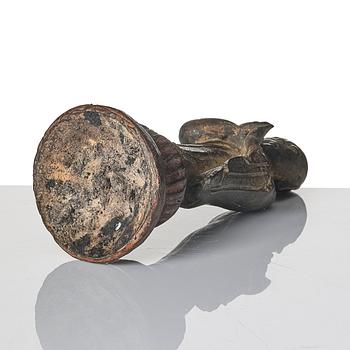
The arhat is cast with a contemplative expression on his face and a raised urna on the forehead flanked by long pendulous ears, heavily modelled standing on a stylized pedestal with both hands joined in prayer, wearing a long flowing robe with floral hems. Gilded and lacquered. Height 21.5 cm.
Wear.
Alkuperä - Provenienssi
Property of a private Swedish Collector.
Kirjallisuus
A. Howard, Chinese Sculpture, New Haven, 2006, p.238, fig.3.39. In the Chan Buddhist tradition, prior to the seventh century, luohans were generally represented as a pair flanking an image of Buddha, usually identified as Kasyapa, like the present figure, and Ananda, and were both two of the ten principle disciples of Buddha and important figures in the early Buddhist monkhood sangha. In these depictions, the figures were usually represented with foreign Indian features. In China, the pair are often portrayed standing on either side of the Buddha in China, namely, Ananda standing to Buddha's right whilst Kasyapa to the left, from at least the Northern Wei dynasty (386-535) and throughout the Sui, Tang, Liao, Song and Ming periods; see, for example, the triad formed by Ananda and Kasyapa flanking the Buddha in the Central Binyang Cave at Longmen, Shanxi.
Muut tiedot
A luohan ('arhat' in Sanskrit) is a disciple of Buddha who has attained Enlightenment and has achieved the status of the perfected being, but chooses to postpone his accession to Nirvana to remain in the world and aid all sentient beings. The luohan achieves enlightenment through instruction rather than his own insight and meditation, and as a result, ranks below the bodhisattva. The term luohan, means 'worthy' or 'venerable' and refers to the Buddha's original disciples, and by extension, to any holy figure who upheld and defended the Buddhist dharma. Originally only four, their numbers increased to sixteen, then eighteen and ultimately to five hundred.
Ananda was a first cousin of Gautama Buddha and one of his ten principal disciples. Amongst the Buddha's many disciples, Ananda stood out for having the most retentive memory. He was also praised by the Buddha for his erudition and compassion. He is therefore also known as the Guardian of the Dharma, as most of the sutras of the 'Sutta Pitaka', or 'Pali Canon', are attributed to his recollection of the Buddha's teachings during the First Buddhist Council. He is often portrayed alongside Mahakasyapa, flanking Buddha on both sides.
Lisätietoja ja kuntoraportit

Tietoa ostamisesta
Muiden katsomia kohteita