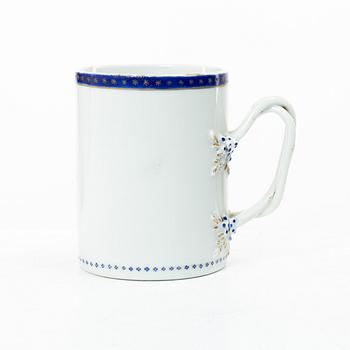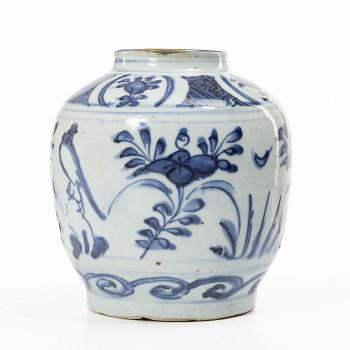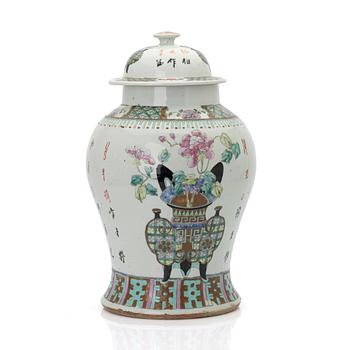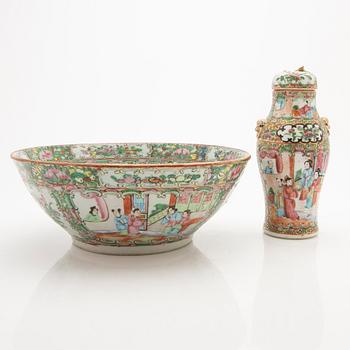
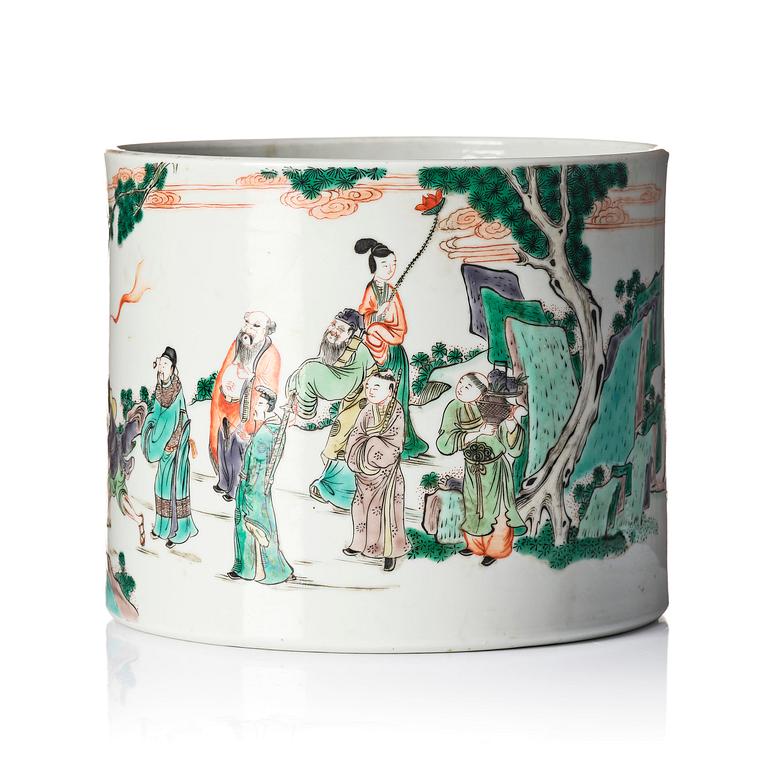
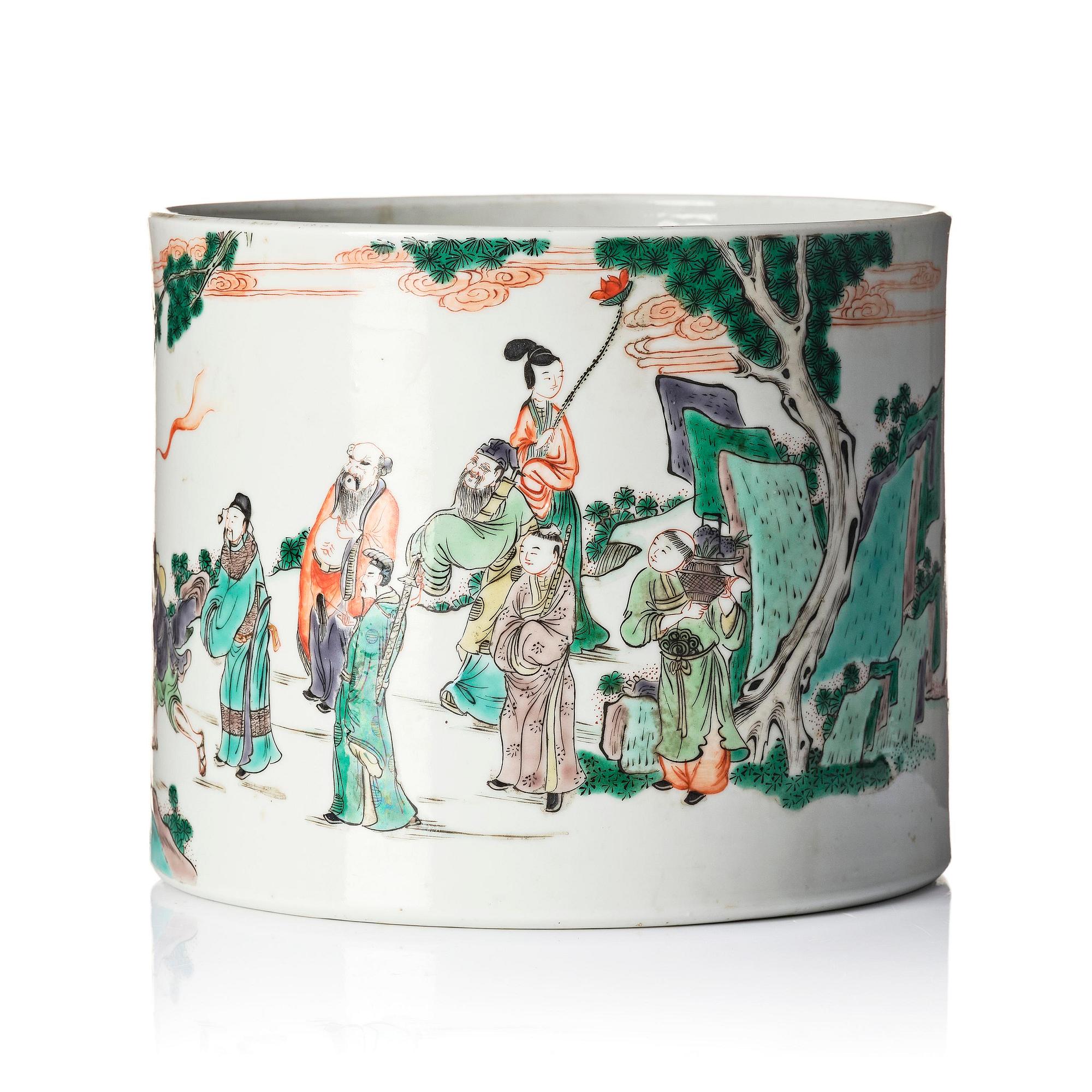
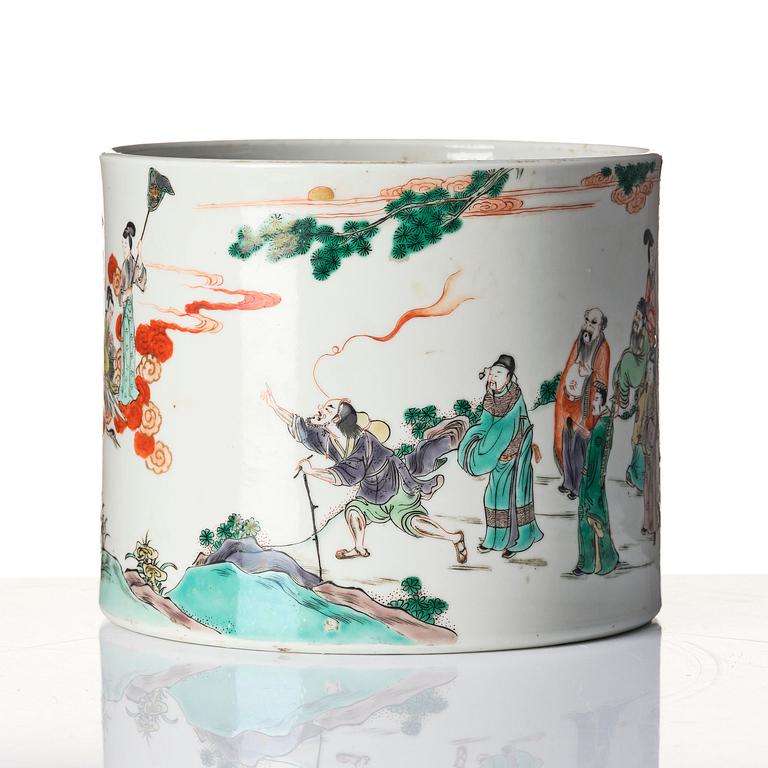
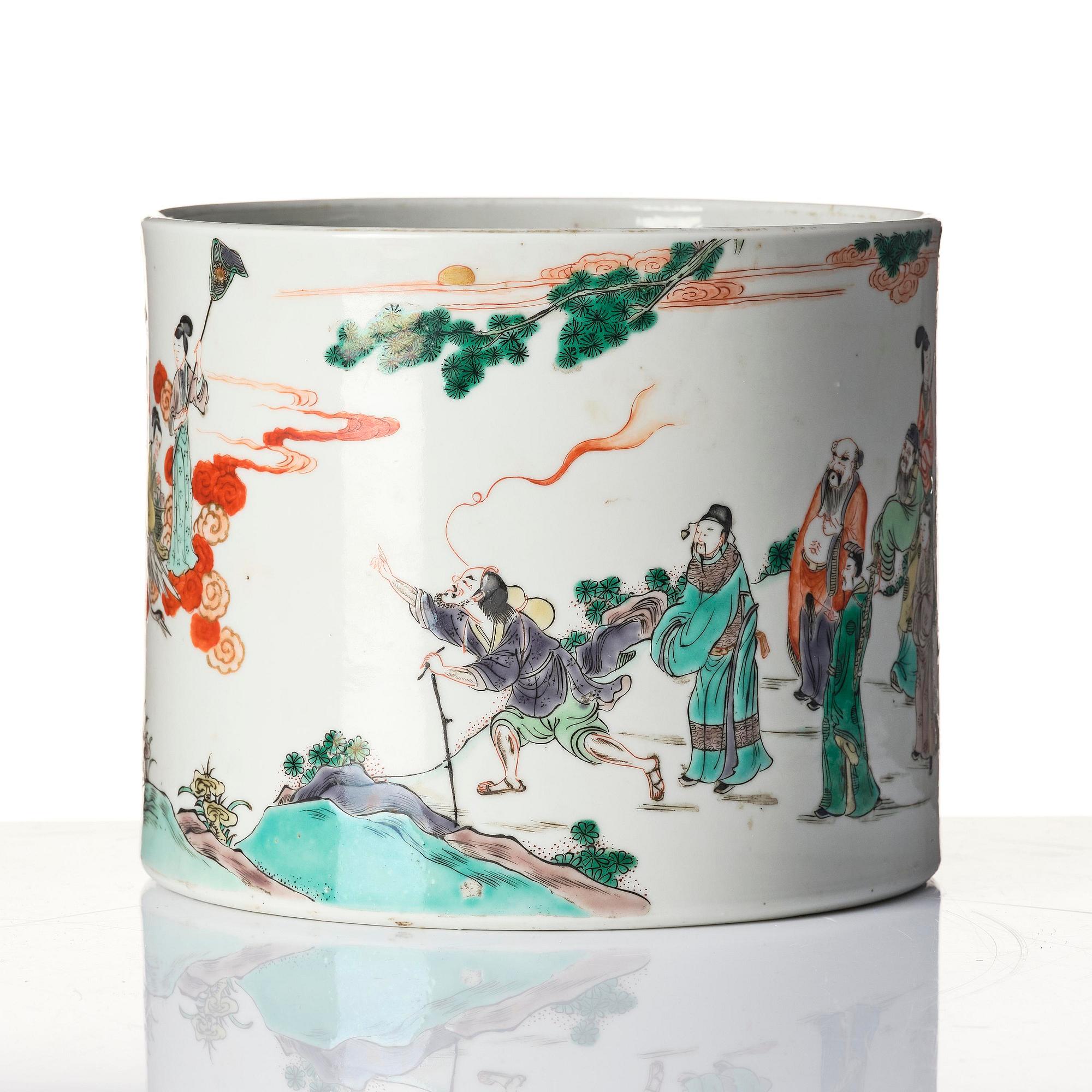
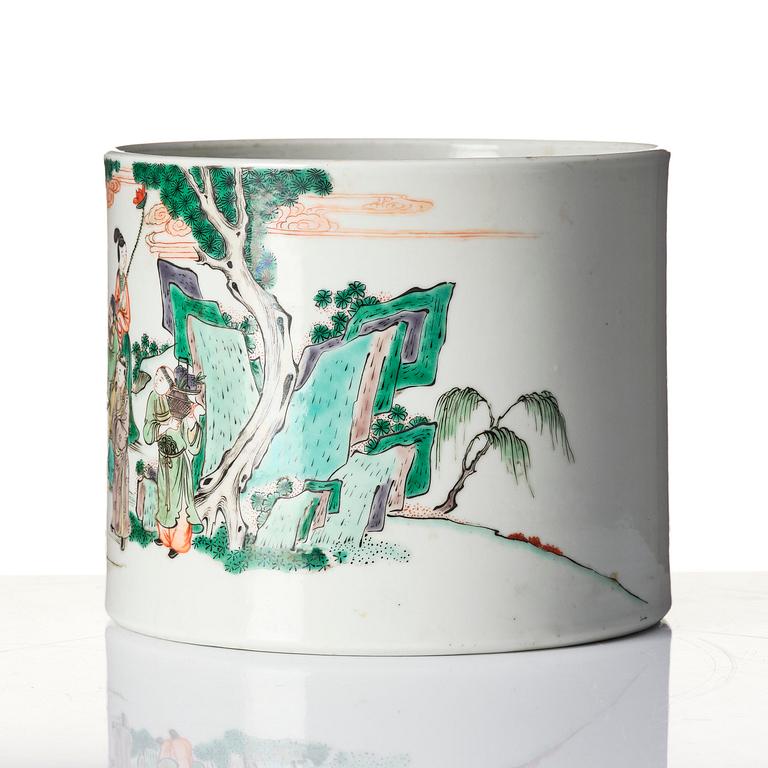
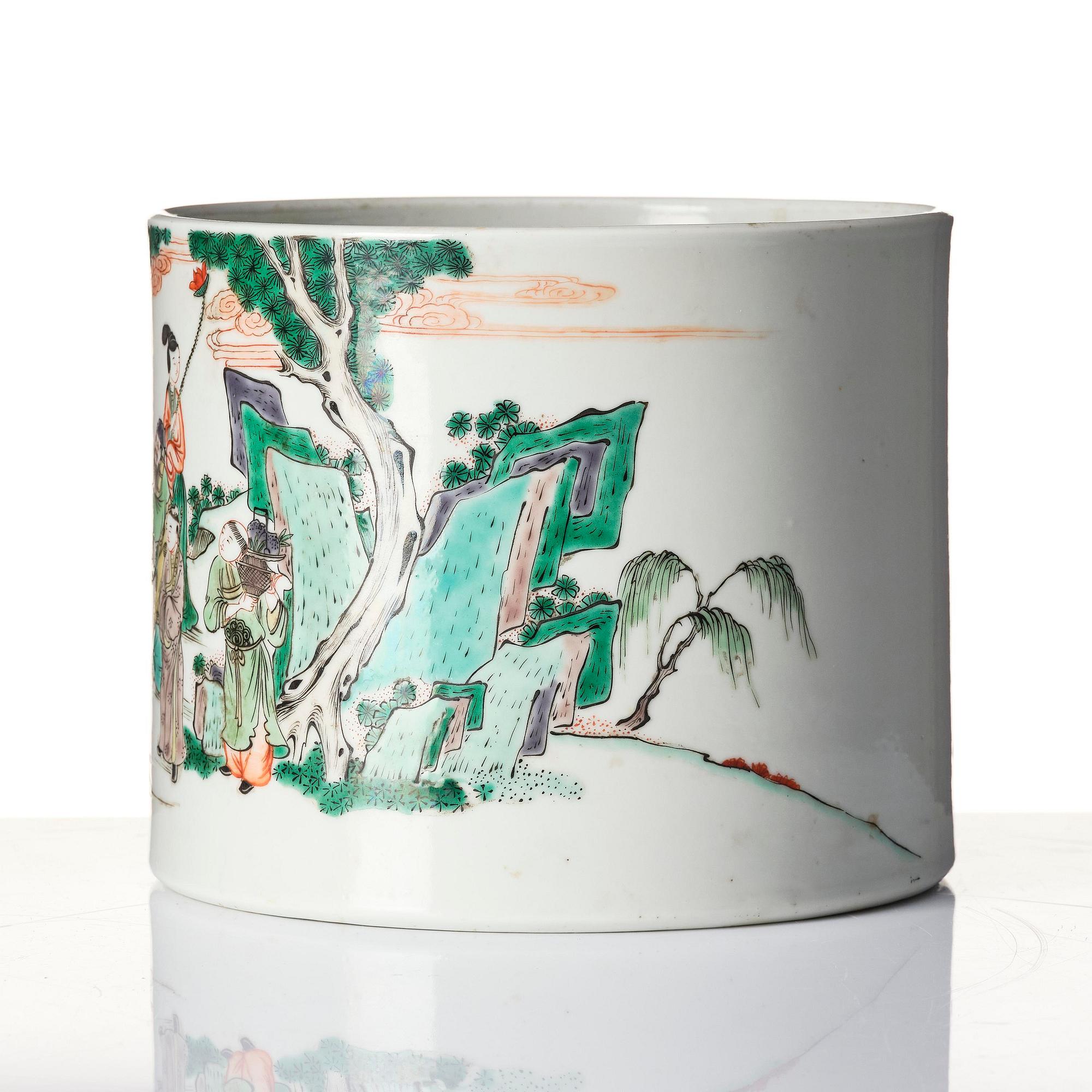
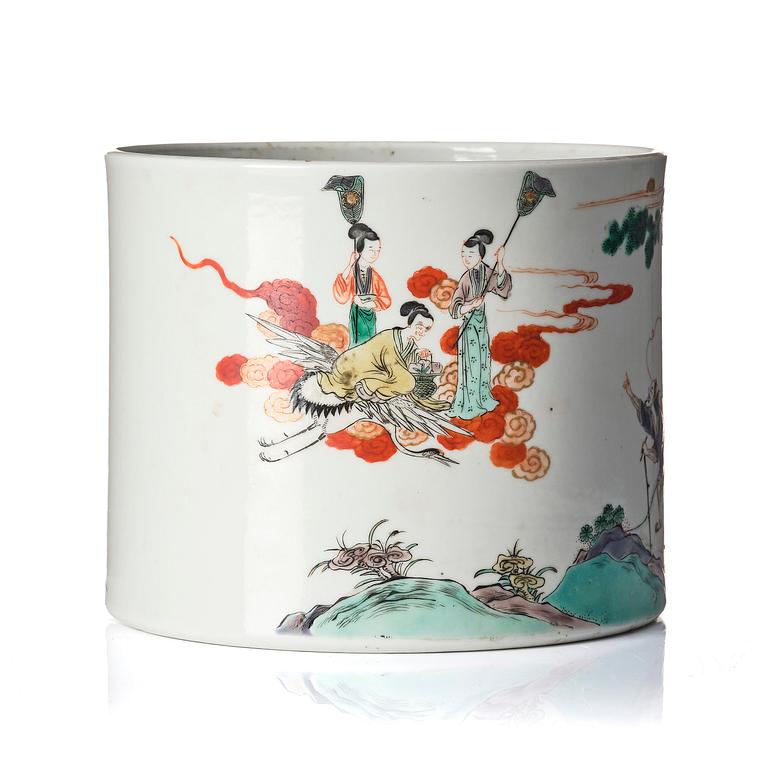
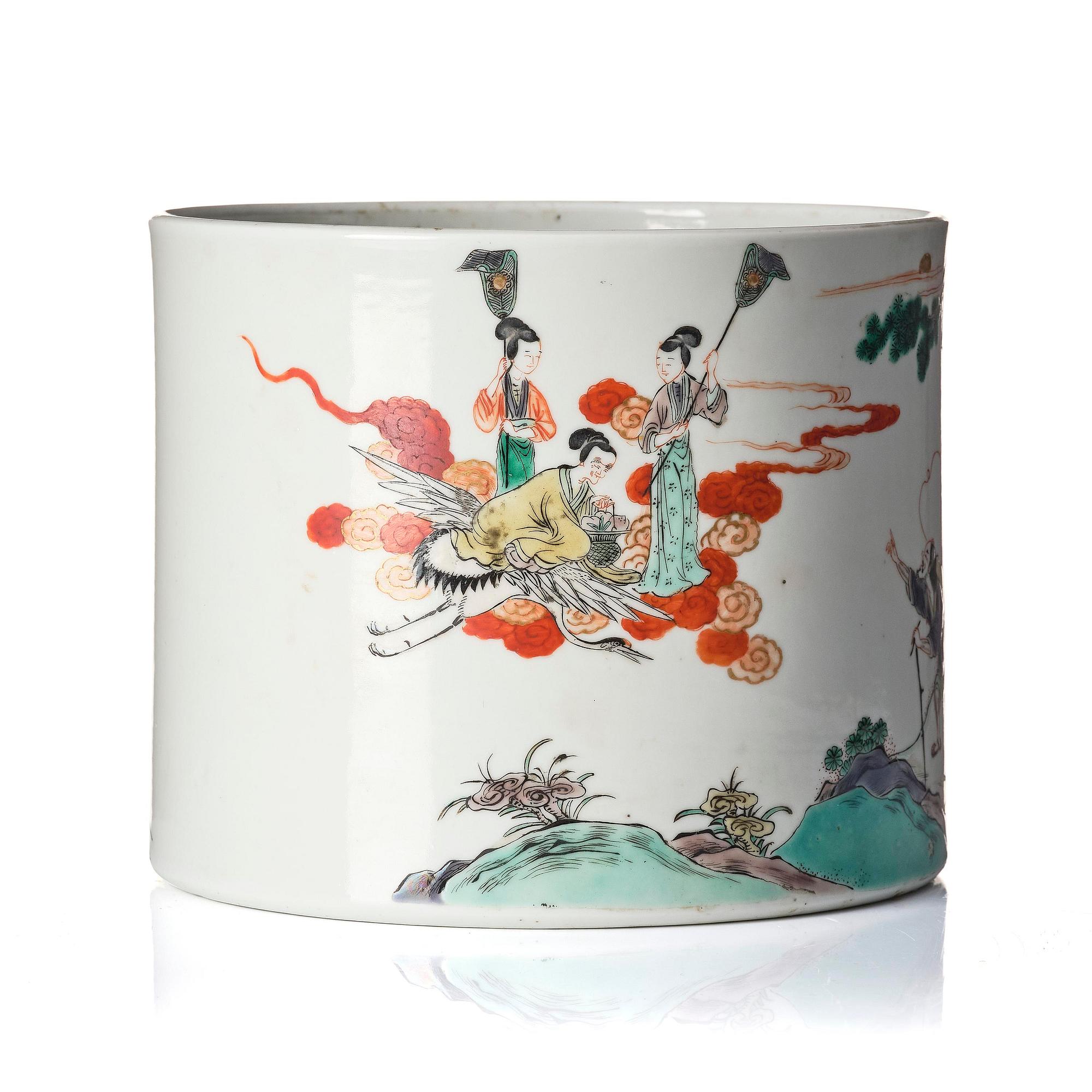
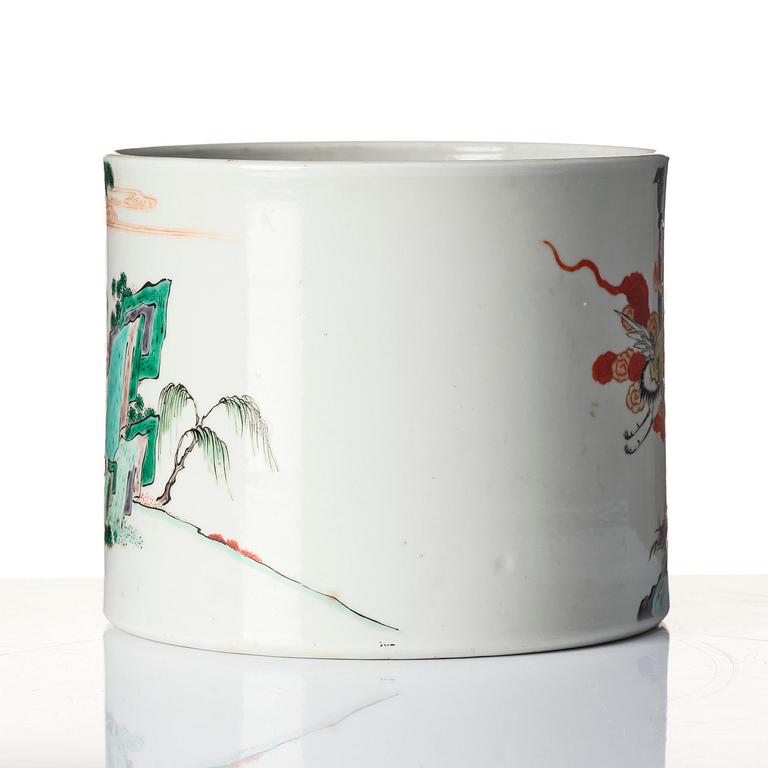
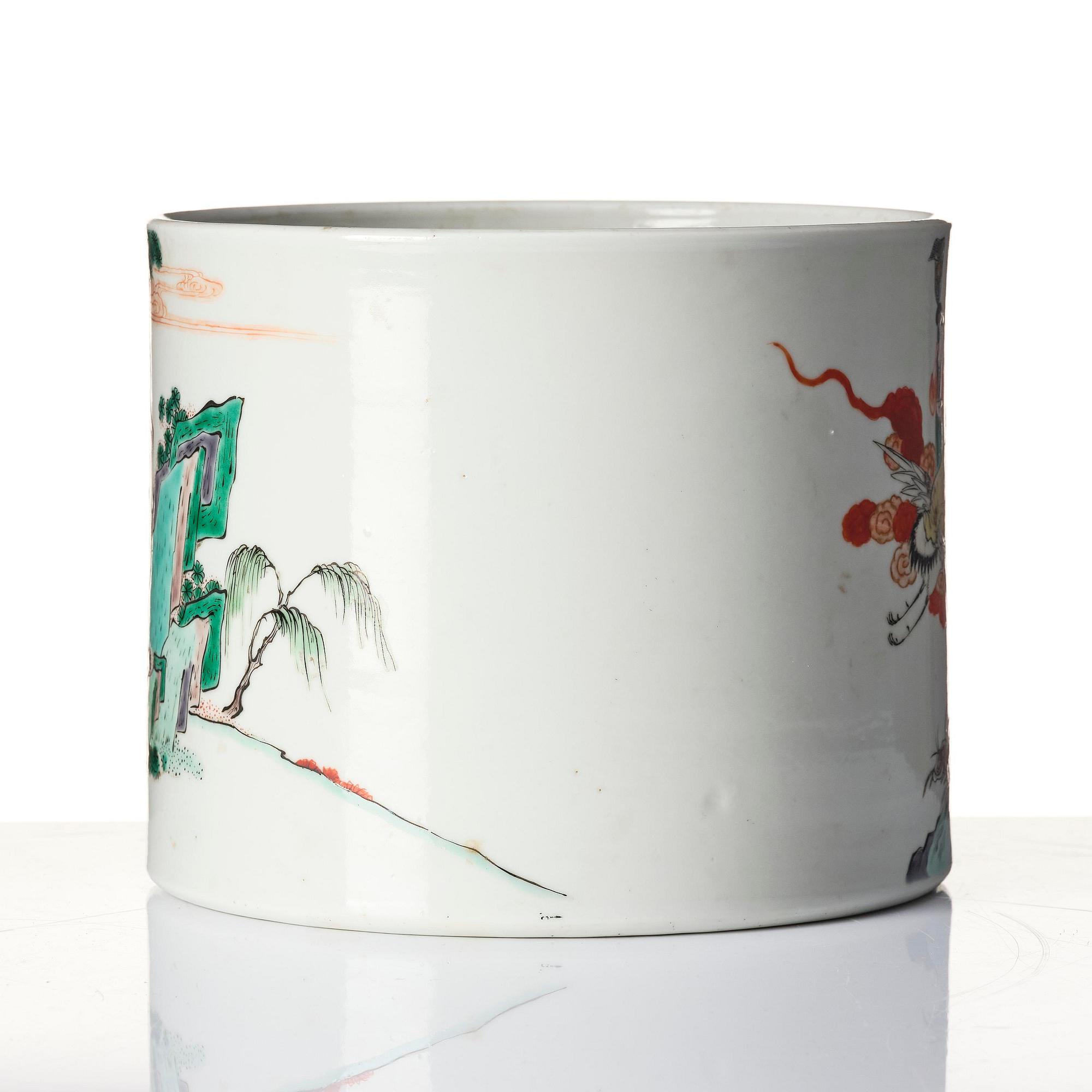
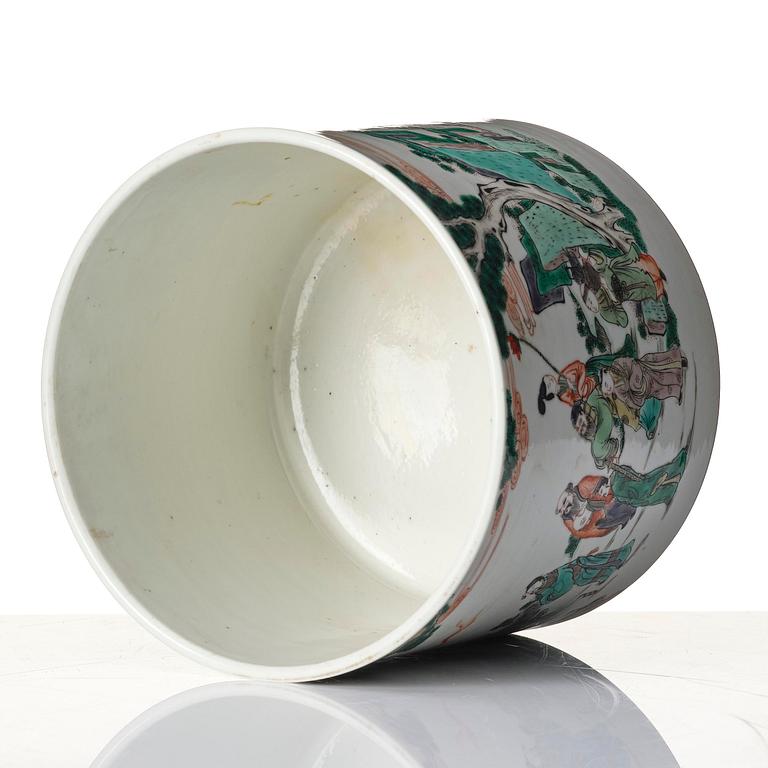
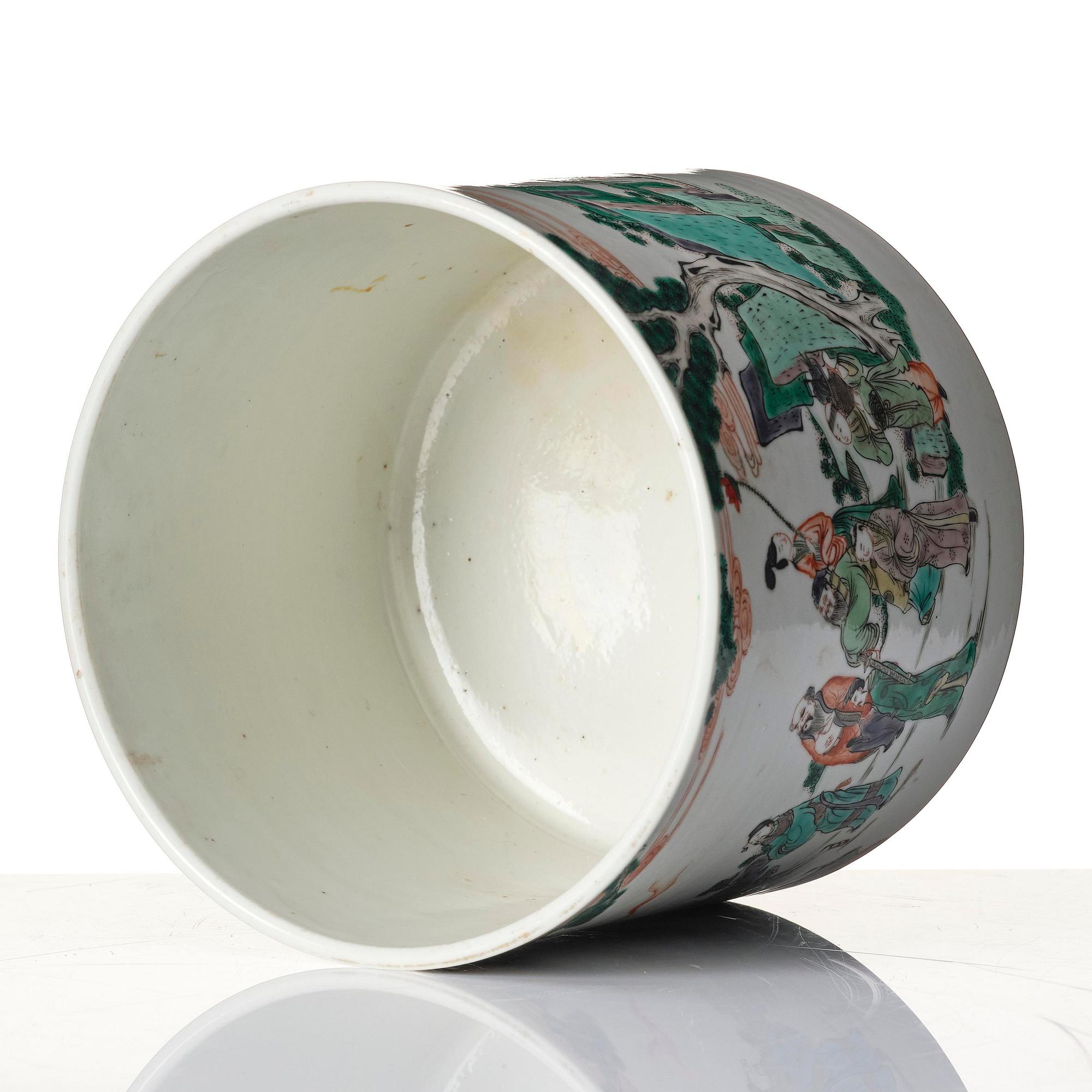
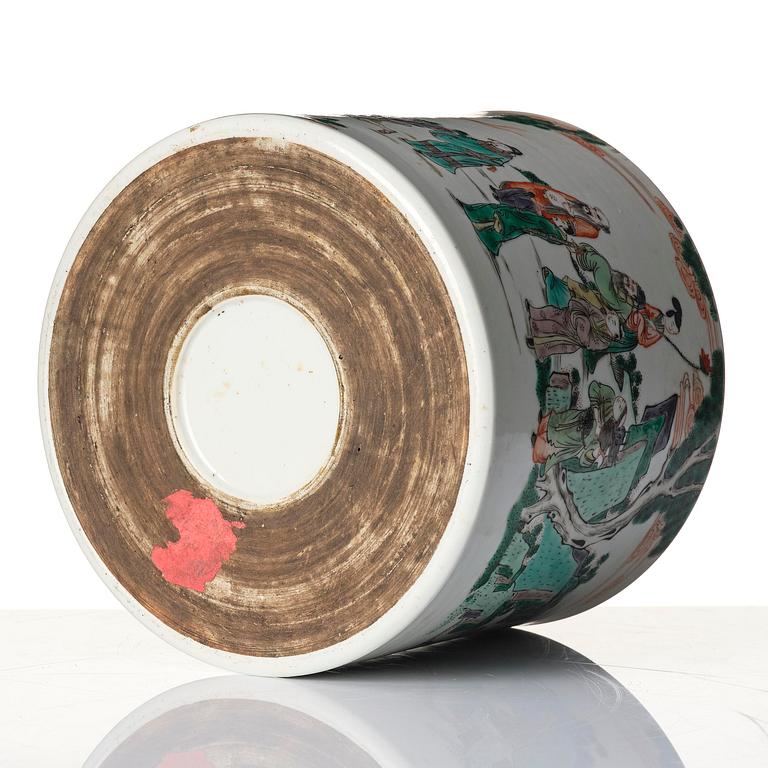
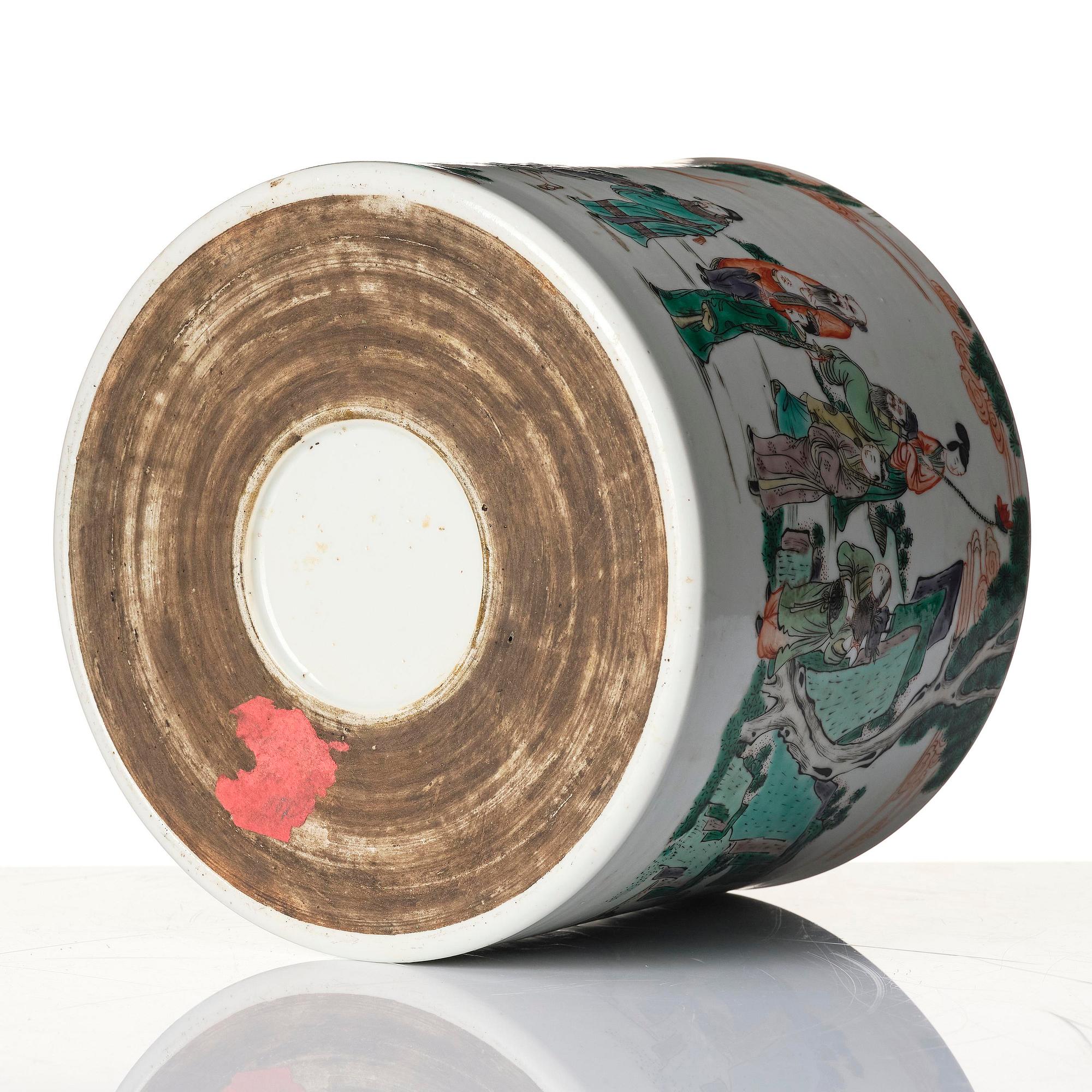
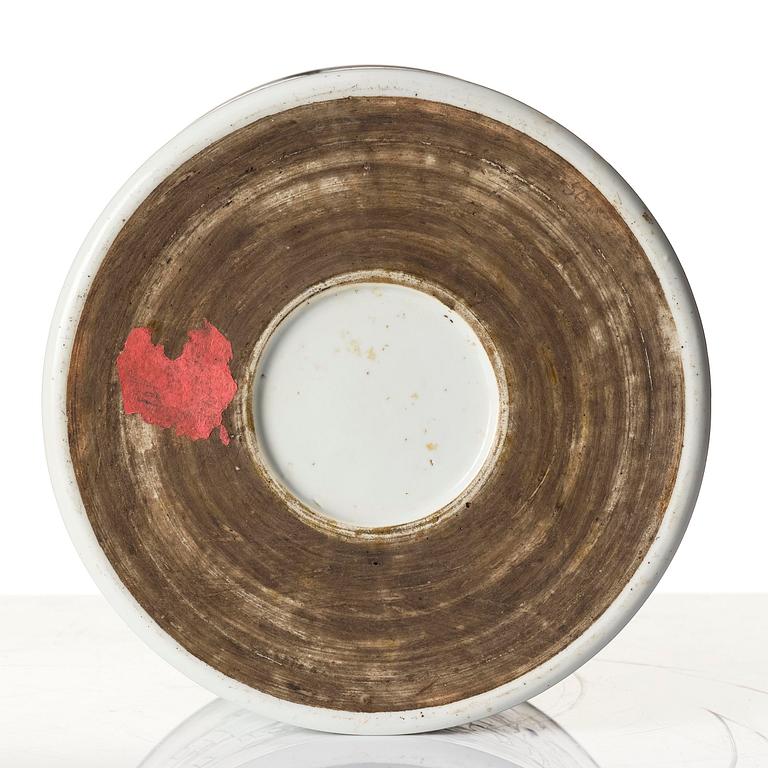
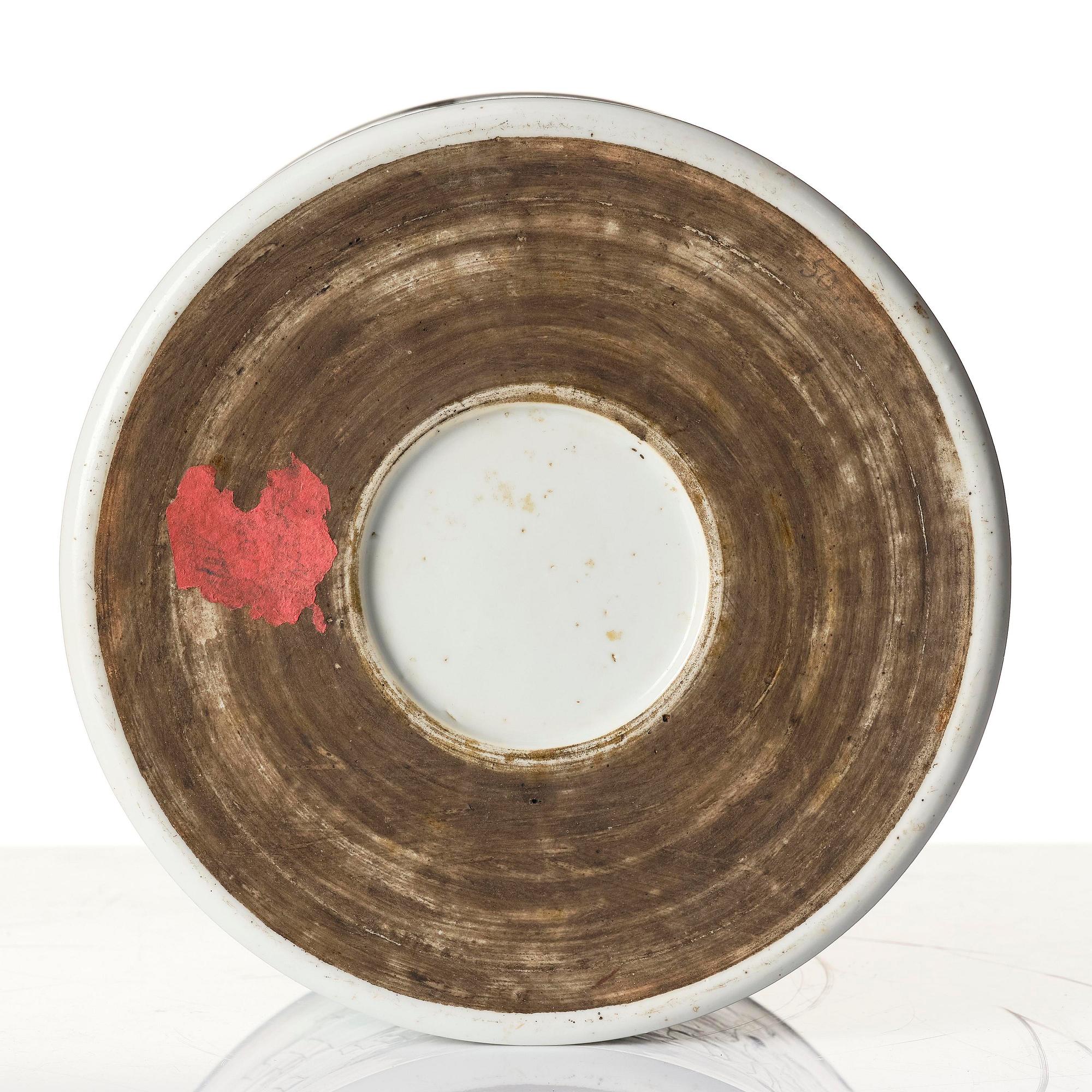
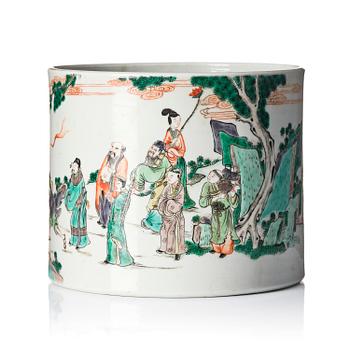
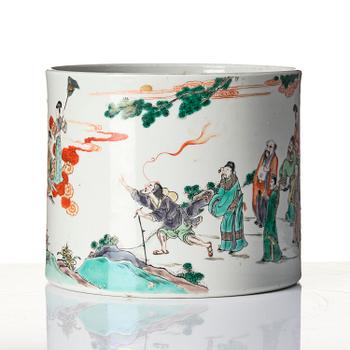
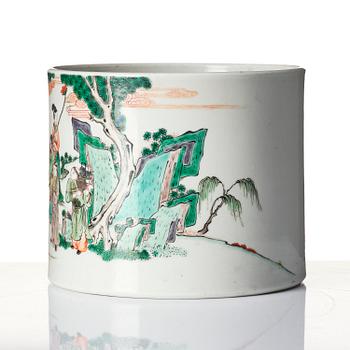
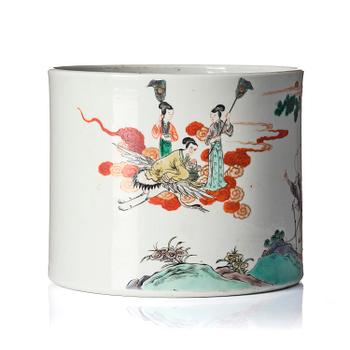
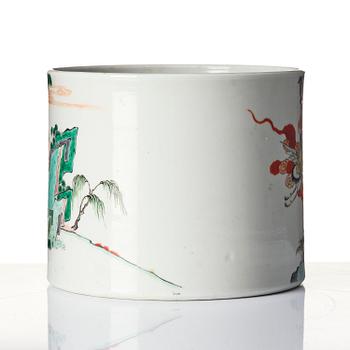
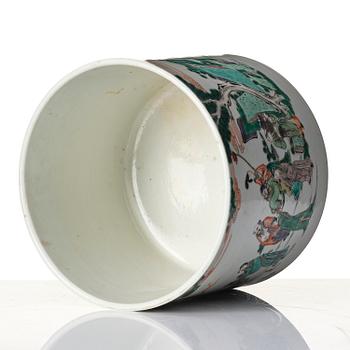
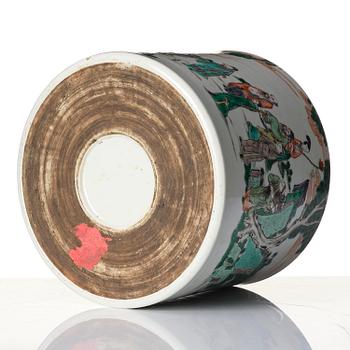
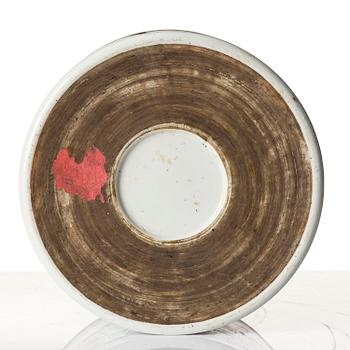
The cylindrical form enameled with a scene depicting a group of immortals and attendants gathering in nature, gazing thoughtfully up at a full moon, where another immortal is emerging from colourful cloud wisps with two attendants riding a crane. All set in a landscape within a lush, verdant setting of wutong, pine and plaintain trees, amid rockwork. Height 16.5 cm. Diameter 20 cm.
Alkuperä - Provenienssi
From the private collection of Eskil Artberg (1886-1974), thence by descent within the family.
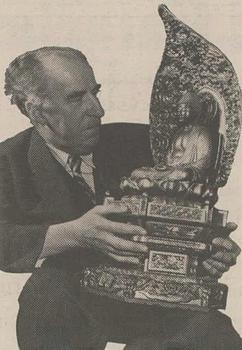
Owner and cofounder of Japanska Magasinet, an antique shop in Stockholm founded 1909 by Eskil and his brother John Artberg (1878–1933). The brothers were active in trading Japanese and Chinese works of Art and also contributing by lending objects to the early exhibitions of both Japanese Works of Art, such as for example the one in 1911 at Konstakademin of Art and Chinese Works of Art. The shop first focused on Japanese Works of Art and Japanese papers that they sold to the Swedish Artists of the early 20th century, then after the war when the interest of Japanese Art cooled of, Eskil came to focus more on Chinese Works of Art. Both the Etnographic Musuem in Stockholm and Östasiatiska Museet in Stockholm hold items that has been purchased from Japanska Magasinet.
Näyttelyt
Compare with a slightly smaller brushpot in famille verte in the collection of Musee Guimet, Collection Grandidier, G 2025.
Muut tiedot
Collecting taste of the Kangxi period was set both by traditional literati ideals and by a contemporary desire to emulate the emperor's personal dedication to scholarly pursuits. Literati art inspired by deeds and artifacts continually revitalized the past and served to immortalize not just the artists but literati traditions as well. The literati aesthetic was held to the most exacting standards and therefore attractive to eager enthusiasts ascribed to a scholarly lifestyle.
Scholarly-themed luxury wares enjoyed considerable popularity among the wealthy elite of the late Ming and early Qing dynasties. During a time of considerable political and social turmoil, the long-held traditions and values of the literati provided both reassurance and inspiration not just to scholar-officials but to the emerging wealthy merchant class and members of the foreign Manchu imperial court seeking to strengthen their claim to rule. This unique historical confluence of upheaval, new wealth and new governance gave impetus to a series of remarkable technological and artistic advancement in the production of porcelain at Jingdezhen.
Lisätietoja ja kuntoraportit

Tietoa ostamisesta


Muiden katsomia kohteita