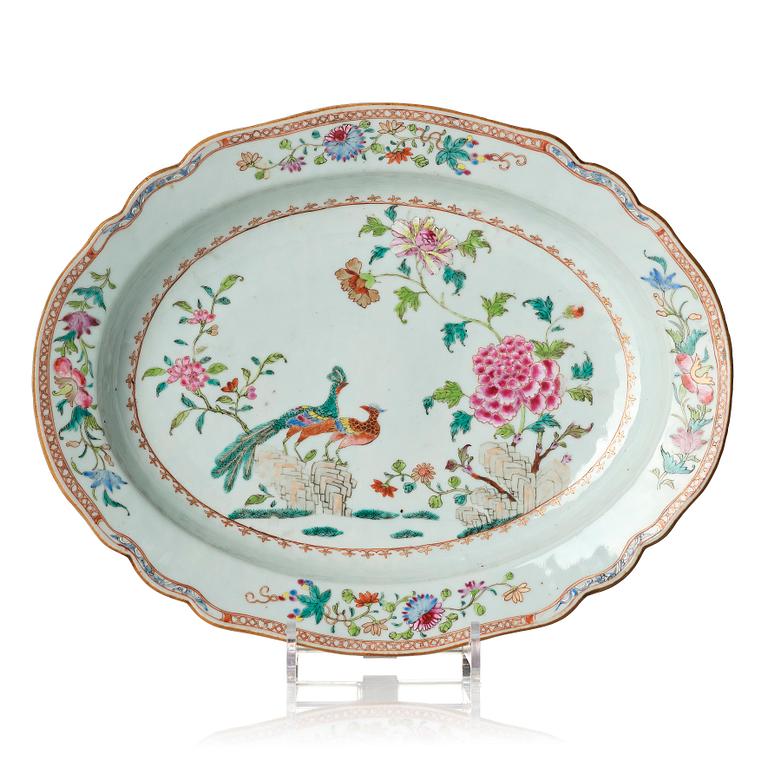
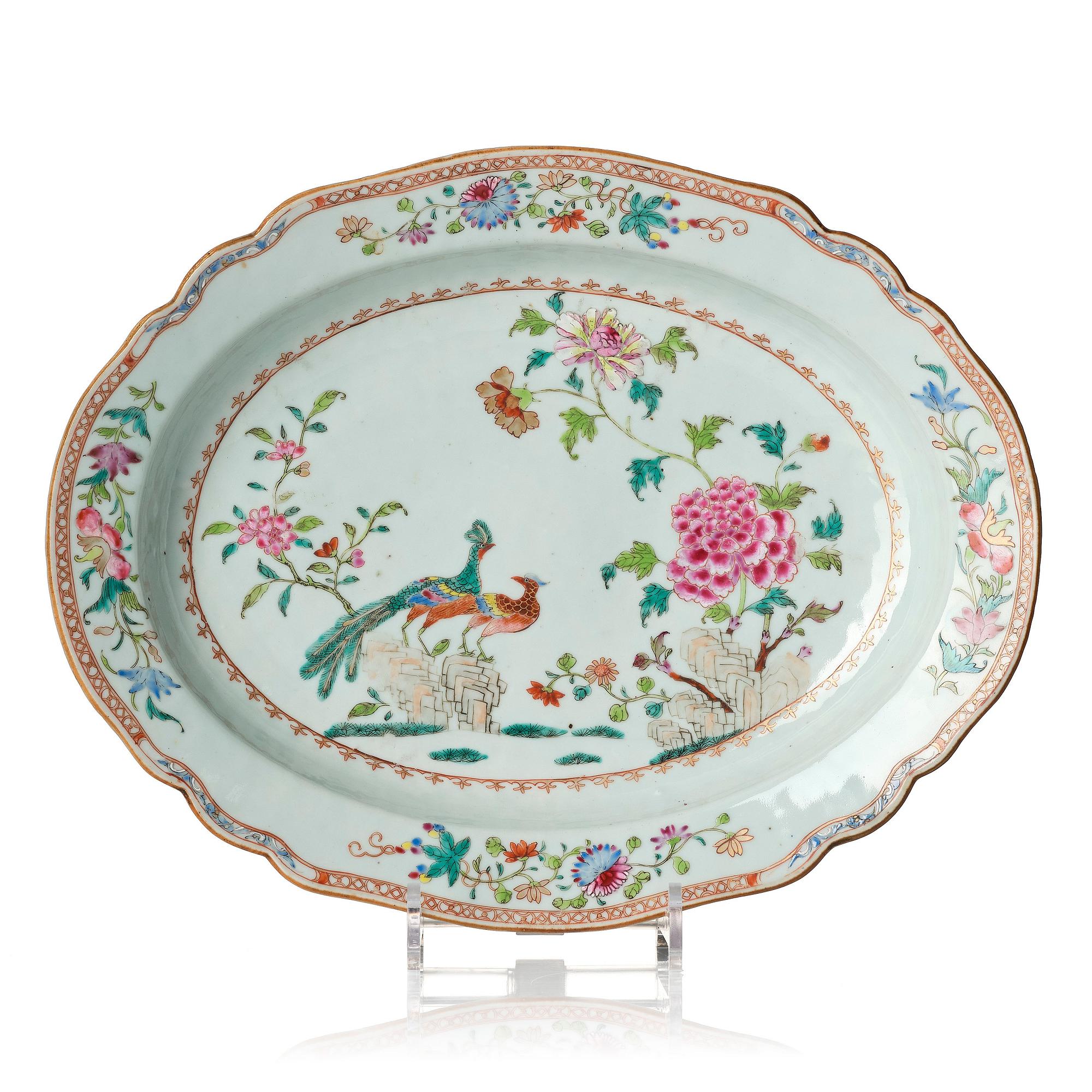
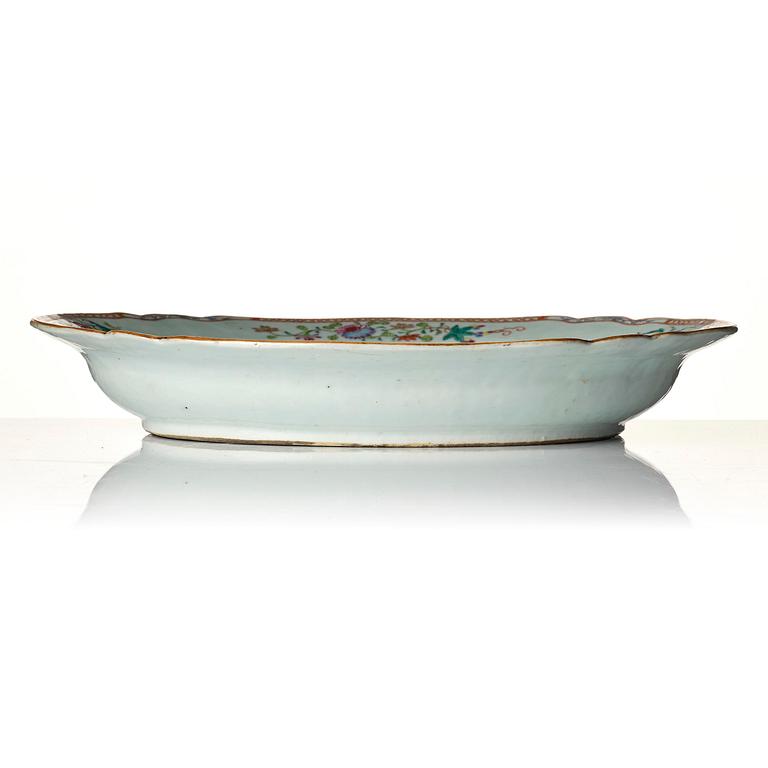
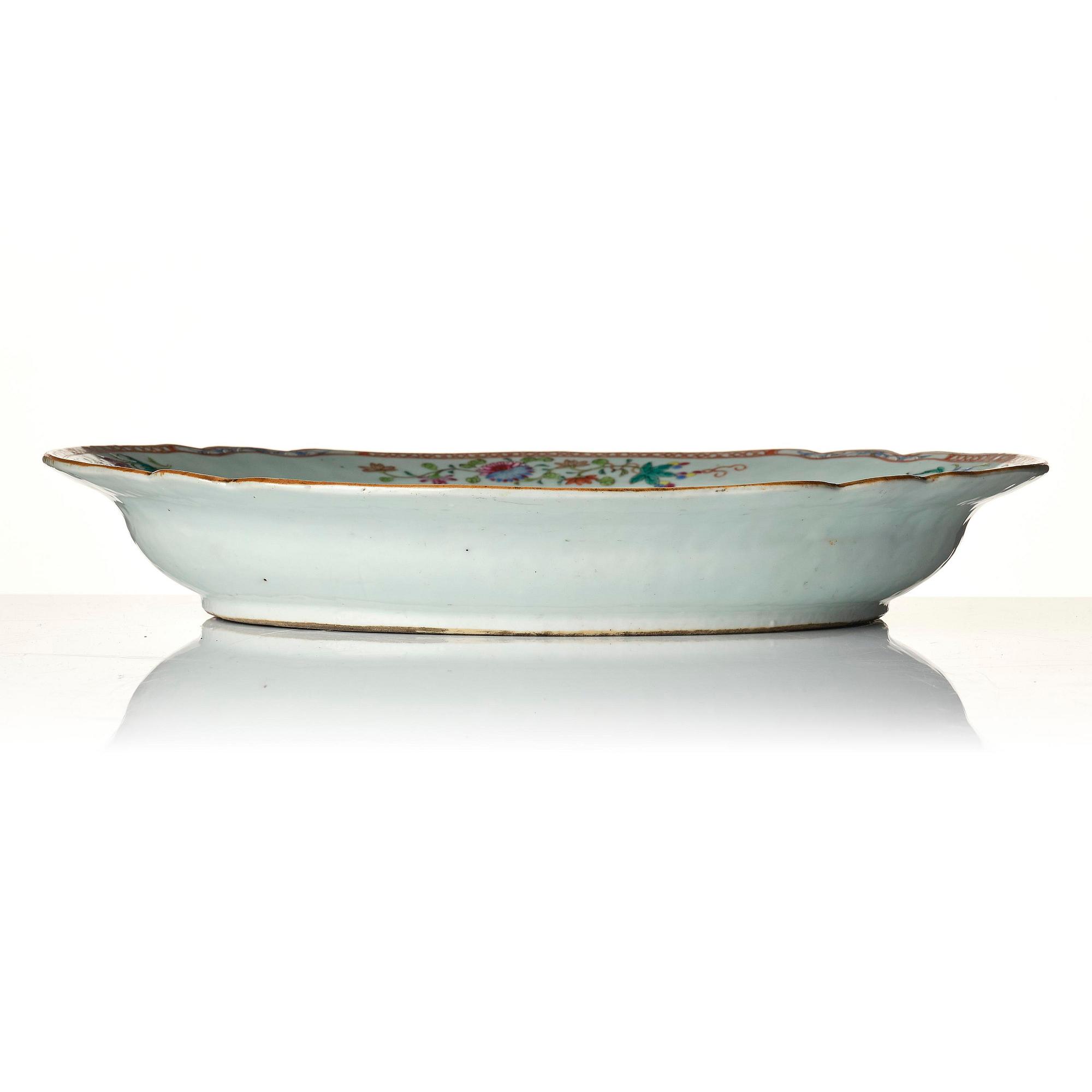
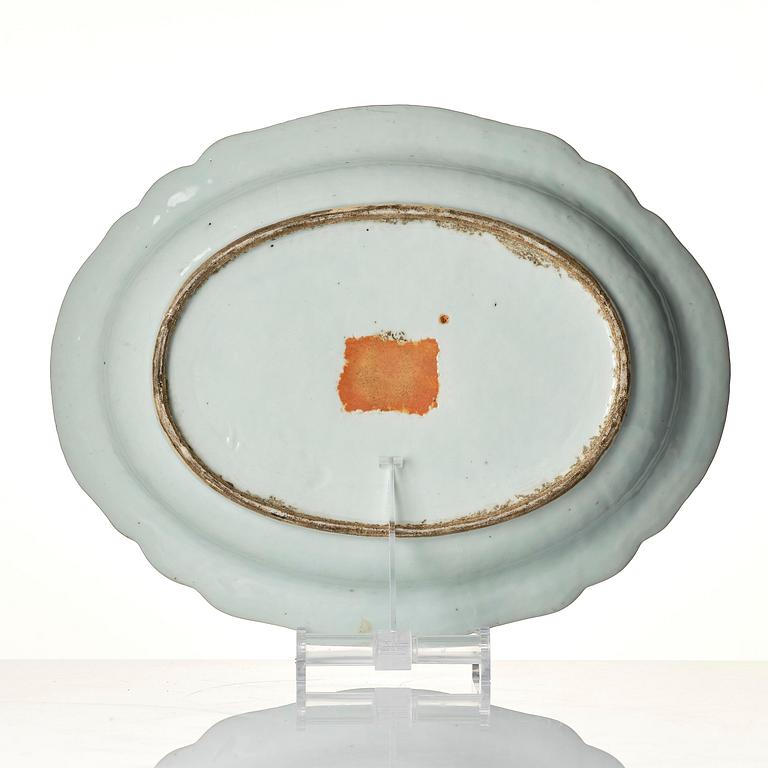
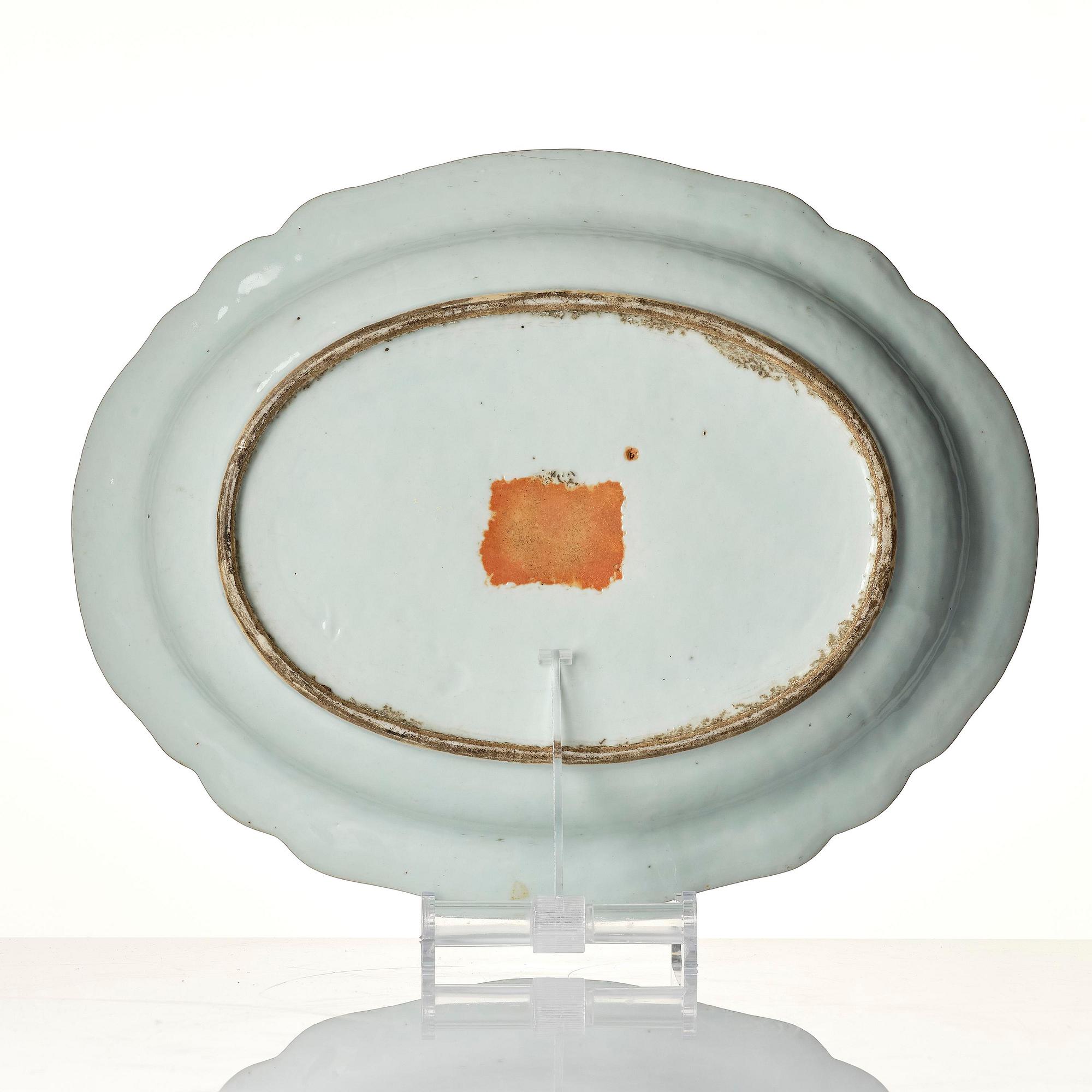
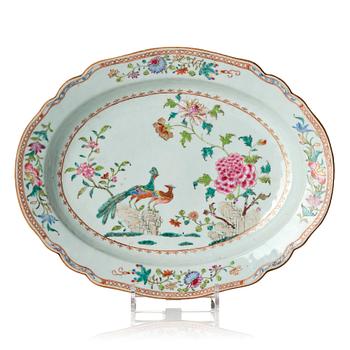
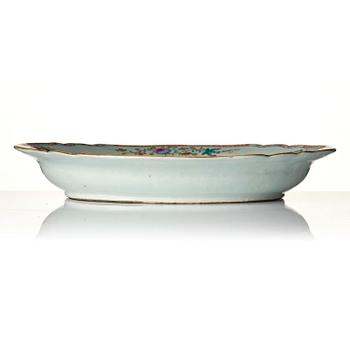
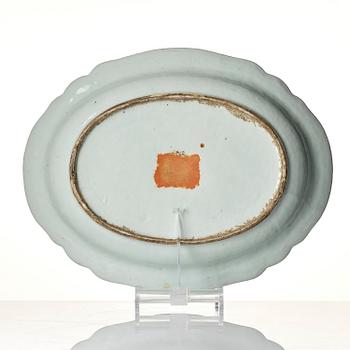
Oval, after a silver modell, deep, decorated with double peacocks in a garden setting. Length 39, width 31 cm.
Näyttelyt
Pieces decorated with this pattern are held on at several Brazilian museums, such as the Museum Historico Nacional, the Museu do Estado da Bahia, the Museu Histórico Nacional, the Museu Simões da Silva, the Museu Carlos Costa Pinto, at the Fundação Cultural Ema Gordon Klabin (Brésil) and also in US collections (Reeves center Collection)
Kirjallisuus
Almeida Santos, José (de). Manual do Colecionador Brasileiro. 1950.
Veiga, Jorge Getúlio, A Porcelana da Companhia das Índias nas Coleções Particulares Brasileiras. 1986, p. 198.
Brancante, Eldino da Fonseca, O Brasil e a louça da Índia, 1950.
Ricardo Joppert. Companhia das Índias no Brasil
Jenny Dreyfus, Louço da aristocratia do Brazil, p. 97.
Muut tiedot
This pattern, known as « Serviço dos Pavões » or « double peacocks Service », is one of the most famous design in Chinese Export Porcelain, specially in Portugal and Brazil.
The royal family of Portugal owned one service with it. When Napoleon invaded Portugal, The King Joao VI, soon Emperor of Brazil, fled in exile to Brazil and brought his six Chinese porcelain services with him, including this one. The royal and imperial family used it then at the Paço de São Cristóvão and at Fazenda Imperial de Santa Cruz.
It is known as the “viajante” service because, it first travelled from China to Portugal, and then from Portugal to Rio de Janeiro. When the Empire turned into the Republic of Brazil, the six Chinese porcelain services of the Joao VI were scattered through auctions held in 1890 by the auctioneer Joaquin Dias dos Santos in Rio de Janeiro. Since the archives of the auction house burned, it is now impossible to distinguish the pieces formerly owned by the King Joao VI from the pieces with this pattern produced at the same period.
Lisätietoja ja kuntoraportit

Tietoa ostamisesta
Muiden katsomia kohteita