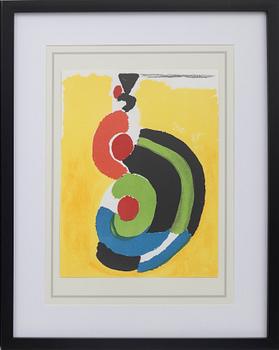
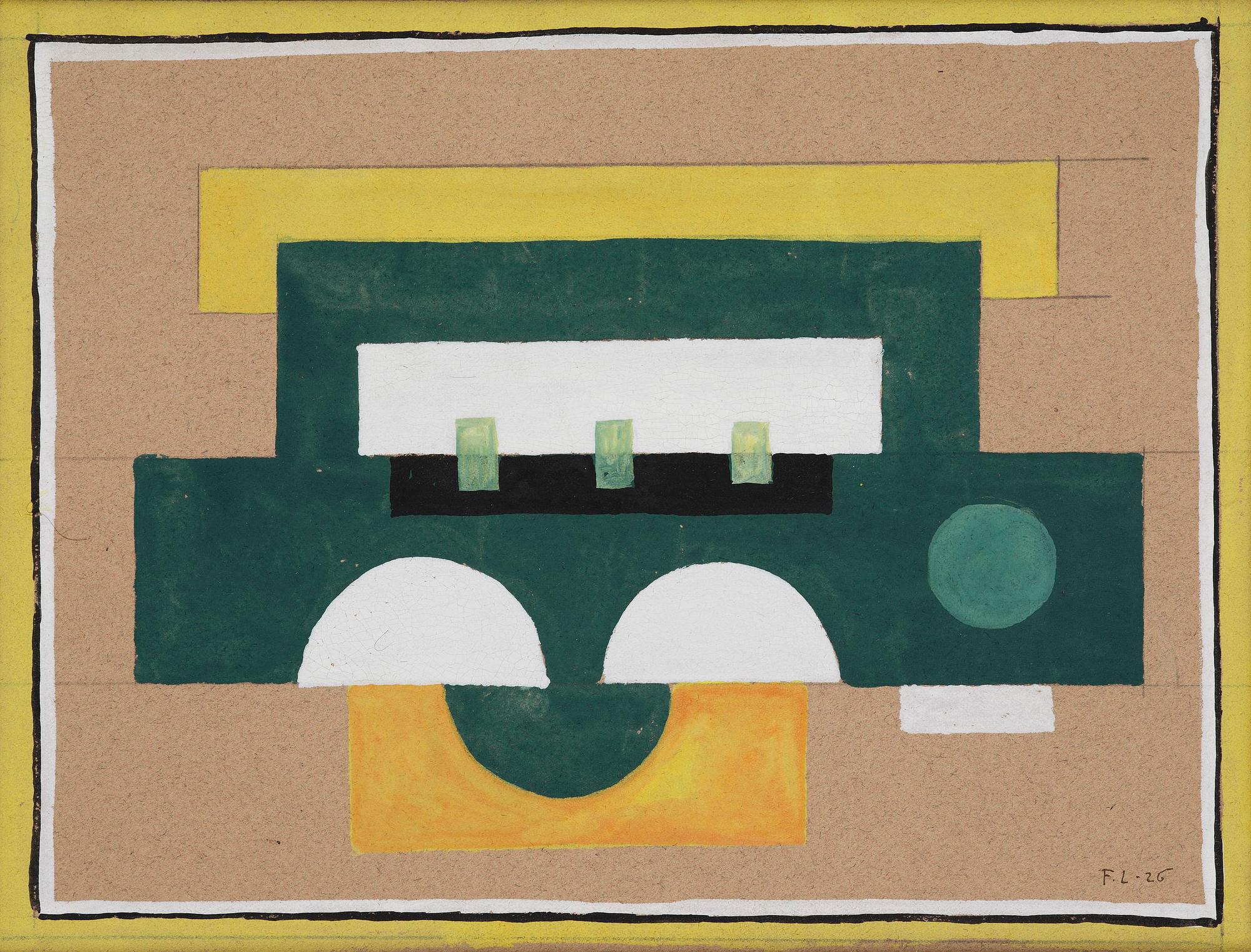
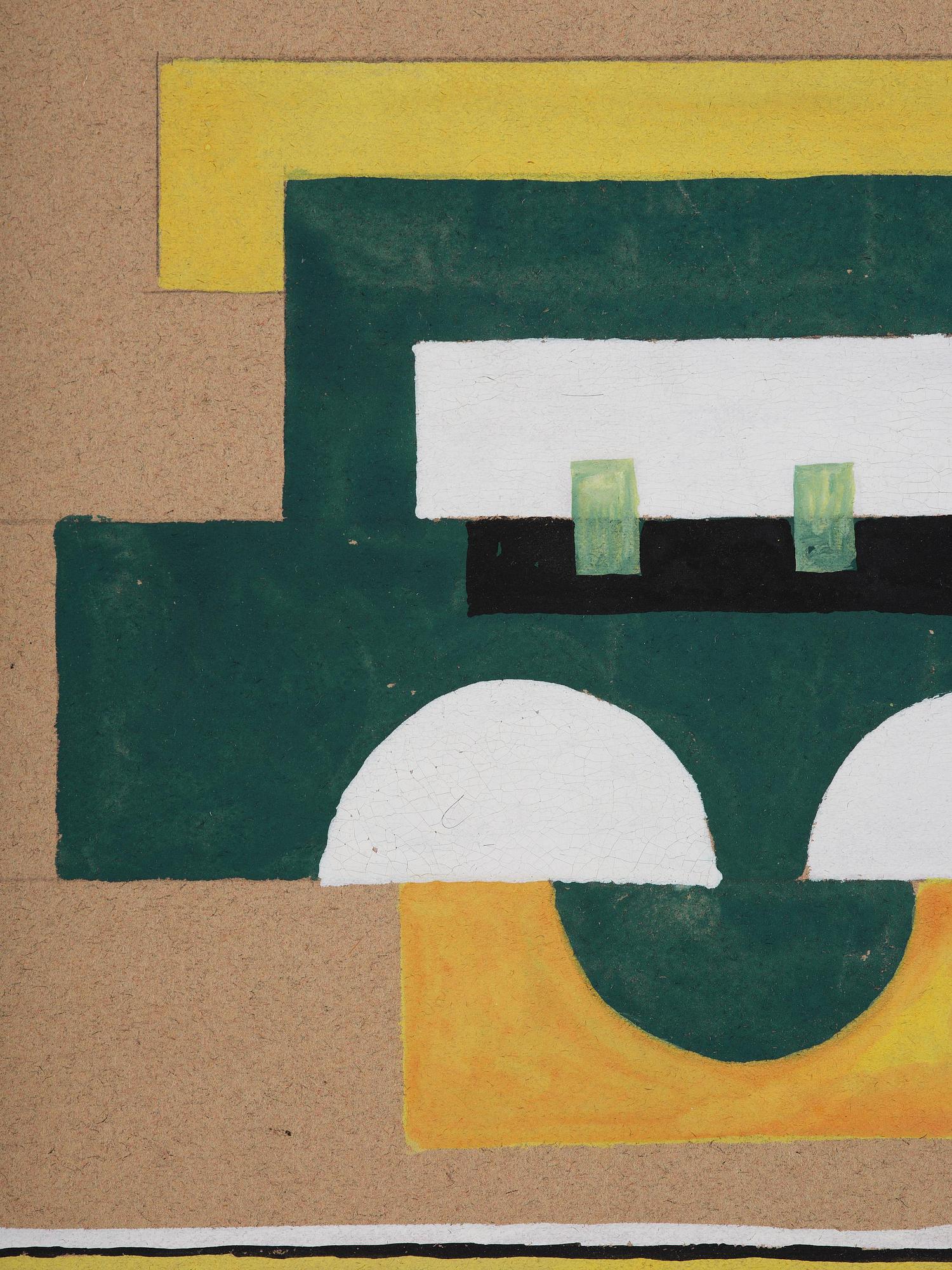
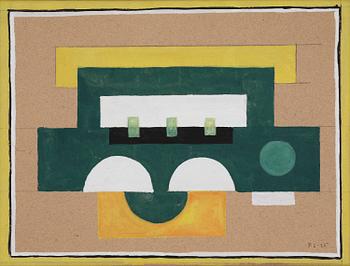
Composition (study for "Jaune II")
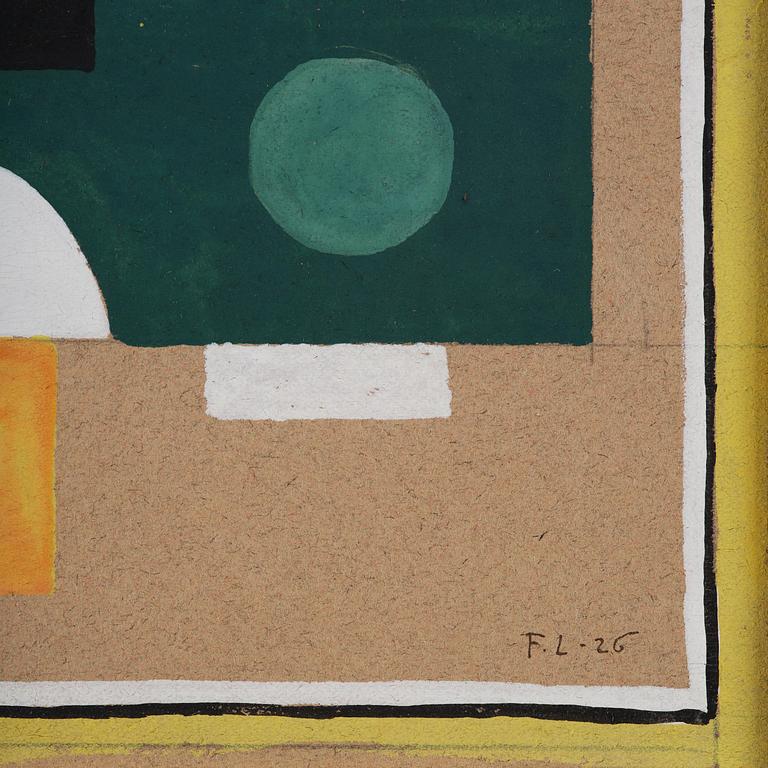
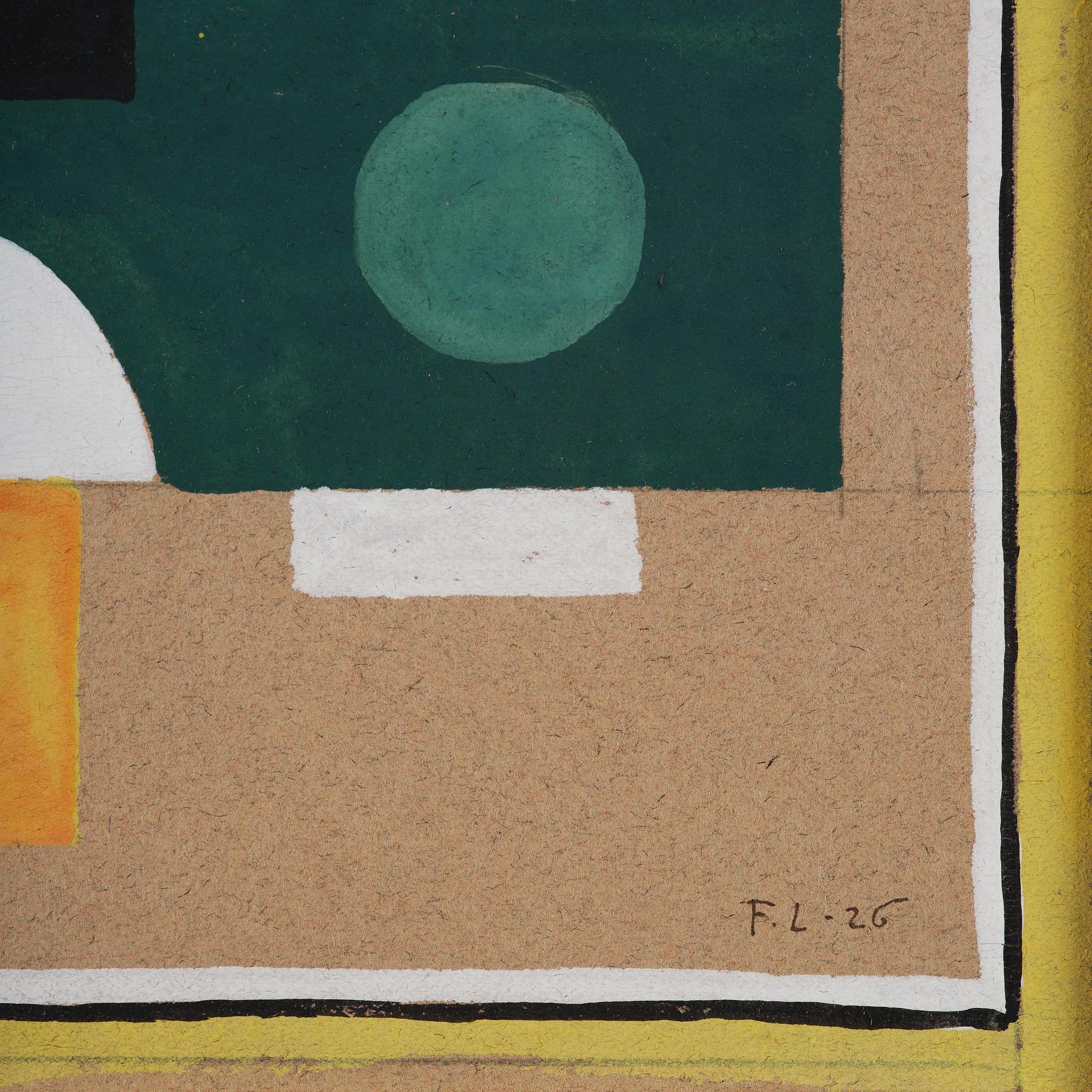
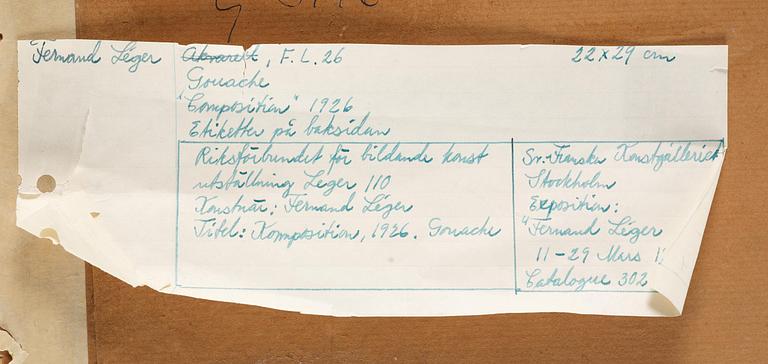
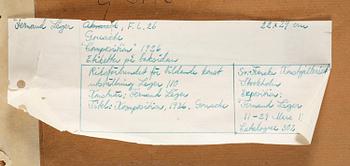
Signed F.L and dated -26. Gouache 22 x 29 cm. Certificate issued by Irus Hansma, Paris, dated October 19, 2013 included in the lot.
Alkuperä - Provenienssi
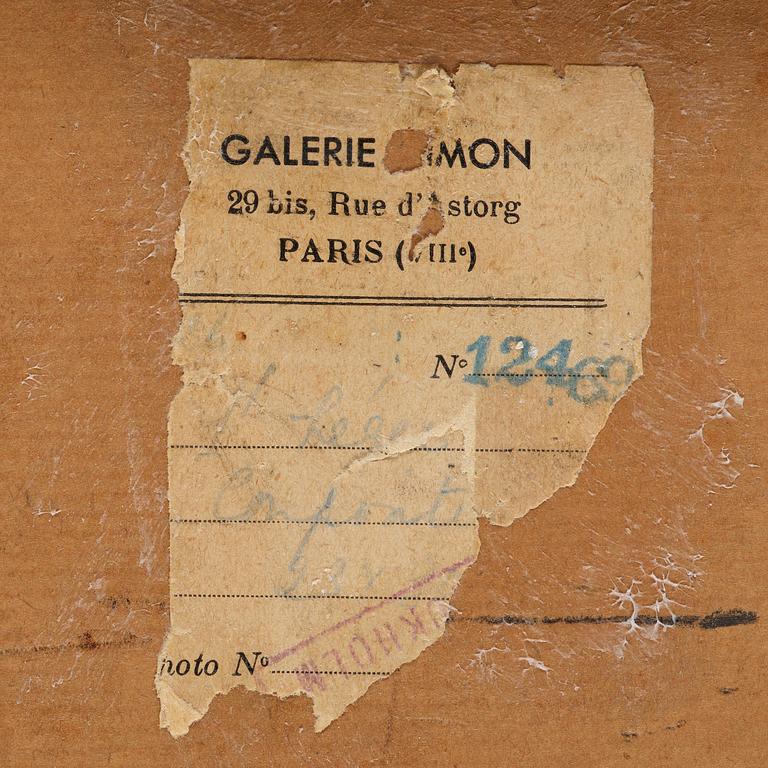
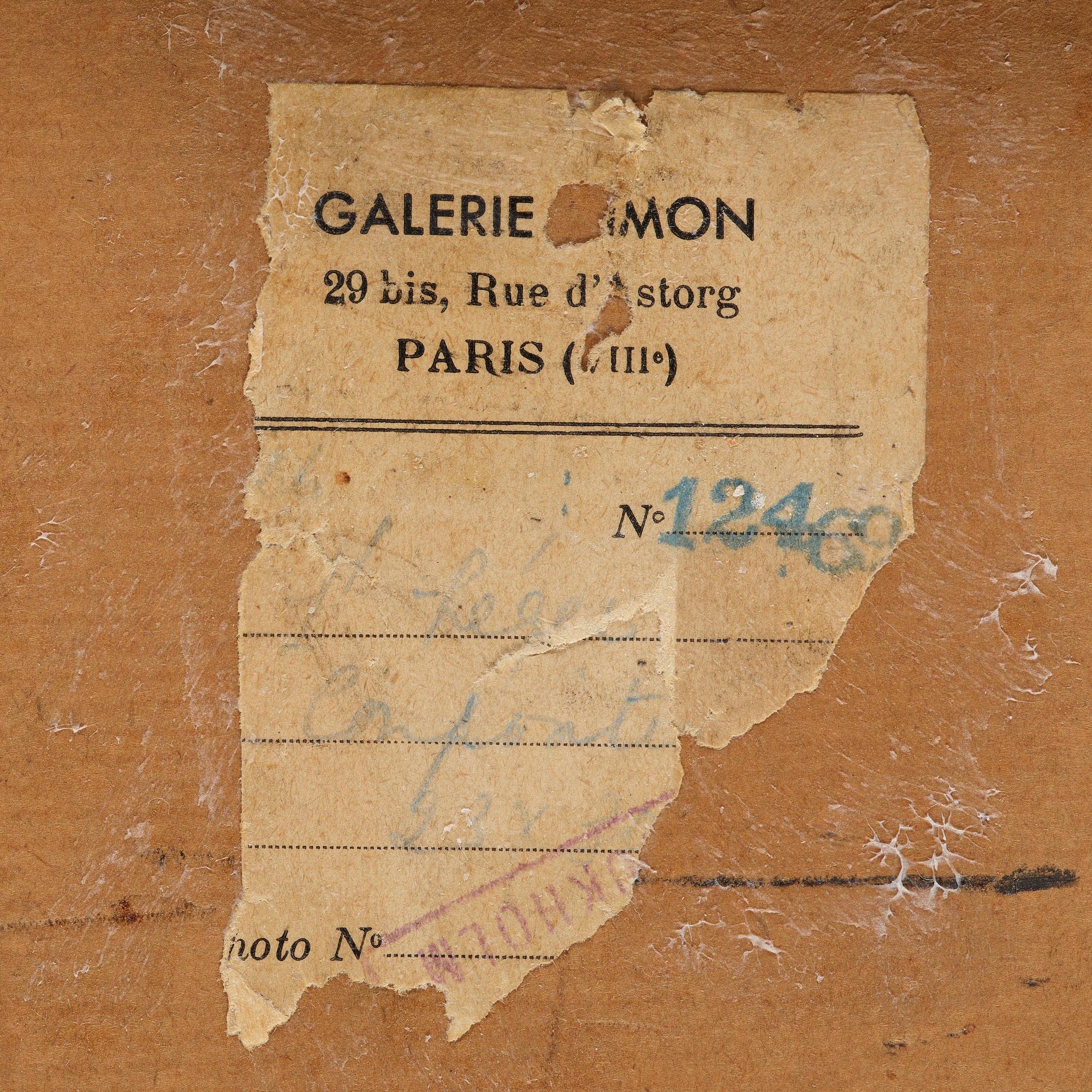
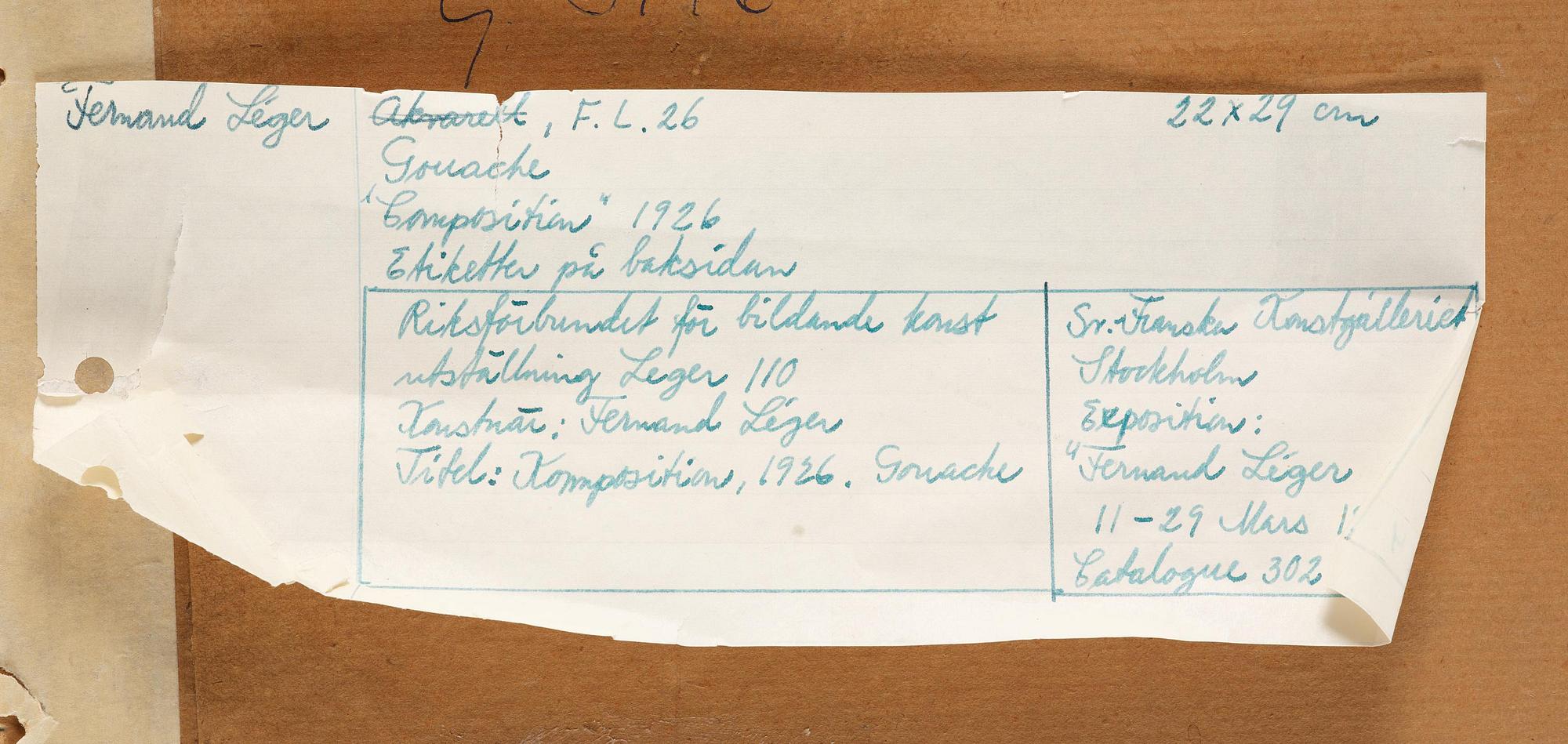
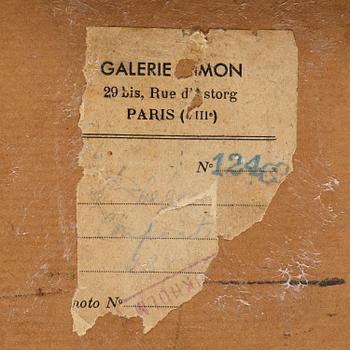
Galerie Simon, Paris.
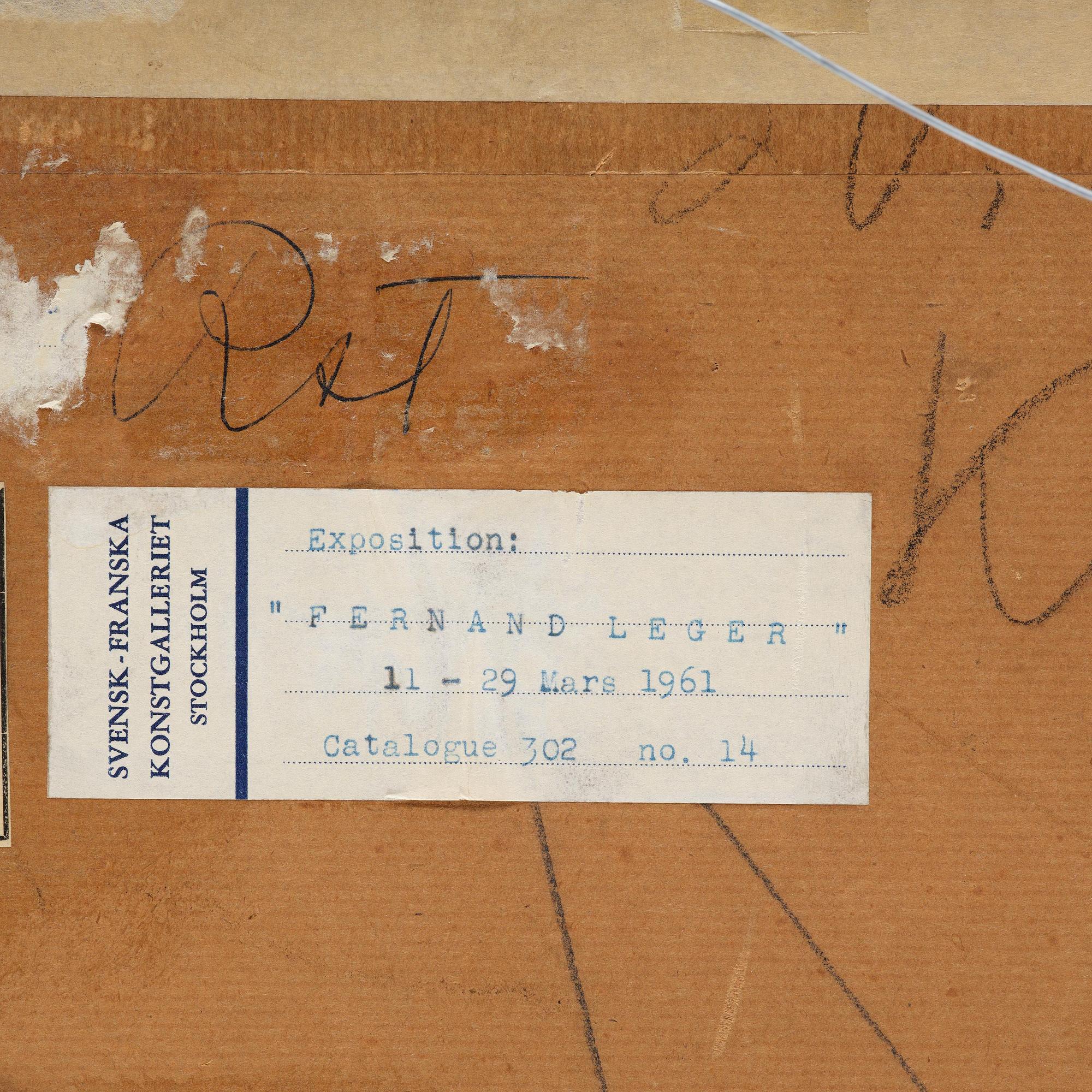
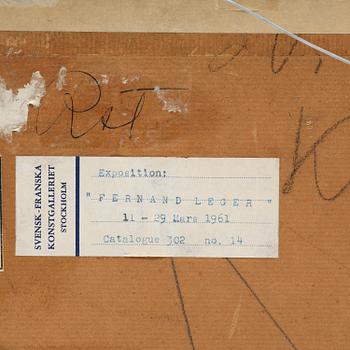
Svensk-Franska Konstgalleriet, Stockholm.
Private Collection, Sweden.
Bukowski Auctions, Modern Art + Design 620, 26 November 2019, lot 624.
Näyttelyt
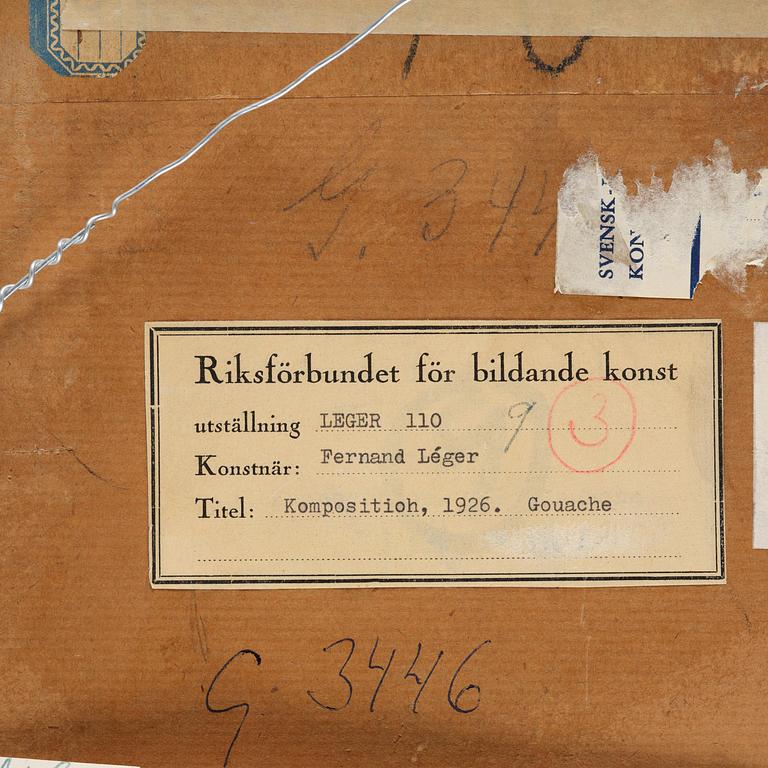
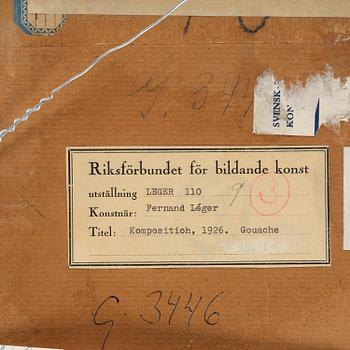
Riksförbundet för bildande konst, exhibition n:o 110, "Léger och nordisk Postkubism. Berg, Carlsund, Clausen m. fl", 1952-53.
Svensk-Franska Konstgalleriet, Stockholm, "Fernand Legér", 11 - 29 mars 1961, cat no 14.
Muut tiedot
The catalogue accompanying the major 1968 Léger exhibition at Moderna Museet includes a series of essays dedicated to the great master. Among the contributors are Otto G. Carlsund and Ulf Linde, whose texts “Det fristående föremålet” and “Konstruktören” offer nuanced perspectives on Léger’s work. Carlsund describes how Léger developed an aesthetic both for himself as an artist and as a teacher at his own art school, the Académie Moderne.
“Léger asserts that the simple form, the detail, or the part, possesses beauty in and of itself. And this beauty, as within the formal complex, depends on proportions... Any object—whether natural or artificial—can be extracted from its context: an eye, a flower, the leg of a compass, and it may be rendered beautifully, either alone or within an abstract space.”
Linde draws a comparison between Léger and his contemporary, Picasso. Whereas Picasso begins with surrounding reality, only to deform and transform it, Léger constructs his paintings from simple, impersonal forms imbued with bold color. It is this act of construction that captivates him. The object does not engage with the outside world; what happens beyond the canvas is of no consequence.
“The canvas is the new reality,” Linde writes. “Upon this surface, the components are set in tension with one another through sharp contrasts in color and tonal value, or through the very nature and placement of the forms—a circular shape opposed to a sharp, precise rectangle, or an oblique form made conspicuous against a vertical-horizontal division of the canvas.”
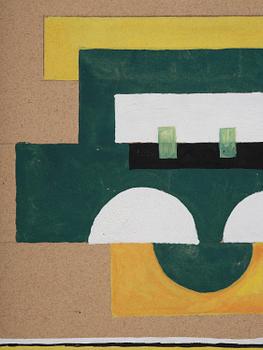
In the gouache offered at auction, Léger constructs the composition using dark green rectangles juxtaposed with white and green semicircles and areas of yellow. The forms are balanced around a horizontal axis, resulting in a harmonious whole. Executed in 1926, the gouache resists simple classification as either purely abstract or representational. In December 1924, the painter, racecar driver, and automotive designer Amédée Ozenfant began teaching at the Académie Moderne. Ozenfant and Léger shared a deep interest in machines and the role of technological advancement in shaping modern society. Are we seeing a vehicle here, a utilitarian form, or a component of some larger mechanical system?
Around this time in Paris, Marie Cuttoli—born in 1871 and nearly Léger’s contemporary—was also active. A patron and collector of modern art, Cuttoli, along with her husband Paul, assembled a significant private collection focused primarily on French Cubism. She founded Maison Mybor in Paris, a studio and gallery devoted to interior design, art, and fashion, where she collaborated with gallerists and museums. Cuttoli was instrumental in reviving the Renaissance tradition of creating tapestries based on painted models. She acquired small-scale works on paper by artists such as Picasso, Braque, Dufy, and Léger, commissioning full-scale cartoons from the artists to serve as templates for hand-knotted or woven rugs. The finished textile works were exhibited and sold at Maison Mybor, often alongside the original artwork. Initially woven in Algeria, production later expanded to Aubusson, France, and continued until 1962.
Cuttoli commissioned five works from Léger for Maison Mybor between 1925 and 1927. The gouache presented at auction is likely a preparatory sketch for Jaune II, one of the earliest works in the series. In the final tapestry, the composition appears in a slightly more subdued palette set against a vivid yellow background—a color that inspired the work’s title.
Lisätietoja ja kuntoraportit

Kuuluu jälleenmyyntikorvauksen piiriin
Tietoa ostamisesta







Muiden katsomia kohteita