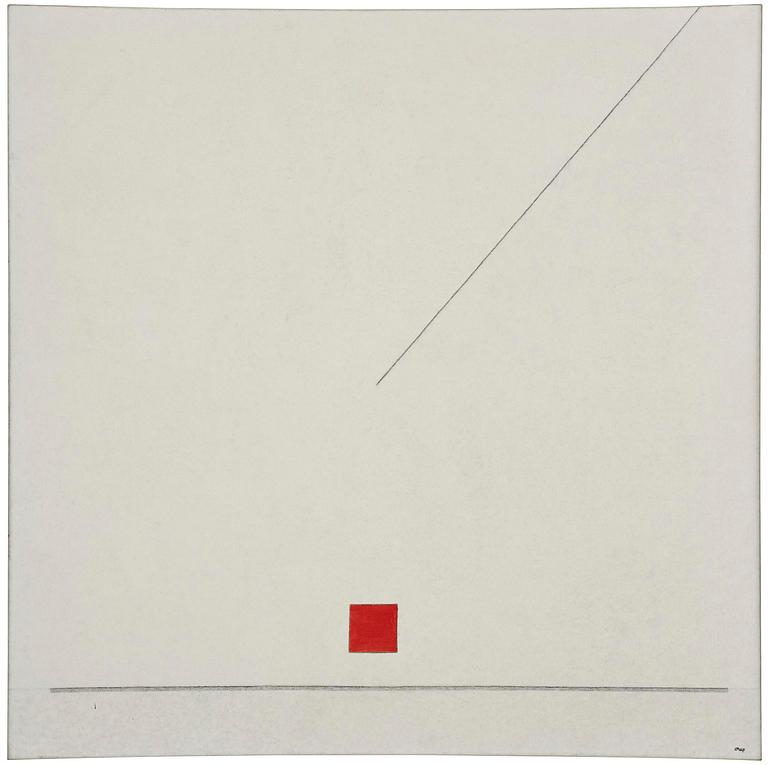
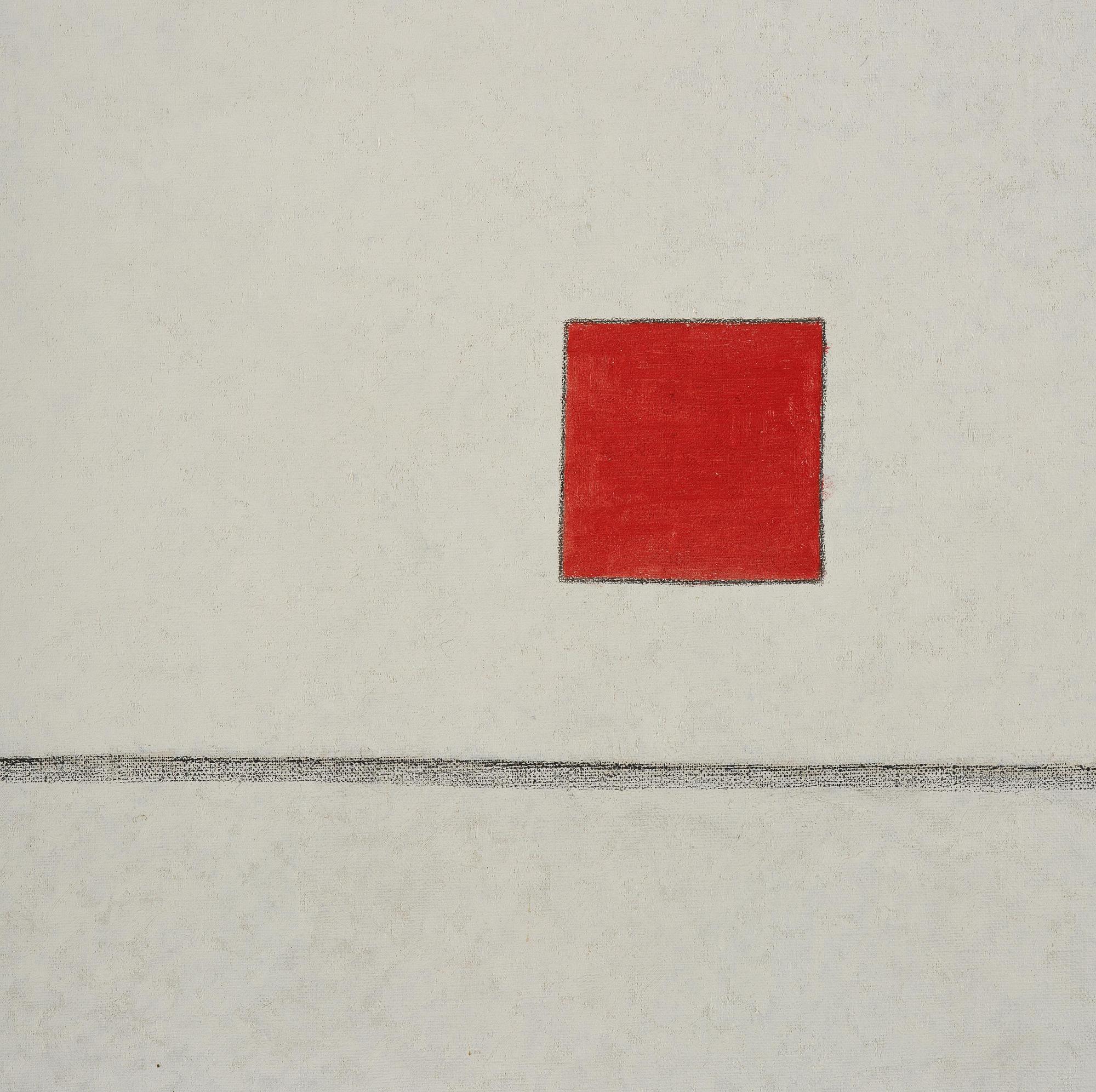
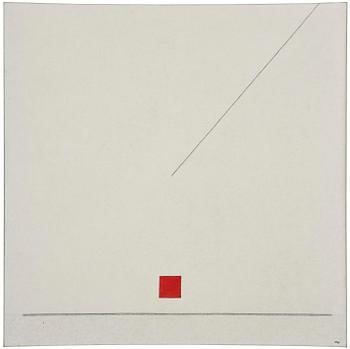
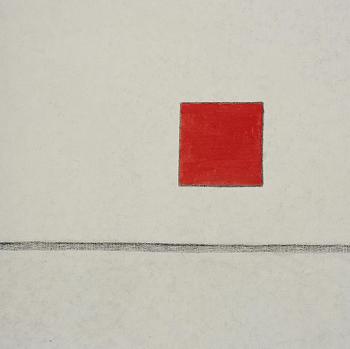
"Carré rouge - PROCC"
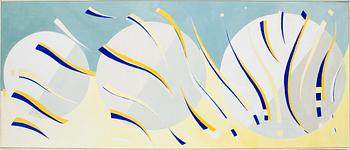
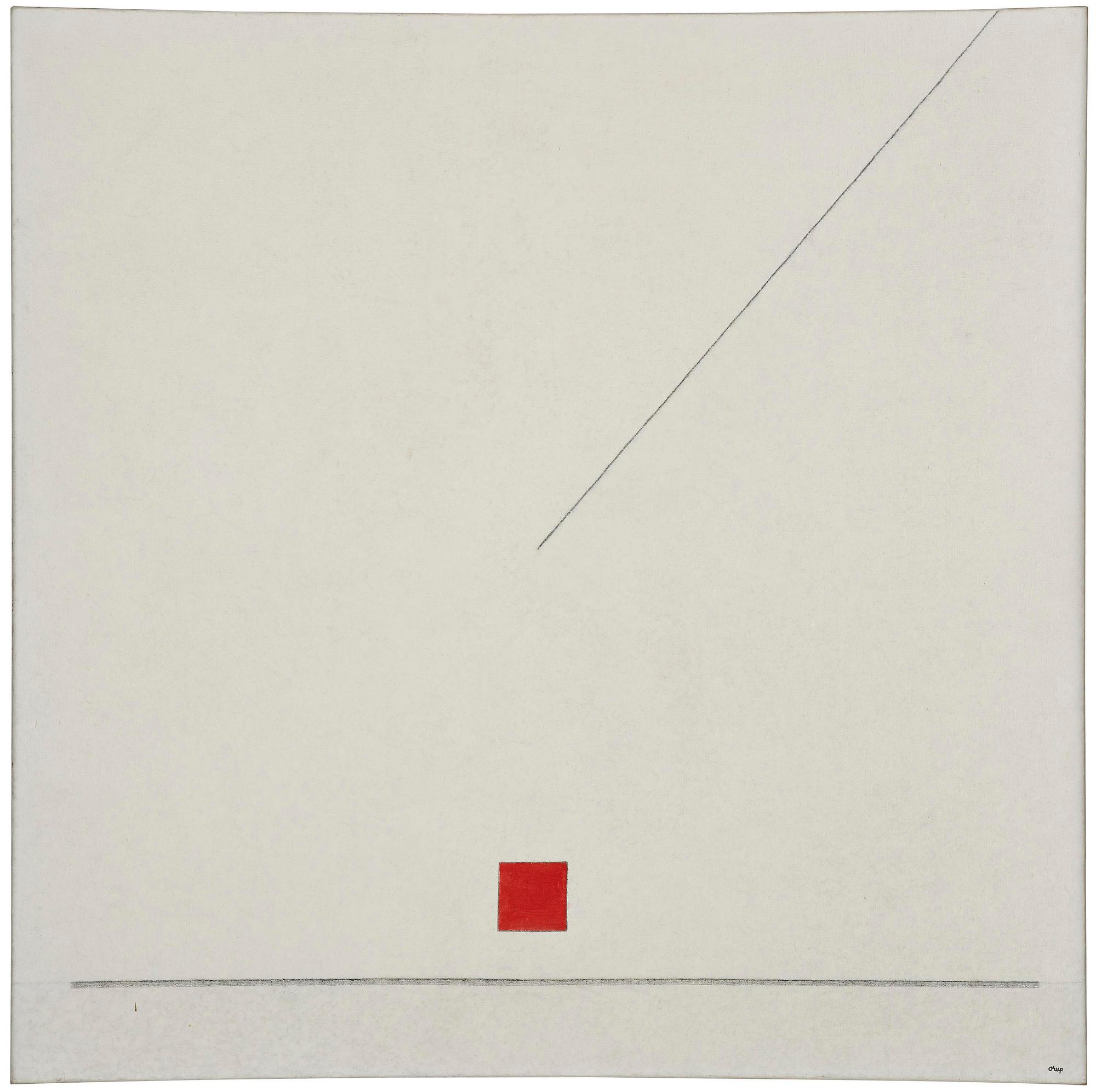
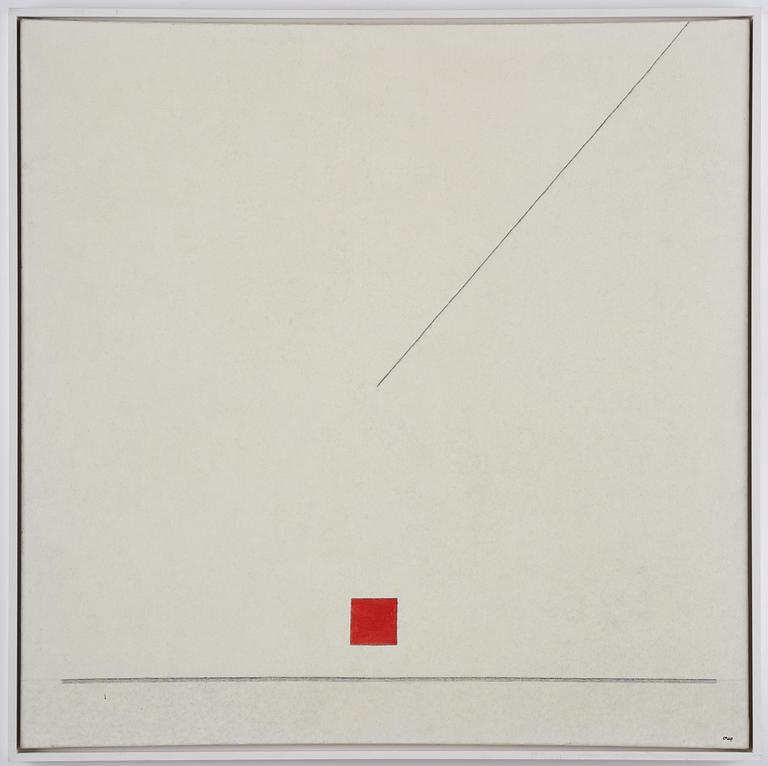
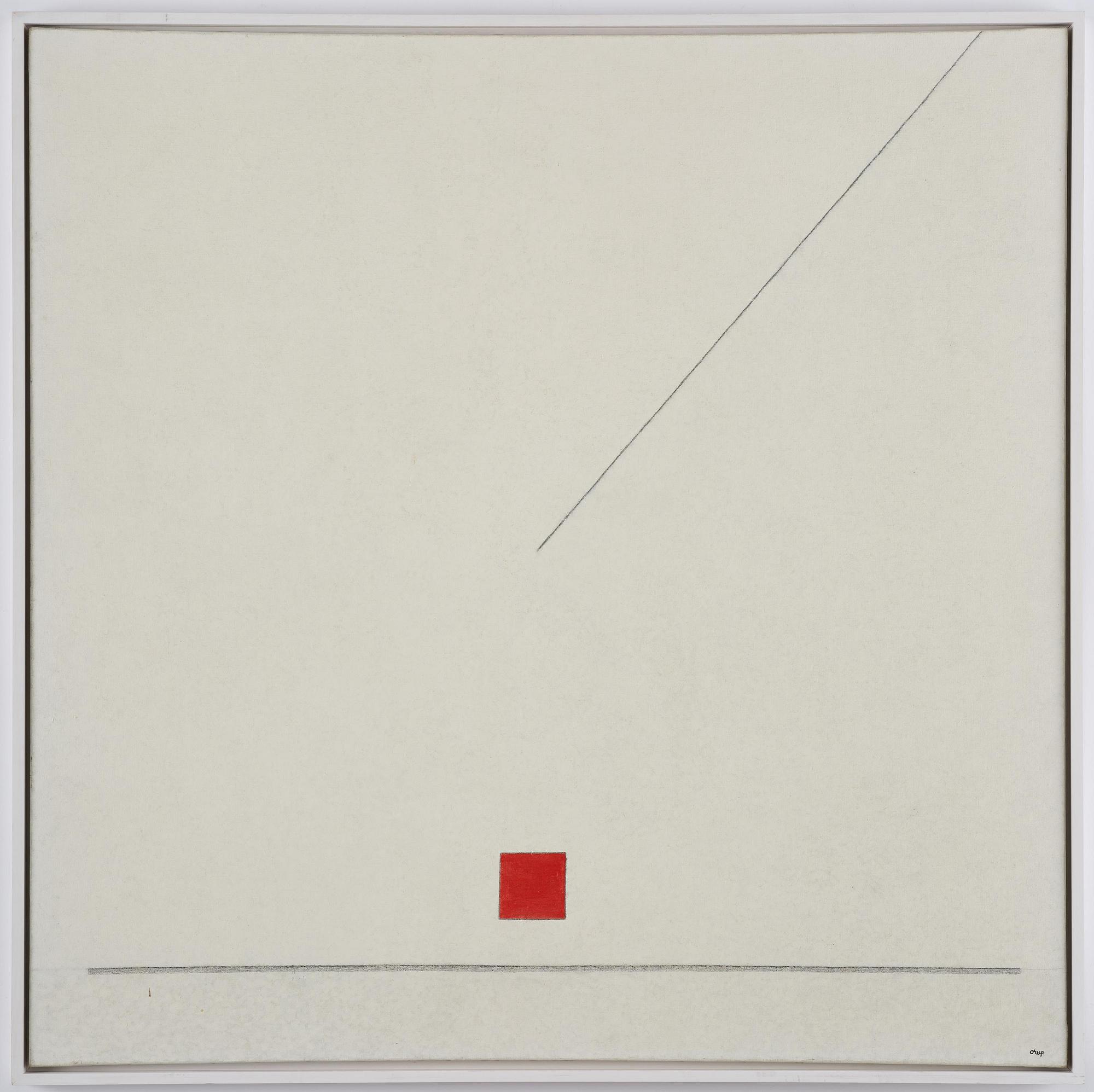
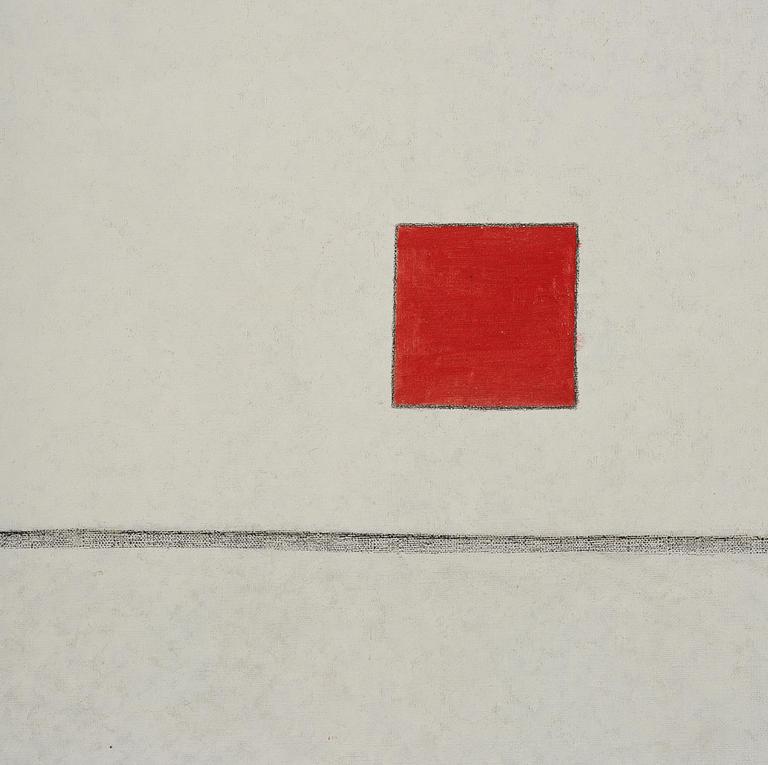
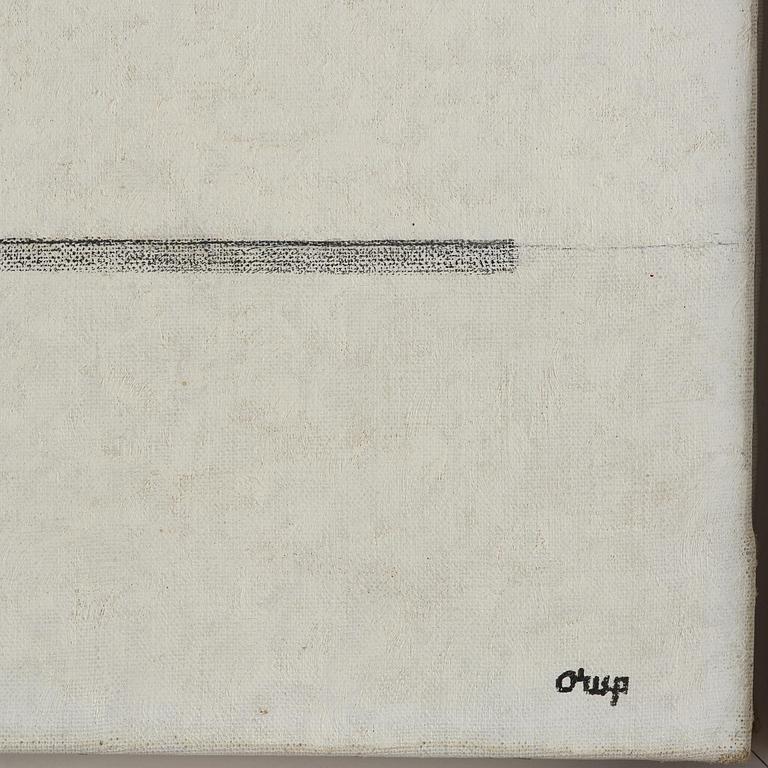
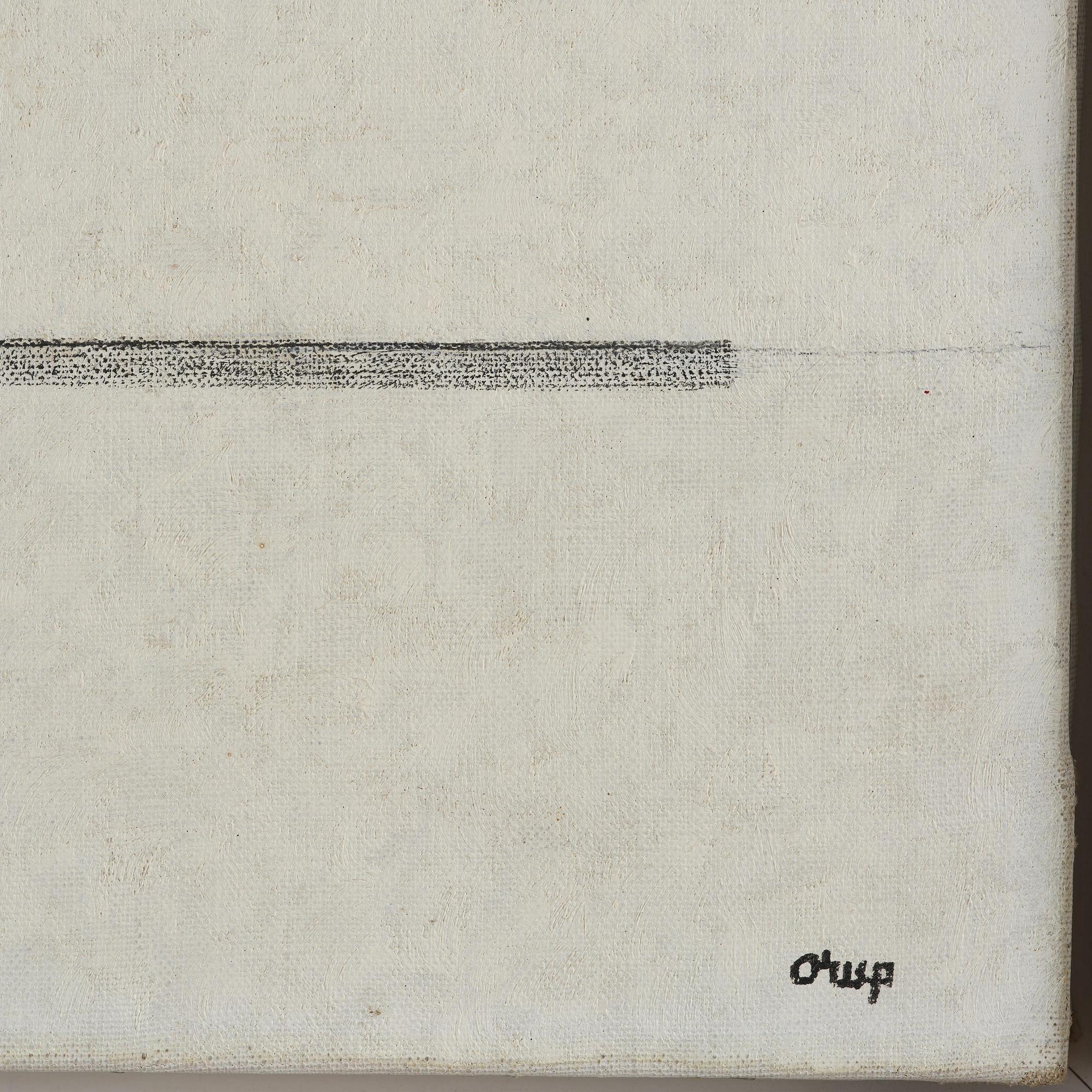
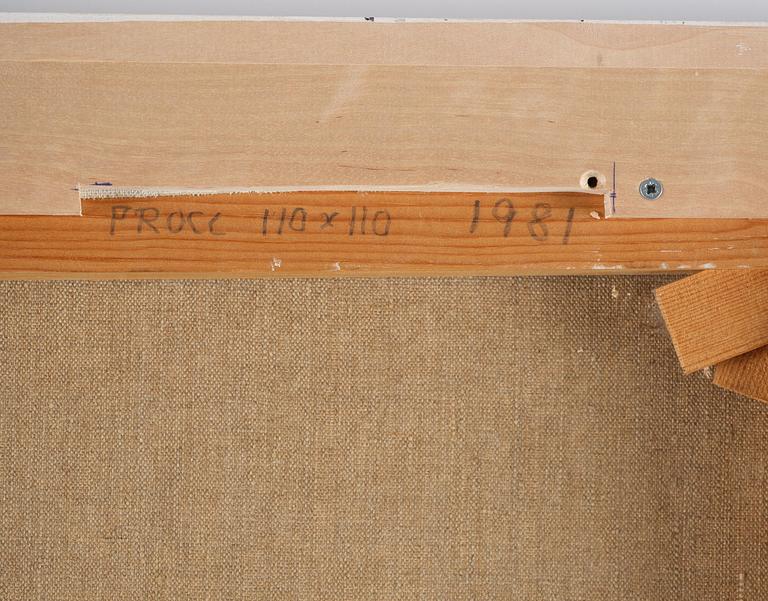
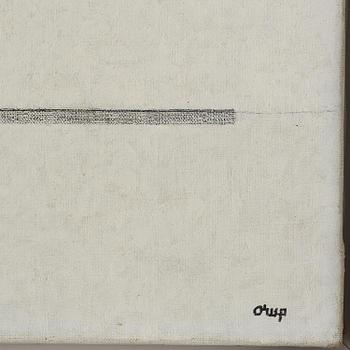
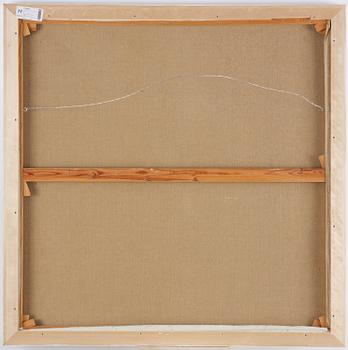
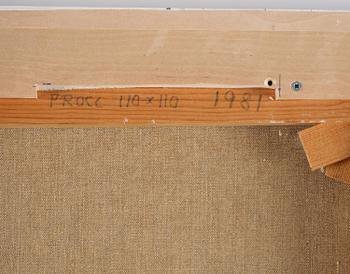
Signed Orup. Executed in 1981. Canvas 110 x 110 cm.
Alkuperä - Provenienssi
The artist's family.
Galerie Bel'Art, Stockholm.
Private Collection, Stockholm.
Muut tiedot
The PROCC series is a collective term for the paintings Bengt Orup created in the late 1980s and onwards. The works were produced in series and titled PROCC, short for Produit Concret Construction, followed by the year. (Thomas Millroth, “Bengt Orup – Painting – Glass”, 2002, p. 69.)
Bengt Orup was one of the pioneers of postwar modernism in Sweden. As early as 1946, he was experimenting with a pure, geometric visual language that connected to the Art Concret movement. The surface was his means of expression, and light was his challenge. In the late 1940s and early 1950s, he created series of concrete paintings characterized by a refined interplay between geometric forms and strong contrasts.
Through his art, he explored volume, surface, and depth, which together produced an intense sensory experience — shifting between the most distinct forms and chaos. These works, along with his later achievements, place Orup among the foremost Nordic concretists.
Kuuluu jälleenmyyntikorvauksen piiriin
Tietoa ostamisesta
Kuvan käyttöoikeudet
Tämän tietokannan taideteokset ovat tekijänoikeudella suojattuja, eikä niitä saa kopioida ilman oikeudenhaltijoiden lupaa. Teokset kopioidaan tässä tietokannassa Bildupphovsrättin lisenssillä.



Muiden katsomia kohteita