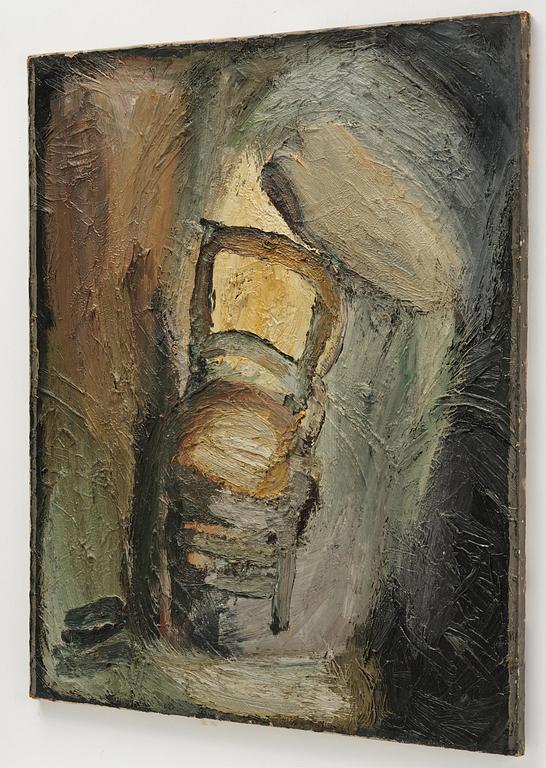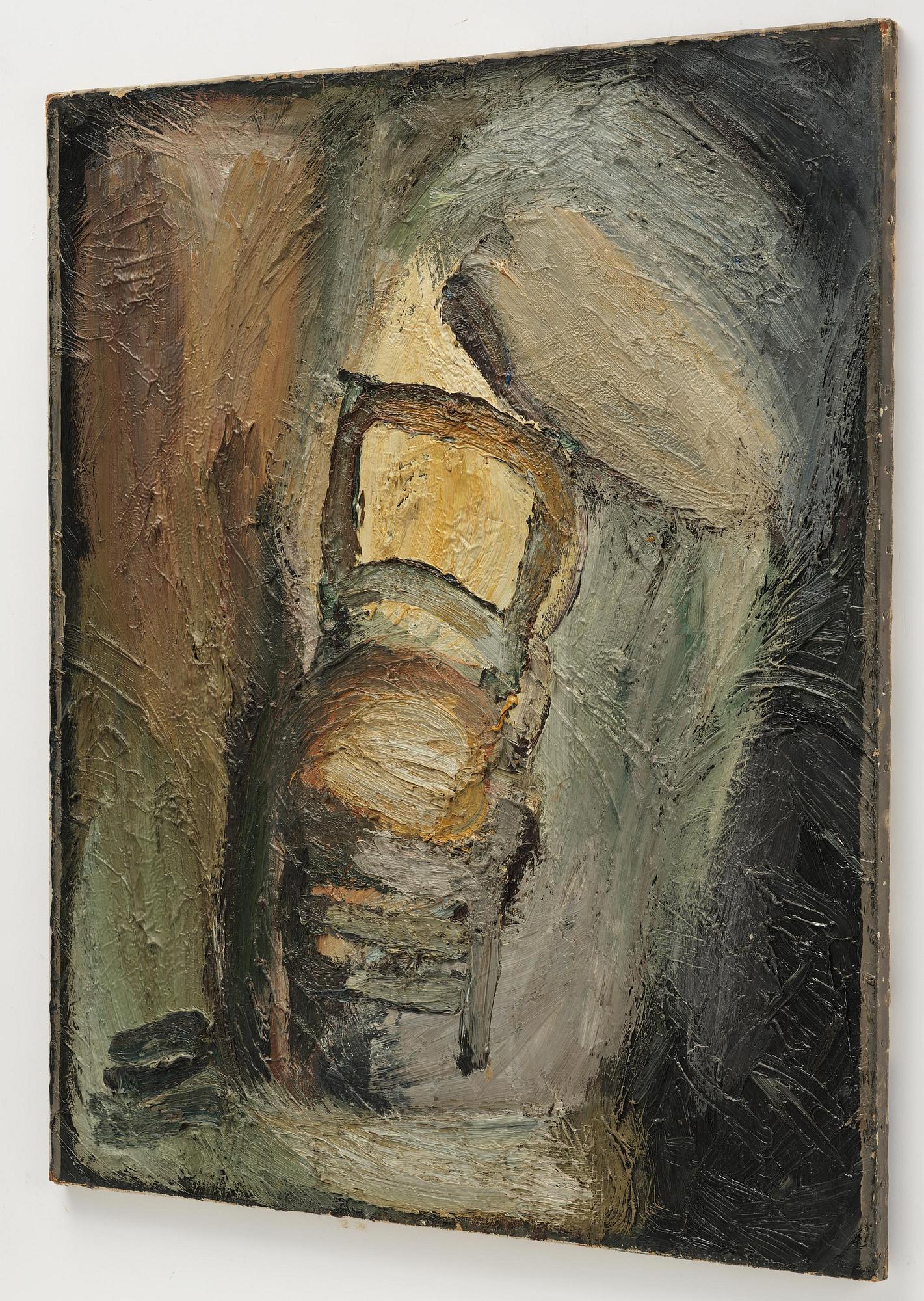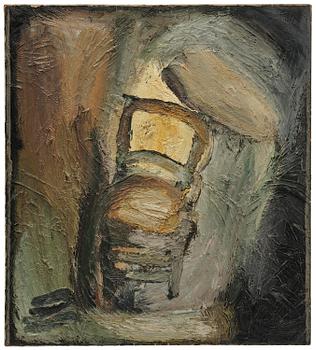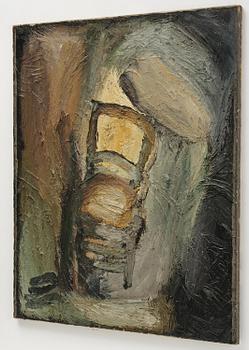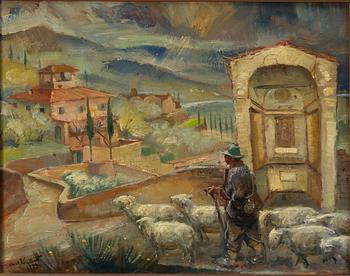
"Stolen"
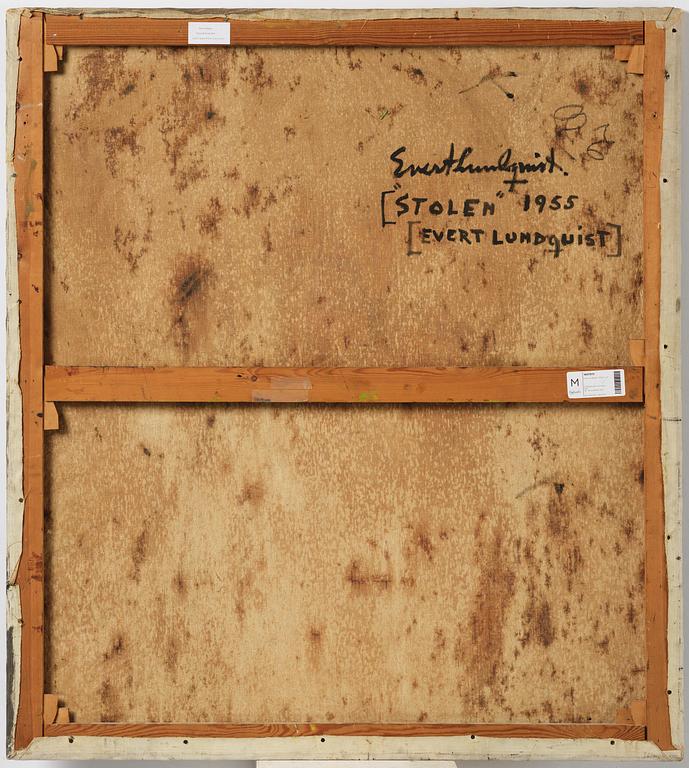
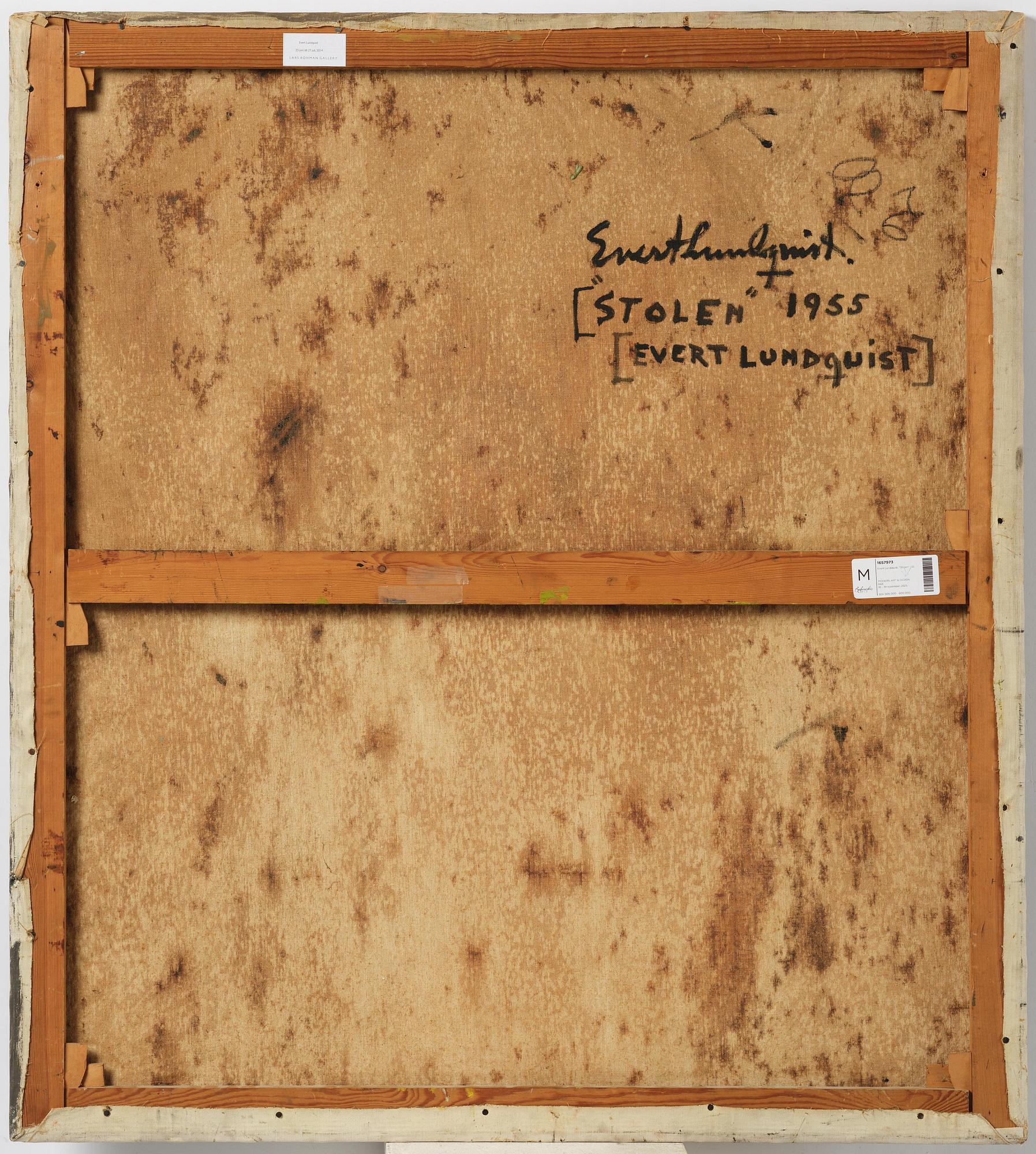
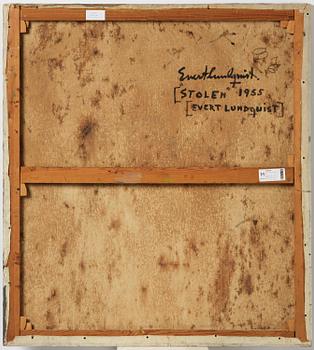
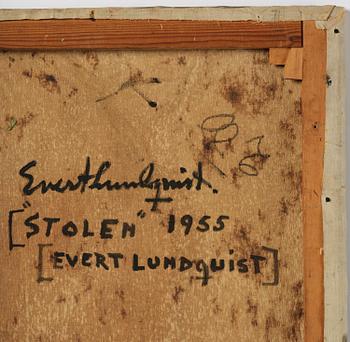
Signed Evert Lundquist and dated 1955 on the reverse. Canvas 116 x 104.5 cm.
Alkuperä - Provenienssi
The artist Walter Bengtsson (gift from the artist).
Näyttelyt
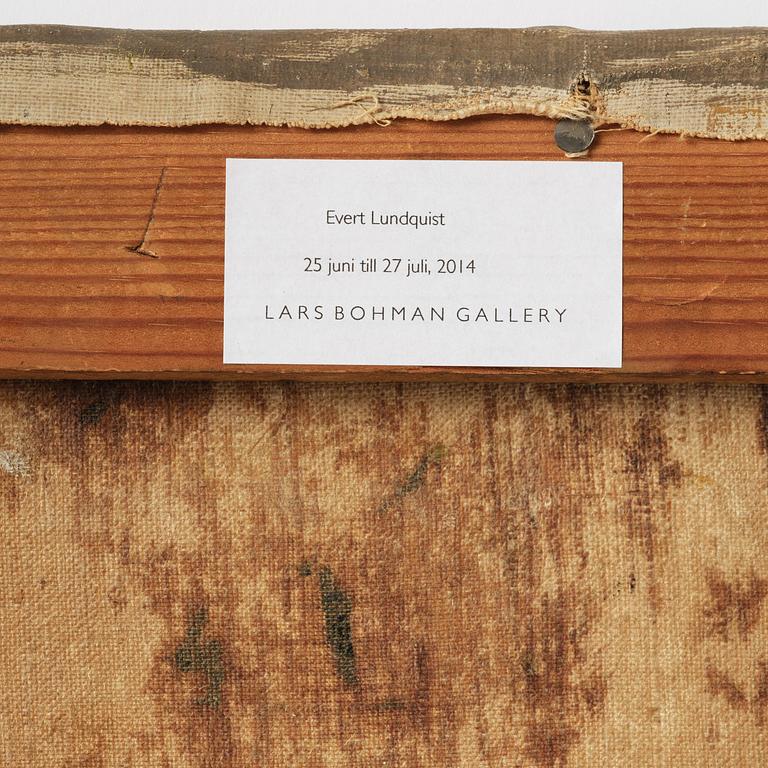
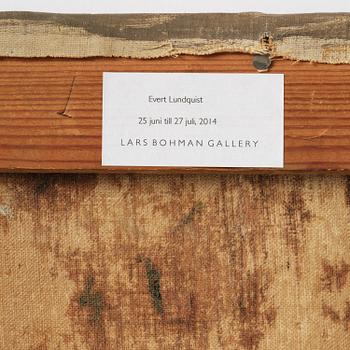
Lars Bohman Gallery, Stockholm, "Evert Lundquist", 18 June - 27 July 2014.
Muut tiedot
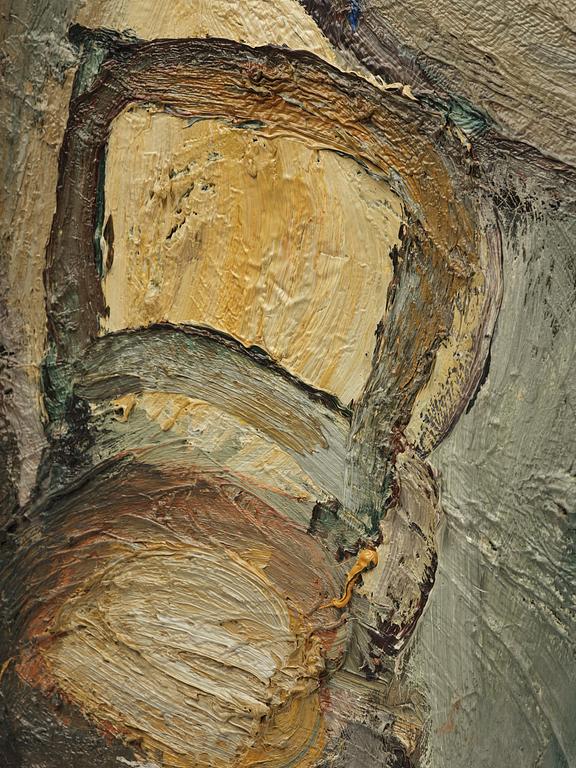
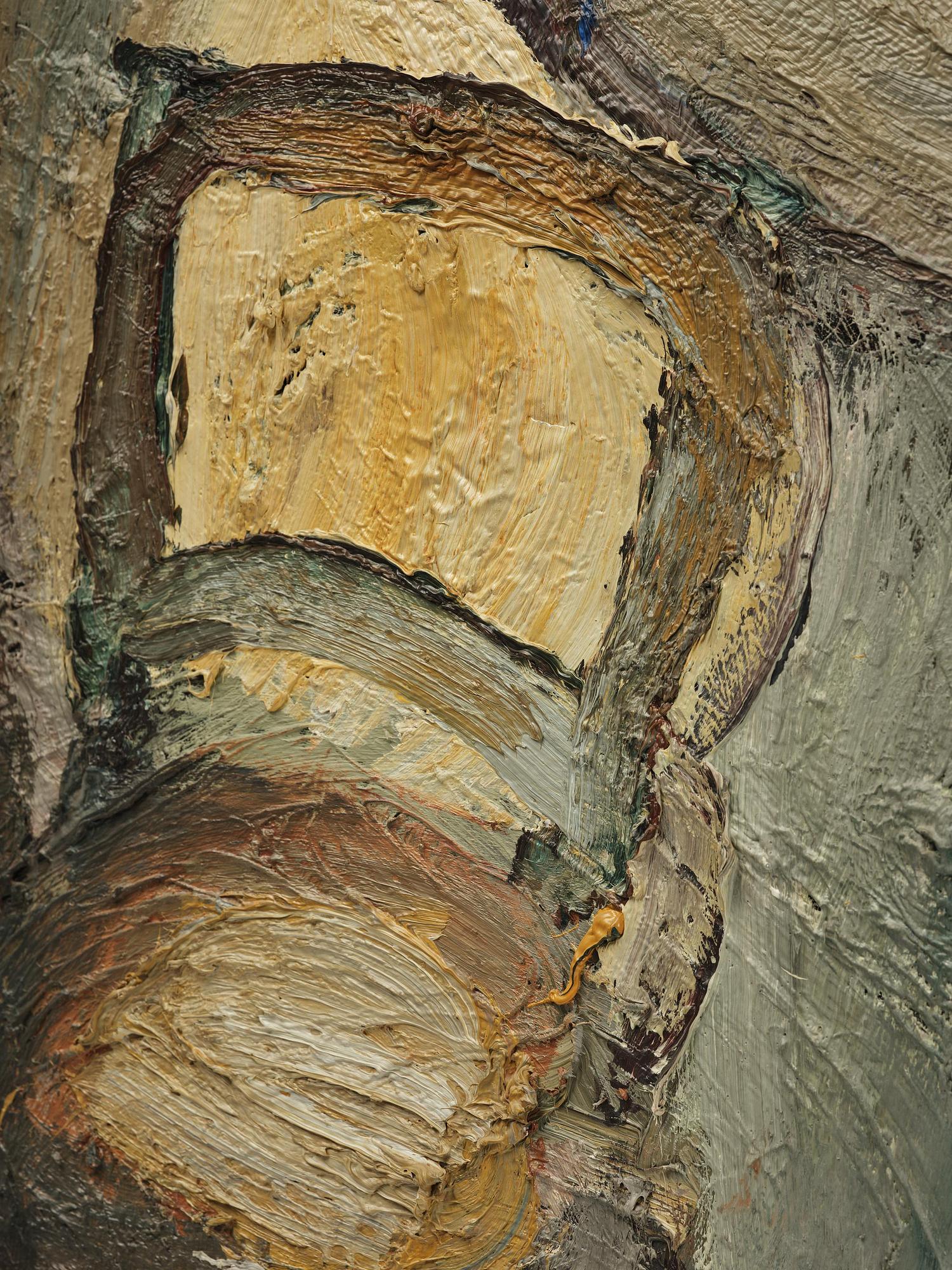
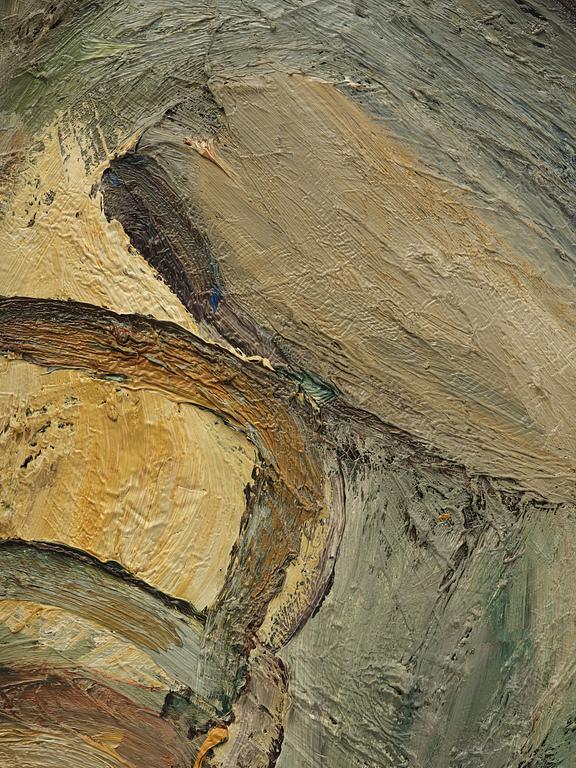
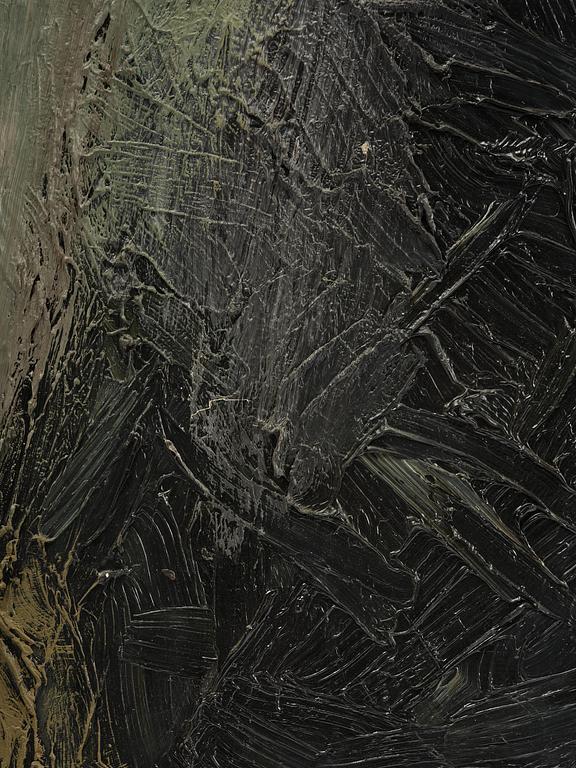
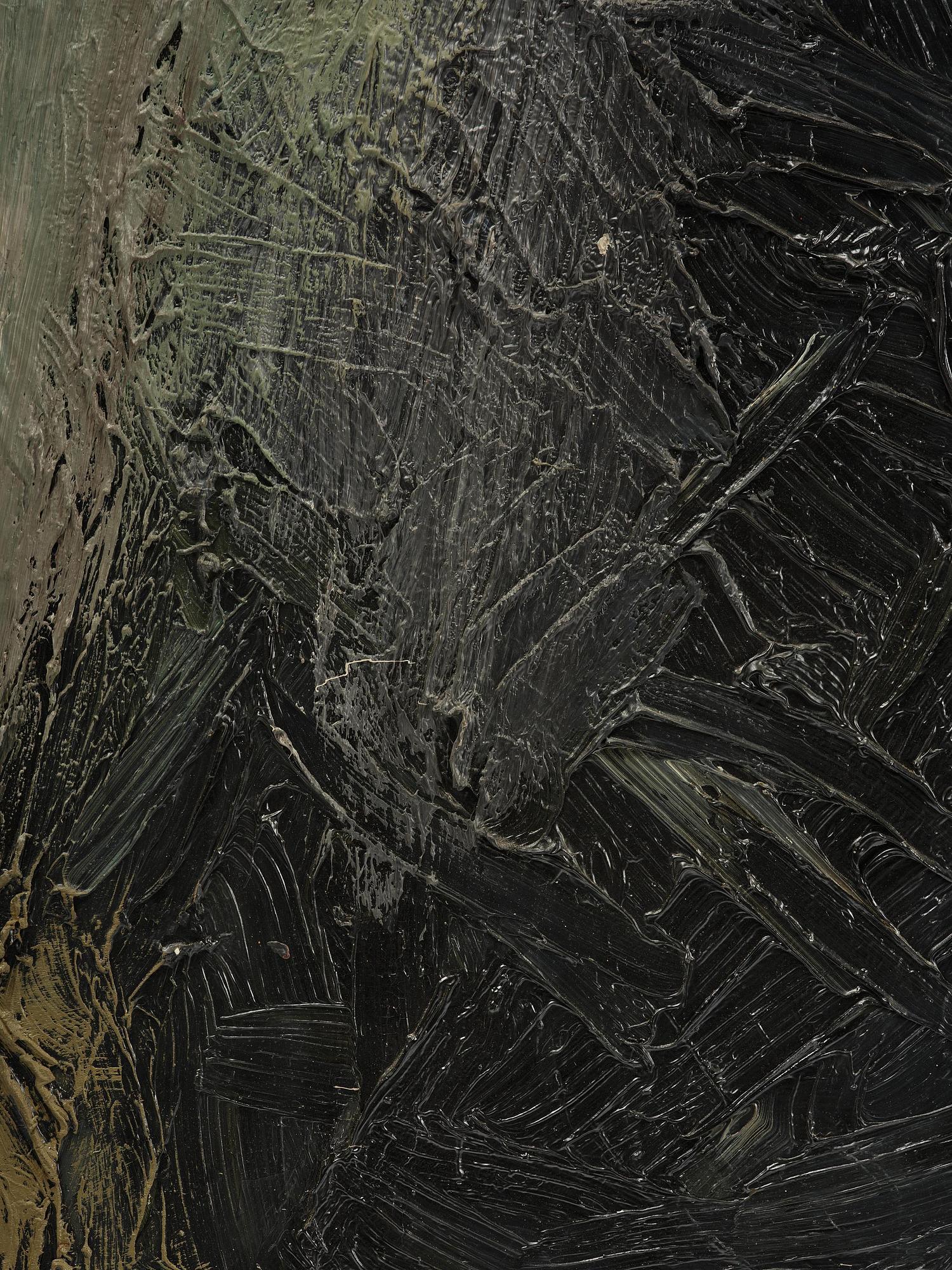
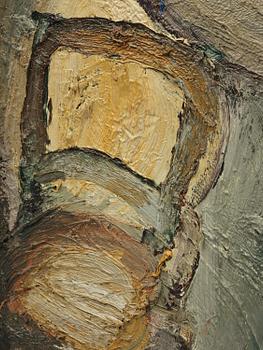
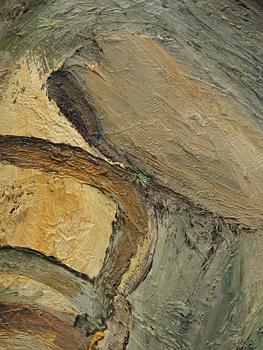
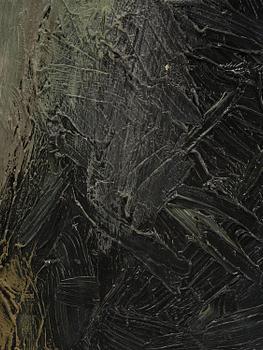
When Evert Lundquist made his breakthrough in 1950 as a neo-expressionist, he had already been active for 30 years. He began in the spirit of New Objectivity in the 1920s and in the heavy expressionism of the 1930s, influenced by James Ensor. Giants of art history such as Rembrandt, Chardin, and van Gogh guided him toward the impasto painting style, where lines, shapes, and colors are born simultaneously. As he himself said: “I grope until I reach the point where it radiates heat.” Lundquist depicted the humble—like a spade, a light, a step, or something as simple as a chair. These subjects gain intensity through strongly simplified forms, almost dissolved in the masses of color.
Together with Staffan Hallström, Olle Nyman, Torsten Renqvist, Sixten Lundbom, and Roland Kempe, Evert Lundquist belonged to the Saltsjö-Duvnäs group, one of the most significant artist collectives in Sweden. They became friends during their time as students at the Royal Academy of Fine Arts and lived for a few years in Saltsjö-Duvnäs during the 1940s. All achieved great success, particularly Staffan Hallström and Olle Nyman, but above all Evert Lundquist, who also exhibited extensively internationally.
Through his visionary yet challenging simplicity, Lundquist became one of the most important artists of his generation. He represented Sweden at the São Paulo Biennale, where he won a prize, and was selected to participate in the Guggenheim International Award in New York in 1964 for the world’s 100 best artists, as well as the Dunn International at the Beaverbrook Art Gallery in Canada and the Tate Gallery in London. International museums purchased his works, and prominent galleries worldwide wanted to exhibit him, but after a few years he decided to withdraw from the international art market. From 1953, he lived and worked in a white-plastered building near Drottningholm Palace. A few years before his death, he became completely blind but continued painting until the very end. The house is preserved as the Evert Lundquist Studio Museum.
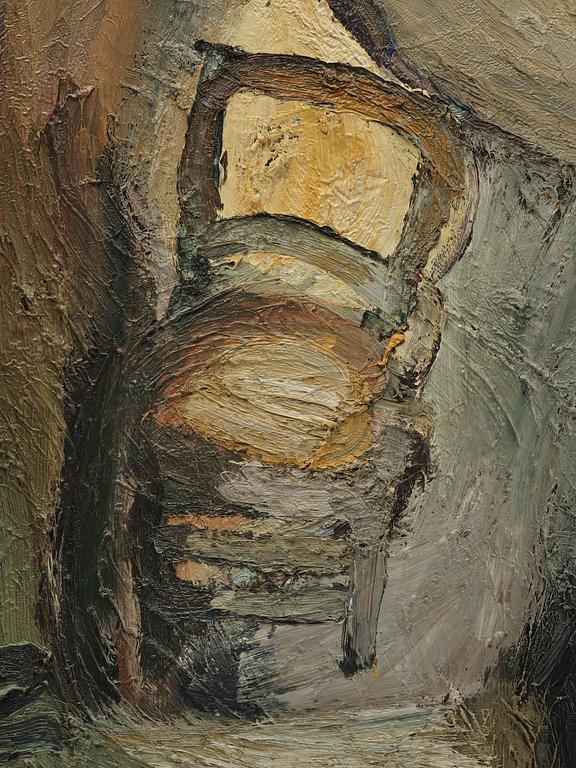
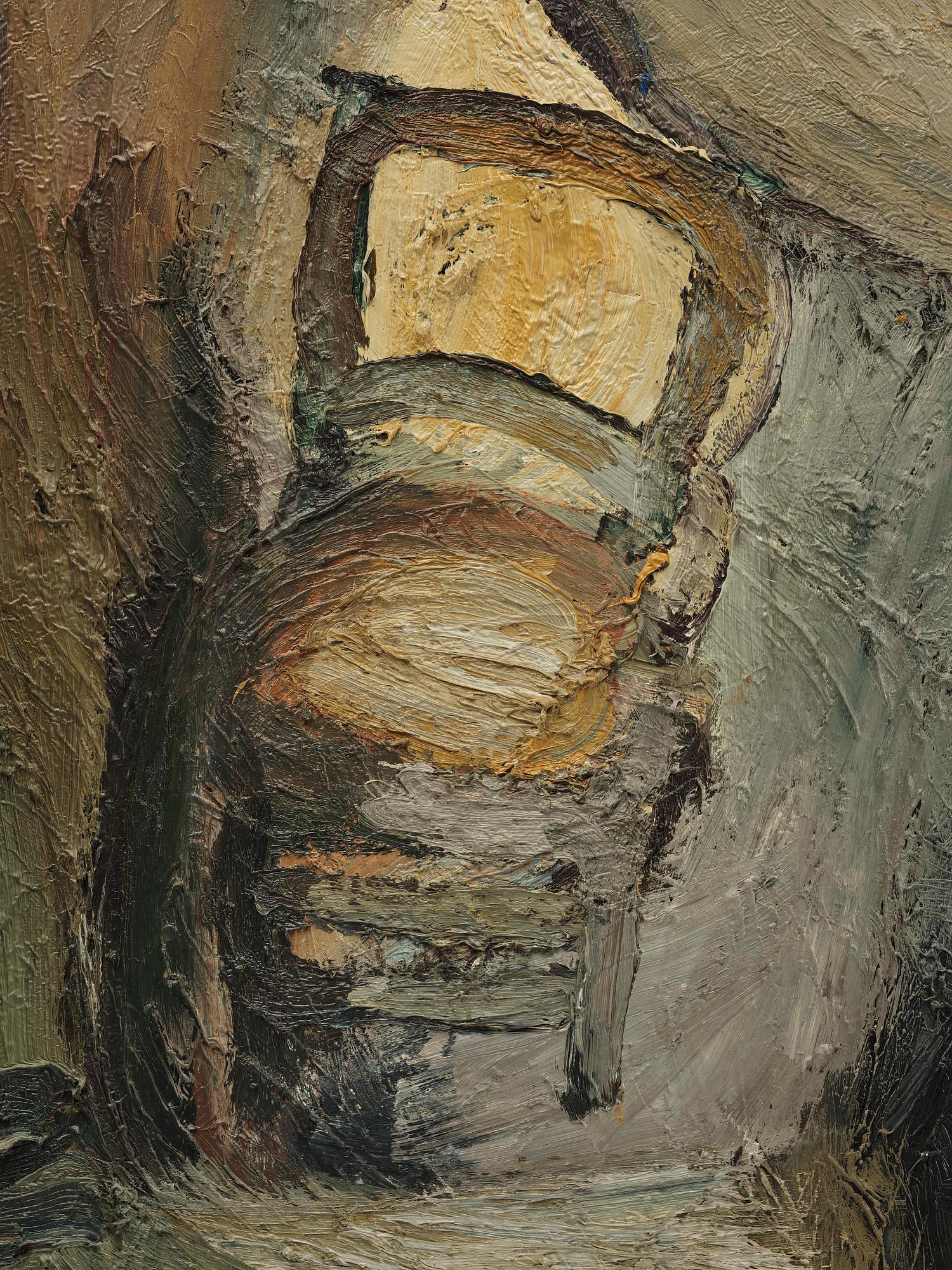
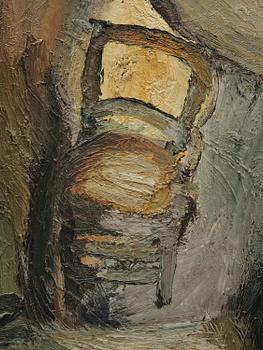
In the present work, Lundquist has depicted a chair with so much color that it almost seems to rise from the depths toward the viewer. The auction painting is an outstanding example of the solitary, suggestive objects that emerged from Lundquist’s brush in the 1950s and early 1960s.
Evert Lundquist is represented in institutions including the Museum of Modern Art (MoMA) in New York, Tate Gallery in London, Centre Pompidou in Paris, Moderna Museet in Stockholm, Nationalmuseum in Stockholm, Norrköping Art Museum, Malmö Museum, Gothenburg Museum of Art, Kalmar Art Museum, as well as museums in Umeå, Linköping, Eskilstuna, Värmland, and Västergötland. He also completed public artworks throughout Sweden. Moderna Museet has hosted several major retrospective exhibitions of Lundquist’s paintings, the first as early as 1974, which received widespread attention and acclaim.
Kuuluu jälleenmyyntikorvauksen piiriin
Tietoa ostamisesta
Kuvan käyttöoikeudet
Tämän tietokannan taideteokset ovat tekijänoikeudella suojattuja, eikä niitä saa kopioida ilman oikeudenhaltijoiden lupaa. Teokset kopioidaan tässä tietokannassa Bildupphovsrättin lisenssillä.