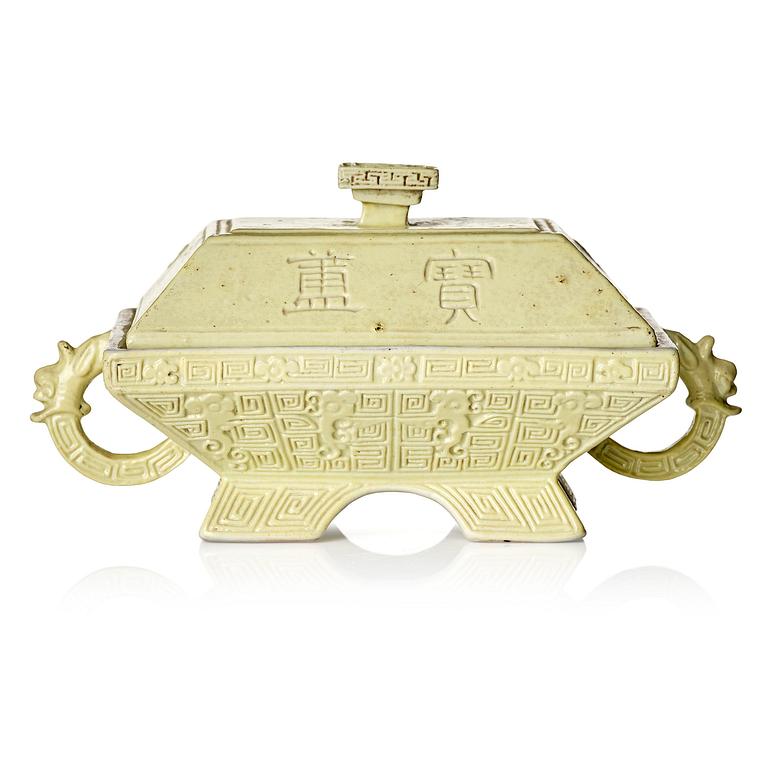
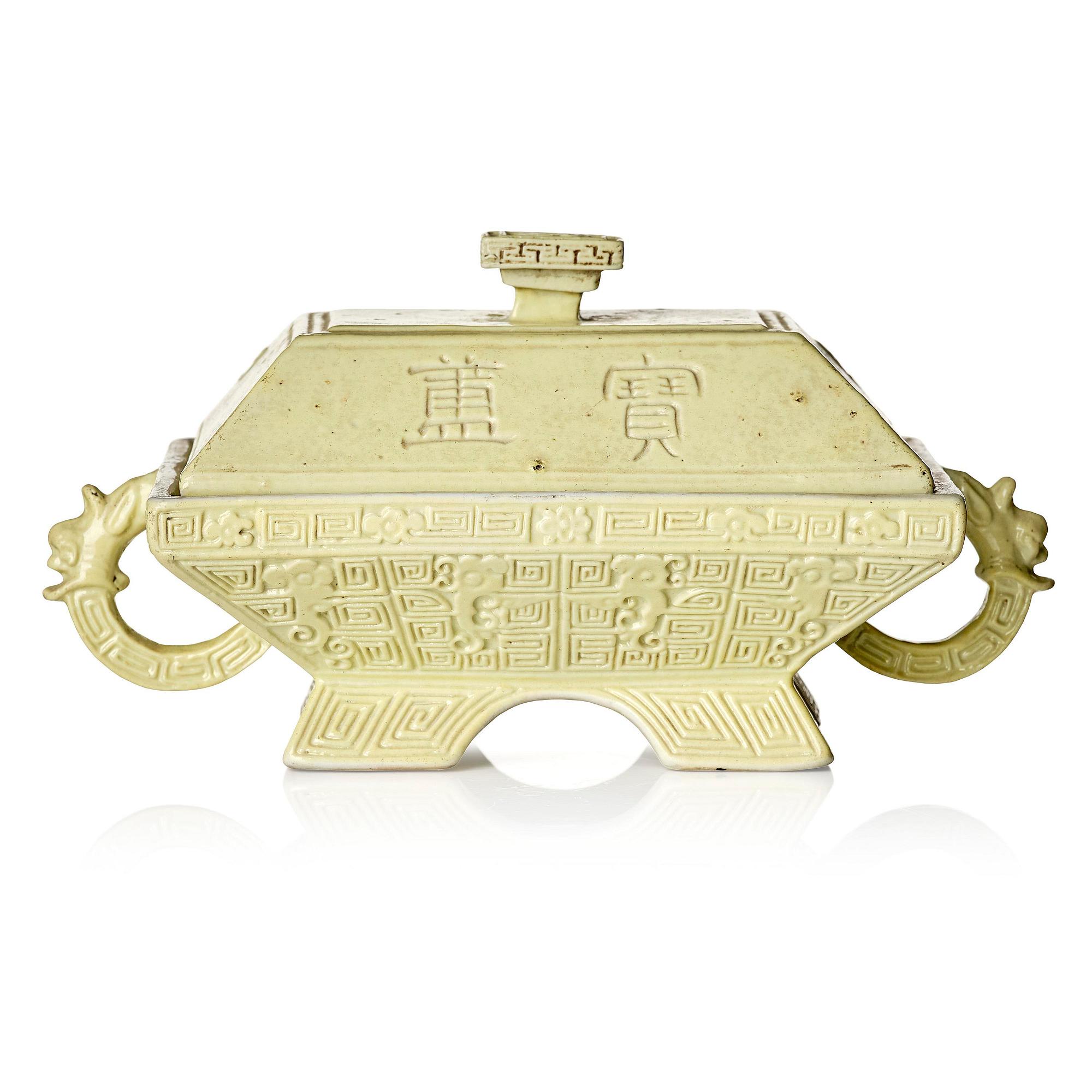
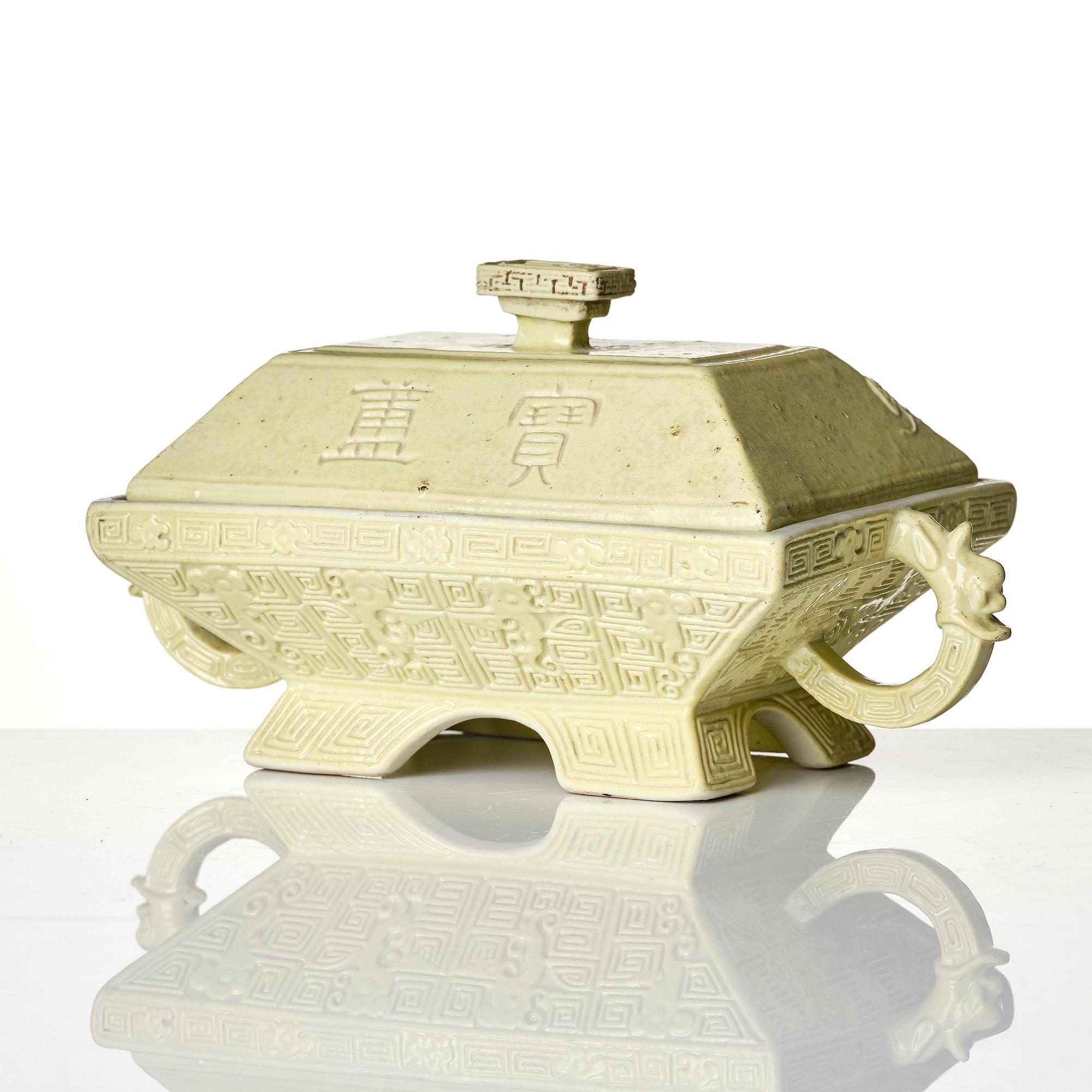
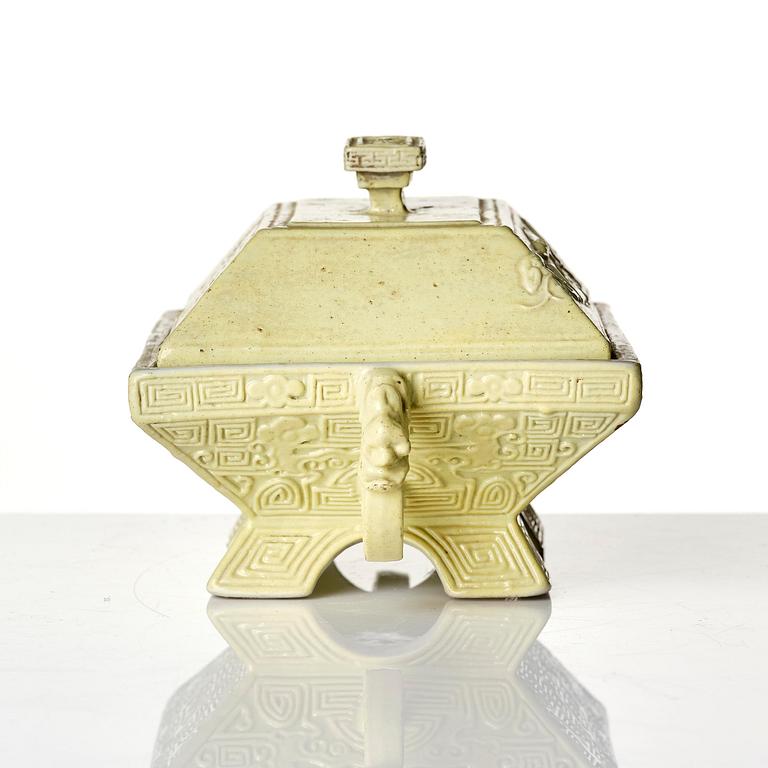
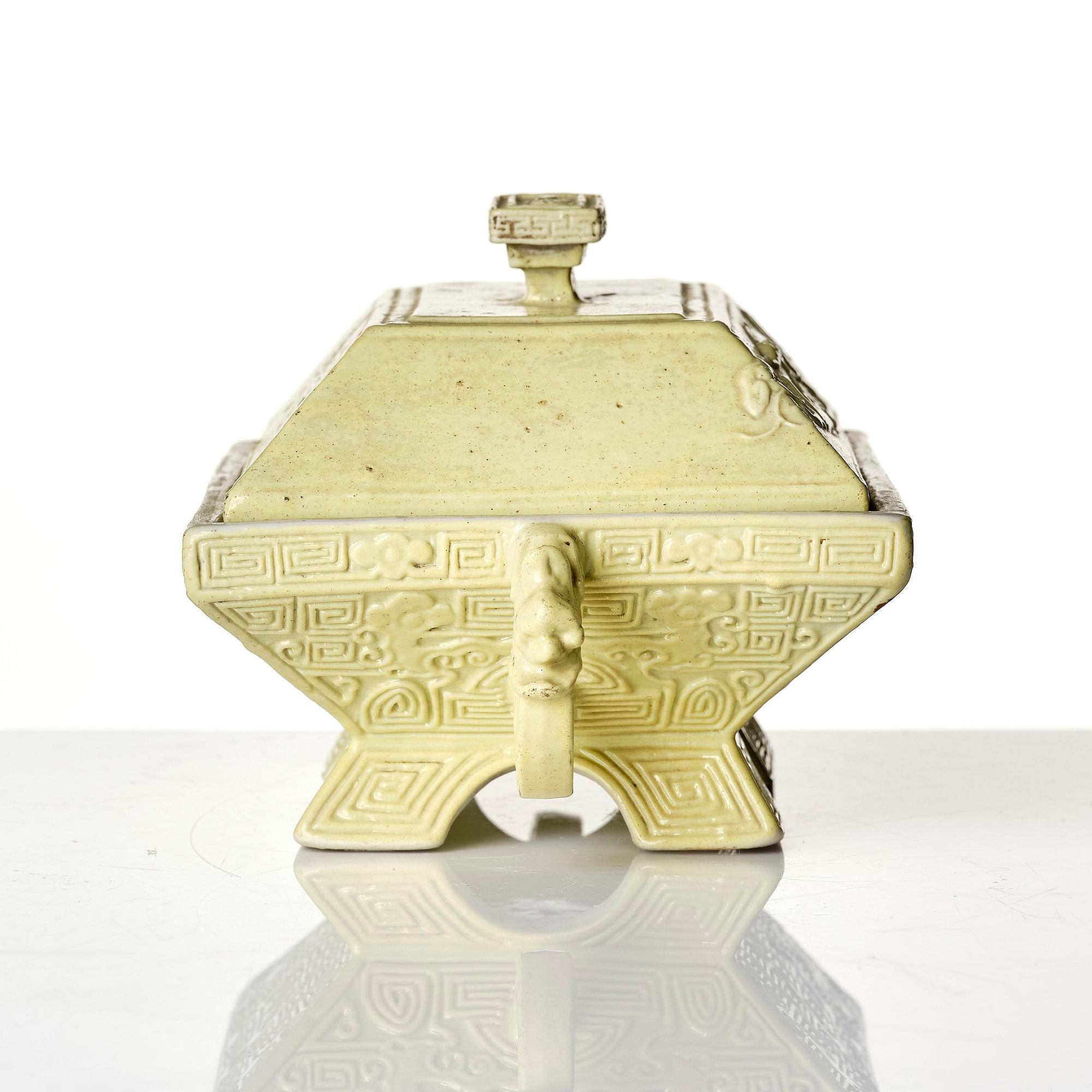
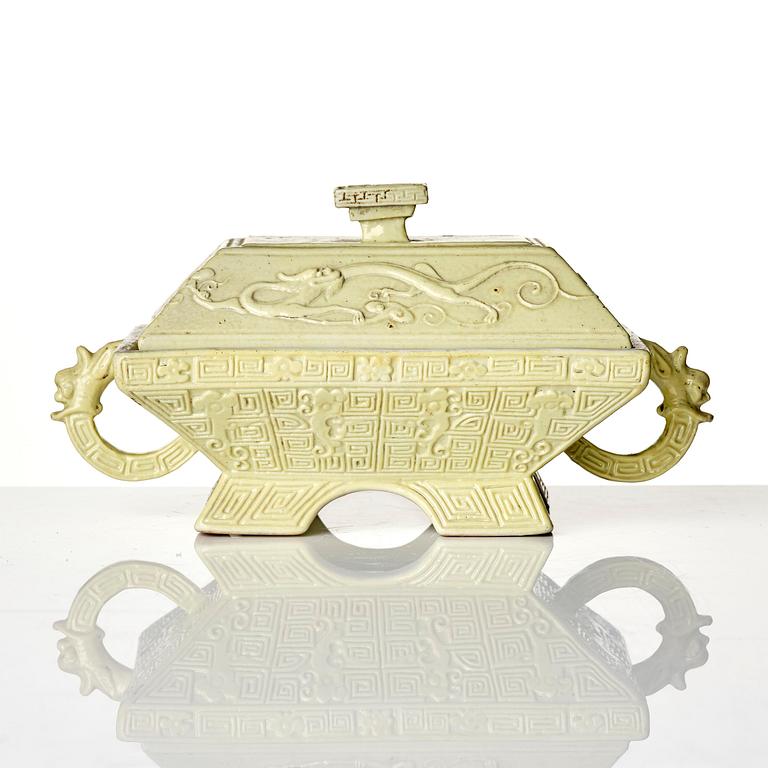
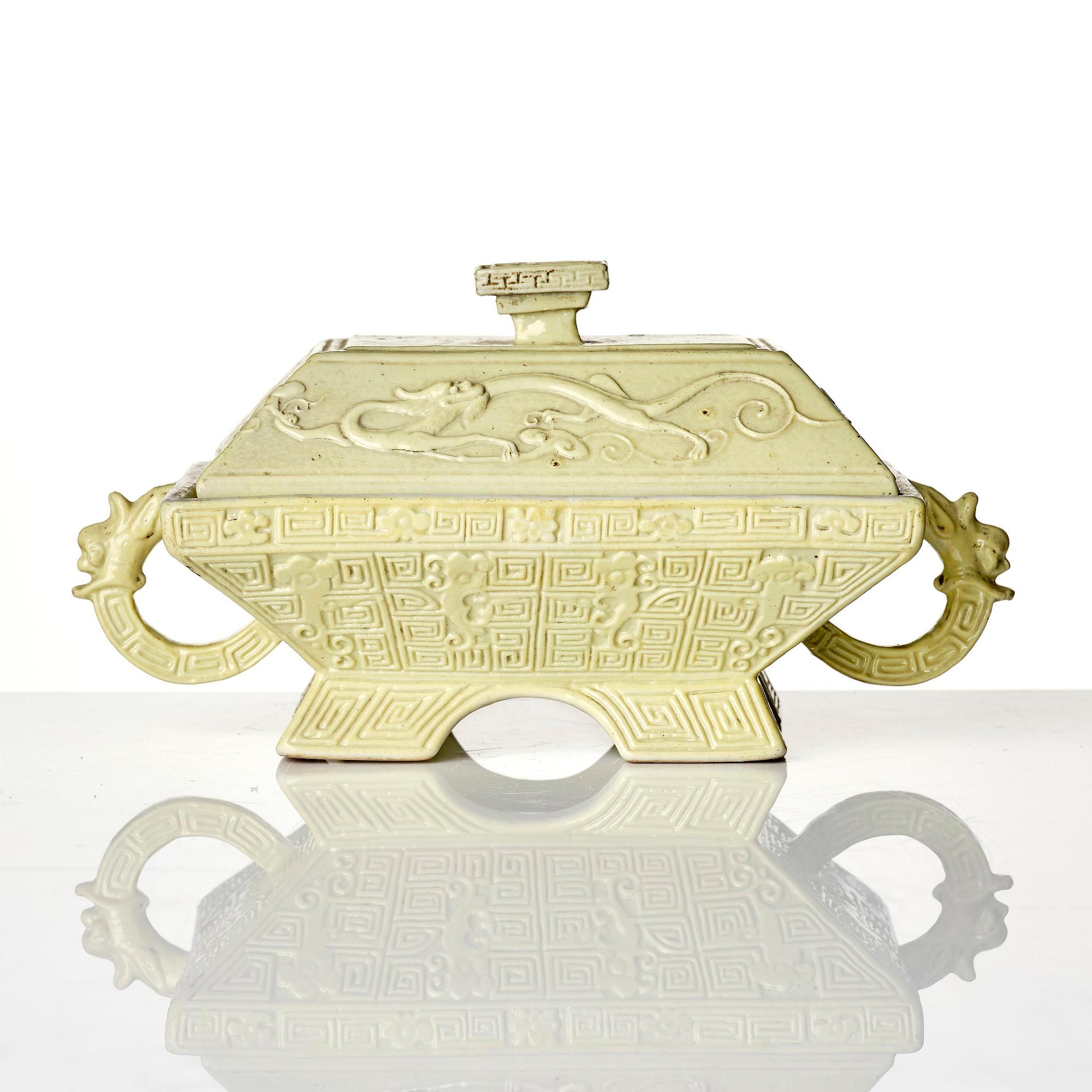
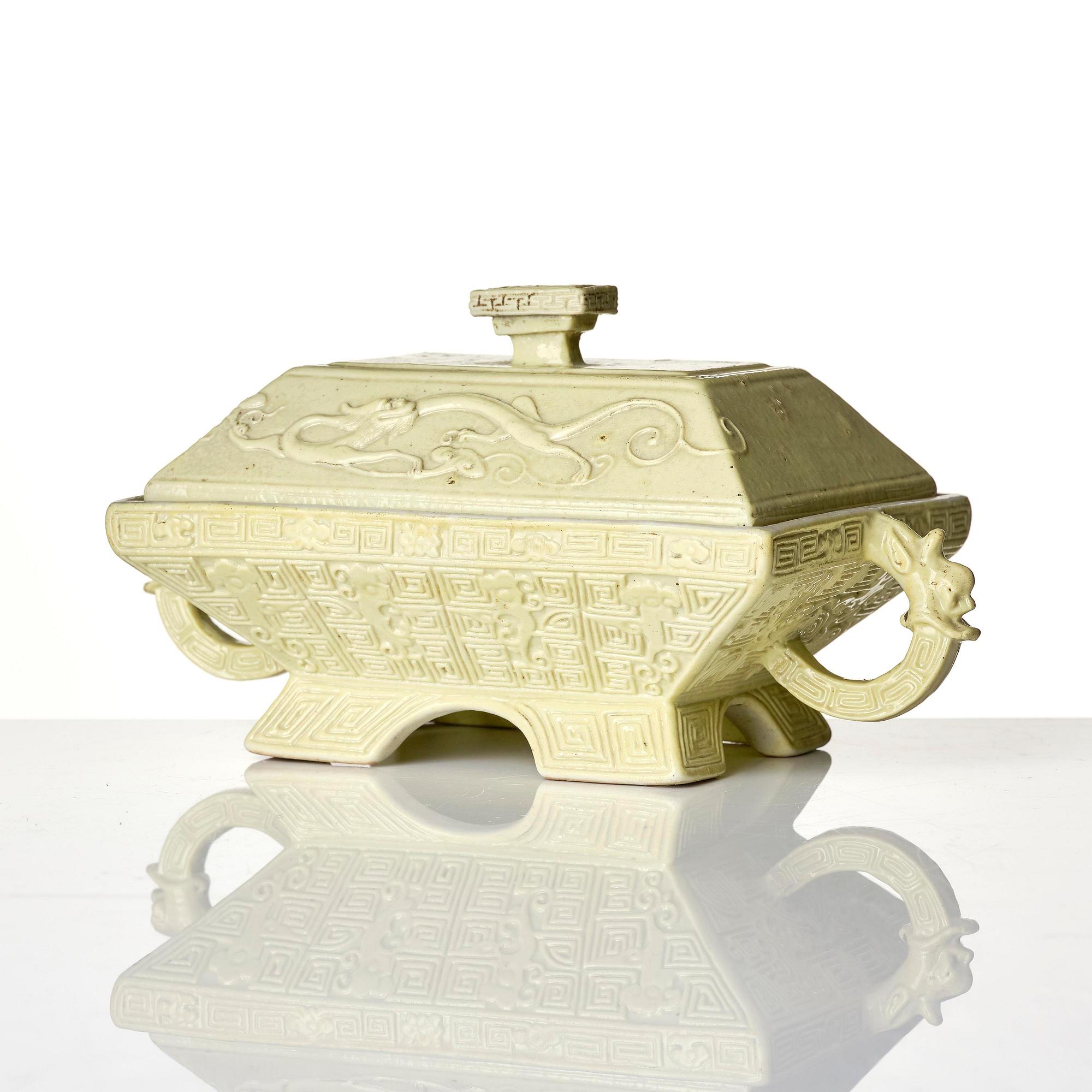
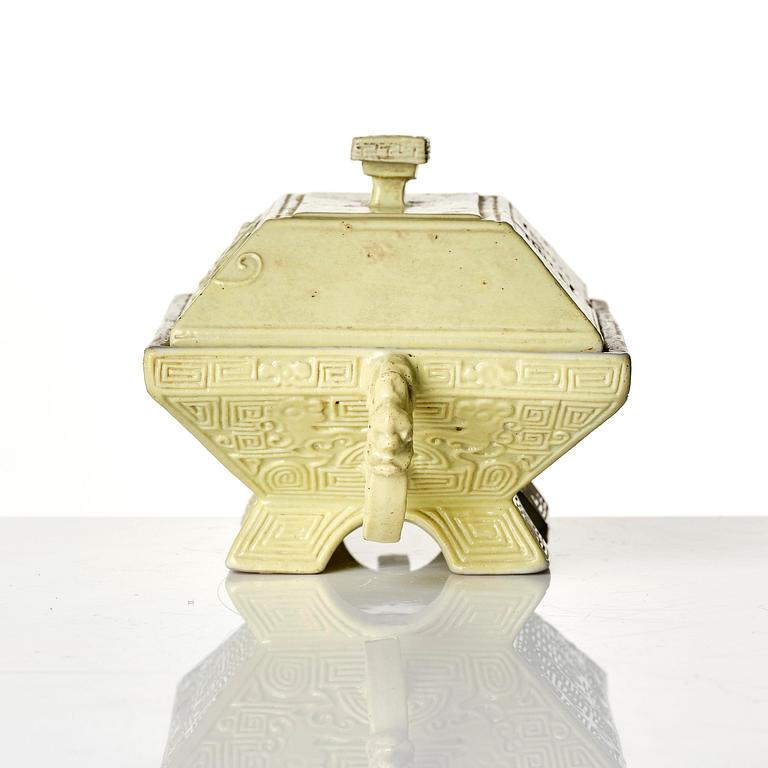
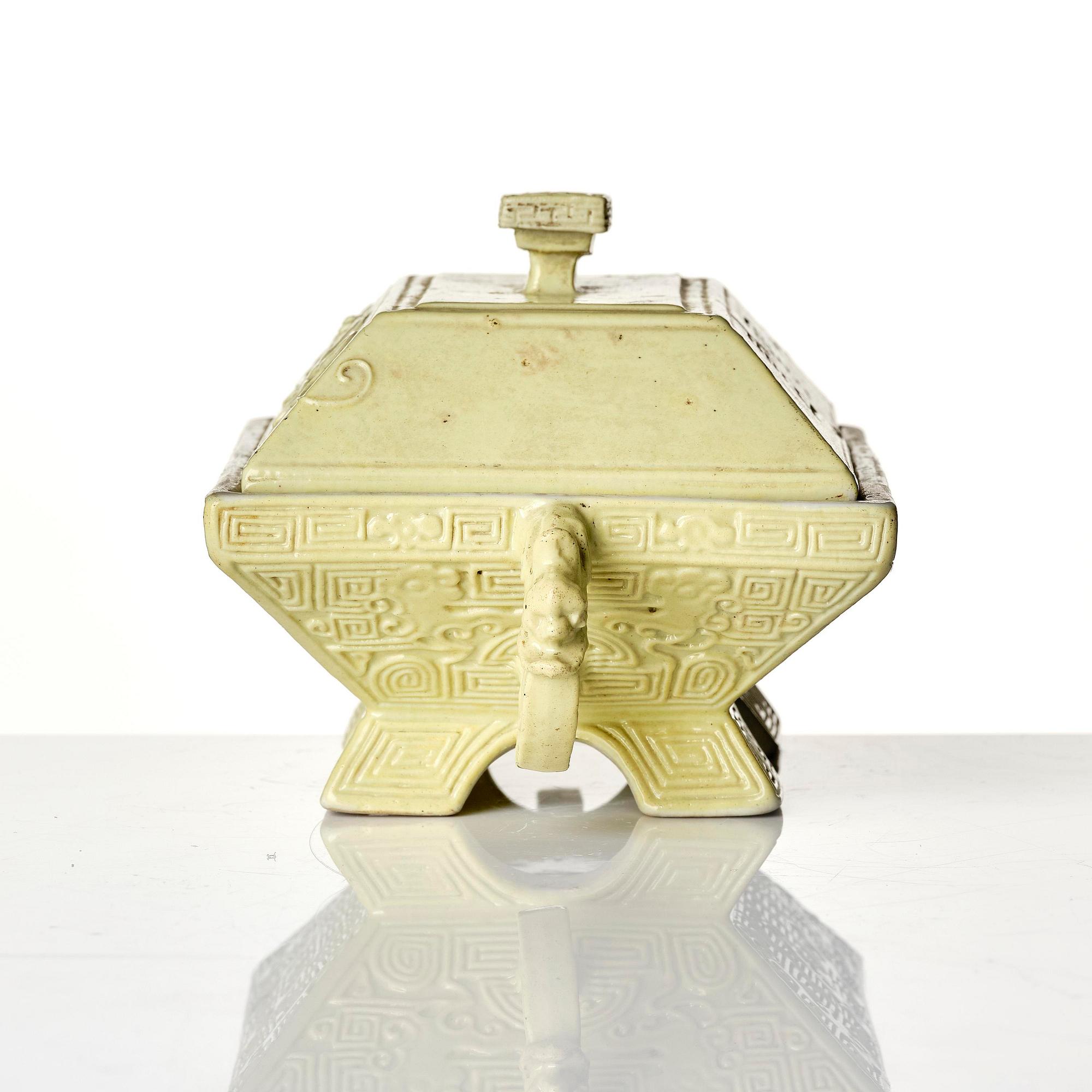
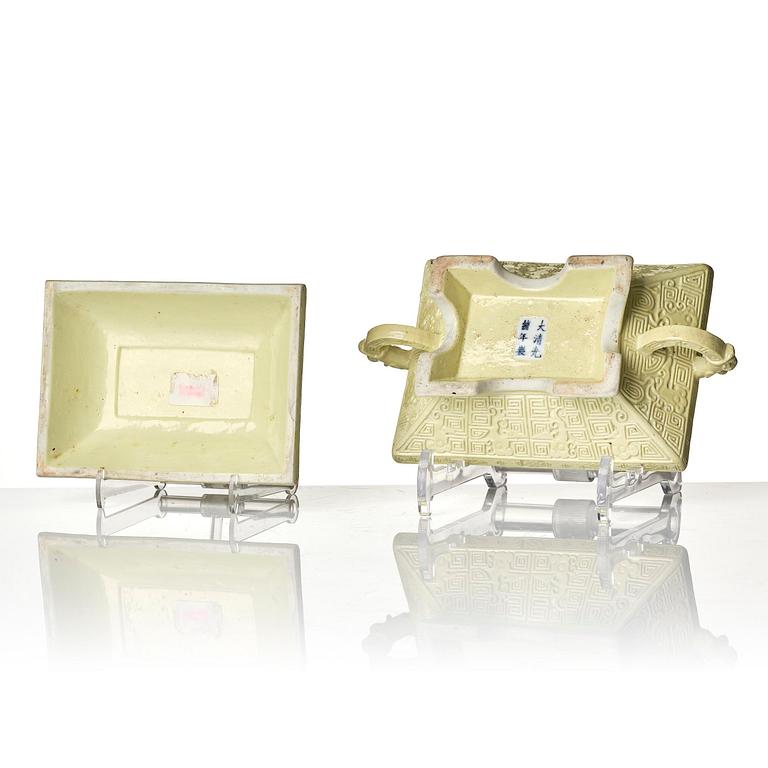
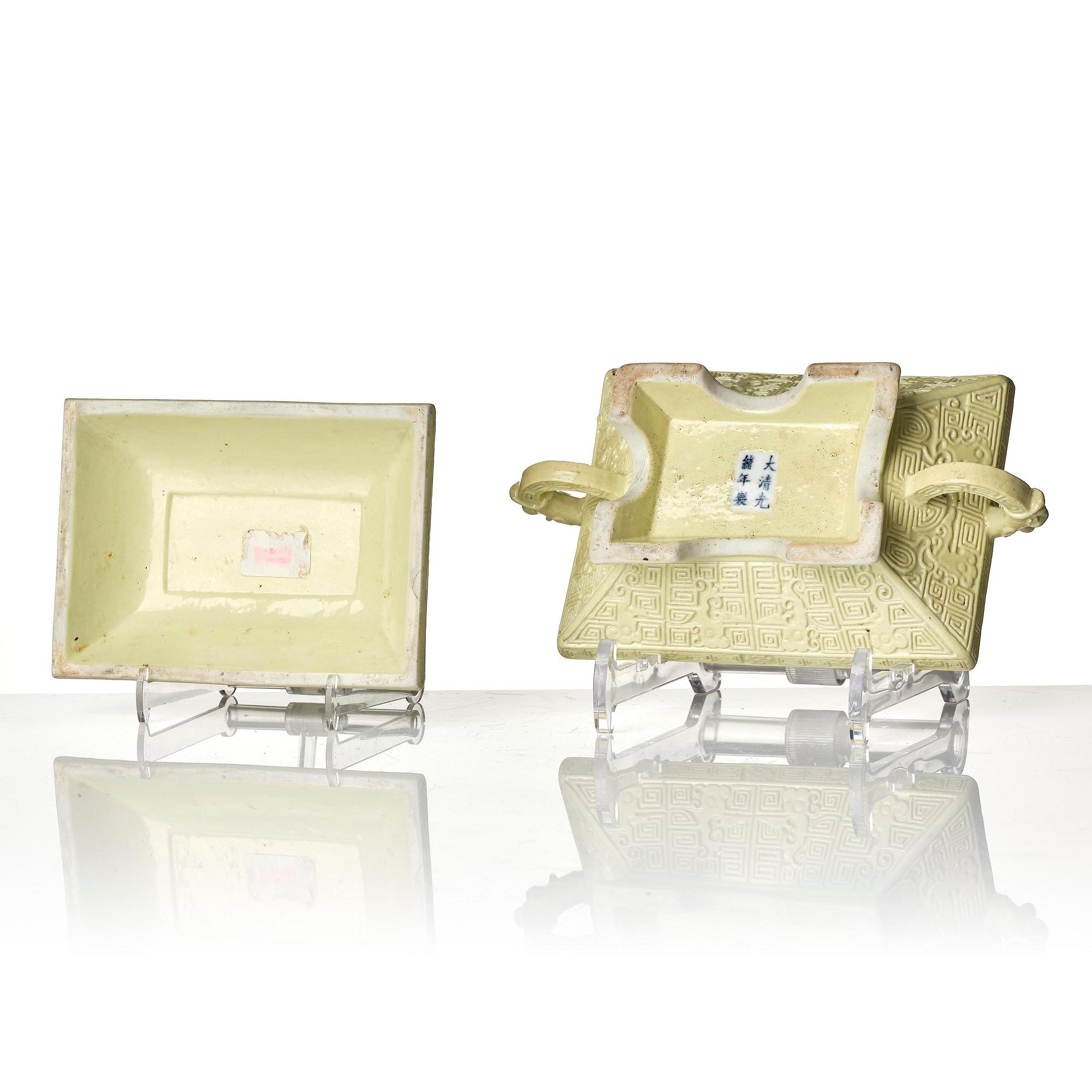
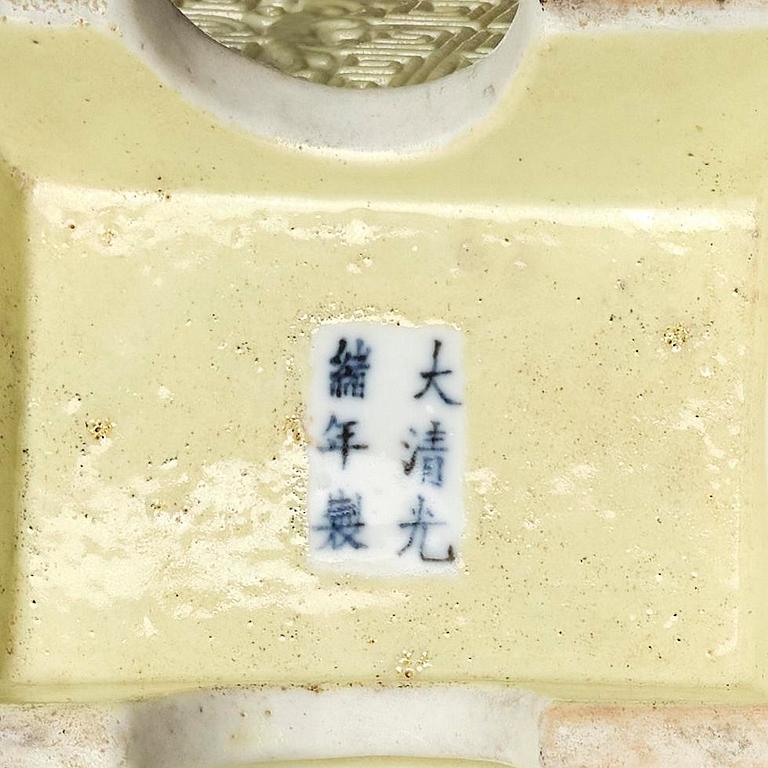
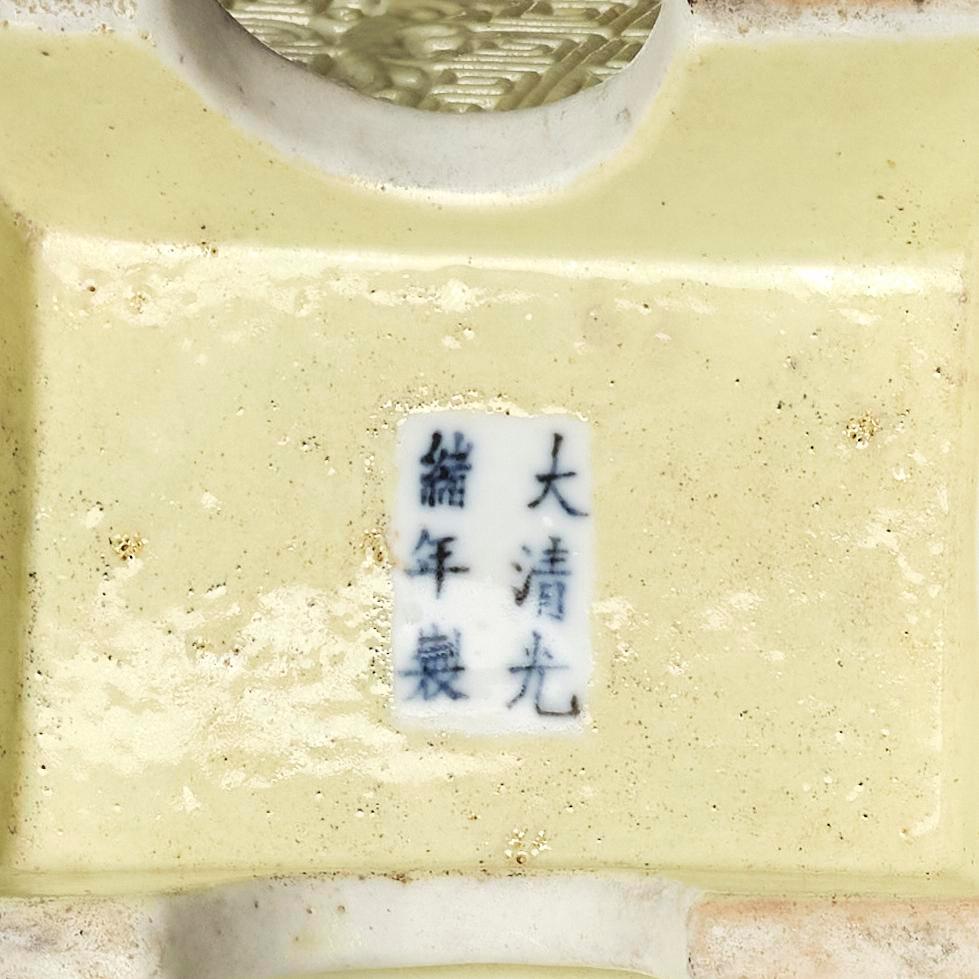
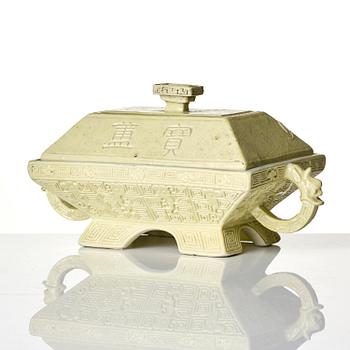
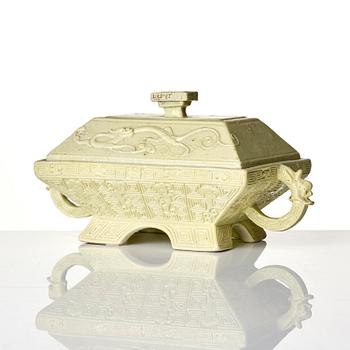
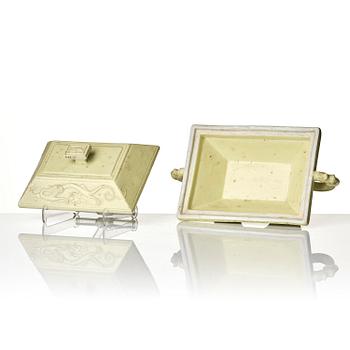
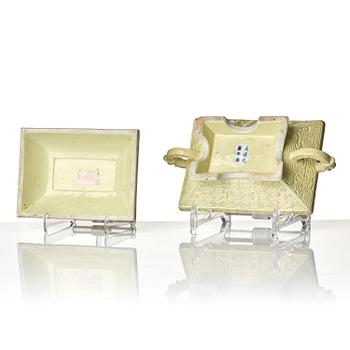
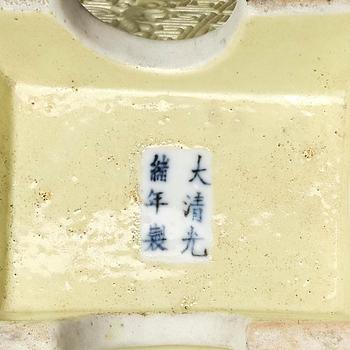
Of pale yellow glaze. After the archaic bronze shape of 簠 (fu), the vessel of trapezoidal shape with straight lared sides supported on splayed bracket feet with arch-shaped apertres on all sides. The body with moulded decoration in relief with dragons and chinese characters, dragon handles. Length 21 cm.
Firingspots.
Alkuperä - Provenienssi
Property of a private Swedish collector.
Näyttelyt
Compare with one sold in these rooms at Bukowskis, sale 601, lot no 646.
Compare with one sold at Sothebys, lot 32, Important Chinese Art, 1 November 2023 London.
Kirjallisuus
Compare with an inscribed bronze fu of the Zhou period, illustrated by J. Rawson, Western Zhou Ritual Bronzes from the Arthur M. Sacker Collections, vol. IIA, 1990, p. 107, fig. 15b; it is interesting to note the Qing ceramic version follows closely with the same undulating motif found decorating the vessel and lid of the early bronze original.
There is also a bronze prototype of the perid in the Smithsonian, Accession Number
S1987.314a-b. There listed as a: Grain server (fu).
Muut tiedot
The present lot is a Qing-dynasty ceramic made in imitation of a bronze prototype that first appeared in the late Western Zhou dynasty as part of an extended repertoire of ritual vessels. Known as a fu, this type of vessel was used for storage of food.
Qing ritual wares were strictly regulated and standardized under guidelines set out by the Qianlong emperor. It is known that regulations relating to the specification of ritual vessels were included in a series of manuscripts, first printed in 1766, known as the Huangchao Liqi Tushi, 'Illustrated regulations for ceremonial paraphernalia of the Qing dynasty'.
A drawing of a fu vessel, which is considered to be the source from which the 1766 edition was printed, now in the Victoria and Albert Museum, is illustrated by M. Medley, Transactions of the Oriental Ceramic Society, 'The "Illustrated Regulations for Ceremonial Paraphernalia of the Ch'ing Dynasty" in the Victoria and Albert Museum', pl. 39b.
Lisätietoja ja kuntoraportit

Tietoa ostamisesta







Muiden katsomia kohteita