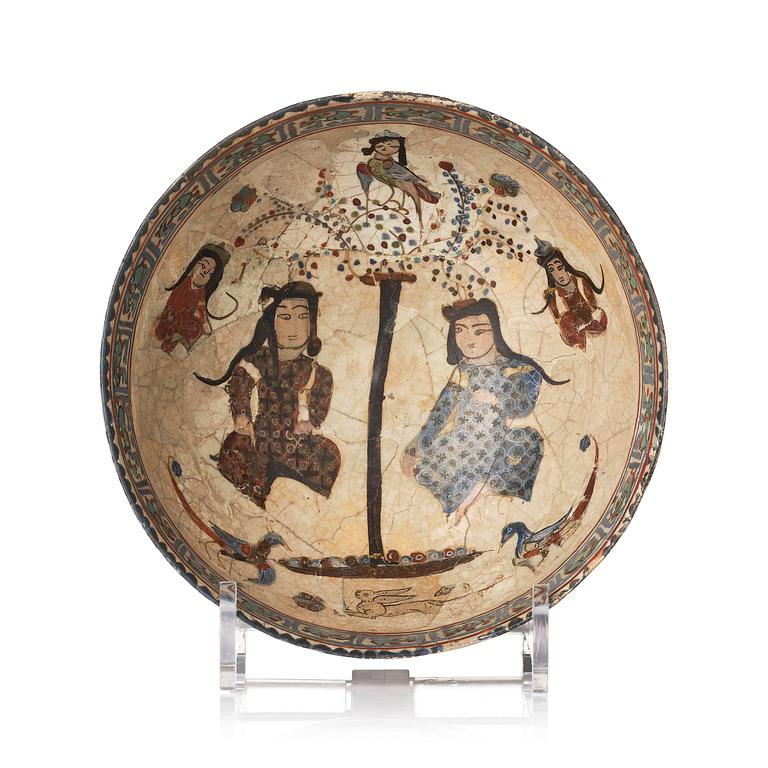
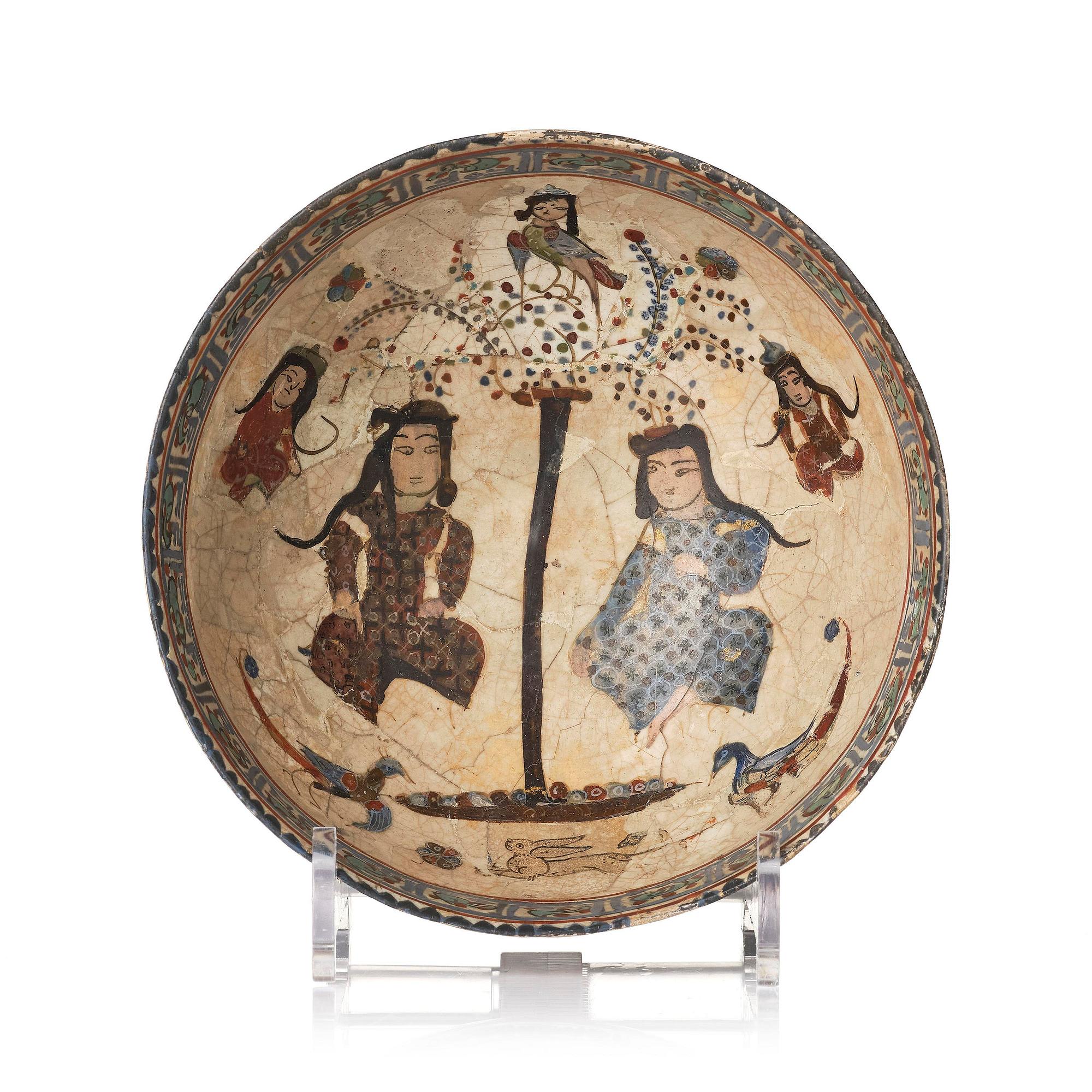
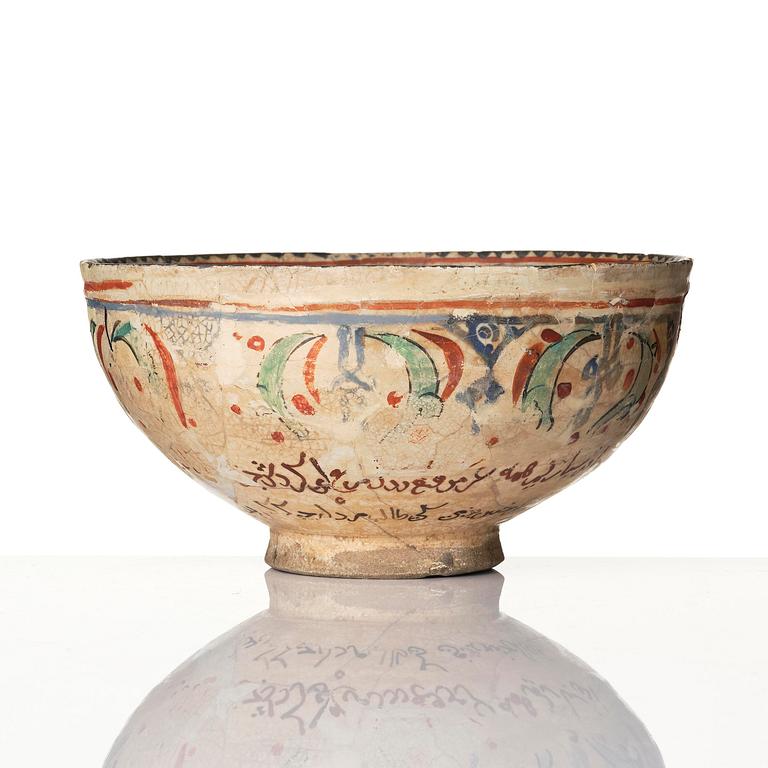
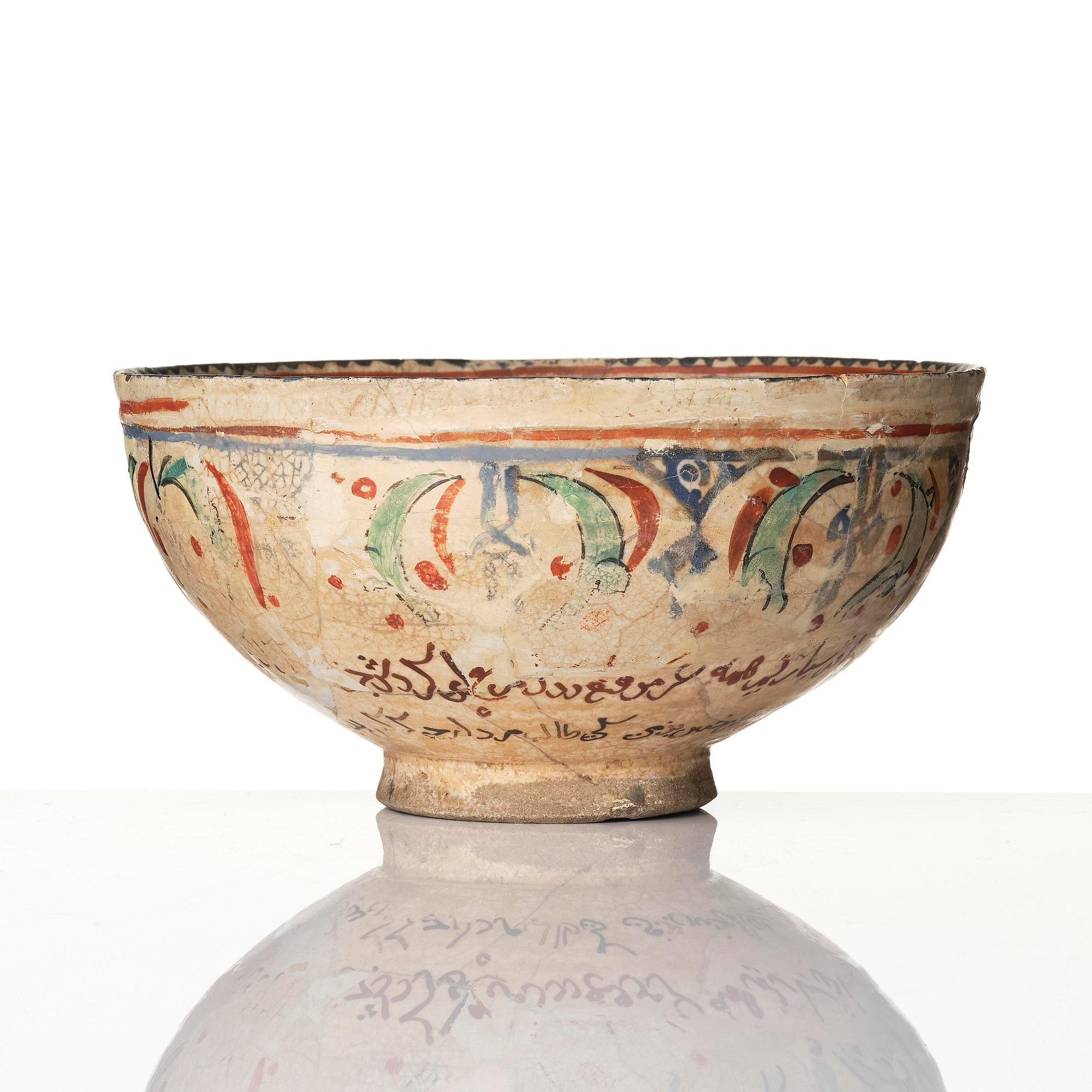
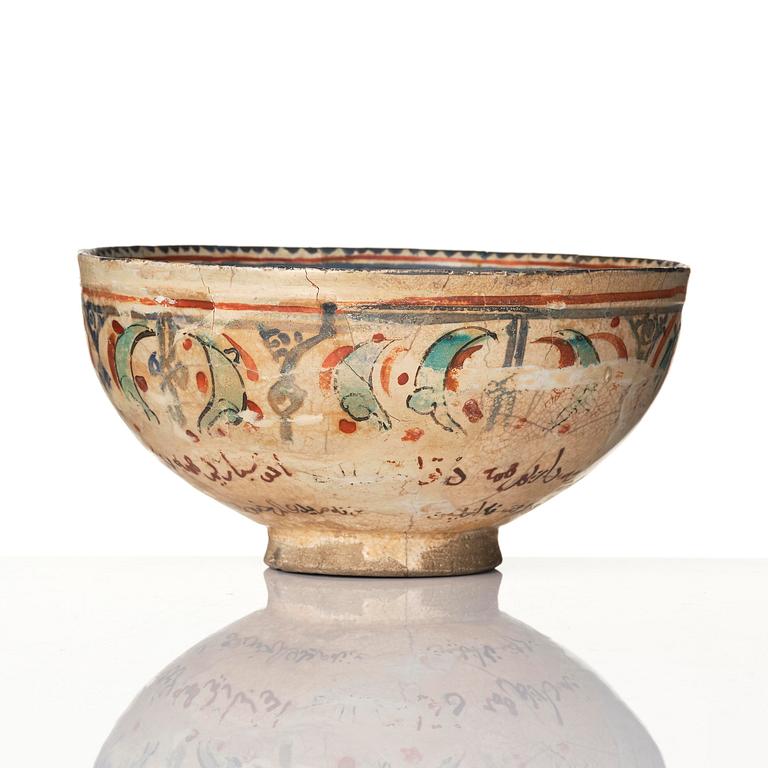
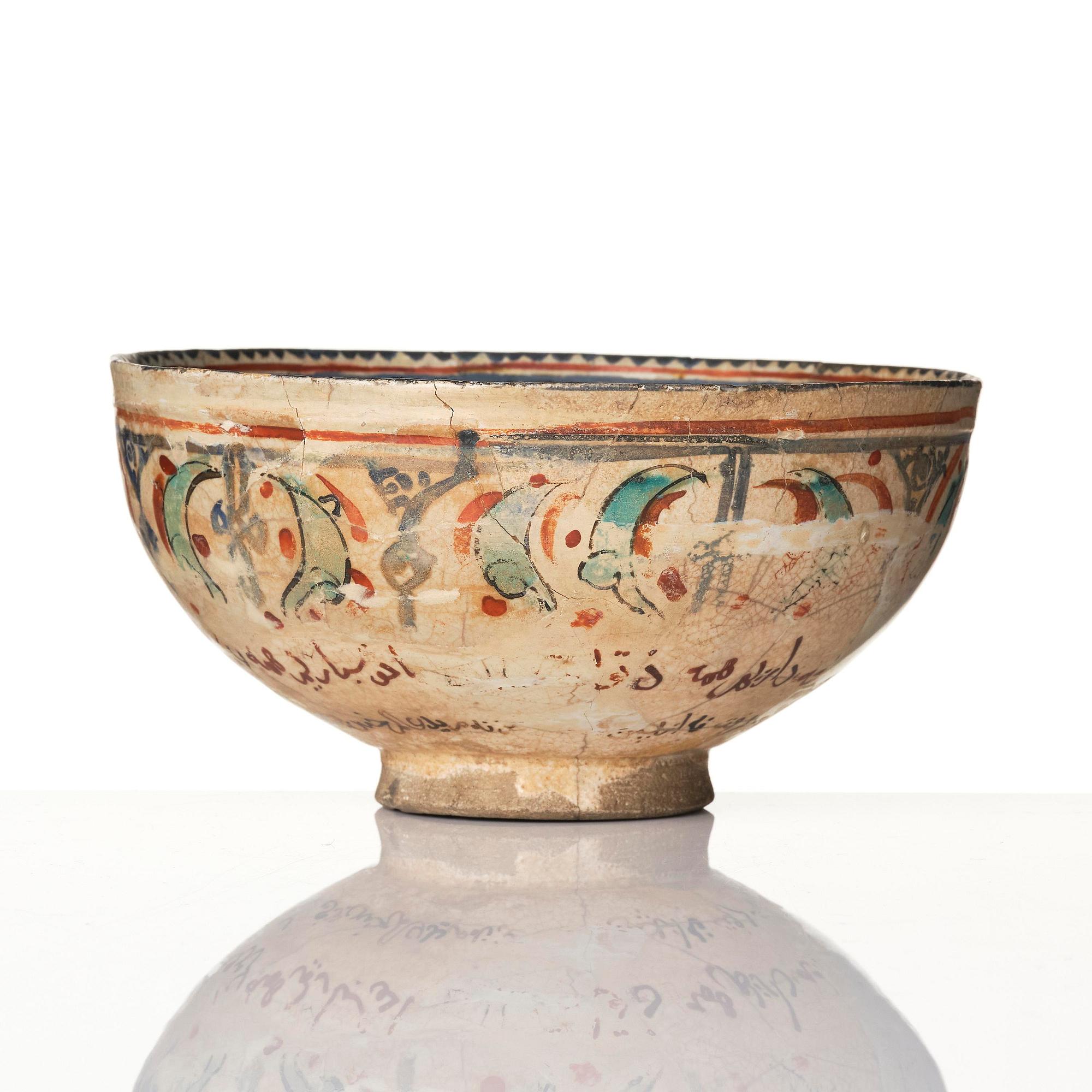
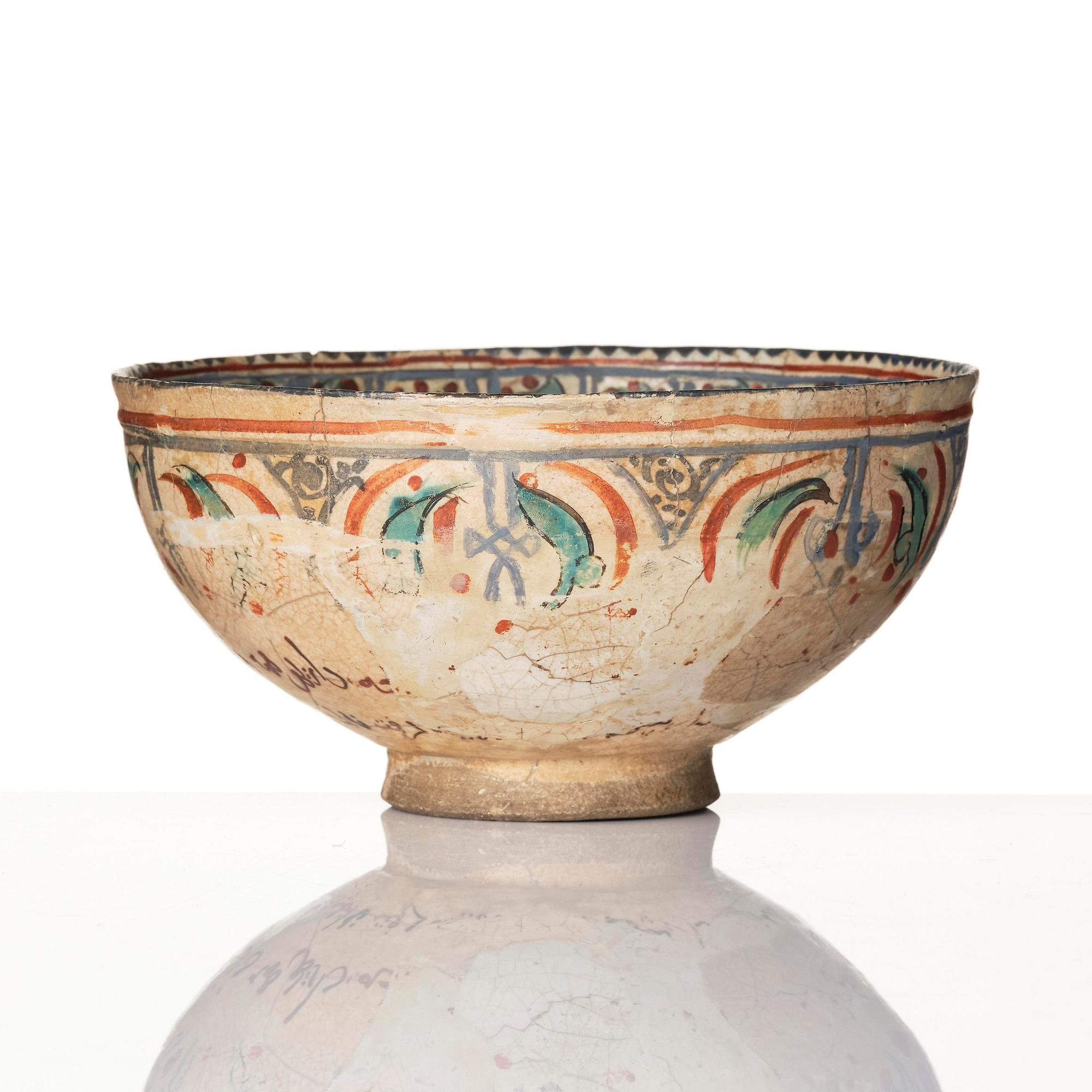
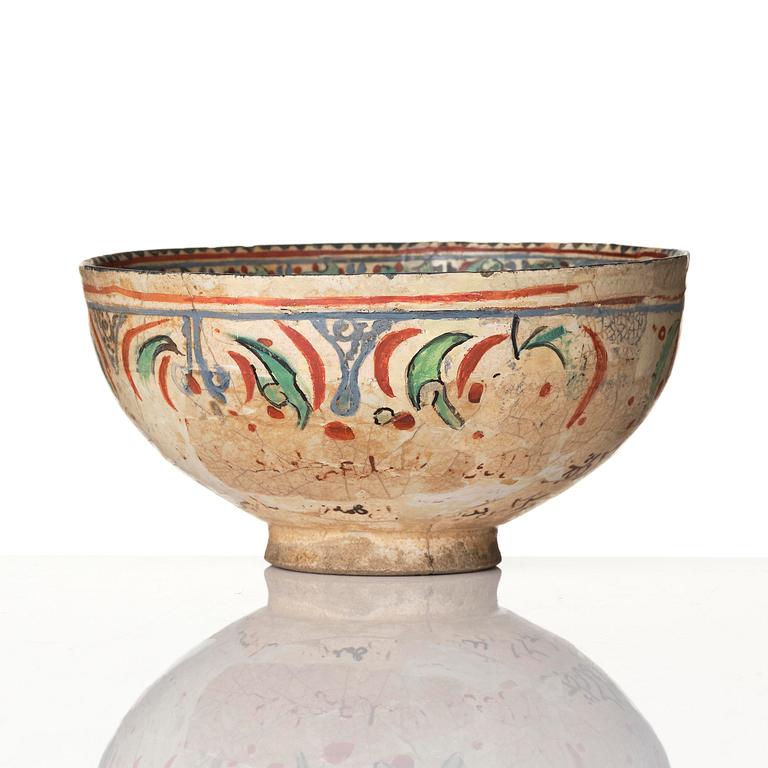
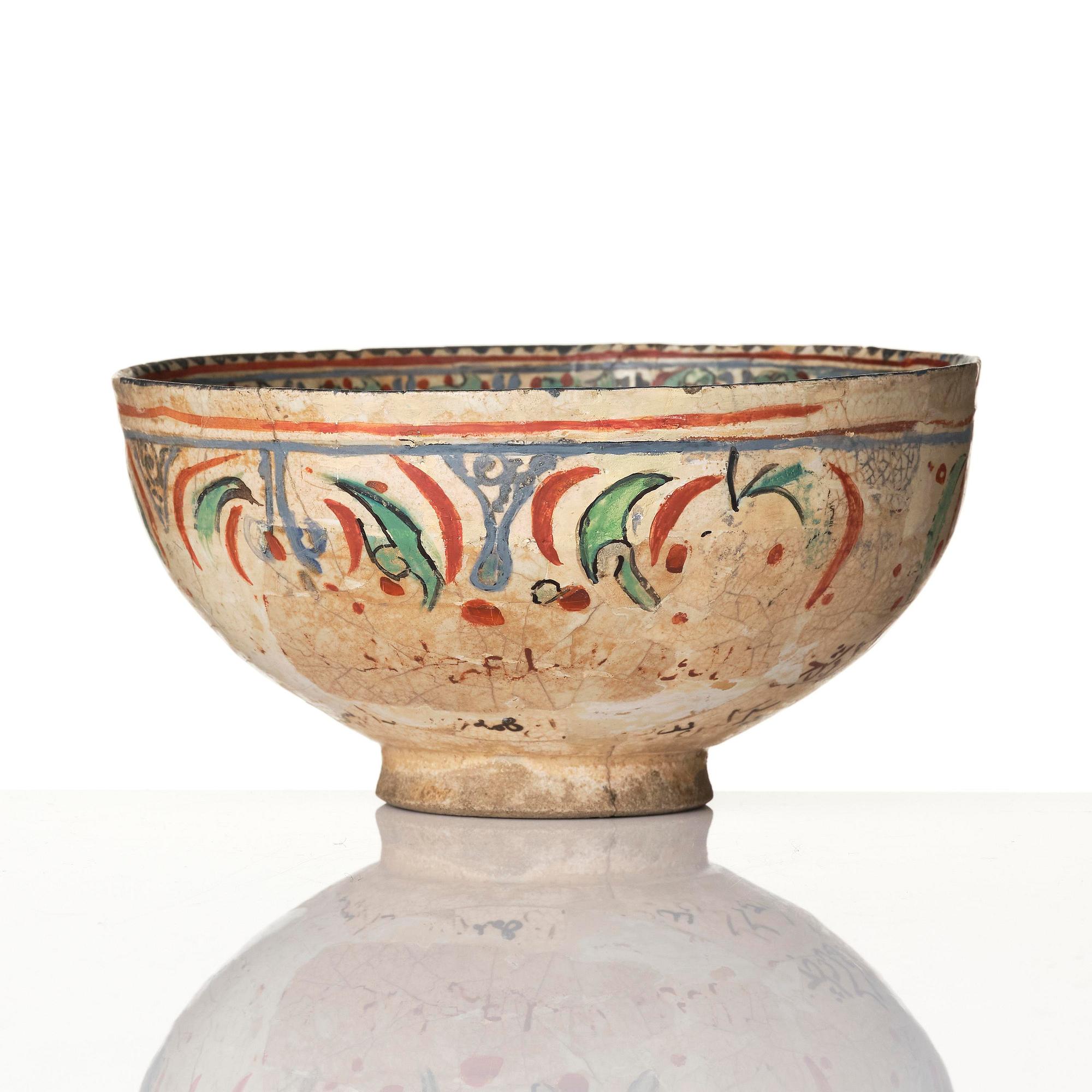
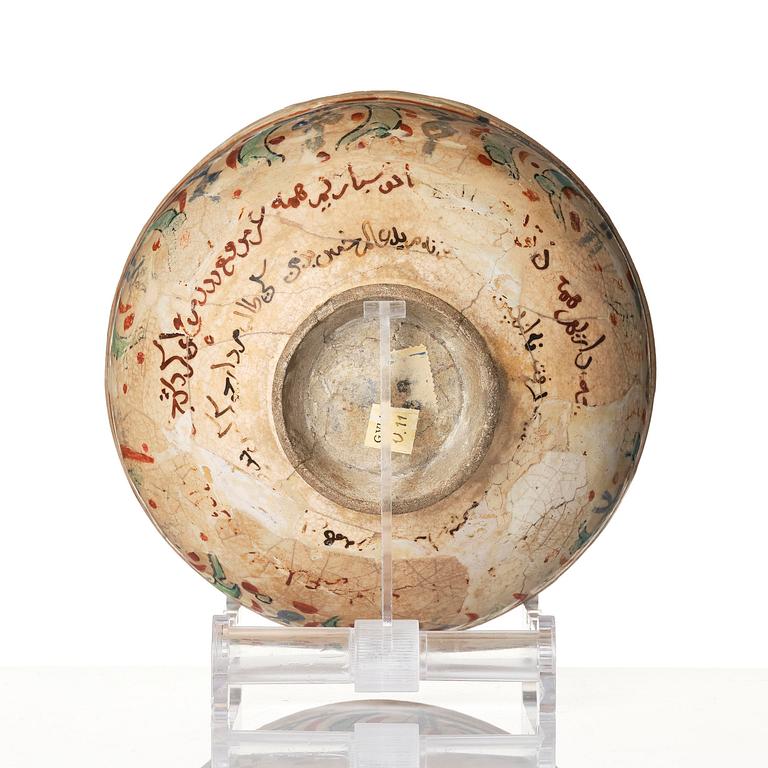
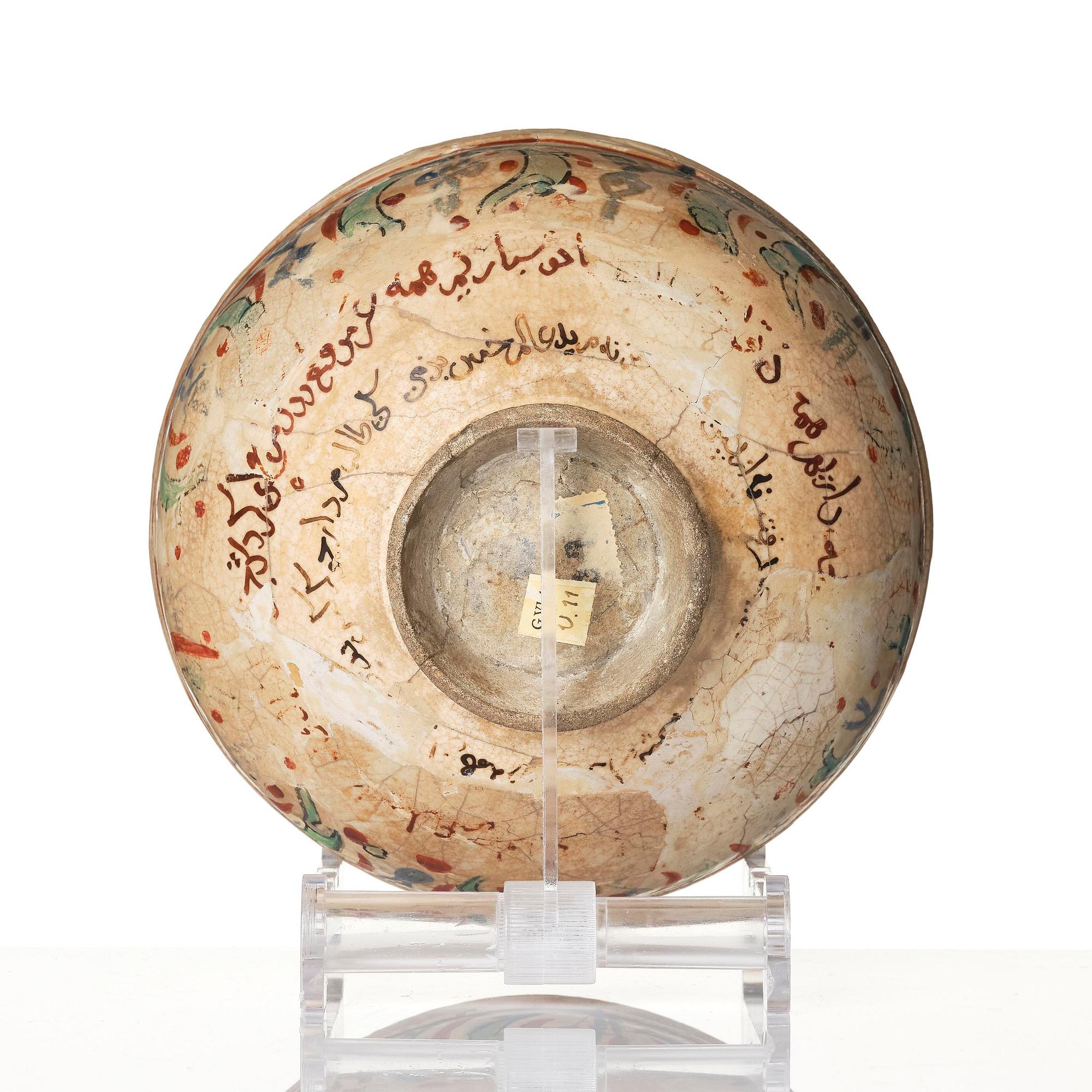
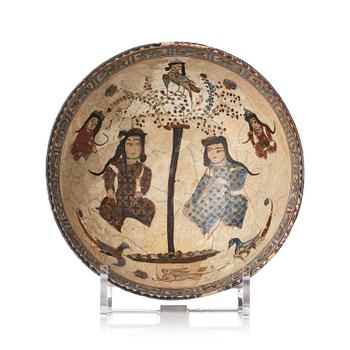
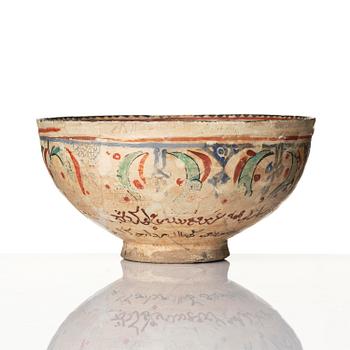
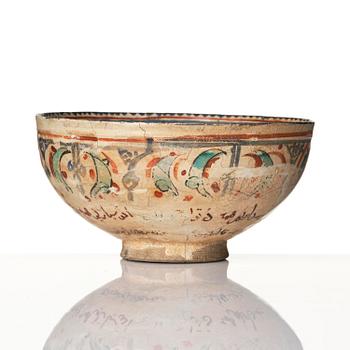
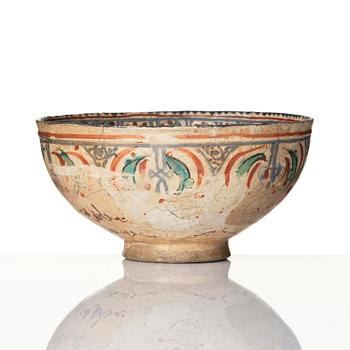
A couple resting under a treel, flanked by animals and mythological figures. The exterior with large leaves and inscriptions. Height 9.5 cm, diameter 18 cm.
Repairs.
Alkuperä - Provenienssi
From the Collection of Johan Almqvist (1940-2024). Johan spent his early years in various countries and learned many languages thanks to his father, Karl Fredrik Almqvist (1906-1982), who was a Swedish diplomat. Johan had a passion for art and travel early on. In the early 1960s, as one of his first jobs as a free-lance journalist, he traveled to the Middle East where his interest in Persian ceramics and collecting started.
He then came to be based in Japan, still as a free-lance journalist for all the major Scandinavian Newspapers as well as Springer (Die Welt and Zeitung), Swedish Television, Svensk Radio and Radio Luxembourg. He covered a large part of Asia, including The Philippines, Korea, and Vietnam.
1974 he was hired by Beijer Invest to be based in Japan.
Previously part of HM King Gustaf VI Adolf of Sweden's collection (1882-1973) at Ulriksdal Palace, no U-11 thence by descent to Count Sigvard Bernadotte (1907-2002).
Muut tiedot
Minai ware, produced in Persia during the late 12th and 13th centuries, ranks among the most coveted achievements of Islamic ceramic art. Distinguished by its complex technique—multiple colours applied both under and over the glaze—it represents the pinnacle of Seljuq innovation.
Its vivid figural scenes of courtiers, riders, musicians and finely drawn arabesques, enriched with cobalt, turquoise, manganese, reds and even gold, give minai pieces a painterly brilliance unmatched in medieval pottery. With few complete examples surviving, each intact piece is highly prized today as a rare and evocative testament to the sophistication of Persian artistic culture.
Lisätietoja ja kuntoraportit

Tietoa ostamisesta



Muiden katsomia kohteita