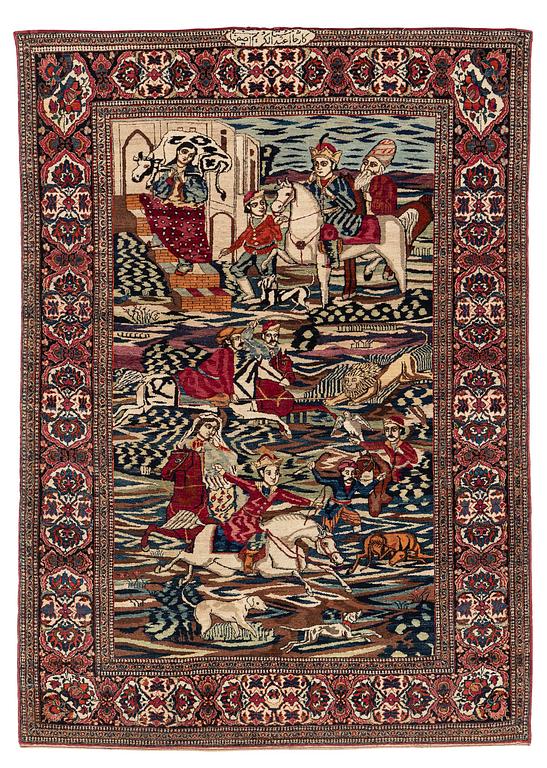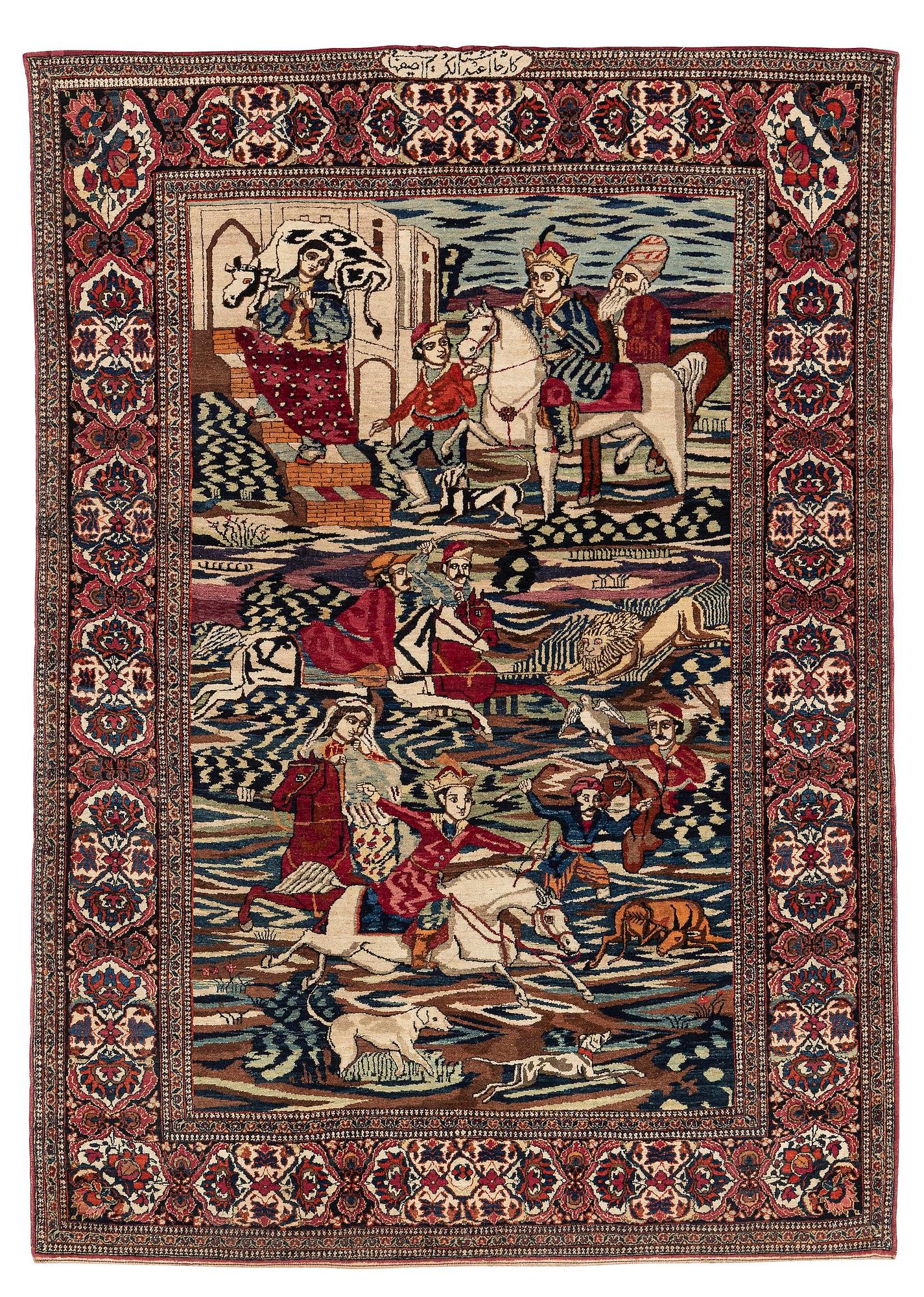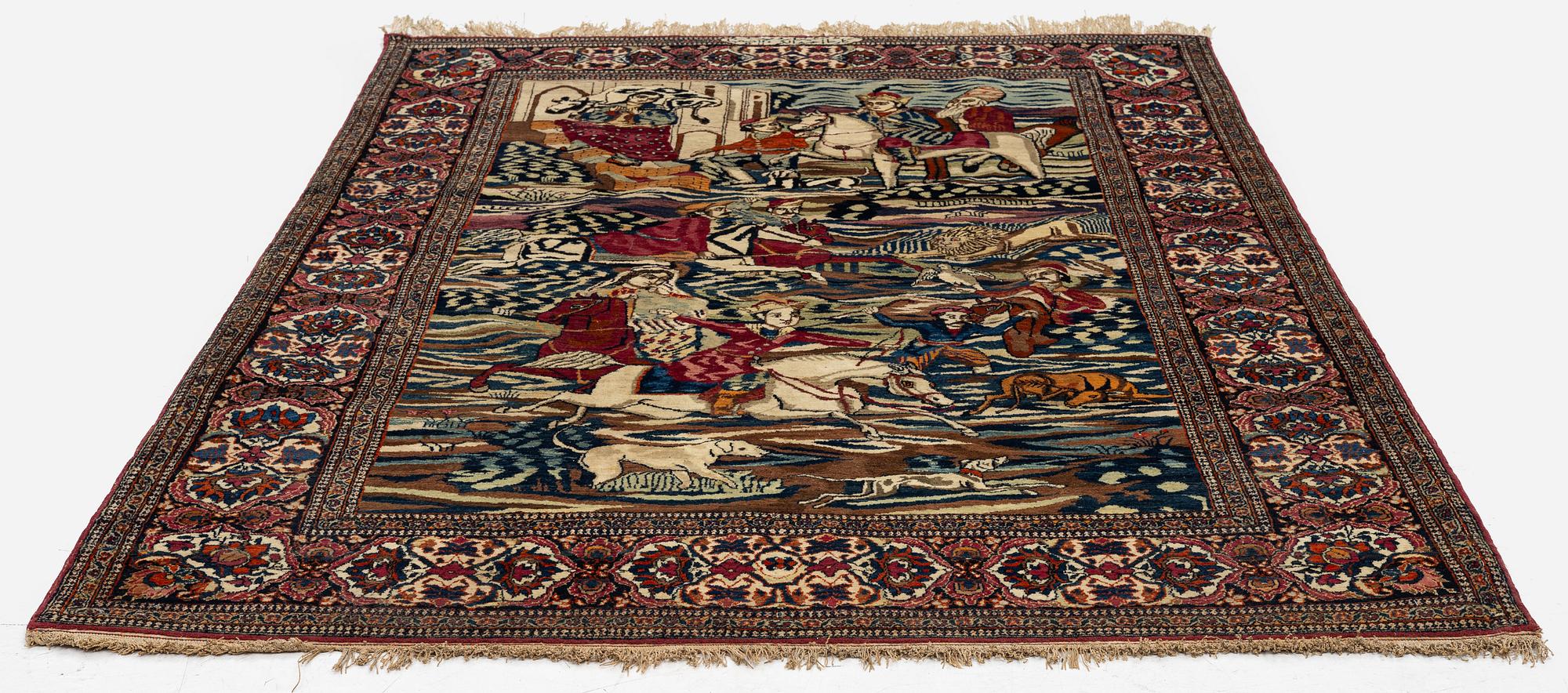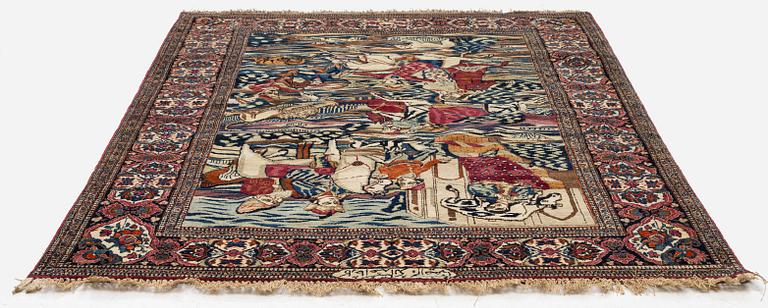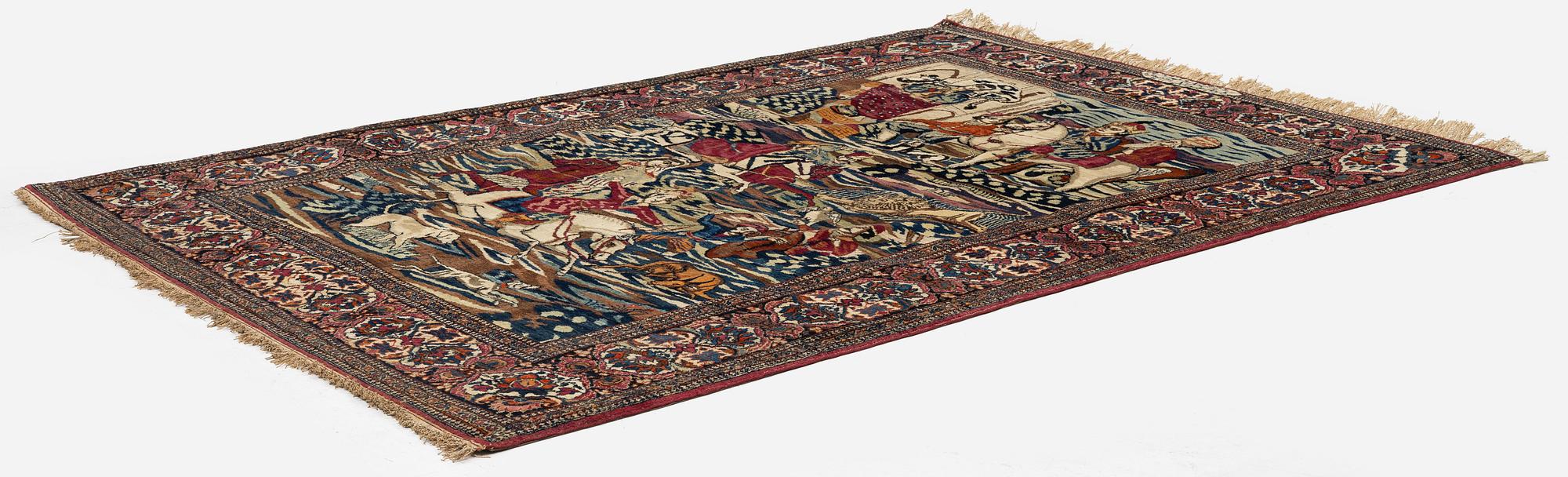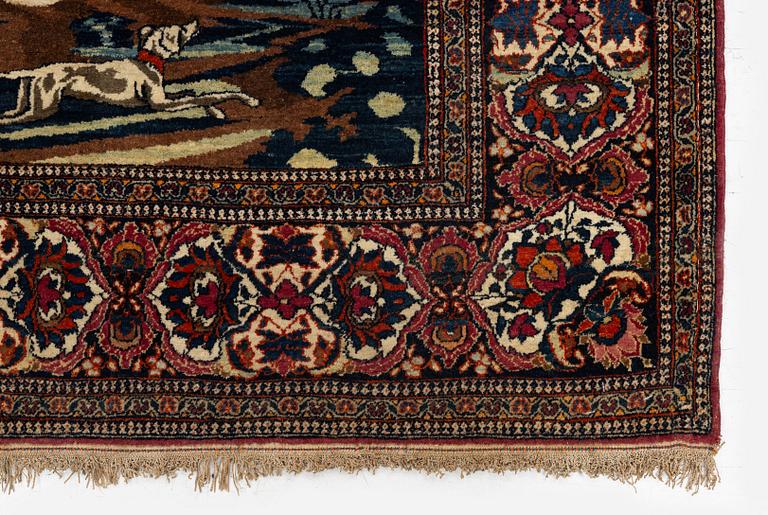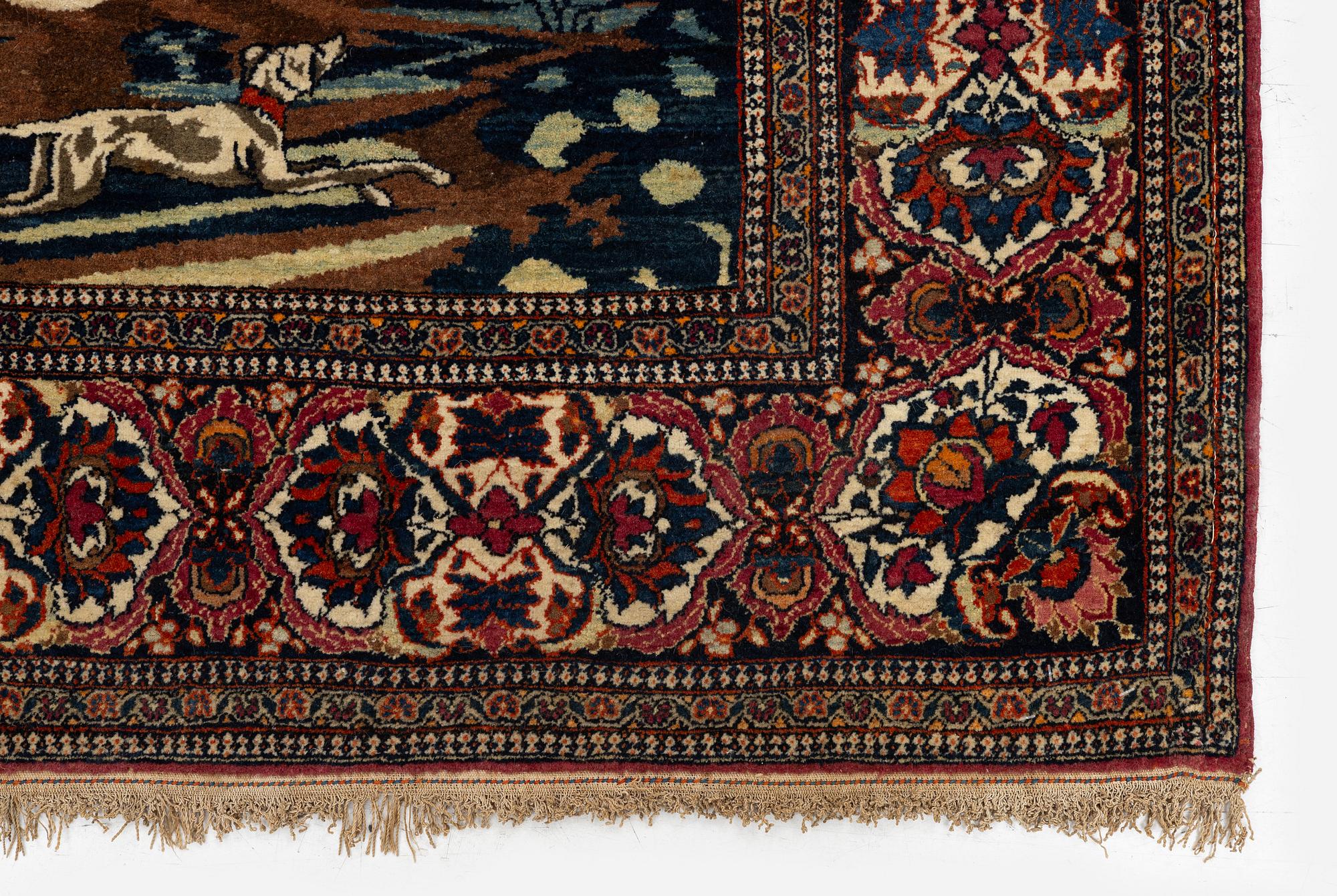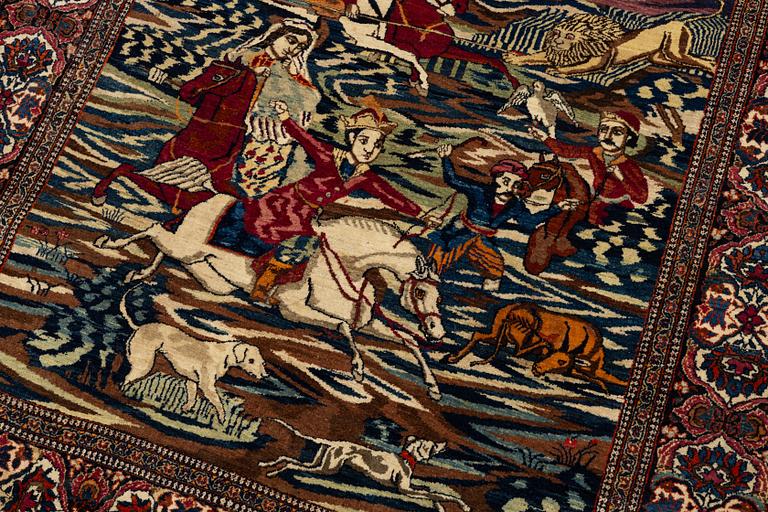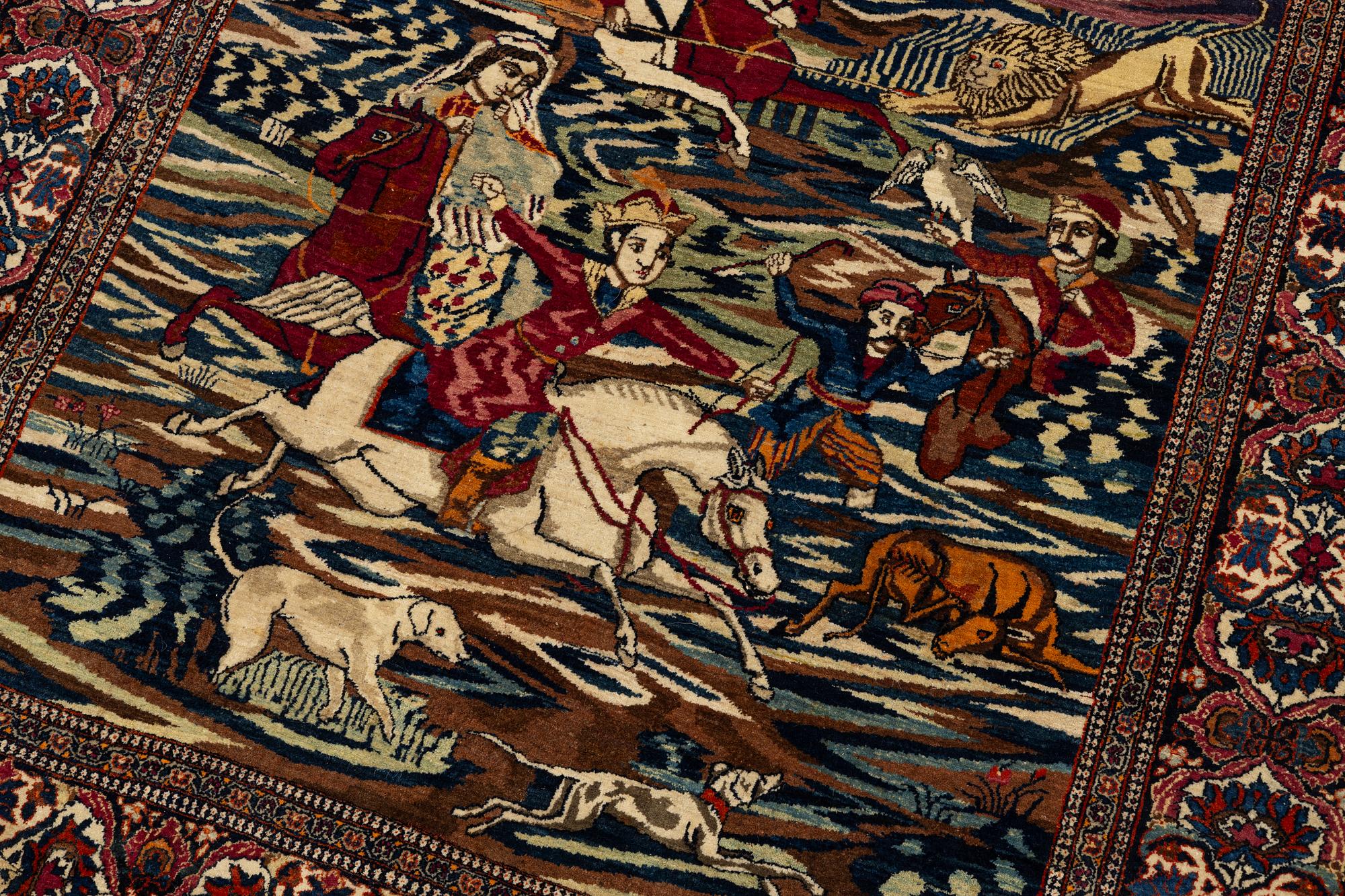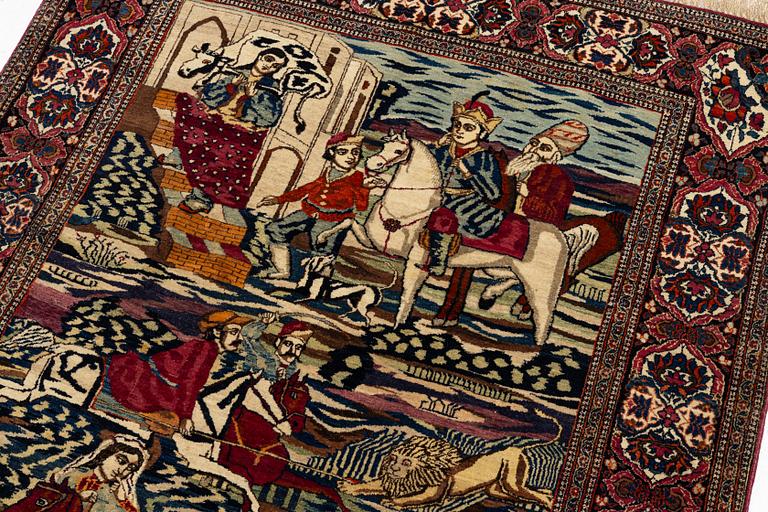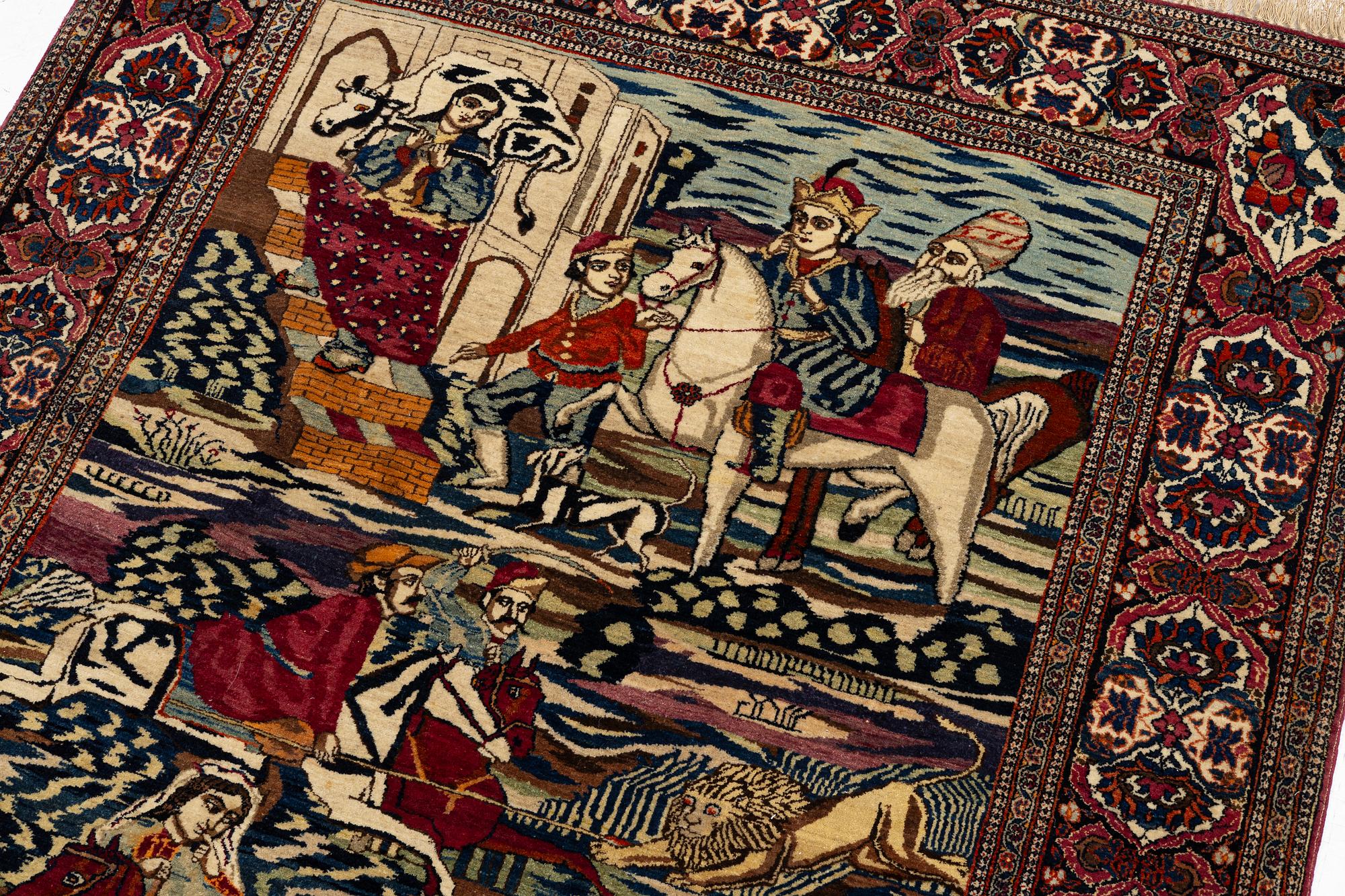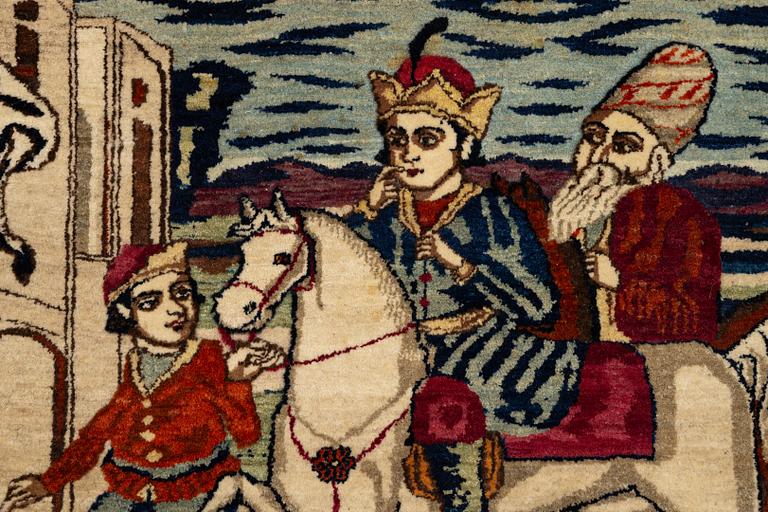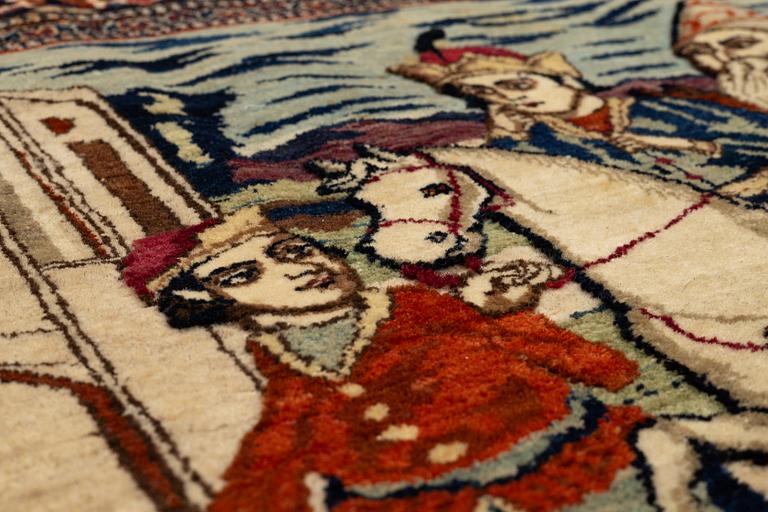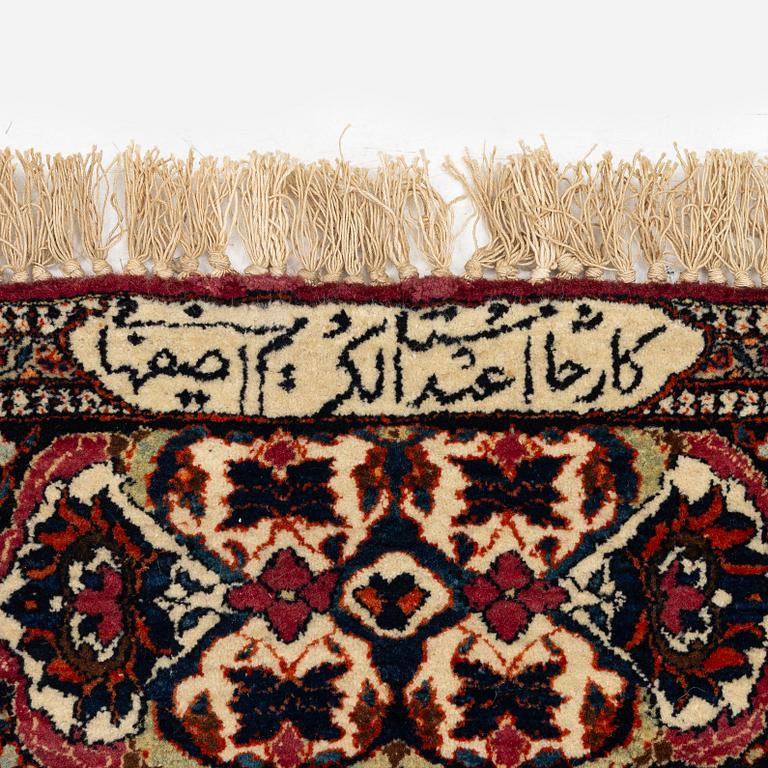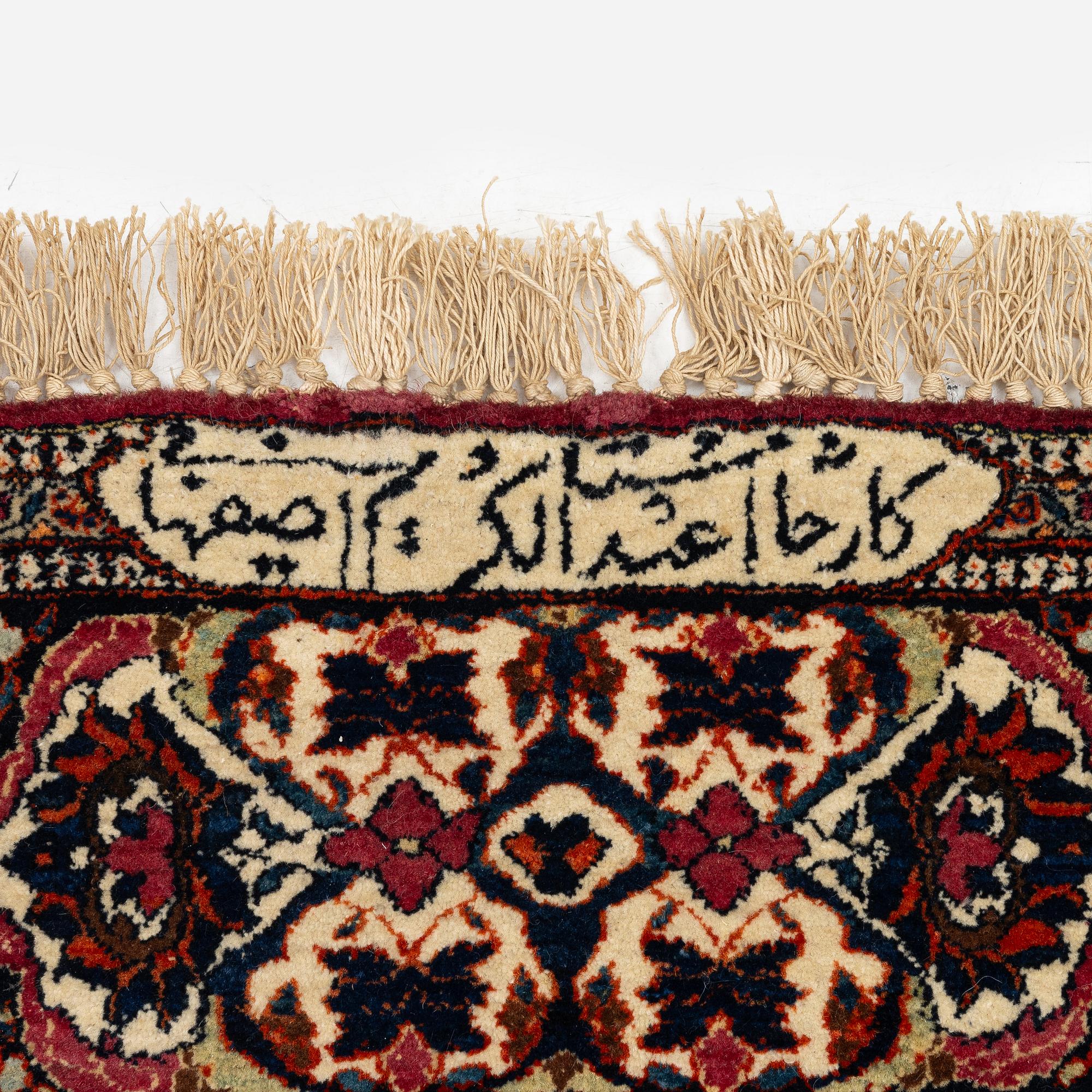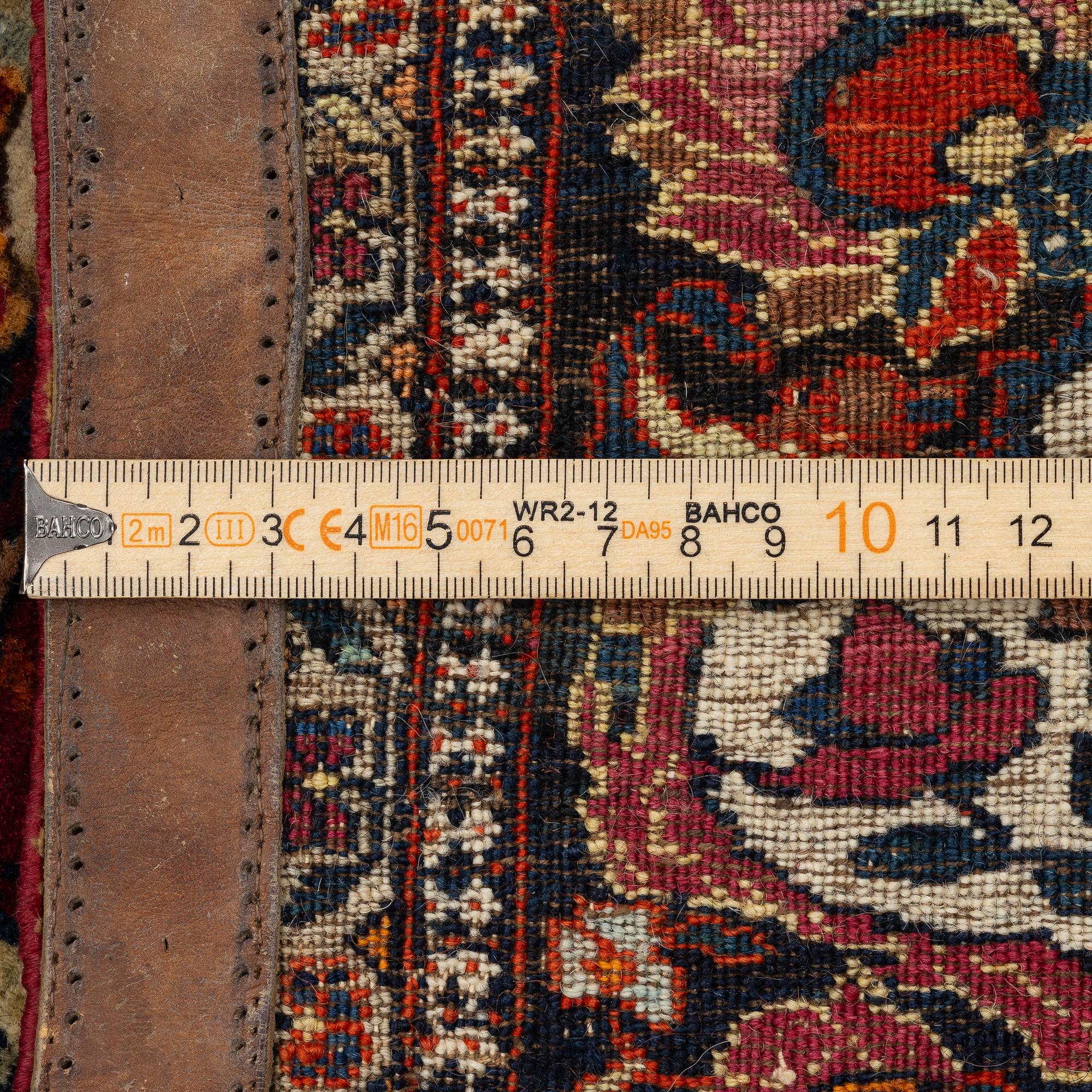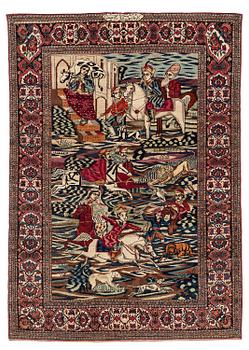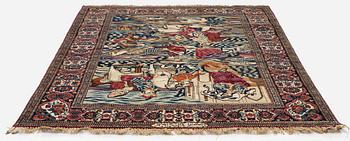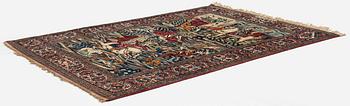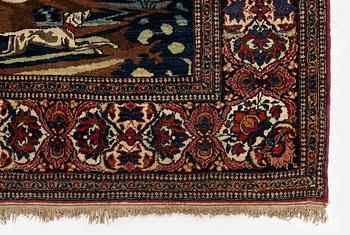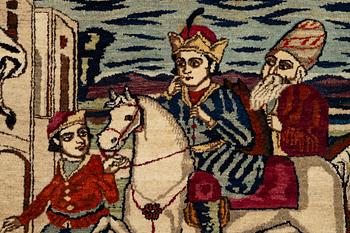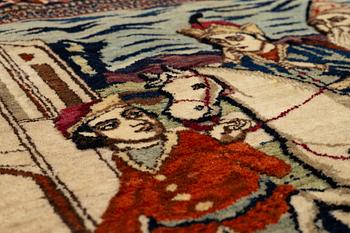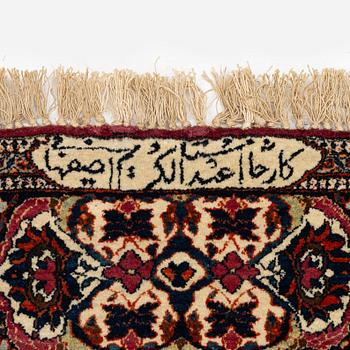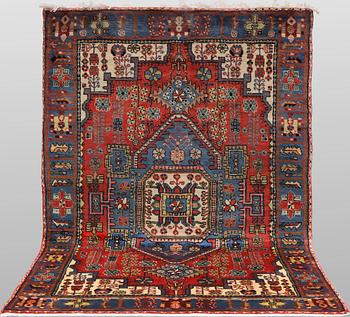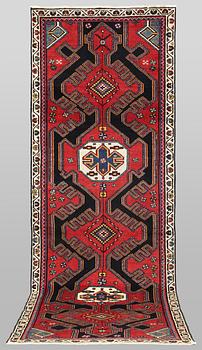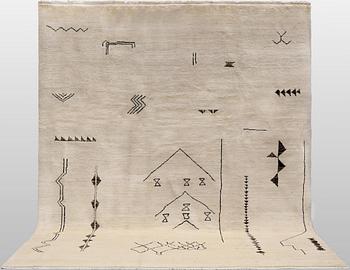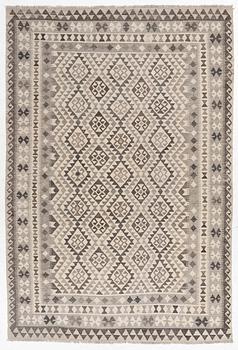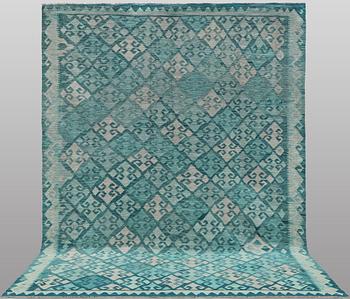
Around 1910. Depicting Nizami Ganjavis scene 'Fitnah Carries a Bull on her Shoulders in the Presence of Bahram Gur'. Signed Workshop of Abdolkarim Esfahani.
Näyttelyt
The motif can be seen as a manuscript at The Walter Art Museum, Accession Number W.608.182B, Baltimore.
Muut tiedot
The story of Bahram Gur and Azadeh is one of the most famous in Persian literature and has been depicted in countless miniature paintings from the 14th century onwards. It recounts the Sasanian king Bahram Gur hunting with his slave girl and harpist Azadeh, sometimes referred to as Fitna – “the tempting one.”
During a hunting expedition, Bahram asks her to suggest a difficult target. Azadeh replies that he should “sew” together a gazelle's ear with its foot, or in some versions, unite a male and female gazelle with their horns. Bahram succeeds with his shot, but Azadeh reproaches him for cruelty and arrogance, stating that anyone with sufficient practice could do the same. Offended, Bahram kills her.
In later interpretations, however, Azadeh survives and retreats to a tower where she, through persistent training, learns to carry a cow all the way up the stairs – a symbolic act demonstrating that even the seemingly impossible can be achieved with perseverance and discipline.
The motif became one of the most beloved in Persian visual art – a tale of pride, skill, and the thin line between power and compassion.
Lisätietoja ja kuntoraportit

Tietoa ostamisesta