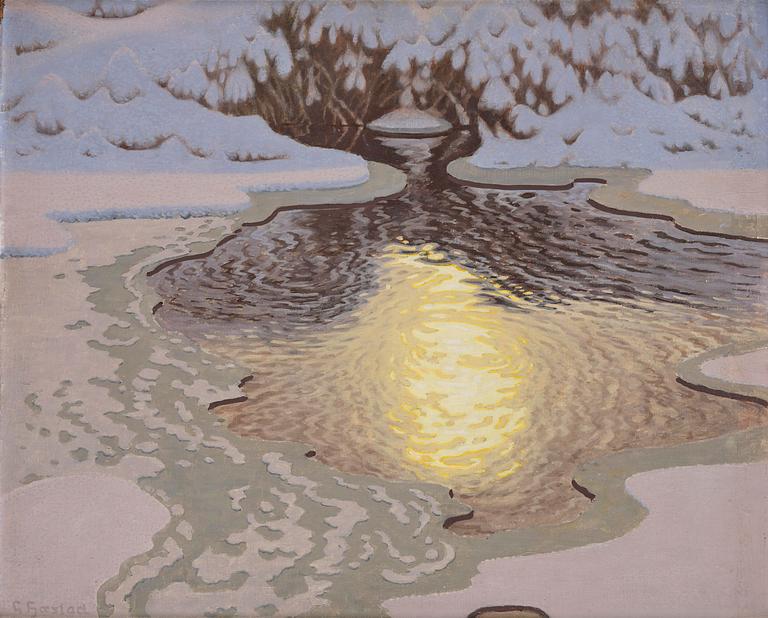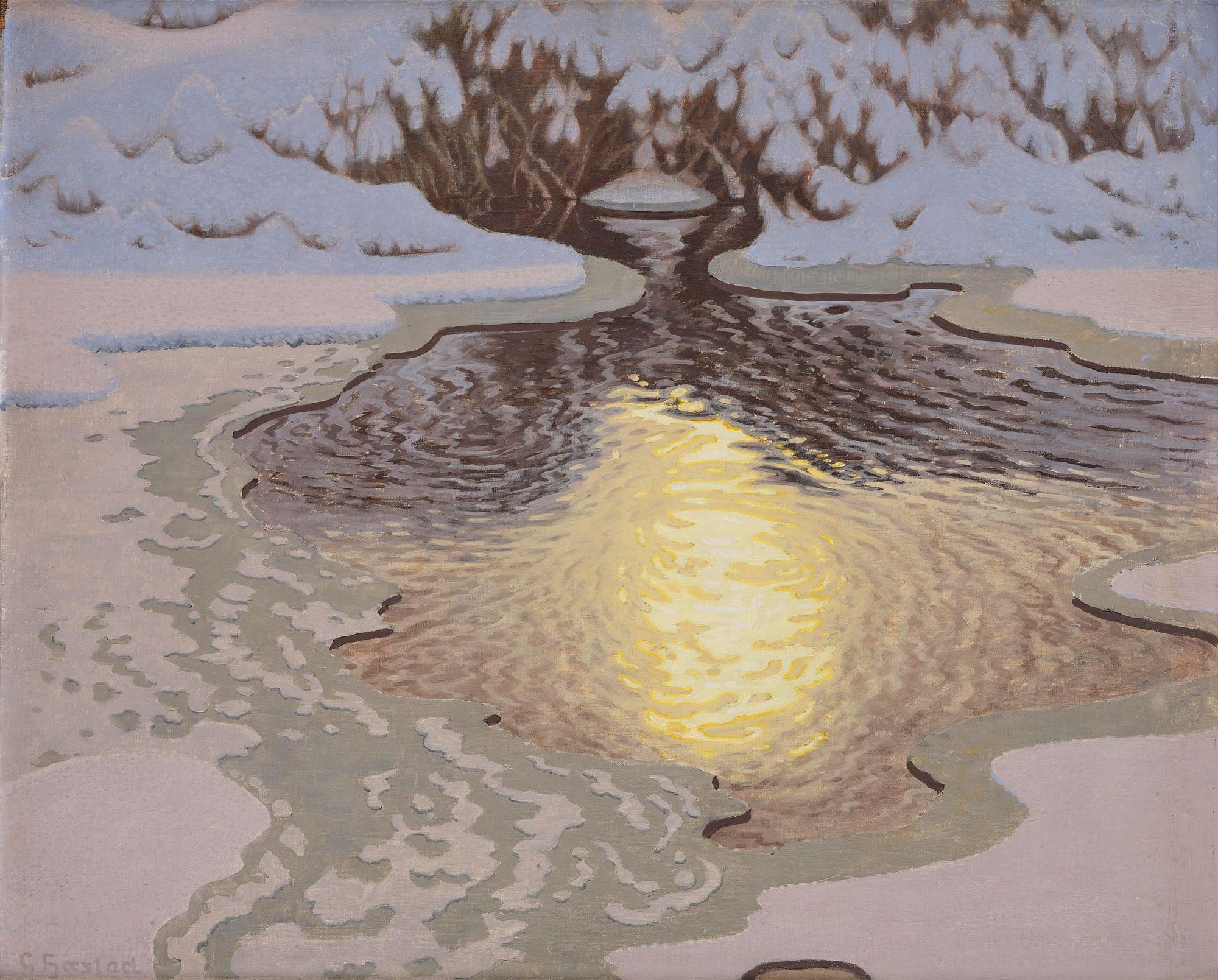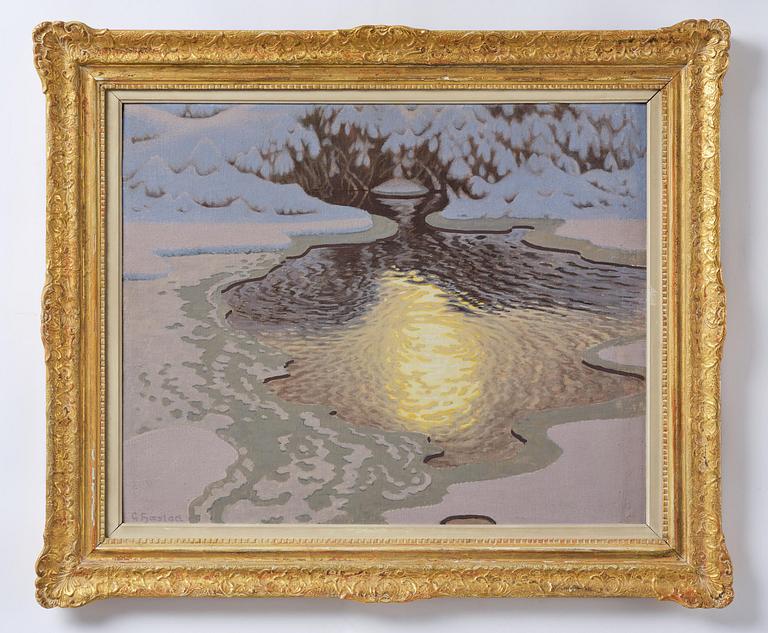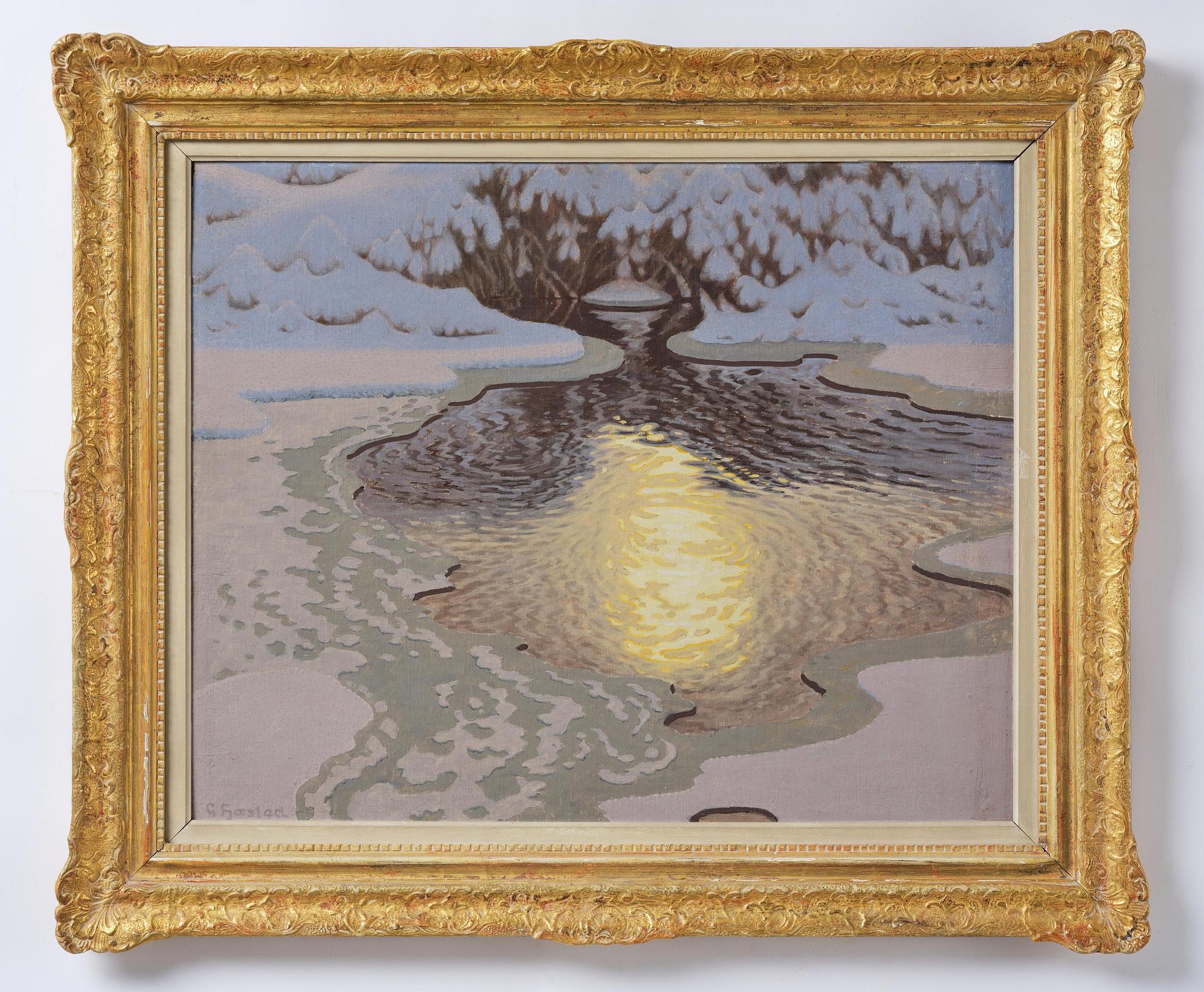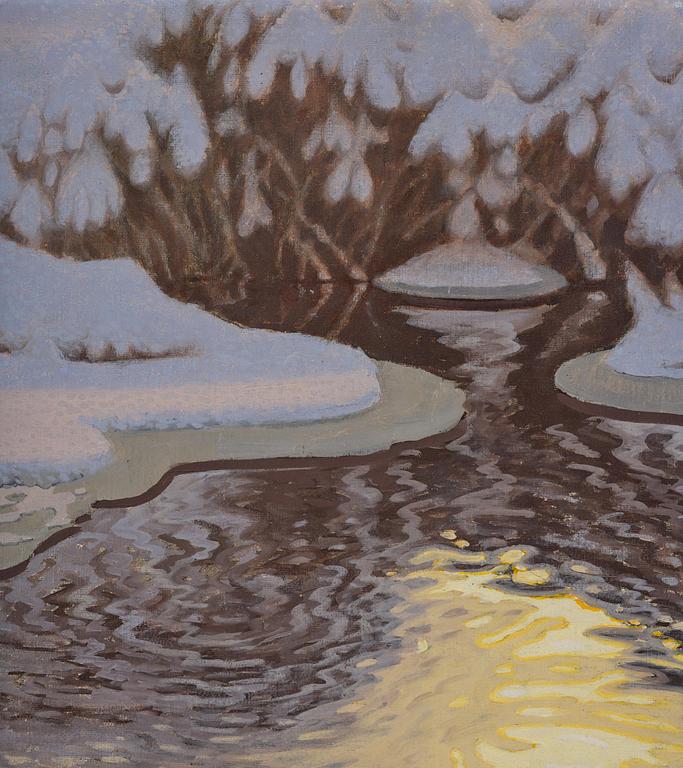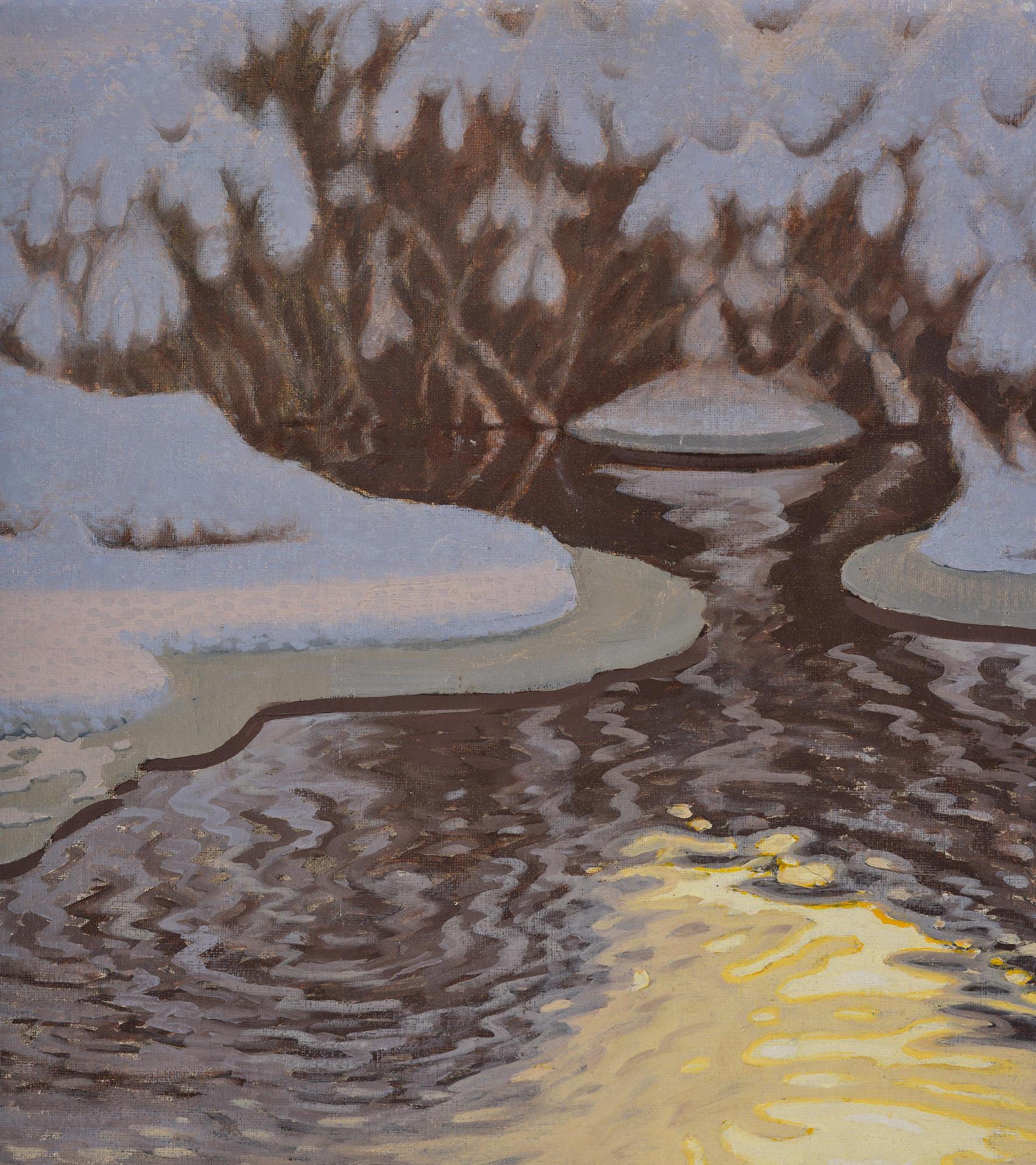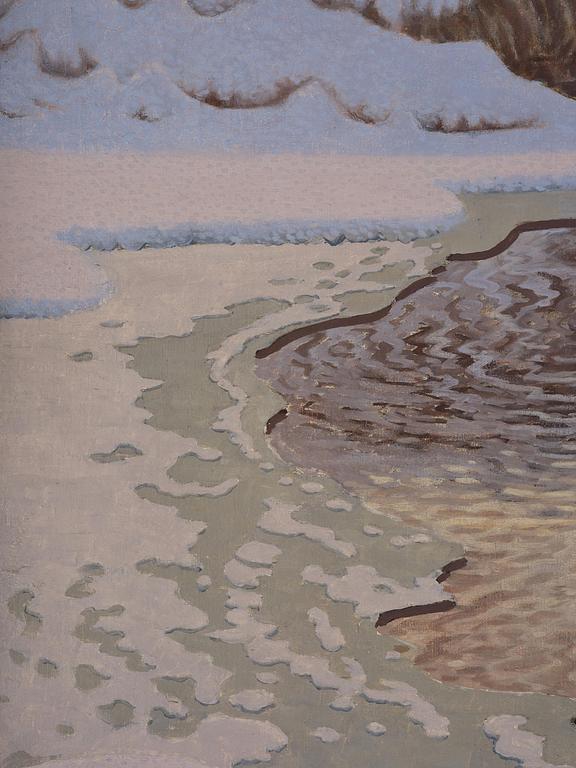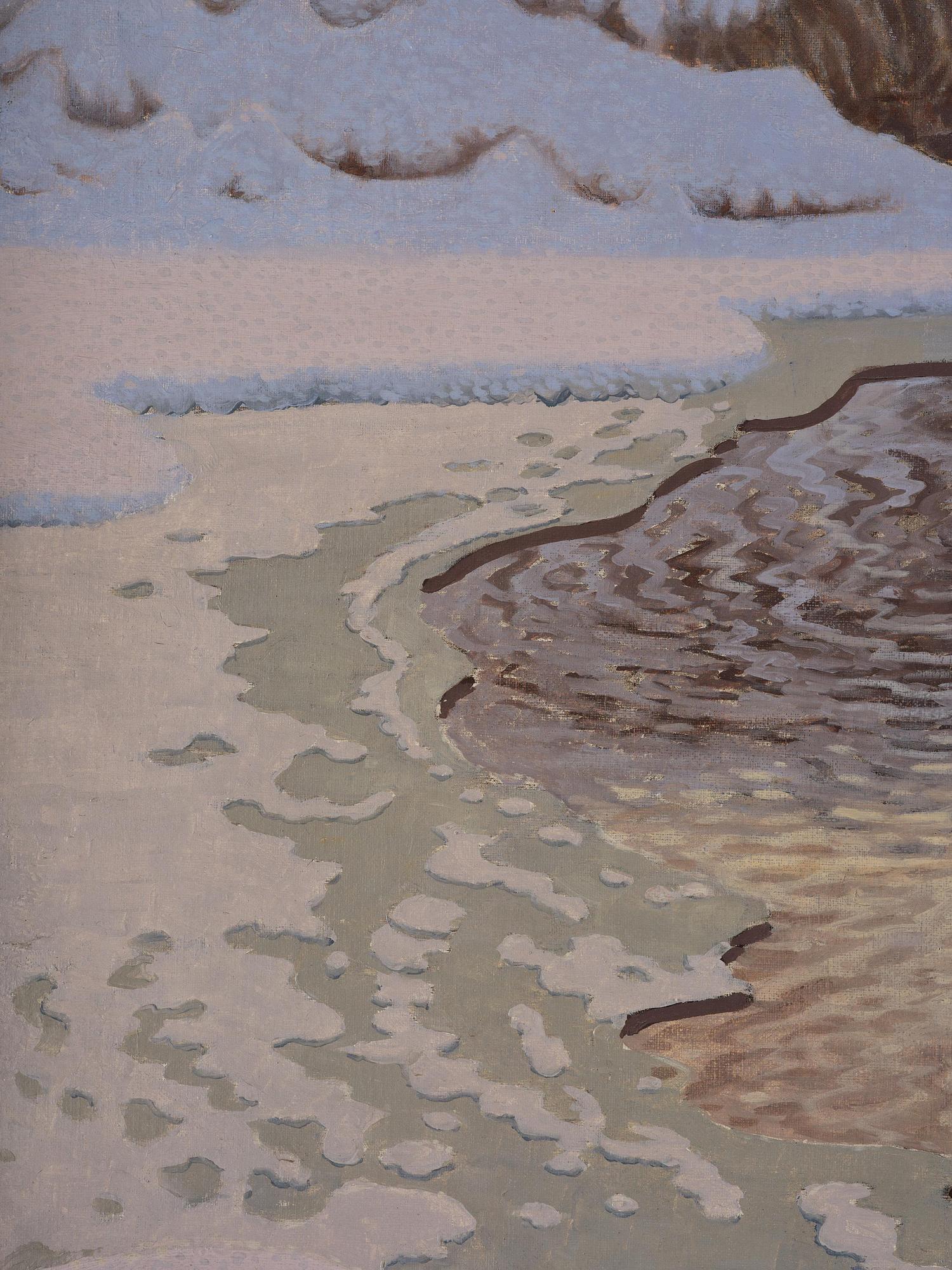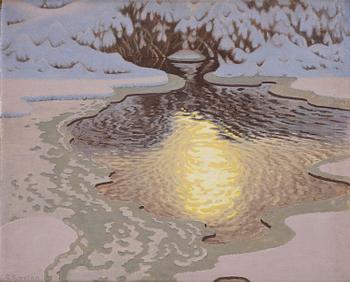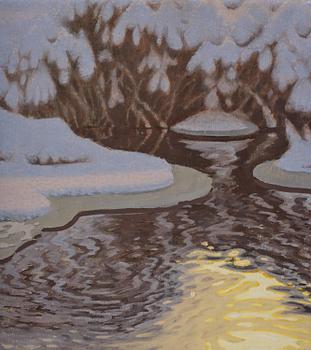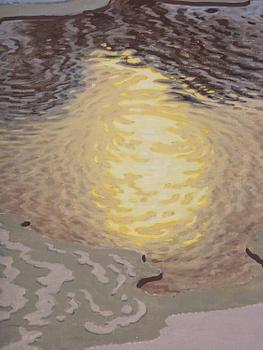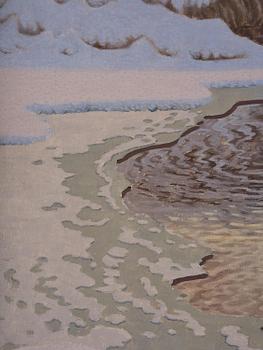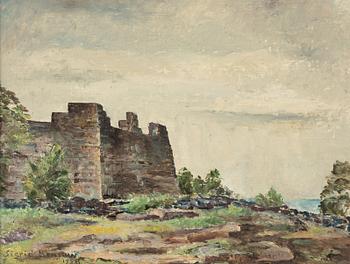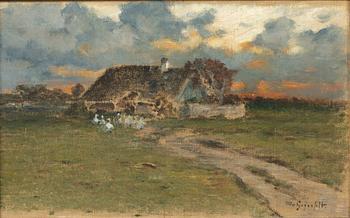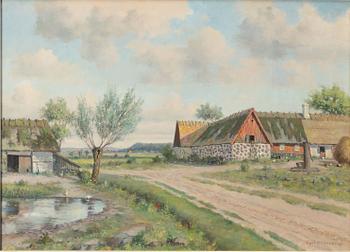
Winter landscape with sunlit watercourse
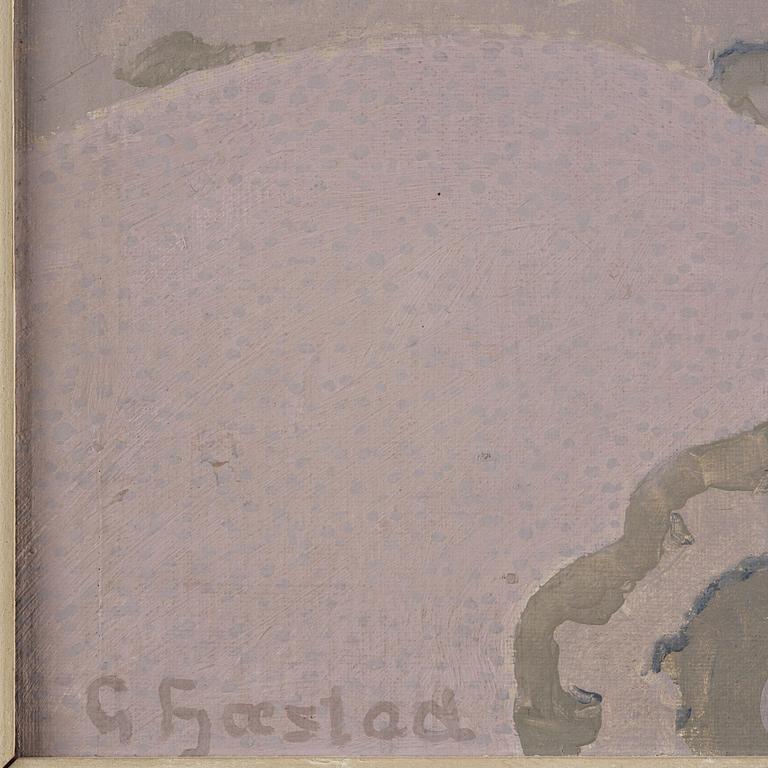
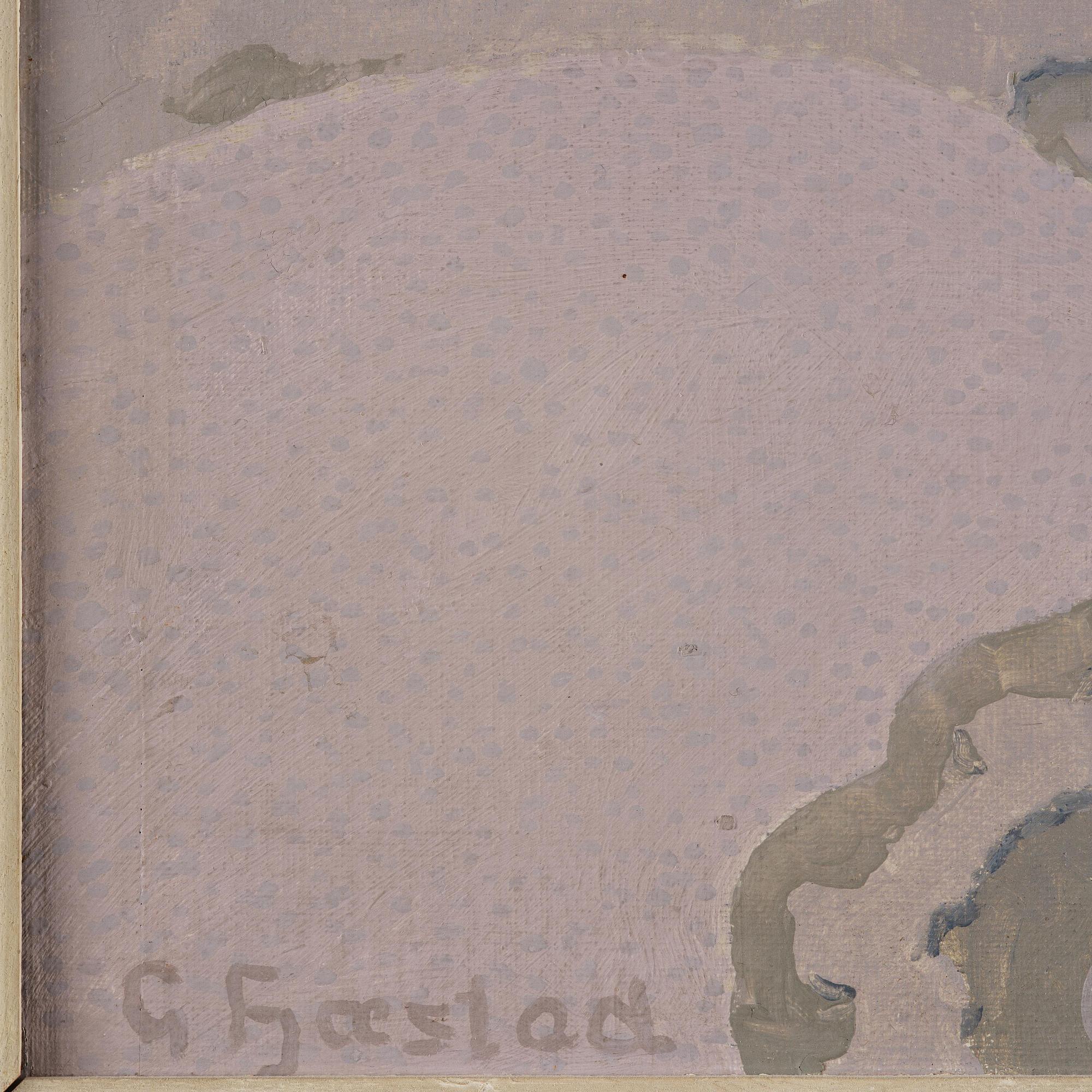
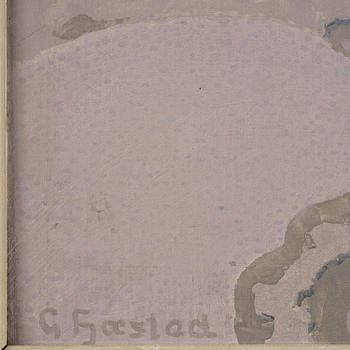
Signed G Fjaestad. Oil on canvas laid on panel 73 x 90.5 cm.
Muut tiedot
"In Sundbyberg, no Pan lives"
The Rackstad colony began when the sculptor and Värmland native Christian Eriksson, along with Maja and Gustaf Fjaestad, came to Taserud and Arvika, around Lake Racken, in 1898. Björn Ahlgrensson and Fritz Lindström joined around 1903. This artists' colony was a child of its time and closely linked to the Artists' Association, whose school Maja Fjaestad, Fritz Lindström, and Björn Ahlgrensson attended in the early 1890s. To speak of revolutionaries may sound strong, but there was a strong desire to break with the old and look towards the future. There were several sources of inspiration, but Japanese art, photography, and the French realist Jules Bastien-Lepage are three key elements that came to mean a great deal for the Rackstad colony.
Several artists chose to leave the capital Stockholm around the turn of the century in favour of the countryside and places where nature could take centre stage. Perhaps the most famous are the Larsson family’s Lilla Hyttnäs and Zorngården with Anders and Emma Zorn. When Gustaf Fjaestad was asked in an interview in 1944 why they chose Rackstad, he replied, "In Sundbyberg, no Pan lives," which shows how industrialisation and urbanisation left their mark even on the outskirts of the city. The Rackstad colony shares several common traits with other colonies in Sweden and around Europe, where a longing for something unspoiled and a desire for a new artistic vision existed. However, the artists in Rackstad never articulated any collective artistic goals. But they supported each other and exhibited together on a few occasions.
The exhibition "When Japan Came to Värmland. Japonism among the Rackstad Artists 1880–1920" (Thielska Galleriet, 2018) also showcased another side of the colony, with a strong emphasis on the applied arts. The lack of distinction between art and craft was perceived as typical of Japanese art, where even everyday objects were to have a conscious and artistic form. Maja Fjaestad worked with textiles, painting, and woodcuts, while Gustaf Fjaestad painted in oil alongside designing furniture and textiles. Another artist in the group, Bror Sahlström, alternated between metalwork and sculpture. Other craftsmen in the Rackstad group included the artist blacksmiths "Petter from Myra," Copper-Lisa and Olga Lanner, the Eriksson brothers' furniture workshop, and Fjaestad's Weaving in Arvika, where Amalia and Anna Fjaestad, Gustaf's sisters, worked, as well as the ceramicists Hilma Persson-Hjelm and Riborg Böving.
Lisätietoja ja kuntoraportit
Tietoa ostamisesta