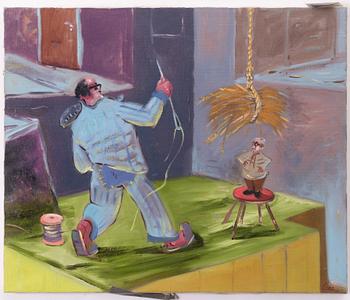
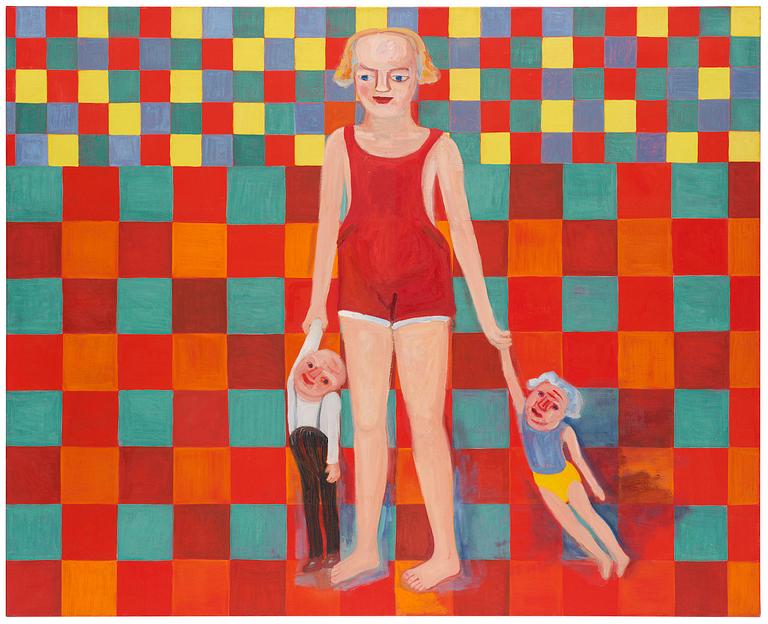
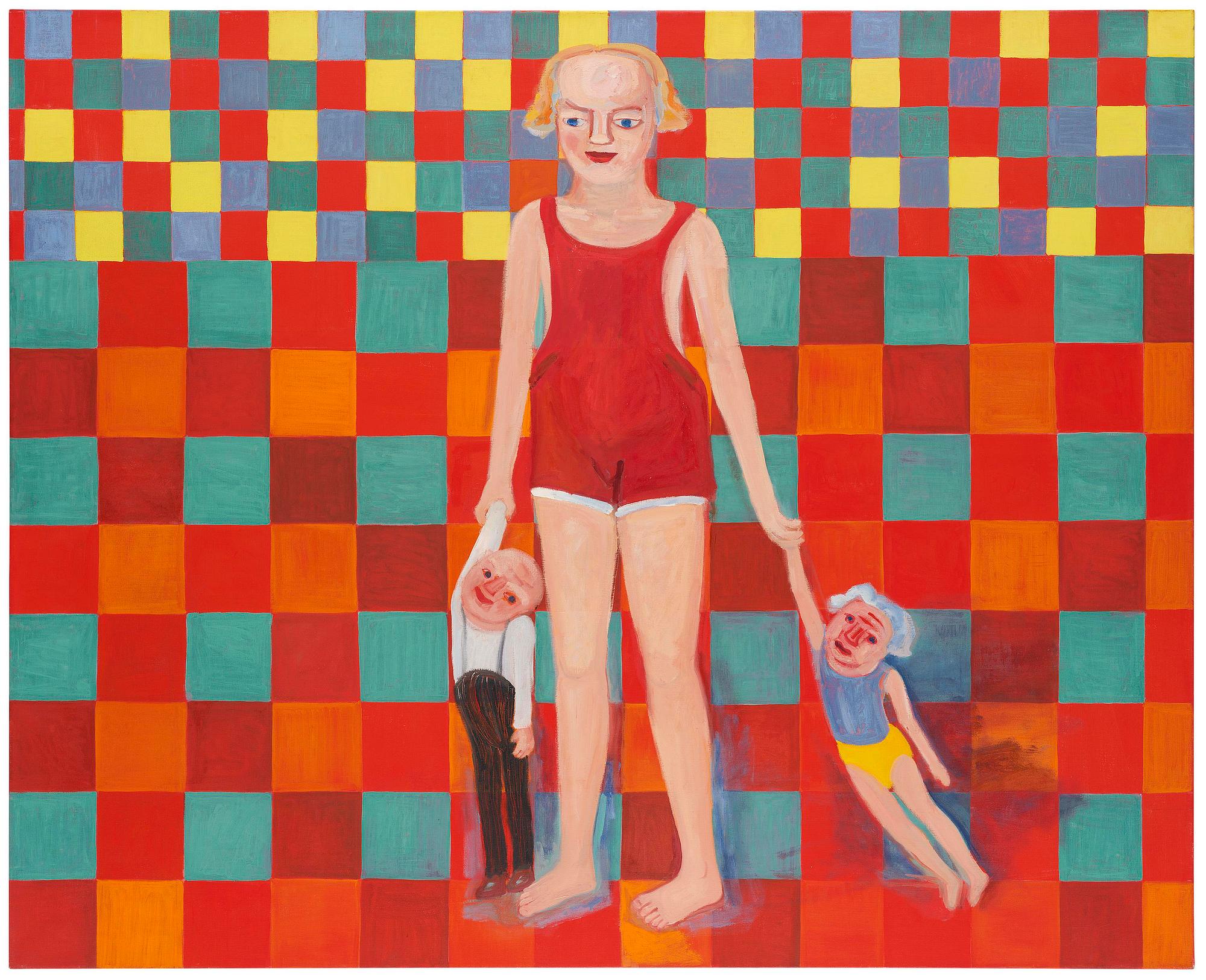
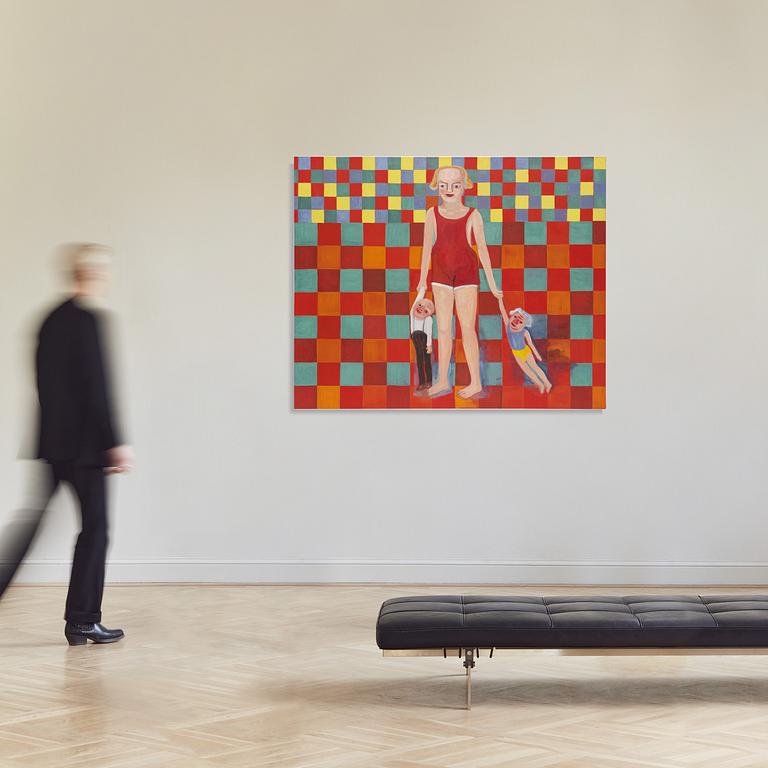
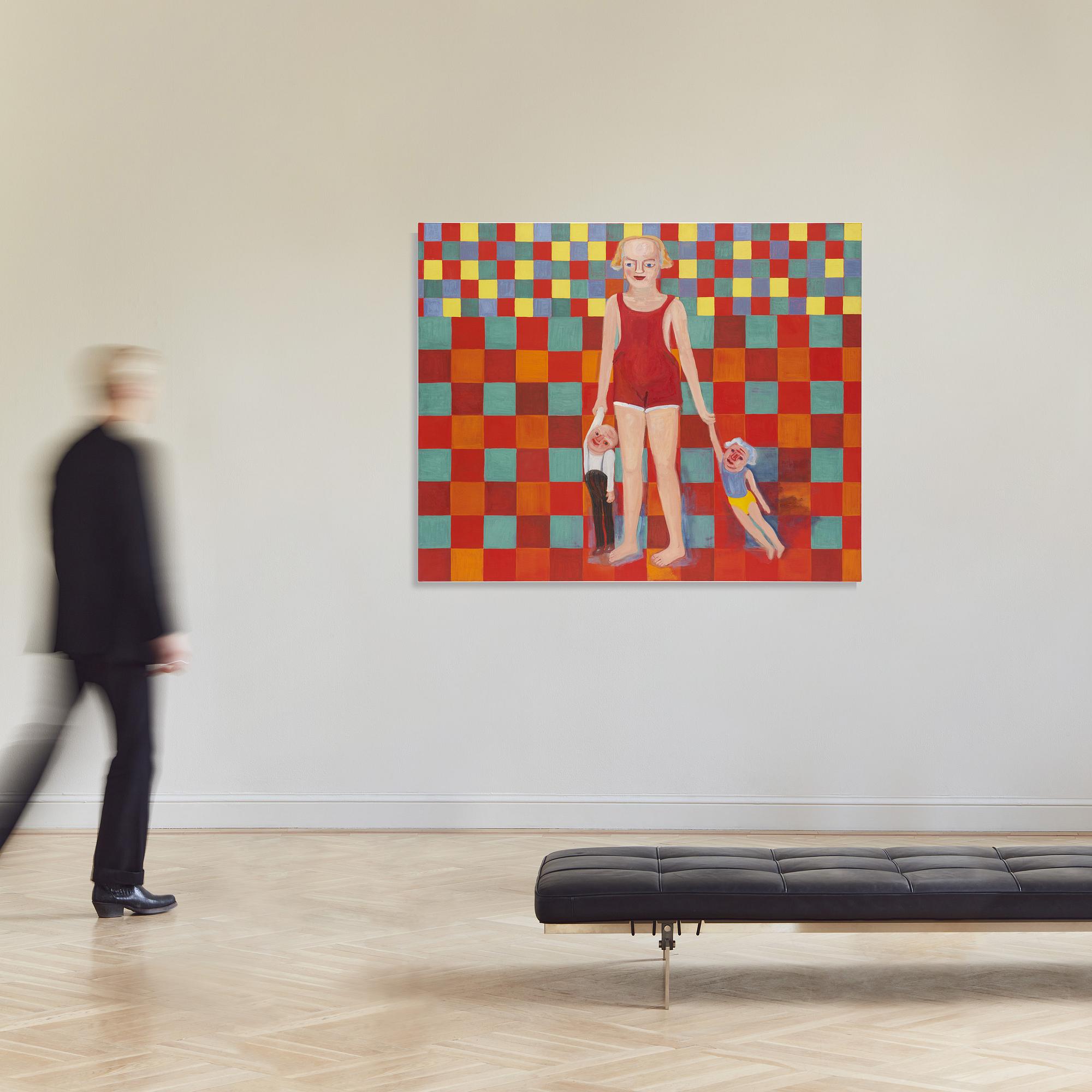
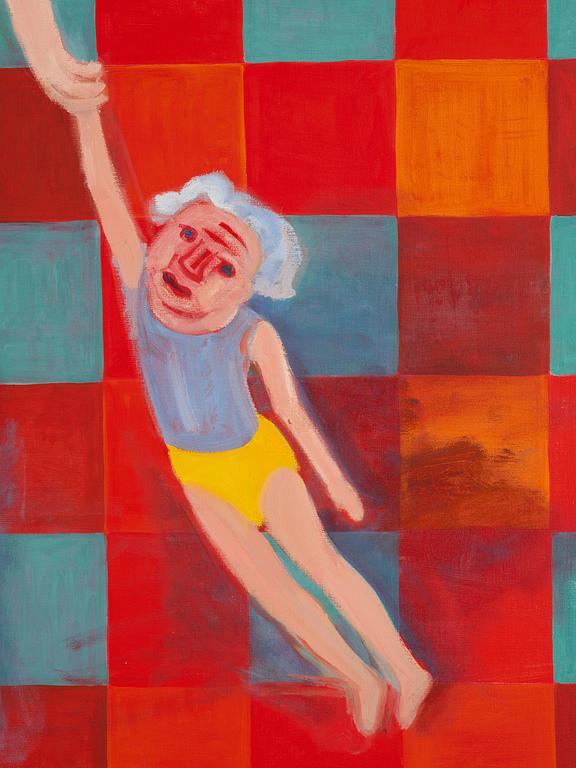
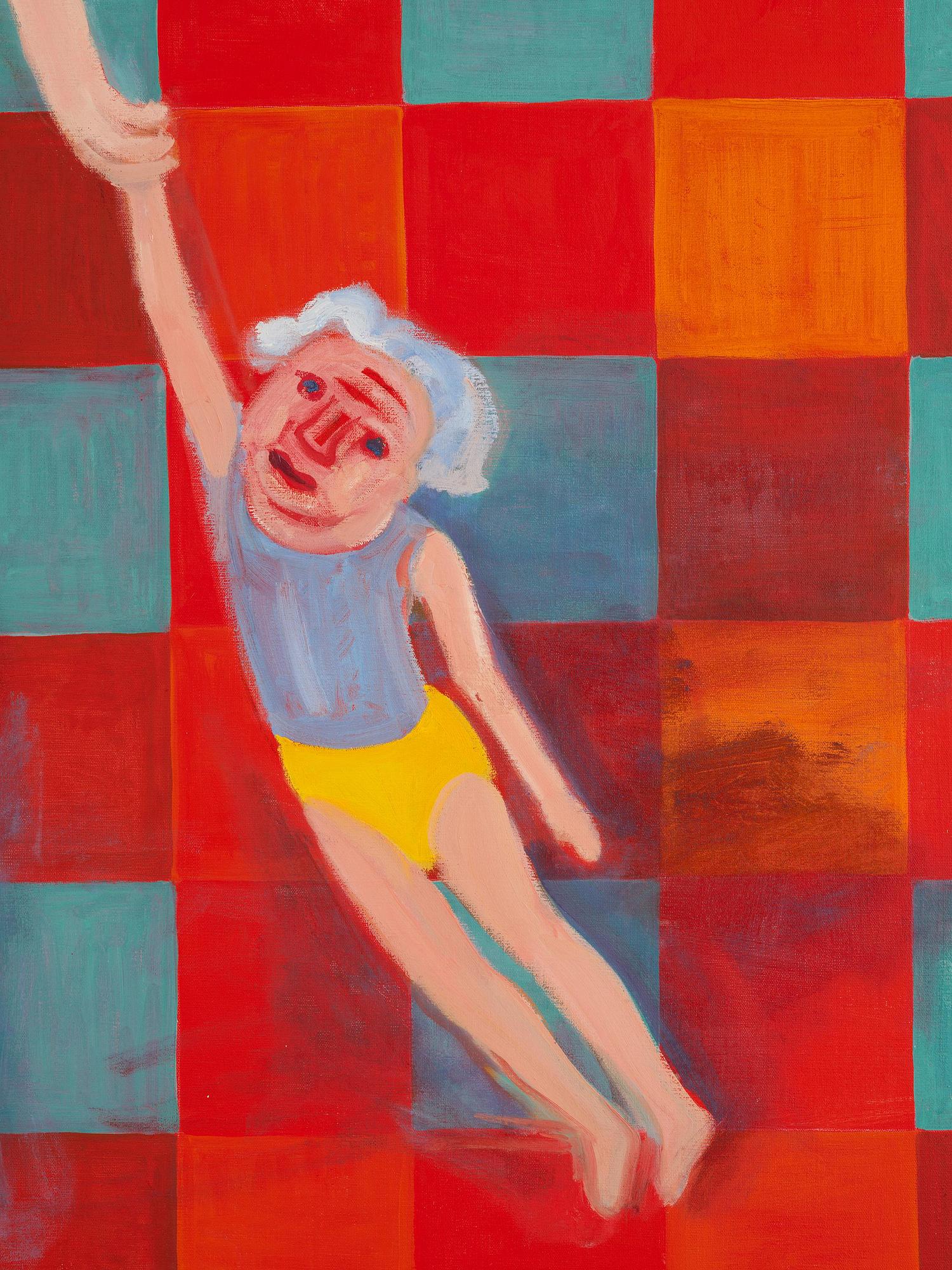
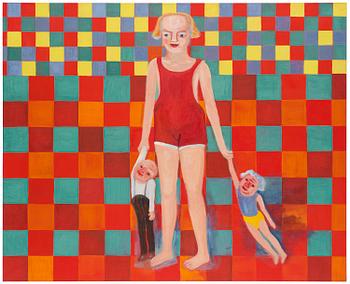
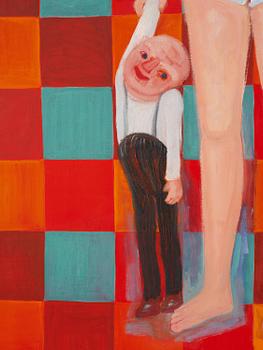
"Flicka med dockor".
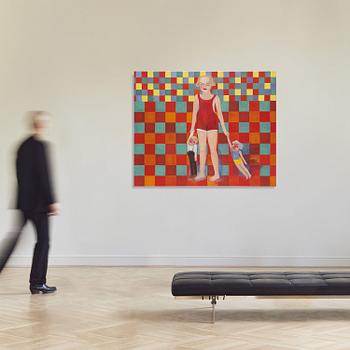
Stamped signature verso. Executed in 1995. Tempera and oil on canvas 162.2 x 200 cm.
Alkuperä - Provenienssi
Galleri Lars Bohman, Stockholm.
Private Collection, Stockholm.
Kirjallisuus
Galleri Lars Bohman, Stockholm, "Lena Cronqvist - Flickor i New York", exhibition catalogue, 28 October - 28 November, 1995, see image p. 9.
Muut tiedot
Ingela Lind writes in the book "Lena Cronqvist – Paintings 1964-1994" about Cronqvist's thematic circle, how she has questioned the artist as a unified creative subject and constantly dared to explore the conditions of family, societal, and gender roles. "On canvas, through oil and tempera, she experiments with choreography and absurdist stage settings. Her art is akin to ritual theatre. She goes in and out of the scene, directing, designing the stage, and often playing both clown and tragic roles herself. She builds podiums, sets lights, changes backdrops, tries costumes, gestures, masks, and effects of empathy and distancing. […] It is also a question of power. The canvas is a playing field where she depicts the existential conditions of humanity."
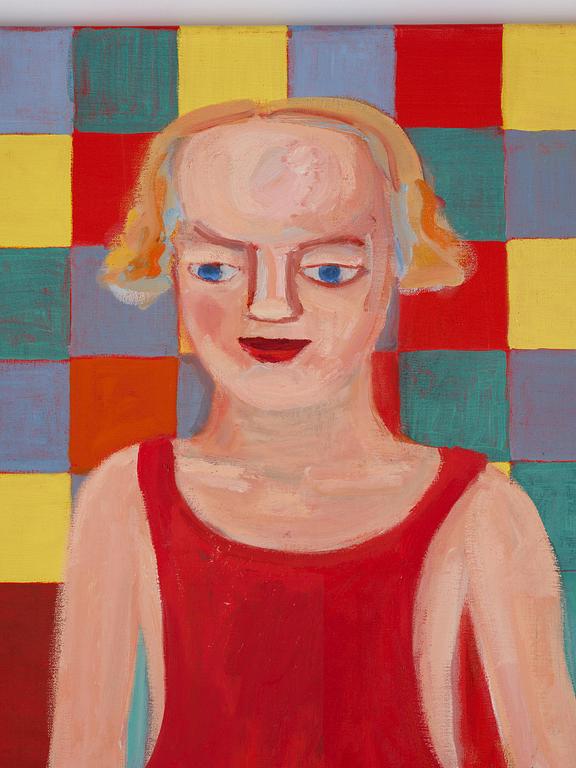
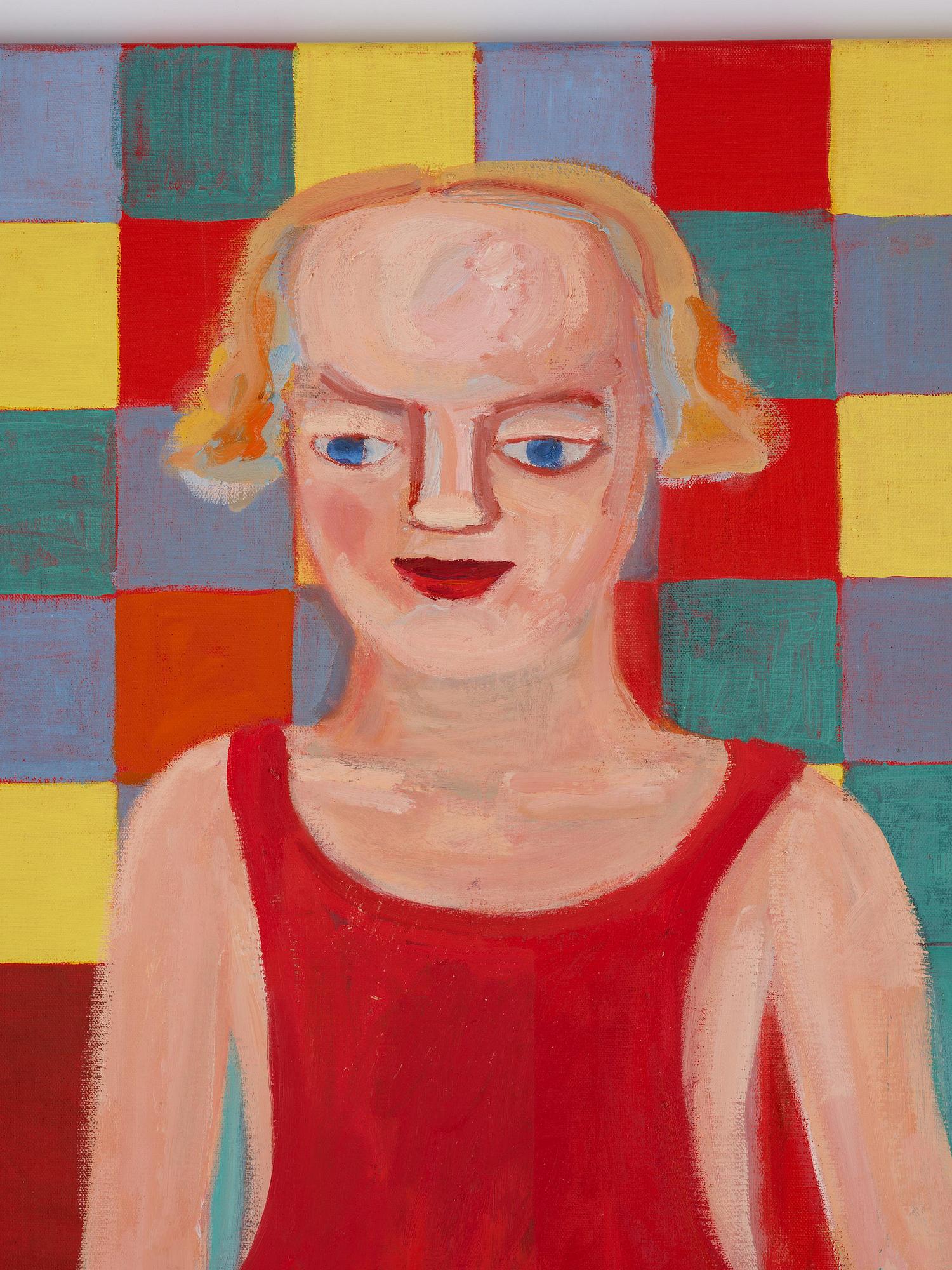
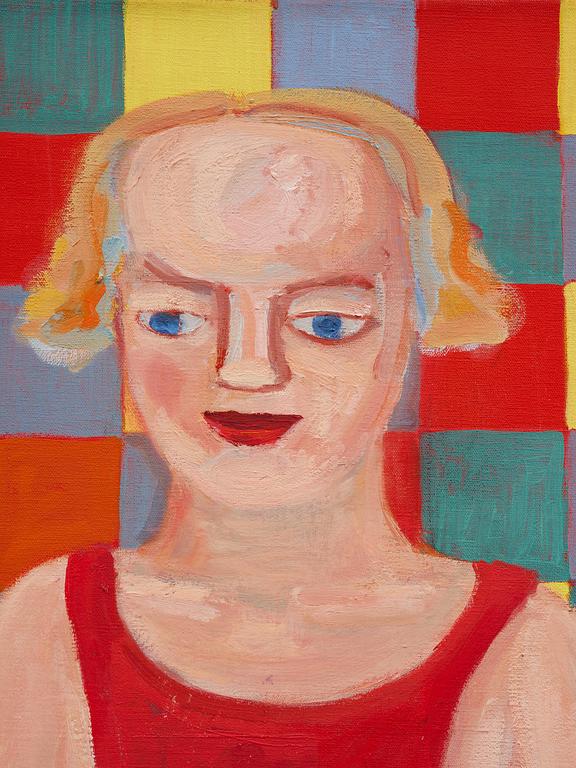
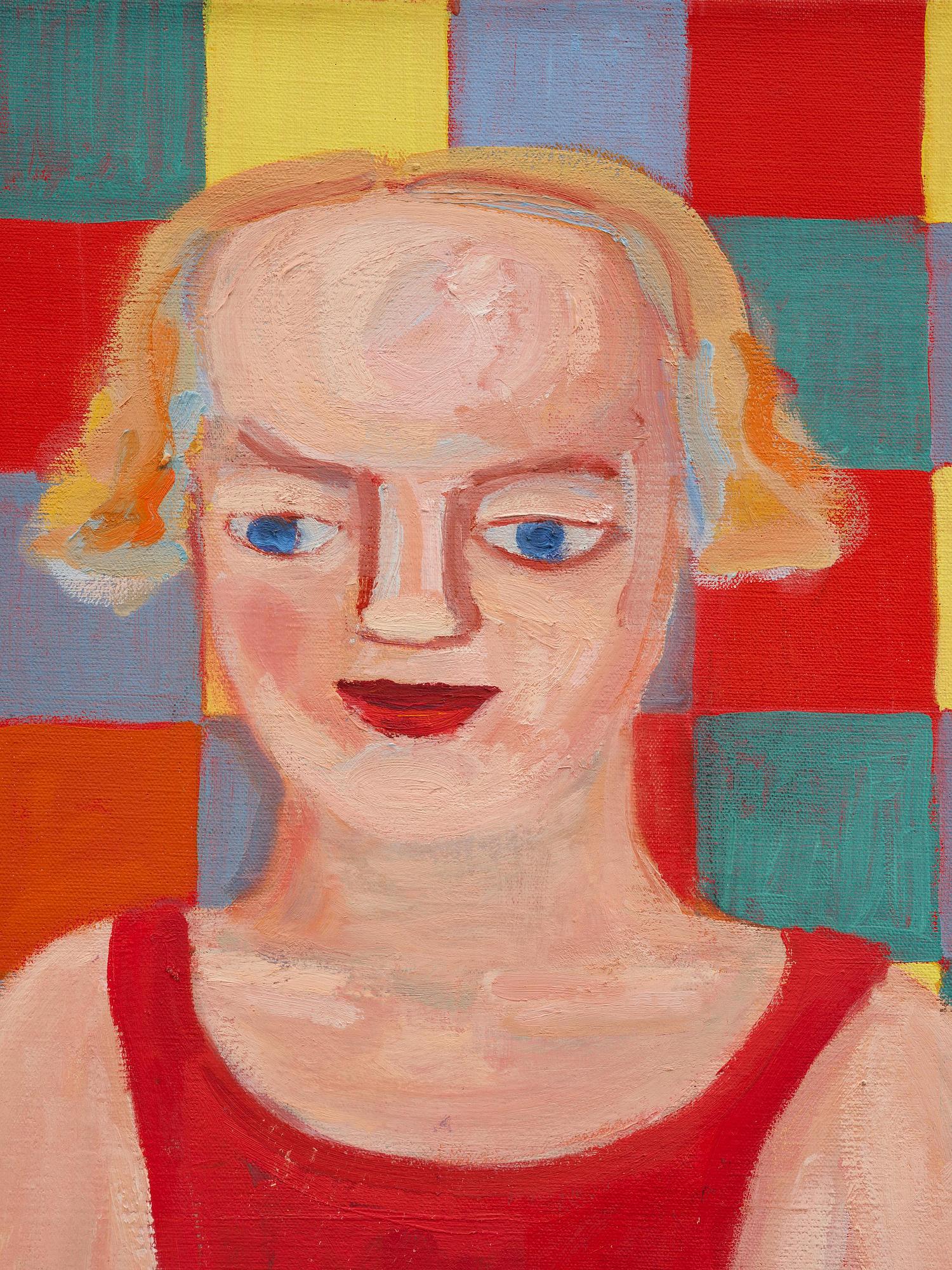
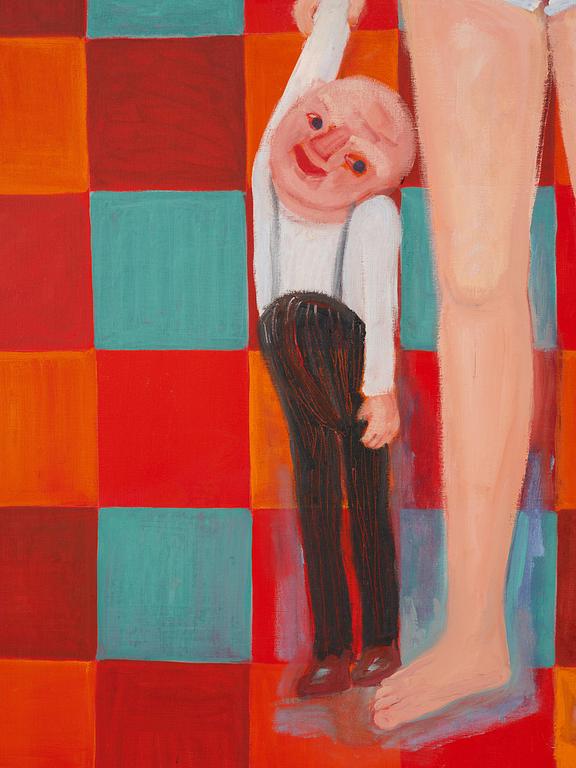
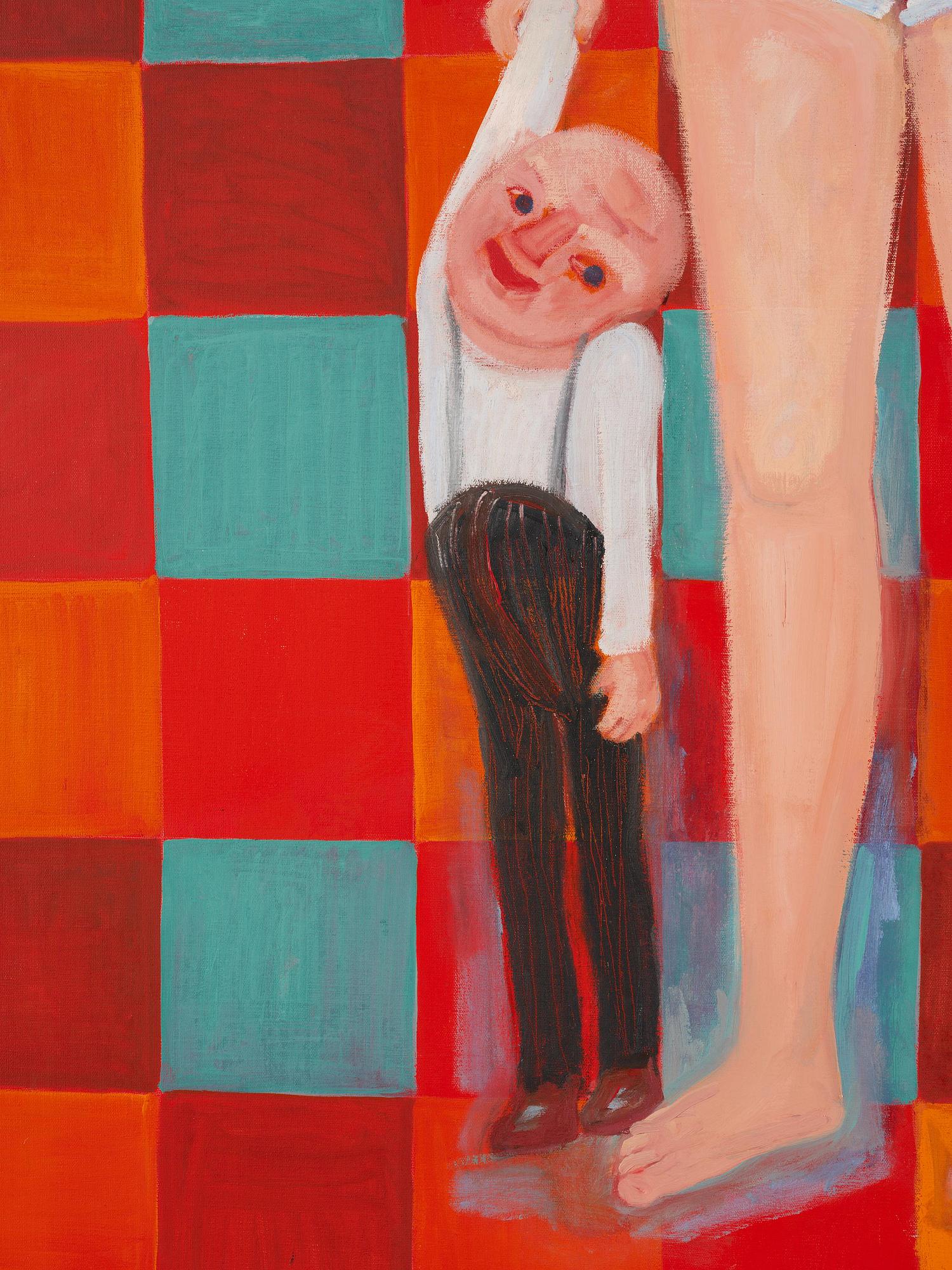
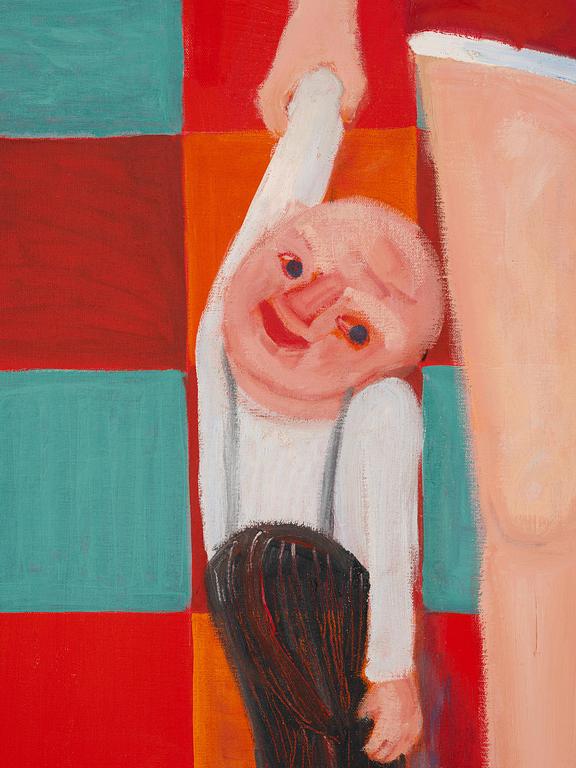
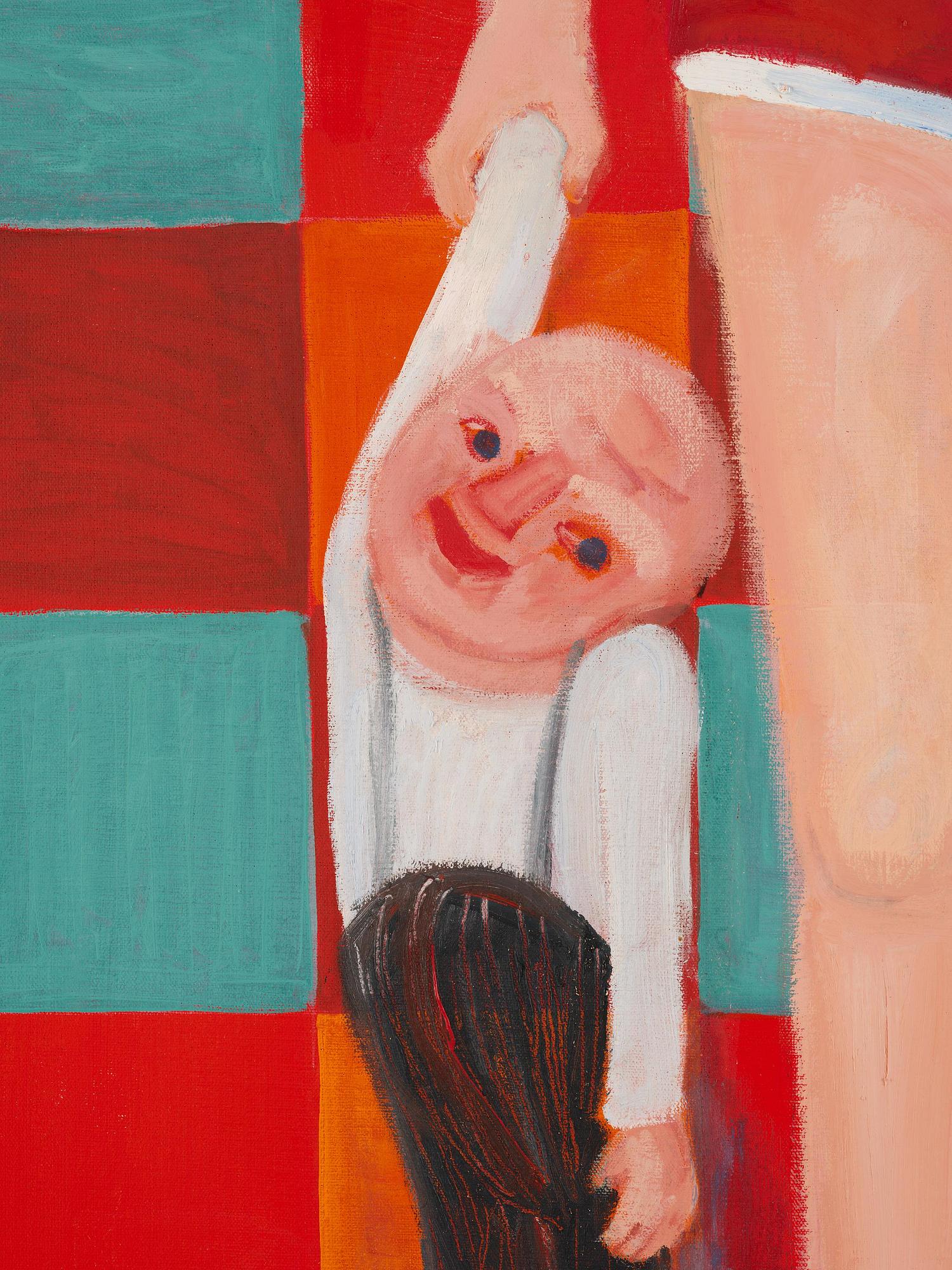
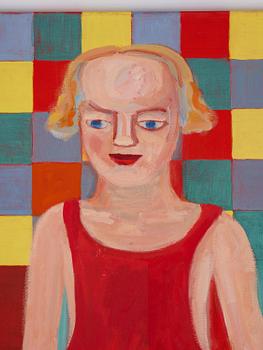
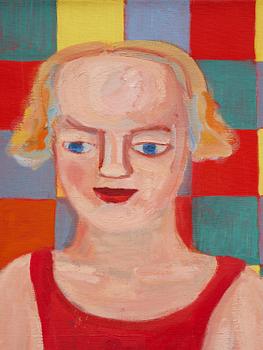
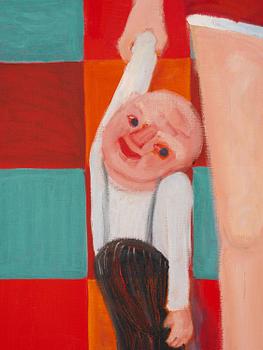
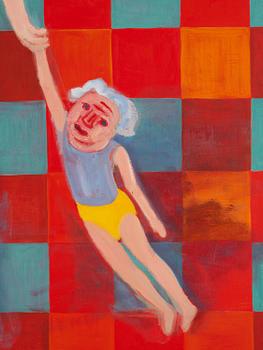
In the painting at auction, Cronqvist's, at this time, so characteristic grid patterns form the backdrop of the scene. In front of it stands the girl, Cronqvist's alter ego, holding a Mummy-doll and a Daddy-doll in each hand. The child has taken control in the family, contrary to how conventional roles are usually played. The child now has power over the parents and can decide the rules of the game regarding how Mummy-Daddy-Child will continue to be played. Lena Cronqvist has said that "It is not enough to paint a girl with two parents. They must be my parents for me to be able to go there." For magic to arise during the process of creation, the figures and situations must be something she has personally experienced; this is crucial for the painting. Her honesty is conveyed to the viewer, who captures the emotional states of the painting in their own interpretations. In this way, Cronqvist's works always manage to touch. She sets something in motion within us; we have all been small and experienced feelings of powerlessness, strength, anger, and tenderness.
Cronqvist's raw painting has given her a special place in Swedish art history; she has been one of our time's most prominent artists since the 1970s. In the early 1980s, girls enter as motifs in Lena Cronqvist's pictorial world, but it is primarily during the years 1990-1995 that they dominate the themes. She is represented with works from that thematic circle in most Swedish museum collections, as well as with public works in cities such as Stockholm and Karlstad.
Lisätietoja ja kuntoraportit

Kuuluu jälleenmyyntikorvauksen piiriin
Tietoa ostamisesta
Kuvan käyttöoikeudet
Tämän tietokannan taideteokset ovat tekijänoikeudella suojattuja, eikä niitä saa kopioida ilman oikeudenhaltijoiden lupaa. Teokset kopioidaan tässä tietokannassa Bildupphovsrättin lisenssillä.
Muiden katsomia kohteita