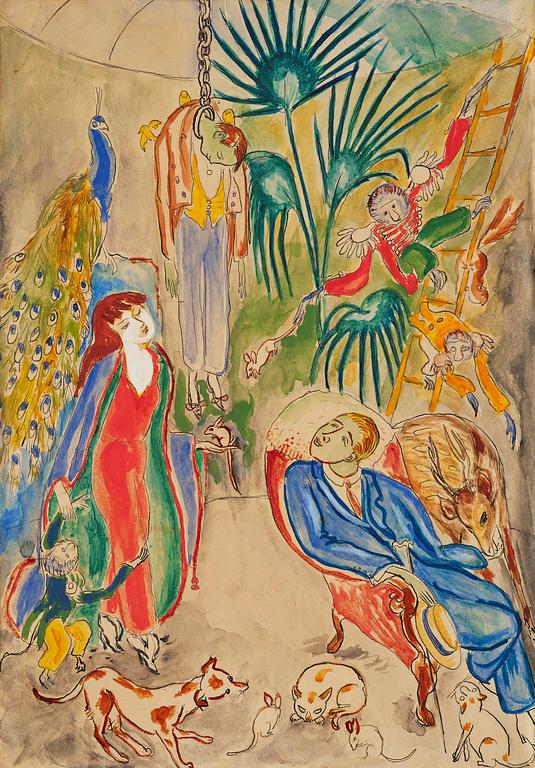
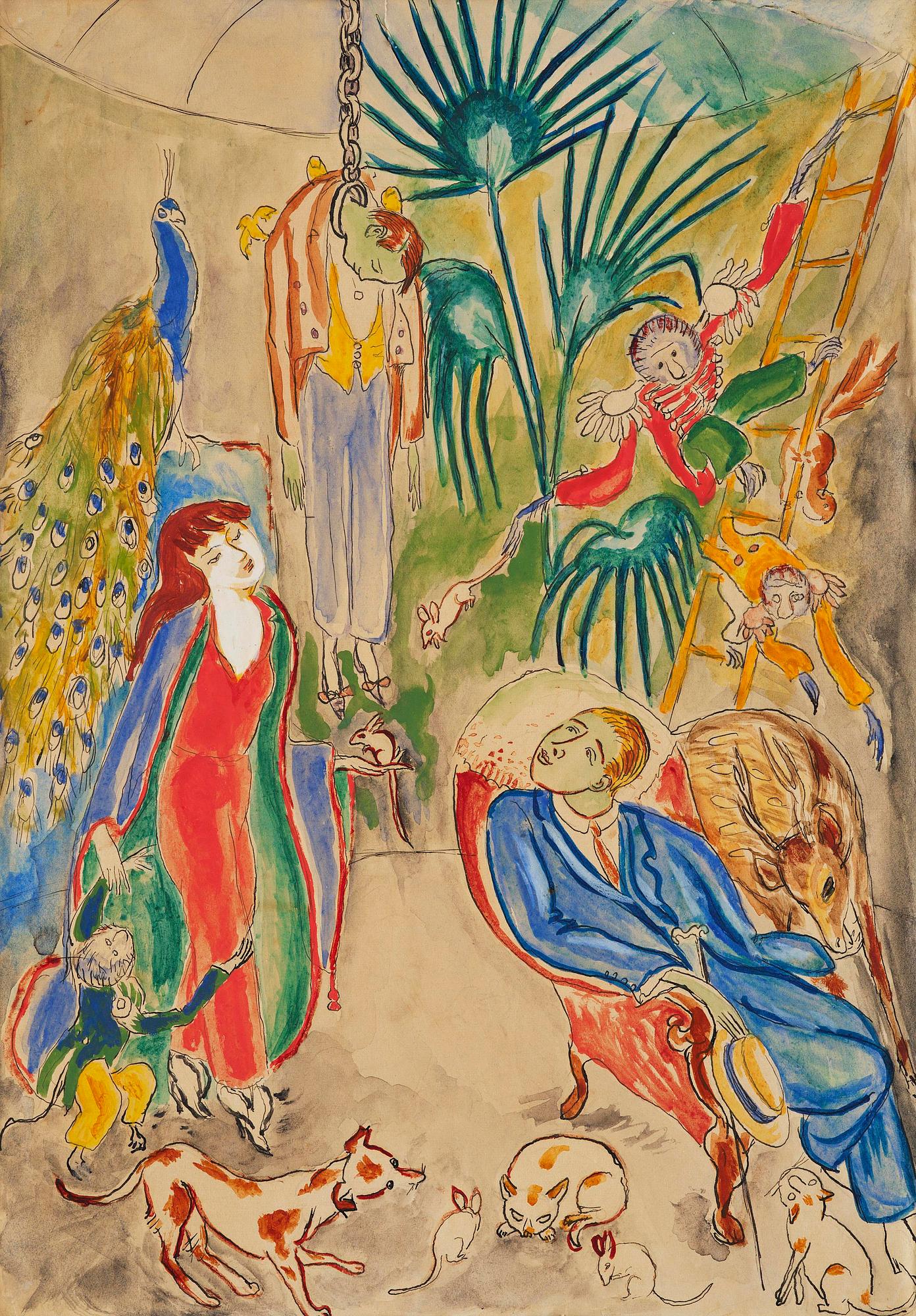
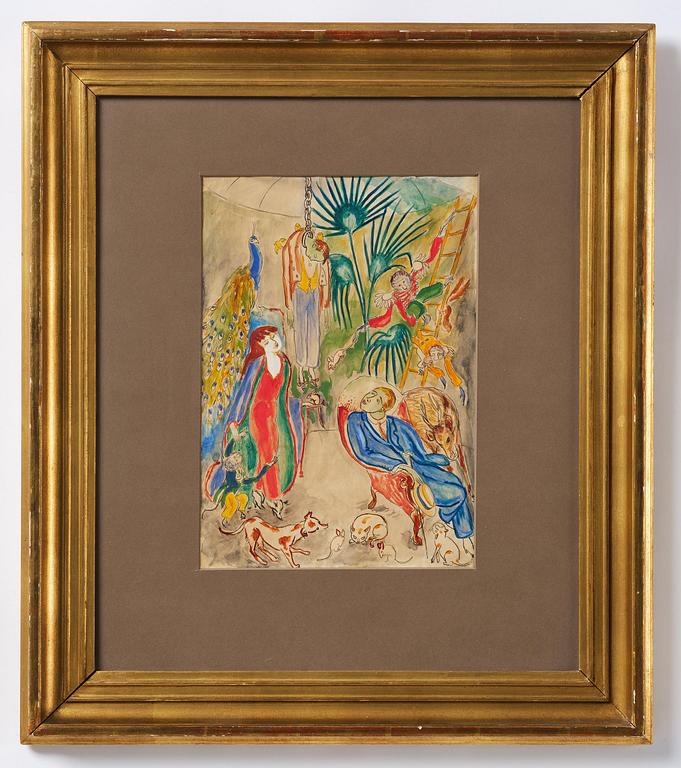
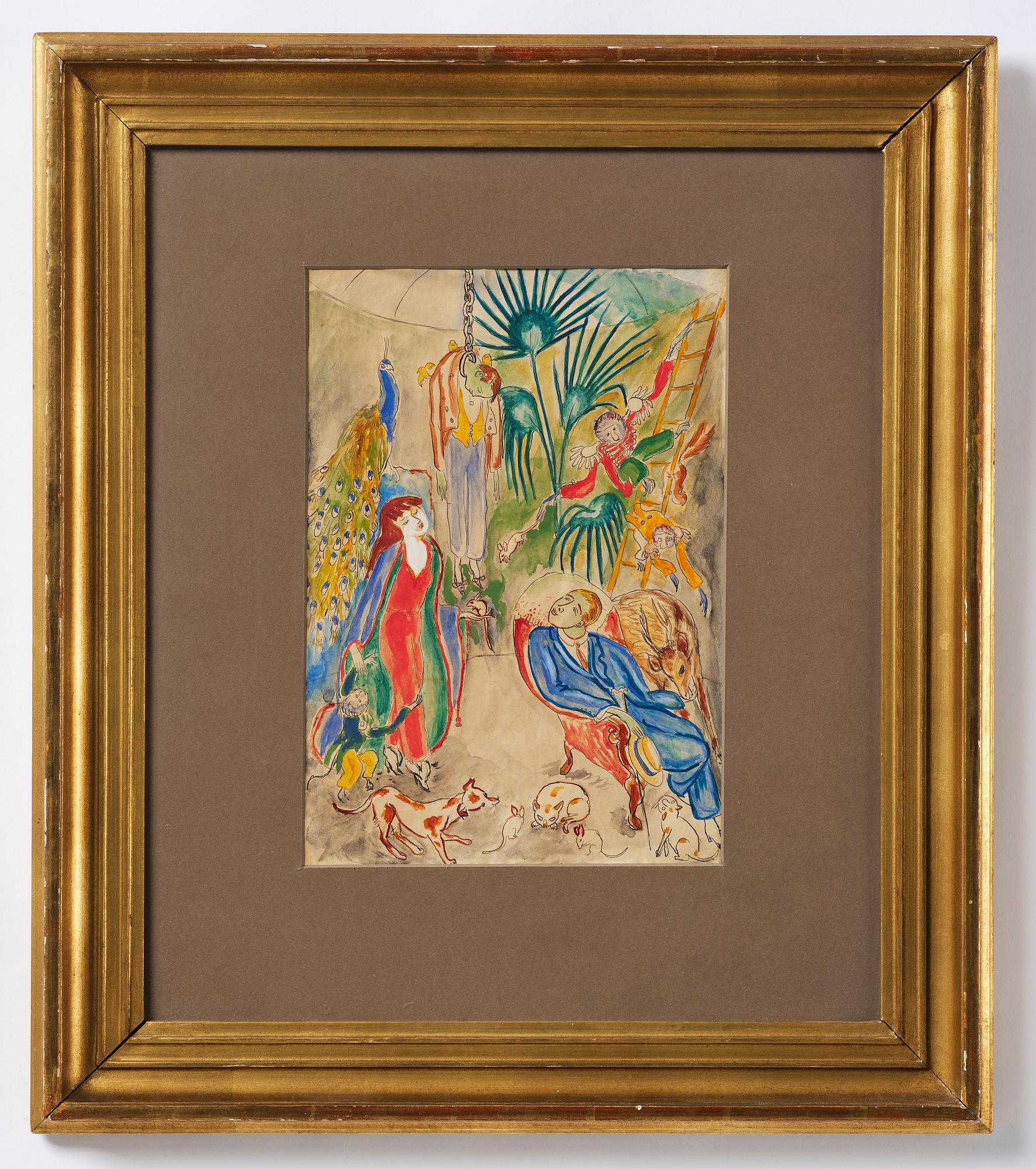
"Visit to an eccentric lady"
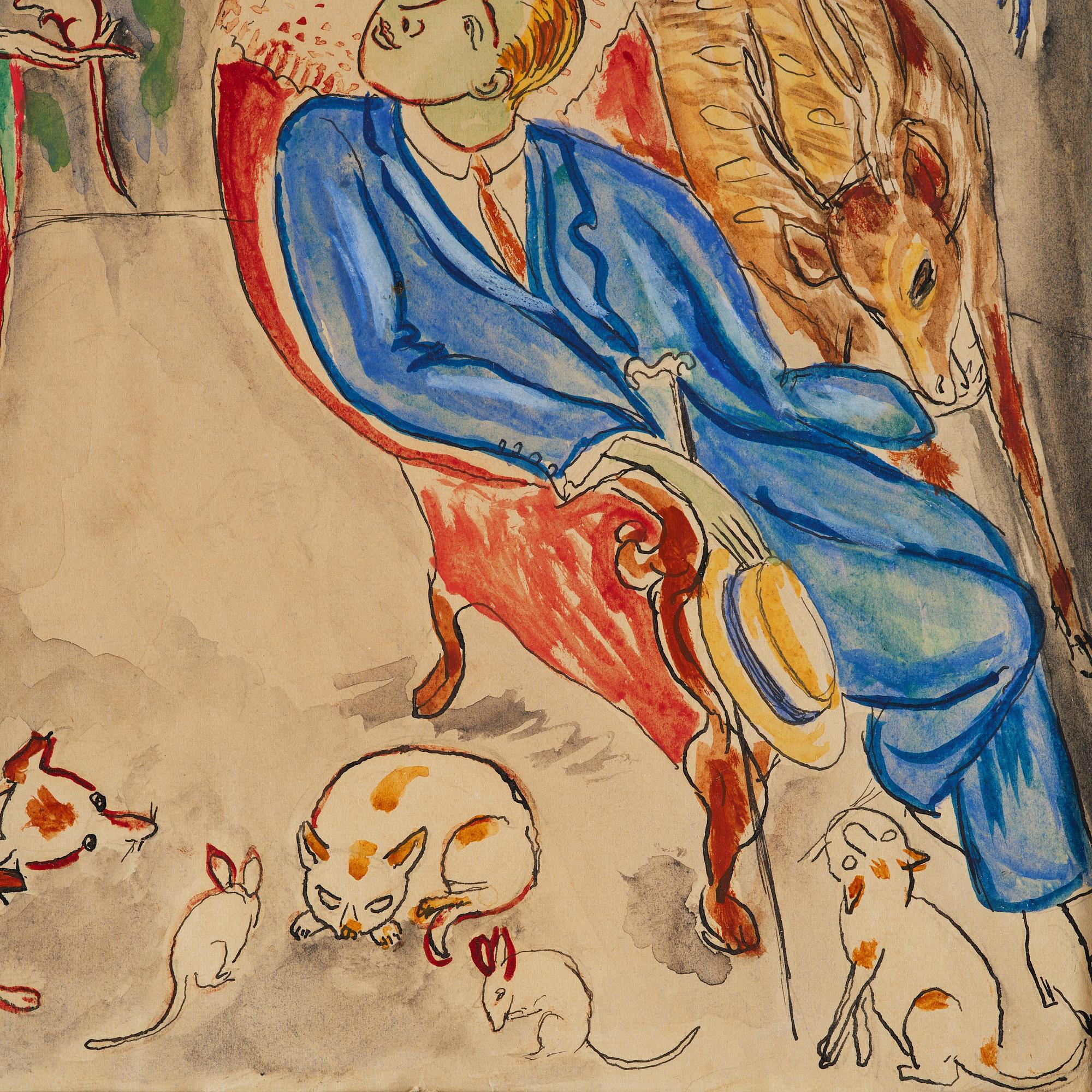
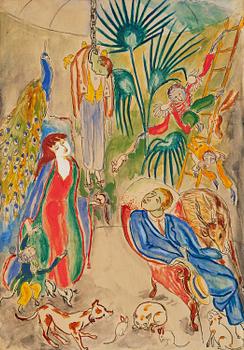
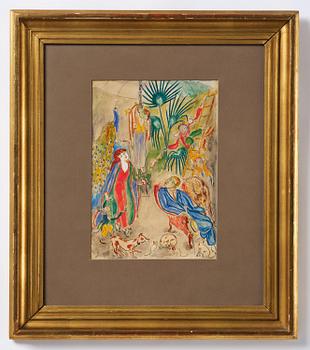
Executed in 1921. Mixed media on paper 35.5 x 25 cm.
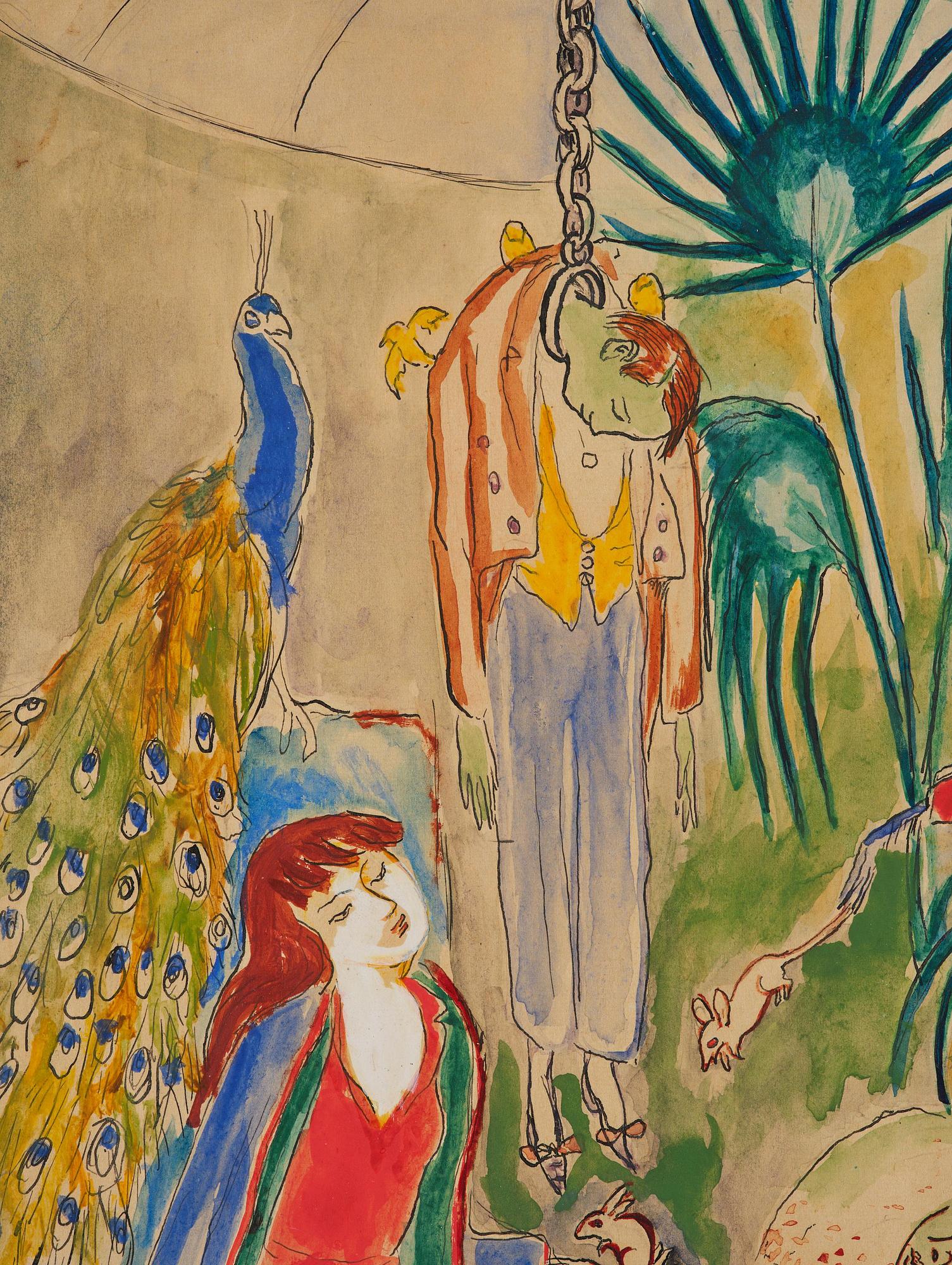
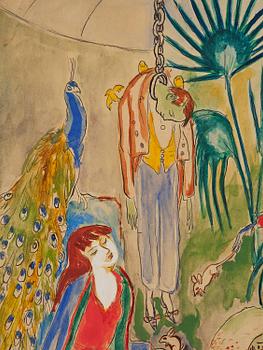
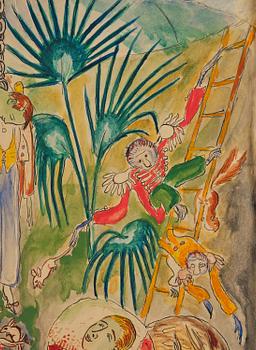
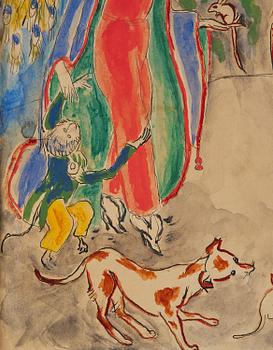
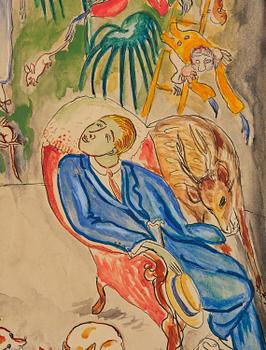
The work in the auction is a preliminary study for the larger version in oil "Visit to an Eccentric Lady," which is part of the collections of the Moderna Museet, Stockholm.
Alkuperä - Provenienssi
Carl Kempe (1884-1967), Swedish industrialist and collector.
Veronica Björling, née Kempe (1946 - 2016).
Private Collection.
Näyttelyt
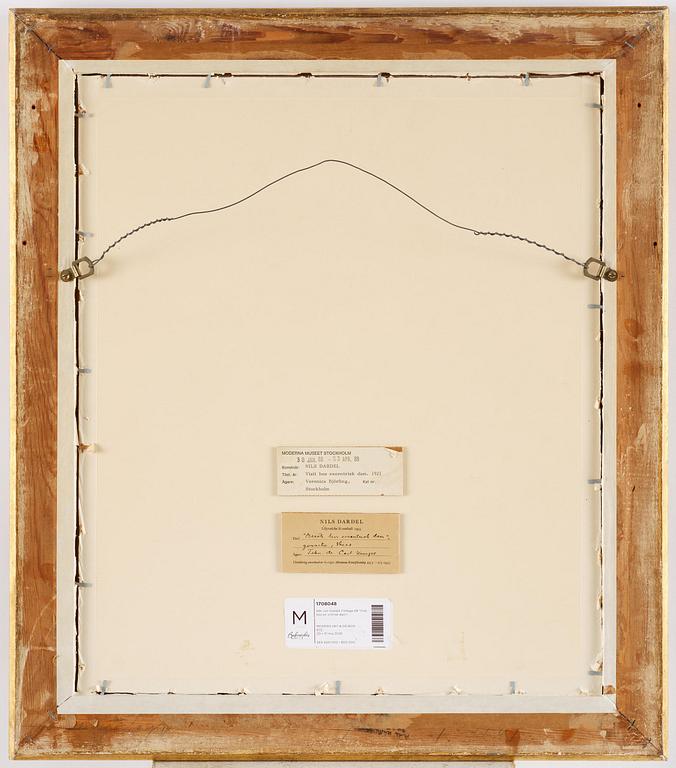
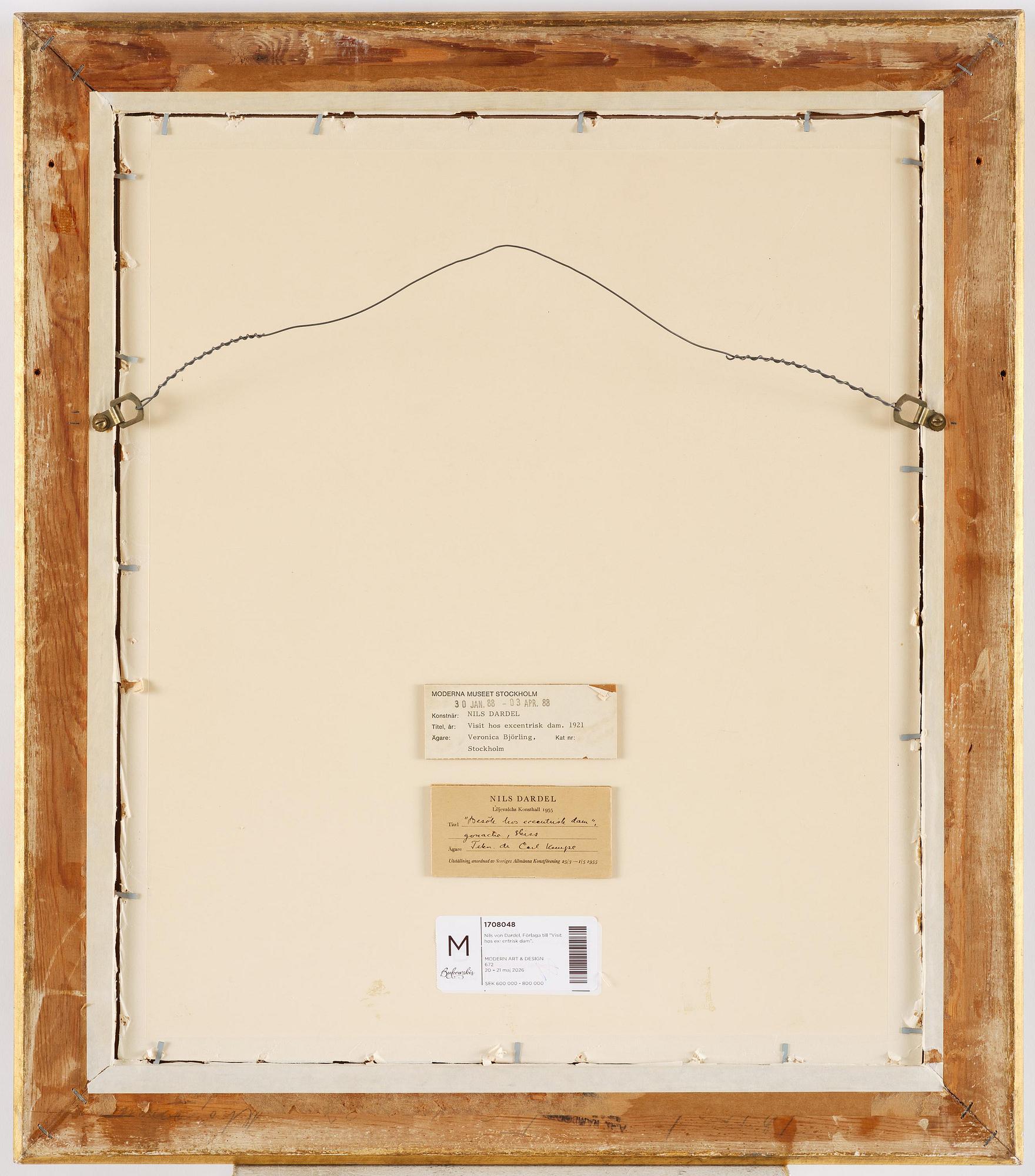
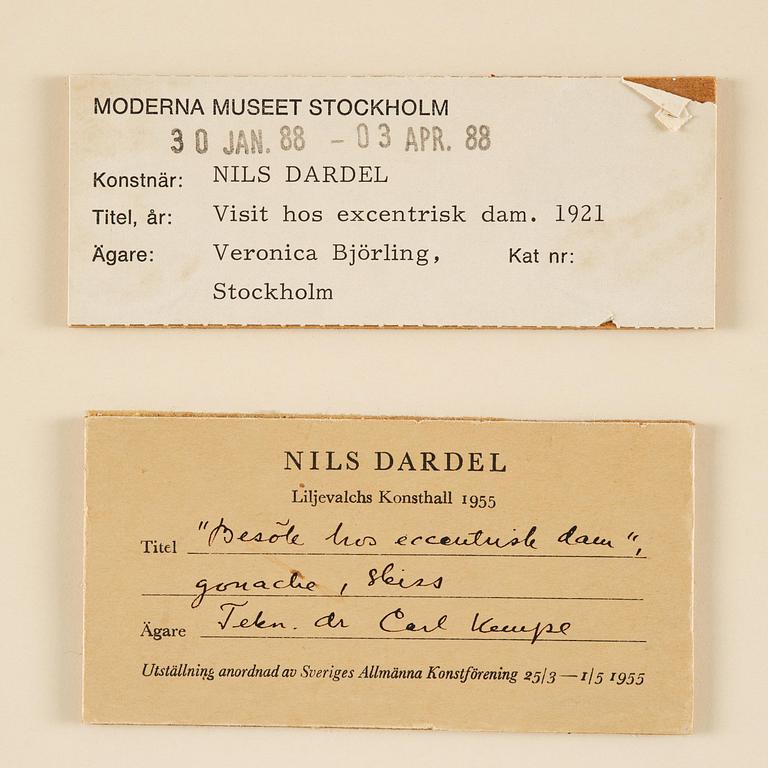
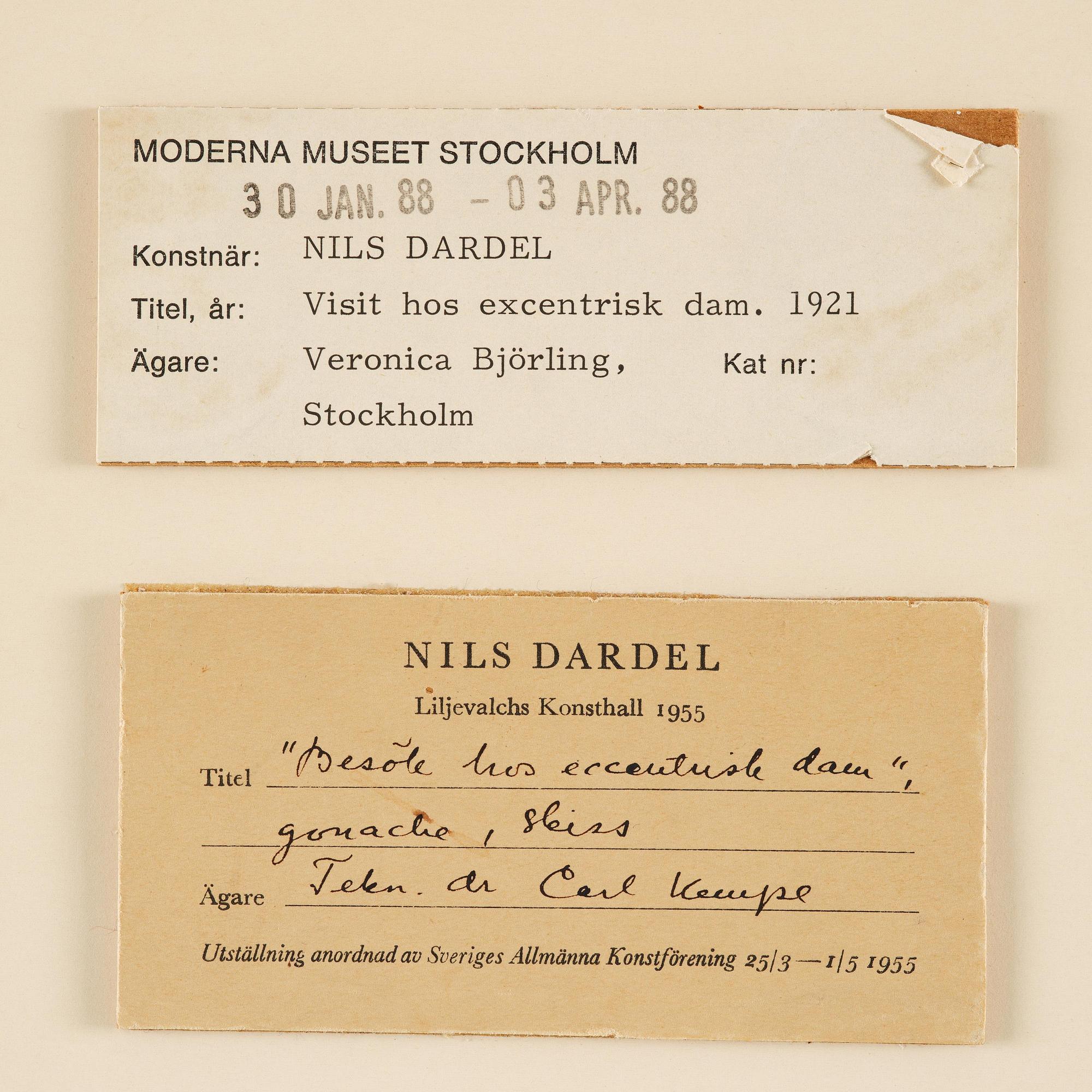
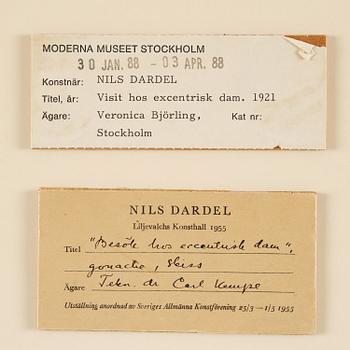
Liljevalchs konsthall, Stockholm, Sveriges Allmänna Konstförening, "Nils Dardel", 25 March - 1 May, 1955, cat. no 171.
Moderna Museet, Stockholm, 30 January - 3 April, 1988, cat. no. 128.
Kirjallisuus
Karl Asplund, "Nils Dardel II. De senare åren", 1958, listed under works from 1921, p. 260.
Erik Näslund, "Dardel", 1988, compare with the depicted painting "Visit to an Eccentric Lady" p. 198.
Muut tiedot
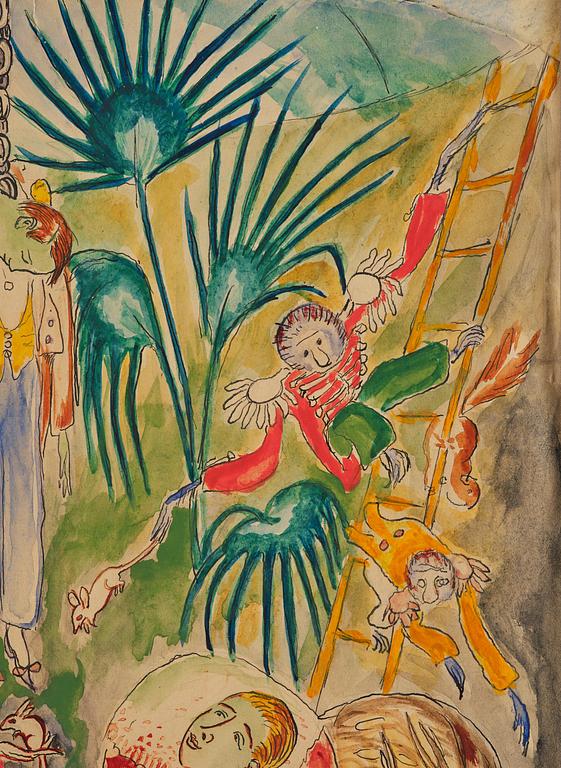
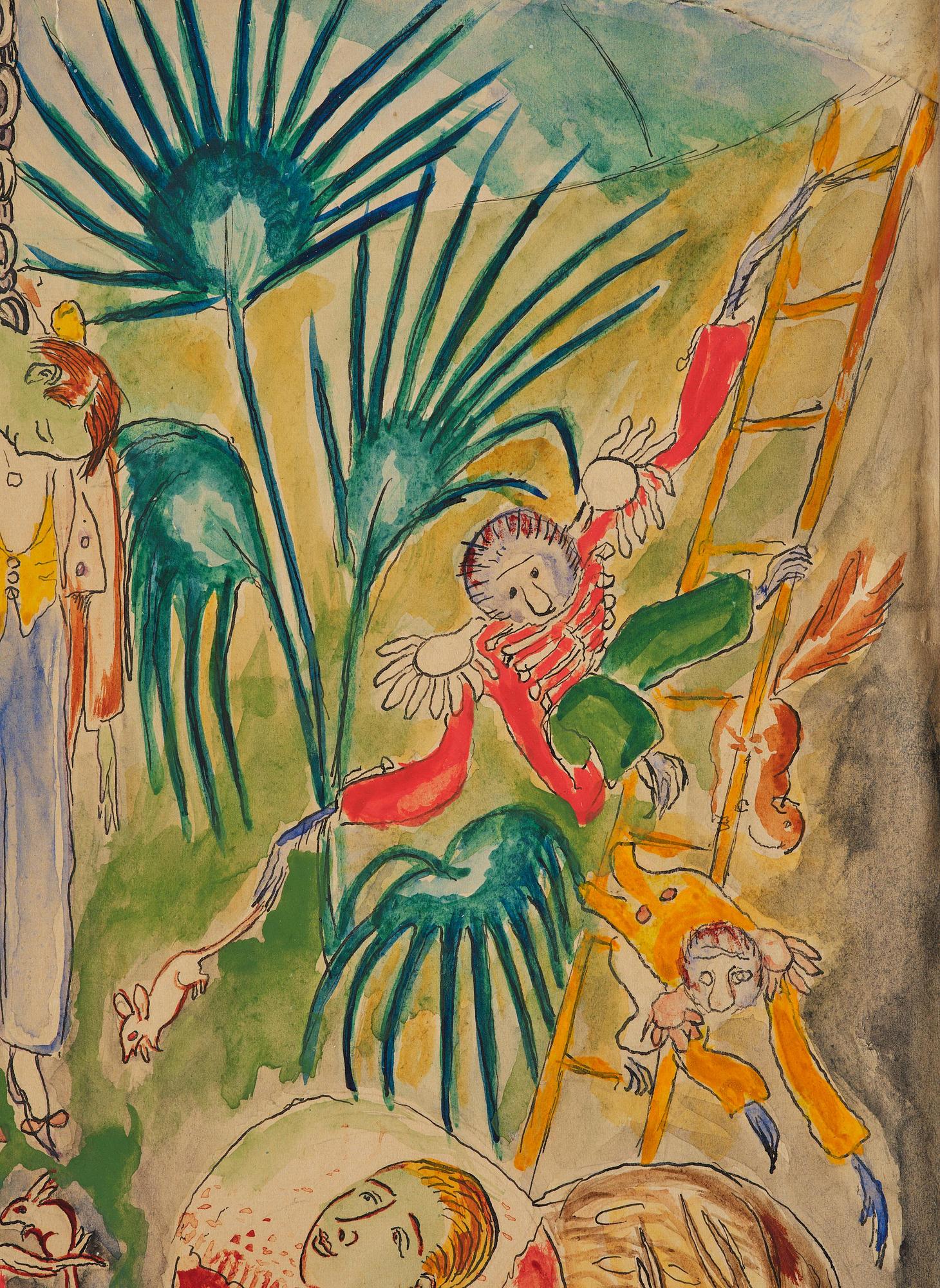
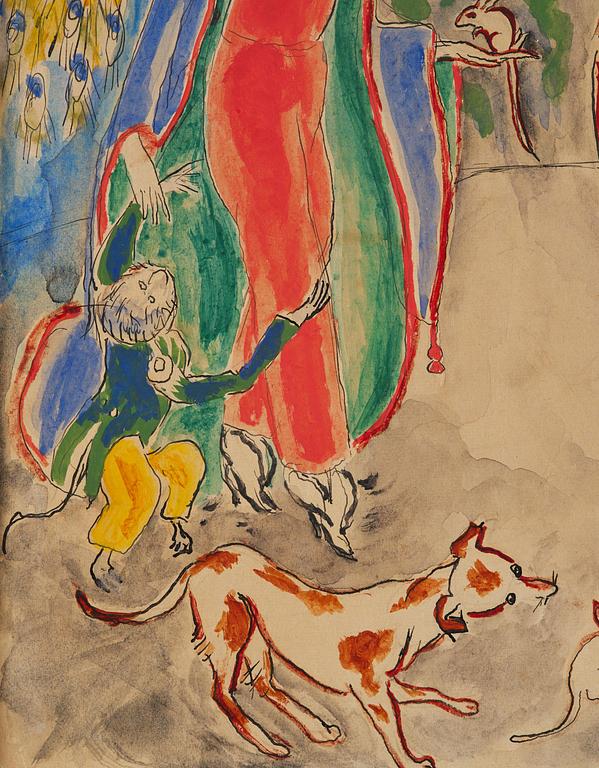
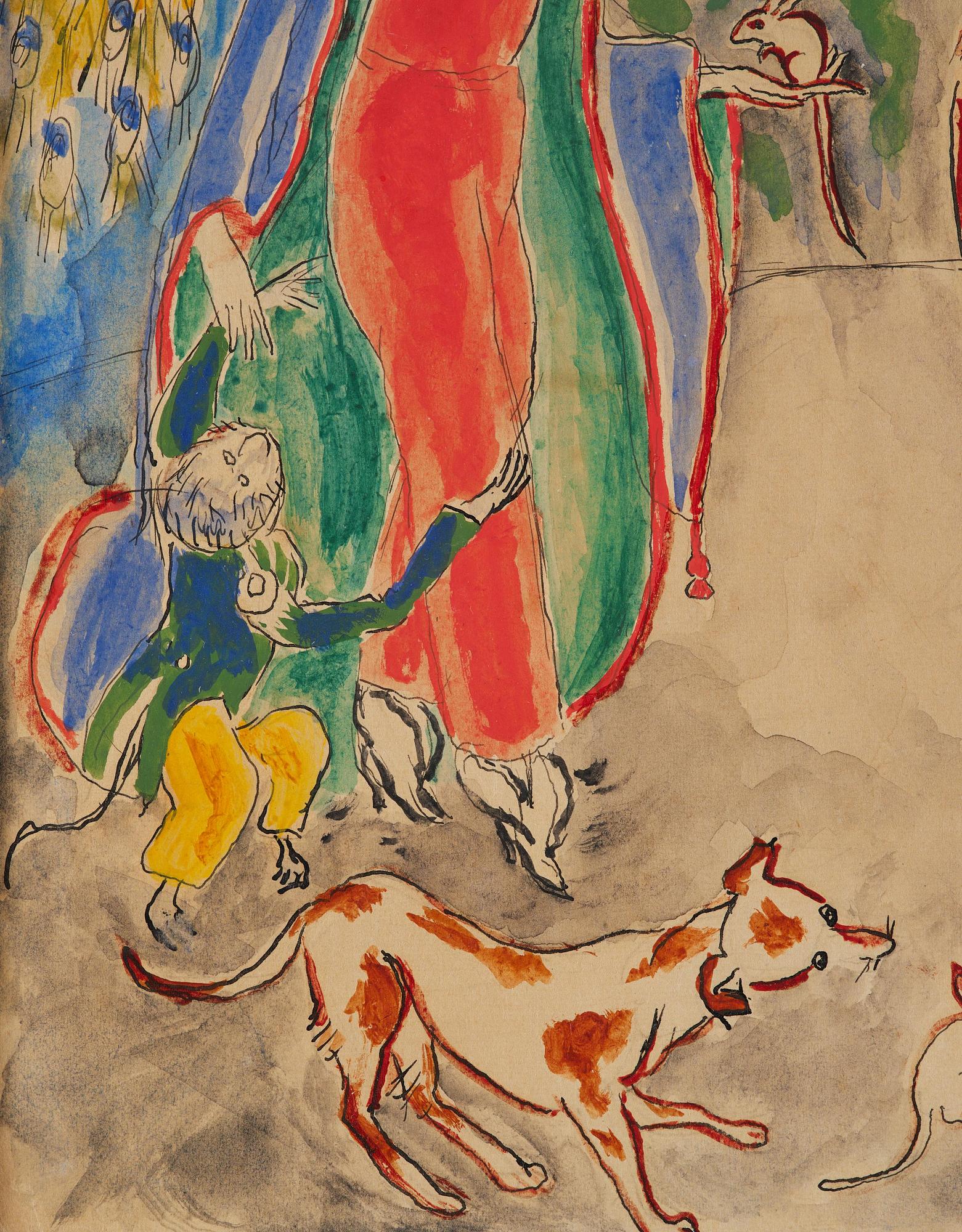
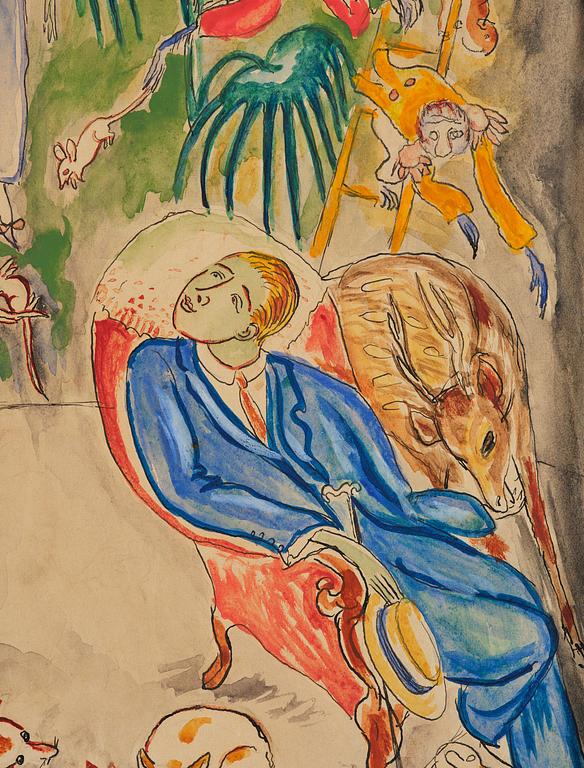
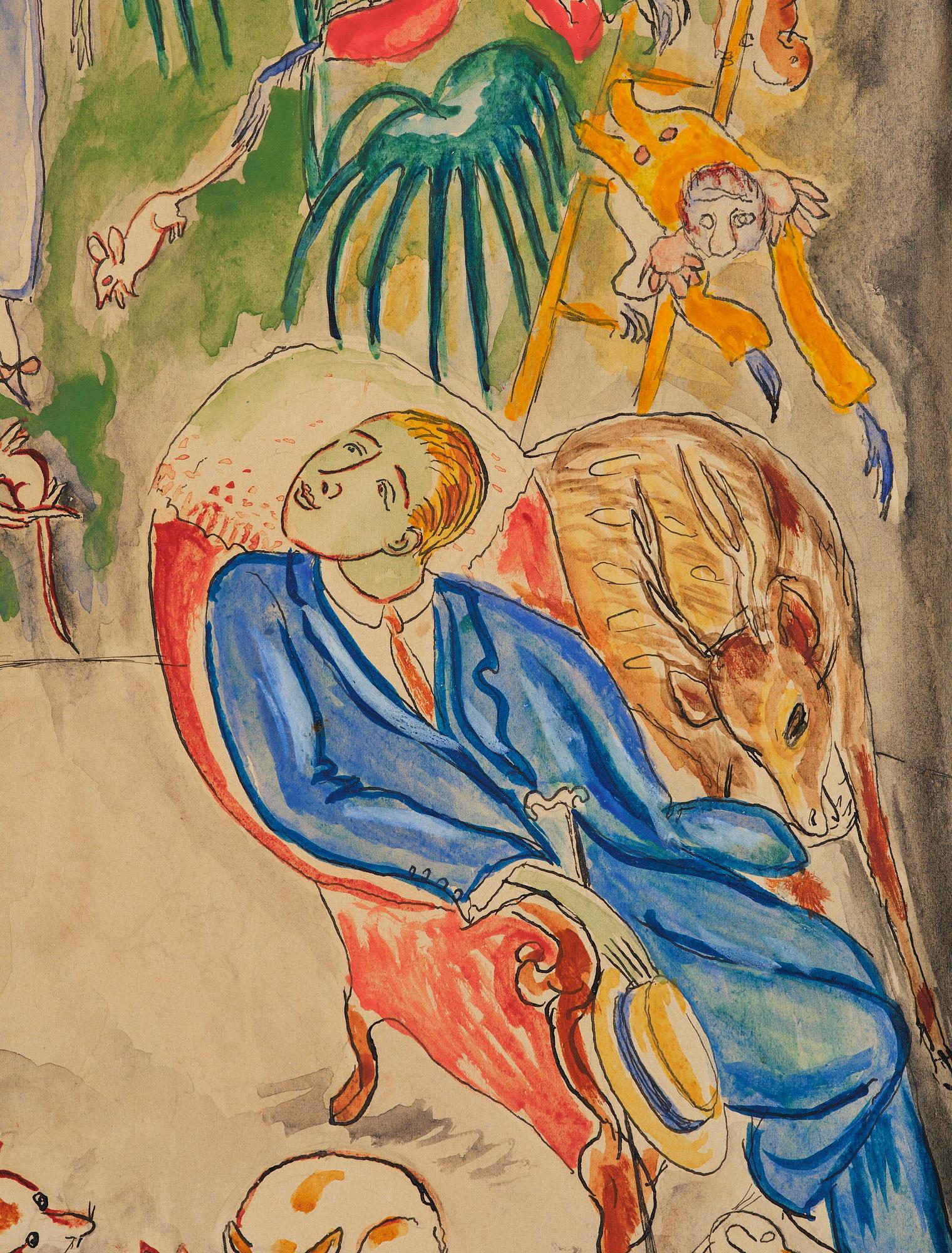
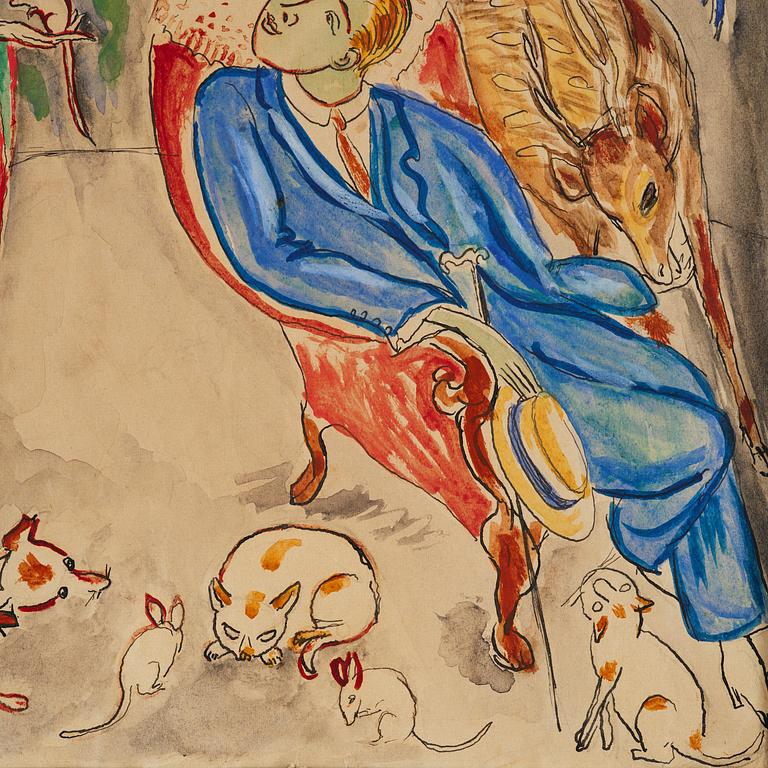
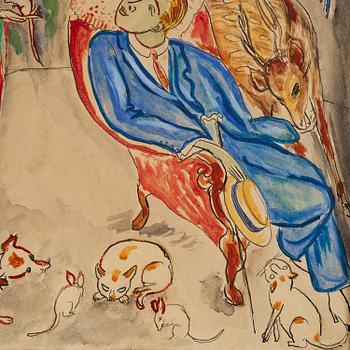
Vincent van Gogh is said to have remarked that art is a way to comfort those who have been broken by life. And when it comes to Nils von Dardel's art from 1919 and a few years onwards, there seems to be a certain truth in that. After his breakup with Nita Wallenberg, Dardel works furiously and creates some of his most iconic motifs. Notably, the three major works from these years—“The Dying Dandy” (1918), “Crime Passionnel” (1921), and “Visit to an Eccentric Lady” (1921)—all have independent studies in watercolour/gouache that differ in exciting ways from the final oil compositions. In the preliminary version of “The Dying Dandy,” all the figures in the composition are men, while the oil version features women mourning the dying man. In “Lady in Green Pyjamas, Murderous Gentleman in Black,” it is clear that a man is dying from a gunshot, while the drama in the oil painting unfolds between two much more androgynous figures. The auction's study for “Visit to an Eccentric Lady” appears more like an independent work and contains several personal keys and recurring symbols that speak to Dardel's art.
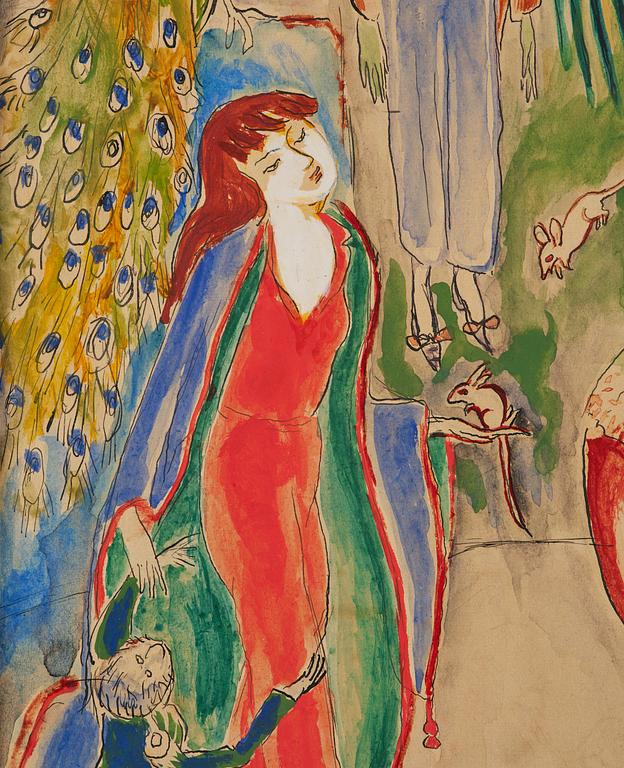
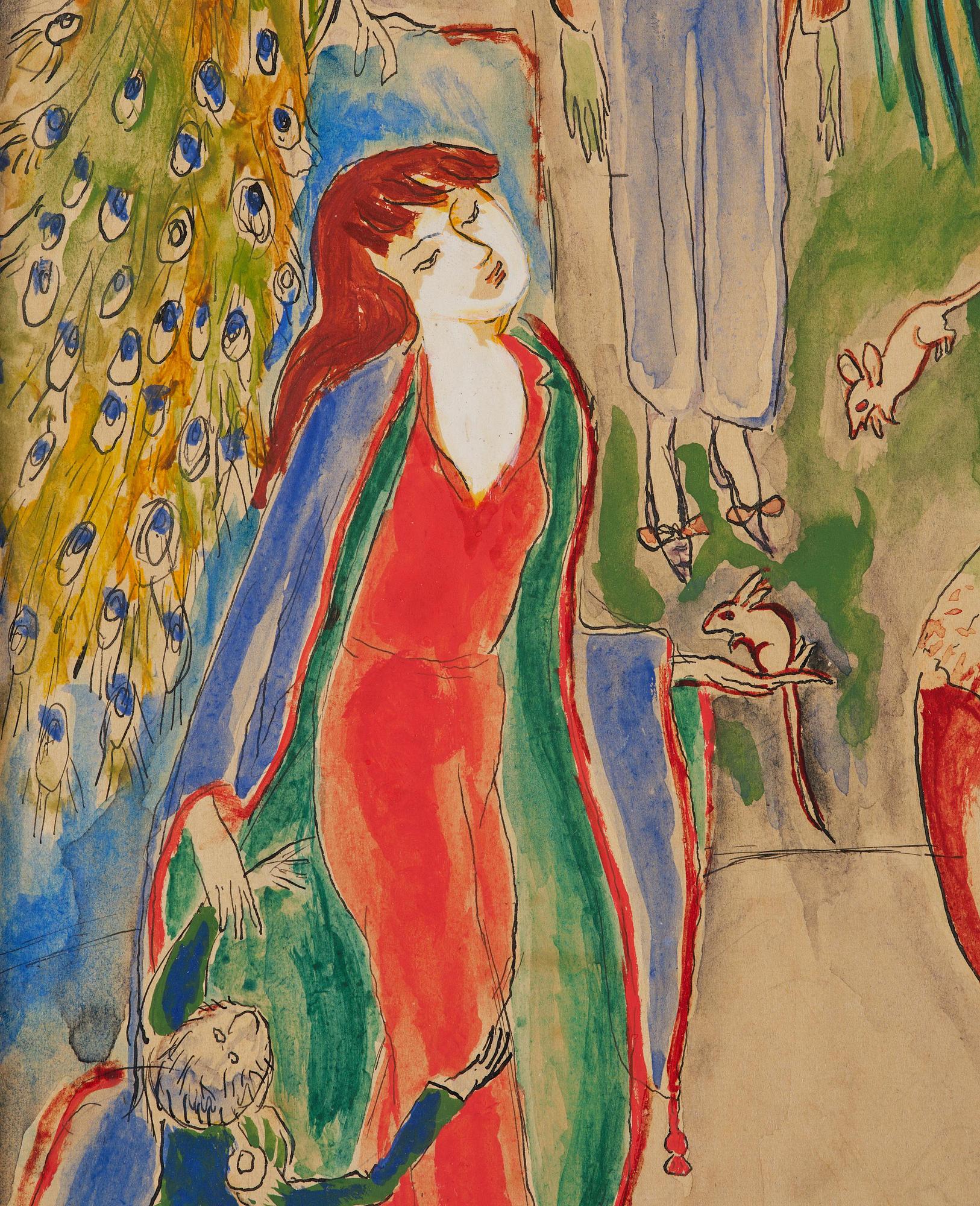
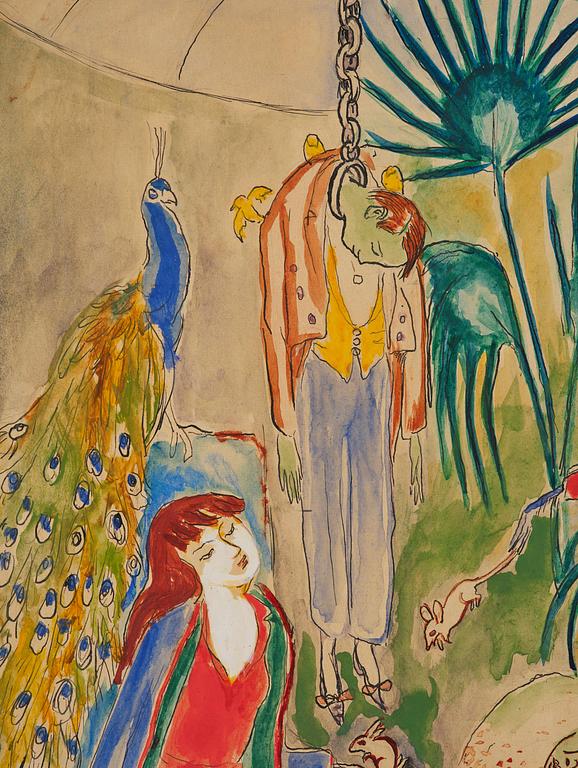
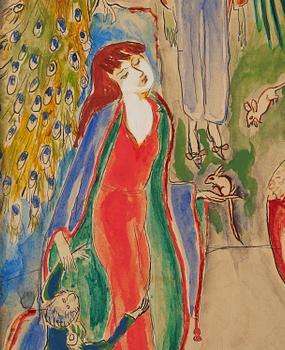
The setting of the auction's watercolour shows external signs of being an orangery or greenhouse, with its dome-shaped roof and palm leaves dominating the background. They almost conceal one of the painting's more macabre elements—the hanging man, whom several Dardel connoisseurs interpret as the artist himself. However, it is interesting in the present watercolour that the artist has placed another alter ego, the dandy, in conversation with the eccentric lady, which demonstrates how the artist has created an intriguing dynamic between these two symbols. Surrounding the three main characters of the motif, we find several of the animals that Dardel recurrently incorporates into his work after his trip to Japan. In Japanese art, animals often possess human and moral qualities, something that can be a well-handled artistic device. In Dardel's work, we frequently encounter animals, and in the watercolour “Visit to an Eccentric Lady,” there are the monkey, the peacock, and the deer, all of which are strong symbols within Japanese art. The melancholic deer appears frequently and plays a significant role in the watercolour “The Young Man and the Girl” (1919) and is said to allude to innocence and purity. The monkey can often have erotic connotations and suggest boldness. In Paris during the 1910s and 1920s, the monkey was something of a fashionable animal and a very chic accessory. Dardel himself gave a monkey to Jeanne Legér, the wife of the artist and Dardel's good friend Fernand, which she is said to have named “Nils.” In the oil version of “Visit to an Eccentric Lady,” all elements have been amplified by the artist—the hanging man is much more prominent, and the eccentric lady is even more so, with a monkey and a vase balanced on her head. The ladder appears in both versions—in the auction's version, it is used by costumed monkeys, and in the oil version, Dardel's good friend, the artist Philip Fromén, is seen fishing in what looks like a page suit. Overall, the oil version presents a much more crowded picture plane where animals and visiting figures take up space. The background has completely lost its greenhouse representation and instead feels much more like a studio. The work presented at auction should be viewed more as an independent composition where the artist's portrayal of the wounded/divided/new self is more clearly expressed. As a viewer, the presentation here feels easier to follow as the narrative is more stripped down and honest.
Lisätietoja ja kuntoraportit

Tietoa ostamisesta
Muiden katsomia kohteita