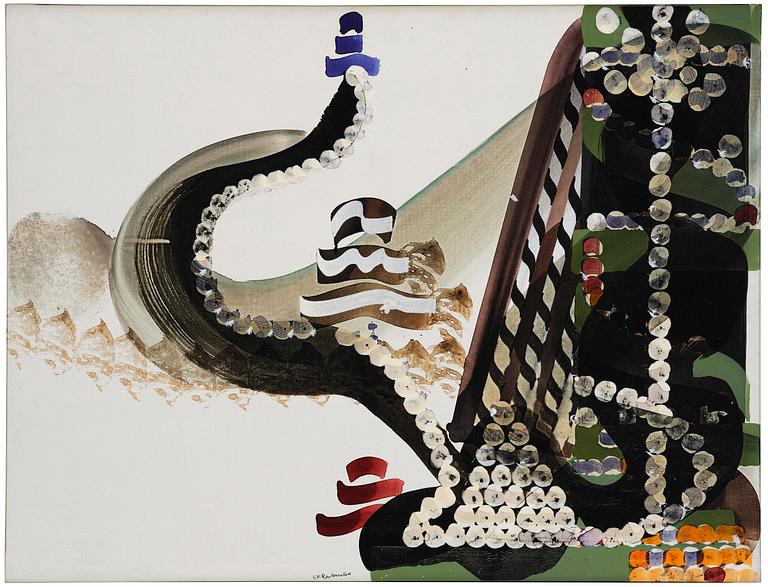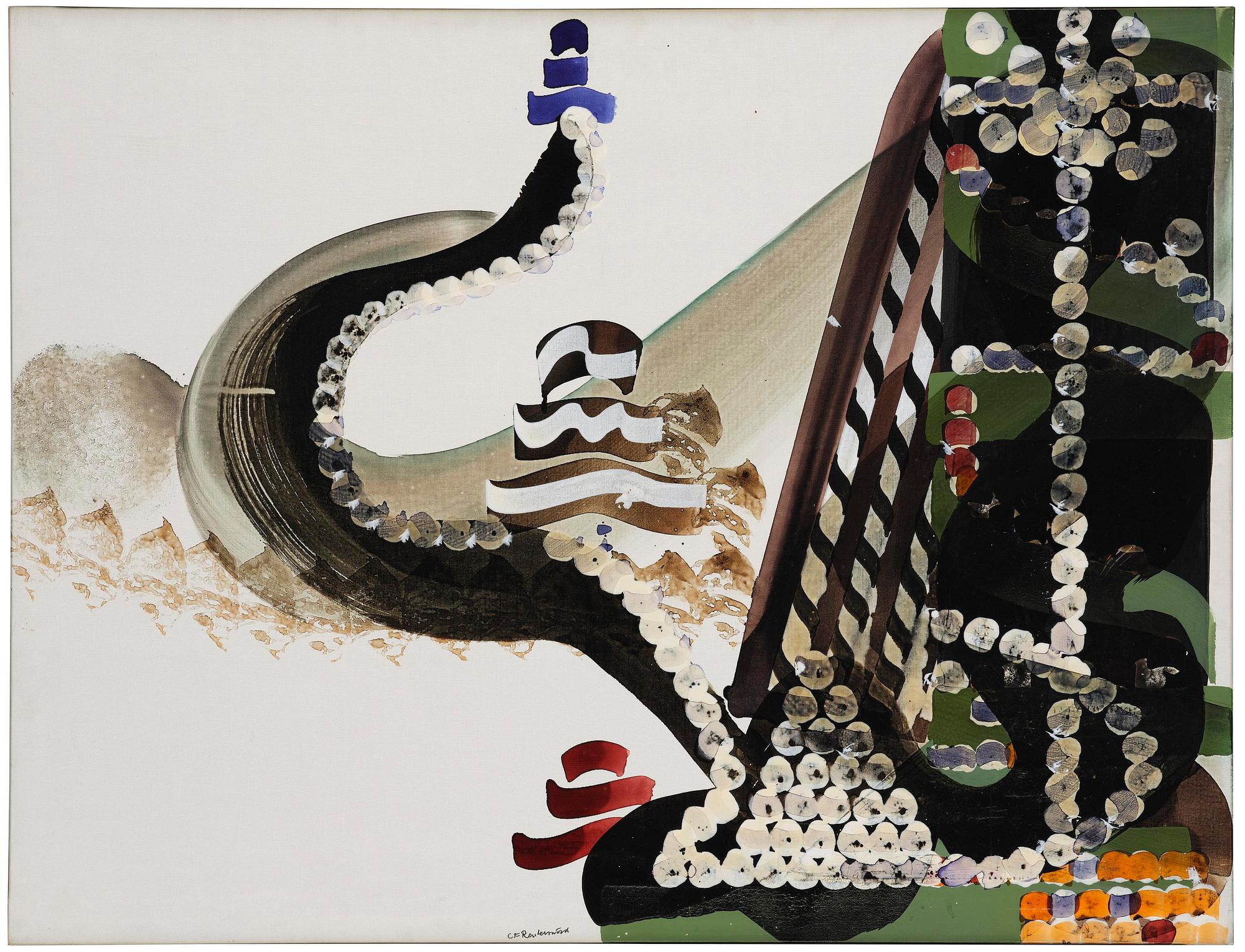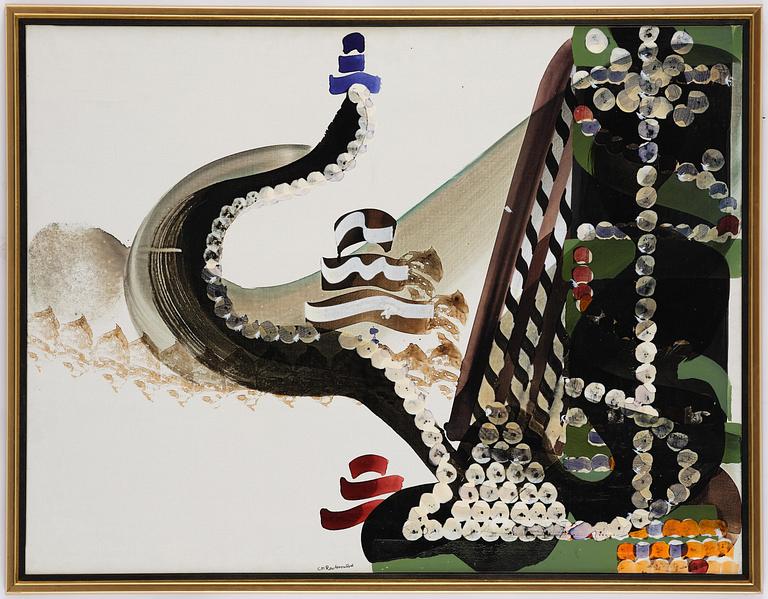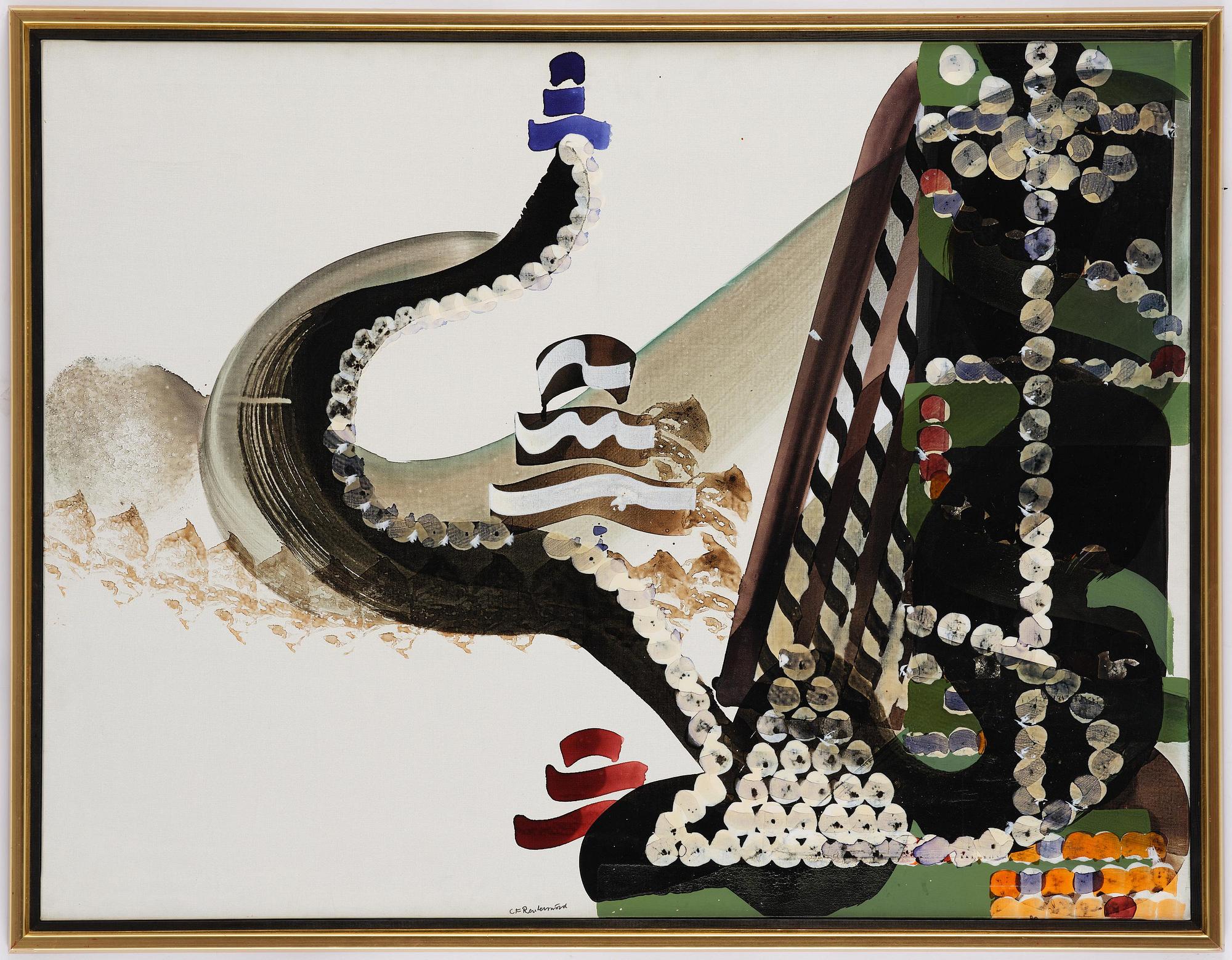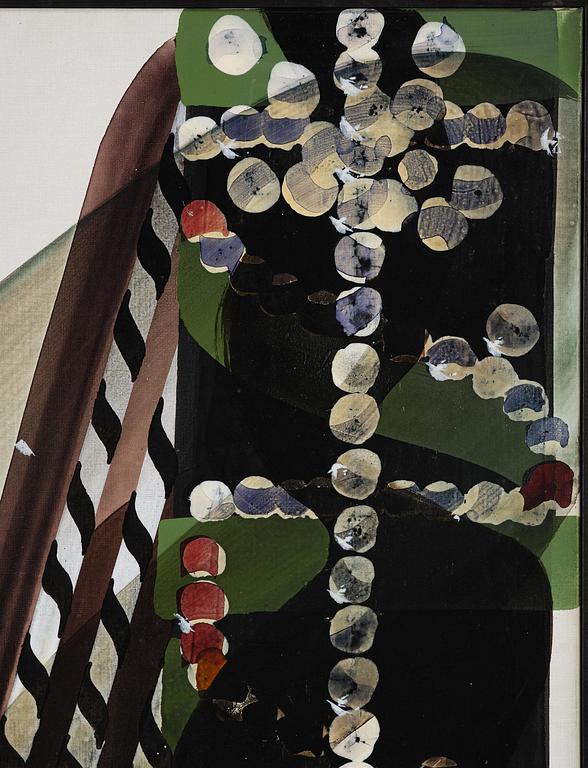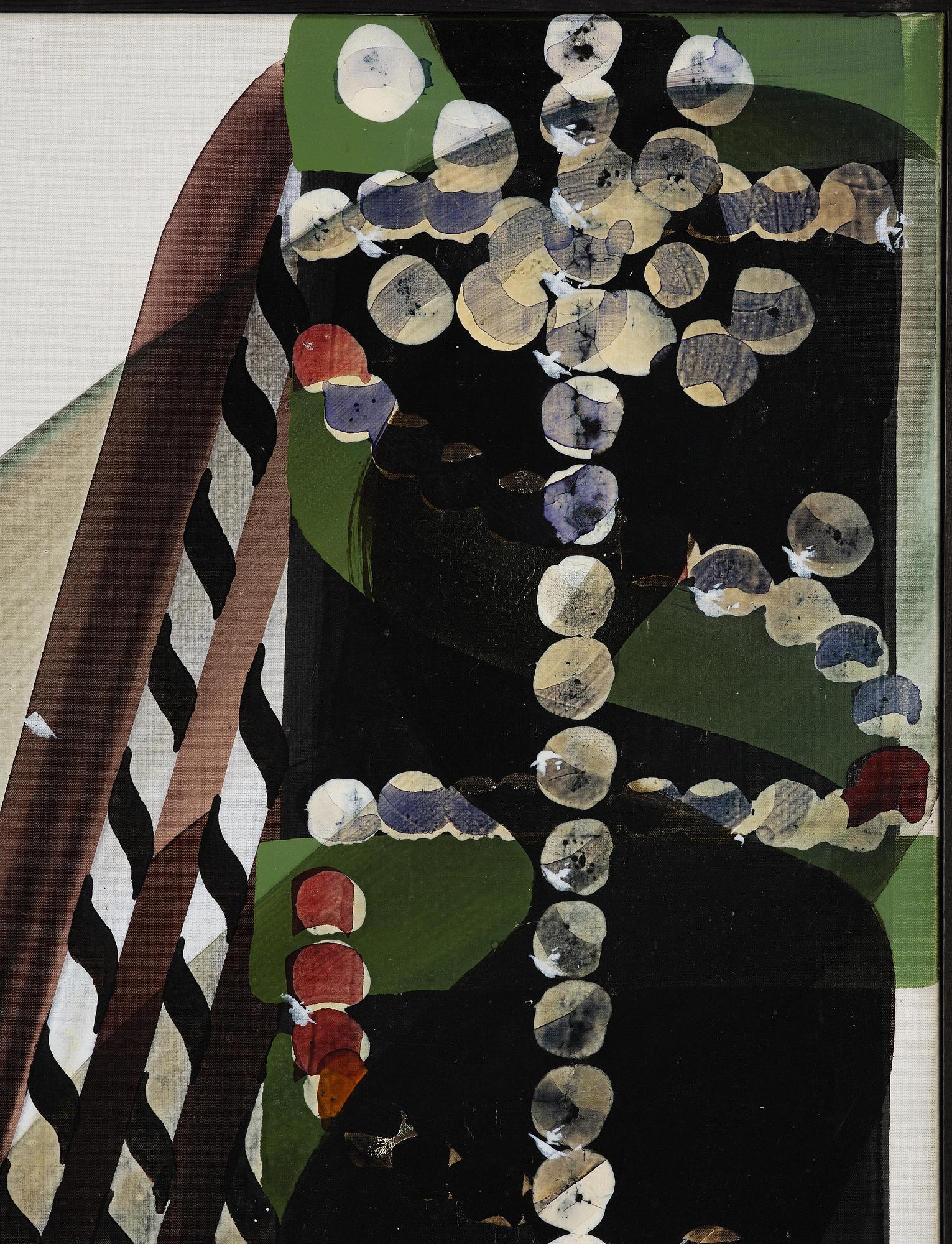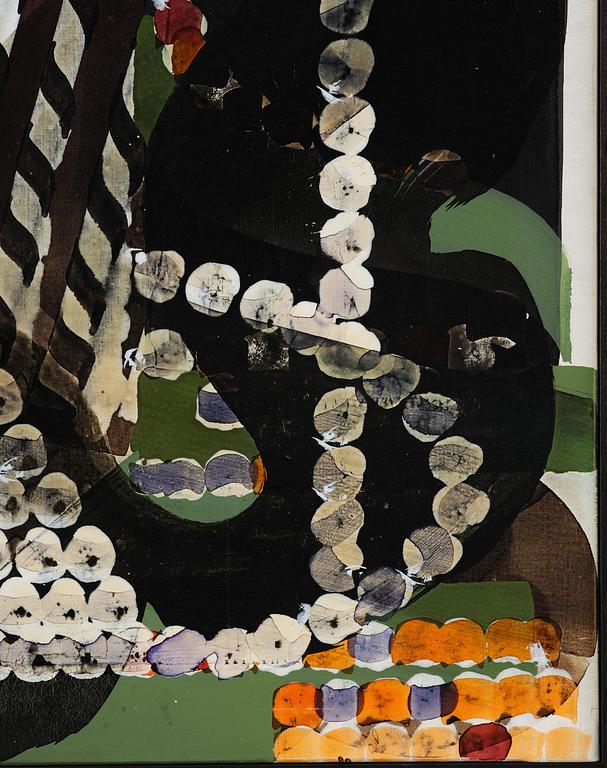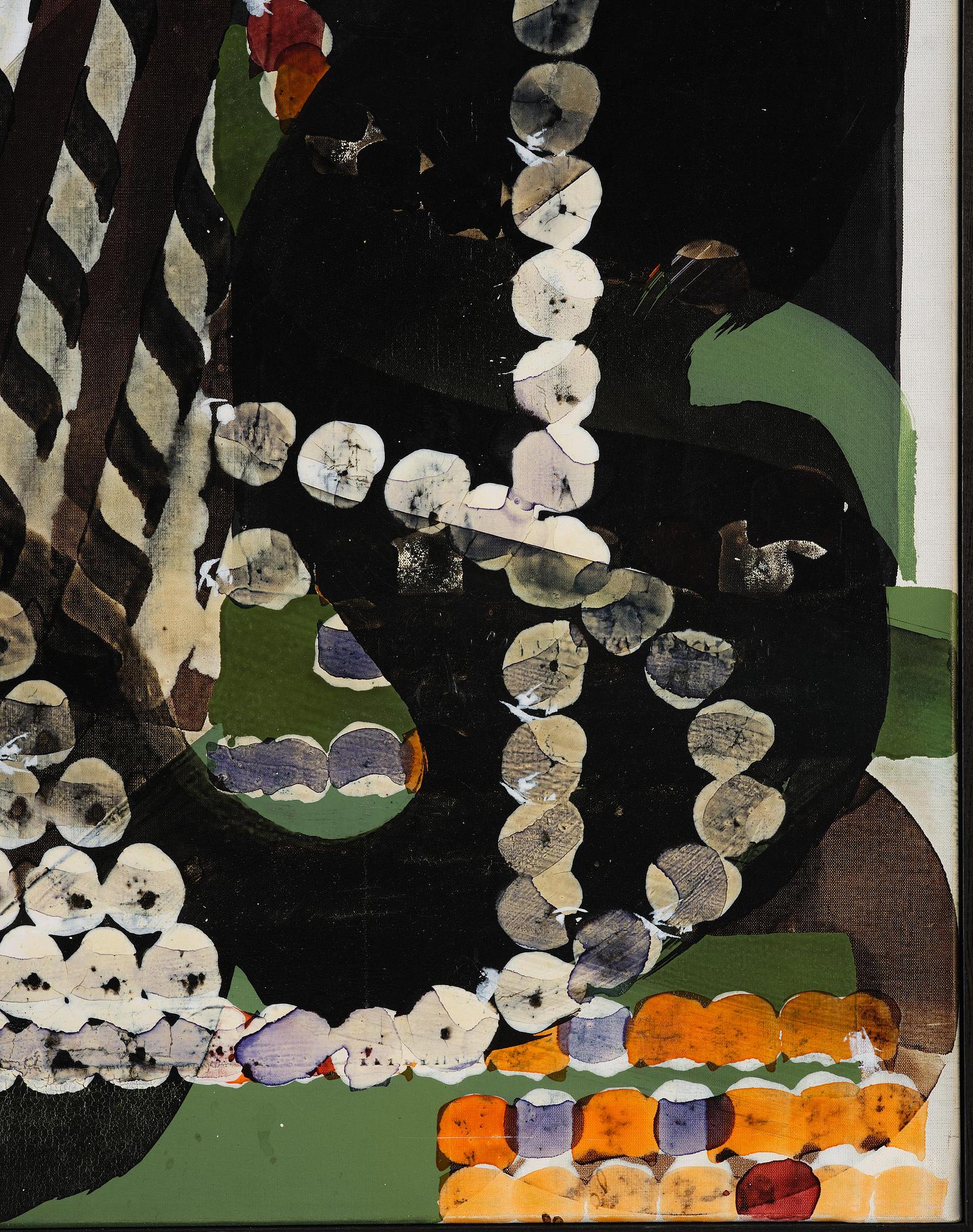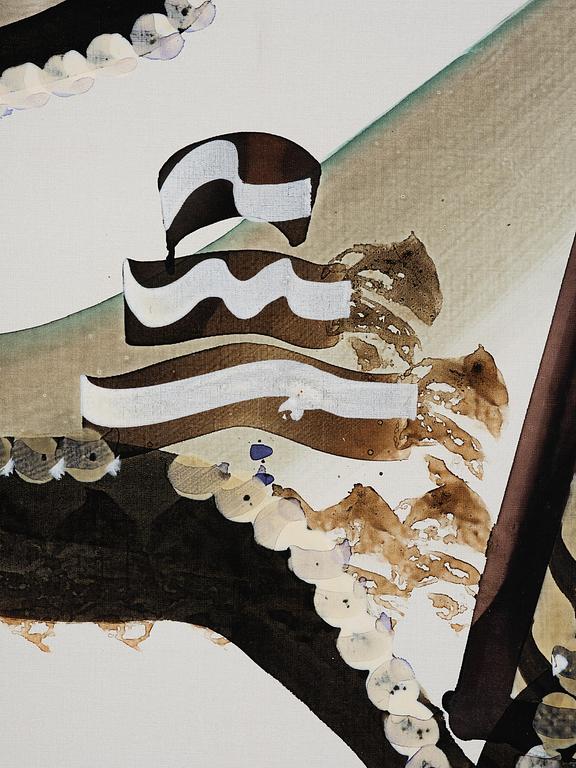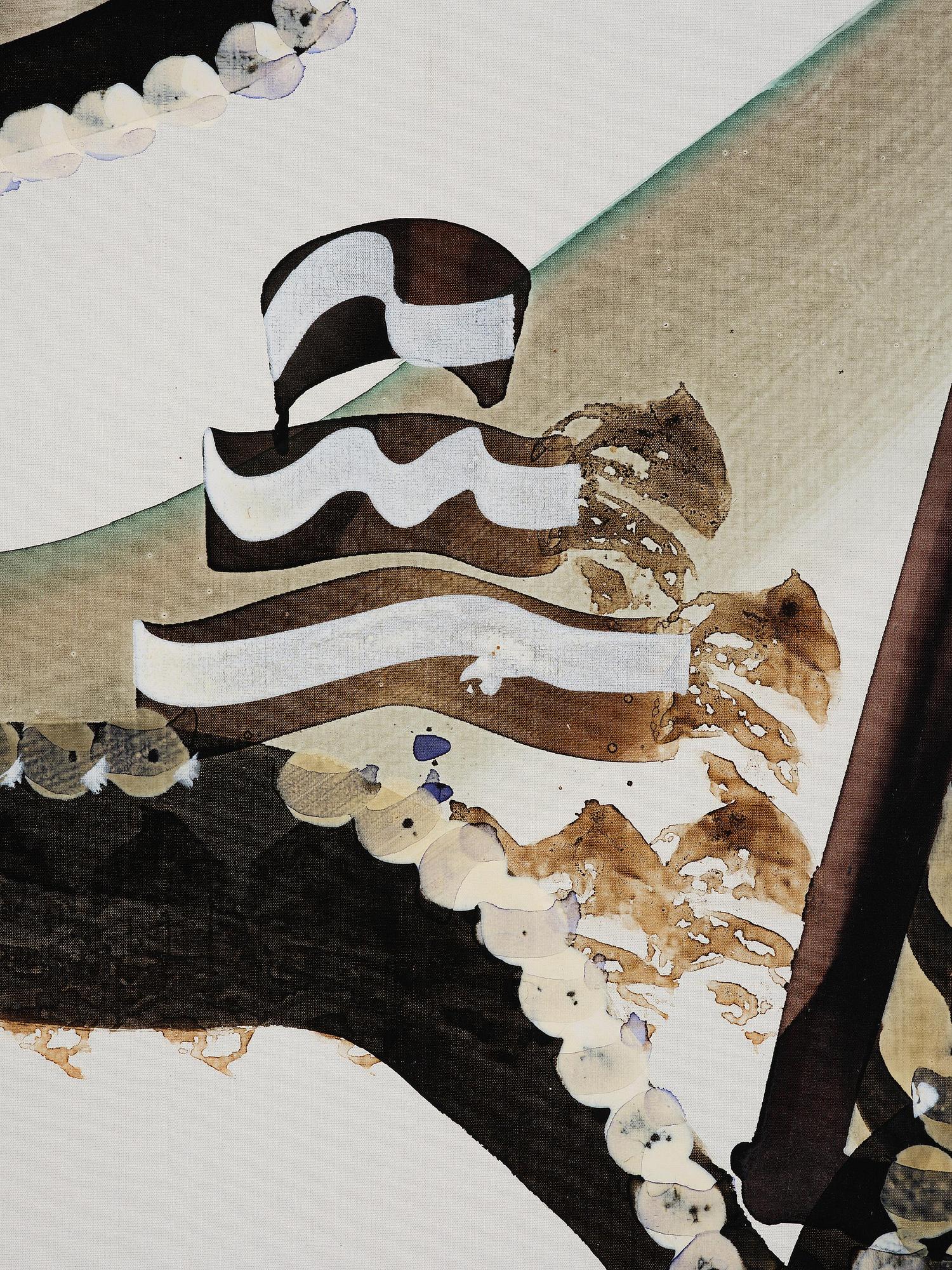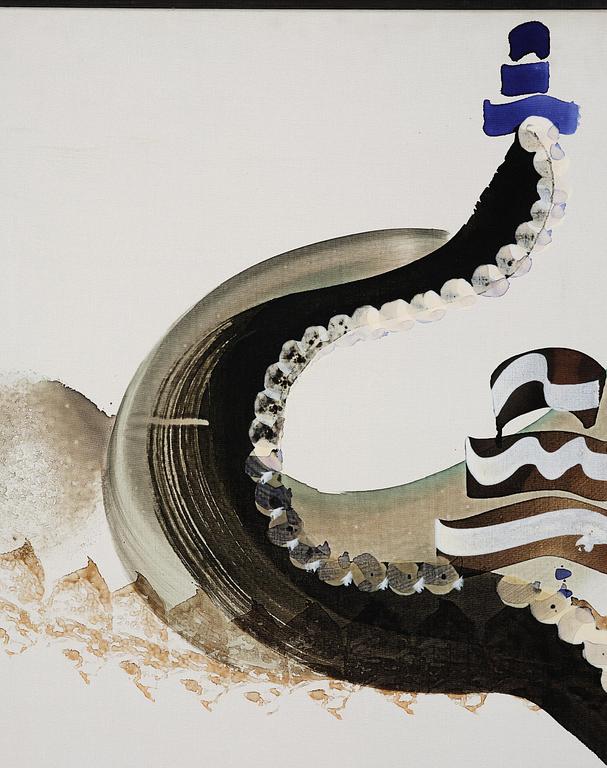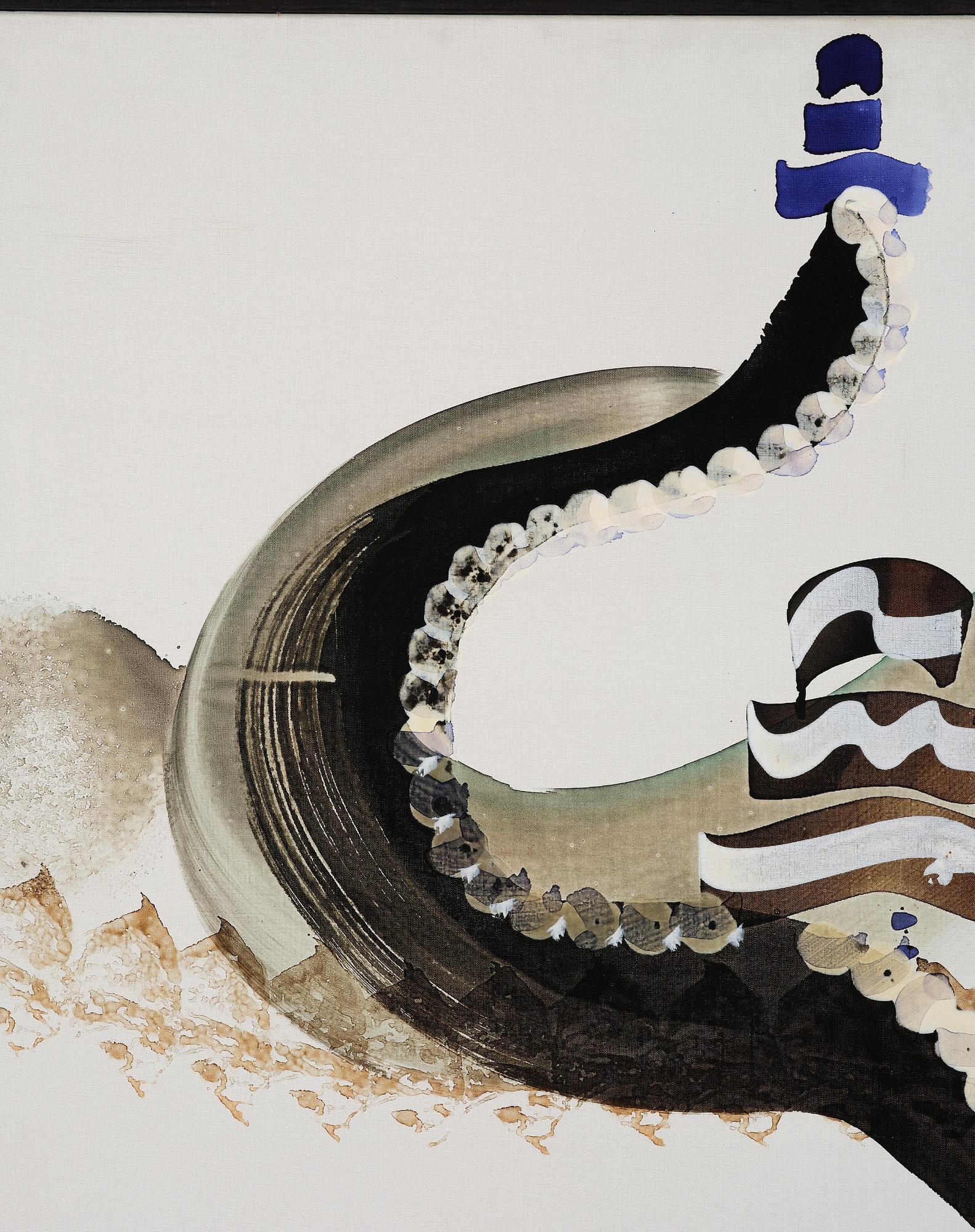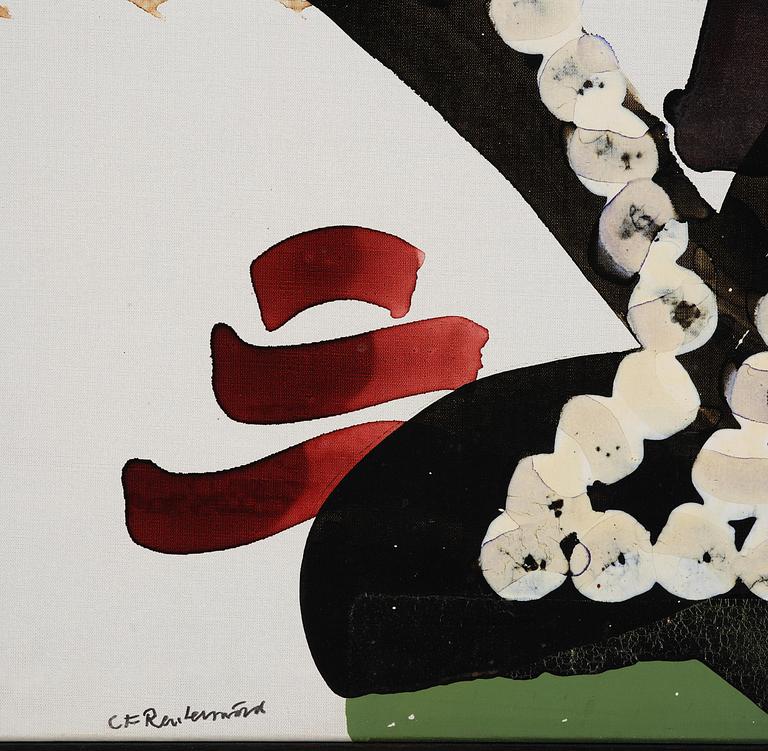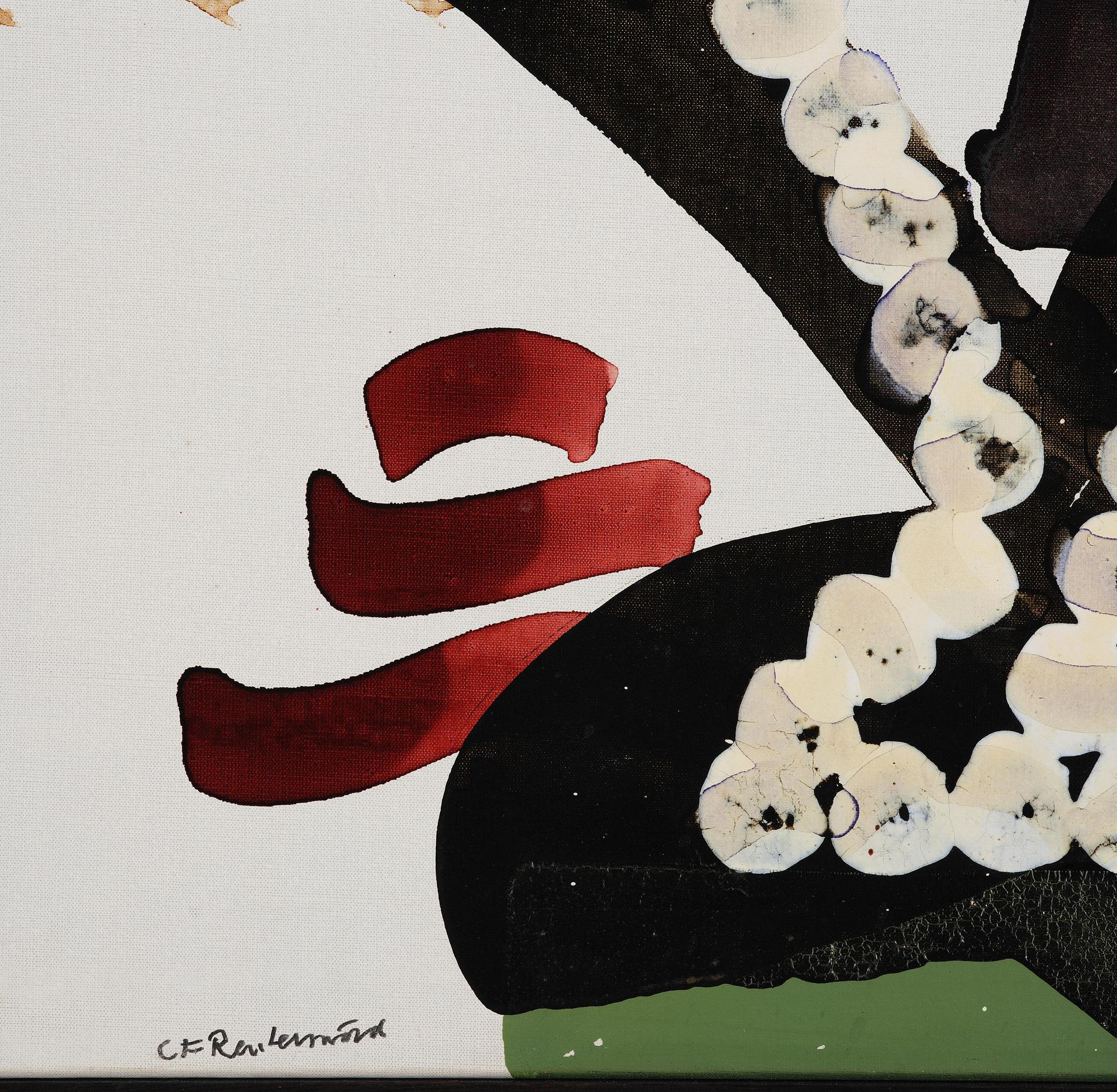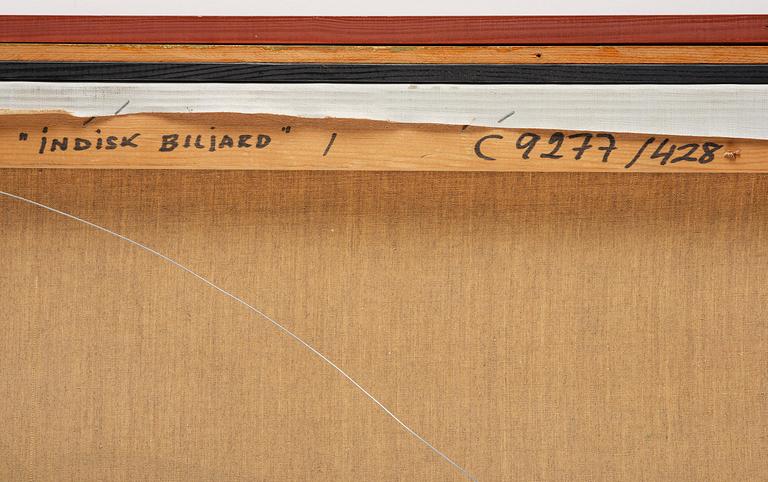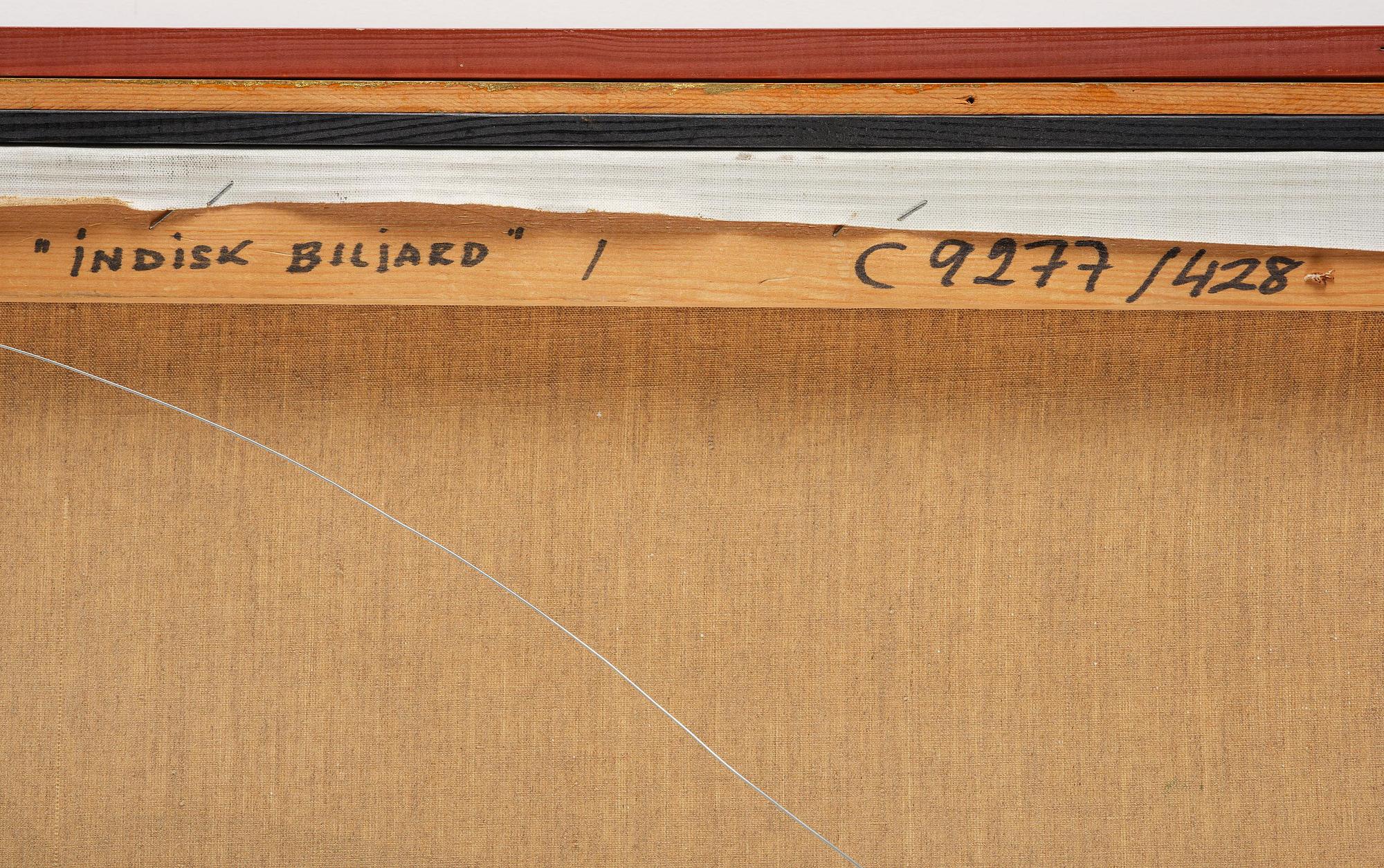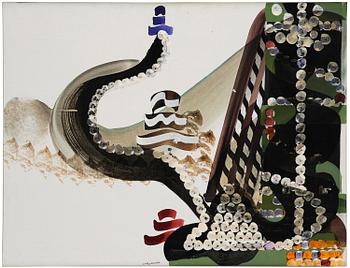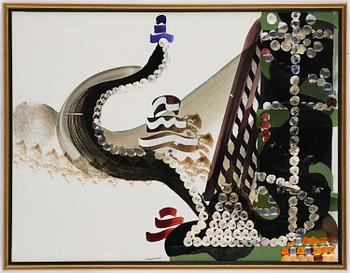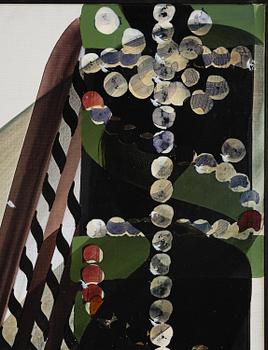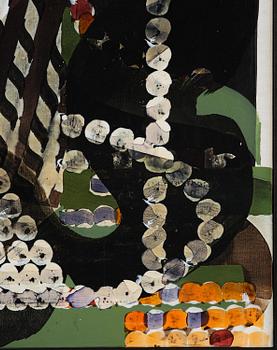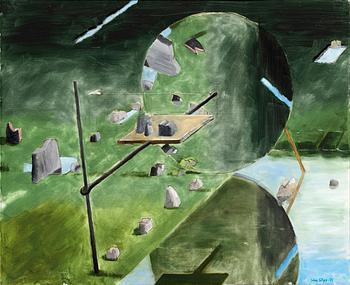
"Indisk biljard"
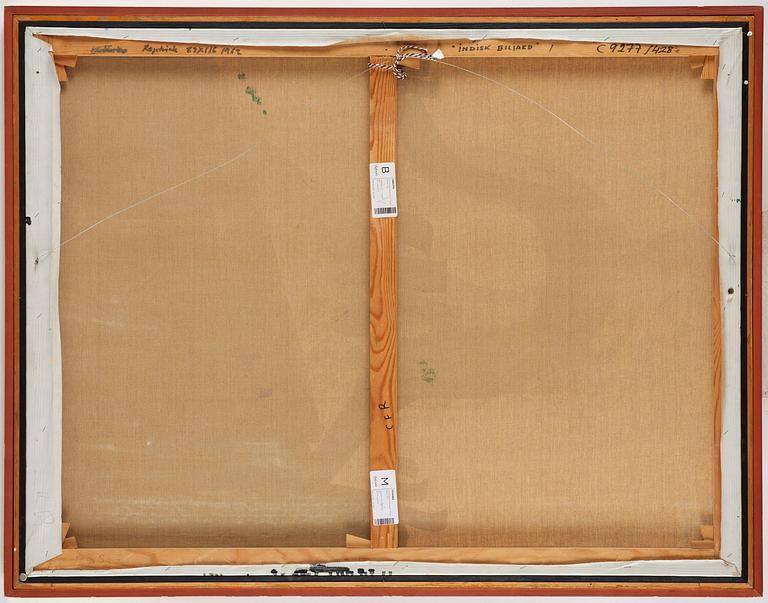
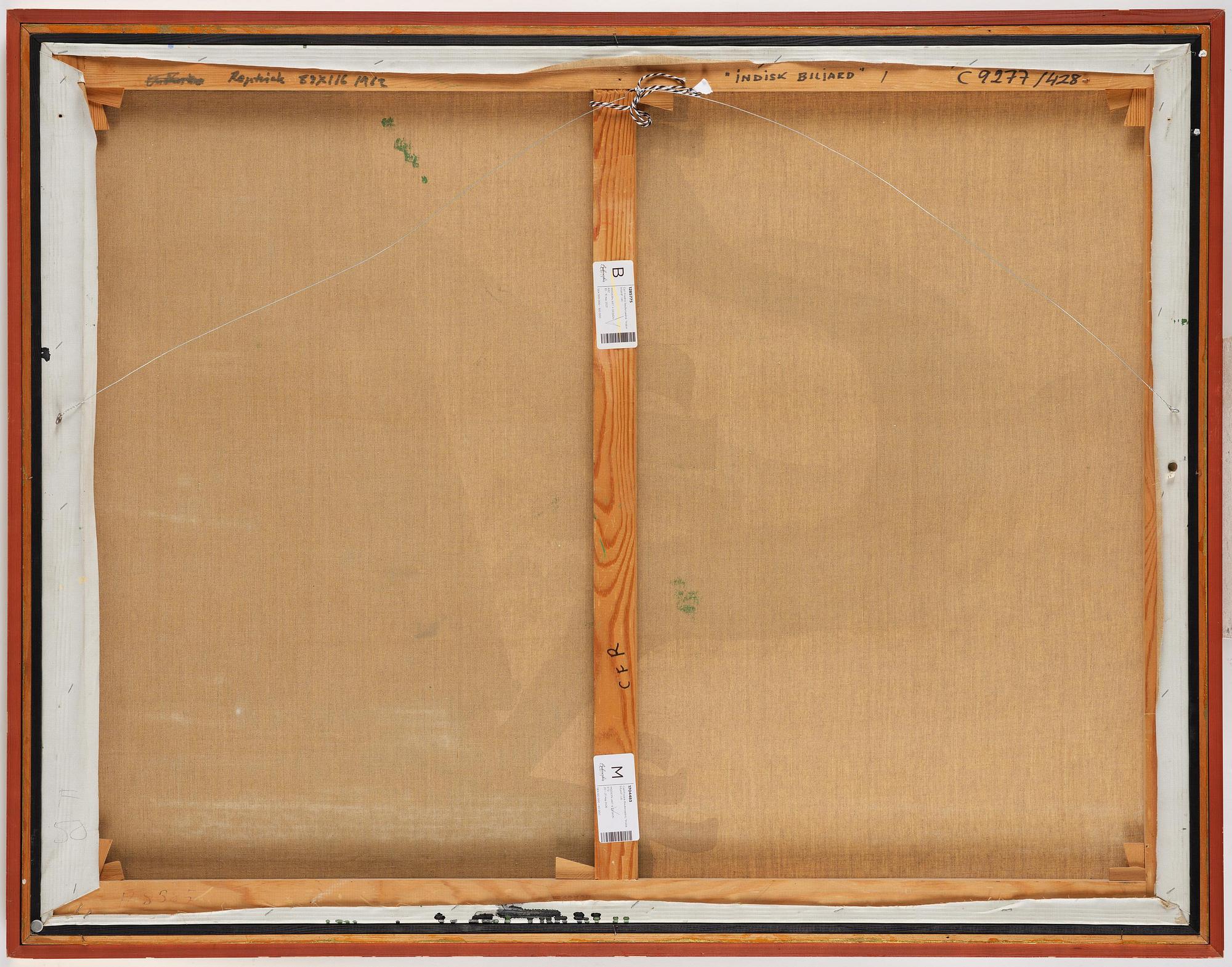
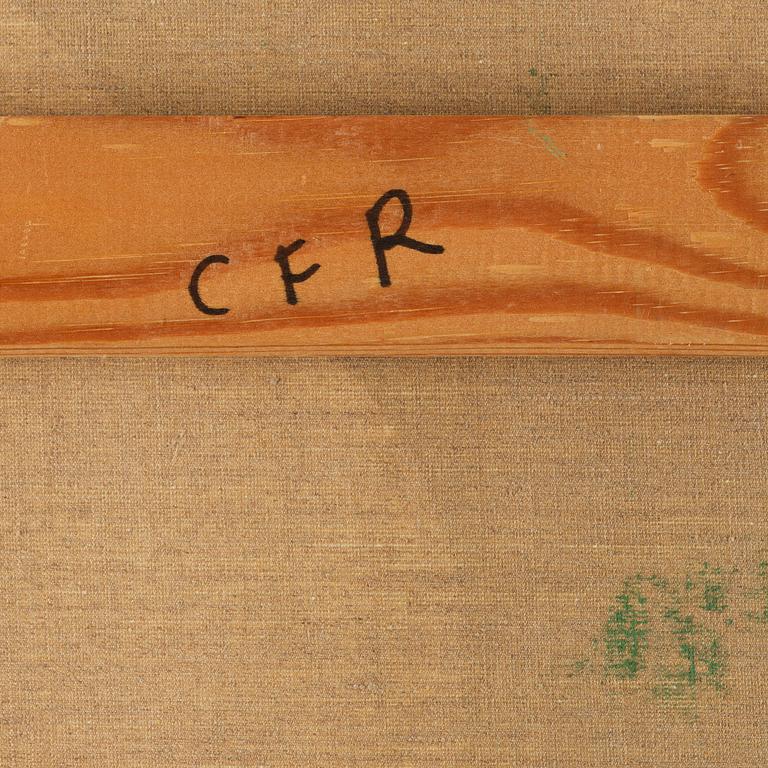
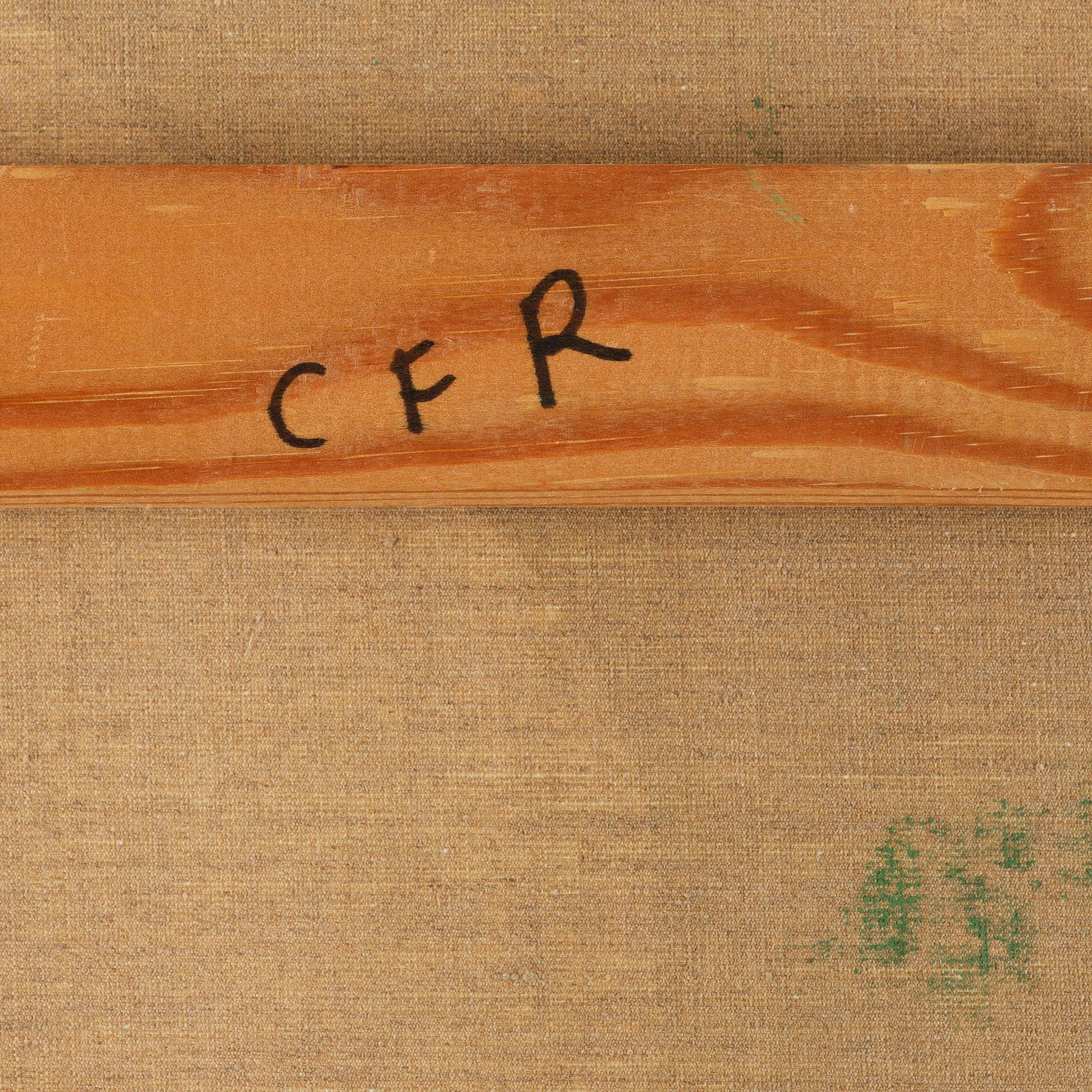
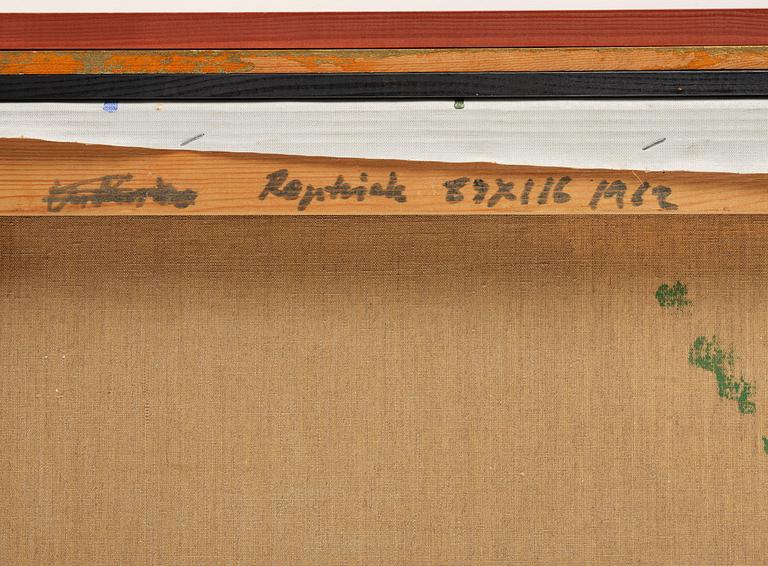
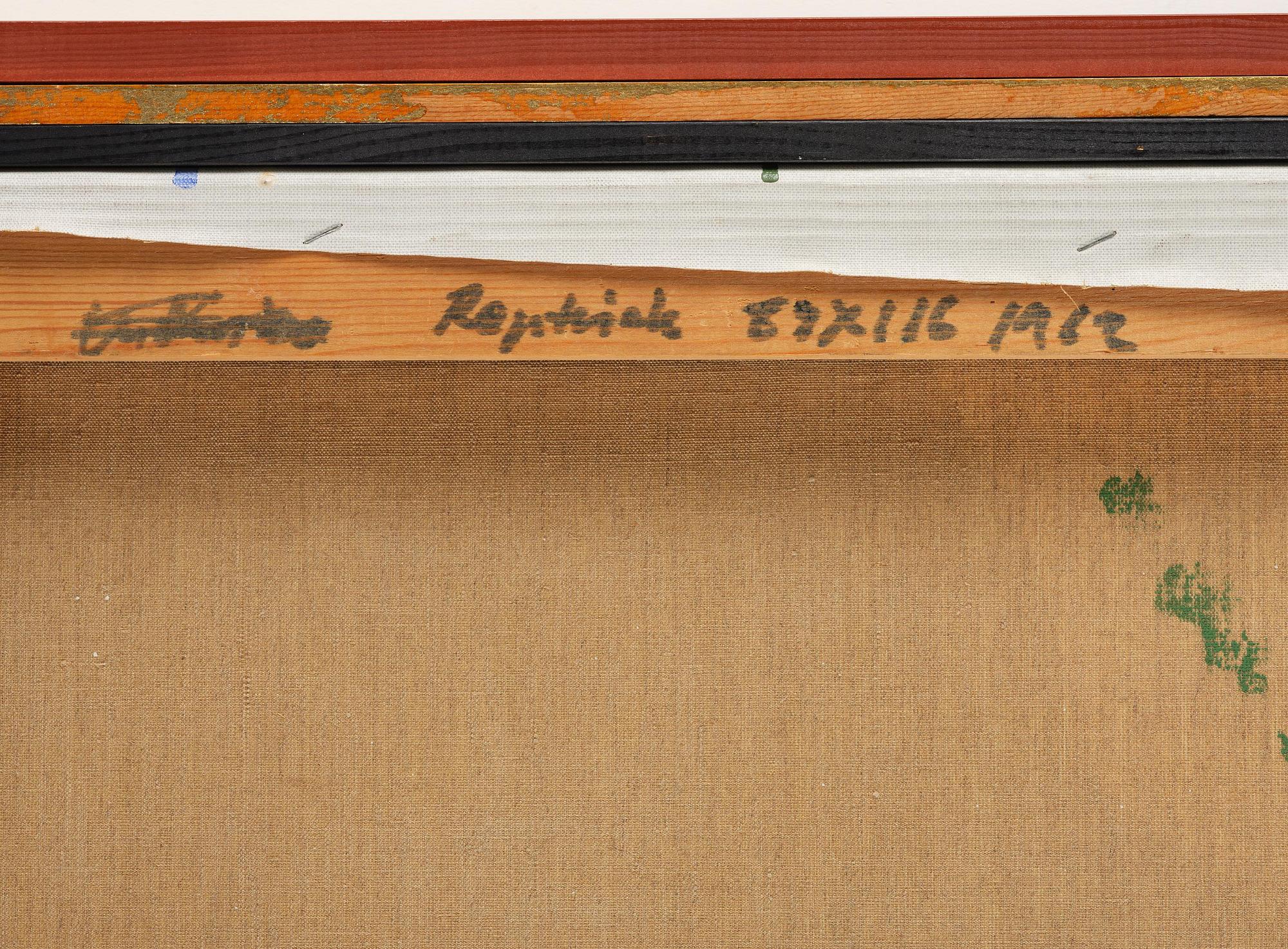
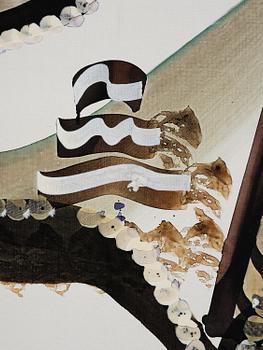
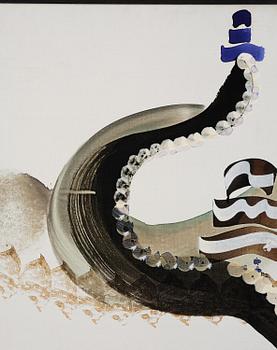
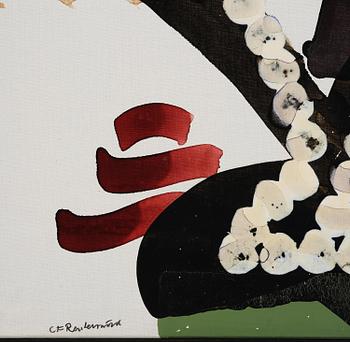
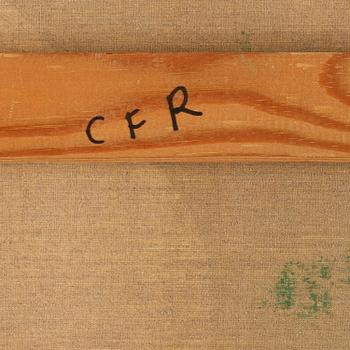
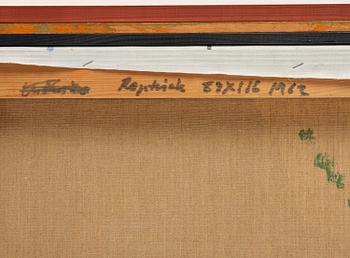
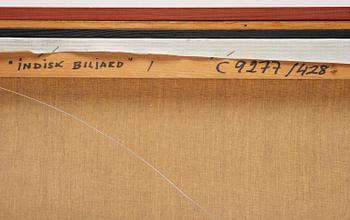
Signed CF Reuterswärd and dated 1962 verso. Lacquer watercolour on canvas 89 x 116 cm.
Alkuperä - Provenienssi
Bukowski Auktioner, Stockholm, Moderna 428, 28 November 1984, lot 566.
Bukowski Auktioner, Modern Art + Design 636, 17 November 2021, lot 511.
Muut tiedot
When the Moderna Museet opened in Stockholm in 1958, it was a museum that invited visitors in a completely different way than the old, traditional museums. Pop art, with happenings and performances, had taken off in the USA, and the Moderna Museet became the stage for this new art with exhibitions that encouraged visitors to actively participate in the art. It suddenly became acceptable to have fun at an exhibition and to touch and interact with the objects.
Carl Fredrik Reuterswärd was an important part of this groundbreaking period, and with his Duchamp-inspired art, he often made a humorous rebellion against established art. His debut at the legendary gallery Samlaren in Stockholm in 1957 was followed by an international breakthrough at the significant Galerie Maeght in Paris about a decade later.
Folke Edwards writes in "From Modernism to Postmodernism, Signum, Lund, 2000, on pages 172-173: "In Reuterswärd's spirited and elegant 60s paintings, bouncing billiard balls and inflated cigars are central actors in an increasingly sophisticated and witty role play, where he combines the elegance of calligraphy with the cheekiness of comic strips."
Carl Fredrik Reuterswärd was a central figure in Sweden and internationally in the post-war art scene. Only Öyvind Fahlström is likely to have had a greater impact on the global stage, and no other Swede is likely to have had the same international network as Reuterswärd, from artists like Marcel Duchamp to critics like Susan Sontag. Educated, intellectual, verbal, playful, and virtuosic, he created his most important works in the early 60s. Games indicative of the whims of chance, cigars in various formats, and the use of repetitive image elements before Warhol emerged between 1961-63. He then took his famous sabbatical during which he experimented with lasers over the rooftops of Paris. Later, he created various identities, Kilroy and the art dealer Pratt-Müller being just a few of the more well-known. CFR created virtuosic art until he suffered a stroke in 1989 that paralysed his painting hand. However, he did not give up but learned to draw again, now with his other hand, which is controlled by the other hemisphere of the brain and thus leads to a new visual world.
Lisätietoja ja kuntoraportit
Kuuluu jälleenmyyntikorvauksen piiriin
Tietoa ostamisesta
Kuvan käyttöoikeudet
Tämän tietokannan taideteokset ovat tekijänoikeudella suojattuja, eikä niitä saa kopioida ilman oikeudenhaltijoiden lupaa. Teokset kopioidaan tässä tietokannassa Bildupphovsrättin lisenssillä.