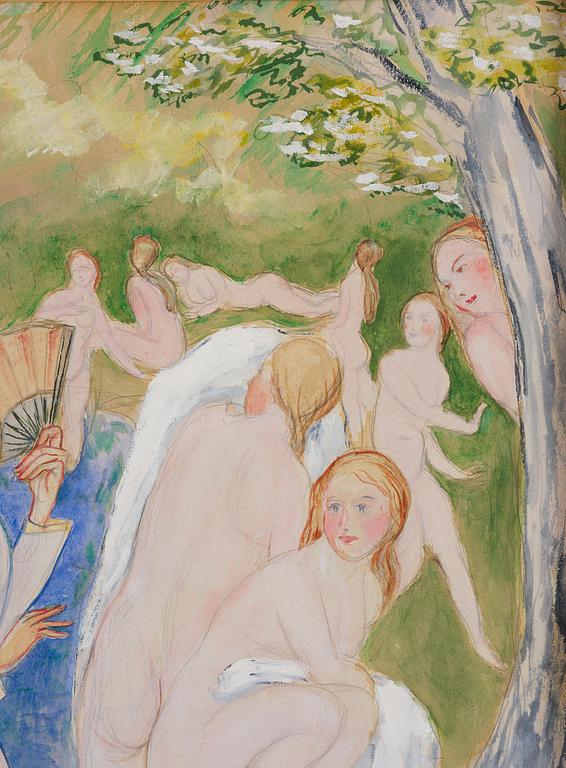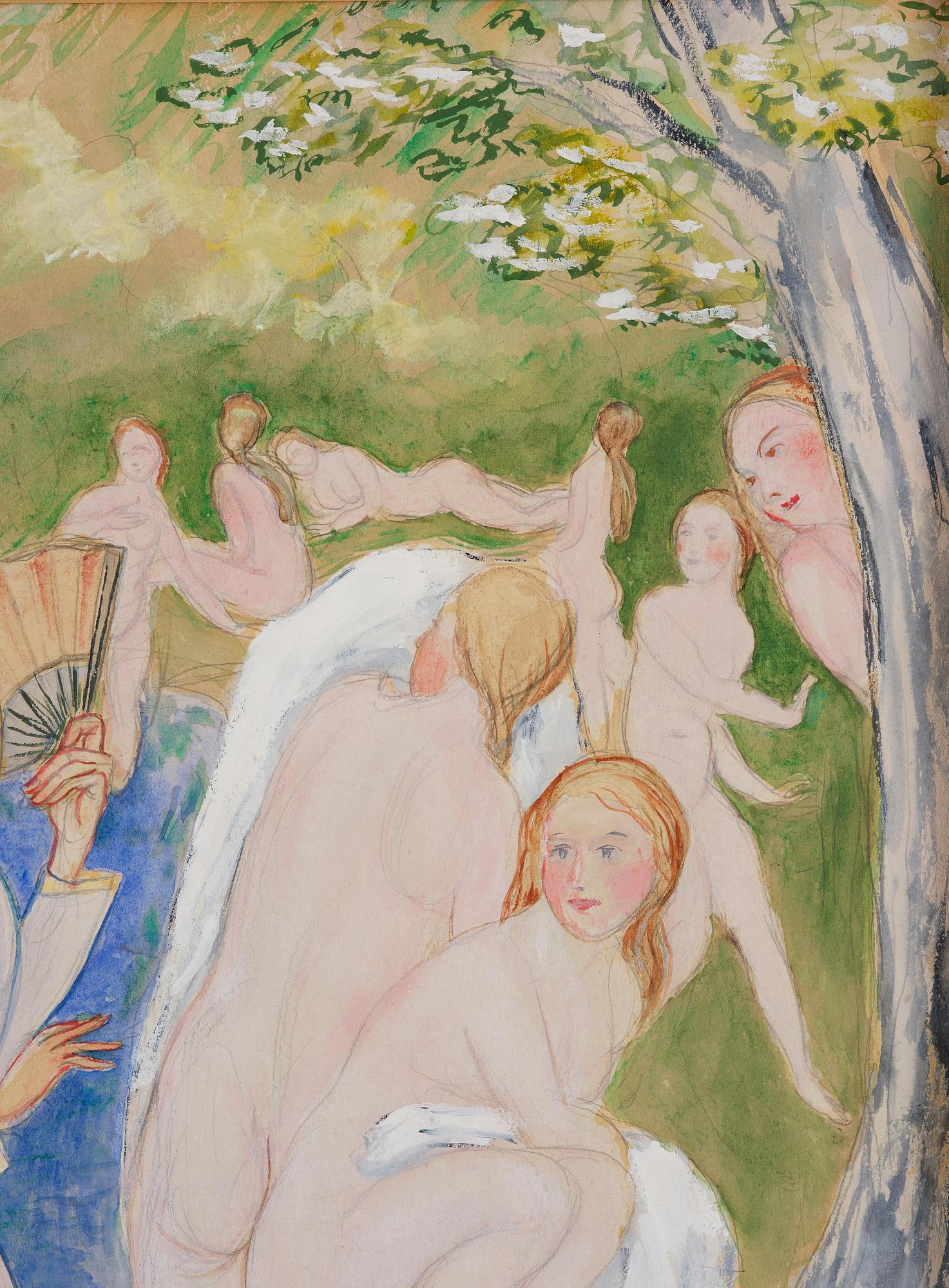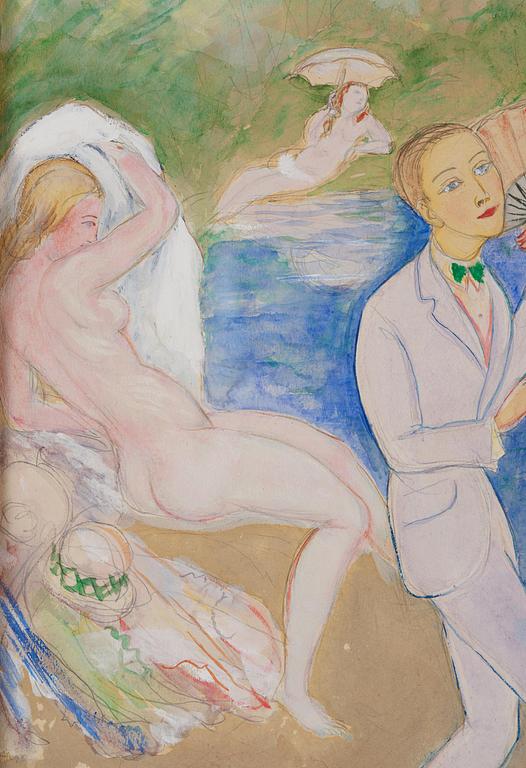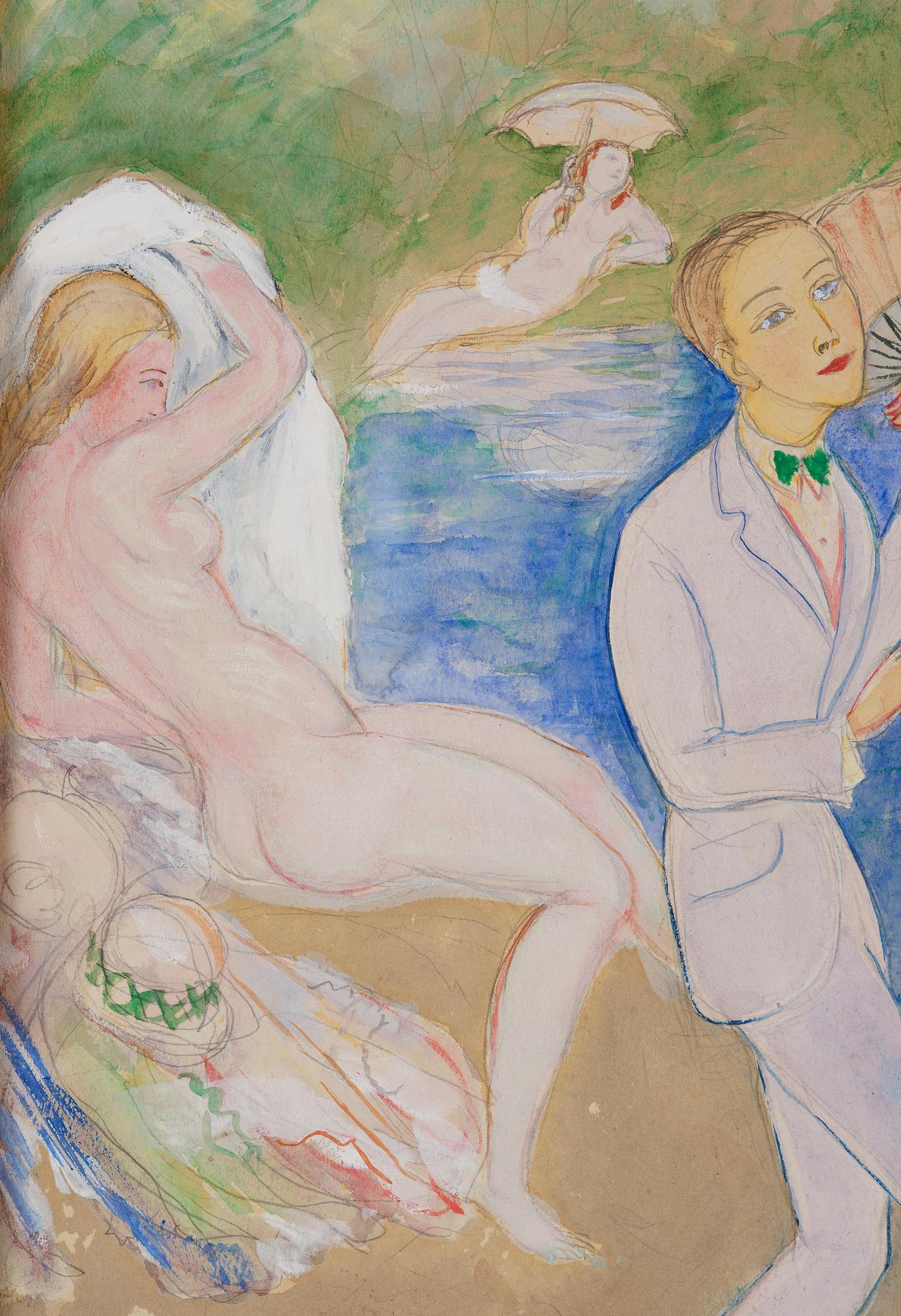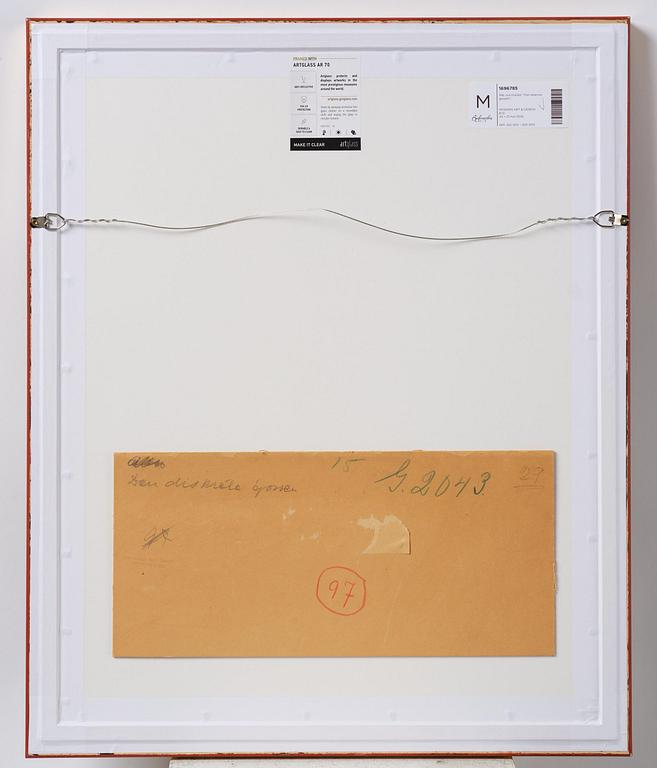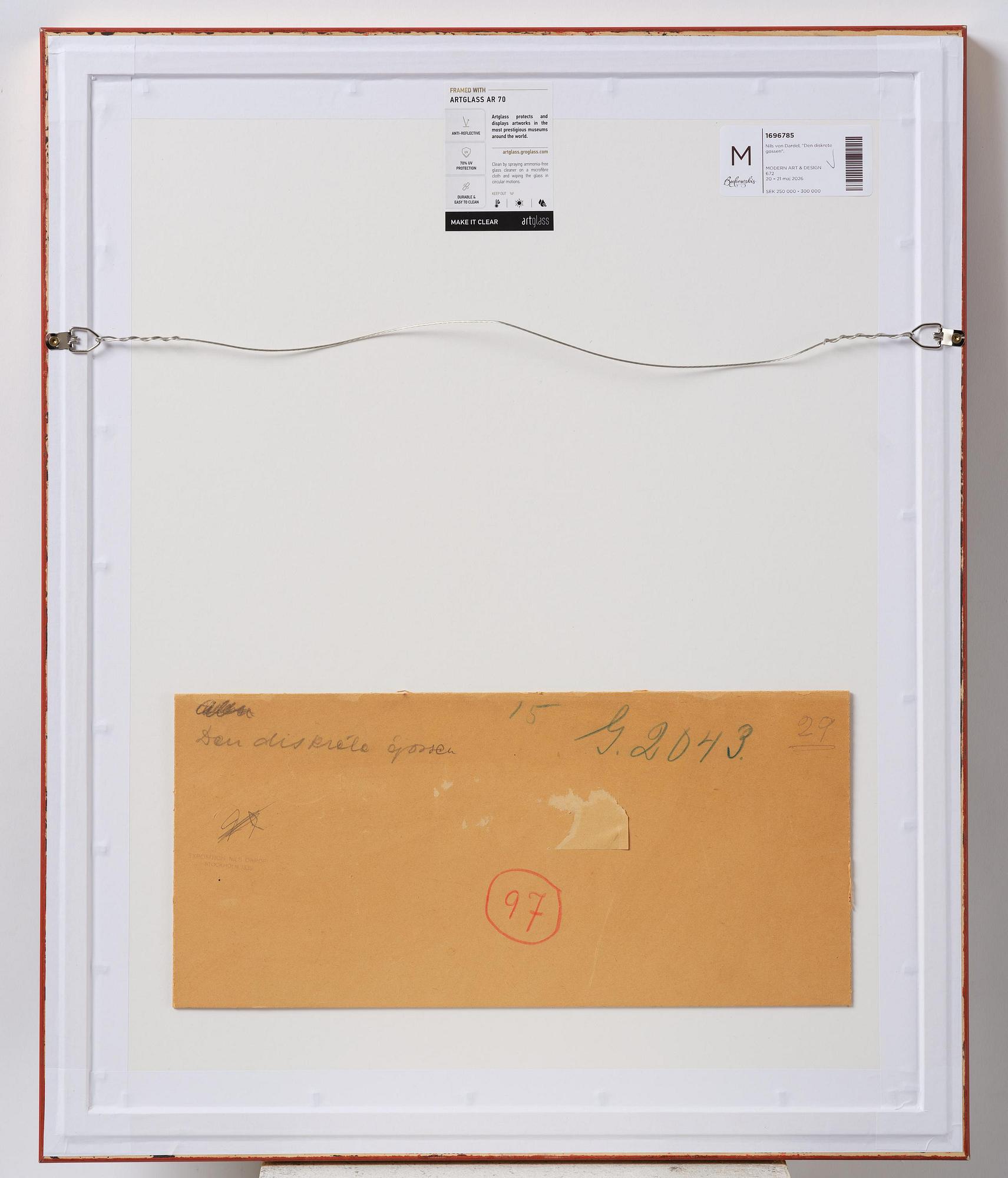
"Den diskrete gossen"
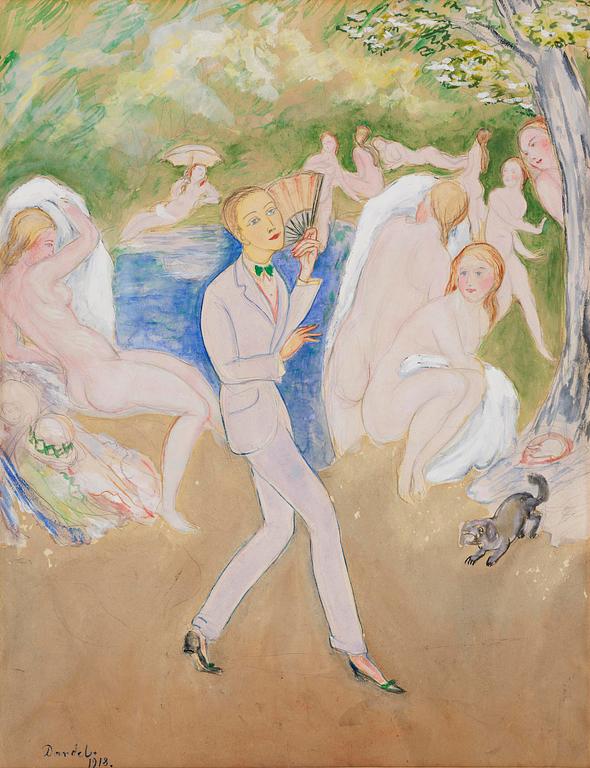
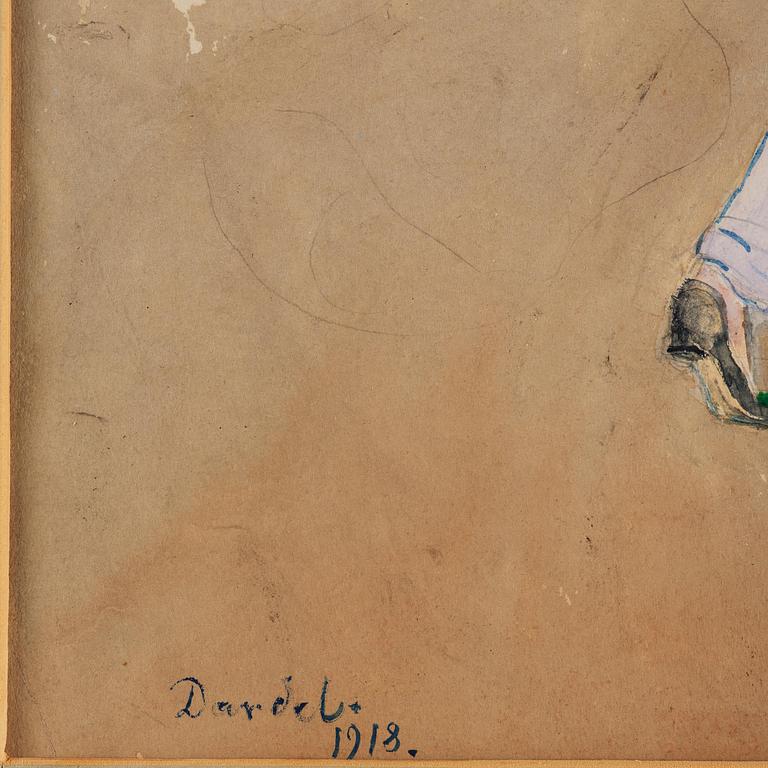
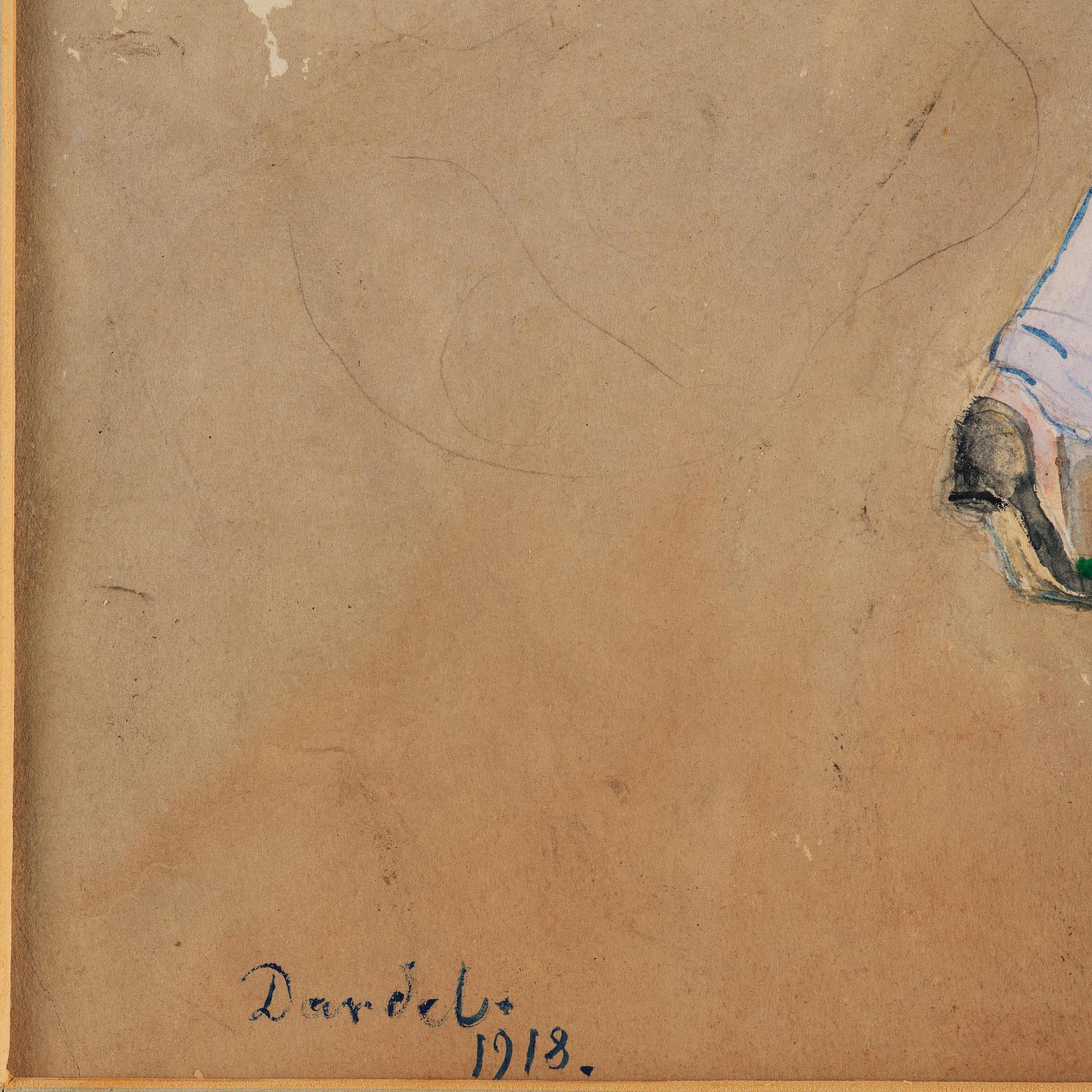
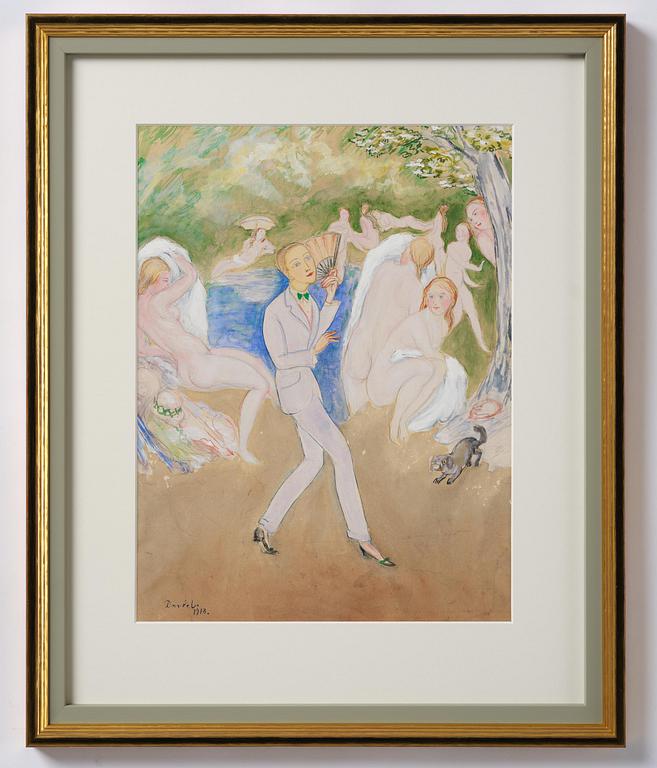
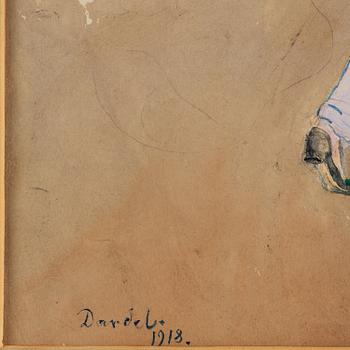
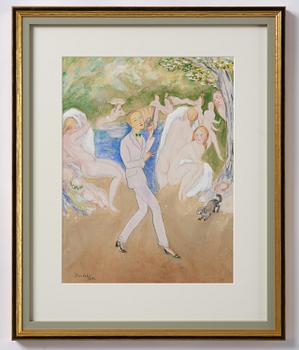
Signed and dated Dardel 1918. Watercolour, gouache, and pencil on paper 45 x 35 cm.
Tuontiarvonlisävero
Tuontiarvonlisävero (12%) tullaan veloittamaan tämän esineen vasarahinnasta. Lisätietoja saat soittamalla Ruotsin asiakaspalvelumme numeroon +46 8-614 08 00.
Alkuperä - Provenienssi
The industrialist and art collector Oscar Stern (1882-1961), Stockholm.
Barrister S. Norman.
Shipowner Anders Jahre (1891-1982), Sandefjord.
Thence by descent to the widow Bess Jahre, Sandefjord.
Näyttelyt
Skånska Konstmuseum, Akademiska Föreningen, Lund, "Nils Dardel", 2 - 13 April 1939, cat. no 22.
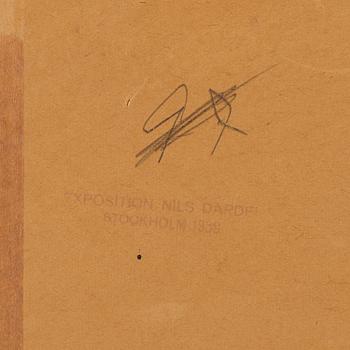
Föreningen för Nutida Konst, "Nils Dardel", Liljevalchs konsthall, Stockholm, September - October 1939, cat. no 97, listed as part of the Oscar Stern Collection.
Kunstnernes Hus, Oslo, "Den svenske maler Nils Dardel", 1 - 23 December, 1939, cat. no 54.
Kirjallisuus
Gustaf Hellström and Karl Asplund, "Nils von Dardel - Paintings and Drawings", Albert Bonniers Förlag, Stockholm, 1940, illustrated as Image 11.
Karl Asplund, "Nils Dardel. I. Ungdomstiden", 1957, mentioned p. 199, cf. illustration another version "Den diskrete gossen", gouache, 1919.
Karl Asplund, ”Nils Dardel. II. De senare åren”, 1958, listed in the catalogue under the year 1918 (belonging to Barrister S. Norman).
Ingemar Lindahl, "Visit hos en excentrisk herre", Bonniers, 1980, the motif mentioned p. 73.
Erik Näslund, "Dardel", 1988, the motif is discussed in chapter 14, "Den diskrete gossen", pp. 356 ff.
Muut tiedot
In 1918, Nils von Dardel returned to Stockholm after a long and happy journey to Japan. He has secretly become engaged to Nita Wallenberg, the daughter of the Swedish ambassador. The journey home became dramatic. Just a day before the October Revolution breaks out in Russia, Nita and her mother, Mrs. Annie Wallenberg, escorted by Dardel, boarded the train in Vladivostok. Two weeks later, they arrived in Petrograd and were quickly forced to make their way to Sweden to escape the violent hostilities.
Stockholm offered a refuge, despite Sweden being indirectly drawn into the war events when conflict broke out in Finland the same year. In Stockholm, the privileged lived in their own world. Despite the war, food shortages, and the Spanish flu, people danced at the Royal and met at the Opera Bar and the Fenix, where Ernst Rolf's cabaret was a success. Ingemar Lindahl describes, in his book about the artist, how his social circle was anything but conventional. Dardel rented a studio on Arsenalsgatan, and on a Sunday morning, passersby might find the artist sleeping, still in his formal wear, in the shop window he had converted into a studio.
At the same time, 1918 would become one of the artist's most productive years. Dardel worked hard to prepare for his first solo exhibition at Ciacelli's gallery on Strandvägen. The exhibition was a success, and he hoped to make a good impression on Nita's father. Dardel had reached the stage where he wanted to marry. After years of wandering, searching, and personal turmoil, he now sought the security of a family girl from a family not so different from his own. Thora Dardel has put forth the theory that Dardel's painting from this time, particularly Den Döende Dandyn and also Den Diskrete Gossen, represents a farewell to his earlier excesses.
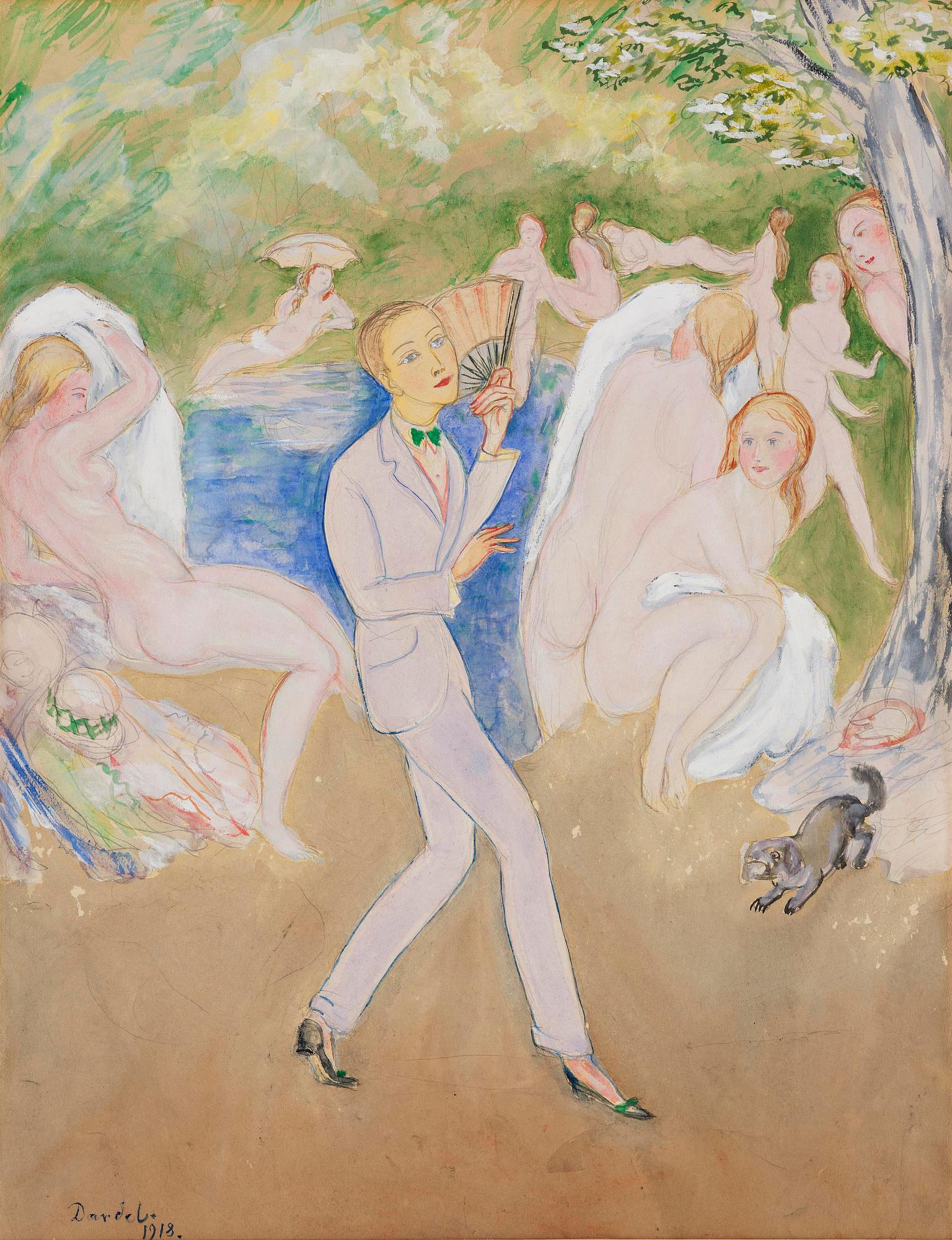
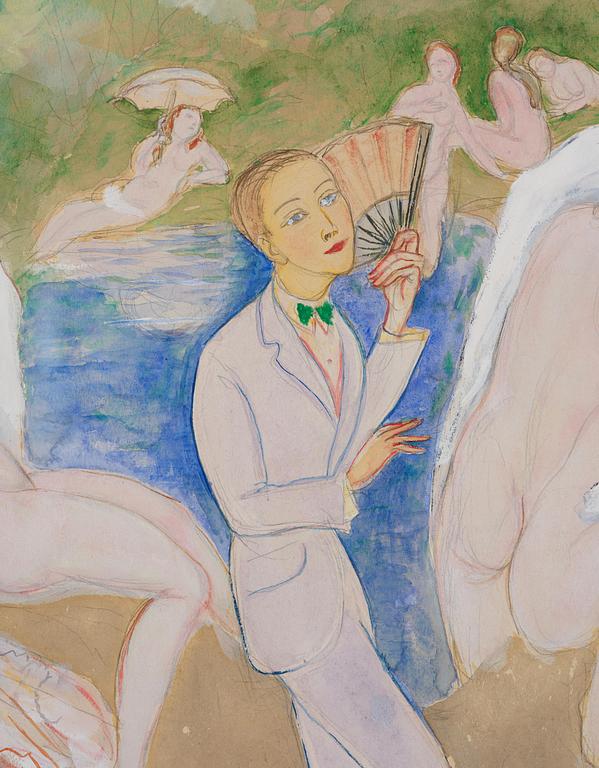
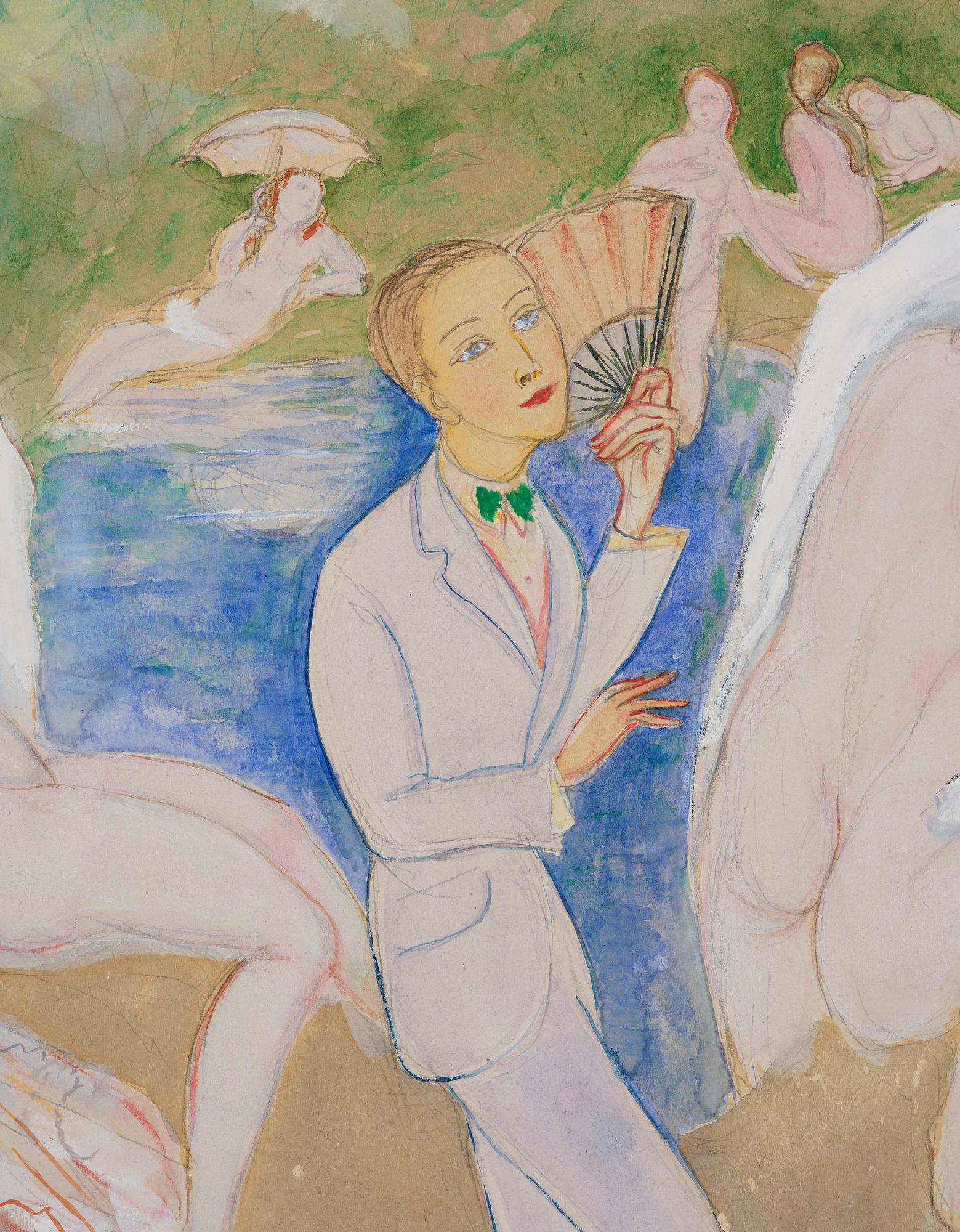
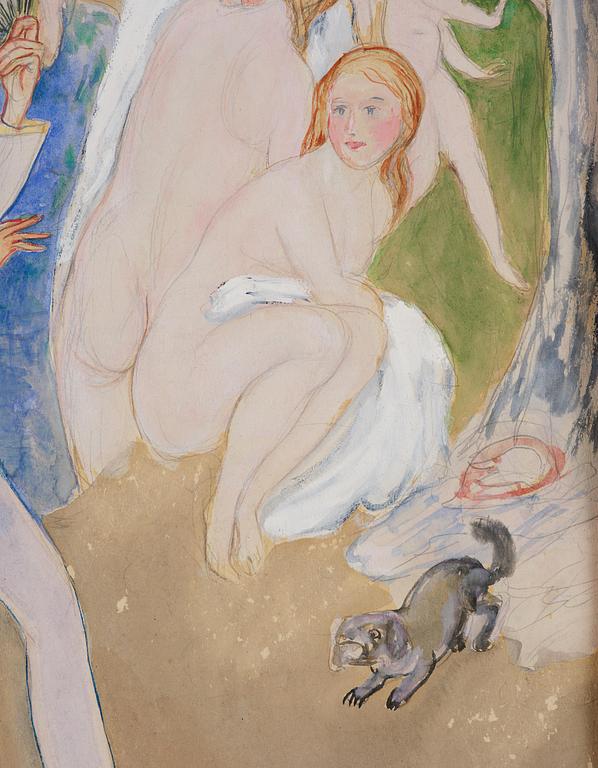
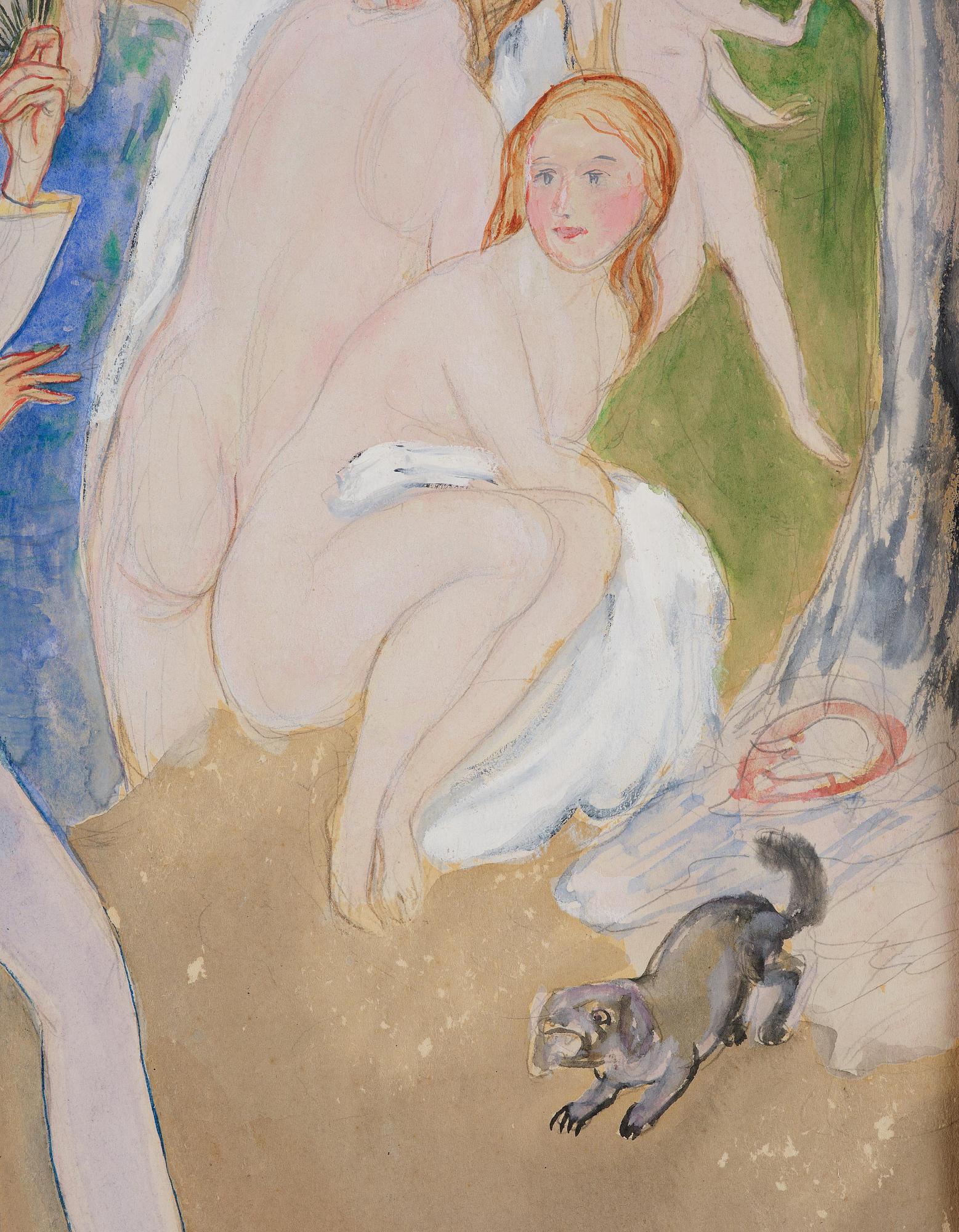
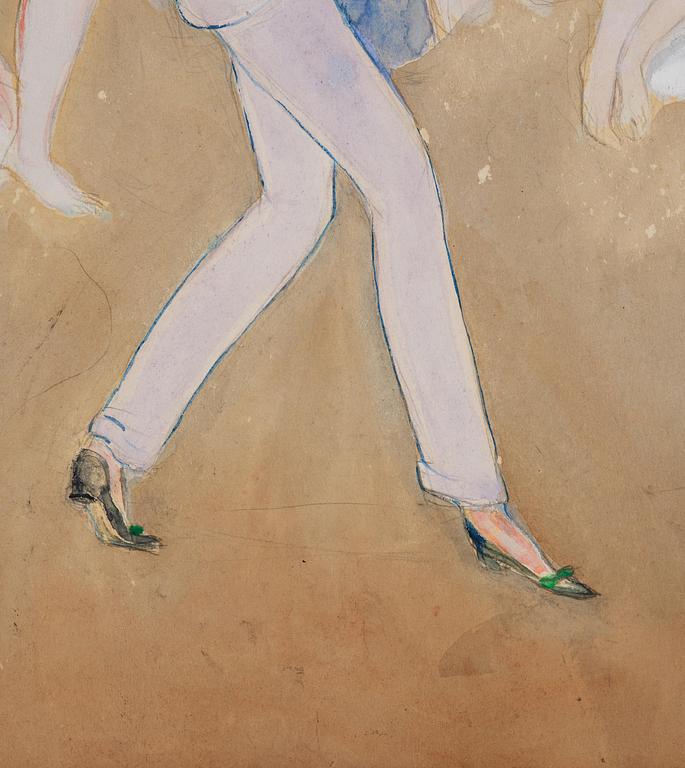
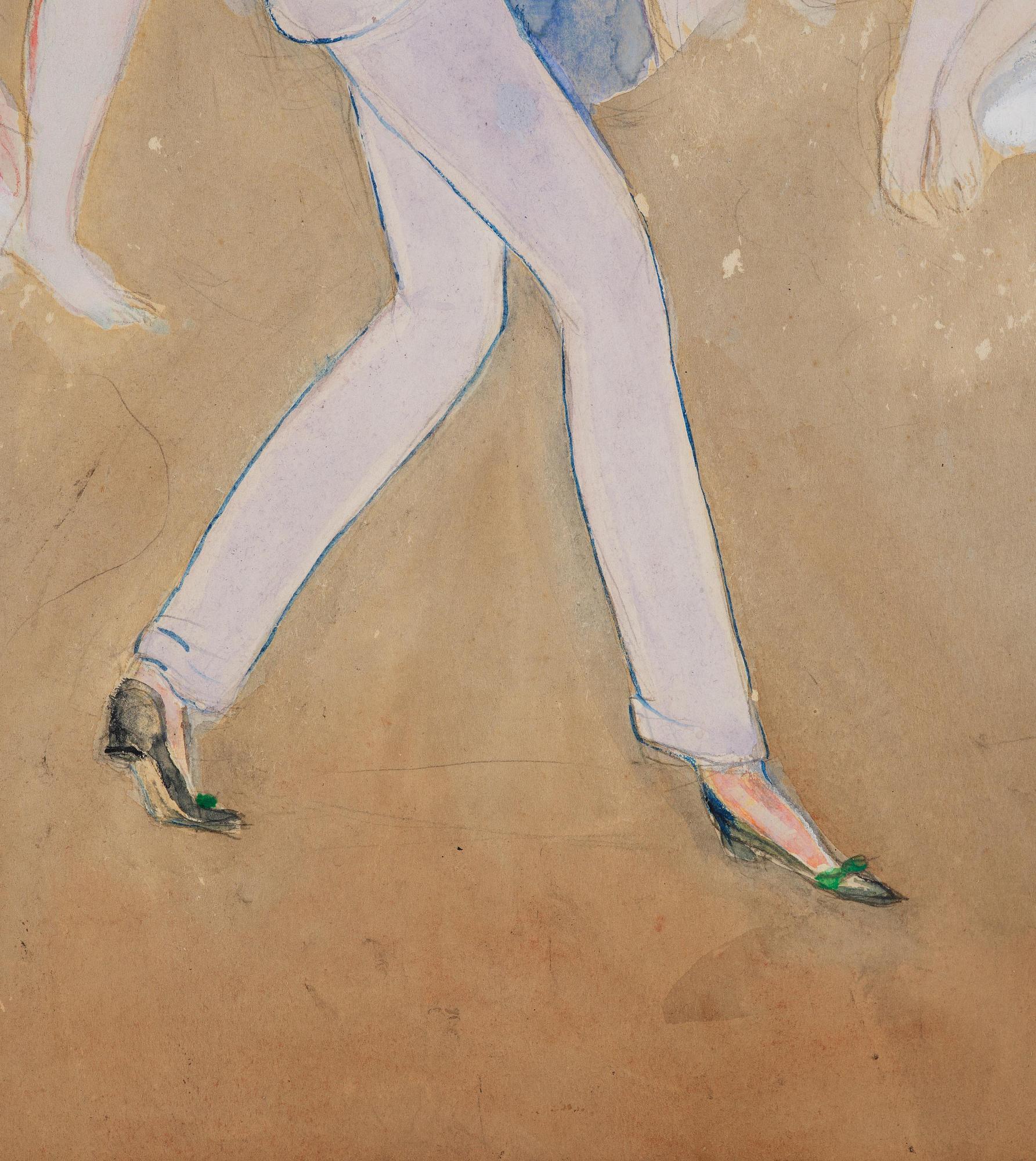
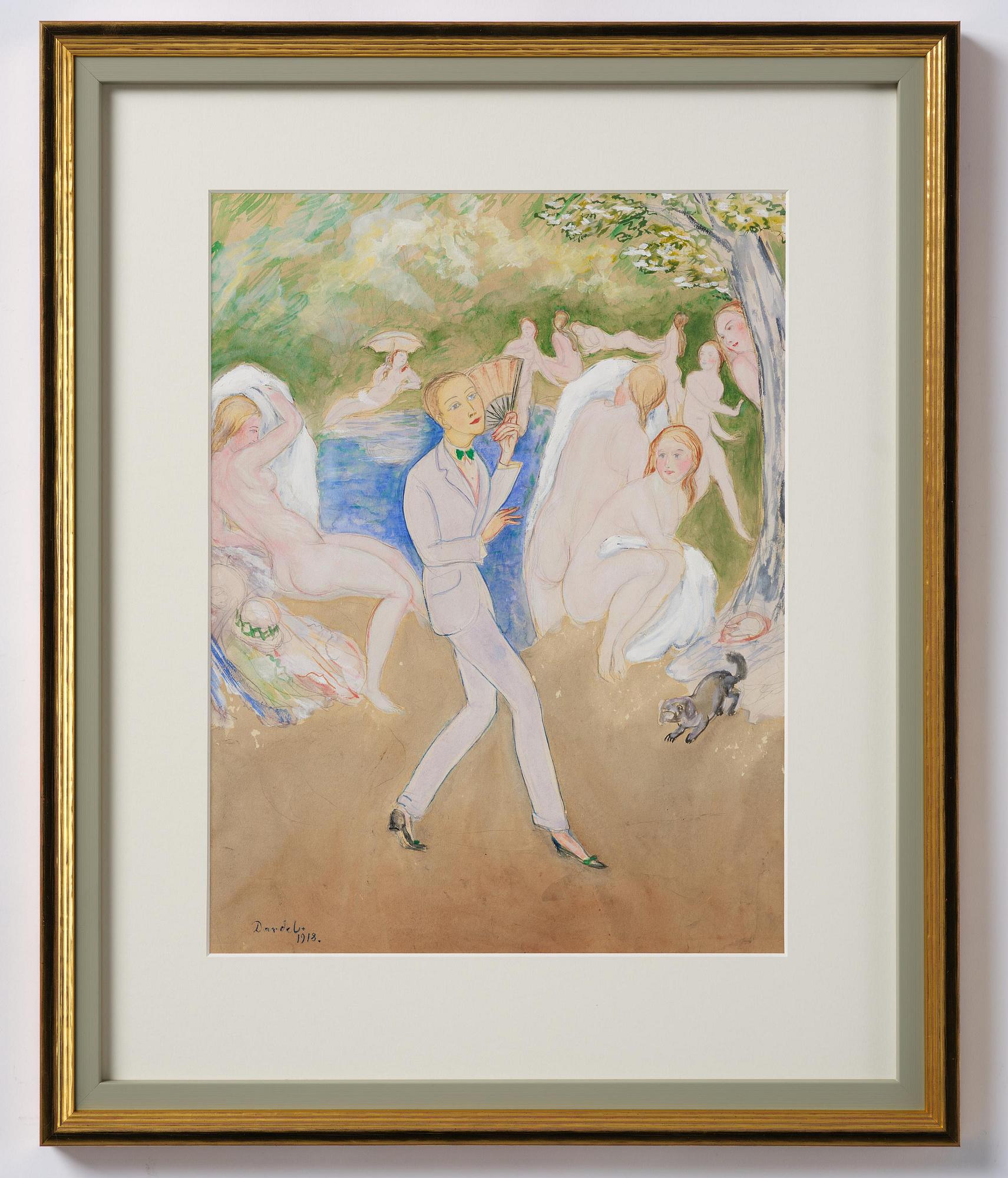
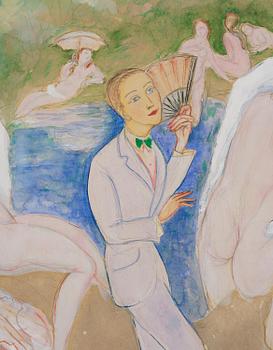
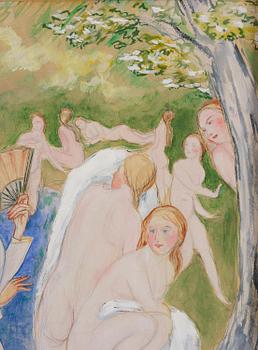
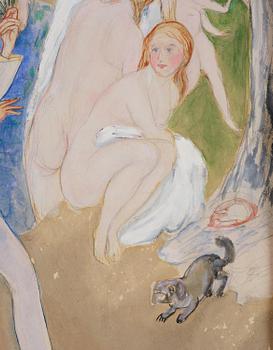
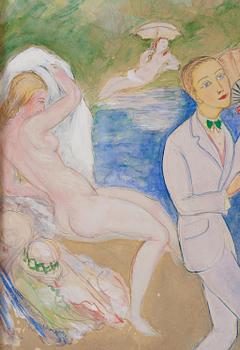
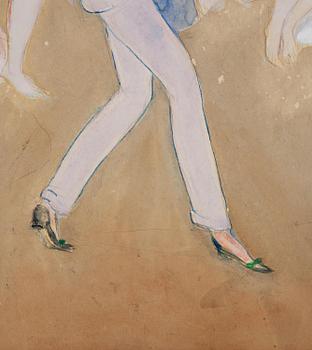
The motif exists in two versions. In this auction, Bukowskis presents the watercolour from 1918. The same composition was executed on canvas the following year in a larger format (98 × 131 cm). In the work offered at this auction we encounter the discreet boy floating by in a shimmer of pink and violet. Surrounded by bathing nymphs, he tiptoes in his patent leather shoes with green bows that match his bow tie. The fan, which originally shone bright red, he holds as a blindfold to shield himself from the longing gazes of the beauties. From the right, into the picture, comes a small black pug racing towards him. It is Mrs. Wallenberg's dog running towards him.
The image is both amusing and unsettling. Dardel looks at himself with a certain ironic glint – Karl Asplund has asked whether he is joking with his virtue – but at the same time, Dardel reveals more about himself than he perhaps realises. "Most often, this is how men appear in Dardel's pictorial world: distinctly effeminate elegants, well-tailored, well-groomed, usually equipped with small pumps. Most often, it is also Dardel himself who has modelled for them."
Lisätietoja ja kuntoraportit

Tietoa ostamisesta