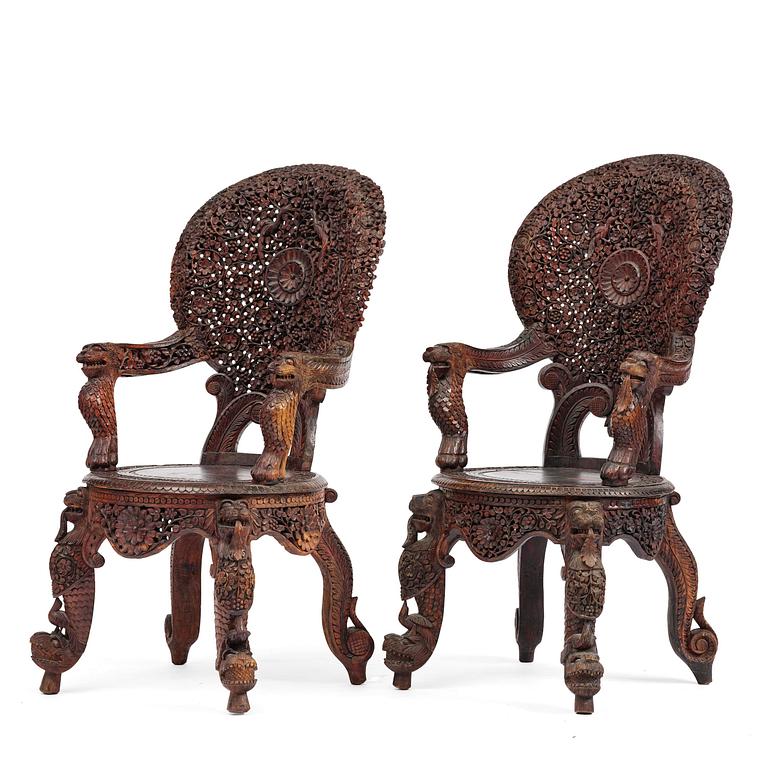
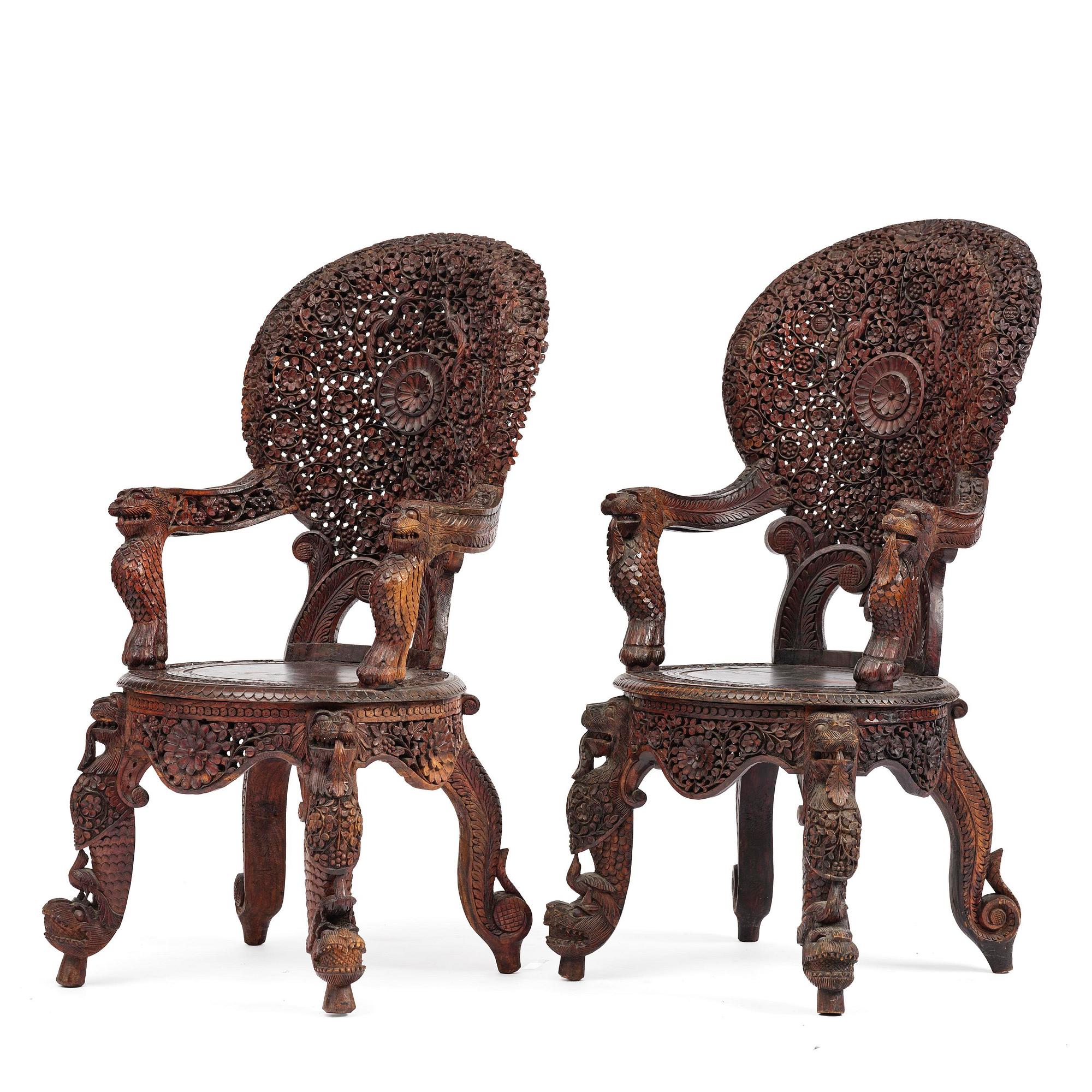
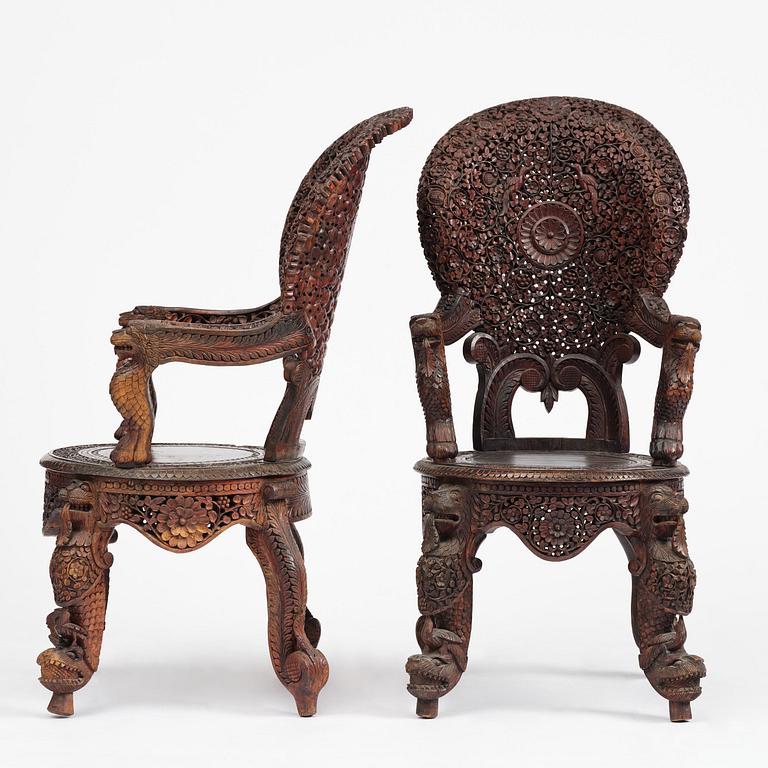
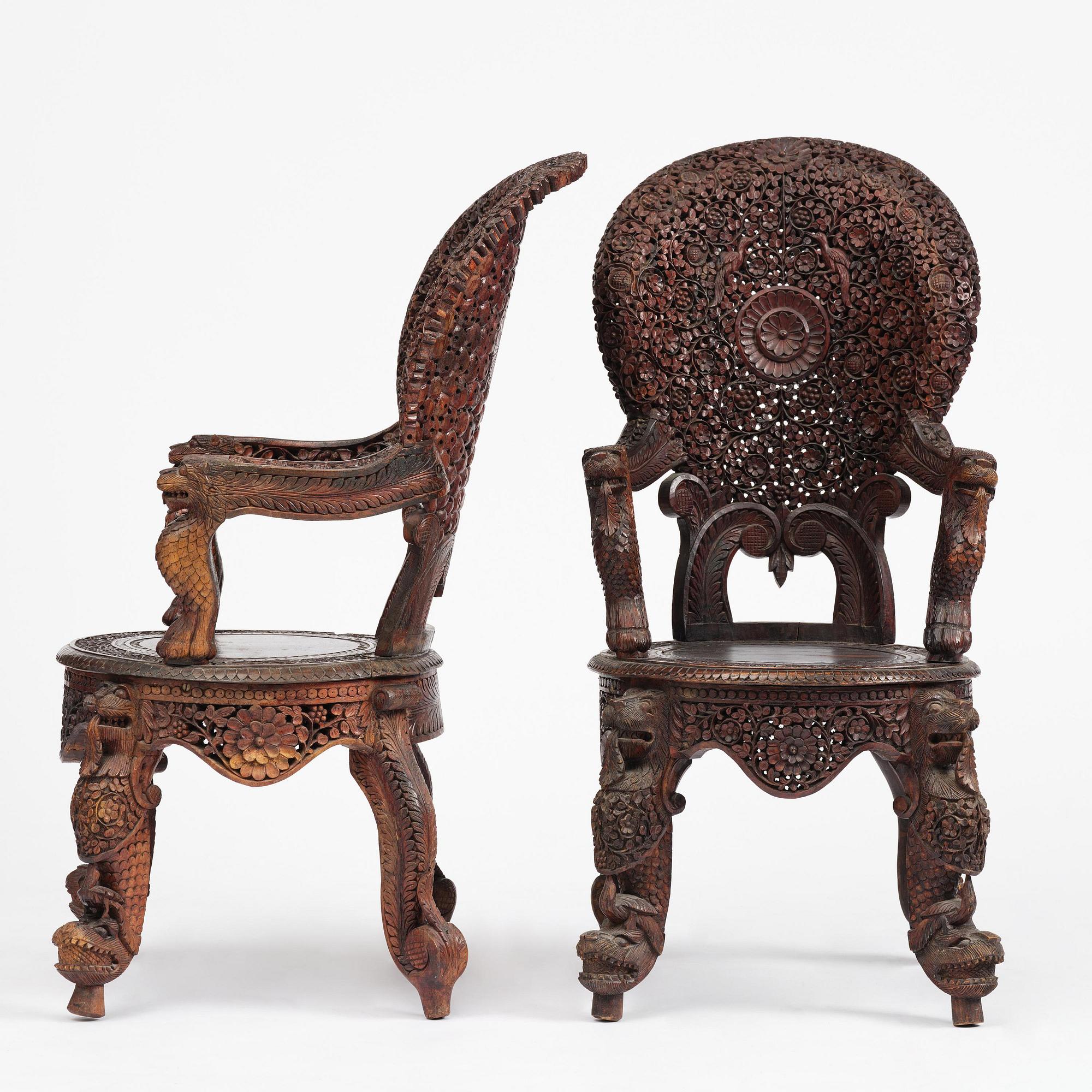
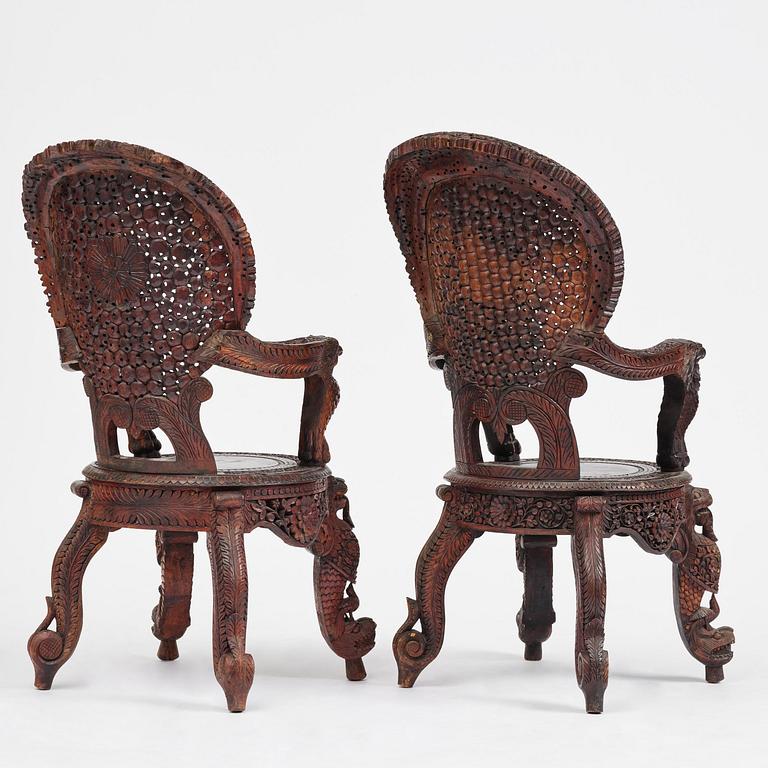
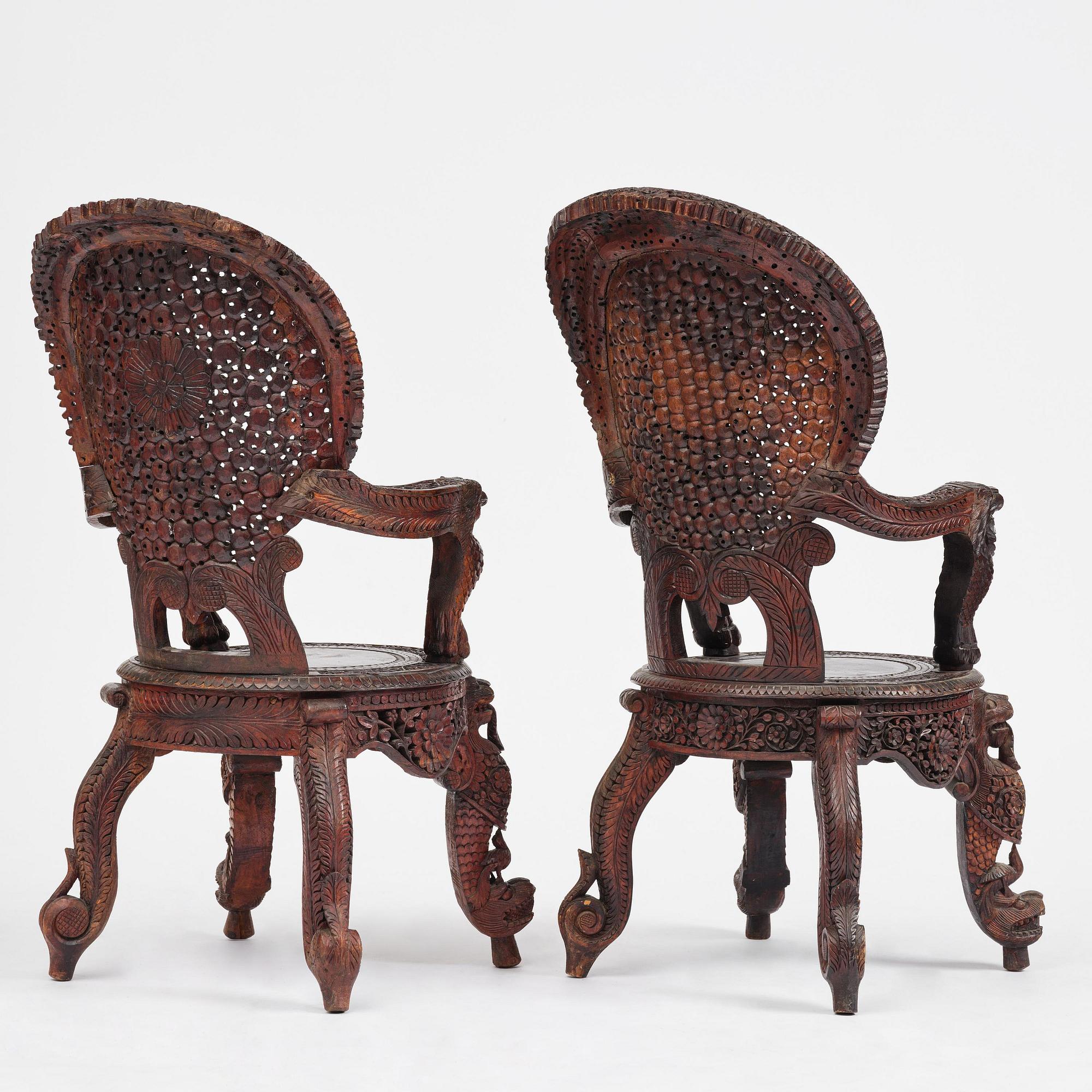
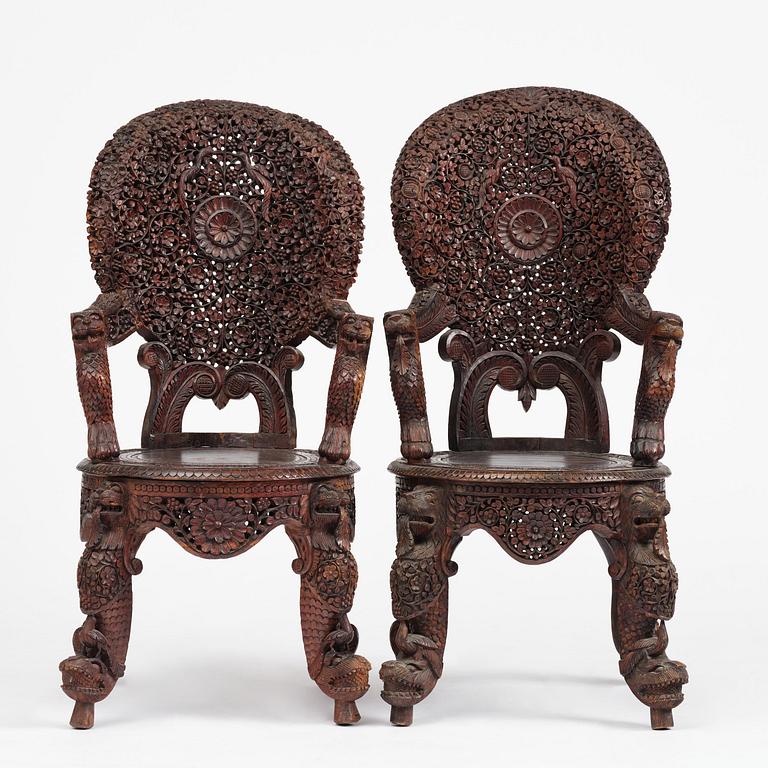
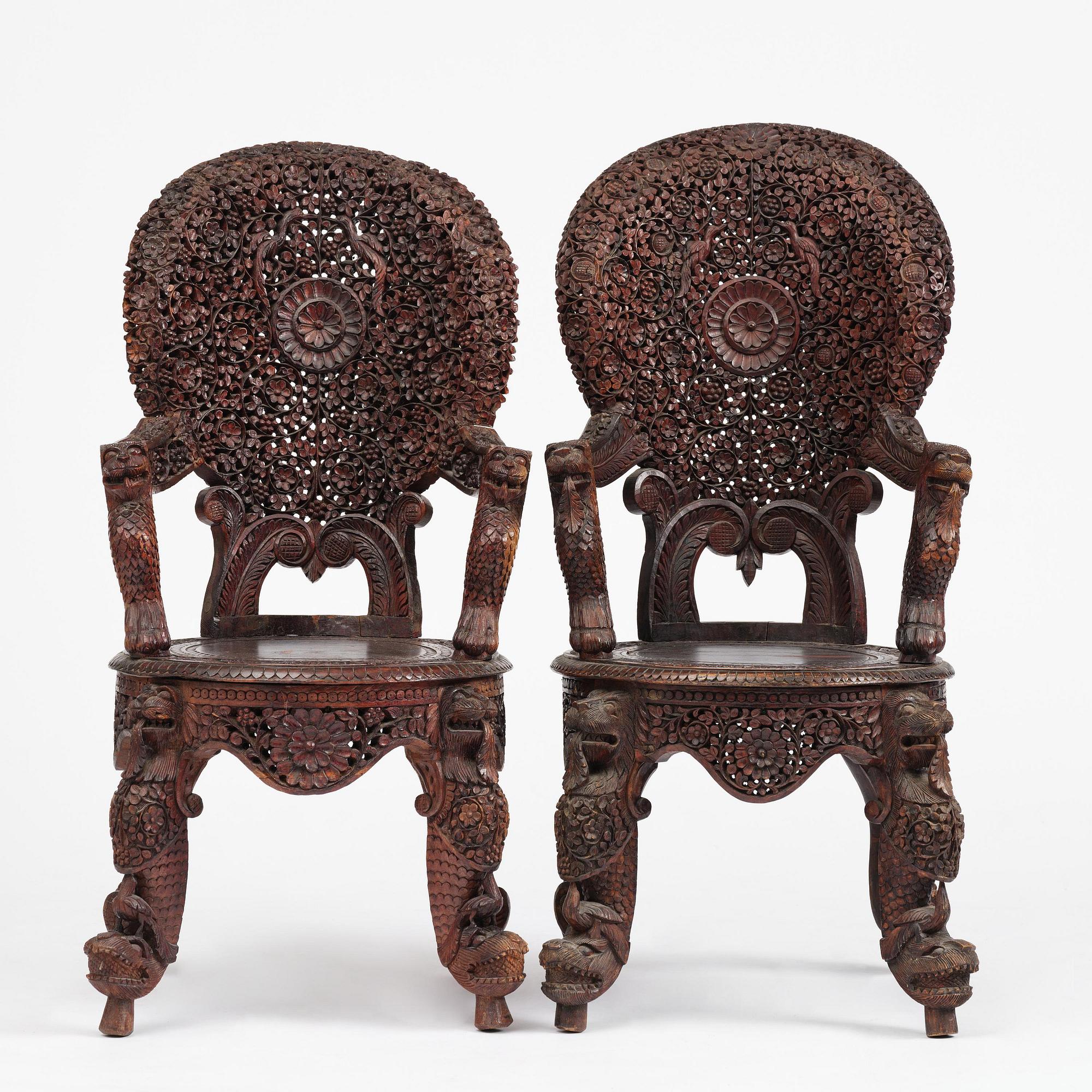
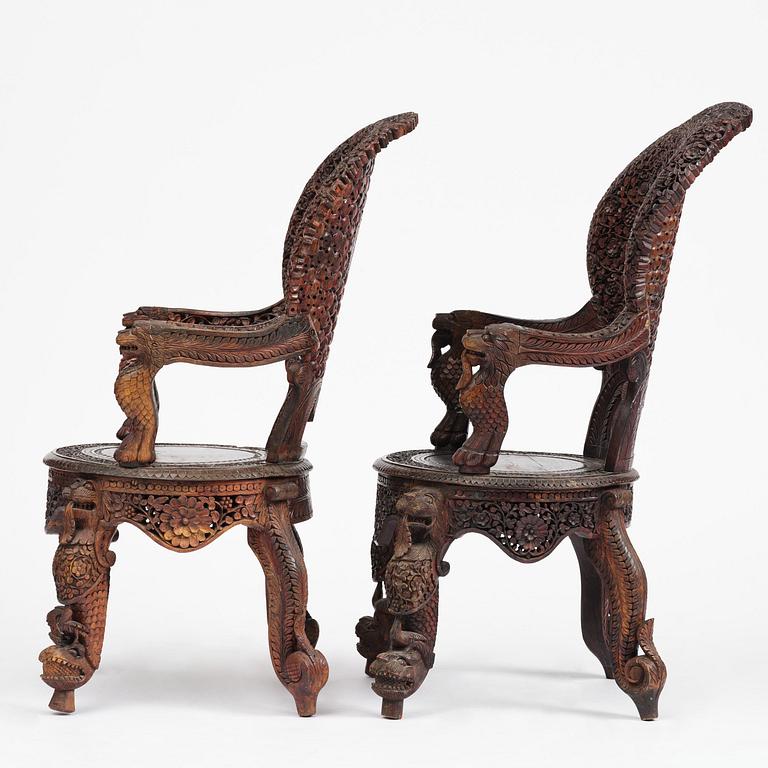
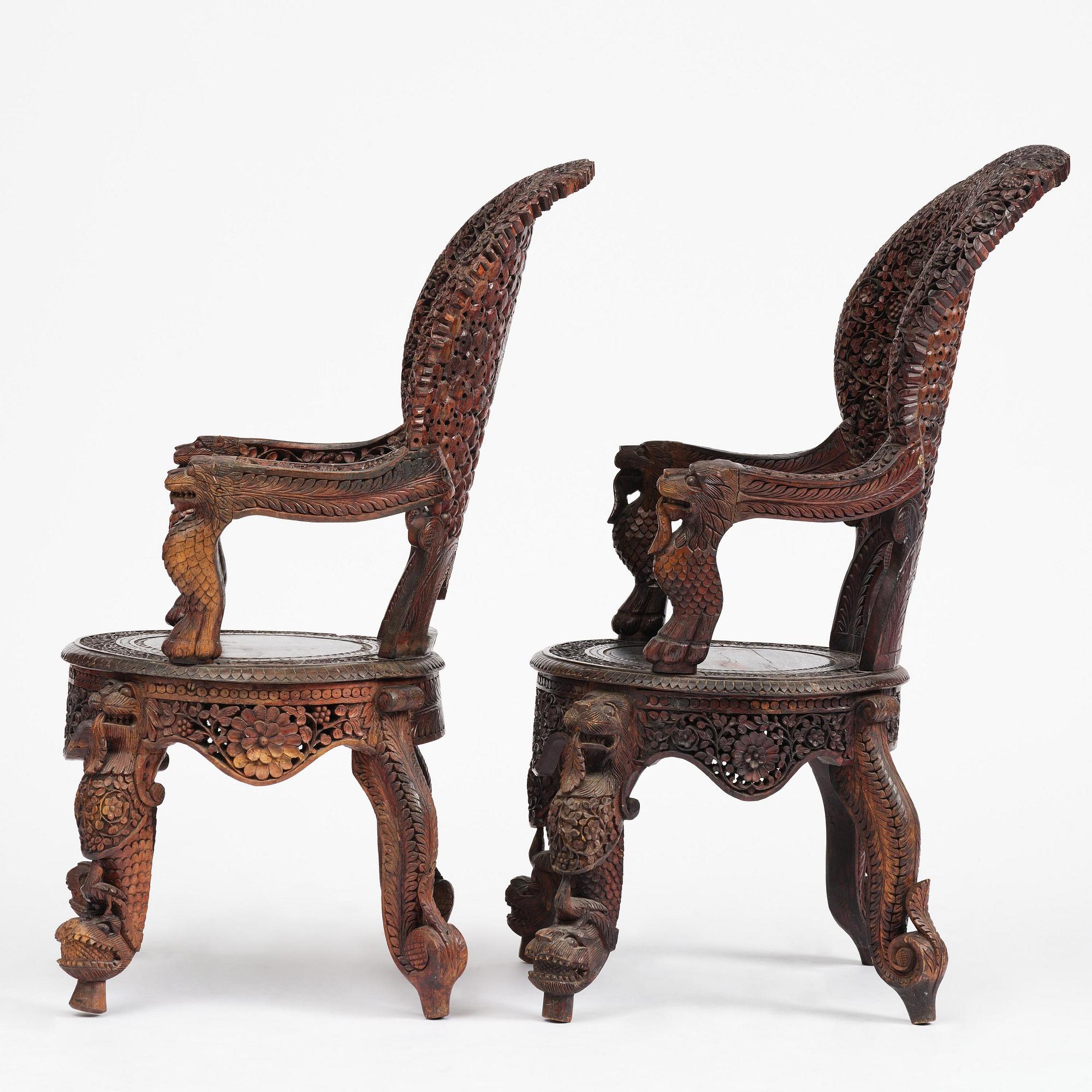
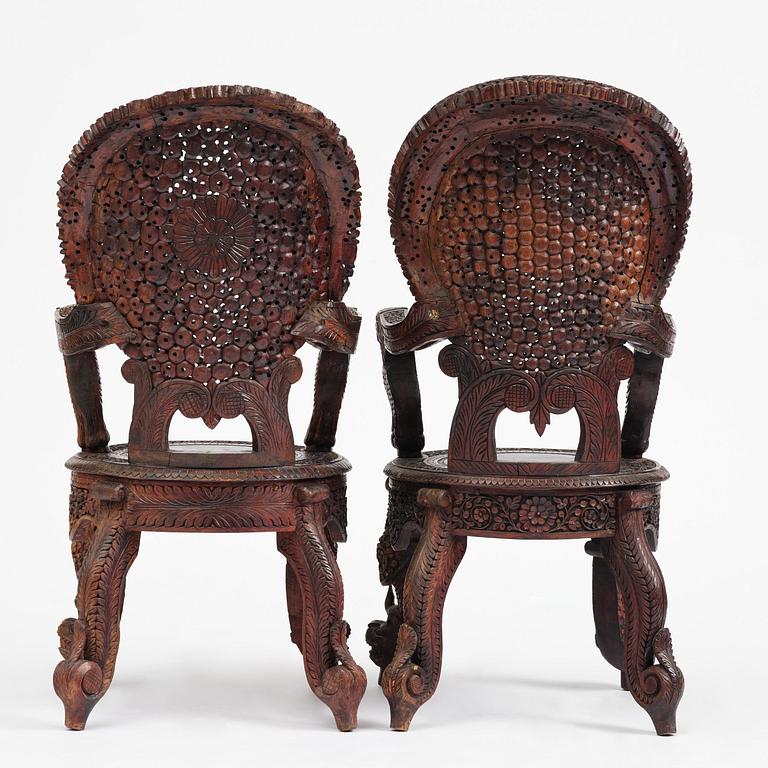
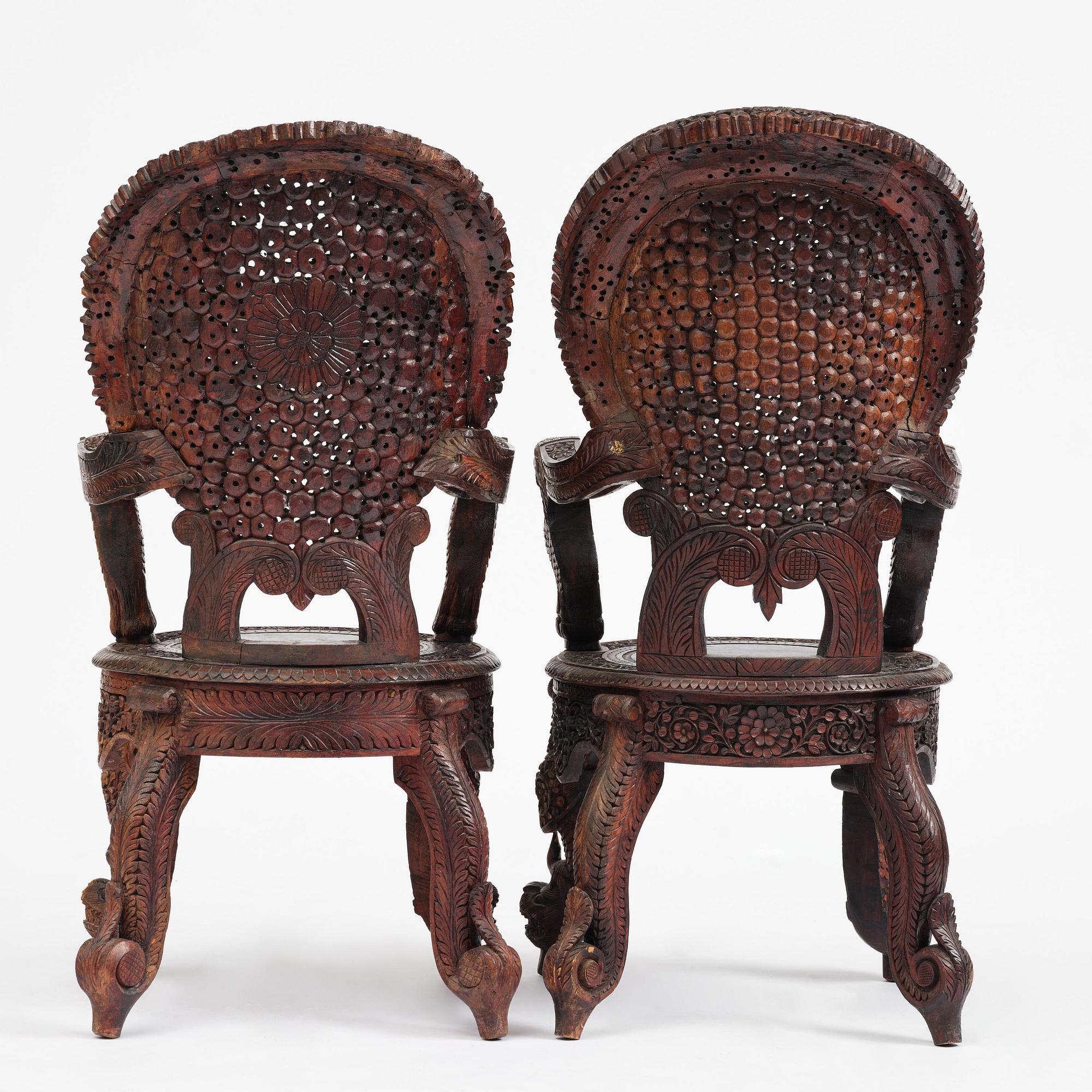
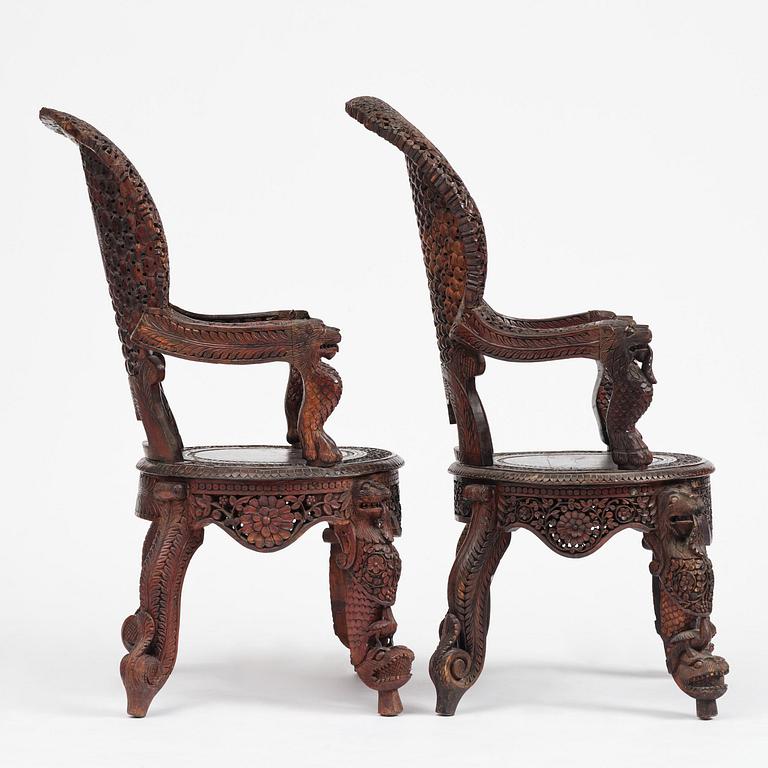
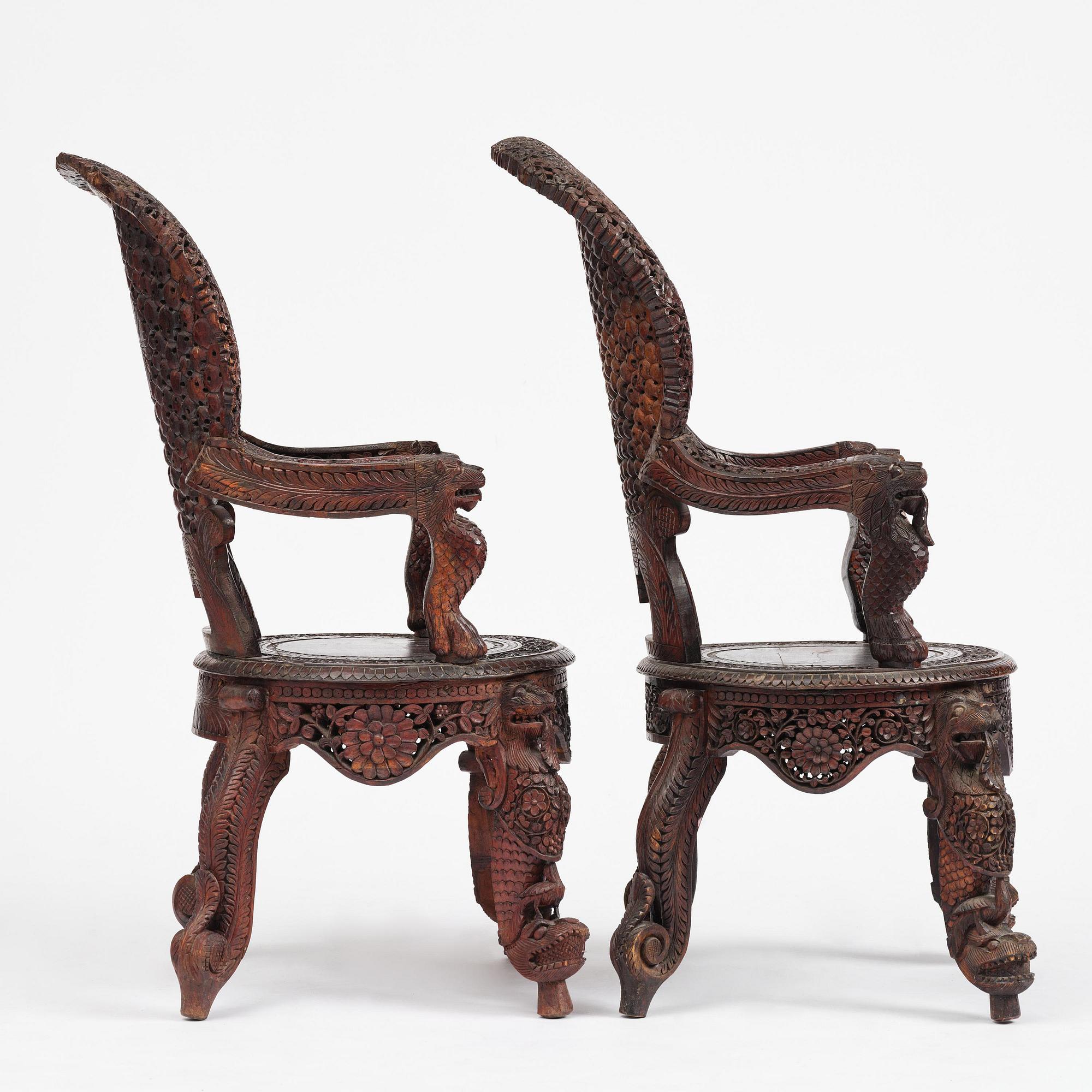
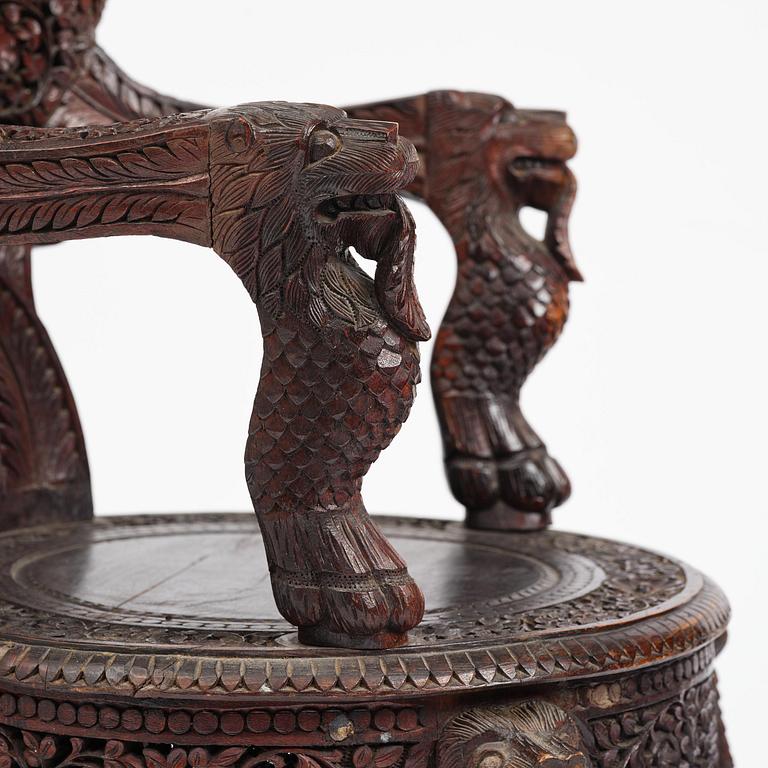
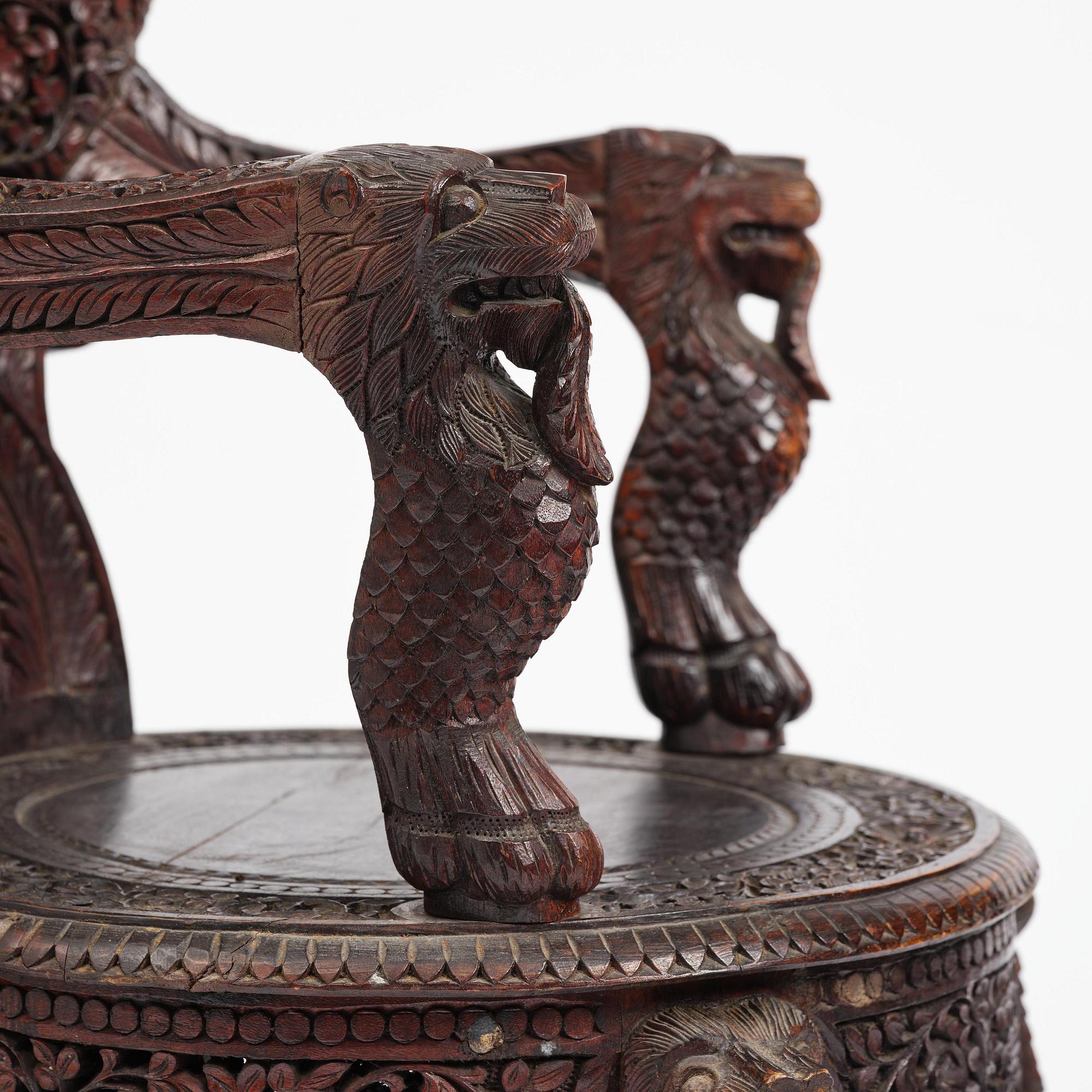
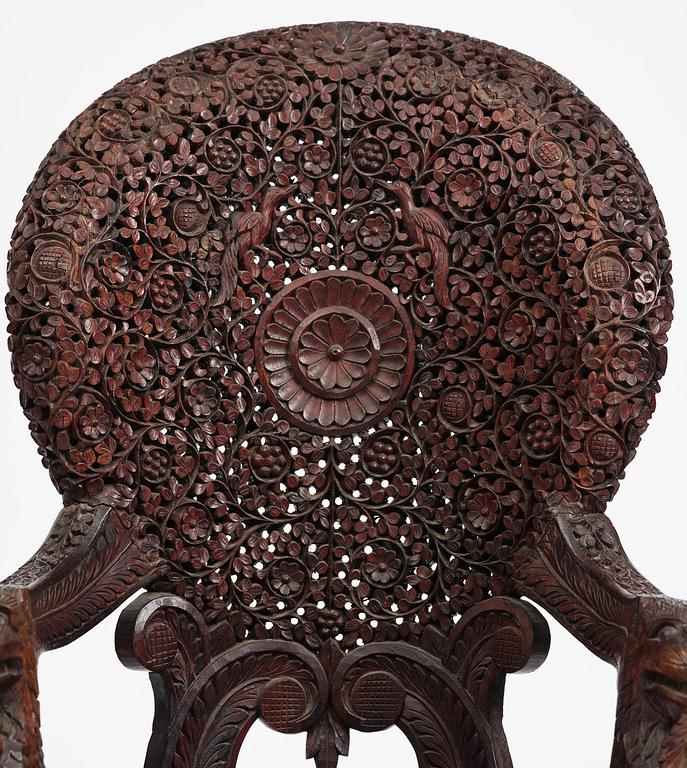
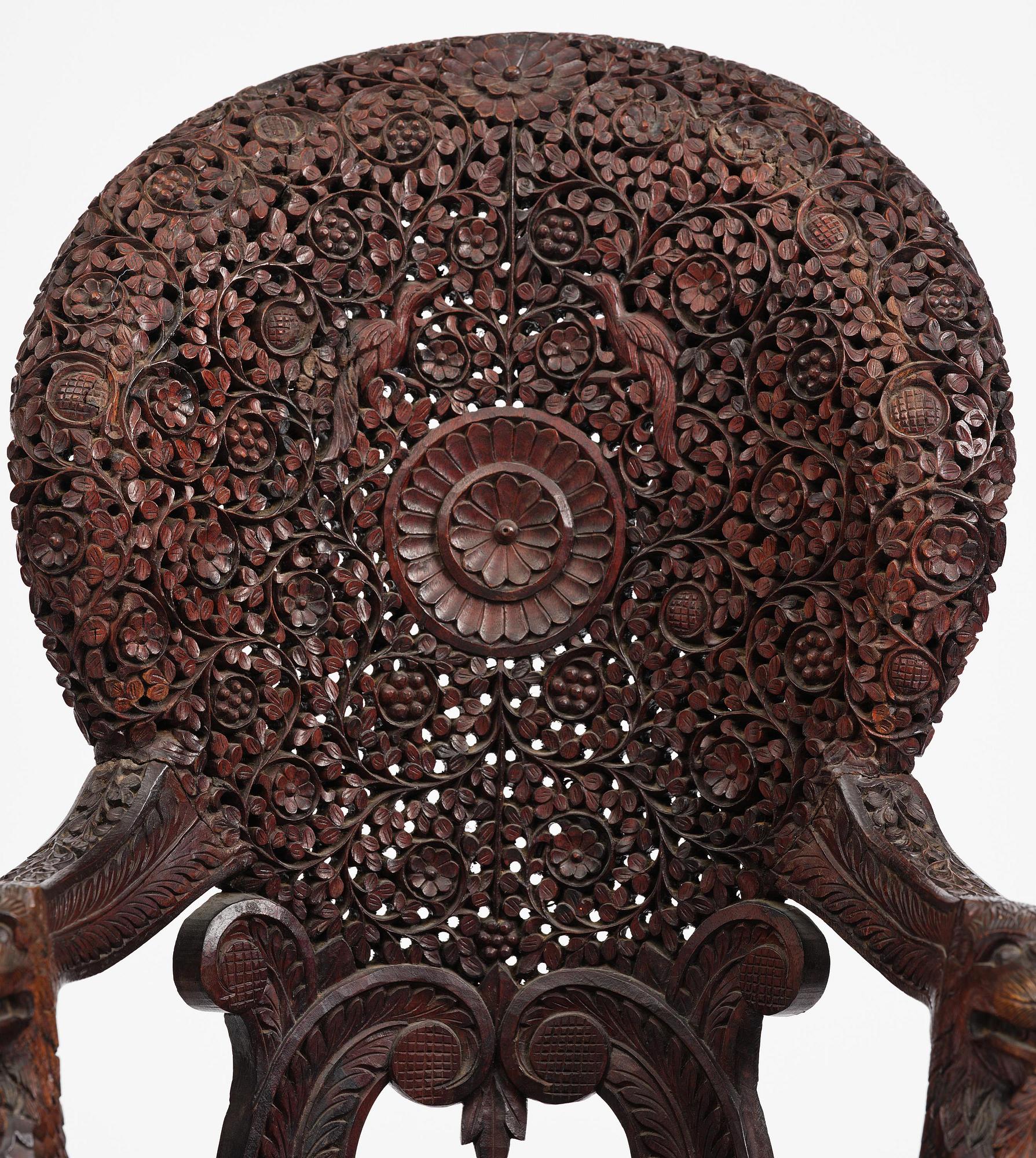
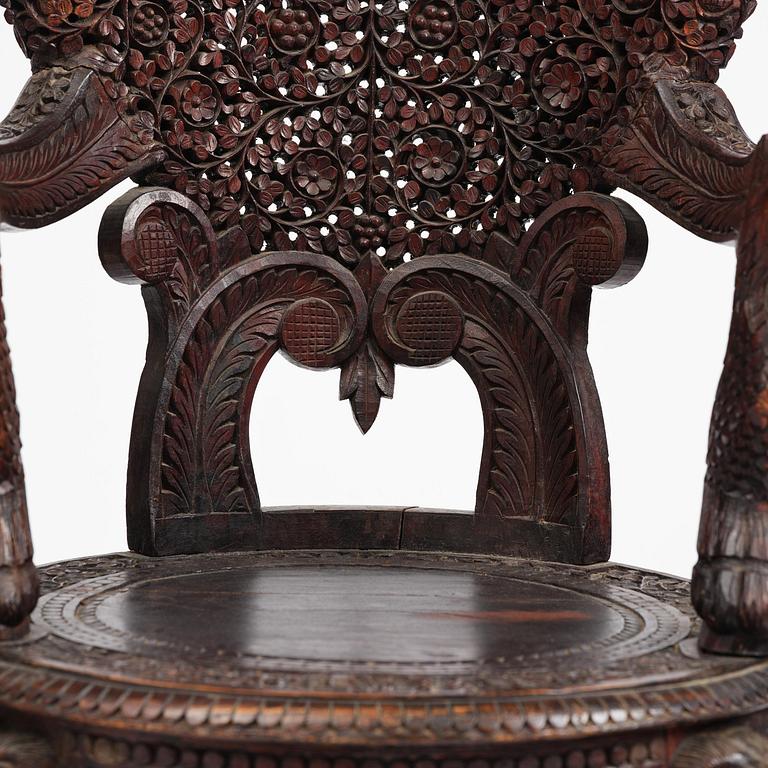
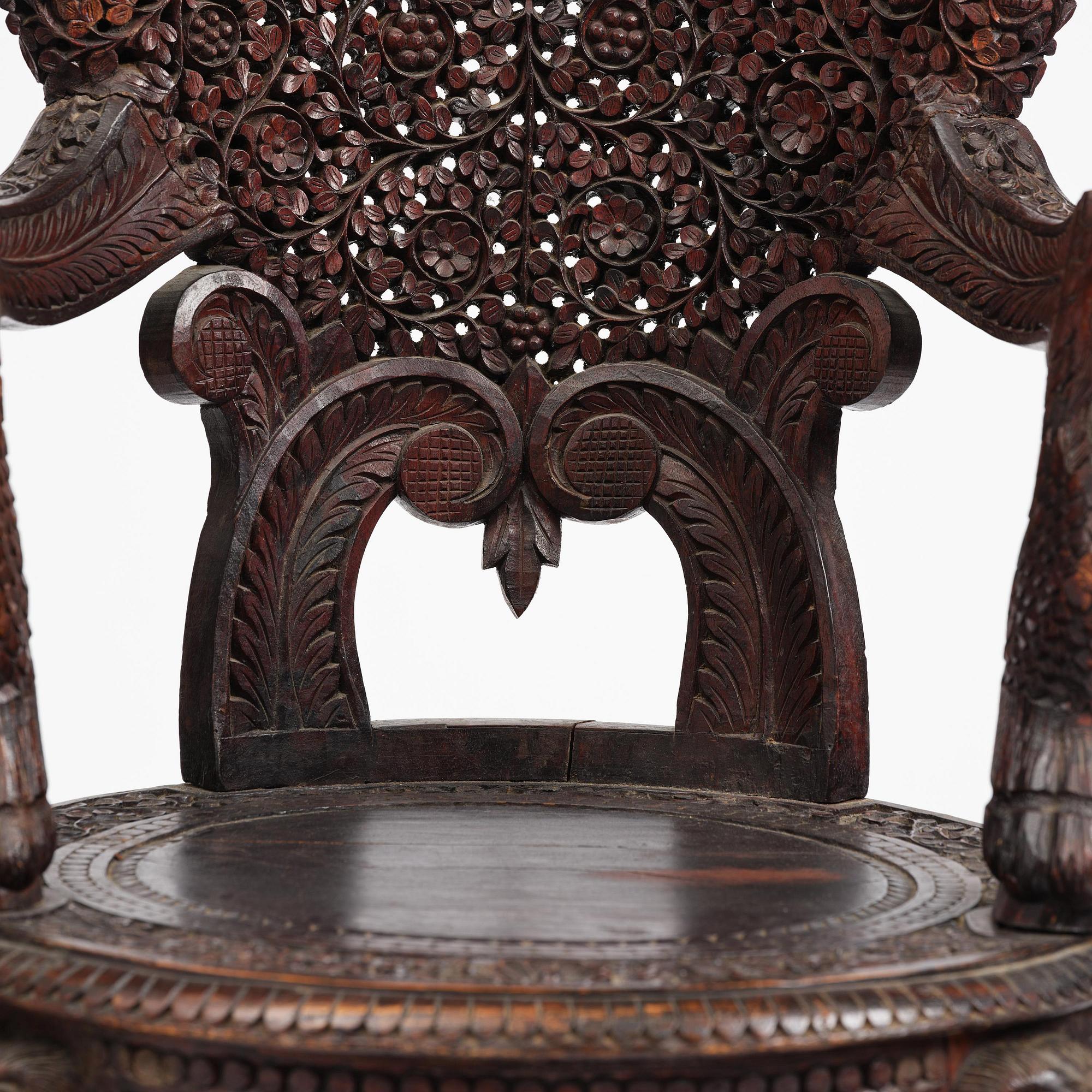
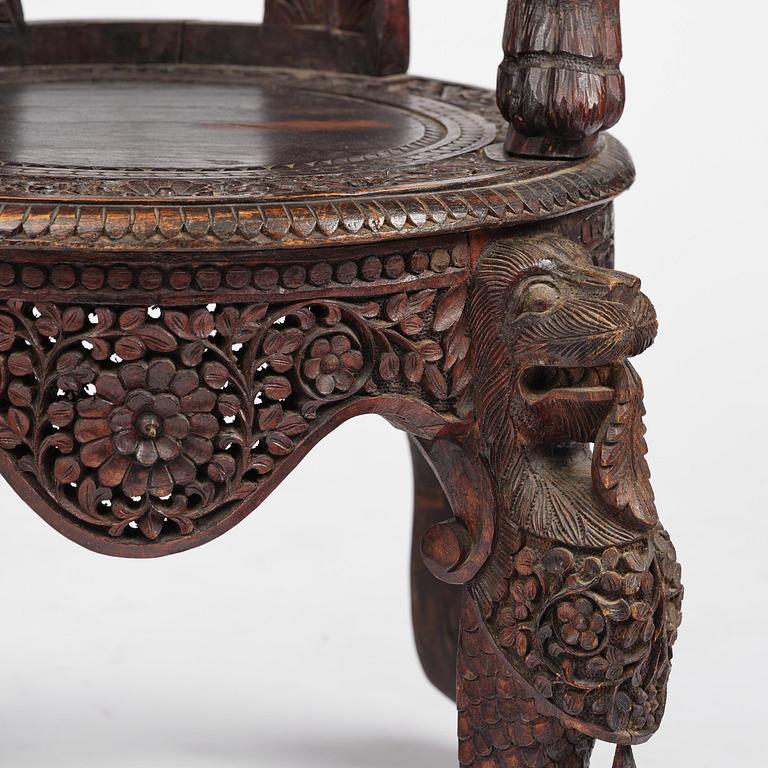
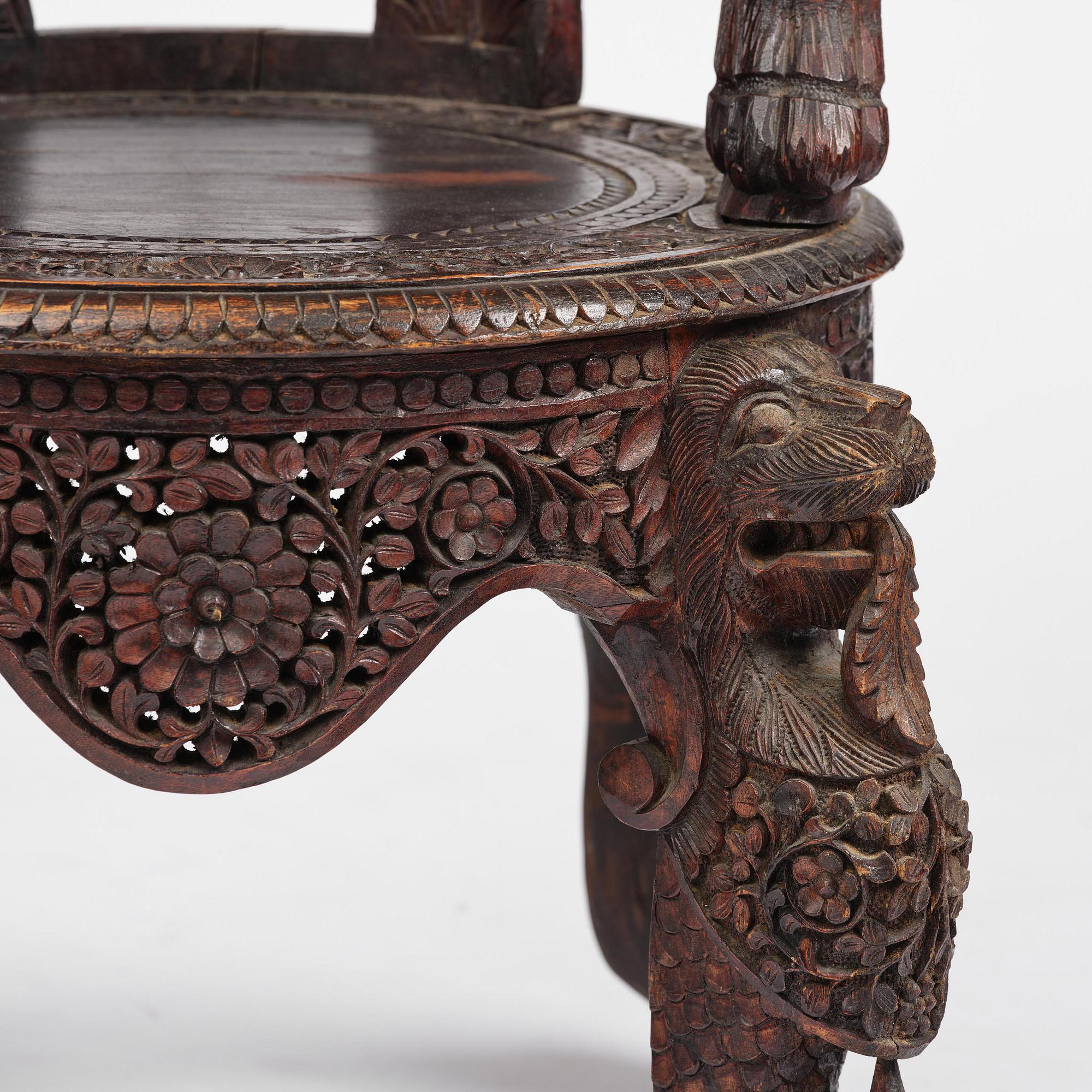
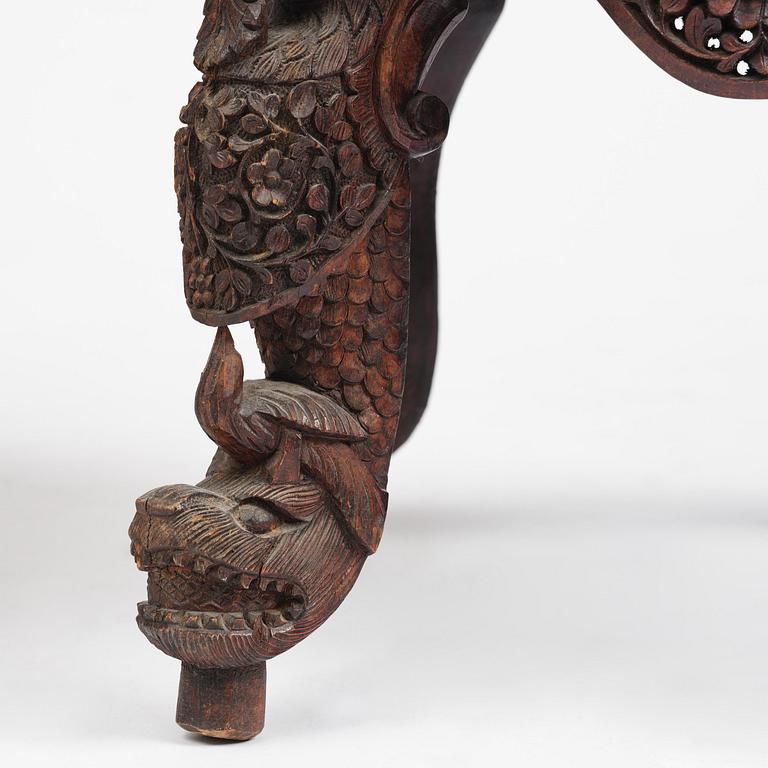
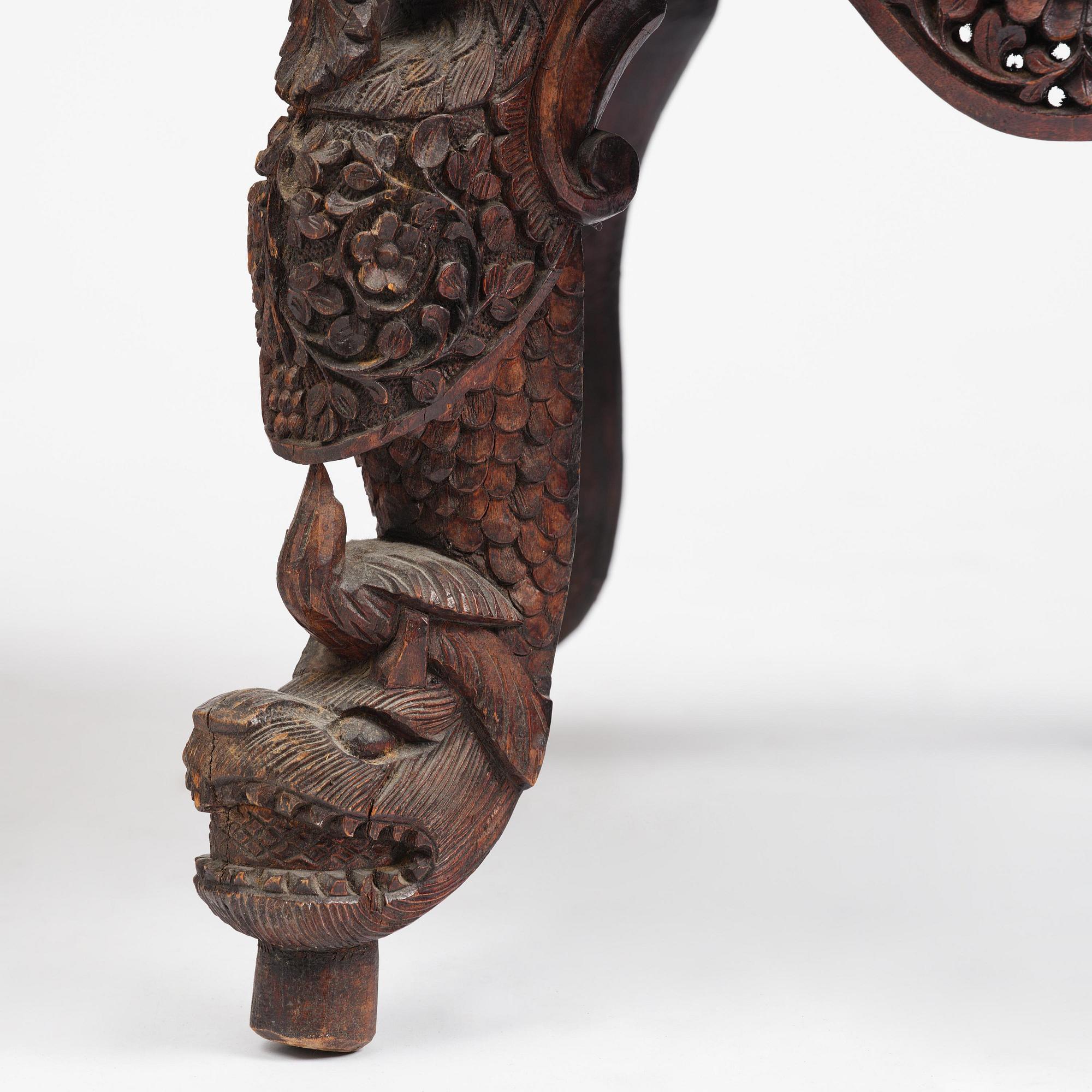
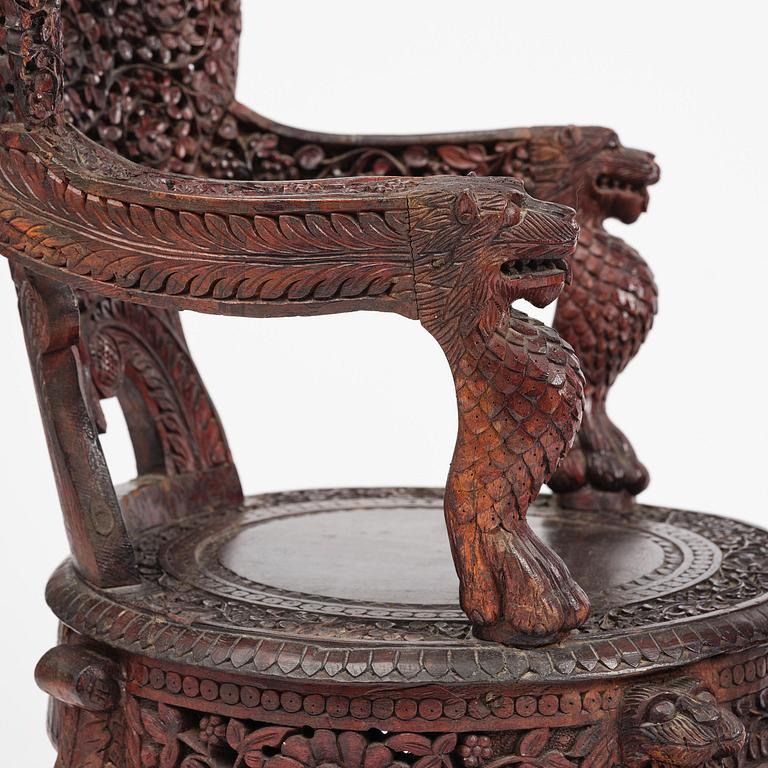
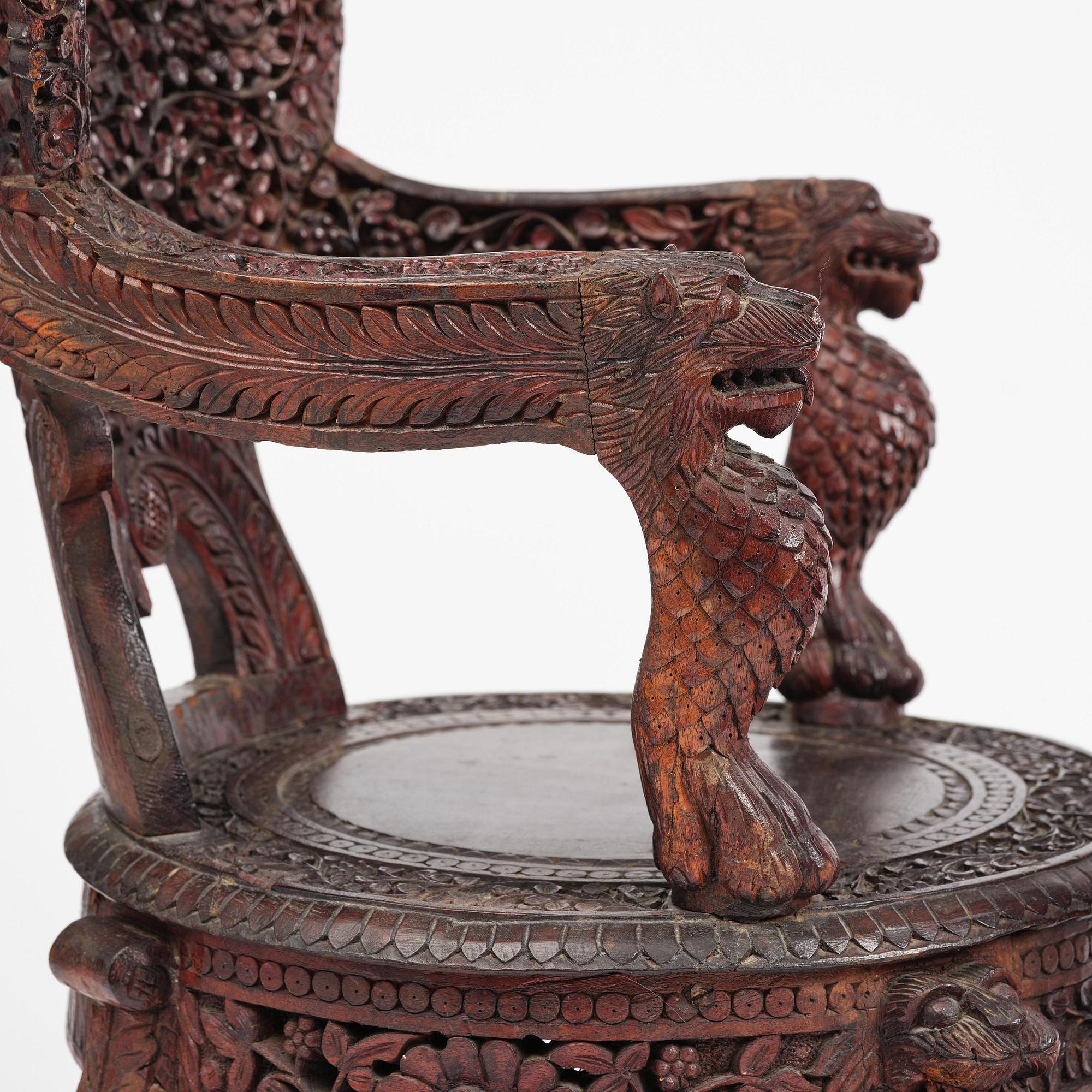
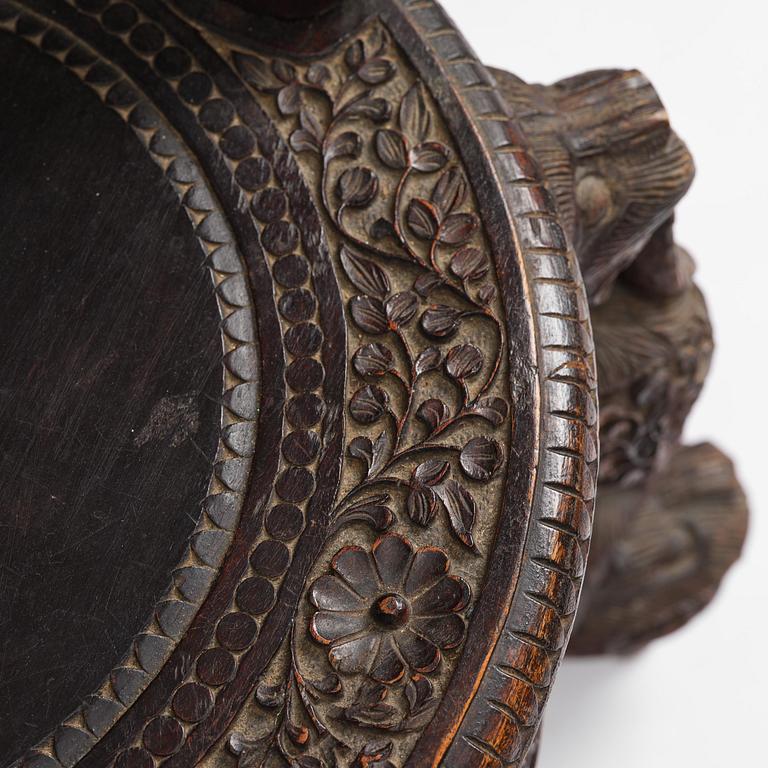
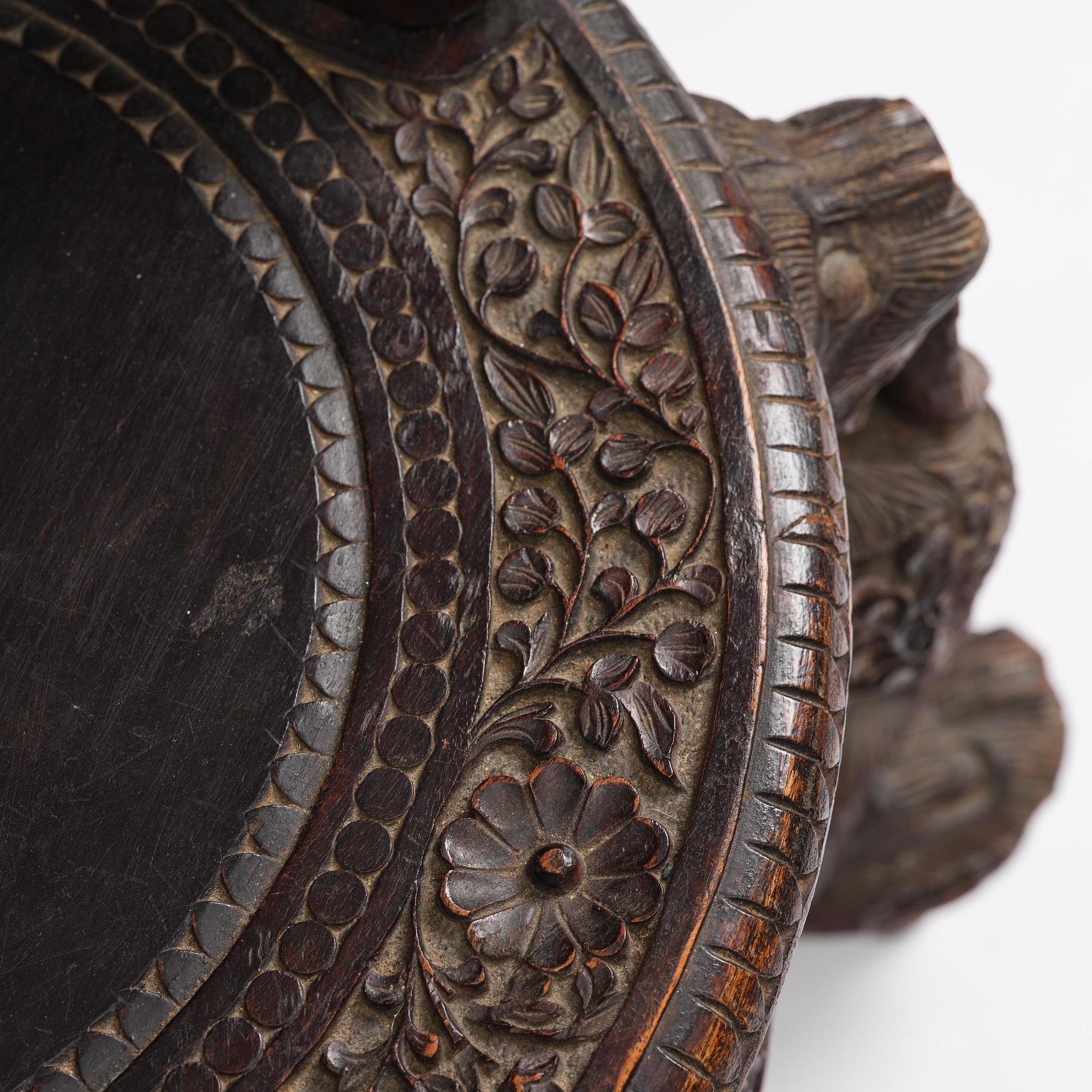
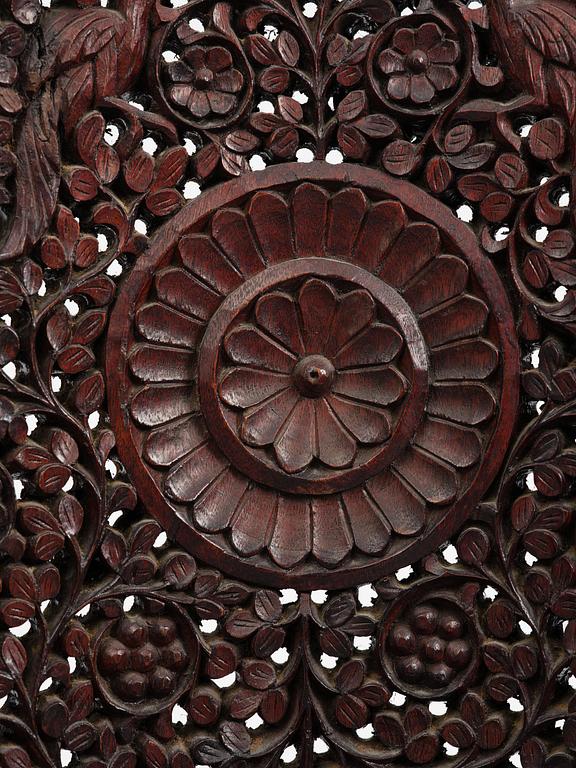
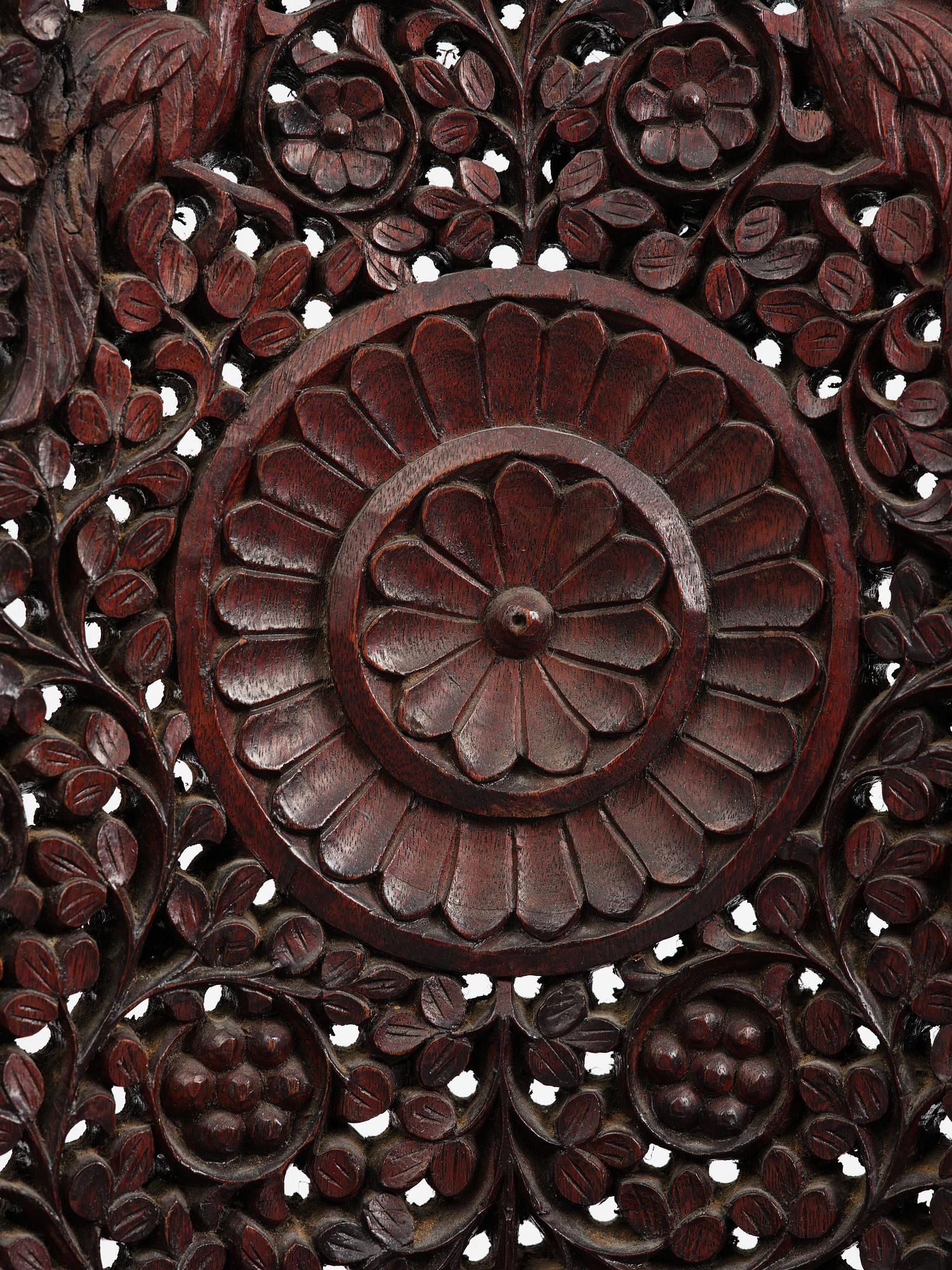
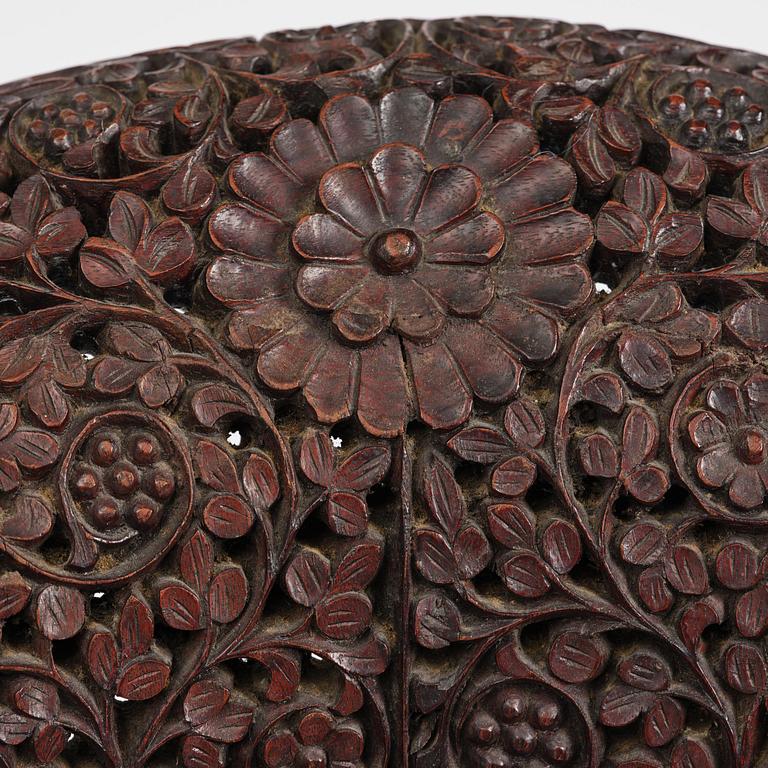
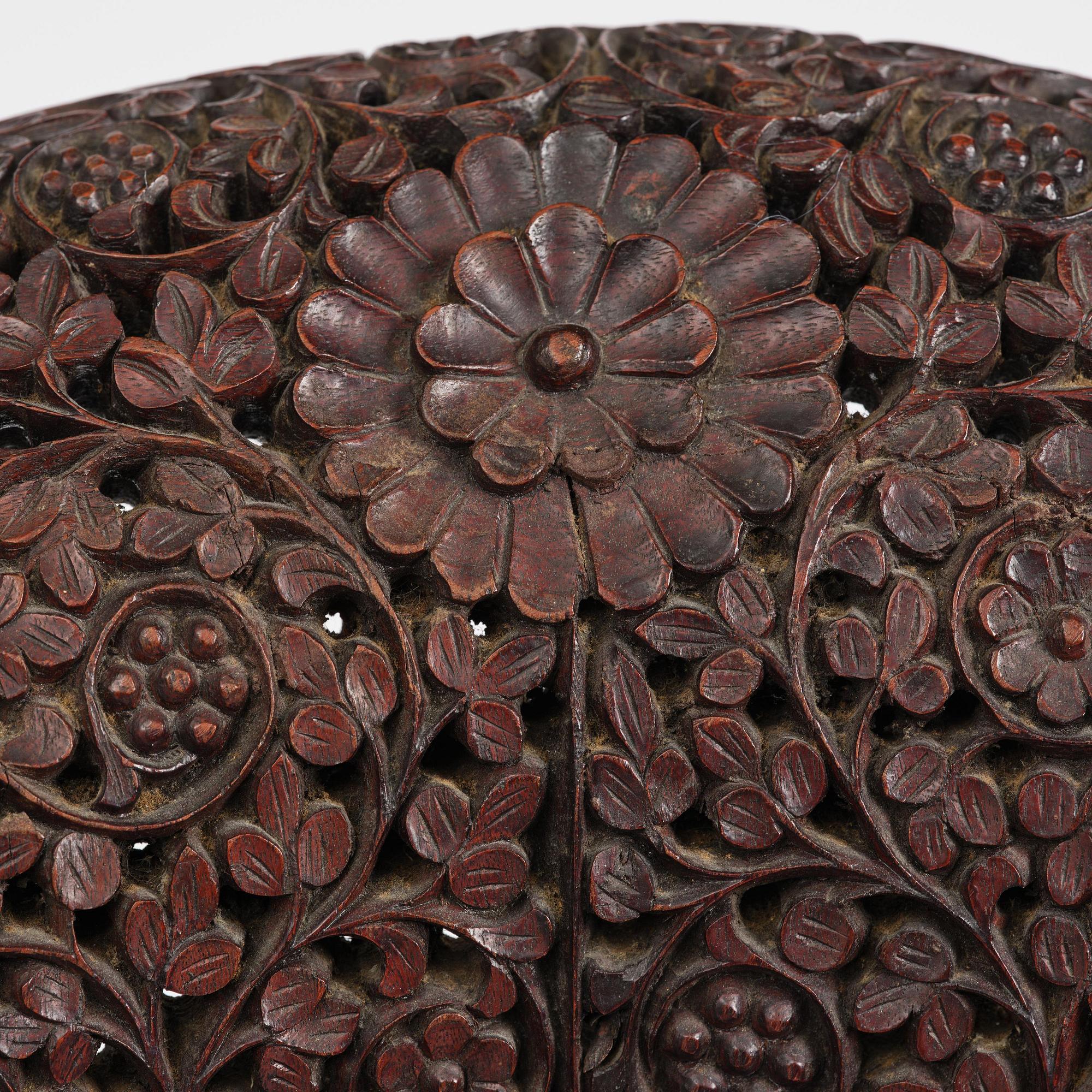
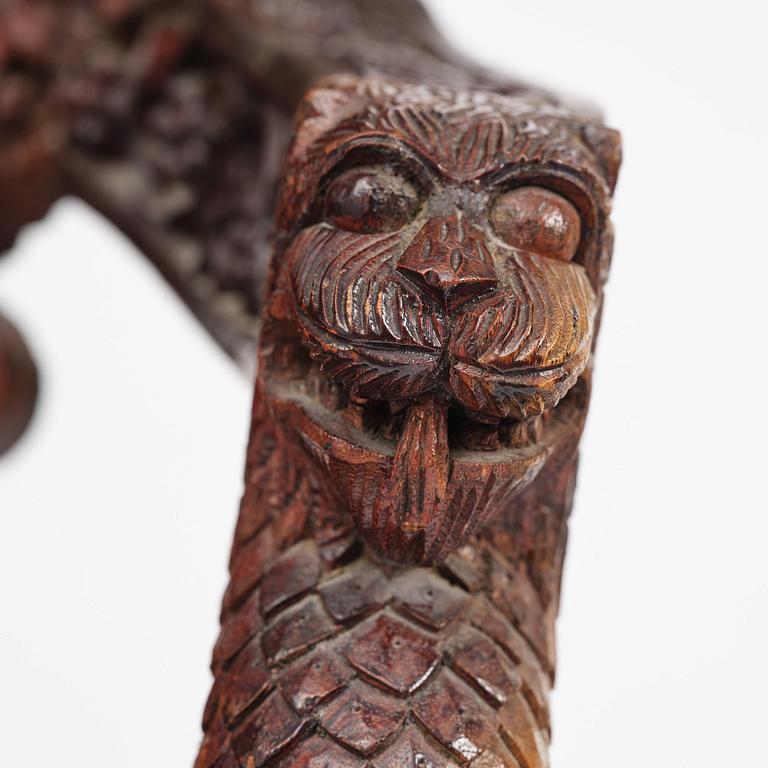
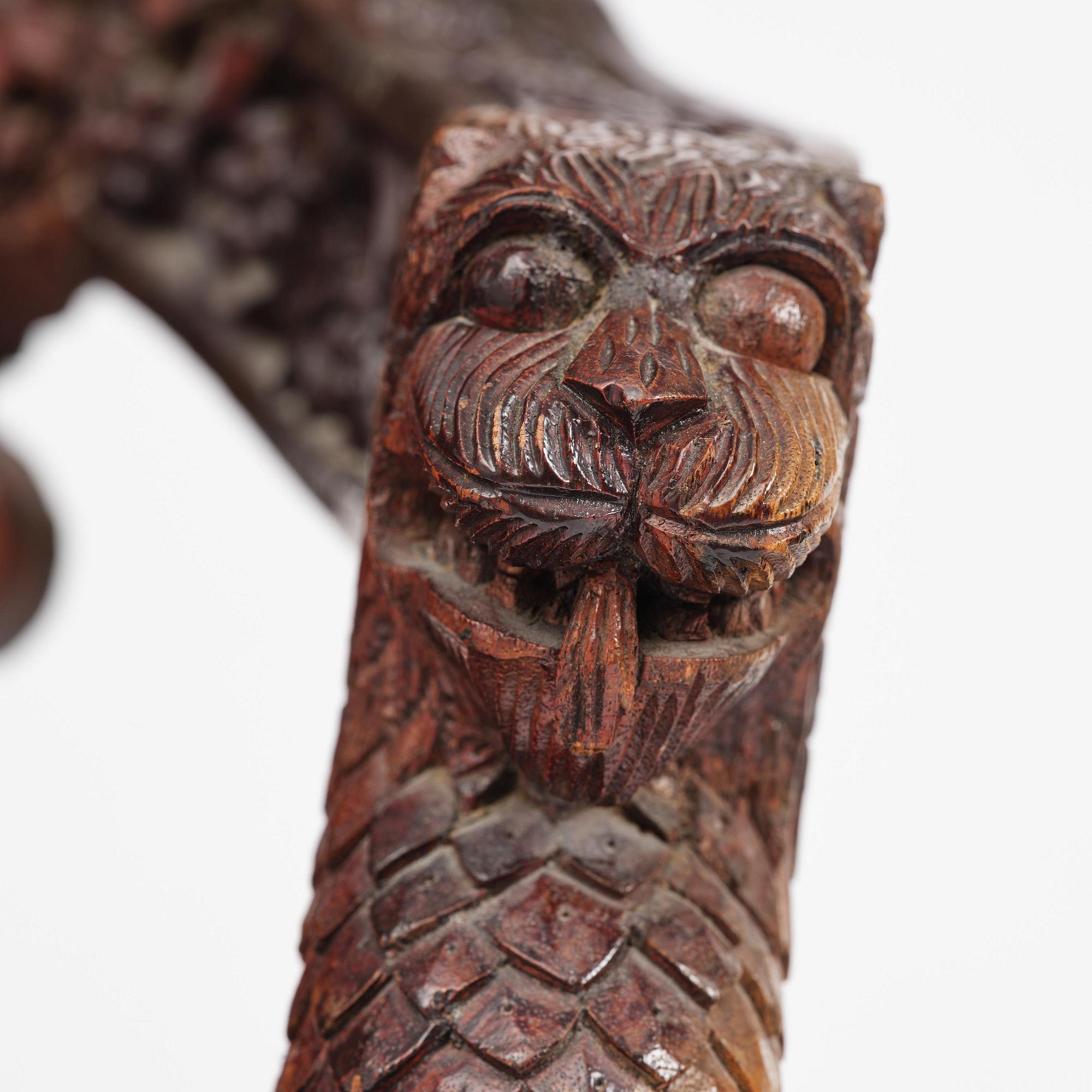
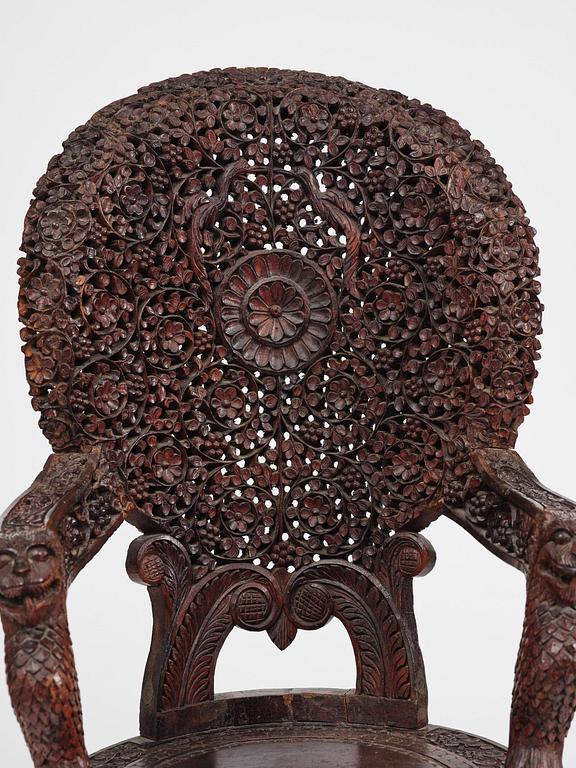
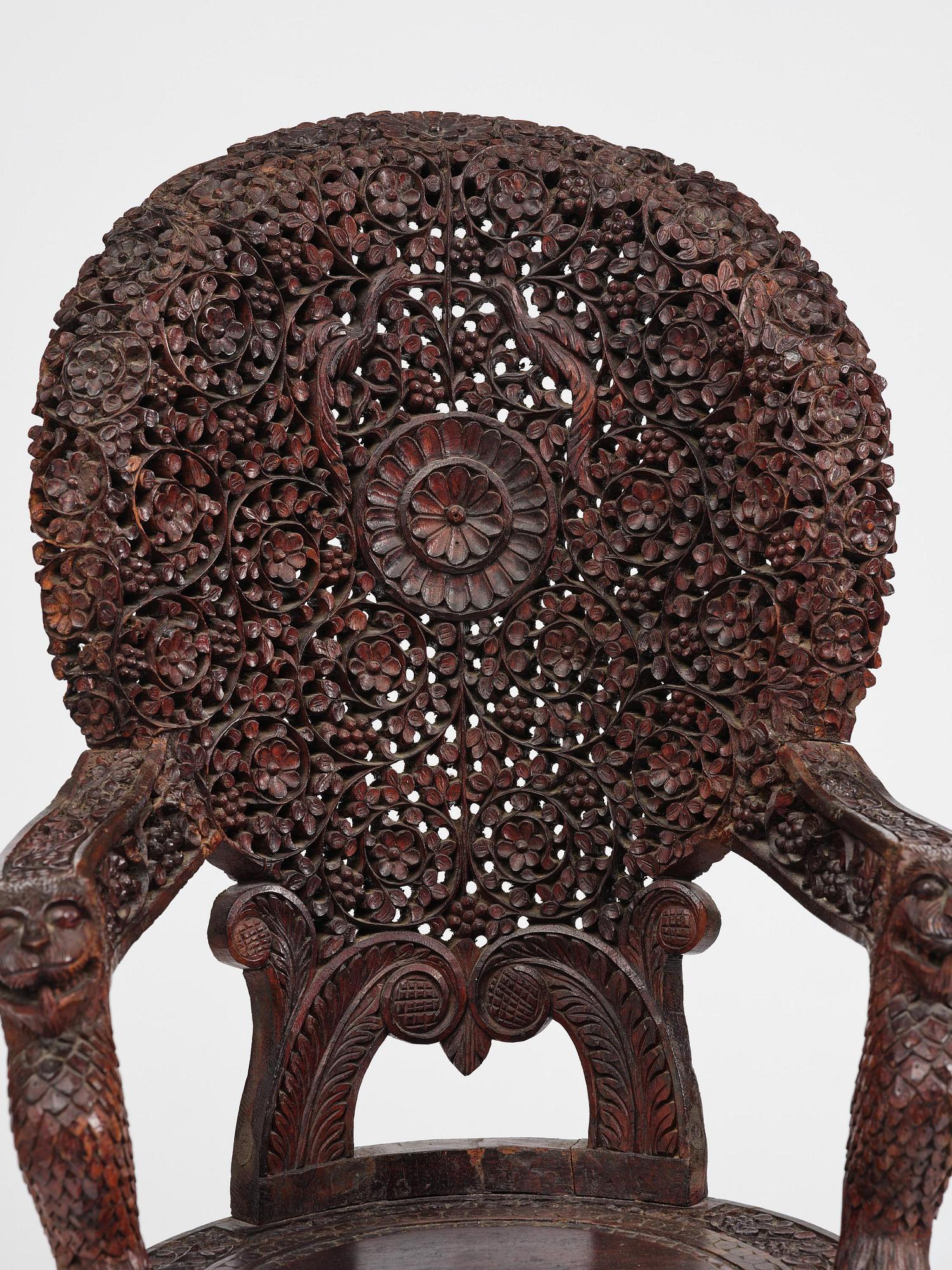
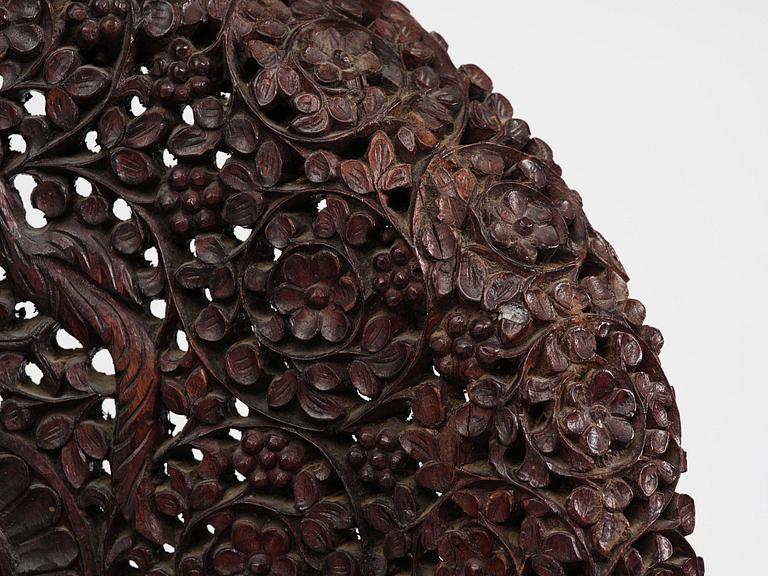
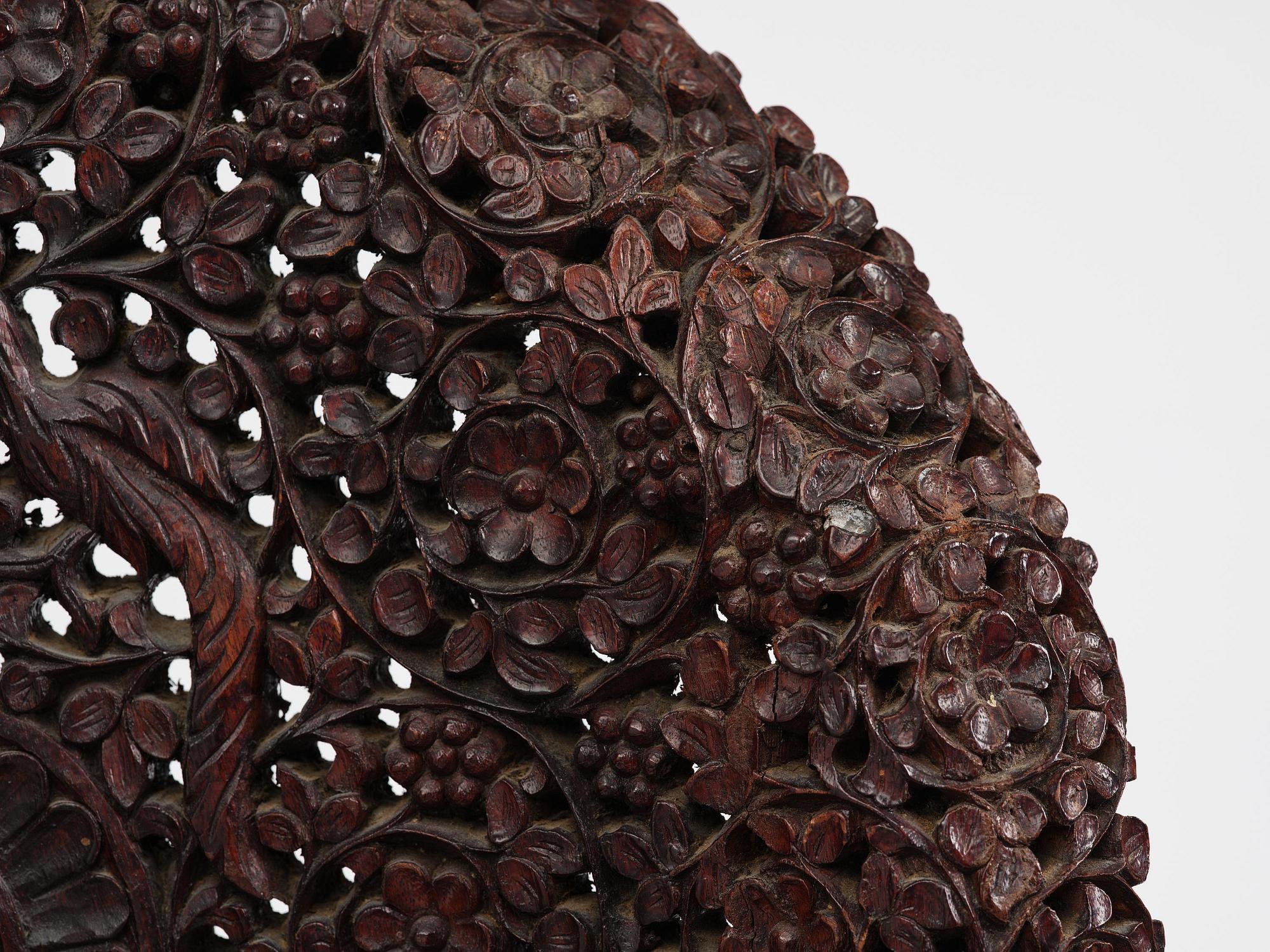
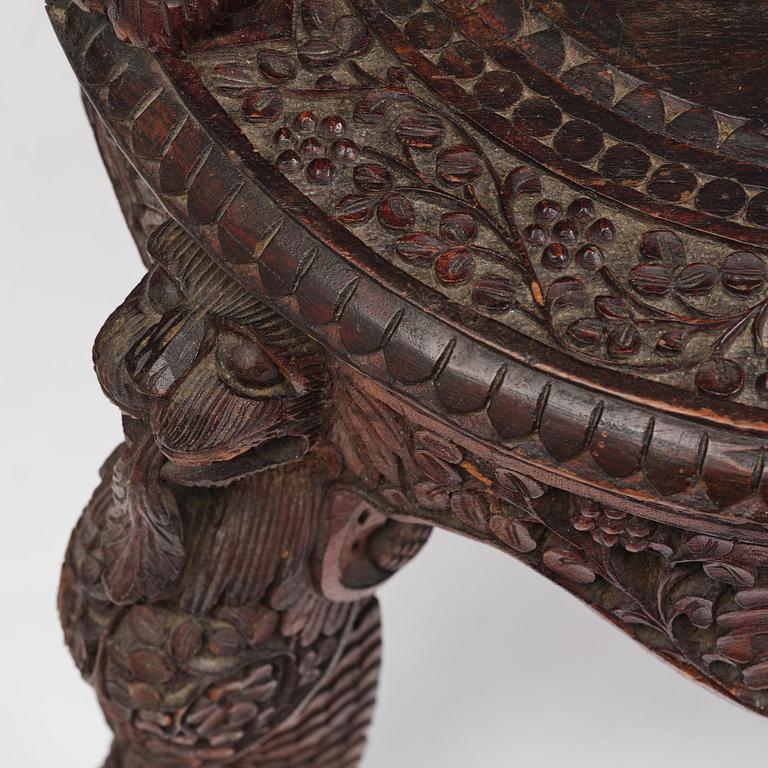
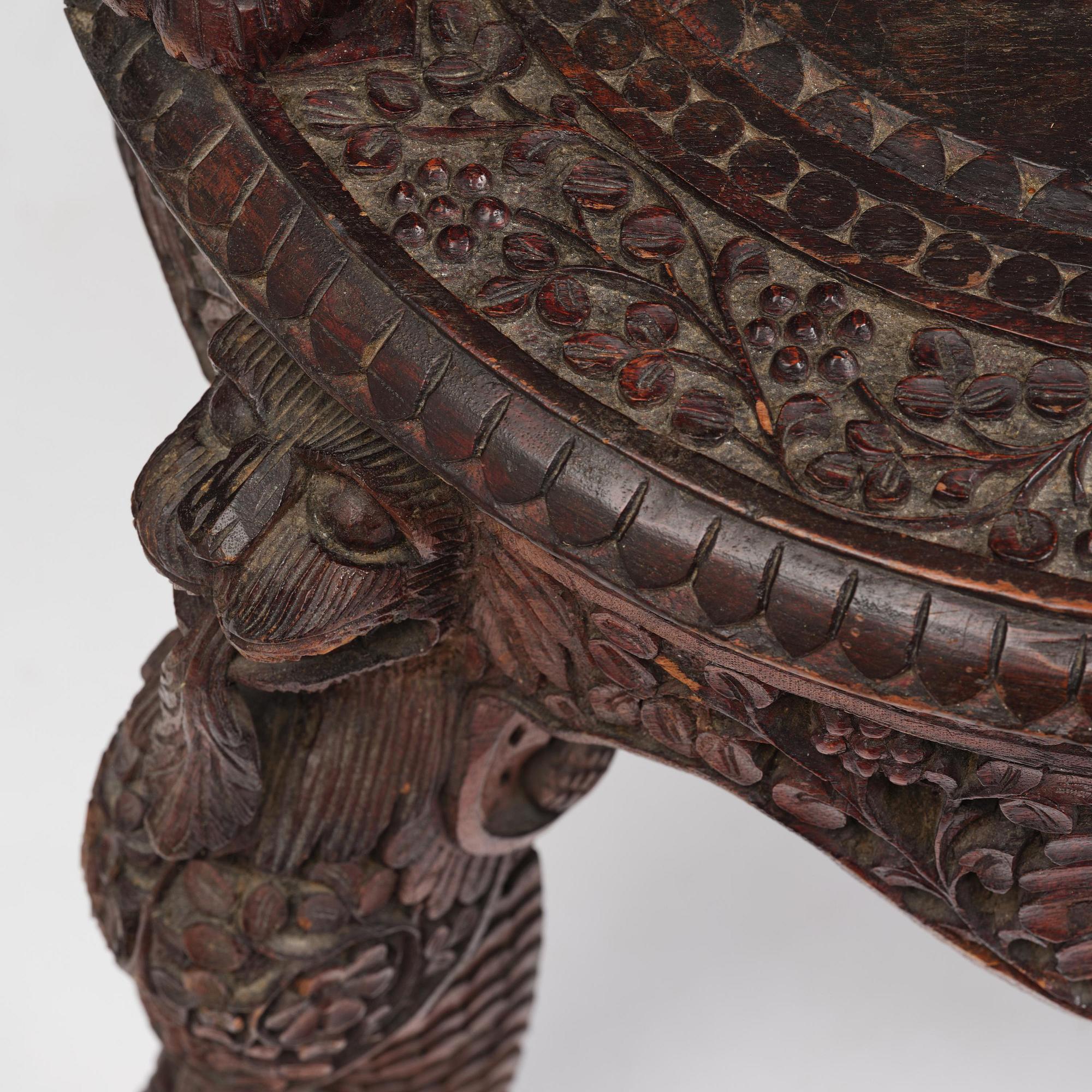
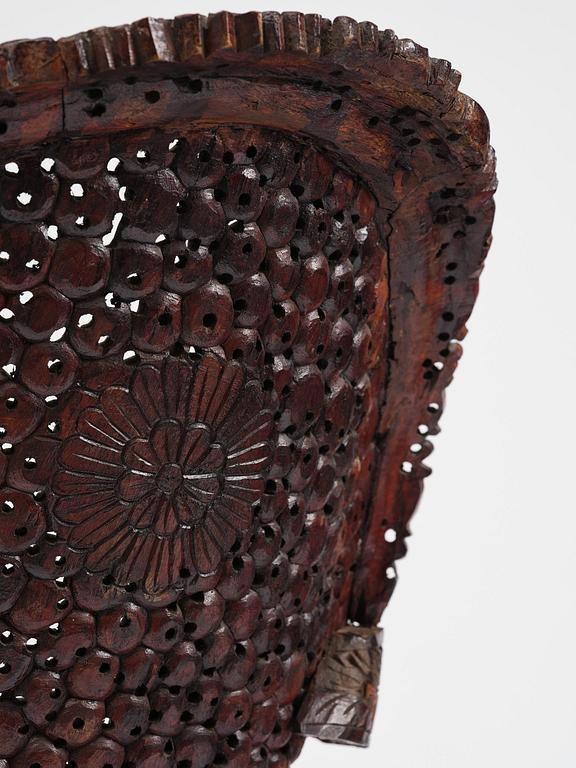
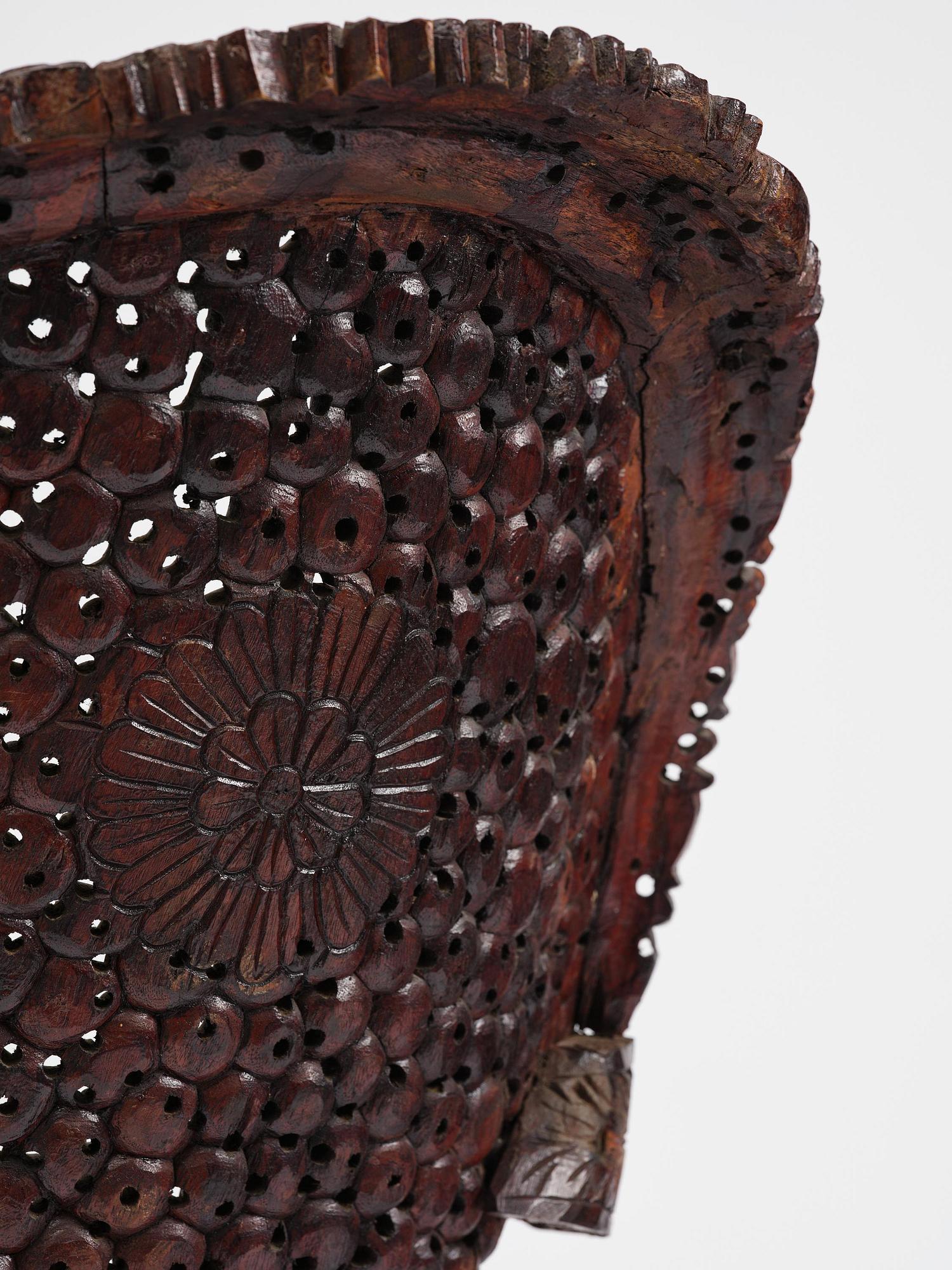
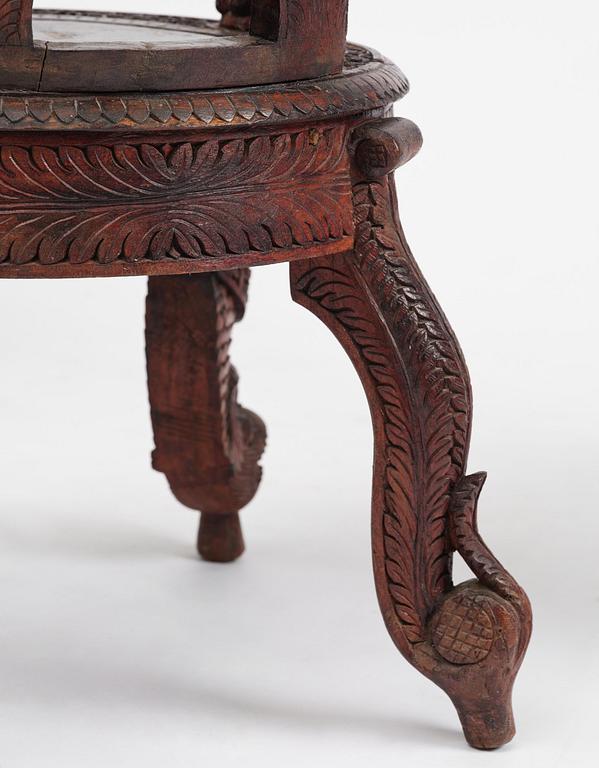
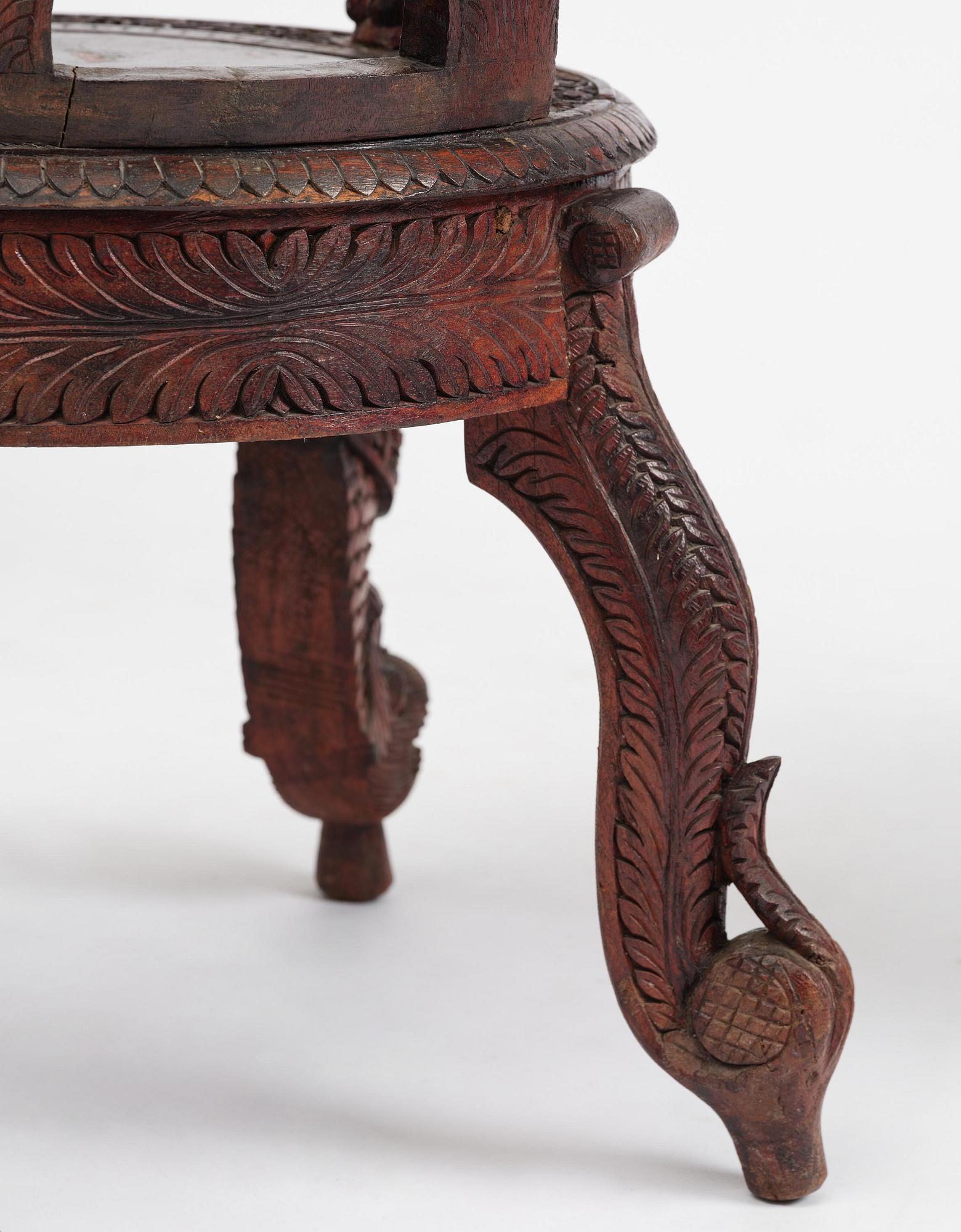
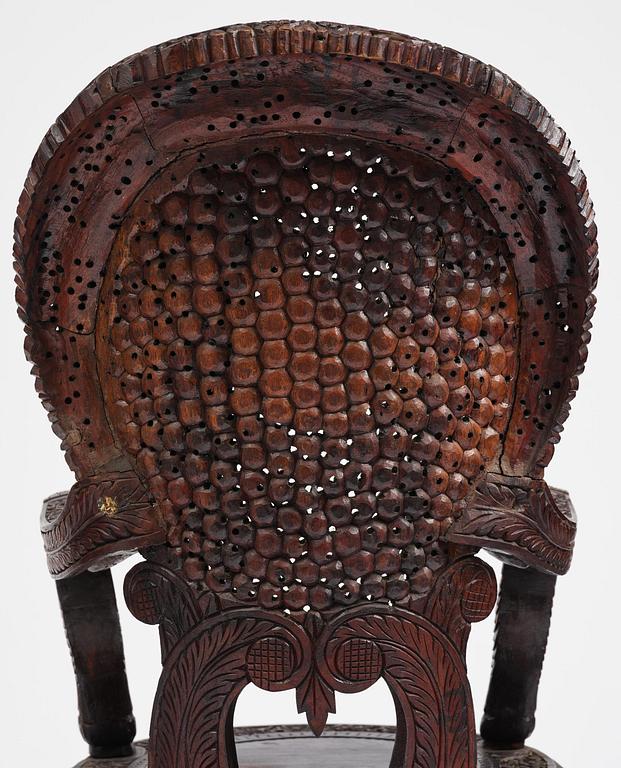
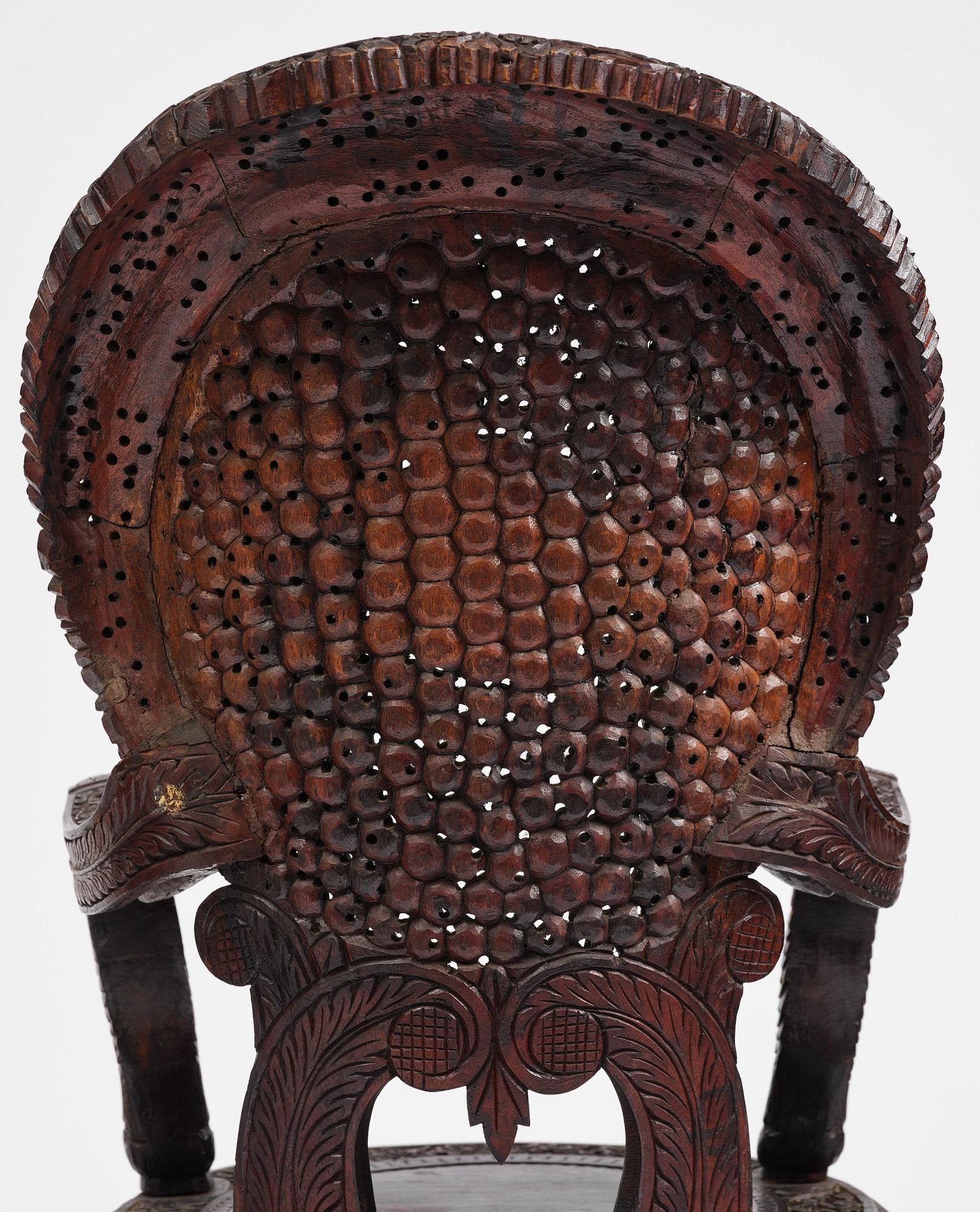
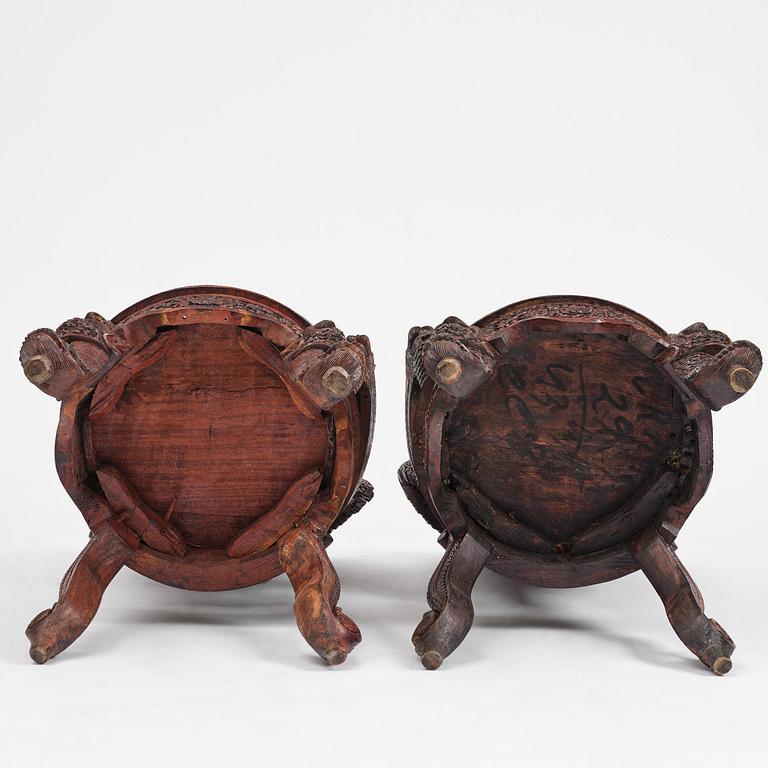
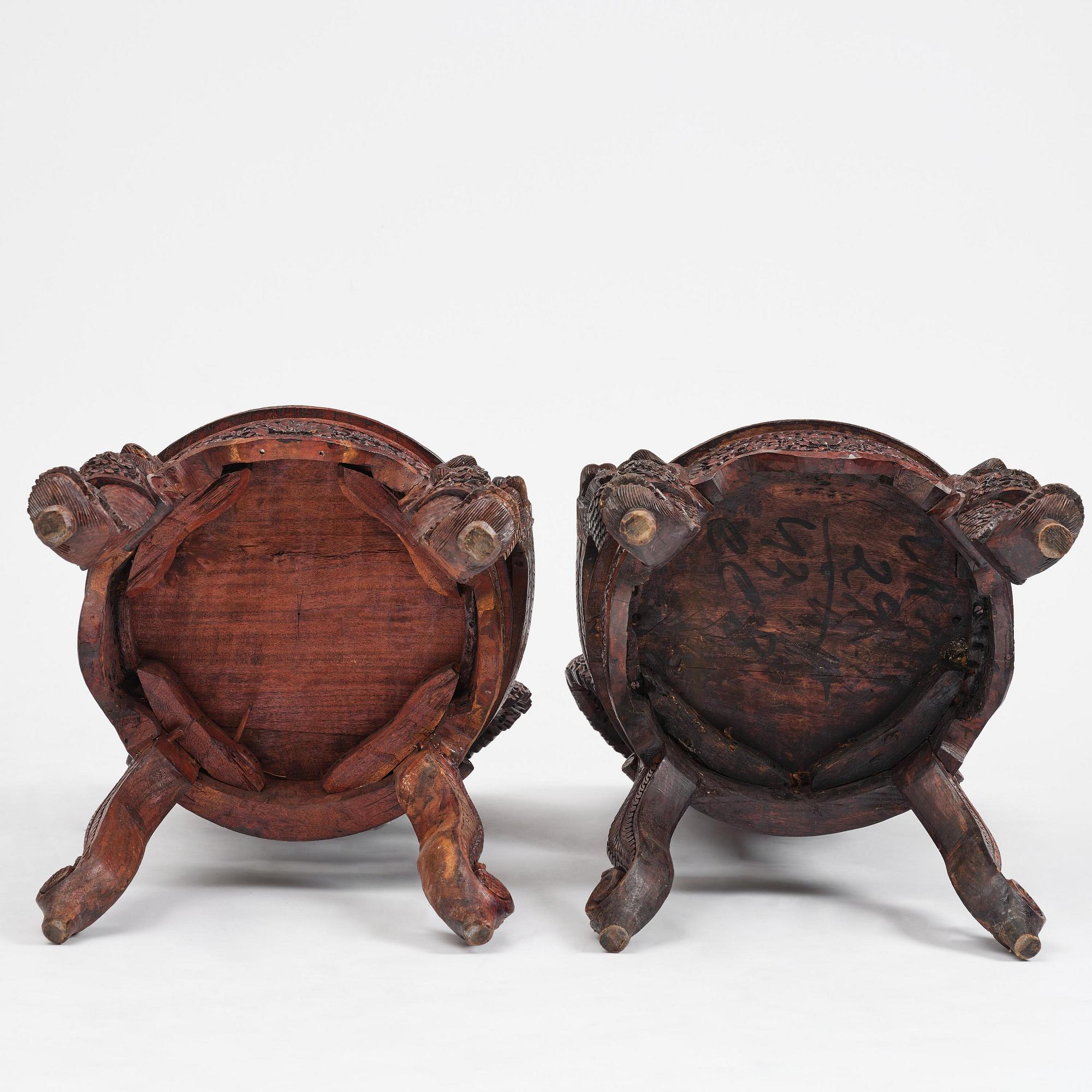
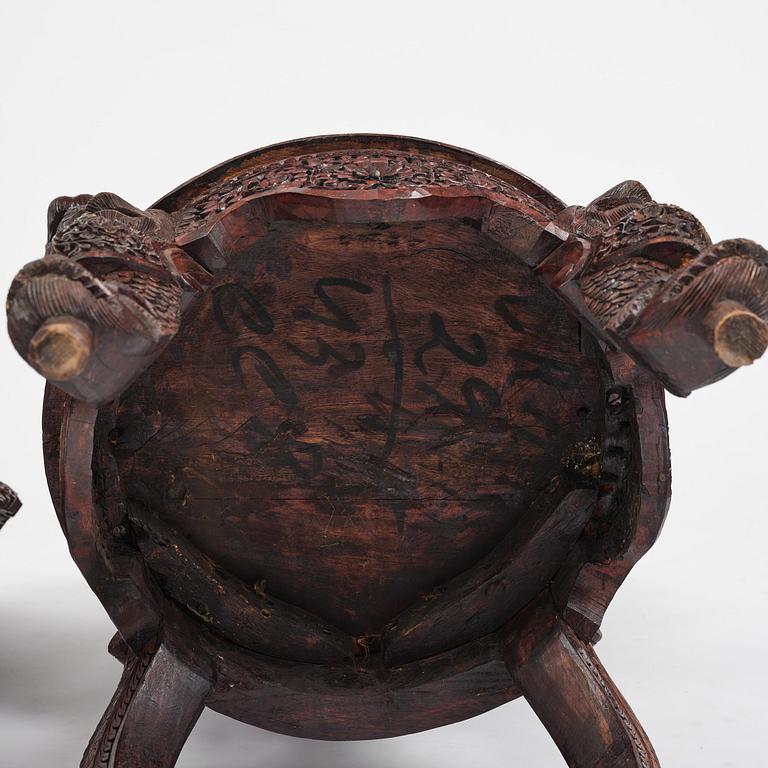
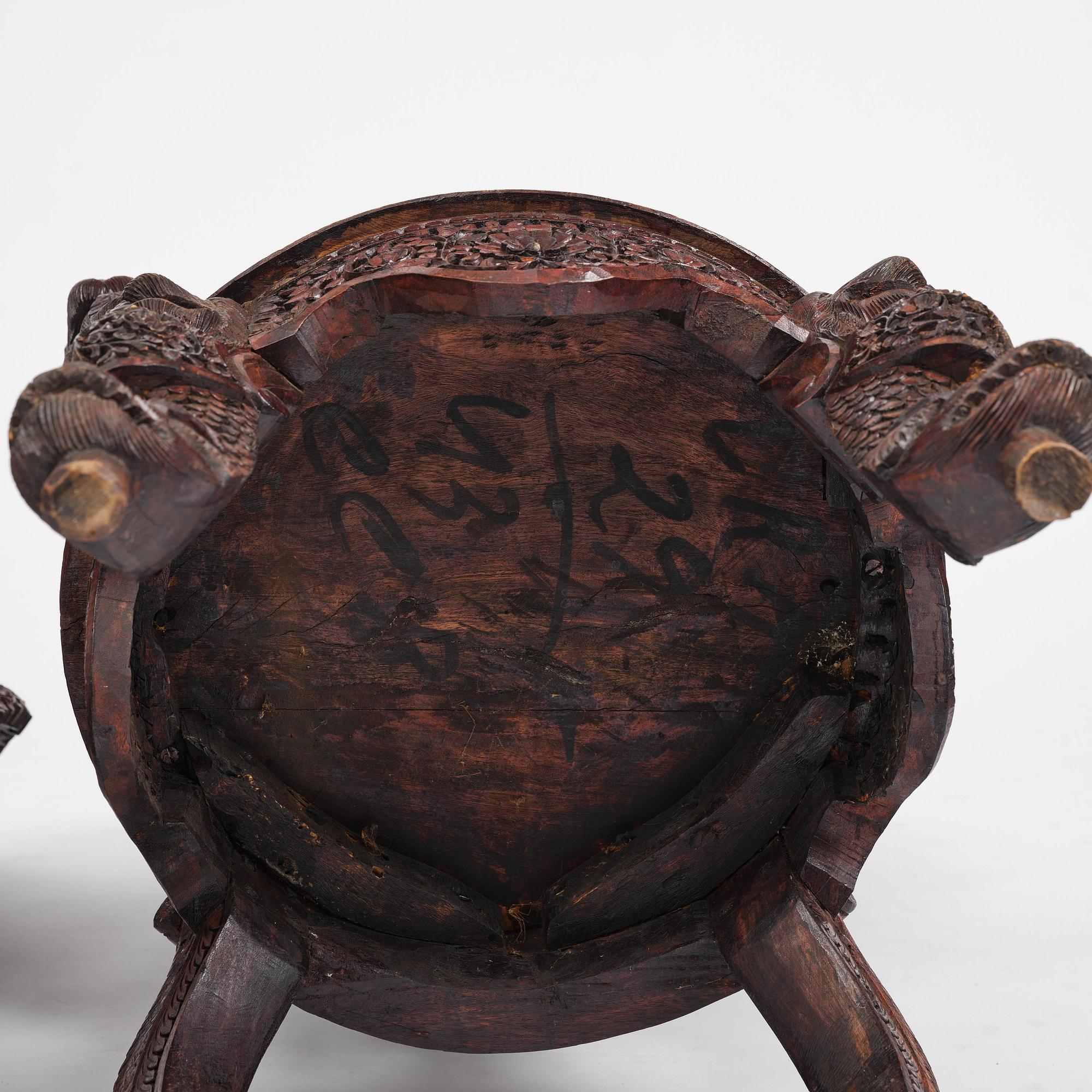
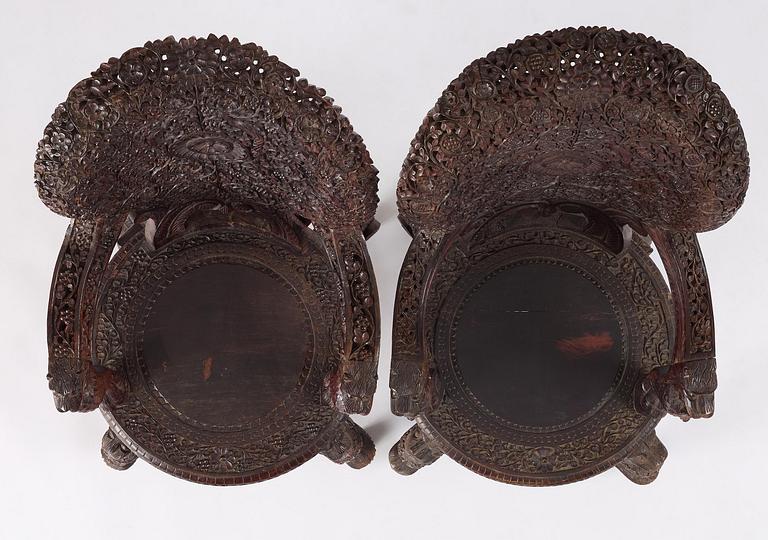
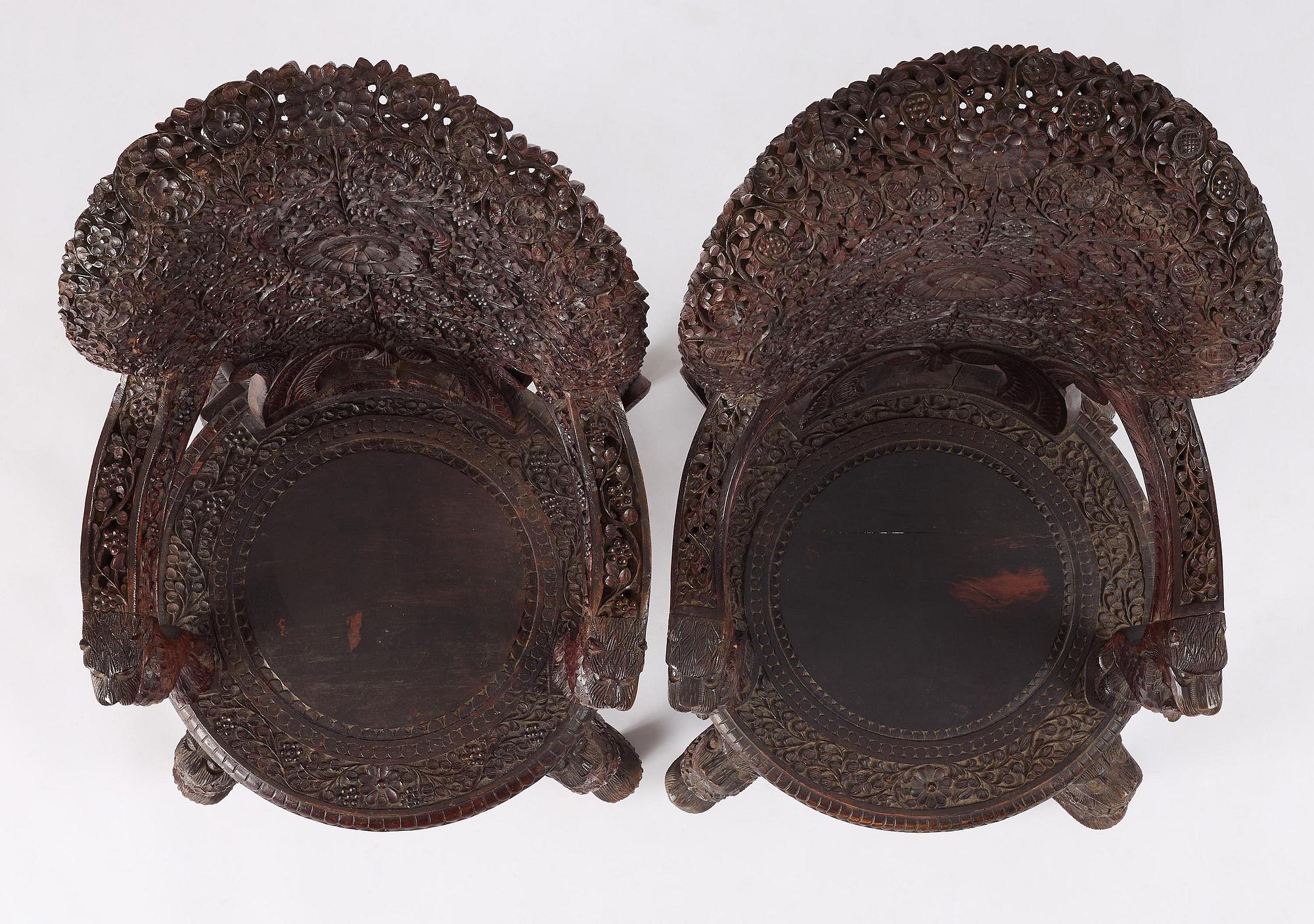
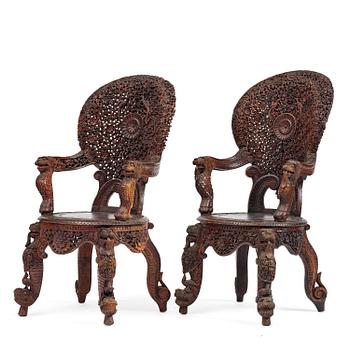
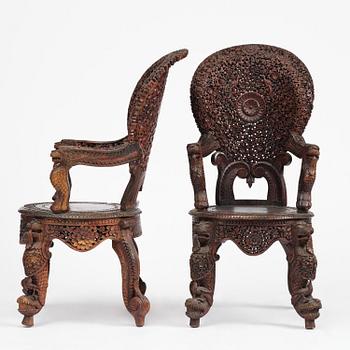
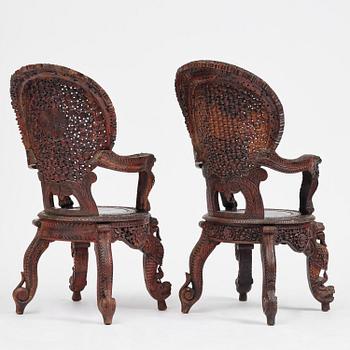
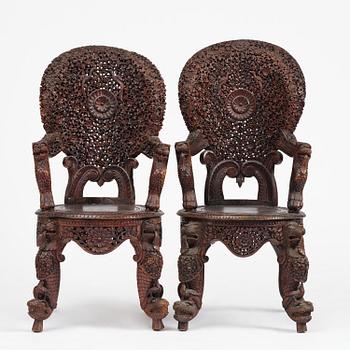
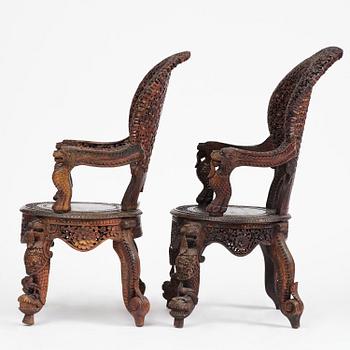
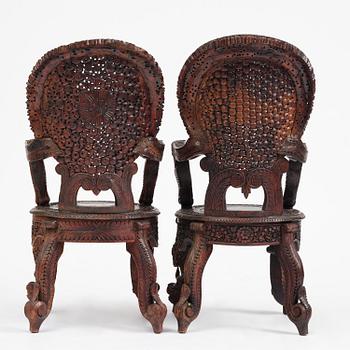
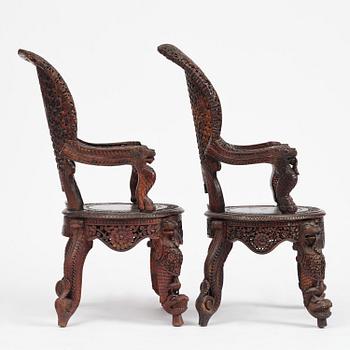
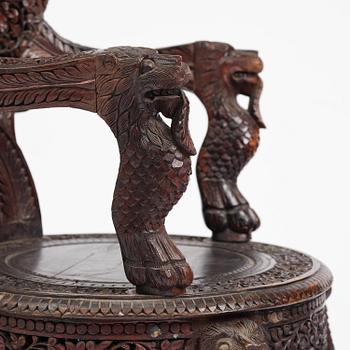
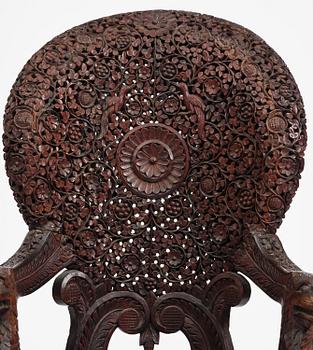
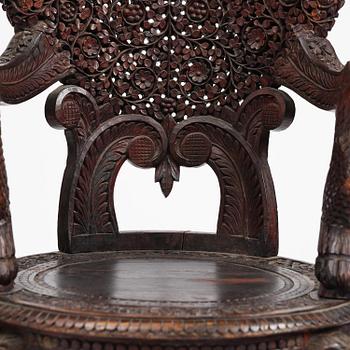
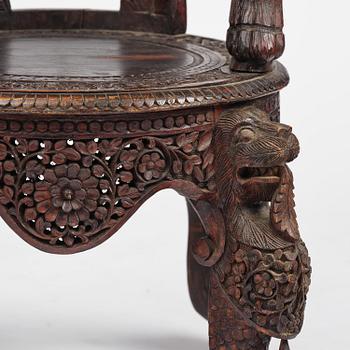
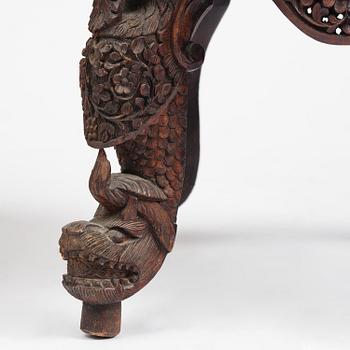
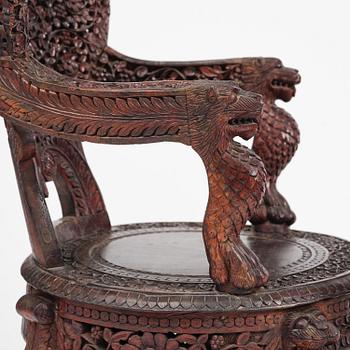
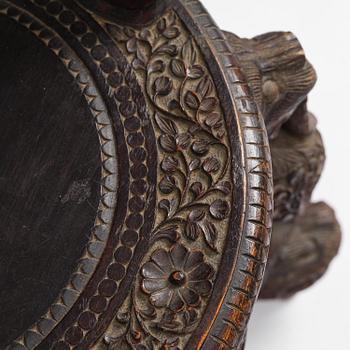
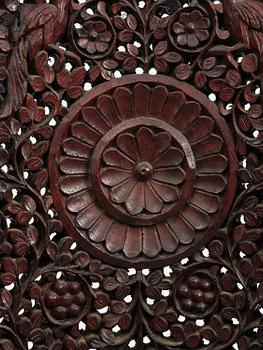
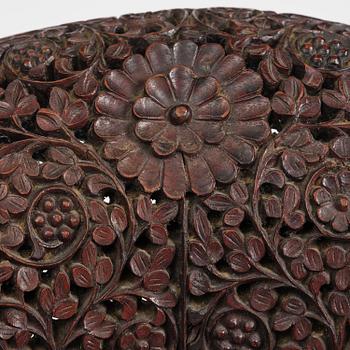
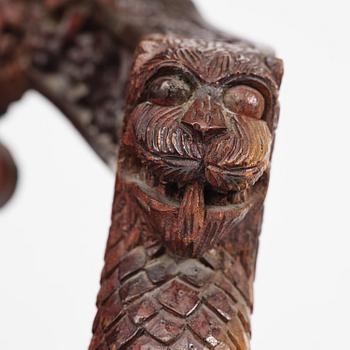
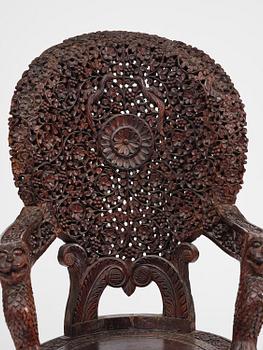
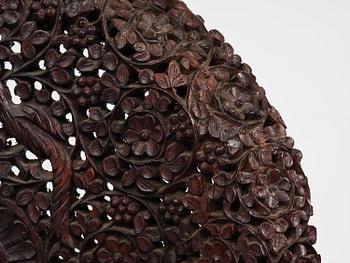
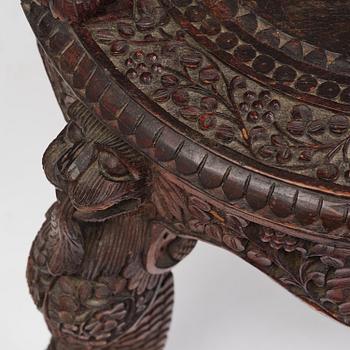
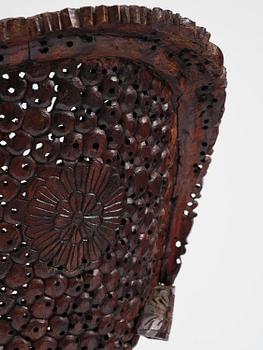
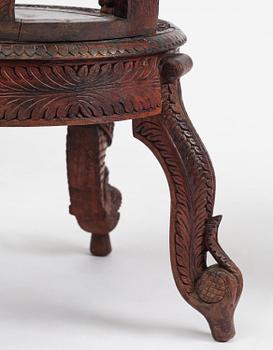
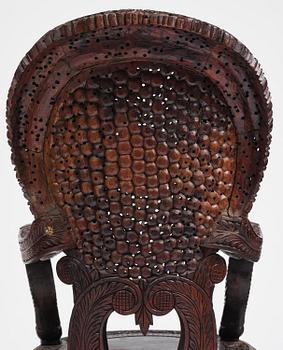
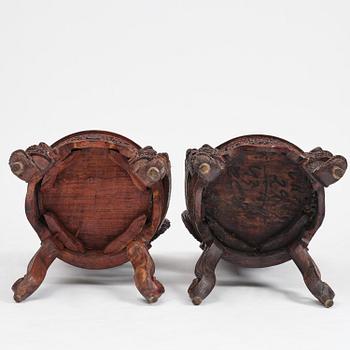
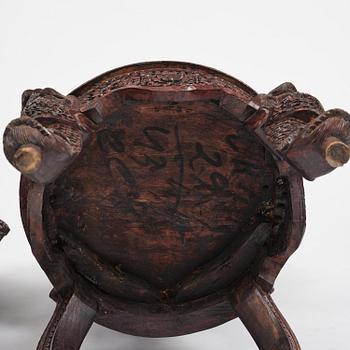
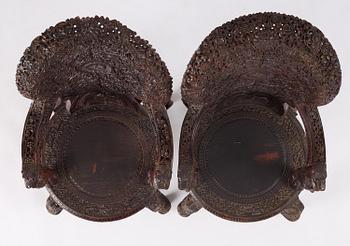
Richly carved and pierced backrest of foliage and flowers, circular seat with both armrests and legs in the form of stylised lions.
Muut tiedot
Blackwood furniture produced in the Bombay Presidency stands as a compelling testament to the fusion of Indian craftsmanship and Victorian taste in nineteenth-century colonial India. In the decades following the Indian Rebellion of 1857, workshops in Bombay and Gujarat expanded their output of elaborately carved cabinets, writing tables and library bookcases destined for the British market. Such works were admired at international exhibitions, notably the Great Exhibition of 1851 in London, where they were praised for their technical virtuosity and dense ornamental carving. Executed in dark, highly polished shisham, these furnishings combined Gothic Revival forms with intricate floral and zoomorphic motifs, appealing to colonial officials and merchants who regarded them as expressions of refinement and imperial reach. Today, surviving examples endure not merely as decorative objects but as material records of Britain’s global trade networks and the complex cultural exchanges of the imperial age.
Lisätietoja ja kuntoraportit

Tietoa ostamisesta
Muiden katsomia kohteita