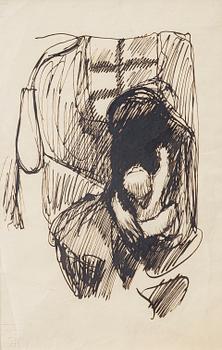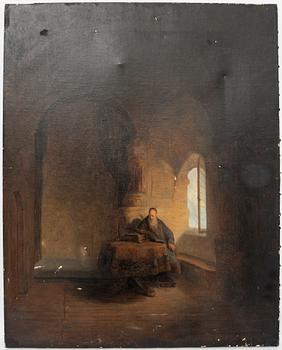
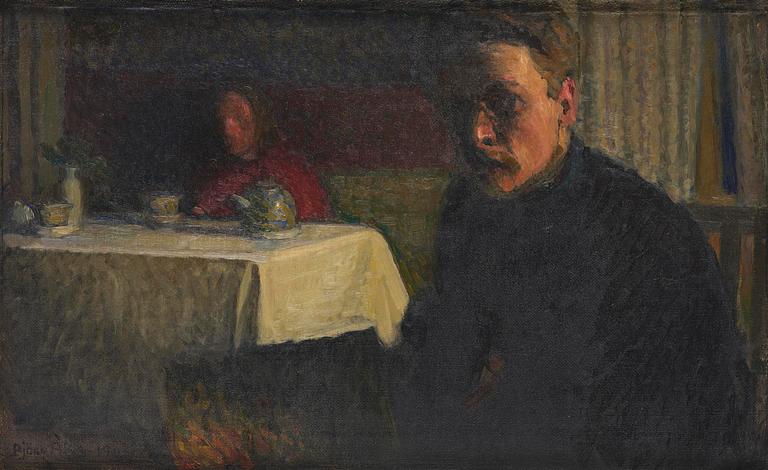
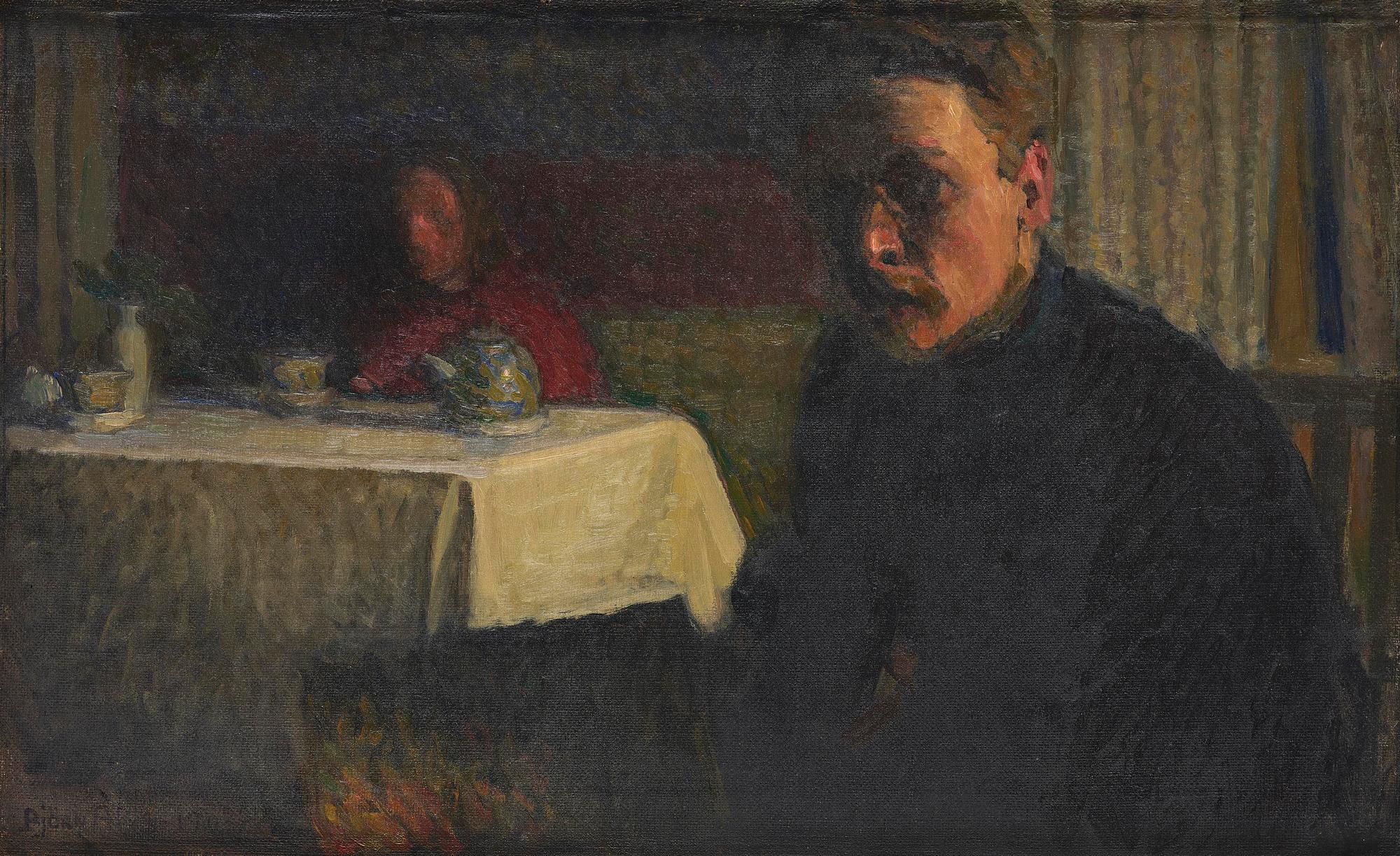
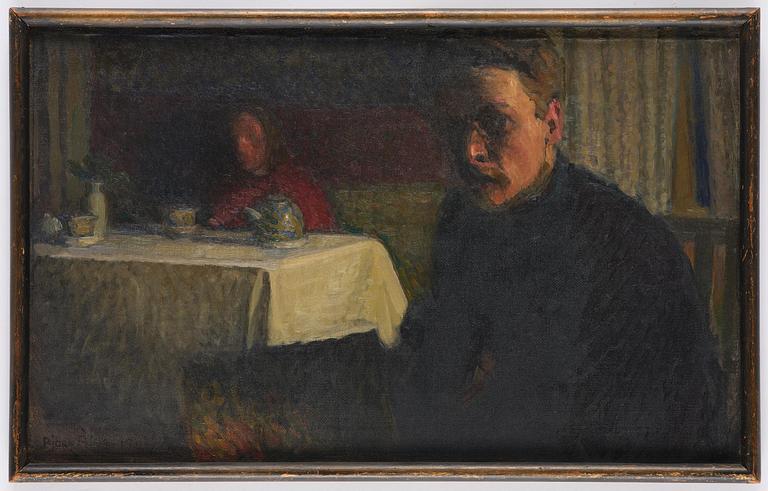
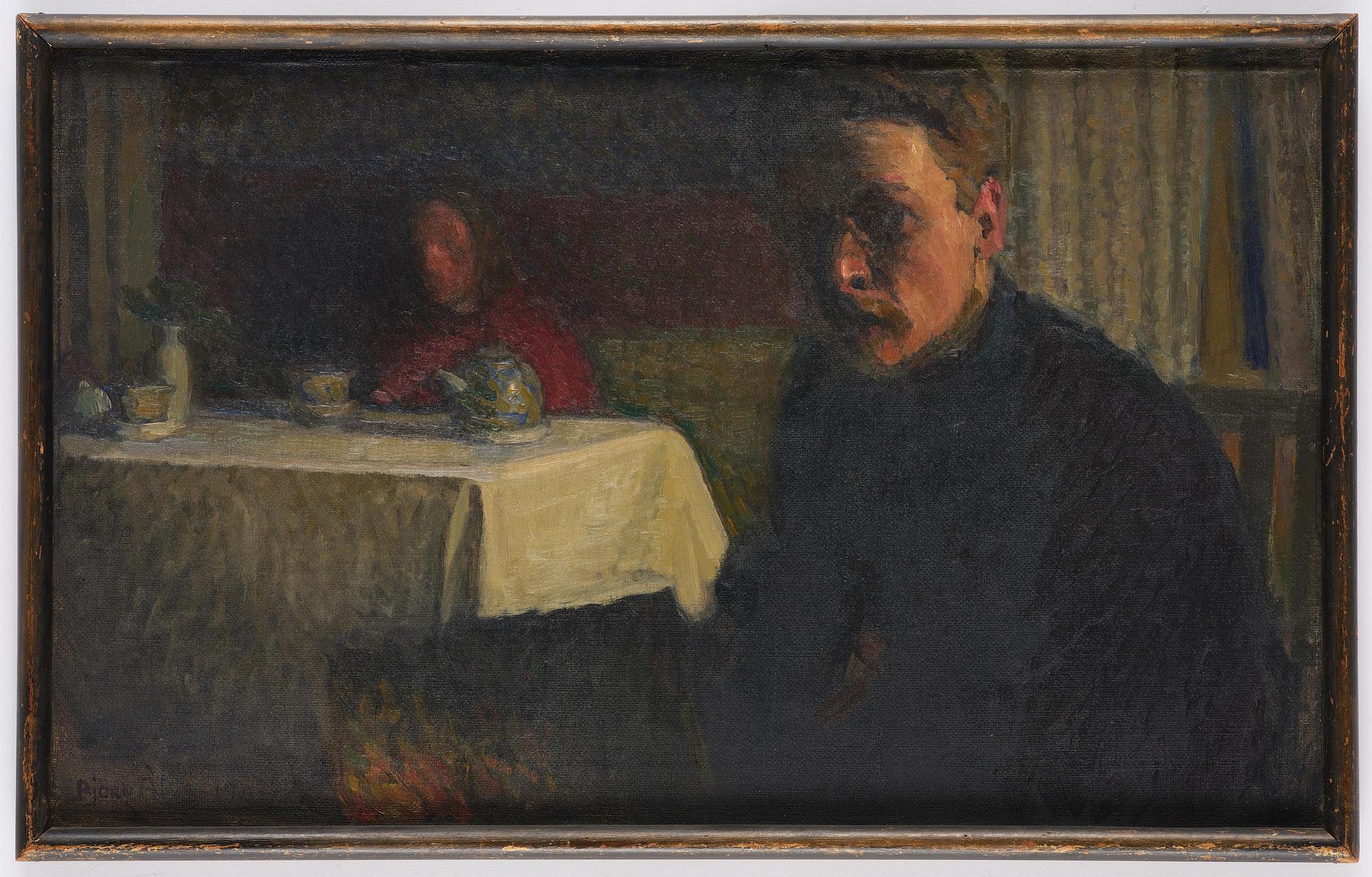
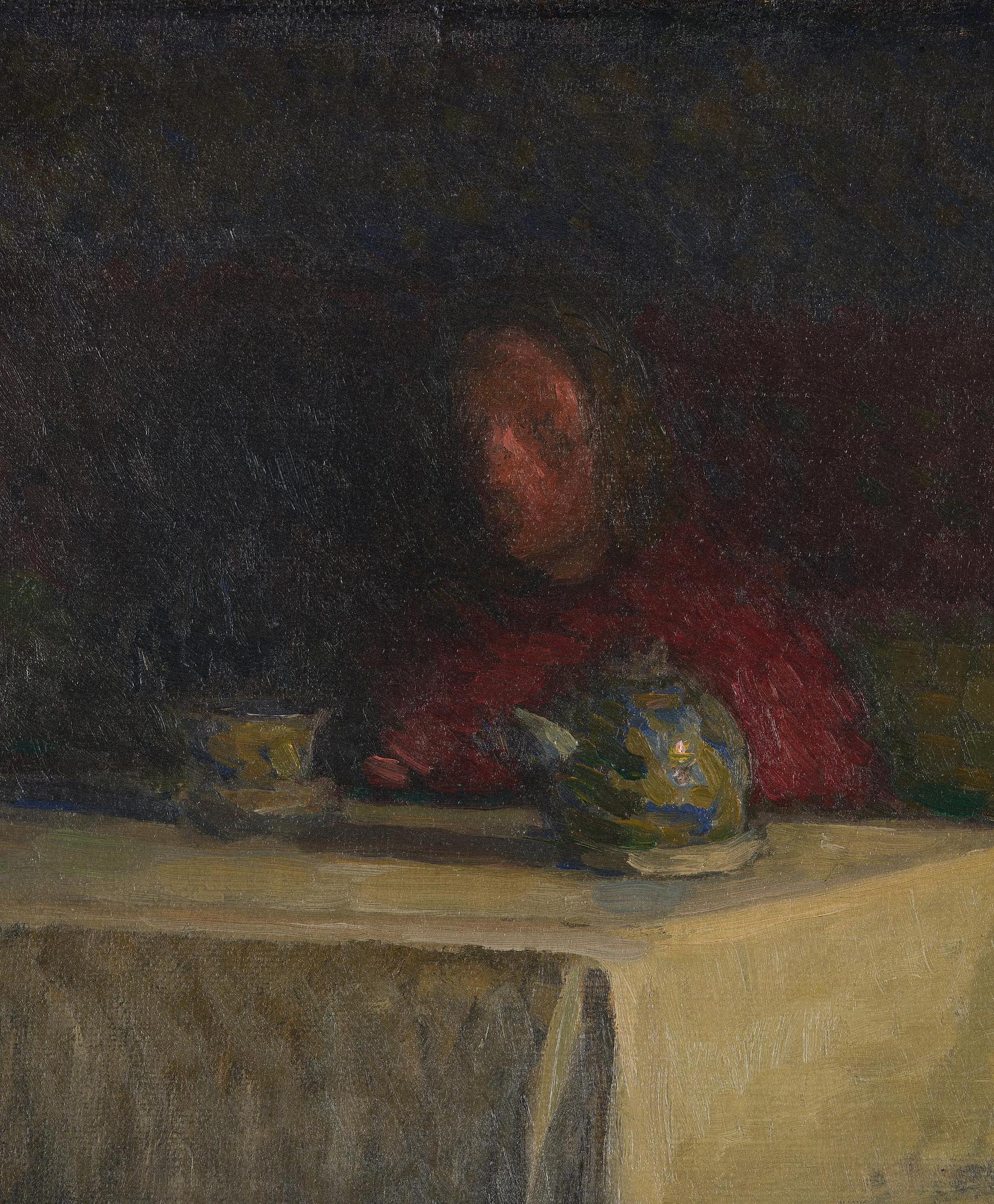
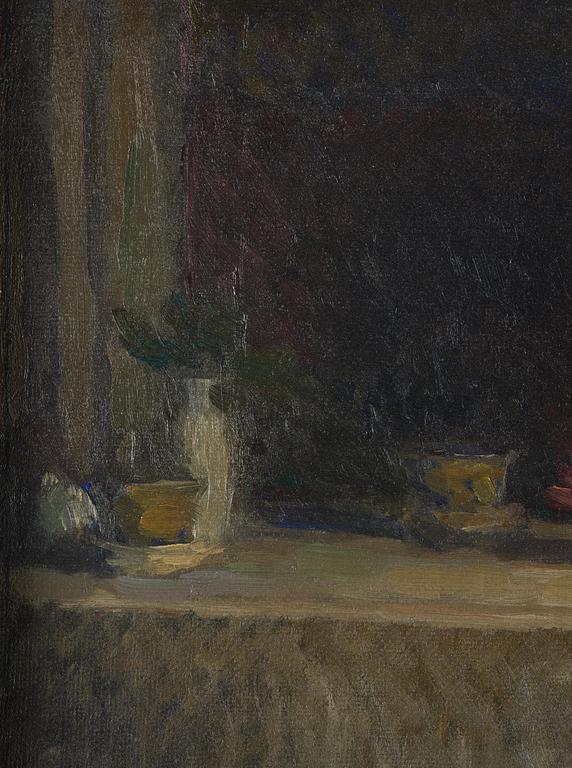
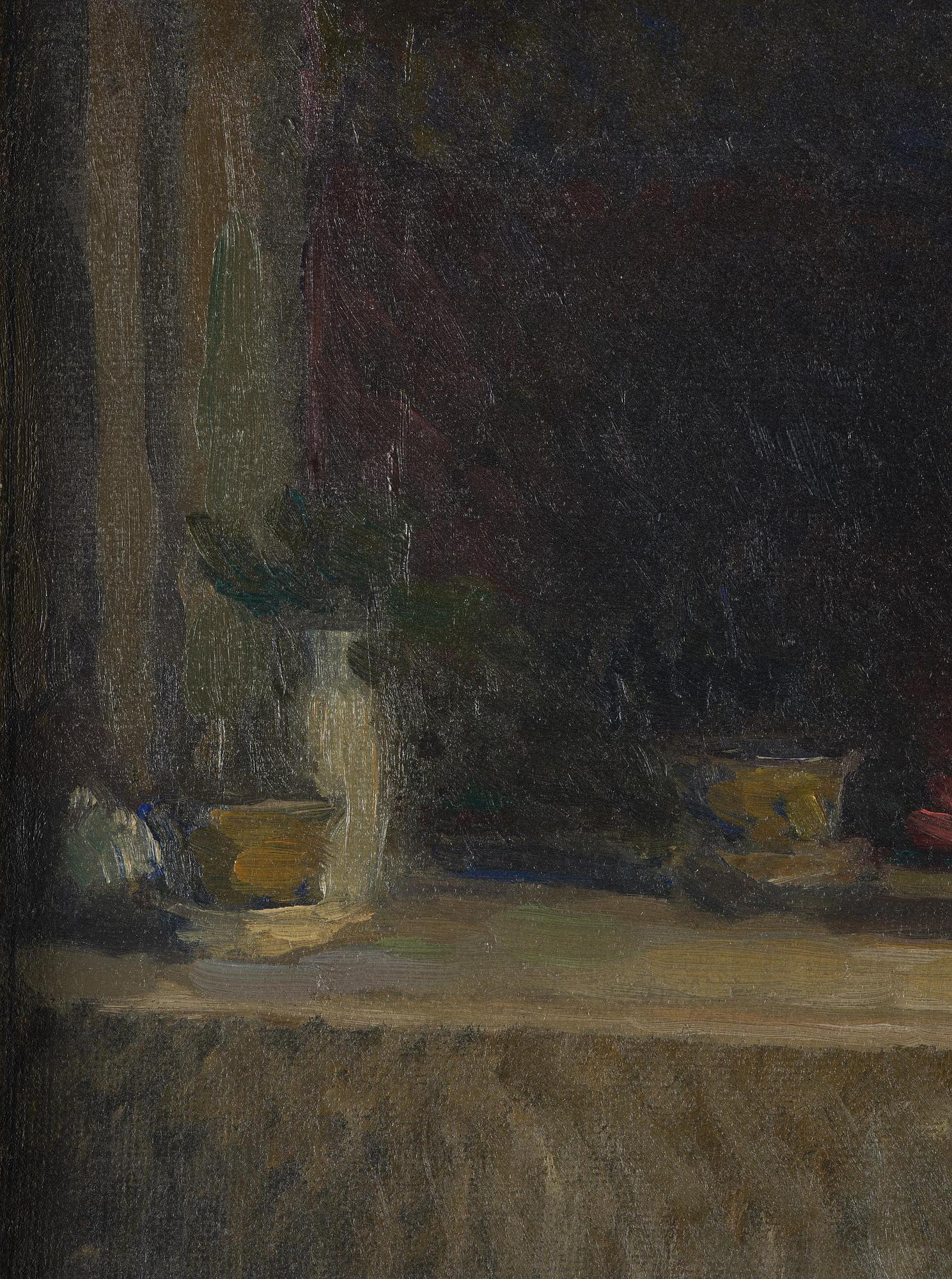
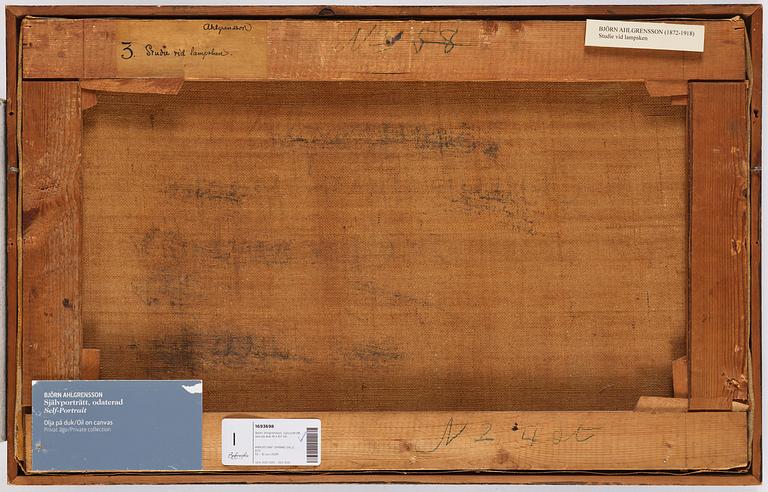
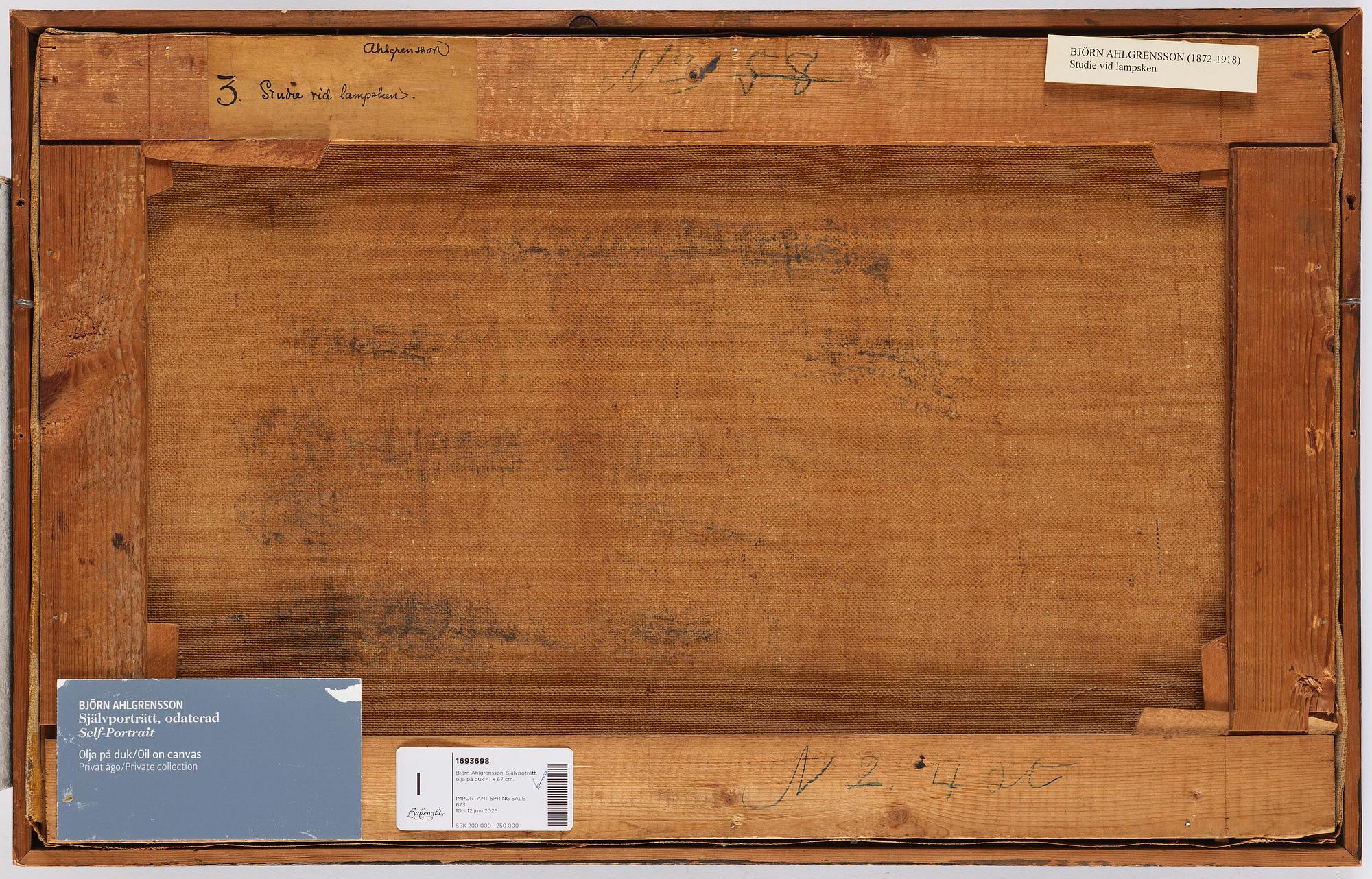
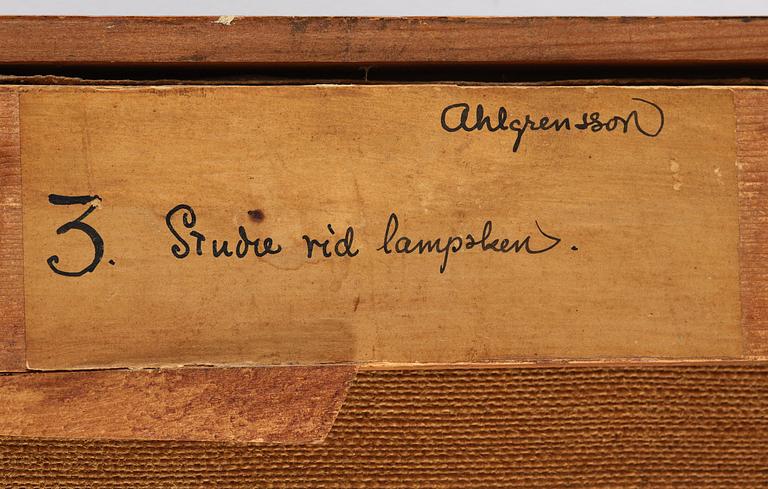
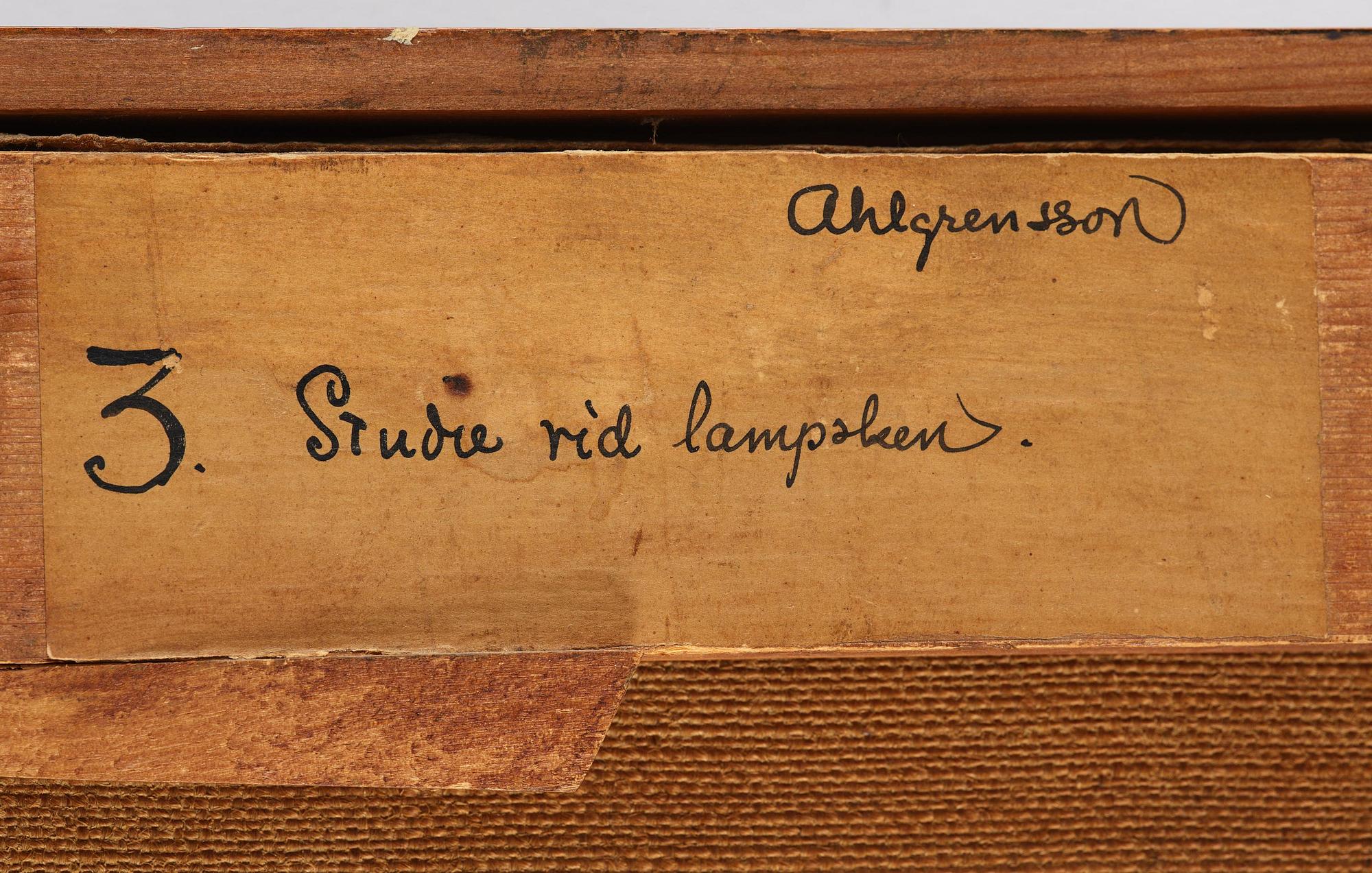
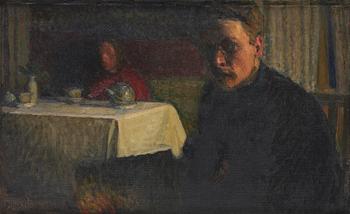
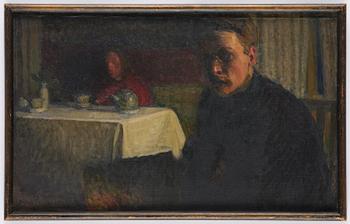
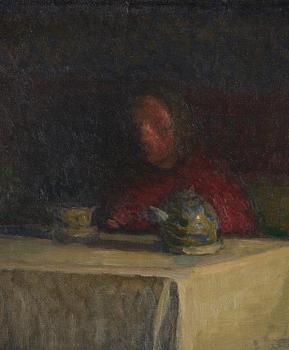
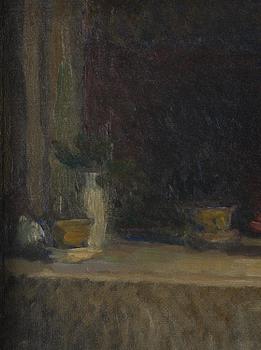
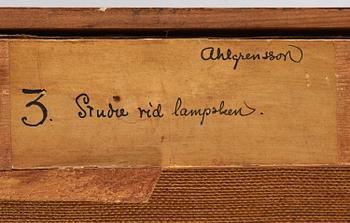
"Studie vid lampsken" ("Study by Lamplight"), Self-Portrait
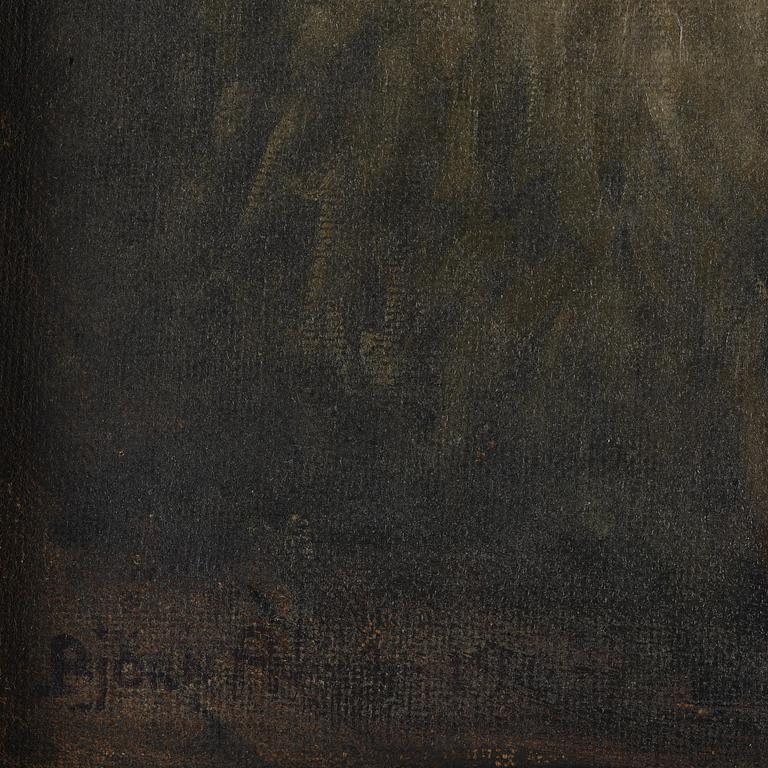
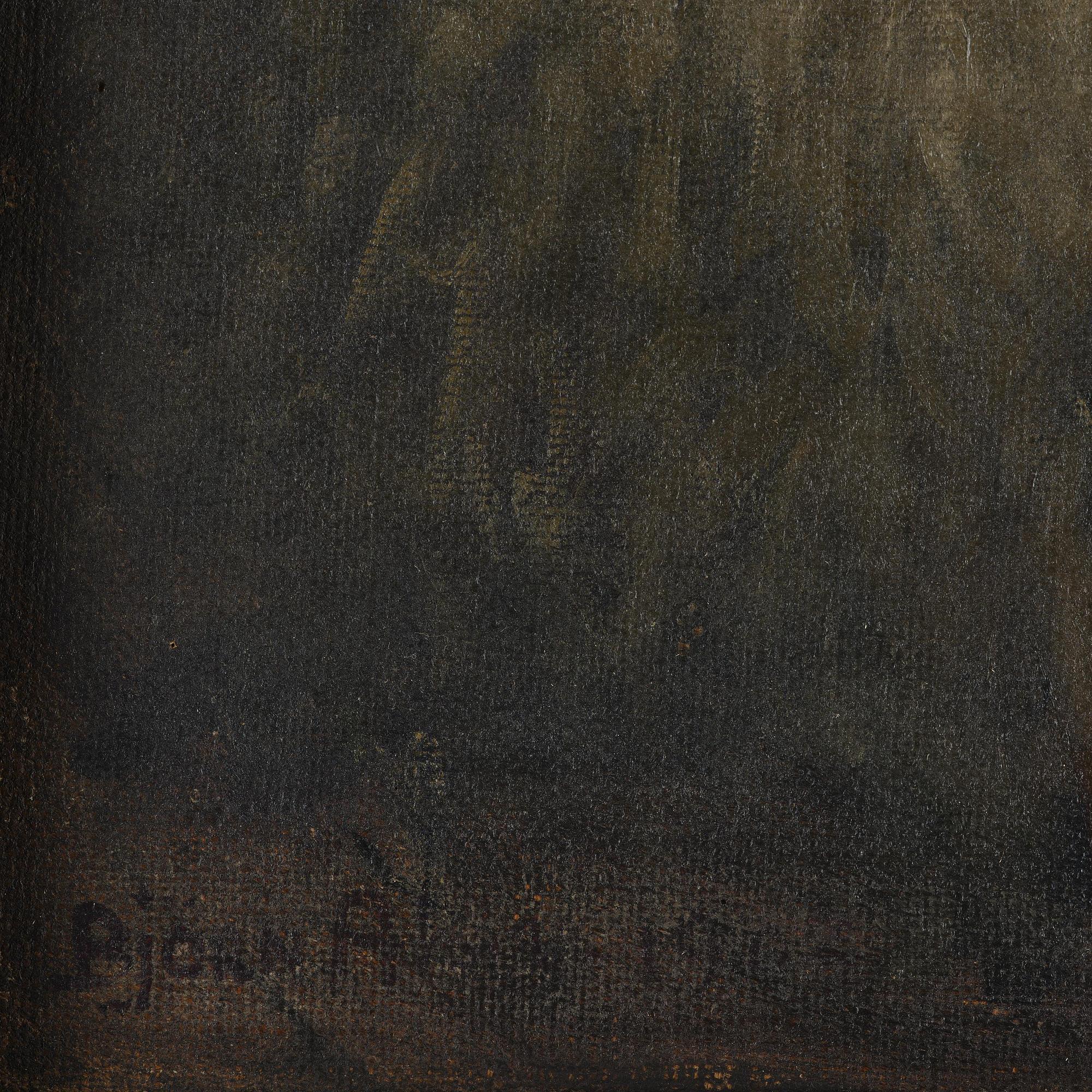
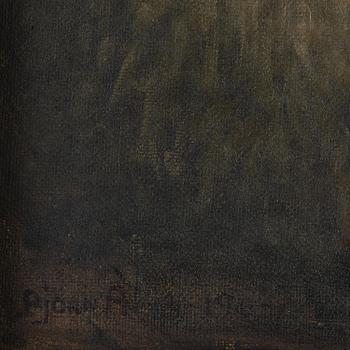
Signed Björn Ah-n and dated 1903. Oil on canvas 40 x 64.5 cm.
Näyttelyt
Prins Eugens Waldemarsudde, Stockholm, "Rackstadkolonin – Stämningsmåleri, konsthantverk & design", 6 September 2025 - 15 February 2026, cat. no 18.
Kirjallisuus
Karin Sidén, et.al., "Rackstadkolonin – Stämningsmåleri, konsthantverk & design", 2025, cat. no 18, p. 274, illustrated p. 95.
Muut tiedot
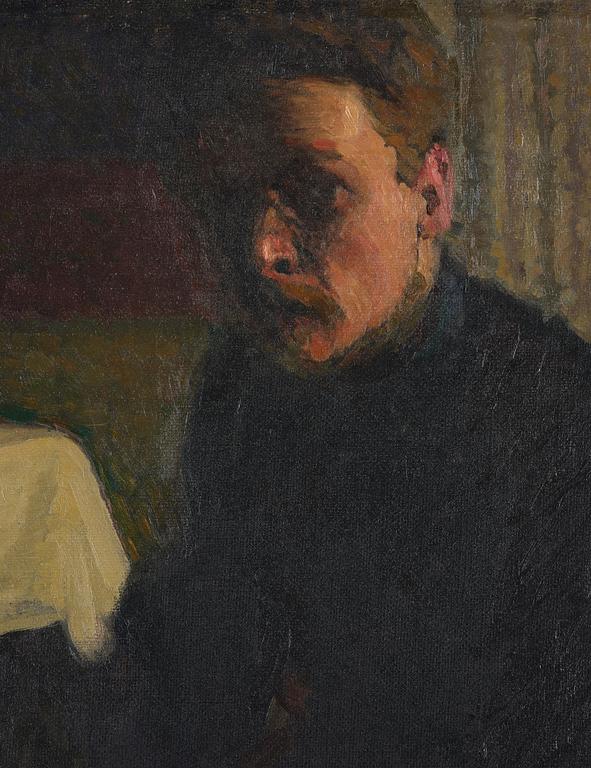
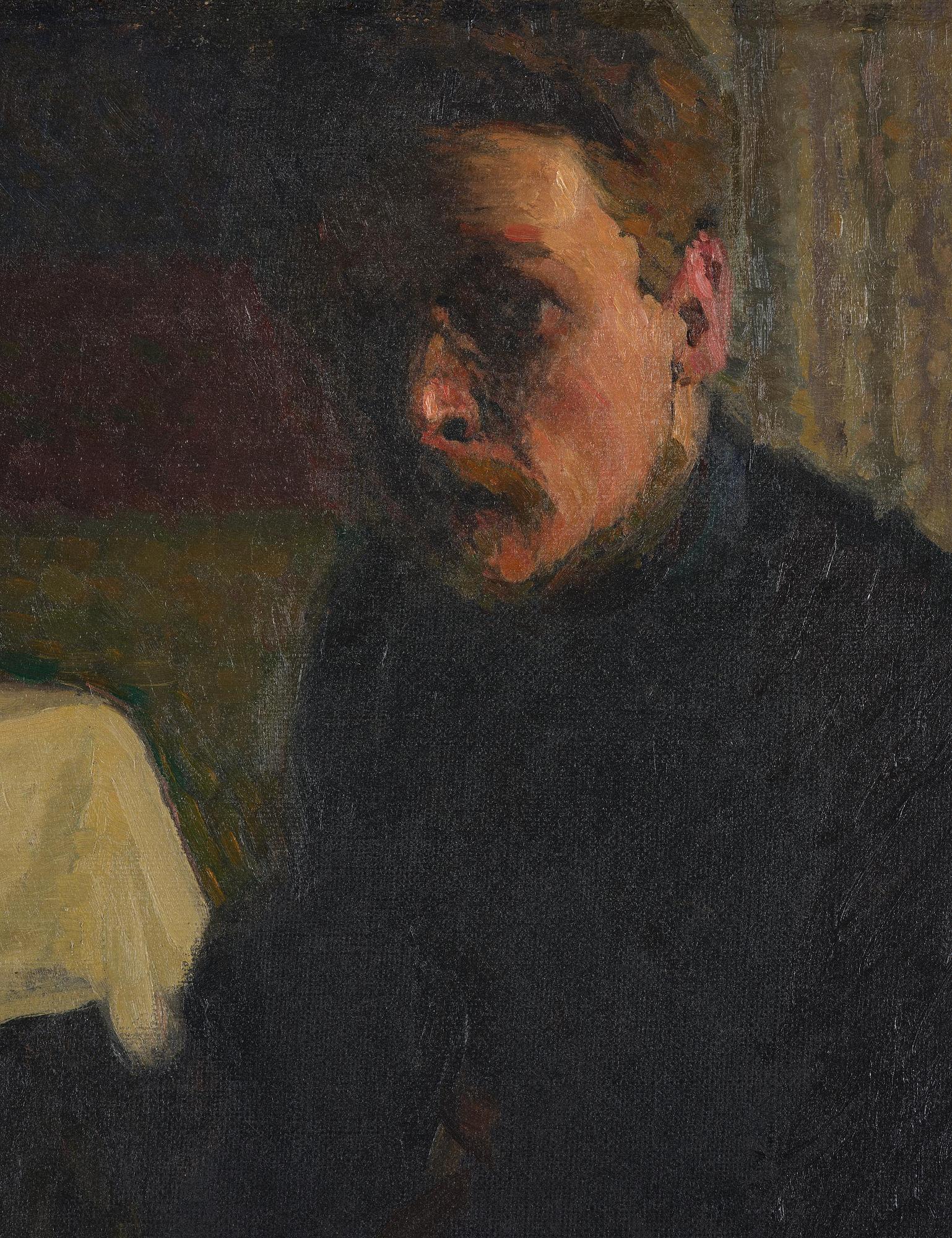
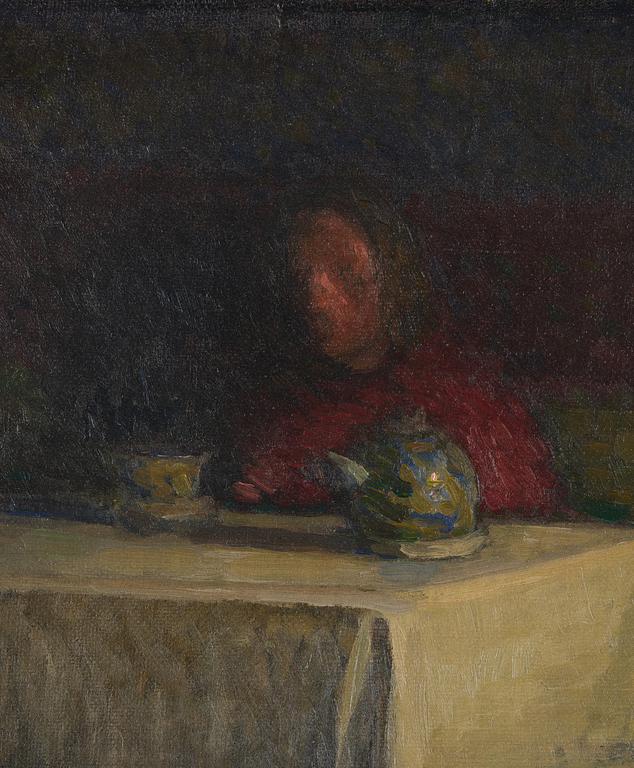
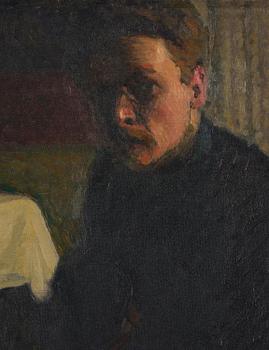
Björn Ahlgrensson created several self-portraits, including the auction's current "Studie vid lampsken" which depicts the artist and his wife in their home in Perserud by Lake Racken. Karin Sidén writes the following about the work in the exhibition catalogue "The Rackstad Colony – Mood Painting, Arts and Crafts & Design": "He portrayed [...] himself placed with a dark expression in an interior of his simple home, with his wife represented in the background as a shadowy figure in the subdued light of the room."
Three years prior, the artist and his wife were still living in Stockholm. One day, they encountered artist Gustaf Fjaestad on Drottninggatan, who is said to have urged them with these words: “Go at once! I have discovered the most wonderful place in the world. Outside Arvika by a lake called Racken. What is Italy compared to that!” This became a turning point for the newlywed couple, whose life situation at that time was fraught with difficulties.
Ahlgrensson had been living in Stockholm since 1890 when he returned to Sweden after spending much of his life in Paris. Through his father, who was himself a recognised decorative painter, Björn secured an apprenticeship in Carl Grabow's workshop. Here he met another apprentice, Fritz Lindström, who would become a close friend and colleague.
Both Ahlgrensson and Lindström then managed to get in touch with the Artists' Association and were accepted as students in its school. Ahlgrensson painted diligently into the night and was constantly engaged in colour experiments. The Artists' Association saw promise in him and offered him a scholarship to go on a study trip to Paris. The trip was not long, but he had time to get to know the artists Ivan Aguéli and Olof Sager-Nelson, who introduced him to synthetism. When he returned to Stockholm, influenced primarily by Karl Nordström, he began to explore Nordic nature mysticism, and his colour palette became darker and more muted. He gained attention from critics and was elected to the Artists' Association, but at the same time, his financial situation was serious.
In 1900, Ahlgrensson married Fritz Lindström's sister Elsa, and their early time together was marked by poverty and a lack of prospects. They did not even have a stable home at that time. It was at this stage that the newlywed couple encountered Gustaf Fjaestad on Drottninggatan. He had settled by Lake Racken outside Arvika in Värmland two years earlier with his wife Maja, and when he now heard about the newlywed couple's difficulties, he offered them to move into the sculptor Christian Eriksson's studio residence, Oppstuhage.
Björn and Elsa took Fjaestad's offer and moved into the studio residence. Once there, Björn began to explore the Värmland landscape with a symbolic and atmospheric visual language. Soon they moved out of the studio residence and instead relocated to Perserud, where he would paint some of his most famous works during the first decade of the 20th century.
Lisätietoja ja kuntoraportit
Tietoa ostamisesta
Muiden katsomia kohteita