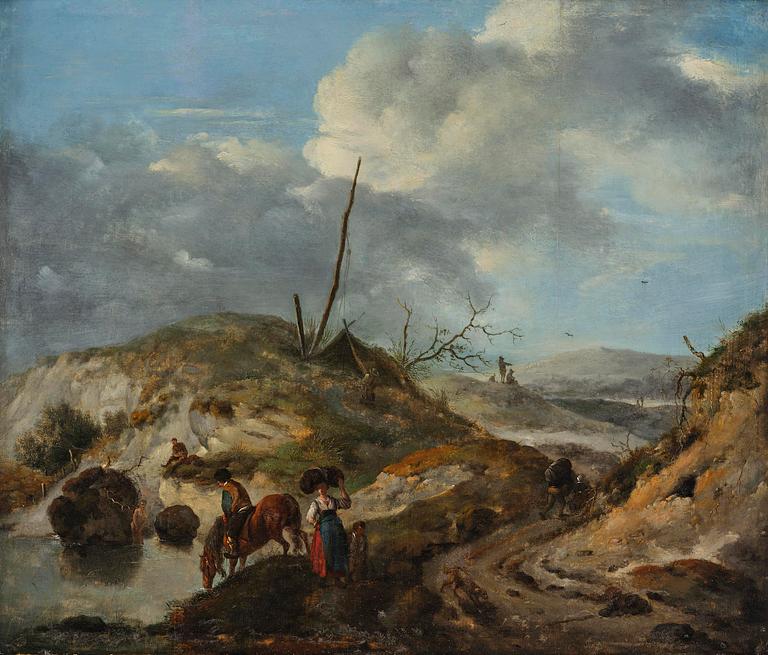
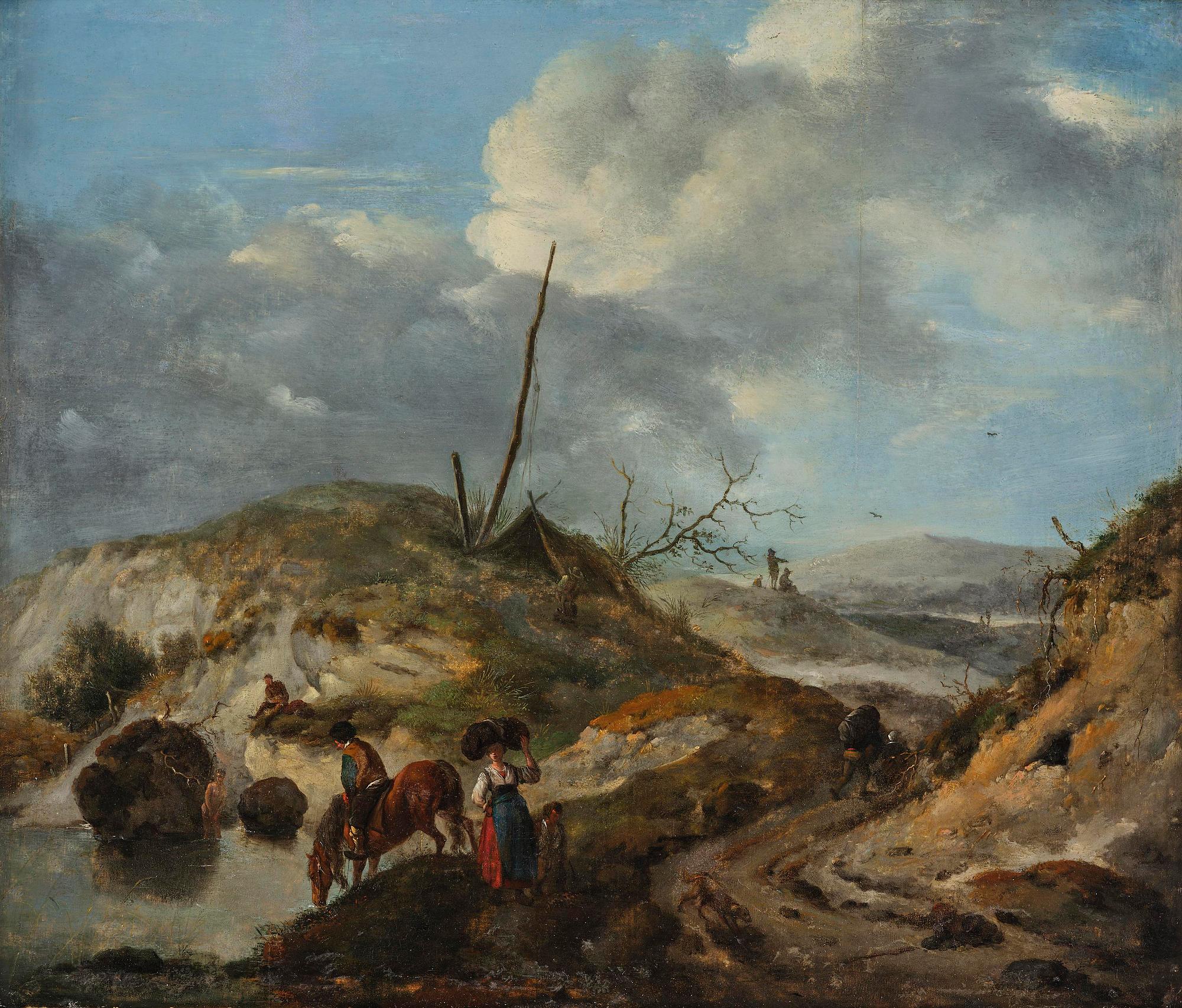
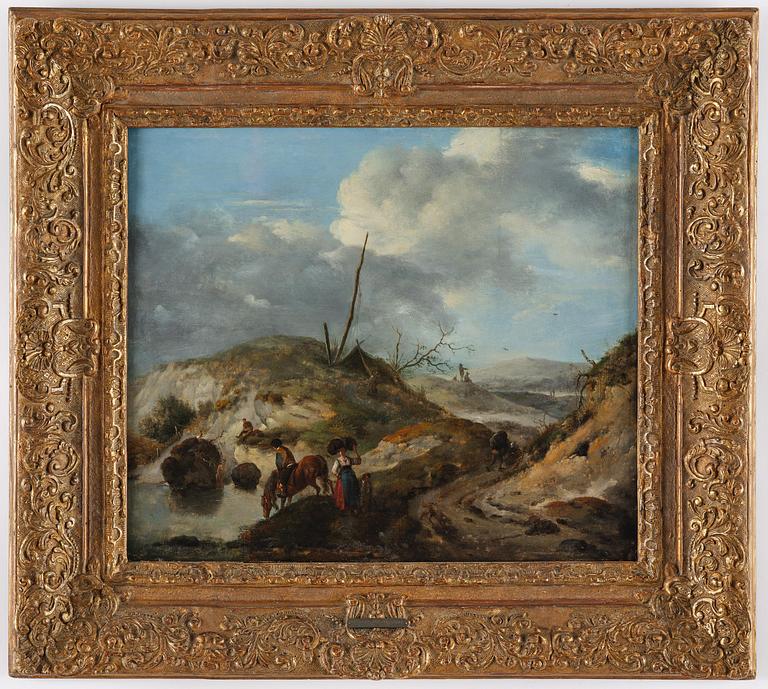
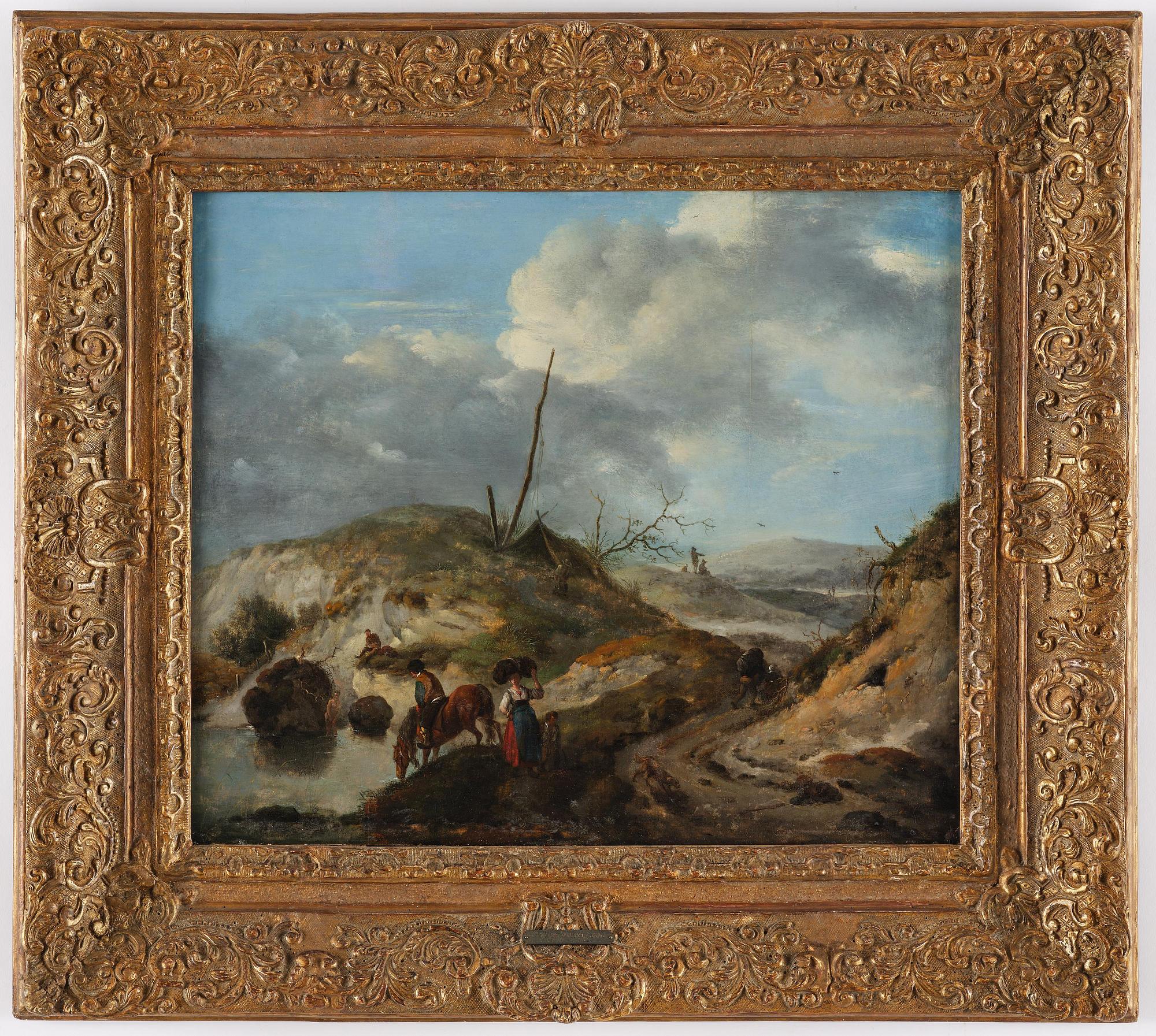
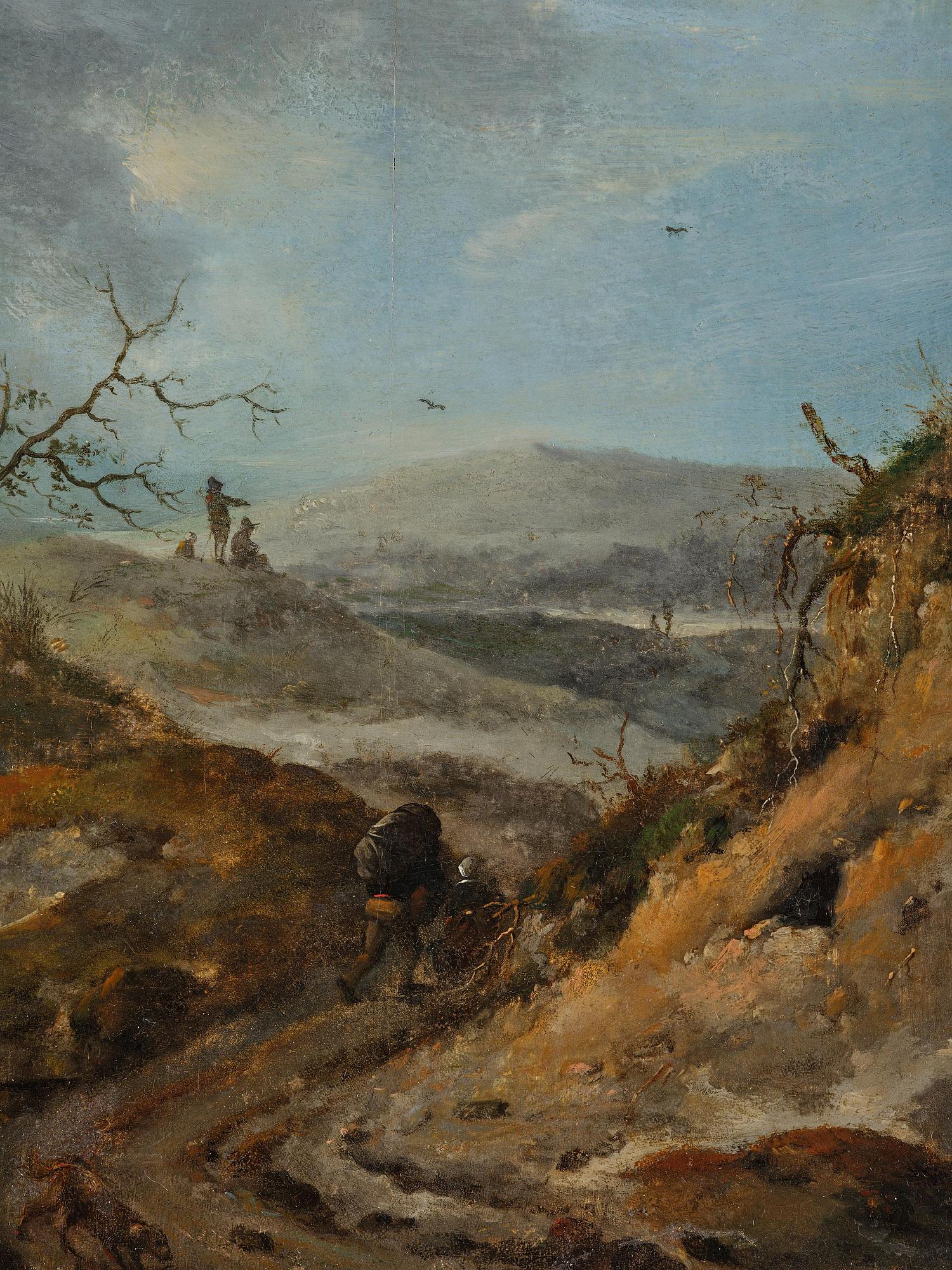
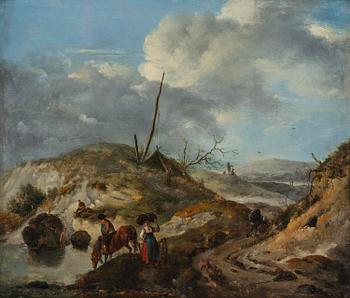
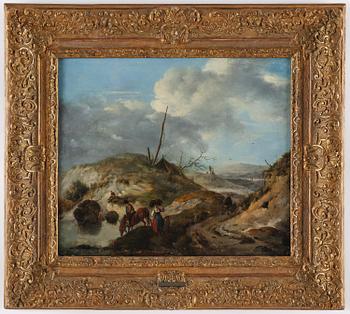
Dune landscape with figures
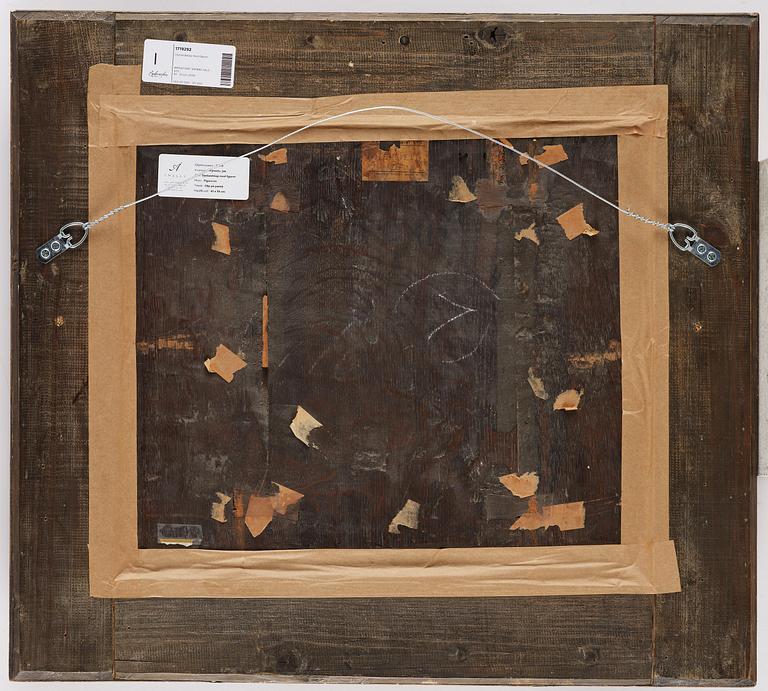
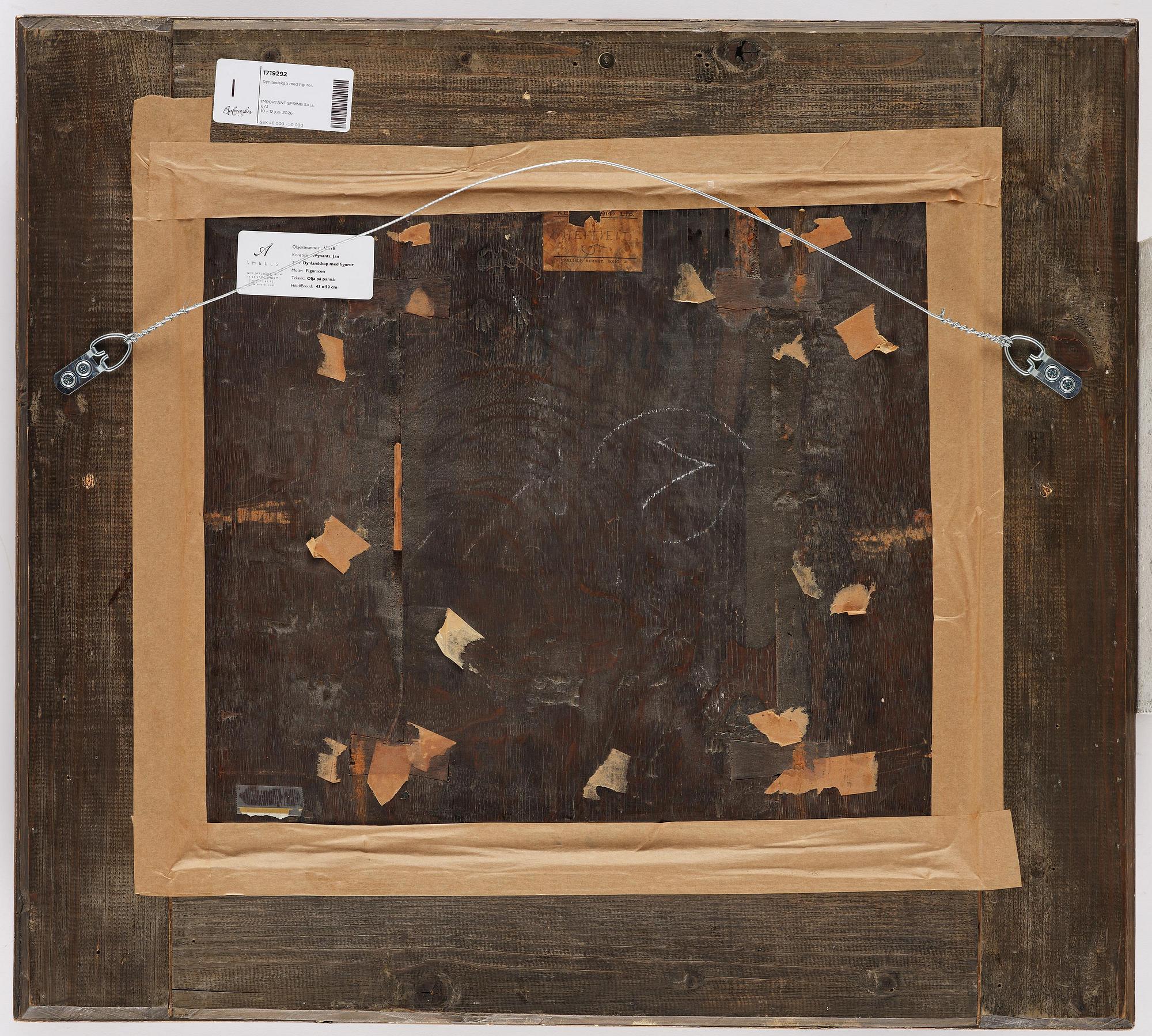
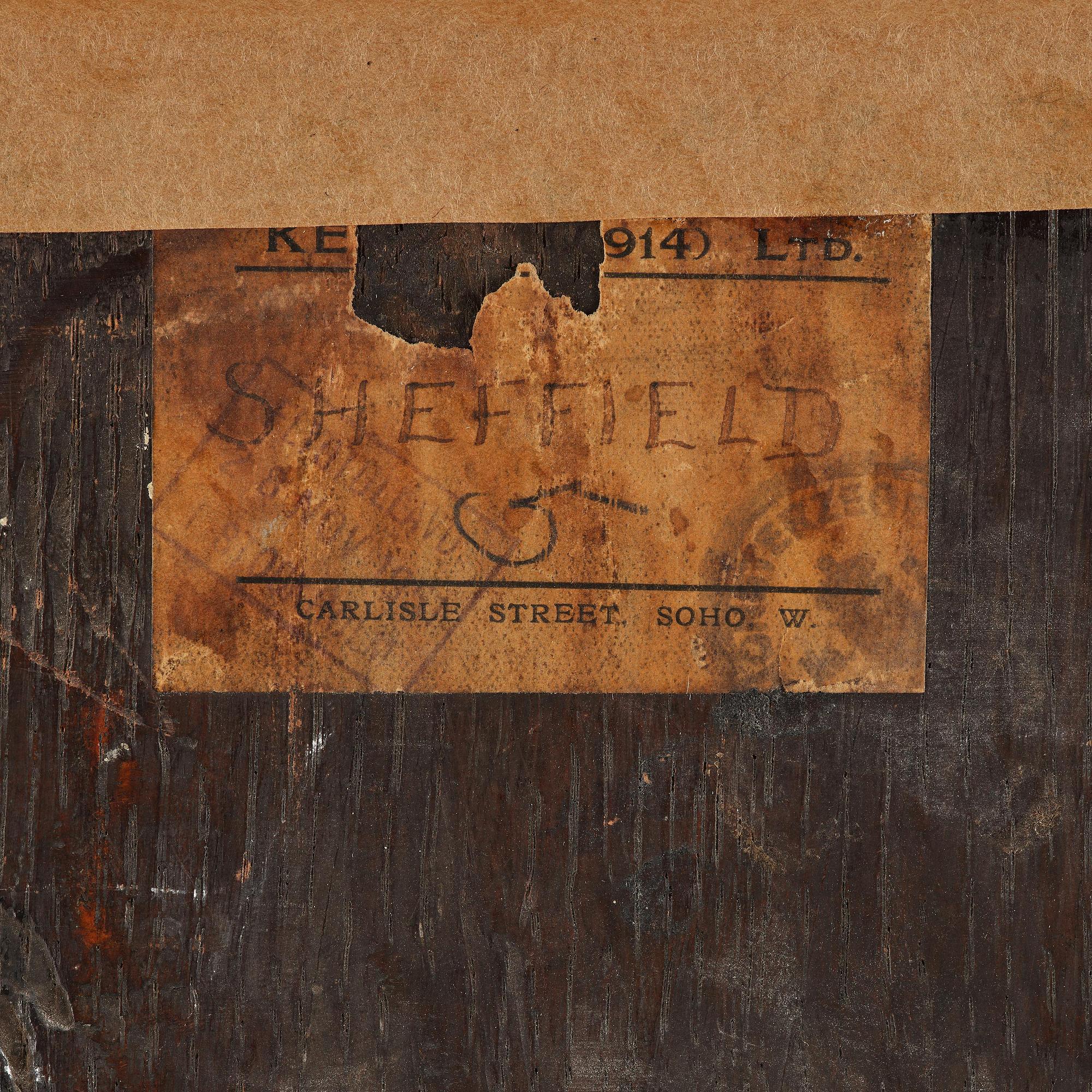
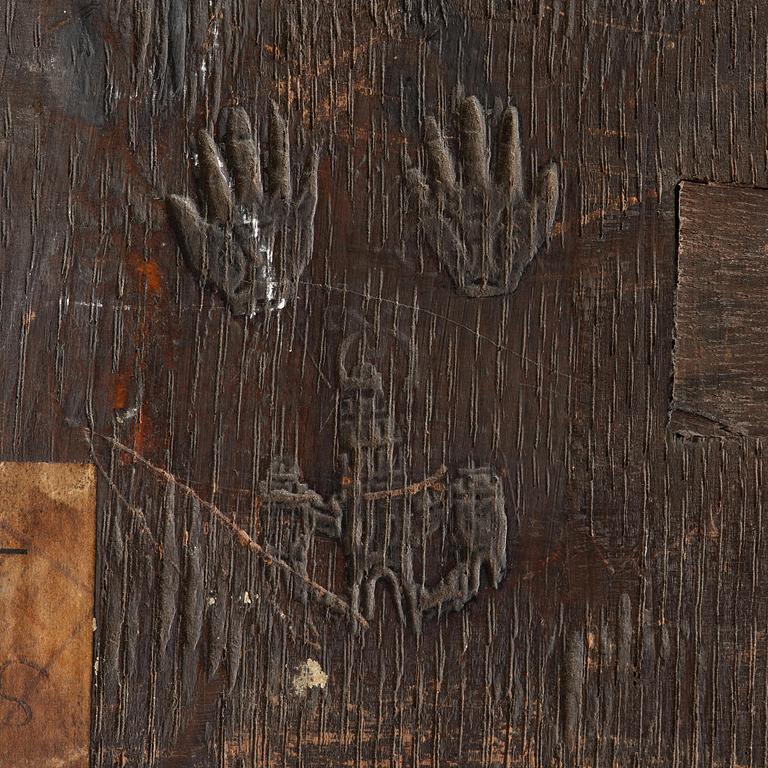
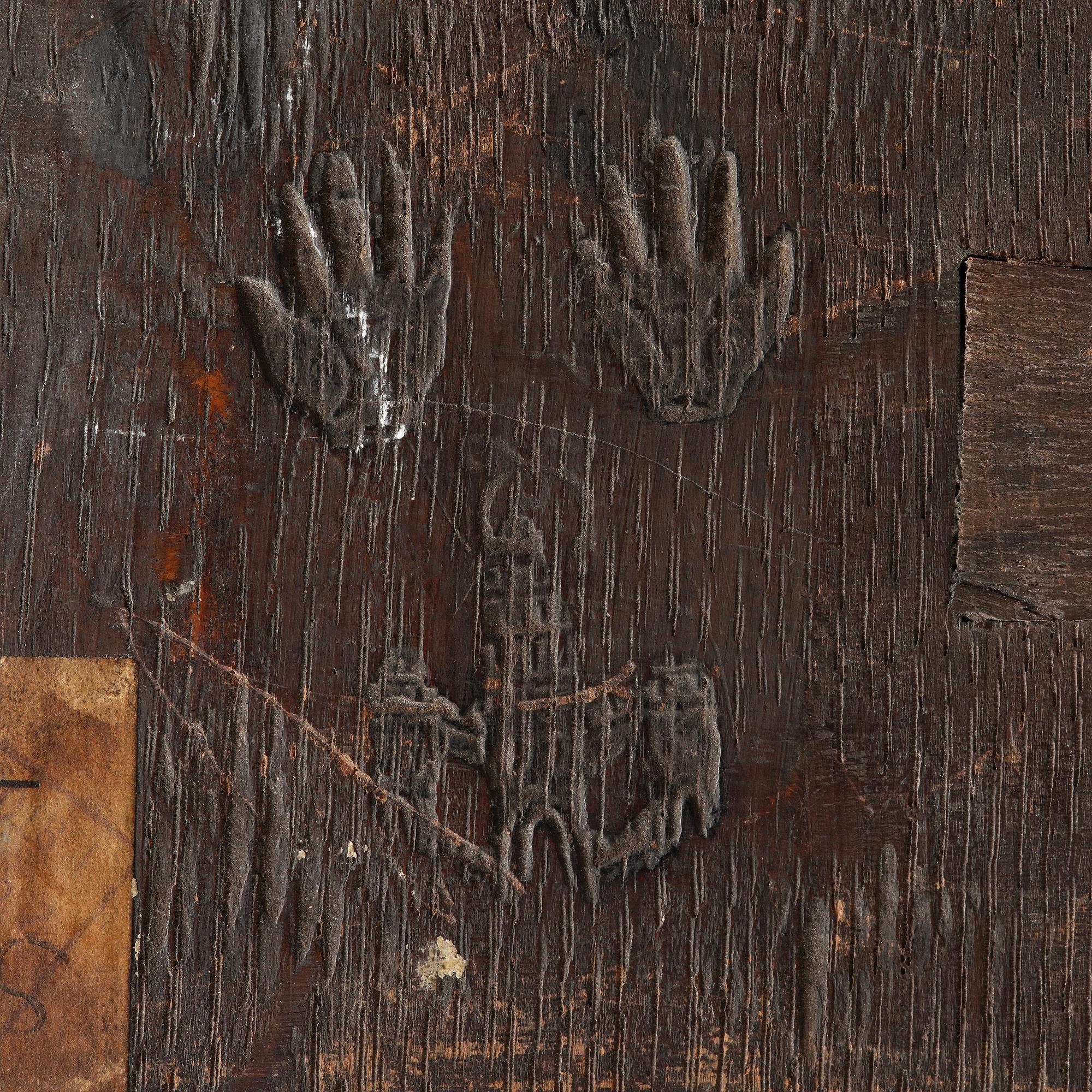
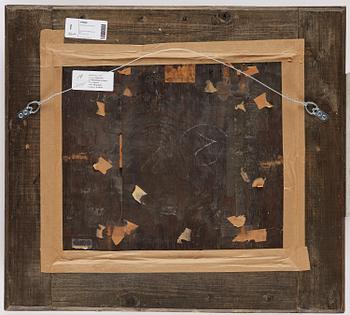
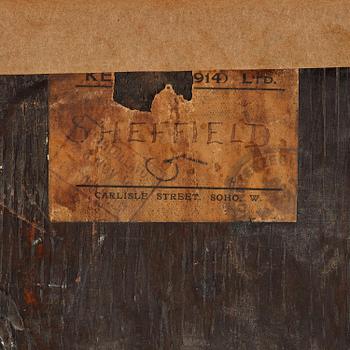
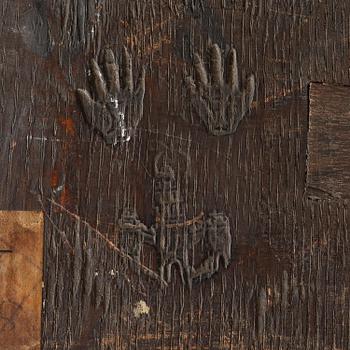
Oil on panel 43 x 50 cm. Oak panel branded with the coat of arms with the hands of the City of Antwerp on the reverse.
Muut tiedot
Jan Janz Wynants (alt Wijnants) is best known for his Italianate landscapes and paintings with
topographical motifs. He was born in Haarlem, the son of a Catholic art dealer. After his
mother's death, his father remarried Maria Jans van Stralen, widow of Jasper Jaspersz van
Heemskerck, and mother of the painter Egbert Jaspersz van Heemskerck, making Wijnants and
Van Heemskerck stepbrothers. Wynants worked in Haarlem until 1660 and then moved to
Amsterdam. He was the teacher of Willem Schellinks (1623–1678) and Nicolaes de Vree (1645–
1702).
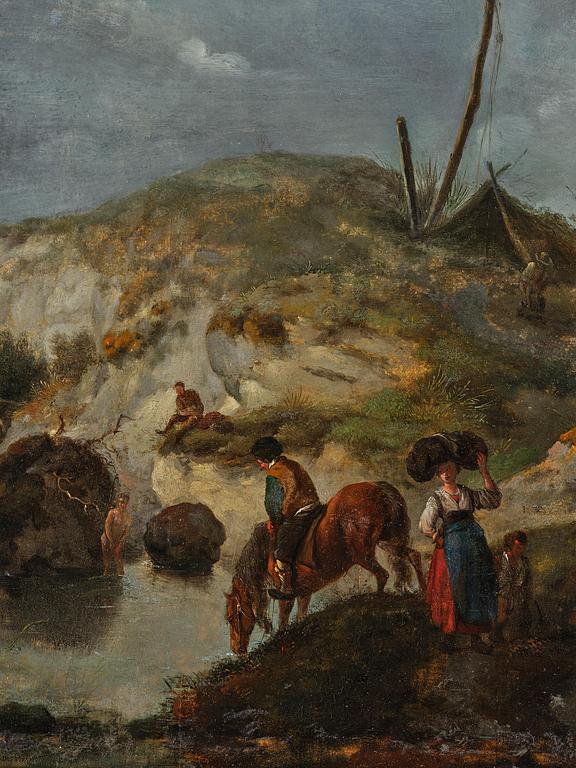
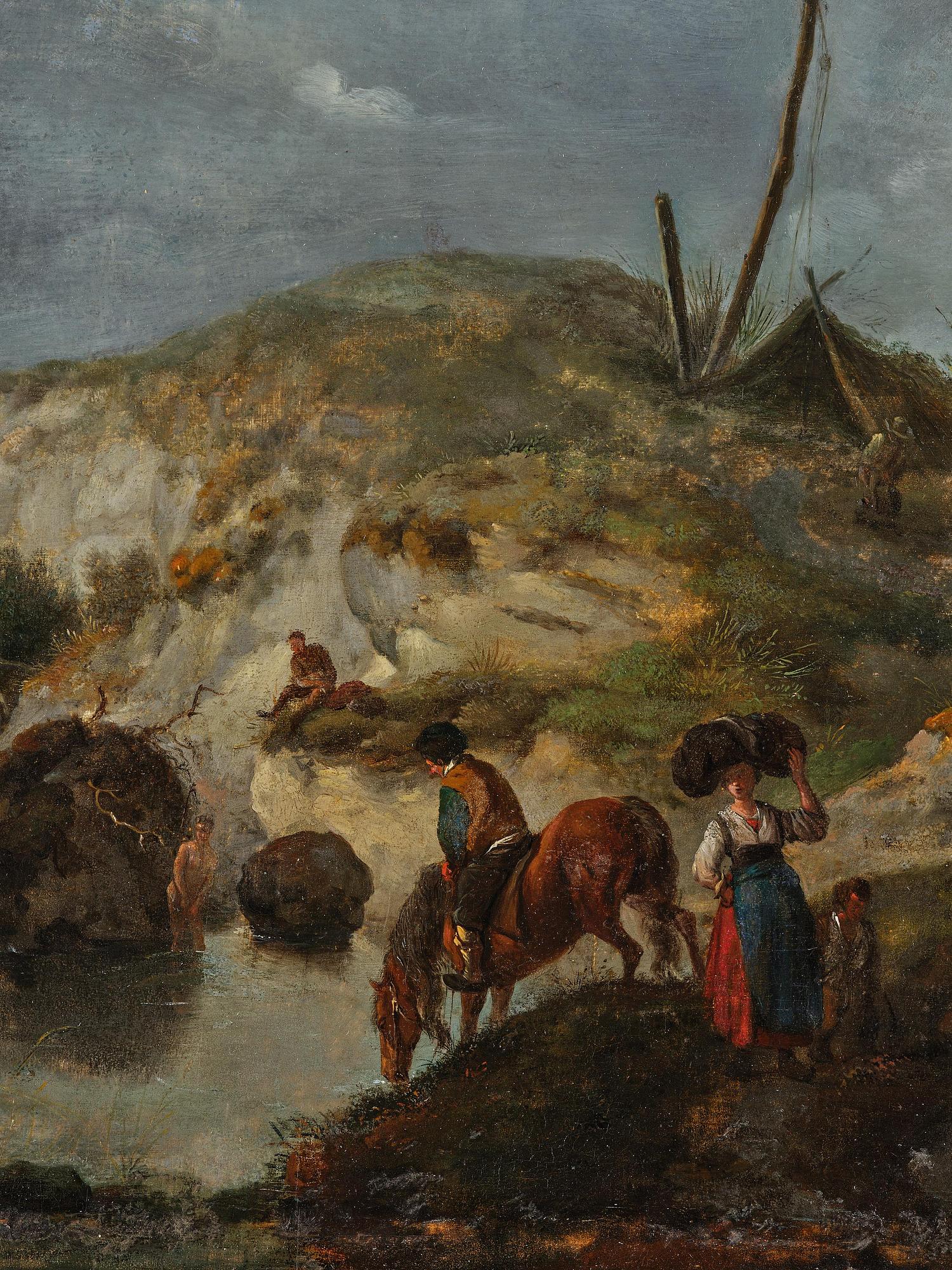
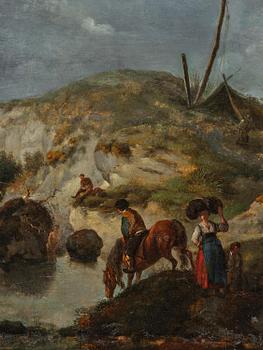
The painting shows a river landscape with travelers in a dune landscape. They have set up camp,
probably overnight, on the slope of a dune, by a water source where a woman is bathing. Two
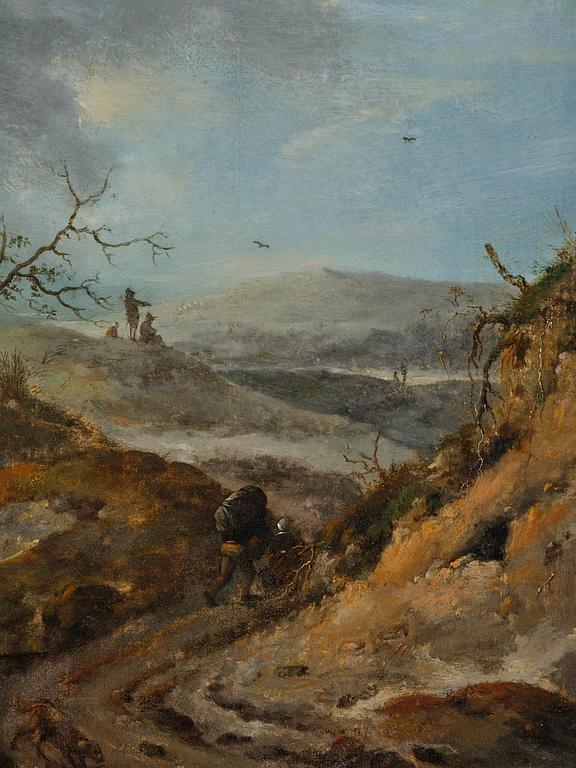
travelers, a man and a boy, have already packed up to continue their way. In the foreground, a
woman is standing, carrying luggage on her head, next to a short-grown man. A horse is heading
down to drink of the water with a rider on his back. The scene is that of people breaking up
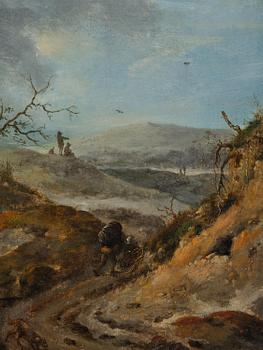
camp to move on to their next destination. In the hills visible in the background, a group of three
figures are scouting the road ahead.
Throughout his career, Wynants drew inspiration for his landscapes from the dunes near his
native Haarlem. The artist often employed a similar compositional structure in his landscapes,
with a path winding through the undulating dunes and receding into the distance. Here, as in
many of his paintings, the left side of the picture is built up with dunes and trees while the right
side opens to a panoramic view, creating a sense of space. At the time Wijnants was working,
painting en plein air was not a common occurrence. Sketching may have occurred out of doors,
but the resulting landscape painting would have been created indoors in a studio. The staffage in
Wynants's paintings was often added by other artists in collaboration.
Lisätietoja ja kuntoraportit
Tietoa ostamisesta
Muiden katsomia kohteita