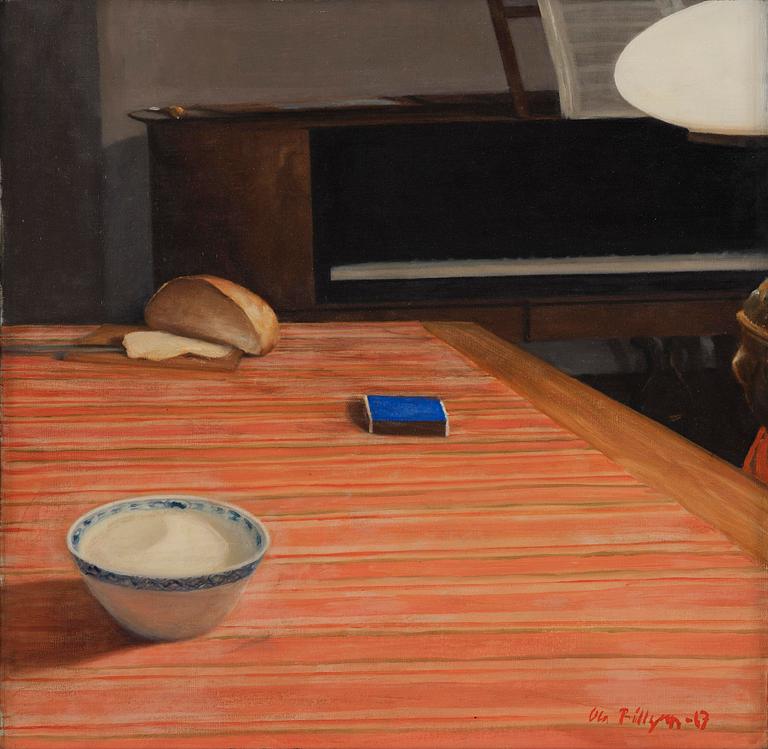
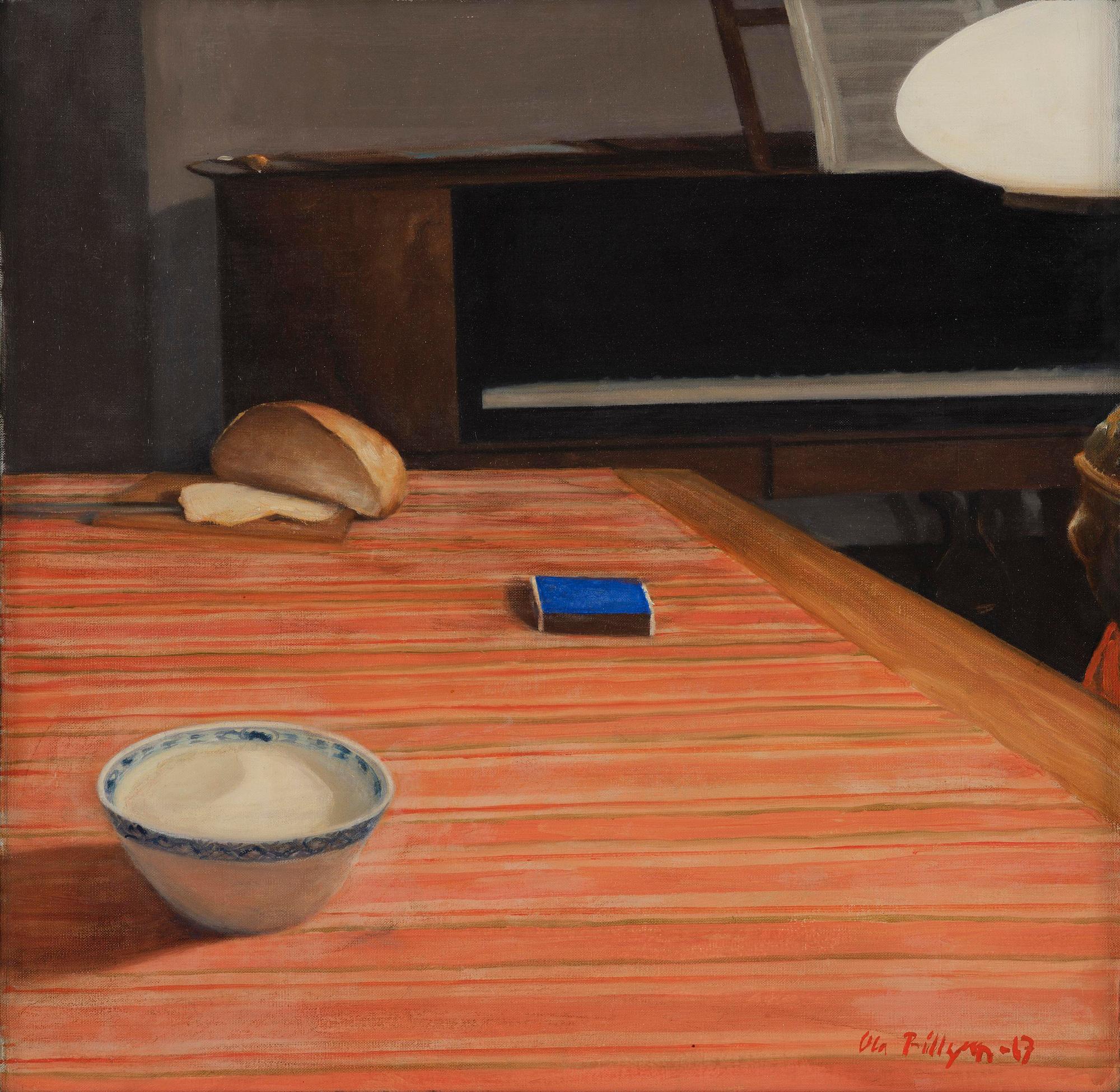
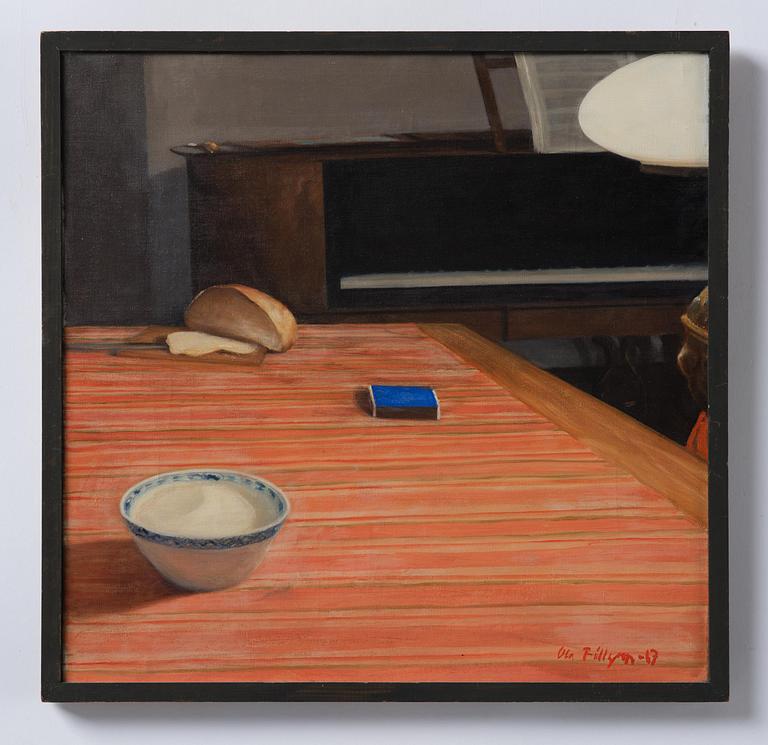
"Stilleben"
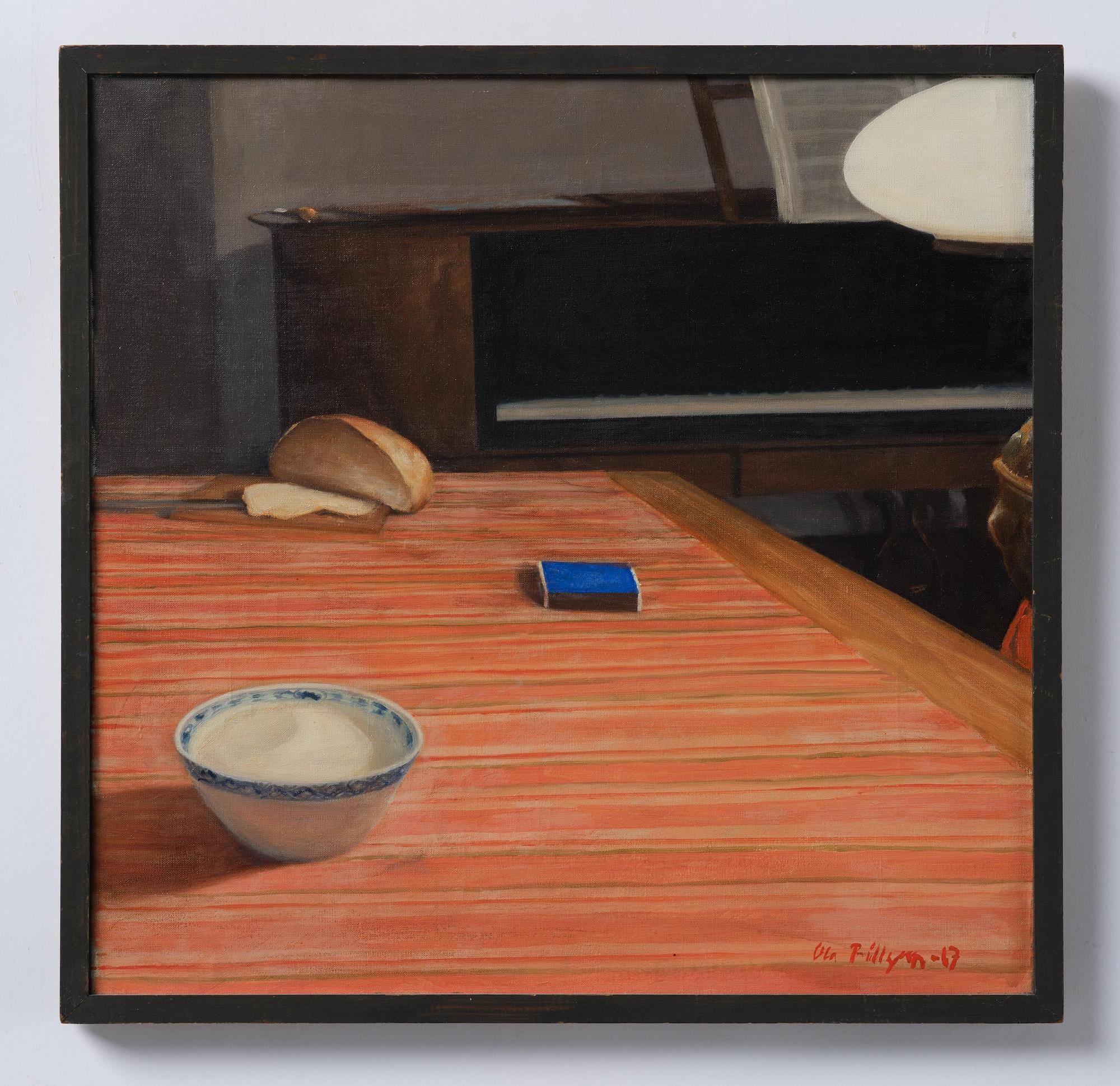
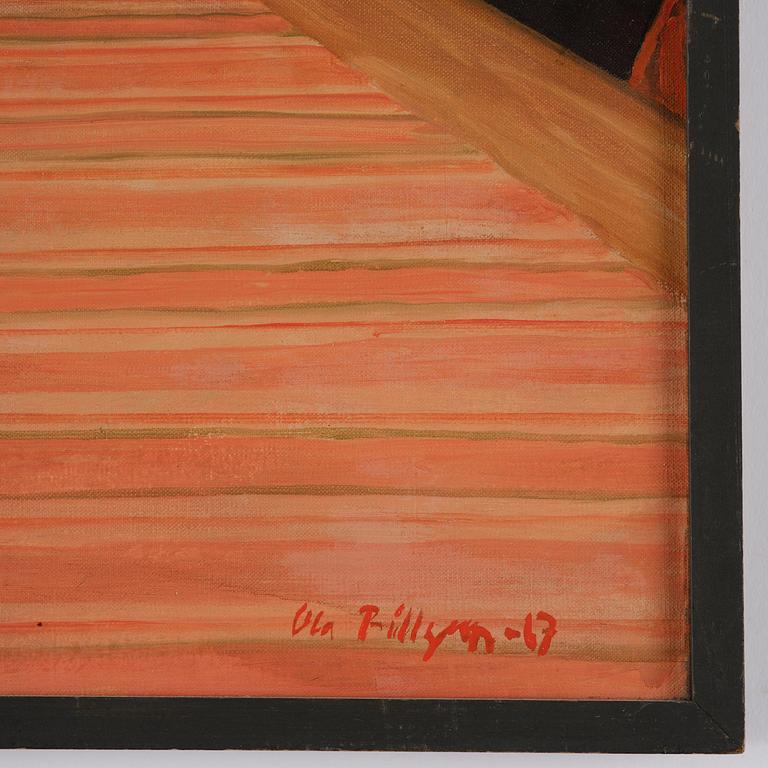
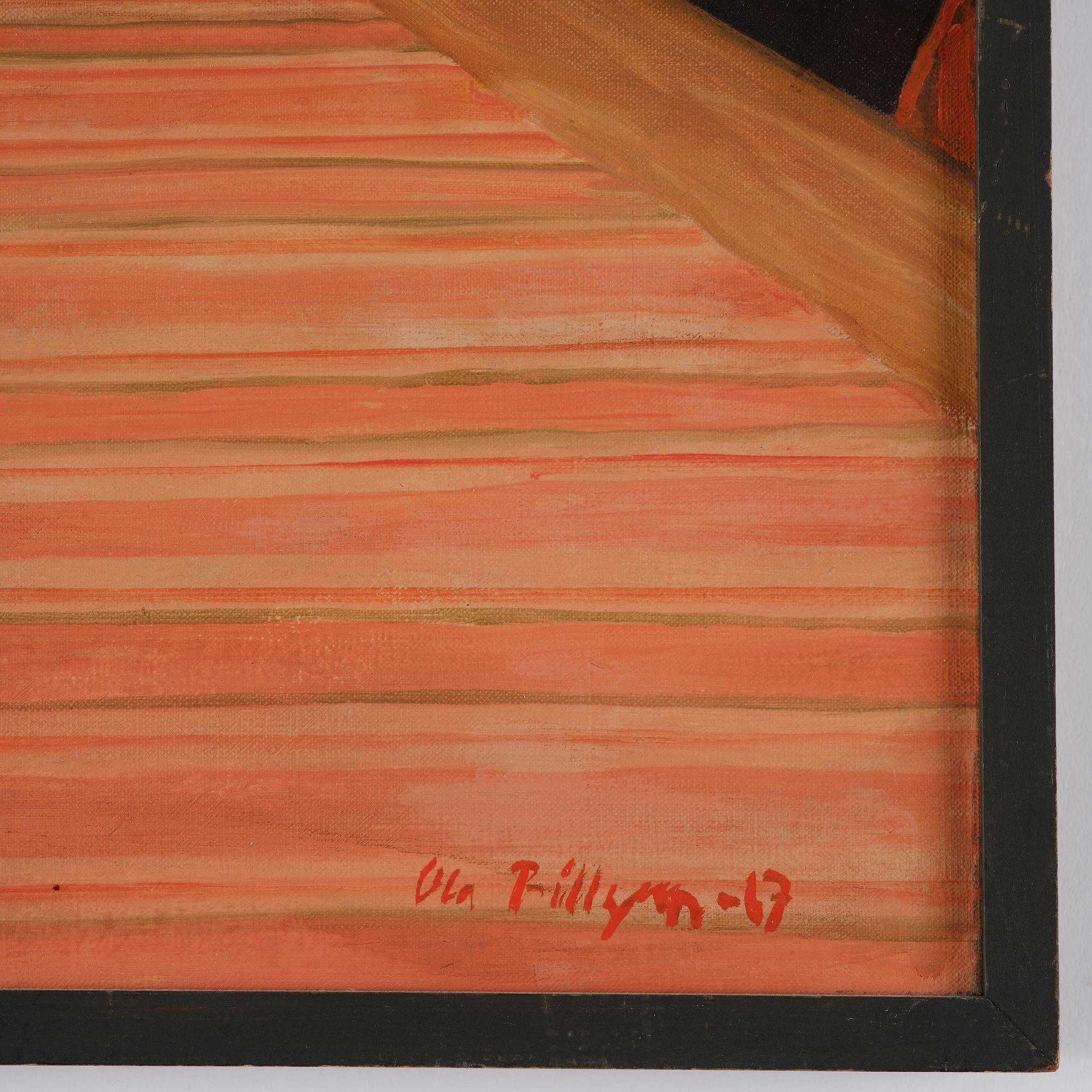
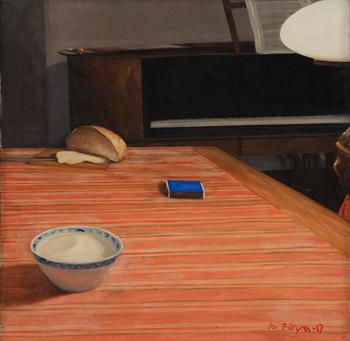
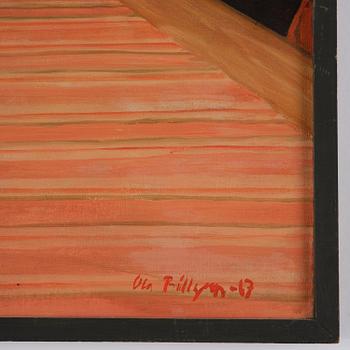
Signed Ola Billgren and dated -67. Oil on canvas 37 x 38 cm.
Näyttelyt
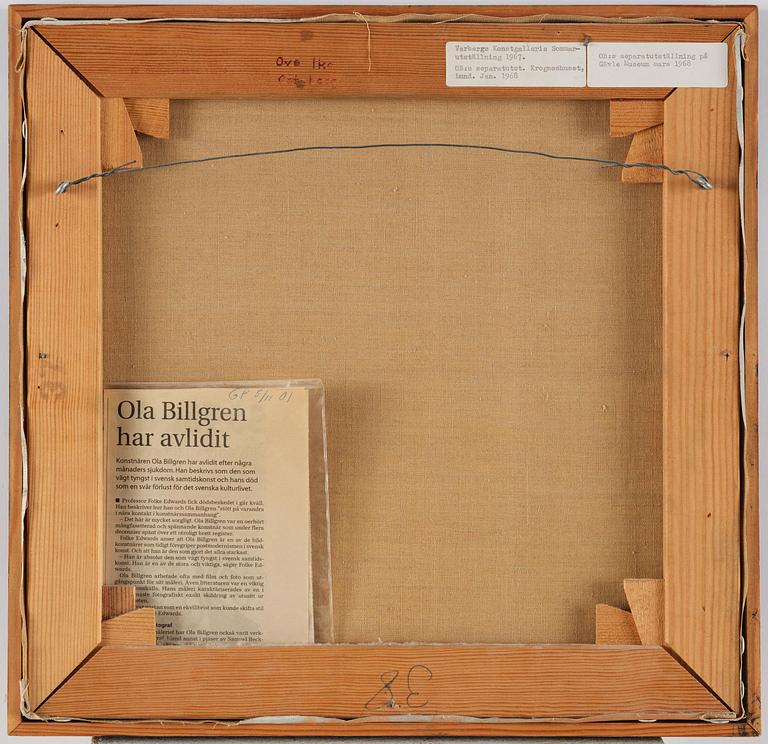
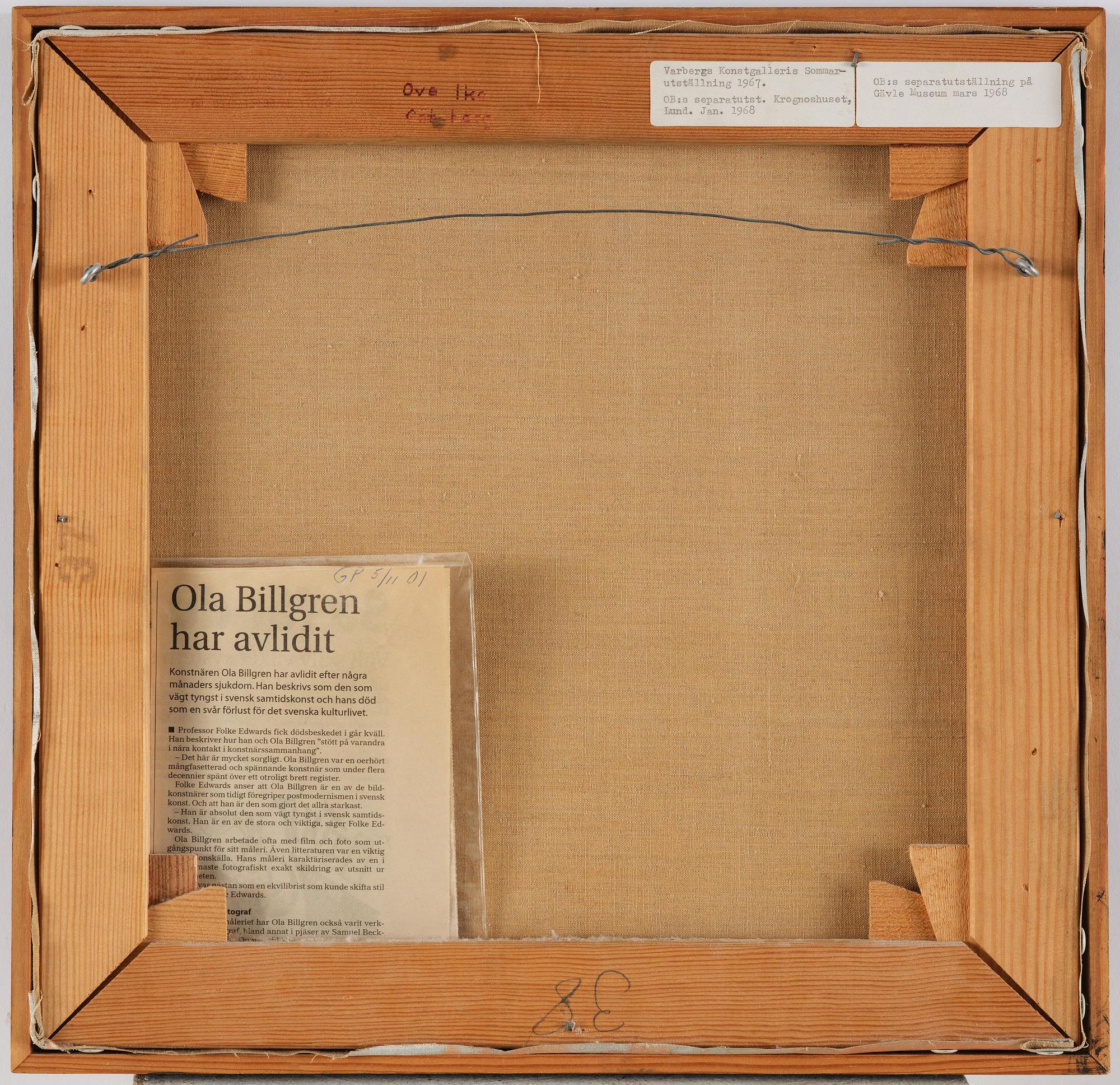
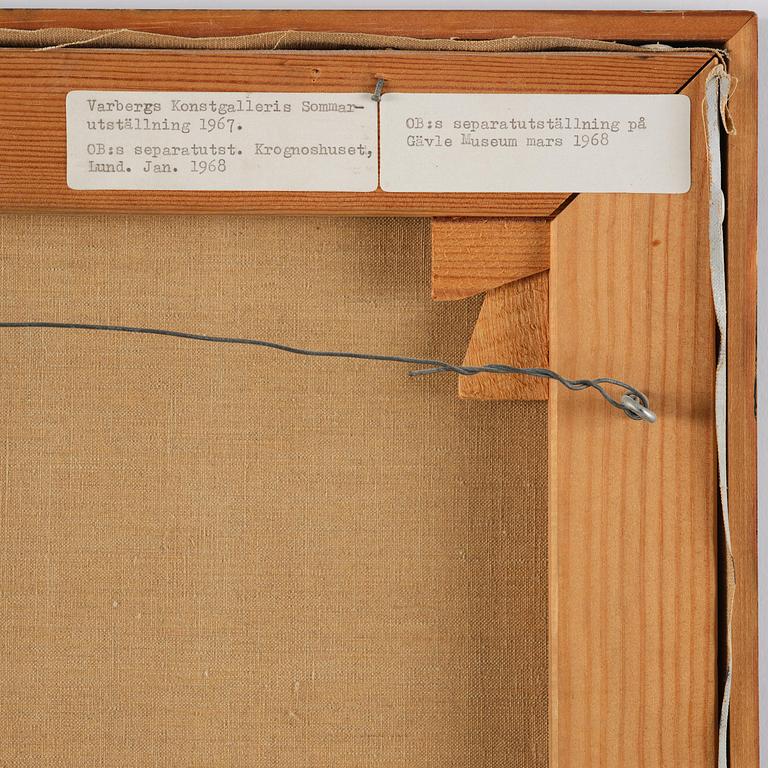
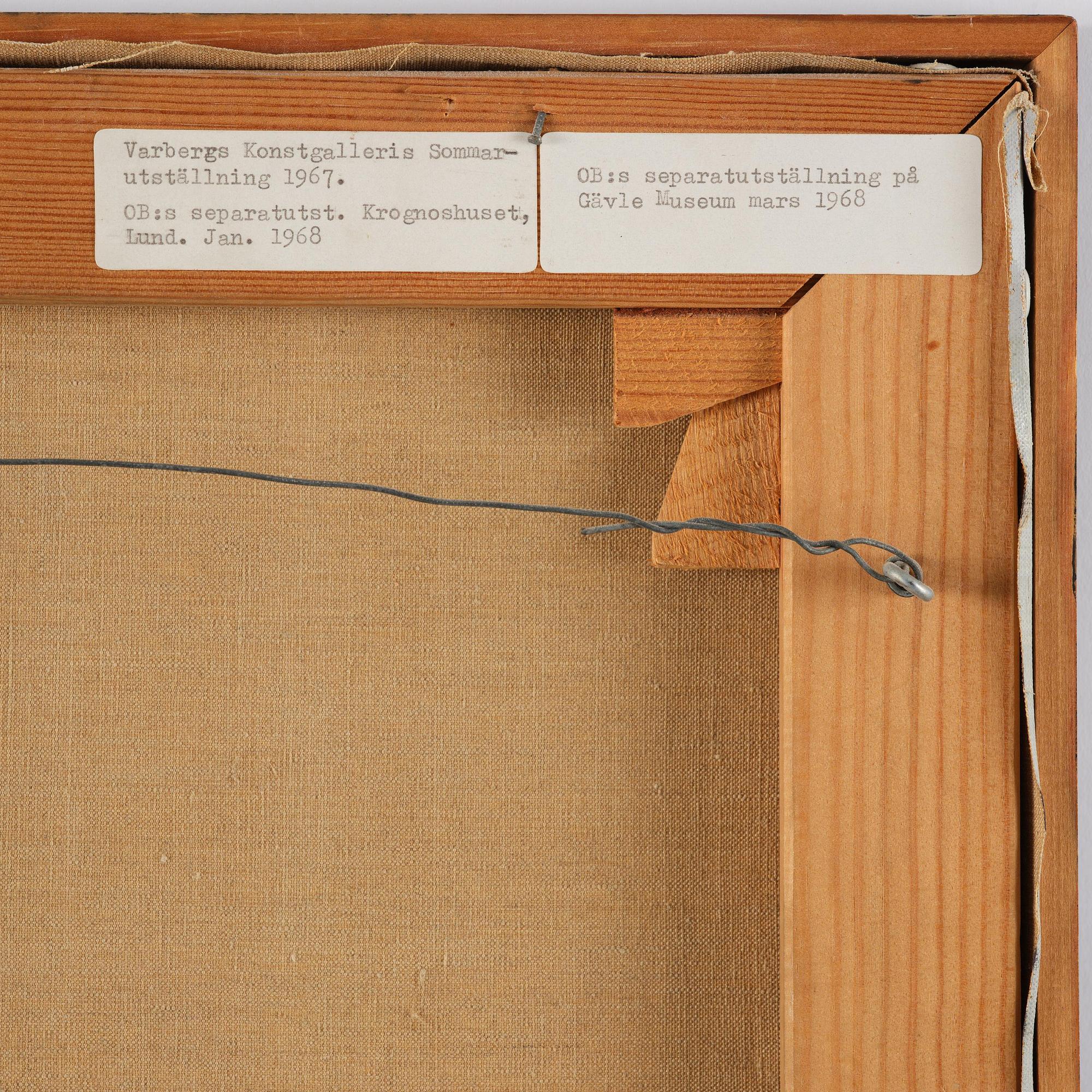
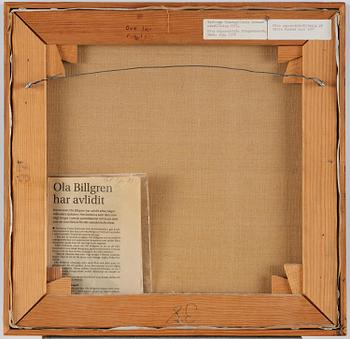
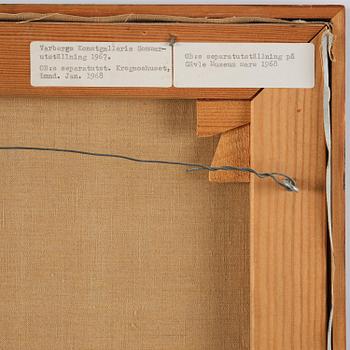
Varbergs konstgalleri, Summer Exhibition, 1967.
Krognoshuset, Lund, Ola Billgren solo exhibition, January 1968.
Gävle Art Museum, Ola Billgren solo exhibition, March 1968.
Kirjallisuus
Galleri 69, "Ola Billgren – Målningar 1963–73", 1973, illustrated and listed as no. 61.
Lars Nittve, Douglas Feuk and Ola Billgren, "Album – Ola Billgren – en retrospektiv", 1991, illustrated on a full page, p. 14.
Muut tiedot
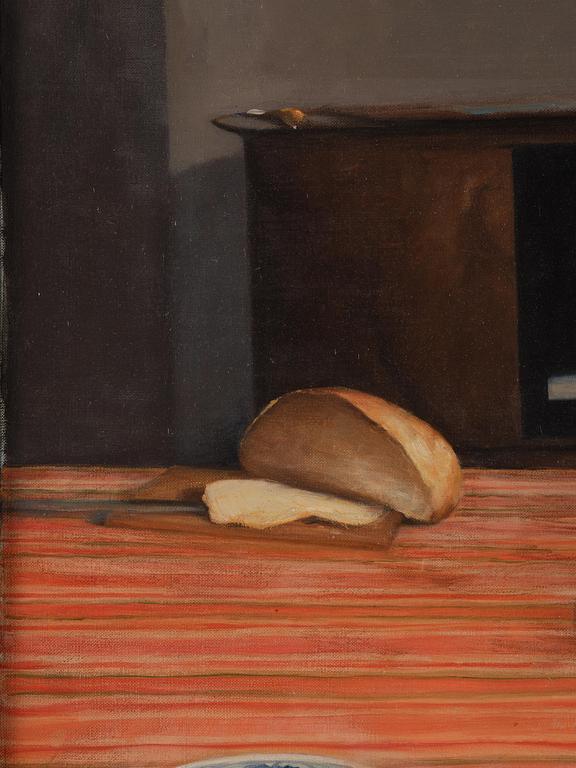
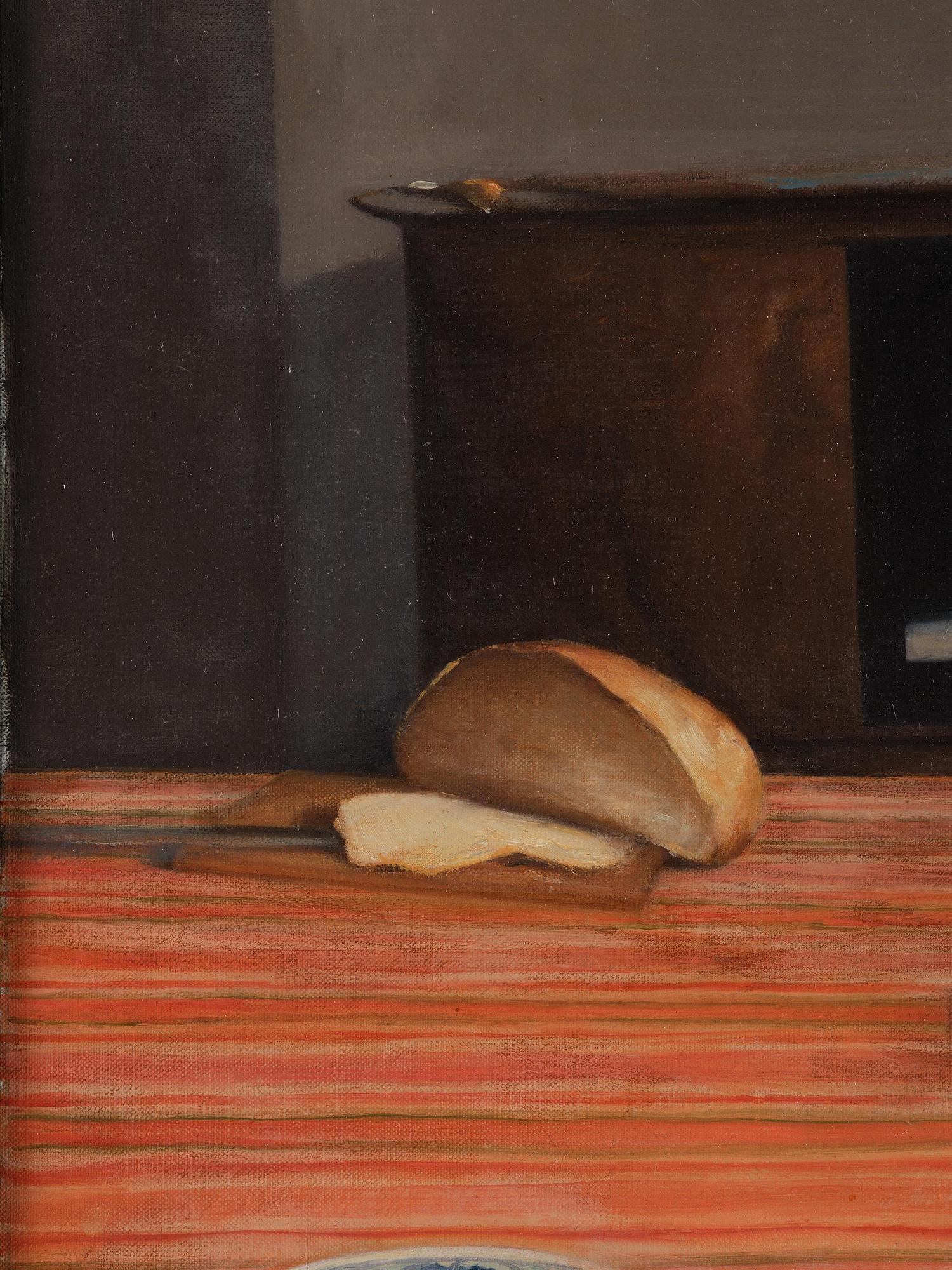
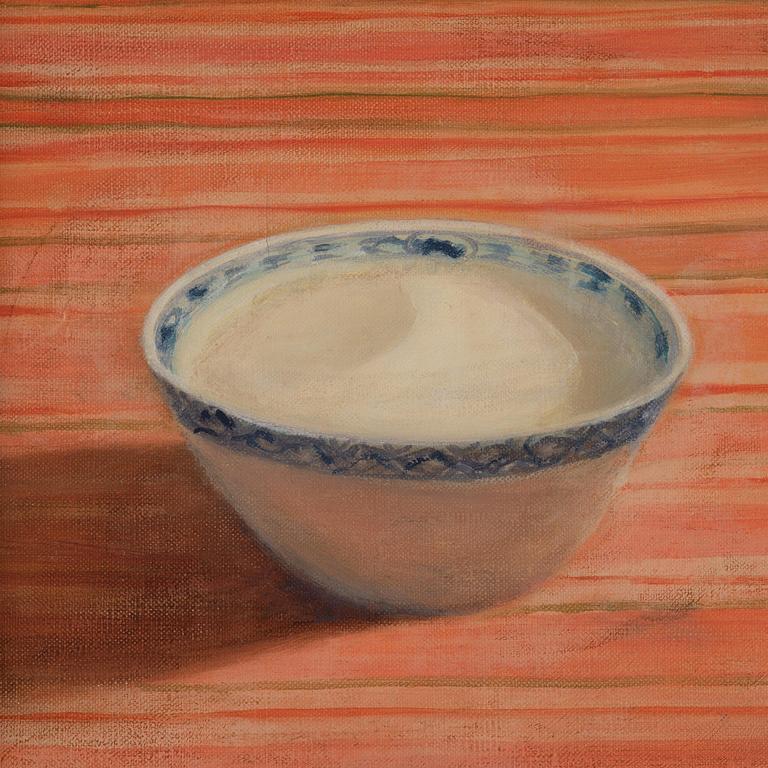
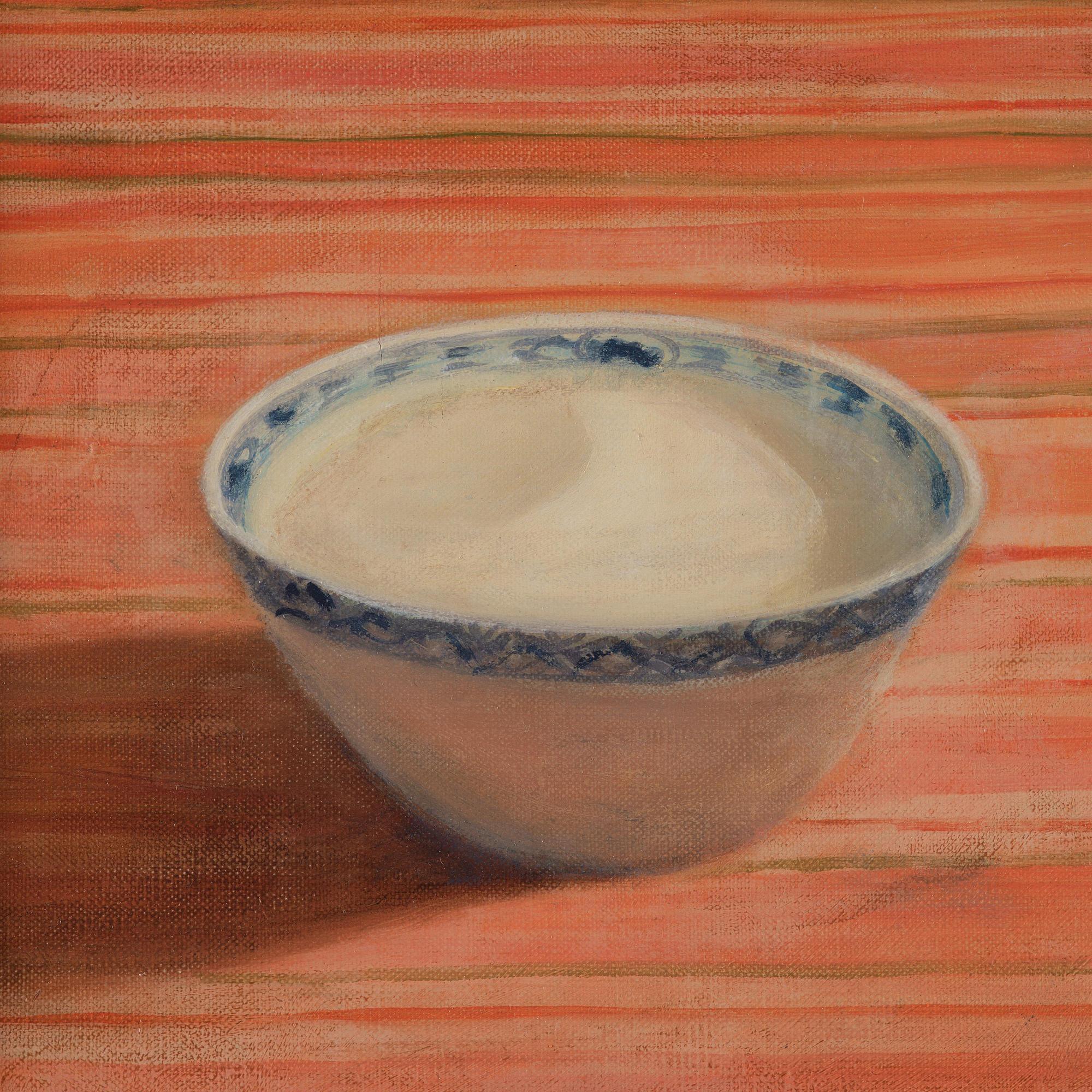
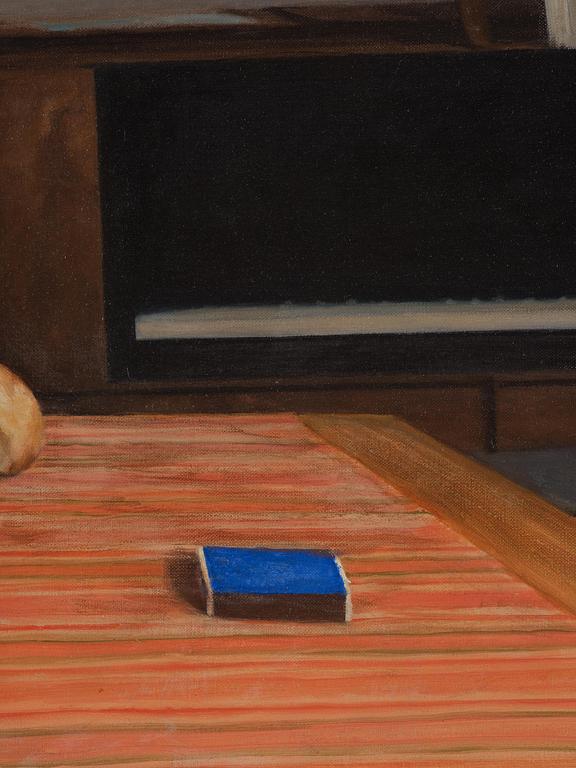
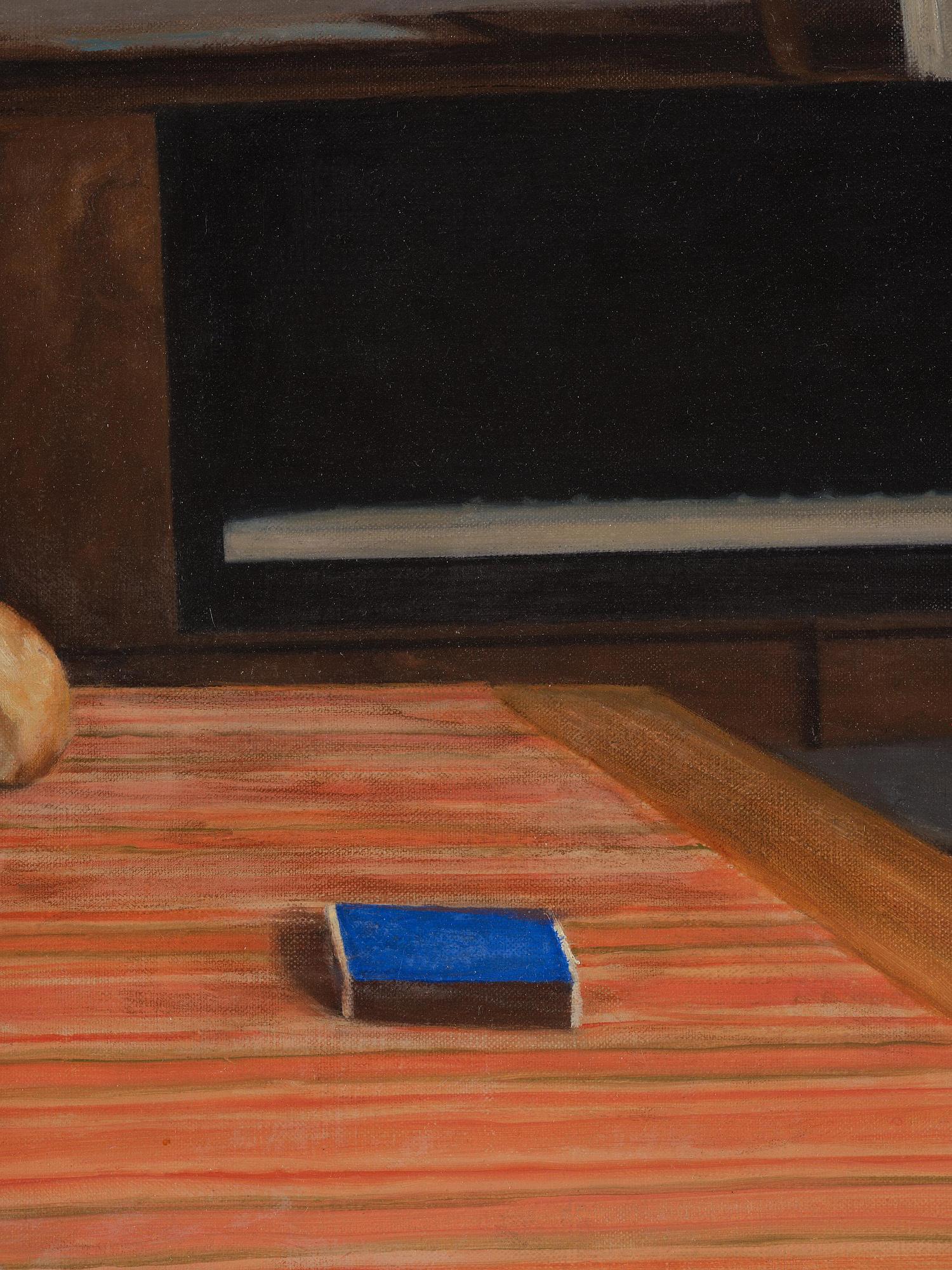
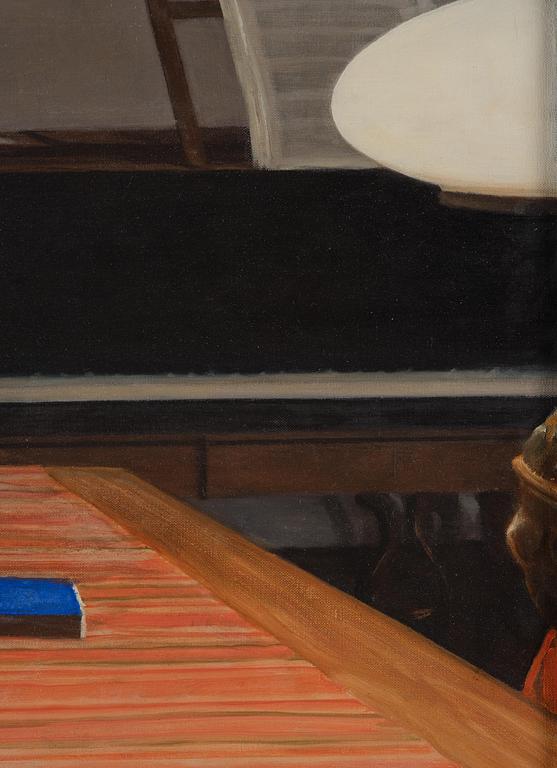
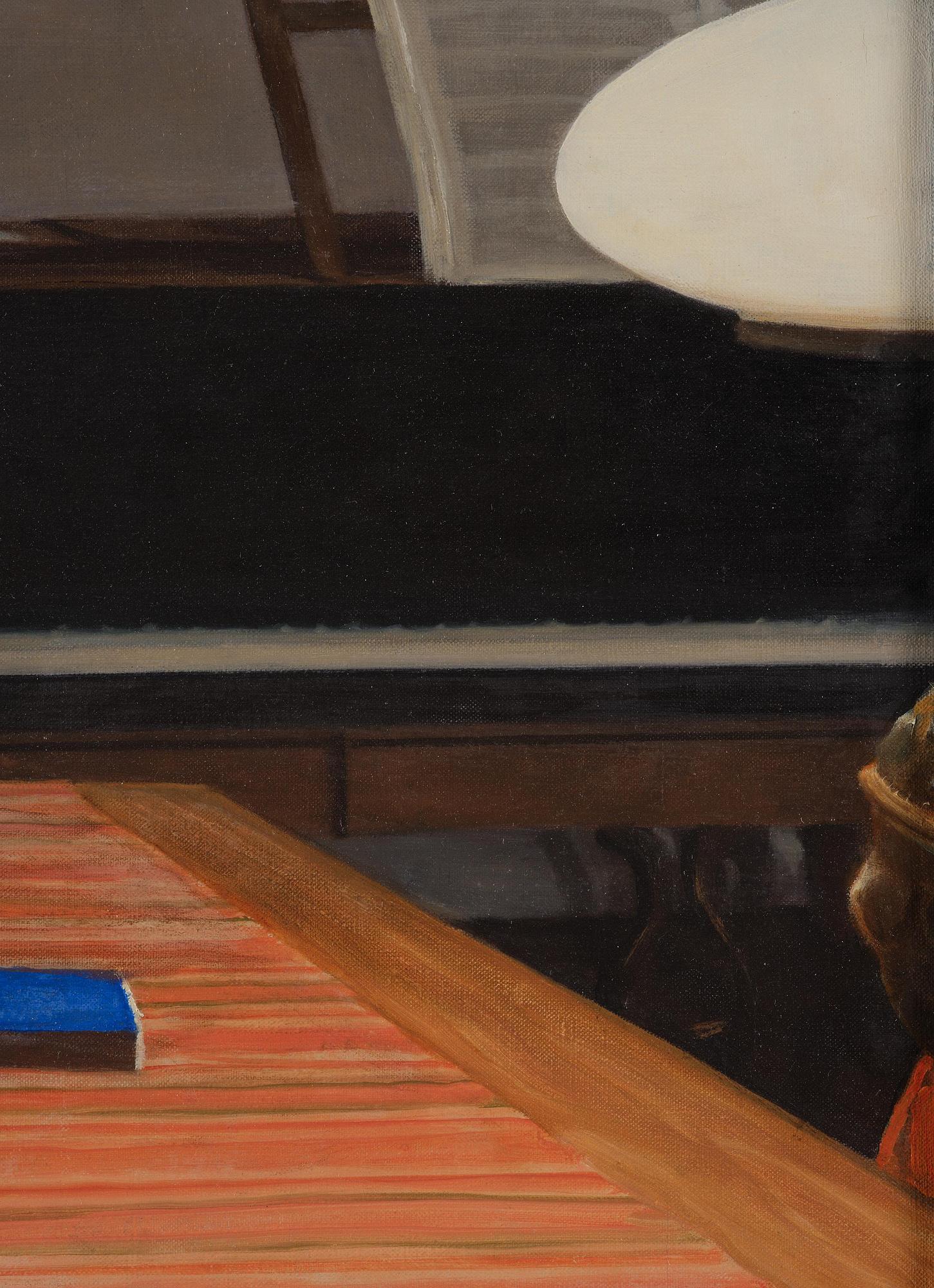
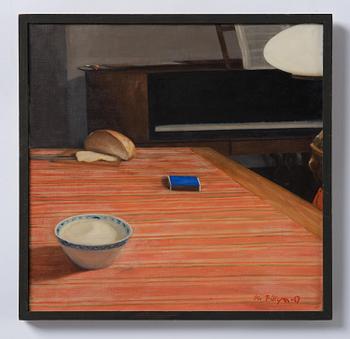
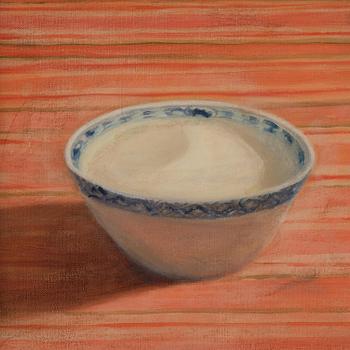
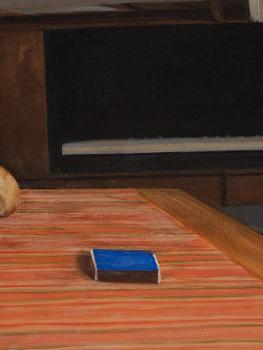
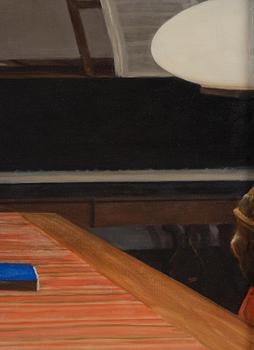
In "Stilleben" (1967), Ola Billgren turns his gaze towards an everyday interior. On a red-and-white striped tablecloth sit a bowl, a loaf of bread and a small blue box. In the background, a dark piano is just visible, while a lamp enters the composition partially from the upper right-hand corner. It is an apparently unassuming scene, yet in Billgren’s work a curious shift takes place: the familiar becomes at once strange and elusive.
The painting was created during a pivotal period in Billgren’s artistic career, when he was developing his realist painting in relation to photographic imagery and the visual culture of the mass media. At a time when abstract painting held a strong position, he chose to return to representation, without reducing realism to a matter of faithful imitation. Photography, film, literature and the illustrated press became important points of reference. What mattered was not only what was depicted, but also how reality changes when viewed through an image.
The photographic quality is clearly present in "Stilleben". The image has the character of a fragment taken from a larger reality that continues beyond the edges of the canvas. No person is visible, yet the objects suggest a human presence. The bread, the bowl and the small box thus become more than everyday props; they can be understood as traces of a life unfolding beyond the picture. This is a characteristic shift in Billgren’s work, in which the narrative emerges as much from what is absent as from what is actually shown.
At the same time, this is not a photographic rendering in the strict sense. Billgren allows the illusion of realism to encounter a distinctly painterly expression. Surfaces, light and dark passages are treated with a freedom that keeps the image in a constant state of oscillation between recognition and interpretation. It is precisely this duality that gives the painting its expressive force: it appears to document a real moment, while simultaneously reminding us that every image is a construction.
The composition reinforces this ambivalence. The striped tablecloth creates a rhythmic horizontal field that draws the eye into the picture, while the darkness of the piano contrasts with the lighter surface of the table. The small blue box stands out against the stripes and, through its colour and geometric shape, becomes a particular focal point. An apparently insignificant object thus acquires a visual weight that exceeds its practical function. It is characteristic of Billgren’s visual world that the details of everyday life can be imbued with a significance that is never fully defined.
The title "Stilleben" (Still Life) places the painting within a long art-historical tradition. Historically, the genre has endowed everyday objects with symbolic and existential meanings, but Billgren grounds the still life in modern everyday life. Here, the traditional genre encounters the visual experience of the 1960s: the striped tablecloth, the bread, the simple bowl and the small box are not idealised attributes, but objects drawn from a tangible contemporary environment. The historical and the modern are brought together in a single image.
In 1971, Billgren later stated that his images should function both as “aesthetically compelling objects that stimulate the imagination” and as carriers of a content that he himself did not entirely know or understand. This idea is particularly apt in relation to "Stilleben". The painting offers an immediate visual experience of colour, light, material and form, while leaving the meaning of the subject open. Why these particular objects? Who is in the room? What happened before this moment, and what will happen afterwards? The painting offers no answers.
In the same year the work was created, 1967, it was exhibited at Varberg konstgalleri summer exhibition, followed by Billgren’s solo exhibitions at Krognoshuset in Lund in January 1968 and at Gävle Konstmuseum in March of the same year. This places the painting within a significant phase of Billgren’s career, when he was developing a realist visual language in which everyday subjects met the gaze of photography and a more open, painterly interpretation.
There is no dramatic event or explicit narrative in "Stilleben". And yet, there is a sense that the image has captured a moment in the midst of something larger. It is this tension between the observed and the imagined that gives the painting its particular intensity: Billgren does not show us the whole story, but leaves just enough to the viewer for it to continue beyond the picture.
Lisätietoja ja kuntoraportit

Mitä kuljetus maksaa?
Toimituksen voi tilata vain ottamalla yhteyttä osoitteeseen specialdelivery@bukowskis.com.
Kuuluu jälleenmyyntikorvauksen piiriin
Tietoa ostamisesta
Kuvan käyttöoikeudet
Tämän tietokannan taideteokset ovat tekijänoikeudella suojattuja, eikä niitä saa kopioida ilman oikeudenhaltijoiden lupaa. Teokset kopioidaan tässä tietokannassa Bildupphovsrättin lisenssillä.
Muiden katsomia kohteita