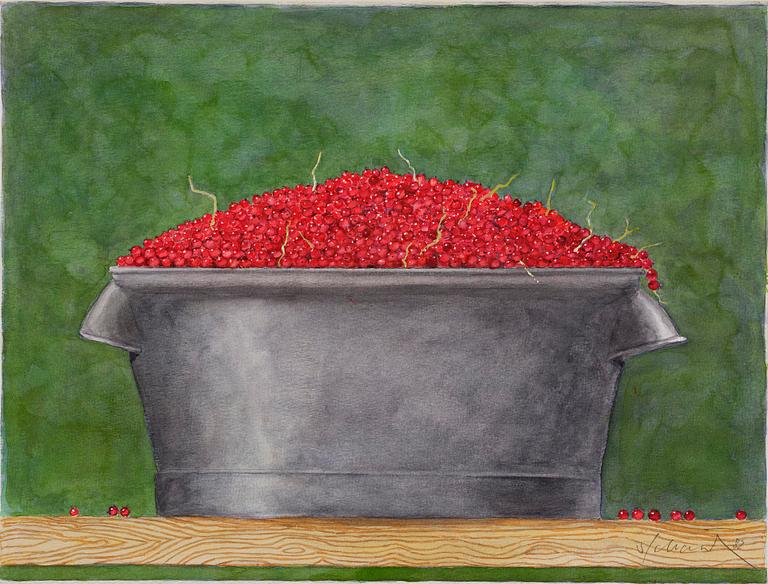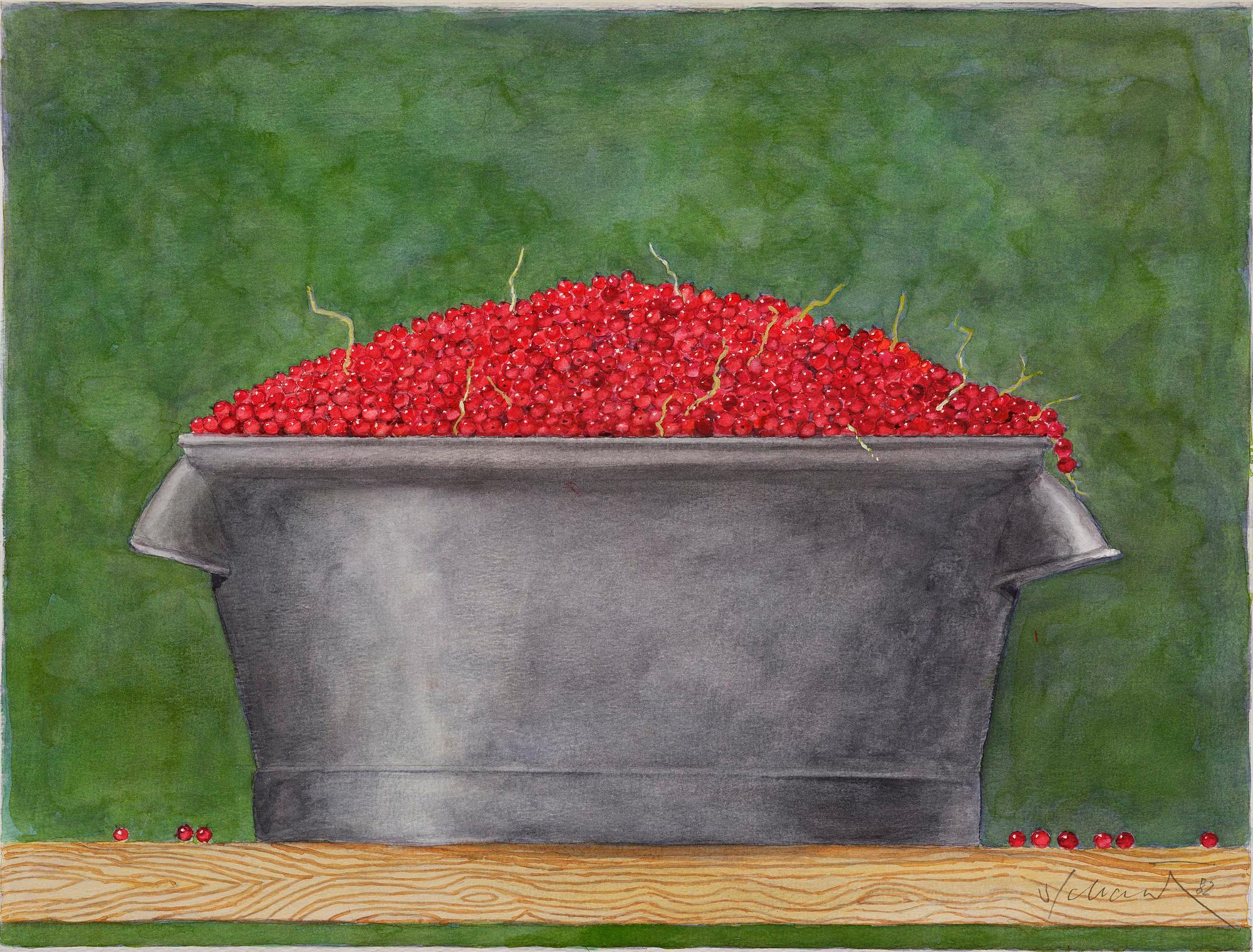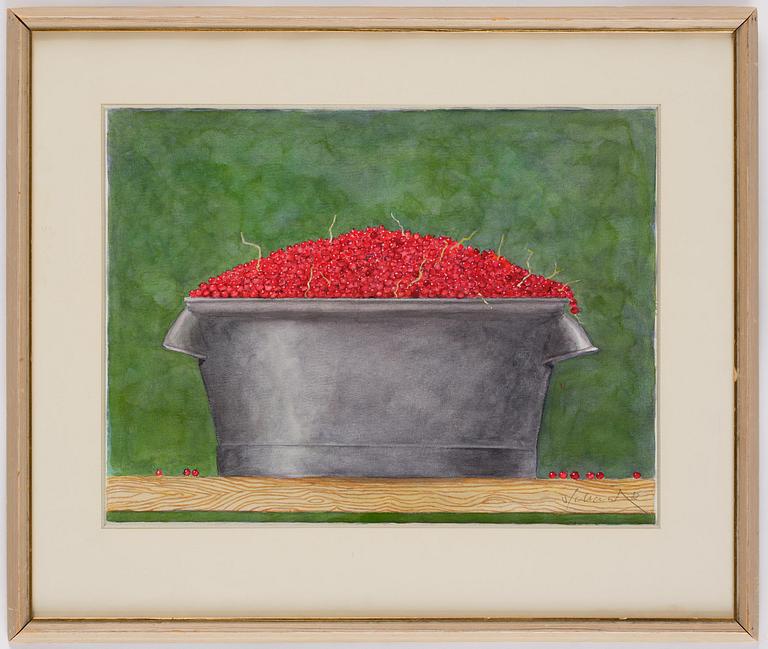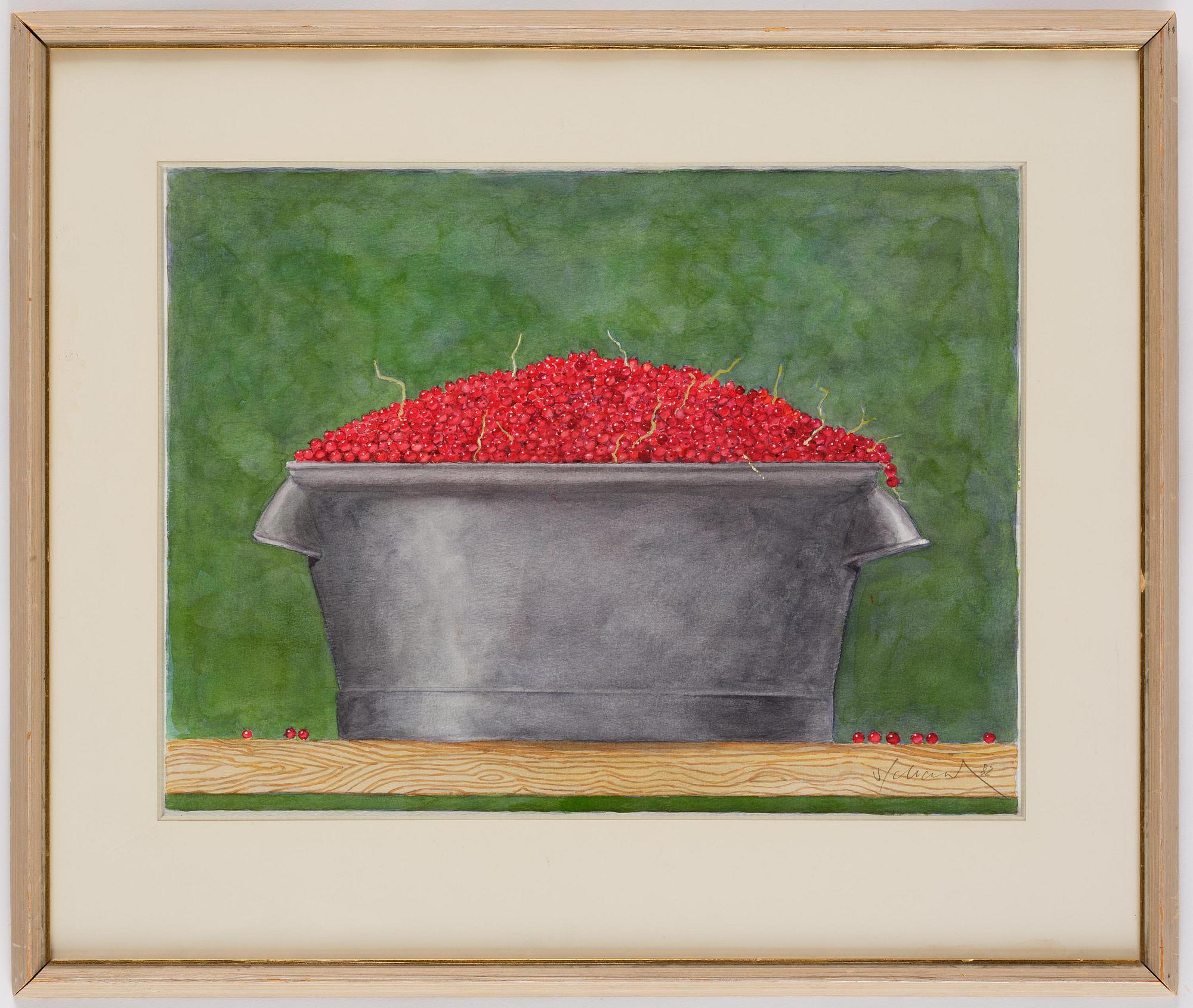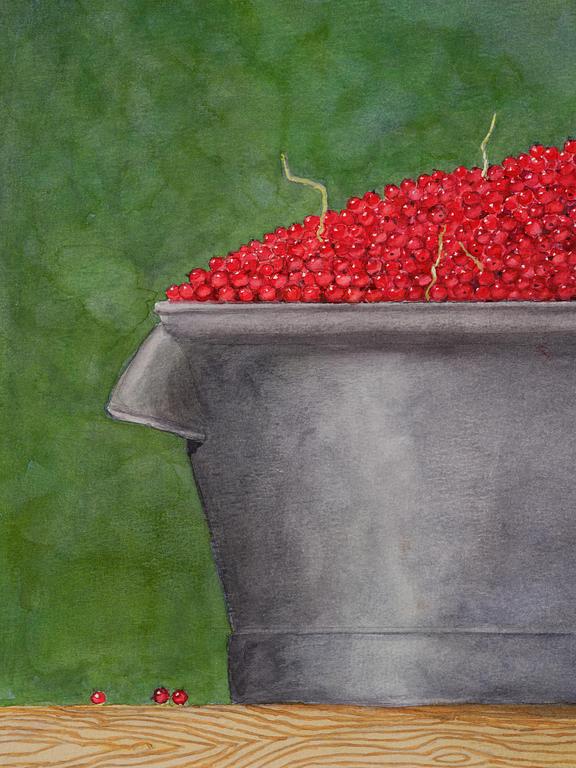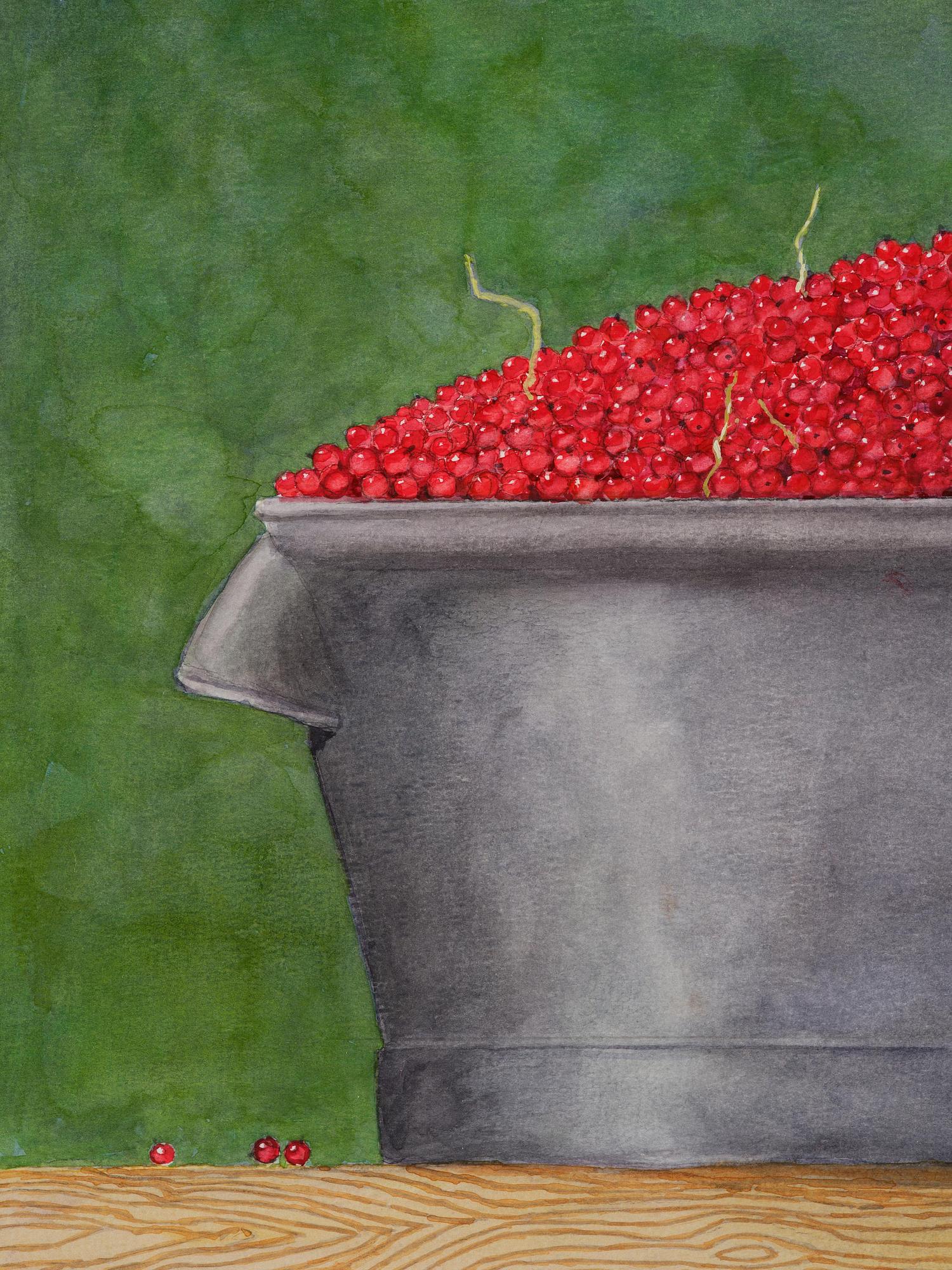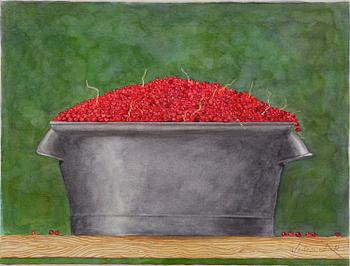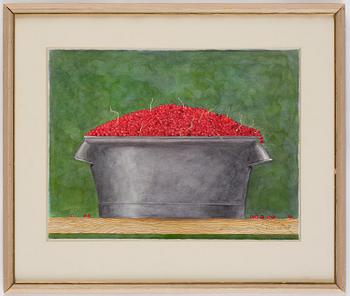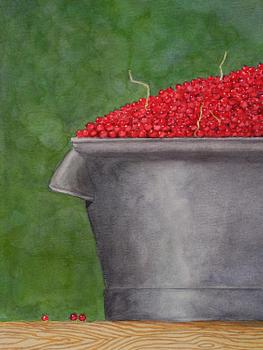
Red currants
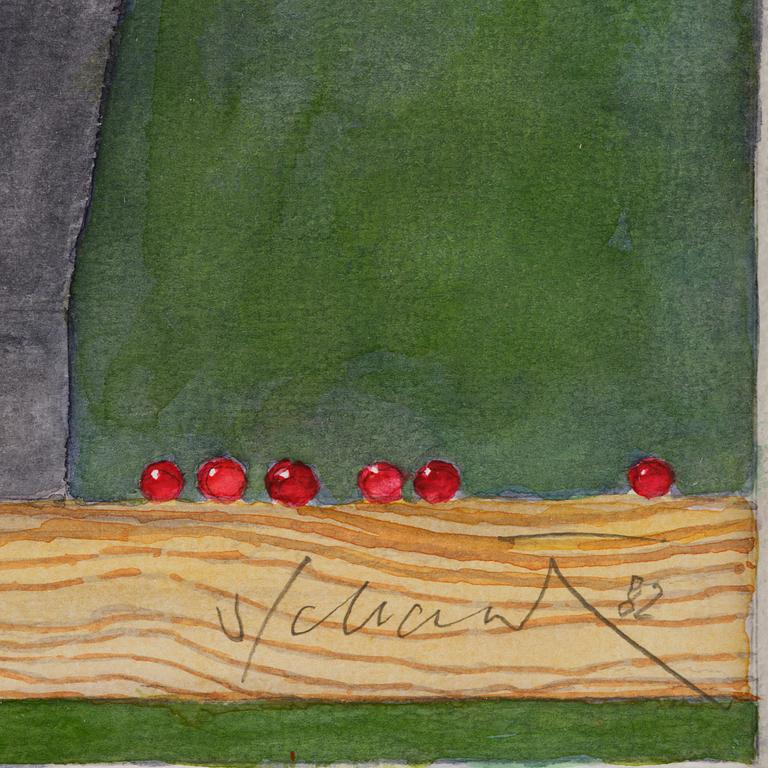
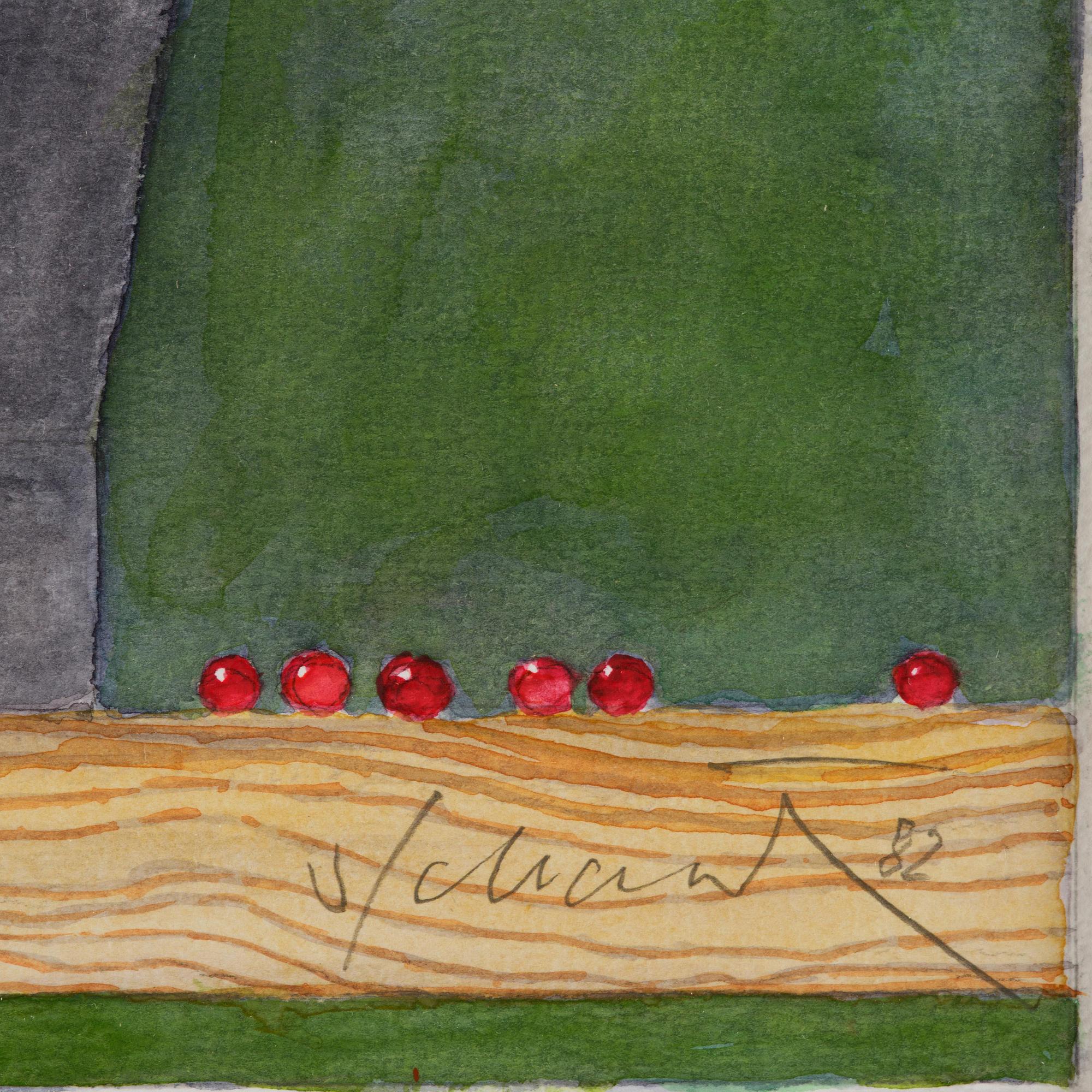
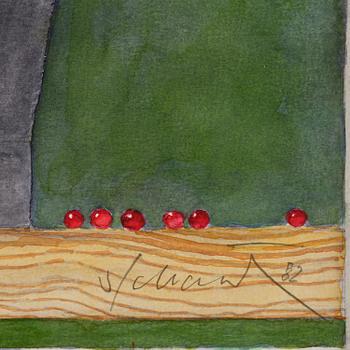
Signed v Schantz. Watercolour 30 x 40 cm.
Alkuperä - Provenienssi
The collection of Lisa Fonssagrives-Penn.
Subsequently inherited by the current owner.
Muut tiedot
Philip von Schantz first studied painting under Otte Sköld before travelling to Paris for a brief period of study with André Lhôte. Between 1952 and 1958, he studied at the Royal Institute of Art in Stockholm. During the 1970s, he became highly popular with the general public, who found his still lifes irresistible and true to life. He employed one-point perspective, in which the perspective lines run parallel and the image itself extends across the picture surface. The scale is also always 1:1, contributing to the works’ distinctive identity and their immediate recognisability. The recognition of white metal bowls, wooden crates bearing printed lettering, or simple tools such as garden forks, spades and rusty buckets conveyed a sense of security and quickly became irresistible as carriers of associations with one’s own upbringing and personal history.
Still-life painting has deep roots in historical tradition. Modernists used the still life as one of their central motifs throughout the twentieth century, despite their eagerness to distance themselves from the established rules of taste. A likely explanation is that the still life depicts immobile objects that can be examined over an extended period. The modernists sought to find “the image itself” and avoided the narrative and the iconographic. Many also chose not to depict objects precisely, but instead focused on using them in their painting to imbue them with a realistic significance. Philip von Schantz opposed this prevailing modern idea and looked back towards the older tradition, in which precise realism was paramount. His painting occasionally borders on pure illusionism, known in the art world as trompe-l’oeil. With an objective manner and crystal-clear realism, from the 1970s onwards von Schantz created astonishing and fascinating paintings which, rooted in history, captivated their audience. It began with depictions of old, weathered windows with lace curtains, through which one can almost feel the gentle summer breeze; wooden planks with visible grain and birch trunks that appear to have been photographed; and large wooden crates filled with fruit and vegetables. Painted with extraordinary skill, these works bear comparison with many of the old masters’ “nature morte” paintings of the seventeenth century, including those by the Spanish artist Luis Meléndez and the Flemish painter Osias Beert, to name but a few.
In the mid-1970s came the major breakthrough with his berry motifs: scoops, buckets and pails filled to the brim with various berries—gooseberries, wild strawberries, blueberries, and red and blackcurrants. He painted each berry meticulously, with patience and the conviction that truth lies in precise depiction.
Lisätietoja ja kuntoraportit

Mitä kuljetus maksaa?
Kuuluu jälleenmyyntikorvauksen piiriin
Tietoa ostamisesta
Kuvan käyttöoikeudet
Tämän tietokannan taideteokset ovat tekijänoikeudella suojattuja, eikä niitä saa kopioida ilman oikeudenhaltijoiden lupaa. Teokset kopioidaan tässä tietokannassa Bildupphovsrättin lisenssillä.