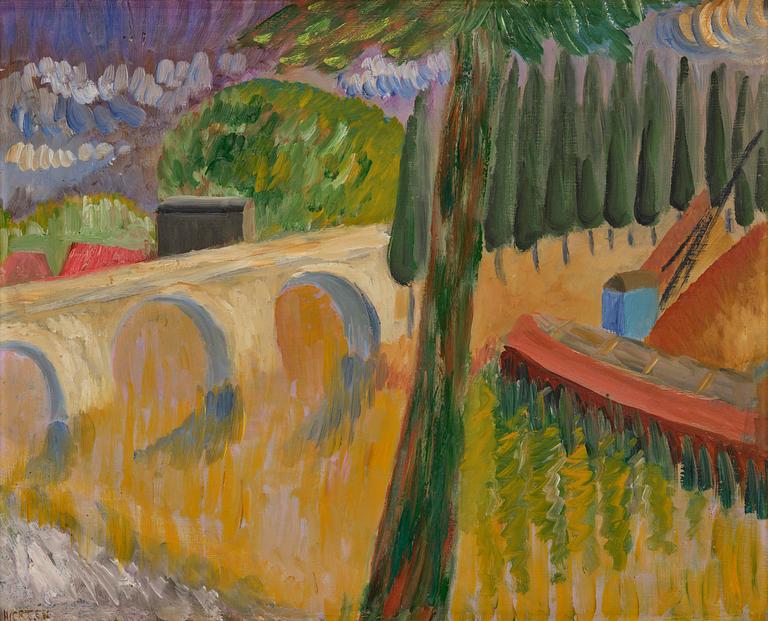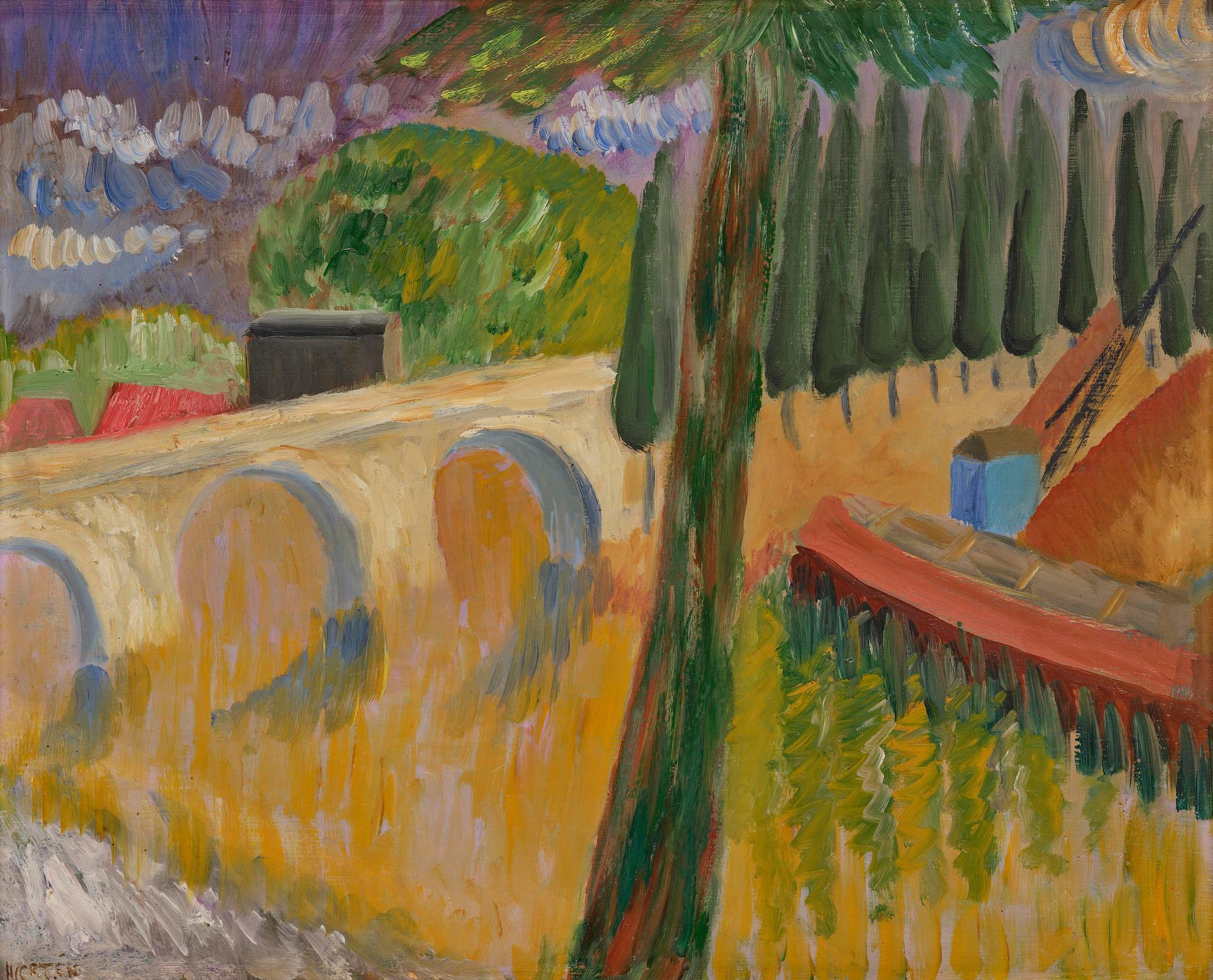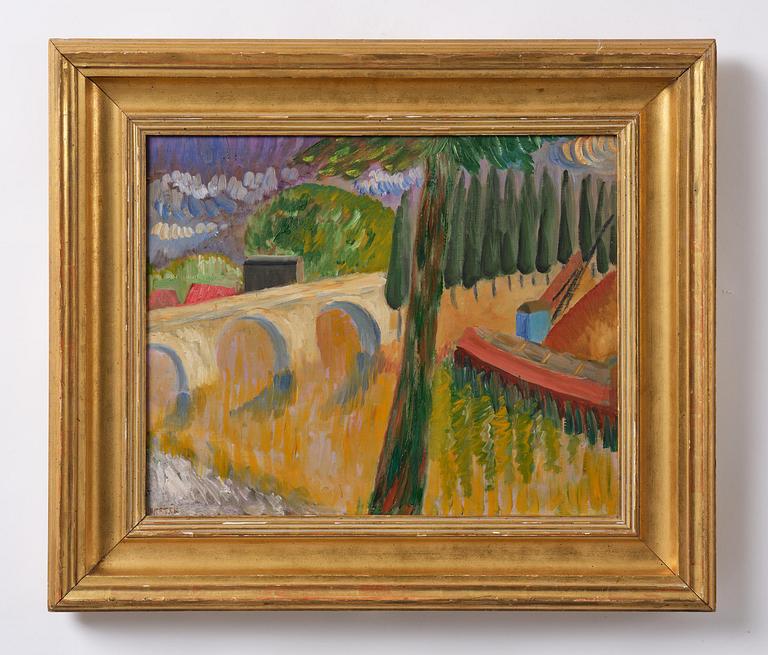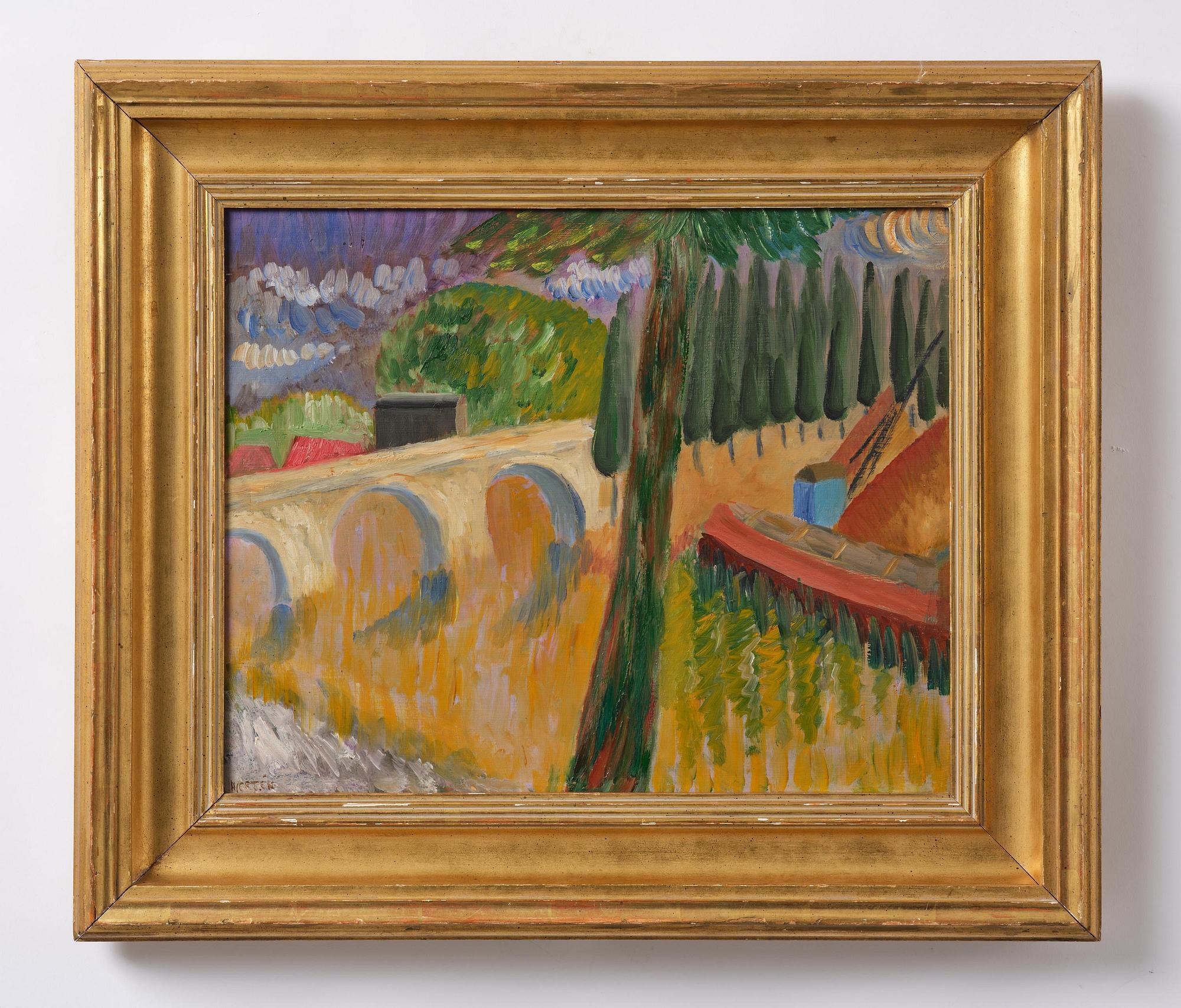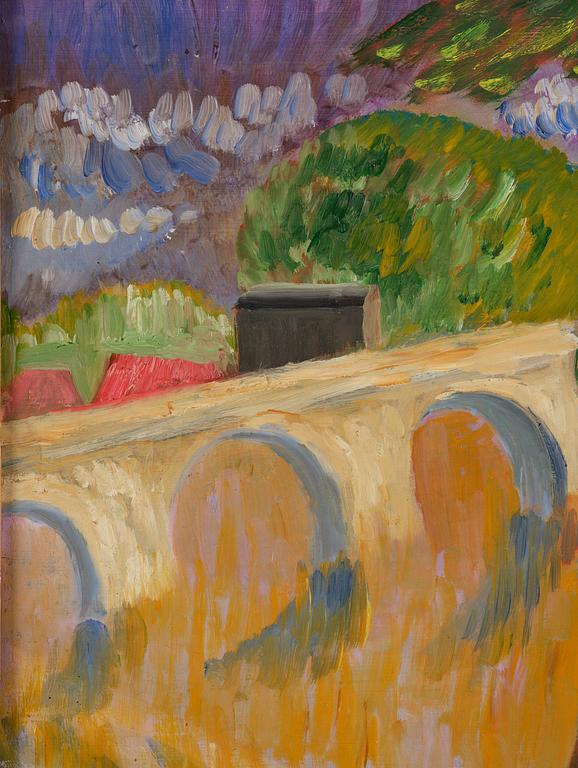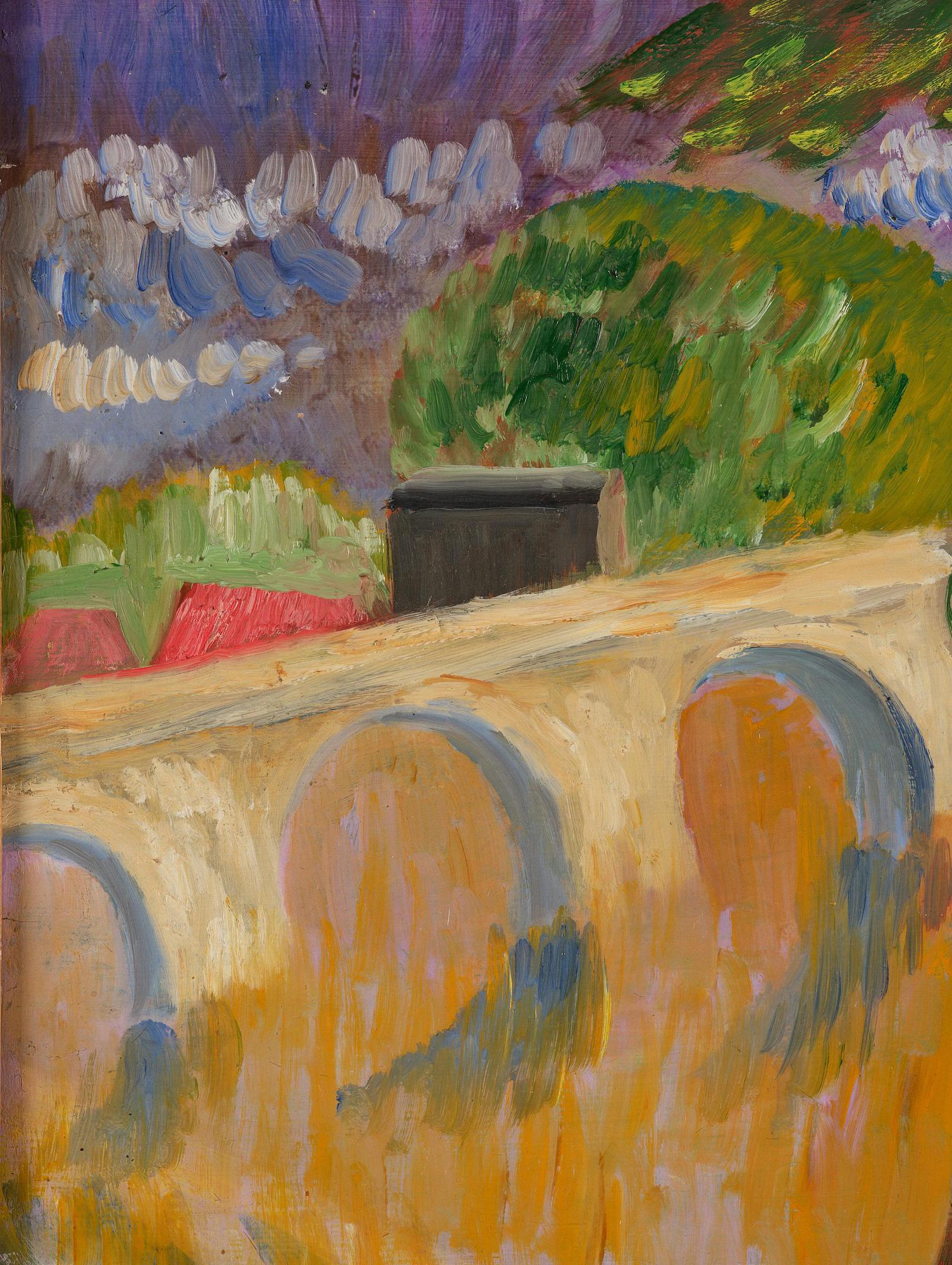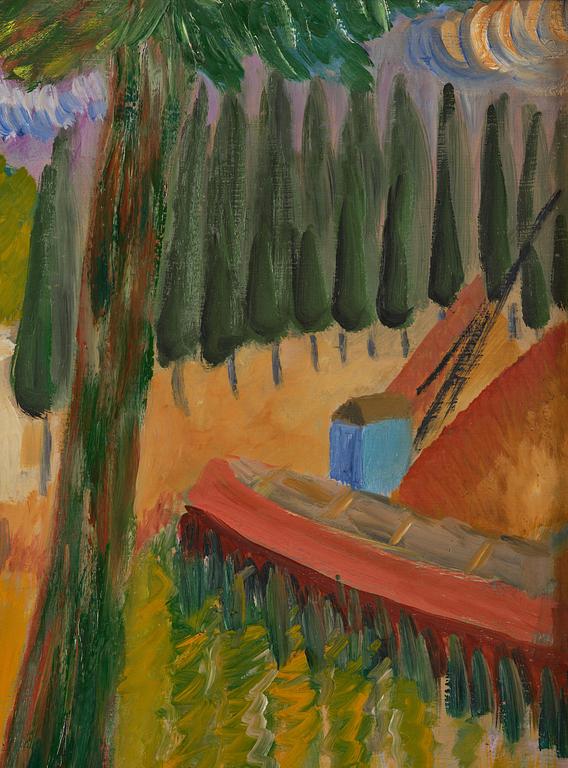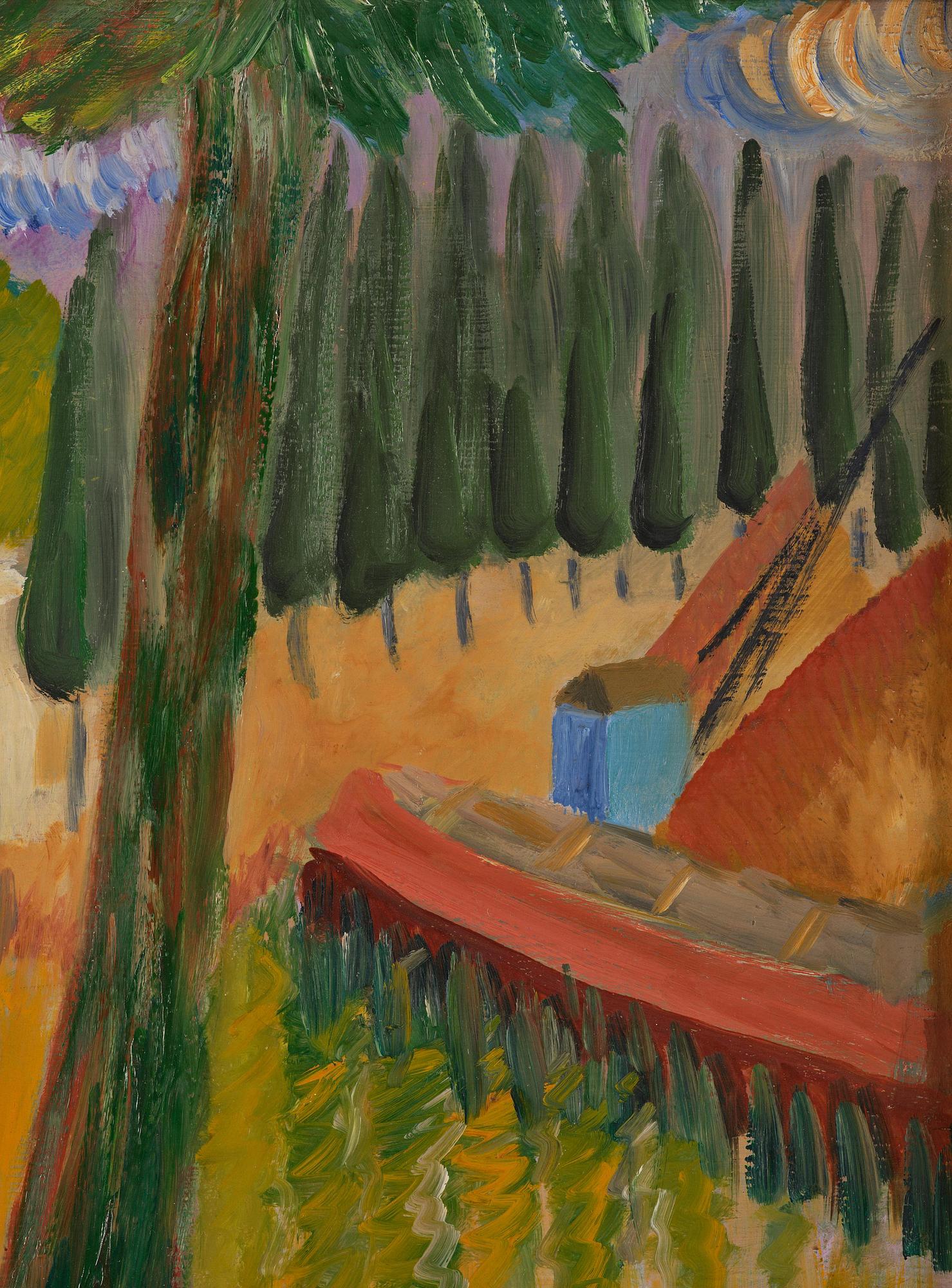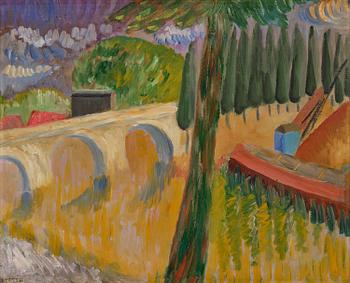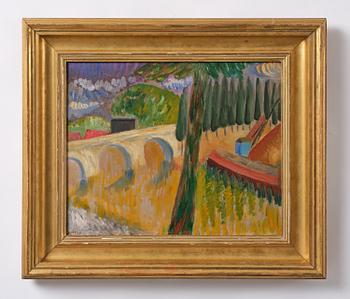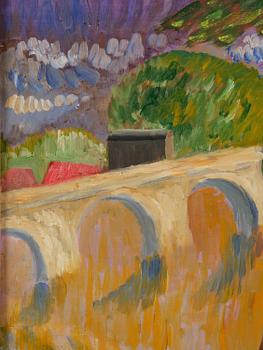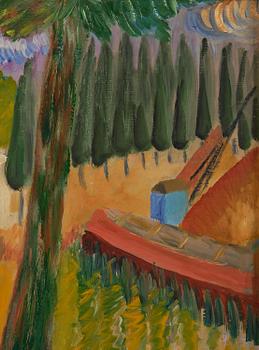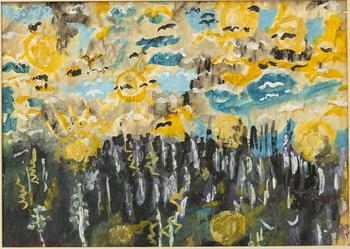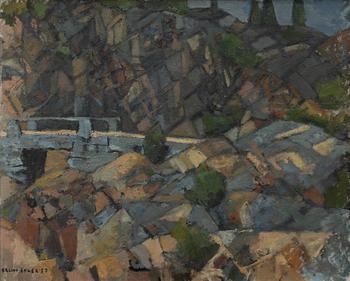
French River Landscape with Bridge
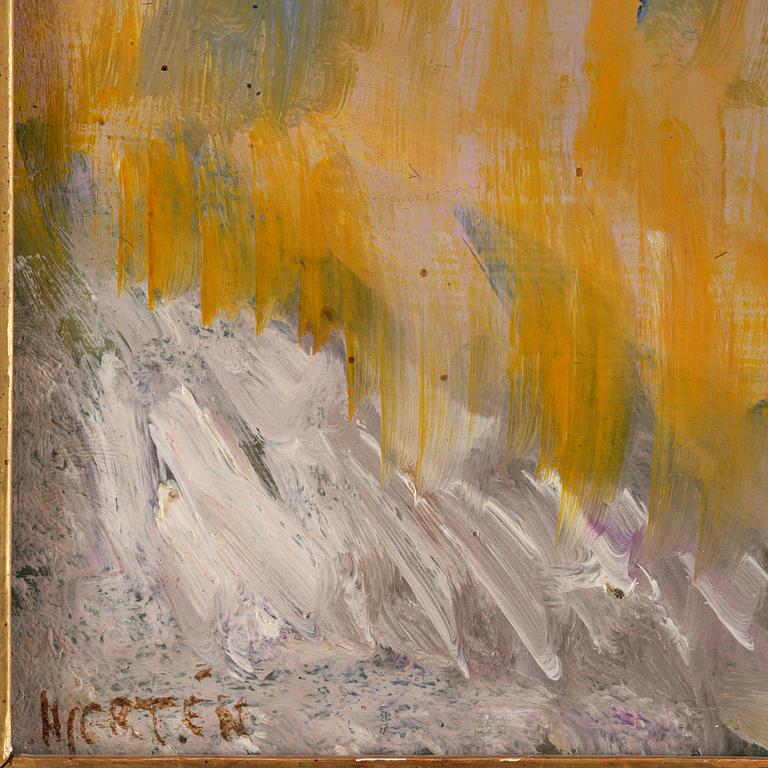
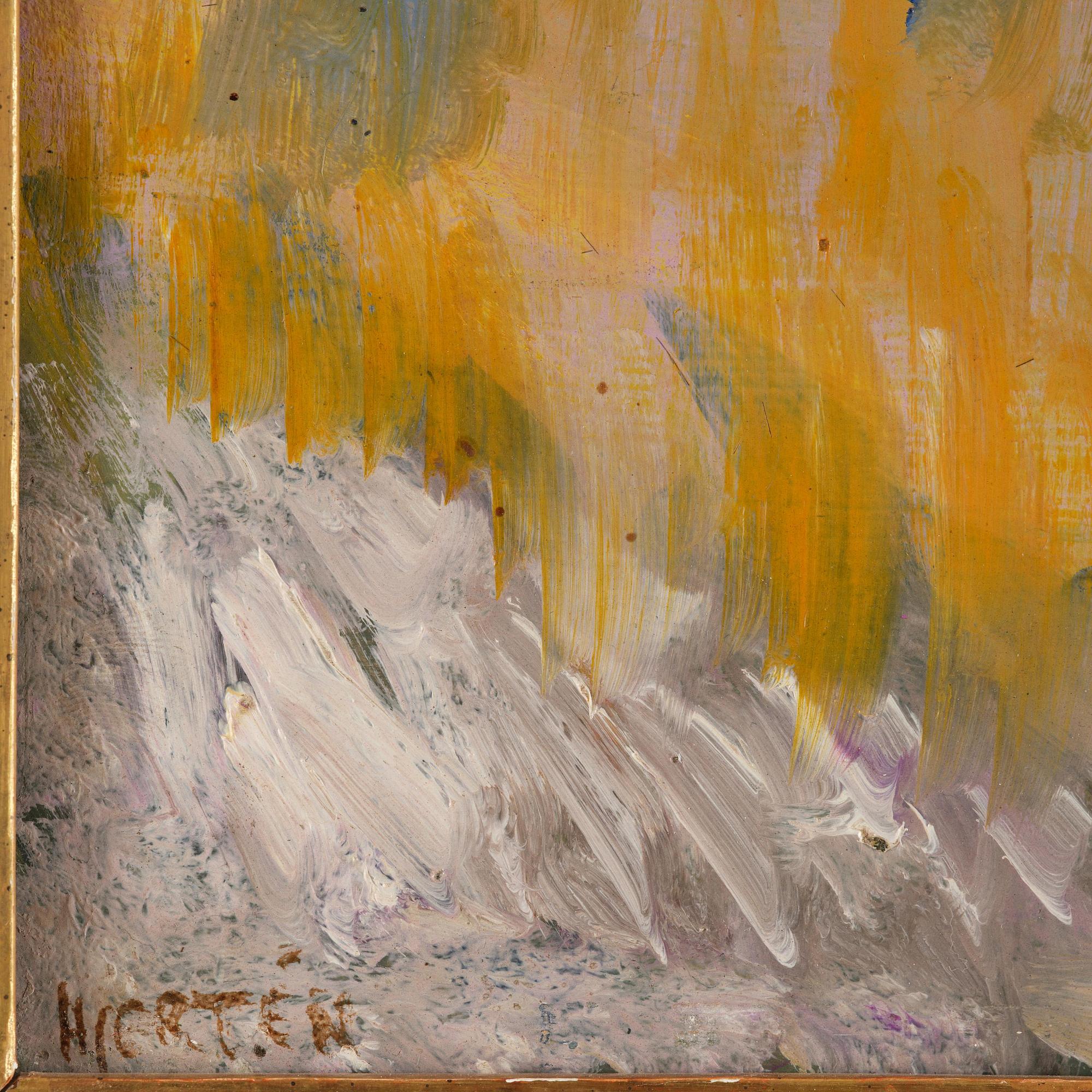
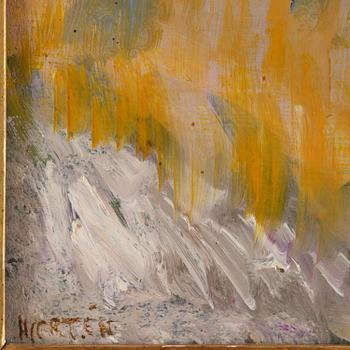
Signed Hjertén. Executed circa 1914. Oil on canvas, 38 x 46.5 cm.
Alkuperä - Provenienssi
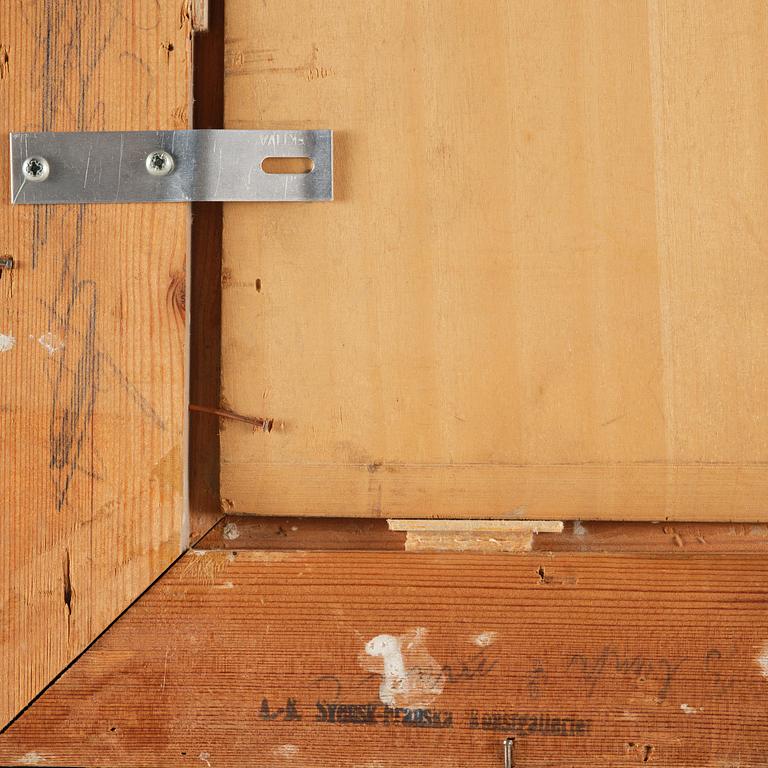
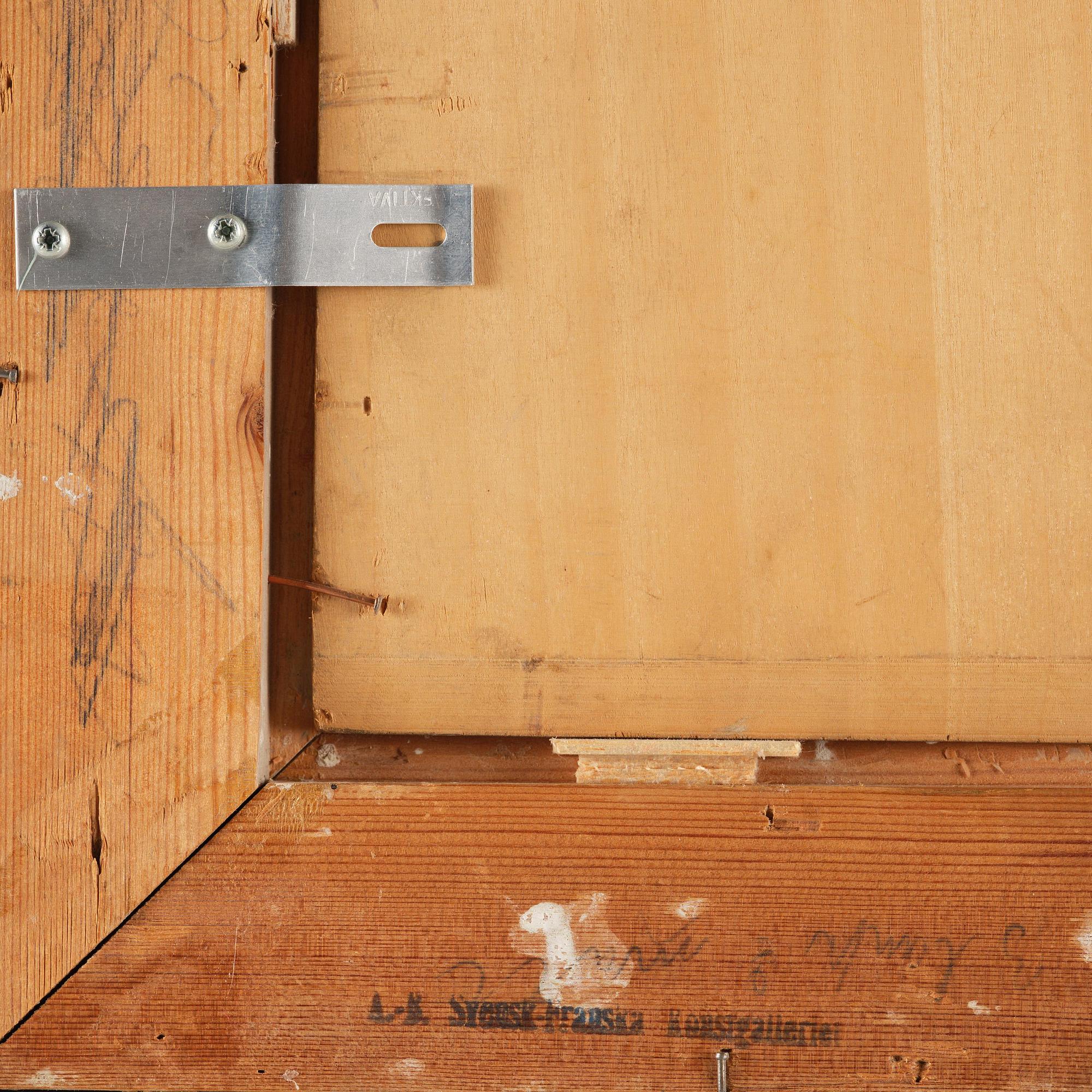
Svensk-Franska Konstgalleriet, Stockholm.
Bukowski and Svensk-Franska’s art auction, Stockholm, auction 412, 29 November 1979, lot 55.
Näyttelyt
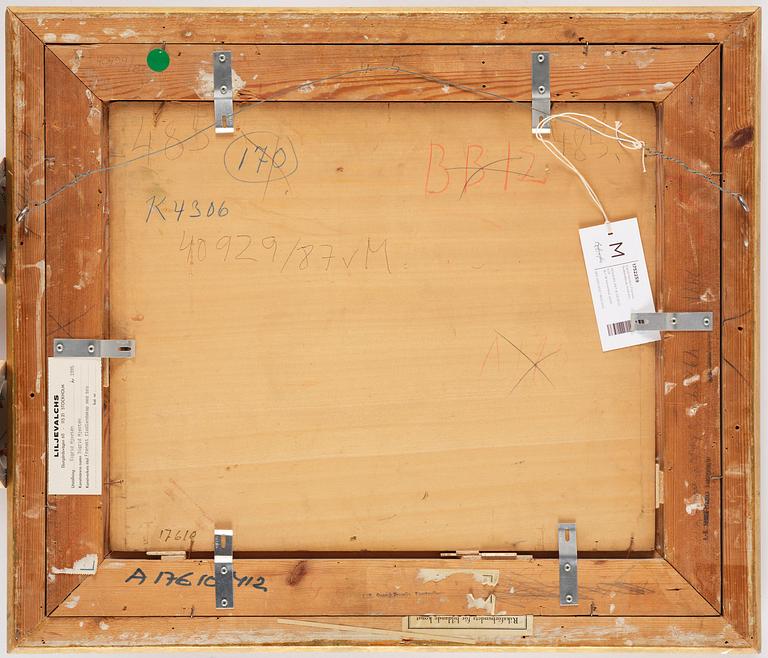
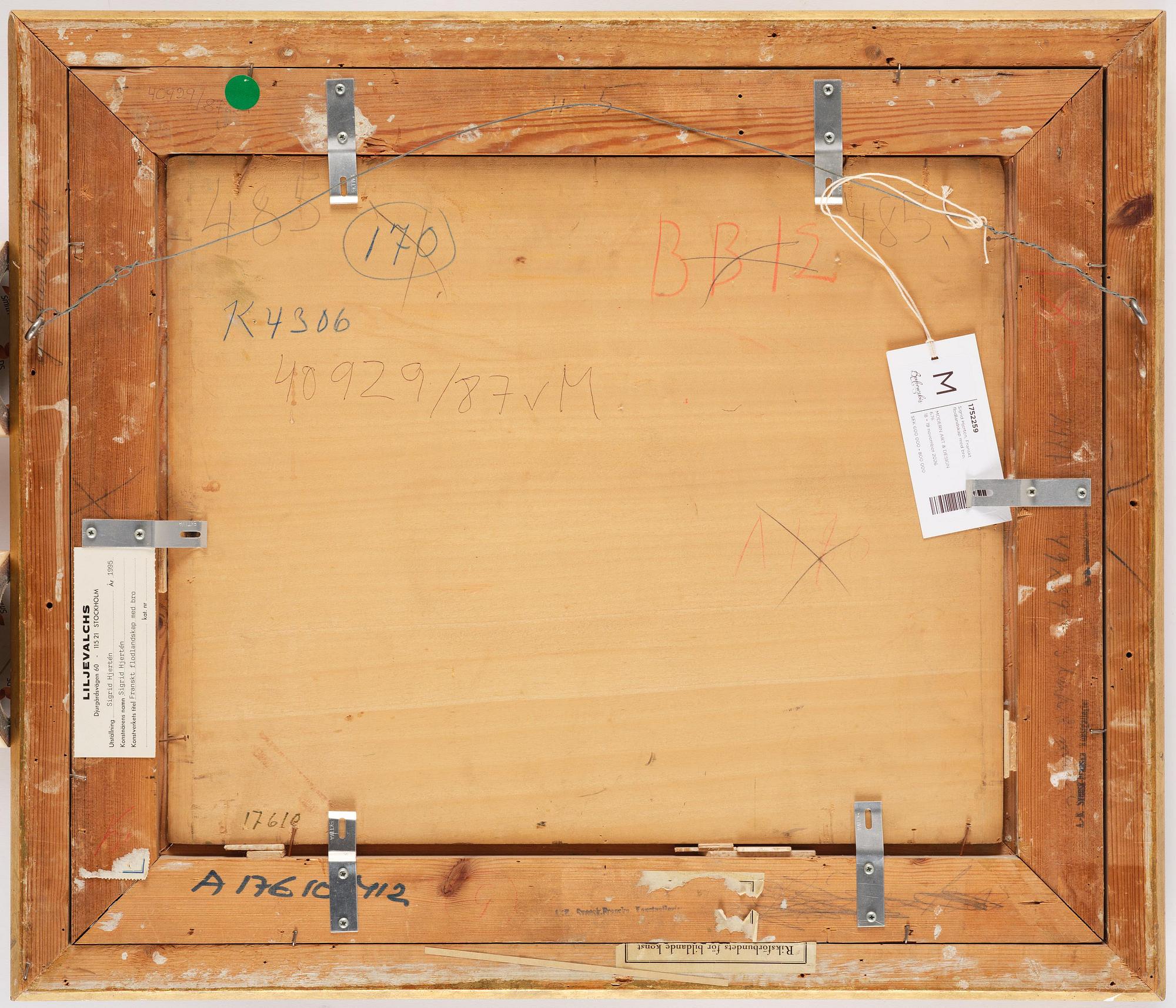
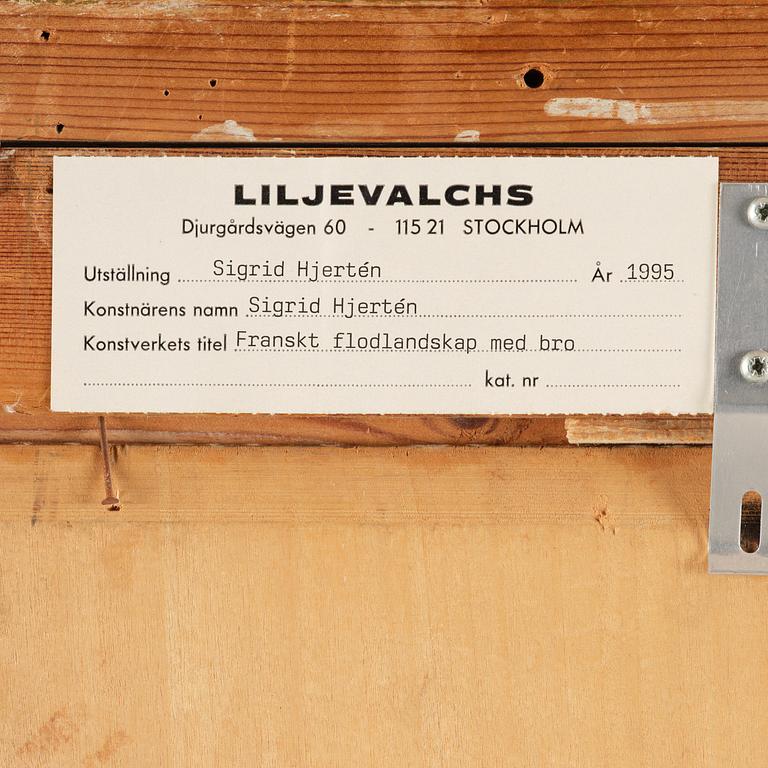
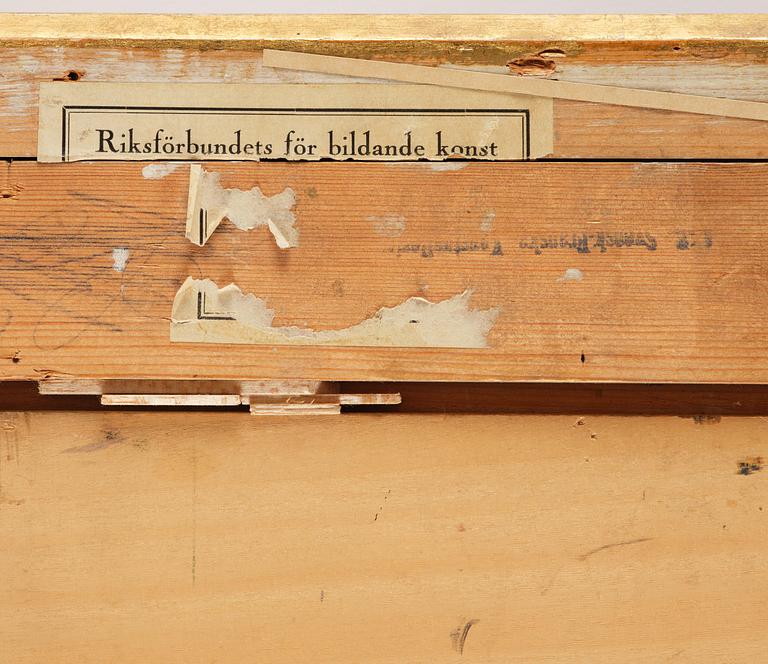
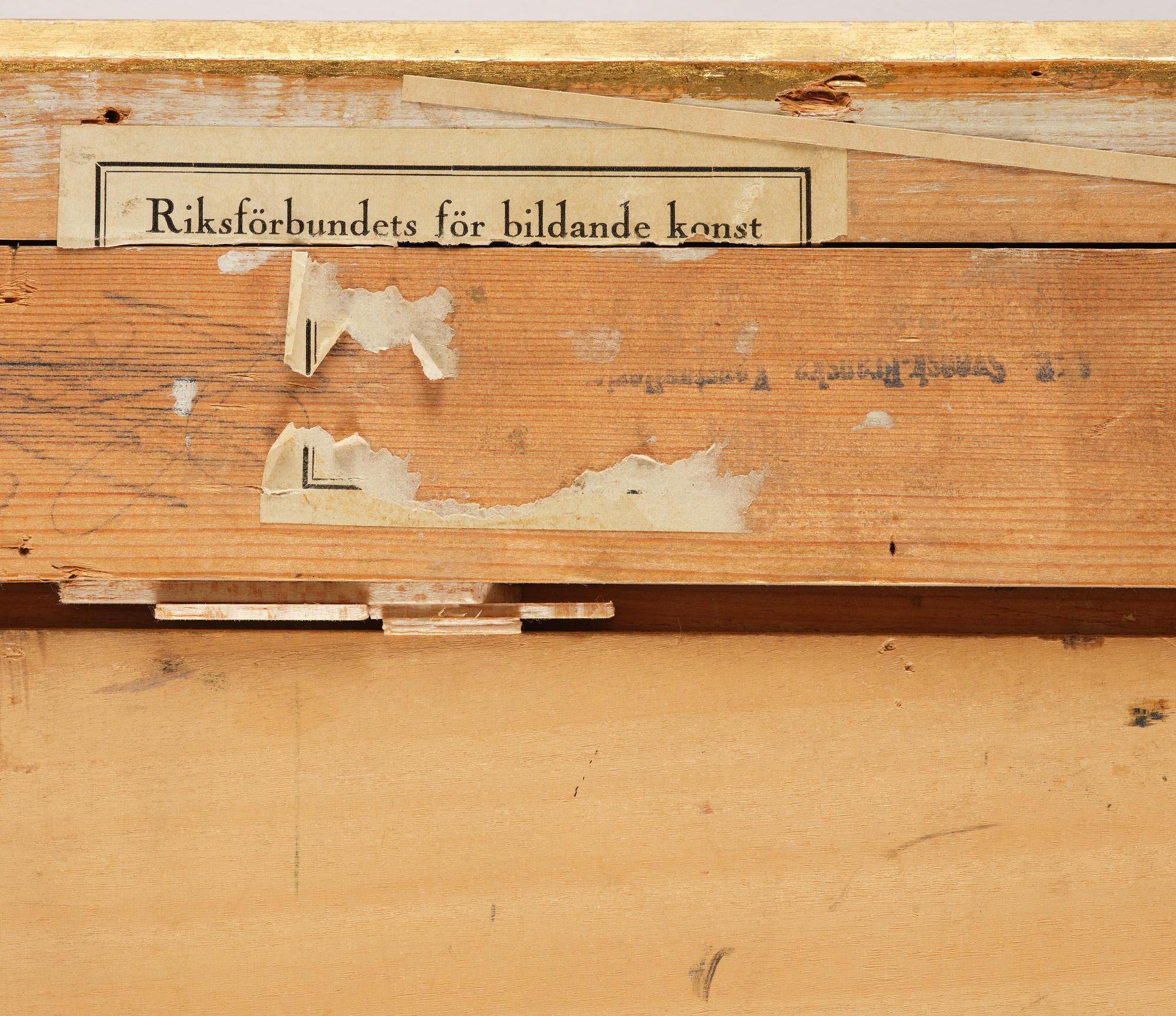
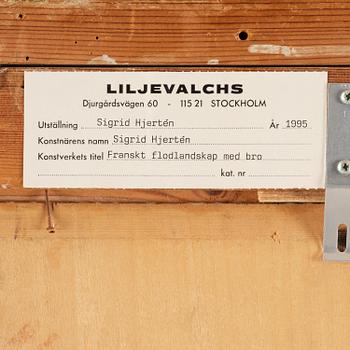
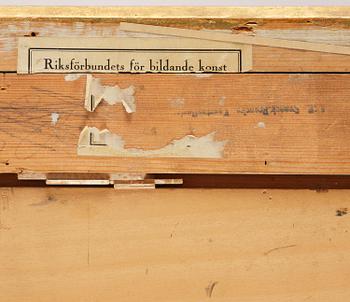
According to label verso, Riksförbundet för bildande konst.
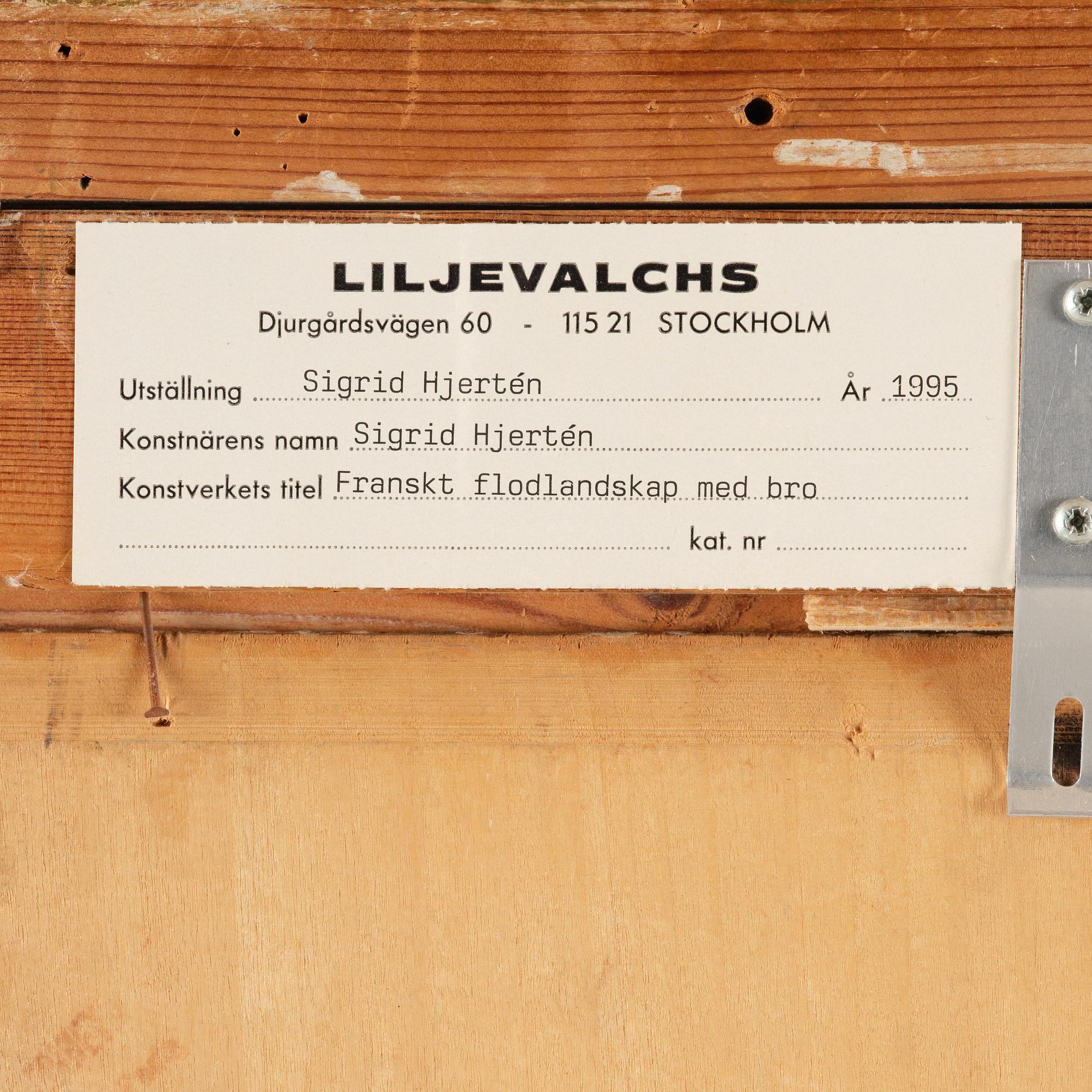
Liljevalchs konsthall, Stockholm, “Sigrid Hjertén”, 17 March–28 May 1995.
Kirjallisuus
Liljevalchs konsthall, Stockholm, “Sigrid Hjertén”, 17 March–28 May 1995, depicted on colour plate no. 17 and in black and white on p. 208.
Muut tiedot
Sigrid Hjertén is regarded as one of the most pioneering artists of Swedish Modernism. From an early stage, she followed her own path and developed a personal visual language that challenged the traditional artistic ideals of her time. In the spring of 1909, she travelled to Paris to study at Académie Matisse, where she became part of the circle of Swedish artists later known as the ‘Matisse pupils’, alongside, among others, Isaac Grünewald, Leander Engström and Einar Jolin. Through their bold and colourful painting, they contributed to the renewal of Swedish art.
During her first summer in Paris, Hjertén and several of the other young artists chose to escape the heat of the capital for the French countryside. Among rolling landscapes and sun-drenched fields, they found new inspiration in nature’s rich interplay of colour, as well as the opportunity to devote themselves to painting in peace and quiet. One of their destinations was Le Puy in Auvergne, south-west of Lyon, a picturesque town with distinctive architecture and a surrounding landscape that would become highly significant to Hjertén. Together with her husband, Isaac Grünewald, she returned there several times over the course of her life. In his book on the artist, Anders Wahlström describes the French landscape as a kind of balm for her occasionally troubled soul.
In the autumn of 1913, Sigrid Hjertén and Isaac Grünewald moved to a new home on Katarinavägen in Stockholm. The expansive view over the harbour entrance and the lively street life outside the windows provided a constant supply of new motifs. From here, Hjertén drew inspiration for depictions of her beloved home city, its quays and flourishing parks, as well as the well-dressed townspeople moving through the urban landscape. In her paintings, scenes from everyday life become something more than mere representations – they are transformed through the artist’s independent vision and expressive sense of colour.
Hjertén was a fearless experimenter who made colour the protagonist of her painting. She often drew directly with the brush, freeing herself from the ambition to reproduce reality through traditional effects of light and shade. Instead, she constructed her motifs from unified fields of colour, allowing chromaticity to create both depth and spatiality, in close accord with Henri Matisse’s artistic ideas. The decorative interplay between the different elements of the painting became central, as did the deliberately shifted balances within the composition. Through diagonals and increasingly dynamic brushwork, she created movement, rhythm and tension. She herself described this effect as ‘the melody of the work of art’.
Whether the motif was drawn from the tranquillity of the French landscape, as in the present lot, or from Stockholm’s pulsating urban life, Hjertén’s art is characterised by a resolute determination to find her own form of expression. Through the independent power of colour, the rhythm of the composition and her personal approach to the motif, she created a modern form of painting that broke with convention and still appears both bold and innovative today.
Lisätietoja ja kuntoraportit

Mitä kuljetus maksaa?
Toimituksen voi tilata vain ottamalla yhteyttä osoitteeseen specialdelivery@bukowskis.com.
Tietoa ostamisesta